Category: Media Agencies

  • Creative call by SBI Mutual Fund

    By Shubhangi Mehta

    SBI Mutual Fund has invited advertising agencies to handle its creative mandate through a tender.

    The selected advertising agency will be responsible for complete planning, strategizing and execution of communication / branding requirements of SBIFMPL according to the brief sent by them, the agency will have to keep a track of all campaigns / activities of competition and provide an analysis of the same periodically for strategic inputs, the agency will be also being responsible to provide innovative ideas / concepts which can be executed.

    The agency will be appointed for a period of a year which may be extended further based on its performance.

    SBI Mutual Fund is one of the largest mutual funds in the country with an investor base of over 5.4 million. With over 20 years of rich experience in fund management, SBI MF is the most preferred Asset Management Company for all classes of Investors.

  • Hard Knocks: No superstitions please!

    By Anil Thakraney


    The Times of India Mumbai’s colourful supplement, Bombay Times, is not something you read. At least I don’t. It’s a fun thingy one usually glances through. Especially with all the, er, oomph on display.


    However, cricket commentator Harsha Bhogle noticed something extraordinary in their issued dated October 12, and immediately tweeted about it. (Harsha engrossed in BT? Hmmm.) The paper reports on its cover that Amitabh Bachchan’s still-to-be-born grandchild is likely to be a boy. And this stunning forecast was given to them by a numerologist called Sanjay Jumaani. Harsha tweeted this: “i do hopebombaytimes realise they are promoting blind faith and irrationality by putting “numerologists” on their front page.”


    He is absolutely right, of course. And this is something newspapers should be very careful about. Already some of the vernacular news channels are super busy propagating myths about snake women, angry demons and other frightening creatures… in their lust for TRPs… and the last thing we want is the English press to be doing ditto. Not only will such an article result in a longer queue outside Mr Jumaani’s door, it will have more parents rushing to fake babas and other charlatans to predict the sex of their unborn child. In fact, these crystal ball gazers will become a threat to the livelihood of illegal gender test clinics!


    Guess it was an editorial error of judgment on the part of Bombay Times. Whether they admit to it or not. But it must serve as a pointer to the rest of us in the media. One of our jobs is to move the nation forward by creating awareness and carrying out sharp analysis. And not to set it back into the dark ages by promoting superstitions. The vernacular channels are already doing a fine job of it. Let’s leave it to them.

    PS: Chanced upon this outstanding international Coke ad. This is the sort of work they should be doing inIndia. And not that ridiculous ‘Brrrr’ stuff.
    [youtube width=”500″ height=”300″]http://www.youtube.com/watch?v=9dHOzw5KSlE[/youtube]
  • Anil Thakraney: Brand SRK needs help

    Celebrities are brands. And just like detergents, condoms, noodles and cars, they need to build and nurture their brand image. Because that’s what ultimately decides their performance in the market place. People like to be associated with desirable brands. And that’s also the reason advertisers like to associate their brands with celebs. To have the values of the celeb brand rub off on their own brands.


    When I examine how Shahrukh Khan has been going about building his own brand of late, it kind of confuses me. Clearly the actor isn’t really thinking out here. Let’s first study his movie brand. Instead of competing with Aamir Khan, and experimenting with new forms of cinema, he seems to have made it a mission to target Salman Khan. Perhaps in reaction to the success the latter has enjoyed with his recent mindless action films. SRK is now taking his brand into the ‘Mine is bigger than yours’ space. Completely ignoring his own core brand strengths, which is the soft, vulnerable, caring, sensitive, romantic persona… the image that endears him to his fans… and is now trying to compete with a macho star on values alien to him. I really have a bad feeling about the so-called India’s most expensive film Ra One, and its debacle will hurt the SRK brand considerably.


    Next, his choice of brand endorsements and his performances in them. You’ll notice glaring fault lines here too. Not only is there no attempt at being discerning, which once again Aamir Khan is, SRK agrees to endorse just about anything that comes his way, and acts the same in every commercial, convinced the buyers will buy into whatever nonsense he does on the screen. Frankly, it’s embarrassing to watch him in ads for Hyundai i10, Linc Pens, Videocon and many others. There’s another cringeful ad he’s done with wife Gauri (it’s so silly, can’t even recall the brand name). Guess baniyan and chaddi brands are next up. If this continues, and his movie career stagnates, SRK will find the going quite difficult.


    Celebs, like all brands, must fiercely guard their value. So that it remains powerful, relevant and enduring. The hit-and-run approach won’t work. Guess SRK badly needs a brand manager.


    ***


    PS: Watch this brilliant ad from Pro Infirmis, a Swiss organization that supports handicapped people. THIS is the way to use emotion in advertising. A big hug for the creator of this advert.


    [youtube width=”400″ height=”300″]http://www.youtube.com/watch?v=zFWr-CKMWGY[/youtube]


  • Yes, the French do have designs on India!

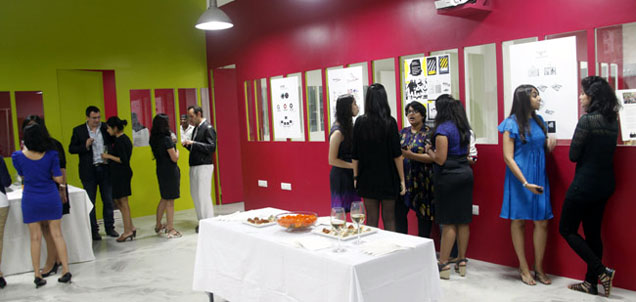
    Students and guests at the formal unveiling of ecole intuit.lab last week


    By Shubhangi Mehta

    École intuit.lab is a design and visual communication French school cofounded in 2001 by Patrick Félices along with Clément Derock and Frederic Lalande.

    The aim of the school has been to produce high quality professionals whose profiles meet the specific needs of the graphic design and visual communication sectors in India, France and across the world. With the newly begun school in India, the syllabus has been especially skewed to meet the professional demands of the visual communications industry in India and to tap the potential that design holds in the country.

    The average fee across various courses is 3.5 lakh annually. The institute will provide the students with high class faculty,French graphic designers which will provide the students an edge over others.

    Mr Ravi Deshpande, co-founder, école intuit lab, India,said, “Over the last few years we have seen a massive talent dearth. I thought of being a part of the solution rather than being a part of the problem. The school has been established to cater to and encourage talented students.”

    École intuit.lab through its students have built solid relationships with over 800 companies in France and other countries.

    The setting up of top French design school, école intuit.lab in Mumbai is a step in the direction of the marked improvement that is required in the field of education related to graphic design, art and advertising.

    Mr Rajesh Kejriwal, founder, CEO, KYOORIUS, said, “India really needs such design institutes; the China government is planning to open 500 design institutions across the country, Indian government should also  try and do something similar as the existing and upcoming institutes are expensive and not everyone can afford them. Hence a lot of talent will still be left behind without opportunities.”

    Ms Preeti Vyas, Chairwoman, VGC, mentioned, “These institutes are extremely important. If we put 20 more such institutes in our country, it will still be a lesser number. The courses are expensive but the kind of inputs, technology and faculty that goes into such institutes, it is impossible to have a low cost institute for such courses until and unless it’s a government funded institute.”

    École intuit.lab has achieved success by incorporating professional exposure in the academic curriculum – a much needed position that has been so far vacant, in the design and art education milieu in India.

    École intuit.lab through its students have built solid relationships with over 800 companies in France and other countries. école intuit.lab’s excellent success rate in finding work placements for its students makes it a real standard setter in vocational training for the visual communications sector.

  • Cadbury’s Diwali message with a twist


    By Ravi Balakrishnan


    [youtube width=”350″ height=”250″]http://www.youtube.com/watch?v=Pl2xsSJbE3M[/youtube]

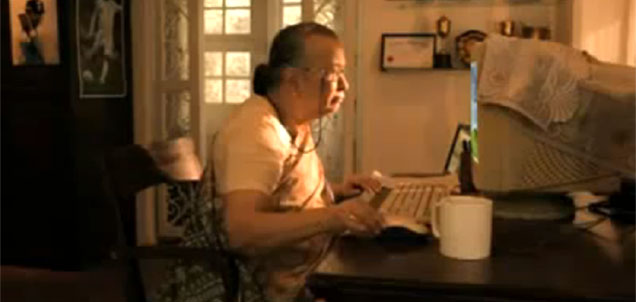
    Cup of coffee in hand, grim determination on her face an elderly woman struggles to turn on a decade old computer and struggles even harder to get online, spilling coffee over the keyboard. All the while a voiceover from her son intones about how busy he’s become, leaving him no time to ‘waste’ hanging out with friends (and, by implication, his mother), and why bother anyway when they can stay in touch via phone, chat and social networking? It seems like a fairly standard tearjerker for a HelpAge India style NGO. Except it is actually for Cadbury’s Celebrations; a range of chocolates specifically designed for gifting through the festive season.


    Celebrations’ previous ads have always been, well, celebratory. For instance, a sister shows up unexpectedly for Raksha Bandhan. And Diwali is a noisy backdrop to the commercial in which a young man bonds with the neighbourhood grouch. In ‘Lonely Maa’ though, there are none of these happy endings; no sudden ring of the doorbell with the son showing up, pack of Celebrations in tow. A courageous tack to take even if it is a bit of a downer.


    However, according to both marketer and agency, the new ad does not mark a radical departure from the central brand thought or strategy. The ad still ties into the line ‘Iss Diwali Aap Kisse Khush Karenge?’ (Who will you make happy this Diwali?). This time around, though, there’s a definite call to action, to provoke people into stepping out of the digital space. Says a company source, “We wanted to get people to physically meet the ones they want to make happy. There were many creative renditions, but we chose this one since quite often, our parents and elder relatives are not comfortable with the digital medium. The medium too does not convey emotion all that well.”


    Younger tech savvy consumers who spend large parts of their lives online were the main target audience. As a result, the commercial is an online exclusive and won’t be seen on television. Lonely Maa was seeded on the brand’s Facebook page, with links to YouTube. Says Mr Raj Nair, national creative director, Contract, who also stepped behind the camera to shoot the film, “It’s criticising the online medium while being on it. That’s hitting people a lot harder and driving the point home.” In its fifth day online, the commercial had garnered 14,112 views at the time of going to print. Both Contract and Cadbury are counting on the ad going viral. If marketer and agency are to be believed, it is particularly popular with the NRI audience who are unfortunately not the immediate target for the brand.


    The few comments on YouTube are full of presumably negligent children lamenting the error of their ways and promising to be home for Diwali. And that’s as per plan according to the company source: “While the mother in the ad is struggling, she still has a positive attitude. Unless we made it a bit provocative, the response to the call for action wouldn’t have been there.”


    For something built around the insight of technology as an alienating force, ‘Lonely Maa’ does evoke an early Nokia ad featuring a similarly lonely mother sifting through photos of her son. Mr Nair says he doesn’t recall the Nokia commercial at all but adds: “I leave it to people to draw their own inferences. This is a bigger thought: telling people to go and meet each other (preferably with a box of Celebrations). The non-technology aspect distinguishes it.” Apart from the commercial, Cadbury Celebrations also has a special Facebook linked programme lined up, to fly people home from Mumbai to Delhi in time for Diwali. So, to all the Lonely Maas out there; be careful what you wish for.


    Source:The Economic Times

    Copyright © 2011, Bennett, Coleman & Co. Ltd. All Rights Reserved


    Image: Grab from TVC on YouTube

  • Marketers up self-image reinforcement


    By Neha Dewan


    Companies are working harder this year to preserve or refine their projected image, with a 40 percent jump in volumes of corporate image advertising on television over the corresponding period of the previous year.


    According to data released by media measurement organisation TAM Adex, Hero MotoCorp, which went in for an advertising blitz after a change of corporate identity, tops the list of advertisers in the corporate brand and image category between January and September.


    At a time when questions are increasingly being raised over corporate governance and corporate greed, companies are turning to advertising that focuses on their core values and contribution to society rather than just the products or services they seek to sell. Corporate image advertising seeks to reassure consumers as much as to convert them to the intended perception of brands.


    Maruti, Adidas and Mahindra & Mahindra are some of the other companies that figure among the top ten advertisers in the category. Aditya Birla Group and Life Insurance Corporation of India are the only two advertisers among this year’s top ten that featured in last year’s list of top advertisers as well.


    FMCG company Reckitt Benckiser, which topped the list last year, does not figure among the top ten advertisers this time round. Neither does any telecom company, despite the 2G telecom scam taking the sector by storm ever since it broke out last November. Just before that, however, Essar Group, a diversified conglomerate with interests in communications among other sectors, was the second biggest advertiser during January-September 2010.


    “With the growth in economy, companies are paying greater attention to building their corporate brand equity. Moreover, with so many brands available today, a consumer will prefer to know what he is buying and where the brand really comes from,” says Mr Madhukar Kamath, group CEO, Mudra Group.


    This year’s leading advertiser launched its new corporate identity with the campaign ‘Hum Mein Hai Hero’ on Independence Day across television, print, radio and cinema. “We preceded it with a period where we did not advertise at all. The result was quite effective as it led to a very smooth transition for us,” says Mr Anil Dua, senior VP, marketing and sales, Hero MotoCorp.


    Dua reasons that corporate image advertising is all the more necessary for companies that sell products such as twowheelers. “For a category like ours, there is more involvement on behalf of the customers. Hence, they need more assurance and tend to see the company from closer quarters,” he says.


    India’s biggest utility vehicles maker Mahindra & Mahindra turned to corporate image advertising early this year when it went in for an image makeover with its ‘Rise’ campaign focusing on the core values of the group. The group plans to have two-three rounds in a year of such advertising which will be a mix of mass media, digital and PR-driven communication.


    “Consumers are asking questions to corporates about their philosophy, practised values, stance on sustainability and contribution to the society,” says Mr B Karthik, GM- corporate brand management and business transformation, M&M.


    Source:The Economic Times

    Copyright © 2011, Bennett, Coleman & Co. Ltd. All Rights Reserved

  • The Anchor: 7 ads that star sports and sportsmen

    By Hemant Kenkre


    In no particular order – from the dancing girl on the cricket field to Sehwag’s Ma – there’s something about Indian ads and sports that hits the spot


    #1 Palmolive Da Jawaab Nahi:The Haryana Hurricane, as Kapil Dev was known, endeared himself to millions of Indians (not just cricket fans) with the line from the Palmolive Ad – ‘Palmolive Da Jawaab Nahi. ’ Kapil’s earthy personality and toothy smile in the ad will always be remembered as much as the “Kitne Aadmi The” dialogue from Sholay.
    #2 Cadbury – Asli Swaad Zindagi Ka:Can anyone forget the Cadbury TVC where the lady friend of the batsman prances out on the field and dances her way into the arms of her hero, who has just hit a six? Kucch Khaas Hai Is Ad Main!
    #3 Josh Ka Rang – Coca-Cola 1996 World Cup:In 1996 when Coca-Cola won the pouring rights for the ICC World Cup (India. Pakistan & Sri Lanka), they announced their return into India with a super TVC – Josh Ka Rang –that ‘played’ around the colour red, showed youngsters from the Indian sub-continent playing on the streets, on the banks of the Jamuna, with the Taj as the backdrop, running among red-chillies laid out to dry. All peppered with the awesome ‘Dum Mast Kalandar’ track by Nusrat Fateh Ali Khan
    #4 Nothing Official About It – Pepsi 1996:While Coca-Cola’s TVC and strong PR campaign for the 1996 ICC World Cup was going great guns, rivals Pepsi  pulled the rug from under their feet by launching their campaign ‘Nothing Official About It,’ which featured most Indian and international cricketers who were playing the World Cup and cocked a cheeky snook at Coca-Cola’s ‘Official beverage of the Cup’ status
    #5 Aila Plane – Pepsi  2003 ICC World Cup:This Pepsi campaign, where Shane Warne and Carl Hooper kidnap Sachin Tendulkar – ostensibly to put him out of action from the tournament – is hilarious. Especially Warne and Hooper mouthing Hindi words like ‘Iski Toh Gayee’ and when Sachin sees an aircraft and says ‘Alia Plane’
    #6 Nike 2007 Cricket:The 2007 edition of the ICC World Cup saw Nike, the official apparel sponsor of the Indian team produce a superb TVC where young cricketers atop a bus stuck in a traffic jam, playing the game with passion, smashing tea cups from the hands of innocent bystanders all spiced with the Goan folk song ‘Yo Baile Yo’ playing in the background.
    #7 Karlo Duniyaa Mutthi Main, Sehwag Ki Maa – Reliance Mobile:This TVC was probably inspired by a Bollywood blockbuster where the Najafgarh’s hero (Virendra Sehwag) cannot connect bat to ball and gets a call from his Mother who tells him ‘Karlo Duniyaa Mutthi Main.’ Our hero tosses off his helmet and the ‘villainous’ bowler is promptly whacked out of the park by Viru!


    A communications professional, Hemant Kenkre played cricket for Bombay University and has captained the Cricket Club of India.
  • Leo Burnett wins Mahindra creative mandates

    By A Correspondent

    Mahindra First Choice will now be working with Leo Burnett India as their creative agency.

    The incumbent on the business was Quadrant Communications.

    Though there was no official confirmation at the time of writing, agency sources close to the development have confirmed the news to MxM India.

    Mahindra First Choice Wheels Ltd is India’s largest multi-brand pre-owned car company which believes in selling high quality used cars to its customers with hassle-free documentation and car transfers.

    Founded in Chicago in 1935 with eight employees and three clients, Leo Burnett Worldwide, Inc. today operates a global network of over 200 operating units including a variety of specialty marketing services and 94 full-service advertising agencies in 83 countries. Leo Burnett helps build many of the world’s most valuable brands and successful marketers, including McDonald’s, Disney, Procter & Gamble, Marlboro, Kellogg, Samsung and Nintendo.

  • Dainik Jagran calls agency to handle its creative business

    By Shubhangi Mehta

    Dainik Jagran, the Hindi daily has invited agencies to handle its creative mandates, some of the agencies participating in the pitch are Grey, McCann, Percept H.

    Though no official confirmation could be attained at the time of writing this report, industry sources close to the development have confirmed the news to MxM India.

    Dainik Jagran was founded by Puranchandra Gupta in Jhansi in 1942. In 1947 Dainik Jagran shifted its headquarters to Kanpur, where it launched its second edition on 21 September 1947. The Rewa and Bhopal editions were added in 1953 and 1956. In 1975, publication of Gorakhpur edition started, followed by Varanasi, Allahabad and Lucknow in 1979. In 1984, Meerut edition was launched, followed by Agra in 1986, Bareilly in 1989 and Delhi in 1990. Between 1997 and 2006,

    Eighteen new editions were added, and through 2007-08, six new editions were launched.

    More than 55.7 million people read Dainik Jagran making it the largest read daily in India. Currently, Dainik Jagran’s 36 editions are published across eleven states of India.

  • With animals, what you see is what you get. With human beings, it’s more complicated


    Make no mistake about this: Lynn de Souza has a soft, warm, chilled out, happy exterior. But inside that resides a steely, tough, hard-edged professional. And she needed all that internal strength to survive and thrive in an industry notoriously dominated by what she calls the ‘Old Boys Club’. Lynn and I go a long way back, and this made our conversation frank, fun and, yes, highly argumentative. And we discussed many issues ranging from the dubious media research, the future of various media, her role in promoting gender equality, her formula for cleaning up the otherwise scandalous Goafest. And why she, er, chooses dogs over men.  


    By Anil Thakraney


    What’s your exact job portfolio at Lintas?


    I look after Lintas Media Group, and our subsidiaries Karishma Initiative, Aaren Initiative and Lin TV. LMG and Karishma are media agencies, Aaren Initiative is the largest OOH agency and Lin TV produces and distributes branded content. I am responsible for their overall financial and reputation, health, corporate governance, etc.


    Who do you report into?


    Michael Wall, the global CEO of Lowe Worldwide.


    Would you not like a global role now, having been there and done that in India?


    Have I been there and done that in India? I don’t think so. India’s potential story is not even the tip of the iceberg, and I haven’t even travelled the whole tip yet! I would love to have a global role that is based out of India, because this is where it’s all happening. I am fiercely proud of India and all things Indian and it’s our time to show the globe a thing or two. We don’t need to be sitting in Manhattan or London to do that, in fact, that could be counterproductive.


    Would it be correct to say you’ve reached the top of the Indian media peak?


    More like the bottom of the ocean, which has the most beautiful creatures and colours in the world. There are so many challenges ahead, so much to learn and so much to do. Our lives as consumers of media are being transformed so rapidly it’s really hard to keep pace, and this rate of change is even faster in an emerging market like ours. What we thought we knew yesterday is no longer relevant today, and what we think we know today will not be relevant tomorrow. The only people who can be on top of all of this are those who want to keep learning and keep evolving and keep travelling. There is no place for those who think they have arrived.


    What’s your goal for the next 10 years? What else would you like to achieve?


    Goals are for footballers and 20-year-olds. I don’t have any. I am just happy to be alive, to have a wonderful family, to work with some awesome people, to have a few good friends, and to do my little bit for my four legged friends. I take each day at a time, that’s all, and just try to do the best I can for that day, honestly. When I was young, I did have plans and was ambitious, too ambitious. My values have changed. It’s important to be good at what you do, but it’s also important not to be so good that you become bad for everything else around you.


    Key challenges ahead for the media buyers.


    Look beyond the colour of money to the colour of advertising and media content, and the kaleidoscope of consumer insights. Get away from the keyboard and play some real piano now and then. Visit places they have never been to, in reality, and not only on 3G. Meet and talk to people from all cultures including, especially including, our villages in the length and breadth of our country. Data will never be a substitute for reality and as long as we hold on to it for dear life, we will continue to reduce the value of the media, and the consumers they deliver, to the lowest common denominator – a CPRP.


    Are our creative people ready for the new media? And the clients?


    I think the younger ones are. I have been meeting a lot of independent digital agencies recently, and it’s always great fun to meet their founders – usually young creatives and techies who have left traditional agencies and employers to write their own dreams and ‘apps’! You would also be surprised how many clients are now taking to what you call ‘new’ media like fish to water. There are lot of questions and uncertainties and domain knowledge issues of course, but there is no dearth of desire to learn, because user technology has become so easy and enjoyable that once they use the digital spaces for themselves, they want to start using them for their brands.


    Was media unbundling a good thing? You pioneered it.


    It was the best thing to happen to the media function. Till then, media planners were languishing in the backrooms with their big red NRSs and estimates, always at the tail end of a presentation and often sent home without even presenting. Making the function profit seeking in its own right attracted the right kind of front-room talent, investment in tools and databases and the ability to then cope with a magnifying media world. Which industry has seen such an explosion of new offerings in such a short time – 600 TV channels, 70,000 print titles, 350 radio stations, and countless websites, all in 15 years or less? Unbundling has allowed us to specialize enough to cope with this growth, possibly even enable this growth.


    Predict the future of the print media in India. Newspapers are shutting down all over the world.


    You need to separate form from content. Newspapers abroad have digital versions that have a much larger following than the newsprint version. I read the NY Times every day because the reading experience is so enriching, it doesn’t matter that I don’t live in that city. As long as people have eyes, they will read, and as long as they read, there will be something delivering the news to them in a written form… in newsprint or cyberspace, or Kindles, how does it matter? About India, do you know that the highest read newspaper in the world is a Hindi daily? Regional language papers have trebled in readership in the last ten years. Tier two and three cities, where literacy is still not even 70% and growing, register the highest growth.


    And what about television?


    TV will be fully digitized very shortly and this means that the convergence of content across digital broadcast, web and telephony platforms is almost here. My agency is already producing content for television, re-purposed for mobile, and developing web apps to go along. As are many others. Consumers follow and lead content, so to track them and predict their behavior will be very important, our measurement systems will need to keep pace and adopt new technologies to capture, retrieve and analyze data.


    There are too many complaints about media research in India. What can be done to change things?


    There’s an overload of data in some aspects. We have different data sources for different media. And there’s no one single source available. That’s why many of the media agencies invest in their own studies. We have our own, for example. What worries me is that nobody’s looking at the future. So that we have future-ready research which is truly centered around the consumer. I told the IRS people that they need to think ahead. They have a 10-year-old way of collecting data and that has to change.


    Also TV viewership measurement.


    That’s why you can’t recommend media only on that basis. Which is why a lot of us have our own proprietary research which picks up a whole lot of other aspects. You cannot rely only on these data sources.


    That’s no solution. We need few but reliable research studies which the whole industry can follow.


    It’s not necessary for everything to be done at the industry level. You do things at an industry level when you want a currency. When you want a common parked research where both the buyer and the seller access it, so it becomes a currency. But if you want to do things that are genuinely good for the brand, you develop a whole lot of other proprietary studies, which many of us do.


    Lynn, frankly I am disappointed with you. You’ve spent a lifetime in the media industry, you’ve done it all, you’ve made your money. Isn’t it time for you to think of the industry and take on the challenge of reforming media research so that everyone benefits?


    If I did that, I wouldn’t say it to you. If I had any ambitions that I want to change something, I would quietly go about doing it my way. Three years ago, I didn’t want that there should be two research agencies, the IRS and the NRS. I was sitting on both the committees and I found both doing the same things, both saying the same things, so I said why can’t they be together. So quietly, at both meetings, I would suggest let’s have only one study. It took three years of doing this before the RSCI got formed. They’ve elected me as the first Chairman and we had our first meeting only last week. I am hoping we will change the readership agenda of this nation. Print is still the largest medium in India, and if the RSCI works out, we will make a big change. But I won’t thump my chest and say ‘Hum yeh kar rahe hain, hum woh kar rahe hain!’ (Laughs.)


    Not enough. You should take on media research full-time, and become the Queen B who made a huge difference.


    (Long pause.) I promise to give it a serious thought just to please you. (Laughs loudly.) But I will not commit to anything you wish me to commit to!


    You’ve cleaned up Goafest. There were no scandals this year. How did you do it?


    I am a great delegator. And I give a lot of respect to people I delegate to. So we had Shashi (Sinha) completely given the role of running the awards. I gave Sundar the role of running the conclave. I looked after the organizing and the venue. The most important thing I did for Goafest was to create an impression of being clean. I looked for a very clean looking place, I changed the venue itself. So it looked fresher, cleaner, greener. That had a very subtle effect. Then, I roped in the ASCI and the IAA with the responsibility agenda on the first one and the sustainability agenda on the second one. That gave the impression we are doing something good for the industry, and not just pampering creative egos.


    How did you handle the problem of self-voting?


    Shashi led that and he did a fantastic job. People were not allowed to self-vote. One or two individuals who were supposedly high on self-voting in the past were not included as judges this time.

    But Lintas still won’t take part in the awards…


    We do not have any confidence in the awards given by our peers. I was given a job to do, to chair Goafest. I was forced to do it, and I did it to the best of my ability. But that’s different. You know, I served at the Cannes media jury in 2009 and it was a fantastic experience. It was professionally run, it was technically advanced. I have served on the Indian juries as well, and it was nonsense, though am sure this time around they did a better job. I have seen the behaviour of our peers, the kind of lobbying and planning that goes on. As an agency we are not into chest-thumping. But when our agency wins awards because our clients have won, I value those because the consumers voted us.


    But now that you’ve cleaned up the place, will Balki take part next year?


    That you have to ask him. But it has to do with the value you place behind awards. Not everyone thinks awards are the best thing in life.


    Looks like you’ve fallen in line with Balki’s ideology.


    (Laughs.) On the contrary he may be falling in my line! We have our own independent reasons.


    What’s this about women’s rights you’ve been promoting?


    Internationally, diversity and inclusion is a big agenda. As a part of that agenda, two years back, IPG asked me to set up and lead the women’s leadership network. Initially I refused. I didn’t think there should be segregation of any kind. Later I studied the subject in detail, and I realized there’s a very powerful economic reason why you have to support women. There are three ‘Ws’ that will transform this century: Web, Weather and Women. And the power that women are exerting on this century is enormous. It’s said if women were empowered at Wall Street in 2009. things wouldn’t have been the way they were. In India we have 29 women heading banks and financial institutions. So there is an approach that women bring to the table that improves the productivity of a team. So it’s important to keep and retain women. At IPG, 30% of our staff are women, and when you come to the top, it’s just 11%.


    How do we change this inequality?


    We need hardcore practices in place. We can have a hiring quota set aside for women. I believe last month Hindustan Lever hired only women. We need to make everybody conscious we are not doing anything special for women. We have to make men and women understand that when you work together, you do well. For example, Coca Cola has something called the ‘Power of 3’. They believe that in any big team, the minute you have three women in the team, the group becomes far more productive. And if you have just one woman in the team, she gets eaten up.


    But Lynn, women falling out along the way is a social problem. Babies have to be looked after. How will you change that?


    You try and keep them engaged in the work orce. Some of the things we’ve done include giving them the option to work from home when they are pregnant. By giving them a desktop mirroring system at home. That’s literally like working in the office. There are lots of such ways in which you can keep women productive even if they have babies.


    Personally, I am quite cynical about this whole thing. You can’t change deeprooted beliefs and attitudes so simplistically.


    Anil, you are basically cynical about everything! Anil ‘bloody cynical’ Thakraney! (Laughs.)


    Why are all ad agencies headed by men?


    In the creative agencies there is a very strong old boy’s club. It’s very difficult for women to break through into that club. And if they don’t play by those rules, they will not break into it. Read my blog on this (link).

    Exactly why were the 3As of I guys giving you stress? Why didn’t they want you in?


    (Long pause.) Because I am clean.


    You found corrupt activities going on?


    (A longer pause this time.) No comment.


    One rival media chief you admire.


    Sam Balsara. He’s awesome. A hardcore desi boy with so much energy, he does so much.


    The best boss you’ve had.


    Ravi Gupta. And Steve Gatfield.


    One thing you learnt to do from Roda Mehta?


    Two things. Precision and integrity.


    One thing you learnt NOT to do from Roda.


    (Thinks.) Over-precision. Beyond a point you have to just let it go, you don’t need perfection.


    Roda didn’t just do the media job, she built the media planning and buying industry in India. None of you guys have been able to do that. She was a game changer.


    It’s not needed. You don’t need a crusader in today’s world. You need inventors and innovators. In today’s world we need enablers. Twenty years ago it was different, it was the licence era, there were strictures and rules. Today there’s far more freedom. No one wants a crusader. Everyone wants an enabler.


    Would it be correct to say you love dogs more than men?


    (Laughs.) Why only dogs, any animal. With animals, what you see is what you get. With human beings it’s more complicated.


    Is that the reason you are still single?


    No, it has nothing to do with that. I didn’t find anyone as intellectually stimulating as… my dog! (Laughs.) Are you happy to hear that?


    Have you watched Balki’s two films?


    I haven’t watched ‘Cheeni Kum’ yet. And Balki hasn’t forgiven me for that. But he sent me the ‘Paa’ DVD, and I really liked it. I didn’t watch the last five minutes of the film though. Because I wanted to make my own ending. I wanted the character to live. So I made him into a dog. (Laughs.)

  • Prathap Suthan: It’s great to be in the creative business

    By Prathap Suthan

    I can be forever young. I can keep on vicariously living my teenage life, rewinding, recasting, redubbing, and capturing all that in different stories, in different media.

    I can be anyone. I am hired to be schizophrenic.

    I can be Captain Cook on a voyage across the Pacific. I can be an acid rocker tripping on psychedelic life. I can be Sobers playing T20 in Hawaii.

    I can be passionate, energetic, moody, trendy, whacked out, sober, argumentative, flaky, sober, drunk, devious, intelligent, dull, unshaven, rude, and silent on occasions.

    I can be a prism of complications, and a spectrum of vibrancy.

    I can be in the middle of the Sahara, watching sharks ski down snow slopes, chasing long necked hippos, snacking on broccoli burgers and drinking pumpkin champagne.

    I can be inventive, innovative or boringly conservative, with a Gothic skew.

    I can create anything in my head, and it doesn’t have to respect gravity. Or consider the consequences of anything that Einstein theorized.

    I can buck rules. I can duck rules. I can rewrite history. I can draw new geography.

    I can borrow Spain. I can import Russia. I can buy Neptune. I can sell Pluto.

    I can officially sit at home all day and brood over karma.

    I can build space rockets. I can trash missiles. I can chomp nuclear bombs. I can burp oxygen. I can eat anything. I can drink everything.

    I can do whatever inside my mind. I can be holy, or unholy. I can be a father, or mother, or son, or daughter, or cousin, or pet dog.

    I can be a sofa, a couch, or a dining table with three legs.

    I can get inside a goat’s stomach. I can talk to a pebble. I can discuss world economics with an earthworm. I can want cyanide.

    I can fall in love. I can fall out of love. I can have four mouths, and 11 eyes. I can be articulate. I can be respectful. I can be middle class at 2.30 pm.

    I can declare wars. I can start revolutions. I can explore everywhere. I can go ahead in time. I can go back into the past.

    I can be sensible. I can be illogical. I can be commonplace. I can be exotic. I can find relevance. I can find meaning. I can be original. I can be fake.

    I can be anywhere. I can travel on the back of a bumblebee. I can breathe nitrogen. I can barbecue a not so friendly barracuda underwater.

    I can fly with an eagle, and pluck its feathers.

    I can be Hitler. I can be your neighbour. I can be Pele. I can be Hannibal. I can be Cupid. I can be a cow with a hangover.

    In fact, I can be what I want to be, and pretty much do what I want to do. I am only limited by my imagination, civility, and budgets.

    Thank goodness for our business. And thank goodness I can have more fun tomorrow.


    Prathap Suthan is Chief Creative Officer at iYogi.

  • Anil Thakraney’s Hard Knocks: The impotent social media

    By Anil Thakraney


    The social media has become the brand new joint to bond and vent pent-up anger. Even as you read this, tens of hundreds of causes are being launched by eager Facebookers, with many followers diligently signing up. From issues of animal rights to environment protection to fund raising for the needy to just about anything that can change the world. And when problems happen in the metro towns, it’s time to scream, collect fellow networkers and put pressure on governance. This too keeps happening every month. The two recent causes that come to my mind immediately are one, the ‘Meter Jam’ campaign launched with a lot of fanfare to teach the cheating auto rickshaw buggers a lesson. And two, demand for justice for the dead Keenan and Reuben, the young men who died fighting off drunken taporis.


    Now while I am happy folks have found a new place to express rage (far easier to click buttons from inside an air conditioned room than trudge to the Gateway of India and light candles), I wonder if the social media has the power to make real impact. The ‘Meter Jam’ effort flopped miserably after a lot of noise. And am afraid the ‘Justice for Keenan and Reuben’ campaign will meet the same fate. Sure, anger has spilled on to the mass media, and the Maharashtra CM has been forced to make a statement, but all will be forgotten soon. Perhaps some of the culprits will get a jail term very soon, but sexual harassment of women and crime on the streets will simply go on. And the rick guys will continue to cheat us, of course. Quite obviously what is required is a massive overhaul in our legal and policing machinery if we want to see real change, and that can’t happen by cribbing and carping on Twitter and Face Book.


    But, no matter. Let the causes be launched, let the anger roll. At least people feel a little lighter in the head after clicking the ‘Like’ button. It de-stresses the mind. However, I’d imagine Yoga is a better bet. It’s soul satisfying, and if you indulge in some of Baba Ramdev’s techniques, you could lose some weight too.


    PS: Watch this ad for a vacuum cleaner. A superb example of how to use horror in advertising. It’s one genre that’s rarely used inIndia.

    [youtube width=”300″ height=”200″]http://www.youtube.com/watch?v=aGb8pMIeY6w&feature=player_embedded[/youtube]