Category: PRABSY MUNDKUR

  • Prabhakar Mundkur: New Durex campaign struggles with contradictions

    By Prabhakar Mundkur


    If you have ever felt a dentist’s glove inside your mouth you know what latex tastes like.  So, one does get the rationale for flavoured condoms for improving the quality of oral sex, even if the flavours might seem a little regressive like kala khatta, and meetha pan.
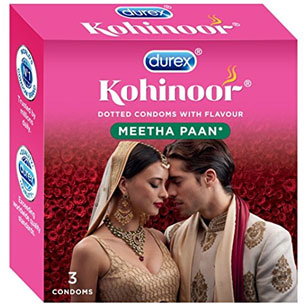
     

    But here is the contradiction. Pankaj Duhan, marketing director, RB Health-South Asia told afaqs.com ‘..95 per cent of Indians do not use condoms and we already have a huge population. This is an alarming situation!”If 95% of Indian’s don’t use condoms what is the point of encouraging them to use flavoured condoms for oral sex?  Because oral sex doesn’t make more babies.


    The other contradiction I found is that RB says that it is promoting ‘faithful promiscuity’ and yet they have commercials like this one which actually talks about having sex with a stranger.  I thought that it was not socially responsible advertising to be so blatant about promiscuity. Watch this film which is titled “Encounter with a hot stranger”.


    The actual flavoured condom ads I thought were not done tastefully.  But of course you the public can be final jury on this one. If you enjoy sexual innuendos like this one, no doubt RB will be eminently successful.


    You be the judge but I personally found the commercial quite revolting, and I can tell you I am not a prude.


    Horlicks: Much ado about nothing

     

    When GSK moved their Horlicks brand after 80 years to FCB Ulka mid 2017, it shook up the industry.   One doesn’t see relationships break after 80 years.  It’s like breaking a marriage after 80 years.  There seems little point in doing so.  JWT in its characteristic, quiet style took the blow with dignity and without too much regret.  And now comes the news that Horlicks might be up for sale to finance the GSK buyout of Novartis Nutrition.


    Horlicks has franchise largely in India although it is imported in Australia and New Zealand and is also present in Malaysia and the West Indies.  In the UK, it is a small brand and people drink Horlicks as a night cap.  It is a classic case of an entire category becoming irrelevant, and a lack of category innovation leading to declining sales.  This has affected other food drinks of yesteryears like Complan.
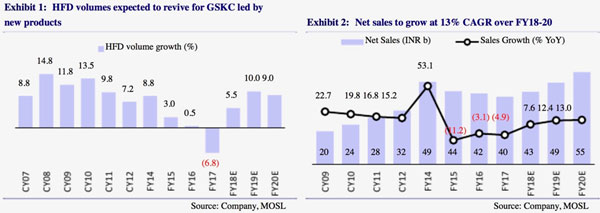


    Once upon a time when nutrition was a problem and milk was inadequate or of low quality in the country, Horlicks played an important role. Parents are no longer open to adding Horlicks to the milk.  They would rather serve their children cereal or muesli. Or just give them plain milk. And nutrition is not as big a concern as it was a few decades ago.


    Suitors to buy the GSK Horlicks brand I believe are many.  The question is what happens to the ad agency FCB Ulka who won this business from JWT with great aplomb last year.  Will the buyer hand over the brand to their trusted agency or carry on with FCB Ulka who has been with Horlicks for just a year now? Alternatively, the buyer could just ask for an agency pitch. Interesting times ahead.


    War of the Babas

    The ayurvedic segment might be hotting up with the launch of the Sri Sri Tattva from Sri Sri Ravishankar.  The commercial however was a bit of a letdown with the hackneyed theme of a ‘just married’ scenario where Sri Sri Tattva products are a wedding gift.  But then it is not advertising that is creating this category, it is the product and the ayurvedic positioning.


    While the expectation was that Sri Sri Tattva might consider premium pricing, the 1 litre desi ghee pack on bigbasket.com showed that Sri Tattva was priced at Rs 530 while Patanjali’s desi ghee was priced at Rs 500.


    It would be interesting to see if the babas might just compete with each other or the MNCs.


    A good brand can take bad advertising
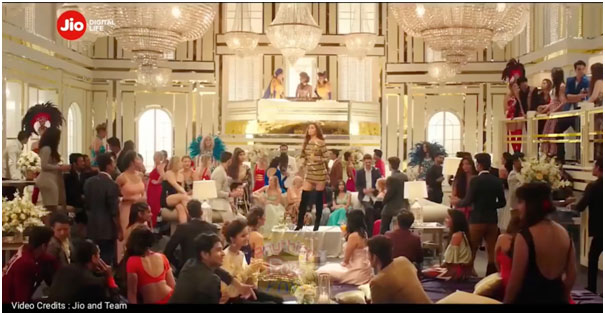


    While Jio has to be admired as an innovator who disrupted the mobile telephony category, its advertising seems to challenge every rule in the book.  One is left with fleeing images of people singing and dancing with well-known Bollywood stars and a sprinkling of East European models. The merriment then ends with a pack shot on Jio Digital Life.  If one were to guess the advertising brief backwards, one would say that someone said “let us be remembered as Dhan Dhana Dhan”. The rest might have been put together by a writer and director of dubious distinction.


    Jio certainly proves one thing. That a good product can survive atrocious advertising.



  • Prabhakar Mundkur: Shouldn’t Creative Directors Run Award Shows?

    By Prabhakar Mundkur


    When I read about Sonal Dabral’s appointment on the board of the One Club of Creativity, I couldn’t help going to their website to see who the other board members were.  It was no surprise that all the members were creative heads of agencies.  Then I decided to visit the D&AD website. Again, no surprise. All the board members were creative directors.


    Which raises an important question.  Should award shows be run by a bunch of suits?  Who have never written an ad in their entire life?  After all, award shows celebrate creativity so it is natural that the people who run an award show must be creative.So, is relegating creative people for just ‘jury duty’ paying lip service to the creative community?


    I asked one industry friend why suits might be running some award shows.  He said that advertising clubs were a business, and they needed to be run by managers, not creative people.  Now that doesn’t make any sense at all. Considering that most agencies in the country or the significant ones are being run by creative people rather than suits. But there could be another reason why creative people are not as prominent as they should be at local award shows.  That they are not interested in doing anything beyond jury duty and would rather leave all rest of the dirty work for the suits to take care of.  This however begs the question why they are willing to accept prominent positions on the boards of international awards, but not local awards.  Are the local awards too infra dig? Or is there some other problem?


    There could be a third reason why creative people are not given much prominence beyond jury duty in an award show.  This is an old argument where suits and CMOs feel that they contribute equally to the creative process, so it is not out of place for them to be in charge of the awards. This argument is a bit contentious.  CMOs should be heading the marketing award shows or at the most the Effies if they want to be still involved so deeply in advertising industry bodies, and suits should be heading the industry associations which are involved in the business of advertising.  Why are they in prominent positions in the creative award shows?  No clear and convincing answer emerges after examining all the alternative arguments.


    At the end of the day, most award shows need event management skills more than anything else.  No surprise then that the Cannes Lions is run by Ascential Events.  Cannes is a unique business model where 42% of the revenue comes from delegate passes, 41% from award entries, 15% from partnership and digital, and 2% from hotel room booking commissions.A model worth emulating for any award show – where the revenues from award entries and delegate passes is almost equal.


    Commonsense says that in the long term no award show can be really successful without roping in creative people as front runners of an award show.


    What? Yet another self-appointed Industry Body?


    If you can’t beat them, join them.If we didn’t have enough self-appointed industry bodies, whose members largely get self-elected year after year to their positions, we now have one more industry body called FEUD. (Forum for Ethical Use of Data). Formed by media professionals, one is not sure how they would detect the ethical or unethical use of data.  After all, the most qualified technology professionals and data experts were not able to bring to our notice how FB and Cambridge Analytica were exploiting personal data.  The use of data is a complex technological web that takes shrewd tech minds to figure out how data is being misused.  If the Congressional hearings of Mark Zuckerberg are anything to go by, even he didn’t have answers to all the questions posed by the Congressional Committee.


    Also, for an industry body to have teeth, it needs some recognition from the users and collectors of data, and some nod from a government body.  Take the reported misuse of Aadhar data. It is a few sting operations from brave journalists and experts like Ed Snowden who brought to our notice how that data base is potentially being mis-used. Snowden has the unique distinction of both being a computer professional and an ex-CIA employee.


    One would have rather seen a government body say headed by a person of Nandan Nilekani’s stature who understands the business of technology and data, or an industry group like NASSCOM to initiate a body for the ethical use of data. The other option could have been a self-regulatory body formed by companies who are sitting on tons of data, i.e. banks, telecom companies, Facebook and other social media companies and Google which dominates the Indian internet ecosystem. One can’t help wishing that a body like this could have been formed by more solid, powerful and competent authorities on the subject of data.


    Lastly, to enforce ethical use of data, legislation is imperative.  Currently India does not have any express legislation governing data protection or privacy.  The European Union’s GDPR ( General Data Protection Regulation ) which will become effective on May 25 will be one of the most wide-ranging and comprehensive pieces of legislation enacted to protect consumer data.Under GDPR, information such as customer IP addresses and even web cookies will be subject to the same strict security standards as physical addresses and social security numbers.


    Unfortunately, in India the relevant laws on data protection are currently bundled under the Information Technology Act 2000.   There is no doubt the objective of FEUD is honorable, so this space is worth watching with interest.

  • Prabhakar Mundkur: Will Kyoorius upstage the Abbys as an award show?

    By Prabhakar Mundkur


    The Kyoorius Awards have been steadily gaining steam over the years.  Abbys on the other hand has been under a cloud the last many years for plagiarism, scam ads created only for the awards, and a boycott from several agencies that seem to grow year after year.


    Most award shows these days position themselves both as a learning/knowledge forum and an awards night to celebrate the and acknowledge the winners.  Zee Melt, the two-dayprogramme on May 30-31 that precedes the KyooriusAwards night on June 1, promises some of the world’s best speakers from Fernando Machado, Head of Brand Marketing, Burger King to Chuck Porter, Chairman CP+B demonstrating that there will be a lot of knowledge sharing at the event.   But there has been an indifferent demand for these knowledge sessions thus far. Is it our new-found and emergingnationalism that makes us feel superior to everybody else in the world, and our attitude of ‘what do we have to learn from them’? Followed by the oft repeated chorus ‘India is different’.  Or are people just tired of listening to experts on advertising and marketing because there are too many of them, one is not sure.

     

    The jury is selected together with the One Club for Creativity and has the top creatives from across the world.The Kyoorius awards differ from the Abbys in that instead of awarding gold, silver and bronze all winners get a Blue Elephant.


    They jury base their decisions on three criteria:

    – An original and inspiring idea

    – Well executed

    – Relevant to its extent


    The non-profit objective of Kyoorius certainly gives it a ‘halo’ over other awards.  It does seem like they are doing something right.


    RoohAfza goes Retro


    RoohAfza was launched in 1906, by Hakkem Hafiz Abdul Majeed in Ghaziabad. But if you think this is a really old summer drink have a second guess.  Pepsi was launched at least 8 years before RoohAfza in 1898.  And while Pepsi has kept up the challenge of staying contemporary forover a 100 years, Roof Afza seems quite content on revealing its age.  A few years ago, the brand tried to modernize and stay relevant but their latest commercial clearly takes them back into their own past.


    And if the imagery is old fashioned it is supported by the jingle which has lyrics set to the tune of the 1956 classic YehDil Hai Mushkil clearly taking Roof Afzafirmly into the past.


    If their source of business is carbonated drinks the brand has a challenge to appeal to the youth of this country with its old-fashioned imagery.


    Nirma – Still the challenger brand but in a new category

    The debate on brand extensions and whether it will be a failure or success has engaged marketers and academics alike for the last many decades.  The traditional Western model of brand extension theory we all know does not hold. After all which theorist would have said that a shipbuilding brand would produce the one of  world’s most popular car brands in Hyundai.  Or that a well-known consumer durables like LG could also produce a shampoo successfully?

    When Harley Davidson launched apparel and ornaments  the company may have lost focus. In the 1990s, it extended the brand too far. It introduced products like wine coolers, aftershave and perfumes. I guess it’s important to understand that every brand has its stretch limit, even a great cult brand like Harley. For example Harley Davidson found its stretch limit when it introduced a perfume.  For most people the only smells associated with the  Harley brand were sweat and petrol, so I am not surprised the Harley perfume failed.

    Nirma on the other hand, did the wise thing when they entered the cement category.  They knew they could not stretch the Nirma brand indefinitely to cement, which is why they wisely entered with a new company brand  called Nuvocon. In 2016, the Nirma Group acquired the assets of Lafarge, giving them access to the use of their two brand names Duraguard and Concreto.  This year Nuvoco has got ambitious by sponsoring the Royal Challengers Bangalore team for the current IPL.

    Will Nuvoco be able to dislodge the top brands in the cement category like ACC, Ambuja, Binani, Birla and Ultra Tech?  Well, the Nirma group is used to proving themselves as a challenger brand so they might well repeat their earlier success now in the cement category.


  • Prabhakar Mundkur: Lighter is not better for Heineken

    Prabhakar Mundkur

    By Prabhakar Mundkur


    While the commercial might have been made in good faith, a recent television commercial for Heineken Lite has a bottle of beer sliding past several black people before coming to rest before a light-skinned woman. The tag line “Sometimes lighter is better’ might have aggravated the point about cultural diversity arousing the wrath of hip hop star Chance the Rapper who took strong objection to the commercial.


    The commercial in the meantime has been pulled off-air.  With the number of commercials over the last year including Pepsi drawing criticism, Grey has done a wise thing.  It has a mandate which says that creative teams working on a campaign must answer the question: “How can we make the idea reflect and respect the world’s diversity?


    Seems like an excellent idea from Grey considering the number of commercials that are constantly going wrong on the subject of cultural diversity.


    Silent Rebellion at Goafest?

    The guest line-up of speakers at this Goafest includes Baba Ramdev as the main speaker raising some eyebrows among advertising professionals.Patanjali is acknowledged as an innovator which disrupted the entire FMCG industry but is also seen as a bit of a pariah as far as its own advertising is concerned.  While Patanjali has risen to be one of the largest advertisers in the country, it has also committed the largest body of misleading advertising work in a very short period of time. Not only that, they have strongly questioned the wisdom of the advertising industry in judging their work as misleading.  Sanjeev Kotnala, writer, trainer and consultant, has been vociferously airing his views about how Baba Ramdev was a bad choice for the role of main speaker at a festival that celebrates creativity.  As an aside, none of the work produced by Patanjali could really classify as ‘creative’ by any standards.


    One argument for inviting Ramdev seems to be that he is an innovator and that there is a lot to learn from him.  But there is a lot to learn from many people who have been classified as offenders. After all who would deny that there is a lot to learn from Vijay Mallya about beer and spirits, a lot to learn about cricket and IPL from Lalit Modi, and a lot to learn about innovative jewelry from Nirav Modi?


    While calling Ramdev as a guest speaker might have been an innocent decision, with the sole objective of wanting to include a crowd-puller, one wonders how it affects the sensibilities of senior advertising chiefs?  At the end of day, every professional in his field must also be his own regulator.  Every industry needs to maintain the professional standards it has imposed on itself.


    Coke launches new Summer Campaign

    Coke seems to have broken the usual mould with its new summer campaign.  It has personalised the packaging of Coke through a co-creation exercise with consumers.


    There are 20 descriptors in 12 languages on various relationships in a new trend which is being labelled micro-segmentation and advocacy.


    Thus far co-creation seemed like a good buzz word to drop in conversations on marketing and advertising.  But Coke might has actually made this come alive as part of their “Share a Coke” campaign which is running globally.


    Good strategy for Coke.


    Alexa goes Wild

    India is currently running a boring, very functional campaign for Alexa and Amazon Echo/Dot and perhaps its defence is that they need to educate Indian audiences on how Alexa works through the Amazon devices.  In the meantime, Ellen DeGeneres revealed a funny and probably slightly dangerous side of Alexa in a lighter vein.


    While it does demonstrate what Alexa can do, it gives us an idea of what might happen were Alexa to know so much about you.


    Certainly a peek into our own future. The age of Artificial Intelligence is nearer than we think.


  • Prabhakar Mundkur: Ad Agencies no longer need Creative Chiefs!

    Prabhakar Mundkur

    By Prabhakar Mundkur


    Or so it seems if you want to follow in the footsteps of the oldest agency in the world, JWT, which has been in the advertising business for 154 years ever since it first started doing magazine advertising in 1864.


    Tamara Ingram CEO, JWT sent this memo to the agency when Matt Eastwood their global Chief Creative officer resigned earlier this month.  The memo from Tamara which was released by AdWeek went as follows:


    Everyone,


    I’m writing to share the news that Matt Eastwood, Worldwide Chief Creative Officer, has exited J. Walter Thompson to pursue a new adventure. We thank him for his contributions and wish him continued success in his future endeavors.


    We are reimagining the future of the agency. This is a structural decision that will allow us to be more agile, leverage our collective global bench strength and encourage the burgeoning diverse ‘maker culture’ growing within J. Walter Thompson. As such, we have no plans to replace the role.


    Creativity remains at the very core of our business, but today it is an even more collaborative process. It is borderless. It is broadly focused. We are increasingly relying on the people who are closest to making and creating the work. And, we are re-imagining the future of how this shift will be reflected within our organization and our leadership structure.


    The Worldwide Creative Council will evolve to better reflect the needs of the agency. It will continue to be a pivotal part of our organization internally and set standards and practices for how we improve the quality of our work. And, there will be a fluid roster of talented individuals with myriad skill sets.


    Additional strategic changes will include the use of technology to evaluate creative concepts at a much earlier stage. This will allow us to be iterative in real time and to ensure we are evolving our work to be stronger, more innovative and have a greater impact on our clients’ business.


    I am committed to protecting, supporting and developing the creative community and culture within JWT. I am looking forward to sharing more specific information soon. For now, it’s business as usual and we will keep the trains running as we head into Cannes.


    Tam


    What does this mean for the creative community as a whole?  Creatives the world over were enraged and showed their support for Matt.  In addition, JWT proved that it doesn’t really want to be a creative agency which has always been its nemesis.  Considered old, stodgy and uncreative, JWT might well have Commodore J Walter Thompson, the founder of the agency, turning in his grave.


    Coming on the heels of Marc Pritchard saying that he would like to see three quarters of the agency resources to be creative, the move from JWT saying that they are going to eliminate the job of the Chief Creative Officer, comes as a mighty surprise.  That they might want to challenge the current status quoin the advertising industry with planners and client service.


    Plagiarism crosses borders

    Finally, plagiarism has come up in the news because it can now cross borders more easily than people do. So, when Pakistan’s beauty brand Olivia did a complete lift of a Godrej BBlunt TVC of three years ago, India stood aghast. It had implications both for the advertiser and the celebrity in this case who was Kareena Kapoor.


    The Olivia Intence TVC


    The BBlunt TVC from Godrej


    If that were not enough, a MalaikaArora ad that had also plagiarised seems to have popped up.

    I am sure that theblatant attempt to copy something across international borders must have sent the IP lawyer community into a tizzy!


    Consumers are being manipulated not just Governments

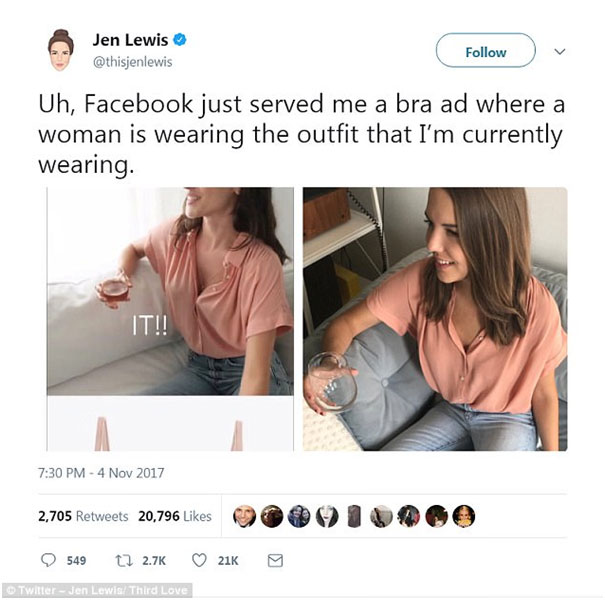
    With the governments of various countries venting their anger at Cambridge Analytica and Facebook for rigging election results in several countries around the world, everyone seems to have forgotten about the poor consumer.  Who has been secretly manipulated by these data thieves.  Some lone voices of consumers have been making these unconscious manipulative tactics from Facebook public on twitter, but I am afraid that in all the din created by the governments, consumers might lose out.  This tweet is a great testimony to how consumers are being manipulated.


    Mobile Manufacturers seem content to be camera replacements


    The new Vivo ad seems to have drawn a lot of attention because Aamir Khan has replaced Ranveer Singh in the advertising.  Marketing experts seem to be excited giving their opinions on how Aamir is good for the brand, others are discussing the pros and cons of using old stars versus young users.


    But the real problem with the Vivo commercial is that it treats the phone as a camera. The ad was reminiscent of the old Kodak and Canon/Nikon ads.


    And here we were busy thinking that the mobile has replaced the computer as a modern computing device that does everything from browse the web to order my Uber, pizza and more.

  • Prabhakar Mundkur: Is Client Service getting Extinct?

    By Prabhakar Mundkur


    Last week, when Mark Pritchard of P&G said“I’d like creatives to account for three quarters of an ad agencies’ resources”,he might have delivered a telling blow to one of the mainstays of the advertising agency – the client service department.  Globally and in India, creatives have been increasingly playing a more important role than any other department in delivering client satisfaction.  This is partly because the end-product of the agency is creative, so it does make sense that they are the crucial part of the delivery system.


    Almost simultaneously, the quality of client service has been in steady decline. Agencies once upon a time, queued up at the IIMs in India in the late ’80s and early ’90s to compete with the global FMCG players and recruited the best young brains in the country at competitive prices with the rest of the industries.  But alas, no more.  I remember that JWT used to take 50-60 new recruits into the system every year.  Decreasing margins and because advertising might have lost its sheen with young MBAs, ad agencies are no longer in demand on campuses today.  So, it is no surprise that the quality of client service is no longer what it used to be.


    But Marc Pritchard’s statements has its faults.  Agencies have for too long tried to mirror the hierarchies of the client’s marketing department.  This means that you need a mirror image of the brand manager, the marketing manager, the marketing director etc. in the ad agency’s client service structure.  And to their credit, client service does a lot of the dirty work on the account that is often invisible but plays its part.  Also, if creatives spend too much time on meetings, as clients often want them to, it is likely they will never have the time to actually do the creative.  In my experience, a number of clients are operationally heavy and often client service does the dirty work ungrudgingly.  But as more and more clients express their reliance on creative, client service might need to find a new reason to justify their presence on the business.


    Either way, the Marc Pritchard statement is a warning bell to client service people all over the world.  They need to redefine their existence and contribution on a client’s business.


    India Tourism and the Land of Yoga

    Incredible India rolled out its latest film positioning the country as the land of yoga.  Didn’t know that?  Surprised?


    I am sure no one in the world really doubts that yoga was born in India although to date it does seem like our most popular export. Unfortunately, in the world of intellectual property rights, India no longer owns yoga.  There are probably more yoga practitioners and yoga classes in the rest of the world than there are in India. With the UN having adopted Yoga Day, and Prime Minister Narendra Modi’s personal effort in promoting yoga, the new film does seem like a bit of wet blanket and the least impressive in the long series of Incredible India ads.


    The film released on March 7, 2018 seems to be languishing at under 10k views on YouTube.  No surprise.


    #AllBeginsWithBlack by Raymond

    This new TVC had everyone complimenting Raymond for their brave gesture of using visually impaired Canadian singer and writer Jugpreet Singh Bajwa as the hero of the film to give his interpretations of black for the new collection of fabrics. Advertising has been using differently abled people in their commercials for a while now.  Bajwa recites some slam poetry which goes like this:‘Black is a like a silence that everyone can feel. When it finally speaks it deafens the world with its powerful words. It’s time to unravel.


    While slam poetry might have a limited audience in India, I found the tone of the commercial very un-Raymond like. But that is perhaps because when I think of Raymond’s brand I think of their signature tune which was Traumerei from Kinderszenen Op 15 by Schumann. Languorous images of an idyllic world.  Beautiful musical phrasing by Schuman. This piece of music was played by radio stations at the end of World War II.  Listen to Horowitz playing it in Moscow to see how it moves you.


    This commercial to me was therefore a departure from Raymond’s brand personality and the harsh tone of both the visuals and the music got me quite disturbed.


    So, while the colour was about black fine fabrics, I felt there was no need to make the commercial like it belonged to the film noir genre. Because film noir is marked by a certain inherent fatalism and pessimism.   But that’s my opinion. Hope the commercial works for Raymond.


  • Prabhakar Mundkur: Indian Advertising and its Mother Schizophrenia

    Prabhakar Mundkur

    By Prabhakar Mundkur


    It would have helped if we had a uniform understanding of Indian mothers.  Last week, we saw two very different portrayals of mothers both emanating from Indian agencies.  One of course was the All Out TVC which ostensibly was making a commercial, that was in support of Indian mothers #StandbyToughMoms.  But the portrayal may have just backfired in spite of good intentions.


    Largely because it showed an Indian family sitting down to a meal where the Indian mother didn’t even have a seat at the table.  She then begins to play the servant rolled into a doormat role where she is busy serving an enormous family while she goes hungry herself.  She decides to be stern with her son who is behaving like the usual spoilt Indian brat and pushing his plate away rudely, only to be reprimanded by the mother-in-law – another cameo from the India of the past.


    Says Priyadarshini Narendra, an experienced strategist: “How is this a tough mom, when she doesn’t show the guts to stand up for herself and acts like a doormat? At the end,she needs to be rescued by a man, without his validation, she just standing there looking mulish.  It harks back to the Nirupa Roy trope. Which hopefully we have outgrown.”


    Milan Vohra, well known writer, says: “I find the ad regressive. It’s high time they stop glorifying clichés. And why does this woman behave like she’s their tight-lipped maid? Does she need someone else to speak for her? If the whole point was to show she’s a silent tough type maybe she could have had one pithy comment at the end to the bratty beta. Bah!”


    So, in many ways what might have been a film made with good intentions seem to have upset a lot of mothers because of the regressive woman stereotype portrayed in the film.


    And the big surprise is that the commercial was made by the same agency that did the path breaking #Shareyourloadcommercials for Ariel, which fought for an equal status for women.


    The India – Pakistan advertising collaboration

    Another much shared commercial on WhatsApp was the Shan Foods commercial for Peek Freens Cake-up. The ad focuses on two characters; a working mum and her son. The mum religiously fills up the son’s tiffin box with cakeeveryday and there is a letter she puts in the tiffin which attempts to instill the right values in her child.  So far, so good. Yes, it is touching at one level.  And it is a beautifully made film.


    But after having seen it one can’t but help, come up with some questions.


    One mother I showed the ad to said without any hesitation, that at one level the film was saying “I love you so much beta, but I’m a cliched working mum who is never around and therefore I will assuage my guilt by feeding you processed cake with artificial ingredients and sugar EVERYDAY!”.


    Of course, having worked on brands like Kellogg’s, which are maniacal about nutrition one can’t help asking the second question. What are the daily nutritional requirements of this cake and is it really wise for a mum to be feeding her child this cake every day?


    But at least it portrays the modern mother in Pakistan.  Now take a look at the All-Out portrayal of the Indian mother.  Are mothers in Pakistan more progressive than India?  Or is it just our schizophrenic understanding of what today’s mothers are about?


    Indian Print ads – lots of media innovation and no creative innovation

    In the 80s and 90s, Indian print ads moved you. Whatever happened to the print ads of today?  They are so obvious, they don’t make you smile or evoke any emotion at all.  And all the while you are struggling to read your daily newspaper that is so full of media innovations, it’s a struggle to read the paper because it is falling apart with fold-outs.  Or is it that we know how to be creative in English and we know how to be creative in Hindi, but we haven’t quite got around to being creative in Hinglish?


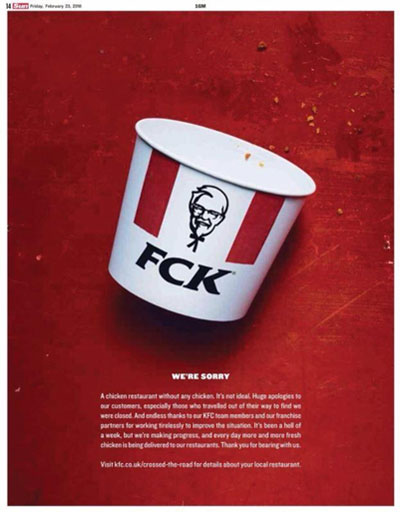
    But the KFC ad in the UK brought resurrected the creativity of print advertising. Provoked by a shortage of chicken in all their restaurants, KFC decided to turn the overall consumer disappointment on its head.


    The ad read “A chicken shop without any chicken. It’s not ideal. Huge apologies to our customers, especially those who travelled out of their way to find we were closed,” the ad reads.


    “It’s been a hell of a week, but we’re making progress, and every day more and more fresh chicken is being delivered to our restaurants.”


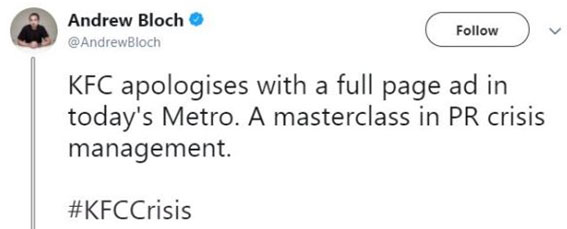
    Andrew Bloch, Founder and Group Managing Director of Frank PR called it a ‘master-class in PR crisis management’ on twitter. I can’t help but agree!


  • Prabhakar Mundkur: What happens when the Scam-accused is also the Brand

    By Prabhakar Mundkur


    No doubt people’s attention the entire week was focused on Nirav Modi.  While the finance experts tried to unravel the mysteries of the scam and the LOUs, the marketing and advertising experts argued on what would happen to the brand.In retrospect, the diamantaire extraordinaire might have made the mistake of using his personal name as a brand.  It has certainly pointed out to marketing experts that brands like Kingfisher, Satyam etc. which also went through a scam were perhaps less affected because the brand name was not connected to the alleged scamster.  The Nirav Modi case is different because every time you mentioned “Nirav Modi” the brand name was being dragged through mud.  We might have been more forgiving if the owner of the brand was an accused but called John Smith to make a point. That way the Nirav Modi brand could have lived on.


    By Nirav Modi’s own admission in a letter to the PNB Chairman he is reported to have said: “In the anxiety to recover your dues immediately, despite my offer (on February 13, a day before the public announcement, and on February15) your actions have destroyed my brand and the business and have now restricted your ability to recover all the dues leaving a trail of unpaid debts”.


     

    That now leaves one option were Nirav Modi to consider getting into business again.  He would need to think of a new brand but where he is only the designer.  Unless of course the brand gets suitably exonerated, through  legal battles with the CBI and PNB.


    Zee’s Social Media Experiment mysonikudi.com

    In a world where people still believe that communication has to be hard-hitting and that normally means that you spend a lot of money trying to hammer a message into people’s heads, it was refreshing to see the Zee campaign for mysonikudi.com


    They followed the Stimulus-Response approach which evangelised that if you want someone to believe something, you don’t just hammer that message into their heads.  So, for example, if I want you to believe that I am a funny man, I don’t show you my certificates in humour and shout at you loudly that I am a funny man. Because you might well not believe me.   Instead I tell you a joke, and then your response is that I am funny.


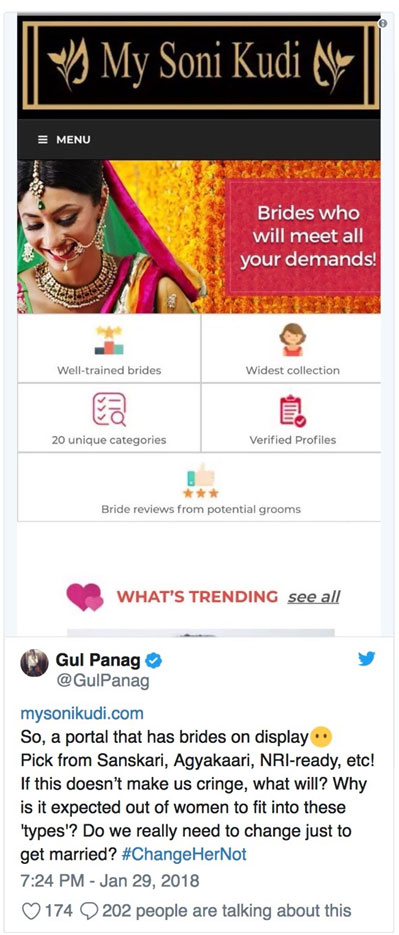
    Mysonikudi followed this approach when they got Gul Panag to tweet about a make-believe website called sonikudi.com which projected itself as a portal which provided customised brides like Wonder Chef’, ‘Bachat Focused’, ‘Agyakari’, ‘Gharelu’, and ‘Sansakari’.


    Gul Panag #changehernot hashtag was trending in no time and it drew the ire of the public at large making the campaign a great success.  The fake website I believe drew over 3000 eager beaver husbands-to-be putting in their preferences for the stereotypical housewives offered on the website.


    Yahoo advertises for India

    These days in drawing room conversations with my daughter’s friends, they say: “Uncle, we are no longer on Facebook, we are on Instagram”.  While I am still trying to grope around with a theory that would explain this millennial behaviour they add fuel to the fire by telling me that Facebook is only for older people.  That really makes me feel really old.  In the last months, I had almost come to the conclusion that Facebook was for old dads and grandads. And that Instagram was for all the young happening people. Of course I thought being an ad guy that this was a clever strategy by Facebook to differentiate between the users of Facebook and Instagram since they own both platforms.


    And now there is this campaign called “Live to Love” by Facebook that says all my thinking is wrong. For one its shows young people (read millennials ) and it also shows old people like me. Here are sample commercials for  both Neha the young doctor, and Sunny the 58 year old portly businessman.


    While the campaign does look like a strategy planner wrote a very detailed brief that eulogised about the target group and the creative just decided to translate it into a film, the campaign does what every mass marketer is known to do.  Talk to everybody, both young and old.  Which, somehow goes against the the tenets of positioning and targeting.  But I guess when you have 217 million users in India and those users are a pretty amorphous lot, you don’t have too many choices.


    In any case, the campaign does two jobs:  it reassures me that not only old people use Facebook.  And it reassures younger people that they need not shun it and go to Instagram.  If that is what Mark Zuckerberg wants in this second largest market the campaign perhaps meets the objective.


    PrabhakarMundkur is an ad industry veteran who is now a prolific commentator on LinkedIn and his own website – prabhakarmundkur.com. The views here are personal


  • Prabhakar Mundkur: Does Comparative Advtg Work?

    By Prabhakar Mundkur


    The Bajaj Dominar 400 has come out with a string of commercials which use the metaphor of the elephant to connote heavy, old technology bikes – the obvious reference is of course Royal Enfield and even Harley to a lesser extent is in the same group, although Harleys typically fall into a more expensive price bracket.


    In overseas markets, it is a well-known fact that on any yardstick of performance Japanese bikes outclass a Harley.  That is much the same for the Royal Enfield in the Indian market, which at best has only made marginal improvements to the original version of the Royal Enfield that rolled off the production floors in Redditch, Worcestershire, more than half a century ago. No wonder the Royal Enfield websites refer to the motorcycle as a ‘modern classic’. After all, just to take one example it sports a carburetor which is a relic of old technology instead of a fuel injector that is found in modern cars and motorbikes.


    But what Bajaj is not accounting for is that the old heavy bikes have very strong ‘genes’ and strong emotional attachment. There is something in every Indian biker that tells him he must own a Royal Enfield at some point of time in his life.  And while they may not be fast, not great at picking up speed, or great at handling, there is some undefinable quality about sitting on top of a Royal Enfield that a string of commercials may well find it difficult to overcome. Obviously Royal Enfield is making giant strides in this market, and that’s the reason for this response from Bajaj.


    Which brings us to the eternal question on comparative advertising: does it really work?


    In a study conducted by Dr Fred Beard, professor of advertising in the Gaylord College of Journalism and Mass Communication at the University of Oklahoma, Dr Beard says “the potential for negative outcomes of [comparative advertising] are a very real possibility when prominent brands choose to go head to head using strictly comparative advertising campaigns.”


    Heineken India’s Generation Campaign is a good adaptation of international work

    The generation gap and particularly how to appeal to millennials has been every marketers challenge for some time now.  When Heineken launched their #OpenYourWorld campaign overseas last year, the premise was to test if two strangers divided by their beliefs ( political and social )can overcome their differences. That seems to have hit the right note amongst consumers abroad.


    No wonder then that Heineken considered adapting the same campaign to India but with a twist. Instead of two strangers, the campaign decided to capitalise on the generation gap between parents and children.  By finding the gap between how parents think about what their children should be and what children really want to be they have found an interesting idea right in the middle of this gap. The campaign idea expresses the parent’s traditional career expectations of children as a base and then uses interaction between the parent and child  to break down barriers.


    By using a comedian to present the unique social experiment, the Indian version adds a layer that perhaps makes the campaign work better.  But I wonder if the campaign lags the trend a bit ; Indian parents have been opening up to letting their children choose new age professions for some time now.  I see so many parents open to their children becoming musicians, fashion designers, disc jockeysetc, and joining emerging new sectors like media and retail that one hardly comes across the traditional parent forcing his child to become a chartered accountant, engineer or doctor.


    That is the only thing I found a trifle jarring about the campaign was the fact that India has passed the stage of being closed to new professions; the world has opened up both for Indians and people around the world.


    The Super Bowl Zeitgeist

    Jeff Weiner CEO of LinkedIn in a post this week said: “ If Super Bowl commercials are a barometer for the prevailing zeitgeist, interesting to note the number of inspiring, inclusive, and positive messages during this year’s game.”


    Whilst the Super Bowl does seem a very competitive space that brings out the best of brands one of my favourite spots that took me by surprise was the Amazon spot featuring Jeff Bezos for the first time in a commercial.   Various celebrities try and substitute for Alexa who has lost her voice.


    The other commercial I really loved was done by Droga 5 for Sprint and capitalised on  Artificial Intelligence and all the TV series we have been fed from Westworld to Extant to real life expressions from Sophia the Robot.


    The commercial does an excellent and laughable take-off  by portraying hyper-intelligent robots who have discovered that paying twice as much for Verizon isn’t smart.  The robots have a good laugh at their creator for being stupid.

  • Prabhakar Mundkur: Advertising loses another Great

    By Prabhakar Mundkur


    The week was full of tributes from all the people who knew and worked with him, including the famous Shelley Lazarus, one-time global CEO of Ogilvy and now Chairman Emeritus, who at one point of time was the only woman amongst seven men in the Advertising Hall of Fame.

    I never knew Ranjan personally although I did bump into him a few times in Shunu Sen’s offices at the Levers office at Backbay Reclamation in the early 1990s, when he would dash in from Singapore. We would both be required to present to Levers our latest views on the Lever competition which typically meant P & G and Colgate.

    Ranjan Kapur

    While I never worked with Ranjan, I did have a competitive perspective on him because Ogilvy and JWT were both vying for Sir Martin Sorrell’s attention after being acquired by WPP – JWT was acquired in 1987 and Ogilvy a little later in 1989.  Rumour had it those days that Sir Martin might have overpaid for Ogilvy, although in retrospect I am sure it was a wonderful decision. As one of the Lever agencies, we never considered Ogilvy a serious threat to the Lever business those days.  Then came a major storm called Ranjan Kapur.

    Since he joined in 1994, he seemed to have led a serious business transformation at the agency (before the word business transformation was to become popular). This included a huge emphasis on its creative product which he believed would lead to both fame and fortune.  By 2004, when Ranjan retired from Ogilvy, it was an awesome agency that had not only built itself a great solid reputation but was also sniffing at the heels of JWT which was always considered the #1 in revenue in the country.  Without IMRB’s revenue, Ogilvy was already bigger than JWT as I remember it back in 2004, while pouring over the annual reports of both agencies.

    Since I observed Mike Khanna, the erstwhile CEO of JWT from close quarters, I knew Mike always thought of Ranjan as a good friend, but he was more than aware of Ranjan also being the formidable competitor.  As luck would have it in 2005, I was one of the invitees for an Kolkata Ad Club function along with Ranjan.  And I was fortunate enough to catch him and wife Jimi at the airport where our flight had a miserable delay of a few hours.  This was my first real meeting with Ranjan and Jimi and I found them a warm and lovable couple.  We exchanged notes on a number of things including the quirks of our neighbourhood, since we both stayed at Prabhadevi.

    There are some whom you meet and you wonder why fate hadn’t brought you together earlier. Ranjan was one of those people.  As tributes pour in from every corner of the country, one can see how much he is being missed.


    Patriotic Branding

    I don’t think we have ever had a formal study of  patriotic brands in India, although several brands have pledged their patriotism,  but in the US where brands are continuously studied for their degree of Patriotism,  brands like Jeep, Hershey’s, Coke, Levis, Ford, Wal-Mart, Campbell’s and others  have stood out as patriotic brands. An annual research study finds out which brands were most associated with the value of patriotism. Quite often when we say American icon I guess what we are really referring to are patriotic brands. Largely, it has to do with being an American company or really being made in the U.S.A.  In the  2016 research, a national sample of 4,750 consumers, 16 to 65, evaluated 248 brands across a collection of 35 cross-category values. Consumers identified the following brands as leading 2016’s patriotism parade. Percentages indicate brands’ emotional engagement strength for the individual value of patriotism.

    1. Jeep/Disney (98%)
    2. Levi Strauss (96%)
    3. Ralph Lauren (95%)
    4. Ford (94%)
    5. Coca-Cola/Jack Daniels (93%)

    In India, Bajaj has always been known for its patriotic branding right from the days of the old Bajaj scooter with “Hamara Bajaj”.  Many brands pledged their patriotism this Republic Day but I thought one brand did it really well.  And no prizes for guessing.  It was Bajaj with its Invincible Indians ad.  It told stories of brave Indians who were serving society at large with the help of their Bajaj motorcycles.


    Advertising Ideas are not Intellectual Property?!


    Most ideas of any kind today are getting copyrighted both in the arts and the sciences. Create a piece of music and you can copyright it.  Create a piece of art and you can copyright it.  Create a scientific invention and you can copyright it.  Write a great advertising baseline, and consider it given away for free, forever. And be prepared to be forgotten. When Idea Cellular changed its agency from Lowe to BBDO late last year, the industry was left in suspense about what would happen to all the great properties created for Idea including “What an idea, Sirjee” which became a part of colloquial lingo in the country over the years.


    So when Shashi Shankar CMO of Idea Cellular recently said “The tagline belongs to the brand; it doesn’t matter who coined it”, I can see a copywriter cringing in a corner somewhere, about why he joined a profession where a client can say he doesn’t matter.  After all, that is not the tradition.  Most people are given credit for the good work they have done on a brand even if they lose the business over a long period of time.


    So, did the new work justify the change of agency from Lowe to BBDO.  I am not so sure.  I thought the new Idea commercial lacked the zing, and the intrusive personality the brand had built up over all these years. Somehow, the new commercials felt like they were for an older, soberer brand, unless it was intentional. In addition, the famous baseline “An idea can change your life” felt like it had been relegated to the background, along with its erstwhile agency.  The line preceding the baseline “A video can change your life” felt forced and idealess.


    But such is life in advertising.  You can slog your butt off for decades on a business and be forgotten forever!


  • Introducing Ad Buzz, a new column by Prabhakar Mundkur


    Adperson, musician, bicyclist and someone who doesn’t hesitate to speak his mind…. every Thursday on MxMIndia.


    By Prabhakar Mundkur


    Prabhakar Mundkur

    The year-end was full of the cacophony of writers making predictions for 2018, or mundane reviews of 2017, in spite of the fact that a calendar year has no particular statistical significance for trend spotting.  Change is always continuous and never separated by any discrete intervals, especially an interval that lasts exactly twelve months. In some ways, 2017 may have just stolen the thunder from 2018, with the strides in artificial intelligence in the form of Sophia the Robot, or personal assistants like Alexa making a major impact in our lives towards the end of the year.


    But one bright spot for December was the Lion of St Mark awarded to the much-deserved Pandey brothers.  They have truly raised the bar of creativity to a global standard, besides putting India firmly on the advertising creativity map.   Showering undue adulation on our stars is an Indian trait and we do it constantly with all our stars, whether they are from cinema, sports or any other field.  We may just have added ‘advertising’ to the adulation list.


    With this award, Piyush and Prasoon Pandey join an illustrious band of creative people around the world that has included David Droga, Marcello Serpa, Bob Greenburg, Joe Pytka, Lee Clow, Dan Wieden and Sir John Hegarty.  Not everyone might be aware of the work created by these distinguished gentlemen, or even knowwhere they work.The Lion of St Mark is one of those awards that lets the winner soak in humility and pride so deserving of a life time award, which by definition implies that it can only be won once.
     

    St Mark incidentally is the evangelist pictured in the form of a winged Lion holding a Bible and is symbol of the city of Venice where the first Cannes was held in 1954.  But the significance of all this may be lost to many, or otherwisedismissed as unimportant.  At least one of our advertising weeklies, which covered the event exclusively, could well have educated their readers on the significance of the award.


    ~~


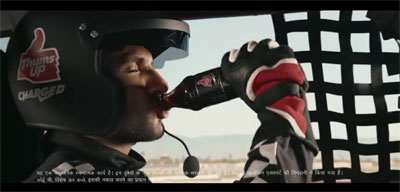
    For the marketing intellectual, the introduction of Thums Up Charged might hold room for an interesting debate.  Variants according to textbook marketers can endow the mother brand with rewards ranging from increased market share to a longer life.  But how does that augur for a category like colas, which is increasingly being seen as unhealthy?  And Thums up Charged might well be dubbed an even unhealthier variant given the extra levels of caffeine and the heightened aeration.  So how will an unhealthier variant of an already unhealthy brand perform?  Of course, to its credit, Thums Up remains the market leader in a market which has the world’s leading colas.  Another point to debate might well be how will the two variants will be differentiated in the advertising.  Will it be differentiated enough for the consumer to know which variant is being advertised or will the consumer just see it as another Thums Up ad? This often is the acid test for variant advertising.


    ~~


    If the rumour mill is to be believed at least one leading ad agency of earlier years shut down its Delhi office on Dec 31.  What a way to close 2017.  I believe the agency is managing its Mumbai office on skeleton staff.  Another well-known agency that at the turn of the millennium was threatening to hold the creative high ground is being absorbed by another agency in the same communications group.  As an ad guy, I find this kind of news depressing.  Partly because I always questioned the soothsayers and never wanted to believe in the death of advertising that has been a hot topic of discussion for some time now.


    For those of us who were celebrating the close of the old year, I am sure this is a week for sobering up and reflecting on what the new year holds for all of us.  The first week of a new year always feels like the end of one journey and the beginning of another.


    Having spent nearly four decades in the advertising business with companies like JWT, Havas and Y & R in India, Africa, and Asia, veteran adperson Prabhakar Mundkur is Chief Mentor at HGS Interactive, a part of Hinduja Global Solutions. He was LinkedIn’s Top Voice in India in 2016 and is a prolific writer. He recently set up PrabhakarMundkur.com as homebase for his writings. Ad Buzz will appear weekly on MxMIndia.com. The views here are his own.


  • Prabhakar Mundkur: Does using the same idiom as someone else make an idea original?

    Prabhakar Mundkur

    By Prabhakar Mundkur


    The death of Kapil Mohan,the creator of the Old Monk rum drew a number of memoirs and essays on this iconic brand.  But one particular ad on social media on January 10, became quite popular and went viral.


    To me it was an idea made famous by Chivas Regal in their campaign below.

    In a debate with some of my contemporaries, the opinion was divided.  Many felt that it was reminiscent of the old Chivas campaign, but others felt that it was an adage that could well be re-used. One of my friends even questioned whether the ad was legal since it promoted Old Monk rum. (although the word rum was cleverly not used). Another friend raised the issue of the ad being created as speculative work, since it was not approved by Coca-Cola according to the tweet from the agency that created it.


    One awardwinning creative director I asked said: “Yes it reminds me of Chivas, but the visual makes up for it”.  Another awardwinning creative director said: “Yes it reminds me of Chivas. I remember it was something like ‘To the host it’s half empty, to the guest, it’s half full’.  However, since it’s an adage, nobody really owns it. Chivas did a fine job of adding a twist while in the Thums Up ad, the art director went for a literal visual depiction of the adage.”

    But I leave you to decide if you think the ad is original and if it needs to be applauded.


    Patanjali – LVMH Alliance

    While as a financial proposition it may make some sense, news of the LVMH-Patanjali partnership is as different as chalk and cheese to use a very tired phrase. The L Catterton Equity Fund was set up by LVMH to make investments in high growth companies with consumer brands and is one of the largest funds in the world.


    I thought that there might be some major hurdles to overcome especially the brand name itself.


    L Catterton Managing Partner, Ravi Thakran told the press that he is keen to explore markets like US, Japan, China, South Korea and Europe for Patanjali. However, the markets he mentions are hardly homogenous. For that matter, even the markets in North East Asia are not homogenous.


    The first hurdle for overseas markets could be the name itself – Patanjali. First of all, it is a four-syllable name which is quite uncommon in Asian markets. In addition, the Japanese recognise the foreignness of names both in Katakana and Roman alphabets and the Chinese recognise foreignness whey they see certain Hanzi characters.  And if the foreignness is attributed to Indianess, one is not quite sure what Indianness and Indian products mean in these markets. For most North East Asian markets India is considered both chaotic and mysterious.  The Chinese feel that Indian media is constantly portraying them as evil, which is not going down well with the Chinese.  In addition, in countries like China, the government is officially atheist.  So Babas and Vaids have little cache there. According to a research conducted in 2008, less than 40% of the Japanese population is religious.


    Besides, for Patanjali to accept any foreign investment, might be a bit like selling the brand’s soul, given its nationalistic, anti-MNC positioning thus far.


    The Art of the Crowd

    Crowd Art is an often-employed ploy by artists and advertisers.  The first great commercial to use crowd art was the British Airways commercial in 1990.  It used thousands of people to create a face which then winked at the audience before dissolving into a Union Jack.

    The recent Mercedes ad re-inforcing their leadership in the Indian market used crowd art to form the three-pointed star which was quite interesting.

    Which brings me back to the question I started with: is using the same idiom as another person but dressed differently, original?  When it comes to art, the question of originality needs some deeper introspection.  Under some conditions it still remains original. To me for example, Bernard Shaw’s famous play Pygmalion had to make a transition from being a play to being a musical when it became My Fair Lady, but for me My Fair Lady is still original.


    In general, I like Herman Melville’s view of originality when he ways, “It is better to fail in originality, than succeed in imitation.”