Category: PRABSY MUNDKUR

  • The Lux-Santoor Melodrama


    By Prabhakar Mundkur

     

    A week ago, The Times of India flashed a provocative headline “Has Santoor overtaken Lux as India’s No 2 brand?”. At first, I couldn’t make sense of it.  Because of the sentence construction. I thought to myself while reading it “Has Santoor overtaken Lux as India’s No 1 brand?” would have been a clearer headline making the point definitively that Santoor is the largest soap brand now in the country (for whatever reason).  The same article later on went on to say that according to Nielsen data for the quarter Jan-March 2018 Lux has a value market share of 13.4 % while Santoor has a market share of 9%.


    That to me sounded like it was inconsistent with the misleading headline which was perhaps put there for some sensational reporting on the soap market.


    Admittedly, Lux may have suffered losses in market share because I handled the brand in India in the 90s and its market share was around 19-20%. The market was around 400,000 tonnesaround at that time. Now it is expected to be closer to 600,000 tonnes. Which means that Lux has declined in a market that has grown over the last 25 years or so. However, whether Santoor is bigger than Lux, was a fact not adequately supported in The Times of India article.


    In any case, more than the Times of India article it was a celebration on social media from the people who belonged to the ad agency (FCB-Ulka) that had handled it for the longest period of time of about 25 years.  The tragic part of the entire mass media and social media sensationalism was that Santoor is not handled by FCB-Ulka anymore. In fact, the account is handled by ADK Fortune.  And kudos to ADK Fortune for being the agency when Santoor reached this historic milestone, that is if it did.


    As far as Lux is concerned, it is a well-known fact that the brand has historically been milked by Unilever in every part of the world.  In a book by John Philip Jones called “Does it pay to Advertise?”, Professor Jones had lamented on the decline of this great brand called Lux from a global market share of 33% once upon a time to under double-digit share in most markets at the time of his writing the book.


    The Star Relationship Programme on Lux

    In many ways, India was perhaps the last bastion of Lux.  Once upon a time, before we knew words like ‘relationship management’ and ‘direct marketing’ in the 1980s, the team on Lux would handle a regular relationship building program with about 200 film stars in the country.  The team handling the brand would be in regular touch with the stars, sending them birthday cards and flowers on their birthdays and arranging for photo sessions with the late photographer of repute, Gautam Rajyadhaksha who once said that every Lux campaign was Unilever acknowledging that you had become a star and the star in turn saying a thank you to Lux.


    An outside consultant who had spent his entire career in the film industry and had an excellent relationship with Hollywood stars would make regular visits to meet them. He was the chief of PR with stars. As a result, most stars considered it a privilege to be featured in a Lux print ad or film and would do it for free or perhaps sometimes for just a nominal fee. These were the golden days of Lux. They thought of Lux as furthering their image and publicity in the media and therefore a step up the Bollywood ladder of fame. So, it was truly the soap of the stars, rather than the soap of Kareena Kapoor for just a year which is where the brand is now.  In fact, the Lux teams used to shoot at least 12 Lux films a year with a dozen different stars, many of them regional stars. Lux had a deep and enduring relationship with every female star. The recent Deepika commercial was pretty much made with the classical values that Lux has always been known for.


    https://www.youtube.com/watch?v=y3cZ-Rc5-p8


    One of the tricks of handling the star portfolio for Lux was to catch them young. The moment an upcoming star made her appearance in Bollywood the Lux team was there to make friends with her and promote her image in the local film magazines of the day.


    Lux was glamour personified. Lux was about the private moments of the star. The ‘star on a pedestal’ image.  Distant but alluring. Not the film star putting her head out of a car to scream at someone littering the road. That was never Lux. The Lux soap advertisement  showcased the glamour of the female star in Indian cinema.  And gave the consumer a peek into her life.


    Lux was about the glamourous world of the star and her inner sanctum sanctorum with Lux where she spoilt herself with a luxury bath with Lux. That is what made it the soap of the stars.


    But whose soap is it now?


    Prabhakar Mundkur is a veteran advertising agency captain who is now a strategy consultant, educator and a prolific writer. The views here are personal

     

  • Does Music have Colours (and why the ‘hai’ over ‘Hi’)?


    By Prabhakar Mundkur


    At first you might well find the idea a little incongruous.  But it does.


    Both colours and music seem to have emotional associations.  Little doubt that some music makes you sad, and some of it makes you happy for instance.  Similarly, some colours are formal, others are informal and some others are great for beach wear or even a psychedelic party.  So, it is inconceivable that music can have colours? Often the hippies of the 60s while tripping on acid have expressed several times that they have seen colours while listening to music. At the time it was explained away as the hallucinogenic effects of LSD on the brain, which made it unable to distinguish between the frequencies of colour and the frequencies of music.


    Current science says a miniscule minority of the population – one in three thousand – can actually see colours associated with music.  They are called cromesthetes and they spontaneously see colours as they listen to music.


    Now Maruti Suzuki seems to have used this little known and esoteric phenomenon to generate a musical signature to their brands.  They decided to generate the sound of Nexa Blue from three western classical musicians who were asked to present a musical theme for #NexaBlue.

    And this is the music they heard when they saw #NexaBlue.


    https://www.youtube.com/watch?v=Rg7FwoDA5c4\


    Very impressive as a piece of theory.  But is it mind-boggling as a piece of music?  I am not so sure. After all, music is intuitive at its very core.  And no amount of theory can help you to create a memorable tune that you want to sing along or whistle the moment you have heard it.  Music is a purely emotional response.  Also the tune being classical may not appeal to the larger target audience that Maruti-Suzuki in mind.  In fact perhaps it might have worked better, to have had Indian musicians interpret #NexaBlue into sound. It might have been more meaningful for the Indian market.  But the idea is both brave and experimentative.


    Rishton Ka Hi Fever


    The new Wagh Bakri has a nationalistic fervour to it.  The story is about a son returning from several years overseas. He is naturally a little westernised after his sojourn and uses the Western greeting Hi instead of say a Namaste. The son is a bit cold and self-effacing with his parents and grandparents on arrival.  The commercial ends with the grandmother admonishing the young lad for his westernisms and Western style of greeting with a Hi.


    If the son is a millennial and returning from overseas the poor boy deserves less of this severe cultural criticism.  After all it is Hello that was replaced by the more colloquial and modern Hi, which is likely to be used more often by young people than the old.


    When Parle-G recently launched its new campaign #YouaremyParleG, the first word in the first commercial for Parle G was the word Hi.  Take a look at the commercial.


    It would seem that Hi is no longer interpreted as being a western word but rather just a plain formal greeting that is used by the youth all over the world.  But somehow Wagh Bakri seems to have chosen to make it a moral lesson for Indian millennials.


    Hey v/s Hi and #WhenOatsMeetsChocolate


    And if Hi were so objectionable here is another digital video from Britannia Nutrichoice aimed at millennials uses the expression ‘Hey’ which is even more common perhaps amongst the youth than the antiquated Hi.


    https://www.youtube.com/watch?time_continue=54&v=SLVF255hQW4


    Britannia bases it assumptions that millennials are using emojis and animation to communicate all the time.  Oats and Chocolate are animated characters that meet in a romantic encounter in this new product from Britania.


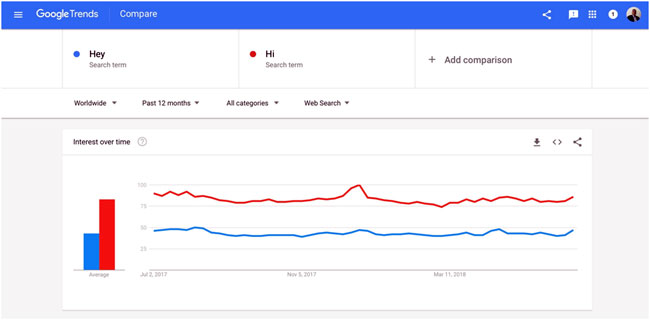
    However, if you compare Hey and Hi on Google Trends, it does seem like Hi is more commonly used than Hey on a world-wide basis.


    So one needs to see if the moral rap on the knuckles suggested by Wagh Bakri attracts Indian millennials or actually puts them off.


  • Does #IndiaInvited work for Kotak?


    By Prabhakar Mundkur


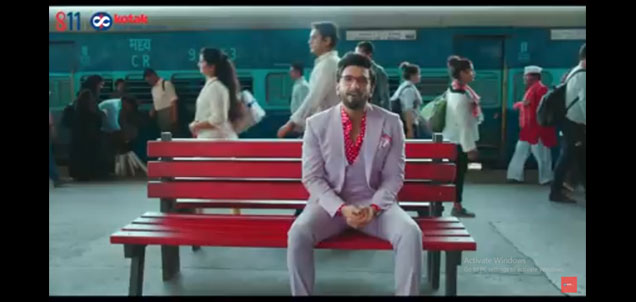
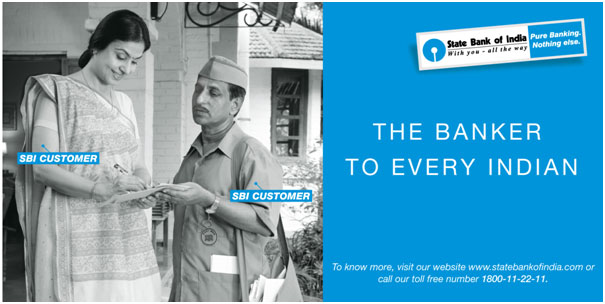
    When Kotak released a new campaign #IndiaInvited that said it didn’t discriminate between consumers, and everybody could therefore open a 811 account with them, I couldn’t but help remember the famous State Bank of India campaign many years ago that said “The Banker to every Indian”.  The campaign showed people from different walks of life and income classes to demonstrate that they were all SBI customers.  Somehow it seemed most appropriate for India’s largest public-sector bank to say that.  If I were to put it another way SBI as a brand had the consumer’s permission to make that claim.


    Does Kotak have the permission of consumers to make a similar claim?  I am not sure.  At the end of the day, positioning is not what companies want to say, but what consumers will let them say, or what they find acceptable.


    One thing that the commercial did for sure is to engage a number marketing experts on discussions on the ad and whether it was appropriate or not. I spoke to a number of marketers about it and these are some of the reactions I got.


    “Choice of Ranveer and his attire doesn’t feel appropriate; exaggerated expressions and caricaturized character seem over the top; almost making fun of the people it is made for.”


    “I received the ‘811’ as a sub-brand; a proper noun that doesn’t mean anything beyond the sound of its name.”


    “I think they got so engrossed with their superstar that they forgot to mention what makes 811 everyone’s bank…the fact that it is digital.”


    “Big deal. The customer does not expect discrimination from any bank… the creative could have focused on that sensitive button of multinational banks will look down on me, but as it’s all online, even that’s moot.”


    “811 is a zero-balance account, it can be opened completely online with just Aadhaar and PAN. It has a 6% interest rate. ‘For everyone’ is not a bad story. 90% of the accounts they open will be unprofitable. That’s the sacrifice they are proud of making”.


    “Yes, does seem a little like ‘Banker to Every Indian’ but while the SBI campaigns merely acknowledged that Indians came in all shapes and sizes and that SBI knew and catered for them all (or created special products for the many diverse customer clusters) the Kotak ad is in your face about discrimination in life.”


    “It is a communication that seems to be making a relevant point that needs to be made today. It’s like starting an important conversation in the society.”


    “Choice of Railway Station as a context is bang on; one that the ‘every Indian’ identifies with; one that brings together diverse classes and cultures. Using the context to make sensitive references to people across the Indian spectrum is clever; clear, mostly subtle (in some cases insensitive).”


    “It won’t make me consider Kotak; but now at least I see it as an organisation that seems to be raising an issue that needs to be raised.”


    Baggit


    The problem in using celebrities these days is that the consuming public knows much more about the lives of their celebrities through social media.  It may be a little incredulous to believe that Shraddha Kapoor would let Baggit to do the talking for her when all her pics on main media and social media show her letting bags from Cartier do the talking for her. In fact I googled all the pics of Shradhha with bags and they were famous international brand names.


    I thought the role of the bag was a bit forced in the commercial. But looking at the comments on YouTube it seems clear that people loved to see Shraddha Kapoor and none of them noticed her bag in the commercial which was Baggit. She is very popular but frankly I don’t know if she can help the bag to be popular.


    I guess the commercial might do the job of raising brand awareness (hopefully) and nothing much more.


    Indian entrepreneurs use celebrities so that they can show off to their friends about how they used a celebrity for their brand.  It’s got nothing to do with marketing science.


    Indira IVF


    The YouTube introduction to the video said “Becoming a mother should always be a matter of choice. BLUSH and INDIRA IVF present THE CHOICE – a new video in the Mothers and Daughters series, featuring SheebaChaddha and AuritraGhosh. “


    I quite liked the commercial. I felt it was sensitive.  And said that it was never too late to be a mother while subtly introducing the concept of IVF.  The story is about a mother who wants to delay motherhood but is under social pressure from her family to have a baby.  Somehow there was a ring of reality about the entire situation.


    It also tried to change the current attitudes to IVF which can tend to be negative.  Yes, it is a long ad though.  And I think the creators of the video prefer to call it content and not an ad.  Nothing wrong with that!  There is a of a lot of advertising masquerading as content, and vice versa.  Making it almost impossible to distinguish between the two.  If content is a 5-minute video advertisement on YouTube then this one is certainly content.  That’s all I can say!


  • Neymar’s antics inspire hilarious memes

    Image Courtesy KFC TVC


    By Prabhakar Mundkur


    One calculation said that Neymar had spent 14 minutes rolling on the ground during the recent FIFA matches. If that wasn’t enough for Neymar to have become the laughing stock of the soccer fraternity, the after-memes inspired by Neymar have become a source of entertainment for the public at large. In other words, you just have to ask yourself the question “What would Neymar be if he were a dog?” and you can have a pretty hilarious answer like this video that was doing the rounds of social media last week.


    https://www.youtube.com/watch?v=wFQTGlhgflY&frags=pl%2Cwn


    But one advertiser was quick enough to respond, when they actually decided to make a commercial for themselves using Neymar antics as the context for the commercial. The ‘Keep Rolling’ commercial from Ogilvy Cape Town capitalized on an existing meme to make KFC memorable during the FIFA season and beyond. The commercial depicts a fictional player rolling out of a stadium through several local scenarios to finally reach a KFC outlet.


    https://youtu.be/SP14zlGmvSQ


    Hyundai stokes Nostalgia for 20th India Anniversary 

    The new commercials from Hyundai use nostalgia to strengthen the brand while celebrating its 20th anniversary in India. The commercial has the story of a dad who doesn’t want to sell his carin spite of having bought a new car. In fact this dad loves his Hyundai so much, that the old car gets pride of place in the garage while the new car is parked outside in the open.  For many car owners selling a car can be a heart-breaking experience so this takes off from a real insight.  Hyundai calls it their ‘Brilliant Moments with Hyundai campaign’ but I think it works at many levels.  On the surface, it may seem like a campaign that is meant to extend their gratitude to its 5.3 million customers.  It even suggests that Hyundai cars may get old but they never die.


    https://www.youtube.com/watch?time_continue=272&v=QQiaENnzD1I


    But millennials love nostalgia it seems so the campaign may well strengthen Hyundai’s connect with the new generation.  In fact, the son in the campaign is no doubt a millennial and has an important role to play in the commercial.


    One piece of American marketing theory says that the millennial generation, in particular, is longing for the familiar. Largely because the defining cultural motif of our times is to counter the exhaustive pace that technology is forcing on our lives. Millennials this theory says are looking for brands that remind them of growing up and that elicit feelings of safety, comfort, and happiness. And that there is a yearning to bring back the “good old days” as they remember them. This kind of marketing logic rests on the fact that people (millennials) are literally buying into the past.  The thesis is that if you can show that a brand has been a part of a culture in the past, it shows how relevant it is to the present.


    So, I think the Hyundai campaign works at many levels to create strong emotional bonds with a wide range of customers both old and young.


    Is this new?

    Well, maybe not.  Volkswagen is one of the car companies that has been exploiting old relationships that it has with its customers.  One of the brands that it has been constantly evoking nostalgia for is the Beetle.  Another favourite was what we called the Volkswagen van, also known as the Volkswagen Kombi. In September 2013, after 63 years of production Volkswagen announced the discontinuation of the Kombi. They created a beautiful commercial for the Kombi based on the real consumers memories of the car.


    The new Airbnb TVC has the ring of reality around it 

    The new Airbnb drew criticism from some quarters but I thought it was a good commercial which was right on strategy.  Also, I thought it showed the typical process that consumers actually go through when planning their travel overseas. Saif Ali Khan and Kareena Kapoor came through as real people although they are celebrities in real life. That gave the commercial a ring of reality.


    Of course, maybe the script writer could have done a better job of the actual conversation. Most couples would first decide on the city or town they want to travel to when they are going on a holiday.  However, in the commercial, Saif and Kareena are deciding between an accommodation in NottingHill which is a district in West London and Brighton which is a sea side resort roughly 90 minutes away from London by train,often called London-by-the-sea and a castle somewhere else.  That did seem a little odd. I would decide that I want to stay in London and then choose alternative locations in London.  Or I would decide that I want to stay in Brighton and choose alternative accommodation in Brighton. Unless of course I just want a holiday in the UK and don’t have any particular location in mind, which of course rarely happens.


    But otherwise it was a nice way to introduce the traveler to the Airbnb brand and mimic the actual buying process the consumer would have to go through.


  • Future still fuzzy for Communication Agencies?


    By Prabhakar Mundkur


    2018 has been a bit of a watershed year for communication agencies.  The threat that has long been echoing in the corridors of the largest advertising agencies, “Is advertising dead?” finally seemed more real than ever before.


    In some ways, Martin Sorrell who was responsible in the late 80s and early 90s for taking over some of the world’s best advertising agencies and changing their structure from the all-encompassing full-service agency to little unrecognisable bits and pieces by separating media, and other services might have been in some way also responsible for another huge second wave of structural change in the communication agencies of today with his exit at WPP.  The communication agency as it stood in 2018 was a shadow of what it was in the 80s, fractionated and decimated into several pieces that no longer made any sense together.


    The surprise announcements by WPP in 2018 to merge VML and Y&R and Wunderman with JWT, I see as a brave and perhaps rash move, (of course time will tell) to kill some of the best-known communication brands in the world without adequate justification.


    To take you into a bit of history, in the 60s, two erudite gentlemen called Stephen King and Jeremy Bullmore threw two buckets of hot water on the communication theories of that time, which believed that the harder you hammer a message into consumers’ minds the better it will work to convince consumers to buy a product.  Nay, they said. If you want someone to believe you are funny you don’t just say “I am funny” as expect someone to believe it.  Instead you would tell him a joke which is a stimulus. Then the response would be “Oh yes, he is indeed very funny!”


    Is Data helping us design the Stimulus?


    In the loud din caused by words like ‘digital’ and ‘data’ and the current narrative of how it has overtaken the importance of advertising I only have one question.  Can someone please show us some case studies of how data helped you to design the stimulus?  Is designing the stimulus an act of creation or has it been relegated to the world of algorithms?  In which case we wouldn’t need creative people at all in the communication business.  Also, I am suspicious of the word ‘content’ because it autosuggests that it is not as stimulating as creative or persuasive enough?  But someone told me that that is the idea. You might think I am old-fashioned.  But are you saying American citizens voted for Trump without persuasion?  And content works in hidden ways that only content makers understand?  Or data scientists understand?


    The biggest hoo-ha about data stealing and how personal data was used to influence personal opinions at least for me was the Cambridge Analytica case.  But of course, after having read hundreds of reports on the subject, I still haven’t got a clue on what kind of stimulus did the Russians design on Facebook that made consumers in America vote for Trump.  If this would be revealed to the world at large, I am sure it would create another third wave in communications. A chance to duplicate another landmark just like Stimulus-Response did when King and Bullmore first spoke about it.   Is data only helping us understand consumers better?

    (It always did! Now that data is digital perhaps that’s all) Is it helping us design the stimulus or only measure the response?  There are many questions that need to be answered here, which when I read the average local or international advertising weekly hides behind large words like data and digital without any specifics on how it really works, as if it is still a mystery, that cannot yet be revealed.  Or are the people touting this great advancement in communications not competent enough as communicators?


    Whatever it is I don’t think all the questions have been answered. To me it sounds like a lot of gobbledegook.  I am reminded of Sir David Ogilvy’s famous words in “Confessions of an Advertising Man” when he said some individuals use statistics as a drunk man uses lamp posts – for support rather than illumination.  There is something in that.  After all I can’t forget that our own Piyush Pandey was recently elevated to the global creative head of Ogilvy but I can’t for the life of me remember who the head of Cambridge Analytica was! Oh, thank god you are around, Google.


    I think the future is still fuzzy for communication agencies.  Hopefully they don’t throw out the baby with the bathwater!


  • Is Thums Up losing its Thunder?


    By Prabhakar Mundkur


    When Coca-Cola launched Thums Up Charged with great fanfare two years ago, they might have consciously ignored what was happening to the cola market in general.  The signs of decline in colas has been a global phenomenon for some time now. An increasingly health conscious population, especially amongst the millennials, has meant that colas in general might not be the preferred beverage. Consumers are increasingly moving to juices and non-cola beverages and colas are no longer as ‘cool’ as they were even a decade ago.  The logic of therefore launching a extra fizzy Thums up Charged defied the logic of a cola market already under pressure. If fizz was unhealthy then extra fizz was likely to be even more unhealthy!


    The government has also held the health banner to cola products by classifying them as ‘sin products’ and have taxed them heavily.  As with most other harmful products like tobacco, colas attract 28% GST and a 12% cess or ‘sin’ tax. It is unlikely that colas could have carried this new burden in addition to a shift in consumer attitudes to more healthy beverages.


    So the prediction of $1 billion revenue announced with the launch of Thums Up Charged may have been a little premature.  The company has not yet announced if it met that target.


    So, what happens when brands don’t do as well as they are expected to? Typically, they change agencies. After all advertising agencies are the easiest scapegoats for CMOs when they have to answer to their superiors.


    What then might have taken the Thunder out of Thums Up?  Toofani Thanda or Taste the Thunder which evolved to Main Hoon Toofani,  Live the Thunder and Aaj Kuch toofani karten hain was a classic positioning that the brand has held for years and made it the leader in the market for the last few decades since it was first acquired by Coca Cola in 1993. Thanda in Hindi has been the generic label for all colas.


    The Thums Up Masculinity Model

    The earlier masculinity model projected by Thums Up represented pure machoism with Salman Khan. There was something raw about it.  In this, model men were expected to be muscular, drink a few gallons of alcohol without getting intoxicated and strong enough to be heavy smokers. Ian Fleming’s James Bond in his books represented this kind of raw masculinity. Typically, men projected toughness and independence and seemed invulnerable.  Brands and marketers projected this masculinity by finding appropriate role models and celebrities and for Thums Up it was Salman Khan. For other brands like Cinthol in the old days, it was Vinod Khanna that represented this kind of masculinity.


    https://www.youtube.com/watch?v=cCqG3FTdEMw


    When Thums Up made the change from Salman Khan to Ranveer Singh, they made a conscious effort to change the original masculinity code of Thums Up.  The launch of Ranveer Singh with Main Hoon Toofani theme, had Ranveer in a feat where he helped schoolchildren out of a bus that was about to fall in to a gorge.  Heroic and a social do-gooder yes, but was it masculine enough? Probably not.  Earlier commercials for Thums Up had shown Salman go to any lengths to get his bottle of Thums Up and in the process overcome several hurdles.  In comparison the new Ranveer film did not have the same purpose. Also, variant advertising is not easy. How do you differentiate variants adequately in advertising so that the classic variant is different from the new variant?  Did the Ranveer commercial achieve this distinction of differentiating Thums Up Charged adequately from the classic Thums Up? I am not sure.  It was not clear what the emotional benefit the extra fizz resulted in for the Ranveer commercial.


    https://www.youtube.com/watch?v=CgEVNWdfIEo


    Cutting to the latest commercial in November 2018 for Thums Up lacked both a theme and any substance.  Ranveer Singh seemed to be running away from thugs and finally escapes them with a swig of Thums Up before he jumps into some rapids.   Heroic again but not particularly masculine.


    https://www.youtube.com/watch?v=KPjy_6pX9wA


    Contrast all this advertising with the Salman Khan advertising of yore.  Maybe it was time to bring the real Toofani back to Thums Up. Which might explain the change of agencies from Burnett to Lowe.


  • Accenture snaps the Jewel in the Advertising Crown


    By Prabhakar Mundkur


    While the consulting and ad agency pot has been boiling for some time, some people claimed they couldn’t still see the bubbles. Now with Accenture announcing the acquisition of Droga5 the pot might well be boiling over.  This seems like a coup for Accenture. They are not only buying into a creative agency of repute, they now have one of the most celebrated creative directors in the world with David Droga.  He is the most awarded creative director at Cannes and rounded up his string of achievements by being recognised with the Lifetime Achievement award at Cannes in 2017. Also, he is the youngest person to be inducted into the New York Art Directors Club Hall of Fame.  In 2017, Adweek named him one of the top 100 most influential leaders in marketing, media and technology for the third year in a row.


    Droga5 has been named Agency of the Year 13 times, recently by Ad Week and the Cannes International Festival of Creativity.  It is also one of the only agencies to be named in Fast Company’s World’s Most Innovative Companies list and the only agency to appear on Advertising Age’s A-List for over seven consecutive years.


    Quite clearly Droga5 was the jewel in the crown of the ad industry as far as Accenture is concerned.  Much more attractive than buying a limping old advertising agency. With Droga5, Accenture seems to have focused on creativity rather than scale and size which is a wise move, because the consulting firm has been accused of lack of creativity more than anything else. So far, most advertising groups had been in denial about the inroads made by consulting firms, but the Droga5 acquisition will no doubt becoming a turning point.


    Of course, the sad thing is that Droga5 will lose its identity and merge into Accenture Interactive, not necessarily a good thing.  While David Droga will continue to be Chairman of the combined entity, one can’t help feeling that Droga might have sold out. For Droga selling to Accenture may have been a result of his healthy disrespect for ad agencies in general. After all, when he set up Droga5, he wanted to escape the traditional ad agency model which was perhaps stifling him.


    Also, Droga5 becomes a part of a fairly large unit since Accenture Interactive claims to be already a fifth of Accenture’s revenue proving that consulting firms are treating this diversification as an important one.


    Of course, people are questioning the fit of the two cultures and if they are consonant with each other.  While many management scholars have eulogised on the question of culture in mergers and acquisitions, my own experience is that the excitement of acquisition or being acquired typically blinds respective owners on the question of culture fit.  There is too much money involved for merging companies to take culture seriously.  They think it is a bridge they will cross when they come to it.


    In the meantime, of course, Brian Whipple of Accenture Interactive has stoutly defended any doubts about a culture fit. Although one can’t help thinking that consulting firms are essentially left-brained and creative shops like Droga5 are essentially right-brained. And the twain shall never meet.


    What might be upsetting for the advertising industry might be Accenture Interactive sweeping the awards at the Cannes Lions in 2020.  With Droga’s reputation there is little doubt that he will create a dent as usual in most of the prestigious award shows around the world.  Does that mean we are now close to writing the epitaph on the advertising industry in general? We just have to wait and see, but the end does seem uncomfortably close. In the meantime, I am sure Droga’s compatriots will hate him for selling out to the enemy!


  • Prabhakar Mundkur | Bay99: Collective Spaces means Collective Intelligence

    By Prabhakar Mundkur


    Bay99, the new WPP campus in Mumbai, is a wee bit late considering that they have opened the WPP campuses in all the major cities of the world like Amsterdam, Hamburg, Lisbon, London, Madrid, Milan Bogota, Mexico City, Sao Paolo not to mention all the North American cities including New York and Chicago.


    All credit of course for creating a collective space called the WPP Campus must rightfully go its founder Sir Martin Sorrell. Sir Martin had been doggedly pursuing the idea of a horizontal offering for at least ten years now.  Having been a holding group that acquired various pieces of business over the years, Sir Martin abhorred the idea of vertical silos that often became the primary enemy of agency companies, defeating all efforts of consolidation and cooperation.


    Technology and the internet have in many ways spoilt us. Because it made us believe that the solution to getting everybody to work together was IT infrastructure, intranets and cloud-based file sharing systems.  But there is nothing better than working out of the same space to create true cooperation and collaboration amongst companies. Collective intelligence is not a problem unfortunately that only technology can fix.


     

    What might have been the trigger for creating common working spaces for WPP companies? Certainly, on one hand client demands for better consolidation because clients wanted to take advantage of the scale of WPP.  But also, because there is a constant demand for coordination between the different companies and the parent group.  Sorrell once said “WPP’s 205000+ individual brains represent the planets greatest store of marketing services insight, expertise, creativity and experience.”


    So Bay99 represents the collective intelligence of the WPP companies in Mumbai.  The companies of course might have to think a little differently.  For years Ogilvy, JWT, and other agencies in the WPP group saw each other as competition.  Now they might have to see each other as collaborators when they meet each other in the elevator every morning.  Not an easy task but they better get used to it.


    WPP Mumbai HQ
    The lounge area at Bay99, the all-new WPP headquarters in Mumbai. Source: Twitter

    Bay99 is an interesting name.  Firstly it brings back memories of Bombay, and of course the 99 for old city dwellers gives an approximate indication of its location.  WPP’s objective has always been to be the anchor tenants on a piece of property. And so, it will be the anchor tenant with Bay99.  Situated within The Orb, a brand-new complex next to the international airport in the Sahar area, the location offers various amenities, including convenient transport and social options. The Orb complex will also offer more than 40 dining and entertainment options within walking distance for staff to enjoy.


    In a first for WPP’s India offices, the co-location will bring together more than 16 companies under one roof, with a space of 380,000 square feet over a 10-year lease.


    Bay99 then will be the best manifestation of the horizontality mantra first made famous by Sorrell.


  • Prabhakar Mundkur: What Clients Want

    By Prabhakar Mundkur


    The advertising and communications industry seem to be to shuffling its toes in the search for a new business mission and orientation to meet the demands of a business that has shoved them into obsolescence.


    One of the phrases doing the rounds is reorienting themselves to “what clients want”.  In a sense, the business was always about what clients want, but the day we forgot “what clients need “is what marked the downfall of the ad industry.  Clients wanted separate media. So, we separated it. Clients wanted exclusive agency units for their own business, so we created them.  Often they didn’t know what was good for them.


    We forget that the day we forgot what clients really need we became the servile partners in this business relationship.  When Bill Bernbach wrote the famous Volkswagen campaign, he gave them what the client really needed to make Volkswagen a great car in the USA.  You might think it is a small semantic difference but it is not because it changes the way you look at things.


    And I think that is the crucial difference between agencies and consultants.   Consultants see what clients really need, not only they want. If we just give clients what they want there will never be a sense of expectation and surprise! We will just be a supplier of goods made to specifications. We will never go beyond the ordinary.  We will never push ourselves.  Of course, in my own experience clients don’t really always know what they want either. They wait for us to show them the way.  If we don’t, we have added no value in the relationship.


    In our tearing hurry to reorient ourselves perhaps it is also worth giving a new name for our industry.  We are not agencies or agents, anymore are we?  Or do we still we think we are?  The meaning of agent is “a person who acts on behalf of another person or group”. It somehow seems to suggest that the product has no value added and the compensation will be a commission, something that died in the advertising industry a long time ago.


    The other confusion seems to be on how to define the business.  Is it creative transformation or business transformation or digital transformation as some communication groups are already claiming or is it some other kind of transformation we are seeking for our clients?  I believe WPP has already banned the use of the word digital internally.  Incidentally, is this what clients want? I hope so.  If we won’t really want to use the word digital, well that is fine, but what else do we want to say.


    When Wunderman announced its merger with JWT, I went to the Wunderman website, and found that their case studies looked like ad agency case studies compartmentalized into the 3 terse and all too familiar buckets: Challenge, Work and Results. I thought that is what agencies do. I somehow expected a company that prides itself as competing with the consultancy companies and with data and digital capabilities would present itself differently.  But no, Wunderman was imitating an ad agency. They even present a short video of their work in the case study just like another ad agency.  I was left wondering what consulting, data and digital skills had been involved.  I then went to the JWT website and found it many shades better than Wunderman.


    The industry obviously is in a state of flux and in some ways, it might not be the best time to look at it with a microscope.  But one can’t help wondering where all this is headed.


  • Prabhakar Mundkur: The song “Rishta Wahi. Baat Nayi” from Star Plus has an Earworm

    By Prabhakar Mundkur


    Source : youtube.com


    When I first walked into an advertising agency as a student and long before I actually joined advertising I still remember seeing a placard on a copywriter’s desk which read “Is there a new way of saying ‘new improved’ ?”   I was reminded of that when Star Plus unveiled their new logo which certainly looked like a new improved version of their earlier logo.  And I would say the same thing about the line “Rishta Wahi. Baat Nayi” which said it was ‘new improved’ but being careful not to stray away too far from its current positioning as a channel. That’s how I would describe it in plain English.   If you went to a flighty innovation consultant however, he might describe it as ‘incremental innovation’. As opposed to ‘evolutionary’ or ‘revolutionary’.


    Design agencies have a unique language that only they can use.  It is always flowery, poetic and metaphorical.  One press release I read gave the rationale for the new logo as “the trademark red crystal star with the swoosh, now in gold dust signifying positivity, freshness and celebration of relationships.”


    A star cast created the song itself – composed by Ram Sampath and starring Sunidhi Chauhan and Chaandni RMW.  The promo video featured Alia Bhat.


    The song definitely had an ‘earworm’.  An earworm is defined as a catchy piece of music that continually repeats through a person’s mind after it is no longer playing. So I found myself humming the song soon after.  That’s quite an achievement considering most songs and jingles today are like wallpaper.  You hardly notice them.  Or otherwise they are easily forgettable.


    Vistara: 3 agencies in 3 years

    Source: YouTube


    Yes, admittedly relationships are getting shorter.  Both personal and ad agency relationships. But when Vistara announced their third agency partner in three years as FCB Ulka, it came as a bit of a surprise.  For a brand which launched just 3 years ago they seemed to have not done travelled a lot of air miles, they have also done a fair amount of agency miles.  The brand launched with Ogilvy as its partner, then moved to Lowe in August 2016 and now FCB Ulka.


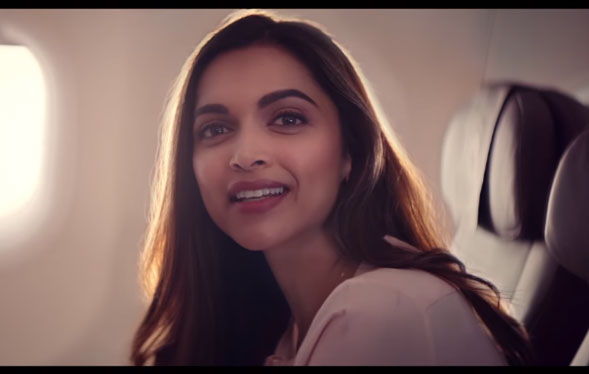
    Its last commercial ‘Fly the new Feeling’ with Deepika Padukone focused on the inflight experience. After all airline marketers will tell you that ‘inflight’ accounts for more than 80% of your overall experience of an airlines.  There was nothing special about the commercial itself barring the fact that Deepika fans could admire her for a whole minute.


    Somehow the Tatas are not known to change agencies every year.  Which is why it is surprising that Vistara is going through a different agency almost every year of its existence.


    Hopefully it is not an indication of the average time clients spend with their ad agencies and just a small aberration.


    Dhara Oil #ZaraSaBadlav


    Take a guess. Is India made up of more joint families or more nuclear families?  The debate was settled a long time ago with the 2011 Census which recorded over half of India’s households recorded as nuclear. Unfortunately for marketer’s joint families make up just 16% of all households.  And strangely joint families are thriving in urban areas rather than in rural areas. Because migration to urban areas are creating economic pressures that necessitate living in a joint family.


    But marketers and creative advertising people can’t resist the idea of making another traditional commercial featuring a joint family, trying out the hackneyed theme of mothers and mothers-in-law living with their children.  The other marketers and advertisers who read too many American marketing theories are chasing millennials which by one estimate has 400 million people. And 400 million people is a universe not a segment.  So, it is a challenge to find so many commonalities in such a large universe as easily as the American marketers are doing it.


    But Dhara has decided to go traditional by showing that it is perfectly alright for the girl’s parents to live with her and her in-laws. Wow! That is a huge joint family. Nice message. But only if there were more joint families in the India of today or if joint families were an aspirational view of the future to younger targets.


    I am not quite sure that today’s youngsters are imagining the perfect future together as living with their parents.


  • Prabhakar Mundkur: Millennial Mania

    By Prabhakar Mundkur


    Most Indian marketers seem to have been suddenly overcome by millennial mania.  Maybe it is the sheer amount of American marketing literature pervading our ranks that tries to find commonalities in a large and diverse group of people.  Our first chant for India and its young population somehow excluded the word millennial and settled at the ‘youngest population in the world.’ But that has now finally got converted to millennial mania.  Especially since current statistics show that there might be 400 million of this demographic group in our country.  That by any stretch of imagination is not a segment, it is an entire universe.  And close to a third of our overall population.  Never before in our marketing history have we looked at a third of our population as sharing such a huge number of key characteristics.  After all, it would be a miracle to generalize the attitudes of 400 million people with different incomes, locations, education, living standards, attitudes and behavior.


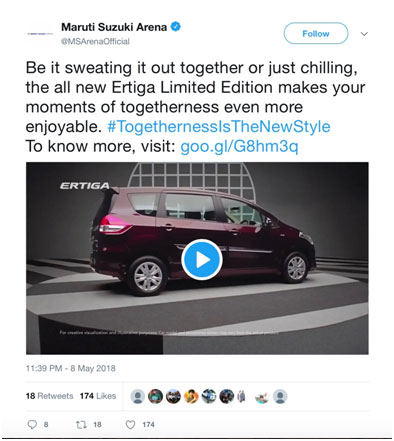
    This has resulted in every marketer trying to attract the so-called ‘millennial’ even for products that earlier might not have been marketed to millennials.  The latest brand to attract my attention was the Maruti Ertiga which I found on twitter.


    By using words like ‘chilling’ no doubt the ad hopes to attract the youth if I may use a less fashionable term.


    And what do millennials do if one were to retrofit the strategy from the creative execution. They chill. They go to the gym.  They go to the office and work sometimes. They have laptops. They go shopping. They get in and out of fashionable clothes all the time. They even go fishing! (I am sure you will agree that’s a rare one for millennials!) They eat together.  They jump together. Hope that sounds like an insightful enough common factor that binds together 400 million millennials in the country.


    Millennials wear denim to work 

    That’s what the new Shopper’s Stop Campaign seems to say.  Maybe we have just hit upon one more deep insight that unifies India’s 400 million millennial population. No wonder I was noticing that all the young BMC workers are wearing denim whilethey repair Mumbai’s roads. Hey, but didn’t this trend start a long time ago?  With non-millennials like Steve Jobs for instance?  But anyway, the trend has just been adopted by Indian millennials who naturally are a little behind the rest of the world, which is understandable.  I believe denims are the uniform of the rebellious. Wait a minute!  Didn’t that American textbook on millennials say that it is the baby boomers who were rebellious?  Millennials are expected to be pro-establishment.  But obviously I am getting confused now.


    I got a few more things about millennials from this commercial. Millennials like to break the glass ceiling and push boundaries.  Wouldn’t you say that is quite a useful insight? Except that I thought everyone likes to break the glass ceiling.


    Hopefully, the viewers of the commercial don’t decide to go and buy Levis or Wrangler or other brands of denim after seeing the commercial.  I am sure there is another hidden quality about the millennials that keeps them glued and loyal to Shopper’s Stop.


    Millennials spray deodorants on their shirts


    If you thought that deodorants were meant to be sprayed on your underarms or on your skin, you are wrong. Not in India.  At first, I thought that Indian men and women were spraying deodorants on their clothes, because they were afraid that deodorants would play tricks with their sweat glands.  But not so. It is a practice encouraged by Indian marketers.  Take this Fogg commercial.


    Certainly, it seems like Fogg has to be sprayed on the shirt rather than on the skin.  Also, it is the shirt that smells nice to the lady in the commercial.  But the ad says nothing about how the man may actually smell were he to take off his shirt.


    That certainly begs two different questions:

    Is it safe to use Indian deodorants/perfumes on the skin or are they meant to be sprayed on your clothes? They say they are body sprays. But perhaps they should say they are shirt sprays.


    Do they work as deodorants or do they work as a perfume?


    Perfumes mask body odour.  Deodorants prevent it.


    Most importantly when you spray your entire shirt with a perfume or deodorant spray, does it stain your clothes?


    And of course, the last question. Are these products only for Indian men?  What are Indian women supposed to do?After all, they are half the millennial population.


  • Prabhakar Mundkur: Not moving people but moving forward with Uber

    By Prabhakar Mundkur


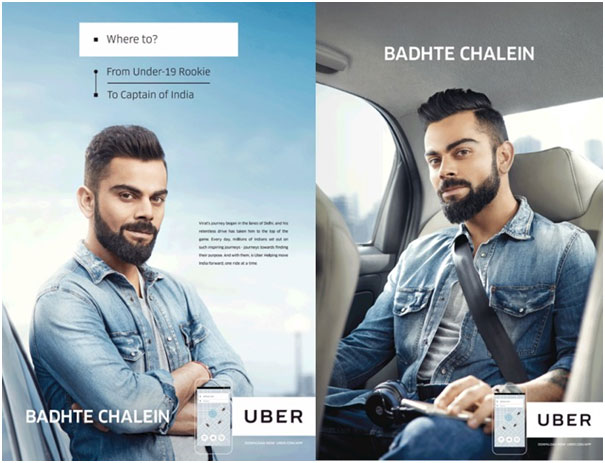
    The most noticeable campaign this week was Uber.  When two full-page ads appear on the cover of the Times of India, you can anticipate a major splash.  Arguments raged on LinkedIn earlier this week whether Virat actually uses Uber. In a more innocent world a few decades ago, we believed that stars actually used the brand they endorsed.  Marketers when questioned gave some hair-brained logic that pretended to be well-researched. They said that there is a ‘willing suspension of disbelief’ amongst consumers.  But social media has changed that.  When a star endorses adevice but the tweet gets sent with another device, consumers know that celebrities are bluffing.


    Karthik S gives two potent examples of how celebrities are cheating on their endorsements in his blog Celebrity Brand Ambassadors and Brand Fidelity.


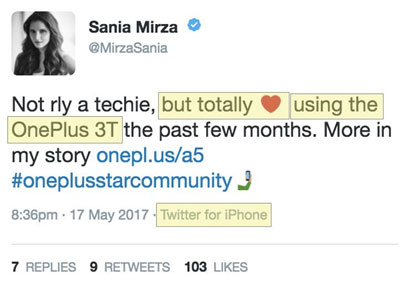
    The first is of Sania Mirza endorsing One Plus 3T but when you look at her tweet you know it has come from aniphone which is no doubt her device of choice.


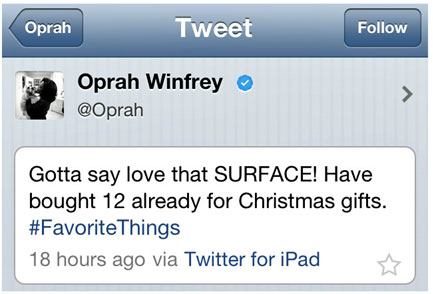
    The second example he gives is of Oprah Winfrey endorsing the Surface, but unfortunately you know she is an Apple fan because the tweet was sent out of an Ipad.


    The modern world doesn’t want to believe that celebrities are using the products they endorse.  So, the natural question is why Virat wouldneed to use an Uber, when he would have a fleet of cars and chauffeurs.  And this was the discussion on Linkedin earlier this week.


    So when Sanjay Gupta of Uber announced that Virat uses Uber when he is overseas, it was some consolation that he does use Uber sometimes.  Although what relevance using Uber overseas is to endorsing the brand in India, is quite another debate.


    I quite liked the campaign after watching it a few times, although the poetry that Virat espoused about Uber in the TV commercial neither sounded like him, nor did it sound very sincere.  But the average consumer mightmay well buy it.  When I went to Twitter I found that the hashtag #MovingForward was not very unique, andI found various other non-Uber tweets using it.  It looked like Virat was a spokesperson for the Uber brand wisdom rather than selling the brand.  Although Uber was once upon a time a brand that wasn’t built on advertising, some of its other advertising overseas has been created to elicit a direct action from consumers like signing up for the app. But at least #MovingForward stays close to the global knitting of the brand which is Moving People.


    However, what looked quite sincere was a video I found on YouTube where Virat announces his association with Uber and sounds like Virat and not like someone else.


    Here he sounds honest and sincere, unlike the TV commercial where he has to recite some difficult lines written by a clever copywriter.  The honesty and sincerity with which celebrities endorse brands is an important factor in celebrity-led advertising.


    How much is your award really worth?


    Sometimes giving away an award must go beyond it being a recognition.  There must be a reward.  The Oscar which is plated in 24 carat gold is known to cost $400.  Most other awards are just a giveaway, a notional token to say you won something.  So while you may display them proudly in your office or your home you know they are a worthless piece of metal.


    But the Star TV network seems to have kept this in mind when they designed the Re-imagine Awards that were given away to Swiggy and Fevicol earlier this week.  Also, they seem to have a star-studded jury that included Sir John Hegarty and Piyush Pandey.


    But the most interesting part was how the award was made.  Designed by Peter Layton of London Glass Blowing in Burmendsey, the award itself is a piece of art. Layton uses glass as medium to express art and is putting glass on the world art map.


    In addition there was an all-expenses-paid trip to a major sporting event for  24 members of the top two winning teams. Now that would make the winners really feel they won something of value.


    Maybe a learning for other awards.  Give fewer awards of value rather than hundreds of awards that are worthless metal! 


    Adidas Odds


    It seems like Adidas Odds has been on a winning streak for creative awards around the world for the last two years and its latest recognition came from none other than WARC, when it was shortlisted for the Effective Innovation category.


    Odds was a special edition pair of shoes created by Adidas as a tribute to para-athletes.  It is a pair of shoes with either two lefts or two rights and was first released during the Rio De Janeiro Paralympics in 2016.  It is an outstanding piece of creative developed by Dentsu Taproot that one can watch again and again without getting tired.  That is the true test of great advertising!