Author: Our Staff

  • FanCode signs broadcasting deal with Formula 1

    FanCode will be the exclusive broadcast partner for Formula 1 in India for streaming the 2024 and 2025 seasons. The F1 season, consisting of 24 races starting yesterday in Bahrain, will be available to Indian fans on FanCode across multiple devices including smart TVs, mobile phones, and tablets.

    Speaking about it, FanCode co-founder Yannick Colaco, said: “Formula 1 is among the biggest sporting properties in the world, and we’re thrilled to partner with them to bring all the exciting action to millions of fans in India. Aside from providing F1 fans with a world class experience, we look forward to taking the sport to a wider audience across the country.”

    Added Ian Holmes, Director of Media Rights and Content Creation at Formula 1: “I am delighted to announce that fans in India will be able to watch F1 on FanCode for the next two seasons. We have found a strong broadcast partner in them with expert knowledge on how we can best serve our 60 million existing fans and reach new audiences in India. Together, we will take our combined expertise to produce premium content that showcases the sporting spectacle that is F1.”

  • Ivyclique rebrands itself as ‘WeInvert’

    Ivyclique is now WeInvert.

    Said Anjan Purandare, Founder and CEO, WeInvert: “In today’s competitive landscape, continuous reinvention is crucial for businesses and creative agencies alike. Even established marketing giants, are seeking unique approaches to solve creative roadblocks.“

  • Money for nothing!

    Money for nothing!

    Avik ChattopadhyayTwo news items caught my fancy last fortnight.

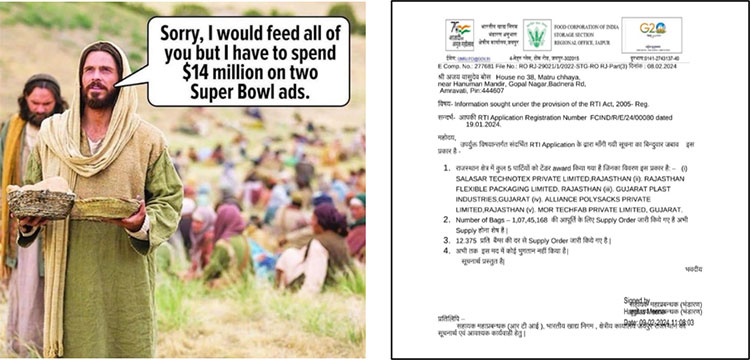
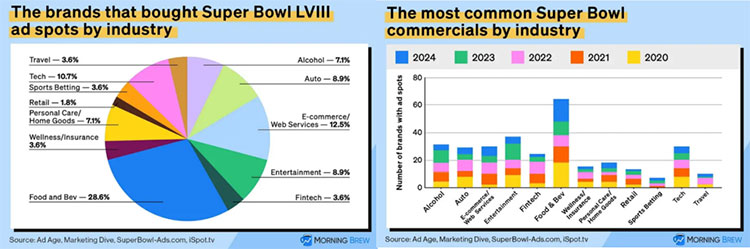
    One was a meme on some brand spending $14 million for two, yes just two ads during Super Bowl 58 in the US. That’s Rs117 odd crore at today’s exchange rates.

    The other was an RTI reply by Food Corporation of India that around Rs 13 crore were spent on printing the Prime Minister’s photo on bags meant for food rations in the state of Rajasthan alone. Multiply that same amount by the number of states under the current ruling political party and you get the math.

    The first one is an entirely private affair and probably the best demonstration of hyper-decadent capitalism at play. Every year, brands across categories vie for the right spot to buy for the sheer eyeballs one gets on the one single occasion which can also pass off as the official ‘couch potato day’.

    Madhvi Mavadiya of Finextra wrote a wonderful piece dissecting the madness that takes over all brand managers with every Super Bowl. You can read it at Super Bowl 2024: The fintech firms that spent $7 million on a 30 second ad (finextra.com).

    We too have our marketing media madness every year but it does not last for just one day. It goes on for 50 odd days. The IPL. Another example of gross display of marketing muscle. And it just keeps growing, year after year, as the broadcaster and organiser justify the stratospherical ad rates by the rise in viewership. In 2023 it increased by 30% over the previous year on television alone with another 15-odd % on pay-TV. In an interview, the head of ad-sales of the broadcaster mentioned that the CPM on IPL was the lowest at just Rs 50-60 per CPM. In 2023, the total ad revenues were a whopping Rs 10,000 crore while the fantasy sports platforms earned Rs 2800 crore. In plain speak, we gambled away Rs 2800 crore in two months under the garb of “team building skills” and nobody really raises an eyebrow!

    The broadcaster and the organiser will always justify to the potential advertiser that the RoI is the highest. They will justify the Rs 20 lakh per 10 seconds of advertising saying that the teams earn and the players earn and all the money goes into developing the sport and getting the best of the world to converge for this festival of sport.

    Cross your heart and ask yourself whether all this can really be justified. If the ESG regulators get down to their audits in all sincerity, will they not question such spends? All advertisers, in unison, sing out loud that their business gets positively impacted by advertising on IPL but has someone really audited and measured? If it were true, why would some of the key advertisers flounder in their business?

    Brands need to do some serious soul-searching on the way money is spent on advertising as all of it is passed on to the consumer in some way or other. A hedonistic institution cannot be propped up actually fleecing millions of gullible content junkies under the justification of freedom of choice and expression.

    The day some hard-nosed auditing is done of the spends against returns and the famous “50% that is wasted” is identified, many brand managers and marketing heads will roll. This is a cohort of people scratching each other’s backs to keep living the high life of a money-spinning capitalist enterprise under the garb of sporting excellence accessing 500+ million viewers in a country where 800 million are poor enough to get free rations from the government every year.

    Which brings me to the money wasted on printing photos of political leaders and sticking them up in any vacant space available. I once had the opportunity to ask a minister as to why did he want his face on posters of a government scheme. He was candid enough in saying that he wanted as much visibility and recall as possible… at government expense! Hence every minister uses the resources of one’s own ministry to propagate oneself, in complete contravention to the norms of governance.

    While one can still excuse a little known politician for using tax-payer resources to build awareness and recall, what really justifies the top leadership that everybody in the country recognises by a mile or a mere spoken word? To me, it is the incessant habit of loving to see one’s own face everywhere. Across all politicians, unless the party diktat forbids you as in case of the Left Front. Every measure of governance, from an airport for the rich to free rations for the poor is seen as yet another opportunity not to be missed, at the tax-payer’s expense.

    As students of economics, we had learnt that “money is a matter of functions four – a measure, a medium, a standard and a store. Somewhere, the function of “morality” has to come in. Academicians and activists together have to bring about this change in the definition of money. The moral compass has to be integral to evaluating how the money is being spent and how it is performing against parameters of ethical and sustainable use. The recent Supreme Court judgment on Electoral Bonds is one strong step in that direction. If all the money from that source of funding is blocked from usage in the elections to happen, it will be a litmus test of “moral money”.

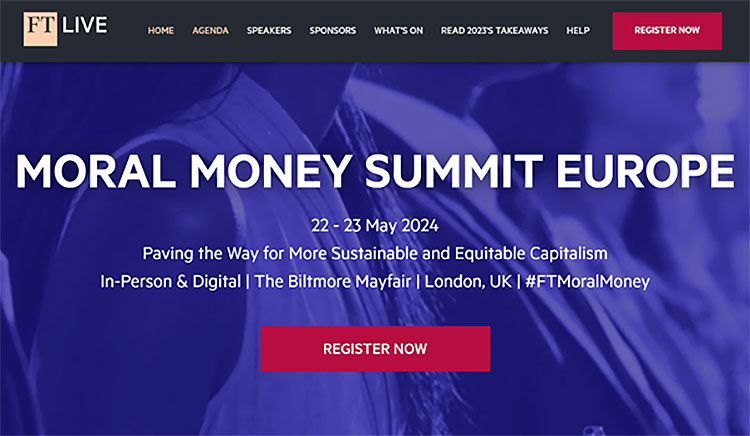
    Talking of which, there is a “Moral Money Summit” being planned in Europe in the month of May with the primary objective of giving naked capitalism some decent clothes. We need a similar initiative in our country at the earliest.

  • Yes! OpenAI’s Sora could revolutionise marketing content creation

    Yes! OpenAI’s Sora could revolutionise marketing content creation

    By Omar H. Fares

    OpenAI’s new generative Sora tool has sparked lively technology discussions over the past week, generating both enthusiasm and concern among fans and critics.

    Sora is a text-to-video model that significantly advances the integration of deep learning, natural language processing and computer vision to transform textual prompts into detailed and coherent life-like video content.

    In contrast to previous text-to-video technologies, like Meta’s Make-A-Video, Sora is able to overcome limitations related to the type of visual data it can interpret, video length and resolution.

    From what OpenAI has demonstrated, Sora can generate videos of various lengths, from short clips to full-minute narratives, and in high definition, accommodating a wide range of creative needs.

    Although no official release date has been announced, Sora will likely be available to the public in the coming months, judging by OpenAI’s typical pattern of public releases. For now, it’s only available to experts and a few artists and filmmakers.

    How Sora works

    At the heart of Sora’s innovation is a technique that transforms visual data into a format it can easily understand and manipulate, similar to how words are broken down into tokens for AI processing by text-based applications.

    This process involves compressing video data into a more manageable form and breaking it down into patches or segments. These segments act like building blocks that Sora can rearrange to create new videos.

    Sora uses a combination of deep learning, natural language processing and computer vision to achieve its capabilities.

    Deep learning helps it understand and generate complex patterns in data, natural language processing interprets text prompts to create videos, and computer vision allows it to understand and generate visual content accurately.

    By employing a diffusion model — a type of model that’s particularly good at generating high-quality images and videos — Sora can take noisy, incomplete data and transform it into clear, coherent video content.

    Sora’s approach differs from CGI character creation, which requires extensive manual effort, and from traditional deepfake technologies, which often lack ethical safeguards, by offering a scalable and adaptable method for generating video content based on textual input.

    What does this mean for businesses?

    One of the most noteworthy aspects of Sora is its flexibility, as it supports various video formats and sizes, enhances framing and composition for a professional finish, and accepts text, images or videos as prompts for animating images or extending videos.

    The emergence of Sora presents key opportunities for businesses across different sectors. In the near future, there are two key areas that may have significant applications.

    The first area is in marketing and advertising. Just as ChatGPT has become a marketing and content creation tool, we can expect businesses to use Sora for similar reasons.

    With the public release of Sora, brands and companies will be able to create highly engaging and visually appealing video content for marketing campaigns, social media and advertisements.

    The ability to generate custom videos based on textual prompts will allow for greater creativity and personalisation, possibly helping brands stand out in a crowded market.

    The second area Sora could impact is training and education. Companies could use Sora to develop educational and training videos that are tailored to specific topics or scenarios. This could enhance the learning experience for employees and customers, making complex information more accessible and engaging.

    Other sectors, such as e-commerce, also hold promising potential for the future application of Sora. Retailers could create dynamic product demonstrations that effectively showcase products in a more engaging and interactive manner.

    This would be especially beneficial for companies that want to highlight specific aspects of products that might not be easily conveyed through static images or text, or for advertising products that require a detailed explanation.

    Sora could also significantly reduce the uncertainty associated with online shopping by facilitating virtual try-on experiences, allowing customers to visualize how a product, such as clothing or accessories, would look on them without the need for a physical fitting. This, in turn, could result in a better return on investment.

    What are the key challenges ahead?

    While there are key opportunities ahead, OpenAI, regulators and users need to carefully consider key factors that could pose challenges, including copyright issues, ethical concerns and the consequences of increased digital noise.

    With Sora’s ability to generate lifelike video content, there’s a risk of inadvertently creating videos that infringe on existing copyrights. OpenAI has already been sued several times over copyright infringement and intellectual property issues.

    OpenAI hasn’t disclosed where the data used to train Sora is from, but it did tell the New York Times it was training the system using videos that were publicly available and licensed from copyright holders.

    The technology also raises ethical questions, particularly around the creation of deepfake videos or misleading content.

    Establishing guidelines and safeguards to prevent misuse will be essential for maintaining trust in the technology. In a post on its website, OpenAI stated it was working with experts to test the model before releasing it to the public.

    As more businesses and individuals gain access to Sora, there’s a potential for an increase in low-quality or irrelevant video content, leading to increased “digital noise” that could overwhelm users. Finding ways to filter and curate content will become increasingly important for businesses looking to maintain their edge.

    Last, but certainly not least, is the question of how Sora will impact the job market for content creators. While Sora does have the potential to automate certain aspects of video production, like ChatGPT, it’s unlikely to replace human creativity and insight anytime soon.

    Instead, Sora could serve as a tool that enhances the capabilities of content creators, allowing them to produce higher-quality content more efficiently. As with any technological advancement, the key will be for professionals to adapt and find ways to integrate Sora into their workflows, leveraging its strengths to complement their own skills and creativity.The Conversation


    Omar H. Fares is Lecturer in the Ted Rogers School of Retail Management, Toronto Metropolitan University. This article is republished from The Conversation under a Creative Commons license. Read the original article.


  • Behno aur Bhaiyo: Remembering Ameen Sayani’s Evergreen Voice and Timeless Legacy

    Behno aur Bhaiyo: Remembering Ameen Sayani’s Evergreen Voice and Timeless Legacy

    Photograph courtesy: Fotocorp


    By Sandeep Nomane

    The world of broadcasting and cinema has lost a true legend as Ameen Sayani, the venerable host whose voice resonated through countless homes for decades, has passed away at the age of 91. With his departure, the golden era of radio loses one of its brightest stars, leaving behind a legacy that will forever echo in the annals of broadcasting history.

    Sayani has been keeping indifferent health, and was working on his autobiography which was due to be published this year.

    Born in December 1932 in a family deeply involved with the Indian independence movement, Sayani’s journey into the realm of radio began as a young man fueled by an unyielding passion for communication and music. Little did he know that his distinctive voice would become synonymous with the very essence of Indian music culture.

    He assisted his mother Kulsum Sayani from 1945 to 1960 in editing a fortnightly journal called ‘Rahber’ for neo-literates, initiated by Mahatma Gandhi. It was simultaneously published in Devnagiri, Urdu and Gujarati scripts – but all in the simple Hindustani language promoted by Gandhiji. This was Sayani’s basic grounding in clear and credible communications in Hindustani.

    His multi-talented brother, Hamid who was a well-known broadcaster in English. nudged him at an early age into stage acting and direction, compering, writing and even a little bit of ‘magic’. He then introduced him to All-India Radio, Bombay, where he participated in English programmes for 10 years.

    Helped on by Hamid, he joined the Indian agency of the commercial service of Radio Ceylon – switching from English to Hindustani. Through the same agency, he began to create and participate in radio shows and commercials – also for All India Radio when its Commercial Service commenced on its ‘Vividh Bharati’ network.

    Sayani’s crowning achievement came in the form of ‘Geetmala’, a radio programme that captured the hearts of millions across the nation. Debuting in 1952, ‘Geetmala’ swiftly became a cultural phenomenon, serving as a beacon of musical delight for generations of listeners. With his eloquent narration and deep understanding of Indian music, Sayani guided audiences through the melodies and rhythms that defined an era.

    ‘Cibaca Geetmala’ (earlier Binaca Geetmala) was broadcast mainly on Sri Lanka Broadcasting Corporation and later over Vividh Bharati (AIR), for a combined total of over 42 years. It was again revived after a gap of seven years – and was, till August 2003, aired over the National Network of Vividh Bharati as ‘Colgage Cibaca Geetmala’.

    Some other shows he was known for were S Kumar’s ka Film Muqaddam and Film Mulaqaat, Saridon ke Saathii (which incidentally was AIR’s first sponsore d show), Bournvita Quiz Contest which he did for eight years, taking over after his brother passed away in 1975. There were other shows as well – Shalimar Superlac Jodi and Sangeet Ke Sitaron ki Mehfil for an FM station.

    Beyond his role as a radio host, Sayani was a cultural icon, his voice serving as a constant companion during moments of joy, sorrow, and everything in between. His ability to connect with listeners transcended mere entertainment, forging a bond that endured the test of time.

    Sayani’s impact extended far beyond the confines of the radio studio. He played a pivotal role in shaping the careers of countless artists, providing a platform for emerging talent to showcase their craft to a national audience. His dedication to promoting Indian music not only enriched the cultural landscape but also paved the way for future generations of musicians to flourish.

    Sayani was Founder member of the Radio & TV Advertising Practitioners’ Assocation and its President from 1984 to 1987. He was founder-member of the Advertising Standards Council of India and its Chairman in 1989-90. He was a member of the Council for Public Service Commuciation since its inception. In 1991, he was awarded a Gold Medal by the Indian Society of Advertisers for his contriution to advertising. At the Advertising Club, he was member of its Radio/TV committee for many years. He was awarded the Ad Club’s ‘Golden Abby for Geetmala, which was adjudged the Most Outstanding Radio Campaign of the Century.

    Despite the evolution of media and the advent of new technologies, Sayani remained steadfast in his commitment to radio, proving that the power of the spoken word knows no bounds. His voice became a cherished part of daily life for millions, a comforting presence that transcended the transient nature of trends and fads.

    Throughout his illustrious career, Sayani garnered numerous accolades and honours, each serving as a testament to his enduring influence and contribution to the world of broadcasting. Yet, it was the unwavering affection of his listeners that truly underscored the significance of his legacy.

    In recent years, Sayani’s magic was revived with the Saregama’s Caravaan music device which had episodes of Geetmala hardwired.

    As news of Sayani’s passing reverberates across the airwaves, tributes pour in from all corners of the globe, each one a testament to the profound impact he had on the lives of countless individuals. From aspiring musicians to devoted fans, Sayani touched the hearts of all who had the privilege of tuning in to his broadcasts.


    with inputs from assorted sources on the internet

  • Lowe Lintas bags mandate for Jawa Motorcycles

    Classic Legends Private Limited has appointed Lowe Lintas, as its creative Agency on Record for the Jawa Motorcycles. The win is more special for the agency, as the team had also been the ones to relaunch the historic Yezdi for modern bikers two years ago.

    Speaking on the partnership, Ashish Singh Joshi – CEO, Classic Legends Pvt. Ltd said: “I am thrilled to welcome Lowe Lintas as the creative agency for our iconic brands, Jawa and Yezdi. Their rich experience with leading brands resonates deeply with the ethos of Jawa and Yezdi, capturing the true essence of our legacy. The ‘How Do You Jawa’ campaign, along with its bold and catchy anthem, has not only struck a chord with our audience but has also been applauded by industry peers. With Lowe Lintas on board, I am confident that we will continue to create impactful and memorable narratives for our beloved brands.”

    Added Sarvesh Raikar, Regional Creative Officer, Lowe Lintas Mumbai: “Jawa and Yezdi have been a huge part of not only my own childhood, but also for the team who worked on the pitch – our memories growing up are hard coded with the bike and when an opportunity came about to convert our enduring passion for these legendary machines into memorable communication for the brand, of course we grabbed it. As a team, we had the privilege of relaunching Yezdi a couple of years ago, and now to be able to do the same for Jawa is a once-in-a-lifetime opportunity, we were never going to miss out on it.

    Our individual and collective love for the bikes came through in the work we put together for them, in our hunger to partner with and grow the brand. And here we are, raring to go, and hoping to do some of our best work for the brand and make some magic together.”

  • Godrej Enterprises onboards Bombay Design Centre

    Bombay Design Centre (Bombay DC) has been onboarded to redesign the corporate website for the Godrej Enterprises Group (formerly known as Godrej & Boyce). The work involves a comprehensive overhaul of the website design, content, user experience, and technology.

    Said Kalpesh Patel, GM & Head – Web Strategy at Godrej Enterprises Group: “Our partnership with Bombay Design Centre will enable us to create a digital platform that reflects the breadth and depth of our business; it is a step forward in reinforcing what we set to achieve while setting new benchmarks in the digital space.”

    Added Ankur Rander, CEO of Bombay DC: “This collaboration is a remarkable opportunity. Godrej Enterprises Group is a powerhouse with a formidable presence across industries. Our goal is to build a web experience that showcases their consumer and B2B businesses, the product and services, as well as their corporate information under one url. The experience needs to be easy to use, simple to understand, and stand apart.”

  • Atlantis Intelligence unveils new brand identity and website

    Atlantis Intelligence, a modern technology solutions, has unveiled its rebranding, which includes the launch of a new website and a new logo.

    “We are excited to unveil our new brand identity and website,” said Naveen Rathore, Head Access Network & Strategic Projects of Atlantis Intelligence. “This rebranding represents our ongoing commitment to innovation and our focus on meeting the evolving needs of our clients with future-proof solutions.”

  • Soie rolls out new campaign

    Soie, the lingerie brand from Ginza, has rolled out its latest campaign titled ‘Weaving Deeper Bonds’.

    Said Amrit Sethia, Vice President of SOIE – Ginza Industries Ltd: “With this campaign, we want to pay tribute to the extraordinary dedication of mothers who make every day special through their unwavering support and unconditional love. By focusing on a mother’s return to her career after dedicating two decades to her family, we celebrate her resilience and the everyday sacrifices she makes. At SOIE, we strive to honor these deep connections and provide products that reflect the strength and grace of women, at every stage of their lives. Our lingerie and activewear collection is designed to support and empower, embodying the spirit of nurturing and self-empowerment that mothers exemplify.”

  • IOS Sports onboards two Paris Paralympic medallists

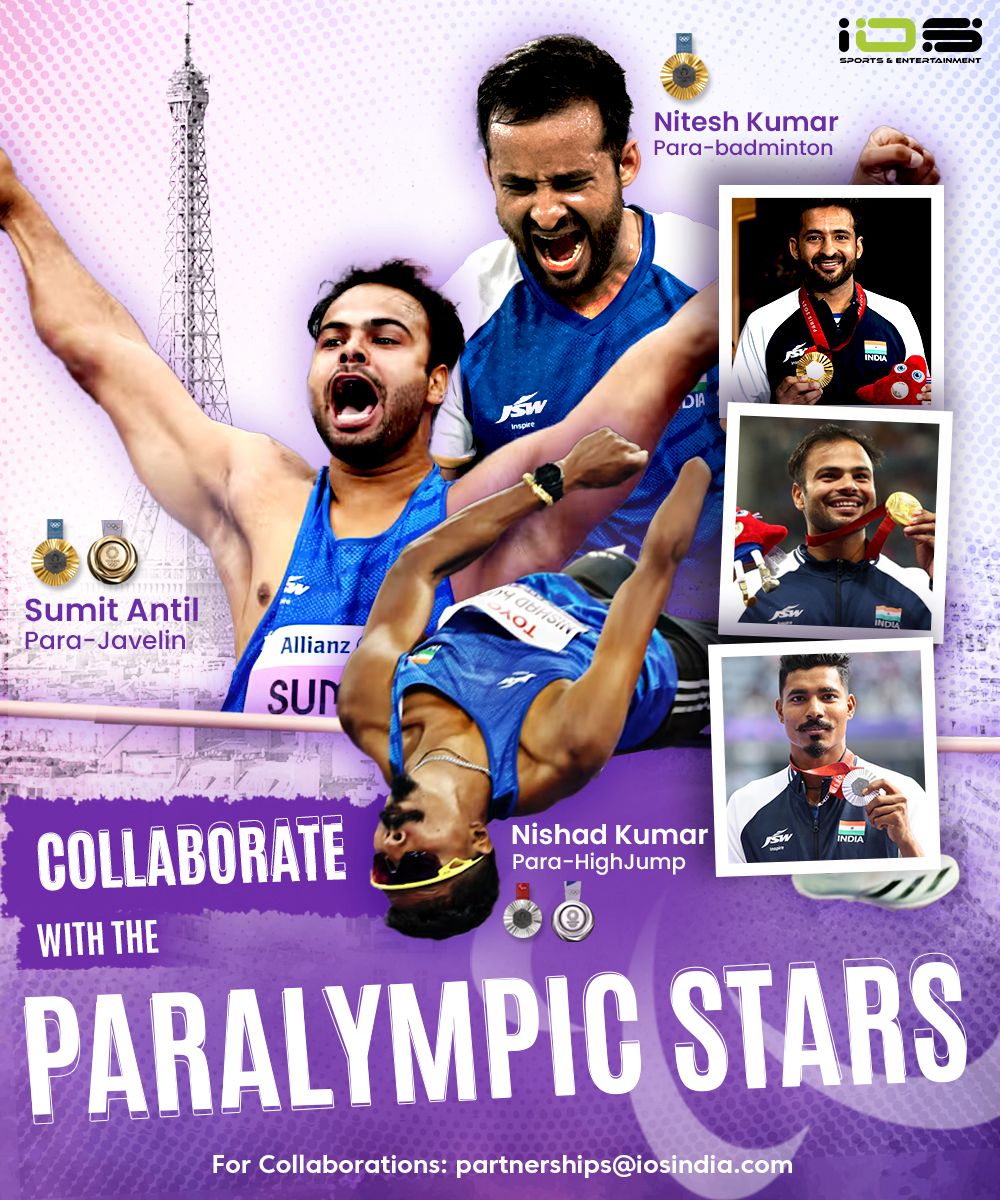
    IOS Sports and Entertainment, the sports management company, has announced the onboarding of Indian Paralympic gold medallists Sumit Antil (Para-Javelin) and Nitesh Kumar (Para-Badminton) to its roster of athletes. They join para-high jumper and two-time Paralympic silver medallist Nishad Kumar.

    Said Neerav Tomar, Founder and Managing Director of IOS Sports & Entertainment: “We are delighted to welcome Sumit and Nitesh to the IOS Sports family. Along with Nishad, these athletes represent dedication, passion, and excellence in their respective disciplines. At IOS Sports, we are committed to fostering an inclusive environment where para-athletes are given the recognition and support they deserve. We look forward to working closely with them to help them achieve new milestones and inspire the next generation of athletes.”

  • India TV channels launch on Samsung TV Plus

    India TV Group has tied up with Samsung TV Plus India to expand its footprint in the Connected TV (CTV) space. As part of this collaboration, India TV Group’s Connected TV (CTV) exclusive channels India TV, India TV Speed News, India TV Aap Ki Adalat, and India TV Yoga are now accessible on the Samsung TV Plus platform.

    Amit Kumar Sinha
    Amit Kumar Sinha

    Said Amit Kumar Sinha, Chief Strategy Officer, India TV: “Our collaboration with Samsung TV Plus opens new and wider avenues for viewers. It is a stepping-stone towards delivering quality and diverse and rich content to the combined audience. We are optimistic that the coming together of India TV and Samsung TV Plus will redefine and improve the experience of online content consumption.”

    Added Kunal Mehta, Head of Partnerships, Samsung TV Plus India: “Samsung TV Plus has been at the forefront of bringing high-quality content via FAST to our viewers. We remain steadfast in our commitment to provide content that our consumers find interesting and useful. The addition of the four new channels from the India TV group impresses upon our vision to deliver quality and diverse content.”

  • Lauritz Knudsen Electrical and Automation unveils new campaign

    Lauritz Knudsen Electrical and Automation, formerly known as L&T Switchgear, has partnered with L&K Saatchi & Saatchi, a part of Publicis Groupe India, as its new advertising agency. It has unveiled a  campaign to enhance brand resonance and align with the new identity following its acquisition by Schneider Electric in 2020.

    Directed by filmmaker Ashim Ahluwalia and featuring an anthem by Shankar Mahadevan, the film opens with a shot of L&T Switchgear’s original signage.

    Said Rajat Abbi, VP-Global Marketing, CMO, Schneider Electric India: “Lauritz Knudsen Electrical and Automation, Formerly L&T Switchgear, boasts a remarkable 70+ year legacy in powering the electrical industry and resonating with the heartbeat of the nation. Despite the name change, our core identity remains unchanged – it’s only the trust of our customers and partners that now carries a new name. Collaborating with L&K Saatchi & Saatchi, we’re happy that the team aligned with our values and helped us bring our vision to life. Effective storytelling is pivotal to any campaign, and our new brand film weaves together our entire journey and our key offering, beautifully. We eagerly anticipate the creativity that L&K Saatchi & Saatchi will bring to the table next.”

    Added Rohit Malkani, Chief Creative Officer, L&K Saatchi & Saatchi: “One doesn’t often get to work with a musical genius, a renowned filmmaker and a voice that has moved millions, all in one TVC! That’s precisely what Lauritz Knudsen offered us in terms of an opportunity. The film has really been the icing on the cake after a toughly contested pitch. The challenge was to not just establish the new name and identity strongly but also tell the story of L&T Switchgear and its journey in building India. The result is a seamless piece of storytelling, weaving all practices in one symphony.”

    Said Atin Wahal, Executive Director, L&K Saatchi & Saatchi: “It is our privilege to partner with Lauritz Knudsen Electrical & Automation, a brand with a rich 70-year legacy in India, at this pivotal stage of their rebranding journey. At L&K Saatchi & Saatchi, we prioritise understanding our client’s business and delivering impactful results. This campaign underscores the brand’s legacy of trust while highlighting its continuous evolution towards a brighter future. The campaign is reassuring, uplifting and beautifully integrates the core values of both the brands.”