Author: mxmadmin

  • Scarecrow turns 2, launches design division

    By A Correspondent


    With two offices, 45 people and 25 brands, Scarecrow has completed two successful years today (Feb 9). On the occasion of its second Anniversary, Scarecrow Communications Ltd. has announced the launch of a design division -www.scarecrowdesigns.net. Primarily, Scarecrow Designs, headed by Kapil Tammal as Design Director, will provide exclusive design solutions to various clients.


    Scarecrow Designs also endeavours to produce pure graphic design content on its own. The in-house designers and budding talent from design schools will be roped in to create merchandise (t-shirts, bags, accessories and so on), which will be showcased at the Scarecrow Art Gallery and on www.scarecrowdesigns.net


    Why Scarecrow Designs?

    Scarecrow Communications Ltd provides all advertising solutions under one roof. But the team realizes that there is a lot of demand for pure design-led jobs. From brand manuals to corporate & brand identity, and packaging. Due to the retail boom, mall culture and entry of many international lifestyle brands inIndia, design has become extremely imperative.


    Many national/international brands, more often, avoid spending on full-fledged ATL campaigns due to media costs. But what they can’t avoid spending on is to create a look, feel and imagery of the brand where design is sacrosanct. And so, these clients specifically seek design-led communication solutions. And there was a need gap here.


    The team at Scarecrow also observed that good talent from design schools normally joined design houses rather than ad agencies, leaving them with substandard design talent.


    To correct and balance the design ecology of talent and need, Scarecrow believes in identifying design talent at an early stage. Even when the current Design Director Kapil Tammal was brought on board, he was also offered a senior position in Landor, one of the leading design houses. Subsequently, Scarecrow has also attracted talent from design institutes like NID.


    Yet, to complete the ecology of design, one needs to create a complete environment of design that attracts and nurtures great design minds to provide great design solutions. Hence the launch of a separate interface called Scarecrow Designs.


    Idea behind the new identity:

    Crop Circles have been the biggest design mysteries in the world. Even today, some believe aliens create them, while some believe it’s a hoax. Being Scarecrow, standing tall in the field, the team thought of owning and associating with Crop Circles. No one has officially claimed to own them yet.


  • The Anchor: 7 things for Lifestyle channels to remember

    By Smeeta Chakrabarti


    #1 Till a few years ago, most of the programming on lifestyle channels was imported. Giving an Indian touch to programming is important as it makes it exciting for the Indian audiences. For example, even though there are many international news channels such as BBC and CNN, the perspective changes when the programming is done by an Indian channel.


    #2 India has the most amazing and interesting lifestyle. We can teach something to every other country – About food, the way we eat, we drink, the way we get married, clothes etcetera. It is important to keep in cognizance that India has a lot to give to the west.


    #3Today the world is adopting our lifestyle and not the other way around. The flow is now from East to West, and countries like India and China are going to dictate to the West about lifestyle issues. The world has to catch up to the big fat Indian wedding.


    #4 India is a young and affluent country and the current generation spends in a different way from the way our grandparents used spend. We are not hoarders any more and we don’t necessarily save.


    #5 Especially in the Indian context, lifestyle is not just about brand names and tags – it’s also about quality and trades craftsmanship, something that India is very good at. It’s not just about imported labels but also feeling pride about what we Indians are doing indigenously at the grass root levels. That is what makes us special.


    #6 Being Indians, we have to be proud of the India we live in and have to feel great about this country. It’s about living in the best possible way with the resources available.


    #7 The genre will definitely grow. When we started there was just one international channel, with international programming, and the genre has grown ever since with launches of newer channels. Along with the regional space, lifestyle and news spaces will grow too.


    Smeeta Chakrabarti is the CEO of NDTV Lifestyle Limited.


  • Debrief: Maaza: Refreshing take

    By Anil Thakraney


    Mango drink Maaza has a brand new positioning: ‘Bin mausam aam’. But instead of focusing on mango lovers, they have featured mango hawkers in the advert. And that’s actually quite clever, because it injects freshness into the communication.


    In the TVC, three mango sellers wonder what to do with their lives since the mango season is over. Desperate to earn a livelihood, the ‘aam aadmis’ try out new career options. One becomes a soothsayer, another tries his hand at dentistry and the third one becomes a car mechanic. Naturally, being untrained, they fail miserably in their new roles. Then, a smart lad introduces them to the ‘Bin mausam aam’ called Maaza. And so they begin selling that.


    [youtube width=”400″ height=”200″]http://www.youtube.com/watch?v=UizD1CD2oBM[/youtube]

    The twist in the tale works. One, because the ad indirectly cues that Maaza = Real mango, without hammering it down our throats. And two, because the commercial talks about aam sellers, the ad becomes off-beat and entertaining. And one must appreciate the client for not insisting on Maaza sipping shots in every frame. This idea would have been impossible to execute with such a demand.


    If there’s one negative, it’s that the idea only works in a long format, because it’s an indirect route. I don’t see them being able to pull this off with a fifteen-second edit.


    Rating: (On a scale of 1 to 5): 3. Novel approach pays off.

  • Cairn India invites creative, media, PR partners

    By Shubhangi Mehta


    Cairn India, a part of Vedanta Group, which acquired 51-60 percent of its stake in 2010, has invited agencies to be their creative, media and PR partners. The pitch is based out of Delhi. No official confirmation could be attained at the time of filing this report but agency sources close to the development have confirmed the news to MxM India.


    There is no incumbent on the account.

    For the record, Cairn started its operations in 1979, when Sir Bill Gammell, the chairman, founded Cairn Energy. In 1988, the company was listed on the London Stock Exchange. Sir Bill Gammell became its first Chief Executive and has held this position for more than two decades. Cairn Energy PLC, a FTSE 100 company, was one of the first UK companies to invest in the Indian oil and gas sector.


    In 2010 Vedanta Resources Plc (VED.L) completed its long-delayed $8.7 billion purchase of a majority stake in Cairn Energy Plc’s (CNE.L)


    London-listed Vedanta now holds 58.5% of Cairn India (CAIL.NS), of which 20% is held through its Sesa Goa (SESA.NS) unit.


  • Bright Future, Generali speaking

    By Shubhangi Mehta


    The overall slowdown has not spared the life insurance industry – a recent report by CNBC stated that overall de-growth has been in the region of 30-40 per cent, which effectively means the industry is at 2008-09 levels three full years later. Against this very challenging environment, Future Generali India Life Insurance has posted an overall business growth of 14 per cent on a year to date basis over last year.


    Future Generali is now increasingly looking at localised below the line activations and “reach out” programmes to promote the brand and reach out with advisory services to customer prospects. This includes school based programmes, park or recreation based programmes, mall/shopping programmes, health oriented programmes/camps, renewal camps etc. They are exploring various ways to reach out beyond the clutter and high costs of pure play advertising. Future Generali does approximately 200 such activities across the country per month.


    Abraham Alapatt, Senior Vice President & Head – Brand & Corporate Communications at Future Generali India Life Insurance Company & Future Generali India Insurance Company, said, “Our General Insurance business is doing very well and is well on track to possibly being among the fastest General Insurance companies in India to achieve operating break-even. We offer best in class ‘Total Insurance Solutions’ in the form of products and services across Life and General Insurance, and top-notch post-sale experience. We also offer the convenience of dealing with our branches, agents, online via our portal futuregenerali.in to buy, service and renew your policies or even via our unique Mallassurance outlets at Big Bazaars across the country.”


    As per the marketing initiatives this year by Future Generali, there is an overall brand budget of Rs40 crore which is line with their budget of the last FY.


    Among the various marketing initiatives by Future Generali is a ‘Financial Planning Tool’ which is a simple interactive tool they ask their advisors or FPAs to complete with customers/prospects. This is a 10-minute exercise, that helps one understand where one stands by comparing short-term financial needs with short-term income streams and then helps one check if he/she is prepared to meet their medium- to long-term goals.


    Another initiative is the FG Game of Life, a simple Facebook game which allows one to journey through the perils of everyday life and collect ‘shaguns’ along the way for protection. This game was launched in December, and a contest for higher scorers was launched 10 days ago. Since then there have been a large number of new followers, and now there are close to 18,000 followers with over 20 per cent people “talking” about it.


    Future Generali has also just launched the Online Video Bank which is an intuitive service, allowing a person who has bought their Online term Plan ‘Future Generali Smart Life’ to upload a short video message to his family/loved ones. This video will be stored against his policy data and at the time of claim settlement, they undertake to retrieve and deliver this message on a CD to the nominee/nominees of the policy. He/she can change/replace the video as often as they want during their lifetime as long as they are existing/registered customers.


    Mr Alapatt adds, “We have a five-year strategic plan towards break-even and growth and we are doing what it takes to stay true to that. I am particularly excited about Video Bank this because it delivers a huge emotional payoff to the customer (in absentia) and his/her family at the real ‘moment of truth’. Our plan is minimising cost while maximising ROI in printing and production, innovation in idea and execution for ATL, more localised reach programs in BTL and aggressive online and social media initiatives and investments.We have a five-year strategic plan towards break-even and growth and we are doing what it takes to stay true to that.”


    The continuous balloon chain formed of the balloons signed by people during FGIW were strung together on February 9, 2011 at Mumbai to form a 20+km-long chain – adjudicated by a Guinness World Records representative as the world’s longest balloon chain.


    The FGIW campaign also went on to win Indian Marketing & Advertising’s highest recognition of effectiveness, by wining an Effie award at the Advertising Club of Mumbai in the Financial Services category in December 2011.


  • Porn-happy Karnataka ministers hog TV limelight

    By Ranjona Banerji


    Was it naughty of ministers in Karnataka to be supposedly watching pornography when they should have been paying attention to a debate in the assembly? Undoubtedly, yes. Was it necessary for TV channels to show this almost non-stop on Wednesday morning, having already milked it on Tuesday night? Arguably, not. But the morning onslaught was relentless – for those who might imagine there was nothing else happening in the country, why, the first round of voting started in Uttar Pradesh. So far, this has been billed as the most important assembly election yet, a precursor to the next general elections. But for a while, it was the porn-happy ministers of Karnataka, who have apparently since resigned. Not happily of course. The young anchors and reporters of TV channels were very happy that these moral policers had been caught out in this manner.


    * * *


    The newspapers on Wednesday morning had the slightly more depressing if less salacious news about India’s GDP forecast being pulled down to 6.9 per cent because of the economic slowdown. This is the sort of news which neither mainstream TV news nor business channels seem equipped to handle. International news channels on the other hand run from civil unrest in any part of the world to economic recession in the west in an endless loop. The world and the west are both usually very accommodating.


    * * *


    The inquisition of former Indian Premier League head Lalit Modi on Times Now on Tuesday night was an illuminating lesson in how not to conduct an interview. Arnab Goswami, Sanjay Jha and Boria Majumdar would have done Torquemada and the Auta da Fe proud. Whatever your views on Modi, having asked him to speak to you it is usually better to let him say what he has to. Tough questions are fine, indeed necessary, but yelling at him about why he tweets what he does is ridiculous. Modi’s interview with Rajdeep Sardesai on CNN-IBN was more intelligible. Times Now sometimes overplays its role as the sole guardian of India.


    * * *


    India is pitifully short of experts, the newspapers tell us – Crest ran an excellent article on this a few months ago – and nowhere is this more evident than on TV. The same people are rounded up and herded from studio to studio where they are everywhere “exclusive” and experts on everything.


    It is always amusing to see senior TV anchors having to rely on senior print journalists to analyze events – why are they so frightened of doing it themselves? I know why of course but surely they should have gathered enough confidence by now to bullshit away by themselves?


    Good for print journalists of course and I hope they pay them for their expertise?


    * * *


    Hrithik Roshan needs to sack his publicist and take his money back from Medianet for allowing a picture of himself to be printed on the front page of Bombay Times where he looks like CGI dinosaur of some kind with an over-developed thorax.


  • Havas Media launches Meaningful Brands study

    By A Correspondent


    Havas Media has come out with findings of its research that suggests that 20 per cent of brands have a notable positive impact on our sense of well-being and quality of life. Some of the findings also suggest that majority of consumers are willing to pay 10 per cent more for socially and environmentally responsible goods in India and China and 95 per cent and 85 per cent say they trust companies with a responsible or social profile more than those without in China and India respectively.


    This is the fourth yearly study done by Havas Media, which started initially with a study on sustainability and has evolved further to studying Meaningful Brands.


    What is intriguing is that for the second year running, Havas Media found that most people would not care if 70 per cent of the brands ceased to exist. Further, it argues, that the existing approaches to building and measuring brand value are out of date. As a direct response, Havas Media has launched ‘Meaningful Brands’, a global framework that offers a new index, analysis and proprietary tools to measure and build brand value in the context of today’s demanding environment.


    This innovative global undertaking that covers India and China in Asia Pacific enables, for the first time, to connect brands with our quality of life and well-being. It does this by measuring the perceived impact of brands on our personal wellbeing – their influence on factors such as our health, fitness, happiness, values, social relationships, financial security, lifestyles and habits – and our collective well-being, that is, how brands help to improve communities, societies and the environment.


    Speaking to MxMIndia, Vishnu Mohan, CEO of Havas Media Asia Pacific, said: “The findings suggest that the brands in the emerging markets like Asia have a much more positive impact and score higher on trust as compared to western market. It would have been believed that vice versa would be true but this study shows that the future of brands is higher in emerging markets like India. My interpretation is that valued brands are those that have values too. Hence those brands that are considered meaningful also have been performing well on the stock index.”


    The research was carried out from March to June 2011 across 14 markets – France, Spain, UK, Germany, Italy, USA, Mexico, Brazil, Colombia, Chile, Argentina, China, Japan and India. The research took into account the views of 50,000 consumers via online panels. Mr Mohan explained that the plan is to include more markets and consumers to make it more robust.


    The findings of Meaningful Brands analysis are especially relevant for marketers in Asia. It clearly shows the seriousness with which consumers in Asia look at the social, ethical and environmental aspects of a brand. As a region, which is growing at a rapid pace, the findings provide us a huge opportunity to create the context that promotes the growth of meaningful brands. Companies and brands operating in our region can play a big role in transforming the lives of millions of people and contribute to the progress of their societies.


    Some of the key consumer trends in China and India include:


    • 74 per cent and 62 per cent say they would pay 10 per cent more for socially and environmentally responsible goods in China and India (highest globally, aside from Chile).
    • Information and expense are the main barriers to socially responsible consumption, with credibility being another key issue in both markets.
    • 84 per cent in China feel it’s the responsibility of companies rather than the government to solve social and environmental issues (compared with 64 per cent in 2009) and 76 per cent in India, with a similar increase, since 2009.
    • 95 per cent and 85 per cent say they trust companies with a responsible or social profile more than those without in China and India respectively.
    • Empowerment is down in China: 64 per cent feel that they can make a difference to how companies behave and this is static in India at 71 per cent.
    • But so is cynicism: 71 per cent feel that most companies are only trying to be responsible to improve their image and only 12 per cent trust what companies say in this area.


    The analysis suggests that the next generation of brands will come from emerging economies. People in fast growing economies, such as Asian and Latin American markets, record a stronger and healthier relationship with brands. The proportion of brands making a notable positive contribution to our lives increases to around 57 per cent in China, 30 per cent in Latin America, compared to 8 per cent in


    European markets, where people tend to be more skeptical and less engaged with brands. In the US, it’s 5 per cent. By contrast, the situation in developed economies is the opposite. Brands in these regions are no longer seen to improve people’s quality of life.


    Meaningful Brands helps us to develop this type of relationship by understanding exactly what people expect from brands. It also helps us track how successful companies are responding to these needs by understanding how these companies are contributing to our wellbeing, both as citizens and individuals, and how they communicate these values to us. It also shows us that there’s a big business opportunity for brands which are able to satisfy consumers by creating wellbeing in the context of their new values, expectations and local market realities.


  • Now Meru to offer special services to key customers

    By Preethi Chamikutty


    From zero to 5,600 radio taxis in under five years, with a presence in four metros to boot, has helped Meru Cabs become the largest such service in the country. With Rs300 crore in revenue, Meru has raced ahead of competitors like Easy Cabs and Mega Cabs, with the company even claiming that it is the third largest radio taxi operator in the world. The sauce of this success is no rocket science, at least on paper: a clean car, a knowledgeable driver, non-negotiable fares and a tamperproof meter.


    “You provide these things to the customer and he will be happy,” said Gavin D’abreo, who heads marketing & sales for Meru. This, of course, is just the beginning, and as Rajesh Puri, CEO, pointed out: “This industry is still at a nascent stage and there is a lot of upfront investment that needs to be done. Technology has been a major investment for us to improve our service offerings.”


    So what next for Meru, now that it has established a sound base in Mumbai, Delhi, Hyderabad and Bengaluru? Well for starters, turning profitable is the priority, with Mr Puri expecting to be in black in three out of four cities at the end of the quarter ending March. Beyond that, identifying new revenue streams by offering specialized services is the way to scale up operations.


    Meru, which has partnered with the airports in the cities it operates in, is now testing out a service called Meru Select in Hyderabad. This is aimed at giving its regular users a guarantee of up to 80 per cent of getting a Meru cab when they book for one. The trigger for Meru Select: only 5 per cent of its customer base gives Meru about 60 per cent of its revenues.


    “Because of limited inventory, customers have complained to us about the non-availability of cabs when they order for one. We work on first come, first serve basis, but our loyal customers get an additional assurance of getting a cab with Meru Select,” explained Mr D’abreo.


    Meru Corporate, aimed at corporate customers who want more than a service from point A to point B as being offered by Meru currently, is another service being tested. Meru Corporate is targeted at executives who have to travel from one meeting to another across the city in a day.


    A preloaded plastic card will be given to the eligible executive, which will be swiped by the Meru driver at the end of day’s travel. Some 21 companies have so far expressed interest in this service and Meru is in the process of giving the finishing touches. Other services being planned are transporting kids in absence of their parents as well as a service for medical emergencies.


    Also on cards are expansions into Chennai, Kolkata, Ahmedabad and Vizag. However, such growth won’t come easy. One reason for that are restrictions – fares, distances and licences are regulated by the government. Another hindrance in growth, according to Mr Puri, is finding drivers. And then there’s competition. Mega Cabs, the oldest brand in the radio taxi business, is present in seven cities. Then there’s Easy Cabs -present in four cities – which are available at malls, hotels and even hospitals. Niche services like For She, an exclusive ladies taxi service driven by lady chauffeurs in three cities, are also available.


    Yet, there are brands – like Gold Cabs and Star Taxi – that have not been able to survive the tough regulatory environment and the investments that need to be pumped into not just vehicles but the technology back end. Meru estimates the size of the radio taxi business in India at 9,500 cabs across Mumbai, Delhi, Bengaluru & Hyderabad, which is growing at 50-60 per cent per annum. Nabankur Gupta, founder, Nobby Brand Architects, a brand consultancy, reckons the radio taxi space has tremendous scope for brand building.


    “What exists today is commodity service with a name; a brand can be built only if customers come back to a brand for the experience they get. Security and assurance of good service will help build stronger brands in this space,” said Mr Gupta. He suggested having two levels of service offerings – one level is a limousine kind of service, which is about exclusivity and pampering; the second level is the existing sedans that can cater to the mass market. Mr Puri of Meru agrees there is a demand for super premium service in India, but the constraints are not just restricted to acquisition of vehicles. “To have differentiated cabs, there has to be a differentiated pricing system and a backend IT infrastructure to support it. Technology is the most important aspect of our business.”


    He adds that evidence of Meru’s tech edge is that its drives can do “six duties a day compared to 2-3 duties of others. Our backend alerts them about the next job nearest to where they are positioned,” explained Mr Puri.


    Mr Gupta says in countries like Singapore and Hong Kong radio taxis have made a big difference and have also replaced the public taxi fleet. “Black & yellow taxi drivers should be spoken to and, if they can be taken over, we will have a much better taxi service in our cities,” he suggested.


    Source:The Economic Times
    Copyright © 2012, Bennett, Coleman & Co. Ltd. All Rights Reserved

  • The Anchor: Rajiv Rao on the 5 Mumbai watering holes he misses most

    By Rajiv Rao


    For most advertising professionals, office becomes home and the nearby bar is the second home. It’s where we head after a long day for a well deserved drink, be it raising a toast or drowning sorrows.


    Here is a list of 5 watering holes that I miss today. They have meant so much to me over different phases of my advertising career. Some have lost their charm and glory and some closed forever. So, there’s little I can do but head for the nearby bar and drink to some good memories.


    Tavern (Hotel Fariyas) Colaba

    Tavern was one of the most rocking bars in the early 90’s. It was the perfect combination of beer and good old rock music and the best part, a huge screen that would play live shows of the legendary musicians. Queen, Floyd, Stones, Doors, Hendrix, and the likes of Zeppelin were regulars there. Fridays and Saturdays would be insanely loud and packed. After a point everything would be a blur. At least that’s how I remember my Tavern nights.


    Cafe Naaz

    Though I got to experience very little of this place I still miss it the most. I was introduced to this place very late in life. Naaz was perfectly located, away from the madness of the city and yet you could see the buzzing city from a distance. The queen’s necklace was best seen from Naaz. Warm beer, lousy food, slow service but loads of the charm. Naaz beats any of the high rise bars of today hands down.


    Sports Bar (Bowling Co)

    The day I joined Ogilvy, I joined Sports bar. Countless lunches, happy hours, lunches that got extended to happy hours and of course after work drinks. Large screens, screaming fans and endless pitchers with Nachos. A lot of male bonding has happened over beers and pool tables in this sporty venue that has given many a “men will be men” moments. I would run into people from work more at the bar, than the office corridors. (And some of these people were people I was running away from)


    The Ghetto

    Ghetto played real music. The reason it became the preferred hangout for an entire generation of beer, rum and rock lovers. It was where you walk in to a hole through the wall, to a world that unwinds you after work. And yet this is the very place where many ideas were born over many more pitchers. The unusual fluorescent lighting made way for many fun moments. Not to mention, this is the place that introduced writing on walls even before the Facebook epidemic. In fact chances are you will still find your drunken slogans and thoughts scribbled on the walls even today. The Ghetto spells sheer nostalgia for me and many more who welcomed by the tuxedoed doorman ‘Shuklaji’ knowing all the patrons on first name basis


    Zenzi (Bandra)

    Not too long ago, Zenzi with its open multi-cultural vibe was a mecca for advertising professionals for a short phase. In fact if anyone was to look for a job in the industry, floating a resume at this premise would be a better bet than sending emails to head hunters. It was cool and casual enough that one could walk in with chappals and yet it had a certain attitude that was only for the like minded people from the mad ad world. At any given time, there was so much creative energy, it was like a doctor’s prescription for recharging creative juices.


    Rajiv Rao is NCD, Ogilvy &Mather.


  • Gadgetsguru gets hyperactive, launches brand campaign

    By Archita Wagle


    An eye-catching full page ad in the Times of India on Monday morning spoke of “Demo kahin bhi lijiye, shopping gadgetsguru.com par hi kijiye”.


    Asked why the big bang route, Arun Kapoor, CEO-gadgetsguru.com said: “This is purely a branding ad. We are trying to increase our brand awareness.”


    Mr Kapoor goes in depth about the strategy adopted, explaining the reason for coming up with an ad just now: “There is a lot of competition from other online portals. Every other portal will offer you Cash-on-Delivery, 30 days warranty and other sops. So we created a whole new funda. Instead of competing with the online industry, we decided to take the offline industry (the retailers and the wholesalers).”


    While offering branded products to the customers, the online portals lose out due to the fact that the customer doesn’t get a demo of the products he may want to buy. Even when a person goes to buy an expensive item from a shop, s/he will  go to 10 different shops to find out about the best deal they can get. “A person buying products online can’t get a feel for the product he wants to buy. So we are telling him/her that they can go to a shop to get a demo of the product they have their eye on; but they should buy it from us as we give them the best deal they can get,” Mr Kapoor explained.


    Gadgetsguru.com was founded by Mr Kapoor in 2004. The website and the backend support was developed in-house. When asked about what was the reason for coming up with such ads now, Mr Kapoor said: “When we started in 2004, the first few years were not so great. The first year saw sales of just Rs1.25 lakhs. It didn’t make sense at that time to give out such full page ads. Now that we have established ourselves, we decided to increase our brand awareness. Also we have recently been affiliated with Brand Capital, Bennett Coleman & Co. Ltd’s offering (earlier called ‘private treaties’. We have got a budget of Rs30 crore for the next three years thanks to the tie-up. So we decided to for it now.”


    [youtube width=”400″ height=”200″]http://www.youtube.com/watch?v=-b5JSmWtvnc[/youtube]

    Gadgetsguru.com is not just coming out with print ads, but have also launched TVCs which take a tongue-in-cheek look at “bahanas” that consumers give to avoid buying a product after they take a demo at the shop. The TVCs show a boy running out to avoid buying a tablet by telling the salesman that he is allergic to tablets; a man refusing to buy a refrigerator because the door faces south instead of east; and a woman running out of the shop on the pretext of testing the zoom on a digital camera. The voice-over at the end tells us “Demo kahin bhi lijiye, shopping gadgetsguru.com par hi kijiye. Faayda aap hi ka hai.”


    The TVCs were launched recently when the promos for the Zee Cine Awards  started to be aired. Gadgetsguru.com is the associate sponsor for Zee Cine Awards.


    In fact, Mr Kapoor promises that radio and online ads will be launched in the next 15 days. When asked about what they would be talking about, Mr Kapoor refused to say anything.


    Not only that, gadgetsguru.com has launched a campaign on Facebook which promises the person coming up with the best bahana a chance to win a BlackBerry.


    The creative mandate for gadgetsguru.com’s ad campaign has been handled by   Manoj Motiani, Founder & Chief Creative Officer of Thought Bubbles. Mr Motiani was formerly a creative director with O&M. “We decided to give the creative mandate to Thought Bubbles as Manoj Motiani is a good friend,” explained Mr Kapoor.


    Gadgetsguru.com is on a roll. After launching a branding campaign, they are now looking at providing services in countries such as Singapore, Malayasia, UAE andcUK. “We will be starting our services in Hong Kong,DubaiandSingaporein the next three months. We are looking at tie-ups with the major market players who have a reputation of expertise in electronics market. We will create a sub domain for that particular country so that people in that country and surrounding areas can buy from there. We have been getting a lot of orders from South-east Asian countries,” said Mr Kapoor.


  • Betting big on shopper insights


    By Johnson Napier


    At a time when brands – led by their able marketing chieftans – are still grappling with the insight and consumers are still clueless about the experience that the discipline offers, it is turning out to be an opportune time for agencies making a beeline in building their expertise around the rather unexplored phenomenon of Shopper Marketing.


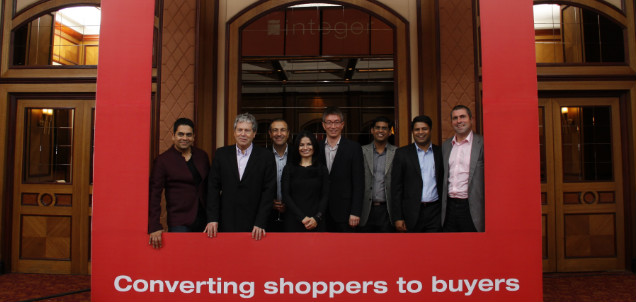
    The initiative, which is being pursued with hot interest by agencies to offer their services, has found a new and able beneficiary in Integer Group, one of the world’s largest promotional, retail, and shopper marketing agencies.


    A group company of TBWA (an Omnicom Group agency), Integer enters India with Mumbai as its hub and the sixth such market for the group in Asia Pacific. It has already blazed ahead with its offerings in other established markets like the US, Australia, Europe, the Middle East, and North and South America.


    Commenting on the launch of the property in India, Shiv Sethuraman, CEO, TBWA India said: “Integer is going to be an important part of our strategy and is one of the fastest growing units within the marketing communications mix. We are very happy to be investing in the division early enough than most others.”


    On the choice of India as the next market for launching the division, Dan Paris, Regional Managing Director – APAC, Integer said: “India, as a market, is accelerating fast and retail as a major driver is picking up drastically in India. From our POV, we wanted to launch at the right time and with the right assets and people. We thought the most important thing to do would be to invest in a serious study and the findings have revealed that this is an opportune time to be launching in this country.”


    Integer’s shopper marketing expertise utilizes extensive global research data on shopper behaviour, retail insights, and unique tools to develop strategic marketing solutions for clients interested in engaging and motivating shoppers. In India, the unit would be headed by Sreejit Nair, MD, Integer who comes to the agency after having worked for FMCG majors like PepsiCo and P&G. Sharing his vision and how Integer would work in the Indian context, Mr Nair said: “Coming from the client side of the business, I know what retailers go through. Especially modern retailers, who are struggling with basic issues like ensuring fill rates, getting space at a fairly good rental, and so on, but what’s happening is that they have actually become obsessed with price. Shopper marketing gives a lot of opportunity for them to differentiate. If you go to the client with an effective plan, I am sure modern retailers would accept this practice.”


    According to Mr Nair, the issue with brands is that they get obsessed with themselves; they don’t want to see what’s there for the retailer and the shopper. “If I am going to talk only about my brand, then it is like trying to push something to the retailer and that won’t work. And even if it works, it won’t succeed,” he affirms.


    Sharing the agency’s core focus in India, Mr Paris affirmed that it would be around four verticals, namely promotional marketing, shopper marketing, channel marketing and digital. “As per reports, retail is estimated to grow to 6 per cent until 2016. Given that there is no slowdown being witnessed here and the fact that India delivered an average 3.9 per cent growth in retail, we expect a modest growth in this segment,” said Mr Paris.


    “Also, the growth will be led largely by digital as the number of consumers who use online and mobile for research and shopping has gone up dramatically. Our study indicates that more than 60 per cent of the online consumers do research, comparisons and shop online and through mobile and this is quite a high figure. With e-commerce expected to grow by 3 per cent and with more than 123 million mobile payment users expected by 2012, these are exciting times for players to be in retail in India and around the world,” he added.


    When quizzed on how Integer India would be different from what the other players in the space have to offer, Mr Nair said: “We would differentiate from the others through our insights. What’s happening is that everybody wants something sexy in retail and it starts and stops with that. We don’t want to be in that particular pool of agencies; we want to start with insights, focus on a lot of inputs on understanding the shopper first and tailoring solutions around his need. We don’t want to be seen as someone who makes flashy collaterals for retailers.”


    Adding on, he said: “Personally, I believe that there is a lot of opportunity in traditional trade – that is an area that needs to be tapped. How much do companies know about traditional trade shopper? Hardly anything. That’s where the opportunity lies for us.”


    Sharing a similar sentiment, Mr Sethuraman added: “I don’t think there is a clear understanding of what shopper marketing is actually about. Most people confuse it with BTL, activations and other such initiatives. The challenge for all agencies offering this service is to get the meaning behind this term well defined, get marketers to believe in this property and treat it as a proper discipline and not just another version of doing BTL. Having said that, I think there is room for all the players to grow healthily for a long time to come; it is still a very nascent category.”


    Prior to launching the service in India, Integer India had undertaken an extensive study across India to map the shopping behaviour of consumers. Titled Check Out India, the study was designed to understand motivations and attitudes, rituals, and factors that influence shopping. The study was conducted across three geographical segments -Urban A – metro with a population of more than 1 million, Urban B – cities with population of less than a million and Rural India. The respondents included male and female shoppers in the age group of 18 to 55. The study threw up interesting findings around the frequency, priority and communication as seen by urban and rural shoppers. Going forward, the objective would be to keep conducting the study twice a year and present it to the marketers for deeper understanding into the mindset of the consumer.


    As for its initial client list on board, Mr Nair said: “Right now we are just working on some projects with PepsiCo and P&G, but we don’t intend to go all out with this unit. We have just launched this study and will have to see how we could present the study in a relevant manner to the clients. I must mention that this is a category neutral study; we’ll have to go on a category level and find about more about the shopper relevant to that category so as to make it really relevant to a particular marketer. We are currently pitching to a few brands and should be able to make an announcement in 2-3 months time.”


    On the growth that Integer is expecting from India, Mr Sethuraman said: “It is still a nascent market and we can easily look at a growth of 60-70 per cent in year one itself. But while a percentage growth may sound impressive, we have to say that the base is still small. The bigger task is to get clients to get used to this novel idea called shopper marketing and make it a genuine part of the communication mix.”

     

  • Cricket gets even more interesting with Zapak’s Cricville

    By A Correspondent


    Zapak.com, India’s leading gaming portal, announced on Tuesday the official launch of Cricville, a social cricket game on Facebook. This is Zapak’s second initiative in the social gaming, first one being Zapak Tambola. Before the official launch, the game was launched in the open Beta testing phase and got rave reviews.


    http://www.insidesocialgames.com/2012/02/06/social-cricket-game-cricville-aims-to-hit-a-six-on-facebook/


    Cricville broadly follows the IPL-pattern gameplay where the user can own a cricket club and work towards making it bigger and better. The user can work as a club manager, and build the club’s city and stadium. S/he can also hire a coach to train and upgrade the players’ overall performance.


    Users can choose from an array of exciting modes to play. These include Challenges, where the users can throw challenges to their friends on Facebook; Tournaments which will help increase the user’s rankings and in turn help the user’s chances of winning Gold, Silver & Bronze trophies. The users can also play practice matches to improve their overall skills. The game also allows them to upgrade their players by improving their batting, bowling and fitness to score over their friends.


    Speaking on the launch of Cricville, Manish Agarwal, Chief Operating Officer – Reliance Entertainment – Digital Business, said: “Cricket is not just a game but a complete religion by itself in India. With IPL just round the corner, this is the perfect time to launch Cricville, which follows an easy and competitive gameplay that will appeal not only to cricket fans but also to other gaming enthusiasts on Facebook. Zapak wants to tap the Indian-themed games segment which offer universal appeal on Facebook and what better way to spearhead that other than Cricket.”


    Zapak Digital Entertainment Ltd. is India’s largest gaming company that addresses the complete value chain of digital gaming. With currently 8 million registered gamers, Zapak.com is not only the largest casual gaming sites in the country but amongst the top casual gaming sites in the world. As per a recent survey on an average a user spends about 21 minutes on Zapak.com, which is way higher than the average time one spends on any gaming website.