Author: mxmadmin

  • The ‘Magic of Print’ is Usain Bolt of Media

    By A Correspondent


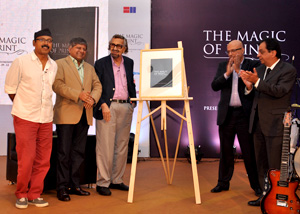
    From left to right: Josy Paul, Shashi Sinha, Alyque Padamsee, Vikram Sakhuja and Rajiv Verma at the unveiling of ‘The Magic of Print’

    We live in an era where technology is at the core of everything that we do. Whether it is about updating ourselves about new product launches or being abreast of the developments that transpire around the world, technology has enabled us to consume news at the quickest time possible – and without burning a hole in our pockets. Amidst this reality, it is the traditional mediums that seem to be taking the brunt of this newfound liking between consumers. From television to out-of-home and even print, mediums today are being threatened to put up a fight and adapt to this new truth or end up being relegated as the medium of yesteryears.


    Celebrating the creativity of print advertising, HT Media on Friday, September 14, 2012 launched a coffee table book on print advertising – ‘The Magic of Print’. The hardbound volume features contribution from prominent Indian advertising expert Mr Alyque Padamsee.  The book comes complete with a treasure trove of outstanding print advertisements of the last few decades from around the world as well as tips on how to create great print ads. The content is put together by Rajan Bhalla, Head Corporate Marketing and Magazines, HT Media and Mr John Thangaraj, Vice President, Planning, LOWE Lintas.


    Addressing a packed audience in Mumbai’s Taj Lands End, Rajiv Verma, CEO, HT Media Limited said that the best ads to remember are all print ads. In the earlier days, there was a certain charm to the print ads which you don’t find today. “I realise news and entertainment will be increasingly consumed on digital media, but print is nevertheless here to stay as long as the content is engaging, good and relevant.”


    A panel discussion was also held which delved on the various aspects of print, the impact of innovations, and the future of print advertising and so on. Print is one of the best reach building medium, and while television basically relies on emotions, print requires more brain power. With the literacy rate growing, newspapers will not decline in a hurry, reading newspaper has become a habit and to break this habit will take a really long time. These were some of the points made at the panel discussion. The panelists included veteran adperson Alyque Padamsee; Vikram Sakhuja, Global CEO, Maxus (and CEO, Group M India and South Asia); Josy Paul, Chairman and National Creative Director, BBDO India; and Shashi Sinha, CEO, Lodestar UM. The session was moderated by Sitaraman Shankar, Deputy Managing Editor, Hindustan Times.


    According to Mr Paul, the magic of print is a sudden impact; it is the Usain Bolt of the media industry.


    Mr Sakhuja pointed out that print is one of the best reach building medium and the top reason why most advertisers use print is for response, reach and editorial credibility.


    Mr Padamsee observed, “Television is basically reliable to emotions whereas print which also relies on emotions at the same time requires brain power. Print is a medium which remains with you and it has a mandate, and the mandate is that it is a very reliable medium. If print is going down today, it is because it is not responding to today’s needs. I don’t think print media even realises, it is an excellent medium for knowledge and education. Once it realises this, the swing will automatically go back to print.”


    So is there a success mantra for the growth of print? Will print die in the long run?


    Mr Josy Paul was of the view that print must not be isolated but integrated and its impact must be maximized. Today innovations is almost a loose word, it has become a bad word, in fact there is a lack of idea today. “Print is in your DNA, so it cannot die, it has been alive for over 800 years, it can only evolve.”


    Mr Vikram Sakhuja  explained, “Print won’t die in a hurry, it may be threatened by television or digital, but it won’t die in a hurry. There will a downward trend, starting with the metros, trickling down to smaller towns and villages, but it will certainly take some generations. In the long run however print will no longer be a mass medium as not many people will be consuming print.”


    Mr Alyque Padamsee was of the view that newspapers have a big advantage of analysing news which is not the case with television as television is a surface medium. “Innovation I believe is great, but some innovations are memorable, and some are clever. However innovations alone won’t sell anything, there is a lack of thinking today as far as print ads are concerned.” He further said, “Any medium will die until they reinvent. Radio would have died a long time ago had they continued the way they were. Yes, even print will die, but they must re-invent to survive and to thrive. Cinema was expected to die after television came in, but they re-invented. As long as print is desirable, it will be buyable.”


    While the panelists were of the view that print advertising needs to regain the charm it once had, there was a near unanimity among the panelists that print media is here to stay. However they were also of the view that if the medium was to die in the future, especially with the advent of digital, the death of the medium will be slow. The impact would first be witnessed in the metros which will trickle down to smaller towns and cities and in the long run, print will no longer remain a mass medium. Nonetheless as of today, the panelists were of the view that print advertising must not depend solely on innovation, that the medium must re-invent and make itself a desirable medium.


    Shortly after the panel discussion, the book -‘The Magic of Print’ was unveiled.


  • Signposts… Friday, September 14

    This Day, Last Year
    From the MxMIndia Archives


    Digitization was everywhere as the Lok Sabha passed the much-awaited Bill with the assurance that cable operators will not be harmed in the process. The digitization sunset date for the four metros was then set for June 2012.

    http://www.mxmindia.com/2011/12/the-sunset-gets-closer/


    The other big news was print major The Hindu Group getting busy with new launches, expanding its footprint and taking new people on board. MxMIndia had an exclusive with K Balaji, Managing Director, Kasturi and Sons.

    http://www.mxmindia.com/2011/12/hindu-on-expansion-mode/


    iPhone’s iAd not working?
    Amidst the hype surrounding the launch of Apple’s latest iPhone 5, it seems its much-touted mobile ad platform iAd could turn out to be a failure. Rival phone companies may have found this story particularly interesting.http://www.imediaconnection.com/content/29733.asp/ 
    We’re Liking It
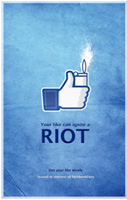
    The power of a thumbs-up, as executed graphically by Art Director Pankaj Bhagat and Copywriter Anandi Sah. (Can be viewed on adsoftheworld.com)


    Pi In The Sky
     

    At least one reason for looking up (but look down first to ensure you’re not stepping into a rain puddle or a dog turd)

    http://gizmodo.com/5942949/artist-skywrites-the-first-thousand-digits-of-pi-over-san-francisco

    Tweet of the Day
    Rupa Gulab, author and adperson (@rupagulab): Mamata’s unhappy abt the diesel price hike, and I’m unhappy abt Mamata in general. Can we do a Mamata roll back? Please?
    Weekend Read
    Tired of the shallow stuff? Here’s something to sink your mental teeth into. In fact, we recommend that marketers and advertisers looking for a better connect with their consumers and TGs should graze through this

    http://edge.org/conversation/how-culture-drove-human-evolution


    We welcome you to contribute links to Signposts.                                                         Inbox these editor@mxmindia.com. BBM 23050B5D
  • MxM Mondays: Is Radio perceived as a poor cousin to Print & TV?


    By Ananya Saha and Robin Thomas


    The onslaught of FM radio came as a breath of fresh air for listeners in India by the late nineties, and the success of FM Phase II launch further fuelled the FM growth story. According to industry estimates, radio’s overall advertising pie is around 4.5 per cent, and this is expected to growth even further with the FM Phase III launch. The medium promises reach, greater recall and marketing solutions that are cost-effective. With FM Phase III also expected to roll out soon, the radio industry gears up for another phase of growth which may see newer genres coming into play, differentiation in content, news, sports broadcasting and so on. However, despite these developments, why is radio perceived as a poor cousin to its traditional counterparts, particularly print and television? How do FM players, media planners and the advertisers view the medium?

    Comments in alphabetical order of last names

    What the radio industry has to say:


    Harrish M Bhatia

    Harrish M Bhatia, CEO, 94.3 MY FM:

    It is highly unfair to compare radio to print or television considering the policies associated with each medium and the length of time that the media have existed in the private sector. Restrictive governing policies have not allowed radio to diversify its product offering and showcase its true potential as a people’s medium. The private radio industry is still nascent and hasn’t been given the autonomy that television, or even for that matter online media, has enjoyed. Internationally, where markets are more evolved, radio enjoys about 8-10 percent of the advertising pie. Secondly, there is a lack of credible measurement systems to back the potential of radio. While dealing with the issues like long delays in Phase III implementation, music royalties and insufficient measurement tools, the radio industry has barely managed to consolidate resources and sustain itself. What is needed now is a strong mutual focus on solving these issues, hard-selling the medium and moving head-on into the third phase.


    Although it still does not address certain issues, Phase III should help open up the market for players to expand to newer markets and increase their radio footprint. What will be interesting to see is the change in dynamics that will come into play on account of the large number of non-metro stations that come up in the third phase, bringing radio on par with media like television. Advertisers will be able to benefit from this growth, leading to increased revenue potentials for radio. Moreover, with growth expected from smaller markets, the spends by national advertisers in these markets will also grow as no other medium offers reach like radio, in the fastest possible time, addressing challenges in a particular market and in their local language.


    Media spends by advertisers are not proportionately allocated to radio even though it has outgrown other media in time spent. As per the recent RAM research conducted in the four markets of Jaipur, Ahmedabad, Nagpur and Indore, average time spent listening to radio is 160 minutes as compared to IRS figures of 107 minutes watching TV, 85 minutes reading the newspaper and 30 minutes on the internet. If properly planned and used innovatively, the radio can do wonders for a particular brand. Hence, there is a need for enhancing the medium further to highlight its mammoth reach and effectiveness, which is what the radio industry as a whole should strive to do. Furthermore, radio needs to be bought on the strength or merit in particular target geography instead of as a network. Having said this, creative selling of radio has allowed greater inroads for some brands, especially in Tier II and Tier III markets, which are rapidly expanding.  Some of the key reasons have been the unique strengths of radio like customized communication to address local market needs, and ‘radio properties’ that contribute significantly in brand building.

     

    Sanjay Hemady

    Sanjay Hemady, Chief Operating Officer, HIT 95 FM,

    FM Radio is young, it has been evolving for 10 years and growing, adding value every single day to the listener and advertiser, its vast, extensive and unparalleled reach undoubtedly will take longer. Other mediums have taken long to establish, why should we compare with traditional mediums when there is no race, there is so much to achieve as a standalone medium. Radio broadcasters have been working towards creating their own territory, convincing clients, brands. The broadcaster is learning with day-to-day experience to give its best, by listening to the listener, by changing formats as necessary, positioning it differently, etc… it will take its own course, the time will come. We love objections and we solve them meaningfully.


    Expansion to newer markets will mean a bigger reach, we will get to entertain far more listeners than today, new formats will come in, fresh new talent gets identified, more jobs will get created, more brands will add radio as a definite medium. Give it some time, FM Phase III will subsequently open up a bigger offering for brands to reach out to more consumers.


    The top evolved brands across all mediums are convinced with radio, they have been consistently advertising since FM got privatized. Radio is a reminder medium, it scores on immediacy, it is about consistency and brands who have believed in the future of this medium have benefitted immensely. Brands who have worked closely to understand this medium and used it effectively are a happy partner. Going forward a collaborative approach will add more to this growth, and other extended avenues like Mobile Radio, Internet Radio, Radio Activation will also add revenue.


    Prashant Panday

    Prashant Panday, CEO and Executive Director, ENIL (Radio Mirchi):

    I disagree that it is a poor cousin of the other media! Each medium has its own relative size and one has to keep that in mind. A 48-kg lightweight boxer gets the same Gold medal in the Olympics as the 85-kg heavyweight winner gets! They are separate media and should not be compared. However, what is indeed correct is that even radio’s natural share has not yet been achieved. Worldwide, the share of radio is 8.5 percent, and this is just the average. In the countries where radio has developed well (US, NZ, Sri Lanka etc), radio’s overall advertising share is 12-13 percent. In India, radio’s advertising share is just 4.5 percent and the reason for this is that the government has simply not released enough frequencies. The share of radio will increase if 400 Khz separation is adopted by the Government as recommended by TRAI. That will increase supplies to 18-20 private channels per city.


    FM Phase 3 will only increase share from 4.5 per cent to 6 per cent or so. If we want to go to 8 percent or more, we have to release more spectrum in the major markets.


    Radio has become a “core” medium now. Every advertiser uses radio and they use it all the time. In fact, radio pricing is also quite strong. Did you know that Radio Mirchi is in the top 10 electronic media brands in the country after Star Plus, Zee, Colors, Sony, DD, Sun TV, 1-2 sports TV channels… It’s bigger than all music channels, all news channels, all regional channels, and all movie channels!


    Suresh Sanyasi

    Suresh Sanyasi, National Sales Director, Radio Indigo

    Yes, people consider radio a poor cousin. This has happened because of the endurance power of the medium. The people who do not understand the potential of the medium, cannot do much for it. Radio is and will remain a traditional mass medium. Radio works differently in different areas. Unlike television, this medium takes the demographic and area listenership into consideration. Radio as an advertising medium is harnessed largely by the retail sector and their ad spends on this medium is increasing. The medium provides immediate ROI, and is measurable.


    Regulatory issues are hampering the content creation on this medium. News and features get immediate audience. Once the regulations are eased, listenership might also increase.



    B Surender

    B Surender, Senior Vice President and National Sales Head, Red FM

    It is unfair to compare the growth and size of FM radio industry on equal terms with the print and television media here in India. To start with , FM radio was launched extremely late in India around 2002 with steep licence fees,  restriction on genres, frequencies, etc  making the business virtually unviable till the year 2005. It is only after phase two expansion with some policy corrections around 2005-06 that the industry started taking off. It has already grabbed an impressive 4.5 percent share of the media pie in India. If the Government frees FM radio further from its shackles through its phase three policies, one can expect terrific momentum in its growth.


    In my opinion, the  biggest roadblock for the industry’s progress currently is the most unreasonable restriction on entering newer genres like news and current affairs, live sports etc,  clubbed with issuing of multiple frequencies within a city. If the television industry was given the freedom to operate in these genres inspite of it being visually enabled, why not the FM radio industry?


    Phase three means a lot to our industry as it’ll considerably improve geographical coverage and reach, and enable content differentiation, to a reasonable extent, thanks to the provision for existing radio players to acquire multiple frequencies in the same city. It will consequently attract more categories of advertisers locally as well as nationally and more importantly, increase the depth of consumption of those advertising already. This in turn should take its share of the ad pie up to 7-8 percent. If they free up the news and current affairs genre, which is considered the second biggest genre on radio, properly, then the share of radio can potentially touch double digits over the next few years.


    The key word is ‘evangelising’. Industry players need to take up the task of promoting the enormous benefits of this amazing medium in such a manner that advertisers get a more holistic understanding. In India, listeners have lapped up the medium wholeheartedly across age groups. There is a clear case for radio players to pool their precious resources and launch a RAB (Radio Advertising Bureau) kind of initiative in India on the same lines as USA, UK, South Africa, etc to evangelise the medium among advertisers and ensure a substantial share of value in their minds.


    What advertisers and media agencies have to say:


    Anwesh Bose

    Anwesh Bose, Senior Vice President, DDB MudraMax

    The answer lies in the question itself. The argument today is why radio is the poor cousin. The entire eco-system of communication that is advertisers, agencies and the media owners are to blame for the condescending perception regarding the medium in our country. Before we answer the “why” we need to know the ‘what’s.


    The knowledge gap: most of the ‘professionals’ in the communication eco-system are not aware of the number of radio stations that exist in this country and a handful of them have ever seen a physical copy of the AIR rate card. An interesting fact is that the geographical coverage of radio is higher than that of any medium in this country and very few are aware of it.


    The information gap: Unlike TV and print, radio has very little data to prove its effectiveness and efficiency. In the times that we live in, most of the communication planners are data clerks; therefore for them radio is nothing but a ‘cheap’ medium that is local and low in reach therefore it is an option not an important component of a media plan.


    The perception gap: due to the lack of knowledge and information, the perception regarding the medium is dilute. Dilute perceptions lead to misplaced notions. The radio media owners have themselves done a lot of dis-service as well. There is an identity crisis among the radio brands because all of them are busy copying each other, as a result of which everyone is a ‘me-too’. Add to it the fact that it is a medium that has a one-time entry cost and no recurring costs, therefore the complete dependence on advertising revenues for sustenance. Anything that is ‘free’ is not valued.


    The ‘why’ will remain ‘why’ unless the ‘what’s are rectified. I would like to conclude by saying that it is imperative that the glaring gaps are closed and it is up to the stakeholders to do their bit. It calls for thought leadership – are we up to it?
     

    Abdul Khan

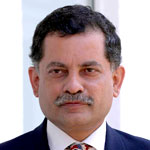
    Abdul Khan, Senior VP, Tata Teleservices

    I think poor cousin is an unfortunate phrase to be used for this medium. The current share of advertising pie that radio gets is about four percent. And, we only have ourselves are to blame for this. The problem is that the mode of distribution (airwaves) has been confused with medium. There exists woeful situation of lack of innovation, programming and talent in this industry. Radio is not in sync with the youth of the country, which is the biggest drawback given that youth is the TG for every other medium.


    The last remarkable property that one remembers on radio was Binaca Geet Mala. And radio now beams music when there lay enormous possibilities when it comes to programming. There is an enormous opportunity of delivering creativity through audio waves.


    Radio currently is not offering genuine value. Except for radio forums where issues and solution are discussed, there seems no sense of urgency from within the industry and the ecosystem. Even the discussions do not lead to reforms.


    Government regulation is not responsible for this situation. Yes, there have been regulations but other mediums also face regulations. What the ecosystem needs to understand is the fact that radio as a medium has enormous possibilities.


    Vivek Srivastava, Joint MD, Innocean Worldwide

    The perception of radio varies according to the advertiser’s profile. For the local advertisers, like retailers and jewellers, radio is a high-performance medium and a primary advertising medium at times. But for national and established advertisers, radio suffers from an image problem.


    Radio has been traditionally typecast as a low-preference medium. It has been treated as a transit medium, a medium that people listen to while they are driving or travelling. People believe that even with listeners accessing radio through their mobile phones, the listenership is actually percolating down.


    What is also hampering the growth of the medium is the fact that radio is a victim of current circumstances. There is hardly any money put in when it comes to producing for radio, even when huge budgets are allocated for production in print and television. Yes, we do see flashes of brilliance on this medium as well but it is only far and between. The whole ecosystem is responsible and should act towards making this medium more rich.


    Sanjay Tripathy

    Sanjay Tripathy, Executive Vice President-Head Marketing and Direct Channels, HDFC Life

    Radio is considered a very topical medium and advertisers can customize messages to geographies and city. While there is a great amount of flexibility that the medium offers but there are certain issues that the medium has:


    1. There is no channel or programming loyalty by consumers – Consumers listen to songs and not so much to content.


    2. It is still a medium (in larger cities) which is heard while concentrating on doing something else ie driving, cooking, etc. Therefore it becomes a medium that is on the background and not so much a primary entertainment medium as television.


    3. Radio Channel software ie Radio Jockeys have not been able to build loyalty with the consumers / listeners.


    Therefore, radio has become a support media to television or print, and is primarily used as a reminder medium.


    Radio industry is using qualitative / quantitative researches to convince marketers/advertisers but these are researches done by radio channels independently and marketers do not get a third party verified data.


    RAM, the measurement system for radio is not considered to be a credible system.
    Few of the reasons are:

    • Diary- entry method- whereby a selected person, maintains a diary of radio stations tuned into.
    • Coverage of just 13 cities including 4 metros.
    • Small sample size of 480 is used in metros to measure the effectiveness.

    Thus, advertisers and radio industry are concerned about accuracy, authenticity and relevance of RAM’s ratings. In my view, in order to be an efficient system, RAM must have higher sample sizes that are statistically significant, transparency in processes and electronic gathering of data.
     

  • Careers360 goes digital to help students looking abroad

    By A Correspondent


    Careers360 has taken the digital route to speed up its journey towards becoming the largest career counsellor in the country. After launching Careers360, the English magazine in 2009 and the Hindi edition in 2010, the company has now turned its attention to leverage the content, data and information, to reach out to the students through their Digital initiative.


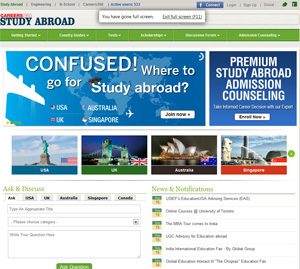
    After launching a career counseling portal targeted at engineering college aspirants (www.engineering.careers360.com) in July 2012, the company announced the launch of a portal for student aspirants who wish to study abroad.


    The company is focusing to build a strong ecosystem involving various stakeholders for dedicated verticals; In Engineering portals, Careers360 launched one of its kind, innovative mock counselling engine. To help the various stakeholders, the engineering portal has unique features like a ‘Campus Ambassador Program’ which helps students contribute college reviews and stakeholders engage students in chat sessions, counselling sessions etc.


    The new portal www.studyabroad.careers360.com aims to be an unbiased counsellor helping the student make a well-informed decision. The country- and course-specific content for this portal would come from regulators, embassies councils and agencies supported by the respective governments. The portal would answer the how, why, when, where, what for students in a simple but comprehensive manner.


    Maheshwar Peri

    Commenting on the new product, Maheshwer Peri, chairman and publisher of Careers360, said “Career counselling on studying abroad is plagued by agents also doubling as counsellors, leading to mis-selling and misleading the students. The launch of our study abroad vertical will help student aspirants interact, engage and talk to us, the regulators, the trade authorities of various governments, and universities directly through our portal and take better decisions. Our features such as chats, discussion forum and counselling sessions would help students engage and interact with the right people. We would also be launching counseling products at nominal fees that would help the students get a deeper insight into the domain before committing themselves.”


  • HT Brunch Dialogues on the changing face of Indian heroine

    By A Correspondent


    The launch of a coffee table book on print advertising – ‘The Magic of Print’ – by HT Media was followed by the HT Brunch Dialogues. The second edition of HT Brunch Dialogues was launched by Hindustan Times Brunch, and was themed, The Changing Face of the Indian Heroine. Two rounds of panel discussions were held.


    The panellists in the first round included Film Director, Madhur Bhandarkar; Producer, Siddharth Roy Kapur and filmmaker and screenplay writer, Raj Kumar Gupta. The panellists discussed the filmmaker’s role in portraying the Indian female lead. They delved on how the female oriented films and the roles offered to actresses have changed and evolved over the years. They also pondered on whether an actress in the long run would be at par with the actor, in terms of pay.


    “Times have changed, today heroines are willing to experiment with their roles or even their image which was not so earlier, when they were very conscious about their image and the roles they play” said Madhur Bhandarkar.


    On whether heroines will also be paid on par with heroes, Siddharth Roy Kapur said, “If a female oriented film crosses Rs. 100 crore, it may see heroines getting paid as much as the heroes.”


    The second session of the panellists included film personalities Kareena Kapoor, Karisma Kapoor and Sharmila Tagore. Both these sessions were moderated by Vir Sanghvi, Advisor, HT Media.


    Their discussions revolved around the way scripts or films have evolved over the years for the Hindi film heroine. And how they have managed to stay relevant or break the myth about actress only as a show piece in the film and their take on whether things will get any better for the Hindi film heroine in the near future.


    According to Sharmila Tagore, there is a huge difference in the roles women or heroines do today. Times have certainly changed, cinema has become professional today, unlike before, but roles are still not written for women.


  • Industry to analyse Dainik Bhaskar case study

    By A Correspondent


    The Dainik Bhaskar Group has placed IIM Bangalore’s recently completed classroom case study of Dainik Bhaskar group’s Maharashtra success, titled ‘Aspiring Growth’, for the industry to analyse.


    The case showcases the fast-paced expansion of the group into 13 markets and the successful launch of Divya Marathi in Aurangabad, Maharashtra with a roaring success with five editions within such a short span of time. The case leaves the reader with a pertinent question in the current scenario ‘Which market/ territory / language should Dainik Bhaskar Group enter next?”


    The contest will follow a two-stage process. In stage 1; teams registering at Dainikbhaskargroup.com will send in their summary of recommendation and approach. In Stage 2; 5 to 7 shortlisted teams will then finally make presentation to a jury of Bhaskar team, senior fraternity members and IIM Bangalore professor Ms Seema Gupta who has developed the case. The winner team stands to get Rs 1,00,000 as prize money.


    Elaborating on this further, Sanjeev Kotnala, Vice President, Dainik Bhaskar Group said, “Before the case was finalised, we had two classroom sessions at IIM Bangalore and the Brand team raised a simple question – what if the case was to be solved by the media-advertising-marketing fraternity. This was the birth of this unique innovative contest. We debated this with Prof Seema Gupta, who has been encouraging and excited by the innovative contest. She agreed that this will make the case that much stronger for future classroom discussions. We as a team are gearing to hear some totally differentiated point of view and approaches- as the professionals working within the industry definitely have an advantage.”


    The contest is open to professionals in media, advertising, communication and marketing and students of premier management institutes, he added Those wishing to register and download the case can do so at www.dainikbhaskargroup.com.


  • Vivel launches ‘digital talent hunt’ with Hungama

    By A Correspondent


    Hungama Digital Media Entertainment along with ITC’s personal care brand, Vivel Face Wash, has unveiled a new television commercial called ‘MOBISur – Sitaron Ki Talaash with Shankar Mahadevan’ to look for India’s first digital talent hunt, which will give millions of Indians an opportunity to become a singing star.


    This talent hunt enables participation from anywhere in the country; all that a participant requires is a mobile phone or an internet connection. This property empowers the participants to break the queue and forego travelling to the nearest city for an audition. The winners of the contest will get an opportunity to record an album with Shankar Mahadevan which will be released by T Series and Hungama. The winners will also receive Rs 5 lakh rupees.


    Developed by Meridian Communications, the TVC features well-known Indian musician Shankar Mahadevan encouraging aspiring singers, who don’t get enough time out of their busy schedules, to showcase their talent through this platform. The TVC also features the ‘Ghar baithe baithe famous singer bano’ concept that highlights the various ways to participate in the contest so that the aspirants can live their musical dreams.


    The contest has already received a phenomenal response since its launch with over 4,50,000 call-ins on IVR and more than  6,00,000 entries on the website in just 40 days.


    The TVC is currently on air across various music and other GEC channels. The latest TVC can be viewed at http://www.youtube.com/watch?v=FonHDegCo9A.


    Credits:

    Meridian Communications Pvt Ltd

    Creative: Anurag Khandelwal, Satish deSa

    Account Management: Mohit Ahuja, Abhishek Nand

    Production House:

    Jack in the Box

    Director: Myles

    Producer: Ashlesha Bangia


  • BIG CBS Prime, Bloomberg TV to simulcast India’s Prime Icon

    By A Correspondent


    The BIG CBS Network is readying to launch its latest home grown property India’s Prime Icon which will be dual-cast across its targeted channels – BIG CBS PRIME and Bloomberg TV India. The show aims to get Indians choose their icons – successful and celebrated personalities who inspire and influence them the most! The USP of the property is that it allows people to choose their icons from across all sectors of life, be it sports, entertainment, business, politics or social welfare.


    With BIG CBS Prime and Bloomberg TV India, both targeting premium audiences, the show has been designed to ensure it meets the entertainment requirements of the upwardly mobile males, seeking this quality content. India’s Prime Icon will bring forth the lifestyle of Indian society’s elite personalities and evaluate them basis qualities which will make them the prime icons of the country.


    Speaking of the show, Anand Chakravarthy, Business Head, BIG CBS Networks said, “Our country boasts of some of the most influential men and women who are an inspiration, role model and icons for the people. India’s Prime Icon is a new concept, which has not been explored in the past and which indicates at an opportunity to connect with audiences. Both BIG CBS Prime and Bloomberg India are premium channels, making them perfect platforms to reach out to the right audience mix, both for this show as well as for marketers.”


    The show is designed to give audiences a peek about the life stories of some of India’s most distinguished men and women. Seagram’s 100 Pipers collaborates in this initiative. Bikram Basu, VP-Marketing, Pernod Ricard India,commented on this association, “Seagram’s 100 Pipers stands for True Legends. Our association with BIG CBS Prime’s India’s Prime Icon show reiterates our common values, and brings our brand closer to India’s true icons.”


    Recommendations for India’s Prime Icons will come from none other than the audiences themselves, through a voting system, and will see prominent personalities – from across business tycoons, sports personalities, entertainers, Bollywood celebs etc. making it to the list. Following this, an eminent jury will qualify the entries and shortlist the top 20 icons. The 20 icons will be revealed on the Channel each evening during prime time and a voting window will be kept open for 24 hours so that viewers can vote for their favourite icons, which decided the Top 10 icons.


    The Top 10 icons will then battle it out to the coveted title of India’s Prime Icon, with each episode unveiling one icon showcasing never heard before stories of their lives, style statements, achievements, sex appeal, philanthropy popularity and more…


    To ensure optimal reach, BIG CBS Networks has planned an extensive marketing campaign for the show. The network will engage audiences on multiple touch points ranging radio, television, out of home media and social media.


  • Shishir Joshi: Journalism needs PR, desperately

    By Shishir Joshi


    “You guys have changed the way we watch news,” I remember an elderly businessman’s rather appreciative remark, when I had told him I work for a news network. This was a little over fifteen years ago. What he was referring to was his experience as a viewer of the earliest versions of the English Star News (then produced by NDTV) as opposed to years and years of watching state-owned Doordarshan.


    The world has come full circle. “You guys have changed the way we watch news,” is what a lot of people have begun saying to me, once again. However, this time, the appreciation of the previous decade has been replaced by a look otherwise reserved for skunks. Why have we become the favourite punching bags? How fair is the criticism? Are we, media or journalists, being singled out? Truth be told, journalism has invaded our lives to an extent second only to cell phones. And while one can debate on the boons and banes of a cell phone in our life, increasingly, people are finding nothing but faults in the journalism that they see or read. While there can be many a reason for journalism reaching such lows, there surely has been one defining image and line which has made us the butt of many a joke, and ridicule. And that is of a young, always-in-doubt-but-never-wrong journalist, clutching a ‘boom’ mike and seeking an answer for the priceless “aapko kaisa lag raha hai” question. This one line has been the unifying link between the umpteen reportages on rapes, molestations, thefts, murders, victories, losses, triumphs and earthquakes that we have seen on news television through interviews of people, common or uncommon. But the problem is larger.


    Increasingly, media practices and media men have become a subject of greater scrutiny. And for a profession which had been regarded so highly, gossip about A, B or She journalist’s fall is consumed with great sadistic pleasure. And to top it, there hasn’t been one big story in recent times where the credibility of some or the other mighty hasn’t been questioned. Be it Aroon Purie and his jet-lagged editorial, portions of which were picked up from Slate.com, or the ‘Radiagate’ tapes where the mightiest in television seemed to be breaking bread with bed-switchers, or down south, where the Hindu’s honcho N Ram conveniently edited colleague Chitra Subramaniam’s name from the Bofors’ expose’ credit lines, we seem to have been there and done that. It has been summed up scathingly by BV Venkat Rao in http://www.firstpost.com/india/why-the-fall-of-xerox-zakaria-is-unthinkable-in-indian-media-430088.html.


    The list seems unending. Every state seems to have a case too many of such violations. If Guwahati saw journalists accused of provoking molesters for a video story, Mumbai saw the arrest of a journalist on charges of conspiring to eliminate a former colleague. The latest is from Karnataka where journalists have been arrested as part of an ISI plot. The book threatens to get only thicker. There was a time when we had politicians, parliamentarians, businessmen, gangsters, extortionists, showmen and lobbyists, and social workers. Categories of businesses, vocations and professions. And then you had journalists, the ‘clean’ guys. Today, that line appears tampered with. It is either people from the ‘other’ categories doubling as journalists (and media owners) or worse, journalists wearing multiple hats. But this is not about where we have gone wrong. Or why.Or the ‘sensational’ and ‘breaking news’ which have become eyesores. It is about the numerous stories, the game changers, which miss our attention. For every 26/11 reportage where we have been accused of crossing the ethical line, there has been a December 3, when lakhs converged at the Gateway of India to express anger against the political spineless, resulting in ministers losing their jobs.


    For every free housing scheme that journalists have grabbed from Chief Ministers through the so called “press quota”, there has been the unearthing of the Adarsh scam, the CWG or the 2G scam. And for every Radiagate which saw journalists cross an ethical line, there has been a Coalgate expose. Relentless. Unending. Cases of exemplary journalism abound in non-urban, non-English media too. What I have pointed out are less than a handful of the hundreds of fabulous stories and efforts which journalists are working on, day in and out. For every Rakhi Sawant who gets some airtime on a news network, there are countless unsung heroes who are encouraged to become citizen journalists too, thanks to inspiring journalism. For every saanp-bicchoo story which makes it to some crime show of a news channel, there is also the story of a braveheart hospital attendant who saved lives in operation theatres when trained medical help was not within reach. For every case of public humiliation or molestation that gets played up for alleged TRP gains, there are stories of faces-in-the-crowd standing up against a road-rage bully. The 48-hour rescue operation of little Prince from a borewell in north India is now an oft repeated case study of the levels to which news networks have stooped for TRPs. But, was it only TV channels which gained or did the village also get transformed thanks to the media and political attention? Yes the latter did take place. But nobody seems to be talking about it. Or is it that people are no longer watching?


    Yes, journalism is indeed in need of serious review. Internally. And externally too. External autopsies have been done time and again. In these challenging times, under the guise of upholding free speech and democracy, every Narendra, Raj or Abu has tried surgical procedures to silence the media. For masses, it is vicarious pleasure over a cuppa chai. There is no doubt that for a vibrant democracy to thrive, it can’t be a more welcome change. Having said that, what journalism now needs is a desperate makeover. If to woo a Marathi manoos, an Uddhav can praise an estranged Raj’s political stunt, surely journalism can do with some PR.


    Networks need to play up some game-changer stories that talk of good journalism. Newspapers and social media could follow suit. Prime time can also have some promotions of non-‘sensational’ but ‘real ‘stories. People, viewers, on the other hand need to get out of their drawing-room gossip mode and start writing in to networks on what they need more, rather than stuff themselves with pap. A bit of PR on image building and reputation management could do wonders to a sagging morale. Don’t get me wrong. We aren’t talking of hiring a PR agency here. But well, in the world of paid and private treaty journalism, a bit of philanthropy from journalism’s first cousin, PR, at least in spirit, can work wonders. Applications are invited. In confidence. Beep beep, pings the inbox. Applications have already begun pouring in. Uh oh. …Anybody other than Nira Radia please…?


    For those away from ground reality, journalism and PR have always shared a love-hate relationship. Journalists are accused of being egoistic, badly behaved (on the phone) and always ones to take a short cut. PR people on the other hand are seen to be clueless at their jobs, too busy ‘selling’ a story rather than defining it on merit, and flaky. Can the twain, then, meet?


    Shishir Joshi is the co-founder of Journalism Mentor, and till recently was Group Editorial Director of the Mid-Day group of publications.


  • 75 Indian entries shortlisted at Spikes Asia 2012

    By A Correspondent


    As the Spikes Asia Festival of Creativity opened its doors for a three-day programme celebrating excellence in marketing communication, industry professionals from 27 countries congregated for knowledge, networking and some accolades. As many as 30 seminars have been lined up at the venue at Suntec City in Singapore.


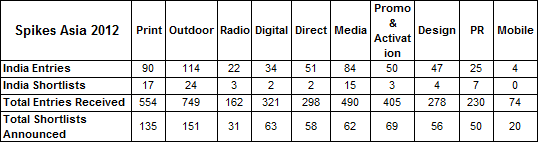
    Ten juries deliberated over a record 4,860 entries which were received into this year’s awards with 10 of the 16 shortlists released on Sunday. The following is the tally of entries shortlisted from India under each category:


    Shorlists for Film, Integrated, Film Craft, Print & Poster Craft, Creative Effectiveness, and Branded Content & Entertainment will be announced on Tuesday, September 18


  • Signposts… September 17

    This Day, Last Year
    From the MxMIndia Archives


    Since September 15 & 16 were working days last year, we bring you archives from 3 days today. On Sept 17, we carried a story which spoke of the PMO wanting a regulator for print ads. On the 16th we had an interesting feature on whether YouTube was fragmenting TV audiences.  On Sept 15, while we had several news stories our Anchor by Anita Nayyar drew several hits.


    September 17, 2011

    Another ASCI in the making? PMO wants regulator for misleading ads.

    http://www.mxmindia.com/2011/09/another-asci-in-the-making-pmo-wants-regulator-for-misleading-ads/


    September 16, 2011

    Is YouTube fragmenting TV audiences?

    http://www.mxmindia.com/2011/09/is-youtube-fragmenting-tv-audiences/


    September 15

    The anchor: Anita Nayyar on 8 reasons women are better bosses than men

    http://www.mxmindia.com/2011/09/the-anchor-anita-nayyar-on-8-reasons-women-are-better-bosses-than-men/


    Must-Read for the FB Age
    When even ‘unfriending’ someone on Facebook seems like a terrible snub, how do you declutter your social circle?

    http://www.guardian.co.uk/technology/2012/sep/14/unfollow-unfriend-on-facebook-twitter

    Joke Of The Day
    Q: How many art directors does it take to change a lightbulb?


    A: Does it have to be a lightbulb?


    Tweet Of The Day
    Swapan Seth, adman and writer @swapanseth: Most Indian advertising CEOs are hardly active, if at all there, on Twitter. I find that odd. Given that their clients are.
    We welcome you to contribute links to Signposts.Inbox these editor@mxmindia.com. BBM 23050B5D
  • Hansa builds up F1 fervour; showcases VMM F1 car for Vodafone across India

    By A Correspondent


    For the second year in a row, Hansa Events and Activation has been chosen by Vodafone to showcase the Vodafone McLaren Mercedes team F1 car across eight cities in India. This is part of Vodafone’s promotion in a lead-up to the races in New Delhi.


    Sujit Kote, GM, Hansa Events and Activation, Mumbai, said, “The show-car activity was a tremendous success last year due to which we have been chosen to handle this again this year. Besides Ahmedabad, Pune, Bengaluru and Chennai, the activity will also be done in Hyderabad, New Delhi, Kolkata and Bhopal. Over 300,000 consumers have already participated and are part of the social media buzz that’s been built around this.”


    Hansa Events & Activation, has included a car simulator allowing fans at the airport and malls in Mumbai to experience racing in a Vodafone McLaren Mercedes car at racing tracks across the world.


    Hansa Events & Activation is part of the R K Swamy Hansa Group, a leading Marketing Communications and Services Group, serving over 250 leading companies in India and the USA.