Author: mxmadmin

  • Pee Safe launches video campaign

    By Our Staff


    Pee Safe, personal hygiene and wellness brand, launched an awareness campaign titled ‘Hygeine Ki Aadat’ for World Toilet Day on November 19. The World Health Organisation established this day in 2001, and the theme for this year was ‘Accelerating Change’.


    Speaking about the campaign, Vikas Bagaria, Founder and CEO of Pee Safe, said: “Toilet hygiene in


    India has come a few steps forward, but we still have a long way to go. The Swachh India Mission has had a huge role in increasing awareness, creating infrastructure, and educating people about the importance of hygiene and sanitation and its impact on health and livelihoods.”


  • Redink Awards to be presented on Dec 2

    By Our Staff


    The 12th edition of the Mumbai Press Club’s RedInk Awards will be held December 2 in Mumbai.  As many as 12 juries for an equal number of categories were appointed to appraise the entries. Aroynd 1,500 entries across print, digital, and video formats were entered.

    In addition to the 12 award categories, Redink honours journalists with the ‘Lifetime Achievement’ and ‘Journalist of the Year’ awards. Winners in various categories within the video/broadcast and print/digital sections will receive a prize of Rs one lakh, a trophy and a citation.


    JURY MEMBERS:


    Business & Economy

    Abhijit Joshi, Founding and Managing Partner, Veritas Legal

    J N Gupta, MD & CEO, Stakeholder Empowerment Services

    Rajrishi Singhal, Former Editor – The Economic Times

    Curator: Prosenjit Dutta, Former Editor, Business Today


    Crime & Investigation

    Arjun Raj Gaind, Crime and Mystery Author

    Shivanand, Former Mumbai Police Commissioner

    S Balakrishnan, Executive Editor Free Press Journal

    Curator: Sirish Inamdar , Retired Police Officer


    Environment

    Anish Andheria, President & CEO, Wildlife Conservation Trust

    Cyrus Guzder, Founder & Director, Indian Institute for Human Settlements (IIHS).

    Paul Abraham, Environmentalist

    Curator: Bittu Sahgal, Founder of Sanctuary Nature Foundation


    Health & Wellness

    Ravi Duggal, Health Economist

    Dr Shruti Tandan Pardasani, Intensive Care Physician, Jaslok Hospital & Research Centre

    Sangeeta Rege , Director, Centre for Enquiry into Health and Allied Themes (CEHAT)

    Curator: Dr. Sanjay Nagral, Surgeon & Columnist


    Human Rights 

    Anand Grover, a well-known lawyer

    Anand Teltumbde, Writer and Civil Liberties Activist

    Ramu Ramanathan, Author and Columnist

    Curators: Lyla Bavadam, Senior Journalist and Vivek Sundara, Writer and Human Rights & Environment Activist


    Lifestyle & Entertainment

    Brahmanand Singh, Writer and Documentary Film Maker

    Carol Andrade, Senior journalist and Dean of St Paul’s Media Institute

    Feroz Khan, Stage and Film Director

    Curator: Deepa Gahlot, Journalist, Columnist, Critic and Author


    Politics & Government

    Jaishankar Gupta, Senior journalist

    Jyoti Punwani, Senior journalist

    Urmilesh, Former Executive Editor, Rajya Sabha TV

    Curator: Sunip Sen, Senior Lawyer


    Science & Innovation

    Dr. Rajendra Shinde, Principal, St. Xavier’s College, Mumbai ( Autonomous)

    Dr. Suresh Gangotra, Raja Ramanna Fellow Department of Atomic Energy

    Dr. Vinita Navalkar, Senior Science Writer

    Curators: Suhas Naik Satam, Programme Coordinator (Scientific) – Nehru Planetarium and Mrityunjay Bose, Senior Journalist


    Sports

    Abhijeet Kulkarni, Senior Sports Journalist

    MM Somaya, Former India Hockey Captain

    Trupti Murgunde, Former India Badminton Player

    Curator: Akshay Sawai, Senior Journalist


    The Arts

    Danish Husain, Actor, Director, Poet, Dastango

    Sampurna Chatterji, Poet, Novelist, Translator and Editor at the National Herald

    Mustansir Dalvi, Professor – Sir JJ School of Architecture


    The Big Picture

    Hoshi Jal, Photo Editor, Times of India

    K Madhavan Pillai, Former Editor, Better Photography

    Nrupen Madhvani, Design Photographer


    Women’s Empowerment & Gender Equality

    Dolly Thakore, Actor, Director, writer

    Nupur Asthana, Filmmaker

    Zakia Soman, Founder member of Bharatiya Muslim Mahila Andolan

    Curators: Sameera Khan, Journalist & Researcher, Sharmila Joshi, Editor, Writer, Researcher and Anuradha Sengupta, Senior Journalist


    The title sponsor for this year’s event is Zee Entertainment Enterprises (ZEEL), with support from Aditya Birla Group, L&T Financial Services, Indiabulls Housing, Finolex Industries, Adfactors, and other partners.


  • Ogilvy reveals six key Influencer marketing trends

    By Our Staff


    A new Ogilvy Red Paper delves into six transformative influence trends that will shape and define 2024. With The Creator Economy estimated to be worth $500 billion by 2027, what does that mean for brands? Ogilvy notes that as much as 96% of the creator economy is yet to be tapped into and properly utilised.


    The future of influence is one where influencers are not just adjuncts to marketing campaigns, but an integral component of brand strategies. This evolution is challenging brands to think bigger and bolder; forging robust relationships with creators that transcend traditional collaboration models. Led by Rahul Titus, Ogilvy’s Global Head of Influence, a group of global Influence experts dived into the following six trends:


    1. The Year of Sport. Driving cultural impact will go beyond the field in 2024 – from the impact of the Olympics being streamed on TikTok for the first time to the burgeoning fascination with sports stars off the field. Taylor Swift and Travis Kelce’s relationship, for example, has brought a new legion of fans for Kelce and he’s seen an uptick in 1.6 million Instagram followers.

    2. AI Influence Goes Hyper-Personal. AI will tighten its grip on Influencer marketing as Meta rolls out its AI Personas in the new year. Virtual twins of household names such as Kendall Jenner – named Billie – will shift Influence from passive spectatorship to hyper-personalized interactions in ways fans once thought was impossible.

    3. Sonic influence. The sound of influence is another core trend set to dominate. Christina Aguilera and Latto’s viral ‘hip-hopera’ duet for Just Eat received five times the mentions across the UK, Ireland and Australia Katy Perry’s had last year, while Garnier-owned hip-hop track Micellar Rewind – used by Influencers when showing the benefits of a make-up remover – has 4.3 billion views. Sonic and visual identity are not mutually exclusive, both will complement each other in the coming year to amplify profiles, gain cultural resonance and improve share of voice for brands.

    4. Sustainable Influence. The importance of influencing a better tomorrow will continue to impact Influencer content too. Brands’ ESG claims are under a magnifying glass from fans ready to call out greenwashing. Couple this with the pressure on Influencers to hold themselves accountable when making claims, 84% of creators say they’re hesitant to post about climate change and the environment for fear of backlash.

    5. Employee Advocacy. Internal voices will increasingly drive external impact. Nearly nine-in-ten (89%) of C-Suite marketers recognise the benefits of employee advocacy on platforms such as LinkedIn, but 2024 will usher in more B2C brands capitalizing on their employees’ influence. They quickly win over consumers’ trust thanks to their uniquely informed insights and authentic advocacy of a business.

    6. From second screen to main screen. The report cites how livestreaming across social platforms will continue to be a critical medium. 66% of brands already report that creator-led content delivers more ROI than traditional ads and Gen Z are also Christmas shopping on TikTok for the first time. Influencers could see revenue opportunities through livestreaming over traditional subscription models as more platforms integrate payment schemes.


    Said Rahul Titus, Ogilvy’s Global Head of Influence: “Influence is still growing rapidly. These trends show the huge amount of untapped potential, especially in new spaces like health, employee advocacy and in new formats like sonic or AI influence. 96% of the creator economy is still untapped meaning the possibilities are endless – this should excite brands, offering them unique and evolving ways to interact with audiences and stand out in a cluttered marketplace.”


  • Criteo Report releases insights in online retail

    By Our Staff


    Criteo, the commerce media company, has released its insights in online retails sales, traffic, consumer behaviour and preferences during Diwali 2023.


    Compared to average between September 17 to 30, the impact of pivotal deal days (October 8 to 15) propelled a 26% increase in sales and an 8% surge in traffic. Diwali played a significant role in boosting online sales, witnessing a robust 72% uplift on November 10, just two days prior to the festival. The two-week period leading up to Diwali (October 29 – November 11) showcased a 49% average increase in sales and a 35% surge in traffic, with conversion rates experiencing an upswing of up to 22%. In comparison to the same two-week period before Diwali 2022, Criteo witnessed a 39% increase in online retail sales in 2023. Diwali sales in 2022 grew by 17% of that in 2021, demonstrating a clear acceleration in growth and heightened consumer intent in 2023.


    Said Taranjeet Singh, Managing Director, Enterprise, APAC, Criteo: “The significant increase in online sales, traffic, and conversion rates demonstrates that the holiday shopping season presents a great opportunity for businesses in India. Criteo also found that 34% of shoppers who were new buyers during the two weeks approaching 2022 Diwali made at least one additional purchase from the same retailer between November 2022 and March 2023, showcasing the possibility of acquiring new customers and turning them into repeat customers during this season. To capitalise on the opportunity, businesses should start planning and preparing early by implementing a commerce media strategy with a full-funnel and omnichannel approach to achieve seamless shopping experiences.”


  • Bingo Mad Angles launches a new TVC campaign

    By Our Staff


    Bingo! Mad Angles, the snacking brand of ITC Foods, has launched a new TVC campaign along with a revamped packaging. Conceptualised by Ogilvy, the TVC features brand’s new mantra by declaring Bingo! Mad Angles is Har problem ka MMMMad Solution.


    Speaking about the newly launched campaign, Suresh Chand, VP, Head of Marketing Snacks, Noodles and Pasta, said: “Bingo! Mad Angles is known for its innovation, creativity and humour. With this new campaign and new pack, we’re turning up the humour quotient to the maximum. We believe that everyone has the potential to think outside the box and creative solutions to their everyday problems and Bingo! Mad Angles just elevates the entire experience.”


    Added Tithi Ghosh, President and Head of Office, Ogilvy South: “Due to popular demand Mad Angles is back with a bang! Earlier ads for Mad Angles created certain iconic elements like the ‘MMMM’ and the rotating triangle. The most memorable work has always played with a duality – on the surface several laugh out aloud comic moments but for those who seek a little more there is always something cerebral tucked into the narrative. Our new ad focuses on taste and makes ’MMMM’ of the product stand out with all madness Mad Angles loyalists expect from the brand.”


  • WPP’s Landor & Fitch is now just Landor

    By Our Staff


    Landor & Fitch, the brand and design group, has rebranded itself as Landor. The rebrand is the culmination of a five-year strategy that has seen the WPP company’s consulting, design and experience offer expand dramatically.


    Said Jane Geraghty, Group Global CEO: “Over the last five years, our business has evolved, and our offer has expanded significantly. We’ve welcomed world-class specialists in sonic, motion and workspace design, and today, most importantly, we have come together as one team with a shared culture. United in our drive to make a positive difference.”


    Added Teemu Suviala, Global Chief Creative Officer: “Our new brand charts an ambitious course for our future. We use our new brand colour, the ultramarine blue, to signal the redefining of the brand and design category. Our design and expression capabilities are now unparalleled. For our own brand, we tapped into brilliant creative minds from around our network, just as we would do for our clients, to create a brand that comes to life in every facet – from visual and verbal to sonic and motion.”


  • Dentsu Gaming & Intel engage with Digit

    By Our Staff


    Dentsu Gaming, in association with Intel, has collaborated with Digit- media portals to execute a campaign harnessing the potential of SKOAR! College Gaming Club (SCGC), college gaming programme.


    Apurva Jani
    Apurva Jani

    Said Apurva Jani, Marketing Director, Sales, Marketing & Communications Group, Intel India: “Denstu has been an integral part of all our gaming activations for Intel, they help us identify the right media-led activations which drive reach and efficiency for Intel. SKOAR! College Gaming Club (SCGC) is a unique initiative from Digit that is on a mission to build college-level gaming communities at the grassroots level across the country. The objective for this association was to enhance Intel’s brand resonance among college amateur gamers by facilitating hands-on trials of its personal computers across various colleges over 3 months.”


    Anita Kotwani
    Anita Kotwani

    Added Anita Kotwani, CEO, Media South Asia, Dentsu: “The strategy adopted by Dentsu Gaming through this partnership was built on engagement, education, experience, and empowerment. The collaboration has undeniably heralded a game-changing victory in the gaming arena, setting new benchmarks within the gaming community.”


    Arun Yadav
    Arun Yadav

    Added Arun Yadav, Head, SCGC: “At SKOAR! College Gaming, we are relentlessly pushing the boundaries of what’s possible in the world of grassroots gaming and esports. Our unwavering commitment is to provide students with the support and tools they need to level up their gaming. Collaborating with industry leaders like Dentsu Gaming and Intel, we are poised to shape the future of esports and ignite a transformative era for the next generation of gamers.”


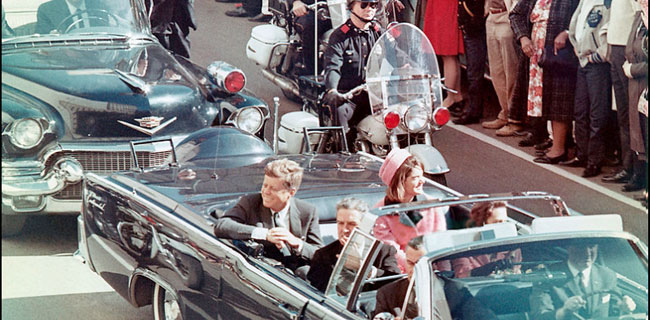
  • 60 years on… how the JFK assassination helped make network TV news wealthy

    Caption: President John F Kennedy and his wife smile at the crowds lining their motorcade route in Dallas, Texas, on November 22, 1963. Minutes later the President was assassinated as his car passed through Dealey Plaza. Image by © Bettmann/CORBIS. Creative Commons Licence


    Story starts:

    It will be sixty years since the assassination of US President John F Kennedy on November 22, 1963. After a gunman killed JFK, television news offered wall-to-wall, nonstop coverage at considerable cost to the networks. But it also meant more audiences, and eventually more profits. The article below is republished from The Conversation…


    By Michael J Socolow


    In journalism, bad news sells. “If it bleeds, it leads” is a famous industry catchphrase, which explains why violent crime, war and terrorism, and natural disasters are ubiquitous on TV news.

    The fact that journalists and their employers make money from troubling events is something researchers rarely explore. But even if it seems distasteful, the link between negative news and profit is important to understand. As a media historian, I think studying this topic can shed light on the forces that shape contemporary journalism.

    The assassination of John F. Kennedy 60 years ago offers a case study. After a gunman killed the president, television news offered wall-to-wall, nonstop coverage at considerable cost to the networks. This earned TV news a reputation for public-spiritedness that lasted decades.

    This reputation – which may seem surprising now but was widely accepted at the time – obscured the fact that TV news would soon become enormously profitable. Those profits are due in part because awful news attracts big audiences – which remains the case today.


    The JFK assassination made Americans turn to TV news

    Shortly after Kennedy was assassinated in Dallas on Nov. 22, 1963, the TV networks demonstrated their sensitivity to the tragedy by canceling commercials and devoting all their airtime to the story for several days. CBS President Frank Stanton would later call it “the longest uninterrupted story in the history of television.” At one point, 93% of all U.S. TVs were tuned into the coverage.

    Estimates vary, but the networks’ decision to forgo ads may have cost them as much as US$19 million – which is $191 million in 2023 dollars.

    For decades, the networks presented their assassination coverage as the epitome of public service. And over and over, network executives and journalists argued that TV news was uniquely protected from the economic pressures found elsewhere in broadcasting.

    TV news in the early 1960s was “the loss leader that permitted NBC, CBS and ABC to justify the enormous profits made by their entertainment divisions,” ABC News’ Ted Koppel reminisced in The Washington Post in 2010. He added, “It never occurred to the network brass that news programming could be profitable.”

    The public-service narrative that took root in November 1963 ignored the fact that the huge audiences turning to TV news for information and comfort would soon become very lucrative.


    How TV news became a money machine

    Only two months before Kennedy’s assassination, in September 1963, the networks expanded their evening newscasts to 30 minutes. They had previously been 15 minutes, offering little more than headlines. The expanded newscasts sold out all their advertising opportunities immediately, as television news drew the predictable daily mass audiences that sponsors craved.

    The Kennedy assassination coverage, combined with the expanded newscasts, significantly increased the commercial value of TV news. Throughout the 1960s, broadcast journalism began to mature into the most lucrative genre of programming on American television.

    By the 1965-1966 television season, NBC’s “The Huntley-Brinkley Report” generated $27 million in advertising a year, making it the network’s most lucrative program – out-earning even “Bonanza,” the top entertainment show. “The CBS Evening News” was drawing in $25.5 million in advertising, making it the second-most profitable program on U.S. television.

    Around this time, networks were telling regulators that they had sacrificed millions of dollars for public service through journalism. For example, in 1965 testimony before the Federal Communications Commission, executives from ABC, CBS and NBC said their news divisions had loftier motives than simply making money.

    But they were making money, and lots of it. By 1969, “Huntley-Brinkley” was earning $34 million in advertising on a production budget of $7.2 million, making the program – according to Fortune magazine – “the biggest source of revenue that the N.B.C. network has – bigger than ‘Laugh-In’ or ‘The Dean Martin Show.’” A decade earlier, “Huntley-Brinkley” had been making just $8 million in ad and sponsorship revenue.

    The networks didn’t tout their profits, though. Instead, they continually promoted their efforts covering the Vietnam War, civil unrest and the assassinations of the 1960s as service in the public interest. They also claimed that news production cost them millions, and they hid ad revenues accrued by news programming elsewhere in their corporate budgets. Doing this gave them a leg up on regulatory privileges, such as station license renewals.


    The birth of modern TV news

    Ultimately, the chaotic, cacophonous and confusing decade of the 1960s would end up launching the hyper-commercial media world we live in today. Chasing sensational investigative stories, such as Watergate and the Iran-Contra arms-for-hostages scandal, would generate higher ratings and more advertising revenue, and turn broadcast journalists into national celebrities.

    The original values animating network broadcast journalism at its inception would surrender to more lucrative formats. “60 Minutes” – a CBS News production – eventually became the most valuable network-owned programming property in the history of American television, and by the 1980s almost every local news station had launched its own “I-Team” investigations group.

    Eventually, the professionalism that drew audiences to TV news in the wake of the Kennedy assassination in 1963 would be supplanted by audience growth strategies sold by TV news consultants. Audience analytics, minute-by-minute engagement metrics and Q-scores calibrating anchor “likability” would standardize formats and homogenize newsgathering in the drive to maximize profits.

    Yet through the decades, one constant remains: Bad news sells. It’s a media-industry truism whether we’d like to study it or not, and the news broadcasts airing today, 60 years after the events of November 1963, prove it.


    Michael J Socolow is Professor of Communication and Journalism, University of Maine. This article is republished from The Conversation under a Creative Commons license. Read the original article.

  • The Emerging Art & Science of D2C Marketing


    By Ashoke Agarrwal


    Ashoke AgarrwalWith India’s growing base of online shoppers (185 million in 2021), the market for D2C brands is booming. D2C brands are digital-first brands that use their online platform to sell directly to consumers without the traditional network of wholesalers, distributors and retailers. According to Statista, India currently has over 600 D2C brands with a total market size of USD 66 billion.

     

    D2C marketing, while holding to the core marketing principles, is a discipline with a fast-developing art and science unique to it.


    The science of performance marketing and the art of content marketing are the two pillars of D2C marketing.


    Customer journeys that lead to sales in both the offline and online worlds are complicated. The difference is that we can easily trace and analyse the online part of the journey. And when the journey ends with an online sale, the online component of the journey takes on critical importance.


    ‘Media planning’ in performance marketing goes beyond mass media metrics like reach and OTS.


    Attribution is one such key parameter.


    A paper by Lukas Kakaleick et al., “Multichennel Marketing Attribution Using Markov Chains for E-Commerce”, published in Statistics & Economy Journal in 2021, gives a good overview of the statistical frameworks used for attribution in performance marketing.


    Google Analytics currently provides for several heuristics models:

    :: Last touch model wherein 100% of the credit for an online purchase is assigned to the channel before the conversion

    :: First touch model – 100% allocated to the first channel of interaction

    :: Linear – equal amount of credit to all interaction channels


    And so on.


    Lukas et al., in their paper, propose a third or fourth-order Markov chain model as a more effective model for attribution. Markov chain analysis allows for unearthing the most efficient combination of channels.


    Meta and Alphabet also use advanced Deep Learning algos based on Knowledge Graphs to increase clicks.


    As Generative AI and GI mature, Alphabet and Meta will also undertake the content marketing function of D2C brands and combine it with the targeting abilities driven by Deep Learning to offer pay-per-conversion campaigns to D2C brands.


    Another paper, “Scalable Target Marketing: Distributed Markov Chain Monte Carlo for Baysesian Hierarchical Models.” by Frederico Bumbaca et al., published in the Journal of Marketing Research (JMR) Dec 2020, offers a model that adds to the conceptual framework for performance marketing planning. This technique provides a more effective market segment definition. Better consumer segmentation and channel attribution deliver higher ROIs for D2C brands.


    When it comes to the marketing communication side of D2C marketing, many marketers and agencies need to correct the mistake of conflating it with advertising.


    Online is where traditional advertising goes to die; for brands to be noticed and acted upon online, they need to join the raging content battle that defines the online world.


    Pretty pictures (or videos) and clever words do not work in the cramped space and attention that govern the eye and mind of the online visitor. The only way to grab attention and build brand equity that leads to purchase online is to deliver excellent and relevant content.


    A 2018 article by Joan Dolezal titled “A flight to quality? Why content marketing strategy must evolve” is a good primer.


    For D2C brands that have mastered the art of putting out relevant, high-quality content, the fact that there is unlimited online content vying for limited attention is an entry barrier that protects them against competition.


    Here are some of the dimensions of a D2C ecosystem primed to produce good quality and relevant content:

    :: Define your customer segments tightly – demographics, psychographics, U&A. The more you can flesh out the profile of each segment, the better, in other words, build personas. Create and target each persona with a tailor-made content marketing campaign.

    :: Recognise that customer journeys are multistage, and online gives you tools to target consumers at various journey stages. Tailor your content for each step of the journey of a given profile.

    :: Make use of the experimental capability of online marketing. AB test various modes of content to arrive at the most effective.

    :: Search Engine Optimization (SEO) is not just for your website. SEO of your content marketing campaigns is also advantageous.

    :: Create an effective distribution plan for your content. A D2C brand can repurpose the same content on social media, e-mail marketing, digital PR, influencer marketing, etc.


    As a D2C brand matures, it looks to expand into other channels. One critical decision which comes early in the life of a D2C brand is whether or not they engage with the Big Box e-tailers like Amazon. I wrote a well-received post in 2019 on this issue – “To Amazon or Not To Amazon”.


    D2C brands, to succeed, need nurturing of a high order at the strategy and creative levels. Operational synergies are of a lesser order of importance. That is one of the reasons why Thrasio, a US-based integrator of online sellers and brands, recently filed for bankruptcy. A recent ET Prime story has the Thrasio-like B2C aggregators in India – Mensa Brands, Good Glamm Group, GOAT Brand Labs, Upscale, GlobalBees- “stressed and nervous”. The funding winter might be one reason for this state of affairs, but the malaise can also run deeper. Building and running a D2C brand is an act of passion that combines strategic nous with creative mojo. And passion does not sit well with aggregation.


  • Zee Media, Havas Play and Namami Gange get together

    By Our Staff


    Havas Play, Zee Media, and Namami Gange have come together to launch a music festival ‘Ganga Kinare’ on the ghats of Varanasi. The initiative aims to celebrate the cultural richness of Varanasi and raise awareness about the significance of the river Ganga.


    Said Abhay Ojha, CEO of Zee Media Corporation Limited said: “At Zee Media, we believe in the power of storytelling through diverse mediums. Our partnership with Havas Play and Namami Gange, stands at the forefront of a cultural and environmental movement. Through this festival, we invite our widespread viewers and readers to not just witness but actively participate in the call for river conservation and cultural preservation. Let the music be the bridge that connects us to the soul of Varanasi and the sacred Ganga.”


    Added Mona Jain, CRO – ZMCL: “Ganga Kinare Music Festival is a testament to the transformative power of music and its ability to unite people in celebration. We firmly believe in the profound impact of cultural initiatives and are thrilled to be part of this initiative that harmonizes the beats of our traditions with the melodies of the Ganges, fostering a deeper connection with our roots and a commitment to the conservation of our sacred rivers.”


    Said R Venkatasubramanian, Managing Director – Havas Play and President Investments – Havas Media: “India’s rich legacy continues to influence and enthral people from around the world. It is critical that we find newer ways to celebrate them and pass on the legacy to the newer generation. Music is the universal language that binds people across all age groups, and transcends geographies. Hence Ganga Kinare Music Festival blends in the power of music in the historic city of Varanasi on the banks of the holy Ganga. The Festival aspires not just to captivate audiences but to crescendo into a global festival deeply rooted in India’s history, evolving with the beats of our collective journey.”


  • Healthcare violations max mentions in ASCI roster

    By Our Staff


    The Advertising Standards Council of India (ASCI) has published its half-yearly complaints report for the period April to September 2023, offering insights into emerging trends and insights in advertising standards. The report shows a 34% increase in complaints (4491) processed, coupled with a corresponding 27% rise in the number of ads processed (3501).


    Of the 3,501 ads processed, 564 (16%) were flagged as potential direct violations of the law, which represents a 22% increase over the previous year. 35% of the total ads processed were not contested and were promptly withdrawn or modified. A further 47% of ads were found violative of the ASCI Code and the advertisements were recommended to be withdrawn or modified. Only 2% of complaints were dismissed


    Of the 3,501 complaints processed, digital media remained the primary source of violations at 79%. Print media and television contributed 17% and 3%, respectively, while other mediums accounted for 2% of the reported violations.


    Consumer complaints comprised 21.3% of the total complaints, indicating significant public engagement in upholding advertising standards. 75.4% of complaints were initiated suo-motu by ASCI, demonstrating the organisation’s proactive approach to identifying potential violations.


    Here are some key findings from the report:

    Digital Dominance: A whopping 79% of problematic ads were found online, highlighting the challenges in the digital advertising world.

    Regulatory Vigilance: ASCI’s focused monitoring mechanisms boosted digital surveillance to combat objectionable content in the medium. 98% of overall ads processed required some form of modification.

    Voluntary Compliance: In the digital advertising sphere, influencers contributed to 22% of total ads complained against at ASCI. 99.4% of advertisements processed for influencer guidelines were found to be in violation. ASCI received compliance with its recommendations in 92% of influencer cases taken up v/s 86% in previous years, signalling greater compliance with ASCI’s CCC recommendations.

    Healthcare in the Spotlight: Healthcare emerged as the most violative sector, constituting 21% of all ads processed. The surge is attributed to a high volume of drug and medicine advertisements on digital platforms.

    Legal Violations: ASCI observed a significant increase in ads directly violating the Drug and Magic Remedies Act of 1954, leading to the issuance of intimations to advertisers advising withdrawal or modification of the advertisement. ASCI referred 565 advertisements to the Ministry of AYUSH in just six months, compared to 464 ads referred in the last financial year.


    Said Manisha Kapoor, CEO and Secretary-General, ASCI, said: “ASCI remains committed to addressing the challenges posed by digital advertising. All stakeholders need to come together to tackle the issue of online safety of consumers given that they spend high amounts of time there, and where there is a proliferation of objectionable advertising. Our constant vigilance of the online space helps call out the advertisements and brands that violate the ASCI code requiring ads to be truthful, decent and safe. We hope that the various sectors recognise the breaches and commit to more responsible advertising.”


  • Saatchi & Saatchi Propagate appoints Isha Kapoor as VP

    By Our Staff


    Isha Kapoor
    Isha Kapoor

    Digital agency Saatchi & Saatchi Propagate, part of Publicis Groupe India, has appointed Isha Kapoor as Vice President (VP). She will be based in the agency’s Mumbai office and report to Prachi Bali, Executive Vice President and Business Head of Saatchi & Saatchi Propagate India.


    Kapoor recently worked with What’s Your Problem, where she on-boarded clients despite the challenges posed by the pandemic and spearheaded noteworthy campaigns for brands such as Future Generali.


    Said Bali on the appointment: “Isha’s extensive experience in successfully creating new business opportunities for digital agencies makes her a valuable member of the team. As a proven team leader, she possesses a deep understanding of the importance of nurturing client relationships and its impact on the growth of our business. With Isha’s addition, I believe that the leadership at Saatchi & Saatchi Propagate is more powerful than ever, prepared to offer the best solutions to our clients.”