Author: mxmadmin

  • ArtE Mediatech bags Tikidan mandate

    By Our Staff


    Art-E Mediatech advertising agency has announced the acquisition of the digital (social and performance marketing) and website mandate for Tikidan, a joint venture between Tiki Tar Industries (India) and Danosa (Spain).


    Said Vibhor Gulati, Partner at Arte Mediatech and Head of the Mumbai branch: “We are excited to join hands with TIKIDAN in this game-changing endeavour. This partnership aligns perfectly with our commitment to delivering exceptional advertising solutions that drive success in an ever-evolving market.”


    Added Shruti Shah, Managing Director at Tikidan: “We are thrilled to partner with Arte Mediatech to showcase our innovative and high performance construction solutions to the Indian market. This marks a pivotal step in our journey to redefine the way we present our solutions and build awareness on the benefits our clients receive by using our products.”


  • ITC Engage collaborates with Hoichoi

    By Our Staff


    ITC Engage fragrance brand, in collaboration with Bangla OTT platform Hoichoi, has launched a series of five short films titled “Hotath Dekha” (Sudden Meetings).


    Commenting on the launch, Sameer Satpathy, Chief Executive, Personal Care Products Business Division ITC Limited said: “Today’s youth is keen on exploring spontaneity in all spheres of life. They thrive on sudden moments of interactions that have lasting impressions. Fragrance is a key aspect of personal grooming and becomes an enabler to add confidence, making them ready to engage anytime. With this move, ITC Engage encourages individuals to embrace and celebrate the magic of these sudden moments of playful chemistry.”


  • Zee wins at the TISS LeapVault CLO Awards

    By Our Staff


    Zee Entertainment Enterprises Limited (ZEEL) bagged three awards at the prestigious Tata Institute of Social Sciences (TISS) LeapVault CLO Awards, which included two Golds and one Silver. The awards recognised the company’s ‘Arise’ programme with a ‘Gold’ in the ‘Best Skill Development Initiative’ category; ‘Digicademy’ program with a ‘Gold’ in the ‘Best Digital Transformation Initiative’ category and its ‘Aspire’ programme with a ‘Silver’ in the ‘Best Leadership Development Initiative’ category.


    Said Animesh Kumar, President – HR & Transformation, Zeel: “The recognition of our capability development initiatives as the best in the business, reaffirms our commitment towards creating a culture of continuous transformation at the Company. Our learning and development efforts have been the cornerstone of our robust people – centric strategy, and we are proud to have the initiatives acknowledged at such a prestigious forum for the second consecutive year. The appreciation will encourage us to further cultivate a disruptive mindset in our workforce through our upskilling and leadership development initiatives.”


    Speaking at the award ceremony, Dheeraj Jaggi, Head – Enterprise Culture and Capability Development and Head HR, Content SBU, Zeel said: “At Zee, we have been consistently embracing a digital first approach to harness new opportunities and drive innovation in India’s M&E sector. We prioritize our employees’ growth and professional development, placing the learner at the heart of our unique initiatives. Our culture that over indexes on experiences, observations, and coaching for employee growth, alongside the organizational leaders as the steering captains, has let us enjoy continued recognition at the TISS LeapVault CLO Awards. We are committed to continuing our ingenuous efforts towards creating path-breaking employee interventions and fuelling business outcomes.”


  • Happy Diwali! We’ll be back on Wed, Nov 15

    By Our Staff


    Our offices are closed for Diwali till Tuesday, November 14. Hence there will be no scheduled updates and edition of our newsletter on Monday, November 13 and Tuesday, November 14.


    We’ll be back on Wednesday, November 15.


    We wish all of you a Delightful Diwali and Prosperous New Year.


  • Asian Paints unveils new ad film

    By Our Staff


    Asian Paints has launched a new digital campaign for their Beautiful Homes Service that chronicles the journey of a young couple pursuing interiors for their dream home.


    Beautiful Homes Service from the house of Asian Paints, known for its expertise in turning living spaces into personalized havens, advocates for homes that align with the homeowners’ unique aesthetic and practical needs, rejecting the notion of mere replica of someone else’s home. What sets this service apart is its flexibility; it caters to homeowners’ needs, whether the renovation is focused on a single room or a specific area of the house.


    Beautiful Home Service is the all-inclusive solution for homeowners, covering everything from planning to execution, timely delivery and warranty. It is designed to comprehend each consumer’s vision and create spaces that harmonize with their distinctive style, guaranteeing that every home becomes a genuine embodiment of its owner’s individuality.


  • Razorpay launches brand film

    By Our Staff


    Razorpay, an omnichannel payments, and Banking Platform for Businesses, has launched its new brand film, ‘Believe’. Launched on National Entrepreneurs Day, the film is an ode to the spirit of self-belief and conviction entrepreneurs showcase throughout their journeys.


    Commenting on the launch of the brand film, Apuarv Sethi, VP, Marketing, Razorpay said: “With this brand film, we are pumped up to drive home the message that entrepreneurial spirit must be celebrated, appreciated, and supported, not limited to just their successes. At Razorpay, we have consistently prioritized our mission of empowering founders and facilitating their success by proactively identifying their challenges and pioneering innovative solutions well ahead of the industry curve. Having experienced the entrepreneurial journey firsthand, we deeply understand the hardships and obstacles founders frequently encounter. This film, therefore, reiterates our vision that no founder will ever have to walk this journey alone.”


    Added Indrasish Mukherjee, Creative Director, Footloose Films: “Razorpay is rooted in its belief to enable and empower entrepreneurs and we are extremely proud of how the same spirit has been translated in this brand film. We would like to describe this film as ‘Behind the scenes with Razorpay’. With this piece, we wanted to give a heartfelt shout-out to the entrepreneur community. Strip away the glamour and the numbers and take a look at what goes on behind the curtains, all the ups and downs, the stellar human stories behind these giant names and achievements. And we felt if someone could do justice to this story, it would be us.”


  • Cheil rolls out campaign for Samsung Galaxy Z series

    By Our Staff


    Cheil India launches new campaign for Samsung’s Galaxy Z series.


    It showcases Varun Dhawan, Kiara Advani and Neeraj Chopra unfold a more flexible and functional smartphone experience with the Galaxy Z Flip5 and the Z Fold5.


    Said Aditya Babbar, Senior Director, Mobile Business, Samsung India: “Our Galaxy Z Flip5 phone has all the makings of a device which resonates with Gen Z and Millennials. It has a future ready design powered with top of the line specifications and software making it a powerhouse in the category.  Its state of the art features enable creators and trendsetters to capture their experiences in the best possible manner making this device their numero uno choice.  We are happy that leading trendsetters, Varun Dhawan, Kiara Advani and Neeraj Chopra have also shown their love for the foldables and we are elated to welcome this trio in their journey to the world of Galaxy foldables.”


    Talking about the campaign, Vikash Chemjong, CCO, Cheil India, added: “The overarching thought was to show how even celebrities are finding the flip side irresistible. Each celebrity with their distinct personalities discovers that the new Galaxy Z foldable fits into their life effortlessly and gives them new found freedom and flexibility.”


  • Indian Gaming League & ITC Bingo! nachos announce Gameon Cup 2023

    By Our Staff


    Indian Gaming League (IGL), in collaboration with ITC Bingo! Nachos, has launched Gameon Cup 2023, a gaming tournament. It will feature a range of popular titles, including BGMI, Free Fire Max, New State, Call of Duty Mobile, and comes with an impressive prize pool of 11 lakhs (approximately $13,000).


    Said Suresh Chand, VP & Head of Marketing, Snacks, Noodles, and Pasta, ITC Foods: “We are thrilled to launch the Bingo! Nachos Gameon Cup in association with IGL. This initiative will provide a platform for all e-gaming enthusiasts to showcase their skills while having a fun-filled experience with Bingo! Nachos. As a brand with a young TG, our partnership with IGL seamlessly aligns with our brand’s ethos, and we eagerly await the exciting gameplay it will bring.”


    Added Yash Pariani, CEO of IGL Indian Gaming: “We are delighted to partner with ITC Bingo! Nachos for this thrilling event. It is an extraordinary opportunity for amateur gamers to showcase their talents on a national stage and elevate their gaming journey. This tournament aims to unite gaming enthusiasts from all corners of the country, where participants can anticipate an unparalleled gaming experience, featuring top-notch production values and exhilarating gameplay.”


  • Luminous brand Amaze unveils Diwali campaign

    By Our Staff


    Amaze, a Luminous Power Technologies brand, has launched a short film #Amazewalidiwali to celebrate the festive spirit of Diwali. The  campaign is conceptualised and executed by Bodh Entertainment Private Limited.


    Speaking about the campaign, Neelima Burra, Chief Strategy, Transformation and Marketing Officer, Luminous Power Technologies said: “We are delighted to present the #Amazewalidiwali campaign, celebrating the importance of relationships with a message that reminds us that our homes are illuminated not just by lights and lamps but by the warmth of our family bonds. We believe that our products play an essential role in making Diwali celebrations brighter, and our campaign meticulously portrays the values that are close to us. The film beautifully captures the authentic spirit of these celebrations, and we encourage families to come together and celebrate the festival of light, love, and reconciliation, as it symbolizes the core values we hold.”


    Added Bodh Deb, Founder & Chief Content Officer of Bodh Entertainment Private Limited: “Diwali has always been the best time for brands to connect with their core consumer base. Amaze wanted to break free from the usual norms and engage with its consumers on a deeper, emotional level. The idea was to create something that doesn’t come across as just another Diwali ad. We aimed to recreate intimate moments from our lives that evoke a strong sense of personal connection and the warmth of home. Our hope is to strike a chord with our target audience across Bharat, fostering a genuine emotional connection during this special festival of lights.”


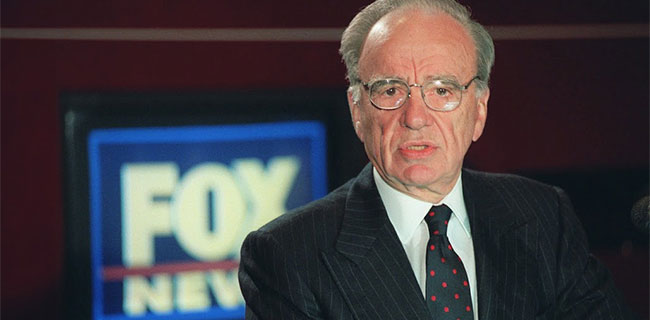
  • The Legacy of Rupert Murdoch


    By Bruce Drushel


    When businesspeople retire at an advanced age, it seldom makes headlines.

    But when 92-year-old Rupert Murdoch announced in September that he was stepping away from his multicontinent media empire and turning it over to his son Lachlan, it was breaking news that generated countless stories speculating about the futures of two of his most storied holdings, Fox and News Corp.

    As a scholar who studies media organizations and their political and economic influence, I see this level of attention as an indicator both of the significance of the companies Murdoch built and the way he used them to alter the media and political landscape.


    Murdoch the believer … or opportunist?

    Murdoch infused his print and television properties, first in his native Australia and later in the U.K. and the U.S., with a generally right-of-center slant.

    But his reputation as a promoter of conservative ideals was at odds with his past. While a student at Oxford University, Murdoch kept a bust of Lenin in his room and annoyed his father, Sir Keith Murdoch, with his socialist views.

    When his father died suddenly in 1952, Murdoch inherited a small newspaper in Adelaide and soon was using its profits to buy up suburban papers all over Australia, as well as licenses for television stations.

    His conquest of the U.K. began in 1969 with the purchase of a majority interest in News of the World, a major circulation Sunday tabloid. Eventually, he would add to it the daily tabloid The Sun and the redoubtable but financially struggling Times and Sunday Times.

    Through the 1970s, his politics moved to the right, culminating in his support – and The Sun’s much sought-after editorial endorsement – of Margaret Thatcher’s Conservative Party.

    Despite the conservative outlook of his publications, there always has been nagging speculation about the sincerity of Murdoch’s ideological beliefs – whether they were tightly held or simply manifestations of political opportunism and his ability to anticipate the popular mood. Murdoch’s The Sun backed the center-left Tony Blair when Conservative Party prime minister John Major fell out of favor in 1997.

    His successes in the U.K. provided him with the strategic template for his eventual entry into the more lucrative U.S. market: Buy undervalued sources of content creation and then use their profits, along with a combination of emerging technology and political influence, to expand their distribution.

    In the U.K., that meant the secretive construction of a high-tech automated printing facility that bypassed the labor unions. In the U.S., it might have contributed to a US$4.5 million book deal for House Speaker Newt Gingrich with Murdoch’s publishing house HarperCollins. It came as the media tycoon was facing questions about where the money for his U.S. television properties was coming from – questions, it was suggested by critics, that the speaker’s influence could help smooth over.


    Building an American empire

    Murdoch’s American empire started in 1976 when he purchased the tabloid the New York Post. There, borrowing from his experience in the U.K., he flipped the newspaper’s ideology from liberal to conservative and used splash headlines and prurient content to more than double its circulation.

    Also echoing a strategy he had employed in the U.K., he added the more respected Wall Street Journal to his holdings a number of years later, extending the reach of his influence from blue-collar to white-collar readers.

    Anticipating the uncertain future of the newspaper business, Murdoch expanded his empire to include television.

    He purchased the Twentieth Century Fox film and television studio in 1985 to provide both production facilities and a library of content. The following year, he bought the television station holdings of Metromedia to form the distribution nucleus of what would become the Fox television network.

    Doing so required a series of moves to meet Federal Communications Commission regulations. First, Murdoch would have to become a U.S. citizen. Second, Fox would have to limit its hours of broadcast in order to avoid meeting the official definition of a network and in so doing break FCC rules that at the time stated that a single company could not be both a network and a syndicator of programs.

    Third, he would have to sell the New York Post, since another rule prohibited common ownership of a daily newspaper and television station in the same city. The FCC would later allow him to repurchase the Post out of bankruptcy in 1993, rather than see the newspaper fold.


    The birth of Fox News

    Unable to secure licenses for terrestrial television stations in the U.K., Murdoch launched the Sky satellite service in 1989 as both a content provider and a distribution system. Among Sky’s channels was Sky News, the U.K.’s first 24-hour news channel. Once Sky News had become profitable, Murdoch announced he would bring his brand of 24-hour news to the U.S. By October 1996, Fox News Channel, led by former Republican Party strategist Roger Ailes, was on the air.

    While Fox News is now very much associated with a viewership that skews older, conservative and white, the Fox broadcast network’s path to success with audiences and advertisers was initially based in its appeal to underserved audiences among young adults and African Americans.

    Shows like “The Simpsons” and “Married … With Children” were seen as edgy in their representation of dysfunctional families. Meanwhile, “In Living Color,” “Roc,” “The Bernie Mac Show,” “Martin” and “Living Single” followed “The Cosby Show” playbook of focusing on Black authorship and autobiography to attract not just African Americans but audiences of all races and ethnicities.

    When Fox secured rights to the National Football League’s NFC games in 1993, the network began targeting more mainstream audiences as well. As he had done in the newspaper business, Murdoch established his foothold in a niche market he perceived as being underserved and ripe for exploitation before setting his sights elsewhere.


    A less-than-graceful exit

    Despite his reputation as a buccaneer who took huge risks in expanding his holdings, skirting regulations and delaying repayments of loans from financial institutions, Murdoch avoided major legal and business setbacks for most of his career.

    That only began to change in the mid-2000s.

    First there was Myspace. News Corp. bought what was then among the world’s most popular websites in 2005. But it soon went into decline, weighed down by failures to update its technology and features. Then, in 2011, a backlash from a scandal involving the hacking of cellphone accounts of a murdered teenage girl, British service personnel killed in action and a host of celebrities forced the closure of Murdoch’s first U.K. newspaper, the News of the World.

    More recently, News Corp. settled a lawsuit brought by the parents of the late Seth Rich, a Democratic National Committee staffer, after Fox News repeated right-wing conspiracy claims about the murdered man. It also reached a $787.5 million settlement with Dominion Voting Systems, which several Fox News hosts had accused of rigging the 2020 presidential election against Donald Trump. A similar defamation suit by Smartmatic is pending.

    For a man whose career was built on a shrewdness for reading the media landscape, such failures might well leave a bitter taste in retirement. But nonetheless, Murdoch will step down from his empire leaving mighty footprints.

    It remains to be seen how his son Lachlan will fill them – or if he also inherited his father’s instincts and will lay down tracks for the empire in a new and unexpected direction.The Conversation


    Bruce Drushel, Professor of Media, Journalism and Film, Miami University. This article is republished from The Conversation under a Creative Commons license. Read the original article.

     

  • From D2C to Omnichannel


    With apologies to none at all


    By Vikas Mehta


    Vikas MehtaLast week, Unilever sold off its D2C brand Dollar Shave Club to a private equity firm. This was quite a shocker, something that made me think away from the Cricket World Cup. There had been lot of media hype when Unilever bought the brand six-seven years ago for reportedly a billion dollars. It was a vindication of sort that direct-to-consumer (D2C) brands had arrived and maybe traditional brands were under threat. A lot was being made about the Millennials and Gen Z preferring new D2C brands. And the pandemic gave the D2C brands a bigger boost. Enough entrepreneurs started using social media platforms to peddle their wares directly to the consumers. From clothes to chocolates to baked food to homemade beauty products to accessories to collectibles, D2C was the buzzword.


    And this was not limited to first time entrepreneurs working from home. In fact as a business model, it had started catching on since early last decade. Most of these like Nykaa, Mamaearth, Zivame, Bombay Shaving Company, Chumbak or even Pepper Fry, Lenskart, BoAt, Licious had used the online boom smartly. And some of them have even had successful IPOs. India is estimated to have more than 600 D2C brands with a market size of about $ 65-70bn in 2023. Not numbers to sneeze at. And, this was of course fueled by the fact that around 600 million Indians have access to internet with 185 million online shoppers.


    On the face of it, D2C is a win-win for all. For the entrepreneur who need not get entangled with a distribution system or has to spend big monies on getting his consumers to the store. For the consumer it was hassle-free shopping from home and getting delivery at the doorstep.


    Customisation, no geographic boundaries, choice and the spread of social media lead to a surge in this business model. And then there were ecommerce portals like Amazon, Flipkart and Meesho which were ready to embrace the D2C model. Indeed, Meesho differentiated itself by not only claiming to be doing social marketing but also keeping regular traditional brands at arms length and promoting D2C brands with their no fees model.


    However, the very factors that initially spawned success for D2C have come back to haunt the model and caused a deceleration in its growth. Let’s look at some such factors.


    Value proposition

    D2C brands went into a value proposition overdrive (Read discounts and offers). BoAt was giving same for less. Same features of premium brands like Sony or Sennheiser but at discounted prices. Mamaearth, Nykaa, Bombay Shaving Company were all following this model. Lenskart was about more for same. Buy one and get one free. And then with the help of ecommerce companies these brands made discounts or freebies a habit. So, when there was no discount, the allure of buying D2C lessened. As a result, the pricing structure and strategy of most D2C brands was based on discounting. They had to therefore keep a close watch at their costs and any increase in costs hurt their margins.


    No distribution setup

    This was a big plus for the D2C players. They were not at the mercy of the distributors, wholesalers or retailers and could theoretically serve any customer anywhere on earth. So, when a brand In Bengaluru wanted to send stuff to someone in the metros or mini metros all it had to do was negotiate with logistic companies and ensure speedy and timely deliveries. But as an analyst put it, it was easy to do this in the initial phase and achieve a turnover of maybe Rs 100 crore. But after that one needed to penetrate into smaller towns. And the cost of sending courier to more than 100 towns in India, without any delay meant that each sale was burdened with a distribution cost which was unlike traditional distribution where the wholesaler or distributor send stuff in big bulk quantities thus ensuring low distribution cost per item. The dilemma was clear. Grow and increase your cost per order or hit a growth ceiling. This again was eating into the margins. Just online sales was not good enough.

    Not surprisingly, most of the D2C brands are now into offline selling too. Nykaa, Mamaearth, Lenskart have all either opened their own stores or are trying to be available in regular offline stores. I am told that the Mamaearth IPO prospectus claimed that their offline sales is now 37% of their total turnover in FY ending March 2023. Anyways, D2C was a misnomer as a huge part of their sales, analysts say upto 75-80%, came form ecommerce platforms. Indeed in 2021-22 more than 80% of BoAt sales was through ecommerce platforms Amazon & Flipkart. Which meant that they had not only distribution cost of paying commission to ecommerce platforms but also the logistic cost of each piece shipped, which given the category, was not something to ignore.

    And as I write this, comes the news that Big Basket, the quintessential D2C brand. Quoting from the Times of India “currently its offline business is on a pilot mode with some 25 stores across Hyderabad, Bengaluru and Kolkata. The idea is to experiment with different store formats with different price points and find the right store strategy before launching a broader rollout in the coming quarters.”


    Returns

    A big allure of D2C brands has been the return policy. If the consumer is not happy with the product then it can be returned at no cost. While in personal care this does not come into play, but in categories like apparel and electronics this can again be a margin killer. In apparel the return percentage is supposed to be as high as 30-35%. All this not only adds to the cost but also makes the value proposition difficult to sustain. How long can these brands survive with losses and VC funding?


    Online spends and not traditional advertising

    With D2C brands using online selling platforms they started spending money more on online. So, the objective was to direct traffic to their website or ecommerce platforms. Or use social media influencers. This was not very expensive compared to traditional advertising. But the focus moved away from brand building. With value into play (it was more discounting) the communication was more about discounts, offers and promotions. No effort was made to build an emotional connect or base with the consumers. Value or an influencer was the only emotional connect. This meant that the brands had difficulty in selling without discounts or offers.

    So, when the brands needed to grow and break the ceiling of limited markets and they moved offline, they had no connect with traditional distributors. Traditional brands which had been nurtured and had long term association with distributors, wholesalers and retailers resisted these new upstart D2C brands. Also, since these D2C brands had not done much brand building they did not have sufficient consumer pull. As a result, product turnover, in terms of inventory, at retailers was a laggard to traditional brands which had build bonds with the consumers over a period of time. That did not help matters as the distribution channel was not too keen to stock products whose turnover time was in many cases three-four times than that of traditional brands.

    Many D2C brands have now realised the need to do brand-building. That’s why many of these brands are now doing traditional TV advertising. Again, Mamaearth IPO states that while social media spends have increase three times TV ad expenditure is up by almost ten times. Lenskart is trying to cash on to the cricket fever on TV. And BoAt is also into traditional TV advertising.

    With high inflation and funding becoming a problem most D2C brands have to start showing profitability or the path to profitability. Ironically, this is the time when their costs are going up. Offline distribution, spending on expensive traditional TV advertising while sustaining online presence to build brands are all factors which may hurt the future of D2C brands.

    That’s one reason D2C brand are now talking more omnichannel. That’s their new buzzword. They are now trying to justify being jack of all trades. Their advantage against traditional brands is now their vulnerability.


  • IAA holds second edition of the Voice of Change summit

    By Our Staff


    The International Advertising Association (IAA) India Chapter, held the second edition of the Voice of Change summit: ‘Gender Portrayal from 30 seconds to 3 Hours’ last Thursday (November 9).


    After introductions and elucidation of the mission statements by Megha Tata, Co-Chair, IAA Women Empowerment Committee and Immediate Past President, IAA India Chapter, and Nina Elavia Jaipuria, Chairperson, IAA Women Empowerment Committee, there was an address by Cynthia McCaffrey from the Unicef “Gender inequalities in children’s lives and in the lives of those who care for them, hinder their growth, development, learning and eventually in reaching their full potential. Statistically, the lack of parity impacts girls and women the most but also disadvantages men and boys,” she said, adding: “Children observe and learn social cues from many forms of content including advertising and it plays a powerful role in shifting perceptions on gender roles. UNICEF is delighted to be the knowledge partner with IAA and its members on this very important journey to promote positive gender roles and practices through advertising, so every young person can live a life free from stereotypes and achieve their full potential”.


    A multi-lingual study powered  by  Google  AI  titled,  “Reflecting  India  –  An intersectional   and   longitudinal   analysis   of   popular scripted television from 2018 to 2022”, led jointly by the Geena Davis Institute on Gender in Media (GDI), the Signal Analysis and Interpretation Laboratory (SAIL) at the University of Southern California (USC) as the academic advisor, and the IAA as media studies advisor was also unveiled at the event. The study covered the 10 most popular scripted television shows in India across five languages – Hindi, Bengali, Tamil, Kannada, and Telugu – between 2018 and 2022, according to the Broadcast  Audience Research Council (BARC), India.


    The study revealed several data-driven insights about representation in the India media and entertainment sector. Across all the shows analysed, young adults between the ages of 18 and 32 were seen the most, accounting for 75.6% of all characters present on screen, while characters with lighter skin appeared 8X more than characters with medium or dark skin tones. Female characters were present on screen and their names mentioned in dialogue more than male characters, amounting to over half of a show’s time, with 7 in 10 of all perceived female characters on screen typically being young and having lighter skin tones.


    Said Neha Barjatya, Director, Marketing, Google India: “Access to digital is crucial to opening up the gateways of information, opportunity and progress, and we’re committed to building products that empower everyone to use the internet with convenience and confidence. Bridging the digital gender gap is core to this, and we’re committed to doing our part to ensure women’s participation in the digital economy is equitable – be they as creators, innovators, or entrepreneurs. As an AI-first company, we’re delighted to power this groundbreaking study and join hands with GDI, SAIL and IAA to build a better understanding of representation in popular media, and inform the industry’s progression towards greater inclusiveness.”


    Chief Guest Khushbu Sundar, Founder, Avni Cinemas and Member of National Commission for Women, also spoke on the occasion.


    The event saw the felicitation of Gender Warriors, industry seniors who have “championed gender equity, and led by example as protagonists of change”. This included advertising veteran KV ‘Pops’ Sridhar, Dr  A L  Sharada, Director, Population First, and social activist Dr Shyam Sundar Paliwal.


    Additionally, the event also recognized the distinguished service of, and felicitated the IAA North Star awardees, Srinivasan Swamy, Chairman and Managing Director, R K Swamy and Ramesh Narayan, Founder, Canco Advertising, for their contribution to the IAA.


    The day also saw panel discussion with industry experts Sameer Nair, MD, Applause Entertainment; Aparna Purohit, Head of Originals, Amazon Prime Video; Gaurav Banerjee, Content and Business Head, Disney Star, journalist Anuradha Sengupta, Raj Kamble, Founder and CCO, Famous Innovation; Mansha Tandon, Head of Marketing, YouTube India; Dr A L Sharada, director-screenplaywWriter Renzil D’Silva and journalist Prasad Sangameshwaran, among others.


    The day concluded with a fireside chat with actor and activist Dia Mirza conducted by television host Atika Farooqui.