Author: mxmadmin

  • The Anchor: 5 reasons why radio is very effective in tier 2 and 3 cities

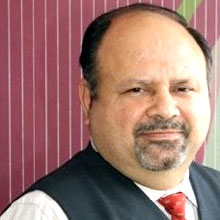
    By Harrish Bhatia


    #1 Radio offers localised content:

    Radio speaks to consumers in their own language or dialect, and the degree of connect of the local content with people in these markets is far higher than any other medium.


    #2 People have more time for radio consumption:

    Since the level of activity in these markets is lower than in metros, people have more time to spend for themselves. This is where radio fills the gap. The increasing number of FM-enabled handsets has further increased the consumption of radio. Radio measurement survey conducted by RAM has proved that the average time spent listening to radio per day is 244 minutes inNagpurand 206 minutes in Jaipur as compared to 127 minutes in Mumbai and 124 minutes inDelhi. (Source: RAM Sweeps 1.0)


    #3 Radio serves as key source of information because of lower literacy rates:

    Literacy rates in these markets are much lower than in metros and as a result, radio serves as the primary source of information. Another critical point is that radio provides regular updates throughout the day whereas a newspaper provides news only in the morning.


    #4 Radio works even when there is no electricity:

    Since tier2 and tier3 cities have fewer electricity connections as compared to the metros and also suffer more frequent power cuts, radio serves as a main source of entertainment for people, instead of television. As a result people tune into radio using transistors and mobile phones.


    #5 Low internet penetration:

    Low internet penetration and inadequate bandwidth in these markets means that internet remains a distant dream. Thus, in the absence of internet, radio serves as a major source of engagement and personal entertainment.


    Harrish M Bhatia is the CEO, MY FM.


  • Debrief: Kit Kat: All about the birds and the squirrels

    By Anil Thakraney


    Recall Kit Kat’s dancing, crooning squirrels from last year? While the idea was quite insane, I did feel the approach imparted distinctiveness to the brand’s advertising. In fact, I remember social media was abuzz with the ad. Guess the positive reactions have prompted Nestle to make a sequel. And this time it’s parrots.


    The setting is a college classroom. A boring history teacher is in action, and one of the dudes can’t take it any more. He starts to record the lecture on a dictaphone, and takes a ‘Kit Kat break’. Once the choc is down, the hallucinations start. Two parrots suddenly appear out of nowhere and the couple gyrates to a romantic track. They even sit on top of the lecturer’s hair puff, much to our chap’s delight. Basically, pretty much the same stuff that happened in the squirrels commercial.


    [youtube width=”400″ height=”200″]http://www.youtube.com/watch?v=0HygFG-yvh4[/youtube]

    It’s good fun, no doubt. The key target audience, the youngsters, will connect with this situation. Also, Nestle has done a cool improvement over the previous version: they have set the new commercial inside a classroom. This allows the creative to have some irreverent fun with the boring lecturer, and it adds to the general masti. All in all, Kit Kat is on the right track. The animated creatures give the brand good recall.


    I wonder which animal/bird will feature in the next ad. Elephants? Well, if they do so, the ad must happen after the UP assembly elections are done, or the election commissioner will clamp down on it. 🙂


    Rating: (On a scale of 1 to 5): 3.5 The animal farm is buzzing!


  • Journalism, a very intriguing career choice

    By Ranjona Banerji


    The Economic Times has an interesting story on how High Street brands record higher sales atDelhiairport than any mall inIndia. While recording lots of facts and figures and quotes from retailers, the article nowhere suggests one possible reason: delayed flights and trapped passengers. Conspiracy theorists have the chance to build up a case here.


    * * *


    Is Salman Rushdie coming toIndiaor not? The Times of India set the cat among the pigeons saying that he is not coming or has been de-invited or that the Rajasthan government was playing chicken. Today’s Hindustan Times says he is coming but then doesn’t either corroborate or provide further information. The upshot seems to be that the Jaipur Literary Festival is being neither brave nor cowardly but nothing at all. The newspapers haven’t done enough homework and the TV channels are looking for bogeymen and monsters around every corner and under every bed.


    * * *


    While television appears to be all in favour of army chief VK Singh and his defiance of the government, newspapers have presented a more balanced view of the date of birth controversy. Indeed, it might even be gleaned from various articles and opinions that newspapers have been a wee bit critical. It is interesting to see that television news anchors and reporters are unable to exercise any objectivity where the armed forces are concerned – it is as if worship has been ingrained since childhood. This makes journalism a very intriguing career choice.


    ***


    Vice-president Hamid Ansari’s speech at the Ramnath Goenka journalism awards is the main edit page piece in the Indian Express. Excerpts were quoted in yesterday’s Freaking News. It makes some points which are worthy of discussion – editors being coerced by management, better professional training for journalists and the role of the media in a democracy.


    * * *


    Talk show queen Oprah Winfrey’s visit toIndiahas actually inspired less hysteria than I thought it would. Perhaps much as she “loves”India, she has decided to orchestrate the TV hoopla herself.


    * * *


    The Hindustan Times has picked the women’s finals at the Australian Open as their “no television” day. They must be crazy if they think someone like me will even pay attention!


  • RIL buys 1.14% in distribution firm, DEN networks

    By Rajesh Naidu & Ameya Chumbhale


    Reliance Strategic Investments, a subsidiary of Reliance Industries, has bought a 1.14% stake in DEN Networks, one of the two listed cable distribution companies in India. As RIL has acquired interests in media firms dealing with content, it makes sense for the Mukesh Ambani-controlled group to invest in a distribution network now, several analysts told ET.


    RIL recently sold its stake in Ramoji Rao-promoted Eenadu regional channels to TV18 Broadcast, a subsidiary of media conglomerate Network18 Media & Investment. Through the deal RIL would have preferential access to the content of all the media properties of Network18 and its associates and its subsidiaries-these include digital media and the TV18 channels.


    “This may be the beginning of strategic investments in cable distribution companies as they will need huge sums to invest in digitalisation, as mandated by the government,” said Mr Devendra Parulekar, partner at Ernst & Young India. Another analyst who did not want to be named said RIL could increase this stake to 15% soon and then proceed towards buying out the promoters’ stake.


    Mr Parulekar said, “The digitalisation law will ensure steady revenues from cable distribution and this revenue remains steady even when there are recessionary trends in the markets.”


    On Wednesday, DEN’s stock went down by 0.78% to 63.75 while Hathway shot up by 7.84% to 136.


    Source:The Economic Times

    Copyright © 2012, Bennett, Coleman & Co. Ltd. All Rights Reserved


  • Video Report: DoT Secy hints at govt hardline on freedom of speech online

    Text and Video by Shruti Pushkarna


    DoT Secy on ICRIER’s report on Impact of Internet
    [youtube width=”400″ height=”200″]http://www.youtube.com/watch?v=Ea03D2jzvUY[/youtube]

    R Chandrashekhar, Secretary, DoT & SiT and Chairman Telecom Commission, Ministry of Communications and Information Technology, Government of India appears certain that the government is going to adopt a hard line on the issue of freedom of speech line. Interacting with the media on the sidelines of the launch of a book based on the research by the Indian Council for Research & International Economic Relations (ICRIER) on the impact of the internet in India at the IAMAI’s 6th India Digital Summit in New Delhi, Mr Chandrashekhar also spoke onTRAI’s recommendations on spectrum allocation. Although he shied away from giving any real answers to the question, on the issue of freedom of speech online, he was firm on how every company across the world has to comply with the laws of the land and India’s case shouldn’t be any different from the rest of the world.


    DoT Secy on recommendations of TRAI on spectrum allocation
    [youtube width=”400″ height=”200″]http://www.youtube.com/watch?v=qEPbv8AFN04[/youtube]

    Earlier, the book titled India: Impact of Internet was released by Mr R Chandrashekhar. The report comes at a time when the government has just announced its grand plan for taking broadband to the masses, by taking it first to local panchayats. Following the launch, Mr Rajat Kathuria, External Consultant, ICRIER made a short presentation on the findings and recommendations of the study.


    Mr Chandrashekhar congratulated ICRIER at the launch of the report and welcomed the timing of the report and the benefits it will bring to the table in quantifying the actual impact of internet on society and economy.


    DoT Secy on recent controversy on digital freedom
    [youtube width=”400″ height=”200″]http://www.youtube.com/watch?v=hiP-F_wtMWk[/youtube]

    The report stated that States with higher internet penetration can be expected to grow faster, and every 10% increase in Internet and broadband penetration in the country could potentially lead to the addition of 1.08%, to India’s gross domestic product (GDP). The report recommends increasing internet usage in the country, which is still very low at just above 100 million users.

  • Anil Thakraney: Dear News Channel Editors…

    By Anil Thakraney


    Er, we don’t want to hear about or watch any of the following, most of which seems to be getting prime time coverage from you guys. Either you’ve run out of news or have run out of edit judgment or both.


    Please go easy on the political turbulence in Pakistan. We really aren’t interested in their internal machinations and electoral problems. Whichever government or army chief comes to power, their India obsession will go on anyways. And Kasab’s cronies will try to slip in anyways. Tell us the ‘moti moti baat’ and cut them out. Please.


    And the army general’s age? Really, we are fed up of figuring out his date of birth, and frankly, we don’t care. We have to worry about the potholes that have sprung up on a newly built flyover. And to think the officer isn’t even a lady that we must pay so much attention to the age. Hatao, yaar!


    Please don’t overkill on the UP assembly elections. I know most of you editors are located in Delhi and therefore politics runs in your blood. And that you are obsessed with Rahul Gandhi’s shenanigans, but the rest of us in India aren’t really crazed about the battle between Maya and Mulayam. Also, whoever comes into power, the mass migration out of the state isn’t going to end. So cool down, people.


    Kindly snip out those TV shows where the usual suspect ‘experts’ dole out gyaan on why India got thrashed by Australia. There’s only so much we can take about ‘Indians should have batted, bowled and fielded better’. Yaawn! Either invite some totally fresh minds to your studios, or knock this faltu ‘analysis’ out.


    No more Kolaveri tidbits, please. The song is screaming out of our ears and lungs already. There’s only that much you guys can milk a good thing.


    Oprah’s only ticket to fame is a TV talk show. That too back in Amreeka. So okay, you told us she’s around, she’s partying and she’s shopping in Colaba. Cool. Now can we leave her alone, please? I’d rather you told us a bit more about that deadly tuberculosis bacterium. Or, you could invite Oprah to conduct a talk show on it. That would be nice.


    Thank you in advance!


    ***


    PS: The quick history of advertising. From 2000 BC to 2011 AD. With the help of cool illustrations. Enjoy!


    Link: http://mashable.com/2011/12/26/history-advertising/


  • Winning consumers, dil se


    By Shubhangi Mehta


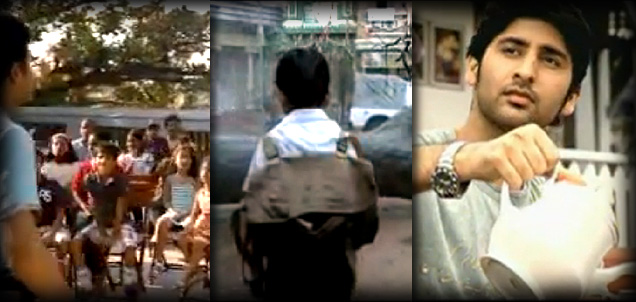
    ‘Advertising’ generally relates to a 30-60 second commercial which is, in some way, a break from whatever has grabbed our attention on the TV. It is, at times, packed with humour or creativity which manages to engage audiences and pay attention to the product being endorsed. But these days, brands are thinking beyond short term goals such as increasing sales to a long term goal of maintaining goodwill for the brand.


    For a while now, a lot of advertisements are not just based on a self-centred motive to sell the product but the brands and creatives are becoming more and more altruistic and trying to engage the audiences by including them in the commercial.


    Whether it is Coca-Cola “spreading happiness” or Tata Tea asking the consumer to “Jaago Re”, almost every brand is trying to step ahead and be an element revolutionising society.


    [youtube width=”400″ height=”250″]http://www.youtube.com/watch?v=M5ECJrnqPcI[/youtube]

    R Balki, Chairman and CCO, Lowe Lintas India, said, “There needs to be a connect of the message with the product. Brands just cannot jump onto the bandwagon by saying something which isn’t connected with the product. Even before Tata Tea or Lead India, it was Lifebuoy that came up with ‘koi dar nahi’, which encouraged kids to walk out and clean the streets. Hence, there is a definite need of product association with the message. Even in the Tata Tea campaign, tea is always associated with awakening and, with a name like Tata attached to it, we took it a step ahead and correlated it with awakening against corrupt politicians and so on. The thought was based on being optimistic and not cynical.”


    As a matter of fact if we are to recall, such advertisements are also the ones that manage stay in our minds the longest. Be it ‘Jaago Re’ ‘Lead India’ ‘Hum Mein Hai Hero’, ‘Idea’ commercials or the latest Stayfree campaigns.


    [youtube width=”400″ height=”250″]http://www.youtube.com/watch?v=A0M0EZ8T5J8[/youtube]

    “Every businessman today realises that just a transactional relationship with a client does not work these days, there is a very important need for emotional connect with the consumers, and brands like Coca Cola are realising the same. The trend has been there for a while, but its gaining momentum as every brand wants to be in the good books of the consumer. This is a worldwide trend where the society needs to know what exactly we are giving them back,” explained Prasoon Joshi.


    The problem lies when rather than being engaging, these commercials become preachy. The idea should be that it sermonises in such a creative way that it manages to engage a consumer, who considers an advertisement a break from a nail biting cricket/football match, or a soap opera that he /she is watching


    KV Sridhar, NCD, Leo Burnett, India, said, “More and more brand are realising these days that whatever we do is replicable. All the uniqueness and benefits get blurred after a while. Be it the uniqueness of an iPhone which is replicated by Chinese and Korean companies or the uniqueness of a brand communication. The other thing that marketers have understood is that ‘honesty’ and ‘selflessness’ are the keys to attract audiences. The Brand now tries to tell the audience that your ideas and my ideas are the same and this has become the solution to connect with the masses.”


    It won’t be wrong to say that Indian society gives utmost importance to values when compared to any other society. Hence, it helps a brand to come across as socially responsible.


    [youtube width=”400″ height=”250″]http://www.youtube.com/watch?v=6DkS7wfPMdQ[/youtube]

    Rahul Kansal, CMO, Bennett, Coleman and Co, said: “When it comes to using a social message to promote one’s brand, it has to have certain connection with the product. Sometime back, we saw Aircel’s campaign to Save the Tigers. Despite being a good concept, the campaign did not leave a mark, as it didn’t really help the brand because the cause wasn’t really connected with the brand. On the other hand, if we talk about Tata Tea’s Jaago Re campaign, it is a beautiful example of laddering up by a brand since tea is always associated with awakening and here the brand communication took it a step further by making it an awakening of the society towards the corrupt system. The Coke ad is also an example of going ahead with a thought of a drink which is meant to quench thirst, stepping ahead and becoming a brand to spread happiness. Times ofIndia’s ‘Lead India’ and ‘TeachIndia’ are also an example of laddering up by using a social message.”


    One might wonder, is creativity becoming a follower rather than a creator? One can also speculate that creative thought is the slave of trend, where one does something exceptional and others follow, as that becomes what the audiences want. The fact that such campaigns manage to capture the consumers’ eye is evidence. This practice had been seen in the past as well, but more and more brands have been adopting the concept lately. Will it continue, and how well can creativity present it? The fact remains that any product endorsing itself on such messages, even if remotely, needs to be connected with the communication at a certain level.


  • Industry veterans remember Ulka founder Bal Mundkur

    By a Correspondent


    Draftfcb Ulka Group held a prayer meeting in memory of the late Bal Mundkur, veteran adman and founder of what is today Draftfcb Ulka. The prayer meet was held on Thursday, January 19, 2012 at Yashwantrao Chavan Pratisthan in Nariman Point, Mumbai.


    Piyush Pandey, Executive Chairman and Creative Director, South Asia Ogilvy & Mather India; Alyque Padamsee, theatre personality and ad film-maker; Gerson da Cunha, stage and film actor, social worker and author; and theatre veteran Dolly Thakore were some of the notable personalities from the advertising and media fraternity, other than the leadership team from Draftfcb Ulka who attended the prayer meeting.


    Shashi Sinha, CEO, Lodestar UM remembered the late Mr Mundkur as a man who was always a leader, and never a follower. A man who was very generous, always ready to help those who needed help, and a man who did not work for money alone but, also for a lot of noble causes which he did not give up even after his retirement. Mr Sinha pointed out that Mr Mundkur had left his cushy job to start his own agency, and that he named the agency – Ulka – at his mother’s suggestion.


    A two-minute silent prayer was observed in memory of Mr Mundkur which was again followed by close friends, associates, former colleagues etc. sharing their thoughts and memories of the late advertising veteran.


    Mr da Cunha highlighted the recently released ‘Ad Katha’, a special volume tracking the history of Indian advertising, as one of Mr Mundkur’s huge achievements. Mr da Cunha was also quick to point out that a lot of people not just owed Mr Mundkur the brands he created for them, but many owed him their career as well. Mr Mundkur has created great professionals, he said, while dedicating the 300-page ‘Ad Katha’ to the memory of Mr Mundkur.


    Mr Alyque Padamsee was also among those who spoke about Mr Mundkur at the prayer meet, saying he remembered Mr Mundkur as a man of rumbustious character. A man who had big ideas and was determined to see each one through. Mr Padamsee also added that his inspiration comes from Mr Mundkur, who was always ready to defend someone – ie, if you believe in something then stand up and fight for it.


    Mr Mundkur passed away in Goa on January 7, 2012 due to heart failure. Mr Mundkur had founded Ulka in 1961, ten years after he joined the world of advertising. In a span of another ten years, Ulka had become the fourth largest agency in the country, and by far the largest independent Indian start-up.


  • Colors launches sports reality show Ring Ka King

    By A Correspondent


    After having entertainedIndiawith their impressive bouquet of fiction shows, format shows and a number of successful reality shows, Colors, is all set to introduce a fresh format to its audiences.


    For the first time ever, the channel is launching the biggest sports entertainment reality show called ‘Ring Ka King’, which will feature 30 top Indian and international wrestling superstars including Jeff Jarrett, Matt Morgan, Scott Steiner and Monster Abyss; Indian wrestlers who have received international-level training like Jwala, Mahabali Veera, Romeo Rapta, Zoravar and Deadly Danda will also be among the participants. Indian cricket superstar Harbhajan Singh has been roped as the goodwill ambassador.


    The show will bring a mix of drama and reality by adding some Indian tadka to the good old wrestling matches that we have grown up watching. The show will go on air from January 28 at 8pm with subsequent episodes airing on Saturdays and Sundays.


    Colors CEO, Raj Nayak said: “We have always vowed audiences with some of the biggest reality shows like Bigg Boss, Khatron Ke Khiladi,India’s Got Talent and now we are proud to present yet another explosive first of its kind sports reality show – Tata Prima Trucks Ring Ka King. Coming down to participate in the show are international wrestling sensations.India, for the first time will witness the excitement of a sport and the intensity of a drama, both rolled into one.”


    He added: “We truly believe that the show will appeal to our viewers and advertisers who are constantly looking for new and innovative platforms to reach out to their audiences. We are glad to be working with Tata Prima trucks and hope that our relationship only grows hereon.”


    In what could be called a modern day clash of the Titans, some of the world’s most renowned wrestling superstars will be seen battling Indian pehelwans to capture the title of ‘Ring ka King’.


    In the first four weeks of the show, audiences will see matches that will crown a ‘Heavy Weight Champion’ and a ‘Tag Team Champion’. During the subsequent weeks, the champions will have to save their honour and title and fight against the other contenders who will challenge them to claim the belt.


    Through the show, audiences will get an insight about the intricacies of wrestling and what goes into making a show as enjoyable as this.


    Explaining the concept of the show Deepak Dhar, MD, EndemolIndiasaid: ”It’s an exciting format for us to work with. For the first time ever, we are combining sports and entertainment to create something very different and exciting. While the focus, of course, will be on the wrestling matches, it is the entertainment and the drama aspect of the show that will make the matches a lot more interesting. Endemol has entered into a partnership with TNA Entertainment, LLC to popularize professional wrestling. Endemol fulfils its commitment toIndiaby constantly bringing best-in-class entertainment toIndia. ”


    Jeff Jarret from TNA, who represents the international wrestlers participating in the show said: ”Tata Prima Trucks Ring ka King is a very exciting project for us at TNA. We know TNA has a lot of fans inIndia, especially young fans, so the enthusiasm levels are higher than ever. At the same time, the format of the show is very interesting which will allow our fans to see their favourite wrestling stars as not just wrestlers, but real people. Of course, we are looking forward to put on an adrenaline filled show that will get all our fans super excited.”


    On being title sponsors, Mr. Vinod Sahay, Head- Sales & Marketing, Medium & Heavy Commercial Vehicles, Tata Prima Trucks said: “We believe integrating our majestic Tata Prima heavy weight trucks with Ring ka King. It represents a natural fit for both our brand and the show. The Prima range of trucks, tractor trailers and tippers bring to India international standards of power, performance and endurance, which ties in very well with the Ring ka King format which aims to bring international standards of wrestling to our country incorporating the same attributes of power, performance and endurance.”


  • The Anchor: 6 mantras for starting a magazine

    By Shivani Darshan


    #1 Homework. Always understand who your consumers are; more important, who your competitors are. A good, in-depth understanding of the market will allow you to create a solution for the end users.


    #2 Eye on Money. Many businesses fail because they forget to focus on the revenue stream. Great paper, great pictures and articles account for nothing if you do not have advertisers and subscribers. Keep your focus and energies targeted on the money.


    #3 Supplier Management. Always keep your suppliers, vendors, contributors on check and keep a good backup at all times. Many startups fail to have backup writers and printers, and end up being blackmailed by a few good ones. Do your homework and always keep options open.


    #4 Money Management. Most startups fail to keep cash flow in check. Negotiating credit period and collecting money on time are some of the most difficult things to do when you start something new. Master this and you are ready to do business.


    #5 Future Planning. One of the biggest needs in today’s environment is to keep the future in mind. If you are launching a magazine you should also plan an ezine (e-magazine). After all the future is e-publishing and not paper publishing. The market is changing and today’s businesses need to be dynamic and ready for change.


    #6 Have Fun. Most people work so hard that they forget to have fun. It’s no use launching a new business if you are not going to enjoy doing it. Have a fun-filled atmosphere in your office. Always remember, a happy team is a productive team.


    Shivani Darshan is the Managing Director at Boutique Publishing India Pvt Ltd.


  • Digital Summit: Social media and content consumption

    By Shruti Pushkarna


    Day 2 of the 6th India Digital Summit organized by the Internet and Mobile Association of India (IAMAI) began with an informative session on where social media stands today. The session also touched upon some legal nuances with reference to the recent controversy on freedom of expression online.


    Social Media: Whose Food, Whose Poison?

    The panel consisted of Pawan Duggal, Advocate, Supreme Court of India & Cyber Law Expert, Pranesh Prakash, Programme Manager, Centre for Internet & Society, Shubho Sengupta, Digital/Social Consultant & Integrated Marketing Council, Coca Cola and Supriyo Gupta, Founder, Digilogue Communication. The session was moderated by Pradyuman Maheshwari, Editor-in-Chief & CEO, MxM India.


    Cyber law expert Mr Duggal started by outlining for the audience where the law stands on freedom of expression as far as the online medium is concerned. He agreed that as per the Constitution, every citizen has the right to freedom of speech but this is not necessarily an absolute right. The recent amendments in the law have changed quite a few things in cyber law jurisdiction; the most important being the introduction of the term ‘intermediary’. As an intermediary if one does not comply with the law, and allows inappropriate/offensive content to be published online, one can be exposed to both civil and criminal liability, depending on the case in question. While Mr Duggal agreed that there is no escaping the law, he also emphasized on the need for organizations like the IAMAI to step forward and ask for amendments to be made to the almost ‘draconian’ IT Act.


    For Pranesh Prakash the picture seemed grimmer than it’s painted out to be. He cited some examples of how the law is formulated in the country in a ‘cut & paste’ manner rather than with a proper understanding of the larger issue at hand. He expressed concern over how in the physical world law catches up in a very different manner as compared to the virtual world. He said, “Police can’t just walk into a bookstore and remove a book saying it is obscene, there has to be a valid court order banning the book. Then why should the likes of Facebook, Twitter etc. be held responsible for which they are not…”


    Intermediaries, said Mr Duggal, “…are not supposed to use their mind or judgment over an issue. They should just act upon a complaint or government’s advice.” It is when the intermediary starts using his/her judgment, that problem arises.


    According to Supriyo Gupta, the issue of intermediaries is not as big, rather it’s just a flawed process in a developing law. He noted, “The issue of intermediary is going to be a short lived one…the larger issue is that one has the right to publish but does one understand what it carries with it?” He said there is a need for companies to think whether they are going to be able to fix the way people are using social media, whether they use it responsibly or not.


    Talking about whether despite all controversy, social media is still the place for brands to be in, Shubho Sengupta was of the view that social media and brands don’t go together. He said, “Social media and brands aren’t an easy fit, and brands don’t understand this. What social media does is that it creates opportunity for two way communication. Brands need to understand that it’s (social media) the consumer’s world, and brands that are doing well in this space have taken cognizance of this fact that in social media space, consumer is the king.”


    The session concluded with all panelists agreeing with the fact that the law needs amendment and the government needs to be sensitized that for businesses to grow, legislation will have to be minimal. But unfortunately as Mr Duggal mentioned, “In an environment of coalition politics, amending the IT Act Is not a top priority.”


    Moving from Memorable to Meaningful

    The session started with a keynote by Anthony Rhind, Co-Global CEO, Havas Digital, and it was moderated by S N Bhaduri, Country Manager-Consumer Media, Thomson Reuters.


    Mr Rhind , in his presentation, stressed on the fact that we all live in an extremely well connected world, where consumers are influenced by choices and validations more so because of the growing social media experience. In such an environment, where consumers have ample choices to choose from, and where they also have the ability and option to avoid all kinds of communication, the big challenge faced by companies and brands is to engage the consumer at an all new level. For this to happen, Mr Rhind emphasized the need for data integration. He said, “Consumers are most likely to share their experiences post-purchase, especially if the experience is negative…” So there is a need for companies to target consumers in a more relevant way, and once that happens, more involved customers will influence a larger group. To target relevant consumers, it is important to ‘integrate and interrogate’ user-level data. Once you have the required data, companies can target the customers with personalized, more creative messages which will enable and encourage ‘dialogue’.


    So data integration is important to bring about more meaningful ways of targeting the consumer.


  • [PR Channel] Being small is our strength: Vivek Sengupta

    By Johnson Napier


    With a career spanning the domains of journalism, PR, public policy and advocacy there is very little that Vivek Sengupta, Founder & Chief Executive of Moving Finger Communications, hasn’t tackled in the field of communication. Though a small shop, Moving Finger has its hands full in offering mundane services to its clients apart from other specialised offerings that include messaging and media training workshops as well as modules in crisis preparedness and crisis communications. It also offers a cloud-based service for global PR and sometimes works with other PR agencies which do not have these offerings.


    In conversation with MxM India, Mr Sengupta analyses the plight of the PR industry in India, how small agencies stack up to the larger forces and why regulation against lobbying isn’t a desirable option for the industry in India. Excerpts:


    Q: How would you analyse Moving Finger as being a distinct communications agency in India?

    We are a communications consulting firm that provides solutions in the realms of PR, public affairs, public policy and advocacy. We also offer standalone products like messaging and media training workshops as well as modules in crisis preparedness and crisis communications. We also offer a cloud-based service for global PR. In these areas, we sometimes work with other PR agencies which do not have these offerings.


    We are small, and that is our strongest suit. For our size, we offer unmatched experience and expertise. It’s a lot like how independent bookstores hold their own in a market awash with large chain bookstores.


    Q: As founder and head of Moving Finger, what were the initial challenges you faced in putting the firm together?

    The challenges were the challenges of a start-up. They come with the turf and you take them in your stride.


    Q: How would you differentiate between running a specialist agency of your own versus working for a large PR house in India?

    Where I am concerned, in a large agency, running the business profitably and growing it were my primary concern. Servicing played second fiddle. Now, servicing is my primary concern. Running the business is secondary; though, in and of itself, it is of paramount importance.


    Q: How would you analyze the performance of the PR and Communications industry in India? Has it recorded a commendable growth story in 2011?

    In a challenging market scenario, the industry performed creditably. When the business environment is tight, CEOs and marketing heads watch spends very carefully. PR tends to do better than advertising because the spends are way smaller and, I dare say, you get bigger bang for the buck.


    Q: How do you view the increasing entry of international PR firms in India?

    This is not a very recent development. It has been happening for some time and had to happen. These firms have their own markets, we have our own. The pie is large enough for everybody.


    Q: In a changing communications scenario, how has the journalist-PR nexus evolved over time?

    I am not sure what connotation you attach to the word ‘nexus’. I hope it is positive! I think the journalist and the PR person have come to have a better understanding of each other’s role. The PR person understands that the journalist is looking for information, while the journalist understands that the PR person is looking to provide information. Both have the common objective of purveying information. When there is a match between the two needs, there is win-win – a consummation devoutly to be wished for.


    Q: How do you see digital impacting the way a PR agency functions?

    The goal of purveying information does not change. Digital is just another platform or means to that end.


    Q: What are the immediate challenges facing PR agencies in India?

    The single biggest challenge, which overshadows everything else and is already upon us, is the crisis of talent. You can get the business, but do you have good, competent people to service the business? However, this talent issue is something that many verticals grapple with. In the communications industry, the media itself is assailed by this challenge. Every editor whom I talk to laments the lack of talent.


    Q: Why is the PR and communications industry devoid of a strong and agile regulator? How will the industry grow without proper policing mechanisms in place?

    Why would our industry need a regulator? Who has asked for one? There has been some talk of “regulating” lobbying, as it has come to be understood in India (which is wider than the US or EU definition of engaging with law-makers). But, in my view, even that is not called for. We have before us the experience of the media with the Press Council of India. A watchdog for lobbying must surely not traverse the same path. It would be better to limit regulation to existing laws.


    Do you think consolidation will be the order of the day soon?

    Some amount of consolidation will happen and that will be perfectly in order.


    Vivek Sengupta is Founder and Chief Executive of Moving Finger Communications. He has had a varied career in journalism, public relations, public policy and advocacy. He can be contacted at vivek.sengupta@movingfinger.in