Picasso Cinematics, a Mumbai-based production company, has launched its latest TVC starring cricket stars Hardik Pandya, Shubman Gill, and Kane Williamson for Capri Loans.
It is produced and directed by the Nakul Roshan Sahdev (known for Gully Boy and Pagglait) and award-winning filmmaker Kabeer Khurana.
Said Mahesh Chauhan of Salt Brand Solutions: “We were pleased with the execution of the project. The team at Picasso is creative, patient and highly efficient.”
Added Sahdev: “We’re excited to have worked with such talented individuals on this project and to have produced a TVC that captures the essence of Capri Loans’ services while showcasing the skills of these amazing cricketers,” said Kabeer Khurana, cofounder of Picasso Cinematics. “Our team worked tirelessly to create a visually stunning advertisement that we’re sure will resonate with audiences.”
Apple CEO Tim Cook and Senior Vice President (Retail and People) Deirdre O’Brien with staffers and crowds at the Apple BKC store opening in Mumbai on Tuesday, April 18. Photograph source: Apple.com/in
By Avik Chattopadhyay
On March 31, the former Reserve Bank of India deputy governor and noted economist Viral Acharya had commented that the ‘Big 5’ Indian mega-corporations needed to be broken up into smaller firms to dismantle their near-monopoly on pricing and market reach. They are Reliance, Tata, Aditya Birla, Adani and Bharti Telecom. “Creating national champions, which is considered by many as the industrial policy of ‘new India’, appears to be feeding directly into keeping prices at a high level,” said the professor of economics at New York University Stern School. “The rising concentration of corporate power risks making inflation even more persistent and creating a vulnerability on the external sector front given India’s outsized fiscal and cyclically sensitive current account deficits,” he further commented in his report.
Mega-corporations are not good for any economy or market. Through backward and forward integration, they end up controlling the entire value chain and price mechanism, virtually holding the end consumer at ransom. For example, a mega-corp retail chain will shut down competition by offering the most competitive prices and gaining rapid customer following finally leading to a situation when only that chain remains to serve the market, at a price it then wishes to operate on. This not only destroys local competition but also deters foreign players from exploring the market.
When Standard Oil was broken up into 43 little companies in 1911 by the still fresh US Anti-trust Laws, it had assets worth USD400 million. It was 65-70% of the entire US market. When AT&T was broken up in 1974, it had revenues of USD70 billion. At that size, they could and were dictating governments on policy matters. They were monopolistic enough to manipulate both value chain costs as well as end consumer prices.
On April 18, India celebrated the opening of the first official Apple store. A USD400 billion mega-corporation! In the context of a Standard Oil or an AT&T, isn’t Apple Inc. not large enough to attract attention of the anti-trust regulator? Or is the very context of the market very different from before, being global in scope rather than just in the US which is what took the previous two down? Its nearest competitor, Samsung, is a bit more than just half its size.
Are brand size and trust inversely proportional values of an organisation? Not really, if it is not monopolistic in its inherent behaviour and its size is spread across multiple markets with varying degrees of penetration with none being too large to be of competitive concern.
Apple is one of the world’s most valuable ever brands with some of the most loyal following ever seen or recorded. It has thousands of stories about itself circulating in hundreds of languages and formats. Its founder is one of the most iconic global personalities ever, across business, politics, entertainment, sport and culture. Yet, the brand is not without the chinks in its shiny armour. It has not had a very good record on how it treats its workforce in countries outside of the US, though it tries to slither away citing they are contractual. It has been dodgy about its sourcing of materials and rare earths for its products. It has been known to use tax havens for years which technically speaking is nothing wrong but ethically is a misuse of lax regulations. There have been issues about its environmental impact, though it has made progress over the years to ‘clean’ up its image when it comes to recyclability and repurposing.
Is the end-consumer really bothered about the negatives? When people line up at BKC in Mumbai from the wee hours for the first Apple store to open and then post millions of videos and photos to establish the love and admiration for the brand, you wonder whether looking at two sides of a coin does even matter when it comes to such formidable brands?!
Even if five million iPhones are sold in a year in India, it will still not be 1% of a total market of 700 million smartphones. But size does not matter here as aspiration, admiration and benchmarking does. Size therefore is a contextual and relative measure to use when evaluating a brand. General Motors is large globally and very large in the US but not present in India at all. The same is with other global brands like Ford and Harley-Davidson. So, does it mean that in a market like India, with huge economic inequalities, brands need to play out different strategies of building the brand narrative and managing themselves depending on their product or service relevance? Can there be no universal truths that apply to all brands operating in India? Is there no universal truth about India itself?
Or will history always be written by the victor, whether in battle or by ballot? There is a huge furore about the modifications being made in the NCERT history books. While the anger is welcome and justified, is this showing of just one side of India’s history being done for the first time? Are we sure that what was written in the 1970s and 1980s was the most balanced and unbiased? Are we certain that each constituent of this land’s rich and diverse history was given its due weightage, whether it be the Chola empire or Subramanya Bharati? Are we comfortable with a certain section of our freedom fighters being termed as “extremists” just because their method of action was not in tandem with the method of the majority? In fact, are we sure that we attained independence by using just one method of protest or was it actually a mix of many? There were half-truths then just as there are half-truths now. Just that the victors have changed and so have the overall agendas and resultant narratives. Just like when one CEO gives way to another and the ‘old order’ gives way to the new. New narratives are born and old shoulders are used to fire missives.
However, that did not seem to happen in 2011 when Jobs gave way to Cook. The narrative remained the same. In fact, its application gave birth to new product categories and solutions that helped further reinforce the cause and level of addiction. That makes its fan and follower overlook its chinks and go only for all that shines. Hope NCERT adds a chapter on Apple in our history books soon. The learnings will certainly be deeper!
Avik Chattopadhyay is a senior brand and marketing strategist based in Gurugram. He writes on MxMIndia every other Thursday. His views here are personal.
Id8 media solutions integrated marketing agency has won the Public Relations mandate for Goa-based resort, Casa Jaali and Jaali Kitchen. The agency will be responsible for developing a firm communication strategy using modern Public Relations and Influencer Marketing tools that include content intelligence, precisely executed PR and influencer campaigns, media engagement and thorough influencer outreach.
Said Tanya Swetta, CEO and co-founder of Id8 media solutions: “It’s amazing to work with a team that understands the value an integrated approach to communications can bring to the business. We are looking to build innovation into the new approach to PR and Digital. Goa is an international resort destination, we are excited to apply our knowledge of international markets to how we drive the conversation.”
Added Kate Abramovitz, CEO and Co-founder of Casa Jaali: “We’re extremely delighted to be partnering with id8 media solutions to widen the vision and horizon of Casa Jaali. The company has achieved multiple milestones since its inception and we entrust them to give us the right advice and strategy to communicate with our existing guests and new customers.”
Malabar Gold & Diamonds has signed Alia Bhatt as its new brand ambassador. The announcements came in the wake of the 30th anniversary of Malabar group, which began their operations in 1993.
Said Malabar chairman, M P Ahammed: “We are very excited to welcome Alia Bhatt into the Malabar Family. Over the years, our brand ambassadors have played an instrumental role in elevating our brand’s status in the eyes of our customers and we are looking forward to taking Malabar Gold & Diamonds to new heights with Alia Bhatt as the face of the brand. Our goal is to be crowned as the World’s largest jewellery retailer by crafting, promoting and selling jewellery that is an intersection of Indian art, culture, tradition, heritage and Alia Bhatt, both as an actor and as a person, perfectly represents what we are striving to achieve. Her impressive career in the highly competitive film industry resonates with our brand’s journey and ambition as a brand. As Malabar Gold & Diamonds celebrates its 30th anniversary, we are reaffirming our commitment to providing our loyal customers with the best jewellery shopping experience.”
Wunderman Thompson is expanding its global B2B offering with the launch of Inspired B2B, a new initiative dedicated to growth for B2B brands.
Notes a communique: “The Inspired B2B initiative represents the next phase of development for Wunderman Thompson’s best-in-class B2B vertical to help clients around the world build emotional connections at every stage of the customer journey. Through Wunderman Thompson, brands will have access to over 500 B2B specialists around the world delivering truly relevant and insightful communications that enable B2B acceleration.”
Said Neil Dawson, Global Chief Strategy Officer at Wunderman Thompson said: “With our research showing that inspiring brands are 5x more likely to be a B2B buyer’s first choice, there’s a huge opportunity for B2B brands to engage, inspire, and excite their audiences. But when we look at B2B, we see a sea of sameness. It’s time to ditch the rulebook and remember the audience is human; driven by emotion, curiosity, and wonder. There’s never been a better time to be a B2B marketer.”
Ariel detergent has launched its latest edition of the #ShareTheLoad ‘movement’ with the film ‘See the signs #ShareTheLoad’.
Said Sharat Verma, Chief Marketing Officer, P&G India, and Vice President – Fabric Care, P&G Indian subcontinent: “With our movement Ariel #ShareTheLoad, our aim has been to strike meaningful conversations that help drive positive change and address inequality. This year’s communication is based on the insight that the unequal distribution of chores can have a long-term effect on relationships. In fact, 81% of women surveyed feel that unequal distribution of chores has affected their relationship over time. Over time the unequal distribution of household chores can lead to one partner giving up and create a distance in the relationship. But on the other hand, we know that the foundation of a strong relationship is based on equality, where both partners feel respected, appreciated, and valued. Our recent survey showed that 95% couples believe that doing chores together will improve their relationship. Therefore, with this film Ariel is urging us all to see the signs and #ShareTheLoad to grow together.”
Added Josy Paul, Chairman and Chief Creative Officer, BBDO India: “The latest edition of #ShareTheLoad is an eyeopener for married couples and for the younger generation. It is based on something we have been noticing in society – a growing section of men who are discovering that they have lost out on their relationship but don’t know why. It is a hidden truth that no one is talking about. The truth that there is an emotional distance between couples because of the unequal distribution of household work. As we see in the film ‘the woman keeps on giving and giving… till she finally gives up’. ‘See the signs #ShareTheLoad’ is a resolution, a step towards realizing that to share life together, we need to share the load.”
So even ChatGPT knows that our Wizard with Words is the right person to ask all the right (and often wrong) questions. Here’s Dr Bhaskar Das in the April 20 edition of Das ka Dum. Read on…
If you wish to access the archives, please go to the Das Ka Dum tab on the website’s top navigation bar or click here: https://www.mxmindia.com/category/columns/das-ka-dum/
Q. We asked ChatGPT for help to give a question for today. Here goes: As someone who has held leadership roles at several prominent media companies, what advice do you have for young professionals aspiring to leadership positions in the industry?
A. Here are some of the indicative skills that would be indispensable for young professionals aspiring for leadership positions in the industry:
1. Being eithical and authentic
2. Problem solving ability
3. Curiosity and desire to learn, unlearn and relearn
4. Digital literacy
5. Global perspective
6. Adaptability
7. Self-knowledge for emotional stability (when faced with volatilities at work or personal front)
What do Albert Einstein, Emily Dickinson, Tim Burton, Charles Darwin, Bobby Fischer, Bill Gates, Jerry Seinfeld, Tim Burton, and Elon Musk have in common? The answer is ASD or Autism Spectrum Disorder. It is a developmental disability caused by differences in the brain. People with ASD often have problems communicating and socializing, they may display repetitive behavior or restricted interests. But they also have their unique strengths and abilities. And all the personalities mentioned above are proof that although it may be challenging to live with autism, but people on the spectrum can accomplish great things.
Source: Freepik.com
April is Autism Awareness Month, and you would have come across several news stories around autism awareness, inclusion, numbers in the past couple of weeks. But do we really know enough about autism? Are we accepting and welcoming of people on the spectrum in the mainstream? Does India have enough services catering to the needs of autistic people?
Merry Barua
I posed these and several other questions to Merry Barua who is credited with initiating the autism movement in the country. Merry gave birth to her son, Neeraj in 1981. It took a new mother months and years to understand her autistic son’s needs, traits, and interests, to ultimately devote herself towards creating awareness and a conducive environment for thousands like Neeraj. Merry Barua is the Founder Director of Action for Autism, an organisation dedicated towards building a hopeful future for autistic children and their families. She has also authored many books on the subject.
In this interview, she talks about her journey as both a mother and an activist, the transformation that people and organisations working on autism experienced over the years and how the media contributed, impacted, or lacked.
Q: Tell us a bit about your first encounter with autism as a young mother.
A: When my son was little, I had no knowledge of how a little baby must be like. He was my first child, and I had no experience. He reached all his physical milestones, except that he did not speak, but everyone assured me that boys speak late. He was very cranky as an infant. I was barely able to breastfeed him because he did not suck. There were other challenges, he would drop things out of the window. I couldn’t explain to him that this is not something that one does. As he grew, he barely slept at night. When he started going to the playschool, I noticed that all the kids were playing together but he would be hanging around on the fringes. I thought he was shy. At the end of the year, when they sent us the exercise books, all of them were empty except for the colouring book where the crayon had been rubbed repeatedly in one spot in the centre of whatever the outline was. Initially I thought he was a slow child. But there seemed to be something more and I tried asking his paediatrician, but he said there was nothing to worry about. So, life was quite challenging. And I felt there was something wrong in my parenting. One of the bad things I did was that I followed Benjamin Spock (American paediatrician) who encouraged to say ‘no’ and give them a little spank and I would do that. And I know now that those are terribly wrong things to do.
Q: You began with championing autism rights as a mother, and later it translated into a national movement. Tell us a bit about this transformative journey.
A: After I got a diagnosis, I realised that nobody had even heard of this word ‘autism’. There was nothing available. I got hold of one book by Lorna Wing.
Autism is not a simple straightforward kind of disability. You have to really put in an effort to understand it. For example, when people would ask me, I would say it’s a difficulty in communication and socialisation. And people would say so what, there are many other shy kids who don’t play with anyone. And I didn’t have the understanding to explain the pervasive nature of social challenges that my son was coping with. I visited many schools for the disabled and I realised that there was very little or almost nothing people understood about disability, forget autism. So, I started writing. I wrote a few articles in magazines and newspapers with the aim to get people to at least know the word ‘autism’. Around the late ’80s, the film Rain Man had been released in India and a lot of people who watched the movie didn’t get that it was about a disability. So, I printed out a little piece of information and I went to all the local video parlours asking the owner to stick it on the cassettes to help people understand. I also started to bring about a journal called Autism News. My aim was to reach families and help them. These were all the small things I did to create awareness. I had a young girl whose sister brought her over, asking for me to work with her. I did and then another mother came with a boy. By this time, my son was 12. This is how the school started. My aim was to show through the school that these are children who can learn and progress just like other children. Because I’d experienced that with my son during his home programme.
It wasn’t just about my child, it was about this whole population of autistic people who were not getting the right services they required. It was important to ensure that autism was recognised in policy. Also, in many places the understanding is that the way you teach kids with intellectual disability is how you also teach kids with autism. It’s like saying that you teach deaf and blind kids in the same way. Except it’s not! They’re completely different disabilities. So that understanding had to be pushed through. So, one of the things that I struggled with was to get the Rehabilitation Council of India (RCI) agree to start a training of teachers to work with children with autism. And that struggle took me seven years. As I began to understand autism, I saw there were so many children who had autism, but they were misdiagnosed. I was often told that I was trying to make autism fashionable! I could see that this was a population that desperately needed services, laws, needed things to change. We also realised that we had to do a lot more work on awareness, so we did a lot of concerts with popular musicians. I wrote the first book on autism around 1997. Then we write a manual for paediatricians. So, one thing led to another and that is how the whole movement started off.
Q: Autism has been treated in different ways in literature and films, some close to factually correct, some stereotypical, some totally absurd. A classic example being Rain Man, people assume all persons on the spectrum are mathematical wizards! Then there was My Name is Khan, I am Sam, Who’s Eating Gilbert Grape and so on. How do you respond to some of these yesteryear productions? Do you think they have led to more stereotyping or have managed to educate the ignorant masses?
A: Yes, I know there have been a lot of films and the depiction hasn’t always been the best and they have created a wrong impact. But at the same time, I deeply appreciate a lot of the films. For instance, ‘Rain Man’ when it came out, it was the only film that was really talking about autism clearly. And I know that’s not the kind of autism that my son has. But it was a film that gave us an understanding of the different kinds of autism. And it’s an excellent depiction of an autistic person of a particular kind. As for ‘What’s Eating Gilbert Grape’, I thought it was fantastic too. You cannot show every kind of autistic person in a film. I liked Gilbert Grape especially because the autistic person was not the main character, he was just the sibling. I thought ‘Barfi’ was cute, but the ending was unnecessarily happy. Like the kid in ‘Taare Zameen Par’, why did he have to win the competition. It’s like when you have a disability, you must have something to redeem yourself. That bugs me. Why can’t disabled people be like regular people and have happiness, failures, sadness, successes, everything doesn’t have to end on a happy note. But I guess the more the merrier because they create awareness. There’s so much stigma that is attached to disability in our country and if these movies address that stigma in some ways, I say let it be.
Q: But today there is a lot more content that is produced from a more informed position, representing rather than misleading. To cite a few examples, there are shows like Atypical, The Good Doctor, Extraordinary Attorney Woo et cetera. What do you feel about this shift in portrayals?
A: The early portrayals have been able to create some awareness. For instance, if we took our kids out, someone approached us asking if these kids are like ‘Taare Zameen Par’, and I would say yes. Because it didn’t matter, to that person, there was no distinction between a learning disability and autism. All he knew was that these people are different, and he was trying to be good. And I think that’s what matters ultimately. As long as people accept them for who they are and want to include and help them. Having said that, the current lot of OTT films and series are fabulous, including the ones that you have mentioned. So there has been a big shift, especially the stuff that’s coming from the West, if not as much in India.
Q: Action for Autism, can you tell us a bit about the organisation’s vision and how the work has evolved through these years?
A: Action for Autism was started with the objective of creating an environment which was supportive of autistic individuals and families. One had to change perceptions from them being hopeless, useless, violent children. And to do that one had to start services to prove that those perceptions were wrong. We started the school initially and then we moved to diagnosis, early intervention, teacher training, running a vocational centre and so on. And then moving to employment. The bigger shift which has colored all the work that we do is the evolution of our understanding of autism. We’ve learnt a lot from our colleagues with autism, as we have from autistic people who have written about their life experiences. As our understanding grows, it impacts our services.
Q: April is also Autism Awareness Month, this year being the 15th annual observance. How have you seen the awareness raising activities and engagements grow or transform through these years?
A: There has been a steady increase in the observance. Initially, we used to do an Autism Awareness month in December starting 2000 onwards and we did it across cities. Then of course Autism Awareness month was flagged by UN in 2008. Now, there are observances by organisations across the country helping create more awareness. There are also a lot of observances happening in smaller towns, but the reality is that awareness is still a long way to go. This is also a time when a lot of flaky therapies get majorly boosted by the people who propagate them. While there are a lot of walks, public events et cetera, there are also a lot of discussions, articles in the media that happen during this month. In earlier times, there was a lot of awareness activities. Now, the push is more towards acceptance of autism.
Q: You have written extensively in newspapers about autism, you even started a journal called Autism News, what according to you is the media doing right and what it has missed out on. What should change?
A: One of the good things is that the media is nowadays covering the condition. They suddenly seemed to have discovered autism as a worthy topic. In the entertainment media, there are series that have characters with autism, they try to portray people with lived experiences. But one of the things that happens with our news coverage is caricaturing, or a heroic portrayal. The language needs to change because it is ableist. The reporters who write the story, they are often people who don’t have much understanding of autism or even disability. Things like ‘differently abled’, ‘suffering from autism’, are indicative of very ableist language. The intentions are better, but because they come from an ableist perspective, the appropriate language is missing. But one should be happy that at least the media considers disability matters worth covering.
So why are we publishing this column on an A&M site? Well, we strongly feel that the media can dramatically transform the world of persons with disabilities. And this series can help bring forth issues that the media must champion to create a truly inclusive and accessible India. To write this column, we invited Shruti Pushkarna, a former journalist who is now a disability inclusion advocate based in New Delhi. Her views here are personal. To access the archives of her 70-odd columns, please visit: https://www.mxmindia.com/category/ columns/shruti-pushkarna/
If you have a view on the issue or would like to align with MxMIndia on this cause, write to us at editor [at] mxmindia.com.
Josh, the short video app, has collaborated with Tata AIG to raise awareness among the youth on the importance of car insurance. The campaign #TrustedNaamFantasticKaam focuses on raising awareness of car insurance and the ease of availing car insurance policies from Tata AIG.
Said Sunil Kumar Mohapatra, Chief Revenue Officer, VerSe Innovation, parent company of Josh: “Brands are increasingly recognising the potential of short-video in engaging audiences effectively. As Tata AIG aimed at connecting with the youth of India, the wide reach of Josh presented the perfect opportunity for us to collaborate and launch the highly engaging #TrustedNaamFantasticKaam campaign.”
Fastrack sunglasses has launch a new brand campaign titled #NecessoryNotAccessory. Conceptualised by Mullen Lowe Lintas, the campaign is showcased through three multi-concept films.
Said Maneesh Krishnamurthy, Head of Marketing, Eyecare Division Titan Company: “In a tropical country like ours, sunglasses are a must-have. For decades, sunglasses have been marketed as a fashion accessory only but that is not just, why they were created. With #NeccessaryNotAccessory we want to bring new users to the category and grow it by showing the consequences of missing your sunglasses on your next holiday. We believe your beach holiday will never be the same after you experience it with polarised sunglasses nor will you experience the blinding effect of the Indian summer sun with the right mirrored sunglasses. We are ‘educating’ with a Fastrack quirk.”
Added Sonali Khanna – President & Head of Lowe Lintas, South: “Fastrack is a brand where we’ve always made unconventional campaigns to match their unique products. Hence, we decided to push this from merely a ‘feature-education’ piece to a fun and interesting narrative on why sunglasses are ‘Necessary not Accessory’.”
Sociapa Marketing Agency has won the digital mandate for Kesari Golden Sugar by Tatva Health and Wellness food company.
Said Dheeraj Raj, Founder of Sociapa: “The entire strategy will be crafted to connect and engage with a cross-section of audiences leveraging the brand’s legacy. We are honoured to be associated with a brand like Tatva Health and Wellness, a brand that offers natural and innovative products which is the need of the hour. Looking at our team’s experience and knowledge in this industry and differentiated storytelling approach, I’m confident that we will be strengthening the brand’s affinity and helping the company in achieving its set ambitions.”
ICA Pidilite, a joint venture between Pidilite and ICA SPA of Italy, has released a short film depicting how wood finishes influence people’s moods, tastes and preferences.
Said Manish Airee, Senior Vice President, ICA Pidilite: “This is the first time we have released a film made in India for our audience. We want to communicate to our consumers how persuasive design can be. Through this film, we want our consumers to know that ICA Pidilite’s good taste and great finishes are recognizable and that they meet the same high-quality standards as in Italy. We at ICA discover how changing consumer preferences can influence businesses and we try to respond to continuously evolving trends and tastes.”
Added a representative from Alok Nanda and Company (ANC): “Our decision to use opera as a medium was governed by the Italian provenance of Brand ICA Pidilite. Our objective was to create a film that looks like an out-and-out Italian production, and that’s why we had an opera singer from Italy sing it for us. With sophisticated humour, an elegant cast, brilliant music, and a very premium setting, we were able to stay true to the DNA of the product: Premium Italian Wood Finishes. With a gorgeous product, a talented team, and high production values, we knew we had all the ingredients to create a great film. And now, if the viewers like it, we won’t be surprised. After all, good taste shows.”

 On March 31, the former Reserve Bank of India deputy governor and noted economist Viral Acharya had commented that the ‘Big 5’ Indian mega-corporations needed to be broken up into smaller firms to dismantle their near-monopoly on pricing and market reach. They are Reliance, Tata, Aditya Birla, Adani and Bharti Telecom. “Creating national champions, which is considered by many as the industrial policy of ‘new India’, appears to be feeding directly into keeping prices at a high level,” said the professor of economics at New York University Stern School. “The rising concentration of corporate power risks making inflation even more persistent and creating a vulnerability on the external sector front given India’s outsized fiscal and cyclically sensitive current account deficits,” he further commented in his report.
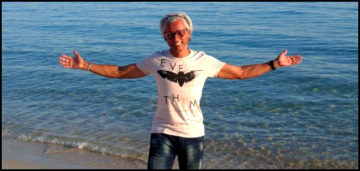 So even ChatGPT knows that our Wizard with Words is the right person to ask all the right (and often wrong) questions. Here’s Dr Bhaskar Das in the April 20 edition of Das ka Dum. Read on…
 What do Albert Einstein, Emily Dickinson, Tim Burton, Charles Darwin, Bobby Fischer, Bill Gates, Jerry Seinfeld, Tim Burton, and Elon Musk have in common? The answer is ASD or Autism Spectrum Disorder. It is a developmental disability caused by differences in the brain. People with ASD often have problems communicating and socializing, they may display repetitive behavior or restricted interests. But they also have their unique strengths and abilities. And all the personalities mentioned above are proof that although it may be challenging to live with autism, but people on the spectrum can accomplish great things.
