Senior mediaperson and digital specialist Shailesh Amonkar has been retained as Strategic Advisor by Marathi OTT platform, Planet Marathi. A Vistas Media Capital Company, Planet Marathi has announced the appointment of Amonkar and Darshan Gangakhedkar, another seasoned media pro in the region, as Strategic Advisors. They will assume responsibilities of mentoring and guiding the team on monetisation and strategy for the company. They will also be associated with Planet Marathi’s expansions plans. Planet Marathi was set up in August 2021 and boasts growth of 500% since (data not verified – Ed).
Shailesh Amonkar (extreme right) with Akshay Bardapurkar (left) and Darshan Gangakhedkar (centre)
Said Akshay Bardapurkar, Founder and Head, Planet Marathi OTT: “We are happy to announce that we will have the guidance of two exceptional names in the field of media, brand and sales, both Shailesh Amonkar and Darshan Gangakhedkar. Planet Marathi OTT needs the expertise of these talents to draw out bigger goals and set out in the right direction to achieve them. Our teams will work to develop products, revenue streams, branding and audience engagement in the OTT space under the guidance of these professionals”
Amonkar, who has worked with The Times of India and Sakal Media groups, is now an entrepreneur who runs Kemistry Media Solutions, a media consulting firm. He is also Co-founder of Climatica, a firm dealing with actionables around the various challenges posed by climate. Gangakhedkar, also an entrepreneur, has over two decades of experience in running media businesses at Marathi and Hindi language pubications like Nava Bharat, Raj Express and Sakal.
The Advertising Club announced the Managing Committee for 2022-2023, at its 68th Annual General Meeting. Partha Sinha, President – Response Bennett, Coleman & Co. Ltd., has been re-elected to lead the body. Managing Committee members were elected unopposed.
Speaking about the appointment, Sinha said: “I am honoured to be re-elected as the President of The Advertising Club. In spite of being extraordinarily challenging, the last 24 months of the pandemic gave us an opportunity to innovate and deliver some of the most impactful engagement initiatives. From the first-ever online edition of the Effie Awards that created a new benchmark for virtual events and the in-person Emvies that was attended by more than 1000 media enthusiasts, to raising the bar on Abby’s Awards by associating with the One Show and collaborating with the United Nations on Unstereotype Alliance – the team exemplified excellence with each activity. I am thankful to the team we’ve worked with and look forward to working closely with them again to take The Advertising Club to newer heights.”
The officebearers of The Advertising Club for 2022-2023 are:
1. Partha Sinha: President
2. Rana Barua: Vice President
3. Shashi Sinha: Secretary
4. Mitrajit Bhattacharya: Joint Secretary
5. Dr Bhaskar Das: Treasurer
Also in the managing committee are:
1. Prasanth Kumar
2. Vikram Sakhuja
3. Ajay Kakar
4. Debabrata Mukherjee
5. Rahul Johri
6. Aditya Swamy
7. Manasi Narasimhan
In addition, a few industry professionals have been co-opted in the MC:
1. Punitha Arumugam
2. Sonia Huria
3. Pradeep Dwivedi
Partho Dasgupta will continue as a member of the Managing Committee as the Immediate Past President.
In a communique, the Ad Club has also given a list of industrypersons who will “continue to bring value to The Advertising Club through their expertise and deep understanding of the respective industry segments”:
Tata Consultancy Services (US$45.5 billion) is the new number one most valuable Indian brand, claiming the top spot from HDFC Bank (no.2, $32.7bn) which had held the position since the first ranking was unveiled in 2014. TCS’s brand value has been accelerated by global demand for automation and digital transformation following the pandemic.
The Top 10 Most Valuable Indian Brands together contribute just over half of the ranking’s total value. There has been significant movement at the top, in addition to the two most valuable brands switching positions. There are two new entrants – Infosys ($29.2bn) which has rocketed up to no.3 from 12th position, and ICICI Bank ($11bn) which has climbed two places to no.9. State Bank of India ($13.6bn) has also risen four places to no.6.
There are brands from 23 different categories in the 2022 Indian Top 75. There are a total of 14 newcomers , from 11 categories – including online gaming, education, apparel and real estate, reflecting the diversity and dynamism of the Indian economy.
India’s strongest brands have bounced back from the pandemic to increase their brand value by a massive 35% CAGR since 2020, when COVID-19 hit the country. India’s top 75 brands are worth a combined $393 billion, equivalent to 11% of India’s national GDP.
Technology and Banking brands account for over half of the total value. Six B2B Tech brands and 11 Consumer Tech brands contribute 35% to the total value of the ranking, reflecting the rise of Tech India. Overall, B2B brands (tech, payments) are on average almost three times as valuable as B2C brands, reflecting the fact that many of the B2B brands play on the global stage while B2C are more focused on the domestic market. Six banking brands deliver 19% of the total value. Also notable for their performance are Insurance brands, which have performed well as the pandemic increased consumers’ focus on protection of life and health and Telecom Providers, led by Airtel (No.4; $17.4bn) and Jio (No.10; $10.7bn), which took full advantage of growth opportunities as everything moved online, from education to work to parties.
Key newcomers to the ranking include Vi (No.15; $6.5bn); formed from a merger between Vodafone and Idea, Byju’s (No.19: $5.5bn), the educational technology brand that has become India’s most valuable education brand, and Adani Gas (No.21; $4,5bn).
Said Deepender Rana, Executive Managing Director- South Asia, Insights Division, Kantar: “India’s leading brands have grown at an exceptional rate, despite global economic headwinds, putting the disruption from COVID-19 behind them. Indeed, they have both driven and benefited from the transformation in consumer and business behaviour as a result of COVID-19, especially where it relates to the use of technology. The challenge now is to sustain momentum as inflation bites worldwide and consumers and businesses adjust to the new normal. Brand owners will need to work harder to identify and build on what makes worth paying for and ensure ROI on their marketing expenditure to avoid a margins squeeze.”
Kantar BrandZ has identified Four Fundamentals responsible for powering brand growth: Function, Convenience, Experience and Exposure. India differs from other markets around the world, however, in that a brand’s sustainability credentials and purpose matter more.
Overall, 65% of Indians feel anxious about climate change, and 64% believe businesses must play their part. The highest-ranking brands in the Top 75 are clear on purpose and have a relevant sustainability agenda. These include services platform Zomato (No.30; $3.1bn), which offsets the carbon footprint of its deliveries and packaging. Swiggy (No.20; $4.8bn) elevates consumers’ quality of life with speedy delivery of meals, groceries and healthy items, as does Flipkart (No.12; $8.9bn), while also helping smaller local brands to connect with consumers via its platform.
Added Soumya Mohanty, Managing Director, Insights Division, Kantar: “Purposeful and sustainable brands are rewarded. Indian consumers look further than the brand attributes that affect them personally – they want brands to improve people’s lives and have a positive impact on wider society. They vote with their wallets, choosing brands they see as ‘doing the right thing’. Indian brands should have a clear view of their purpose, connect strongly with it by embedding it in their culture, talk about it in creative and powerful ways, and deliver on it – without fail.”
Salience – the ability of brands to spring quickly to mind when a consumer has a need – is also vitally important. India’s Top 10 brands are far more salient than their counterparts in most other countries. However, for growth to be supercharged, brands must also have strong meaning as well. They should have functional meaning – doing a good job of fulfilling a need – but also a layer of emotional meaning. The Kantar BrandZ India Top 75 far exceed other Indian brands on all these of these vital predictors of success.
Other key highlights from the analysis include:
:: 57 of the brands in the 2022 Top 75 have been in the ranking since 2018, while 19 have moved up the league table.
:: The share prices of companies behind strong brands are protected in a ‘bear’ market and recover more quickly. Between August 2014 and June 2022, the SENSEX India Index gained 63.8%, while a portfolio of the most valuable Indian brands rose 81.8%.
There are eleven consumer tech brands in the Top 75, reflecting the increasingly digital way Indian consumers live, which is 11% of the total brand value. The four most valuable brands in this category are Flipkart (No. 12; $8.9bn), Byju’s (No. 19; $5.5 bn), Swiggy (No. 20; $4.8bn) and Nykaa (No. 25; $3.7bn).
Good judgment is critical in all areas of life, as it is in business and marketing decision-making. From everyday decisions like launching a new SKU to the big ones like deciding on the scope and direction of new product development, good judgment is a crucial factor in good marketing across the spectrum. Advertising makes much of creative judgment, and many an advertising honcho’s reputations rest on their supposedly excellent creative judgment. More on that later.
Philip E Tetlock, a well-known social scientist and researcher, launched in 2011, along with Barabara Mellers, a project entitled the Good Judgment Project (GJP). An arm of US intelligence – the Intelligence Advanced Research Project Activity (IARPA), collaborated and funded GJP in launching large-scale research to get to the roots of whether Good Judgment is a god-given attribute of an individual or borne out of deep experience in a relevant field.
GJP and IARPA discovered after years of painstaking experimentation that good judgment is a skill that any individual can pick up in any field, provided they are of above-average intelligence, exhibits the right attitudes and works hard along the right lines.
Tetlock has detailed the experimentation and its findings along with an eminently readable general survey of the field in his bestseller – “Superforecasting – The Art & Science of Prediction.”
The GJP findings delve into many dimensions of forecasting that can impact good judgment. In his book, Tetlock explores these various dimensions concerning appallingly lousy judgment shown by the JFK administration about the Bay of Pigs invasion and how the team turned around by instituting simple procedures and showing good decision-making powers during the subsequent Cuban missile crisis.
While the GJP focuses on the broad areas of socio-political and economic forecasting, it offers insights useful for day-to-day decision-making in the business and marketing arenas.
One such insight is how foxes are better than hedgehogs in forecasting and decision-making. Hedgehogs are like experts who have firmly held views on how things work in their field of expertise. Their decision-making in any given situation is coloured by these views and is dictated by snap judgments. The much-feted creative director who can, at a glance, judge to merits of an innovative idea or a creative campaign is an example of a hedgehog. Another example would be the eminence grise Marketing Director who does not need any marketing research or other persons’ insights before setting the new product development plan for the next five years.
Foxes also make snap judgements but temper them with a healthy dose of doubt before they act on them. Many are experts in their own right but do not let their expertise work as blinkers.
In his book “Thinking Fast and Slow”, Daniel Kahneman wrote about System 1 and System 2 thinking. System 1 is the snap judgements we pass on a situation based on core human impulses like survival, ingrained habits and deeply assimilated expertise. System 1 thinking is spontaneous and arises in a human in any situation which requires judgement and decision-making.
System 2 thinking, on the other hand, is an act of deliberation. It subjects the output of System 1 thinking to doubt and seeks to verify, modify or negate it through seeking further data and inputs from any available resources.
For example, foxy creative directors might dislike an advertising idea or campaign on sight. However, before proceeding with a go-no-go decision or seeking modification, ask the creators for their rationale in creating the campaign, ask their colleagues from other disciplines for their views, and they might even commission advertising research before making a decision.
Foxes can improve their judgment by increasing the data points and viewpoints they incorporate into their System 1 thinking. Dragonflies are uniquely sighted. Their eyes consist of multiple lenses with a different focus and, therefore brain processes various views of the same scene. Foxes will do well to be actively open in developing a dragonfly-like approach to evaluating a situation or at least having a dragonfly-like colleague to who they listen closely. That’s why consistently successful marketing and advertising decision-makers are eclectic in their cultural consumption and societal interactions.
GJP discovered that a well-coordinated and managed team makes better forecasts and decisions than any team member acting alone. The reason behind the better performance of a team is that the team members taken together provide more varied viewpoints than any team member and thus reinforce the dragonfly effect. The assumption is that the team is well-managed – members can disagree without being disagreeable and that every member’s viewpoint carries equal weight. GJP also discovered that teams often make better forecasts and enable better decision-making if the leader – the boss- does not express his views but is a careful and patient listener and absorber.
The third insight that GJP offers is that it is essential to state clearly the rationale behind every decision made and the desired outcome. For example, suppose a Marketing Director and his team forecasts a market surge and decide to double advertising spending. In that case, it will be of help if they put on record the reasoning behind the forecast. The recording of the rationale is not for bureaucratic cover-your-arse reasons but for the fact that putting down the explanation in block-and-white will help him validate and fine-tune the decision. As necessary, is that the team states precisely the outcome targeted from the action of doubling advertising spending. The rationale behind asking for precise specifications of the desired effect of decisions is that it enables teams to evaluate every decision without bias and thus continuously improve into the future.
Conversely, a loosely specified outcome allows teams to succumb to the human tendency for self-justification, thus short-circuiting the learning process. For example, suppose the Marketing Director and his team loosely specify the outcome of doubling advertising spending as an “increase in sales”. In that case, it allows them to conclude that they were right in various situations. For example, they will contend that they were correct if the sales increase in the year was 20% while the market grew by 30%. Or if sales over the next three years grew but stagnated in the first year. The alternative is a precise statement of the outcome – “a doubling of advertising spends this year we anticipate a 10% increase in our market share this year over last year as also a 20% increase in our brand in the consideration set of potential buyers.”. Well-specified outcome statements allow teams to judge and diagnose success or failure, leading to a virtuous cycle of constantly improving forecasting and decision-making.
Change is accelerating in today’s world, and the need for better forecasting and good judgment confronts marketing decision-makers not only for long-term or medium-term decisions but also for short-term day-to-day decisions. At the same time, no marketer can today rely on experience being sufficient to tackle emerging opportunities and challenges. In this scenario, a marketing leader needs to invest in a team of good forecasters with sound judgement outcomes and give them the resources and the ecosystem to fine-tune their abilities constantly.
An immigrant always takes a piece of culture with them. But what some people are smuggling in isn’t exactly the kind of culture you’d expect.
The most significant period of advent of the Indian-American immigrant group started at the turn of the century and is ongoing. From less than 2 million in 2000, the desi population in the United States has leapt to nearly 5 million. The main reason, of course, is the IT boom that began with the Y2K bug. In the 1990s, green cards took only about two years, fresh-off-the-boat Indian students had to explain in their communities they were “Asian Indians” and didn’t really know what our race was.
And as a result, the new Indian immigrant, even after decades of settling in, is under little pressure to plunge into the cauldron. Instead, the new political and liberal narrative — although the political shift from assimilation to multicultural accommodation dates back to the 1970s—expects them to bring their culture into the country. For the Indian press, a Diwali celebration at the White House is a cause for national rejoicing. The Indian stamp on American landmarks is the latest display of conquest over the West—the revenge of the desi. A 220-feet-long Indian tricolour made of khadi was flown over the “iconic Hudson river” on the occasion of India’s 75th Independence Day celebrations, brags an NDTV lede.
Similar jubilation was missing in the Indian press when Bulldozer Baba made the rounds a weekend earlier on the annual India Day parade in Edison, New Jersey. Perhaps it was too embarrassing for many publications, although some of them did run it with a positive spin. The community press in central New Jersey, including the Indian-American press, which has mostly been languishing in terms of readership, seemed more startled and less amused. News 12 channel headlined the story as “Bulldozer used in Edison’s India Independence Day Parade seen as Islamophobic”. Post facto, Edison’s Mayor Sam Joshi criticised the organisers of the India Day parade for featuring “symbols of hatred and discrimination.”
To me, the most significant part of this story is that most Americans do not understand its significance. A bulldozer can represent construction or destruction, development or impoverishment. So in itself, the presence of a bulldozer does not signify anything. Across it, triumphant photos of Narendra Modi and Yogi Adityanath accompanied the text in English: “Azadi ka Amrit Mahotsav” and underneath it in Devnagari: “Baba Bulldozer”. The connotation is highly contextual. This bulldozer is a celebration that the questionable justice meted out in India rendering homeless people who question authority. In that context lies the intolerance and impatience of unjust vigilantism. It is not as much a dog whistle as it is in India, since it is unlikely to rouse mob justice. Still, it is what it seems— a gesture of threat. The intolerance among sections of Indian-American community runs deep, but for the most part has lurked underneath the surface.
The organisation of these annual parades is hardly a secret. It is a routine event for the Indian Business Association of New Jersey, whose president Chandrakant Patel initially refused to apologise, but did so more than a week later after the Mayor’s statement. The Mayor himself is a well-connected Indian-American. This newly emboldened stamp of intolerance is a reflection of the vigilante stamp of territory-marking we have been observing in India. The American society has lived long and painful centuries of discrimination and hatred, and is striving hard to emerge from it. The past decade has marked fresh battles for identity and respect. Will this new resonance of authoritarian values across the seas pose a new challenge to that struggle? I wonder.
Shashidhar Nanjundaiah currently lives in the United States and likes to comment on eclectic, sometimes random, stuff. When he isn’t, he teaches and researches media literacy. Postcard from America will appear every month on MxMIndia, though it may well appear more often. Shashidhar’s views here are person.
The question is pretty detailed so we won’t add any further comment. Here’s Dr Das’s response in the September 14 edition of Das ka Dum. Read on…
If you wish to access the archives, please go to the Das Ka Dum tab on the website’s top navigation bar.
Q. A recent expose shows that various awards are on sale. And reputed media entities are partnering these acts. The fact though is that everyone likes receiving an award. Your view on this malaise.
A. If your market intelligence is confirmed about the alleged allegation, it is really unfortunate. But it is still difficult for me to accept that we can paint every award with the same brush. I can certainly vouch for Advertising Club and the IAA awards where I am exposed to the process purity and no awards are up for sale. Anyway, without going into specific cases, I would like to state that as an Industry we must avoid any such allegations affect the credibility of good and creative work. Real merit must always be encouraged. Then only the standards of quality work would go up. Awards on their own can’t guarantee sustained success. Consumers are intelligent. When did we buy a brand because a brand has won an award?!
Diversity, Equity and Inclusion, or DEI seems to be the latest fad. With no intention to offend those working hard to achieve inclusion in their respective areas of work, there are individuals and groups who use the term for a voguish propaganda as opposed to a sincere acceptance of differences.
And there are people who advocate for inclusion of one community while discriminating against another. For instance, disability advocates might not necessarily support LGBTQIA+ rights. Or, feminists may be indifferent towards an equal status for Dalits or other underprivileged groups. This half-baked subscription to the idea of inclusion dilutes the very essence of equality for all.
I must confess, that I align myself more to the cause of disability Inclusion but that’s more to do with my lack of awareness regarding other communities’ diverse needs. It isn’t willful or conscious discrimination. If I think back to my childhood, I was always scared of transgender people when they came to our colony to celebrate someone’s matrimony or birth. Fear emerged as a natural reaction to the different physical traits. But I recall frequently seeing a person with dwarfism who didn’t seem to petrify me.
I wonder how we internalise and react to differences. If lessons in inclusion and exposure to diversity is available at an early age, there would be a lot less systemic societal stigmatisation.
Doordarshan was the first to start a sign language bulletin for the deaf
Growing up in the 1980s, I was allowed limited television time. One of the permitted indulgences included a feature film on Doordarshan on the weekend. It was preceded or followed by a news bulletin which had sign language interpretation. That acted as an effective tool of sensitisation for me, immediately helping me understand that there were more ways to communicate than what I was accustomed to.
September is the Deaf Awareness Month, with World Day of the Deaf celebrated on the last Sunday of the month. This year it would be September 25. It is a way to highlight the importance of equal access to the deaf, hard of hearing or anyone experiencing hearing loss.
Did you know that 5% of the world’s population is deaf?
According to the World Health Organisation, one in every four individuals, or around 2.5 million people will experience mild to profound hearing loss by 2050. It is estimated that approximately 700 million people will have disabling hearing loss as against the current count of around 450 million.
With 80% of this population in developing countries, India alone is home to 63 million people who are deaf and hard of hearing. If you find this number appalling, here’s the real shocker.
In India, officially there are only 250 certified sign language interpreters, translating for a deaf population ranging anywhere between 1.8 million and 7 million (as per Census numbers).
With challenges of communication, language barrier is the real disability and not deafness!
As per a 2019 news report, only 1% of the total deaf population gets quality education in the country. Needless to say, it is harder for them to find jobs in comparison to the hearing people.
What stops us from including deaf people into the mainstream?
The optimist in me believes it is ignorance rather than apathy. So in the true spirit of Deaf Awareness Month, I’ve put together a quiz to quickly assess how little (or not) do you know about this community.
1. What is deafness?
a. When people can’t hear
b. When people can’t speak
c. When people can’t focus and get distracted
d. When people can hear only loud sounds
2. How do deaf people communicate?
a. Writing
b. Signing
c. Lipreading
d. All of the above
3. Which country has the highest deaf population in the world?
a. India
b. Russia
c. China
d. United States
4. According to the World Federation of the Deaf, how many sign languages are used worldwide?
a. 19
b. 327
c. 200
d. 53
5. How can deaf people access education?
a. Regular school
b. Special school
c. Home schooling
d. All of the above
6. Other than being born deaf, can you acquire deafness? If yes, how?
a. Old age
b. Exposure to loud sounds
c. Accident
d. All of the above
7. What is the most acceptable term for deaf people?
a. Deaf
b. Deaf and Dumb
c. Disabled
d. Hearing Impaired
8. Which of the following activities can’t be done by deaf people?
a. Driving
b. Using a phone
c. Listening to music
d. None of the above
9. What is the most common cause of deafness according to WHO?
Is your score indicative of someone who can champion the cause of deaf inclusion? Or are you at the lower end of the spectrum, mindless of the barriers in access for a whopping 63 million? It’s never too late to sensitise yourself and the others around you. This month, post one less selfie on Instagram, and replace it with some deaf trivia!
Shruti Pushkarna is a former journalist who now works as Director, EnAble India where she heads North India operations as well as media and communications outreach. Shruti writes for MxMIndia every other Thursday. Her views here are personal. She can be reached via Twitter at @shrutipushkarna
On special days we see brands releasing communication celebrating the specific day. People take to social media and flood it with messages. Some are relevant and thoughtful, but most of them are a rehash of some old thought. These special days are usually around religion, region, festivals, birth and death anniversaries, historical milestones, politics, events, sports, or anything else that is topical or tactical.
In the case of certain special days, brands have the opportunity to present their point of view. For some categories, these days open a window of customisable unique advantage to relate to their wider audiences. Like Valentine’s Day for romance, love, care, and Chocolates. Father’s Day for all the relationships and cheeky messages from condom brands. Teachers’ Day for the education and coaching category.
Unfortunately, most brands fail to exploit the opportunity and end up doing lip service. The stale jokes and the repeated unexplored strategic focussed messages make no sense.
Yes, one understands but fails to accept the statement that after so many years of brands trying to explore these days, there is no new thought possible. Maybe it is true. Perhaps, all nuances around them have been explored, if not fully exploited. However, it tells us that to make a difference and impact, brands better roll up their sleeves and think deep, and even if it’s an old thought- freshen it in execution. Otherwise, the energy and resources are misdirected, and there is a colossal waste of effort and energy. It is, in fact, true about most special days.
Here is what happened with Teacher’s Day.
Navneet Education- #Trforteacher
Navneet Education wants to roll out a petition so teachers could use Tr as a prefix identifier, just like a doctor uses Dr, Engineers use Er. And so on. Not a bad idea, but not the first time. Though the execution style of ”We asked few people is so jaded, it is not impactful. Though the brand did float it across Facebook, Instagram, and Twitter with all the possible hashtags, this was one of the best efforts of the day- it is itself making an example.
Day in a teacher’s life.
Teachmint showcased what a teacher’s day looks like and what keeps them going. Presenting Teachers as the heart of schools. The brand wants everyone to join in showing love for Teachers, and, yes, again, there was this hashtag barrage- as if the brand was unsure what would really work.
CONTINUOUS LEARNING- BYJUS
The biggest online and now hybrid coaching – created the not so unexpected – learn at every stage campaign. It had decent success with huge views. A simple thought of learning being a journey with multiple pit stops but no destination. Teachers learn something new at every turn, with the flip of every page, on a cold night or a tough day. Celebrating the biggest student through it all, the one that never stops learning – a teacher. It is not the best way- but at least in sync with their brand communication. Candid Teacher, the earlier communication by Byju’s, allowed students to ask questions. It was more fun and playful- maybe with more impact- however, the treatment left much to be desired. You expect a brand like Byju’s to do far better.
CLASS PLUS
In 2020, during the [andemic, Class Plus celebrating teachers’ efforts was a friendly communication- topical and relevant. How teachers shifted to online, sharing their wisdom and knowledge. And slowly inserted the message that they have helped more than 1 Lakh+ teachers to grow during the lockdown. #EmpoweringTeachers to grow. Earlier, Class Plus had also communicated about the hard work teachers put in. The sweetness they bring, the care they undertake and the conduct they display. This and more define how kids learn to view the world in their own right. They really make the world a better place to learn. Unfortunately, another good idea could have been far better executed.
FILTER COFFEE TEACHERS
Better in all this seriousness is the cheeky Filter Coffee communication- types of teachers you can relate to. There is fun and sincerity; the episode reminds you of some teachers and expands the audience range.
OTHERS BRANDS
Then other brands tried to take advantage and, according to their efforts and resource, hugely mismanaged the show. For example, Orchid International trying to communicate that Teaching is the profession that teaches all the other professions. Orchids wishes happy teachers’ day. Or the learnapp rehashing the ever-safe formula of teachers moulding the students. And Himalaya Baby Care with many views trying to exploit the overhyped and most basic thought of parents as a teacher. Extramarks, the leading teaching app for K-12, promotes its functionality. And even Bandhan Bank went into drive telling us we have teachers all over and the opportunity to learn. Maybe a wasted opportunity or a non-strategic move. And if you have to watch- do watch this from Naya Educator– very apt work on teachers’ day. It is functional, relevant and a tribute too.
NET-NET
Special days allow the brands an opportunity- to define or strengthen their relationship with the stakeholders in their ecosystem. However, to exploit the possibilities, brands need to believe in the strategic importance of the special days and not treat it as another item to be ticked.
It is advisable for a brand to not waste time and resources on some poorly executed, half-baked communication.
Indian culture and mythology are full of Guru Shishya parampara. There are rich anecdotes that the brands can use if they are willing to deep dive and really believe in the strategic importance of special days. Unfortunately, one has hardly seen any brand use this rich heritage.
CHALTE-CHALTE
Here is an ad from Raymond’s that seemed to me as one of the best functional synergistic Teacher’s Day ad.
Mindshare India has appointed Sam Thomas, Head – Performance & Product, India along with his team; Rehan Ali as Partner – Performance (North and East), Atishay Agrawal as Senior Director – Performance (South), and Pratishtha Dehariya as Partner – Performance (West).
Amin Lakhani
Said Amin Lakhani, CEO – Mindshare South Asia: “As we observe massive acceleration of digital adoption by consumers, it is imperative for us to deliver full funnel integrated products for our clients. Strengthening our performance capability further is a step in right direction. The expertise Sam and his team bring to Mindshare will allow us to continue supporting clients with their digital capabilities and performance excellence. I am certain that this team will play a pivotal role in the brand transformation journey for our clients and will drive Mindshare’s ‘Good Growth’ proposition for them.’’
Lead, the school edtech company, has launched a new digital campaign that acknowledges the selfless efforts and aspirations of parents for their children. Conceptualised and produced by TBWA India, Lead’s latest digital film ‘#SaluteToParents’ is directed by Piplu Khan of Potlibaba Media House.
Said Anupam Gurani, Chief Marketing Officer, Lead: “A parent does whatever it takes for their child’s growth and seeks nothing in return except for their children to be happy and successful. LEAD’s #SaluteToParents campaign is an ode to parents who make myriad sacrifices each day to ensure the very best for their children. A parent’s journey is a marathon, not a sprint; and LEAD salutes the contribution of parents towards shaping a future generation of confident and successful individuals.”
Added Parixit Bhattacharya, Managing Partner, TBWA\India: “There is an old saying, ‘Parents are the bones on which children cut their teeth.’ Such is the incomparable sacrifice parents make to bring up their children. With this film, LEAD sends out a hug to all the parents in the country who silently make sacrifices every day to make their children wake up to a better future.”
Dr Binish Desai, known as the Recycle Man of India, has joined hands with Emmanuel Upputuru’s new independently funded organisation Efgh Brand Innovations, as Chief Sustainability Officer. He will collaborate with Efgh and together provide innovative brand solutions. They aim to recycle production waste and minimize carbon footprint as much as possible. This collaboration is designed to create a path breaking sustainability movement in the industry.
Emmanuel Upputuru
Said Upputuru: “In the minds of consumers, brands have distinct personalities, and they see them as citizens with responsibilities and duties. And for brands, being environmentally conscious and supportive of a sustainable lifestyle is perhaps the most important way to demonstrate it. Binish and I have been chatting about this ever since we worked on the Novel Bed Project where we made a hospital bed out of Covid waste and donated it to a hospital. I was amazed when I visited his establishment, and completely sold on his approach. It is amazing. There is no waste that Dr. Binish can’t convert into something useful.”
Added Dr Desai: “I see India as a leading solution provider of zero waste technologies and this collaboration is a step towards that. We want to fill the eco gap where brands wish to create a sustainable difference, but don’t have a specific and eco centric team to go to. We are here to provide just that. When I met Emmanuel during our successful The Novel Bed Project we shared the same energy to do something to solve this issue and provide a true sustainable solution. We plan to disrupt the marketing industry with sustainable marketing solutions.”
Kaizzen has bagged the PR mandate for home-grown fashion brand Femella, which specialises in women’s clothing. The agency has been entrusted with the responsibility of enhancing Femella’s corporate reputation, amplifying its visibility, and supporting the brand’s expansion drive.
On the association, Kavya Arora, Director, Femella said: “Kaizzen leads the way in this domain and we at Femella could not have found better partners to handle our communications mandate. We are looking forward to growing this partnership to greater heights.”
Added Vineet Handa, Founder, and CEO, Kaizzen: “We at Kaizzen are elated to be entrusted by Femella for handling its communication mandate to enrich the brand’s image. The vision and priorities of the label are quite clear and our team is pumped up to work in close coordination with the brand to reach its goal by delivering creative, impactful and disruptive PR solutions. We are looking forward to a strong partnership.”



 Good judgment is critical in all areas of life, as it is in business and marketing decision-making. From everyday decisions like launching a new SKU to the big ones like deciding on the scope and direction of new product development, good judgment is a crucial factor in good marketing across the spectrum. Advertising makes much of creative judgment, and many an advertising honcho’s reputations rest on their supposedly excellent creative judgment. More on that later.
 An immigrant always takes a piece of culture with them. But what some people are smuggling in isn’t exactly the kind of culture you’d expect.
 The question is pretty detailed so we won’t add any further comment. Here’s Dr Das’s response in the September 14 edition of Das ka Dum. Read on…
 Diversity, Equity and Inclusion, or DEI seems to be the latest fad. With no intention to offend those working hard to achieve inclusion in their respective areas of work, there are individuals and groups who use the term for a voguish propaganda as opposed to a sincere acceptance of differences.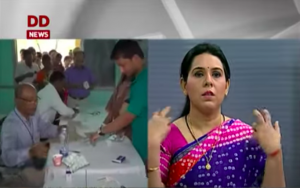

 On special days we see brands releasing communication celebrating the specific day. People take to social media and flood it with messages. Some are relevant and thoughtful, but most of them are a rehash of some old thought. These special days are usually around religion, region, festivals, birth and death anniversaries, historical milestones, politics, events, sports, or anything else that is topical or tactical.