Author: mxmadmin

  • Small Big Idea bags Sandu Pharma mandate

    By Our Staff


    The Small Big Idea, the digital and social media marketing agency, has been appointed as the digital strategic partner for Sandu Pharmaceuticals.


    Speaking about the win, Manish Solanki, COO and Co-Founder, The Small Big Idea: “Ayurveda has always been a part of the Indian way of life and we are happy to be part of the digital journey of Sandu’s 123-year-old legacy. With the evolution of the healthcare and wellness sector, it is a great opportunity for us to bring to light Sandu Pharmaceuticals and the rich herbal products it offers. As part of the mandate, our task at hand is to create compelling Digital first stories on Social to help prospects understand and sample our products at the same time build a robust marketplace and e-commerce platform that engages and converts those prospects into loyal customers. Through this association, our endeavour would be to deliver result-oriented strategies across multiple platforms.”


    Added Shashank Sandu, Director, Sandu Pharmaceuticals: “We are extremely happy and excited to associate with a reputed agency like The Small Big Idea for our 360-degree brand communication and are confident that this association will help us build our brand presence digitally and strengthen it offline as well. The Small Big Idea’s data-driven insights and content-driven approach make them the perfect partner to manage our mandate. We are excited to have them on board and look forward to a fulfilling digital journey to deepen the engagement with our customers.”


    Ed: The Small Big Idea writes its name as The TheSmallBigIdea, with no space between Small, Big and Idea


  • Global adspend to rise 8.3%, but growth to slow significantly in 2023: WARC


    By Our Staff


    Global advertising spend is on course to rise by 8.3% – or $67.3bn – to $880.9bn this year, reports WARC, lifted by a positive first half for holding companies and a boost from cyclical events in the second, most notably the US midterm elections and the men’s FIFA World Cup in Qatar this November. Market growth is then set to ease significantly – to 2.6% – in 2023, as investment is inhibited by cooling economic conditions and third-party cookie blocking online.


    The new projections, based on data from 100 ad markets worldwide, amount to a downgrade of 4.3 percentage points (pp) to 2022 growth and 5.7pp to 2023’s prospects, compared to WARC’s previous global forecast in December 2021. Taken together, the new forecasts represent a reduction of almost $90bn in growth potential for the global advertising market this year and next.


    Advertising holding companies – which serve many of the world’s biggest brands – have recorded a positive start to 2022, with all major firms upwardly revising forward guidance for the year ahead. Conversely, small to medium-sized businesses (SMBs), who largely buy ad space directly, are bearing the brunt of worsening economic conditions. A slowdown in SMB advertising activity will impact social media companies most – a sector already struggling to grapple with the impact of Apple’s new privacy measures. WARC expects social media ad spend to rise 11.5% this year (compared to +47.1% in 2021) then ease to just 5.2% in 2023 – the slowest rate yet for the sector.


    Aside from businesses, consumers are also feeling the squeeze of soaring price inflation. This is particularly true among low earners for whom energy and food costs comprise a higher proportion of income. Wealthier consumers, however, have seen the value of their assets appreciate in recent years and are more likely to have received above-inflation pay rises – spending intentions among high earners remain bullishly positive per Deloitte monitoring. Sectors like technology & electronics (+11.5% in 2023), pharma & healthcare (+7.5%) and household & domestic (+6.5%) are expected to post healthy increases in advertising investment to capture any available disposable income.


    Social media’s $40bn shortfall

    Apple’s move to block third party cookies across its 2bn devices – which are used by 12% of the global population (860m people) – has already had an adverse impact on the social media companies which rely on third party data, most notably Facebook-parent company Meta.


    WARC believes that Apple’s privacy push – aside Google’s delayed move to block third party cookies from its Chrome browser (66% global market share) – will remove close to $40bn from the bottom line of these social media companies over the course of this year and next. A recent survey of over 1,500 practitioners for WARC’s Marketer’s Toolkit found that only a third (34%) of respondents felt fully prepared for a post-cookie advertising market.


    Meta recorded its first annual decline in advertising income during Q2 2022 and WARC believes its full year growth will be flat over the forecast period, as the Instagram platform stymies ongoing losses from the core Facebook platform this year and next. TikTok (+41.5%), Snap (+5.8%) and Twitter (+2.7%) are all expected to record growth next year, but at a far slower rate than historically seen, while a number of Chinese platforms are set to record losses.


    Very few product sectors are cutting advertising investment

    Of the 18 product sectors monitored by WARC, all bar automotive are on course to increase advertising spend this year. Only four sectors are expected to cut spend in 2023; transport & tourism (-0.4%), alcoholic drinks (-1.1%), financial services (-4.5%) and automotive (-12.4%).


    The technology and electronics sector – the third largest of the 18 monitored by WARC – is forecast to lead growth this year and next (+25.0% in 2022 and +11.5% in 2023), culminating in a total spend of $85.1bn by 2023. The pharma & healthcare sector then follows, with expected growth of 11.0% this year and a further 7.5% in 2023, by when investment will have topped $60bn globally.


    Retail – the largest sector monitored by WARC and which includes Amazon, the world’s largest advertiser by spend – is set to increase advertising investment by 6.8% this year and 3.6% next year despite retailers seeing tighter margins from inflationary pressures. The automotive sector, however, is bedogged by both supply- and demand-side pressures and is the only sector set to cut advertising spend in both 2022 (-5.3%) and 2023 (-12.4%).


    AVOD market heats up as streaming becomes war of attrition

    Advertising spend in the video streaming sector is set to grow faster than the total ad market this year (+8.4%) and next year (+7.0%). Within this, the advertising-funded video on demand (AVOD) sector – which includes the likes of Hulu, Amazon Prime Video and YouTube – is expected to rise 8.0% this year and then a further 7.6% in 2023 to reach a value of almost $65bn.


    Aside from the social media players, YouTube’s fortunes have also proven vulnerable to privacy changes on Apple devices; WARC believes that YouTube’s advertising revenue will rise 7.3% this year (compared to a 45.9% in 2021), but that its growth will then ease to 5.6% in 2023. This would give the company 39.4% of the global AVOD market, a declining share (down 0.9pp from 2021) as competition heats up with the introduction of advertising to Disney+ and Netflix later this year.


    There is already evidence of saturation in the streaming market, particularly in the US, with audiences now using seven streaming services on average (compared to the global average of five). Consequently, new entrants are just as likely to be fighting for existing advertising spend as they are for incremental dollars, which could hinder overall growth of streaming operators in the short- medium-term.


    Streaming services owned by broadcasters (BVOD) are also set to grow their advertising income this year (+9.7%) and next (+5.2%), but from a far lower base (reaching $18.5bn in 2023). Linear TV is set to benefit from cyclic sporting and political events this year, raising advertising investment by 3.6% to $180bn (20.4% of all advertising spend) but the market is then on course to record a 4.5% loss in the absence of these events next year.


    Summing up, James McDonald, Director of Data, Intelligence & Forecasting, WARC, and author of the research, says: “With the growth rate of global output now set to halve and acute supply-side pressures fanning inflation, the economic slowdown has removed close to $90bn from global ad market growth prospects this year and next. Yet brands are still spending as the Covid recovery continues, and global ad trade remains on course to top $1trn in value by 2025. Platforms with rich sources of first-party data – most notably Amazon, Google and Apple – are well placed to weather future headwinds by offering measured performance in a climate where return on investment becomes paramount.”

     

  • India invites the world to ‘Study In India’, SoCheers helps bolster the voice

    By Our Staff


    We were particularly attracted to the disclaimer in the release which read: With Study In India (SII), being a Government of India initiative, using the image of its spokesperson, Sandeep Goel, is strictly prohibited for the purposes of this press release, as per protocol.


    Prohibited?! What the…


    Sandeep Goel
    Sandeep Goel

    Since Mr Goel’s photograph is on LinkedIn, we are publishing it alongside this report.


    Meanwhile, here’s the development for which we received a communique: ‘Study In India’ (SII), a tech-driven programme by the Government of India, and SoCheers, a digital agency, have come together to augment the former’s digital and creative objectives.


    Said Sandeep Goel, Project Head – Study In India: “As per the records, India’s higher education is known to be one of the largest across the globe with over 35 million students, 1000 universities and 52,627 colleges. Therefore, in the coming future the ‘Study in India’ initiative aims to increase the inflow of the students, manifold. And, SoCheers is already helping us innovatively achieve our business as well as communication goals. We look forward to some more interesting and engaging digital conversations, keeping up the positive impact that the initiative has had on the career of thousands of students across the globe.”


    Added Siddharth Devnani, Co-Founder & Director, SoCheers: “India holds a unique position in the global education industry and with Study In India being a flagship programme of Indian Ministry of Education, our endeavour is to further accelerate its long-term communication goals across verticals. The ‘Say Yes to Study in India’ campaign was simply the first step in that direction. It not only successfully portrays the country’s various educational offerings and opportunities, but also enables the striving students to further ‘Learn, Thrive and Explore’.”


  • Two views on the NDTV stake buy


    NDTV Stake Sale: What Next?


    By Shailesh Kapoor


    Shailesh KapoorThe news of the Adani group acquiring a sizeable stake in NDTV has been the significant media highlight this week. And for good reason. When it comes to questioning the ruling establishment at the Centre, NDTV remains the last news network standing. In particular, the Hindi channel NDTV India’s star anchor Ravish Kumar has built a sizeable cult following for himself in the Left & Liberal sections of the population, with his unique style of commentary on the state of the nation. He’s incisive, often scathingly sarcastic, but always backed with solid research. In a community of anchors who are more than happy to toe the establishment line, Kumar comes across as a lone warrior. None of his colleagues at the NDTV channels have managed to match his towering persona either.

    But the NDTV channels are not popular favorites. They have consistently rated poorly, which is not too surprising, given that the mood of the nation over the last decade is in sharp contrast to the NDTV approach. In our consumer work, we often find audiences describing NDTV channels as “Pakistani”, which sums up not just NDTV’s mass imagery in India, but also the state of Indian news media today, where anyone who’s not evidently pro-Right can be termed as ‘anti-national’.

    But the NDTV network has managed to command a good price in the ad marketplace despite its low ratings. It has a legacy (including its founder Dr. Prannoy Roy) that dates to its Doordarshan days (remember The World This Week?). And that a significant (even if minority) section of brand marketers is left-of-center helps too.

    Where does NDTV go from here is a premature question. The Adanis don’t have a majority stake in the network as of now, though they may push towards that in the future from what one understands. If that happens, one can expect the network to change sides, in terms of its ideological disposition. But it is difficult to see how any of the key faces of the channel’s current image, such as Dr. Roy or Kumar, will continue to be a part of the network in that case.

    Journalists like Kumar always seem to find a way of making their voices heard, even if they have to move from television to digital, from well-budgeted reports to bootstrapped ones. There’s a certain swashbuckling quality to this brand of journalism, which thrives on adversity.

    With the advent of social media and digital news brands, television news has lost its bearings over the last decade or so. While the eyeballs and hence the ad revenues continue to come, respect has been more elusive. Digital platforms, on the other hand, have experimented with more cutting-edge work, despite lower budgets and poor monetization models. While TV has become all about debates (Kumar is a rare anchor whose show is about reports than debates), online news platforms have filled in the space to fact-find, analyse and critique, important attributes that the media must have for a democracy to thrive.

    The core NDTV viewer, hence, will not miss their news, even if the network’s management changed hands. He may have to just find another destination for it. But TV news will be poorer, because it will lose whatever little heterogeneity it currently has. And that’s not a happy thought.


    Shailesh Kapoor is Founder and CEO, Ormax Media. He writes on MxMIndia on Fridays. His views here are personal


    What’s the future for NDTV?


    By Ranjona Banerji


    Ranjona Banerji“Journalists at NDTV have a unique opportunity to examine their own work and their stances. There is a small world outside TV and outside mainstream media which does still do real journalism. It is not too late for any of them to work on those,” writes Ranjona Banerji

    The Adani attempt to buy out the news channel NDTV is being presented as a hostile takeover by NDTV. And NDTV fans as well as media watchers see it as a general attempt by BJP and Modi government sympathisers to control the media and the general narrative.

    We know that point 2 has been the background music since the Modi government came to power.

    We also know that the Adani Group is very sensitive to criticism and has gone out of its was to use SLAPP tactics to harass journals and journalists who dare to discuss their problems with debt, and the favours it has got and so on.

    Once you get past the general background chatter of whether NDTV was liberal enough or critical enough of the Modi government, what are you left with?

    For one, the tragedy that of all the television channels in India, NDTV was the only one seen as being critical of the Modi regime and the BJP. This is in spite of the fact that NDTV is nowhere near as critical as some sections of the print media and definitely nowhere near various digital platforms. Several of its anchors present the BJP with more opportunity than other parties to present their “views” and some anchors have not yet understood that a journalist’s role is to question, regardless of your inclinations.

    There is also the sentimental background that NDTV was the first of India’s private TV channels and several older viewers have been attached to it since then.

    Several who watch NDTV’s Hindi news channel bemoan the potential loss of Ravish Kumar who has been the bravest of all NDTV journalists when it comes to questioning those in power.

    While the legal and financial battles continue at their own pace, and the owners and promoters of NDTV negotiate, the journalists at NDTV have a unique opportunity to examine their own work and their stances. There is a small world outside TV and outside the mainstream media which does still do real journalism. It is not too late for any of them to work on those. The internet and the world of streaming offers any number of opportunities. The problem is the money. In the current situation, it’s never going to be as much income as established TV.

    The other problem is reach. Where these big names and stars who have become household familiars can leverage their popularity to draw in viewers and therefore possibly money.

    Those of us on the outside of big game (fake) journalism know how tough it is. But it is not impossible.

    Cowardice and fear of losing influence is a folly (okay, bad pun, I know I know) because greatness beckons on the other side.

    Maybe Adani’s attempt to take over and potentially destroy NDTV can be a seminal point, a turning point for Indian journalism. Especially for TV. It tells you that no one is safe. It tells you that our business models are shot to pieces.

    It also tells you how little the general public understands. I see a lot of carping that the media is only after money. That is the rank stupidity of sections of our audience who somehow believe that newsgathering does not cost anything and that people who work in the media do not deserve to make a living. But all right, let’s ignore these riled up innocents.

    Instead, we wait and watch. Not for what the Adani Group may do to NDTV. Several such buyouts in the past have destroyed media organisations. From the Ambanis (via Raj Salgaoncar) and the Observer to Vijaypat Singhania and Indian Post to Subhas Chandra and DNA. And several media organisations have wilfully destroyed themselves like India Today.

    Will NDTV be one more tragic story of a good (by TV standards) media house biting the dust or will its employees wake up and put up a fight?

    I’m for the fight.

    Yeah, maybe there is an optimist somewhere left inside me.


    Ranjona Banerji is a senior journalist and commentator. She writes on MxMIndia on Tuesdays and Fridays. Her views here are personal.


  • Das ka Dum with Dr Bhaskar Das | This is the time when just out-of-college students receive their first salaries. Other than personal expenses and savings, what should they be putting their monies on?

    Bhaskar DasA Friday question, but not a fun one this week. Let’s hear it from Dr Bhaskar Das in the August 26 edition of Das ka Dum. Read on…
     

    If you wish to access the archives, please go to the Das Ka Dum tab on the website’s top navigation bar.


    Q. This is the time when just out-of-college students receive their first salaries. Other than personal expenses and savings, what should they be putting their monies on?


    A. Focus on Health and be conscious about the repercussions of actions on one’s surroundings (read environment) and behave responsibly. These would stand in good stead both for them individually and for society at large.


    As Albert Einstein once averred: “No problem can be solved from the same level of consciousness that created it.”


    Even now, this observation is true in all areas including the two I mentioned above.


  • Max Life Insurance partners with Disney+ Hotstar for campaign

    By Our Staff


    Max Life Insurance Company Ltd. has announced the launch of its digital ad film on Max Life’s term plan for homemakers, in an exclusive association with Disney+ Hotstar’s Connected Television (CTV) offering. To drive regional language consumption, the digital ad film is also being released in six languages i.e. Tamil, Kannada, Bengali, Marathi, Telugu and Malayalam.


    The digital film is conceptualised by Tribha, produced by Kailash Picture Company and directed by Sonal Dabral and features actor Boman Irani.


    Commenting on the launch of the campaign, Rahul Talwar, Chief Marketing Officer, Max Life Insurance said: “Max Life firmly believes in encouraging consumers to embrace their ‘real value’, and homemakers form an important segment whose contribution to society is priceless. We are excited to launch our campaign with Disney+ Hotstar, the leading OTT service in the country. This association opens up avenues to reach a wider, gender balanced audience; helping us promote the positive and reaffirming message conveyed in the film. Currently, homemakers in India are allowed term cover only as an add-on to their earning spouse’s cover. This term plan offering will help secure female homemakers’ lives independent of their spouse’s income proof. This association is a step towards empowering Indian women and enabling greater financial inclusion by protecting them in challenging times.”


  • Fake News cause for concern – Ipsos IndiaBus Survey

    By Our Staff


    A new pan-India survey by Ipsos India on Social Media and Fake News, shows citizens are deeply concerned about the risks posed by increasing usage of social media platforms, and some of the top concerns emerging included, fake news and misinformation (52%), cybercrime and fraud (46%) and identity theft (34%). Apart from these glaring risks, the survey also identified some of the other hazards of social media bingeing on citizens that had psychological ramifications like depression (31%), social anxiety (28%) and cyberbullying (22%).


    Commenting on the findings of the survey, Parijat Chakraborty, Group Service Line Leader, Public Affairs and Corporate Reputation said: “Fake News and misinformation has a dangerous fallout ; it can stir up trouble, rip apart reputations and misguide, leading to unnecessary prejudice. And given the nature and penetration of social media, it can go viral and can lead to rabble rousing, it definitely is the biggest drawback of social media usage and consumption. The Cyber Security Wing has been working overtime to bring justice to cybercrime victims, with criminals constantly adopting new ways of duping online. Identity Threats are real and have been used to extort monies using fake profiles of eminent individuals. Likewise, cyberbulling is real. Social Media is increasingly becoming highly polarized, instead of a relaxing, fun place for social interactions.”


    Interestingly, Indian citizens believe that the spread of fake/ news will need to be a collective effort: by citizens themselves (80%), media/ journalists (74%), govt. (72%), police/ law enforcement agencies (71%), messaging app companies (69%), telecom companies/ service providers like Jio, AirTel, VodafoneIdea (68%) and NGO/ Activists (60%). These views were endorsed most by citizens residing in North and West India.


    Ipsos India conducted a quantitative study using a structured questionnaire among 2935 citizens across the metros, tier 1,2 & 3 towns from SEC A, B & C households via face to face interviews using tablets (computer aided personal interviewing – CAPI) and online interviews. The survey also had quotas by specialist target groups of employed, homemakers, retired, unemployed, self-employed and students. The  margin of error was +/-5% with 95% accuracy levels.


  • Jagran New Media launched Top Deals

    By Our Staff


    Jagran News Media launches Top Deals, a content-to-commerce initiative, on all Jagran Digital platforms. It is a search-based junction that can help you find curated lists of the best offers coming up. Starting from fashion to home appliances, you will find information about a wide range of products.


    Said Gaurav Arora, Chief Revenue Officer, Jagran New Media: “We are thrilled to introduce Top Deals, a one-stop shop for all of our readers’ information and commerce demands. Our goal has always been to put content first and provide experiences that are tailored to our audience. This initiative not only helps us build the content-to-commerce space but also allows us to provide a one-stop shop for our readers across all of our platforms. We believe that this is the ideal way to increase brand loyalty and strengthen customer relationships. Jagran Top Deals is the company’s content initiative aimed at increasing profits and opening up new revenue streams through collaborations with companies such as Amazon and others.”


  • Adda52.com targets youth in new campaign

    By Our Staff


    Adda52.com, the online poker destination run by Deltatech Gaming Ltd, has announced its new brand campaign #KhelJaao. The campaign is aimed at making take the game of Poker a part of the “dominant youth culture in India”.


    Speaking on the campaign, Shivanandan Pare, CEO, Deltatech Gaming Ltd. said: “With this campaign, we want to encourage every Indian to play Poker, the most recognized global ‘game of skill’, as we believe every Indian has within them what it takes to be a poker player. Just like any field of sports where Indians are establishing themselves, it’s time we master poker and make a mark on the international stage. The #KhelJaao campaign is our effort towards communicating the requisites to be a poker player and narrating them through common situations we experience everyday. #KhelJaao is our way of telling every Indian that we naturally have in us what it takes to be a poker player.”


  • Sleepy Owl launches first brand campaign

    By Our Staff


    Sleepy Owl, the homegrown instant coffee, has launched its first brand campaign.


    Said Ashwajeet Singh, Co-Founder of Sleepy Owl Coffee:  “In a media environment, where brands heavily rely on celebrity endorsements to gain credibility and garner attention, we decided to break through the clutter. The new-age consumer isn’t looking to be bombarded with superficial reasons to buy a product, hence the Owl’s promise of a great-tasting coffee, put in a fun, quirky, light-hearted manner as it points to the simple fact – If you’re not drinking Sleepy Owl Coffee, it’s your loss.”


  • Das ka Dum with Dr Bhaskar Das | Can it get any better (or worse) than an India-Pakistan cricket match. More emotions, less cricket?!

    Bhaskar DasWhattamatch! But more than cricket, it was the emotions at play. Let’s hear it from Dr Bhaskar Das in the August 29 edition of Das ka Dum. Read on…


    If you wish to access the archives, please go to the Das Ka Dum tab on the website’s top navigation bar.


    Q. Can it get any better (or worse) than an India-Pakistan cricket match. More emotions, less cricket?!


    A. Any intensely competitive game (like the India-Pakistan match at Asia Cup) is bound to evoke emotions and passion, beyond a point of logic. And in the case of last evening’s match too, shadows of the past cast their shadow. Such a sentiment is often self-defeating as players aren’t able to put their best and often get distracted. Both teams have world class players and as we all saw, it was a good match. Players need to insulate themselves from expert observations of so-called non-playing experts. Some observers even dub it as war minus the shootings. Like in every cricketing encounter, players ought to focus on the game of the moment and give their best so that the spectators gets an experience of paisa vasool.It’s important to play a game as a game only and not settling misplaced perceptions.


  • Ad Club’s holds third edition of D:Code

    By Our Staff


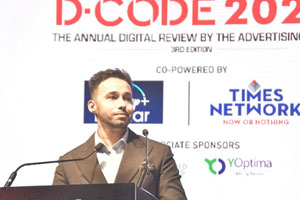
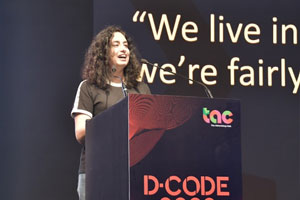
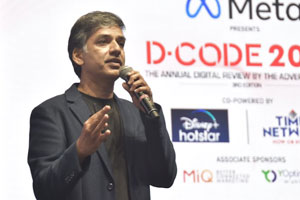
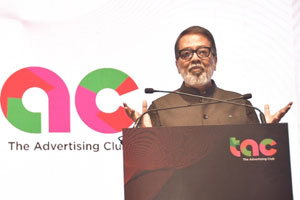
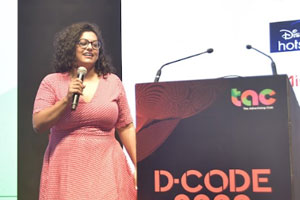
    Leaders from different digital domains spanning publishers, marketers, new age digital companies, and creative and media agencies gathered on 26th August at The Advertising Club’s third edition of D-Code: The Annual Digital Review 2022 in Mumbai.


    Amit Wadhwa, CEO, Dentsu Creative kicked off as the first speaker showcasing two case studies – The Protest March and Back Up Ukraine and prodded the audience to remember that we are still about people.


    Michel de Rijk, CEO – APAC, S4 Capital presented the Tata Tea example done for Independence Day and emphasised how the integration of data, and content with technology enables agencies to create high-quality content overnight in just their own studio Shireesh Joshi, Chief Business Officer, ONDC articulated the vision and implications of the ONDC initiative for sellers, buyers, and every component and process along the e-commerce chain Shedding light on the power of targeting and geolocation insights in campaigns, Gulshan Verma, CEO, Jio Ads enlightened the audience on the scale and solutions offered by JioAds P G Aditiya, Founder of Talented took the audience through the 55 steps that were involved in creating the Cannes 2022 Grand Prix winner, The Unfiltered History Tour, and emphasized the benefits of a long client-agency relationship in creating path-breaking campaigns Following this was Sidharth Shakdher, Executive VP and CMO, Disney+ Hotstar, who shared his thoughts on reversing the narrative of digital driving people apart by building a better consumer experience.


    Mansha Tandon, Head, Consumer Marketing, YouTube India spoke about shaping creativity with culture and trends in the digital space.


    Speaking next was Rizwan Bachav, Luxury & Lifestyle Influencer who walked the audience through his journey, learnings, and challenges in becoming an influencer.


    Sharing thoughts on how creativity can build brands, Rathi Gangappa, CEO, Starcom emphasized the need of being human in the age of digital transformation.


    Concluding the review, Avinash Pant, Marketing Director, Meta spoke about the evolution of social connections and the exponentially growing metaverse space empowering meaningful experiences.


    Addressing the evolving digital ecosystem at the third edition of D:Code, Partha Sinha – President of The Advertising Club, said, “Digital marketing has gone on to become a gamechanging phenomenon and the Advertising Club’s D:CODE is a testimony to our persistent efforts to create awareness and enhance the learning curve of the fraternity with insights and takeaways from the industry’s best digital minds. D:CODE has witnessed great case studies that have worked beyond the boardroom. As we move forward in this ever-evolving and competitive digital era, D-CODE will continue to become a significant platform with case studies that give profound experiences, transforming the way brand custodians especially approach their digital.”


    Earlier, Sinha paid tribute to the late journalist Anant Rangaswami and called the attendees to maintain a minute’s silence.