Author: mxmadmin

  • Hardik Pandya chosen Brand Ambassador for Villain

    By Our Staff


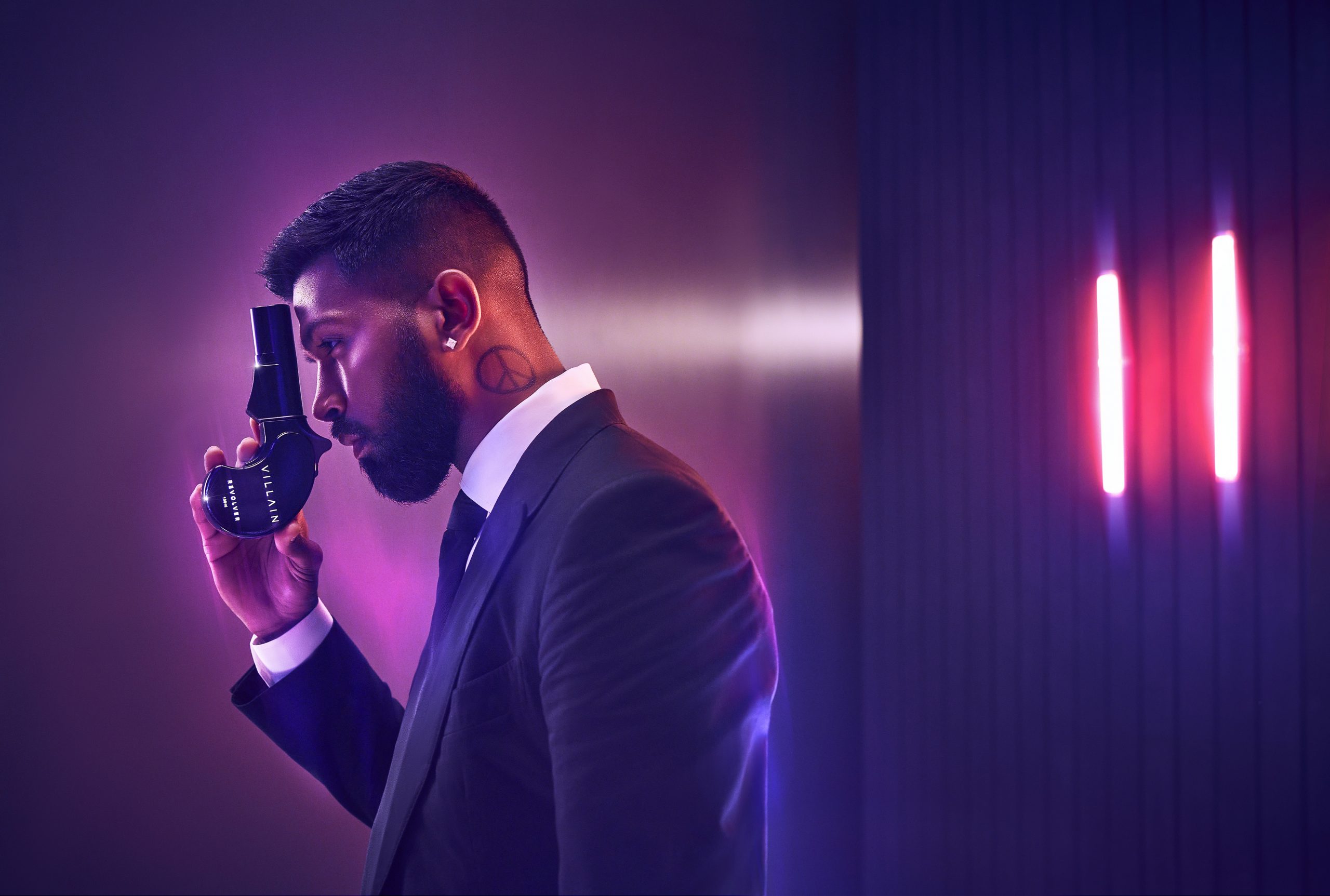
    Men’s lifestyle brand, Villain, part of Mensa Brands, has announced Hardik Pandya as its Brand Ambassador. Pandya joins the brand to promote its range of fragrances.


    Commenting on the association, Ananth Narayanan, Founder & CEO- Mensa Brands said: “If there is anyone who truly embodies the persona of Villain with their badass attitude, incredible style, and never-back-down energy, it’s Hardik Pandya. We are excited to have him onboard and are confident that this association will strengthen the love and cult following that the brand has with its consumers. Villain is on the road to becoming one of the fastest growing fragrance brands of the country and with Hardik joining us, it’s only going to become bigger and better.”


  • Das ka Dum with Dr Bhaskar Das | Is the entry of big business (and hence more money) good for the Indian media?

    Bhaskar DasA simplistic question, but with no simple answers. Let’s hear it from Dr Bhaskar Das in the September 1 edition of Das ka Dum. Read on…


    If you wish to access the archives, please go to the Das Ka Dum tab on the website’s top navigation bar.


    Q. Is the entry of big business (and hence more money) good for the Indian media?


    A. It can’t be a binary answer. Good or bad is a relative term, depending on from whose prism one is evaluating a scenario. So, one needs to be clinical about how a business needs to move forward. As an industry, we need to introspect and make a choice if idealism should get precedence over viability. It’s a choice and every choice has to have a sacrifice. Accordingly, one can opt for SVOD model of topline, even if there is reduction in subscriber. If one invests in quality journalism, audience would come come back. If one opts for AVOD Model , then consumers can spend less on subscription, provides they want to be interrupted by intrusive advertising.


    One can even opt for a hybrid model of freemium to give the audience a choice. A 24×7, platform-agnostic presence can attract different types of users and application of AI /ML can improve the business efficiency and effectiveness to a great extent, NYT, Washington Post, WSJ and FT are practising this well. So we need to deliberate more on business aspect than , without abjuring the path of quality journalism. In fact the leaders of news industry need to collaborate in devising a roadmap for the fu, instead of indulging in internecine rivalry.


  • Madan Bahal inducted into Page Hall of Fame

    By Our Staff


    Madan Bahal, Co-founder and Managing Director of Adfactors PR will be inducted into the Page Hall of Fame at the Page Annual Conference on September 18 in Chicago. This recognises lifetime achievement in corporate communication by individuals who have made a significant impact on the enterprises they have served or counselled.


    Said Maril Gagen MacDonald, founder and CEO of Gagen MacDonald and chair of the Page Honors Committee: “Madan’s strategic and reputation management counsel is sought after by many CEOs of the most prominent Indian companies, including the Tata Group, the Mahindra Group and the Godrej Group,” “They rely on him for guidance on the most pressing issues affecting their corporate reputation, corporate governance, sustainability and business strategy, including virtually every major merger and acquisition transaction in recent years.”


    Recent inductees to the Page Hall of Fame include PR Pioneer and Civil Rights Leader Ofield Dukes, Maril Gagen MacDonald, founder and CEO of Gagen MacDonald and Dave Samson, Vice Chairman of Corporate Affairs at Edelman.


  • Zee & Disney Star sign agreement for ICC cricket

    By Our Staff


    Zee Entertainment Enterprises Ltd and Disney Star have signed a strategic licensing agreement. Disney Star will license the television broadcasting rights of the International Cricket Council’s (ICC) Men’s and Under 19 (U-19) global events for a period of four years, to Zee. Disney Star will continue to be the exclusive home for streaming of all ICC tournaments through its digital platform – Disney+ Hotstar. ICC has in principle approved this arrangement.


    This association enables Zee to be the exclusive television rights holder of ICC men’s events, including the coveted ICC Men’s T20 World Cup (2024, 2026), ICC Men’s Champions Trophy (2025), and the ICC Men’s Cricket World Cup (2027) along with key ICC U-19 events.


    Speaking about the strategic development, Punit Goenka, MD & CEO, ZEE Entertainment Enterprises Ltd. said: “This is a first-of-its-kind partnership in the Indian media & entertainment landscape, and this association with Disney Star reflects our sharp, strategic vision for the sports business in India. As a one-stop television destination for ICC men’s cricket events until 2027, ZEE will leverage the strength of its network to offer a compelling experience for its viewers and a great return on investment for its advertisers. Long-term profitability and value-generation continue to be our areas of focus across the business, and we will always evaluate all the necessary steps that will enable us to make sports a compelling value proposition for the Company. We look forward to working with ICC and Disney Star, to enable this strategic offering for our television viewers in India.”


    Added K Madhavan, Country Manager & President, Disney Star: “By securing the IPL television broadcast rights for 2023-27 and now opting to retain only the digital rights for ICC tournaments for 2024-27, we have in place a balanced and robust cricket offering for our audiences across linear and digital. Over the years, Disney Star has strengthened the appeal of international cricket in India, enabling it to reach diverse age groups and cultural demographics across all parts of the country. As India’s leading media house, we will continue to do so with our strong portfolio of cricket properties across television and digital.”


  • Chalo Bus tracking app appoints DViO Digital as AoR

    By Our Staff


    DViO Digital, a creative-tech and digital-first marketing agency, has been appointed as the digital creative Agency of Record (AoR) for Chalo, a public transport technology company, based in Mumbai. The mandate puts DViO in charge of the brand’s digital and social media management. The primary focus of the campaigns across all platforms will be to generate awareness among bus users and bus operators alike and increase app downloads.


    Said Sowmya Iyer, Founder & CEO, DViO Digital: “At DViO Digital, we lead brands through digital transformation and assist businesses in their growth journeys. A lot goes behind establishing a brand online and creating active conversations. With our unique creative strategy, media campaigns and content creation at play, we are sure to establish Chalo as a tech-forward, customer-focused brand in the market.”


    Added Dhruv Chopra, CMO, Chalo: “We are delighted to onboard DViO Digital as our digital partner. Chalo is in the phase where the company is rapidly growing its footprint in the country. In DViO we saw the right team with a fantastic blend of speed and execution and strategic understanding that can help us reach our ambitious goals. We are glad to partner with them and look forward to an exciting journey together.”


  • The Four Factors Driving the Emergence of New MarTech


    By Ashoke Agarrwal


    Ashoke AgarrwalA recent special issue of the Journal of Marketing focused on the interaction between the emergence of new technologies and the domain and practice of marketing (Journal of Marketing 2022 Volume 86-1). It is worth a read.


    Technology changes marketing practice on various dimensions, with some changes being quite disruptive. For example, the emergence of the World Wide Web and Social Media over the past two decades are mature technologies with far-reaching effects on marketing.


    New technology is defined as new when its early in the adoption cycle for firms and is in the innovator or early adopter phase for consumers. In this column, I will briefly examine the emergence of new technologies and their effect on the practice of marketing along four factors.


    The first and central factor that new technology impacts marketing results from new forms of consumer and firm interactions, be they consumer-to-consumer, consumer-to-firm, firm-to-consumer and firm-to-firm. The emergence and maturing of online digital communication platforms have already played a disruptive role in marketing. Over the next couple of decades, the emergence of AI-mediated online digital communication will be the new technology that will be central to changes in marketing practice.


    The three factors that result from the central factor of the emergence of AI-mediated online digital communications are:

    :: Marketing Innovations

    :: New Data and Analytic Methods

    :: New Strategic Frameworks


    Marketing Innovations like AI-driven recommendation engines and chatbots are beginning to appear across product categories from e-tail and entertainment to health care and public services. Augmented reality in fashion retailing is another innovation resulting from the emergence of AI-mediated interaction. Finally, in the B2B arena, Livestream Selling is a fast-spreading innovation spurred by pandemic restrictions.


    The new form of communication and marketing innovations lead to the emergence of New Data and Analytic Methods.


    For example, reams of consumer interaction data allow the mapping of AI-mediated chatbots in various categories. For example, extensive studies on the effectiveness of AI-generated word-of-machine compared to human-generated word-of-mouth have resulted in critical insights regarding the Automation versus Augmentation debate regarding the use of AI in marketing.


    Another emerging data stream and analytic method are making informed product launch and product retirement decisions based on the rate of disengagement with old technology. This type of analysis is becoming increasingly important as new technologies emerge in categories like transport, energy, lighting and entertainment.


    In the B2B arena, the use of Computer Vision methods to analyse the effectiveness of salesperson’s facial expressions in Livestream Selling is emerging. Genetic data and analysis to better target consumers and new product development is an outlier in the latest data and analytic methods arena. The use of genetic data in marketing is predicated on the increasing popularity of Direct To Consumer Genetic Testing (DTC GT) like 23andMe. In 2018, Spotify allowed users to upload their genetic data with the promise of creating playlists that match their ‘genetic ancestry’. AeroMexico launched a ‘Genetic Discount’ based on the percentage of ‘Mexican-ness’ as posited by the individual’s DNA profile!


    The above three factors of new forms of communication between consumers and firms, marketing innovations and new data and analytic methods lead to the fourth factor of change in marketing – the emergence of New Strategic Frameworks.


    An example of a new strategic framework is the emergence of a given product category’s Utilitarian and Hedonistic determinants to resolve the Automation versus Augmentation debate.


    Another example of a new strategic framework is the emergence of a new consumer segmentation framework consisting of Leapfroggers, Switchers, Opportunists and Dual Users when resolving the response to emergent new product technologies in terms of new product launches and product retirements.


    Brands as Platforms is another strategic framework emergent from the new streams of data and analytics emerging from AI-mediated consumer and firm interactions. I have written about brands as platforms in my MxMIndia column dated February 3, 2022 – “Big Brands, The Digital World and The Promise of Brand Platforms.”


    New marketing trends dictated by emerging new technologies are rapidly emerging. These include the emergence of real-time and automated decision-making, AI-based new product development and in the determination of go, no-go decisions, the automation versus augmentation debate and the emergence of new marketing funnel structures and dynamics in the virtual, augmented and metaverse ecosystems.


    Most of the above trends are related to the four factors delineated in this column. I plan to write about specific facets in future MxMIndia columns, including:

    :: The Automation versus Augmentation debate and its relationship to the Utilitarian and Hedonistic framework for product categories

    :: The new consumer segmentation framework Leapfoggers, Opportunists, Switchers and Dual Users when making decisions about new product technologies

    :: The use of Computer Vision in Livestream Selling and other applications

    :: The new marketing funnel structure and dynamics will likely emerge in the virtual augmented and metaverse ecosystems.


    Readers’ thoughts on the above topics are welcome.


  • Sanjeev Kotnala: Keep developing your Brand Katha 

    Sanjeev KotnalaBy Sanjeev Kotnala


    Ramayana, Mahabharata, Vishu Avatars, Rishi Munni Katha, Chandragupta, Chanakya and the Katha of many more Raja-Maharaja are some of the best examples of Brand Katha. In addition to being part of religion, mythology or history, they continue to deliver on their premises and promise, keeping the audience engaged, involved and in the discussion. Most retain relevance without a change as they were and are the only source. What you tend to get is some new interpretation. And that is where today’s brands need to relook at and re-evaluate their efforts in Brand Katha – Brand Storytelling.

    Today the access and availability of products, services and brand information are democratised, and the peer and consumer reviews are corrupted and cluttered. Result- the consumer is more aware and, at the same time, more confused than ever.

    Some call it the death of Branding and advertising, and I see it further asking brands to engage more in their branding and marketing efforts to influence consumers. These consumer decisions are not rational, logical decisions but more emotional.

    Brand story or Brand Katha can influence consumers to make a favourable decision. It can serve two primary purposes; making the brand the preferred brand in the choice set or/and allowing the brand to charge a premium.

    DIFFERENT LEVELS OF BRAND INTIMACY.

    We know some of the brands at a more intimate level than others. These brands interact with us by sharing their lineage, legacy, history, achievements, and failure. We know what they stand for, what we can expect from them, and how much we can trust them. These impressions are flavoured with our expectations and experience and our alignment with the brand Katha.

    WORKS FOR BOTH PERSONAL AND COMMERCIAL BRANDS.

    Consumers know a lot about Tata, Maruti, Amul, Times of India, AAJ TAK, Dainik Bhaskar, Reliance, Adani, OYO, shaadi.com, Jet-Airways, Paper-boat, and HERO. They also know personality brands like Narendra Modi, Mamta Banerjee, PV Sindhu, Sachin, Virat, SRK, Aamir khan, RJ and Kapil Sharma.

    Whether the brand operates in a commercial or personal space does not matter. The more the stakeholders, including the consumer’s current or potential, know, understand, and empathise with the brand, the better they are placed to decide and/or most likely to use, refer to, recommend, and prefer it.

    Hardik Pandya, the ace allrounder in the Indian team, is doing great for his brand. So good that no one now discusses the controversial episode of Koffee with Karan. He captained Gujarat Lions and won the IPL Trophy as a leader. The confident, almost understanding gesture before hitting the winning six in India Vs Pakistan Asia Cup Match is grand for the brand Hardik Pandya. No doubt reports suggest that his brand endorsement fee has risen by 30-40%, and he is expected to endorse some 20- brands in future.

    BRAND IMPRESSIONS

    Brand impressions, in addition to the brand experience, result from perceptions based on media inputs/exposures and selected vignettes the brand shares. This way, the brand helps consumers connect the dots and understand it.

    The trick is to treat the Brand Katha not as a one-time effort and output. See it as a continuum, where new chapters are being written and shared with the stakeholders on a regular frequency. Every brand communication is part of Brand Katha, working towards creating the desired brand image in the mind of current and potential users. Working in tandem with brand experiences, chapters of Brand Katha can help create prosumers.

    ADDRESS EXTERNAL AND INTERNAL AUDIENCES.

    Brand Katha can do wonders with the internal customer’s confidence and motivation, and it can help attract talents and even gain a better market presence.

    Brand Katha can help distil consumer expectations and decrease the extra noise and enhance positive feelings about the brand. And, in case of a crisis, it can help the brand recover fast. Remember the case of Maggi, Pepsi some years back or even the recent JJ baby Powder issue?

    BRAND KATHA.

    Brand Katha is not a placement PPT, corporate AV, or website. Multiple units collectively create the final masterpiece, where every communication is yet another relevant chapter in the coherent brand novel. Each with a start, middle, and end, creating a valid linkage with the brand’s past and future while staying in the present.

    The case of Dainik Bhaskar- Number 1 from Day 1- has been chronicled in media, taught in Management schools, and presented to many brand senior leadership. Dainik Bhaskar is known for its scale of thinking, speed of action, and questioning the current practices. And that is the essence of its brand Katha.

    Brands like TATA have books about their approach, and a rich number of anecdotal tales shared all over social media. The recent AMUL two-pager in TOI covering 75 years of India, as seen through Amul’s hoardings, is another chapter of a very focused Brand Katha. Amul has also told its story through a Movie, and its MD’s high-frequency media presence helps amplify the brand Katha.

    BRAND KATHA BASICS.

    The basics for a Brand Katha chapter are no different than what the brand should consider for every piece of communication. It must be authentic – reflect the true story, happening, objectives, vision and/or the culture. and true to your company’s story and culture. It should be exciting and engaging as a creative expression so that it can amplify the message. It must be well produced- as the quality would also reflect the brand approach. Don’t overload a communication with everything you want to communicate. Write individual chapters of Brand Katha with a focused plan. Ensure that the desired message is firmly embedded in the chapter and reaches the audience. And for a better impact- don’t state or say something- demonstrate with an example.

    The focus of Brand Katha is the consumers and defined audiences. Presenting things from their lens may not always be possible, but their viewpoint and desired reaction must always guide your efforts.

    And once again- Brand Katha needs to be treated as a living organism – an adaptive continuum to changing needs and situations, remaining entrenched in its basic philosophy and promise.

    NET-NET

    Brand custodians should re-evaluate their brand Katha’s understanding among the external and internal stakeholders. Please take action to strengthen their knowledge, understanding and brand experience.


  • Shruti Pushkarna: In the 75 years of Azadi, does the disabled population have access to independent living?

    Shruti PushkarnaBy Shruti Pushkarna


    August 15, 2022 saw the high point of the two-plus-year celebrations initiated as Azadi Ka Amrit Mahotsav by the government in March 2021. 75 years of progressive India!


    That’s quite a milestone. Except the glorious narrative seems to be a bit lopsided for the marginalised sections of the Indian population.


    The Narendra Modi=led government has a special inclination towards formulating mantras or slogans that build recall and popularise the leadership among the ignorant masses. The latest one ‘Har Ghar Tiranga’, saw proud Indians displaying selfies taken against the national flag. The other iconic ones include ‘Achche Din…’, ‘Minimum Government, Maximum Governance’, ‘Beti Bachao Beti Padhao’, ‘Make in India’, ‘Ab ki baar…’, et cetera. It’s a lengthy list of hollow promises.


    Seven years ago, professionals and organisations dedicated to the cause of including persons with disabilities into the mainstream society were also awestruck by one such rhetoric.


    On December 3, 2015, International Day of Persons with Disabilities, Prime Minister Narendra Modi launched the ‘Accessible India’ campaign, also known as the ‘Sugamya Bharat Abhiyan’. The big idea was to ease the access to Built Environment, Transportation System as well as the Information and Communication Ecosystem, for persons with disabilities. Aimed at providing equal opportunities of access and growth to all citizens by 2017-2019, Sugamya Bharat was lauded by the disabled community and its advocates.  Until reality slapped us in the face, yet again.


    Accessibility audits conducted close to the 2019 deadline, reported major gaps in what was promised versus what existed on the ground. Deadlines were extended as a result. First it was March 2020. Then June 2022. But as per parliamentary responses and the correspondence between the Department of Empowerment of Persons with Disabilities (DEPwD) and chief secretaries of states and Union Territories, a lot remains unaccomplished till date.


    Just to give you a better understanding of the objective of this nationwide campaign, and how critical it is to the 2.68 crore (severely underreported) disabled Indians. Here’s what the government set out to achieve by 2019 (or June 2022).


    The campaign was targeted to achieve universal accessibility for Persons with Disabilities (PwDs) under three verticals.


    1. Build Environment Accessibility


    The objective is to eliminate all barriers obstacles and barriers to indoor and outdoor facilities like schools, medical facilities, workplaces, government buildings etc. This also includes public spaces like parks, footpaths, roads and so on. An accessible building is one where there are no barriers in entry and exit or using any of the facilities housed in the premises. Such a building is equipped with ramps, elevators, walkways, accessible toilets, signage, lighting, alarms et cetera for ease of navigation for a person with disability.


    2. Transportation System Accessibility


    Like anyone else, PwDs rely on the transportation system to get around from one place to the other. It could be for work, education, leisure or health. This includes transportation via trains, buses, airplane and taxis. This means that bus stops, railway stations and airports should also be fully accessible for a disabled person traveling independently.


    3. Information and Communication (ICT) Ecosystem


    In the age of information overload, it is imperative that PwDs have access to information of all sorts. This includes ensuring access to content in the form of documents, website, mobile applications and all audio-video media. Under this vertical, the authorities will also work to enhance the available pool of sign language interpreters for the benefit of those with hearing and speech impairments.


    Sounds propitious and revolutionary, doesn’t it?  It is, on paper.


    Data reported by DEPwD cites several gaps in implementation. Only 585 of the 1030 central government buildings have been made barrier-free. Similarly, just 48.5% of the state government buildings have been made accessible. Public transport accessibility has a long way to go, with only 8.73% of buses made accessible. Access to information isn’t exactly easy to come by, either. Legal and other official documents in the public space, including health (Covid) notifications continue to be circulated/ published in inaccessible formats. A lot of websites, mobile applications and other digital services still don’t comply with the universal design and accessibility guidelines, denying information access to PwDs.


    75% of children with disabilities in India don’t attend school, lack of social inclusion, reasonable accommodation and shoddy implementation of laws and policies being some of the reasons. And of the almost 3 crore disabled population, 1.3 crore are employable between the age of 15 and 59. But only 34 lakh have been employed.


    Lifting the barriers of access in the physical and virtual infrastructure can open up opportunities of education and employment for millions of persons with disabilities.


    Unless and until the surrounding environment ceases to quash the ability in disability, how can the country’s disabled revel in Azadi ka Amrit Mahotsav?


    Shruti Pushkarna is a former journalist who now works as Director, EnAble India where she heads North India operations as well as media and communications outreach. She was a part of the founding team of MxMIndia. Shruti writes for MxMIndia every other Thursday. Her views here are personal. She can be reached via Twitter at @shrutipushkarna


  • Scaler releases new brand film

    By Our Staff


    Scaler by InterviewBit, a tech upskilling startup, has released a new brand film. Conceptualised by creative agency The Womb, the campaign highlights the importance of producing capable techies experienced at tackling Data Science & Machine Learning (DS & ML).  Scaler has also partnered with Asia Cup on Disney+Hotstar as an associate sponsor to promote the new campaign.


    Said Rahul Karthikeyan, Chief Marketing Officer, Scaler & InterviewBit, elaborating the rationale behind the brand film: “With organisations across industries either migrating towards digital or placing more emphasis on its digital verticals, a good majority of the issues these organisations face now need to be dealt with digitally. This shift towards digital has given rise to a need for skilled talents capable of handling data causing a shortage of Data Scientists and Machine Learning experts on a global scale. Addressing this need for data-driven problem solvers is crucial for streamlining day-to-day operations in any organisation. And that is exactly what this brand film represents. By drawing parallels between a dashing bull-fighter and an upskilled coder, we attempt to showcase not just the glamorous pay on offer to Data Scientists today but also the charisma and confidence with which these professionals can tackle seemingly tricky tasks.”


  • Rahul Dravid to endorse LaunchMyCareer

    By Our Staff


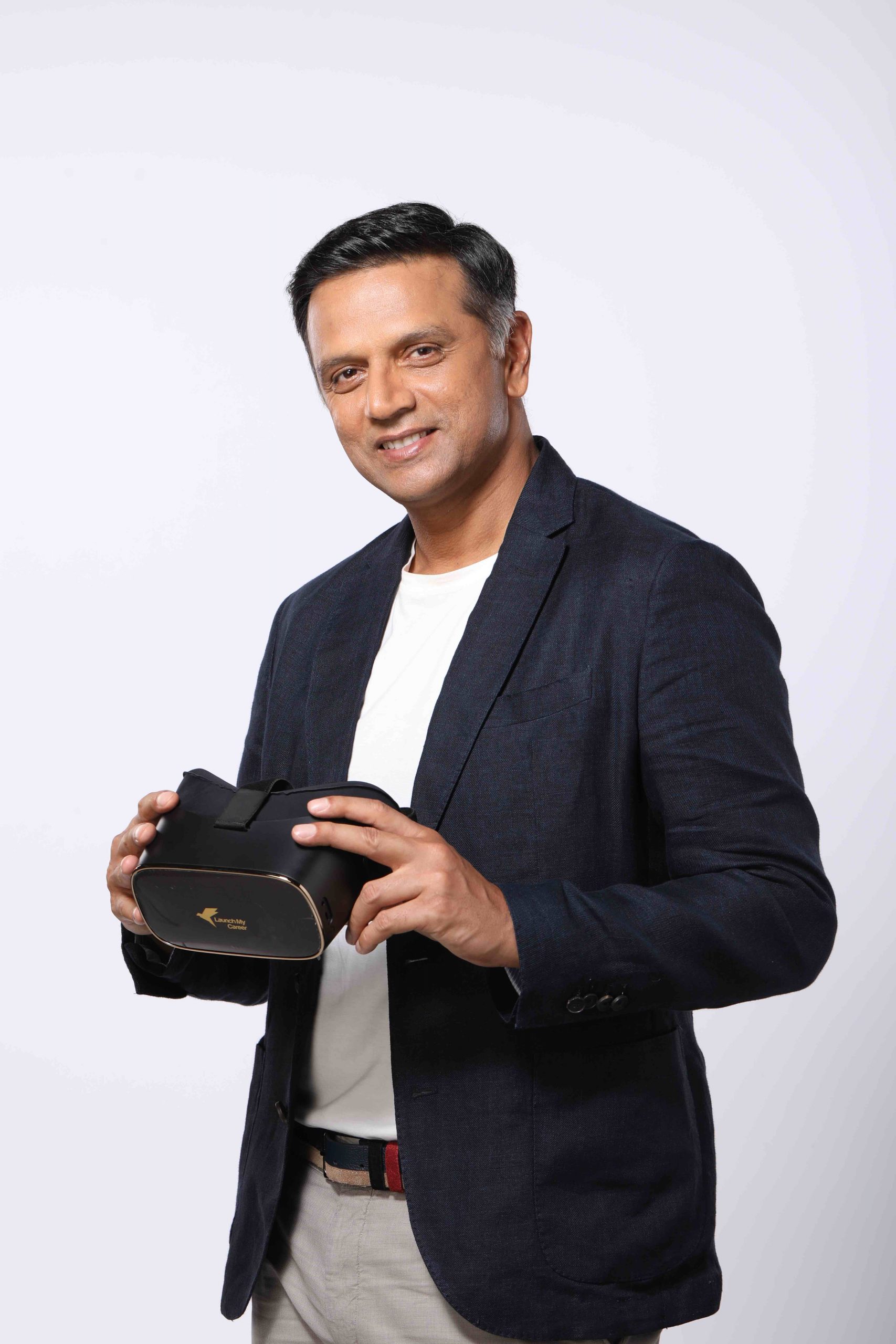
    Career guidance service platform LaunchMyCareer (LMC) has announced Rahul Dravid as its brand ambassador. Dravid will feature in LMC’s upcoming 360° campaigns, propelling LMC to expand its pan-India reach. The platform has been officially launched and can be accessed at launchmycareer.com.

     

    Commenting on the launch, Ankur Aggarwal, MD, and Co-Founder of LaunchMyCareer said: “We are thrilled and honoured to collaborate with one of India’s most iconic sportspersons and celebrities, Mr. Rahul Dravid. We are looking forward to achieving bigger and greater things this year, and no one could have been a better ambassador or growth partner for us.”


  • Havells rolls out new digital campaign

    By Our Staff


    Havells India Limited has launched a new campaign on people who have eliminated darkness from their lives despite obstacles and challenges. As part of the campaign, the brand has started a video series #LetsEndDarkness (LED) Talks where these heroes enumerate how they overcame challenges and eradicated darkness.


    Commenting on the launch of the new campaign, Rohit Kapoor, Executive Vice President, Marketing Havells India Ltd. said: “The campaign thought of ‘LED Talks’ aims at taking the high ground and thought leadership in the category, which is above product and feature-based advertising. We are proud that the first campaign video amplified by Smriti Mandhana on her Instagram handle has already garnered more than 118,000 likes. The campaign is another step towards creating remarkable storytelling that will help coherently communicate the brand’s narrative for change with LED (light-emitting diode) to a completely different proposition where the three letters of ‘LED’ stand for ‘Let’s End Darkness.’”


    Added Prag Bhatnagar, President & SBU Head, Havells India Limited: “With the new ‘LED Talks’ campaign, we want to spread positivity among people and hope that they resonate with it in a powerful yet humble way. The campaign establishes real-life victory testimonies that people have achieved despite obstacles and hardship owing to their valour. A core message of ‘enlightenment within’ has been used in the campaign with a strong emotional and socially responsible message. We are hopeful that people will be inspired by the new campaign and feel motivated to achieve their aspirations.”


  • Hari Krishnan to head Publicis Content

    By Our Staff


    Hari Krishnan
    Hari Krishnan

    Publicis Groupe India announced that it has further strengthened its content practice with the appointment of Hari Krishnan as Managing Director & Head, Publicis Content.


    Krishnan’s role involves bringing data-driven insight, platform content strategy, creative excellence and seamless delivery to the rapidly expanding field of branded content. He will lead the groupe’s teams of content specialists, as well as shaping further the groupe’s creative product, particularly around advice to brands about how to participate in culture.


    Anupriya Acharya
    Anupriya Acharya

    Said Anupriya Acharya, South Asia CEO, Publicis Groupe: “Given that more and more brands are looking for newer, continual storytelling formats, Publicis Groupe’s Content Practice is witnessing exceptional demand from advertisers for unique solutions at the intersection of media, data, and creativity. Hari with his proven track-record and passion for content is a perfect fit for the role and I am sure that he will advance our Content offering still further, through platform-fit ideation, data-led intelligence, strong IP leverage and innovation partnerships.”