Author: mxmadmin

  • Sprite partners OTTs in new campaign

    By Our Staff


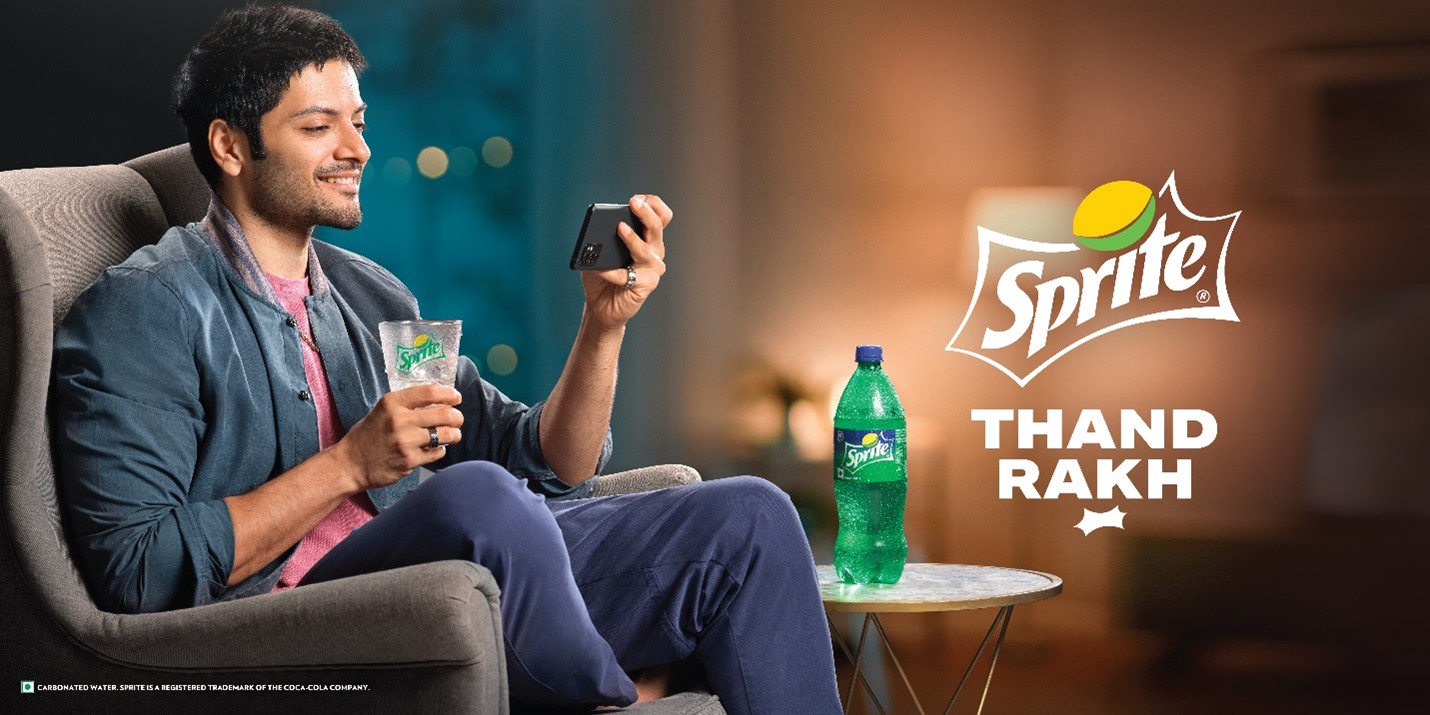
    Sprite, the lemon and lime-flavoured beverage by Coca-Cola, has unveiled a new campaign to re-instate its positioning as the go-to refresher drink. The new campaign aims to connect with consumers by leveraging their passion point of watching OTT content – making Sprite their choice of beverage.


    Sprite has partnered with Amazon Prime Video and Voot for the campaign. In addition to this, the film features popular OTT and film stars Ali Fazal, Shweta Tripathi, and Divyendu Sharma. The advert contrasts the humorously exaggerated response of such over-heated characters with the calm, cooled-down mind after having a chilled Sprite.


    Commenting on the new campaign, Tish Condeno, Senior Director, Sparkling Flavours Category, Coca-Cola INSWA, said: “For over 20 years, Sprite has not only established itself as the undisputed youth brand, but has also been leading authentic, edgy, and urban conversations via its marketing efforts. Banking on the success of Sprite’s summer campaign “Thand Rakh”, our new film takes a quirky approach to showcase how a bottle of chilled Sprite is the perfect partner for all your unwinding occasions and weekends. The campaign portrays light-hearted banter to reiterate the brand’s core message of being the go-to refresher drink which instantly lightens one’s mood. We are thrilled to partner with some of India’s biggest OTT platforms and stars, who are sure to help us further enhance our consumer touchpoints and audience engagements.”


    Added Ritu Sharda, Chief Creative Officer, Ogilvy India (North): “Sprite is known to be the choice of refreshment that cools you when you lose your cool. Now with Friday Release, a new property that lets you win OTT subscriptions through Sprite bottles, we wanted to get India’s hottest heads to take the idea of Thand Rakh forward. The film pushes the ritual of watching content accompanied with a Sprite and what happens when someone comes in the way of you and your content. Rest assured, Sprite shows how to enjoy your content and stay chill no matter how heated the situation. Enjoy it with a chilled Sprite in your hand. And if something comes in the way, thand rakh!!”


  • India Today group forays into originals

    By Our Staff


    India Today Originals logoThe India Today Group has announced  ‘India Today Originals’, a content hub producing original series and features in the non-fiction space for streaming ad audio platforms. The vertical will launch with the trailer release of its first production Indian Predator- Diary of a Serial Killer to stream on Netflix on September 7. This year, India Today Originals will see two True Crime-documentary series: Indian Predator- Diary of a serial Killer streaming on Netflix and Dancing on the Grave on Amazon Prime Video, India’s two most prominent streaming platforms.

    Kalli Purie
    Kalli Purie

    Said Kalli Purie, Vice Chairperson, India Today Group: “When I watch good documentary content on streaming platforms, it is clear to me that this was a very logical step for us. We tell the best stories of India day in day out at breaking news speed, so why not produce the best stories in a more expansive format with more details for streaming as well? The advantages of having India Today Originals as a production partner is you get a unique combination- story tellers from the ground who have seen the story unfold first hand coupled with those who know how to tell a long form story in a grand and dramatic format.”

    Said Chandni Ahlawat Dabas, who will lead the vertical as Business Head Originals & Special Projects: “The launch of India Today Originals is a matter of personal & professional pride for me. We have quietly been setting up the SBU for the last two years and look forward to giving viewers the best glocal content in the documentary space this year. This is an exciting start and the next year will be focussed on expansion.”


  • Ranjona Banerji: How low is low for our news media?

    Ranjona BanerjiBy Ranjona Banerji


    Is this the moment when the large section of the Indian media which is in a self-induced coma must wake up?

    This moment, when a committee of citizens in Gujarat agreed to release 11 rapists and murderers for Independence Day?

    Bilkis Bano was gangraped during the Gujarat 2002 riots and seven members of her family were killed by these 11 men. They have been convicted. The trial court in Mumbai was against their early release.

    But this committee, which had two BJP MLAs in it, decided that these rapists and murderers deserved to be free.

    https://scroll.in/article/1030779/gujarat-ignored-trial-courts-opinion-as-board-with-five-bjp-members-set-bilkis-bano-convicts-free

    One of the BJP MLAs then went on to inform the people of India that these rapists and murderers were good Brahmin men and Brahmin men have “good sanskaar” (culture)”.

    https://www.ndtv.com/india-news/bilkis-banos-rapists-are-brahmins-have-good-sanskar-bjp-mla-3266193


    The Print, was silent for a couple of days and then wrote one of its famous 50-word edits:

    “Remission of Gujarat gangrape convicts’ life sentence is a political obscenity and their celebratory ‘welcome’ a national shame. We know there is an election in Gujarat soon and the BJP needs polarization. But stooping to this? Bilkis Bano is owed an apology and return of the rapists to jail.”

    On the face of it, excellent.

    But give me a moment. Check this sentence: “We know there in an election in Gujarat soon and the BJP needs polarisation.”

    In effect, this means the media accepts that polarisation – here specifically on religious grounds – is acceptable up to a point. And that the polarisation is how the BJP wins elections and that is also acceptable.

    Is there any aspect of the Constitution or even of a civilised political system which mandates hatred as a legitimate form of political behaviour?

    And how low is too low for such a media?

    All right, ostensibly releasing rapists is too low in this instance. But we have since the BJP came to power at the Centre, accepted gangrapes of children reportedly by BJP members and politicians, we have accepted gangrapes of young Dalit women by upper caste men and subsequent bullying of Dalit families for protesting against the gangrape, we have accepted the lynching and killing of Muslims and Dalits because some Hindutva proponent suspected them of keeping meat in their refrigerators, we have accepted the suicides of Dalit students who have been discriminated against.

    And as we have accepted all this, we have decided never to blame the ruling government for any of its transgressions. All transgressions are blamed on previous governments.

    This edit itself also does not apportion blame. It does not mention any senior BJP members, certainly not the Prime Minister himself. In case The Print is unaware, let’s educate them. The honourable Prime Minister of India was the honourable Chief Minister of Gujarat when these 11 Brahmin men committed his heinous crime. He was also honourable chief minister of Gujarat when 2002 riot cases were moved out of Gujarat because justice was not being done in Gujarat.

    Sometimes the Indian media tells us that the honourable Prime Minister is all-knowing, in total control, and that everything he does is a “masterstroke”. Sometimes they tell us that other people do things – people from his own stable by the way – and those show him in a bad light. Both positions cannot be correct. If one is excuse, the other is a lie.

    Thus, as all TV channels protest against the release, they do it in isolation from the larger situation. It cannot be the BJP Headquarters which have done this. It is some local effort. And so on. Or we must object but not mention the BJP at all.

    The extent of this capitulation we all know. We also know this cowardly media will soon stop about the injustice and hop on to the next subject, which will be dictated to them from the BJP HQ.

    At least a few citizens have spoken up:

    https://thewire.in/rights/over-6000-signatories-demand-revoking-remission-of-convicts-in-bilkis-bano-case


    Between despair and humour, let’s end with humour. Just to see how TV star Rahul Kanwal cannot even look the camera in the eye when Tamil Nadu’s Finance Minister Dr P Thiaga Rajan, deftly and consummately rips the Honourable Prime Minister’s Independence Day meanderings to shreds.


    Ranjona Banerji is a senior journalist and commentator. She writes on MxMIndia on Tuesdays and Fridays. Her views here are personal.
     

  • Das ka Dum with Dr Bhaskar Das | It’s raining advertising and marketing awards events these days. Just too many, na?

    Bhaskar DasWe think we’ve asked this question at least once before, perhaps twice. It’s just that it’s so annoying to see so many awards in the A&M space. Let’s hear it from Dr Bhaskar Das in the August 19 edition of Das ka Dum. Read on…
     

    If you wish to access the archives, please go to the Das Ka Dum tab on the website’s top navigation bar.


    Q. It’s raining advertising and marketing awards events these days. Just too many, na?


    A. When it comes to awards, I believe more is less. Any recognition encourages winners and is expected to spur improved contribution from them. And after a long hiatus (read drought), thanks to Covid, all rain drops are most welcome, even if there is a deluge. I believe in Mao Zedong’s philosophy: let a hundred flowers bloom.


  • Pull, not Push: Film marketing is no longer the same


    By Shailesh Kapoor


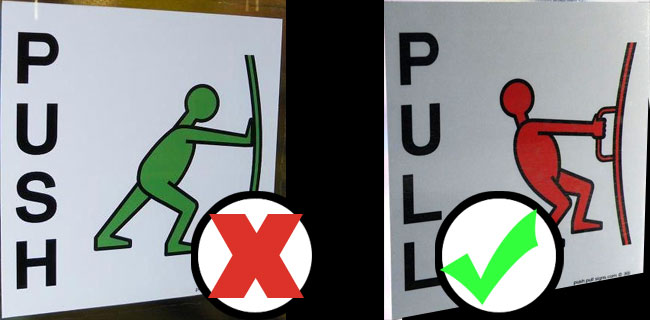
    Shailesh KapoorA long weekend, like the one that spanned from Aug 11 to 15, is hot property for film producers. Big holidays boost box-office collections by upto 75-100%. In this regard, Aamir Khan’s Forrest Gump remake Laal Singh Chaddha got the perfect release date. It was also his first release in almost four years. But the audience just didn’t turn up. Khan, who was the first to breach the 100, 200 and 300 cr box-office levels, will have to settle for about Rs 60 crore this time.


     

    Not so long ago (through pre-pandemic years seem like a thing of the distant past), a saleable movie star was box-office insurance. You could make the worst film, but he would at least get bums on seats on the first weekend. Things have changed rapidly over the last two years. Laal Singh Chaddha, for example, could never recover from the tepid response to its trailer, and all the marketing that followed seemed like a futile catch-up. Khan has been a marketing trendsetter from the times of Ghajini. But he missed a trick this time, by not realising that the nature of marketing may have changed fundamentally.


    Films, like many other product categories, have extensively relied on push marketing for years. You essentially spend money to “buy” share of voice and mind, and build enough “buzz” to get people to watch the film when it releases. We have seen Shah Rukh Khan promote some of his weaker films with this intent, and with some very good results too.


    Push marketing worked well in simpler times, when media options were limited and more consolidated. In today’s digital-dominant ecosystem, you cannot push all the buttons at the same time. To begin with, it will be insanely expensive, given the growing fragmentation of media consumption over the last few years. And then, there are ‘media’ (like the SVOD apps) that are ad-free anyway. And then, there are other media, like social media, where marketing works best when it is organic and user-generated… when it is led by a consumer pull, than by a manufacturer’s push.


    This is a fundamental change, and one that many in the media or the marketing industry are currently not adapting very well to. How do you create consumer pull for a new product that has no prior brand or franchise value? So many things have to come together: The product has to service a real need, and come across as original in its intent. And the marketing must be imaginative and disruptive, to stand a chance of being embraced by the organic pop culture that accepts and cancels new things every day.


    In Tamil and Telugu cinema, the top stars still carry an aura that ensures a natural consumer pull by just their presence on the film’s poster or trailer. But we have seen many such films crumble from the second day onwards too. So even when an agent of pull is available, more works needs to be done.


    It’s not easy to create consumer pull. After all, if you could “create” something that’s meant to be “organic”, would it be “organic” anyway? And that’s where the conundrum that lures marketers towards the classical push marketing approach lies.


    But days of push marketing are numbered, at least for entertainment products. With the success of Pushpa to KGF to the Marvel films, and a dozen failures on the other side, the writing is on the wall. Can the film industry pull up its socks then, all pun intended?


  • New campaign for Vadilal

    By Our Staff


    Vadilal Industries International Business has released a new campaign in the overseas market for its flagship ice creams range – Vadilal Ice Cream. Conceived by Mullen Lintas Delhi, the campaign, featuring brand ambassador Ranveer Singh, reiterates that ‘joy is to be lived in the now and any moment wasted is a moment lost’.


    Said Shreshth Jhawar, CEO, Vadilal Industries USA said, “Vadilal is one such iconic brand that has been loved across ages by Indians in the domestic Indian market and abroad alike. We have the widest and most colourful range of Indian ice creams available in the US and 40+ other markets around the globe.”


    Added Garima Khandelwal, CCO, Mullen Lintas: “You have to have it before it melts, that is an inherent thing about ice creams. We derived a life philosophy using exactly that as an analogy and who better to endorse it but Ranveer Singh, who embodies that, living each moment to the fullest, with absolute panache and exuberance. With this campaign we launched the brand’s tagline – “har moment ko right kar”. In fact, in all the brands Ranveer endorses, we have never seen him this way, dressed as a Cassatta. It was a great marriage with everything coming together, in complete Bollywood style to speak to the NRI audience, we are excited to see how this brand relationship now develops.”


  • Leo Burnett LB launches LB Regional…

    By Our Staff


    Publicis Groupe owned Leo Burnett India announces the launch of LB Regional, a specialised division helping brands maximise their reach with national audiences by understanding region-wise insights.


    Dheeraj Sinha
    Dheeraj Sinha

    Speaking about the launch of the division, Dheeraj Sinha, CEO, Leo Burnett, South Asia & Chairman BBH India said: “To succeed in today’s times, brands need to win in regions, not just nationally. Often, brands have opportunities or problems that are typical of certain regions.  We have to deploy region-up thinking, using insights of that region to be able to solve for these. Also, there is a growing demand for local, vernacular, Indianised content, which if done right, presents a big opportunity for brands to grow their audiences. With this in mind, we have created this division which helps brands think and create regional-level solutions. We already created local level interventions for some brands and have seen great results in going region-up rather than national-down in our thinking and creation.”


  • Interbrand appoints four executives

    By Our Staff


    Global brand consultancy Interbrand has bolstered its leadership team by appointing four executives in elevated and new roles, with the goal in mind to drive strategic partnerships, accelerate growth, and burgeon overall enterprise value.


    Satish Krishnamurthy
    Satish Krishnamurthy

    Satish Krishnamurthy has assumed the role of Chief Strategy Officer, Ameya Kapnadak takes on the role of Chief Growth Officer and Head of Consulting, Payal Shah is now Strategy Director and Head – Human Truths and Rahul Bansal will function as the Strategy Director and Head- Brand Economics.


    Ashish Mishra

    Speaking about the new leadership team Ashish Mishra, Managing Director – Interbrand India, said: “We had a late entry in the Indian market but could achieve local leadership for the World’s leading brand consultancy in a very short span. We have the top 5 branding projects of the decade as our showreel. Winning and delivering these Iconic Brand Transformations including Godrej, Jio, Britannia, Infosys, Mahindra, Hero MotoCorp and Nerolac took brilliant and committed talent. Most of whom have been the core of our team for most of our history. Our people have grown with the firm and are poised well to create the next generations of icons. At Interbrand, our priority is to nurture a global community of thinkers and makers with the curiosity and confidence to create iconic work.”


  • Bumrah to boost luggage brand Uppercase

    By Our Staff


    Acefour Accessories, a travel accessories company, has signed Jasprit Bumrah as brand ambassador for its brand ‘Uppercase’. Bumrah will lead the brand’s ‘Never Ordinary’ campaign.


     

    Talking about roping in Bumrah, Sudip Ghose, Founder & Managing Director Acefour Accessories said: “Our brand is young, dynamic, and never ordinary, just like Jasprit Bumrah. He is disciplined and has been performing consistently at the highest level, like our products. This makes him a perfect fit to represent uppercase luggage. We are looking forward to the Jasprit Bumrah magic to make an impact in the luggage industry with Uppercase.”


  • IAA IndIAA Awards to salute 75 years of Independence

    By Our Staff


    The IAA India Chapter will conduct its annual IndIAA Awards in Mumbai on August 23.


    Megha Tata

    Said IAA India Chapter President Megha Tata: “As the country celebrates 75 years of its independence, we will be structuring our awards event around the meaningful role communication has played in fostering the idea that is India. I am very happy that in its 7th year the IndIAA Awards has carved out a special prestigious niche in the minds of the communication industry.”


    Abhishek Karnani
    Abhishek Karnani

    Added IndIAA Awards Committee Chairperson Abhishek Karnani: “These are unique awards that salute real hardworking advertising. The short list is compiled by a set of senior journalists and these are judged by an eminent jury comprising of advertisers who own and invest in brands. The awards are presented to the co-creators of the winning work”


    This year the jury chair was Suresh Narayanan, Chairman & Managing Director, Nestle India and included Charulata Ravikumar, Managing Director-Accenture; Karan Shroff, Partner & Chief Marketing Officer, Unacademy; Vineeta Singh, CEO & Co-Founder, Sugar Cosmetics & Vivek Khanna, COO, Mahindra Holidays & Resorts India Limited.


  • Dentsu onboards Bhasker Jaiswal as COO, Media

    By Our Staff


    Bhasker Jaiswal
    Bhasker Jaiswal

    Dentsu India has announced the appointment of Bhasker Jaiswal as the Chief Operations Officer, Media, Dentsu India. As a member of the executive team, he will report to Divya Karani, Chief Executive Officer, Media, Dentsu South Asia.


    In his new role, Bhasker will lead integration, transformation, and operational excellence agendas while driving innovations and excellence for Dentsu clients and businesses through its three award-winning media agencies; Carat, iProspect and Dentsu X. He will work closely with Karani to deliver business transformation, set up and standardise operations and systems, govern product leadership, and enable sustainable revenue growth.


    Divya Karani
    Divya Karani

    Speaking on the appointment, Karani said: “Bhasker joining the team here in India is another great step on our journey to become the go-to network of choice for brands in India. His impressive track record, savvy business judgment, operational excellence, and an innate understanding of people and their motivations make him ideal to lead our transformation and integration.”


  • Three Routes to Global Relevance for Indian Brands


    By Ashoke Agarrwal


    Ashoke AgarrwalIt is time for Indian brands to bid for relevance on the global stage. An extensive and high-growth domestic market can provide the ballast. Here are three ideas that can do the rest:


    Leveraging India’s Soft Power: As of today, only the practice of yoga has leveraged this power. Though only as a generic brand. Is there enough juice left in the concept of yoga for an Indian consumer brand to parlay it into global prominence? Can the power of yoga go beyond the category of yoga studios and yoga mats? For example, can a fashion and personal accessories brand out of India based on the core material and design principles of yoga become a global player? Ayurveda is beginning to emerge on the world stage. While selling it as a branch of medicine worldwide is fraught with high resistance and many pitfalls, I think it has potential as a personal and health care platform. However, to go beyond appealing to a niche audience among the Indian diaspora and diehard Indophiles, a personal and health care brand based on Ayurveda will need to adapt and invest in scientific research and testing with a vengeance. L’Oreal and its sister brand Garnier won global leadership by combining the natural ingredients story with the pharmaceutical activation concept and by putting high-intensity marketing behind it. Companies like ITC and brands like Haldriram have successfully taken packaged food based on Indian cuisine to the global market. However, their success again has mainly been confined to the Indian diaspora. I believe there is excellent global scope for an Indian cuisine-based fast-food chain. The key here would be to crack the technology to deliver Indian cuisine at scale across geographies. Indian ethnic wear is the other area of potential.


    Take The Leap Into Web 4.0:A lot of hype and capital has gone into the concept of Web 3.0 built around technologies like blockchains, cryptocurrencies, NFTs and metaverses. Most products and services based on the above ideas cater to the millennial mindset. However, marketers worldwide are beginning to realise that the mentality of the next generation of young – Gen Z – is very different and, in many cases, the antithesis of the Millennial mindset. Gen Z looks beyond self-fulfilment to ‘self-expansion’ – an experiencing of multiple identities by immersing oneself into the reality of various situations, communities and ways of being. In a way, the typical Gen Z will be a neo-hippie, unlike the Millennial who is a neo-yuppie. Tomorrow’s winners in the technology services and the content arena will be those that understand this mindset and cater to it. The core Indian ethos of subsuming the individual into a spiritual and community identity will appeal to this neo-hippie outlook. Combine this with India’s technology edge, and India could lead a Web 4.0 revolution to global leadership.


    The ‘High-Quality Low-Cost’ Quadrant: The earlier Make in India initiative and current Production-Linked-Initiative (PLI) stimulate the B2B manufacturing sector and, to some extent, the consumer electronics sector, mainly smartphones. I believe there is excellent scope for India to attract global FMCG brands to make their products in India for the worldwide market. To attract top brands to India will need the removal of bottlenecks in the availability of quality ingredients and some reimagining of duty structures and tax incentives. The advantages of developing a ‘high-quality, low-cost’ ecosystem in India for global FMCG brands are many:

    » A boost to the agriculture sector

    » Mass employment prospects

    » Balance of trade improvement

    » Better quality products for the Indian consumer stimulate the Indian consumption economy, leading to a virtuous cycle.