5Elements, a brand focused on delivering gadgets has launched two new earbuds focusing on Environmental Noise Cancellation for clear conversation and low latency for real time sound experience. Titled Nuke+ & X-Buds, this new line of expansion focuses more on clear audio, more playtime, and faster charging. Further, 5Elements also announced its endorsement partnership with Pratik Gandhi.
Commenting on the association, Devansh Shah, Co-Founder, 5Elements said: “We are delighted to collaborate with Pratik Gandhi as the face of 5Elements as he is an icon and a role model across all age groups. His journey from TV to Bollywood while being honest and fearless about his performance and views has inspired many people and his single-minded quest for success and achievement perfectly embodies 5Elements’s personality. We are confident, ecstatic, and excited about this association and look forward to a successful partnership.”
Team Pumpkin has won the digital mandate and print ads for Bengaluru-based kitchen appliances house of brands, Stovekraft. The agency will be in charge of developing and strengthening the brand’s digital presence by creating innovative social communication strategies through cutting-edge innovation, ideation, execution, and promotion.
Speaking on the collaboration, Swati Nathani, Co-founder of Team Pumpkin, said: “We are thrilled to have secured the digital and creative mandate for Stovekraft, India’s leading kitchen appliance brand, established on pioneering energy and innovative culture. It aligns perfectly with our goals and philosophy, making us a perfect match. As a leading agency in crafting and delivering digital innovations and solutions, our unique, cutting-edge digital offering based on brand vision will expand the brand love onto new-age digital platforms and generate significant customer experiences.”
Sharing his thoughts on the creative partnership, Rajendra Gandhi, Managing Director of Stovekraft added: “As one of the pioneering companies in kitchen appliances, our constant endeavour is to provide the best range of products catering to the needs of every homemaker in the country. Stovekraft has experienced unprecedented growth in recent years, and we look forward to expanding our business more. Hence, digital has become an important aspect of expanding our business. It is impressive what Team Pumpkin has in mind for our brand. We are confident that Team Pumpkin’s expertise and nuanced understanding of digital media will help us achieve our vision.”
By Helen Wood
ITV2 has announced the return of Big Brother to the UK with a promo trailer during this year’s Love Island final. Big Brother’s successful format of putting a group of housemates together in a controlled environment as an “experiment” to observe their behaviour has proved entertainment gold with international iterations, spin-offs and many imitations across the world.
To many, the show’s return, after its 18-year stint on Channel 4 and then Channel 5 will come as something of a surprise, given the way the viewing figures had gradually fallen. For others, however, it remained a cult hit at the centre of contemporary British popular culture.
But reality television is not the same as it was when Big Brother launched in 2000. The show will return to a changed set of circumstances and expectations. For instance, Big Brother’s explosive drama was roundly criticised for sometimes being fuelled by alcohol, a practice which is no longer condoned.
Reality television and social media
Love Island has clearly taken inspiration from Big Brother as it also relies on observing the behaviour of participants in a house (known in Love Island as the villa) over eight weeks. The difference is they’re supposed to “couple up”. The show has developed a successful branding strategy with intricate social media tie-ins – for instance, numerous sponsorship deals with clothing and music brands, as well as gaming apps, merchandising and multiple branded social media accounts. All of this has upped the stakes of the amount of publicity and extra commercial value generated around a show – dwarfing the frenzy the tabloids made of Big Brother.
This year’s Love Island winner, Ekin-Su, came out of the villa with more than a million Instagram followers and poised for numerous lucrative branding deals.)
But also since that initial “psychological experiment”, the nature of reality contestants has changed. They are now media-savvy people who’ve grown up online and in a world saturated with reality TV. They see shows such as Love Island as part of a social media landscape, in which performing and branding their personalities is a normal way of life that might just lead to a lucrative career.
While of course not all reality shows offer such a platform, Big Brother and Love Island have been some of the most successful for offering a springboard into other media careers – sometimes for those who might have had no other way in, given the lack of diversity in the media industry.
There is therefore no shortage of people queuing up to get a spot, despite the escalating risks of trolling and social media bile that seems to be the price paid for quickly-won fame.
How audiences interact with a show has also changed. They can now participate in the experience, not only through voting, but in the sharing of opinions, often in real time and directly with participants, as Twitter, Instagram and Facebook extend the shows’ visibility.
Looking back to older series of Big Brother, I wonder what kind of death-threats “Nasty Nick” would have received for breaking the rules of the show after he was caught writing down housemates names to influence the nominations for eviction. He left the house to a booing crowd and a baying press like a pantomime villain, but that would have been multiplied and magnified across social media and into his DMs (direct messages) today.
Duty of care
For more than 20 years, largely unpaid contestants have provided content for television without much oversight or concern for their wellbeing. Think of Shahbaz Chauhdry who in series seven of Big Brother showed obvious signs of worsening mental health and ended up leaving on day six after threatening to commit suicide.
Now producers need to think more closely about their duty of care to contestants in a landscape that is much more sensitive to the risks of taking part in reality television, particularly those associated with mental health.
Caring for contestants has become a growing issue as several reality stars have committed suicide post filming. A 2019 government public inquiry and a period of consultation by Ofcom, the UK broadcasting regulator, have led to changes in the broadcasting code, which came into effect in April 2021.
Now broadcasters must protect the welfare of participants and ensure that audiences don’t watch harmful or offensive things happening on screen. However, as Ofcom is a post-broadcast regulator it cannot interfere with the direction of creative content. It can only intervene once something has already aired.
There might be a feeling that the changes to the code and the more serious intent of the broadcasters are enough. However, before the end of Love Island 2022 Ofcom received more than 5,000 complaints about issues ranging from misogyny to bullying. It remains to be seen whether any of these complaints can be upheld under the new duty of care regulations.
The code also struggles to take account of the complexity of caring for such contestants. How long after a show should after-care go on and what should it look like? This is a difficult question, especially considering that many reality TV contributors sign over the rights to their performances “in perpetuity”. You may not feel the same about something you did at 19 being replayed as TV gold or re-circulating as a meme when you are 45, for instance.
I presume that ITV has taken this leap because of the success of Love Island and the continued audience appetite for shows that manipulate the experience of contestants in confined conditions. For a TV show that thrived on chaos and emotion, what would a caring revision of Big Brother even look like? I guess we will see when it airs next year.
Helen Wood, is Chair professor in Media and Cultural Studies, Lancaster University. This article is republished from The Conversation under a Creative Commons license. Read the original article.
JBL, an American audio equipment manufacturer, owned by Harman International, a subsidiary of Samsung Electronics, has assigned its social media mandate to Grapes, an integrated marketing agency. As per the mandate, Grapes will be responsible for the JBL’s social media strategy, planning and execution. The agency will look after content creation and ORM, respectively for the company.
Akhil Sethi
Speaking on the development, Akhil Sethi, Head of Digital Marketing for JBL, Harman India, said: “We are excited to partner with Grapes to further strengthen our social media efforts for JBL in India. The agency perfectly aligns with our vision and we are confident that the collaboration will bring about a unified end result. Our campaign objective lies in creating clear communication that will help us in connecting with customers across demography. We are looking forward towards establishing a powerful brand narrative for JBL through Grapes in the months to come.”
Shradha Agarwal
Commenting on the mandate win, Shradha Agarwal, CEO & Co-Founder, Grapes, added: “We’re ecstatic to associate with JBL India as their digital partners. The brand has a legacy of 75 years built on its unmatched sound quality and we are determined to strengthen JBL’s presence further with value-driven engagement, to make it the most preferred audio brand amongst the growing audience base. With social media at the epicentre of our lives, we are keen on taking the brand’s social presence to the next level. While we will continue to leverage the key pillars of the brand like Mute the World, Dare to Listen, the Quantum gaming series etc., we will be focusing on further enhancing the headphones vertical. We are also keen on tapping into the large sound and music loving demography in the country, to build a unique community for the brand. The agency will create innovative campaigns for the brand to establish a strong line of connection with the audience, all aimed at enhancing the recall value of the brand.”
Pantaloons, which is now owned by the Aditya Birla Fashion and Retail Ltd, recently celebrated its 25th anniversary at South City Mall, Kolkata. Actors Parambrata Chatterjee and Priyanka Sarkar graced the celebrations.
Said Sangeeta Pendurkar, CEO – Pantaloons, Jaypore & Style Up, Aditya Birla Fashion and Retail Ltd: “Pantaloons is one of the most loved fashion retail brands of India. As we turn 25 years young, we express our gratitude to all our customers and partners who have supported us and made us a part of not only their wardrobes, but also their lives. We would continue to make shopping a playful and engaging experience for our shoppers.”
FCB India has appointed Udayan Chakravarty as its new Executive Creative Director. In his role, Chakravarty will be reporting to Surjo Dutt, Chief Creative Officer, FCB India.
Udayan Chakravarty
Chakravarty started his career with FCB in 2005 as a Trainee Writer. Since then, he has worked with Ogilvy & Mather, Dentsu, JWT and Wieden & Kennedy on brands such as Pepsi, Lay’s, Doritos, Sting, Mountain Dew, Dunkin’ Donuts, KFC and IndiGo, to name a few. Before this appointment, he worked with Wunderman Thompson for over five years.
Swati Bhattacharya
Said Swati Bhattacharya, Creative Chairperson, FCB India: “Udayan has a very special gaze, and having him on our team means our work will get shinier.”
Surjo Dutt
Added Surjo Dutt, Chief Creative Officer, FCB India: “Udayan’s incandescent talent coupled with years of experience on global and Indian brands makes him an ideal creative leader for us. I absolutely have no doubt that Udayan will make magic in the market for all his clients at FCB India. We welcome him aboard and wish him all the best.”
Skinn perfumes and fragrances brand from the House of Titan has launched a new campaign, #BestSaidWithSkinn. The brand releases a new digital video campaign created by Ogilvy & Mather agency to celebrate this Raksha Bandhan season with the sibling duo- fashion stylist and film producer Rhea Kapoor and actor Hashvarrdhan Kapoor.
Said Ankit Kasliwal, Head of Marketing, Fragrances Division, Titan Company Limited: “Rakshabandhan is the celebration of love, protection, and life-long companionship. Gifts play a great role in conveying love for our siblings and bringing back all the rejoicing memories of growing up side by side with one another. The splendid fragrances from SKINN thus, are a perfect gift to express your love. With this digital video, we celebrate the season with the most loved sibling duo- Rhea Kapoor and Harshavarrdhan Kapoor. Their bond is full of love, fun, and mischief, which makes the video relatable for us all reminding us of our own beautiful relationships with our siblings.”
This may have appeared as an attempt to provoke our Wizard with Words but it was indeed an issue that’s often asked in the media world. And we aren’t referring to only the big newspapers, but even smaller, but influential papers. Let’s read what Dr Bhaskar Das had to say in the October 16, 2019 edition of Das ka Dum. Read on…
If you wish to access the archives, please go to the Das Ka Dum tab on the website’s top navigation bar.
Q.There is a sentiment that many Indian newspapers are very unprofessionally run or rather not very professionally run. You’ve spent a lifetime in the business. What’s your view?
A. All generalisations are wrong, including this one. Ethnic classification as a contributing factor for success can at best be a symptom of intellectual impoverishment. Coincidences can’t be a base for a statistically significant conclusion. They can at best be treated as apriori. It’s ultimately an individual’s commitment and smart work that paves the way to success, material or otherwise. If accepted, it tantamounts to trivialising commitment to work.
(First published at: https://www.mxmindia.com/2019/10/das-ka-dum-with-dr-bhaskar-das-are-indian-newspapers-not-run-professionally/)
Wunderman Thompson launches ‘Inclusion’s Next Wave’, a global trends report outlining the driving forces behind the next wave of inclusion. The report reveals the powerful role brands can play by putting inclusion at the heart of their business, in storytelling, design and in the workplace, creating authenticity and reflecting life as it is lived. Through extensive research, Wunderman Thompson Intelligence has identified key trends in inclusion that are on the rise, and 10 actions authentically inclusive brands and businesses can take from the office to the Metaverse, to show up for their audiences.
Eight-two per cent of the study’s respondents feel that actions on inclusion and equality should be integrated throughout the entire business, with 63% more likely to buy from brands that made more effort to represent people like them. Customers will reward brands that deliver on inclusion, with 66% of people agreeing that they are more inclined to buy from companies who speak out on issues of equality and inclusion, and 60% of people agreeing that brands who do not deliver on inclusion will become irrelevant.
The study also brings to light issues that are rising in a rapidly changing era, such as how brands must now pivot to ensure that they are building safe, accessible, inclusive, and democratic digital spaces (82% who have heard of the metaverse believe that companies should make special efforts to ensure digital worlds are accessible to everyone). On the other hand, 83% agree brands should not use digital spaces as an excuse to avoid providing accessible spaces in the real world.
Said Marie Stafford, Global Director at Wunderman Thompson Intelligence and Editor-in-Chief of ‘Inclusion’s Next Wave’: “Businesses and brands will not hit the mark if they don’t hire, collaborate with, and support marginalised groups. Recent events have intensified existing inequalities and the global conversation is gaining momentum, but this new research shows just how much consumers want to see more inclusive actions from brands. They have a powerful role to play in building a truly inclusive world, and those who take this into consideration can deliver authenticity and better reflect the real world, and in turn, reap the rewards of doing so.”
Key trends in inclusion that are on the rise:
Intersectional Storytelling: Diversity both on-screen and behind the camera is shaping a new era of inclusive storytelling
Inclusivepreneurs: Entrepreneurs from underserved communities are innovating for themselves
Mass inclusive design: Accessible products and services are hitting the mainstream as brands target mass distribution
Meta-inclusion: As we build new virtual worlds, brands have an unprecedented opportunity to build in inclusion, accessibility and equity from the start
Revolutionary Rest: Exhausted from constantly fighting their corner, marginalized communities are giving themselves permission to focus on rest
Josh Loebner, Global Head of Inclusive Design at Wunderman Thompson commented: “Driven by a range of external factors, the next wave of inclusion is upon us. But the journey is just beginning, and there is a huge opportunity for brands to deliver better products, spaces, and experiences by putting inclusion at the heart of their business to ensure they stay relevant and capture both consumer attention and spending power.”
Vignettes of companies breaking inclusion barriers appear throughout the study, from a lingerie brand that democratised desire among the disabled community and people over 50, movements shining a light on men’s mental health, and stories of digital sanctuaries for segments of inclusive communities to be themselves. It outlines rising trends in inclusion, how inclusion affects product development, workplace dynamics and the bottom line, and includes first person accounts of challenges and benefits from people with full spectrums of identities from around the world.
Wunderman Thompson also studied representation in media such as TV and film. Of the groups that feel most underrepresented, 46% of neurodiverse respondents say there aren’t enough characters depicted on screen that share their traits; followed by 45% of disabled people; 42% of people with mental health issues; 35% of LGBTQ+ and 35% of people aged 60 and over; and 32% of underrepresented racial groups.
The report is fully accessible, with Wunderman Thompson working with accessibility experts who used multiple accessibility measuring tools to identify usability issues. For example, experts deployed colour contrast checkers to verify the design palette, to help readers with colour vision deficiency to clearly distinguish between texts and backgrounds; the typeface that has been adopted – FS Me – has been researched and developed by charity Mencap to improve legibility for people with learning difficulties; and captions and descriptive alt. text have been added to all essential images, charts, and graphs to allow readers with visual impairments to listen to the PDF document. The artwork for the report was inspired by the work of Charlie French, an artist with Down Syndrome who shared his art with the team.
As we celebrate ‘Azadi ka Amrit Mahotsav’, so is Pakistan celebrating ‘Jashn-e-Azaadi’ to commemorate 75 years of its existence. The first is the cause while the latter is the effect!
Pakistan would not have happened but for the creation of India as an independent nation state in August 1947, so technically, while India can rightly claim this as her 75th year of independence, Pakistan technically can claim this her 75th year of creation. Therefore, our neighbours in the north by northwest should be celebrating their ‘Jashn-e-Wajood’.
This paradox itself is a demonstration of brand “Pakistan”. A brand made up of contrasts, paradoxes, and conflicting paradigms. Its very creation is due to the existence of another. Therefore, it’s very lifeline is dependant on the health of another.
This is the typical image of the brand. It is a bit like a parasitic plant, living on the nutrients from another brand that is India. Maybe I sound too harsh, but that is the reality of brand Pakistan today. Almost all references to Pakistan are vis-à-vis India. Comparisons are natural to be drawn but they are of the nature of proving time and again that the brand has been one big mistake. I remember listening to a lecture by journalist M.J. Akbar in 2016 where he said that the current state of Pakistan actually proves that partition, though painful, was a correct step in India’s favour. And Pakistan has not done itself any favours over the last two decades to prove us wrong.
Can the 75th year of its existence give it the space to introspect? Is the Pakistan today the one that the elites of the Muslim League led by Syed Ahmed Khan had dreamt of in the early 1900s? Is this what Mohammad ‘Allama’ Iqbal visualised? Or for that matter even Jinnah? While the germination of the thought of a separate state for the Muslims in British India was a reactionary one, emanating out of fear of losing out rather than any positive vibes, being casually called a ‘rogue state’ and a ‘basket case’ could never have been the desired outcome.
And it is this fundamental principle of brand creation and building that decides where it finally ends up. A brand born out of negative emotions cannot last for long in a positive state of being. It is inflicted with complexes of various dimensions… neglect, inferiority, and lack of self-belief. The brand cannot stand on its own feet. And this exactly is the malaise of brand Pakistan.
Pakistan is one of the world’s richest cultural and civilisational regions. It is the one melting pot of Mehrgarh of the Neolithic Age, Indus Valley of the Bronze Age, the Greeks, the Seleucids, the Mauryans, the Kushans, the Guptas, the Umayyads, the Hindushahis, the Ghaznavids, the Sultans, the Mughals, the Durranis, the Sikhs and the British. It carries a historical legacy that would have seen it as one of the most socio-culturally thriving parts of the world. It could have created a model nation state based on plurality of cultures rather than the purity of faith it opted for. It has ended up choosing the turbulence of multiple cultures rather than their inherent richness. This is so typical of brands that somewhere neglect their roots and natural moorings and go for causes that are non-credible, transactional, and synthetic.
Pakistan is the land of the Nobel winning physicist Dr. Abdus Salam. It is the land of the pathbreaking ‘Ommaya Reservoir’ that transformed medical surgery. It is the land of Naveed Zaidi who developed the first plastic magnet. It is the land of the Farooq Alvi brothers who created the first computer virus (c)Brain! It is the land of Raza Kazim who has created the Sagar veena. It is the land of Mahbub-ul-Haq who created the ‘Human Development Index’! It is the land of Abdul Sattar Edhi who set up the world’s largest private fleet of ambulances.
Noor Zehra, daughter of Raza Kazim, playing the ‘Sagar Veena’
Pakistan is Faiz, Manto, Iqbal and Eliya. Pakistan is Imran Khan, Hassan Sardar, Jahangir Khan and Abdul Khaliq. Pakistan is Nusrat Sahab, Abida Parveen, Nazia Hasan and Strings. Pakistan is Sadiq Khan, Riz Ahmed, Ayesha Jalal and Zayn Malik.
Pakistan is well beyond the army, ISI, JeM, Masood Azhar, HuM and the Taliban. Pakistan is well beyond bombings, ethnic hatred, corruption, and fundamental terrorism. But the brand is a victim of such a narrative. Pakistan today is a pale picture of the vibrant Pakistan of the 1960s and 1970s. It stands before India today as a stark reminder of what we could become and should stay away from.
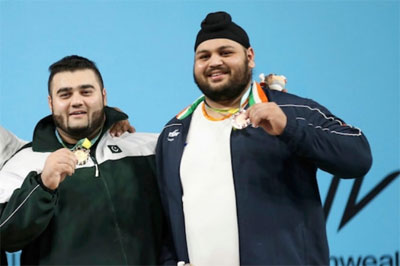
Nooh Butt and Gurdeep Singh in Birmingham
When Nooh Dastgir Butt dedicates his weightlifting gold in the just concluded Commonwealth Games to Mirabai Chanu and celebrates with his dear friend and Indian weightlifter Gurdeep Singh dancing to Siddhu Moosewala songs, it is a Pakistan that is counter to the popular narrative. When Arshad Nadeem throws his javelin beyond 90 metres and remembers his sparring competitor Neeraj Chopra in his moment of victory, it is against the narrative.
On 31st May this year, the Institute of Policy Studies in Islamabad and the Fatima Jinnah University in Rawalpindi organised a seminar titled ‘75 years of Pakistan: Constitution, Public Representation and Governance System’ where some of the sharpest minds reiterated the crucial role the revised constitution of 1973 plays in keeping powers in check and needs to get stronger by the day. To quote from the deliberations, “Martial laws have been imposed on the country a number of times, however, all of the initiators had to seek some form of public representation after some years. Ayub Khan had to resort to local democracy, Zia-ul-Haq had to conduct a referendum to provide the impression that he was a representative of the people, even Pervez Musharraf had to turn to local bodies elections and a referendum.”
In 1956, Pandit Nehru saw Abdul Khaliq run the 100 metres and called him ‘Parinda e Asia’.
In 1960, Ayub Khan saw Milkha Singh race against Khaliq and called him ‘The Flying Sikh’!
On the 75th anniversary of its existence, Pakistan has to take a strong hard look at what defines its very existence as a brand. It has to question its core purpose and promise to itself. It has to decide whether to remain the parasitic rafflesia flower or evolve into the the symbiotic orchid. And that will be done by its people and not the government, army or ulema.
The two brands of India and Pakistan are inseparable. How I wish the two nations were to together celebrate ‘Azaadi ka Amrit Jashn’. For each brand has a part of itself living in the other.
I conclude with the final lines from Piyush Mishra’s song ‘Husna’ written a decade ago…
“Aur rota hai raaton mein
Pakistan kya vaise hi
jaise Hindustan,
O Husna?”
[And does Pakistan shed tears every night just as India does, my love?”]
Jeevey jeevey Pakistan!
Jai Hind!!
(You could watch the song being performed by Piyush Mishra and Hitesh Sonik at Coke Studio MTV Season 2 on YouTube at https://www.youtube.com/watch?v=4zTFzMPWGLs)
Avik Chattopadhyay is a senior brand and business strategist and advisor based in Gurugram. He writes on MxMIndia every other Thursday. His views here are personal.
FoxyMoron, a digital products and services agency and part of the Zoo Media network, has won the creative digital mandate of the south content, video on-demand and over-the-top (OTT) streaming service giant aha Tamil. The mandate will be handled by the agency’s Bengaluru office.
Prachi Bali
Commenting on the win Prachi Bali, National Head Client Partnerships, FoxyMoron (Zoo Media), said: “After having immense success as a network in the OTT industry, we are exhilarated about the opportunity to collaborate with aha Tamil, one of the biggest players, as they build their audience amongst the new internet users in India. The internet penetration in Tamil Nadu is one of the highest in the country and our work in ‘Naya Bharat’ (our regional content focus at the network) has already seen a positive impact across various industries. With the rising popularity and widespread audiences of regional content in our country, there couldn’t be a better time for our partnership.”
Ajit Thakur
Added Ajit Thakur, Chief Executive Officer, Aha: “There are very few players in the industry which offer you expertise on an industry level, on digital marketing and have the knowledge and bandwidth to understand and help us scale, amongst the Tamil speaking population both in India and abroad. We are glad to have found business partners in FoxyMoron and look forward to a successful collaboration.”
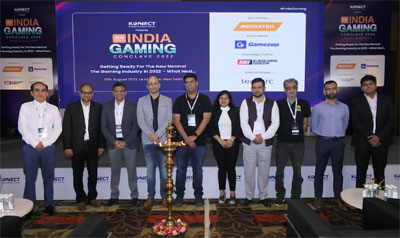
With around 420 million active online gamers and a 500-million-strong digitally native population aged between 15-35 India is set to become one of the fastest growing markets globally. Eminent industry leaders and stakeholders convened to discuss the future roadmap of the gaming industry in India. The next phase of growth for gaming in India driven by accelerating adoption of 5G, Cloud Gaming, Gamification, and Mobile Gaming devices among others was outlined on the sidelines of the 2nd Edition of the India Gaming Conclave 2022, by Konnect Worldwide Business Media, today.
The conclave outlined the industry’s vision for 2022 and beyond, with an eye on global and domestic trends, as well as India’s potential to disrupt the global industry in the near future. IGC 2022 witnessed participation from industry experts, innovators, gaming publishers, OEM’s, developers, gamers, influencers, and analysts, who welcomed the opportunity to share their insights, learnings, and expertise. The event themed ‘Getting Ready For The New Normal – The Gaming Industry In 2022 – What Next…’ was supported by industry partners including MediaTek, Gamezop, Techarc and All India Gaming Federation.
Said Anku Jain, Managing Director, MediaTek India: “The India Gaming Conclave has been a wonderful experience aimed at setting the context for Indian gaming and creating the roadmap for the future of the explosive industry. As one of the fastest-growing sectors in India, gaming is a major focus area for MediaTek and our consistent collaboration with OEMs has birthed some of the most innovative gaming smartphones in the country. Looking forward, our R&D teams are working towards fostering newer advancements in MediaTek HyperEngine Gaming Technologies and we await the power of 5G to unlock the full potential of Indian gaming.”
In-depth knowledge sessions included discussion on 5G, Cloud Gaming and Innovations in Smartphones and Devices – Drivers of Gaming Revolution in India; India Focussed Innovations in Gaming Infrastructure; Gamification – A Powerful Tool to Engage, Monetise & Grow Revenues; and Taking Gaming to the Next Level Thru Investments & Partnerships. Industry leaders present at the summit included MediaTek India, Gamezop, All India Gaming Federation, Gameloft, Winzo, Oppo, Newgen Gaming, Loco, POCO India, Apar Games,T-HUB, Xtendr, Lumikai among others.
Added Gaurav Agarwal, Co-founder Gamezop: “The 2nd Edition of India Gaming Conclave was a melting pot of myriad standpoints from the Indian gaming fraternity. The organisers did a fantastic job in bringing together prolific panelists from across the gaming spectrum. There couldn’t have been a better forum to introduce our new product, Quizzop, to the industry. Gamezop and Quizzop are glad to have participated towards this year’s event in a small capacity, and we will look to do that again in the coming years. We are going back enriched with the discussions that panned out today, and are glad we got to meet old friends and new.”







 This may have appeared as an attempt to provoke our Wizard with Words but it was indeed an issue that’s often asked in the media world. And we aren’t referring to only the big newspapers, but even smaller, but influential papers. Let’s read what Dr Bhaskar Das had to say in the October 16, 2019 edition of Das ka Dum. Read on…
 As we celebrate ‘Azadi ka Amrit Mahotsav’, so is Pakistan celebrating ‘Jashn-e-Azaadi’ to commemorate 75 years of its existence. The first is the cause while the latter is the effect!
 This is the typical image of the brand. It is a bit like a parasitic plant, living on the nutrients from another brand that is India. Maybe I sound too harsh, but that is the reality of brand Pakistan today. Almost all references to Pakistan are vis-à-vis India. Comparisons are natural to be drawn but they are of the nature of proving time and again that the brand has been one big mistake. I remember listening to a lecture by journalist M.J. Akbar in 2016 where he said that the current state of Pakistan actually proves that partition, though painful, was a correct step in India’s favour. And Pakistan has not done itself any favours over the last two decades to prove us wrong.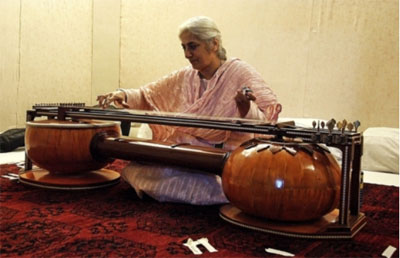


 With around 420 million active online gamers and a 500-million-strong digitally native population aged between 15-35 India is set to become one of the fastest growing markets globally. Eminent industry leaders and stakeholders convened to discuss the future roadmap of the gaming industry in India. The next phase of growth for gaming in India driven by accelerating adoption of 5G, Cloud Gaming, Gamification, and Mobile Gaming devices among others was outlined on the sidelines of the 2nd Edition of the India Gaming Conclave 2022, by Konnect Worldwide Business Media, today.