Author: mxmadmin

  • Anil Thakraney: Cut the Anna crusade

    By Anil Thakraney


    It is fashionable to credit the social media for Team Anna’s stupendous run. They have managed to hilao the government big-time, and it is often said their oxygen is the support provided by tweeters and facebookers. I totally disagree.


    The real fuel for Anna’s campaign comes from the television media. It is they who, in their childlike enthusiasm, have converted the saint from Ralegaon Siddhi into a god-like cult figure. And quite frankly, I am not surprised. It’s our TV media’s belief that any story that generates ratings must be given liberal play, even if it demolishes every tenet of good journalism. From no angle can you justify the role played by the assorted news channels as crusaders and poster boys for Team Anna. When the social media does that, it becomes understandable. Because the virtual world consists of individuals fed up of corruption… dudes who don’t really comprehend the complexities of the Lokpal bill, and are basically venting steam. That’s fine. But for professional journalists to become recruitment agents for Anna is simply an appalling situation.


    Anyway, what’s done is done. Team Anna is threatening Hunger Strike Part 2, this time from the ‘salubrious’ Mumbai. At least this time around the news channels must respect the principles of journalism and desist from going over-the-top on the coverage. Because it’s very clear by now that, drunk on the TV media’s fan-like support, members of the team have become arrogant and Dubya-like in their attitude. The ‘my way or the highway’ deal. How healthy is that approach for democracy, we all know quite well.


    Bottom-line: Let Team Anna fight its own battles. Report the story, like any other story, and no more. There are other interesting ways to get good ratings. Try village horror stories. At least they don’t threaten Indian democracy.


    ***


    PS: Wieden + Kennedy’s London office has found a charming way to wish you this season. The agency has set up a window outside their office, from where passers-by can take part in the celebrations. Lovely idea.


    Link: http://achoirofyou.com/

  • The Anchor: 6 pointers for luxury advertisers when choosing a magazine

    By Mitrajit Bhattacharya


    #1 Whether the magazine caters to the right TG of the brand, not the TG that the planner/ advertiser belongs to, which may not necessarily be the same.


    #2 Most luxury brands in this country are consumed by the wealthy, so an income profiling is often better than SEC. The business community scores over the salaried class, who often simply cannot afford luxury (unless they are a rich banker). So, choose your vehicle accordingly.


    #3 Often a multi-brand distributor/ company has the same magazine list for all their brands. Decide for individual brands and not for the group; consumers finally see them individually.


    #4 Frequently check how the layout of copy/ edit pages is coordinated with that of advertisements. Many luxury magazines go to the extent of designing facing edit pages with relation to the ads and that really helps noticeability/ engagement.


    #5 Do not lose sight of sales; maintain the right balance of image-building (which is so critical for a luxe brand) without losing sight of the real impact on sales.


    #6 Be sure of the strengths of the medium and use it the best possible way, and not necessarily have the ‘same size fits all’ ad strategy across all media.


    Mitrajit Bhattacharya is the President & Publisher, Chitralekha Group & Vice President, AIM.

  • Palasa obtains the creative mandates for Housefull and Rawwar

    By Shubhangi Mehta


    Palasa is on a roll, having bagged two businesses back to back, one for a low-cost furniture brand called Housefull and the other for a young fashion brand to be launched in February, named Rawwar. Palasa is a creative workshop formed by Sandeep Bomble, better known as ‘Bomble’ in the advertising circuit.


    The account size for both the businesses is estimated around Rs 20 crore. Palasa won the Housefull account by just recommending a communication strategy and a defined path to make Housefull a reliable furniture brand in the industry. For Rawwar the communication strategy gives a lift to the catalogue advertisement. They are also designing the T-shirts and the exclusive retail outlets for the brand.


    On the win, Sandeep Bomble, Director, Palasa, said, “Palasa as a creative place is different from other advertising agencies as we do not have any ATL and BTL barrier. No job is small or big; a visiting card or packaging or even merchandizing is as important as a television commercial. Both require idea and thinking. For Houseful we’ll be doing creatives across mediums from ATL to BTL.


    The approximate media spent is about Rs 12 to 15 crore. Housefull are on an expansion spree and plan to open maximum number of stores across India in the year 2012. “We saw this as a great opportunity to make Housefull ‘the’ household furniture Brand of India,” he added.


    The second account Rawwar, a young fashion brand to be launched in February, was recommended by Palasa. Mr Bomble explains their communication strategy, “To survive in this ever-evolving fad, being raw isn’t good enough. To overcome, situation demands a reverse in trend or to announce a fashion war. The idea is in the name itself the mirror reflection of RAW is WAR. And with Rawwar, it’s a Win-Win situation.”


    Mr Bomble had spent nine years at Ogilvy from where he moved to JWT and stayed for three and half years. The mix of creative sparks in Ogilvy and strategic strengths from JWT initiated Palasa’s birth. Palasa believes that as long as the clients are happy they do not need to come out and create any buzz.

  • Got an idea? Write to Times Internet to help kickstart it

    By A Correspondent


    TLabs, a mentorship-driven accelerator program developed by Times Internet Limited (TIL), is inviting bright business ideas in the field of technology, mobile and Internet to develop into world-class products. TLabs is looking for young energetic teams with a marketable idea, who have the passion and skill to execute that idea.


    Backed by Times Internet Limited (TIL), TLabs will provide funds, mentorship, and strategic and execution support to entrepreneurs in order to shape their plans into sustainable and scalable products.


    Applications are now open for the program, which commences February 2012. The 13-week programme seeks to mentor 10 start-ups. Besides an initial seed funding of up to Rs 10 lakh, it will feature interactions with experienced and eminent leaders and domain experts in India and abroad, once every week. Entrepreneurs will also benefit with rehearsal demos for the project before they ultimately present their ideas and come face to face with angel investors and venture capitalists. Entrepreneurs are free to engage with these investor communities, and execute the plan independently.


    “What sets the program apart is the access to TIL’s huge infrastructure and domain expertise. This gives entrepreneurs at TLabs the edge over other start-ups,” says Gautam Sinha, Director – e-Commerce & Technology, Times Internet Limited.


    Rishi Khiani, CEO, Times Internet Limited, said, “We want to make this a very high quality program, with very significant value addition to support entrepreneurs as well as the entire innovative ecosystem.”


    One of the companies that benefited from the TLabs program this year is DataWeave, a young start-up founded in 2011 by Karthik BR and Vikranth R from Bangalore.


    “Being chosen by TLabs strengthens our belief in our product offering. The experience of the Indiatimes network’s mentoring and the infrastructure support has already begun to show in the way we work and in the way we are perceived,” said Karthik Bettadapura, www.dataweave.in.


  • Movies Now: One year old, strikes gold

    By Rishi Vora


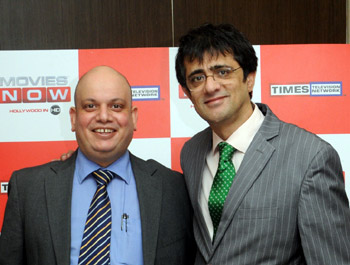
    Movies Now has completed a year. And the story of the channel’s progress since day one of launch is an exciting one, especially for the officials who’ve been running the show. Numbers of the past 51 weeks across eight metros indicate that Movies Now has garnered a market-share of 30 per cent and has increased the category viewership by 50 per cent (from 50 GRPs to 75).


    The reach too, increased from 46 million viewers to 56 million. And the average time spent has shot up from 42 minutes to 55 minutes. (Source: TAM, CS 15-34, AB, All 8 Metros, week 52’10 – week 50’11).


    The channel launched with a bang and shook up the otherwise dormant category, dominated primarily by Star Movies, and of course other players like HBO and Sony Pix, which had spent reasonable amount of time in the market.


    HBO has been in the market for more than a decade. Experts believe that with the right kind of content, marketing and distribution push, Movies Now wiped out every bit of complacency that had set in among existing channels. Now, as even other players would agree in the category, the market has become more competitive, and a lot of action can be expected in the genre.


    The strategy was to first set foot in the six metros and from there look at expanding their reach further. In fact, in its first month, the channel did not have a single DTH company on board. Currently present in eight metros, Movies Now will now look at getting to the 1 million+ market. With digitisation of TV, quite naturally the channel will look to move from analog to digital.


    Currently the channel reaches out to 100 million households and the plan is to get to the 140 million mark by end of next year.

    Ajay Trigunayat, Channel Head informed MxM India that the plan was pretty much to aim at the top. “We were clear right from the beginning that we wanted to bring a stellar brand to the viewers. We’ve challenged the status quo and reshaped the marketplace. 89 per cent of our viewership is library-led, and unlike other players, we cater to all eight metros. In the past one year, we have increased the category reach by 22 per cent and time-spent per viewer by 33 per cent.”


    He added, “In 2011, we are the most searched English Movie channel on Google India, we have about 5 lakh Facebook fans.”

    For Sunil Lulla, Managing Director and Chief Executive Officer, Times Television Network, Movies Now is a super-smash-hit story of the year 2011.On what it means to the Times Broadcast Network, he said: “As a network we cater to the Urban Affluent audience. All our channels – Times Now, ET NOW, Zoom and Movies Now have been doing very well in their respective genres. These channels, put together, provide great value to advertisers; it generates a fantastic synergy.”


    On what he expects from Movies Now in the future, he said that the channel’s primary focus will be to achieve consistent growth and in the process widen the gap from its nearest competitor.

  • PR must look up to advertising: N S Rajan

    By Johnson Napier


    With foreign players taking a keen liking to India, the PR industry is poised for a quantum leap. Not the one to miss out on the race, Ketchum Sampark is doing everything right to stay on track and be counted as a contender worth the deal. In conversation with Johnson Napier of MxM India, N S Rajan, Managing Director of Ketchum Sampark outlines his agency’s plans to be counted amongst the best and why quality, and not numbers, will be the differentiator in the race to win and retain more clients. Excerpts:


    Q: It’s been some 7-8 months since the much-hyped tie-up with Ketchum. How would you analyze your journey post the acquisition?

    There has been no change as such at the ground level but yes, processes have changed, reporting has changed – it is now more in terms of financial and MIS reporting and not so much in operations. Also, what probably has changed and helped us is the access to information, access to best practices, access to case studies… so it is a win-win situation for us while we continue to work the way we are.


    Q: Could you elaborate on your choice of shortlisting Ketchum as your foreign partner?

    We have been working with Ketchum for more than three years now so this tie-up is actually a formalization of our relationship. We have been very comfortable with the cultural match. I think philosophically, Ketchum and Sampark have always had the same focus in terms of client deliveries, choice of clients, etc so there were a lot of similarities between us.


    Q: Come to think of it, the venture looks like Omnicom’s reply to making its presence felt in India – just the way Publicis did with Hanmer. Your thoughts?

    I think this is something like a process of evolution. We have been working with them for 3-4 years, and it just happened that the timing is now. It did take time for us to tie the knot as there had to be a comfort level on both sides. We probably got into a JV at the opportune time as the media is opening up and India remains a good market for bringing a foreign partner where we are able to service global clients in India and also open up our offices and network for Indian clients wanting to go abroad.


    Q: On the growth perspective, how would you analyse the year 2011 for your agency?

    I think we have done well. We have grown by 25 per cent and this has come on the back of 30 per cent growth that we recorded last year. Also, we signed on a lot of good clients. This apart, we just recently announced Ketchum Sampark Digital and also set up specialised verticals in healthcare and infrastructure. We believe this tie-up will take us to the next orbit in terms of skill-sets, information flow, etc. More importantly, what we have learnt from this venture is best practices. We have to understand that the market dynamics are changing and people are looking for specialised services in each of the areas. I think there is a lot of comfort at the client level if you are able to bring in value in each of the domains. That’s because clients are also looking at core focus, specialisation, skill levels, agency background, etc. So to that extent healthcare and infrastructure remains our focus areas because a huge growth is predicted in these areas. Another important area for us is crisis communications; we believe a separate vertical would be good to go with for crisis.


    As for our agency, we are divided into four verticals – brand, corporate, technology and financial services. Healthcare and infrastructure would continue to be separate verticals but could probably be clubbed under corporate. This apart, sports is another area that is huge for us. We have handled some very big marquee properties across India ranging from cricket, golf, football, etc. So that would continue to remain a focus area for us. We also engage in organising festivals like the Jaipur Literary Festival which witnessed the gathering of more than 400 authors and many media professionals from around the world.


    Q: How according to you will digital change the way PR functions, say, in a few months from now?

    According to me, the game changer in 2012 for the PR industry will be digital, as its significance and importance will be largely felt. The traditional way of communicating today will probably go direct-to-consumer with the help of digital. Also, with digital, there is a lot of opportunity for content, for social media, for gathering traffic to your site, to build conversations around content and also monitor them, etc. With Ketchum being one of the global leaders in digital I think we have a huge advantage in terms of assimilating knowledge much faster, so we will be able to scale up very quickly.


    Q: You’ve mentioned a growth rate of 25 percent plus; does that translate to occupying a fair market share as well?

    While we figure amongst the top 5-6 agencies in India, our emphasis has always been on quality. We would probably be happy if we were perceived as an agency known for its quality. I may not be the No 1 in terms of size, but I certainly will be No 1 in terms of quality. We would love to earn the respect, trust and long-term partnership from our clients. Also, we would like our employees to be happy. If in the process of doing all this we improve our ranking, we’ll be happy with that.


    Q: Despite the low-warning signs, how are you warming up to the current economic situation being tagged as ‘tough’?

    While on the slowdown, let me tell you that during the 2008-09 recession, when most agencies lost business, we were the only agency that grew that year – even if the growth was single digit. So there will always be some amount of hardship so long as clients believe that you will be able to deliver value to them. In our experience, our clients have retained us during the tough times as well. The challenge for any business is to see through the bad phase and that is possible when you are focused on quality, people and such attributes. But if you are chasing to be the No 1 player then there are chances of you losing out.


    Q: Do you plan to scale up operations across other centres in India?

    We are currently present in seven cities and we do have aspirations to roll each of the practices in each of the regions. We just hired a senior person to handle our office in the South so we are taking all steps necessary to grow all our offices. Also, we have an SBU concept where we encourage and handhold all our businesses to be profitable and contribute to the growth. So that process is happening. Finally at the end of the day, it is important for each SBU to contribute to the overall growth of the agency.


    Q: Where the industry is concerned, what can be done to make it more organised than the state it is in now?

    I think it should begin with individual agencies taking the onus and coming on a common platform to address the woes of the industry. It is important for the PR industry to look up to the advertising industry which, despite having its share of problems, is much more organised. Today, one is not even sure what is the exact size of the industry. If you put the top 10 PR agencies together I think they would be estimated to be around Rs 300-400 crore whereas the unorganised industry would be around Rs 150-200 crore. So the total industry size could be anywhere between Rs 500-600 crore. Also, the problem is compounded by the fact that compared to other markets, our fees are a little lower. Our fees are 30-40 percent lower than even that of China. There are too many players in India leading to the fees being compromised. But having said that there are clients who are willing to pay a premium if they are convinced about the quality of the service being offered.


    Q: What is the way forward then?

    I think in the long term a lot of agencies would opt for the consolidation route. What is happening is that companies here are also realising that they need networks that will lead them to get more organised, have access to better offices, skill sets, etc. All this is possible with a larger network. While pop-and-mom stores will continue to exist they too will increasingly take the consolidation route.


    Q: Any other attributes that need to be paid greater attention to?

    One attribute I think needs more attention is people. I think we don’t have too many qualified people. Also, the good PR professionals are not adept at running a business – a lacuna that needs to be bridged. This is possible with effective training programmes. We have our own in-house training programmes and we hope to train our colleagues on this front as well. Also, we plan to have a fixed number of hours for training our staff. At the end of the day, being in the services industry skills and people are important attributes that one needs to pay adequate heed to.

  • Cadbury & O&M top Effies 2011 honours


    By A Correspondent


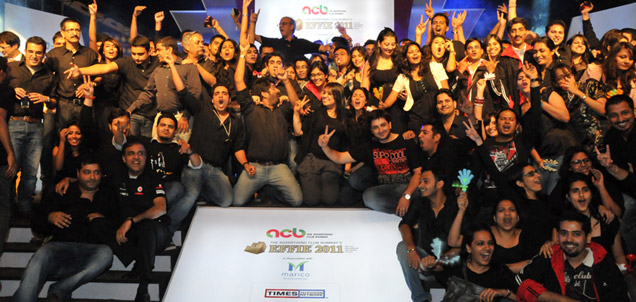
    On an exhilarating race day, at a place where horses would be galloping and competing their way for a finish to the top, yesterday it was the turn of the advertising fraternity to trot the turf and vie for their prized silverware. Mahalaxmi Racecourse in Mumbai was host to Effies 2011, the only awards show of its kind that recognizes effective advertising by creative agencies.


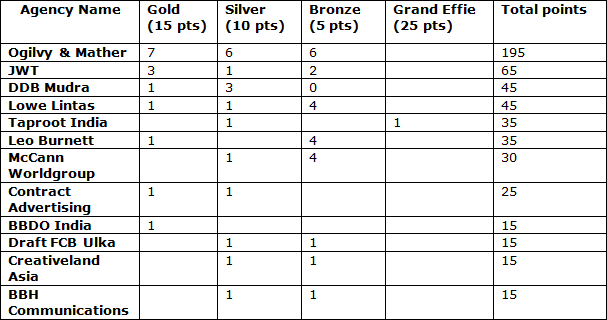
    Having finished as the agency with the highest number of shortlists, Ogilvy & Mather didn’t disappoint as it swooped a bagful of awards – 19 metals in all – leading it to be pronounced the Effie Agency of the Year for 2011. With a tally of 195 points – 7 Golds, 6 Silvers and 6 Bronzes, Ogilvy thumped its nearest rival JWT by almost thrice the number of metals, a milestone that has been a regular affair at the awards. JWT came a distant second with 65 points – 3 Golds, 1 Silver, 2 Bronzes, while DDB Mudra and Lowe Lintas were tied for the third spot with 45 points each.


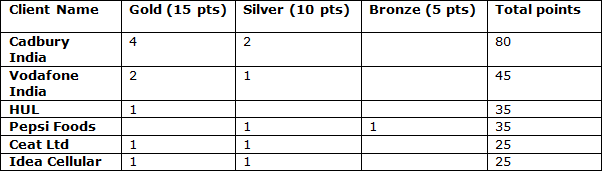
    The icing on the cake for O&M was when its coveted client Cadbury was declared the Effie Client of the Year. With 4 Golds and 2 Silvers, Cadbury edged out Vodafone India – an Ogilvy client as well – which occupied the second spot with 2 Golds, 1 Silver and 1 Bronze. HUL came third with a single Gold and 4 Bronzes.


    Flagging off the awards ceremony, Shashi Sinha, President of the Bombay Ad Club welcomed the gathering by stating that it had been a stellar an experience for the organising committee and the judges who managed to sieve and rummage through a bundle of noteworthy entries. Apart from the big number of entries and new additions the event managed to attract, Sinha said that the awards was different from the others, as it was run on international guidelines and was importantly, controversy-free.


    Lavishing praises on the event, Chairperson – Effie Committee and fellow-member, Ajay Kakar began by citing an anecdote. “During my early days as an executive in an ad agency, I used to often hear marketers say that half the money I spent on advertising is wasted and the trouble is, which half was wasted was not known. But with the instituting of the Effies, that perception has changed. In fact, it is the only awards show where both the client and the ad agency walk together to collect the awards.”


    According to Kakar, it was truly a remarkable experience for the organising committee this year as there were more categories – 12 in all, which saw around 300 entries and the 80 judges had the arduous task of shortlisting the best.


    Winning stance

    Elated with another super showing, Abhijit Avasthi, NCD, Ogilvy India remarked: “We are absolutely thrilled, given that Effies is a culmination of the year’s efforts and that it is the right balance between creativity and effectiveness in the marketplace. What’s more reassuring and satisfying is that the wins are across a lot of categories and clients.”


    When asked to comment on his client bagging the Client of the Year award Avasthi said: “Though we are happy that Cadbury has bagged the Client of the Year award, we have been supported phenomenally well by our other clients too.”


    Not disheartened by the performance of his agency, Colvyn Harris, CEO, JWT India, which came in second, said: “Every year, around this time, we review the works that we do for our clients and given our standing at the Effies this year, we hope to start 2012 with a brand new team so as to compete closely with the No 1.”


    On Effies being a great creative platform for agencies, Colvyn said: “I think Effies is a great platform for one to showcase their work, because finally, creativity may be everything but this is as important, if not more important, from a client’s point of view. If you are not successful in the marketplace, then nothing else matters. So my ambition is obviously to do well at the Effies and back that up with a good creative showing as well.”


    It was a night of thrilling proportions for Agnello Dias and Santosh Padhi from Taproot India as they bagged the envious Grand Effie award. Sharing his initial reaction on the win, Agnello Dias, co-founder, Taproot India said: “It keeps getting better. When I won for Lead India, I thought this is it; I won’t get another Grand Effie. Then Teach India happened and this year I won a Grand Effie again. So it keeps getting better. It’s even more satisfying that we are doing it outside of a large network agency and we are doing it on our own.” On the hopes for next year, Aggie said that he aimed to continue the feat with Airtel and maybe also Pepsi.


    Enumerating on their win, Santosh Padhi, co-founder of Taproot India said: “We had sent four entries, of which three were shortlisted, while two bagged awards. So I guess it was a pretty good showing. Considering the size of our agency – we have around 30 people, versus other big agencies that have 3,000 people, or more. Competing with them and coming fifth is an outstanding achievement for us. This shows that it is not numbers that matter but the power of an idea that is important.”


    Joseph George, CEO, Lowe Lintas, which tied for the third spot, said: “I think we could have done much better because Effies are the only awards that we seriously participate in. Actually, we were a bit disappointed with the shortlist itself considering we had sent more than 20 entries. But no worries, we will try harder and do better next year. What is important is that the No 1 tag is never to be taken for granted and the same goes for No 2 and 3. So we hope to be back next year, bigger and stronger.”


    The other commendable awards for the night included Marico Uncommon Sense Award that was bagged by O&M for Vodafone’s ‘Blackberry for Everyone’ and Brand Equity Bravery Award that was bagged by BBDO India for Gillette Mach3 Turbo – Shavesutra.


    Tally:


    Effie Client tally:

  • Times TV boost for Ajay Trigunayat, Avinash Kaul

    By A Correspondent


    Times Television Network has enhanced the responsibilities of two of its senior personnel: Avinash Kaul, who will now be Chief Executive Officer ET Now and Zoom, and Ajay Trigunayat, who will be Chief Executive Officer, English entertainment channels.


    Mr Kaul and Mr Trigunayat will continue to report to Sunil Lulla, Managing Director and Chief Executive Officer (MD & CEO), Times Television Network.


    Announcing the new organizational focus, Mr Lulla said, “2011 has been a significant year of growth for Times Television Network (TTN). As the channels consolidate positions, it offers opportunities for talent to develop. Mr Kaul and Mr Trigunayat will bring new ideas, energy and passion for the network’s ambitious growth agenda. We wish them great success.”


    During the course of 2011, TTN’s revenue has grown by over 50 per cent, its reach has spread to 26 countries besidesIndiaand its channels are in leadership positions.


    Speaking on his appointment, Mr Kaul said, “‘Bollywood’ and ‘Stocks’ are deep passions ofIndia. I’m delighted to have a blend of entertainment and information as part of my mandate. I look forward to ensuring that ET NOW continues to consolidate its position asIndia’s premier stock market channel.”


    Mr Kaul was previously the CEO of Zoom and prior to that has worked with Fulcrum (Group M), Discovery Communications, Star, NDTV Media and Sahara One in strategic and management roles.


    Mr Trigunayat, commenting on his new role, said, “Movies Now has just about completed one year of stellar performance and I am looking forward to consolidating and growing the franchise of Hollywood entertainment for Times Television Network”.


    Mr Trigunayat was earlier Channel Head of Movies Now. Prior to joining Times Television Network, he has been in theMiddle Eastin an entrepreneurial capacity. He has also held the position of Business Head of the Zee English Channels bouquet, built brands and strategies for Lintas, Contract and Rediffusion and was in Sales at Pepsi.

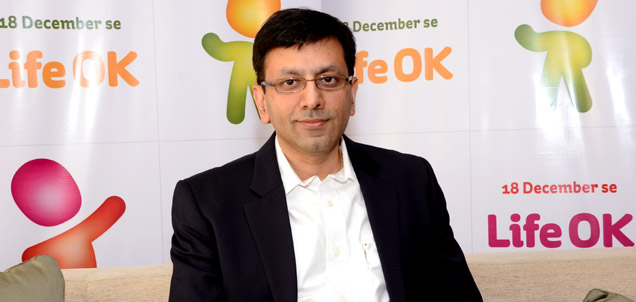
  • Life Ok will compete with Star Plus: Sanjay Gupta


    By Rishi Vora


    The new gleam in the sky from broadcast major Star India promises a unique viewing experience, differentiated content and a philosophy which it will thrive on. The idea is to have a challenger brand, one that’ll challenge even Star Plus – the No 1 channel in the GEC line-up today.


    Life Ok – the new avatar for Star One – was launched on December 18, 2011. The channel will target to first get to the 60-70 GRP mark, and from there its first big milestone – to be a significant player by winning the No 4 position and beating one of the four big players.


    How well it suits the Indian viewers is something to look out for. Meanwhile a quick glimpse of what the management is thinking. MxMIndia’s Rishi Vora speaks to Chief Operating Officer Sanjay Gupta on his expectations, and much more. Excerpts:


    Q: Why the decision to shut down Star One and launch Life Ok?

    Star One as a channel has been there for several years. But it delivered a very average sort of performance. It catered to a niche audience and never quite made an impact. In GRP terms, it clocked about 30-40 GRPs. So there was a need to ask tough questions. We thought there was an opportunity in the GEC landscape to come up with a channel that is unique and differentiated, going by the viewer and the way he consumes content. So we decided to rebrand Star One to Life Ok.


    Q: It is said that Star One was not given the required strategic push to compete with Star Plus and other GECs.

    Every business can reach its potential. The business idea, in the case of Star One, was to be a niche channel. So in thought terms, I don’t think we were very sharp. We did not have a content offering that was differentiated enough to create a long-lasting impact on consumers’ minds.


    Q: So was Star One treated like a second channel? Was it a conscious call that it should not compete with Star Plus?

    The question that we asked ourselves was: Should we continue to have a channel which is a second channel or should we really continue to have a channel which fights? Which may be second, third or fourth, but that’s not very important. We thought we should have a channel that’ll compete with every channel – be it Zee, Colors, Sony or even Star Plus. The whole idea of changing the name to Life Ok was to liberate the channel so that it could cater to consumers as a brand and as a content destination. So that it could be different and unique and in the process have a more meaningful presence than Star One.


    Q: So Life Ok is not going to be the second Hindi GEC channel of the Star Network?

    It is in the Hindi GEC, one more offering from Star India. Star Plus is our first offering. The reason why we have changed Star One to Life Ok is because this channel has come up basis our understanding of viewers and we believe there is a gap. The name carries a philosophy. Unlike Star Plus for example, where we connected Star and Plus-and it became Star Plus, Life Ok is a name with a purpose.


    Q: Was there any research done on the name? What was the thought process behind naming it Life Ok?

    The idea was to have a name which captures the philosophy of the channel. A lot of research and consumer work has gone into deciding the name.


    Q: Can you elaborate on the philosophy?

    Let me explain. We’re entering a very, very tough competitive market – the Hindi GEC market. So why will this work? In my view, this is likely to work is because this channel comes with a very unique promise which consumers and viewers will see every day. Stories and characters of this channel will come on every day – not for five days but for all seven days in a week. As a viewer you want to seek whatever you like – it can be music, films, radio, newspapers, and also in my mind the characters of the shows you watch on daily basis. So content will be offered to consumers seven days a week.


    Also, stories on other GECs are not pacy enough, in terms of the speed. So what we’re doing on this channel is, we will tell three stories in an hour unlike the norm which is two stories every hour. We will tell a story in 20 minutes, so when viewers come to our channel, they will find the stories very pacy.


    Q: What is the thought process behind the two-minute break?

    The two-minute break is again a viewer experience. I don’t want a big break. As a viewer that will put me off. A lot of people get distracted with a long break and end up not watching your show. So with three stories in an hour and the two-minute breaks, we’re telling the viewers that they don’t need to go anywhere. They know it’s coming back in two minutes, so they are more likely to be on your channel if the commercial breaks are not very long.


    Q: But that means there will be an impact on the bottomline.

    In the short run, yes. But in the long run, it brings you more eyeballs. Once we have a set of viewers, we can then make up…


    Q: What is the programming strategy for the weekends?

    Fiction shows, non-fiction shows, we will use Sach Ka Saamna every day including the weekends. We will also have movies on weekends, in the afternoons. Afternoon time is very important-the whole family gets together and watches TV. So yes, we will have a variety of content running on the weekends.


    Q: We’ve seen some failures in the broadcast industry – 9x and Real being prime examples. So what are the things that you need to be extra careful about?

    Doing a new channel is a very costly exercise. Therefore, there will be a huge amount of risk that you always run, whether you refresh a channel or you create a new channel. In either of the cases, it is important to have a differentiated offering. If the viewer is getting the same thing on many other channels, why is he going to watch yours? The idea for this channel, therefore, is to keep the viewer at the centre and offer him something unique. So if you’re able to stick to that – not only in the philosophy and the thinking, but also on the content you offer every day, then it gives you more chances of being successful.


    Q: True, but second GECs which have launched in the past haven’t done well. SAB, you may say, is an exception.

    Yes, Sony is a good example where it has two channels – Sony and SAB. And they’re working well, so if there is an appropriate positioning, relevant content, it would work. I think the learning which I mentioned earlier, if we have a unique proposition, keeping the consumer at the centre and differentiated content, it should work. And Sony and SAB is a good example in my mind to quote. Hopefully, Star One can learn from that and create a more meaningful positioning.


    Q: Are you going to roll out shows which cater specifically to the youth, the single largest segment of India? Something like Bigg Boss which does well in that department?

    We’re very focused on youth because we believe that is an important target audience. So if you look at the non-fiction we are beginning with – Sach Ka Saamna with Rajeev Khandelwal, where the big issue which we are tackling is corruption. Now, that is something which is at the top of every young person’s mind in the country. From the content, which you will see in the next few days, in terms of the message it delivers, it is not about saying let’s point fingers at others. It is about saying, ‘If somebody has to clean up the system, he or she has to start with us.’ That’s the message. And it is very much focused on the youth of India. Another show – Devon Ke Dev… Mahadev – we’re talking about one of the biggest gods of the country for whom most youngsters, especially women, fast for Mahadev in their early teens and before marriage. So that is a very unique thing we have on the channel and that’s the beginning of FPC every day. The rest of the content is dealing with absolutely the key issues which youth will emphasise on in a really big way.


    Q: But mythologies haven’t done very well for other channels. Colors and Imagine have tried it and haven’t produced fantastic results.

    I think Colors did fairly well on Jai Shri Krishna – the mythology serial they had. So if positioned well, it can work. We believe there is a market for mythology in a big way. It will have a different kind of emotion being catered to consumers.


    Q: Did you consider doing a big-ticket show like KBC, Bigg Boss, bringing a popular celebrity hosting the show?

    I think we have been very careful in the kind of emotions we want to deliver. And we wanted to be true to the philosophy of the channel that we’ve created. So we’ve stepped away from bringing a big celebrity. If somebody comes, he or she should be able to respect the values of the brand. And it is about cherishing what you have as a philosophy ‘Jo Apne Pass Hai Woh Khas Hai‘ and that’s why all the content pieces are on the lines of that philosophy. In fact everything we’re doing is true to that. And that’s the reason we’ve stayed away from having a big celebrity on the channel.


    Q: So going forward if there is a need to have a Amitabh Bachchan or a Shahrukh Khan, would you go for it?

    At this point in time I would say if it fits in nicely with the philosophy of the channel, then we will definitely consider it.


    Q: Why Madhuri Dixit as the Sutradhar?

    There is a lot of learning that’ll come out from the shows we’re putting up on the channel. What we wanted to do by bringing Madhuri was: as we show the content, everybody takes away their own understanding. What she does on the channel is, she poses questions, brings in her understanding and her life reality, and really puts a lens in front of viewers to evaluate and see the content well. And therefore, it really raises the question – are we really cherishing what we have or not? Or are we worrying only about possibly the dreams of future alone? And, in her life she’s done the same. She has been one of the big superstars and has taken a break – been a family person. So she has balanced her life very well. So the persona fits in well with the channel’s philosophy. And she hopefully will be able to raise the questions in everybody’s mind and help viewers view the content through a new lens.


    Q: But what is the fan following of Madhuri Dixit today? Do you think there are enough fans, because quite clearly, her days are gone.

    Firstly, all big stars have a really valuable equity in consumers’ minds. But the important thing is how this fits in with the channel’s philosophy. And in my mind, it fits in very, very well.


    Q: How has the response been from the trade?

    Mixed response, I would say. People are surprised that the brand name doesn’t carry Star in the name – that’s been one of the questions from a trade point of view. And they’re wondering why. And also the other trade response is that we have a good variety of content. So they feel that the content looks very powerful and hopefully, the next few months will tell us how the business goes.


    Q: What will be the channel’s reach on Day One?

    Star One today reaches out to around 40-45 per cent of people every week. Those are the people who come every week to view Star One. Hopefully those people would definitely come to see the channel and basis the marketing campaigns, other sets of viewers will get curious about the channel and they’d come and like to watch it. So anywhere between 40-45 per cent definitely should come and maybe some more would like to come and check out the channel. And finally the content strength will determine how many people will become regular watchers.


    Q: Do you expect to be the No 4 channel, beating Zee, say in a month’s time after launch?

    Star One is at around 40 GRPs right now. And if we grow significantly, that’s the first good number to look at, because this journey is a long journey. We are not starting it to really take a big leap in week 1or week 4. If you’re able to grow from where we are significantly, that’ll be the first milestone. And as I said earlier, it competes with every channel in the GEC space. If the content is powerful, it’ll grow – but the first initial aim would be to get to a 60 or 70 GRP mark. That will be an important milestone for us.


    Q: How long will the aggressive marketing campaign continue?

    We started this campaign around a week ago. We started it on December 12, it continues in full intensity now and it will continue for another few weeks. So it will be a four-week campaign which will run supporting the channel launch.

  • Movenpick Hotels looking to expand in Indian market

    By Tuhina Anand


    Movenpick Hotels & Resorts, the international chain of hotels with its Swiss roots, has just made its entry in to India with its first property in Bengaluru. The chain however plans to expand its presence in India and is looking at having 10 properties in the next three years. The plan to expand includes building new hotels as well as rebranding some of the already existing properties of other brands into Movenpick.


    Talking about their plans, Gary Moran, GM, Movenpick Hotel & Spa Bangalore said, “It clearly makes sense to have a pan-Indian presence. This can be only achieved if we have more properties here thus helping us in having a significant brand presence. We have big plans forIndiaand in fact we are constructing a resort hotel in Dharamsala which should be done by 2013. It’s a new build so it will take time but before that we will have many hotels inIndiaand we are looking at rebranding. We are very close to signing a deal in Chennai and looking at two hotels in Rajasthan one of which is an existing brand and one is a new build. So it’s a combination of two. Rebranding definitely is a quicker way to grow.”


    On the Indian hospitality sector today, Mr Moran said, “The market is becoming fragmented as more hotels open up. There is an increase in both supply and demand, but right now it looks like supply is outdoing the demand. This trend is healthy for consumers and even will make hotels raise their game. In a monopolistic market the opportunity to improve is not a priority whereas with competition this becomes imperative.”


    Movenpick positions itself on the old values of hospitality which is stressing on the basics and being a very good quality upscale four and five-star hotels. It doesn’t profess to be super super luxury hotel and doesn’t compete with this category, but competes with the best of 5-star hotels. The company has in all 71 hotels and is planning 30 more, one of them inBalito be finalized soon. The company is focusing onAsiain a big way.


    Movenpick has come up with its first property in Bengaluru primarily because the management contract came into fruition first here, but they are constantly in talks with prospective owners in Mumbai,Hyderabad, Rajasthan and Chennai among others. The property in Bengaluru is called Movenpick Hotel & Spa Bangalore, and is positioned as a business hotel.


    The company is clear that the only way to build the brand is to bring in more properties with the Movenpick brand name. Also, in terms of marketing, since they just have currently one property they have planned hordes of activities like its grand launch, Christmas special and art exhibition to get more people to experience the hotel. Besides a geographical presence, the plan is also to build an India-specific team which will look after sales and other activities of the company.


    Movenpick Hotels & Resorts is represented in 25 countries with 71 hotels and resorts currently in operation. A further 30 properties are planned or already under construction inAnkara, (Turkey),Dubai(four projects -United Arab Emirates);Abu Dhabi(three projects -United Arab Emirates),Shanghai(China), Dharamshala (India) among others. The hotel company is owned by Movenpick Holding (66.7%) and Kingdom Group (33.3%).


  • Rahul Thappa, Bharat Bhushan quit Mail Today

    By Akash Raha


    Rahul Thappa, COO of Mail Today has quit the group. Mr Thappa had joined Mail Today in May 2011, taking over from the then-COO Suresh Balakrishnan. Rahul Thappa is serving his last week at Mail Today after which he will move to his new organization, which he refused to name at the moment. When asked by MxM India, he confirmed that he has quit.


    He said “I’m thankful to the board of Mail Today Newspapers Pvt Ltd for having given me the opportunity to head the operations of the publication as its COO. It was a pleasure working with the entire MT team and the operational learning from having managed a daily newspaper has added immensely to my repertoire of skills. I am confident that the newspaper will grow into a force to reckon with in the years ahead. My new assignment is in conformance with my long-term career objectives. I shall be able to speak about my assignment in the weeks to follow.”


    Mr Thappa earlier worked as the Managing Director at Mindshare Malaysia. He also held a key position at the India Today Group, where he reported to Mr Ashish Bagga, CEO, India Today Group.


    Bharat Bhushan, Editor, Mail Today has also quit the organization. Mr Bhushan, too, confirmed this development, but refused to make any further comments. Mr Bhushan was a part of Mail Today’s launch team and was earlier the Editor of Telegraph – Delhi edition.


    Mail Today, the compact daily in Delhi, is a joint venture of India Today Group and Associated Newspapers (ANL), publisher of Daily Mail, UK.

  • Anchor: 6 wishes for Santa for the media biz

    By A N Chorrea


    1. Blow away Slowdown blues

    Will Santa please bring in some cheer to the world struck by slowdown. Don’t get fooled by the launch of the new channels and publications and all the executive movements in media and markeing. It appears the slowdown is for real. And we want Santa to blow it away.


    2. May we have a Clean election

    There’s going to be plenty of political action in the coming months, and we want Santa to ensure the media doesn’t play favourites by way of paid news.


    3. Need differentiated content on entertainment television

    A new GEC was launched yesterday. With content that was differentiated. Quite like the way Colors was when it was launched. But look at many of the GECs around. Switch channels on any evening, and you’ll find similar content across. Santaji, please help on this score.


    4. And Clean news too?

    News ought to be clean and not without any biases, but many of our news channels tend to exaggerate and sensationalise news. And if they are partisan, then don’t say it upfront. Santa, we don’t want the government to regulate content, but can you please give the erring channels a piece of your mind?


    5. A hands-off government please?!

    Dear Santa, please give a chillpill to Madame Ambika Soni. She (and her ministry and its various constituents) have been flexing their muscles way too much off late. She wants to regulate everything: our advertisements, the content on entertainment and news television, the way the business is conducted. Etc etc.


    6. Better talent needed

    Where is the talent in our industry? Are arms of the media attracting best talent to be able to match up with the talent amongst marketers? Dear Santa, this is tough for you to achieve, but if we are able to create that awakening in the way the media business is run, we could achieve results. The competition in the business has led to very reduced margins and as a result the business can’t really afford top quality talent.


    Do you have any more wishes for Santa? Mail them at editor@mxmindia.com with the subject ‘Dear Santa’ and we’ll feature them on MxMIndia