Author: mxmadmin

  • NDTV Profit to spotlight social & environmental issues

    By A Correspondent


    NDTV Profit’s Docs + is back with a new documentary featuring ‘Earth Focus’. The documentary is produced by Raisa Scriabine and will aim to put a human face on pressing environmental issues in South Asia.


    Speaking on why there is a need to have such shows, the spokesperson for the channel said: “It is important to raise awareness on vital subjects that focus on key social or environmental issues in India, like child marriage, farmer suicides, water privatization, sustainable agriculture, female foeticide and trafficking of women.”


    ‘Earth Focus’ will investigate the relationship between human consumption and sustainable production methods in various regions of India, including Ladakh and the Sunderbans in Bangladesh. With soaring food prices, a growing population and changing climate, modern food production has to be commercially viable and involve sound environmental practices.


    Docs+ is a new weekly series on the channel which will showcase powerful documentaries on global issues. The channel is expecting a good response from viewers as it feels that such issues are in the limelight now and people are ready to learn about them.


    The show will go on air on August 11 at 10pm and will be repeated at 5pm on Sundays.


  • Initiative announces two senior appointments

    Venkatasubramanian
    Vishnu Sharma
    Manas Mishra

    By A Correspondent


    Initiative India has announced the appointments of ‘R Venkatasubramanian and Vishnu Sharma as Senior Vice Presidents in the company.


    While Mr Venkatasubramanian or Venkat, as he is universally known, will oversee investments and sports, Mr Sharma will be in charge of strategy and insights for all clients of the agency in Delhi.


    Mr Venkatasubramanian is returning to Initiative, where he worked for almost a decade, after two shorts stints at Maxus and MPG. Mr Sharma is presently national head of Sales Strategy and Business Analytics at HT Media. He has experience of more than a decade working with national brands such as Airtel, Hero Honda, LG and others at Group M and Madison before.


    “These key appointments will help take Initiative to a superior level of delivering business and media solutions for clients. I look foward to welcoming Venkat and Vishnu as part of my leadership team for this agency,” said , newly appointed President of the agency.


  • Tamil GEC Vijay TV inks carriage deal in France

    By A Correspondent


    Star Network’s Vijay TV will now be available on Freebox TV, Free’s IPTV platform. The launch will make the channel’s first IPTV carriage deal inFranceand also strengthens Free’s current offering of Indian content.


    Vijay TV is Tamil language general entertainment channel catering to the taste of Tamil audiences across the world. Vijay TV has raised the bar on content, packaging and promotion, thereby differentiating itself in the market. Furthermore, Vijay is a 24hour Tamil language channel that carries English subtitling on some of its key programming.


    Yeshpal Sharma

    Vijay TV is available on Freeview from end of July till 15th Aug and viewers can catch a special line-up of programmes for the Indian Independence Day on August 15.


    Commenting on the launch, Yeshpal Sharma, Vice President Star UK & Europe said: “We are very proud to be at the forefront of the Asian television entertainment offering and delighted to partner with Free to launch our leading Tamil entertainment channel in France”.


    Free users can subscribe to the Star Pack including Star Plus, Star Gold, Star Life OK, and ABP News at 15.99 Euros a month.


  • Audiences have given MTunes the best birthday present: Sunil Sahjwani

    [youtube width=”400″ height=”220″]http://www.youtube.com/watch?v=rreKrZ7F0B8[/youtube]

    By Meghna Sharma


    MTunes, the 24/7 music channel, completes one year today (August 10)  and can already boast of a 20+ GRP. Completing one year in a genre which revolutionized music during the 1990s isn’t a big deal. However, if one becomes a force to reckon with in such a short period, then it is, of course, a matter of pride.


    “When we started, we were at number five or six slot, but now we are number one in the slot. So, I guess we can call it a fast-faced and exciting journey with, of course, a lot of hard work,” said Sunil Sahjwani, Group Creative Director for Pioneer Channel Factory Pvt. Ltd. (holding company of MTunes and MExpress).


    Sunil Sahjwani

    Agreeing with him, Divya Radhakrishnan, MD, Helios Media which is strategic consultant to the channel said: “It’s wonderful to receive such a response for such a short period. They believed in our belief and helped us break convention with no VJ or no PJ on the channel only focusing on music.”


    Recently various prominent music channels have started a new trend of reality shows and now turning into youth general entertainment channels. Speaking about the same, Mr Sahjwani said: “There is no harm in experimenting and we are glad that they did that. Because the space vacated by them has given more space for music channels to grow. Also, we must realise that youth wants music, otherwise music channels wouldn’t have survived.”


    “In the name of ‘youth entertainment’, various channels forget where to draw the line and have created new lows of the Indian television industry,” rued Ms Radhakrishnan.


    Divya Radhakrishnan

    Apart from showing music in HD format which is its USP, the channel also prides itself in creating original properties like Asli Voice, Trending20, Kal ka Superhit and so on.


    “The channel’s aim is to reach out to various age groups and moods during the day and that is why the tempo of music keeps changing during the day. For instance, the day starts with fast-paced music, whereas in the afternoon the tempo reduces, only to increase again in the evening We want people to feel music and not just hear or see it,” said Mr Sahjwani.


    Music, today, is consumed across media – television, radio, internet, mobile, phones and other digital devices. So it is affecting the genre on TV? “No, we must realise that apart from a few urban homes, high-speed internet is still not available everywhere else. Having said that, there is also no denying the fact that youth consumes music on various platforms and internet is one of them. But the visual-audio treat provided by the television cannot be matched by others. Hence, it would be fair to say that other platforms act as a support system for TV. They only push the genre – which is great,” said Mr Sahjwani.


    And what about digitization? The channel isn’t available on platforms like Tata Sky. “We are aware of that and are working towards that. We are already there on Dish and Videocon and talks are on with other platforms. However, since we are a FTA channel, we don’t have much to worry about. And of course, we are hoping that digitization does happen this time around.”


    The channel opened its sales in April and hopes to do well in the coming years. “Our first motto was to build numbers, which we have been able to. So, now hopefully, we’ll be able to growth manifolds,” said Ms Radhakrishnan optimistically.


    The channel feels that Indians thrive on music, so the genre will only grow. However, one needs to be innovative and give the audiences what it wants to stay ahead in the clutter.


  • Bloomberg UTV to be called Bloomberg TV from Monday

    By A Correspondent


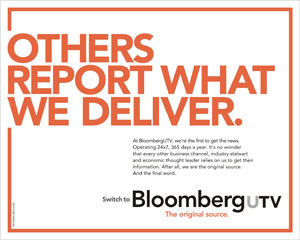
    Business news channel Bloomberg UTV is to be rechristened Bloomberg TV. The change will be effective Monday, August 13.


    The channel which started as UTVi in 2008 was later called Bloomberg UTV after a strategic investment from Bloomberg LP in 2009.


    Recently, the channel unveiled a campaign crafted by Triton Communications with the ‘U’ in the name greyed.


  • LifeCell appoints Edelman for PR

    By A Correspondent


    LifeCell International, India’s largest stem cell bank, announced its decision to appoint Edelman as its PR partner to handle LifeCell’s public relations and media mandate.


    Founded in 2004, LifeCell was the first to bring the revolutionary concept of umbilical cord stem cell banking to India and with over 50,000 parents who have chosen to preserve their baby’s umbilical cord stem cells with LifeCell; the company retains its significant market leadership. LifeCell has a pan- India presence, providing its services in over 100 towns and cities in India.


    Edelman’s mandate is to raise public awareness about stem cell banking, improve understanding about the concept of stem cell banking amongst consumers and medical professionals, increase media visibility for LifeCell and highlight the company’s offerings and leadership position in the industry.


    Commenting on this partnership Mr Ravi Shankar, Head – Corporate Communications & Marketing, LifeCell International said: “LifeCell is poised for high growth in the coming months and is in need of a PR partner who will fuel this trajectory by increasing the concept and brand awareness of stem cell banking in the market. We are pleased to join hands with Edelman in our growth phase. We are confident of leveraging Edelman’s expertise and pan- India presence to create awareness about the importance of stem cell banking and to highlight LifeCell’s role, unique offerings and significant leadership in the area of stem cell. Edelman India’s expertise in the healthcare & consumer space and thorough understanding of our business helped us reach this unanimous decision to appoint them as our PR partners.”


    To further enhance awareness, LifeCell partnered Lisa Ray, who had undergone successful stem cell therapy for treatment of blood cancer. LifeCell’s association with Edelman is intended towards further penetrating the market through higher levels of market education and awareness.


    Robert Holdheim, Managing Director, Edelman India said: “LifeCell International is a pioneer in the field of stem cell banking in India and we are delighted to be associated with them. This win has cemented our position as leaders in healthcare communications in India. Stem Cell banking and research has enormous scope in the field of regenerative medicine. We hope to help LifeCell maintain and expand their position as leaders in the field of stem cell banking and research in India and globally”.


  • Direct selling companies like Oriflame, Amway beat economic slowdown, grow 23% in FY12

    By Ratna Bhushan


    Sanjana Jalan, an executive with a multinational and mother of two living in upscale Gurgaon, has not shopped for cosmetics at malls for a year or so. “I just call up my Oriflame distributor who delivers the cream and lipsticks I want at my home at the same prices I would pay for a brand in a retail store,” she said.


    If it’s convenience that makes Ms Jalan opt for a direct-selling brand, Lata Gupta, a receptionist at an export house in Mumbai, uses only Tupperware containers in her kitchen because of their durability. “These last really long, make my kitchen look smart…and products come with a life-long guarantee that’s something others don’t offer,” said Ms Gupta.


    Reasons may be different, but Indian consumers are increasingly buying Amway shampoos, Tupperware containers, Oriflame creams and Herbalife wellness drinks. While traditional FMCG companies are facing slower growth due to economic slowdown and weak monsoon, direct-selling companies seem to have bucked the trend riding on stable demand, direct engagement with consumers, flexibility in market penetration and lower costs.


    “The direct selling industry is showing diversified consumption patterns across the country, increasing demand from tier-2 and tier-3 cities and higher acceptability by consumers, distributors and entrepreneurs,” said Chavi Hemanth, secretary general at the Indian Direct Selling Association (IDSA).


    Direct selling firms-which sell their products to consumers without routing them through retail stores-are estimated to have posted 21 per cent-23 per cent growth in India in 2011-12, according to IDSA and industry body PHD Chamber.


    In contrast, traditional FMCG companies, which sell through retail channels, grew 15 per cent in 2011, and 17 per cent so far this year. Of course, the direct-selling industry with estimated revenues of over Rs6,000 crore in 2011-12, is minuscule compared to the country’s FMCG industry estimated at about Rs150,000 crore.


    But direct sellers such as Amway, Tupperware, Oriflame, Herbalife and Modicare are growing faster-the industry is expected to touch Rs10,800 crore by 2014-2015.


    “Since we engage directly with end consumers, we haven’t seen a significant slowdown. Traditional FMCG companies are unable to offer a personal connect with their consumers,” said Bill Pinckney, MD of Amway India, the country’s biggest direct selling firm with sales of Rs2,130 crore.


    Amway, which sells shampoo, toothpaste, home care products and health supplements in India, overtook traditional firms like L’Oreal, Nivea and Kellogg by revenues last year.


    So what helps direct sellers largely avoid the slowdown? For one, say industry experts, the direct selling industry is by and large not impacted by fluctuations in rural demand because most products target urban consumers. Also, these firms have direct engagement with consumers, most companies have brought down prices at par with traditional products, and almost all products offer buy-back guarantees.


    Direct selling firms have lower costs of doing business because they don’t invest heavily in mass media and save on expenses involved with distributor and retail channels.
    “Also, their consumer outreach is much higher,” said SP Sharma, chief economist and head of research at PHD Chambers, which brought out the report: ‘Expanding horizons – Indian direct selling industry’.


  • Gangs of Wasseypur 2: Too long, too violent!

    Gangs of Wasseypur 2


    Directed by: Anurag Kashyap

    Produced by: Anurag Kashyap, Sunil Bohra

    Written by: Zeishan Quadri, Akhilesh, Sachin Ladia, Anurag Kashyap

    Starring: Richa Chadda, Nawazuddin Siddiqui, Jameel Khan, Syed Zeeshan Quadri, Aditya Kumar, Reemma Sen


    Anurag Kashyap’s films usually get the kind of reviews that praise his craft and pan his indulgence. So even though Gangs of Wasseypur 2 got the expected 3 and 4 star ratings, almost all critics seemed to agree that it was too long, too violent and not quite necessary.


    The ones who got the most out of the films are Nawazuddin Siddiqui and Richa Chadda, for whom it turned out to be a career launcher.


    Rajeev Masand of IBN wrote: “It’s hard to deny that Wasseypur II is lacking. In plot for one… Despite the cinematic flair, this film weighs down on you, seeming like an endless series of killings without a narrative to string it all together. Where is the method to this madness? Unlike the earlier film that took its time (too much time, to be fair) to set up the chapters, this sequel hits the ground running with relentless gun battles and daylight murders. Yet it feels curiously empty, as if the characters are just moving around in impressive set pieces.”


    Shubhra Gupta of the Indian Express, who had loved Part One is less effusive this time: “There shouldn’t have been a Part 2. This should have been the post-interval section of Gangs of Wasseypur, carrying over, instantly, the charge of the first half. Yes, one continuous flow would have made Gangs Inc. a very long film, closing at nearly six hours. It would have challenged our notions of how long we can fill seats, without squirming or fidgeting, or thinking of escape. But it would have given us the story’s arc from beginning to end, smoothly maintaining the integrity of the plot, action and thought. For me, GOW2 is a follow-through that is shot through with flashes of brilliance, and some wonderful comic verve, but that doesn’t have the enthralling power and spread of the first film.”


    Madhureeta Mukherjee of the Times of India gave it a cagey 4 stars, writing: “For those who like their celluloid hard and bloody and full of machismo, with an overdose of bodies, butchering and bloody-bravado, welcome to blood-fest – Round Two! This time it’s double the dollops of gore; two much. Booming guns and metal-shredded innards spilling gut onto the streets. More revenge and rage. More gangs and more bangs (some pistols firing from lungi covered groins) and more man-power. With every shade of red, black and grey – deeper and bolder.”


    Aniruddha Guha of DNA also toned down his rah-rahs for Part 2: “Unfortunately, Gangs of Wasseypur – 1 and 2 together – falls slightly short of a truly satisfying experience. There’s so much to take back – mood, flavour, character, attitude – yet it leaves you slightly vexed, and wanting more. Not more in terms of duration, but in content. Given the investment it demands – 2 hours and 40 minutes of your time, twice over, and loads of patience – the takeaway is just not as rewarding. It was so in the first one because it was incomplete, and it is so in the second because it stutters on its way to a stunning finale.”


    Raja Sen of rediff.com commented: “Kashyap’s visual flair has just grown with each film, and this one is not just cinematically self-assured but also highly nuanced: some of the touches – like Mohsina’s choice of paperback – border almost on a Dibakarian immaculateness. Perpendicular Khan, meanwhile, like the Bob Biswas we met in Kahaani a few months ago, deserves his own graphic novel, pronto. Like one of those unending strings of ladis, this is, then, a proper firecracker, even if far too long. Had Ramadhir Singh broken his coda and watched it, he’d have doubtless been gunned down mid-film, the length (and volume) allowing his foes more than enough celluloid cover to set up sniper-rifles, grenades and knifemen for the job. Sheer murder, surely. Yet, like the inevitably doomed characters in this Kashyapverse, he’d have gotten to grin a few times before biting the dust.”


    Kunal Guha of in.yahoo quipped: “Phuchchak! A stab in the eye. Krreeeech! A human head severed from the rest. Swish! Swoosh! Perpendicular and tangent blades inserted into flesh. And then, a semi-automatic is used to poke intestines swinging from a carcass that has been polka-dotted with gun fire. Now you know, when director Anurag Kashyap says dark, he means 99 per cent cocoa.”


    Janhavi Samant of Mid-day, perhaps the only 2.5 star rater is left cold: “OMG! This one’s such a long film it should have been made into a TV series. They could have easily pulled off an hourly 13-episode show. Definite and Perpendicular could have become household names and our children could have learnt some choice gaalis sitting right at home. Not that one has anything against gaalis, especially since one bit back a few ‘Whathefa…’s while watching the film. Really, towards the end of the film, protagonist Faisal Khan (Nawazuddin Siddiqui) cries defeatedly over the mire of revenge and crime he’s been sucked into. “It shouldn’t have gone this far,” he says. We agree.”


  • It’s Bloomberg TV India from today

    By A Correspondent


    There is much activity and excitement about the rechristening of business news channel Bloomberg UTV.  Since it launched in 2008, this is the channel’s second change in name. It was launched as UTVi and a year later called Bloomberg UTV after an equity alliance with Bloomberg LP.


    Other than the name, the channel has also seen significant changes in the editorial and business teams over the last four years. While trading hours at the stock exchanges are a big pull on business channels, Bloomberg UTV has been underscoring its strengths beyond stockmarket coverage.


    Although ‘Bloomberg TV India’ is the full name and that’s what the anchors have been saying on air, the logo on the screen only says ‘Bloomberg TV’. Anchors and the channel’s relaunch ad are been highlighting the fact that the channel is part of the worldwide network of Bloomberg TV.


    Sriram Kilambi

    Said Sriram Kilambi, President, Bloomberg TV India, “The objective is to position the channel as an organic extension of Bloomberg, the world’s largest financial news network and establish Bloomberg TV India as distinctly different from competitive alternatives. Whilst all business channels subscribe to the Bloomberg terminal for information, the terminal for us is our raison d’etre. Bloomberg TV India is therefore about accurate, incisive, quick and actionable knowledge, straight from the source. Hence, ‘The Original Source’.”


    Added Vivek Law, Editor, Bloomberg TV India on the rechristening, “Bloomberg TV India will continue to mirror the highest standards of business journalism which the Bloomberg brand has established globally. We are indeed proud to be a part of the news gathering heritage and will bring to our viewers business news the way the world knows it”


    Vivek Law

    The change will be followed with the launch of a few new shows, including ‘The Outsider’, where celebrated journalist Tim Sebastian will anchor a discussion on key issues concerning the country.


    The name change has been in the works for a few months. Last fortnight, the channel unveiled a campaign crafted by Triton Communications with the ‘U’ in the name greyed. While unveiling the new communication, Mr Kilambi said: “The business news genre is full of the same stuff – which is very stock led basically buy-sell hold. We at Bloomberg are about the larger picture – infrastructure, macro-economics, judiciary, policy, stocks, real-estate etc.”


  • MxM Mondays: Why do marketers not spend enough on digital media?


    By Ananya Saha and Robin Thomas


    According to the latest IAMAI-IMRB report on Digital Advertising, as of March 2012, the total advertising spends, including classifieds, was valued at Rs2,850 crore. It is expected that by FY2013 the digital advertisement spends will be Rs4,391 crore.


    Search advertising constitutes about 20 per cent of the total online advertising spend or about Rs570 crore. Display advertisement, which has many components, forms a sizeable portion of advertising spends. Advertisements on portals and vortals form 13 per cent of the overall pie (Rs369 Crores). Advertisements on Social Media, Email and Videos over the Internet form 3 per cent (Rs94 Crores), 5 per cent (Rs144 Crores) and 2 per cent (Rs59 Crores) respectively. Mobile ads form nearly 4 per cent (Rs90 Crores). A major proportion – around 53 per cent of the overall digital advertising spends – are classifieds listings (Rs1,496 Crores).


    These numbers seem impressive, but there has been some concern that marketers are not spending enough on Digital Media. The theme for this week’s MxM Mondays is ‘Why do marketers still not spend enough on digital?’ While marketing spends may be shifting to the digital media globally, in India, television and print still rule. Is it because digital still doesn’t reach the masses, and homemakers, in particular? Or is that the bucks (hence commissions) are still big in TVCs? MxM spoke to some players in the industry to find out:

     

    Ambika Sharma

    Ambika Sharma, MD and CEO, Pulp Strategy

    The shift to digital media is not happening as fast as the industry would like it to be. However, we are witnessing an increase in aptitude and attitude with regards to usage of digital media. Marketers are not using the media aggressively as they prefer to wait-and-watch. Even then, they are aggressive on ‘search marketing’, but not other aspects of digital media.


    There is hardly any youth brand which is currently not on digital platform. Education is one prominent category that has been using digital media. The cents for digital, however, remain restricted. But as the impact of digital media grows, the impact of mobile advertising has seen a decrease as most people now do not prefer to click on banner ads on mobile screens. Some studies show that in the past one-and-a-half-year, the user has been ignoring banner ads.


    The digital spends depend on ROI, search and impressions, which needs robust backend engine. E-commerce websites have been the heavy users of digital advertising to create impressions. But there is little or no response mechanism on impressions and the visibility is highly fragmented. The numbers, like there is TAM for television, are not available for digital media. If a marketer advertisers on three digital platforms, every platform gives their own numbers. So, there is no comprehensive measurable strategy.


    Going forward, digital media will grow, but it will be a long while before it catches up with other media vehicles. Lotof factors such as measurability, reach, people not preferring to buy online are affecting the growth.

     

    Gyan Gupta

    Gyan Gupta, CEO, I Media Corp Limited (IMCL), Dainik Bhaskar

    In the US, the online spend is 29 per cent of the total advertising pie; in UK, it is 26 per cent. Now if you see the figures in India, it is not even 5 per cent. The trend shows that there will be 50 per cent increase.


    But I will not say that marketers in India are spending enough yet. The typical spender (who spends on television) is yet not on-board. Till the main spenders come on-board, the growth will be limited. FMCG’s have a deep share of the pocket, and it is necessary that they spend on digital media. Auto companies, e-commerce companies, financial companies have been heavy spenders on this medium.


    What are the marketers spending on, and how they spend also becomes important. What needs to be analysed is if the cost of acquisition is happening, if the leads are getting generated, how much a brand is spending on digital activation vis-a-vis on brand promotion. Trending is happening. This year will actually showcase the brands spending on digital media.
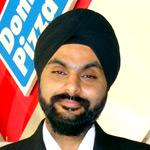
     

    Harneet Singh Rajpal

    Harneet Singh Rajpal, Vice President-Marketing, Domino’s Pizza India

    The use of digital media is picking up in India. For any marketer present in India, the digital media is beginning to become a part of their media plan. It is on radar for everyone, especially in the categories where youth is the target.


    For Domino’s, digital media has been important ever since we began our online ordering platform. Currently, it helps us drive traction. Hence, our media spends for digital medium have increased over the last two years. For us the return-on-investment is visible for every buck we spend on this media, since it results from direct conversion from inventory to revenue generation.


    We now spend close to 4-5 per cent of our total advertising budget on digital marketing, from almost nothing in the last two years. We work with leading publishers in the domain to create applications for Google search, Facebook and social media. I must say that on Facebook, we have the largest number of fans in the food category, and also followers on Twitter.


    Social Media management needs time and investment. It is important that the brand keeps the target in mind when planning the digital activations. Going forward, marketers will have to evaluate the prospects digital media brings. Of course, that depends on category to category. Digital media is still limited because of its reach, whereas traditional media garners higher reach. Also, the confidence about using the media is not too high among the marketers since there are no hard numbers to prove its success. The penetration of internet and the efficacy of the media will be tested over time.


    Jonathan Bill, Senior Vice President and Business Development, Vodafone India

    Digital Advertising is a growing medium in India. It will be everything we are hoping it to be and that too quicker than we think, so I think the business is starting to get in a healthy shape. The advertisers are starting to embrace digital more openly and they should do so, because India has the third largest internet population on the planet.


    On TV and Print bagging bigger ad share, I think that is a legacy issue among advertisers, but I do get a sense that it is fast changing. In the West, however, TV and Print advertising have declined in favour of online advertising. Print, therefore, has very less revenue share from advertisers as compared to online advertising and now online is beginning to even threaten television as a medium.


    I think we just need to continue on the path we are going. The quality of sales and, to a certain extent, the market needs to be made. The West took nearly two or three years to be made as far as the start of digital advertising market is concerned and in India we are only about a year ready. So, I am very bullish on digital advertising in India, particularly on mobile on three to five years timeline.


    Narayanan SP

    Narayanan SP, Senior Vice President, and Head VAS Mobile Commerce and Long Distance, Idea Cellular

    Compared to the global benchmark, certainly advertisers in India are not spending as much money on digital or mobile, but this is something which will change over a period of time. Marketers are experimenting to see if it makes sense for them to connect digitally for certain set of products/features and whether digital is the right medium to communicate or engage their brands. Thus, lot of experiments are happening.


    On the internet front, we are already seeing a significant traction which may not be as big as the international market because of the low internet penetration in India. So if you are looking at a certain type of product wherein the target audience are already digitally connected, then it makes immense sense to go digital. Digital, I believe, will evolve as more and more customer profiling is done and advertisers are able to target their customers precisely. When advertisers are able to measure the ROI (Return on Investment), then we definitely believe that a lot more investment will come into digital.


    The fact that TV and Print still bag more advertising share will definitely change over a period of time in terms of mobile being one of the vibrant channels. This does not mean print and television advertising disappear but, you will see an increase in spends on digital advertising and mobile advertising in particular over a period of time. This is because mobile is able to give the advertiser not only a more precise profile of the customer which makes it a lot easier for the advertiser to reach out to its consumers effectively, but it also allows the advertiser to interact with customers and measure the results of their campaigns effectively.


    Mobile industry, for instance, has a wealth of data in terms of customer usage, but there has not been much mining of the data which can be heavily leveraged by the advertisers. However over a period of time, you will see a lot more advertisers leveraging this data.

     

    Rakesh Rao

    Rakesh Rao, National Sales Head, Zapak Digital Entertainment

    The digital media has been growing exponentially. The year-on-year growth of this media vehicle is close to Rs2,800 crore, and is supposed to reach close to Rs4,000 crore in a year. So to say that it is not a preferred media would not be the right statement. Of course, it is not a dramatic growth, but given the growth of internet and smart phones, digital media is becoming a part of our daily life. The marketers are also following the trend.


    The ROI, when compared to TV and radio, is much more measurable. Cost per lead and cost per click measure actual conversions. This is the only interactive platform too, while rest of the media only give reach.


    Education, travel, finance are becoming the biggest spenders on digital because of conversion aspect. E-commerce, and categories like travel that look at selling inventory believe in digital media.


    The challenges that this media is encountering is getting TV-centric brands such as FMCG onboard because of reach. It is a given that while TV is cost-effective when it comes to reach, digital media will catch up in some years. About 60 per cent of these brands are on digital, but 40 per cent need coaxing. There is no hindrance apart from the fact that broadband numbers need to grow. Digital media is here to stay and grow.
     

    Sandip Tarkas

    Sandip Tarkas, President (Customer Strategy) and CEO, Future Media and T24

    As far as Future Media is concerned, our advertising spends on digital have been increasing year-on-year. Despite a lot of digital activities done by marketers specifically on social media, it does not reflect in spends. The problem with digital is not a lack of a credible or universal measurement system, but the fact that it is too measurable as people try to measure every little thing. Although there are so many metrics which evaluate the digital medium, I don’t think it is a lack of measurability at all, as in digital we are clearly able to measure our CPM’s (Cost per Thousands) and so on. Digital is something we use for more engagement rather than reach because it does not offer reach.


    We look at advertising based on two things – reach and cost efficiency. And then you look at everything else – whether the medium is interactive and so on. So, it is primarily about reach and cost efficiency. Digital media spend in India is a reflective of India’s internet penetration, whereas in a lot of markets digital penetration is very high. In those markets both print and television advertising have declined and digital advertising has been growing.


    In India too, digital is growing much faster than the traditional media, and the growth of the media certainly shows the growing importance of digital. The current size of the digital advertising pie is reflective of the kind of inroads it has made in the country.


    On digital being a 360-degree medium in itself and the role of online video and social media advertising, the biggest gain happening in digital at present is the fact that it is changing quite rapidly. Since the late 90s when we first started using digital advertising until now, the role of the medium has changed quite drastically.


    Digital today not only offers more opportunities for engaging the consumers, but the vehicles used in digital have also been changing with time. For instance, in the early days television ads would continue for quite a lot of time, but today with more options, even the television channels have begun to announce that the programme will be back in say a minute or two. So as consumers have more choices, the way the medium gets utilized also changes. Digital, I believe, be it in any form – video, social, mobile – if it is not going to be interactive, it will not be very successful.


    For anybody targeting the youth, digital is an inescapable medium. I believe the biggest change in digital advertising will take place through mobile, particularly mobile VAS and the data cost. Growth spurt in digital advertising will also come through the increase in smart phone usage and the lowering of data cost will revolutionize digital advertising.


    This is because India has a very high tele-density and today mobile phones have reached the lower-most strata. I believe digital advertising in India will explode once mobile advertising comes of age but, right now it is still in its infancy.


    Eventually digital advertising will impact television and print ads as marketers will have to allocate their budgets for digital advertising, once it comes of age. It may probably hit print advertising first and then television but for that to happen there is still some time.

     

    Sanjay Tripathi

    Sanjay Tripathy, Executive Vice President – Head Marketing and Direct Channels at HDFC Life

    There is still limited spend on digital due to lack of knowledge about the medium and utilizing it effectively as a part of marketing plan; reach/penetration of the medium; and its ability to create impact in the short term. Digital still reaches about 10 per cent of the Indian population and there hasn’t been much of a development in building infrastructure to support the growth of internet. TV continues to be the mass medium which gets the maximum eyeballs and reach.


    While the ROI variables will drive spends to digital, marketing needs a serious mind shift to look at the additional advantages which digital brings along –  a medium which allows two-way dialogue  and measurability to the last mile.


    Thirty per cent of our budgets are dedicated to digital this year – a big move from the fact that we spent a negligible amount last year. As BFSI marketing and advertising becomes more ROI focused, digital media will play an important role. Digital budgets will have a healthy growth each year and will also account for a significant part of the marketing budget.


    While marketing spends may be shifting to the digital media globally, in India, television and print still rule. This is because reach plays an important role. Penetration of Internet in India is still low compared to international markets. The consumption of non-traditional online media is still low and 360 degree integrated communication planning in India has not evolved to have online as an integral part of marketing plans. Also, online medium do not works in sync with other media.


    While there has been a tremendous amount of growth in the usage of internet among SEC A, SEC B audience, internet is yet to gain as big an audience in tier 2 or tier 3 cities. TV continues to be the mass medium due to lack of digital infrastructure. It is the reach and channel affinity which mainly drives the spending and this is where a traditional channel like TV gets one up over digital. There is also a problem of lack of content on digital. Either the content has not been customized to cater to the audience or often the language becomes a hindrance in consuming the content.


    But digital media will make a huge impact. Level of engagement, interactivity and ROI afforded by the medium means it has big role to play. For brands which don’t engage their users online will tend to lose their relevance. As reach increases, the importance and level of competition will also increase –  YouTube already affords a higher reach compared to most of the TV channels and is increasingly becoming an important part of the traditional media mix.


    Digital offers tremendous potential for business – whether it’s about spreading awareness or generating business even in the face of a slowdown. In fact, as people tighten up their purse strings, they will want to do more research before they arrive at a purchase making decision and internet remains the primary medium of product research.


    I see the spends going up because the whole media pie has been asymmetric- if you look at the reach-frequency formula and compare it to TV, print, radio and then digital. There are more people spending time on digital in comparison to other traditional media touchpoints. I see the digital percentage increasing in the overall pie.


    Youtube and pre-roll videos have become a mainstay when it comes to hosting TVCs on digital and these unique ad formats are as effective in reaching out to audience as a TVC. For print QR codes help bridge the gap between offline and online world.

     

    Saugata Bagchi

    Saugata Bagchi, Senior VP, Tribal DDB India

    The primary challenge is the need of cracking an ROI metric, which is acceptable by advertisers across the board.  The media spends are happening, but is it delivering enough clickthrough rate goes unanswered. Digital media cannot ensure high reach like television, but with 12 per cent penetration among various categories it can definitely give high frequency. Currently, only 25-30 per cent of population is online; hence, the spending on this medium will remain lower than other mediums.


    The point of advantage is that there is a big influx of youth, and they are ready to spend. While the marketers would want to catch the youth online, they (marketers) get no justification in form of numbers to spend much on media. Hence, they prefer doing mall activation to spending on digital platform. The agency and publishing community need to be more forthcoming to speak to the marketers, and in their language.


    Digital media is currently registering 15-18 per cent year-on-year growth, but it is important to note the gap between digital and television media.


    Since the offices of MxMIndia are closed on Monday, August 20, there will be no MxM Mondays next week. We will announce the theme for the next edition on Tuesday, August 21.



  • Anil Thakraney | 18 Again: A question of ethics

    By Anil Thakraney


    Ordinarily, I would have dealt with this ad in the Debrief section. But the TVC for 18 Again isn’t just another ad. It opens the whole Pandora’s Box of itchy issues like morality, ethics and decency. Here’s the link to the naughty commercial, if you haven’t already ‘enjoyed’ it:


    The product in question is a ‘vaginal tightening’ gel. And the positioning is: ‘Makes you feel like a virgin’. Am sure Madonna would approve, but before I discuss the communication itself, must say I am quite flummoxed by the product description. Is it scientifically possible to tighten the vagina? That too with a simple gel? Sounds pretty farfetched and dubious to me. And being a man, I can’t even suss it out! So let’s proceed further by assuming that the damn thing works.


    [youtube width=”400″ height=”220″]http://www.youtube.com/watch?v=nFX3n-B6G-E[/youtube]

    In the ad, a middle class housewife suddenly feels, er, horny, and dances the salsa with her excited hubby. The dance is obviously a metaphor for sexual intercourse. The message: 18 Again’s magic makes you feel as fresh as an unplucked lily. No problems with the treatment itself. There is no skin show, no vulgarity, so that’s fine.


    However, there is a fundamental problem with this one. They say, if a product is being allowed to be manufactured (and my cigarette manufacturing friends will readily agree with this), it should be allowed to market itself. I, too, agree with this theory in principle. But that freedom comes with a rider. While I am all for keeping pace with changing times, 18 Again’s ad alarms me. Because it seems to have been created for the mass media, that too for television, which is a ‘full family’ medium in India. Parents will most likely feel very uncomfortable explaining this product to their inquisitive kids. I haven’t seen the media plan, but am hoping this TVC occupies the mid-night slot, at the very least. The main issue however is this: Should mass media be used to promote such a deeply personal product? Should not selective direct mail or targeted digital media be used, especially considering that this will end up being an urban brand? I do believe so. This product has no business being on the mass media. Period.


    Additionally, I also believe a medical product such as this one can’t be sold over the counter. There is also the niggling worry of possible side effects. 18 Again should ideally be dispensed by a chemist, under medical supervision. Much like Viagra is. I hope the makers of this brand have factored in and accounted for all these considerations.


    Anyway, let’s see how the hyper-active moral brigade of this nation reacts to this one. Should be interesting. And fun.


    * * *


    PS: Insightful blog post on all the hype around interactive advertising. That, it seems to be delivering a lot less than it promises. This is another reminder to all marketers and their ad agencies to focus on the good ol’ Big Idea. The new media obsession may not get them very far.


    Link: http://adcontrarian.blogspot.co.uk/2012/07/why-interactivity-makes-advertising.html?m=1