
Author: mxmadmin

  • ICICI Prudential Mutual Fund rolls out campaign

    By Our Staff


    ICICI Prudential Mutual Fund has launched an exchange-traded fund (ETF) investor education program – ‘Ab Stocks Main Invest Karna ETF Hai… Matlab Easy Hai’.


    Said Abhijit Shah, Head- Marketing, Digital & Customer Experience, ICICI Prudential AMC: “Our campaign, ETF Hai. Easy Hai., aims to educate investors about how ETF is a very simple way to invest in the stock market and how with ETFs, investors can aim to grow wealth through exposure to entire stock markets or specific segments of the market.”


  • Lintas Live bags mandate for Lagos Free Zone

    By Our Staff


    Lintas Live has won the Global Integrated Communications mandate for Lagos Free Zone (LFZ), Nigeria.


    On the appointment, of Lintas Live, Dinesh Rathi, Chief Executive Officer, Lagos Free Zone, said, “We are excited to partner with Lintas Live, an agency that mirrors our passion. Lintas Live not only demonstrated a keen understanding of our brand environment, but also showcased a cogent perspective on approaching the brand asks. We have aggressive plans for positioning LFZ as the most compelling destination for foreign direct investments into Nigeria, and we needed an equally agile partner and global network to help us achieve our aspirations.”


    Added Ameer Ismail, President, Lintas Live, commenting on the partnership “We are ecstatic with this win. Lagos Free Zone is the first private free trade Zone in Nigeria, and we are honoured to partner the brand in its communications journey in India and globally. There are a lot of synergies that we share with Lagos Free Zone. Constant innovation, an agile approach to business and customer-centric solutions are at the heart of their brand promise, much like the Lintas Live ethos. This mandate is very prestigious for us, and we are committed to make this alliance a huge success.”


  • Media Trends 2022


    1. Shifts in organisation structure & work cultures open up new opportunities

    The pandemic has fundamentally altered ways of working across industries. We set up a quarterly “new Normal Tracker” in 2020, to understand shifts in consumer habits and behaviour. This tracker identifies the “desire for flexibility” as the primary reason for people to shift jobs.

    This has resulted in a huge rise in the gig economy, which is slated to grow at a CAGR of over 17% for the next three years. This is increasingly common across service industries, including media and advertising.

    Content creation as a vocation will move towards Decentralized Autonomous Organizations (DAOs). Even if their craft involves the physical world (production, shoots, etc) the next generation of content professionals are likely to find the work culture of DAOs more appealing. Today, DAOs are able to hire, collaborate with creators and also pay them entirely within the metaverse. The advent of 5G will further power this trend.

    This could translate to shifts in business models, with fluid, specialist team structures, measurement- based entirely on outcomes and a revamp of remuneration and recognition models.


    2. Consumer sensitivity & sustainability impact brand marketing

    While the global trend towards sustainability and inclusiveness started a few years ago, this trend has gained tremendous traction in India over the past 18 months. Our “new Normal Tracker” throws up some very interesting insights:

    1. Sustainability is a stronger driver than ever before- the Q4 2021 tracker has over 80% respondents agreeing to the statement “I am more aware of the impact my actions have on the environment” – up from 73% in Q4 2020

    2. 81%agreed that the progress being made on gender equality was a “Source of Happiness”

    3. 78% felt that media platforms & content should be more inclusive of underrepresentedcommunities (LGBTQIA, differently-abled, ) and 84% felt that brands need to do more to make their products more accessible to the differently-abled communities


    4. We have also seen a marked rise in interest and conversation around Plant-based proteins,electric vehicles and a more sustainable lifestyle overall

    This has translated to brands and marketers placing a great deal of focus on sustainability & inclusion – be it in terms of Carbon credits, recycling, use of ethically sourced ingredients and supporting inclusivity through actions and messaging

    This has implications for media as well, with a focus on sustainable or Carbon-neutral media plans. We will see increased use of Carbon Calculators which identify the elements of a media plan where carbon needs to be offset. This is in line with shifts we have already seen in markets like the US and UK and will involve strong partnerships between agencies and media owners to drive this. Inclusivity and sensitivity will also play a stronger role in the choice of media platforms and influencers going forward


    3. The next generation of digital experience will be driven by decentralisation

    The Web3.0, Metaverse and NFTs are all making headlines with pundits and promoters using these terms to communicate visions of a decentralised and virtual-first future. Fundamentally, these emerging technologies are harbingers of a developing cultural shift that may unfold over the next decade as a generation of consumers who live primarily in virtual worlds comes of age.

    Web 3.0 is the next stage of the web evolution that would make the internet more intelligent or process information with near-human- like intelligence. In Web 3.0 – users won’t distinguish between physical & digital experiences. They will expect work, friends, goods, and experiences to be connected virtually. This interconnected, live, persistent virtual world is also popularly known as the Metaverse.

    Brands would start leveraging this virtual world as well as components powering the virtual worlds to build brand experience & assets, drive the consumer to connect, associate with the cause, build loyalty, own a moment or drive real or virtual sales.

    The new virtual world will also come with its own challenges and learning curves for the ecosystem. We helped three of our brands to participate recently in the first Metaverse wedding and integrate brand experience and narrative.


    4. Privacy-first leveraging of data to build stronger consumer connections

    On January 25, the Google Chrome team announced that they were replacing the FLoC Privacy- Preserving API proposal with a new “Topics” API proposal, which presents an updated approach to supporting interest-based advertising via the Chrome Browser. Google’s pivot from FLoC to Topics indicates a key shift in Chrome’s approach to enhancing their privacy-preserving advertising solutions.

    We believe in a future of multiple privacy-preserving solutions that help create a more responsible advertising ecosystem, including Chrome’s Privacy new initiative – there’s no single solution to manage Cookie deprecation.

    We have spoken about the importance of first-party data earlier. Marketers have already dialled up focus on first-party data and we see broad-based use cases emerging out of first-party data. The role of panel-ased data will grow as it will bring unique and differentiated signals to the mix.

    Finally, the way the data comes together is evolving in terms of technology and techniques used to combine various signals. We are strengthening our capability in this space and Choreograph will play a significant role in our journey.


    5. Commerce becomes all-pervasive, powered by persuasion

    Across town class & cohorts, powered by KOLs, Content, influencer & Social.

    We all know about the moment of truth when the consumer encounters the product. But the zero moment of truth today is when he / she encounters the brand experience first through creator /influencer content across platforms. This is actually as much a Tier II & III phenomenon as it is Tier I, as the creator ecosystem from small towns have gained exponential traction.

    And this phenomenon is driven by three important forces – one is the brand-led focus, driven by the D2C initiatives that brands are undertaking. Second is the community-led commerce which is driven by group buying models that are growing at a great clip and finally, the KOL-led social commerce models which include creator-led content to commerce.

    Hence overall, commerce as a component of content will become more integral and not just an exception anymore.


    6. Transformation of the creator ecosystem

    Creators will be able to monetize their content directly through platforms like Substack and podcast subscriptions –something that platforms like Spotify are piloting successfully globally. What this will do is to decrease the dependence of the creator on algorithmic advertising models and help them with sustenance even before they hit scale. This subscription based model is a big change from the YouTuber era of advertising based revenue models for creators. In the coming days both these models will grow simultaneously and with synergies.


    7. Boomtime for sports business in India

    1. 2022 is expected to create history in the Indian sports media rights landscape. IPLs media rights areexpected to be announced followed by ICC and BCCIs home  Improved mobile internet infrastructure and increased consumption of OTT platforms has made this sector extremely competitive and hence also on the driver’s seat for these media rights. Today live sports remain unique and most sort after considering its promise of appointment viewing and sustained audience interest. This has also caught attention of the global private equity players and you can now see the PE money coming into the world of sports in India. We have seen PEs investing in sporting teams, sport leagues and fan engagement initiatives and sports content. This is just the beginning, and we should watch this space very closely.

    2. This year esports debuts in the Asian Games, we will have our own India contingent competing andthe international level which will keep the audience interest alive and adding to the current base. Last 2 years have seen a massive scale up in the world of  Going forward gaming and esports will see increased investment and physical events will add flavour and excitement to viewer experience and overall product offering.

    3. What started in 2021 will continue taking shape in 2022 as well, the world speaks about NFTs, fantokens and digital collectables passionately. Platforms and rights creators will continue testing different ownership models to determine the optimal balance of fuelling consumer demand and maintaining intellectual  There will definitely be a lot of moulding and remoulding but it is only going to make it exciting for brands and open newer avenues for consumer engagement.


    8. Advanced Intelligence to counter digital fragmentation

    With the receding impact of cookies and rising data privacy laws; Advance Intelligence is the saviour in this digital marketing and advertising data explosion. Also, Humans are unable to process the huge

    amount of marketing and digital data points that are hitting them every second, in volume, variety and velocity.

    The use of AI and ML will lead to advance data processing capabilities bringing excellence in execution by automating, auditing, reporting and analyzing digital campaigns. Marketers will accelerate the use of the algorithms to find numerous permutations and combinations to deliver performance/ROAS. Customers demand relevance and resonance from the advertising they see. AI-ML will be used to predict personalization.

    Automated Content Recognition will be required to understand what content works for what audiences to what is trending in the marketplace on all types of public content.


    9. Performance orientation powers the full funnel of marketing

    Performance marketing historically has been attributed to last-mile conversion and metrics. Marketers only focusing on the lower funnel and not appropriate weightage on top and middle funnel; have already seen the performance numbers drying up or not scaling.

    In 2022, many advertisers will move away from last-lick/mile attribution models; and ensure that media money spend on Top and Middle funnel are accounted for performance on how its influences conversions or outcomes.

    Performance marketing will continue to hold its sway – to convert, conquest in-market audiences; but awareness and engagement spends will have to show the outcomes that lead to that performance.

    A full-unnel performance marketing approach is more than a campaign. It’s a combination of brand building and performance channels through interlinked teams, measurement systems and joint KPIs.

    Consumer journeys are not linear anymore, but funnels are. No two customers are the same.

    Shoppers can enter the funnel at any stage. Through the full-funnel approach, marketers can have one view of their customers – moving from the nascent digital adoption stage to an interconnected multi- moment one – where Life-times Value, Hyper localization, Hyper-Personalization, Federated learnings, New Customer Funnel can be improved.


    10. Addressable TV becomes mainstream

    With Smart TV, TV Advertising will become smart. From smartphones to smart TV’s; the Indian market is seeing a massive shift in how households are replacing their living room colour tv box with internet- enabled Smart TV. Now it’s time for TV advertising to become smart. A sizeable NCCS A household has completely cut the chord, or swap between on-demand viewing and linear feed, hybrid viewing in the new normal.

    By end of 2022, we expect to have 12% of Indian TV households have a smart TV, truly connected to broadband and watching on-demand broadcast-quality content either freemium, avod or subscription- based.

    Marketers and Agencies will demand the best combinations of TV and Connected TV plans depending on the targeting. Connected TV advertising plays a big role in ad experience, where 1 or 2 ads are stitched in the steam, unlike Linear that has a longer ad break; which has the risk of losing viewers attention and engagement.

    Connected TV is the first step in making even linear TV feeds addressable. There is a huge impetus by distributor economy, middleware and tech companies to make linear TV addressable. With the success of Connected TV, broadcasters will have to embrace the tech that offers household targeting on linear feed too.


    11. Evolution of offline media organizations with fluid content, formats and new business models

    The dramatic shift in media consumption behaviour with simultaneous use of multiple screens is leading to a rapid evolution of what used to be known as “Offline media”

    1. Growthin the OOH industry will largely be powered by Digital OOH, which is currently ~5% of all OOH but projected to grow to ~ 25% over the next few years. This is further accelerated by the rapid expansion in infrastructure – airports, metros, Tech parks, and the return to mobility

    2. Printnetworks will further leverage their core strength – high-quality content – by expanding their digital  Moving beyond web editions and apps, we will see more podcasts and usage of AR in delivering immersive content

    3. Radio is also undergoing a major evolution with social integration, podcasts, and phygitalevents


    We are also seeing a significant evolution in the business models with outcome-linked accountable deals-while this started with Print, it is now extending to all other offline media

  • Ashoke Agarrwal: The Three Immutable Laws of Brand-Building

    Ashoke Agarrwal
    Ashoke Agarrwal

    By Ashoke Agarrwal


    Much has changed over my four decades of practising the art and science of marketing communication and brand strategy.


    I went from the era of Doordarshan to the age of cable and the mighty GEC and sports channels. Then the internet age began, and this year it is being reported that digital is poised to overtake TV in advertising revenues. The coming two decades may bring another tectonic shift in marketing communication with the emergence of AI-mediated platforms and perhaps even a metaverse.


    Besides media, much has changed in product development and distribution. The emergence of contract manufacturing, modern trade and e-commerce has led to an explosion of competition and a weakening of entry barriers. Today, many D2C brands are bringing in the fresh air of innovation in many a moribund category, exploring market niches and creating new product and service categories.


    However, it is my experience that through all this turmoil, there are a few fundamentals of marketing communication and brand-building that haven’t changed. Here are three:


    1. While the saying that goes “you can fool some people all the time, all people some of the time but not all people all the time” may hold in politics, it is anathema even to try to fool one person for a day in brand-building. A brand might try and think it has succeeded for a while, but finally, the result is always disastrous. Therefore, while some level of puffery is unavoidable in advertising, it is paramount that every marketing message hews close to the truth, ASCI or no ASCI.

    2. A brand is built on both cognitive and affective dimensions. On the cognitive dimension, while a brand may not always have a USP, it must convey a rational reason to buy. An acceptable cost-benefit ratio is the cognitive offering for most brands in this hypercompetitive age. The affective dimensions differentiate brands who otherwise are at par with each other on functionality. Most marketing communication focuses on building a differentiated emotional positioning for the brand based on brand personality and targeting an individual’s yearnings in the status, sexual, tribal and suchlike arenas. Michelle Obama in the Democratic Convention of 2016 made news with her comment (and I paraphrase), “while they choose to go low, we take the high road.” Well, we know the high road led to disaster in 2016. But that again is politics. In brand-building, which is a long-term activity, it is best to take the high road. Taking the high road is a challenging mandate to follow. Individual base emotions are often the most robust and most common across many markets. And the temptation to appeal to them is irresistible to advertising professionals, as is evident across advertising across categories and markets. However, if we look hard enough, we will find, in most contexts, a higher-order emotion that can form the core of our brand’s affective appeal. A factor analysis of the marketing mix of brands across categories and markets will back up this basic tenet of brand-building.

    3. “Half of all advertising is a waste, and no one knows which half” is a marketing cliche that has endured from the era of mass media to today’s age of programmatic advertising and performance marketing. But, like all cliches, there is a kernel of truth in it. However, suppose advertising follows the basic tenets of good marketing communication. In that case, I believe no advertising is a waste (the corollary to this thesis is that lousy advertising is not just low ROI but actively hurts brands and sales). In measuring the returns on advertising, another fundamental truth of advertising exists. All good advertising, instead of being a half-waste, has a half-life. It engages in an act called brand-lift – lifting the brand within the consciousness of the potential consumer from non-awareness to positive awareness to active consideration on the way to actual purchase. The length of this half-life differs across categories from short in FMCG to considerable in purchases like cars and houses. If ROI measures consider the fundamental half-life aspect of advertising, no good advertising is ever a waste, half or otherwise.


    Ashoke Agarrwal is a veteran advertising professional with around four decades in advertising and marketing services. Agarrwal, a chemical engineer from IIT Mumbai and a postgraduate from IIM Bangalore, is a pro-entrepreneur with past and current ventures in market research, advertising, CGI, e-learning and brand consultancy. He will write on MxMIndia every other Thursday. His views here are personal.


  • The Coming Post-Digital Age


    Starting a new fortnightly column by advertising and marketing services veteran Ashoke Agarrwal


    By Ashoke Agarrwal


    Ashoke AgarrwalThe inexorable rise of digital and social media has rocked the world of mass media, marketing, and marketing communication.

    However, I believe the current disruption is only the tip of the iceberg.

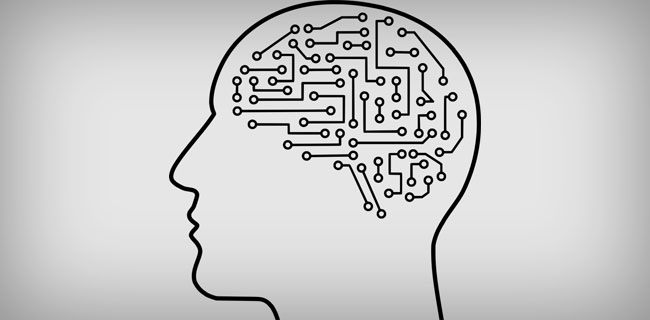
    Media, marketing, and marketing communication professionals should prepare for a more profound disruption driven by the rapid and widespread development and adoption of Artificial Intelligence (AI) leading to a Post-Digital Age.

    Studying the possible contours of AI in marketing and marketing communication, I have developed a concept called “Concierge Intelligence” (CI), as outlined later in this article (I had published a blog post on CI back in Feb 2021).

    Over the past few months, scandals have rocked the world of social media and digital advertising, threatening the lynchpin of social media and programmatic advertising – cookie-based tracking and cookie pools – with stringent and widespread regulations.

    The other critical development is a shift in the outlook of start-up capital – there is a clear trend towards favoring start-ups in deep tech areas.

    Both these trends bode well for the accelerated arrival of the Post-Digital Age.

    There is a growing realisation that Facebook, Google, and its kin are critical fuelers of fissiparous tendencies in societies worldwide.

    Social media’s power to divide is a result of algorithms (algos in techspeak) that drive engagement, in the process reinforcing tribal tendencies and conspiracy theories.

    The digital and social media giants are reluctant to change these algos, as they are the engines that drive their primary source of revenue and profits -advertising.

    Change in the outlook of social media, digital media, and e-commerce giants will come when they face emergent competition from the likes of Concierge Intelligence that will usher in a Post-Digital Age.

    The increasing disquiet among marketers and advertisers with social media and digital advertising effectiveness will be at the core of this emergence.

    Many in the marketing community started as enthusiastic advocates of digital marketing. It seemed to hold the promise of better ROIs over the short term and more robust, interactive brand-consumer relationships over the more extended period.

    However, the reality of digital marketing has belied most of these high hopes. Today, digital marketing does not represent interactive access to a more clearly defined target consumer. Instead, it obfuscates behind attribution in terms of “views” and “click-throughs”, numbers that cloud as much as they reveal.

    If most marketers are dissatisfied with digital marketing, the question arises as to why the share of digital in most brands’ marketing budgets grows year on year? The reason for this inexorable growth is, I believe, two-fold.

    First, the rise of digital media is weakening mass media. OTT platforms steal audiences away from linear TV, cinema, and radio. Social media and news aggregation are decimating print newspapers and magazines. It forces big brands to allocate an increasing part of their marketing budgets to digital marketing to reach their audience.

    Secondly, digital marketing is growing at a pace is because of the modularity it affords. Smaller brands with smaller budgets can reach out to smaller target markets, a positive development fostering increased consumer choice. But unfortunately, it also encourages hucksterism and fraud on the flip side of the coin.

    After the Arab Spring of a decade ago, social media was much ballyhooed as the force that would bring about and strengthen egalitarianism and democracy in societies across the world. Instead, in nations after nations, social media today is seen as one of the forces feeding tribalism, extremism, encouraging authoritarianism and threatening anarchy. The rallying cry of the likes of Zuckerberg and Pichai seems to be, “Surrender your data, and I will feed you, for free, the opium of tribal comfort while putting your psyche to power my advertising revenues, a la The Matrix”.

    However, I believe that the page will likely turn again, and social media will get back to being a force for good over the coming decade or two. This transformation will come about under the gathering onslaught of regulators, brands, and public opinion. Under this emergent paradigm, individuals will own the data gathered through their digital footprint.

    I envisage a time when a public utility like service will gather all such data and store it in a digital locker solely owned by the individual, managed by a Data Utility provider. The individual would be free to upload more information into her digital locker, including brand and shopping preferences, recent purchases and intentions, demographic details, and attitudinal batteries. Brands could approach the Data Utility and, based on anonymised information, choose to seek more information about a particular type of individuals – say, individuals who currently own a six-year-old mid-size sedan or those who have expressed an intention to purchase a luxury SUV. The Data Utility would inform the individual of the interest and the fee the brand is willing to pay for their access. The brand will be allowed a permitted level of access with explicit permission from the consumer. Blockchain technology will ensure that a significant part of this payment would go to the consumer (the actual owner of the data) and the rest to the Data Utility provider.

    Central to the above ecosystem will be an AI product I call “Concierge Intelligence” that will mediate for the individual between brands and the Data Utility provider. The individual will own the Concierge Intelligence platform, much like owning a house, a car, or an electronic device.

    The era of Concierge Intelligence will avoid the concerns raised by the age of marketing to bots like Alexa or Siri, posited by some technology forecasters. Instead, Concierge Intelligence will emerge as a tool for individual empowerment instead of yet another money-making and control-enhancing platform for data aggregators, data miners, marketers, or the government. As a result, Concierge Intelligence could be the next big consumer product category of the coming decades, just as the smartphone has been for the past couple of decades.

    The individual will buy his Concierge Intelligence (CI) — a software application -from the market and load it onto all the devices she uses. Then, CI will get to work to learn the consumer’s interests and preferences. The individual will set the scope and depth of this learning.

    CI will be mediate between the world and the individual. First, it will map the individual’s learning patterns and maximize the speed and efficacy of the individual’s learning. It will continuously keep a tab on the individual’s inherent talents and emergent capabilities and connect her with opportunities to put these talents and abilities to use, in the process not just maximizing her earnings but also increasing her sense of self-worth. Finally, it will perceive the individual’s relationship and leisure needs and help her meet them. One of the duties of CI will be as the gatekeeper to the Data Utility service and brands that seek to message and sell to the individual.

    While the CI will have powerful capabilities, it will be under the total command of the individual. She can change its functionalities whenever she wants and even switch it off if she desires, much like today’s smartphones.

    To my mind, CI will, over the next decade, become the most widely prevalent form of AI. I like to think of a CI as AI with soul. A form of augmented intelligence fusing an individual’s psyche, with all its complexity and humanity intact, with AI’s power, speed, and reach.


    Ashoke Agarrwal is a veteran advertising professional with around four decades in advertising and marketing services. Agarrwal, a chemical engineer from IIT Mumbai and a postgraduate from IIM Bangalore, is a pro-entrepreneur with past and current ventures in market research, advertising, CGI, e-learning and brand consultancy.


  • From Machine Learning to Machine Creativity


    By Ashoke Agarrwal


    Ashoke Agarrwal
    Ashoke Agarrwal

    Understanding and encouraging creativity has been a significant part of my professional endeavours as an advertising strategist.


    I have understood the difference between strategic planning and creative development as a “P versus NP” type issue.


    A P-type problem is a problem that yields a solution in a finite amount of time.


    Simply put, a P-type problem is humanly soluble provided one puts the right type and amount of effort!.


    The NP-type problem is a problem whose solution is checkable for correctness in a finite amount of time. For example, Sudoku is an NP-type problem. Whatever the size of the Sudoku grid, one can check the correctness of a given solution in a finite amount of time.


    A significant issue at the frontier of maths and computer science is whether an NP-type problem is also a P-type problem.


    As a practising advertising professional, I have my own take on the P-type and N_-type problems dichotomy.


    As I think of it, creating a marketing and advertising strategy addresses a P-type problem where a given strategy meets a given objective through a series of rationale and finite steps.


    On the other hand, creative solutions are the result of addressing an NP-type problem.


    Most seasoned professionals can judge the effectiveness of a given creative solution. However, the debate has always been whether creative solutions can be arrived at through a series of logical steps. The consensus, as of now, is that in this case, NP-type is not equal to P-type. In all walks of life, creative output results from a creative leap well beyond the restrictions of logical and rational steps.


    However, there is now a clear challenge to the above notion coming from the cutting edge of Machine Intelligence (MI). Over the past few years, the second generation of MI has emerged through a set of neural network techniques based on Deep Learning (DL) principles. DL took a giant leap forward when Jürgen Schmidhuber of Lugano University and his student Sepp Hochreitter proposed a Recurrent Neural Network (RNN) architecture called the Long Short-Term Memory (LSTM).


    With this, DL evolved and gained a specific ability of human intelligence – learning how to learn.


    The result of this new generation of DL has been magical.


    For example, in the late nineties, before DL has evolved, Deep Blue – the IBM AI engine that beat at Chess, the reigning world champion – Gar Kasparov – using a recursive analysis of millions of chess games that the machine had on record before every time it had to make a move. The essence of Deep Blue lay in the super-fast speed that enabled it to analyse millions of alternatives before every move.


    Cut to 2016. Using LSTM type RNN techniques, DeepMind, a Deep Learning engine, sets out to learn Go (a strategy game considerably more complex than Chess) and Chess. DeepMind was fed the game’s rules, and the program began to learn by playing against itself.


    The results have been astonishing. AlphaGo, the DeepMind engine for Go, has consistently beat world champions. AlphaZero. DeepMind’s chess engine obliterated Stockfish, the highest-rated “old-world AI” chess engine.


    Every passing month DeepMind is taking DL deeper, crossing new frontiers holding out the prospect of AI finally leaping to General Intelligence (GI).


    However, to my mind, for computer science to finally prove that NP-type problems are also P-type problems, one more revolutionary step is required.


    The next generation of DL will have to move from supervised learning to active learning. The first step to active learning would be to give the AI engine agency. Then, to let the AI decide in an autonomous way on what to observe and study – an attribute called curiosity. In other words, an AI system capable of generating and acting upon Machine Curiosity.


    The curiosity will be directed by a higher-order goal setting than the tight purposive framing the current generation of MI operates on. The next step would be for the MI system to act on this curiosity. Schmidhuber, a founder of Deep Mind, believes that a critical capability for a MI system to act on its curiosity is not just to observe and act on available data but also to create data by poking, prodding and experimenting with the real world. This next generation of curiosity-driven, experiment-making MI systems will unleash creativity of an order higher than the world has yet to see. According to the experts, we can see this next generation of MI within the next decade or two.


    That will be a big step towards computer science, finally proving that most NP-type problems can be P-type problems.


    And for me to add further ballast to my assertion that I work at the creative end of strategy and the strategic end of creativity.


    Further, in an earlier post on MxMIndia, I had written about Concierge Intelligence. The creation and deployment of Concierge Intelligence will be possible only by Machine Learning empowered by Machine Curiosity leading to Machine Creativity in the service and control of the individual instead of business or government entities.


    You can read more about the P-NP type problems in my post on Medium titled “Advertising and the P-NP Problem”, dated July 4, 2019.


    A post on Medium titled “Machine Intelligence to Machine Curiosity – The Road to Machine Creativity”, dated June 26, 2019, delves a little deeper into Machine Creativity.


    Ashoke Agarrwal is a veteran advertising professional with around four decades in advertising and marketing services. Agarrwal, a chemical engineer from IIT Mumbai and a postgraduate from IIM Bangalore, is a pro-entrepreneur with past and current ventures in market research, advertising, CGI, e-learning and brand consultancy. He will write on MxMIndia every other Thursday. His views here are personal.


  • Ashoke Agarrwal: Big Brands, The Digital World and The Promise of Brand Platforms

    Ashoke Agarrwal
    Ashoke Agarrwal

    By Ashoke Agarrwal

    Time was when all a brand manager had to do was decide on the season’s marketing mix (summer and winter), get the agency to produce a new mass media campaign (or refurbish the existing one), and kickback.

    It all changed with the emergence of digital marketing. Managing brands is now a daily grind. Digital campaigns have shelf lives measured in days and, many times, hours. Pricing and price promotions are a flux controlled by rising e-commerce. Competition now stretches beyond the cosy, almost collegiate set of yesteryears to, driven by the phenomenon of contract manufacturing, e-commerce and D2C, into a kaleidoscope of threats.

    How have the older big brands in traditional FMCG (personal care, home and garment care, packaged foods etc.), durables (white and brown appliances, electronics, auto etc) and services (banks, credit cards, insurance, hotels, restaurants, travel, movies, broadcast/ cable TV etc) met the challenges of the digital age? To my thinking, their performance, by and large, has been poor and, at the core, indolent.

    Old habits die hard. The old brands are still stuck trying to run an AIDA (Awareness, Interest, Desire, Action) based on what is essentially mass marketing.

    At the cognitive level, everyone in the marketing team of old brands will enthusiastically endorse the notion that the digital world allows for one-on-one interactive communication with the individual. However, dig into their marketing communication plans, and one will discern the same laziness of yore when message targeting was left to the vagaries of communication channels. The difference is that now they have added Google, Facebook and Instagram to the mix. And of course, the lexicon of performance marketing – likes, shares and clickthroughs – to the mass media metrics of reach, OTS and GRPs.

    How many brands today are anchored in the essential promise of the digital marketing age? This fundamental promise is the ability to carry out cost-effectively and efficiently one-on-conversations with not just thousands but millions of individuals. And in the process generating not just sales but loyalty, increased lifetime value of each consumer and even passionate brand advocates.

    This is a model of marketing I call EIDA – Engagement, Interaction, Delivery, Advocacy.

    If there are brands keyed into this essential promise of digital marketing, they are most likely the disrupters who are upending existing categories. Even among them, going by my personal experience in India, these disrupters, spoiled by VC burn money, soon fall into the big-spending lazy AIDA framework of broad-spectrum targeting, consigning the EIDA framework to discarded business plans.

    Let’s get back to where we started this article – the big, successful brands in traditional FMCG, durables and services. It is, to my mind, a shame that nearly all of them have botched the promise of the digital age. With the resources, ecosystem and talent at their disposal, they could have been at the forefront of a new marketing era. Instead, primarily due to their failure, we have a marketing paradigm that is ever more dysfunctional than the pre-digital one, with marketing dollars now funding tribalism, conspiracy and hate-mongering through increasingly influential social media platforms. Unfortunately, the Arab Spring was not the only promise of social media that has been so severely belied.

    When I ponder the many ways successful brands could better use the digital world – the one idea that strikes me as robust and viable is positioning the brand not just as a product or service but as a platform for something larger than itself. Only a successful, well-resourced brand with high credibility could create a good platform with broader social acceptability. To my mind, this is a unique, as yet non-utilised, competitive advantage that big brands have in the digital age.

    Can a big brand in any category have the opportunity to build a platform larger than itself or its category that has wide social acceptability?

    To my mind, yes. In some categories, the platform idea might stare one in the face. In others, it might require brainstorming and creative thinking.

    As an example, let’s take Ariel in the fabric care category. I admired the Ariel campaign that promoted the idea of more equitable burden-sharing between genders. Can Ariel go beyond and promote a platform that a) enables the community to share ideas and experiences in this area b) enables individuals and others to offer workshops, tracking tools and other enabling services and products. Incidentally, when it comes to equitable burden-sharing, the flow is multilateral – woman-to-man and man-to-woman. In fact, it can go beyond gender to age – young-to-old, old-to-young, work – organisation-to-worker, worker-to-organisation. In other words, the platform could be about two-way responsibility sharing. Creative ideation and careful build-up could evolve the platform into a brand asset and a societal asset.

    How can such a platform be used as a brand asset? In myriad ways. I am sure the many marketing minds reading this already are brimming with ideas on ways to kickstart the EIDA cycle. I will be glad to take a conversation in this regard offline.

    So if Ariel built the responsibility-sharing platform, what is Surf – an equally large fabric care brand – to do? Well, the ladder up from fabric care can go in many directions. For example, fabrics and garments are how an individual signals her mood, character, class and ethnicity. So Surf could build a platform where people discuss clothes are and can be used as social signals. The platform can then expand to all forms of social signalling other than clothes.

    It must be kept in mind that the theoretical possibility of brand platform existed in the pre-digital era. However, it is only the cost-efficient reach of digital media, the burgeoning fields of data mining and analytics, and AI that makes it possible for brands to build platforms with viable levels of ROI. Furthermore, the likely emergence of the metaverse over the coming decade will add further dimensions and depth.

    I have deliberately chosen the rather mundane category of fabric care to illustrate the potential of brand platforms. Making the point that almost any product category offers exciting brand platform possibilities provided that the brand is thriving and has the resources and credibility. And that more than one such brand in the same product category can build effective platforms.

  • ReshaMandi strengthens leadership team

    By Our Staff


    ReshaMandi, a B2B marketplace digitising the natural fibre supply chain, has strengthened its leadership team by appointing Abhishek Kumar as SVP – Marketing and Subramanya Srikant as Head Of Human Resources. With this hiring, ReshaMandi aims to extend operations, as well as move closer to its broader goal of shaping the ecosystem of natural fibres in India.


    Said Mayank Tiwari, Founder and CEO of ReshaMandi: “Our decision to strengthen the leadership team is a major step in our quest to expand ReshaMandi’s footprints across India. It gives us great pleasure to welcome Abhishek, and Subramanya onboard. They bring with them a wealth of experience that will help us in driving our value proposition with the right blend of functionality, commitment and expertise. I’m confident that with them onboard, we will succeed in our endeavour to take ReshaMandi’s products and services to the next level and fulfil our drive to revolutionise the natural fibre ecosystem.”


    On his appointment, Kumar added: “I am extremely excited to be a part of a team that has exceptional values and future plans. We have a solid business model in place that’s weaving an incredible story around availability, accessibility and profitability for all the stakeholders. Telling this story to a larger audience is a privilege and I am humbled to market a brand like this both from the point of view of the B2B and B2C audiences. We are here to create a definitive brand that we hope will be a part of our pop culture too.”


  • Havas launches brand film for Stashfin

    By Our Staff


    Neobanking platform Stashfin has released its latest brand video, featuring the all-in-one card. The film is conceptualised by Havas Worldwide India (Creative).


    Said Shruti Aggarwal, Co-founder, Stashfin: “At Stashfin, we’ve always put our customers first, and we’re constantly exploring ways to provide unique and relevant services for them, leading to greater financial freedom and inclusion. For our all-in-one brand video, we wanted to integrate our ethos of ‘nobody should be credit-starved’, in an easy, relatable format. I’m glad we could work with Havas Worldwide India (Creative). This has been an extremely fruitful experience.”


    Added Bobby Pawar, Chairman & Chief Creative Officer, Havas Group India:  “It’s been really exciting to partner with Stashfin for their brand video. We’ve worked with dozens of clients in India and globally, and I am impressed with Stashfin’s agility in the fintech space. It’s not every day that one gets to participate in a project that will be impactful, or decide the positioning of a product. Fintech is often perceived as a boring space, perhaps even one that is tough to grasp. We wanted to dispel that perception, and comedy was the best way to do that. The all-in-one brand video communicates the brand proposition and product features in the most meaningful and engaging way possible. I am sure customers across segments will enjoy this communication piece, which will drive the preference for brand Stashfin.”


  • Concept PR bags mandate for Stellantis automaker

    By Our Staff


    Stellantis, a leading global automaker and mobility provider, has announced the appointment of Concept Public Relations as its PR agency in India for 2022. The agency will consult and execute Stellantis group communication in India along with JEEP and Citroën communication mandates. The mandate includes strategic consultation, planning, media relations, issues and crisis management, and integrated campaign development for the group and both brands.


    Said Nipun Mahajan, Brand Head – JEEP India: “2022 is a big year for both brands with key products lined up for launch and so our communication strategy will be crucial. We believe Concept Public Relations (Concept PR) will be the right partner to ensure the brands remain engaging and exciting.”


    Added Ashish Jalan, Managing Director, Concept Public Relations: “Working with iconic brands like Jeep and Citroën is an honour for everyone in Concept.  Both brands are at the pinnacle of their craft. Jeep and Citroën are a rare blend of sophistication, luxury, design and performance. This is an exciting opportunity for the Concept family and we are committed to driving significant impact for the brands through effective communication strategies.”


  • ET Medialabs wins marketing mandate for Drip Capital

    By Our Staff


    ET Medialabs, at performance marketing and analytics company (not to be confused with Economic Times, has announced its latest collaboration with Drip capital, a California-and India-based fintech company focused on solving the working capital problem for SME exporters using technology. ET MediaLabs will help Drip Capital generate more leads through this association by providing focused, functional performance marketing services to achieve sustainable growth for the brand.


    Said Raghav Kansal, CEO of ET MediaLabs: “We are thrilled to have partnered with Drip Capital in helping them ramp up their customer base through performance marketing campaigns with an aim to drive lead generation, especially SQL (Sales Qualified Leads). Both the companies will work together in order to scale the brand to newer heights. Our partnership with Drip Capital will help us further our mission of helping companies achieve their goal of sustainable growth.”


    Added Pushkar Mukewar, Co-founder and CEO, Drip Capital: “The entire ecosystem is now turning towards growth marketing to generate more leads. We are thrilled to associate with ET Medialabs for our performance marketing requirements. The company works with high-end businesses and offers excellent performance marketing services to its clients. I believe this association would help us reach our TG efficiently.”


  • Das ka Dum with Dr Bhaskar Das | It’s Day 52 of the now not-so-new-year. Your sentiments on how the first 52 days have been? Hope war and pandemic don’t make things fall down like a  pack of cards!

    Bhaskar DasFifty-plus days already. Wow! Let’s hear it from Dr Bhaskar Das on how the new year has been, for him and the A&M&E business in general. In the February 21 edition of Das ka Dum. Read on…


    If you wish to access the archives, please go to the Das Ka Dum tab on the website’s top navigation bar.


    Q. It’s Day 52 of the now not-so-new-year. Your sentiments on how the first 52 days have been? Hope war and pandemic don’t make things fall down like a  pack of cards!


    A. FANTASTIC in one word. Personally, I continue to have my  freedom to understand my routes of peace and happiness. Many  pass through this earth without knowing what they want. If one finds out what one wants from life, one may have a resolve to fight for. Professionally, the 52 days have been showing signs in positive direction. There is an onward and upward journey for the business world in general and in many sectors, the recovery post pandemic have started.


    Do you know that 52 is an angel number and it offers one an opportunity to rediscover oneself. So you have the option to start again.