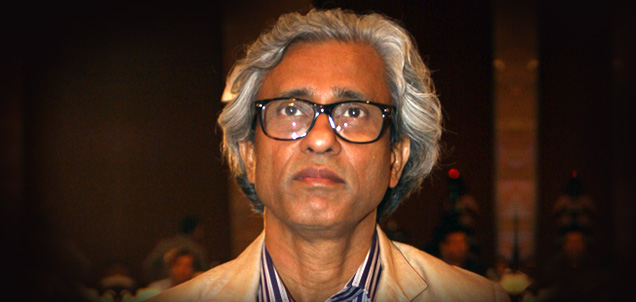
Author: mxmadmin

  • Anil Thakraney: Radio One is finally singing the right tune

    By Anil Thakraney


    According to market news, Radio One is all set to return to English programming in Mumbai and Delhi. And I believe that’s the right decision. It was quite late in coming, but as they say, better late than never.


    The station did start off as anEnglish channel, it played super music, and the RJs, at the time, packed in spunk. Some names that come immediately to mind include T Man, Tarana and Jaggu. The issues they discussed connected with the up-market urban audiences. However, along the way, for some inexplicable reasons, the channel joined the herd; it dumbed down, went all-Hindi, and totally lost its edge.


    Radio One became just another Hindi channel, essentially catering to the lowest common denominator. And it became a me-too radio station. What’s worse is they did this long after all the bigger radio stations had already earned brownie points with the mass listeners, and it became difficult to create a loyal base.


    In fact, speaking personally, Radio One’s dumbing down was the last nail in the coffin I had bought for my car radio. And I completely gave up on the medium and loaded my glove box with many CDs. I am quite sure this is the case with many other people. And, as a media professional, I found the station’s strategy to be quite bewildering, to say the least. Common sense suggests two things: One, there’s no point joining the rat race, as this kills the brand differential. And two, a whole lot of advertisers would want to target the up market audiences, as that’s the segment with the highest purchasing power. Even if all cab drivers tune into a channel, of what use is that to premium advertisers?


    Anyway, it appears the Radio One managers chose to learn the hard way. The station now seems to be coming full circle. And yes, I am quite thrilled. Looking forward to taking a break from my CDs, and enjoying some great music and some interesting chatter all over again.

    * * *


    PS: The London underground recently celebrated its ‘No trousers on the tube’ day. Which involves commuters travelling with their legs exposed. Hope Mumbai train commuters don’t ape this idea, and launch a ‘No shirt on the local’ day. Packed like sardines, we already have to smell armpits. Now imagine smelling naked armpits. The pits!


    Link: http://now-here-this.timeout.com/2012/01/10/in-pictures-no-trousers-on-the-tube-day-2012/#more-46049

  • I don’t read rival newspapers: Bhaskar Das


    By Anil Thakraney


    I have met Bhaskar Das on and off. (I once even secretly freelanced for him in my advertising days.) During my stint with Mumbai Mirror, I got to know him a little better. He has always come across as a cool, calculating and sharp business manager… but someone who’s smart enough not to build his own image over that of his company. In a long conversation inside his plush corner office (previously occupied by Pradeep Guha), Bennett Coleman’s president answers searching questions on his long career with the Times, the group’s ideologies and sometimes controversial practices.


    The one new thing I discovered about Bhaskar during this discussion is that he’s a deeply spiritual person, and often, as he himself said to me, uses learnings from The Gita to ‘sanitise’ his various marketing strategies. Wonder what Lord Krishna would have to say on Media Net.


    But I must say the man who heads the nation’s largest newspaper house retained his composure even when facing tough queries. Spirituality at work, I suppose.


    Boss, when do you retire? You are 58.

    See, retirement has two different connotations. For me, it’s ‘Retyrement’. Like re-treading tyres. And that means adding new capabilities. Coming specifically to Bennett, I have a flexible retirement plan. As per the company’s desire, I should stay as long as I am mentally, physically and intellectually fit. But I must add that I live by the day. So I am only bothered about the now.


    You’ve been with the company for 32 years. Never got bored of the same place?

    Boredom only happens when you don’t love your job. I have continuously rediscovered and redefined my space, so the journey has always been very exploratory. I don’t know whether the excitement would have been there if I had worked in a bank or in some other financial company. Newspaper is a 360 day product. Because of my personal liking for content, I have always been involved in it in some form or the other. Honestly, for me, 32 years feels like 32 days.


    The flip side is some people would say Bhaskar is risk averse.

    It’s not the question of being risk averse. By that logic if you continue in a marriage you are risk averse! I don’t believe in changing jobs for the heck of it. People use it as a spring board for becoming financially more solvent, and that has never occurred to me. For me, a job is a gateway to learning and it’s not for pay slips. Also, even if I have worked in the same company, I have done multiple roles in multiple markets. Our shareholders have always been great teachers. So, I have updated myself continuously, and I can challenge anyone in terms of my cognitive bandwidth on various industries.


    Your biggest achievement in all these years?

    I am proud of having been a part of the company when it re-invented itself. The process started post-1985, when our Vice Chairman took over the reigns of the company and subsequently the Managing Director. And finally, in the last six years, I have been able to drive the ambitions of the company to such great lengths, that today the company is the biggest media house in terms of both, turnover and profitability.


    Bhaskar, the real challenge lies in turning around failed, small brands. Anyone can build on success.

    That’s the classical model. For me, taking a giant brand and making it bigger and taking it to a different level also requires equal guts. And even for a loss making brand, we have done that. Mumbai Mirror, when we started, was making losses.


    Today it is a Rs200 crore brand. This has become possible over a period of six years. And I have to add that I have taken many risks, in terms of launching new brands and making them successful. A number of big groups have also folded up, they screwed up. Success is its biggest enemy. When you are No 1, there’s only place for one person. To stay there requires more energy than reaching there.


    How many years do you give newspapers to survive in India?

    I am very optimistic about news per se. Today, we are leveraging the core and also investing in the embryonic and the emerging media, in terms of a news channel, websites, and so on. We are seeing ourselves as a complementary option as opposed to a substitutive option. Point is, TOI of 1830 and TOI of 1990 and TOI of 2020 will be a very different paper. We are constantly re-inventing to develop the complementary utility of the brand. We have become very futuristic, we are creating more and more niches. As for the newspaper itself, it is a matter of conjecture. I think in the Indian context, there’s a peculiarity, which is that English language is a big deal. Let me explain. To think of India as one nation is a mistake. There is a developing India, there is a developed India and there is an under-developed India. The developed India’s behaviour is more or less like the West, so there might be some erosion of the newspaper in this segment as they shift to Iphones and Ipads. But for the other two Indias, newspapers will continue to prosper for some time. For them, English is a gateway to career and growth.


    Coming back to your question, I am not an astrologer, but I do agree with the gentleman who said that in 2040, the last copy of a newspaper will get printed.

    Having said that, I do not suffer from format myopia, because that would kill a corporation. I think of news as a genre, not as a format.


    There’s been some buzz of an IPO from your group. True?

    This can always be on the agenda of any corporation, including ours. But as of now, nothing has been decided. I am not saying it will never happen, but not in the near future.


    Do you admit that competition has been good for the TOI as a newspaper? Pre HT and DNA, the TOI in Mumbai had lost its edit focus. Now, the news coverage is remarkably superior.

    I have always believed competition is good. Obviously, one has to respond, not react. If, while responding, the quality of the product improves, then that’s damn good. But it’s a part of the re-invention process. In Calcutta, we are the dominant force now. Or for that matter in Bangalore and Delhi, where we became the competition. But not all market leaders have responded positively. We are a dynamic group; it’s in our genetic core to re-invent.


    What are the innovations Bhaskar Das has masterminded in the last five years?

    I have not, it’s all a team effort. ‘I’ as a word does not exist in my dictionary. In our group we all work as a team. No individual is bigger than the team.


    Private treaties, for which your group has been both, admired and dissed… it hasn’t eventually paid off, right?

    It’s thriving; it’s a part of our deep strategy. We didn’t want to make money on these.


    Whoa, the whole idea is to do a space and equity barter for revenue. And to encash on the acquired equity.

    If we wanted to encash on the equity we would have gone to the stock market. Our strategic intent has not been understood, and we want it to remain not understood. It’s a demand-side innovation, and nothing else. Private treaties are now called Brand Capital out here, we have re-invented it and it’s doing extremely well.


    Is Pradeep Guha your mentor?

    I have had many mentors in my life, and he is one of them. He has been a great teacher for me.


    Some years ago, in this very room, Guha said to me that for the group, the target audience is the advertiser. Do you agree with this ideology?

    This kind of question cannot be answered with ‘one size fits all’ sort of a thing.

    We have two customers: Readers and advertisers. Agreed, that our business model is so skewed that we are dependent on advertisers, but we have never forgotten that the reader is the franchise that leads to advertising revenue. The point is to get ad relevant audience… which means people who are culturally and financially solvent enough to engage with the advertisers. But for getting that also you need interesting content. So it’s both, Lakshmi and Saraswati.


    In 2004, you were about to buy Mid Day. What went wrong?

    Nothing went wrong. We wanted to buy and even Mid Day wanted to sell, but in any such deal both the partners have to have a buy-in on terms and conditions. That didn’t happen.


    Regret losing out on Mid Day?

    Now that Mirror has come, Mid Day is not required.


    It’s generally believed Reponse calls all the shots in your group. True?

    There’s no truth in this. I worked in Response for 30 years, and I have never seen any semblance of power. Only thing is, because of the business model, which is that advertising gives us 90 percent of our revenues, it’s perceived to be the most powerful. Every division plays its part. We have no say in the content. If that had been the case, the TOI wouldn’t face the maximum ban from clients (amongst newspapers). We have the Chinese wall, though we do Brand Capital. The editorial is completely independent.


    Cross your heart and tell me. You have never gone to one of your editors to ask him or her to plug an advertiser?

    I have never done it.


    That’s very hard to believe.

    Trust me. I cross my heart. When clients approach us, we ask them to approach the editorial director. Because it will never work if it goes through us.


    Funny that happens in a media company that runs Media Net.

    That’s because people haven’t understood Media Net. Others do it secretly, we are very clear we do it only for the entertainment publications, and with clearly defined protocols. Others do it as legitimate coverage.


    Truth is, Media Net sowed the seeds of paid journalism in this country.

    I don’t think so. There have been enough examples in the past, where, for financial and public issue ads, journalists always got a bad name. I would say it is much more transparent and protocolised out here.


    Are you proud of MediaNet?

    (Slight hesitation.) See, it’s not the question of being proud of it. Life is not black and white. It’s a part of the strategic process we have done. I feel what used to happen previously was more unethical, where, if you knew a journalist, you could get a plug. And we have openly announced these are promotional supplements.


    You’ve kept a very low profile. Looks like you don’t want to repeat Guha’s mistake.

    (Smiles widely) No individual can be like another person. I can’t be what I am not. I don’t think Mr Guha was high-profile; the job is such that you get noticed. Now, maybe there’s nothing noticeable in me! I always say that ultimately it’s the corporation that gives you the halo. And I have no personal halo.


    I think you have decided to be clever about it.

    That’s your conclusion. I did exactly what I believed in. That my work is to serve the company, which I do.


    An Indian editor you admire. Someone not from your group.

    Unfortunately, I can’t comment because I have not worked with them. Also, I don’t read competitive products.


    You don’t read rival newspapers?

    I don’t.


    Don’t you want to know what the competition is doing?

    For that my MIS reports are there. My brand team is keeping an eye on the competition, I don’t have to do it. I don’t have the time to read everything, it’s better to read a few publications in-depth.


    Vir Sanghvi said to me that even if it was the last job in the world, he would still not work at the TOI.

    It’s a democratic country, we respect individual opinion. These things don’t affect me at all. I am a spiritual person.


    When did you become spiritual?

    I have always been spiritual, it’s a journey. We are all expressions of god. And so you must love everyone and not be judgmental of others. When you are spiritual, you love everyone.


    I think the Jain family’s spiritual beliefs have rubbed off on you.

    It would have happened anyway, even if I had worked in any other corporation.


    Photograph: Fotocorp

     

  • [PR Channel] Flashmobs & guerrilla PR in the digital world

    By Pranav Kumar


    Flashmobs in India are a rare thing – but when they do happen with the right construct, the impact is well, viral. I’m talking about the now legendary ‘Mumbai flashmob’ where two hundred amateur dancers took crowds at Mumbai’s bustling Chhatrapati Shivaji Terminus railway station by surprise in late November 2011 by breaking into a stunning dance performance to a popular title track from the Bollywood blockbuster Rang De Basanti. The ensuing video assumed viral dimensions, trending across the Twitter-verse and attracting over 2 million views on YouTube.


    Flashmobs don’t happen every day in India. The closest we get (sort of) are politically-inspired rallies and other forms of activism that keep the nation tethered to its television sets (such as Anna Hazare’s Gandhian-esque style of revolt against graft and poor governance in India). Though the two don’t really compare in either purpose, ideology or scale, both do evoke public response and represent the widespread generational change currently sweeping India. All of this stems from a need to be heard, a need to make a change based on newfound confidence in a growing India. And none of this would happen if the country’s mainstream (read ‘traditional’) and fast-growing social media dynamics weren’t as conducive with mass penetration and growing adoption.


    In connecting the dots with these sweeping phenomena, we as public relations and digital communications practitioners can seek inspiration, think above and be even more creative in what we do.


    The Rang De Basanti gig in Mumbai is emblematic of the continuing spurt in social media (no surprises here). India’s over 100 million internet users now represent a sizeable audience and, according to consulting firm McKinsey & Co, will triple in size to 350 million by 2015. Smartphone adoption growth is pegged at 15 percent YoY and the mobile device is simply a huge enabler of internet access as opposed to current PC penetration (roughly 8 percent of population). On last count, India had close to 800 million mobile subscribers.


    Mumbai’s flashmob makes another point – the growing popularity of online video consumption. According to the Asian Digital Marketing Association, half of India’s internet users now watch videos online. In a country where traditional media continues to rocket its way up unlike most markets (2011 growth was at 18 percent for newspapers), social media is certainly not outpacing it but assuming increasing importance. Integrated campaigns are therefore essential from any marketer’s perspective and as we at Bite look at it, it’s all about helping companies join valuable and relevant conversations – whether in a blog, on Twitter or via a newspaper interview.


    Coming back to flashmobs, they too can serve as effective platforms to generate a terrific amount of buzz when done right. However, it’s one thing to organize a flashmob for fun, or indeed for a cause. But doing it for marketing reasons is another thing entirely and is much more risky. Innovative brands and organizations around the world have used flashmobs every now and then to their advantage resorting to such ‘guerilla’ tactics to either generate fanfare or indeed to steal attention from a competitor.


    Doubt if we’ll see a flashmob culture in India as yet but at least Mumbai’s Shonan Kothari, the brains behind the Rang De Basanti one, has shown just how effective a carefully orchestrated flashmob can be.


    In the end, the message is clear for today’s increasingly busy communicators: in a hyper-connected and integrated world, it’s all about telling your stories in the most compelling and creative manner. It’s about having a point of view that’ll eventually triumph and transcend through today’s cluttered environment to be heard.


    Pranav Kumar is Managing Director – India at Bite Communications, a part of the Next Fifteen Communications Group plc.


  • [PR Channel] We want to grow organically, not exponentially: Dennis Taraporewala

    In this competitive era where clients don’t mind slamming the brakes on services that do not bring much to the table, it is often the vulnerable who fall victim to the siege. And for an industry like PR which is anyway sidelined by clients and media alike, the scale is always in favour of large agencies. But then there are a handful of small – or rather ’boutique’ agencies, as Dennis Taraporewala, Director, Criesse Communications, would like to call it – which are changing the market dynamics and giving the biggies a run for their money.


    With a flurry of big and key clients vouching for the services of this communications shop, the going has been very good for Criesse thus far in India. In conversation with MXM India’s Johnson Napier, Mr Taraporewala declares that boutique shops can redefine the way PR functions as a discipline in India, and talks about how the larger players will be compelled to work in a cooperative fashion with the smaller players, and not in isolation, in future. Excerpts:


    Q: It’s been five years since Criesse made a formal foray into India. How have you grown as a communications agency in India since then?

    Criesse Communications was started in 2002 by Gitika Taraporewala (Managing Partner) as an agency in Singapore with Kodak as our first client. For quite a while it was a small firm based out of Singaporewhere we did a small amount of PR in the region for a few clients. But the real take-off for the agency was in 2006 when we came back toIndiaand decided to set up the company for the Indian market. We originally started out by picking up a few corporate-cum-entertainment clients like Mid-Day, Radio One, Indian Express Group etc. From there we also picked up a range of entertainment clients like Kangna Ranaut, Sonu Sood, Jimmy Shergill, Gul Panag, Chitrangada Singh etc. Eventually we realized that we were catering to two distinct kinds of clients – one was corporate and the other was entertainment. We realized we had a unique standing in the marketplace that made us different from the other players who were more focused around a single domain. So that was the differentiation that we were able to bring to the table.


    Q: Tell us about your client roster and the range of services that you offer them?

    We recently have signed up with new multinational clients like Sofitel Hotels, US-based FranklinCovey, etc. We have also been working for a long time with BBC Worldwide and have in fact been asked to come and pitch for BBC Global News as well. Then there is Elder Healthcare and O2 Sparkling water that have aligned with us. Also, there are clients with whom we work on a project basis like The Indian Express for their FE Best Bank Awards, etc. So quite naturally, the strength of our agency is the ability to bring together the corporate part of the business and the entertainment part of the business together.


    Q: What is unique about the way you function as a small agency? Why should a client stick with Criesse as the AoR?

    We intend to stay small – a boutique agency – as we offer our clients highly personalized services. Our retainer clients have managed to stick with us for the kind of solutions we offer them. What you get to observe nowadays is that agencies sign up a lot of clients and within six months the client is on the lookout for change. So we decided that we will work for only a few clients; we will be selective about whom we sign up with. So we have about seven people in our team but we offer our services whole-heartedly to the clients. We make it a point to see that there is one senior partner always involved even with the operations with the client. That is why our clients are extremely pleased with us.


    Q: As a boutique agency, is there a standard industry code you adhere to while pitching for a new client or do you follow a different practice?

    Initially, if we are called for a pitch it follows a certain process, especially for the large corporates. So we go and pitch just like any other big agency but we tell them that we are a small agency and we intend to stay small. But if we sign up with them we assure them that the team will have at least one highly experienced individual at the top along with the junior members. The main thing is that you can win big accounts, but if you don’t have good talent working on that account, eventually the relationship breaks down. So we may have 30, 50 or 100 clients with us, but if they are not satisfied with my work then it’s not worth winning such a large number of clients.


    Q: How friendly is the PR environment for boutique agencies like yours as compared to large agencies?

    I think there is a big opportunity that has been created for boutique agencies right now, because what is happening is that though the large companies have a vast network and are fantastic with their thinking, in terms of execution they have not been able to handhold the client. If an account director, for example, has 20 clients under his belt how can he get involved with each one of them at a personal level? It will be left to the juniors to build up the relationship with them and that’s not a good thing. What is unique about Criesse is that we have a brand strategy practice, and not just PR. We are always linking into the client’s corporate brand strategy. We always insist that the client share his corporate brand strategy with us; without that we do not proceed ahead. So this is how we are positioned as an agency.


    Q: How would you rate your growth story in numbers?

    We have witnessed very transformational growth in the last year as we have signed 2-3 large accounts. As for the numbers, all I can say is that we have doubled (revenues) from what we were a year ago.


    Q: It is alleged by large agencies that clients are not open to paying a premium because of the underpricing exercise that medium and small agencies resort to. What are your views on such allegations?

    What is termed as premium service and what is it that you can classify as premium for premium prices is very relative. So if a small agency undercuts a big agency just on price it won’t be a long-term relationship. Because eventually, no matter what a client pays, if you do not deliver they will leave you mid-way. So the best approach is to ensure that the quality is delivered. We only directly compete with the big agencies when there is a coordinated pitch. So if small agencies are undercutting large agencies, it won’t last if they are doing it based on cost. It will last if they are doing it based on the quality and the value proposition that they bring. And value is added only through a combination of quality and cost. Now if somebody comes and gives you great quality at a better price, wouldn’t you take it? So that is something big agencies have to think about.


    Q: Given that consolidation is the order of the day, have you ever been approached for a takeover?

    We were approached once by an Indian entity for a takeover but we didn’t really pursue it. Also, there was an agency from Singapore which had evinced interest as they wanted to enterIndia, but we declined. Our intention is clear: we want to grow only organically; we don’t want exponential growth. The reason being that we want to deliver on the quality front. Of course we do want to be profitable too. The key challenge is to get talent and groom them and get them to think long-term.


    Q: Are you looking at expanding your expertise from the regular corporate and entertainment services that you offer?

    There is a trend nowadays for agencies to offer multiple practices – finance, healthcare, pharma, etc but I just feel it becomes meaningless after a point. Because after all, why has a client hired you? Not because he wants domain specialization in his area, but because he wants his brand to be well communicated to the outside world. I think specialization in the PR firm has been taken too far but what happens is that it is being used as a tool of reassurance. The trend right now is that everyone is saying we are not generalists; neither I am saying be a generalist. I am saying be someone who can understand multiple industries, then only can you become senior in your approach and be valued for what you offer.


    Q: Would you agree with the claims made by certain large players that smaller players are responsible for the unorganized state of the industry?

    Let’s look at it the other way. Take some of the large agencies: are clients sticking to them? Some are, not all of them. There is currently a need in the market for high quality boutique players. And there are such players and they are attracting business. So it will always be a give-and-take affair. It wouldn’t be that the big will dominate and others will disappear; the market is large enough to support all of them. In fact, larger players should go ahead and leverage from these smaller players. What you may see is that larger agencies which are not able to offer personalized services to many clients will cooperate – not buyout – with the small and boutique players. It should be a collaborative model that will be a win-win for all.

    What has worked for us is that we have always advised clients to be simple, authentic and clear in their communication. If any of these are missing then people pick it up, and it may be damaging in the long run.


    Q: What are your views on digital, especially the use of social media in PR?

    We integrate online very well. Social media is not rocket science; anybody can get the hang of it. People only overhype it. Because facial expression or tone of voice is not there in the social world, the written word needs to be very authentic. So our strategy around digital is not very different from normal communication. Maybe what has changed is that communication is now more interactive. And if you are authentic in your message then people will be willing to listen to you.


    Q: Any other new client of Criesse that deserves a mention?

    There is a new client that we have signed up with – Spool. It’s a Singapore-based  company that is coming in the global market with Indian content online. The idea is that today if you go on to the internet there is no one place where you can get the latest Indian movie. On this portal, viewers would get to view movies and even news and other such programmes from any corner of the world. Initially it would be a free model, then a subscription model or pay-per-view. They have signed on with some major movie and TV players for the deal. It would be launching end of this month.


    Q: On a parting note, what can we expect from Criesse in 2012?

    We are going to be involved with a couple of large pitches; on a growth basis we are looking at a 30 per cent increase depending on which pitches materialize for us. The challenge for us in 2012 would be to carry on with churning out good talent and take them higher so that they deliver greater value to brands on the whole. As for our foray into newer regions, we may look at expanding our offices in Delhi and Singapore, but that is over an 18-month period and not immediately.


  • Wow! Sandeep Goyal firm will now manage Airtel’s ad inventory & m-commerce

    By A Correspondent


    Bharti Airtel has outsourced all its advertising inventory management and mobile-commerce initiatives to Mogae Media, a firm promoted by former Dentsu India chairman Sandeep Goyal, in a first such deal in the Indian telecom industry.


    This means Mogae Media will sell all possible advertising space on mobile, DTH and broadband services of the country’s top telecom service provider and run its end-to-end mobile commerce initiative including giving special offers, discounts, freebies to subscribers and negotiating deals with companies, a person familiar with the development said.


    Mr Goyal confirmed the deal, but refused to share financial details.


    He said his Mogae Media has already begun selling the advertising inventory and that he saw great potential for his new venture. “My dream is to create an Amazon in the mobile space in India,” he said.


    Analysts said it’s the first time a telecom service provider has collected and outsourced the complete advertising inventory in the country.


    “No one has done that in India so far,” said Mr Prashant Singhal, telecom leader at Ernst & Young.


    Other operators such as Vodafone and Idea offer value-added services created by independent application and content and have outsourced some services.


    “The model has high potential since the mobile phone is the only medium to reach out to 800-900 million people,” Mr Singhal said.


    He says the concept of giving discounts and loyalty points will work among deal-loving Indian consumers. “This kind of selling could generate revenues upwards of $1 billion in two to three years for the industry,” he added.


    An analyst who did not wish to be named said Airtel could rake in around 40-50% of the industry’s revenue based on the sheer size of its postpaid customer base.


    Bharti Airtel’s advertising inventory includes space on text messages, multi-media messages, IVR and recharge coupons in mobile services.


    The default channel, pre-loading screen and messages from Airtel DTH and broadband also form part of the inventory.


    Airtel’s deal with Mogae will work on a revenue-sharing model, the person quoted first said.


    A Bharti Airtel spokesperson said the company would not comment on market speculations and partner relationships.


    Through this deal, Airtel will also offer location-based deals by using advance technology such as geofencing-or tracking users through GPS satellite navigation system-to give discount coupons of nearby retailers to its customers.


    Thus, an Airtel user may get a hefty discount on a particular brand or be the exclusive customers to be informed of a sale prior to it being opened for regular retail customers.


    Such exclusive and customized ‘Airtel Deals’ target small sample sizes.


    Mr Goyal said Mogae Media will invest in creating mobile analytics from data available with Airtel on their subscriber base. For instance, high ARPU clients with substantial roaming and using smartphones would be targeted for high-end car brands and deals in airlines and hotels.


    Similarly, youth with high Facebook usage and 3G connection may be targeted for offering deals on apparel, career institutes, cafes, movie theatres and music.


    This micro-targeting of consumers gives brand the opportunity to fine tune both their advertising promise, as well as avoid wastage and spillage inherent in other media, Mr Goyal said.


    Mogae Media sold 250 million impressions of Life OK, Star TV’s new broadcasting channel that launched mid-December on post-call notification-a message which appears after a pre-paid caller ends a phone conversation showing the amount remaining in the caller’s account.


    On the launch day, around 30 crore messages were sent out within four hours, asking subscribers to tune in to the channel.


    Airtel’s WAP portal also streamed an eight-hour concert for Life OK and 7 million plus Airtel’s DTH subscribers received mails inviting them to see Life OK on channel 104.


    Bharti Airtel is the world’s fifth largest telecoms company that has more than 175 million mobile phone customers in India, the largest share in the industry. Its digital television service has more than 6.6 million customers and more than 1.4 million broadband users.


    Source:The Economic Times

    Copyright © 2012, Bennett, Coleman & Co. Ltd. All Rights Reserved

  • Ad Strat: The Hero in everyone

    Anil Nair, CEO and Managing Partner, Law & Kenneth

     

    Name of the Campaign/Ad:

    Hum Mein Hai Hero – Hero MotoCorp


    The Brief:

    To come up with a thought that will help Hero honda to transform and establish itself as Hero MotoCorp.


    Research:

    Our job was not only restricted to understand the two wheeler market but the people of India on a whole who could be our perspective target audience. Our focus was on the prevailing problems like corruption in India and how an Indian would overcome it.


    The thought process behind the creative:

    Since our hub was India, we saw a tremendous positive attitude amongst the people and we wanted to bring it out. Our focus was on the fact that there is a possibility and we all have a hero within us to overcome any hurdle and ‘self belief’ is the key factor in that.


    [youtube width=”400″ height=”200″]http://www.youtube.com/watch?v=ulbchi7-N9c[/youtube]

    Media vehicles chosen:

    Complete 360 degree approach (TV, Print, Outdoor.,digital)


    Key issues kept in mind while executing the ad:

    Our motive was to not let it look like just an ordinary television commercial and at the same time we didn’t want to sound preachy. We wanted it to look realistic hence we used real people.


    Does the treatment do justice to the brief?

    Absolutely! Its spirit lies in the anthem.


    What according to you is the differentiating factor about the campaign?

    There are three differentiating factors:

    The Idea

    The Music

    Realistic Visualisation


    Market and client feedback:

    Hero MotoCorp enjoyed a higher sales percentage and went ahead of Hero Honda. The client is ecstatic and extremely happy with the work.


  • Anil Thakraney: Star India’s massive gamble

    By Anil Thakraney


    Actor Anil Kapoor, who played a smallish role (after hectic lobbying) in the cult American TV serial 24, now wants to re-make it in India. Have we totally run out of desi programming ideas? Well, that’s a topic for another day. What interests me urgently are media reports which suggest that Star Plus has bought the rights to the Indian version for a mind-numbing sum of Rs 85 crore. No TV show in the history of Indian television has commanded that sort of a price tag.


    One sincerely hopes Star is rejoicing over this sensational investment. Because quite honestly, I have serious doubts if the Indian cast and crew can pull this one off. I watched two seasons of 24, and I can tell you the show is simply unstoppable. I had to postpone work assignments and a lot of sleep in order to finish all the episodes, it was that riveting. Now, here are the reasons why I believe 24 rockedAmerica: the pace is extremely brisk, the script is powerful with many sudden twists and turns, the acting is superlative and the special effects, fantastic. However, what shines the most are the kickass dialogues, they keep you hooked.


    I am not sure if we can deliver all of that in India. And my scepticism is rooted in three huge areas of concern. One, Indian showbiz just does not have writers who can pen such superlative scripts and dialogues. The very average quality of writing in our movies and soaps is a clear indication of that. Two, our directors seldom deliver on both, form and content together. On 99 per cent of those projects, when it comes to producing with style and chutzpah, the content gets compromised. If a talented Farhan Akhtar can commit that folly (Don 2), you can easily imagine what a risk this is with others in the frat. And three, 24 is a gritty show that pulls no punches when it comes to featuring political debates and communal tensions. That’s one of the reasons the American audiences connected with it. In a hyper-sensitive and a vote bank politics-led India, where people are ready to protest at the drop of a hat; that will be a tough act to follow. And too much caution will kill this particular show.


    Well, all I can say is that Anil Kapoor and many others are about to hit the jackpot. Good for them. And I hope the Star network isn’t the only one left short-changed. Good luck to the channel!


    ***


    PS: BBC’s Top Gear presenter, Jeremy Clarkson, has pissed India off. The mischief-monger made fun of our ‘lack of hygiene’ in his India series. Now, instead of ignoring the man’s rubbish, even laughing it off, the Indian High Commission inLondonhas formally complained about the programme. And they have demanded an apology. Come on guys, the man is a comedian. Surely a billion plus Indians can’t be so under-confident as to take a joker seriously. When will this nation learn to be cool?


  • The Anchor: 5 tips on how you too can run the marathon

    Every time Bharat Kapadia talks of his training for the marathon, there’s a sense of hopelessness in me on how a man of his stature (and he is indeed a man of several parts) and at his young age is so passionate about running the marathon (or the half-marathon, as he corrects) and here I can barely run a few hundred yards. Yesterday, I asked him about the time he took at the 2012 edition of the Standard Chartered Mumbai Marathon, and he said it was 2.19 hours. That’s commendable. And guess what did he do after the marathon effort? No, not soak himself in beer or go in for a foot reflex. He got into his music class, perhaps planning the recording of his next single.


    Bharatbhai is not the only mediaperson in the act. I was quite impressed that Paritosh Joshi was tweeting away as he was running yesterday. On behalf of the MxMIndia team and I guess the entire fraternity and from myself, to all those who took to the roads yesterday, a hundred thousand salaams!


    My colleague and deputy editor Tuhina Anand spoke to Bharat Kapadia asking him for tips on running the marathon. Here goes:


    By Bharat Kapadia


    #1 Mindset: While getting ready for a marathon, 75 per cent of the preparation has to do with the mindset. The mind will play games and you might think that running is not your cup of tea. But if you resolve to run and decide to complete the marathon, then there is no looking back. At 59, I can run the half marathon (21 km) but when I started, I could not even run for 500 meters, so it is all to do with the mindset.

     

    #2 Fitness: Once your mind is made up, then fitness comes into play. You need to look at a diet that will give you power and endurance. Protein and carbohydrates are a must in a diet when you are running long distance. You have to also ensure that your body remains hydrated as there is a strong possibility of dehydration due to loss of water and salt while running. Practise consuming at least three litres of water.


    #3 Training:  For first-timers, I would advise getting professional training, as it will help you in understanding how to run long distance as well as build endurance. Running a marathon is not just about getting up one day and saying that you will participate. A lot goes into it and the warm up and stretching sessions are as important as the actual running. This is where professional help comes in handy.


    #4 Routine: One has to adhere to a routine while preparing for the big day. Practice is a must, hence you have to dedicate some time in your busy schedule to get ready for the marathon.


    #5 Register on time: The registration for marathon begins much in advance and if you miss that, you will miss the opportunity to run. In that case all the practice will be for naught; hence keeping an eye for the registration date is a must.


    Veteran mediaperson Bharat Kapadia is chairman of Whatuwant Solutions.


  • Journalists’ covenants on cricket and more

    By Ranjona Banerji


    Aging batsmen, an arrogant captain making bad choices, indifferent performances, the Indian Premier League and the Board for Control of Cricket in India- all or some of these are to blame for the Indian cricket team’s unfortunate performance in Australia.


    Television, which was building itself up, started in a slow frenzy at the start of the weekend but it was all out there – foam, fits – by Sunday evening. Arnab Goswami of Times Now, amply helped by his alter ego Boria Majumdar inAustralia, was extremely saddened as only he can be by Indian cricket captain MS Dhoni in particular. Had Dhoni denigrated Test cricket by suggesting that he might retire from that version of the game? Was this the end of civilisation as we know it and so on? He was supported by Bishen Singh Bedi who was sputtering at the mouth with anger and by the cynical observations of another guest who got Goswami and Bedi even more enraged.


    Newspapers are still more circumspect but try ‘Shame Old Story’ and ‘Disgrace’ from The Times of India, ‘Perth Pangs’ and ‘India blunder, Oz plunder’ from Hindustan Times. Sunday Mid-Day tried to put a spin on it with ‘Bright Spark’, referring to bowler Umesh Yadav getting five wickets but the strap line below the headline emphasisedIndia’s batting collapse.


    Luckily forIndia’s beleaguered cricketers, a week is a very short time in journalism. Just before the India-Australia series started, I seem to rememberAustraliabeing hammered for losing toNew ZealandandIndiafeeling all pumped up because of its enormous talent and at-home victories. A couple of days atMelbourneand all that moaning and hype was completely reversed.


    My journalist friends and colleagues tell me that I should not be so hard on my fellow journalists and that it is the job of journalists to get hysterical and to have no memories at all, especially when it comes to sport. There is apparently some mysterious covenant signed by sports journalists (us general purpose journos are not privy to this procedure) by which they have to swear that they will make every effort not to remember what they had said or written the week before. Also that every loss by a sports team or person has to be portrayed as the end of the world and every victory had to be the best ever. I know this to be true from my experiences as a tennis fan (empirical evidence!).


    We already know that TV people have their own covenant which makes them swear to try and “save” Indiaat every opportunity and know as little as possible about any subject which gets them all excited.


    The cocktail of these two covenants makes for some very dramatic viewing and for those with longer attention spans, there are newspaper articles. Some sober commentators in print will try to look at the larger picture and to extrapolate future courses of action from past experiences. They may be chucked out of the Lodge for breaking the covenant unless they are long term offenders. But in these times, the hysteria will win. Except of course tillIndiawins something!


  • Speaking in tongues, good for TV channels


    By Rishi Vora


    TV channels are gung-ho about the digital revolution India is witnessing. New launches and the ones in the pipeline – all are preparing to be on DTH or Digital Cable. Well, what this brings to viewers and for the industry is a  novel trend: the rise of language feeds. For the consumer, it is now a chance to view a particular channel in his mother tongue. For channels, it is about expanding viewership base and accumulating additional revenues via local advertisers.


    The trend is visibly on the rising side. Big CBS launched Spark Punjabi. Sonic has extended its offering to Marathi and Bengali. History, the factual entertainment channel from the A+E Networks recently launched the Gujarati feed, making it the only channel to be available in seven languages (Gujarati, Bengali, Tamil, Telugu, Marathi, Hindi and English). Discovery serves in English, Telugu, Bengali, Hindi, while National Geographic is present in five feeds: English, Hindi, Bengali, Telugu and Tamil. The trend, quite noticeably is seen in the kids and the factual entertainment genre.


    For these international channels, the opportunity is way too big to be missed. The cost of launching a new feed vis-a-vis the return it brings to the table in terms of reach, viewership and revenue, is negligible. All it accounts for is an additional cost on dubbing, which on most occasions, for all channels would be an incremental cost since English and Hindi languages are by most channels, already operational. Sangeetha Aiyer, General Manager – Marketing A+E Networks and TV 18 JV informs that the cost of dubbing varies between 7 to 15 per cent of a programming budget.


    “The trend has been around for a while,” says Nina Elavia Jaipuria, Executive VP and General Manager, Sonic and Nick India. She further adds, “For us, since we cater to the kids and the young adults of India, it is important that the characters kids have an affinity towards speak to them in their mother tongue – the language they speak at home. That is the best way you can engage and entertain them.” Aiyer agrees that it brings in more revenue and viewership for the channel, but also calls for a lot of co-ordination with studios which at times can be painstaking. Ensuring quality control, scripts, technicians etc is one part of the challenge, while lack of experts in languages like Marathi or Bengali is another challenge.


    Most channels outsource the dubbing work to studios, except UTV Action which contracts its sister company UTV Software on the same. UTV Action, as is known was one of the early movers in the movies segment to offer Hollywood films dubbed in Hindi. The channel later launched its Telugu feed. Manasi Sapre, Programming Head, UTV Action says that Telugu feed opens up a big market for the channel. “We’re seeing a lot of traction from the Telugu market, where the appetite for Hollywood movie watching is constantly increasing. Telugu market is one market where you can be rest assured of a good response, given the fact that the southern belt likes to view content in their own language rather than English or Hindi.”


    A separate P&L company within the UTV group – UTV Software, has been in the business of dubbing for more than 15 years now. The company is seen as a pioneer, currently handling projects like Walt Disney, Hungama, Fox Traveller, National Geeographic Wild, NDTV Good Times and UTV Action. The company dubs 40-50 hours of content every month, so considering that content is offered in a minimum of  four languages, it means 200 hours of content being dubbed every month.


    According to Rahul Bhatia, Senior VP – Dubbing, UTV Software, the dubbing industry has grown leaps and bounds in the past five to seven years in terms of the number of players. The market still remains majorly unorganised with UTV as a major player as against many small studios that do one-off projects. “Price-points for dubbing have gone down drastically. From what it used to be Rs 1 lakh for an hour 10 years back, it is now come down to Rs 25,000. But, on the brighter side, volumes have increased. Three years back it was only Hindi, Tamil and Telugu, but now if you see, the market is growing to other languages like Gujarati, Marathi, Bengali and Punjabi.”


    Quite interestingly, for many channels that bring in international content from countries like Japan, Korea or even China, content is translated to English and then dubbed to various other languages, which is a lot of effort on the part of the studios. Part of the reason for this tedious procedure is the fact that channels are extra careful to ensure that  international standards are maintained.


    Given the kind of growth dubbing has seen and that many channels have launched multiple feeds, there are chances that a few broadcast majors would want to set up their own studios. Maybe it is too early to say, or the existing outsourcing practice could well be effective enough as one may not want to get into the business, which could well mean diverting the attention from three major functions: Content, Distribution, Sales. Even for now, Dubbing seems to come later in the priority list of the channels.


  • Trade bullish on bus shelter advtg

    By Robin Thomas


    Looking for a cost-efficient medium with high brand recall and healthy Return on Investments (ROIs) to advertise your product, then you should head to the nearest bus stop. The bus shelters, strategically placed in areas with the target group travelling either by foot or in a vehicle, are fast becoming coveted advertising mediums. FMCG brands, television channels and retail brands have increasingly started using bus shelters as a medium to deliver their brand message as ads placed at bus shelter make it easy to see the brand and its message.


    Many advertisers prefer to go for bus shelter advertising as it is cost-efficient and has a high brand recall, especially in the metros like Mumbai, Delhi and Chennai. Hindustan Unilever and P&G are two big instances of big OOH spenders which are very active in bus shelter advertising, particularly in Mumbai and Delhi. According to Bikas Verma, Associate Vice President, Outdoor Advertising Professionals (OAP) Pvt Ltd, bus shelter advertising contributes approximately 10-15 per cent of the overall OOH advertising spends.


    Gurjit Singh, COO, Crayons Advertising observed, “Compared to other OOH formats, bus shelter ads give more frequencies to the campaign as the strategic look gives an edge to the campaign.”


    “Bus shelters are primarily service-oriented street furniture item. They also prove to be a very effective OOH format as they offer an efficient channel for the brands to reach out to the consumers in every nook and corner of the city. Advertisers have acknowledged this medium as very cost-effective, offering best in class ROIs. Bus shelters also provide widespread exposure to their campaigns, catering to a wide range of target groups,” explained Ayush Kakkar, Assistant Manager – Marketing, JCDecaux.


    The road ahead

    Mr Verma is of the opinion that since billboards are now facing government restrictions, bus shelter advertising, which is high-impact and high-frequency advertising, is bound to grow further. “In markets like Mumbai or any other metro, bus shelter and likewise street furniture will be the future of OOH advertising, as these serve the dual purpose of being a utility as well as an ad revenue stream. This format of OOH media is very apt for the female TG and since billboards will not be permitted in these markets in future, their growth potential is nearing the end.”


    Mr Kakkar of JCDecaux noted, “The growth potential in case of bus shelter advertising is huge and it will continue to grow as more and more cities adapt to these service-oriented formats. Globally, bus shelters are already a very popular communication vehicle in the world’s best cities.”


  • HT Media Limited launches HT Mini for people on the move

    By Akash Raha


    HT Media Limited (HTML) launched a new product from its stables on January 14 called HT Mini. HT Mini, half the size of a tabloid, is designed exclusively for people on the move and will have daily editions from Monday to Saturday. During the launch period, it will be available in select areas of Delhi-NCR and will be sampled heavily outside Metro stations.


    HT Mini has been designed keeping in mind the needs of people on the move. The size (smaller than an A4) makes it perfectly suited to be read in a crowded Metro. It packs 24 pages of light, snippety content ranging from the top news stories to city news, sports, entertainment and lifestyle. It. Currently the newspaper is being circulated free of cost.


    The Outdoor campaign is being handled by Mudra Max while Lowe Lintas is doing the creatives. The campaign has been in full swing since January 16, and radio spots too are being used to push HT Mini further. The campaign also includes engagement building measures, such as ongoing ‘character of the day’, with the target audience, the metro commuters.


    Shantanu Bhanja, Vice President – Marketing, HTML said: “The needs of people on the move are quite different from those reading the newspaper at home. They want something to pass time while traveling which they are able to pick up on their regular route, and hence their need is for something portable, conveniently-sized, with light, entertaining content. With the introduction of the Delhi Metro in the last decade, such travelers have grown exponentially. According to our research, over 60 per cent of Metro travelers would like to spend their commute reading something, but nothing was readily available to fit their requirements. We have customized HT Mini to cater to such people. We are very excited about the launch of HT Mini and are certain it will address a major need in our readers’ lives.”


    Vasantha Angamuthu, HT special projects editor, said: “HT Mini is a reflection of HT Media’s practice of keeping the consumer at the heart of all our initiatives. The words ‘daily commute’ conjure up images of crowded trains, cramped spaces and the drudgeries of repetition. Until now, there was nothing to look forward to on Metro rides but the launch of HT Mini is sure to inject some fun and entertainment into the daily commute.”