Author: mxmadmin

  • Ranjona Banerji: Why TV anchors must not write on edit pages

    By Ranjona Banerji


    I now understand the pain of being a TV journalist. There is no avenue within the medium to become a pontificator. For print journalists, it’s easy. You work a few years as a reporter-correspondent-sub-editor and then some boss type person decides you have some writing skills that can be further explored or some pages fall short of stories and some boss type person makes you write a quick news analysis or you are a boss type person and decide (or someone tells you) that the world wants to know what you think. And you know how angry print journalists can get if their “columns” are stopped, if you read the excerpts of Kuldip Nayar’s memoirs. The reader then believes that these columnists and analysts are experts.


    But what can a TV journalist do? Having spend years running from pillar to post saying “I am standing at the gate waiting for something to happen” interspersed with many in facts and of courses – “I am of course standing at the gate in fact” – does someone say to him or her, here’s half an hour of TV time as a reward for so much standing, now say what you want?


    No, instead you become a prime time anchor and you have to ask other people what they think. And some of those people, in fact, of course, have to be print journalists who have now become analysts and columnists. Talk about rubbing salt in it.


    The result is that you yourself don’t know what to think. If you have ever read any columns by famous Indian TV anchors (I think Rajdeep Sardesai and Sagorika Ghose of CNN-IBN and Barkha Dutt of NDTV, all have columns in Hindustan Times, which has reduced the effectiveness of its edit page by half) you will know what I mean. Half the time they plug their own channels and shows and the rest of the time they sort of sum up what’s happening. There’s very little original thought there except some anodyne comment. No provocation, no incisive comment, no contrarian viewpoints. This comes from years of TV panel discussions where you have to listen to other people. Print journalists are terribly egoistical and after a few years stop listening to other people and only like other people to listen to them. This gives them a great advantage as pontificators.


    (I must here advise newspaper editors to end this new trend of giving columns to journalists with little or no experience because they are even less readable than TV anchors. Youth may be attractive but it has its limitations.)


    What is the solution for famous TV anchors? Instead of bothering to write which they can’t, they should get their back on usual suspect panellists. Call them to their studios and make them question the anchor. The anchor will then hold forth while the panellists listen. However, the anchor is not allowed to ask questions…


    This way, we might find out if they can actually think. India wants to know.


    Ranjona Banerji is a senior journalist, commentator and Contributing Editor, MxMIndia. The views expressed here are her own. Twitter: @ranjona


  • Taproot’s new TRIP

    By A Correspondent


    Taproot India Communications Pvt. Ltd has announced the launch of TRIP (Taproot India Plus), a Creative Execution & Services unit specializing in non-mass media and production activities for the advertising, publicity and marketing industry.


    The undeniable truth in mass communication is that any idea is only as good as its execution. Any powerful idea can meet a premature end, if the execution is not up to the mark. Many a times, the extension of a TV, press or outdoor campaign is left with limited innovation, and not looked upon with greater attention to details. Yet, very often, that is the only face of the brand that the consumer interacts with. It is not only about the standard BTL, but every single experience point where a brand has a connect with its consumer. For example, POS, brand signage, in-shop displays, merchandise, exhibitions and events and so on. TRIP, with its core competencies in the above mentioned activities of high end, high value production, hopes to change all that.


    Agnello Dias said: “This sort of service does exist in international markets where once the big idea is arrived at, the creative services execution team, with their practical knowledge of on-ground and retail space takes the idea forward in a more engaging, entertaining and effective way. To the extent that at times most clients do brief these set of team independently like one does to a research or a digital agency”.


    TRIP believes that a positive approach, understanding of the medium, innovative thinking, huge industry experience and an eye for perfection can make all non mass-media touch points play a far stronger role in the communication mix than they do today, which is merely a support or reminder to the main communication units.


    Santosh Padhi said: “The industry spends on retail/on-ground/merchandise are already steep, but sadly, the quality needs to improve much more to honestly justify those spends. The industry has moved ahead quite a bit on film production in last five years with our television work looking far better than what it was a decade back. But we are yet to do the same in other areas.”


    Purushottam Joshi

    TRIP will be based out of Mumbai, but Taproot’s multi-city network tie ups can support national level requirements too. It is headed by Purushottam Joshi, who is also a partner in this unit; Mr Joshi will be leading this unit as a director and will be the face of this unit with an experienced team under him He has over 25 years of experience in the advertising and print industry. He has worked in large agency networks such as JWT, Euro RSCG and Mudra where he played a key role in successfully leading the Art and Production function and transforming them into critical divisions for those agency’s clients.


    With his deep knowledge and vast experience of the industry, Purushottam Joshi, Director of TRIP, feels: “There is a disconnect between what kind of state-of-the-art technology available in the market versus what’s being used or rather how it’s being used to reach consumers.” In fact, he is positive that ventures like TRIP can bridge the divide between brands and consumer across non mass-media touch points in a more relevant and effective way.


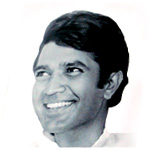
  • The Anchor: Subhash Kamath on his favourite Rajesh Khanna songs

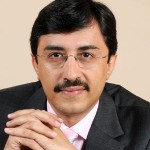
    By Subhash Kamath


    I do have a list of my favourite Rajesh Khanna songs. I love them as these songs are incredibly well written along with absolutely brilliant lyrics and compositions. These songs also bring out the emotion of the situation in the film so evocatively.


    Here goes my list:


    Chingari Koi bhadke from Amar Prem
    [youtube width=”500″ height=”250″]http://www.youtube.com/watch?v=kpM0jPd6-7w[/youtube]
    Kuch to log kahenge again from Amar Prem
    [youtube width=”500″ height=”250″]http://www.youtube.com/watch?v=95UdAo4JdJI[/youtube]
    Nadia se daria from the movie Namak Haraam
    [youtube width=”500″ height=”250″]http://www.youtube.com/watch?v=w7Vl6pNCE8U[/youtube]
    Zindagi kaisi hai paheli from the movie Anand
    [youtube width=”500″ height=”250″]http://www.youtube.com/watch?v=3vgDb4TQneA[/youtube]
    Mainetere liye hi saat rang ke sapne again from the movie Anand
    [youtube width=”500″ height=”250″]http://www.youtube.com/watch?v=SC8DuvNCjbY[/youtube]
    Yeh Shaam mastani from the movie Kati Patang
    [youtube width=”500″ height=”250″]http://www.youtube.com/watch?v=_sZg4EUB3IM[/youtube]


    As for the dialogue, the favourite will always remain the one from Anand… Babumoshai, Zindagi ek rang manch hai aur hum sab is rang manch ki kathputliyan hain…. The role played by Rajesh Khanna was really powerful, one of a dying man who had the ability to still laugh and make others laugh. I remember a scene in the movie where he makes light of his illness and Amitabh Bachchan in total frustration says, “Agar main kahoon ki tumhein lymphosarcoma of the intestine hua hai toh?” and Rajesh Khanna just smiled and says, “waah waah, baabumoshai, bimaari ho to aisi.” I think it was incredible how he delivered his dialogues and performed his role in the movie Anand.

     

    Subhash Kamath is the Managing Partner at BBH India. He is also passionate about music and is part of a music band called Wanted Yesterday.


  • Mausumi Kar: General Manager- Maxus, North and East

    (Work Experience: 18 years+)

    Being born in a family that had to shift base quite often, most of Mausumi Kar’s early days meant travelling and accommodating to different settings across the state of Nagaland. Her father’s frequent posting exercise didn’t allow her to grow roots in a place for more than two years. But then it was time to restore some stability and that’s when her parents opted to send her to Kolkata. From Plus Two to graduating with Honors in English Literature and then specializing in Marketing for MBA, all of this happened in the city of Kolkata for Kar.


    It has been close to 18 years now that Kar has been working. She started out in account management after completing her MBA. An accidental bump into media planning and she has been hooked on to it ever since. Kar had a brief but fascinating foray in Sports Research and Strategy. For Kar, it has been an interesting ride so far and she doesn’t see herself hanging the boots anytime soon.


    On her reasons for joining the media planning & buying domain, Kar confessed saying, “To be honest media planning and buying was not my profession of choice. Given my academic and extra-curricular activities track records it was a forgone conclusion that I would join the Civil Services. Infact, I had qualified and was just waiting for my training to commence. However, Dr. Subrata Sengupta had happened to see me in my final semesters at B’ School and I was not willing to give up advertising in favour of becoming a bureaucrat. So, that’s what happened.” In fact for Kar, media is a subset of advertising and the fact that there is this fine balance of strategic thinking, consumer insights and creativity is what drew her away from the account management profile that she handled earlier in her career.


  • Sushma Jhaveri: COO, Madison Communications

    (Total work experience: 18 years+)

    Jhaveri has more than 18 years of professional experience. She began her career with an NGO only to move on two years later into the media and advertising arena by joining the media planning department at Contract Advertising.


    She has several years of experience in media planning and research and has worked in companies such as Carat, Mindshare Fulcrum, TME and Synovate.


    Jhaveri has worked with clients across categories including names such as Unilever (oral care and deodorant brands), Colgate, Britannia, Godrej Appliances, Heinz, Castrol, Viacom18, ICICI Bank, STAR Network, Shoppers Stop, HDFC, and more.


    On the research side, she has been involved with media research, micro market planning software, various ad-tracking studies and also conceptualizing and tracking customised research for various brands.


  • The new reality

    By Premjeet Sodhi


    The change in society is expressed in three key dimensions which are Attitude, Affluence and Ambience. Of course, there is certainly an interaction between each of these as they are not independent of each other. And, in the past few years each of these have significantly changed for the Hindi Hinterland.


    The Ambience, which is the infrastructure around, has made progress by leaps and bounds. One can always say that there is a lot to be done for amenities like roads, electricity, healthcare, communication, education, governance, commerce, but all these areas have seen improvement. Government initiatives as well as private enterprise have contributed to this change.


    Affluence is on the rise. The average monthly household income has improved (as measured by the IRS database). The access to durables has improved and in most categories not only does this market constitute a large share of sales but is also a high growth market for the future. Automobiles, Entertainment Electronics, Household & Kitchen Durables are all expanding into these markets. For FMCGs, these markets were always an important geography, though only for the essentials, but now the market is also growing for the premium segments. Services, which focused only on metros a decade ago, are all vying for the masses in the Hindi Hinterland today.


    The change in Attitude of the consumers is of utmost importance. Increased urbanization, higher exposure to urban lifestyles and high aspirations are fuelling consumer demand. The attitude towards social equality, gender issues, education, personal lifestyles, technology adoption, and so on are all tending to match up with consumers in the other geographies. For Telecom, the Hindi Hinterland is a gold mine. The growth rates in these markets are enormous and cell phones are changing the very basics of media reach.


    Illiteracy has decreased by 15 per cent and 18 per cent in the rural and urban areas respectively in the last 5 years. The readership of publications (mostly dailies) has grown manifold in the last decade and continues to be an area of growth in the future.


    Television ownership has grown at a CAGR of 10.3 per cent over the past 5 years and viewership is increasing exponentially. Hindi news channels, Hindi movies and GECs are fast growing; regional content on TV too has seen significant growth. The DTH growth story has started from these markets and now is making its presence felt in the larger cities. Despite, the growth in media reach over the past decade, it is still a challenge to do justice to these markets in the current media context.


    Hence, the key challenges are:


    • TG Isolation: To manage sufficient reach, most often the largest reach media needs to be utilized and that reaches across target groups. There is, therefore, a lot of spillover resulting in wastage of media monies.
    • Geographical Isolation: As soon as one uses the national Hindi media beyond the regional media the spillover into national markets is inevitable.
    • Message Localization: Most campaigns use the creative made for large urban markets which has a challenge to connect with the consumer in the Hindi Hinterland.
    • Cost per Reach: As local media becomes important for coverage in the market; the comparative cost of reach is a challenge.
      Overcoming any of the above challenges is not easy as most of these are issues are related to the structure of the markets and the media industry. However, the following best practices can help the custodians of communication for these markets:
    • Do not look at each media in isolation. Use a multi-media approach to target specific market and TG. This will help in controlling spillover.
    • Take advantage of localization and extension of campaigns in partnership with the media. Integrate the creative into local contact opportunities and even activation.
    • Make extensive use of local representatives to understand the media preferences.


    – The writer is COO, Lintas Media Group


  • We’re here 2 get inspired & celebrate: Ajay Kakar

    Ajay Kakar, CMO-Financial Services, Aditya Birla Group shares his idea of the changes spotted this year at Goafest and the inspiration it has on the youth of today.

     

    What’s there for clients at Goafest?

    Goafest 2012 is a boiling pot for media, marketing and advertising industries to come together and think, discuss and get inspired. And I think 2012 was no exception.


    Key takeaways from sessions…

    Takeways remain the same: whatever you do, whoever you are there is so much more that you can do, there is so much work for you to get inspired and learn from. You go back thinking that whatever I have done, I have not done enough. We need to tap the real potential.


    Emphasis on digital…

    Digital has been given due focus for many years now. My one request or regret is that we should stop calling it digital and new medium; it is the medium of today and it will be the medium of tomorrow. How do we bring the potential upfront with the many success stories, I think that should be the focus going forward.


    Recognition through awards…

    Awards are just another recognition for marketers and agencies to do more better. This year, the number of entries, the number of agencies from which these entries came and the quality of entries have really done us proud. I think that’s the important part – it’s the work that we are here to get inspired by and celebrate. That’s been a great reality this year.


  • We hope digital could translate into more benefits to clients: Ajay Chandwani

    Ajay Chandwani, Director, Percept talks ton MxM India on what shone and clicked at Goafest 2012 and spells out his expectations for 2013.

     

    What were the key takeaways from Goafest 2012?

    Even though I may have missed some of the sessions at Goafest 2012 since I wasn’t there at that time, however, I was told the sessions were very impactful and that it had covered every length and breadth of the subjects. I was also told how the 3D’s i.e. Design, Direct, and Digital stole the limelight at the day one of Goafest 2012 awards. In fact, it is no longer just the media awards, but the day one awards cover the media and the 3D’s, so I am happy that it has reached that point. Besides, I also found Professor John Philip Jones’ session very interesting and insightful.


    On the emphasis given to digital this Goafest:

    Digital is certainly the flavour of the day, may be flavour of the year or the last few years. If you look at most of the seminars, digital has been the talking point, it is because digital is a new medium, it is an evolving medium and it is very fashionable these days to talk about digital. We are hoping that it could translate into more benefits to the clients because today it is still a television and print led economy as far as advertising is concerned. Ironically, not more than 3 or 4 per cent of clients’ money is actually going to digital. So I am hoping that this would change, I am also hoping that through these seminars it will enlarge the digital complementary, it will create interest in the mainstream creative people to enter digital and when this happens then the medium will expand.


    Has there been an improvement in digital creatives over the years?

    Yes, there has definitely been an improvement in the digital creative which was not so until two years ago because it was a new medium, it is still not attracting the top talent of, say, the mainstream creative, but when this happens, only then we will see the real growth of digital happening in India. However, the fact that we won a grand prix in digital in itself is a very good trend.


    Expectations from Goafest 2013…

    We expect Goafest 2013 to be even better and even brighter and smarter in terms of selection and more participation from companies is also expected.


  • Debrief: Maggi: Weak stories

    By Anil Thakraney


    ‘Spreading happiness’ is an interesting platform for Maggi. Going beyond just the fast food narrative, the new ad tries to bring out people’s happy association with Maggi noodles. So as to build an emotional connect with the brand. The theme is: ‘Meri Maggi – 2 minute mein khushiyan’.


    The commercial features Amitabh Bachchan as the host, as we watch vignettes of junta’s happy Maggi moments. A hungry biker is fed Maggi by a stranger woman. Some kids use candles to cook Maggi. A bahu wins over her in-laws’ affection by serving them Maggi (really?). These are supposed to be authentic consumer stories. And Big B dutifully invites viewers to send in their own Maggi tales, which will be shared with everyone.


    While the intent is right… Maggi is an old brand and it needs to build bonds with consumers to stay relevant in their lives… the execution left me totally unmoved. The Maggi tales/moments/whatever need to have some adrenalin, some energy and most importantly, a surprise element. If they remain at the basic level, which currently is the case, the communication isn’t able to do its job. Because the emotional quotient is very weak. And yes, Bachchan plays an over-paid prop in the commercial.


    [youtube width=”400″ height=”225″]http://www.youtube.com/watch?v=FmE4xnWoTQ4[/youtube]

    We need touching, heart-felt stories, dear Maggi. Cook them up if you can’t find real ones. And take your time, you don’t need to do it in two minutes. Just like good food, good things take time to happen. 🙂


    Rating: (On a scale of 1 to 5): 2. Right idea. Let down by very average execution.


  • The Anchor: 5 reasons why online demand services are the next big thing

    By Shreyash Sigtia


    1. Paradox of Choice

    Earlier audiences had very limited choice with only Doordarshan and DD Metro as channels for entertainment. Cut to a couple of decades back where audiences were spoilt for choice with nearly 500 channels to select from. But all this time viewers did not have much choice in terms of content/data selection; they never really had complete control on the viewership. So now, with the advent of online demand services, this situation has improved considerably. Customers now have the freedom of paying for the content of their choice and watch it at their own preferred time slot


    2. Choice of Devices

    As a country, we have moved from joint families to nuclear families to finally being cellular families, our lives revolve around smart gadgets from morning to evening. Along with internet on PC, people today also have a choice to stream these videos on their smart phones and tablets. With the current boom in the smart phones and tablets market due to competitive price offering supported by 3G and 4G high speed internet browsing, the consumer can easily view the videos on multiple connected devices.


    3. Convenience of time and place

    With the kind of hectic lifestyle one has today, taking out time to visit a theatre for every movie has become a little cumbersome and difficult. With everyone being on-the-go 24/7, 365 days a year, on demand services give people the luxury to watch their favourite movies/new release at their preferred time and place.


    4. Beyond the metros

    Indiais diverse and wide-spread. There are several small budget and/orHollywoodmovies that get released only in the top metros. Consumers residing in tier 2 and 3 cities earlier had no access to such films But with the availability of on demand services, even a consumer  living in tier 2 or 3 towns and cities can enjoy such releases, be it Hindi, English or any other language at the click of the mouse.


    5. Easy Payment Options

    There has been an increase in the online payment options for consumers. It is no more limited to cash or credit cards. Services like ITZ Cash and Suvidha Pin allow the user to do payment online. An individual doesn’t have to move from places to places for paying the bills.


    Shreyash Sigtia is the Business Head at BIG Flicks Pvt. Ltd.


  • Anil Thakraney: Remembering Devyani Chaubal

    By Anil Thakraney


    I was much too young when the kickass film journalist, Ms Devyani Chaubal, was in her prime. So I have no personal opinions to offer on her. The name cropped up in the wake of Rajesh Khanna’s death, not just because she was very close to the star, some even credit her for playing a part in his meteoric rise.


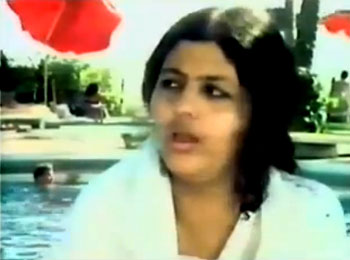
    An ancient BBC documentary on Rajesh Khanna has surfaced on the internet, and it’s a must-watch. Devi (as Devyani was called) has been interviewed in the film, and it’s easy to see she was one hell of a feisty lady. No wonder the Hindi film world of the sixties and the seventies loathed and respected her at the same time.


    Devyani Chaubal in the BBC Documentary posted on YouTube. Source: Pavitra66

    This got me interested in Devi, and I spoke to a couple of people who knew her, and also read up on her modus operandi. And I must say I am left very impressed. For those who may not know, Devi was a hot film gossip-writer employed with the magazine, Star & Style. Her fortnightly column called ‘Frankly Speaking’ was immensely popular and it was quite acerbic. Because of her superb connections in the movie biz, and her close proximity to stars, their secretaries and their chamchas, Devi would fish out red hot goss and then lace it with her own acidic views. More often than not she used to be accurate with her stuff, and this is why movie stars used to dread her columns. She could make or break both, careers and relationships. In fact, her juicy notes on Hema Malini and Dharmendra’s torrid affair didn’t leave the latter very amused. The ‘He-Man’, after downing some Patiala pegs, went after Devi and rained a few punches.


    So what emboldened Devi? I suppose there must have been many reasons. One, her own fiery temperament and the devil-may-care attitude. Secondly, the full backing from her publishers and her editor. Also, Devi came from a wealthy family and the fear of losing her job may not have played on her mind at all. As a bonus, her dad was a well-known barrister, therefore legal notices from movie stars (and there were plenty) would have had no effect on her.


    Devi passed away in 1995 and I must say there hasn’t been a filmi journalist like her since. What you get these days is convenient ‘leaks’ doled out by the stars’ agents and sometimes the stars themselves. Film reporters have become sub-servient, and not wanting to rub stars the wrong way seems to have become the credo. Part of the problem is the media boom. With so many media options now available, the film industry can block out an ‘inconvenient’ journalist without batting an eyelid, and the show goes on.


    This means we’ll never get to see someone like Devi again. This is great news for the movie stars, but it’s a loss for the desi media.


    P S: Here’s some dope on Khanna which no one’s spoken about. It tells you the man had a sense of humour too. On the eve of the release of Bachchan’s huge film called Shakti (1982), Rajesh Khanna was overheard making a snide remark. He said: “Wow, such a long queue outside movie halls for the man! Didn’t know Dilipsaab is such a crowd puller even at this age.” Haha. Rest in peace.