Author: mxmadmin

  • Ann Chu joins CNN advertising sales team in Asia

    By A Correspondent


    CNN announced that it has appointed Ann Chu as Director – Partner Solutions Group, CNN Advertising Sales Asia Pacific. Based inHong Kongand reporting to William Hsu, Vice President, CNN Advertising Sales Asia Pacific, Ms Chu will be responsible for generating and managing sponsorship opportunities and projects across the region.


    “Ann’s experience in both the newsgathering and content sales functions position her extremely well to provide our clients with first-in-class sponsorship solutions,” said William Hsu. “As the CNN ad sales team in Asia continues its solid sales performance this year, we look forward to Ann’s continued commitment to the network and our clients.”


    Ms Chu began her career at CNN in the newsroom more than a decade ago, writing and producing for award winning programs including CNN Today and BizAsia. She was most recently the Executive Director of CNN Broadcast Sales and Affiliate Relations, responsible for managing sales and support of the network’s broadcast services to networks across the region. Ms Chu was instrumental in driving the expansion of the network’s affiliate training and support services across both traditional and new media platforms, including the development of a web-based content delivery system for the network’s broadcast affiliates.


    Prior to joining CNN, Ms Chu worked at MTV Asia and Dreamworks in Los Angeles. She has a BA in Communications and Business from the University of Southern California, and a Masters in Journalism from the University of Hong Kong.


  • Hathway scales up to meet demand for digitization

    By A Correspondent


    Hathway Cable and Datacom Ltd is set to scale up the availability of set top boxes (STBs) over the next four months. In addition to the previously planned deployment of 20 lakh STBs, Hathway has decided to procure another 10 lakh STBs to meet the growing demand.


    Hathway’s move is in line with the Ministry of Information & Broadcasting’s latest order on implementation of DAS (Digital Addressable System) from November 1 in the four metros-Delhi, Mumbai, Chennai and Kolkata. By infusing additional STBs in the market, Hathway believes it is poised to meet the fresh deadline, as well as ensure a smoother transition from analogue to digital for consumers across the four metros.


    Commenting on the development, Mr K Jayaraman, MD & CEO, Hathway Cable and Datacom Ltd said: “Hathway has always been committed to providing consumers with the best digital cable experience and we have been preparing to bring consumers a seamless move from analogue to digital cable TV. The modified deadline presents us with a unique opportunity to reach out to and impact a greater segment of the market. Hathway plans to procure the additional 10 lakh STBs to gear up and leverage this opportunity. Therefore, in total, we plan to deploy 30 lakh digital set top boxes across the Mumbai and Delhi. The rush for digital services will peak around the last fortnight of October and we do not want to disappoint the consumers and drive them towards the costlier option of DTH services.”


    In the first phase of digitization of cable television, all four metros- Delhi, Mumbai, Kolkata and Chennai – will switch from analog to digital transmission from November 1. The rest of the country will move to digital cable by 2014 as per the regulations laid down by the Telecom Regulatory Authority of India (TRAI) in consultation with the MIB. Due to lack of preparedness of the industry, the Ministry had recently postponed the sunset date for Phase I from June 30 to October 31.


  • The Anchor: Zubin Driver on 5 things to keep in mind while launching a creative co

    By Zubin Driver


    Choose the right people!

    It is very important that every team member is hand-picked, because he or she should have exceptional qualities that compliment other team members. A strong team with diversified skills is of utmost important in a creative agency.


    Have a clear vision…

    It is essential to have a clear vision and make sure you live up to it every day in word and deed. Make sure your visions are clear, concise and specific. Your vision needs to be a clear message which has the ability of keeping you and your team inspired along with keeping you focused when you face obstacles and come across challenges.


    Practical and Reasonable Goals

    Make sure your business goals are practical and achievable. It’s better to be prudent and grow steadily than over promise and crash out of the game. Also keep in mind that your goals should be high enough to inspire you to push yourself even more but at the same time it should be grounded too.


    Value your people

    In a start up or in any creative agency, people are your biggest asset. The work force of a start up is its best resource. You have to keep them charged up and motivated to get the best out of them which in turn helps them grow as well.


    Think big, spend small and invest in the future

    One should keep an eye on the bottom line and the horizon line. An ideal balance between expenditure and investing on the future of your company is vital and rests on your vision. A profitable present will carry you into a fantastic future.


    Zubin Driver is the Founder & CEO of Pundalik


  • Anil Thakraney: To Archies. With love

    By Anil Thakraney


    Makers of Archies greeting cards have made a sensational announcement: They have a brand new logo! Wow! Can’t wait to hit their store! Am sure there’s a stampede out there!!


    Just kidding, of course. If there’s one product category that continues to disappoint me, it’s these festive cards, a category in which Archies is the market leader. These cards have got stuck in time, the design is the same old boring eighties stuff, and the messages seem to be written by juvenile delinquents and/or a group of really bored housewives. Each time I’ve dropped by at the Archies outlet, I have struggled very, very hard to find one single witty and sparkling card. It’s always the same rubbish: ‘Dear Husband, you mean the world to me, I will love you for the rest of my life.’ ‘Dear Mother, you are the best mom in the world, you make me happy.’ And this nonsense relentlessly goes on.


    Isn’t it amazing that people continue to buy this cheesy trash? Especially in these days of e-cards and social media? Why does it happen? The answer is quite simple, and it’s this human quirk that has helped Archies thrive despite years of staggering mediocrity. People, especially women, like the personal touch of a hard copy card, they don’t much care for the e-card. They appreciate the fact that someone they love made the effort and spent the time to buy them a special card. So what if the card itself sucks, that’s not really important. The gesture is.


    And it is this human quirk which has helped the card maker amass a lot of money without ever ploughing some back into improving the product. Thing is, I wonder how long this affection for a hard copy card last. As the generation changes, many Indians would smoothly switch to the internet for greeting each other, and be quite happy using that medium. And that would mean a quiet death for Archies cards.


    Dear Archies, there are enough very talented designers and writers in this nation. Please loosen your purse strings and spend some money on content and design. That alone will assure a future for you. A cosmetic logo change certainly won’t.


    * * *


    PS: Don’t we often land up on a page that does not exist? When that damned ‘404 ERROR’ warning springs up? Well, some designers have decided to sex up that dull and un-inviting page. And the results are great fun. So much better to spend energies on this than indulge in fake ads to win awards.

    Link: http://www.topdesignmag.com/30-awesome-404-error-page-designs/


  • RadioCity celebrates eleventh anniversary

    By A Correspondent


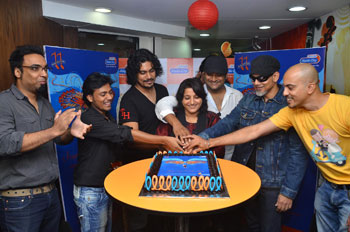
    RadioCity started its operations in July 2001 in Bangalore. On July 3, the FM radio brand, promoted by Music Broadcast Private Limited (MBPL) celebrated its eleventh anniversary.


    At the same time RadioCity announced the launch of its new web radio station, ‘Freedom Radio’ on Planet RadioCity. Freedom Radio is said to be India’s first dedicated web radio for Indie music on Planet RadioCity.com.


    ‘Freedom Radio’ will showcase independent artists from across genres like dub-step, electronica, folk, rock, sufi who will express themselves in diverse languages like Assamese, Malayalam, Bengali , Punjabi apart from Hindi and English. It also attempts to be a platform that supports talent across the country.


    After the launch of IndiPop Radio and now Freedom Radio, Planet RadioCity aims to launch three or four more web radio stations this year. A devotional station will be one of the web radio stations in the pipeline.


    In addition to these developments, the Planet RadioCity.com website is also expected to undergo a revamp by next month or so. Speaking to MxMIndia, Ms Rachna Kanwar, SVP & Business Head- Digital Media and New Business said: “The revamp should happen by next month or so. The site will not only be more interactive but, will also have more web 2.0 features, for instance social media will be more integral to the website, more interesting apps will also be added and so on. There is a shift on how music is consumed today. We recognize this shift and are therefore making our online offering as robust as possible. There is a growing trend of people listening to music online in India as well and sooner than later it will become a primary source of listening.”


    Ms Apurva Purohit, CEO, Radio City said: “As thought leaders we had to give something really refreshing and new to the audience who have supported us for 11 years. India is blessed with diverse and rich repertoire of original music and sound. Lot of these brilliant musicians does not get the platform they deserve and therefore the music never reaches the connoisseurs. On the occasion of our 11th anniversary, we at RadioCity give these Indie artists a dedicated platform by launching ‘Freedom Radio’ on planet RadioCity .com. This web radio stream is a dedicated channel that offers original Indie music to Indians across the globe. We hope the young audiences who are on the lookout for fresh sound find our offering satiating their need.”


    ‘Freedom Radio’ was ushered in by celebrating the ‘Freedom Hour’ on July 3, 2012. Between 10am and 11am, RadioCity brought in ‘5 bands across 5 towns’ to perform simultaneously for the first time on Indian Radio to announce the launch of ‘Freedom Radio’.


    ‘Freedom hour’ had live performances by bands as diverse as Aks, Highway 61, Tatva Kundalini, Pratigya, Dedh Inch Upar and singers such as Kavita Seth, Akashdeep Gogoi, Sanjeev Thomas & Harsha Iyer. ‘Freedom Radio’ theme song ‘Hum Sab Hai Yahaan’, a collaborative composition of independent artists and bands set the perfect mood for the launch.


  • RK Swamy Hansa wins mandate for TAFE

    By A Correspondent


    The RK Swamy Hansa Group has won the mandate for Tractors and Farm Equipment Ltd. (TAFE Ltd). The pitch presentations spread across the last few months were from eight National and Regional agencies over several rounds of Credentials, Strategy, Creative, Media, Events, CRM and Analytics.


    The decision was initially narrowed down to RK Swamy Hansa Group, Lowe and JWT and then to a 2-way encounter between JWT and RK Swamy Hansa. This win is significant since the RK Swamy Hansa Group is being called upon to provide TAFE all ATL (Creative, Rural Marketing and Media), BTL (Promotions, Events and Activation) and CRM & Analytics services.


    VV Vijay Gopal, President (South & East), RK Swamy BBDO, said: “The collective expertise and deep insights that various entities of the RK Swamy Hansa bring is what enabled this win. Our task will be to enhance the equity the client has and deliver a unique customer experience.”


    As part of this mandate, RK Swamy BBDO Creative, Hansa Customer Equity (Hansa Cequity), RK Swamy Media Group, Social^Rural Direction and Hansa Events & Activation will come together to offer specific services. Hansa Cequity and Social^Rural Direction, the specialist division of RK Swamy BBDO were critical partners with the Creative Agency during the pitch stage. Social^Rural Direction, with its strong understanding of the rural market and strong network, will develop strategy as well as implement the rural marketing programs and events for TAFE across different states. Hansa Cequity with provide focused CRM & Analytics programs to enhance pre-sales and post-sales experience. It will also leverage the power of data, analytics & insight-driven campaigns to every customer interaction.


    RK Swamy BBDO will orchestrate the entire exercise of building the brand – Massey Ferguson. The agency will be the single point contact to the client.  While the Agency’s main focus will be on Strategy Planning and Creative execution for both ATL and BTL requirements, it would also ensure that all the divisions work in unison with the brand strategy to create the synergy for the brand.


    The RK Swamy Media Group is entrusted with all media planning and buying work.


  • The Best of Print Ads – 2011


    By A Correspondent


    You may have seen only a few of them and probably even forgotten the underlying message that the campaigns had to tell. But now you could make a dash to have a hard copy of MOSAIC, a compilation of the Best in Print (campaigns) to have hit India n shores in 2011. The compilation has been put together by 23 creative agencies who have submitted their best pieces of work for the category in 2011. Conceptualised by Sanjeev Kotnala and team from the Dainik Bhaskar Group, the initiative has been made special through the “insights” and “personal favourite” sections that have been provided by Media agency bosses. These include Lynn de Souza of Lintas Media Group, Mallikarjun CR, CEO, Starcom MediaVest Group, PM Balakrishna, Chief Operating Ofiicer, Allied Media and Punitha Arumugam, Director – Agency Business, Google India.


    Lynn de Souza, Chairman and CEO, Lintas Media Group, Chairman, Aaren Initiative and Director, Karishma Initiative

    “An excellent idea to recreate interest and remind all about the power and impact of the print medium. My only reservation is that there were too many submissions of ‘pretty pictures-pithy headlines’ work that may or may not have been published and did not appear to fully grasp how the medium must be used effectively.”


    TOP 5 Choices:


    Click on the picture for larger view

    1) DNA – ISKCON (Scarecrow India)

    Reasons for choosing: The intelligent use of the cigarette-turned-food visual immediately targets the smoker and invites him/her to contribute in a very simple way to a cause that benefits both beneficiary and the giver – something not easy to achieve. I like the simple, clean look of the ad and the directness of the headline and copy.


    Click on the picture for larger view

    2) Flying machine “What an Ass” (Lowe)

    Reasons for choosing: This is my idea of perfect ad! One that has used all the elements of the print medium – headline, visual, copy to present a bold, modern attitude through a perfectly harmonised contribution of all three. It’s an unmissable ad whether you are a guy or a gal.


    Click on the picture for larger view

    3) Parker – Ramnath Goenka Excellence in Journalism Awards (Lowe)

    Reasons for choosing: A stark headline supported by the simple bottle of ink that says it all. An attention grabbing reminder of the power of the pen to influence the world. Perfect synergy for the subject – Journalism awards and the ‘always memorable’ image of a gold Parker fountain pen.


    Click on the picture for larger view

    4) The Times of India – A day in the Life of India (Taproot India)

    Reasons for choosing: Fantastic art direction – great visual appeal that hooks you into reading the whole ad. The contemporary feel, using India n kitsch, with attention to detail, is riveting. (Check out the dog lifting his leg to pee on the bed of nails!) Bright, colourful, crowded yet not messy. I could read it again and again!


    Click on the picture for larger view

    5) Vaseline ‘Dear Mr. Vaughan’ (BBH India)

    Reasons for choosing: The kind of ad that every Creative Director who woke up to it that morning would have said: “I wish I had written this”. There are some things you can do impactfully in a topical yet ‘permanent’ medium like print that you can’t do anywhere else, and this ad fits the bill. Nose-thumbingly outstanding!


    Mallikarjun CR, CEO, Starcom MediaVest Group

    “This is a fantastic initiative. As media agency professionals, our lenses to view the world are different. However, what comes across is that great creative work is universal. Really enjoyed it.”


    TOP 5 Choices:


    Click on the picture for larger view

    1) Audi – World Cup (Creativeland Asia)

    Reasons for choosing: Great connect with the Champion’s Trophy ’85 win. Most of the target audience that can buy an Audi will connect immediately with that moment. For a lot of us India ns, that was the first moment of connect with Audi.


    Click on the picture for larger view

    2) DNA ISKCON Food Relief Foundation (Scarecrow)

    Reasons for choosing: A nice calculus linking smoking to food relief. Very innovative, eye catching visuals.


    Click on the picture for larger view

    3) Indigo Campaign (Weiden+Kennedy)

    Reasons for choosing: Stark, consistent visuals. The colours, space everything reflects the qualities of the airlines. Nice word play that grabs your attention and makes you read the copy. The reference to price is as value and not cheap.


    Click on the picture for larger view

    4) Nissan Micra (TBWA\ India)

    Reasons for choosing: Simple stark visuals. Driving home the relevance of a small car without talking price, affordability etc. Great, understated use of a celebrity.


    Click on the picture for larger view

    Reasons for choosing: Great expedient use of Michael Vaughan’s comment. Superb cut through and great visuals.


    PM Balakrishna, Chief Operating Ofiicer, Allied Media

    “I think this is a wonderful initiative and exposes the fantastic creativity. It is a very different platform as it is more an appreciation of great work rather than a competition as I believe each creative is great on its own.”


    TOP 5 Choices:


    Click on the picture for larger view

    1) Bajaj Fans (Leo Burnett)

    Reasons for choosing: The best part of this creative is the way it has integrated everyday common issues and weaved them into the core communication of the product. The creative is also very well crafted visually using the very cause of the product making it very effective.


    Click on the picture for larger view

    2) Birla Cellulose (Salt Brand Solutions)

    Reasons for choosing: The sheer aesthetic treatment to the communication draws you and I like the beautiful and colourful way the creative has used nature and the human body (woman). It brings out the environmental friendly nature of the product in a very soft and appealing manner.


    Click on the picture for larger view

    3)Fuji(Grey)

    Reasons for choosing: Colour and background are intrinsic material for any great creative and nothing better than drawing inspiration from Mother Nature and wildlife. The beautiful use of the animals brings the message home effectively and creatively and connects with any photographer or photo enthusiast.


    Click on the picture for larger view

    4)NipponPaints (JWT)

    Reasons for choosing: They say a great picture is worth a thousand words and the effect is breathtaking when it is beautifully woven into the message making the communication very compelling and effective. In this case the product USP, a central factor in the category has been brought home very beautifully for correct impact.


    Click on the picture for larger view

    5) Zee 24 Taas (Draftfcb Ulka)

    Reasons for choosing: Ganpati Bappa has a significant connect with the India n diaspora and especially with Maharashtrians who revere the elephant God. I like the way the creative has beautifully engaged the viewers in an innovative and personal manner and makes it unique and different.


    Punitha Arumugam, Director – Agency Business, Google India


    “This initiative continues the long tradition of Dainik Bhaskar – breaking boundaries and setting new trends in the industry.”


    TOP 5 Choices:


    Click on the picture for larger view

    1) DNA Mumbai Marathon (Scarecrow)

    Reasons for choosing: The power of long copy. It brings back memories of the old era, which was marked by a great headline and the power of long copy. It inspires and bonds with its audience.


    Click on the picture for larger view

    2) Murphy Richards epilators (Contract)

    Reasons for choosing: The power of a picture. The visual intrigues, makes you pause, demonstrates the benefit and brings a smile – all this without a single word.


    Click on the picture for larger view

    3) MTR Spicy Pickle (Ogilvy)

    Reasons for choosing: The power of insight. A true South India n like me will see this ad and can only say “How true!” Equating spicy with ‘tears’, the way the ad captures the cultural nuances – awesome!


    Click on the picture for larger view

    4) Parker – Ramnath Goenka Excellence in Journalism Awards (Lowe)

    Reasons for choosing: The power of words. While most entries used the power of the picture, this ad stands out because it uses print for what it does best – leverage the power of words and intriguing headlines.


    Click on the picture for larger view

    5) Saffola Healthy Heart (McCann)

    Reasons for choosing: The power of an innovation. A great collaboration between the creative agency, the brand team, the media agency and the publication to convey the brand message interestingly and inclusively so as to trigger an action from the reader.

    Best of Print in Dainik Bhaskar Group’s MOSAIC
     

    Some may see India’s performance of bagging just four Press Lions at Cannes out of the 30 that were shortlisted as a drab effort, but then there are some who would like to think of it as being otherwise. After all, Press Lions as a category managed to get India its largest tally of four metals versus any other category at the awards – a valiant effort considering that India finished 2012 with just 14 metals in its kitty.


    While the category may have received its fair share of fame at the pinnacle of creative awards, many would agree that Indian adland has failed to laud the finesse that stems out from Print creatives over the years. While such is not the case in some large international markets where creative works across categories gets noticed and rewarded that gesture seems to be missing when it comes to India. Luckily for the creative frat in India, an opportunity to showcase their best works – besides the awards shows – were given a fillip by the Dainik Bhaskar Group that released the first of its kind creative compilation of the finest works produced in Print in the form of MOSAIC 2011.


    Elaborating on the initiative, Sanjeev Kotnala, VP & National Head, Dainik Bhaskar Group said, “This has been a first year for MOSAIC, which is a rich collection of 150 creative units part of 77 campaigns that have been submitted by 23 agencies.” The creative showcase has been made special through some individual comments and insights that have been posted by creative leaders of individual agencies.


    Elaborating on the thought process behind the compilation, Mr Kotnala said: “As a group, we believe that the Indian creative across mediums and media is of international standards, in its thinking, relevance and in its execution. Unfortunately there has been no single reference point for the same. MOSAIC bridges this gap and we would want it to be referred by the creative, clients, media and trade.”


    As for the method that was adopted in getting the agencies to submit their campaigns, Mr Kotnala said that it began with Dainik Bhaskar requesting the creative heads at the agency to send their best Print work. “They know better than us – as by placing it in MOSAIC affirms it to be their best work. Though we did have constraints on the number of campaigns we could place in Mosaic from a single agency. This has all been a by-invitation. On the other side, there were few agencies that sent lesser number of creative units as they felt others were not up to the standard to feature in such a compilation. So it was created and evaluated by the creative teams themselves.”


    On how print has evolved over the years as a medium, Mr Kotnala said: “Today print ads are working on all fronts of communication. They are not just for the purpose of awareness building or as a source of providing tactical information; they engage and involve the readers and are very result-oriented in their approach. We always held that the idea is more important than the medium. And it will automatically find its right medium for better efficiencies and effectively delivery of the message.”


    In fact, the compilation has been made special with the involvement of four media agency heads who’ve provided their assessment of the campaigns. They include Lynn De Souza, Chairman and CEO, Lintas Media Group, Chairman, Aaaren Inititative and Director, Karshma Initiative; Mallikarjun CR, CEO, Starcom Mediavest Group; PM Balkrishna, Chief Operating Officer, Allied Media and Punitha Arumugam, Director- Agency Business, Google India.


    With the first edition already finding appreciation within the industry, the Dainik Bhaskar group have their task cut out for the next year too. On his plans for a sequel, Mr Kotnala said, “We would want to see more regional and language work in the collection – and they still should meet the standards set. We would and could try getting clients and media owners also picking their favourites and definitely may wish to incorporate a section on media innovations. Though we have taken the task and brought out the book, in our mind it is an industry level initiative and we would want to keep it that way.”


    Mosaic 2011 can be accessed and downloaded at http://i10.dainikbhaskar.com /dainikbhaskar2010/books/ Final_Book.PDF


  • Rajendra Gupta joins Mogae

    By A Correspondent


    Rajendra Gupta has joined Mogae Media as Chief Value Officer from Reliance Communications. Mr Gupta will be based at Mogae’s Gurgaon headquarters.


    Mr Gupta started his career at Dunlop where he worked across different geographies. He then spent a few years at Wipro in their Lighting Division. In 1994, he moved to Rediffusion DY&R as national head of Business Development. His first big win at Team Rediff was a small company that had won a license to launch cellular services in Delhi- Bharti. Brand Airtel was soon born


    “Those were the best days of my professional life. I got to work closely with the Mittal brothers and enjoyed every moment of launching a brand that one day would become a world beater”, he said.


    Mr Gupta moved to Reliance Communications and spent the last 10 years there in a broad variety of functions. “Moving to Mogae is like home-coming. I have worked with Sandeep Goyal for many years and his new venture really excited me. So here I am,” said Mr Gupta.


    “Guptaji (as he is popularly called) is a veteran of both mobile and of advertising. It is a rare combination. And that is what makes him a really valuable asset on any team,” said Tanya Goyal, Director of Mogae Media. “We look forward to Guptaji carving out a new business out of creating customer value and delight through options on hi-value brands”.


    Mogae Media is the exclusive partner of Airtel, for monetization of all its mAdvertising assets, including mCouponing and mCommerce.


    Mogae Media was launched by Sandeep Goyal, former JV partner of Dentsu India in October 2011.


  • Debrief: Honda: No need for desi flavour

    By Anil Thakraney


    On Tuesday we examined what Hero is up to. Today let’s see what’s happening with their estranged partner, Honda Motorcycles and Scooters India (HMSI). I suppose the key task Honda set for itself is to establish a bond with the desi youth, now that the ‘Hero’ moniker is gone. And they have rushed to macho hero Akshay Kumar for help.


    The idea in the TVC is that every Indian is in a great hurry to make his/her dream come true. And that the Honda bike imparts acceleration to those dreams. The voice-over is provided by macho ‘dood’ Akshay Kumar (decked up in a horrendous hood), who claims to know all about chasing dreams because he’s been there, done that. Or some such words. And the ad is peppered with Indian symbols and attitude to further embellish the local flavour.


    An entirely boring commercial. It features nothing that we haven’t seen before. In fact, the ad re-hashes all the usual Indian advertising cliches. Worse, Akshayji’s non-stop drone gets on the nerves, and what saves your life is the biggest tech boon known to humanity: the blessed remote control.


    [youtube width=”400″ height=”225″]http://www.youtube.com/watch?v=Rz6Zxh7rbH4[/youtube]

    Apart from the TVC being a complete flop show, here’s a thought for Honda: Now that you are on your own, and now that your only USP is the Jap connection (and it IS a positive connection), why do you want to desperately bring out the Indian touch? Wouldn’t it be better to go full-on on your Japanese lineage and expertise? As a bike purchaser, I would actually find that a lot more appealing.


    Bring out the kimono, guys. And chuck the dreadful hood.


    Rating: (On a scale of 1 to 5): 1. Boring and misdirected.


  • Oh God! Why Higgs-boson and not Bose-Higgson?

    Ranjona Banerji

    By Ranjona Banerji


    The main question in the discovery of a Higgs-boson particle at the CERN in Geneva is simple: How many Indians were involved? This is the conundrum that has enthralled and mystified many as the search began for this sub-atomic particle that explains how matter got mass.


    It has been well known for years that no discovery by the human race is of any significance unless Indians are somehow involved. In the case of Higgs-boson, this Indian connection is even more significant: it is also called “the god particle” and the world knows that India has first dibs on anything connected with god. Or even better, gods.


    The Higgs-boson god we will soon be told is described in detail in the ancient Indian scriptures. But there are other Indians involved too. Some worked at CERN or were seconded there. Then there’s that “boson” part of the Higgs name. That’s Satyendra Bose who worked with Albert Einstein and postulated the existence of sub-atomic particles in the 1920s.


    An international inquiry will now be held to find out why the particle is not called “Deva” particle and equally important, why it is not called Bose-higgson. Peter Higgs after all wrote his academic paper in 1964. I don’t know much mathematics but even I can guess that the 1920s is many years before 1964.


    The Indian media must now investigate this international conspiracy to demean India: this is almost as important as why McDonalds used beef fat to fry its French fries, even if the fast-food chain started in a country where cows are not holy and often used as food. Indians make up one-sixth of the world’s population most of which are Hindus and that has to count for something (80 per cent of 1.2 billion).


    Some in the media last night were very worried that the world famous scientific research institute which has been at the forefront of global work in quantum physics, the Indian Institute of Technology, was not involved in the Light Hadron Collider at CERN, Geneva, Switzerland. Subramaniam Swamy can file a PIL on this and at the same time, find out how much money from Swiss banks was used in this experiment.


    I might venture to point out to the media that there is a significant difference between science and technology, but I fear for my life. It explains why Steve Jobs was credited with inventing the computer after he died and Alan Turing’s birth anniversary only noticed by Google.


    Of course, few really understand this sub-atomic mass matter stuff, so we need to find a suitable person sorry I mean Indian to explain it all. How about Raj Koothrapalli from the Big Bang Theory? He’s the only famous Indian astrophysicist I can think of.


    Incidentally, in one of the early runs of the Light Hadron Collider, the experiment failed because of some faulty wiring. Anyone think an Indian was involved?


  • Tesco expects Bengaluru to up competitive edge

    By N Shivapriya & Harsimran Julka

     

    The proposal to permit FDI in multi-brand retail may have come a cropper but as technology becomes the next big battleground for retailers, India may well be where these battles are fought.


    Tesco, the world’s third-largest retailer, is building a crack team in Bangalore as shopping goes online and supply-chain efficiencies become more critical in keeping prices affordable.


    From scheduling transportation in Thailand to floor planning for its stores in UK, there’s a bit of Bangalore in everything Tesco does, and its Chief Information Officer (CIO), Mike McNamara, only sees that growing in the days to come. “Digital and technology will be big battlegrounds within each of the markets,” McNamara told ET in an exclusive interview, and he sees the Bangalore office playing a central role in giving it that competitive edge.


    The centre started in 2004 and Tesco was one of the first retailers to set up a captive unit here. The world’s largest retailer, Walmart, also followed setting up Walmart Labs in Bangalore but only a few years ago. Both of them, as well as other global retailers, use Indian service providers for parts of their IT and analytics.


    Mr McNamara himself is averse to calling Tesco’s centre a captive because he finds it subservient. “We’ve watched it blossom from a fairly solid operations centre into something that’s doing this very sophisticated work,” he said.


    The centre employs over 6,000 people, who work on functions as varied as online advertising, mobile applications, store design and transport scheduling, in addition to IT and back-office functions.


    A team of mathematicians in Bangalore and UK work on algorithms for sophisticated supply chain systems that take into account everything from weather patterns to sporting events and seasonal variations. “If we don’t get the mathematics exactly right for the fresh foods, it goes waste. Getting it right is a tricky business – it’s a huge leverage on profitability,” said Mr McNamara.


    Mr McNamara, who is on Tesco’s executive committee, wants to centralise all the skills Tesco has learnt from its 100 years of retailing experience in UK at its facility in India and run the supply chain for its Asian markets from here. These markets are relatively newer for Tesco but they are already key markets from a revenue point. Korea, where it is the second-largest retailer, is also its second-largest market after UK.


    In US, where its business is struggling, the Bangalore office helped to launch a loyalty scheme, which is entirely digital. Most of the IT for US is done entirely from Bangalore. “The US team is very small,” said Mr McNamara. Overall, 70 per cent of the IT across the Tesco Group is from India and that’s likely to increase rather than decrease, he added.


    The centre currently services every single country in the Tesco Group, including new businesses such as banking, where it has built new systems and completed a massive programme to migrate over 2 million credit card customers. Over time, he expects the banking business, which is relatively younger, will do more work out of India.


    As CIO for Tesco, most of Mr McNamara’s time is now spent in marketing and commercial functions as compared to five years ago when it was mostly operations and productivity. “It’s not so much a digital strategy any more but a retailing strategy that is becoming digital. And that’s a very important distinction,” he says, “It’s not just about applications selling things on the internet but about helping people buy things in shops as well.”


    While many global companies are looking to cut down on IT spending, retailers such as Tesco are increasing it. “It’s a good time to be an IT guy in retail. In other industries, IT budgets are under more pressure. In retail, because we need to meet the consumer need for mobile apps, for social views, for all of these things, spending is on the rise.”


    Tesco has switched investments from property to technology, says Mr McNamara.


    “We would typically invest in the billions in property. You don’t have to shift too much of that into technology to make a difference. We have increased our technology spends quite significantly. And much of that increase is going into customer facing technology,” he added.


    Tesco is also unique because it is one of the companies, which has a former CIO, Philip Clarke, as its CEO. Mr McNamara describes Mr Clarke as a retailer by background who’s a technophile and himself as technologist who loves retail. “He (Clarke) has a very deep understanding of what technology can do for business. It’s a huge positive when there’s somebody else in the executive team who speaks the same language as you.”


    In retail, the tough part is to get economies of scale in operations, says Mr McNamara. “You can get them in buying, no doubt. But to leverage your operational skill across countries, that is difficult. Just because you manage supply chain well in UK, doesn’t mean you can do the same China,” he said.


    And this what Mr McNamara is trying to do through Tesco’s India centre – put the skills in one place where it can service Europe and China and leverage the operational skill across the entire group, rather than teach it in every country. The battle lines are being drawn.


    Source: The Economic Times

    Copyright © 2012, Bennett, Coleman & Co. Ltd. All Rights Reserved

     

  • The Anchor: Asif Syed on 5 Things that are getting hotter in New Delhi

    By Asif Syed


    1. Manmohan Singh – Will the sardar become asardar?

    For a while now, many observers of the Delhi durbar have felt that the real Prime Minister wasn’t Manmohan Singh, (no, not Sonia Gandhi, she’s the super PM) but Pranab Mukherjee. Whether it was with government work, party work, troubleshooting for the UPA sarkar or heading 13 Groups of Ministers that deliberate on government policy, Pranab was the man. The joke is that the PM (Manmohan) spoke so little is because the real PM (Pranab) didn’t let him.


    Now with Pranab on his way to becoming President of our republic, many ministers in the Union Cabinet have found some additional breathing space, but none so much as Manmohan Singh. So much so that the very day he took over the Finance Ministry, the sardar ordered the government to go looking its lost “animal spirits!”


    So will the sardar become asardar or will the real number 2 – P Chidambaram, who was second only to Pranab in the GoM count with 12 in his kitty – muscle in and fill in the vacuum.


    2. The Summer of 2012

    The venerable Times of India has reported that Delhi has had the hottest summer in the past 33 years with the average temperature frizzing the mercury to an average of 41.25 degrees. Interestingly, and what is probably a sign of the times, the data for this investigative story was sourced not from the Metrological Department of India but from the website of the National Climatic Data Centre (NCDC) in the United States.


    Unlike Bombay and (ahem) some other parts of the developed world that have uninterrupted power supply, Delhi seems to have introduced the new concept of uninterrupted power cuts. Add to this the severe water shortage – basically no water at all from the MCD – and one gets situation where residents who are out on the streets to protest the lack of bijli get into a scuffle with each other over tankers delivering water.


    Of course, Lutyens Delhi, home to national level politicians, bureaucrats and businessmen has no bijli or paani problems. The air conditioners in the MPs homes are humming and sprinklers keep their lawns achingly green.


    There is fervent hope that the monsoon rains will bring some respite but they too seem to be avoiding Delhi and are stalled somewhere over central India. Maybe the ToI can talk to the NCDC about what to do…


    3. The most modern thing in Delhi

    Not all is bad in Delhi and the Delhi Metro Rail Corporation is the best thing going on the ground, below the ground and above the ground. It has changed the face of Delhi for the better like nothing else and with every phase of expansion it is bringing the spread out city of Delhi and the other parts of the National Capital Region closer to each other. It is the one thing that works in the city of a thousand hindrances and works very well.


    With two phases completed and almost 200 km of track laid and services running, the DMRC has commenced Phase III which it aims to complete by 2015 and Phase IV by 2021. By then the Metro will have more than 400 km of track and will reach every corner of the megapolis. It is already one of the most advanced metros in the world and soon will also be one of the largest. (check out this map – http://en.wikipedia.org/wiki/File:Masterplan_of_Delhi_Metro.png)


    Like Vicky the eponymous sperm philanthropist of the move Vicky Donor says to his nani, “Dill mein sirf do cheezein modern hain, ek hai metro aur ek tu.” I can’t vouch for the old lady, but he is bang on with the metro.


    4. News Capital

    For a city where the large majority of the people have at best only a passing acquaintance with the English language (or as they say in Delhi – bus sirf hi/hello hai), it is home to more English language newspapers, magazines and television news channels than any city in India.


    At last count there are more than 15 mainstream general and business daily newspapers being published from the city in English. The Millennium Post was the latest of the blocks and a couple more are reportedly in the pipeline. At this rate we run the risk of soon having more English newspapers than readers who read English.


    Throw in Hindi and other language publications and Delhi is probably host to the largest print news industry, with more print journalists than any city in the world. And in no other city can one find such a large number of journalists that speak, report and write in such a range of Indian languages.


    Sucking in all the content produced everyday and spitting it out in a physical form is a robust contract printing industry that is centred largely in neighbouring Noida. The printing industry there probably has the distinction of having not just the largest number of printing presses of all shapes and sizes of any city but of also printing newspapers not just in English in Hindi but also a number of other languages. For example, Vibha Printers (in NOIDA obviously) print newspapers in six languages.


    Never mind the lack of revenue, let alone profits, the news business inIndiais growing faster than ever before.


    5. Rahul Gandhi – naram but still garam

    As ever, Rahul Gandhi remains the hottest politician in India and with talks of an impending Cabinet reshuffle he is hotter property than ever.


    There is now talk about him finally finding a seat in the Cabinet as the Deputy Prime Minister, no less. The logic goes that this will be a suitable post for him to make his entry into the government as it won’t be decried as nepotism at its most obvious and it will still be a prominent enough to position him as the next leader of the party and the government. Party pundits feel the results of the next general election in 2014 will be determined by the ‘Youth Vote’ and who is better to capitalise on this demographic dividend than the youthful Rahul Gandhi.


    His middle-of-the-road pragmatism and firm resolve to stay away from the politics of caste and religion give him a universal appeal. And that, the thinking goes, will lead to a windfall of young urban and rural votes for the Congress and its allies.


    Though it would be wise to recall the ‘Rahul Effect’ in recent elections. Beginning with Bihar and followed by Pondicherry and most recently Uttar Pradesh, the last three assembly elections where he has played a significant role, it has become clear that Rahul’s presence alone does not bring in electoral results for the Congress party.


    However, the party, and specially dye-in-the-wool Congressmen, can’t stop gushing about him like schoolgirls with a crush on Ranbir Kapoor.


    Asif Syed is Editor and Publisher of Current and www.CurrentNews.in. He toggles between New Delhi, Mumbai and Buenos Aires