Author: mxmadmin

  • The Anchor: Rajan Mehta on 5 ways how Digital OOH is revolutionizing Out-of-Home

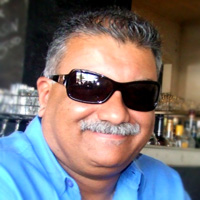
    By Rajan Mehta, Founder and CEO, LIveMedia


    One day, all media will become digital and OOH is no exception. Although still in its nuptial stage, digital OOH is quickly revolutionizing the OOH industry and has brought forth the following added advantages which are hard to ignore.


    1. Precise Targeting of your Consumer Segment:

    LCD Screens have been installed in places like restaurants, coffee shops, clubs, gyms, salons, office cafeterias, college cafeterias, hospitals etc wherein the profile of people visiting them is easily decipherable. Coupled with this is the fact that we know the geographical location of each of these places and the context that each place has to offer. Advertisers don’t have to advertise on the entire network but can pick and choose screens based on demographic, geographic or psychographic profile of the consumers they want to target, thus enormously improving the efficacy of their campaigns. This kind of sharp-shooting has never been offered before.


    2. Different Strokes for Different Folks:

    In today’s world one size does not fit all. Therefore, you have to communicate differently with different customer segments. You may want to show a Blackberry Bold with a pink casing to young ladies while at the same time in a black casing to young professionals. This can be done easily on a digital screen network wherein you can show the creative with a pink Blackberry casing in places like salons etc where young women are present, while in office cafeteria’s which are more male dominated it could be shown with a black casing. Not only this, you could run the creative in Kannada in Karnataka, in English in Delhi and in Punjabi in Punjab. This ensures that we are communicating in the most effective and targeted manner with our potential consumers.


    3. New Genre of Entertainment:

    We all know people are very discreet when it comes to media consumption. If there is nothing in it for them they would not consume it. Digital OOH has pioneered a new genre of content which is crisp, trendy and fitting into the lifestyles of people, thereby giving them a reason to look at the Screens while they are out of home. It’s truly like “Get entertained. Wherever you go”. You just need to step into a restaurant, gym, office cafeteria which has a LiveMedia Screen to see what we are talking about. Out-of-home advertising has now become entertainment-/ infotainment-based just like TV and Press, and not simply thrust upon people.


    4. Context has been added:

    We all know anything told in a context has a better impact. Imagine someone sitting in a hospital lobby with a Screen in front of him and an Advertisement for a Medical Insurance product comes up. The person would definitely take notice and think about it. The rest depends upon the creative. Similarly, advertising for lifestyle products in a coffee shop makes a lot of sense as these places are all about lifestyle. In addition to the above there are various programmes (content) that run on these screens which also create a context while people are watching. For example, if there is a programme on sports and an advertisement for some sports goods is placed next to it, then it works well as the person’s mind is already tuned into sports.


    5. It’s Finally Measurable:

    The bane of OOH has been that it’s not been measurable. Well, digital OOH is changing this paradigm! Since digital OOH is present in controlled environments like restaurants, cafeterias, gyms, salons, colleges, hospitals etc it is easy to reach out to people in these places and subject them to a survey, the data from which can then be used to measure the impact of the medium. Companies like IMRB have been doing this research for quite some time and have developed robust methodologies to collect, analyse and report the data. The current research is done to understand four parameters – demographics being addressed, noticeability of screens, engagement pattern and finally recall of various advertisements.


    The medium still has a long way to go but the writing is on the wall that all OOH will one day become digital!


    Rajan Mehta is Founder and CEO, LIveMedia

     

  • The Rise and Rise of Deepak Lamba

    By A Correspondent


    When MxMIndia broke the story of Deepak Lamba joining Bennett, Coleman and Company Limited as President, the news spread like wildfire (see link http://www.mxmindia.com/2012/06/first-on-mxm-deepak-lamba-joins-bccl-as-president/). As it spread amongst media circles, it was decidedly the most read story on MxMIndia over the weekend.


    Mr Lamba is one of the youngest professionals in Indian media to occupy the position of President of a large Indian media conglomerate like The Times of India group.


    Until end-April, Mr Lamba was with Bloomberg UTV as business head. He made a sudden exit with no indicator of his next port of call. Except that it was to be with a leading media corporation with diverse interests.


    Although Mr Lamba was not available for comment and nor was it officially announced at BCCL until Friday evening, MxMIndia learns that did join the company on June 1. There is no word on his portfolio except that he is likely to be heading a few new ventures that the group proposes to enter. MxMIndia also learns that the proposed venture may not be in television, the business he has been working with at Bloomberg UTV and MTV, though there may be some linkages.


    Mr Lamba’s rise and rise has been phenomenal and is in fact inspirational to those without any godfathers in the business and/or no Ivy League education. A student of Pune’s premier St Bishop’s School later the Wadia College, he did his MBA from the Pune University thereafter. He was business head of Bloomberg UTV from January 2010 to April 2012 and prior to that was Director – Viacom Brand Solutions and worked with MTV India for five years.


  • Anil Thakraney: Doc, Aamir ain’t your PR agent!

    By Anil Thakraney


    I find it appalling that the Indian Medical Association and many other doctors have taken offence to the Satyamev Jayate episode which dealt with medical malpractice. And these docs are demanding an apology from the progamme host, Aamir Khan. I would term their reaction a joke, but we are dealing with a serious issue out here, so let’s just say this sort of a response shows up our doctors in a poor light.


    To understand why Aamir did no wrong, let’s first understand the format of his TV show. SJ is not a ‘breaking news’ format, the show isn’t highlighting stuff that we don’t already know of. Female child murder, dowry deaths, honour killings… they all exist in our society, they are a sad reality. And so is medical malpractice. There are many doctors and hospitals that do dhandha rather than practice, and this too is well known. The objective of the Sunday morning show is to bring the rats out from under the carpet, and to discuss them and introspect on them. It’s as simple as that.


    Nowhere in the episode on medical ethics did Aamir suggest that ALL doctors are corrupt. Rather, I vividly recall him assuring the audiences that he isn’t pointing a finger at the entire medical community. Just as all of us don’t ask for dowry or indulge in foeticide, obviously all doctors aren’t corrupt. That’s a given. But for the rats to be brought out, naturally the show will discuss issues where criminal minds have been involved. This makes people aware of their own rights and alerts them about the safety precautions they need to take in various situations. The show won’t work if the entire duration is spent featuring all the good guys of the nation, will it? Who will deal with the rats then? In addition, SJ did invite the good Dr Devi Shetty (and a few other good men) to the show, so I just cannot understand why the med frat is up in arms.


    Here’s what I suspect has happened: The doctors, who are almost always treated with huge amount of reverence in this nation, aren’t able to deal with a situation where suddenly someone has decided to openly discuss medical malpractices on a public platform.


    Dear docs, hire a PR agency if you want paeans to be sung in your honour. And dear Aamir bhai, please bash on regardless.


    P S: Now THIS is what Mr Nandan Nilekani ought to be doing to get the junta interested in his Aadhar card yojna. The Aussies have created a simple little film to encourage citizens to participate in the census collection process. Notice that it’s basic level, entertaining and is packed with cool graphics. Even the lowest denominator would get it. Nilekani should sanction a film like this. So much better than all that confusing, complicated talk on TV chat shows.


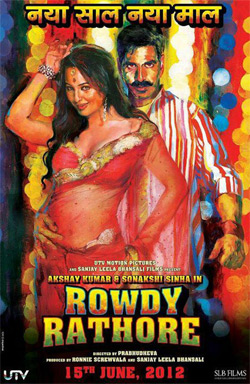
  • Reviewing the Reviews: Rowdy Rathore

    By Deepa Gahlot


    Producer: Ronnie Screwvala, Sanjay Leela Bhansali

    Director: Prabhudheva

    Music: Sajid-Wajid

    Cast: Akshay Kumar, Sonakshi Sinha, others


    These days, most critics have nothing against mainstream cinema. But Rowdy Rathore is the kind of film that has the mildest of then gnashing their teeth in frustration, because the success of such a bad and old-fashioned film is inevitable.


    The masses want mindless entertainment even today, they don’t care how loud, crass or silly the film is; does it give them their money’s worth?  For the non-massy types, such films are a kind of guilty pleasure.  What shocked most is that Sanjay Leela Bhansali is partly responsible for unleashing this on the public.


    Except for Taran Adarsh’s 4 and The Times of India’s now-standard 3 stars, everybody else tossed between 1 and 2. Writes Adarsh, with an eye firmly on the ticket windows of single screen cinemas. “On the whole, Rowdy Rathore, is designed to magnetize the masses in hordes. The accurate blend of action, emotions, drama and humor, besides a superlative performance by Akshay Kumar, makes this motion picture an immensely pleasurable and delightful movie watching experience. If you savour typical masaledaar fares, this one should be on your have-to-watch listing for certain. Dhamaal entertainer!”


    Srijana Mitra Das of the TOI gushes, “Indeed, Rowdy Rathore pays homage to iconic filmi characters – identical heroes, golden-hearted chors, brave Men in Brown beating evil people to pulp. However, it pays most homage to its own star, Akshay Kumar, who pulls off Shiva with style but Vikram less so, possibly because all that violence overwhelms acting itself. Not that the crowd seemed to mind. As Shiva exhorts a woman raped by Baapji’s son to beat him up, the girl next to me cried, “Why doesn’t she?” Her neighbour replied, “She will.” And she did – much to the crowd’s Rowdy delight.”


    Saibal Chatterjee of NDTV gave it 2 stars and commented, “Rowdy Rathore is a shrill action flick designed to help Akshay Kumar return to his hit-making ways. Accept that obvious intent and you might actually end up enjoying certain parts of the film against your own better counsel. Isn’t that the effect that many a Bollywood potboiler of the 1980s would have on us? Yes, Rowdy Rathore employs narrative elements that hark back to a bygone era of Bollywood potboilers: two men who look like each other without any apparent reason, a bunch of baddies that snarl and snap at the slightest provocation and indulge in rape and pillage with abandon, and the good old back-from-the-dead revenge seeker who goes back dispensing rough-and-ready justice.”


    Two stars from Raja Sen of rediff.com.”Inured to the kind of exploding-beedi violence promised by the trailer, the film instead starts stupid and stays silly. This is much more like an early Khiladi movie — where Kumar recklessly got away with anything, goofily stumbled towards the climax and then proceeded to kick bottom without mercy — than any of the recent films which have completely forsaken plot. As a result, it’s far less objectionable. Still moronically stupid and entirely pointless, but nowhere near as horrid as what the genre’s been reduced to in the last couple of years.”


    Shubhra Gupta goes with 2 stars as well, “We don’t have to be told that this is a remake of a Telugu film. It could have been in mainstream Tamil or Kannada. Because whether it is Priydarshan or Prabhudeva (who has directed this one), the film is bound to have South Indian actors trying to pass off as North Indian. Fictional towns which look as if they’ve been created on a set. Blinding colours. Songs at the drop of a hat. Dialogues which don’t go beyond a line. Or two. And a leading lady whose job description is, apart from possessing a swaying ‘kamariya’.. um, let me think about it.”


    Now come the one star rants. Anupama Chopra writes, “Don’t Angry Me! Akshay Kumar bellows this often in Rowdy Rathore. At one point, the command even plays out as background music. I think viewers need to co-opt the line. To all the directors, producers, actors who are inflicting eighties-style, low-IQ, deafeningly loud, unapologetically crass, mind-numbing movies on us, I just want to say: Don’t angry me! Don’t exhaust me! Don’t bludgeon me!”


    Rajeev Masand comments, “Rowdy Rathore is the kind of movie that’s made by people with a cash register in place of their brain. Because no legitimate reason, other than financial gain, can justify why this movie was made – it has no story or plot whatsoever, the characters are entirely forgettable, and it’s so long and loud and silly that the laughs dry up early on. That the film has such impressive pedigree – it’s produced by Sanjay Leela Bhansali, directed by Prabhudeva, and stars Akshay Kumar – is both baffling and shameful.”


  • AIM’s Magazine Engagement Study wins big at FIPP Research Awards

    By A Correspondent


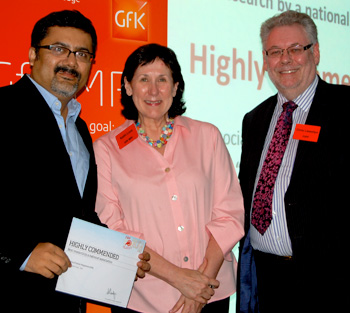
    The Engagement Study by the Association of Indian Magazines (AIM), the apex association of the Indian magazine trade, has won the Highly Commended Award for Best Research By Any National Association at the FIPP Research Awards 2012. In a ceremony that took place in London, on May 29, AIM was presented the citation by Chris Llewellyn, President and CEO of FIPP and Kathi Love, President and CEO of US market research company GfK MRI, the sponsors of the Awards dinner. The overall winner for the category was the entry by the Spanish Association.


    Commenting on why the survey received a Highly Commended Award, Mr Llewellyn said “The Research Award judges were impressed by the insights provided by the survey, and the technical excellence of its methodology. The survey has demonstrated the key underlying strengths of the magazine medium, strengths which explain why magazines are such an effective medium for advertisers. The judges felt that the survey deserved the international recognition it is receiving.”


    Meanwhile, it is learnt that information from the Engagement Study has been included in the forthcoming book ‘Proof of Performance: The Case for Magazine Media’, and an action code in the book will enable readers to play the video on their smartphones. The book is authored by Guy Consterdine, Research Consultant to FIPP.


  • Paresh Chaudhry joins Madison PR as CEO, Veena Gidwani to retire

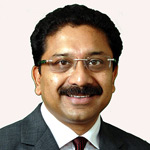
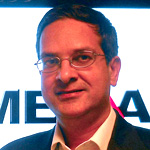
    Paresh Chaudhry

    By A Correspondent


    Madison PR has appointed Paresh Chaudhry as its CEO, who will be based in Mumbai. Veena Gidwani, current CEO of Madison PR will retire on June 30, 2012.


    Mr Chaudhry has over 24 years of Brand Communication and Reputation Management experience across industries and key global markets. He has been a business communication professional with Reliance Industries, Hindustan Unilever, Ranbaxy and Wockhardt. His last assignment was as Group President-Corporate Communications, Reliance Industries, reporting to Mukesh Ambani. Prior to Reliance, he was Head of Communications at HUL and Communications Leader, Unilever South Asia.


    Veena Gidwani

    From building the Corporate Brand of Ranbaxy in N America, Europe and India, to aligning regional communication country teams to bring alive “the transition to one Unilever brand” and driving the Corporate name change from “HLL” to “HUL”, to putting together systems and processes for effective global (internal & external) communications at RIL, Mr Chaudhry has experience and expertise in all areas of Corporate Communications.


    An MBA (Marketing) with a Public affairs diploma from Hong Kong University, he is the founder President of the Indian Forum Of Corporate Communicators (IFCC).


    Sam Balsara, Chairman and Managing Director, Madison World, added, “I am delighted to have Paresh join us. His cross client category and cross country experience should help him add great value to our FMCG clients. Veena has done a wonderful job in building Madison PR into a specialist Brand PR consultancy and meeting the professional needs of our over 40 clients in Mumbai, Delhi, Bangalore and Pune and I wish her a very happy and fulfilling life ahead”.


    On his joining Madison, Mr Chaudhry said, “I am delighted with the opportunity to work with Madison PR, that has carved out a distinct and distinguished niche within the industry and is known for its strong values and relationships with some of the best known companies in Corporate India. I look forward to working with Sam and his team of professionals to take Madison PR to the next level.”


  • Mouthshut.com to turn a buyer’sguide

    By Robin Thomas


    Popular consumer review website MouthShut.com is set to shift from being a reviews-only site to a buyer’s guide. This transition is scheduled to take place within a fortnight.


    In its new role, MouthShut will position itself as a company that helps consumers decide which product they want to buy from a host of product categories — ranging from cars, bikes, cellphones and so on. Restaurants and hotels will also be part of the buyer’s guide enabling users to know the type of cuisine available, phone numbers and addresses for deliveries and so on. Moreover, MouthShut will constantly add newer categories on its portal after every few weeks.


    Speaking to MxMIndia about the transition to a consumer buying guide, Faisal Farooqui, CEO, Mouthshut.com said, “We realized that a transition from a reviews-only site to buying guide is more important today because the consumer needs are changing fast as they no longer use the internet just for emails and chats but, also for buying. As e-commerce is growing robustly in India, people are getting more comfortable buying products online. Thus we decided that we need to provide consumers not just reviews but also help or guide them buy products.”


    Mouthshut.com will partner car dealers and manufacturers and allow for registering for test drives. In fact it has tied with Maruti and General Motors already.


    The transformation to a users buying guide will also mean revamping the Mouthshut.com website, which will take place along with the roll-out. Also on the anvil is a mobile version of the site.  “The mobile experience will be totally customized for mobile users and while the look-and-feel will be different, the content will of course be the same” said Mr Farooqui.


  • Maatra to be rebranded Gutenberg Networks India

    By Ravi Balakrishnan


    Following close on the heels of shopper marketing specialist TracyLocke and brand consultancy Interbrand, a third specialised offering from the Omnicom group comes to India via DDB Mudra – Gutenberg Networks. Maatra, a company that exists within DDB Mudra will be rebranded Gutenberg Networks India.


    According to Madhukar Kamath, group CEO and managing director, DDB Mudra Group, Maatra is the first attempt by an Indian marketing communications group to hive off the functions usually performed by an in-house studio into a separate successful brand.


    Its offering includes premedia services, translation, website localisation and film adaptation. Maatra’s offerings sync well with those of Gutenberg Networks, which has 1,200 employees globally and counts Philips, Pepsico Tropicana and Volkswagen among its clients.


    Source:The Economic Times

    Copyright © 2012, Bennett, Coleman & Co. Ltd. All Rights Reserved


  • From Cricket to Prime, Neo takes a spin

    By A Correspondent


    It was cricket – in the form of the Indian Premier League – that made the most noise amongst all other sports that were being aired on sports channels in India during April-May. But the tide has now turned and has switched partners in the form of Neo Prime, which may now be leading the viewership race by not airing cricket but three different live action sports in India – Azlan Shah Hockey, French Open and Euro Cup (starting next week). For those unaware, Neo Prime is the rechristened channel from Nimbus which earlier went by the name Neo Cricket.


    While most broadcast networks have been contemplating launching a channel solely for airing cricket, it is surprising to see Neo take a turn on the same. Then of course, there was the ugly episode that saw the channel losing its rights to host India matches. Explaining the rationale, Prasana Krishnan, COO, Neo Sports said, “We were one of the first channels to go in for cricket and are probably the first one to be going away from it. When we had the BCCI rights, it made sense for us to do that as you had a lot of domestic cricket that was available; there were a number of days that were available at our end. So we kept the channel for the volume of the game that was available with us. But then it is also about reacting and responding to the change. Though we have lost the BCCI rights, we will continue to take part in the bidding process for other cricketing properties as and when the opportunity arrives. As of now, we have our hands full with a lot of live actions sports and are the only channel that has so much on its plate currently.”


    In fact the network carried out a vital evaluation exercise months ago before it decided to go in for the change. And it had some interesting facets to throw up apart from just cricket. Explained Mr Krishnan: “The basis for our evaluation was that we have five other sports apart from cricket – tennis, football, golf, badminton and hockey, and what really happens is live sports is played mostly during weekends where you have multiple sports being aired simultaneously. So we were faced with the problem of having more than one event at the same time and therefore airing a certain sport and not being able to relay the others. If you look at the sports being aired right now on our channels, one channel is showing Sultan Azlan Shah Hockey while the other is showing French Open tennis. And next week, we will have French Open and the Euro Cup on at the same time. So the scheduling conflict is a constant problem that arises at our end and our effort has been to maximise and ensure that maximum events are being made available to customers as possible.”


    In fact, according to Mr Krishnan, the same pattern was observed in other networks as well where they had scheduling clashes. “What was happening for us was that we were playing hockey and other sports on the cricket channel, which really didn’t make sense. So in that sense, Neo Prime would be more generic and would be playing different genre sports and not just cricket.”


    In fact there was another motive for the channel to contemplate the move. Explains Mr Krishnan: “What we are also doing is that all the content that is being produced is likely to switch towards HD mode sooner or later. Those are the kind of properties we plan to put on Neo Prime. Over the next few months, once we are comfortable with the working of the content, we will also provide a HD feed of the channel. So it is a HD-ready channel that is focussed and programmed in a manner that it is ready to relay action as it happens.”


    When asked on soft stance taken by the channel to communicate the change, Mr Krishnan said: “It’s not that we are going soft with the new change or anything, it’s just that we got approval from the Ministry for the change only on June 1, 2012. So the action and communication will take place over the next few days. Anyways, it’s not as big a news for us as currently all live sports action is happening on my channel be it French Open, Azlan Shah Hockey or Euro Football starting next week. So the idea was to time it with the best of sports action and combine that with a good campaign.”


    Advertisers have been advised of the change and so far the response has been positive. But the channel is not looking at that and has some big plans up its sleeve for the coming months. And yes, it would do so without banking on popular sport – cricket. Affirmed Mr Krishnan: “The change has been communicated to the advertisers and they have been reacting positively to it. But one must understand that it is the property that the brand gets interested in and if they appeal to them then they will obviously come on board to partner the event. And I am proud to state that in the January to March quarter, our network was ranked second by TAM in terms of viewership and that for the April to June quarter, we would easily be the No 1 network for sports in India going by the amount of live properties that we have on our hand right now.”


    It may just be the perfect start that the network is looking for by making a rousing comeback with its many live events. After all, as the saying goes: the past is well forgotten but the future is what you make of it.


  • Fast relief! Emami ropes in 5 sports celebs for a single brand

    By Writankar Mukherjee


    FMCG company Emami has roped in five sports celebrities for endorsement of one of its pain-relieving brand, Fast Relief. The maker of Zandu Balm and Fair and Handsome, has appointed cricketer Gautam Gambhir, boxers Vijender Singh and Mary Kom, badminton champion Saina Nehwal and world champion wrestler Sushil Kumar.


    Emami, which is amongst the highest spenders in celebrity brand endorsements in India, has for the first time roped in sports stars. The company has always focused films stars like Amitabh Bachchan and Shah Rukh Khan.


    “It is always said India is a nation where only cricket is played. But we will say India is a nation where cricket is also played along with many others games,” says Emami CEO (sales, supply chain & human capital) N Krishna Mohan.


    Mr Mohan says Fast Relief is designed for the young and on-the-go population. “This segment is very active, has a keen interest and involvement in sports and thus also is injury, aches and pains prone,” he says


    Emami expects these brand ambassadors will help it to consolidate presence in the Rs 3,000 crore pain management segment. The company is one of the leading player in the category with 13% market share. Apart from Fast Relief, the two other brands in the segment include Zandu Balm and Mentho plus balm, churning a combined turnover of Rs 387 crore last year.


    Source:The Economic Times

    Copyright © 2012, Bennett, Coleman & Co. Ltd. All Rights Reserved


  • Peter Mukerjea: A Real Live Whodunnit?

    By Peter Mukerjea


    So the tentpole industry event of last week – Goafest , is over for another year. Advertising , marketing and media industry executives will be back at their desks catching up with the backlog of work and the start of a new week. Some will still be nursing hangovers and some will be recovering from other forms of stimulation, no doubt. Judging by the numerous photos in the various picture galleries, I’m sure many new relationships will have been forged – digitally or otherwise.


    Meanwhile the biggest global media business event, so far in 2012 and by all probability, in all of 2012, is about to begin this week in a court room in London. Apart from the employees of News Corporation around the world, all newspapers and media organisations here in the UK, the US, Australia, Canada and other parts of the world will be looking forward to the chart and TRP-topping opportunity of seeing several media owners take the stand this week at the Royal Courts of Justice. Not just any owners but the Barclay brothers , who own The Daily Telegraph newspaper , the junior Lebedev who owns the Evening Standard newspaper, but above all James Murdoch and his father Keith Rupert Murdoch who will be taking the stands – separately on different days this week. All of these will make for very enjoyable viewing for a lot of us, particularly those who have worked at close quarters with these people. A family affair once again.


    Hours of television and on line viewing (itn.co.uk on Tue, April 24 / Wed, April 25 / Thu, April 26 ) will take place this week without doubt and journalists all around the world – both pro-Murdoch and anti-Murdoch will be glued to a screen of some sort and will analyse and dissect each and every word for the benefit of their readers/ viewers.


    No matter what the result of the findings, public perception of all of this is going to be very interesting and insightful. I’ve asked friends who have never had anything to do with either of the Murdoch’s other than as readers of the newspapers or viewers of TV stations owned by them and their take on it is very simple. It seems they both come across as walking on extremely thin ice and that they should take responsibility for the actions of their executive and their staff, appears to be the most favoured impression so far.


    The issues at hand are email hacking and phone hacking which seem to have been committed by journalists, numerous times over, sometimes ‘ in the public interest ‘ and sometimes in the interest of gaining an advantage over competitors. There’s the relationship between politicians and the media and and also the relationship between the police and the media. All of these issues are not uncommon in our own ‘ desi’ world today. Many of us reading this will have had to juxtapose our personal beliefs and interests versus those of the organisation that we work/ed for at some time in our lives. This, should then concern those in media and it’s surely a question that we should be asking ourselves, as to whether we believe this conduct is acceptable or not.


    Editorial priority is a critical ingredient as is the question of proportionality and both of these should be written into the charter document of all news channel and newspapers if it isn’t so already. Who takes on the enforcement of this responsibility ? Should we believe and trust the CEOs, Editors and owners of these organisations who advocate self-regulation as the best way forward, given that they are all reasonable, just and responsible citizens. Perhaps ‘fit and proper’ too. Or, should this be the task of a Media Commission?


    Do we genuinely believe that media owners should be treated differently to their executives, who run the organisation/s and who are hired hands at the end of the day? Where does the buck exactly stop? Where do investors fit in ? They want profits but very often are not keen on getting their hands dirty with integrity issues. Perhaps Rajat Gupta, who is due to go on trial for alleged insider trading and passing on tips to a friend, will have a point of view here as he’s been an investor in media companies himself and is also going on trial in a month or so.


    Is there a conflict of interest if the owner is also the senior-most executive in the organisation or should that be ignored and seen as a mere coincidence? Or should they all be looked at in a similar way and therefore expect to have the same respect for the concept of law and order and governance?


    Either way, the next few days will make very interesting viewing and I would advocate that that all news channels, media companies, law firms that have or would like to have media clients, law schools, the regulator etc make this essential viewing for all their staff who are engaged in similar matters so that they can all have a more evolved sense of how to deal with these often complex issues of media ownership, media management, media ethics and governance.


    We may not be willing to impose this on ourselves but i would argue that if we are to be seen as a responsible industry, then we must make a note of the developments on this side of the pond. Then make the most of this opportunity and watch the grilling that’s going to take place, of some of the most powerful media people on the planet. There is no doubt however that the barristers who will be doing the grilling over the next few days will do so – ‘very carefully’ and will bear in mind Rupert Murdoch’s comment in July 1995, when the newly elected British PM Tony Blair came to Hayman Island to visit him and Rupert said ” I suspect we will be like two porcupines making love – very carefully”.


    Peter Mukerjea, celebrated media professional and former CEO of Star India, mulls frequently for MxMIndia.com


  • Peter Mukerjea: Dream On… after all we’re in March 2012!

    By Peter Mukerjea


    So, if I were the next Minister of Information & Broadcasting for the Government (which is about as likely to happen as a month of Sundays) here are the 7 things I would want to do in my first 7 days of taking on the job. Sorry Ambikaji, this, of course, is not to say that you’re not doing a fine job, which you are – but like my school report card said term after term, ‘Could do better’.


    1. I’d start with issuing a mandate to privatize Doordarshan asap and thus enable the public to buy shares in the new entity and operate it like a proper commercial organisation and remove all Government control over it. I’d call a Nandan Nilekani, Deepak Parekh kind of person and get him to take on the project of getting this done in no more than a year. He could in turn invite the world’s best financial gurus and merchant bankers to have them pitch for the job. Then to appoint a proper CEO and a management team to develop a growth plan for the business which would include online, social media, cable distribution and task them with getting on with that in the following 12 months. They would report to a Board and be accountable to them and the shareholders.


    Benefit: The taxpayer would not need to fund DD any longer and its independence would be ensured. Profitability would emerge which would enable DD to become the largest media company in India and compete with the likes of STAR , ZEE or any of the international companies like the BBC or CBS or SKY or FOX. It would then attract the world’s best talent and be seen as a jewel in the crown for India. The company would bring about an amalgamation of all media activities under one roof and take its place in the list of leading companies of the world. If the Oberois can do that with their hotels, there’s no reason why that cannot happen with DD.


    2. I’d create an OFCOM (the regulator in the UK) like organization who would be responsible to the Minister for all the regulatory issues and they would have the power to prosecute and de list broadcasters if they didn’t follow the letter (and spirit) of the law. This would be run by socially responsible individuals with distinction and standing in the community.


    Benefit: This would in turn, enable the various media organizations in the country to be mindful of their social and legal responsibilities and not abuse the same. OFCOM would also be required to ensure that the people that run these various media companies are categorized as ‘fit and proper persons’ to do so. Managing media will then not be the direct responsibility of the Minister who could then take an unbiased view on issues if they were ever escalated to the Minister.


    3. I’d call TAM and get them to install an overnight rating measurement system and give them one year to do that. No more. Meanwhile, to expand the current system to include rural markets across India and to do this in 6 months. If they were not able to commit to getting this done I would invite other Research and Technology companies from India and the world over to replace TAM.


    Benefit: We would move industry to the 21st century and be similar to other developed markets where overnight ratings are the norm. This will help broadcasters , content producers and advertisers alike and will also be a reflection of the consumer. The expansion of the measurement universe would benefit the country as whole and content providers and advertisers would then pay more attention to the needs of the rural consumer and this will help the current imbalance between the urban and rural.


    4. All news channels in the country, both Indian and foreign would be required to present their credentials via a barometer of measurement which is based on quality, integrity and depth of journalism rather than GRP’s (ratings) alone. This would apply to all forms of news – be it entertainment, sports, business, current affairs, social etc.


    Benefit: The consumer would benefit by being presented with news reporting which is responsible and credible but not driven solely by sensational and scandal. Maybe there will be a news channel from India that will emerge to compete with the BBC or CNN in international markets. Here again, if Infosys can be world class, there’s no reason why a news channel from India cannot be world class.


    5. I would remove all financial barriers immediately to foreign participation in all media and would therefore allow 100 percent FDI in media and media related technology businesses. However, those owning and running these media and technology companies must be Indian nationals as is the law in the US.


    Benefit: This will attract the world’s largest companies to participate in the growth of Indian media and speed up digitization and internet connectivity in the process. This would provide a base for on line connectivity for all, across the length and breadth of the country from the smallest of villages to the largest of cities which would in turn accelerate communication and exchange of information for all Indians everywhere.


    6. I would remove all price control mechanisms instantly for the pricing of cable TV & internet connectivity provided by cable operators, MSO’s, DTH and other service providers as this would urge them to provide their services at prices that are market driven and competitive. None of these services are ‘essential commodities’ and therefore should not come under the purview of price control. However, each such service provider would be required to provide channels from each available genre, in proportion to the viewership they attract e.g. GEC channels – say 25 percent, News say 5 percent, Sport – say 10 percent, Natural History – say 5 percent, Music – say 5 percent, languages – 50 percent and so on.


    Benefit: The consumer would benefit the most as services would be provided at commercially viable rates and the quality of service would undoubtedly be enhanced as the various service providers would compete to retain and grow their consumer base for their custom, by improving service levels and quality. The Government should have no role in pricing media and entertainment services.


    7. All private FM radio stations would be free to broadcast news and current affairs, weather, traffic info, business news, for as long as they feel is commercially viable. Private FM radio stations would also be free to broadcast any genres that they choose to and the license fee for each genre would be adjusted (by OFCOM) according to the value of the genre – ie talk radio, sport phone in, 24-hour news & current affairs, Bollywood music, Indian classical music, education, health, western pop music, western classical etc etc.


    Benefit: Consumers across the country would then receive news on their FM radio stations and be informed rather than exist in the dark as they are currently. If we believe that the right to information is a democratic right for all , then we must live upto that ideal and enable private FM radio stations to provide a news service to their listeners 24 x 7.


    I doubt that any of these will see the light of day in the near future but I do hope that decision-makers in India will move quickly to turn all of these into reality as they will help the media industry in India to reshape and reinvent and become truly ‘world class’. Or else we can dream on!