Author: mxmadmin

  • Dial ‘M’ for Mobile & Money!


    By Tuhina Anand


    Bharti Airtel’s foray into mobile advertising or m-advertising opens up immense possibility in this space for a country likeIndiawhere mobile penetration is much higher than internet. Also the hand held device is something personal which many have the habit of checking frequently, hence the assurance that if a message is sent, the chances of it getting noticed is much higher.


    There are players who have been trying to explore this territory for a while but the limitation has been that they are all third party players and would need support of a telco. With Airtel’s entry, this space will get the much needed fillip and advertisers a better medium of targeted advertising.


    Airtel, being a leading telecom player, has the advantage of huge database and they can facilitate a targeted and customized communication for potential consumers. Mohit Beotra, Head, Emerging Business, Bharti Airtel Ltd, said: “Our perspective on mobile advertising is straight forward. We can help in targeting the right kind of customers based on the analytics. We have access to data that can help in increasing the effectiveness of a campaign. There is an opportunity for the marketers and our customers and we can help in facilitating that dialogue to reach to the right kind of people.”


    He added: “While we would like to open eyes to the kind of opportunity that m-advertising has for the marketers, we would also like to help them in constructing effective campaigns for them on this platform.”


    Airtel has a three-year deal with Mogae Digital, a company owned co-owned by Sandeep and Tanya Goyal, to be its sole and exclusive monetization partner. They will sell advertising solutions on behalf of Airtel and also drive marketing reach for the telecom giant. While it is estimated that mobile advertising will grow by more than 40 per cent in the next few years inIndia, Mr Beotra stated that these are merely figures floating around and one can’t surely put a number to it. However, he is sure that Airtel’s revenue from this venture would be significant in the coming years.


    A recent example of m-advertising is the launch of Life OK channel by Star which allowed the channel to target the viewers just hours before the launch as the message flashed on their screens when one finished their call thus helping in targeting the right consumers in the right place.


    Giving his take on Airtel’s move, V Balasubramanium, Chief Knowledge Officer & Director, Rainman Consulting, said: “It will be a catalyst for growth rather than re-defining m-advertising. It will help the m-advertising category to grow as telco companies can use the rich consumer behaviour insights they possess for an effective connect. As the effectiveness grow through their ablility to target the right consumer with the right message, then naturally more brands would flock in to this medium. This, I see, is a good start and I am sure the same will be explored by more companies. But the secret of success is how well you use your consumer intelligence from the existing data. Innovative analytics will thus play a big role for its success and that will be heart to success! As companies latch on to that then success is near the corner.”


    Sharon Aneja, Director, Earned Innovation & Business Head West, SMG Digital pointed out that for any one who is into the business of brand building, the real handicap is lack of information. If one has data, then half the battle is already won. She said: “Today, there is a need to get people interested at various points of purchase funnel and the communication should not stop once he or she reaches the shop floor. M-advertising can help in getting people more interested in the product even before the purchase decision is made. By taking a lead, Airtel has taken the industry leader position and set a precedent for others to follow in quality messaging and point advertising.”


    Ms Aneja feels that the move will open new doors, however the challenge is how one finds interesting ways to use that data. Having worked in theUKusing mobile advertising, she pointed that while the data protection rules are stringent there, the brands have used m-advertising to explore personalized messaging and targeted reach. She added: “I think in India, since it’s still the beginning of mobile advertising, one has seen a limitation in terms of offering which usually revolves around the WAP service. This however will change as technology comes into play. Also as the purchase funnel has changed, brands need to have several touch points to let the consumer experience and know more on the product. Something like location advertising would help on the mobile platform.”


    “The real opportunity also lies with the untapped reach which m-advertising can open up. This will give brands and marketers unprecedented reach to communicate to rural consumers which hitherto has been a challenge,” concluded Ms Aneja.


    Airtel’s m-advertising will be in compliance with TRAI regulation and would not reach those who have opted for DND. As Mr Beotra pointed that their customer base is huge and those on DND is not such a big number, hence in no way would those numbers affect the reach of Airtel’s m-advertising. However, the move has definitely opened up a new channel for advertisers who are pressed in today’s time to grab the attention of their consumers, both existing and potential in the cluttered market.

    Imaging: Rafiq (images: Microsoft Clipart)

     

  • Havas Digital names Alan Boughen SVP Global Search Director

    By A Correspondent


    Havas Digital, the umbrella group that manages all of Havas Media’s digital assets, including interactive media group Media Contacts, mobile marketing specialist Mobext, and creative interactive network Archibald Ingall Stretton, amongst others, announced that ex-Google advertising Search expert, Alan Boughen has been named SVP, Global Search Director, effective immediately.


    Based in London, and reporting directly to Rob Griffin, EVP Global Director of Product Development, Mr Boughen is charged with managing and developing the Search product within the agency. Mr Boughen will be managing Havas Digital’s search partners and building stronger relationships with the agency’s global clients, with a strong focus on continued development of search services and teams.


    Mr Boughen joins Havas Digital from Google where he was a Global Agency Business Leader. He was responsible for managing Google’s strategy and relationships with some of the world’s largest media and advertising agency networks.

    Prior to joining Google in March 2008, Mr Boughen spent over 7 years in senior search marketing roles at WPP companies in the UK and US. Mr Boughen launched and led the US operations of NeoSearch@Ogilvy, the search marketing division of Ogilvy’s digital and direct media global network, where he managed a large team of search marketing experts running SEM campaigns for Ogilvy’s Fortune 1000 clients.


    Before working in search marketing, Mr Boughen held positions with AIG and Whirlpool where he gained a background in information technology, business analysis and project management.


    “The search landscape is evolving at an extremely fast pace and advertisers are demanding more sophisticated solutions in order to stay relevant. In order to meet the needs and requirements of our clients, we need best in class tools and the most knowledgeable professionals. We have known Alan for a long time, and we are convinced he will add a new level of strategic leadership to the team, and will help define our Search capabilities going forward,” said Mr Griffin.

    Mr Boughen added: “I look forward to becoming a part of the Havas Digital team. By combining my search experience with the advanced search capabilities of Havas Digital, I will ensure all of our clients get the results they’ve come to expect.”

  • Mahesh Bhupathi’s GloboSport now into Reality TV

    By Sangeetha Kandavel


    Photon Kathaas Productions, a movie production company in which Oscar winner AR Rahman and film director Gautham Menon are advisors, is foraying into TV content and has tied up with tennis player Mahesh Bhupathi’s GloboSport for the same.


    The two will produce ‘Sitaara,’ a reality TV search for South India’s next top actress. The show will be produced in all four South Indian languages (Tamil, Telugu, Kannada and Malayalam).


    This was stated in a Photon Kathaas statement released on LSE’s AIM exchange, where it is listed. The statement quoted the company’s CEO Venkat Somasundaram as saying, “It is a clear example of our stated objective of producing and exploiting a diverse portfolio of South Indian content across multiple formats and languages.””


    The production for this show is expected to start in second half of 2012 and would go live in early 2013. India is estimated to have about 200 million TV households, roughly a third of which are based in South India.


    Photon Kathaas Production is the brainchild of Tamil film director Gautham Vasudev Menon and has music director AR Rahman as a creative advisor. The company also has producer Michael Rosenberg as its chairman. It was established in 2009.


    Source: The Economic Times
    Copyright © 2012, Bennett, Coleman & Co. Ltd. All Rights Reserved


  • AFAA plans new initiatives in the region


    By A Correspondent


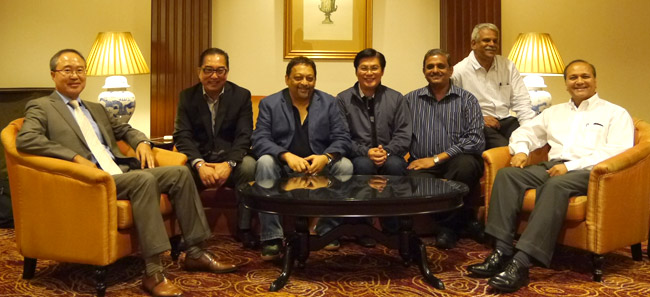
    The Asian Federation of Advertising Associations (AFAA) held their first executive committee meeting atKuala Lumpuron May 22. The newly elected chairman of AFAA Pradeep Guha said: “There was a sense of purpose and urgency at the meeting.” Following its new mandate, the Executive Committee of AFAA has planned out a slew of initiatives that would be rolled out in the months ahead.


    The first one is a skills re-orientation initiative that would be held in September inKuala Lumpurwhere young professionals would be exposed to a program that has been carefully crafted keeping in mind the needs of the profession. The Advertising Council of India (ACI) which representsIndiaon the AFAA International Council would be setting in motion a process to send three young professionals representing advertising, media and marketing respectively to attend this program.


    There would be a master class conducted by senior professionals with 30 students from countries all overAsia. This would provide a unique cross-cultural flavour to the program which would benefit the participants enormously.


  • Rise in Business Confidence Index after 5 quarters

    By A Correspondent


    The Business Confidence Index in Indiais showing signs of improvement after five consecutive quarters in March 2012 according to the latest NCAER (National Council of Applied Economic Research) MasterCard Worldwide Index of Business Confidence. The 80th NCAER MasterCard Worldwide Index of Business Confidence is based on a survey which measures business confidence on four indicators.


    They include overall economic conditions six months from now, financial position of firms six months from now, investment climate and level of current capacity utilization. All four indicators carry equal weight. The Index is released every quarter.


    The Business Confidence Index (BCI) increased by 7.7 per cent over the previous quarter to 134.9 points from 125.2 points in January 2012. The rise in the Index indicates an increase in the investor confidence and expectation, irrespective of a global slump and high inflation rates. The Index also registered improvement in business environment for the first time since January 2011.


    The study reflects stability in business sentiments and cautious outlook of the business sector. This change in business sentiments is backed by a number of changes that have taken place on both domestic and global front during the last quarter of FY 2011/12. While moderation in economic growth rates persisted, inflation rate also moderated and the food grain harvest in 2011-12 has been at a record level.


    “NCAER MasterCard Worldwide Index of Business Confidence shows some significant changes in the economy during the quarter ending March 2012. After a dip in 2011, the index showed positive business sentiments during this time period. In light of the current challenging economic environment, the next quarter index will be worth watching. The study continues to provide great insights on the key factors that affect the business and political environment in India.” said TV Seshadri, Division President,South Asiaand Country President India, MasterCard Worldwide.


    “It’s encouraging to see how the economy is recovering from the slump. The investors are regaining confidence and there is a positive outlook which has impacted this quarters result,” noted Dr. Shashanka Bhide, Senior Research Counselor, NCAER.


    An analysis of the four indicators revealed an improvement in three out of four components of BCI over the previous quarter. Among the three, the largest improvement is in the case of present investment climate.


    The survey focuses on trends within firm-specific business outlook indicators and also includes a Political Confidence Index (PCI) and a special section on Expectations and Evaluation of Union Budget 2012-13. The latest survey was conducted in March 2012 and received 528 responses. The data was collected through personal interviews and questionnaires sent to a diverse range of businesses across various regions inIndia. The Index and its accompanying report do not represent MasterCard financial performance.


    Sector wise, analysis of BCI, revealed a marked improvement across all major sectors except consumer non-durables sector. Four of five major sectors of the economy reveal improvement in business sentiments. The consumer non-durables sector shows a decline where BCI slipped 4.8 per cent from 142.7 in January 2012 to 135.8 now.


    An improvement in business sentiments is seen in the present round of survey, the highest optimism level being registered by firms in intermediate sector where BCI has jumped up by 14.5 per cent followed by services sector (134.5), capital goods sector (138.6) and consumer durables sector (135.8) with 7.2 per cent, 6 per cent and 4.2 per cent growth, respectively. Although business sentiments in consumer non-durables sector show decline, at the same time it exhibits the second most optimistic BCI among all sectors after capital goods sector.


    According to the findings, business sentiments across all the regions reflect fair degree of uniformity in perceptions. Among four regions, three have registered improvement in business sentiments in the present survey. North has registered the highest improvement while South shows marginal fall over the previous quarter. Overall, the survey reflects improved business sentiments in all regions except South where although the present situation has improved, firms are still not sure about changes in the short run future.


    On the whole, expectations with respect to overall economic conditions and to some extent financial position seem to remain the main issues of concern for the firms, especially in North and South.


    The survey reveals a divergence in the perceptions between private sector and public sector firms on the one hand and smaller and larger firms on the other. There is a sharp increase in BCI for larger firms than smaller ones. Similarly, private sector firms show higher optimism while public sector firms show a decline.


    The disaggregation of firms by ownership type reveals heterogeneity in the perceptions between public and private sector firms. The study reveals that while public sector firms show decline in the business sentiments, private sector firms showed an improvement. An improvement in overall BCI is mainly contributed by private sector firms as public sector firms reflect weak confidence.


    Firms in the manufacturing sectors reflect expectations of greater improvement in domestic sales and production level as compared to firms in services sector along with improved profits over the next six months. The survey results also reveal expectations of higher input costs per unit of output such as for raw materials, labour, and electricity, in the short run. The ex-factory prices are also likely to increase. The survey also points towards improvement in employment conditions and higher wage rates for labour in the next six months. Given the expectations of higher sales and production by manufacturing firms, inventories are also expected to build up.


    The latest survey has a special section on Expectations and Evaluation of Union Budget 201213. This study is aimed at capturing the expectations and impact of tax proposals made in budget 2012/13 on business sectors activities.


    While majority of the respondents expected corporate tax to remain unchanged in the budget proposals, an equal proportion of respondents expected corporate tax rates to decrease or increase. More than 37 per cent anticipated excise duty would increase. In general, while there were apprehensions of increase in tax rates, there was also an expectation that the budget would reduce the tax burden. Post-budget it is found that significant proportion of firms report adverse effect of tax proposals. Only about 30 per cent of the respondents reported corporate tax rate proposal in the budget as satisfactory. The findings suggest that the business sector perhaps was expecting measures to boost investment and demand more directly and these may not have been realised.


    Following two mild improvements in the previous quarters, the current round of BES in the latest survey results shows a decline in Political Confidence Index (PCI). The index has declined by 4.6 per cent from 86.9 in January 2012 to 82.9 in April 2012.


    Nonetheless, the index still remains above its level recorded in July 2011. At regional level, two regions show fall in political confidence while the other two show improvement. Similarly, among sectors, two have registered a fall in PCI in April 2012 while the remaining three still hold up the optimism level.


    The latest survey showed a drop in the ratings for seven of the eight components of PCI:


    Factors Mar – 12 Jan – 12
    Managing Overall Economic Growth 30.2 36.6
    Managing Government Finance 37.2 39.4
    Managing Inflation 18.8 22.3
    Managing Unemployment 18.8 12.7
    Managing Exchange Rate 28.3 28.5
    Managing Conducive Political Climate 19.9 20.4
    External Trade Negotiations (both bilateral /multilateral) 27.9 30.5
    Pushing the Economic Reforms Forward 26.0 26.7
    Political Confidence Index 82.9 86.9


    The present survey shows that ratings of political management of the economic issues have declined compared to the previous quarter. Unlike the last round, where three out of eight PCI components showed decline, the current round shows decline in seven out of eight components. The highest fall is reported in the case of managing overall economic growth by 6.4 points followed by managing inflation (3.5 points) and external trade negotiation (2.6 points).


    The survey results indicate that unlike BCI, which shows a decline in the consumer non-durables sector, the aggregate PCI in consumer nondurables, consumer durables and intermediates sectors witnessed an improvement of 5.5 points, 7.4 points and 5.1 points, respectively. The capital goods and services sectors witnessed decline by 19.1 points and 12.1 points respectively, indicating the aggregate PCI, which measures the overall confidence of business sector in the political management of economic policies, is not uniform across the manufacturing sectors.


    Region-wise results suggest that PCI declined for two regions North & South and improved for the other two regions East & West over the previous round. In North, responses declined from 91 per cent in the previous round to 82.3 per cent in the current round. Southern region recorded a considerable decline of 11.6 points during same period. Across all the regions, eastern and western regions continued to maintain the trend of improvement with an increase of 9.2 points and 1.2 points respectively.


    Out of the firms in five different sizes, two sizes witnessed improvement and the remaining showed a declining trend. The highest improvement is recorded in small firms indicating that small size firms are more optimistic in their assessment of political management of economic issues. Respondents in large size firms reported declining trend in PCI from 93.8 per cent to 85.4 per cent and from 109.9 per cent to 90.4 per cent, respectively from the previous round (January 2012) to the current round.

  • DDB MudraMax wins media mandate for Kalyan Silks

    By A Correspondent


    Kalyan Silks, one of Kerala’s biggest brands, has aligned its media mandate with DDB MudraMax. The coveted pitch saw multiple agencies participating. The size of the account is pegged at Rs25 crores. The client will be handled out of the DDB MudraMax office inBangalore.


    Commenting on aligning the media duties with DDB MudraMax, TS Pattabhiraman (aka Swami), Chairman & Managing Director, Kalyan Silks, said: “We are very happy to associate with DDB MudraMax as they are a well reputed agency and extremely trustworthy. Their client relationship is commendable. Most of the clients they are associated with have been so for a long time, which acts as a clear indication of their efficiency.  We hope to have a mutual and fruitful association.”


    On winning the account, Gopi Nair, AVP & Head, DDB MudraMax said: “We are immensely pleased to work with Kalyan Silks, who are one of the top players in the fast growing retail industry. Our team is committed to show the same consistency and results that has kept most of our clients delighted.”


  • Eco Times launches The Power of Ideas 2012

    By A Correspondent


    The Economic Times brings back The Power of Ideas,India’s largest entrepreneurship development programme. It aims to encourage individuals with a business idea to come forward and connects them with relevant mentors and investors. The programme was first launched in 2009 when it received over 12,000 business ideas followed by over 16,000 the next year. This year, armed with a bigger corpus of funds, the initiative seeks to transform more business ideas into real businesses.


    Ravi Dhariwal, Chief Executive Officer – Bennett, Coleman & Co. Ltd said: “We at The Economic Times believe that the future of the Indian economy lies in the hands of young entrepreneurs. It is the energy and drive of these young people with an idea that will giveIndiaits next big leap. I am happy to say that The Power of Ideas initiative has provided critical impetus to many such ideas.”


    The programme is conducted by The Economic Times in partnership with the Department of Science & Technology (DST), Government of India. DST brings to the programme its expertise and relationships in the entrepreneurial space as well as a corpus of Rs6.2 crore of guaranteed funds. The funds are open to all those with genuine innovation on their mind, regardless of whether they have just an idea or a fully functional start-up.


    Working alongside ET and DST is IIM Ahmedabad’s Centre for Innovation Incubation and Entrepreneurship (CIIE).CIIE is a leader in the field of mentoring, guiding and making business ideas investor-ready.


    The greatest value CIIE will add to The Power of Ideas will be by way of their wide network of mentors and investors who will evaluate every single business idea received as part of the programme. The most deserving ideas will be given personalized mentoring. In the last phase, entrepreneurs who make it to the final cut-off will be taken through a nine-day period of intensive mentoring by CIIE, as a residential programme at IIM Ahmedabad. This unique public-private-academia partnership remains in place in 2012 to drive the programme to new heights.

  • Debrief: Coca-Cola: Zero Freshness

    By Anil Thakraney


    Interestingly, there’s a new commercial on air from Coke, and it’s based on cricket. A bit strange that, because summer’s coming to an end and the IPL is done and dusted.


    Anyway, the TVC features some rural kids playing the game in extremely hot, dusty and inhuman conditions. It looks like a desert. They seem to be enjoying themselves all the same, since the kids are passionate about the game, like everyone else is in this country. And that passion is what Coke wants to ride on. However, all of a sudden, towards the end of the commercial, Rajya Sabha MP designate, Shri Sachin Tendulkar, appears on the screen. He ‘opens happiness’ and happily gulps it down.


    I have two huge problems with this one. For one, cricket has been heavily flogged in Indian advertising, and for the game to carry any further appeal, the execution has to be seriously fresh. We are done with watching kids play street cricket, surely that’s become ultra boring in circa 2012. So on this count, the TVC fails miserably, despite a good voice-over and a decent script.


    Secondly, Sachin looks like a cut-paste job in the film, an after-thought. Would it not have been a little nice if the hero lands up in those hot conditions and offers the poor kids some Coke? That would not have injected any freshness to the commercial, but it would have brought in some warmth at least. Currently, it looks like the kids are living a life of hell, and the Rajya Sabha MP designate is chilling inside an air conditioned studio. This kinda puts you off.


    Rating: (On a scale of 1 to 5): 1. Thakela idea. And it makes Sachin look bad. 


  • Only the logo will change: Venkatramani


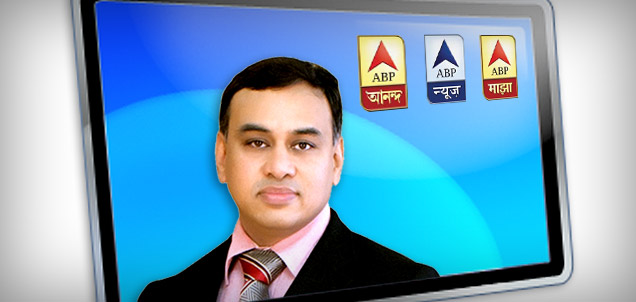
    As the clock strikes 12 midnight, the logo on popular Hindi, Bengali and Marathi news channels Star News, Star Ananda and Star Majha will change. In fact as the communication from the channels has been emphasizing, save the brandname, nothing else will. Following the announcement of the discontinuation of the Star brand affiliation with MCCS (Media Content and Communications Pvt Ltd), the the Ananda Bazar Patrika and Star India jv, the three 24-hour channels will be rechristened. Star News to ABP News, Star Ananda to ABP Ananda and Star Majha to ABP Majha.


    MCCS unveiled its new logos for the three channels and kicked off its communication campaign around the rebranding on May 7. The creative communication campaign was developed by Lowe Mumbai and the media buying plan was formulated by Mindshare. The aggressive communication campaign based on the theme, “Our Stars don’t change, our News does not change, only our Name changes”, was launched across media, on TV, Print, Radio, Outdoor and Internet to familiarize viewers and stakeholders about the new name and logo.


    Just hours ahead of the rebranding, MxMIndia spoke to Mr Ashok Venkatramani, CEO, MCCS on the acceptability levels of the new name, measures being undertaken to retain viewership and the road ahead for MCCS.


    What time will the change happen?

    Tonight. 12 midnight.


    Since you spoke to us the day the announcement was made to now, what are the reports that your front-facing sales and editorial forces bring you – in terms of acceptability of the name… especially for Star News to ABP News?

    So far the feedback has been positive and encouraging. If I were to divide the stakeholders into three parts – the viewers, the newsmakers and the media buyers and the trade, for the first segment which comprises viewers, the change has not happened. It’s going to happen from tomorrow. But since the time we announced, there has been no change in our ratings. We report daily news, and as long as it is the same set of people doing the same set of news in the same manner, I don’t expect much change there. The second constituent which is the newsmaker, there is absolutely no issue there because ABP is a very strong name in the newspaper and magazine industry. It’s been there for long and ABP has very strong news credentials. The third segment which is the trade and media buyers, feedback has been positive… virtually no problem with the large houses. There again, ABP is not a new name, everyone buys print so they know. So it has been positive, and it’s best manifested in the sales that have happened in the last couple of months. I am fairly confident that we will be able to pull this through comfortably.


    But the biggest component is the viewer, which is untested yet and that’s where the ratings come in.

    Frankly, unlike the entertainment media where your ratings are linked to some big property and the fate of the channel is linked to that property, in a news channel, where even before the name change there is a fair degree of clutter and poor differentiation. Over a period of time, each channel has established rating levels based on consistency of its content. And that consistency is driven by the way we report, the speed of reporting, the honesty, the faces or the anchors who come on our channel, the kind of programmes we have. Now those things don’t change, the reporting and the people are the same. To my mind, just a logo change in the corner doesn’t dramatically change impact of the news channel. And if you take the two regional channels, Ananda and Majha, they are clear market leaders, and there again nothing changes- the anchors are the same, reporting is the same, and the position of the channel in the EPG is the same.


    Any attempts to retain viewership… like contests et al? And any specific measures to retain advertisers? And for the distribution trade?

    No, we are not resorting to any short-term activity to garner quick eyeballs because our genre doesn’t subscribe to that. What we can potentially do is break big stories but there is already so much action happening. What we are doing is engaging with our trade, media buyers and distributors. We are having a series of meetings with them, small personalized interactions where we can chat and exchange views with them. It’s more of a personalized engagement with the constituents rather than any on-air activity for the viewer.


    Given that there is a change, are there any specific areas that you are changing in the new channels?

    It would be exactly the same and deliberately so. We just want to do one measure at a time, so at this point there is no change other than the name change. But as we progress into the new name and once the new name gets fully established, people start recognizing it, and then we will look at other measures like relaunching the channel, changing the look and feel etc.


    When is that likely to happen?

    Too early to say.


    Our columnists Anil Thakraney had commented that this is possibly a good occasion for changing some of the typical things that are common on Hindi channels, like over-sensationalizing etc. Are you thinking of doing that now?

    No, actually if you watch the channel, we have done that for the last one-and-a-half years now. This is a common misconception most people have because they don’t see Hindi news channels on a regular basis. This is a genre problem where we have a lingering perception. For example, I have got out of astrology for a year now, I don’t have a single programme on the channel which talks about astrology. It’s been more than a year-and-a-half since we got out of religion. Now we have not gone out on the rooftops and shouted about it but all these things we’ve already done. We have only hard-hitting news on our channel from 5pm to 10pm. And we’ve done this because we felt this is the right thing to do for a genre not because our name is changing. To my mind, in a news channel, these changes take time to notice.


    A programme like ‘Asar’ with Aamir Khan would’ve obviously started on Star News because it was a Star Plus show. Will the preferred partner status continue to exist even after June 1?

    Yes, in fact they are still our shareholders. Secondly, all such deals are purely on a commercial basis but obviously relationships were strong. In fact not many people know that Satyamev Jayate used to be a programme on Star News started by Uday Shankar when he used to be here. And we didn’t have a problem in them doing Satyamev Jayate, so the relationship continues. They continue to be our distribution partners, they continue to distribute our channels internationally.


    There is this news that Star might also exit the JV because they say it is not really worth their while to have a stake when they don’t have any say. Is that something that you have factored in?

    Actually I don’t want to comment on it because it’s a JV issue which only the JV partners can address. And I think it is best addressed by Star and ABP. But I guess any commercial investment by any investor has to be based on commercial returns. Now how an investor evaluates investment in the news business depends entirely on the investor.


    Have you done any brand studies or surveys on the acceptability levels of the new names?

    Yes, we have done research. A name change always has to be a combination of some research and some amount of strategy. One can’t entirely depend on research, it’s like naming a baby, where you look at the ‘granth sahib’ and pick up the alphabet and choose your name. So I think for us, given the fact that ABP is a serious player in the news business and they have long-term ambitions to be in news, including broadcast news, it did make sense to have a master brand which can be built going forward. So it was a combination of strategy and research.


    How active will ABP be, or will it be the same with you running the enterprise and ABP being on the board level?

    Nothing changes even on that front. Even now both the shareholders, Star and ABP continue to be the parents allowing MCCS to do its own thing. They were always available to be tapped, whenever we needed inputs. Any dealing with them is also at commercial terms. I don’t see any change in that.


    The campaign of the name change kicked off rather early, from the time you made the announcement… was it part of the original design or was it something which changed later?

    Obviously we saw it coming and we had a headstart of a month or so. A couple of months were good enough for us to churn out a campaign, so that’s how it was.


    Will see a more robust online presence of the MCCS channels now, including an English news website?

    If you look at our entire strategy, not just online, it is driven by a simple definition of who we are and what we are. We believe that we are not a television news company, we are a news content company. If we are a news content company, we should be platform-agnostic and we should be available on all platforms where a viewer might like to consume news. So we developed all these websites and developed 3G platforms, mobile downloads etc. so that we are available in all platforms. For us the allied platforms were not like profit centres, we were happy to get the revenue but at the same time we wanted to be present in all the platforms. The problem is that the online rights of Star News were international, which is why we didn’t get .in at that point of time. So we had to go with another name. Now going forward, our strategy remains the same.


    Any new channels coming up in the immediate future?

    We are working on newer options… frankly, it’s a question of the right timing. It is not related to this name change or the JV, it is an independent aspect which we in MCCS have been exploring and continue to explore. I would probably wait and watch because next six months are going to be a huge turning point. For example, if the entire digitization process goes on well as planned, it has a big impact on news channels and also our own company in terms of how we project the next five years. If the digitization process gets postponed or deferred then I will be a little more cautious. We do have plans but whether I press the button or not, I’ll probably wait and watch.


    Will it be organic or inorganic or both?

    It could be both, it’s a question of a right opportunity.


    Say, for instance, if a NewsX is available, would that be an option?

    I wouldn’t rule out anything but I would evaluate everything for the value it brings and how much it costs. If it makes business sense, why not. But it’s not as if we would be chasing any particular company or a set of channels or anything like that.


  • LMG bags Yepme’s media duties

    By A Correspondent


    Online fashion brand Yepme has awarded its media planning and buying duties to Lintas Media Group. Yepme already has a line of men’s fashion wear and accessories and is launching the women’s wear line on May 30. The brand has signed leading Bollywood actress Kangana Ranaut as its style ambassador. Yepme has over 1.1 million fans on Facebook, making it the largest fan base amongst Indian e-commerce sites.


    The task for Lintas is not only to build saliency for the brand but also to encourage a change in shopping habits for apparel and accessories. As Vivek Gaur, CEO at Yepme said: “Yepme is creating a category for itself. Unlike most other brands that are using the online route, Yepme has a non-metro focus and is creating a network of clients across the country. The role of media for such a challenge is extremely critical and requires a fine balance between mass reach and narrow targeting. We are glad to have Lintas Media Group partner us and give us very strong support in media as we nurture the brand further”.


    Suresh Balakrishna of Lintas Media Group was very enthusiastic about the addition of this new age business: “Yepme will go a long way in adding a young and futuristic character to the portfolio of brands that we work with. Fashion and e-tailing are both growth areas of the future and their media needs are extremely dynamic. We are very glad that the management of Yepme recognized our strengths and decided to partner with us for their future growth”. The account size is estimated at Rs30 Crores annually. This win comes soon after the recent wins at Lintas Media Group of Henkel,EdenCityand OCL.


  • Hanmer MSL wins Bees Award for eBay.in

    By A Correspondent


    MSLGroup India’s Hanmer MSL has been awarded ‘Best Social Customer Relations Management’ at the third edition of the prestigious Bees Awards for its social media engagement campaign of eBay India.


    The Bees Awards is the first international social media competition honouring communication and marketing professionals and judged campaigns from agencies and brands from across 40 countries.


    The eBay winning campaign – eBay India Wins with Social CRM – received the award for its creative customer engagement strategy that identified female consumers as brand evangelists and developed rich, visual talking-points to create a viral effect and foster brand loyalty. The agency also established a strong customer relationship management mechanism that focused on seamless integration of the user-facing CRM process on Facebook with eBay’s back-end processes to create a real-time response set-up.


    The award win follows MSLGroup Asia’s finalist nomination at the Bees Awards in 2011, for MSL China’s work with IKEA in the ‘Best use of Microblogging Platform’ and MSL Singapore’s nomination in the ‘best relationship with blogs’ category for feminine care brand Whisper, “Happy it’s Here!” social media campaign.


    Commenting on the win, Jaideep Shergill, CEO, Hanmer MSL, said: “I’m extremely proud of our social media team for notching up an impressive win at the Bees Awards this year, and for being the only agency from Indiato do so. This award acknowledges our industry – leading, best-in-country social media engagement expertise and creativity. We are truly proud to have been honoured in a competition that brings together brands and agencies from the communications industry across the world.”


    MSLGroup’s MSL Nordics also won the “Best Use of Alternative Tools” category with Ariel Fashion Shoot, undertaken in partnership with Saatchi & Saatchi.


  • Creativeland Asia wins big at FAB Awards

    By A Correspondent


    Creativeland Asia won two FABulous Awards (equivalent of Grand Prix) for ‘Plan-T’, the campaign created by them to help Hippo track inventory through social media (Twitter), at the recently concluded FAB Awards in London. The Grand Prix was awarded, one in the category of Advertising/Integrated/Sales Promotion/Direct/Collateral and POS/Best Use of Media; and the other in Mobile/Digital/Interactive/Non Traditional.


    The FAB Awards is an international Creative Awards programme focused entirely on work done for Food and Beverage brands. The 14th International Food and Beverage (FAB) Creative Excellence Awards, were announced on May 29 inLondon.


    The campaign also won FAB awards (equivalent of Gold) in Best Use of Media, Best Use of Technology and Social Media. Apart from having won accolades and awards, the Hippo campaign has been presented as case study in institutions and seminars including TWTRCON for ‘The most innovative use of social media’.


    On this occasion, Sajan Raj Kurup, Founder & Creative Chairman, Creativeland Asia, commented: “I am extremely delighted with the news of our new set of golds and grand prix. To win it at a prestigious global award alongside the best in the category makes the win even sweeter.”


    Founded by Sajan Raj Kurup in 2007, Creativeland has grown to be a belief shared among more than 80 people across two full-fledged offices in Indiaand 9 strategic offices in Asia. Creativeland’s work has been awarded at the D&Ad, One Show, Adfest, Cannesand Effies. At Cannes Lions 2010, Creativeland Asia was ranked at No. 4 in the list of the most creative agencies from India. Creativeland’s client-partners include brands like Audi India, Godrej, Parle Agro, Café Coffee Day, Cholayil.