Author: mxmadmin

  • 63% Indian pros maintain a to-do list: LinkedIn

    By A Correspondent


    LinkedIn, the professional network with over 14 million members in India , released data about professionals and their daily to-do lists. The study examined how professionals in different industries tackle tasks planned for a given workday; the differences between men and women’s to-do list habits; and global insights on where professionals keep to-do lists and what gets in the way of completing them.


    LinkedIn surveyed more than 6,500 professionals globally and over 400 in India . The study revealed that among the countries in which the survey was conducted, India ranked sixth in maintaining to-do lists. Out of the India n professionals that were surveyed, 63 per cent reported that they frequently keep a to-do list. This matches the global average, as 63 per cent of all survey respondents reported that they frequently keep a to-do list. Globally, seventy-one per cent of women say they frequently keep to-do lists. Only 60 per cent of men say they frequently keep to-do lists.


    In India , 45 per cent of respondents said that they jot down their to-do lists by hand, while 48 per cent said they create them electronically. Globally however 50 per cent of those who jot down to-do lists do so by hand, while 45 per cent create them electronically. The remaining five per cent reported storing their lists in alternative places, like “In my mind only,” “Piles of files,” or other locations like whiteboards or chalkboards.


    The study showed that the likelihood that a professional will complete their to-do list varied by industry. Globally, professionals in agriculture claim to be the most productive, with 83 per cent of agriculture professionals stating they regularly fulfill most or all of their planned tasks. Professionals in the legal industry had the lowest completion rate on their daily plans, with 66 per cent of respondents accomplishing most or all tasks.


    Art industry professionals (40 per cent) agreed the most with this statement, “I tend to be distracted easily.” Agriculture industry professionals agreed the least with that statement; only 18 per cent of professionals in the agriculture industry are easily distracted.


    When it comes to checking the boxes on their to-do lists, only 11 per cent of professionals globally reported accomplishing all of the tasks they plan to do in a given workday. Survey respondents pointed to unplanned tasks (such as unscheduled phone calls, emails and meetings) as primary cause for not completing all items on their to-do lists. In India , 45 per cent of professionals reported splitting their workday equally between planned and unplanned tasks. At 38 per cent, India had the fourth-highest percentage of survey respondents who spent most of their day on planned tasks.


    “As professionals, we constantly attempt to plan our day at work in the most effective manner. While surprise phone calls, meetings and other unplanned tasks usually make it difficult to adhere to a to-do list, professionals can rely on the intelligence gathered on LinkedIn to work smarter,” said Hari V. Krishnan, Country Manager, LinkedIn India . “Individuals from every industry can benefit from LinkedIn’s simplified solutions to achieve work-goals while being time-efficient. Even while on the move, professionals can use LinkedIn’s mobile applications to strike off tasks from their to-do-lists.”


    Follow these “to-dos” to save time in your workday and cross more tasks off the list:


    1. Make meetings more efficient

    Check out meeting participants’ LinkedIn Profiles ahead of time to get a sense for what they bring to the table. Past experience and specific skills of your meeting cohorts could come in handy to creatively solve a problem — thereby keeping your meeting time to a minimum.


    2. Crowd source your challenge

    Use LinkedIn Answers and LinkedIn Groups to tap into the wisdom of your LinkedIn network or the rest of the 161 million LinkedIn members. By posing questions and starting discussions you’ll be able to assemble solutions in record time.


    3. Get up to speed in an instant

    Rather than visiting various news sources each morning, get your daily news fix in one place via LinkedIn Today. Customize LinkedIn Today so you get news that’s relevant to you and your clients. Access LinkedIn Today from your desk, iPad or phone by downloading LinkedIn Mobile.



  • Hippo’s ‘Indian Food League’ for cricket fans

    By A Correspondent


    The ‘Indian Food League’ is an online activity in which Hippo asks T-20 fans to support their regional teams by supporting their regional dishes. The campaign is conceptualised and implemented by Creativeland Asia.


    The campaign is a crowd-sourced activity that caters to the cricket fan’s love for snacking and eating, while they watch their teams fight it out. The IFL ultimately hopes to tap into every Indian’s latent desire to voice their humorous opinions. Talking cricket online has become engrained in every cricket lover’s match-day rituals. And by bringing food to this already heated and opinionated mix, Hippo has hit on a very successful recipe.


    Commenting on this engaging activity, Nadia Chauhan, Joint Managing Director and CMO Parle Agro said: “With so many people conversing on social sites, Hippo has created the Indian Food League as a medium to interact with and engage its consumers on the social media platform during the cricket season. Today, social media is one of the most influential and emerging channels of communication. Hippo’s previous campaign on Twitter to track inventory was a huge success. This further encouraged Parle Agro to engage interactively with its consumers on the same platform,” she added.


    Commenting on the campaign, Anu Joseph, Executive Creative Director, Creativeland Asia, said, “Hippo is constantly looking for opportunities to talk about food. He, in fact, looks at the world only in terms of hunger and food. So, a ‘Mumbai Vs Bangalore’ match for Hippo is a match between Pav Bhaji and Masala Dosa. So, whoever wins, at the end of the day, hunger loses.”


    The IFL comprises nine regional teams symbolized by the region’s most popular dishes, with Chennai being represented by ‘Idli Sambhar’, Mumbai by ‘Pav Bhaji’ and Delhi by ‘Papdi Chaat’. Other dishes include ‘Kanda Poha’, ‘Aloo Paratha’, ‘Daal Baati’, ‘Masala Dosa’, ‘Roshogolla’, ‘Dum Biryani’, representing the regions Pune, Punjab, Rajasthan, Bangalore, Kolkata and Hyderab adrespectively.


    The home of the activity is www.hippofighthunger.com/ifl, a microsite where Hippo puts up a ‘Today’s Special’ poster daily, giving his unique and quirky take on the day’s food match-up.


    Over the last 40 days, the activity has received a tremendous response. Hippo has chosen a winner for every match and most winners have been already sent their Hippo Bean Bags.


    This is not the first time Hippo and Creativeland are conducting a crowd-sourced campaign on social media. Last year’s inventory tracking campaign, Plan-T has already set a high benchmark for the brand. In fact, the launch of the activity became a trending topic on Twitter and other social networks, nationwide.


  • The Anchor: Chandradeep Mitra on 5 reasons why GECs rule the Indian TV industry

    By Chandradeep Mitra


    1. Historicity – General Entertainment Channels (or GECs) were the first and the main channels which started the TV culture in our country – Doordarshan (DD), then Zee, then Star. In fact, all other channel genres – news, sports, kids, music, etc. – started off as sections within main GECs before being spun off separately. However, GECs have remained the main draws, the big brothers and the bouquet-drivers in the TV business.


    2. Mainstream Entertainment Quotient – In an entertainment-crazy nation fed on Bollywood and other escapist fare, GECs provide the most broad-based mass-appeal entertainment platter (think ‘Thali’!) that aims to please most, if not all, of the TV audiences, unlike more niche options targeting smaller audience groups.


    3. Targeting Remote Controllers – Among various TV audiences, GECs have traditionally targeted the middle-class, middle-aged women the most, who form the largest and most loyal TV viewing group. Long-running soaps and popular well-tested formats ensured repeat viewing of this core audience. And the fact that most Indian households are single TV homes ensured that GECs won over other channels during primetime by targeting the folks who controlled the TV remote at those hours. The creation of the afternoon slot also resulted from targeting this audience group, further consolidating the lead of GECs.


    4. Resource Prioritization – As GECs were historically the bigger TV channels, media owners as well as advertisers put greater focus and energy on continuing their success, hence dominance. The biggest production budgets, the slickest marketing campaigns and the biggest stars (think Amitabh Bachchan, Shah Rukh Khan, Salman Khan, Aamir Khan…) all were marshaled to make GECs bigger and stronger. Success perpetuated more success.


    5. Biggest Innovations / Breakthroughs – While a number of GECs continued to play safe and repeat successful formulas (remember the Saas Bahu serials?!), the high stakes game in the GEC genre also ensured that the biggest innovations and introduction of breakthrough formats also happened on GECs (think KBC and Satyamev Jayate). This ensured that more often than not, it was a GEC that benefited from a positive discontinuity in Indian television (IPL is perhaps one exception).


    Chandradeep Mitra is CEO, PipalMajik


  • Cable operators take on I&B at digitization meet

    By Meghna Sharma


    With May coming to an end and only a month left for digitization, the Information & Broadcasting Ministry is trying its level best to get the stakeholders to a mutual consensus. A forum was organized by FICCI and I&B ministry in Mumbai to share some thoughts on ‘ India going Digital’.


    Present at the event, Supriya Sahu, Joint Secretary (Broadband & Policy) and Rajiv Takru, Additional Secretary of Ministry of I&B heard what the cable operators of the city had to say. It is not a hidden fact that cable operators aren’t very happy with the whole process. Deadline date, revenue share and carriage fee were some of the strong points put forward by them.


    Cable operators’ woes

    The operators stood unanimous as they put their issues in front of I&B Ministry. The issues on which they wanted answers to varied from them being given a ‘chor’ tag to why they should collect entertainment tax for the state government.


    Although the topic of revenue share was top of the list, none of the operators agreed with the 45:55 share with the MSOs and wanted the government to do something about it. “How will we survive?” they questioned. The cable operators want a bigger share in the pie; some even suggested of a full 100 per cent share.


    Some operators even went on to tell the government to re-work the deadline and launch a phase-by-phase change, wherein both analog and digitization be allowed hand-in-hand, with only a few channels being converted in the beginning.


    One operator even compared the cable operators with Jesus and said that they’ll be carrying the set-up boxes to their funerals. Availability of the set-up boxes is a major concern as many reminded the ministry representatives that MSOs have not been able to provide them with the boxes even as the deadline looms in. “How does the government expect us to meet the deadline when we haven’t been provided with the set-up boxes. We don’t even know if the demand will be met before the blackout. And how are we going to face the wrath of our customers when their television sets go blank?” questioned one operator.


    Carriage fee was a topic on which all of them agreed upon, stating that they alone shouldn’t be allowed to bear its burden. They also wanted the ministry to intervene and tell the broadcasters to bring out their rate cards as soon as possible so that they can, in turn, inform their customers.


    Ministry’s assurance

    Rajiv Takru, Additional Secretary of Ministry of I&B, confirmed that no matter the issues raised or problems faced, digitization will not be compromised upon. “There is still some confusion and doubts in many cable operators’ minds, but one needs to be very clear that digitization will happen and shouldn’t be taken lightly.”


    He advised the cable operators to start working on it as very little time is left. He added that it is cable operators’ job to go and talk to their customers about digitization becoming a reality soon. “Multi-system operators (MSOs) have been informed to provide cable operators with set-up boxes before the deadline of June 30 and they will have to follow suit. It is the cable operator’s job to convince customers to change before it’s too late to avoid the chaos.”


    He added that the rules of the game have been changed and if anyone is caught evading rules or indulging in any malpractice then according to the Cable Regulation Act, the person will be arrested and made to shut shop as it has now become a cognizable offence.


    The broadcasters have been informed and will bring out rate cards by end of this month, Mr Takru assured: “Broadcasters and MSOs have to go by the rules and have to come out with bouquet as well as a-la-carte channels. One needs to understand that digitization is a win-win situation. The customer will be able to chose and cable operators will be able to provide the best quality service.”


    Direct to Home (DTH) service is seen as the biggest opponent by cable operators and feel that DTH operators don’t want them to reach the deadline, especially with monsoons approaching as they do not get many customers in the season. To this Mr Takru assured cable operators stating that they shouldn’t see DTH as a challenge: “A lot of DTH operators are still waiting in line to get more channels as they don’t have sufficient signals/transponders whereas cable operators will be able to provide 500 channels to their customers.”


    No end to the chaos

    However, no concrete solutions came out of the meeting as the atmosphere at the forum heated up. The cable operators continued demanding the deadline to be pushed back while Mr Takru only said that their point has been noted.


    Furthermore, the cable operators didn’t let the MSOs present at the event speak their side of the problem or issues. The agitation ended when Mr Takru and Ms Sahu walked out of the venue citing shortage of time and the MSOs escaped with them.


  • Lowe & Lifebuoy win India’s first Global Effie

    By A Correspondent


    Lowe Lintas and Partners India’s campaign for ‘Lifebuoy Super-Fast Handwash’ was declared the 2012 Global Effies Bronze winner at New York on Wednesday. Earlier this year, Global Effies had called for entries of globally effective campaigns across the world. Lifebuoy was shortlisted earlier in the month along with brands like Nike, Google and X- box.


    Said Saji Abraham, Global Planning Director, Lifebuoy and Virat Tandon, Global Business Director, Lifebuoy: “Lifebuoy Superfast Hand-wash is a liquid handwash formulation that kills 99.9% germs in 10 seconds. We responded to this fantastic innovation with a simple but insightful and persuasive idea – that children are in a hurry when it comes to hand-washing; and so if your handwash cannot keep pace with them, germs on their hands will just not go. This campaign won because we were bold, competitive and consumer focused at the same time.”


    Joseph George, CEO, Lowe Lintas and Partners, said: “As an agency, we take the Effies seriously. And so winning, not just the Lowe & Partners Worldwide Network’s but also India’s first ever Global Effies is hugely satisfying and encouraging.”


    See also:

    http://www.effie.org/winners/showcase/category/43 Grand Effie winners

    http://www.effie.org/winners/showcase/2012/6695 Information on Lifebuoy ad and credits

    http://www.effie.org/winners/showcase/2012/6695 The Lifebuoy presentation


  • Anindya Banerjee to head Scarecrow Delhi

    Scarecrow Communications has appointed Anindya Banerjee aka Andy as Branch Head, Scarecrow Delhi.


    Mr Banerjee, who is currently serving as Executive Creative Director and Creative Head of the Delhi office, will take over his additional responsibilities starting June 1, 2012.


    Here’s what the Scarecrow founder-directors have to say:

    Mr Raghu Bhat: “Andy’s contribution to the growth of Scarecrow Delhi deserves more than lip service. Andy believes in Scarecrow as much as Scarecrow believes in him. We are merely being sensible by unleashing Andy’s potential through timely empowerment.”


    Mr Manish Bhatt: “Andy is the face of Scarecrow Delhi. Any way, he was playing this role. All we are doing here is recognizing  it and giving it a nomenclature. We are giving him due liberty & power to  the role he was playing by default. And wishing him to attract great brands and great talent. ”


    Mr Arunava (Joy) Sengupta:  “As we move to the next phase of our growth in Delhi, we needed a captain, and to all of us there was no better candidate than Andy. Am sure he will lead us well in our journey in Delhi market.”


    Scarecrow Delhi handles brands such as Eristoff, Pentair, DLF and MVL Mobiles.


  • Hindustan launches Yuva in Patna

    From the MxMInfodesk


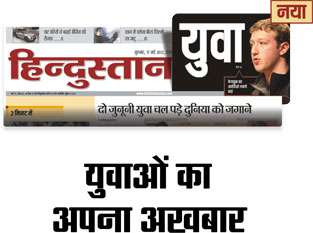
    Leading Hindi daily Hindustan has launched Yuva, a specialised publication targeting the youth in Patna on Thursday.


    The newspaper was planned given the youth has its unique needs, likes, dislikes, aspirations and views on life. Yuva has special two-minute news sections,  vibrant pictures and special navigation panels  in line with reading habits of the youth. It has dedicated sections like Career, Campus news, Patna news, Technology and Entertainment. There are special sections where tweets are featured along with news on Social Networking. Technology, Gadget reviews.  Automobile tips and reviews are featured in dedicated sections on specific days of the week.


    Hindustan has over the last year re-launched with a new positioning and design philosophy. Yuva is a step in that direction to create a young and relevant news brand for the Hindi reading audiences.  The launch in Patna is supported by print, radio spots and outdoor with a aim to establish a strong connect with the youth.


    The news and content published in reports crediting MxMInfodesk are mostly unverified and based on press releases and communiques sent by organizations and/or individuals either directly or through their PR agents.


    However, not all press releases and requests are carried, and we take care to ensure that at least the source of the information recent is authentic.

    Requests for carrying communiques and intimations must be addressed to editor@mxmindia.com.


  • MJR: TV worries about aam aadmi, forgets economics

    Ranjona Banerji

    By Ranjona Banerji


    The petrol price hike announced on Wednesday sent TV into a spin. Since the economy is not a strong point for our honourable anchors, they all decided it was a bad thing but then didn’t know how to go further so opted for passionate pleas on the plight on the aam aadmi. Economists have a slightly different view – they see the subsidies to the aam aadmi as the problem as far as India’s oil bill and budget deficit is concerned. The hike on petrol will apparently have only a marginal effect on easing the financial burden carried by the gas companies.


    Said The Economic Times on Thursday, “Subsidising petro-fuels is not something that India can afford: this subsidy accounts for a sizeable part of the fiscal deficit and drives up the current account deficit. These twin deficits depress growth by curtailing investment. India needs de-control and competition in petro-fuels.”


    The Times of India on Friday says more or less the same thing: “Despite shock and awe for the middle class, the surprising thing about the petrol price hike is that it will only have a marginal impact on the under-recoveries of oil companies or in curbing oil imports. Petrol accounts for just about one-eighth of total oil consumption. In fact most recent numbers show that it is diesel, kerosene and LPG – which account for almost three-fourth of the oil products consumed – that has pushed under-recoveries of oil companies by a massive Rs 1.38 lakh crore.”


    The Hindustan Times on Friday: “A steep hike in petrol prices has jolted Indian consumers out of a false sense of security that the government can shield them from the relentless rise in oil prices… India’s energy consumption has remained oblivious to how international prices moved. Our oil demand does not decline as prices rise and this adds to the downward pressure on the rupee. It is a vicious cycle that can be broken up by freeing up all fuel prices and reimbursing only those who cannot afford market rates. A sizeable chunk of the economy is getting a free ride on the government’s fuel subsidy.”


    Therefore, despite the hysteria generated by TV channels, the consensus from other sources is clear – we have nowhere to run, nowhere to hide from a price increase in all petroleum products. In their anxiousness to get a dramatic confrontation, TV channels forget that not everything makes for a good debate. Why not have a good, solid interview with an economist to explain the problem? They can of course intersperse the interview with song and dance (am I confusing this with IPL?) or run their earlier tapes of panellists yelling at each other so that viewers are not terribly confused with a large dose of sensible talking.


    **


    On NDTV, there was mudslinging at the media by the friends of the Talwars, now about to be tried for the murders of their daughter and their domestic servant. There is no doubt that the media goes overboard very often and did so in the Talwar case as well, over-dramatising the details of Aarushi’s life for instance.


    But nor can there be any doubt that the Talwars manipulated the media and milked the sympathy card for all it was worth. To get a respected popular historian like Patrick French to write an impassioned article in your defence and then follow that up with a TV interview – master stroke. Unfortunately for them, the judge did not quite see it that way and ruled that they be tried for double murder. Justice may or may not be blind but it is often oblivious to TV channel hoopla.


    Ranjona Banerji is a senior journalist and columnist based in Mumbai. She is also Contributing Editor, MxMIndia


  • What politicians think of big biz in news media


    By Karuna Madan


    Even as Information and Broadcasting Minister Ambika Soni recently said that the Reliance Industries Limited (RIL) did not hold any direct stake in any news media company in the country, politicians across the party lines feel that the statement does not hold water. Rather, they lament the sorry state of affairs caused due to the unholy and unnatural nexus of business and news in India .


    Vice president of the main opposition, Bharatiya Janata Party (BJP), Karuna Shukla regrets the fact that the mighty corporate and business houses are investing in news media only for the purpose of “twisting” public opinion or government policies in their favour.


    She feels that the news media must, essentially, be free and neutral at all times and circumstances: “You see, the news media is supposed to be free, neutral and free from biases. So much so that even the advertisements shown or published by the media groups defeat the very concept of neutrality. The case of 2G spectrum can be taken as a valid example. These business groups are now moving to all possible avenues of money-making. But news is sacred, it should not be touched. It cannot be sacrificed at the altar of big bucks.”


    “The people we are talking about are smart. They are not only buying stakes in media but have now started their own newspapers. Today it is ‘their money’ which is controlling news media in India . Their money decides how much truth must be revealed and how much be kept hidden. What are they trying to prove by buying stakes in existing media houses or starting their own news businesses? Investment by industrialists in media is no social service. They have no social responsibility. They invest only with the intention to influence public opinion; creating favorable opinion for them and disapproving opinion for their competitors,” Ms Shukla emphasised.


    Ambeth Rajan, Member of Parliament (Rajya Sabha), from Bahujan Samaj Party (BSP) said that the news organisations these days are not only taking money from big business houses of the country, they are also shamelessly taking directions from them and blindly following the diktats.


    “These corporates decide what news must be flashed and what not, and which news item can be used for blackmailing a certain politician or a rival business group. You see a certain kind of news flashing on a particular channel only because it has the potential to harm the interests of the rivals or support the interests of a particular segment of society or a particular political party. All this is orchestrated and staged. Is this what we know and understand as ‘sacred business of news’,” Mr Rajan averred.


    A powerful Congress leader at the Centre, who does not want to be named, told MxM India that “nobody is a saint here. Yahan doodh ka dhula koi nahin hai.”


    Meanwhile, Nilotpal Basu, Member of the Central Secretariat of the Communist Party of India (Marxist), describes it as “very disturbing trend.” “Corporate investment in news media is nothing but marketing, rather aggressive, shameless marketing. The big business houses do not really bother about what repercussions it will have on the state of affairs in the next ten years or so. These big business houses are aware of the power of media and are abusing that. The industrialists in the country exploit the news business, particularly during elections at the state and national level,” said Mr Basu.


    “The corporates are investing and owning media to influence media space and policy directions. We are opposed to unregulated investment of corporate in media. These investments undermine the concept of free media, and media as an avenue for information. This is extremely sad that this trend is going completely unchecked and the government seems just not bothered to rectify the malady,” he added.


    Likewise, Prabhodh Panda, Member of Parliament (Lok Sabha), Communist Party of India (Marxist), feels that the news media was controlled by the corporate sector even earlier by way of paid news, which came to be openly discussed only recently: “We know that the corporate sector is trying to influence public opinion by investing in news media. Even otherwise, the media is mostly publishing or telecasting paid news. It is an unethical practice by media groups, which must be curbed. It can be curbed only if the governments at the state and national level display the political will to do so. Media must maintain high stands of morality and ethics. The government, particularly at the Centre, must initiate steps to ensure that the media is not abused by the industrialists for their petty benefits, sometimes even at the cost of national security. Also the Press Council of India should come out with guidelines on the entry of corporates in the news media business and adopt a firm stand in this regard. What else the Press Council of India , or for that matter Prasar Bharti, are for,” said Mr Panda.


    Interestingly, Debabrata Biswas, General Secretary, All India Forward Bloc, stated that the motive behind corporate investments in news media is an open secret: “It is a well known fact that the multinational companies are completely controlling print and electronic media in India and even outside the country, thus trying to influence international government policies and the state of world economy. Earlier, the character of news media was altogether different. It was more of a catalyst to bring about positive change in the society. It played a major part during the freedom struggle of the country. News essentially meant positive and developmental reportage, free of all kinds of biases and prejudices. It was aptly described as the powerful fourth pillar of democracy. When one talked of media, one talked of an independent and neutral news providing machinery, not of the handmaid of industrialists. These industrialists have now completely taken over the business of news, directly and indirectly. Everyone knows that Birlas, Tatas and Ambanis are now controlling the newspapers and news channels in the country,” said Mr Biswas.


    Amarjit Kaur, National Secretary, Communist Party of India (CPI), feels that the investments by big business houses into the news media is most certainly “not innocent investment.” “The purpose of investments made by the big business barons of India into our news media is only profit, profit and more profit. Industrialists know that they can get their projects cleared within no time if they have a direct or indirect influence or say in any popular newspaper or new channel having a good subscriber base. These news outfits then act as agents of the corporates. But unfortunately, nothing much can be done about this new trend of corporate interest in media, the reason being that the government is pro-corporates and it shows. If the Information and Broadcasting Ministry is turning a blind eye to this malaise, do you think, the common man has any choice. We can only lament the situation which is turning worse by the day due to utter failure and inaction on the part of the government in this regard,” said Ms Kaur.


  • Anil Thakraney: MMS for Prez! Puhleez!

    By Anil Thakraney


    I implore all the political parties to do at least one good deed for the nation. Please send Dr Manmohan Singh to the Rashtrapati Bhavan, with all the accompanying pomp and gaiety. The man needs to retire ASAP, and what better old age home than the grandiose Bhavan?


    No, I am not suggesting this because MMS needs to be rewarded, but because the gentleman needs to be immediately ejected from the Prime Minister’s office. Don’t think anyone, not even Ms Rabri Devi, can do worse than him. Everyone adores MMS because he’s reputed to be a ‘nice guy’ and an ‘honest man’. Is this qualification enough to run such a huge, complicated, scandal-infested country? Would you hire a CEO based only on this yardstick? Heck, would you marry your daughter to a man based on this qualification alone?


    Let’s examine Mr Nice Guy’s scintillating resume. The nuclear deal, over which he staked his job and promised truckloads of energy and dosh to the nation, is all forgotten. The proposal of FDI in multi-brand retail was quickly scuttled at the first shout from the opposition leaders in the Parliament. The PM’s allowed his retro finance mantri to come up with that hare-brained scheme called Retrospective Tax, which has made global investors become very wary of India. The mother of all scams, the famed 2G scam, happened right under the watchful eye of Dr Singh. And the man keeps getting blackmailed by his allies, and is unable to deal with them. Worse, it’s hard to imagine MMS ran the RBI once, and brought economic reforms to India. Today, he has no idea how to stop the rupee from sliding down the hill, and petrol prices have been increasing as regularly as sixes get hit in the IPL. And these are just some of Mr Nice Guy’s achievements.


    No, we simply cannot afford to have this incompetent man hang around for another two years in office. The nation can deal with only so many failures. Time to move on, Sir. Please start lobbying for the post of President. You are a nice, honest, good man, so no one will mind supporting your candidature. Not even if you later get busy collecting frequent flyer miles, a la Ms Pratibha Patil.


    Please move on! It’s been rather nice knowing you.


    * * *


    PS: Must read for all creative people. Some powerful advice on how to keep the fires burning, and not let life’s set backs (petrol prices!) come in the way of creativity. It’s applicable to creators in all walks of life.


    Link: http://www.brainpickings.org/index.php/2012/05/22/neil-gaiman-commencement-address/


  • Prateek Chandra appointed CFO @ Fever FM

    By A Correspondent


    Prateek Chandra has been appointed as CFO, Fever 104 FM. Mr Chandra has spent more than 4 years with HT Media and in his last role as Senior Financial Strategist, he has been instrumental in adding value on various strategic initiatives and successfully driving several projects including IPO of HMVL. Mr Chandra will be replacing Ritesh Handa who, after 18 months of tenure as CFO, Fever, has decided to move on to pursue other opportunities.


    Prior to joining HT, Mr Chandra had spent almost 6 years with KPMG and EXL handling different aspects of Finance function. In his new role, Mr Chandra will report to Harshad Jain, Business Head, Radio with a functional reporting to Piyush Gupta, Group CFO. He will be a part of the Leadership Team of Radio Business, and have end-to-end responsibility of finance and related operational aspects of Radio business.


  • BIG Bangla Music Awards 2012 unveils jury and awards list

    From the MxMInfodesk


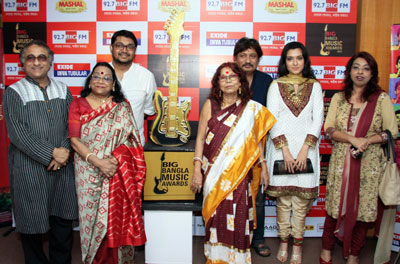
    Reliance Broadcast Network Limited’s BIG Live and its radio arm 92.7 BIG FM announced the jury for the BIG Bangla Music Awards 2012 which include veteran singers Nirmala Misra and Banasree Sengupta, music director Kalyan Sen Barat, music arranger Rocket Mondol, Programming Head of Dhoom Music Channel, Srijit Halder and acclaimed Actor Arpita Chatterjee.


    The lineup this year will have 16 Trophies and a Lifetime Achievement Award. 14 popular categories will be nominated by the jury and decided by listeners through a multi media voting campaign. The balance awards will be conferred by the jury directly.


    Apart from celebrating the resurgence of Bangla music and recognizing the best work of 2011, a key initiative will be to highlight the message of anti-piracy to music lovers and build awareness to stop the menace. This effort is being supported by the government of India recognized- Indian Performing Rights Society (IPRS) as well as leading production houses.


    A special anti piracy theme song is being composed by leading rocker and Cactus frontman Siddhartha Shankar Ray which will be sung for the live on the stage during BIG Bangla Music Awards. The resurgence of popular Bangla music and its huge impact on Tollywood is best exemplified by the works and rise of the phenomena called Jeet Gannguli. It is with this in mind that 92.7 BIG FM has chosen him to be the Face of the Award 2012. The Award is being supported by Exide Invatubular  and Mashal Mustard Oil.


    The news and content published in reports crediting MxMInfodesk are mostly unverified and based on press releases and communiques sent by organizations and/or individuals either directly or through their PR agents.

    However, not all press releases and requests are carried, and we take care to ensure that at least the source of the information recent is authentic.

    Requests for carrying communiques and intimations must be addressed to editor@mxmindia.com.