Author: mxmadmin

  • Airtel DTH launches iEnglish

    By A Correspondent


    Airtel Digital TV, the DTH service by Bharti Airtel announced the launch of its new interactive service, iEnglish to help customer hone their English speaking skills within the comfort of their homes.  These English language tutorials are based on an audio-visual format with animated characters and quizzes for easy comprehension.


    Priced at Rs30/month Airtel Digital TV subscribers can now avail the benefits of this offering by simply pressing the iTV button on their remote control.


    Commenting on the launch,  Shashi Arora, CEO- DTH/ Media, Bharti Airtel, said: “Interactive services on  digital TV platforms are not merely value added services but ‘infotainment plus’. Our new interactive service, iEnglish will enable customers become skilled at day-to-day spoken English by enhancing their learning through entertaining, yet educational activities.”


    Powered by Hungama, South Asia’s leading digital entertainment company, and Aptech, a pioneer in providing education and training, iEnglish would help consumers understand specific scenarios and commonly used English expressions for daily communication. Apart from teaching correct pronunciations of words, it would also help customers learn new words and phrases, proper grammar usage and an opportunity to gauge their competencies.


    Ninad Karpe, MD & CEO, Aptech Ltd said: “With India poised to emerge as one of the successful player in the field of mEducation, we are excited to launch our first mEducation offerings on Airtel Digital TV”.


    Neeraj Roy, MD & CEO, Hungama added: “The DTH platform is emerging as a new tool for more interactive forms of entertainment and learning. We will continue to innovate and create products with ease of access for our consumers.”


    Besides iEnglish, Airtel Digital TV currently offers several interactive services such as iExam, iKidsworld, iDarshan, iRadio and iFasal.


    Airtel digital TV – the DTH service from Bharti Airtel – has over 7.2 million customers and is one of the leading national level DTH service in the country. Airtel has also HD services to its portfolio.


  • Ten years on, is radio still an insignificant medium for advertisers? (Text & Video)


    By Robin Thomas (Videos by Insiyah Rangwala)


    Radio is said to be a medium that has been re-born. With the FM Phase III rollout anticipated this year, radio is expected to penetrate further into the country, as a result not only will there be an increase in revenues but, also the fact that newer revenue streams will open up. Multiple frequencies, allowing news and current affairs, sports broadcasting will also bring more innovations in radio, new genre radio stations and great amount of differentiation in content.


    Radio’s share of media spends, according to industry estimates, is expected to rise from 4 per cent to 5 per cent in two years. Among categories that advertise on Radio, Real Estate, Telecom, Retail, Education and TV channels are the ones advertise the most.


    What radio players say?

    Harshad Jain
    Joy Chakraborthy
    Joy Chakraborthy
    Apurva Purohit
    B Surender

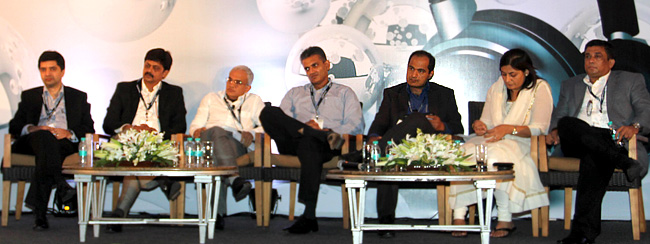
    So, does radio still need to be evangalised? Is radio still insignificant to for advertisers? The India Radio Forum (IRF) 2012 discussed these issues. According to Mr Harshad Jain, Business Head – Radio and Entertainment, HT Media: “From a client standpoint, radio is still an insignificant medium. It all boils down to value addition of the medium – how can radio, as a medium, ensure value addition to its advertisers? The entire orientation has to be more than just vanilla FTCs. Radio is still an under-penetrated medium and has still a long way to go.”


    Mr Joy Chakraborthy, CEO, TV Today Network (which includes Oye! FM) pointed out that the Indian radio industry needs to stand united, not only on issues related to government regulations, but also for business related issues. “There needs to be some amount of unity among the radio fraternity. For the industry to survive we must stand together, not just for regulatory issues but even for businesses. Today radio is the most underpriced medium and unity within the industry will help us drive our sales.”


    Ms Apurva Purohit. CEO, Radio City was of the view that radio is still at an infancy stage and like any other medium, it will also take some time to evolve. She was quick to point out that television took many years to be what it is today. “Today the ad pie of radio is 4 per cent, the geographical coverage of radio is merely 30 per cent but, with Phase III the geographical coverage will see tremendous increase. Every year the number of advertisers on radio has only been growing, what we need to do now is to encourage these advertisers to spend more on radio and reach out to newer advertisers.”


    Mr B Surender, Senior Vice President and National Sales Head, Red FM said: “In the last two years radio saw tremendous growth. With the launch of Phase III also expected soon, the future of radio is certainly bright. Even radio stations outside metros saw tremendous growth, innovations in smaller towns and cities were high and in the next two years radio’s advertising pie is expected to reach 6 to 7 per cent.”


    The client perspective:

    Few years ago, radio was seen as a supplementary medium for advertisers wherein they would spend only the left over media spends on radio. This is said to be changing, slowly and steadily as advertisers are beginning to take radio seriously. There has also been an increase in the number of on-ground activations which has more or less become complementary for radio stations as a value addition to their clients. However, digital media, which was at one point in time an even smaller medium than radio is today, said to have become an even larger and a more powerful medium than radio and a possible reason could be because Internet, unlike radio, is a highly measureable medium.


    Giving a critical view on radio as an effective local medium, Mr Vinay Bhatia, Customer Care Associate and Senior Vice President Marketing and Loyalty said that radio has a very low share of mind and share of value medium to advertisers today. Digital on the other hand, which started off from 2 per cent of advertising share has a much higher share of mind and share of value. “To maximize assets, radio has to deliver business. Radio needs to world closely with clients, it can also look at which area of a city or town works better for clients. It can also partner with retailers to play radio in stores while customers are shopping. Radio is a response medium, therefore it allows a lot of engagement and interaction with listeners. However, there needs to be more innovations for advertisers on radio because clients love innovation and as a result innovation will bring more money for the radio station.”


    Arpita Menon, Head-Media Planning & Buying, Star India Pvt Ltd
    Premjeet Sodhi, COO, Lintas Media Group
    Harshad Jain, Business Head- Radio & Entertainment, HT Media

    Mr Shubhranshu Singh, Marketing Director-India and South Asia, Visa explained: “As far as Visa is concerned, radio has delivered us handsome returns. Radio, I believe, is economical and one can expect higher returns, it is certainly a cost effective medium. However, radio must come to clients as an industry and not as one single radio channel – it should be bolder in its approach towards clients and thus stay on top of mind of clients.”


    Mr Kartik Sharma, Managing Partner, Maxus had a slightly different take on the medium. He was of the view that radio is the oldest form of social media platform, it allows great amount of interactivity and engagement with the listeners. “Radio is in the business of producing great contents and so are the brands, I believe that both radio and digital can depend on each other. Radio is in the business of providing great content, the power of radio is sound and creativity therefore the mindset to learn this medium is very different.”


    Ms Shubha George, COO, MEC noted that in order to maximize radio’s asset and gain share of market spends, it needs to market itself more. She stated that radio today is sold and not marketed, what it needs is more marketing. She also pointed out that the industry must find ways to monetize every single phone calls and SMSes it receives and market them extensively.


    The Indian radio industry still needs a lot of evangelizing or marketing of the medium. Radio needs more nurturing, it needs to probably find newer ways of achieving better ROIs and thus increase greater share of media spends. More innovations in radio will also bring in more money and help it stay on top of advertisers’ minds. Radio needs to partner their clients and find newer ways to generate better ROIs for their clients. Radio needs to vigorously market itself to the advertisers and explain the power of the medium so that it becomes a primary medium for marketers.


    Image: Clipart, Imaging: Rafiq


  • TAM Data (GRPs Channel shares of HGECs)- Wk 20 ’12


    Source: TAM Media Research
    TG: CS 4+ yrs
    Market: HSM
    Period: Wk 19: May 6 to May 12, 2012
    Period: Wk 20: May 13 to May 19, 2012


    About TAM Media Research

    TAM is a joint venture between Nielsen Company & Kantar Media Research. Besides measuring TV Viewership, TAM also monitors Advertising Expenditure of Television, Print & Radio through its division AdEx India. Since 2004, it extended its presence in the PR Measurement & Analysis space for Corporate/Marketing Clients by setting up a separate division Eikona PR Measurement.


    In 2007, the joint venture introduced RAM (Radio Audio Measurement) service to track Radio Listenership for the Indian Radio Broadcast Industry. In year 2009, TAM launched a division, called TAM Sports that specializes in monitoring Sports Sponsorship ROI.


    TAM Media Research’s objective is to fuel media insights that will drive the growth of the Indian Media Industry.


  • TAM data Top 10 programmes on HGEC – Wk 20 ’12


    Source: TAM Media Research
    TG: CS 4+ yrs
    Market: Hindi Speaking Market
    Period: Wk 20: May 13 to May 19, 2012


    About TAM Media Research

    TAM is a joint venture between Nielsen Company & Kantar Media Research. Besides measuring TV Viewership, TAM also monitors Advertising Expenditure of Television, Print & Radio through its division AdEx India. Since 2004, it extended its presence in the PR Measurement & Analysis space for Corporate/Marketing Clients by setting up a separate division Eikona PR Measurement.


    In 2007, the joint venture introduced RAM (Radio Audio Measurement) service to track Radio Listenership for the Indian Radio Broadcast Industry. In year 2009, TAM launched a division, called TAM Sports that specializes in monitoring Sports Sponsorship ROI.


    TAM Media Research’s objective is to fuel media insights that will drive the growth of the Indian Media Industry.


  • Debrief: Maruti Ertiga: Not LUVing it!

    By Anil Thakraney


    Okay, I am kinda confused. What IS the Maruti Ertiga? From what I read in the initial media reports, it’s an MUV (Multi Utility Vehicle). Then someone said it’s an MPV (Multi Purpose Vehicle). And even as I was still scratching my head over the difference, in comes the TV commercial which calls it an LUV – Life Utility Vehicle. What in the world is that now?


    So I watched the commercial as if it was a mystery movie, and guess what? I am left EVEN more confused! I was expecting to see a large, hansta khelta Hindu undivided khandaan in the ad. That’s the segment that would go in for a car like this, I assumed. Instead, what I saw was a young babe doing things I couldn’t comprehend after repeat exposures. All I recall is many boring shots of the Maruti Ertiga, the interiors and the exterior. And then it suddenly struck me: They are using LUV as a pun for LOVE! Wow!


    I would say the Maruti guys are fortunate to get away with such inane and puzzling advertising. And that’s because the Ertiga is actually a fabulous option for those looking for a largish family vehicle that doesn’t cost the earth. Maruti, in any case, enjoys huge loyalty in the market, therefore sales won’t be an issue at all. Even if the ad sucks, which it does in this case.


    Bottom-line: Wrong positioning, wrong idea, wrong situation and a very stupid pun to top it all.


    Rating: (On a scale of 1 to 5): 1. Confused and silly


  • Live from the Console goes national with 9XO

    By A Correspondent


    Live from the Console, a Day 1 (Sony Music Independent) and Oranjuice Entertainment initiative has now got a national platform on the international Music channel, 9XO.


    Shridhar Subramaniam, President – Sony Music EntertainmentIndia&Middle Eastexplained: “What began as a humble exercise to present new bands with an alternative platform that brings about music discovery has now gone national. We’re thrilled to partner with 9XO to promote musicians and independent music to an all new level. Going beyond Mumbai, this year Console edition will also be launched in Kolkata and a few other cities.”


    Launched in July 2011 at Mehboob Studio, Live from the Console provides emerging music bands an alternative platform to showcase talent and for music fans to discover new music. These emerging bands will get an opportunity to showcase their talent on a national television channel through this association with 9XO.


    Speaking of the association Mr. Luke Kenny, Programming Head for 9XO said: “We are delighted to be associated with Live from the Console, which highlights the independent music talent inIndia. This association with the event will bring to the fore talented artists out there playing original music and give them the national recognition that their music merits.”


    Mr. Owen Roncon, Managing Director – Oranjuice Entertainment said: “It’s great news for artists as they usually don’t get any national recognition, and with our association with 9XO, we are sure thousands of people will be able to appreciate indie artists and their music”


    Live from the Console is a collaborative effort between Day 1 – a Sony Music Independent and Oranjuice Entertainment. It aims to gives new bands and fresh music talent an alternative platform that puts music first while bringing together like-minded people.


  • No (or low) ads on HD. Anybody complaining?


    By Meghna Sharma


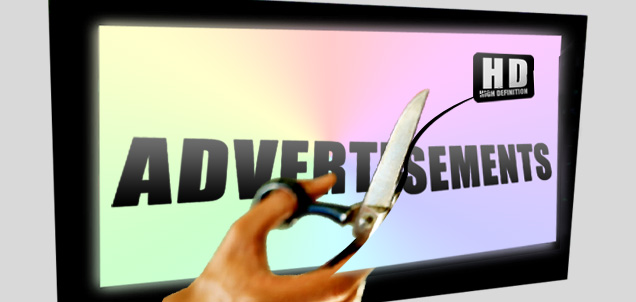
    While there is no denying the importance of advertisements in a world where subscribers are unwilling to pay subscription fee for channels, there exist many viewers who are tired of innumerable ads interrupting their favourite soaps or sporting. The good news for them is that their ordeal has been put to an end through HD channels. At least for the moment


    With various broadcasters launching HD variations of their channels, many upper-end subscribers are shifting to HD set-up boxes or subscribing to an HD channel. However, as there are no free lunches in the world, these channels come at a premium.


    What media planners think?

    Most media planners feel that since HD channels come with a certain cost attached to them, it is but obvious that they cater to a limited audience.  So, most channels are aware of it and their target group.

     

    Anita Nayyar

    Talking about the HD channels’ reach, Anita Nayyar, director (customer strategy), BCCL, agrees that not many avail of the facility. However, with digitization being made compulsory, especially in the four metros things might change. “Unlike the West, inIndia a broadcasters make most of their money through advertisements, and not distribution. So, if HD channels reach only a certain section, then how will a channel make its revenue?”


    Ms Nayyar added: “Today, one might pay a premium cost to watch an ad-free telecast, but in the near future, if availability doesn’t increase then channels won’t have an option but to make exception to the rule. They will be forced to show advertisements; however, they might charge a higher cost or have a limited time slot.


    On the other hand, Hiren Pandit, managing partner of Group M, felt that broadcasters with HD channels aren’t feeling the pinch, since they want to cater to a different audience: “Apart from the top-notch TG, most broadcasters have non-HD channels as well, so they capitalize through them. And over a certain period of time, they’ll be able to cut losses.”


    Agreeing with Ms Nayyar and Mr Pandit, Janardhan Pandey added: “It’s not just about reach or money, there is another reason which plays an important part in making HD channels a hit and that’s viewers’ psyche.  A person who might be able to afford HD package might still go for cheaper option because he/she might feel why pay more when the same can be watched at a lesser cost. For them, a few advertisements don’t matter.”


    Marketers’ foresight

    A brand reaches its target audience through advertisements and in today’s time one can reach a cross-section of society through television. Hence, most marketers spend their most of their ad-revenue on TV.

     

    Karthi Marshan

    Karthi Marshan, EVP & Head Group Marketing, Kotak Mahindra Bank said: “Our estimate is that of the 136mn cable and satellite homes in India, 44mn are DTH. Of these, about 8 lakh are currently HD subscribers. That is less than 2% of DTH homes and a tad over 0.5% of all C&S homes. Now whether this affects a marketer or not depends on who is her core TG. For the average brand with SEC A & B as their TG this probably does not matter much, but yes, premium and super premium brands do stand to miss out on what could be core TG due to the fact that some of the HD channels still don’t run advertising.”


    He added: “The next question that marketers will have to contend with is broadcasters expecting to be paid separately or additionally for these audiences. While brands will make the argument that we have bought programs or channel presences and hence our ads should carry seamlessly to HD as well, broadcasters may well have a tenable argument to the effect that they are in the audience delivery business, and a premium audience can and should command a premium for access.”


    Similarly, Ashutosh Tiwary, EVP- Strategic Marketing, Godrej, feels that one needs to observe the situation over a period of time to know what will happen next: “If the ratings and numbers of non-HD channels on which the media deals are based, get affected due to HD feeds, then HD channels will probably will have to air the ads to make up. However, if HD numbers prove to be totally incremental, then the converse might hold true. Overall, if viewer retention and engagement goes up due to higher quality and reduced clutter, HD might require specific treatment.”


    While Simeran Bhasin, marketing head, Fastrack and new brands at Titan said that as a consumer she loves to watch her favourite programmes on ad-free HD channels, but as marketer she’ll have to look for other methods to reach the TG. “HD is here to stay and marketers will have to figure out ways to reach out their consumers. Because with technology available everywhere, one can easily switch-off their TV sets to watch something online which is accessible without any interruptions. So, marketers will have to sooner or later adapt to survive.”


    Vipin Mehra, former sales head, Pidilite, said: “It’s very important for any brand to send constant reminders to its TG about its existence, especially in today’s competitive market. So, brands will prefer a channel which will help them in doing so.”


    Keeping their fingers crossed

    Creative people on the other hand aren’t very happy with HD channels as they affect their work/business, but feel that things will change for good.


    KS Chakravarthy, director, DraftFCB Ulka, felt that though one might want to enjoy an ad-free telecast, it’s just a passing phase because channels have to make revenue which comes from advertisements. KV Sridhar, National Creative Director at Leo Burnett, too agreed with Mr Chakravarthy, adding: “When and as HD channels availability increases, broadcasters might be forced to start showcasing advertisements as well.”


    Who’ll be the ‘real’ beneficiary?

    Advertisements or not advertisements, broadcasters have to follow a business plan and many feel that they’ll have to succumb to it. “One or two networks have begun taking a smattering of ads, and this will only grow, I am guessing,” said Mr Marshan. A business is run on revenue and if it cannot be generated, then changes have to be made. However, for the time being, the viewer can enjoy an ad-free programme.

    One will just have to wait and watch.

     

  • ICICI Bank ahead of Pepsi, Airtel beats Siemens, Sony in Top 100 Global Brands rankings

    By A Correspondent


    Bharti Airtel has joined an elite club of global brands by making it to this year’s BrandZTop 100 Most Valuable Global Brands list by WPP firm Millward Brown. ICICI is the only other Indian brand in this group.


    With an overall ranking of 63 (brand value: $ 12.7 billion) and 71 (brand value: $11.5 billion) respectively, ICICI and Airtel have been ranked ahead of top global brands such as Citi (82), Sony (86), MTN (88), China Telecom (90) and Volkswagen (96).  ICICI is in fact ahead of even Pepsi which ranks at #67.


    The BrandZ Top 100 Most Valuable Global Brands study is conducted annually by leading global research firm Millward Brown. It is the only brand valuation that takes into account what people think about the brands they buy along with rigorous analysis of financial data, market valuations, analyst reports and risk profiles. The ranking is arrived through a continuous in-depth quantitative research on a category-by-category and a country-by-country basis. The research covers some 2 million consumers and more than 50,000 brands in over 30 countries.


  • [MJR] Wanted: sponsors to cover the Olympics!

    Ranjona Banerji

    By Ranjona Banerji


    The biggest sporting event in the world (no, not the FIFA World Cup) is due to begin in a couple of months. So how many Indian newspapers are going to send someone to cover the Olympic Games in London? This is where Indian sportspersons are hoping to make a breakthrough after Abhinav Bindra won the first individual gold medal by an Indian in Beijing. The Indian hockey team did very well in the qualifiers, leading to expectations that they will shine again in a sport which has won us eight gold medals but no one in India really watches.


    So what’s the grouse? The reluctance of Indian newspaper managements to spend money on newsgathering. The Olympics are not just any old event. They represent an ideal – of human endeavour, of a global spirit and a desire to push back boundaries of achievements. Editorials will declaim with thundering authority about the significance of “citius, altius, fortius” but when it comes to actually reporting on the efforts to get there, everything depends on a “sponsor”.


    That is, a newspaper or journal will often only cover an event like this if the marketing department can get someone to cover its expenses. One can understand the reluctance in the days when foreign travel was prohibitive and foreign currency limited by the government (yes, I know it almost seems like we’re back in those times!) but in today’s world, depending on agency feed is nothing short of laziness and taking your reader for a ride.


    Yet strangely, in the olden days (that is, when I was young), the idea of “junkets” was anathema and people I know lost their jobs for accepting favours. Over the years, managements realised, “why pay for something when someone else can be convinced to do it”. This is why so many sports pages – like The Times of India’s for instance – are so full of “sponsored columns” that there is hardly any place left for actual news.

    One doesn’t know yet of course how many newspapers are going to go for the easy route to the Olympics, but one hears rumours…


    Meanwhile, the entire film journalism community appears to be in Cannes for the film festival, where given the quality of our cinema, almost nothing makes it even within shouting distance of a tin palm, let alone a golden one. But visits to Cannes are now de rigueur on the junket circuit, so no dip in the newspaper’s bank balance there. And credibility? Well, we stopped worrying about that a long time ago.


  • Need to monetize radio-social media connect (+Vdo)

    By Robin Thomas (Videos: Insiyah Rangwala)


    Social media has, more or less, become a necessity for every organization today because the consumers are out there and no brand can afford to not be interacting with them. Moreover, social media can also help  brands know their consumers’ thoughts, behaviour, likes and dislikes. It also allows brands to have a two-way communication with their consumers, and thus provides high level of interaction and engagement. And it is not just brands but other media like radio stations which are coming out with innovative ways to connect with their listeners through social media.


    At the sidelines of the India Radio Forum (IRF) 2012 industry veterans from the advertising fraternity discussed the importance of social media for radio.


    Mr Premjeet Sodhi, COO, Lintas Media Group said: “Social media is certainly important for not only the radio industry today, but also for every other medium. In the long run we will see more integration taking place between social media and radio.”


    Mr Raj Nayak, CEO, Colors- Viacom 18 explained: “Social media is growing by the day. Today almost 65 per cent of the people in India are below the age of 35 and 50 per cent are below 25 years of age. I believe this is the fastest growing medium, therefore, it is a very important medium and those that have not got onto social media, must get on before it is too late.”


    Mr Suman Srivastava, Founder and Innovation Artist, Marketing Unplugged said: “Social media is important for radio at two levels. One is to connect with the listeners and therefore, get much larger engagement which might even result in an increase in the reach. On the other hand, it is a fantastic medium for radio channels to build their own brands as well as the brands of their advertisers. In the future, I believe, we will see a lot more advertisers using radio and social media together along with, perhaps, ground activations to create events which could have a multiplier effect for those advertisers.”


    Speaking on the need for radio to partner with clients, Mr Vinay Bhatia, Customer Care Associate and Senior VP- Marketing, Shoppers Stop said: “The real big partnership for radio and their clients is in the digital space. Digital and radio have to come together and ally in such a way that they deliver joint value to the client, and I don’t think any of this is happening today. Radio is an out of home medium and we are increasingly seeing out of home consumption for digital. I think these two medium can go very well together and brands like ours which have large Facebook pages need content, we need engagement and I think radio channels that provide us that.”


    Mr Harshad Jain, Business Head – Radio and Entertainment, HT Media said: “Radio is a medium which is free of cost, it is the cheapest form of entertainment in the country, and if there are issues that can be interlinked with social media, it could call for a good integration. Having said that, it is still early days because radio as a medium still has to catch up big time before it starts integrating with social media.”


    While there are calls for integration between radio and social media, the radio industry must also find ways to monetize the radio-social media connect. Mr Sodhi pointed out that while social media can make radio activations richer, it is vital for radio stations to find newer ways to monetize this activation.


    Agreeing with Mr Sodhi, Mr Raj Nayak said that no business will work if there is no monetization. He added: “One of the biggest disservice broadcasters have done is that they have not woken up to the digital media.”


    So while radio and social media will see more integration in the long run, there is also another school of thought that believes that radio is still at a nascent stage and has a long way to go before it can get into integration with social media. However, monetization is the key for survival of any business and radio stations must find ways to monetize its social media activations.


  • Takeaways from IRF 2012 (+Vdo)

    By A Correspondent


    The seventh edition of Indian Radio Forum (IRF) discussed quite a lot of issues on the strength and opportunities of radio, the road ahead for the medium, especially with FM Phase III expansion, how to maximize radio’s assets and how to gain share of market spend; the use of social media and monetizing it and much more. MxMIndia spoke to couple of industry veterans on their takeaways from the IRF 2012.


    Mr Premjeet Sodhi, COO, Lintas Media Group:

    One major takeaway with which I am going back is that while there are issues on how radio is performing commercially, there are certainly people who are passionate about the medium, and therefore, there are a lot of possibilities on how to do well on radio.


    The second major takeaway is the use of social media and radio, we had never thought of a subject as such. Radio has a lot of potential to work along with social media and be commercially successful as well.


    Third, I don’t think we are doing enough for radio, overall as an industry. There is, however, a lot of scope for improvement in this area.


    Mr B Surender, Senior Vice President, and National Sales Head, Red FM:

    I think the RAB (Radio Advertising Bureau) style of evangalising the medium is needed because UK’s RAB is so active in not only the developed markets like the UK, but it is also quite active in developing markets like South Africa.


    InIndia, probably, this kind of promotional activity is required for radio as a medium, because in India FM radio started very late and it did not get enough time before social media and the online or digital media arrived. Therefore, I believe there is a different need for a RAB kind of body which promotes radio.


    Mr Vinay Bhatia, Customer Care Associate and Senior Vice President – Marketing, Shoppers Stop:

    I think each industry within radio should develop its own tools, and this is really important in judging the input-output in efficacy because I am not chasing radio just for reach, OTS or number of impressions. Radio, as a channel, is a response medium and so it must deliver much beyond intermediary variables, it must deliver final business variables and I think radio can do that. However, it depends on how well a radio channel partners with a client, wherein the client is also willing to share some amount of data and information and a radio channel is also willing to partner it and jointly experimenting which works for all of us.


  • Radio broadcasters thumbs up to Copyright Bill

    By A Correspondent


    The Copyright Amendment Act which was passed recently in Lok Sabha has come as a huge relief, not only for the artists, musicians and content creators, but also for the Indian radio fraternity.


    This bill will allow the Copyright Board to decide the royalty rates for the broadcasters, which until now was decided by the PPL (Phonographic Performance Ltd.). PPL is the copyright society with respect to sound recordings. While the bill is clearly beneficial for the rightful owners of the copyright, how much profitable will it be for the radio broadcasters, will be known only once the copyright board decides on the rates that the broadcasters may have to pay for the copyright owners.


    The Copyright Amendment Act 2012 allows artists, song writers and performers to claim the royalties for content creation. While the bill has also made it mandatory for both radio and television broadcasters pay royalty to the copyright owners each time their content is broadcasted, what it also ensures is that unlike before, the amended Copyright Act will allow broadcasters to pay music royalties on a pro-rata basis. As a result, it will help broadcasters generate more revenues.


    What they say:

    Speaking to MxMIndia, Ms Anurradha Prasad, Chairperson cum Managing Director, B.A.G Network and president of Association of Radio Operators for India (AROI) said: “We welcome the Copyright Amendment Act because it will bring a sea change in the industry. The radio industry has been bleeding because of the huge royalties it has to pay for the music. Therefore, it is a great step forward, and I believe it is a win-win situation for the entire chain because it will bring in more transparency and, as a result, more revenues will be generated.”


    Mr Vipul Pradhan, CEO of PPL said that while he welcomed the amendment that the royalties be given to the rightful owners of the content, what he is not pleased with is the statutory licensing for users as it would take away the monetizing rights of the music companies, nevertheless, PPL will abide by the law. “We welcome the Copyright Amendment Act and we will follow the new law. We welcome the first part of the amendment which allows the rightful owners of content to get their royalties. However, it is the second part of the amendment – the statutory licensing for the users is something that we are not happy about.”


    “The statutory licenses for the users are basically the people who are using our content as business activity which is where I think the statutory license of content for radio or television is something that is not desirable. We will see how the statutory licenses for users will impact the music companies in the long run. So, while we welcome the move to allow artists and content creators to claim their royalties for their work, it is the statutory licensing for users that concerns us because it will take away the monetization rights of the music companies, which in the long run could affect the creation of these rights,” he added.


    Rabe T Iyer, Business Head, Big FM explained: “It is a constructive and beneficial step in truly recognizing the real owners of music and not just the labels who pitch and buy them. It is also a fair distribution of rights which will lead to increasing talent pool, greater accountability of quality and continued effort to innovate. I believe it will provide greater flexibility for radio stations to play music recomposed or readjusted by creators of songs and it will allow more artists, song writers to get their dues.”


    Mr Amitabh Srivastava, Country Manager, Radio Netherlands noted that this move is very much in sync with industry requirements as it would resolve most of the royalty issues faced by the radio industry. Mr Srivastava also said that unlikeIndia, the international model of intellectual property rights is quite rigid as it ensures that the owners of the copyright get their due shares, and that with the passage of this legislation we can expect international standards in copyrights as well. “This bill is more beneficial for content owners than the radio broadcasters. This bill will bring legitimacy in the royalty issues and it will promote more self generating content which is not happening right now. So, it is a welcoming change because when copyright is legitimized, even the broadcasters will be allowed to create their own content which we do not see taking place as of now.”


    Shreyams Kumar, Director Mathrubhumi said: “We don’t mind paying money to the artists, but paying money to the music companies which does not reach the rightful owners is what we don’t approve. Thus the Copyright Amendment Act is a welcome move as it will lead to more transparency in the music and broadcast industry. This amended act will definitely be a cost saver for the radio industry and it will certainly help the radio industry in the long run.”


    Ms Monica Nayyar Patnaik, Joint Managing Director at Eastern Media Ltd and Mr Naval Toshniwal, CEO Tomato FM and Vice President, Pudhari Publications were of the view that this bill is a step in the right direction which will benefit the radio industry and act as a cost saver for the industry.