Author: mxm_india

  • Reviewing the Reviews: Desi Boyz

    By Deepa Gahlot


    David Dhawan’s son Rohit Dhawan makes his debut with a film about two London-based, recession-hit dudes who become male escorts with a peculiar (for that profession) no sex policy.  Yet, bevies of semi-dressed writhing babes pay good money just to see them… dance and in one instance, play cards.  Really!


    The film with its mild dose of amusement and full on hokey-ness got between one-and-a-half to four stars-and as it usually happens, the audiences don’t know what to make of it.


    DNA’s Soumyadipta Banerjee gives if two-and-a-half stars and writes, quite aptly, “This film is a nightmare for the thinking audience. People who are used to world cinema, parallel cinema or intellectual cinema will squirm in their seats as some of the critics did when we were watching a press show of the film. But they are not the audience this film is looking for.”


    Rajeev Masand of IBNLive calls it a generic, indifferent comedy. “‘Desi Boyz’ borrows scenes from ‘The Full Monty’, ‘Back To School’, and ‘Fight Club’ even, but at its heart it’s not very different from Sajid Khan’s similarly unremarkable ‘Heyy Babyy’. Akshay Kumar and John Abraham perform earnestly and get a few moments to shine, but the gorgeous Deepika Padukone gets none. The greatest disservice, however, is done to Chitrangada Singh. Clothed in fancy designer togs, buried under pancake, and saddled with a thankless part, the actress is robbed of her smoldering presence, and homogenized into the mould of a typical Bollywood starlet.”


    Surprisingly, Komal Nahta gives it a generous four stars and writes, “The best part of the screenplay is that it treats the subject of recession, break-up of friendship, heartbreak, and family drama in a light-hearted manner and keeps the audience entertained throughout.”


    His trade mag counterpart Taran Adarsh is uncharacteristicly harsh with two stars. “Desi Boyz is a lot of fun as the male protagonists take to pleasing their female clientele. The first hour, frankly, is akin to a roller coaster ride with lots of fascinating developments unfolding at a feverish pace. The best part is that a tinge of realism [economic crisis] has been injected to the plot, which makes the motives appear convincing on screen. In fact, it’s pretty evident that this is not a no-brainer rom-com. But it’s the second half that does a complete somersault.”


    Of course, three-and-a-half stars are expected from The Times Of India’s Nikhat Kazmi. She writes, “Desi Boyz goes beyond the fair sex. It makes everyone smile most of the while. The editing (Nitin Rokade) is seamless, bringing together the four principal actors’ individual charms into a collective space without crowding the canvas. To their credit every principal actor, and that includes Anupam Kher (playing Deepika Padukone’s zany dad) and Omi Vaidya (as her wimpy fiance) seems to get into the film’s vivacious frothy mood without letting the dark underbelly of the film be squandered in frivolity.”


    In Hindustan Times, Mayank Shekhar is unimpressed. “One unrelated song follows another. You wonder why producers don’t just release albums with starry music videos instead. Why bother with a willfully moronic movie attempting to string a soundtrack together. Songs survive. Films rarely do. Filmmakers themselves don’t care enough about the characters. Why should the audience, so what’s the point?”


    The Hindu’s Anuj Kumar writes, “The son of David Dhawan, who gave us some mindless comedies in the last decade before missing the trick, lives up to expectations. He has given us a sleek, upmarket version of what his father has been dishing out all these years. A cute orphan, a staple patriotic moment, a court-room climax and that at the end of the day, heroes can’t go morally wrong – it has all the chapters from Bollywood’s book of clichés but is packaged in the proverbial new bottle.”


    India Today’s Kaveree Bamzai’ gives it a zero rating and rants, “Two men become male escorts but because they’re good Indian boys they don’t do sex. Every supposed female fantasy of men dressed as Dhoni and Yuvraj, firefighters, Tom Cruise from Top Gun and police officers is addressed in a series of songs which see Akshay Kumar and John Abraham jiggle their pelvis and shake their butts. These are Bollywood superstars? Watch them behaving like porn stars, flaunting their chests and their lack of acting talent in an assault on sense and sensibility.”


    Shubhra Gupta goes with one star and sneers, “Dhawan Jr hasn’t learnt a lesson from Papa Dhawan on how to make you laugh in spite of you. He unleashes a Desi Boyz holding everything in spite. So a middle-aged star and another more than halfway there strip down and gyrate among equally underclothed women in song after song. The aforesaid Jerry (Kumar) and Nick (Abraham) are working as “male escorts”, you see, after recession took care of their jobs. Recession is a word that occurs most often in this film, followed closely by sex one way or the other. One of their rules, not surprisingly, is that they won’t sleep with these women. But then again, Jerry leaves a woman in the morning as she lovingly hands him a card saying “thanks for last night”.  Presumably he danced all night, around a bed?”

  • Reviewing the Reviews: Mod

    Mod

    Key Cast: Ayesha Takia Azmi, Rannvijay Singh Singha, Raghubir Yadav, Tanve Azmi, Ananth Mahadevan

    Written and Directed By: Nagesh Kukunoor

    Produced By: Sujit Kumar Singh, Elahe Hiptoola


    In the glut of releases this week, Mod is the pick, simply because Nagesh Kukunoor is the director, and even though his last few films have been heart-breakingly bad, there are still hopes from the man who made Hyderabed Blues and Dor.

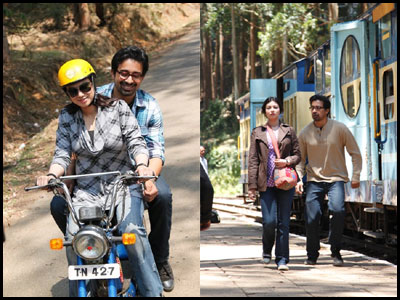
    The title is confusing, most read it as the abbreviation of modern, when it is intended to mean turn. Most critics, perhaps relieved that it wasn’t as awful as Kukunoor’s Bombay to Bangkok, found good things to say about it. Readers would be confused, however, when ratings range from one to three and a half. What is slightly off-putting that Kukunoor has given up on originality. This one too, is taken from Korean film, Keeping Time.

    Mayank Shekhar of the Hindustan Times gives it one and a half stars, but perhaps nails it when he writes, “Most still recall Kukunoor for Hyderabad Blues (1998), a game-changer in low-budget Indian films, which could instruct and delight at the same time. He has since become a pure genre filmmaker. Which is truly what separates the so-called “indie” from the supposed hard-core mainstream. Traditional Bollywood directors pack in every genre into one movie, alternating action with romance, comedy, drama etc. “Cutting edge”, “independent”, “Hindie”, potentially global “crossovers” would be too flatulent an epithet for those who don’t do that. But they don’t produce anything extraordinarily personal, astonishingly moving or real, either.”

    Trade journalist Komal Nahata on koimoi.com gives it one star and writes, “On the whole, Mod may win critical acclaim but it will remain a dull fare at the box-office, its poor initial and the dull pre-Diwali days only adding to its problems.”

    Another trade man, Taran Adarsh, writing in bollywoodhungama.com gives it two stars and states, “Mod is an emotional love story of two completely mismatched people – a genre Kukunoor has never tackled earlier. In fact, in his earlier movies, love was a part of the main plot, but it’s the central theme this time. Mod boasts of an interesting idea and even Kukunoor’s mature handling of the material needs to be lauded, but the film suffers for two reasons – it unfolds at a sluggish/lethargic pace and is prolonged.”

    Rajeev Masand on IBNLive goes with two stars but is brutal. “Mod is a test of your patience because the screenplay is a complete drag. The film unfolds lazily well after the twist has been revealed; and the central conceit isn’t even true to its own logic. There are plot holes the size of craters here. Ayesha Takia has a calming presence, but Ranvijay Singha, despite his earnest efforts, simply doesn’t have the chops to carry off such a complex part… Let down by sloppy writing, this is one hard slog.”

    Aakanksha Naval-Shetye and Soumyadipta Banerjee of DNA, however, give it three stars and say, “The film feels straight out of a book of short stories and has a certain old-world charm. The downside is that everything is too picture perfect here, and things just fall into place rather conveniently towards the end. The music doesn’t help much. The slow pace especially in the first half drags on forever, even though thankfully Ayesha’s cutesy act won’t let you complain too much.”

    Surprisingly, Nikhat Kazmi of the Times Of India gives it a low (by her standard) two and a half stars. “It’s a sweet, small and simple film spilling over with charming locales and charming people too. It’s the pace of the film that takes its toll on you. Understandably, life follows a languid rhythm on the hills and cannot move at lightning speed. But hey, a film’s got to have sufficient movement and pace to keep the drama flowing. Here, the events unfold with extenuating lethargy and test your patience time and again.”

    Ganesh Nadar writing in rediff.com gives it two stars. “Out of 12 reels, 10 are focused on Ayesha (Takia). The rest of the cast have to make do with the remaining two. All one can say of the hero is that many a time one is left wondering why he does what he does, and many a time he looks like he doesn’t know why he does what he does. It’s a lovely story with great actors, and great scenery. What screws it up is the slow movement. You really have to have patience to watch the movie or be happy just to watch Ayesha. Wish director Nagesh Kukunoor had someone to tell him that slow and steady doesn’t win races any more. You have to be fast and racy. A must-see for Ayesha fans; the rest can give it a miss.”

    The level-headed Shubhra Gupta of The Indian Express says, “It’s so obvious that Andy is not who he says he is that you wonder why Kukunoor takes so long to get to the point. But then, he needs to pause to show off all the nice waterfalls and the rocks and the winding roads. The scenery is fine only for a bit, but then gets overtaken by situations which you can see a mile off. You know that that Andy is disturbed much before the doctor (Mahadevan) pronounces his diagnosis. The reason for his being the way he is unspools with no surprises. Takia is her familiar wholesome-girl-next-door but has to shoulder too much of the film, and Rannvijay is one-tone.”

    The unsigned NDTV.com review goes off on a tangent: “Mod is like a gentle sonnet played on a cosy winter morning. It is the tenderest love story in ages with a central performance by Ayesha Takia that strikes a chord deep in your heart. It’s a film you want to adopt, embrace and hold close to your heart.”

    No wonder audiences go by friends’ tweets or word of mouth to decide on which movie to watch!

  • Reviewing the Reviews: Sahib Biwi Aur Gangster

    By Deepa Gahlot

    Sahib Biwi Aur Gangster

    Key cast: Randeep Hooda, Jimmy Shergill, Mahie Gill

    Written and directed by: Tigmanshu Dhulia

    Produced by: Rahul Mittra and Tigmanshu Dhulia


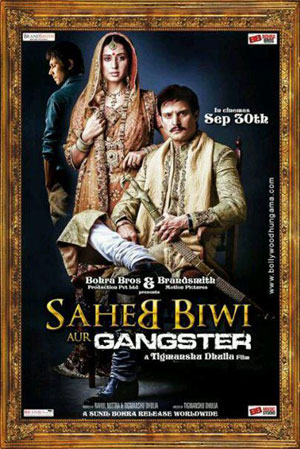
    Force may have been the bigger Bollywood release this week, but the community of critics has been almost unanimous in its praise for Tigmanshu Dhulia’s Saheb Biwi Aur Gangster. This does not happen too often, that a dark horse races ahead. The film might actually end up doing well because of the mostly positive reviews and word of mouth. And when awards times come round, Randeep Hooda and Jimmy Shergill can have a bash at the trophies. The film got three stars and above—with just a couple of exceptions—and what can be justifiably defined as a rave.

    Shubha Shetty Saha gave it 3 and a half stars, but the review is worth 5. She writes, “Even before the movie begins, you get a good feeling about it. Fortunately, it lives up to that intuition. A crackling script, fantastic direction and amazing performances, this movie almost deserves to be called a classic.”

    Mayank Shekhar of The Hindustan Times gives it 3 and half stars, too, and writes, “It’s the page-turner script that steals the show. It’s packed with enough turns, intrigues and twists to hold your attention, keep you guessing. All of it bound by some sort of logic still. At least as much logic as you’d expect from a drama or thriller that doesn’t embarrass your basic intelligence. This doesn’t.”

    On rediff.com, Sheikh Ayaz also gives it 3 and a half stars and writes, “It’s fascinating to see how Dhulia doesn’t succumb to the idea of doing this as an expose film on the hypocrisy that breeds within royal mansions; neither does he develop the crime angle, a move that partially subverts this film’s obvious direction towards the crime genre. Instead, he plays it straight with single-minded focus on the development of his characters and the impact they would have on the plot.”

    Aniruddha Guha of DNA goes with 4 stars and says, “While his script is clearly the film’s USP, Dhulia as director does full justice to the written matter, extracting some superb performances, and making a technically polished film. Little embellishments, like the orchestra sound in a raunchy item number, add to the film’s charm.”

    Not surprisingly 4 stars also from Nikhat Kazmi of the Times of India, and this time the generous rating may even be justified. “The film may be a finely crafted drama, yet it unfolds with thriller pace, keeping you on the edge of the seat till the very end. Enjoy the experience of a revised and re-mixed story, well told. Tip Off: Don’t like run-of-the-mill stuff? Will surely like this… it’s different.”

    Anuj Kumar of The Hindu is a little less effusive. “A master at creating moments, Dhulia’s writing is dipped in wit and the repartees are laced with subtle comments on the changing times and human behaviour… A royal treat where the desserts are a bit disappointing.”

    Going against the tide is IBNLive’s Rajeev Masand with his 2 and a half stars and faint criticism. “The film opens intriguingly and maintains an even pace, but it’s betrayed ultimately by a confused script that hobbles around in all directions, never quite finding its rhythm. Dhulia knows the milieu, so the film has an earthiness that is attractive, and much of the dialogue is clever. Yet, key dramatic scenarios are handled amateurishly… Sahib Biwi Aur Gangster is ambitious in its idea, and the dynamics of the relationships between its central characters are nicely handled. But Dhulia slips up in the tiny details.”

    Shubhra Gupta of The Indian Express gives it 2 stars and slams it. “But for all its frills, some of them nicely executed and attention-grabbing, Sahib Biwi Aur Gangster never quite rises above its familiar plot points, and ultimately stodgy storytelling. I’ve lost count of the times I’ve seen greedy politicians handing out contracts to greedy contractors bypassing worthy candidates, and the obscenity-laden skirmishes between the warring parties: even the smirks and the gaalis are now standard procedure. The decrepit palace, the decadent ex-royal (Shergill), the dissatisfied wife (Gill), the needy mistress (Narayan) and the faithful retainer, all have had variants before: the actors are skilled only to the level of filling in their characters, but not creating any truly memorable moments.”

  • Reviewing the Reviews: Rascals

    Rascals

    Key cast: Sanjay Dutt, Ajay Devgan, Kangana Ranaut, Lisa Haydon

    Written by: Yunus Sajawal

    Directed by: David Dhawan

    Produced by: Sanjay Dutt, Sanjay Ahluwalia, Vinay Choksey


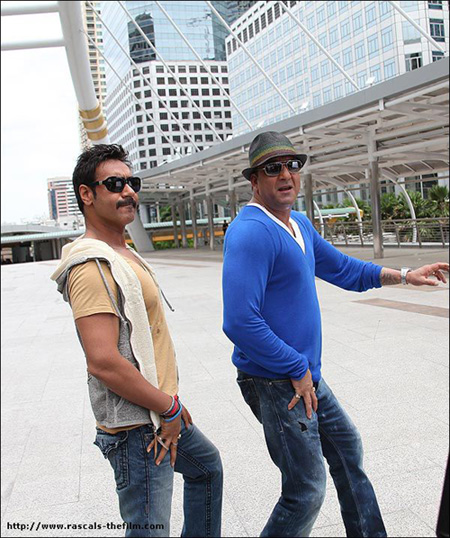
    Nobody expects masterpieces of comedy from David Dhawan, but now, more often than not his films are what would be called in Mumbai slang thakela (tired). The idea of Rascals is overused and in the hands of the two lead actors who have done better comedy before—Sanjay Dutt in the Munnabhai films, Ajay Devgan in the Golmaal series, it is quite disconcerting– more so when a large part of their comic antics involve pawing the much younger and very under-dressed leading ladies Kangana Ranaut and Lisa Haydon.

    Most critics panned the film with one or one and a half stars. Only Taran Adarsh of bollywoodhungama.com found it worthy of three and a half. He writes, “Be forewarned. Rascals is strictly for the hoi polloi, those who relish masala entertainers with glee, those with an appetite for movies that transport them to a different world in those hours spent in the dark auditorium, those who swear by movies that defy logic, motive and intellect. Do you think you fit into this description of a moviegoer? If you do, Rascals is just for you.” A backhanded rave, sounds like.

    Sukanya Verma of rediff.com finds it “lame” but still gives it a generous two and a half. “Recycling paper is nice. Recycling movies? Now that’s plain lame. But director David Dhawan has never been the discerning sort. He painstakingly built his brand around cheesy, slapstick wit, resolutely steering clear of logic, relying on spontaneity and a cast skilled in comedy to accomplish the shtick to which his coterie of writers like Rumi Jaffrey, Anees Bazmee, Sanjay Chhel, Kader Khan and Yunus Sajawal have contributed immensely.…Rascals, with no structure or motive, cannot (rather does not even try to) conceal its desperation to make itself funny. And this insecurity shows in each and every gag.” Then why the higher rating?

    Anyway, Mayank Shekhar of the Hindustan Times goes with one star and cribs, “No one minds mindless movies. They come with known caveats: leave your brains behind, as they say. It may be hard to tell what your brains would do, alone at home. Replacing the hollow space between your ears with some hilarious stuff may not be a bad idea still. The unconnected, unfunny skits here offer you none of that relief. You just feel brain-dead instead.”

    Rajeev Masand of IBNlive is understandably caustic. “David Dhawan, who’s no purveyor of good taste, plumbs new depths of crassness with this expectedly insensitive film that’s so short on real jokes that it makes light of everything from starving orphans in Somalia to the physically handicapped….The laughter, if it was ever intended in the film, is strictly incidental. The gags in the movie are so stale and tasteless and the situational comedy so devoid of any kind of originality or freshness, you wonder if David Dhawan just made this unfunny comedy to please his friends who play the major roles in the film.”

    Manisha Lakhe, writing in DNA sounds anguished, “Surely smashing your toes by a hammer would be more entertaining. Invest in that hammer instead of buying a movie ticket. And please sign an online petition that will prevent David Dhawan from remaking Chupke Chupke.”

    Gaurav Malani of TOI online writes, “Rascals is what one can call a ‘vacation’ filmmaking stint where everyone works on the film as if they were on a ‘holiday’ and the audience is expected to ‘leave’ their senses behind. The actors make least efforts to add conviction to their performances and the patchy writing just allows them to play as they please. Invariably the director tries to camouflage the shallowness in the story by adding depth only in the decibel levels of the dialogue delivery.”

    In Outlook, Namrata Joshi commenting on the actors, writes, “Kangna makes a grand entry in a white bikini, goes on to wear assorted minis, shrieks, displays her shapely legs and cleavage and shows off her inability to pronounce difficult words like ‘congratulations’. Ajay goes loud, Sanjay sports multi-coloured shirts and Arjun looks perpetually flustered. The climax whimpers, is utterly clumsy and needlessly protracted, as though Dhawan forgot he needed to wrap up what he’d wrought. Let alone laugh, I could barely manage a smile through ‘Trashcals’ (oops!)”

    There’s more of the same across publications. Clearly David Dhawan needs a sabbatical.

  • New Column: Reviewing the Reviews by Deepa Gahlot

    Mere Brother Ki Dulhan

    Key Cast: Imran Khan, Katrina Kaif and Ali Zafar

    Written and Directed By: Ali Abbas Zafar

    Produced by: Aditya Chopra


    This Yash Raj Films production by first-time director Ali Abbas Zafar,got mixed reviews ranging from 1 to 4 stars,leaving readers foxed as usual.This is a common enough occurrence these days when reviewers are so afraid of a slamming when films they pan like Bodyguard go on to become blockbusters, that in trying to please popular tastes along with trying to express their own critical opinions, they often tip over to the side, that is, what the masses might like. The public, as always, is quite unpredictable.


    There were certain common points across reviews:

    a)The plot was stale

    b) Katrina Kaif saved the film with her  bindaas act

    c) Imran Khan is getting typecast as a wimp

    d) Ali Zafar (the Brother of the title) can’t act


    Hardly anyone noted the similarity to Hollywood film Dan In Real Life.


    Our take:

    Romcoms everywhere are pretty clich’d anyway,so this one’s not a complete dud. You get what you expect,which is not much.


    Irritatingly, Katrina Kaif plays a half-way rebel,who is done with her smoking-drinking (no sex) ways and now wants to settle for an arranged marriage. Imran Khan and Ali Zafar play hopeless Mamma’s boys, who can’t stand up for themselves.


    The Reviews:

    Mayank Shekhar of Hindustan Times gave it 1-1/2 stars, with a headline stating Mere Brother Ki Dull One. He wasn’t too impressed with the Katrina Kaif character, writing, Katrina Kaif plays the said rock chick. It’s hard to tell if her character’s restlessly rebellious, or plainly retarded.


    The Dull word appears in Sudhish Kamath’s review in The Hindu, with a headline: Katrina puts the dull in Dulhan. While pointing out, And for a romance film, it makes you fall out of love with Katrina. Ouch!


    Shubhra Gupta of The Indian Express quite rightly says in her headline: We’ve seen this Shaadi before.This is a Yashraj rom com where funny-smart lines are a substitute for good old passion. Don’t go looking for any. Don’t go looking for any subtle notes, either. There aren’t any. Quite true Shubhra nails it there; plus she finds Katrina exhausting.


    Just 3 stars from the usually generous Nikhat Kazmi of The Times of India.It is the verve factor which works admirably for the film which doesn’t have much to boast about in the story department. The film tries to remain high spirited throughout, both in terms of the narrative and the performances and mostly succeeds in keeping the smiles coming, she writes, and concludes that it is pleasant weekend viewing.


    Pratim D Gupta of The Telegraph was one of the kinder ones, noting the freshness of the Katrina-Imran pairing.Imran and Katrina make sure you sit in that plex chair, eyes wide open with a smile fixated on your face, and just let them happen to you. A bit treacly, that, but then that’s probably the response of teens flocking to the cinemas to giggle at Katrina’s antics.


    Rediff.com’s Sukanya Varma recommended the film to Katrina fans and gave it 2-1/2 stars. All three look younger than they are and bear an incredibly fresh, genuine and genteel disposition. First-time filmmaker Ali Abbas Zafar avails of these qualities to fashion a feel-good, melodrama-free, candy floss rom-com about two brothers and a mutual love interest.


    Aniruddha Guha of DNA is probably the only one who likes Ali Zafar, but gives YRF a drubbing. Every year, YRF launches a director or two, who then make the same films other directors were already making for the banner. There’s not a shred of originality, not even an attempt to rise over the mindlessness; just a set pattern that is replicated to the T, even though it’s met with little success time and again. His one star is the lowest the film gets.


    And finally, the four-star extreme from Taran Adarsh of Bollywoodhungama.com. According to him, there’s nothing wrong with the film. It is a delectably wholesome, heartening, feel-good entertainer. Not just a comedy, but also a tender, bittersweet saga, this rom-com is sure to melt your heart, then restore it anew all over again. Yet another winner from Yash Raj! It seems he was watching a different film from the rest of the world.


    Deepa Gahlot is a National Award-winning film reviewer and a veteran writer and commentator on the arts. She currently heads programming for Theatre and Film at the National Centre for the Performing Arts, Mumbai

  • Reviewing the Reviews: Vanity Unfair

    Jaana Pehchana

    Key Cast: Sachin, Ranjeeta, Birbal, Vikram Sahu, Mehmood Junior

    Written and Directed By: Sachin

    Produced by: Ajit Kumar Barjatya, Kamal Kumar Barjatya


    One of the essentials of a movie sequel is that the original should have been a great hit, or at least a film that audiences remember with affection. And there really is no point for a sequel coming out 33 years later—by which time the original is not even a distant memory. So Jaana Pehchana, the very belated sequel to Hiren Nag’s Ankhiyon Ke Jharokon Se (1978), is just a vanity exercise for director Sachin Pilgaonkar, who was the toothy, curly-mopped, cutesy protagonist of the original, opposite Ranjeeta (who retired years ago after a fairly successful but also unremarkable career).

    The Rajshris, producers of AKJS and several small-budget, non-star-cast films in that period, have refused to change with the times. Their last monster hit was Hum Aapke Hain Koun in 1994, and for Jaana Pehchana, they have used the same strategy of releasing it in one moviehall – the delightfully retro Liberty. HAHK had picked up, thanks to its stars (Salman Khan-Madhuri Dixit) and popular music.  Jaana Pehchana mostly retreads the old movie in the form of lengthy flashbacks and reuses Ravindra Jain’s score that now sounds too high-pitched and annoying.

    Very few bothered to review Jaana Pehchana, and obviously it comes out rather poorly in comparison with the old film, which was hardly a classic to begin with—plucked as it was from 1970 Hollywood weepie Love Story. It’s not very likely that many of the current crop of reviewers would have seen the original—though they will get more than a glimpse in Jaana Pehchana.  And seeing Mehmood Junior, Birbal and the once ubiquitous Rama Kaka provides unintentional giggles.

    Our take: The stars have arrived in 2011 in decent shape, but did anyone miss Sachin and Ranjeeta so much as to want to see them romance again? The Rajshri style of filmmaking looks almost primitive by  today’s sophisticated standards, but it is also equally true that filmmakers of that period knew how to tell a story without relying on styling and digital tools.

    A generous two stars by DNA’s Akanksha Naval Shetye and Soumyadipta Banerjee (two to write on this film?) and a title that states: Jaana Pehchana is the cake rather than the icing.  “While many in their upper 40s will find it entertaining and won’t mind a nostalgic trip down memory lane, the younger cine-goers may find it hard to bear. Sachin clad in white shorts running around with Ranjeeta in pretty frocks on Juhu beach; Birbal and Jr Mehmood providing comic relief, in a way that – like the bell bottoms – only suited that decade, might evoke laughter, instead of get them to relate to the romance.”

    Mayank Shekhar gives the film one star and refers to the 50ish protagonists as “geriatric”—which is terribly ageist. Odd that only he remembers the Mallika Sherawat vehicle Khwahish.  He writes, “Calming allure of the earlier film comes through. The last time Bollywood remade Love Story, they’d turned the Ali MacGraw classic into a slut-fest on the rocks called Khwahish (2003), heavy publicised for its 17 kisses that the makers had kept count of. Sachin asks his girl out instead in more charming ways, “How about a date? Din mein dono saath saath rahenge, ghoomenge (We’ll spend a day together, travel around?) Any objections?” Not at all. Heroine’s floored. Hero drives her around in a two-seater convertible. This is ultimate comfort cinema in deliciously crummy Eastmancolor for those of a certain vintage that grew up appreciating film for its appealing simplicities.”

    Gaurav Malani writing in the online version of the Times of India notes, “So it doesn’t matter whether you have watched the original film since you get to see most of it in the sequel. But that’s precisely why the sequel doesn’t work for you either, because with the repeat telecast of the original, it sets a direct contrast and thereby highlights the mediocrity of the sequel.”

    Preeti Arora of rediff.com gives it two stars, but her headline says it all, ‘Jaana Pehchana is outdated.’  Not one to mince her words, she writes, “The characters live in a perfect world, a second opportunity for love is being handed to them but romance is something which happens once in a lifetime. Reaching out for it a second time around isn’t something selfless people indulge in. But in today’s times these perfect worlds do not exist. People do not give up on romance or life merely because one relationship ends abruptly.  It is these good-as-gold characters with outdated values in their simplistic uncomplicated world which make the film unbelievable.”

    Trade journalist Komal Nahata, whose reviews appear on koimoi.com, gives the film one star but is also rather kind, praising the script and the performances. But adds, “Today’s audience may not be enthusiastic to watch yesteryear actors Sachin and Ranjeeta play the central roles in what basically remains a love story albeit with a difference. Moreover, there is an entire generation of under-30s, which may never have seen Ankhiyon Ke Jharokon Se. Of course, the film can be fully understood even if one hasn’t seen the first part (AKJS) but again, the question arises: without having seen and loved AKJS, how many among the youth (which comprises a sizeable chunk of our audience today) would be keen to watch Jaana Pehchana?”


    Deepa Gahlot is a National Award-winning film reviewer and a veteran writer and commentator on the arts. She currently heads programming for Theatre and Film at the National Centre for the Performing Arts, Mumbai

  • Reviewing the Reviews: Mausam

    By Deepa Gahlot

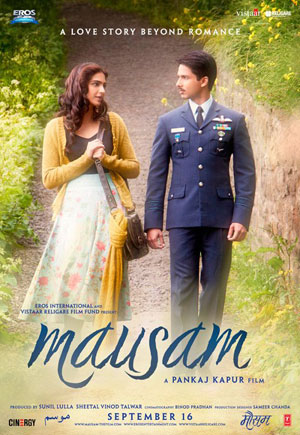
    Mausam

    Key cast: Shahid Kapoor, Sonam Kapoor

    Written and directed by: Pankaj Kapur

    Produced by: Sunil Lulla and Sheetal Vinod Talwar


    Pankaj Kapur’s debut film as director seems to have done the near-impossible—united critics across the board, with harsh-to-gentle panning and ratings from one and a half to two stars. All except the Times of India, of course, that rarely drops below three, and NDTV. Everyone agreed that the film fell fall short of its epic pretensions, and went on and on till the audiences were bored to tears.


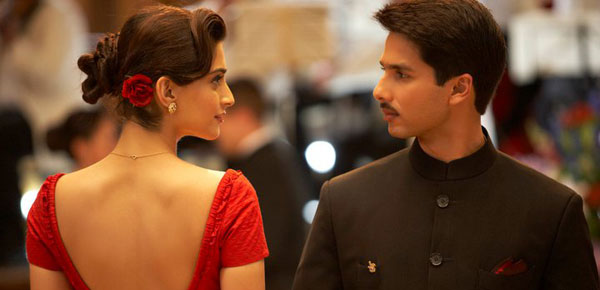
    The film, with the pompous tagline: A Love Story Beyond Romance (means what?), has its Punjabi hero and Kashmiri heroine meet and separate over several countries and calamities, till the pathos is wrung inside out to become farcical. All that fuss about the Air Force was needless, the bloke need not even need to be a pilot. Shahid gets to wear a uniform, a moustache, a still expression and pretend for a few minutes that he is Tom Cruise in Top Gun. Sonam Kapoor looks pretty, giggles, screams, weeps and dances in Scotland!


    Sudhish Kamath of The Hindu titled it “Epic Disaster”. “Think of all the possible clichés that have kept star-crossed lovers away in Hindi cinema over the years and put them all in one movie — jilted lover, jealous rival, death of father, change of address, call of duty, misunderstandings, unread letters and those riots every few years,” he writes.


    Mayank Shekhar of Hindustan Times gives it one and a half stars and writes, “There’s an old, popular Shailendra ditty in this movie that goes, of course, Ajeeb Dastan Hai Yeh, Kahaan Shuru, Kahan Khatam (It’s a weird legend. Not sure where it begins. Not sure where it ends). The second time they play that Shankar Jaikishen song on this screen, you’re convinced this is some kind of an inside joke between the film’s director and his drooping audience. He’s ushered you into the theatre all right, seated you comfortably with popcorn, Coke and other supplies for the day, it’s been over three hours (has felt like multiple mausams, seasons, of a television series), you’re still not certain when this epic tragedy will end, or if it will at all.”


    According to India Today’s Kaveree Bamzai, “Every scene is beautifully shot, the romance is meant to grow on you with its artful glances and coy exchanges. But instead of a slow burn, it’s just plain exhaustion.”


    Raja Sen on rediff.com echoed the sentiments of many, “This is a love story gone awry purely because of under-communication, and while that seems fine enough on paper, it’s rather hard to swallow two lovers cleaved for well over a decade simply because they don’t have each other’s forwarding address.”


    IBN Live’s Rajeev Masand calls it an unfortunate mess and says, “Plodding along for close to three hours, Mausam loses steam early on. By the time the film hobbles to its end at a riot-stricken Ahmedabad fair, all you can do is gasp. Gasp in complete shock at the inconceivably embarrassing climax that involves a Ferris wheel, a crying child, and a horse. This one scene alone hints at just how desperately this script was begging for a rewrite!”


    Aniruddha Guha of DNA quips that the only thing epic about Mausam is its length. “Two lovers separated by circumstances repeatedly would be acceptable if the situations were at least believable. But the story demands you to suspend belief repeatedly, and gets convoluted beyond repair eventually.”


    The Reuter’s Review headline says “Mausam is several seasons too long,” and then, “If director Pankaj Kapur hadn’t gone to pains to establish that Mausam plays out between the mid-’90s and the early years of this century, you’d be forgiven for thinking this film takes place in the ’20s — when there was no internet, no phones and no technology. Why else would two, reasonably well-off, intelligent people who obviously have access to technology be unable to trace each other? It makes no sense, and instead of feeling sad for them, you feel frustrated.


    The usually kind Taran Adarsh of bollywoodhungama.com surprisingly dubs it a “colossal disappointment,” and comments, “The screenplay, to put it bluntly, is unengaging and what makes it worse is the fact that it seems like a never-ending saga. The film just goes on and on and on, moving from one city/country to another, till the viewer gets jetlagged and exhausted by watching this saga unfold on screen. With a running time of close to 3 hours, Mausam has a few sequences that do stand out, but the weak script blows the efforts away.”


    And the usually sensible Shubhra Gupta of The Indian Express gives it an uncharacteristic two and a half stars, saying, however, that “Mausam starts like a dewy-fresh spring morning, where everything is familiar yet new. It then wilts, autumnal overtones taking over. And then never quite recovers, falling into a dreary never-ending winter.


    One of the few who recommends the film is NDTV.com’s Saibal Chatterjee. “To conclude, Mausam could quite easily have ended up being a stodgy, strenuous and self-conscious drama. Writer-director Kapur, the accomplished actor that he is, orchestrates the emotional ups and downs of his tale with a commendable degree of moderation for the most part. Mausam is certainly worth a viewing.”

  • A whole new world to discover: Rahul Johri

    The footprint of his responsibility is huge and very challenging. Mr Rahul Johri, Senior Vice President and General Manager, South Asia at Discovery Networks Asia-Pacific, leads his network’s South Asia operations and is responsible for driving the company’s growth in the region which includes India, Pakistan, Sri Lanka, Bangladesh, Maldives, Bhutan and Nepal.


    He is responsible for revenue generation, portfolio expansion, affiliate partnerships, networks’ viewership, content creation and talent management. In 2010, he led Discovery Channel to become India’s No.1 channel in non-fiction entertainment. He cemented TLC as India’s favourite lifestyle channel and energized Animal Planet within the advertising community.


    Mr Johri has over 18 years of media industry experience across various verticals including news channels, magazines and print dailies. He has been actively involved in the launch of many of India’s leading media brands including Aaj Tak, Outlook and HT City. Prior to joining Discovery, he was the General Manager – Sales of IMG India.


    In this interaction with Tuhina Anand, Mr Johri talks about the channel and its impact and further plans.


    It looks like the way to go ahead is regional; how has Discovery in regional languages and feeds helped in garnering greater viewership share?

    Dubbing in Indian languages has been one of our important growth strategies in India. Dubbed content attracts strong viewership from across age groups, genders and geographies and is accepted very well by the viewers. Thus introduction of regional language feeds is our attempt to localize the content for viewers across India, reaching the specific markets in their own language.


    Discovery Channel which is currently available in four languages – English, Hindi, Telugu and Bangla – has shown upward trend in viewership post introduction of 24-hour parallel language feeds. It has helped the channel grow and connect with a larger audience.


    In 1998, Discovery Channel launched its 24-hour parallel Hindi feed, which boosted the channel’s nationwide viewership. Continuing with its promise to delight its viewers across India, the channel launched the Telugu feed from January 01, 2011 and Bangla from 15th April 2011. Post the Telugu launch, Discovery Channel’s viewership in Andhra Pradesh jumped by 180 percent (source: TAM, Market – Andhra Pradesh, Wk 1-40 2010 vs 1-28 2011, 0700-2359 Hrs, Viewership comparison, TVR000s), and witnessed rise of 20 percent post the launch of the Bangla feed. (Source: TAM, West Bengal, Wk 1-15, 2011 vs Wk16-28 2011, TVR%)


    From August 15, Discovery Networks Asia-Pacific has launched its first regional channel – Discovery Channel Tamil for the viewers of Tamil Nadu. Our constant research and feedback from the viewers encouraged us to launch a dedicated 24-hour channel for Tamil viewers in their native language.


    Our 24-hour wildlife channel Animal Planet which presents engaging stories from the depths of oceans to the interiors of jungles in the comfort of your homes, is also available in English and Hindi.


    What other regional languages do you have on your radar and by when would they fructify?

    We constantly keep evaluating new languages.


    How have the channels such as Discovery Science and Discovery Turbo fared for the network?

    Discovery Science and Discovery Turbo are unique content channels dedicated to science and automobiles respectively. These channels were launched last year to cater to the demands of quality content by the aspirational Indian viewers. The channels are available across analogue and on all leading DTH platforms – Dish TV, Tata Sky, Airtel Digital TV and Videocon D2H, the channels are currently reaching over 17 million subscribers each.


    India is a young country and there is immense curiosity amongst the viewers for information. Knowledge is cool. The viewers want to be informed and entertained about the various advancements and technologies from around the world. As expected both Discovery Science and Discovery Turbo have received encouraging response from the viewers across the country.


    The most visible proof of the growth and success of these unique content channels is the increasing interest and spends by advertisers and affiliates on our networks.


    From your own experience, how much does re-branding help a channel, a case in point being TLC?

    TLC, formerly known as Discovery Travel & Living, has remained India’s leading lifestyle channel. It was the first channel to introduce lifestyle programming on diverse manifestations in travel, food, fashion, music way back in 2004.


    Today’s consumer has evolved. The aspirational, well-travelled and informed Indian viewer demands unique and compelling content. This evolution is accelerated by increasing integration with globalised lifestyle and consumption patterns leading to the overhaul of the Indian consumer.


    Keeping pace with this metamorphosis, television channels have to innovate and remain relevant. Re-branding helps refresh the brand proposition, offering and strengthen consumer connect. TLC was rebranded in 2010 to make it bigger, better and bolder, featuring new faces, new genres and new places.


    Travel as a genre has become a competitive space, with some channels like Fox History & Entertainment re-branding to include the travel genre in their name. Does it impact TLC in anyway?

    TLC offers unmatched brand proposition and remains India’s ultimate lifestyle destination with a distinct identity. The channel offers a unique blend of international lifestyle programmes and India productions which sets it apart from the other channels in Indian television space.


    Having innovation at its core, TLC pioneered in travel programming under a variety of themes such as exotic locales, cultural destinations, luxurious hotels, world’s best beaches, culinary journeys and this year introduced a dedicated time band for travel, at 9pm. Some of the popular travel series on the channel presented by renowned travel experts are  Samantha Brown’s Great Weekends, Beach Watch, Anthony Bourdain: No Reservations, Get Out, Xtreme Tourist, Sea Nation and Fun Asia.


    Redefining the food genre on Indian television, TLC introduced the most sought after chefs and food experts who bring in variety of cuisines from different parts of the world. The channel explores the finer nuances of culinary skills through its enticing food series presented by celebrated chefs like Kylie Kwong, Nigella Lawson, baking expert Rachel Allen and bizarre foods with Andrew Zimmern.


    TLC offers its viewers an experience of the fascinating world – ranging from ice diving in the high Arctic to watching the sun come up over the pyramids, from stripping in Las Vegas to diving with sharks, from driving a Ferrari to swimming the English Channel and from spending a night in a haunted castle to exploring the volcanoes in Indonesia. No experience is left unturned.


    For further growth, you need to go beyond tier 1 cities, do you think in tier 11 and 111 cities are ready to go beyond fiction, news and sports? What does your research say?

    Discovery’s mission is to satisfy the curiosity of millions of Indian viewers through high-quality, entertaining programmes. The power of the Discovery brand stems from our ability to provide unparalleled content and create meaningful connections with audiences. Introduction of local language feeds gives us just the opportunity to reach millions of viewers across India.


    Our flagship channel Discovery Channel last year became India’s 9th largest channel amongst all 600+ channels, in cumulative reach. Discovery Channel is currently amongst the top ten distributed channels, available in over 2 lakh villages and reaching over 160 million subscribers through the country.


    Also, the various programmes on Discovery’s various channels are mostly documentary-dramas, which further makes dubbing more relevant without losing the basic essence of the series.


    Animal Planet is also available in English and Hindi. This year Discovery Networks has launched Discovery Channel Tamil dedicated to the viewers of Tamil Nadu. This dubbed content is much appreciated by the viewers beyond metros.


    In terms of big properties, what should we expect from the channel by the end of this year?

    We continue to refresh our programming on a quarterly basis across our seven networks, bringing new programmes, refreshing formats, enthralling hosts and newer seasons of the existing series.


    Some of the new programmes across our channels are:

    Rising: Rebuilding Ground Zero (to air from September12-17, 9 pm) which is nearly a decade after the September 11th World Trade Center attacks, Discovery Channel and acclaimed producer Steven Spielberg bring special series chronicling the historic reconstruction of Ground Zero. Documenting this gigantic project in a six-part series, Rising: Rebuilding Ground Zero, Discovery Channel takes a comprehensive look at Ground Zero’s rise from the ashes, as seen through the eyes of those who are making it happen.


    Discovery Channel – Norway Massacre (to air on September 21, 9 pm): July 2, 2011, a day now indelibly ingrained in Norway’s history, is the date Anders Behring Breivik killed eight people in a bomb set off outside government headquarters in Oslo and embarked on a 90-minute shooting spree, resulting in the death of 69 young people on Utoya Island. Discovery Channel chronicles the events of that horrid day – and the impact it has on this nation and its people – in Norway Massacre.


    On TLC we will have Chuck’s Day Off, where the owner and head chef of one of Canada’s hottest restaurants spends his only day off by… cooking!


    Discovery Science- Innovation Nation: What will the future look like? Will people fly to work? Will one live a disease-free life? Will one never age? Brilliant thinkers, cutting edge research, backyard inventors are on the way to breakthrough science that will change lives forever. Innovation Nation features budding inventors, innovators and designers who have been laboring away in sheds to dig out things that we would have only thought of. Travelling across the globe from cutting-edge research to ingenious inventors, it offers intimate access to the people who make high science a reality. Real world demonstrations, lab experiments, and in-depth interviews are complemented by stunning visuals, all of which bring the planet’s bravest new ideas to life.


    One last question: it’s been 15 years since Discovery’s debut in India; in these years what has been your biggest challenge?

    Discovery refreshes the content of all its seven channels in India every three months. This decision to offer new content every three months is a big challenge but we have been successful in converting into an opportunity. Variety is our unique strength. No one can replicate it.
     

  • Cannes Lions launch Mobile category; Tom Eslinger appointed first jury chair


    By A Correspondent


    The International Festival of Creativity – Cannes Lions – has announced that Mobile will be added as a new awards section, launching at the 2012 Festival. Tom Eslinger, Digital Creative Director of Saatchi & Saatchi Worldwide, will preside over the Mobile Lions jury in its inaugural year.


    Mobile Lions will reward the best work which lives on or is activated by a mobile device, app or mobile web. The judging criteria will be based on creativity and the idea, execution (usability, user experience, craft and design), relevance to the mobile platform and results (level of user engagement and any quantifiable outcomes). The categories for the new Mobile Lions will include Creative Use of Technology, Mobile Websites and Web Apps, Mobile Apps, Tablet Apps, Games, Rich Media Mobile Advertising and Integrated Campaigns led by Mobile.


    The jury will be made up of experts in mobile from digital agencies and applications development, and will award Lions to the best use of mobile in marketing campaigns with the winners being announced alongside the Press, Cyber and Design Awards Ceremony taking place on Wednesday 20 June in Cannes, France.


    Philip Thomas, CEO of Cannes Lions, commented, “Mobile has been part of the Lions for some years, within other sections such as Cyber and Film, and a large number of winning campaigns in sections like Media, Design, Direct and Outdoor have made significant use of mobile technology. By carving it out of the other sections, we are simply reflecting the importance of mobile in the media mix, and we are delighted that Tom Eslinger has agreed to step up and lead as jury president. The category could not be in better hands in its launch year.”


    Joining Saatchi & Saatchi New Zealand as a Creative Director in 1998, Mr Eslinger began creating mobile ideas launching projects for Rugby Super 12, the New Zealand All Blacks, Telecom, NZ Dairy Foods and the NZ Retirement Commission. More recently, Mr Eslinger has worked across applications, augmented reality and games for Toyota, 3M, Burton Snowboards, Coca-Cola, T-Mobile and Visa. Now based in London, he works across Saatchi & Saatchi’s worldwide digital capability and in 2002 was appointed to the Worldwide Creative Board where he leads the creative growth of Saatchi & Saatchi’s worldwide digital team, adding new teams and capabilities. He is a multiple Cannes Lion winner and has previously served on the Cyber and Titanium and Integrated juries before presiding over the Cyber Lions jury in 2007.


    Commenting on his appointment, Mr Eslinger said, “It’s always an honour to be asked to join a jury and awesome to be asked to be president for a new category, especially one I have a deep passion for. I’ve been creating mobile ideas for over a decade and I’m stoked that Cannes Lions has chosen this particularly exciting time to start recognizing the best ideas created for mobile devices, apps, sites and other new and wonderful permutations. I’m keen to get started!”


    The new look Cannes Lions 2012 website (www.canneslions.com) has been launched, with up-to-date information on the Festival and awards, interviews with key industry members, video content and much more in the lead up to the Festival.


  • 1 Gold, 1 Silver & 5 Bronzes on Day 4


    By Delshad Irani


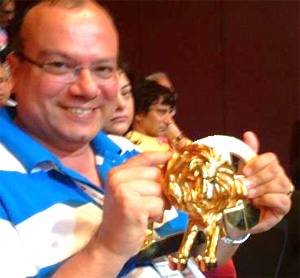
    DDB Mudra Chief Operations Officer Pratap Bose put up this picture with the Design Gold on his Facebook page

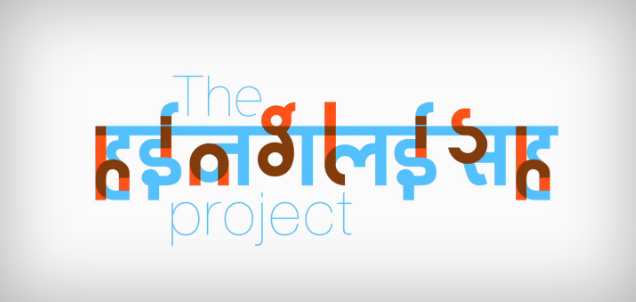
    Cannes on Day 4 won more gold for India, taking its tally to two. ‘The Hinglish Project’ from DDB Mudra Group took home a gold Lion in design.


    The design entry is part of the ministry of tourism’s Incredible India campaign. Abhijit Bansod, jury member and principal designer and creative head, Studio ABD, said this is perhaps a new beginning for hybrid typographic design work that combines cultures.


    “It really stood out amongst the typographic work we saw during the judging process,” he adds. India had a total of eight entries on the shortlist with three originating in DDB Mudra Group, including a campaign for Volkswagen India.


    ‘The Hinglish Project’ has been awarded a bronze Lion, too. A total of four categories were judged on the day. Press, a traditional favourite with Indian entrants, kept India’s ad engine chugging along. There is one silver Lion in Press for Leo Burnett’s work for Bajaj Electricals.


    Ogilvy took home two bronze Lions in the same category for its work for Perfetti Van Melle and Mattel Toys’ Hot Wheels brand. And, BBDO India has one bronze Lion, courtesy its work for White Collar Creatives.


    The Grand Prix winner in Press is United Colors of Benetton’s Unhate campaign that cooked up a storm in many places around the world and got it the much-coveted top prize at the Cannes Lions.


    In radio there’s a lone win, another bronze Lion for India as well as Leo Burnett. Titled ‘Punishment’, the work interestingly was written entirely in Hindi. The work for Mumbai-based book store Strand Book Stall is in the form of a conversation between Mahatma Gandhi and a little boy.


    According to Rob McLellan, executive creative director, Network BBDO South Africa, and Radio Lions’ jury president: “It is a heart-warming piece of work. India is very similar to South Africa in many ways. Radio is still the most popular medium and sometimes the only way to reach people. I think the piece is a worthy winner.”


    This brings us to Cyber category, a disappointment of digital proportions. Out of the 27 entrants, not one made the shortlist. About India’s non-existent presence in this category Anita Varma, jury member and director of Digital Driftwood, said it’s a shame because we are great storytellers but falter on how best to use the technology at our disposal.


    Source: The Economic Times

    Copyright © 2012, Bennett, Coleman & Co. Ltd. All Rights Reserved


  • Too many people taking undue advantage of TAM, says NDTV’s Vikram Chandra [from our archives]

    While CEO Vikram Chandra wasn’t reachable for comment, this is what a spokesperson told MxMIndia: “We confirm we have filed a lawsuit in the Supreme Court of New York State. Because the matter is sub judice, we have no further comments at this time.”

    While the legal documents present the NDTV case, this interview of Mr Chandra from the MxMIndia archives (interview published on December 7, 2011) gives you a good idea of NDTV’s standpoint. – Ed


    By Akash Raha


    Recently NDTV 24×7 came out with an advertisement announcing the GFK-Mode survey which showed it to be most watched English News Channel. The survey which the group has conducted for the third time since 2009 places it well above its competitors. MxM India spoke to Mr Vikram Chandra, CEO, NDTV Group to know more about why he went in for the survey.


    Q: Could you tell us a little more on the GFK-Mode survey…are there any other insights that you would like to share?

    We have now done three surveys over the last three years since 2009. We did the last one in 2011 the results of which you have quoted. The results of this survey have been very consistent now. All the three surveys have shown the same kind of results for us. A large sample base has been used here showing NDTV 24*7 to be the most watched channel with 56 percent. There is obviously an interesting lesson in here somewhere which someone should try and figure out.


    Q: The findings are very much in variance with those published by TAM. Why do you think this is the case?

    You know, we have our own opinion on the way TAM ratings are conducted and we have frequently discussed this with TAM without gong forward. We are hoping that they will get the complete picture…We do feel that the TAM rating meters aren’t adequate to measure a country like India. I think that there are not adequate boxes to measure viewership. Moreover, I think that TAM has not been able to focus on all parts of the society to derive their ratings from. One of the issue which is of concern for us, and it is causing a lot of concern to TAM too, is that there are people who are using undue advantage of the way TAM functions. There are a large numbers of outliers who are there in the TAM samples. I think TAM needs to be a little robust in their system. Measurement is a serious issue which has been going on for a while now.


    Q: Media planners and marketers still subscribe to TAM as the ‘currency’ for buying ads on channels? Would they take your survey findings seriously?

    There are two things to it…While numbers and TAM ratings remain important in the absence of any other measurement system, media buyers and planners look at other variables and other aspects of channels. So I think the message is being communicated to them. We are also drawing attention to some of the anomalies that are there, and we are hoping that media buyers will also join us to get rid of these anomalies. That there are anomalies, everyone knows… A lot of money is been spent on this data and hence it is important that the data which comes out eventually is robust.


    Q: What do you think should be done to come out with a robust currency?

    First of all the broadcasters should work together with TAM and other measuring organization to try come out with one robust measurement. I think we should all work in partnership as this is in everyone’s interest – It’s in TAM’s interest, broadcaster’s interest and in interest of media buyers too. What does it mean? It means that we need more boxes and a bigger sample sizes. Also, if somebody is trying to tamper with the measurement system, how can that be identified and corrected. These things are in everyone’s interest. It is not only NDTV who face these problems, I am sure the others do too. So we are appealing to the entire industry to come together and fix the measurement system. We are in the process of trying to reform and fix the whole media business. That is the most important challenge before us. Digitization, distribution problems are being sorted out and only in a few years time everything should be stream lined and a systematic model. Similarly, on the other side of the business we have a measurement system which is a cause of concern and we have to find a way to make it more robust.


    Q: You’ve said ‘why scream and shout’ in your advertisement. But isn’t that what most news TV channels do? On air in their shows and in their advertising and sales pitches?

    I am glad you ask this question…We have a very strong viewpoint on what we think we should do. At the end of the day NDTV’s strongest asset is our brand and we stand for something. We try to do a certain type of journalism and a certain type of programme, and this is one of the things that we have tried not to change too much. And if you compare us to other Hindi channels, you will clearly know the difference and how we are different from most of the channels. Now that I am the CEO one of the things I want to do is to make this differentiation even stronger. We are not ready to put up random shows and we don’t believe in going tabloid. We don’t believe in bhoot banglas, tantriks and astrology and alien abduction. We are not going to do any of this and that’s the kind of environment we want to build for our advertisers. And we will appeal to media buyers and people who want to protect their brands to think about that.


    Q: Would you like your advertiser to buy spots on your channel for the number of viewers or because of the environment it offers…quality and experienced anchors and reporters, sobriety in coverage, credible leadership?

    Both! And that is precisely what we say to our advertisers. We have numbers, not like we don’t have numbers, but one should also consider the people who are coming and watching our show. People who come and watch our channel come for a certain kind of program and sobriety. I am not doing a value judgment on others’ programs…everyone is free to do whatever kind of programming that they want. But people who are coming to us are coming for a certain type of program. There is a certain style that NDTV stands for and we believe that that’s the style we are most comfortable with. And we think that offers the advertisers an environment, which if they sit and think is going to be beneficial for them in the long run.

  • It’s official! Omnicom to pick up majority stake in Mudra

    Omnicom Group Inc announced that it has entered into an agreement to acquire a majority stake in the Mudra Group. As part of the agreement, Omnicom will extend its partnership with the Reliance ADA Group.

    Mudra will significantly expand Omnicom’s service capabilities and presence in India. The Mudra Group comprises: branding and communications agency Mudra India; marketing and advertising agency DDB Mudra; integrated engagement and experiential agency Mudra Max; and Ignite Mudra, an agency that caters to entrepreneurs. Mudra has 26 offices across the country and an extensive field activation network.

    In conjunction with the strategic partnership, Reliance Group Chairman Mr Anil Ambani will join the Omnicom International Advisory Committee. “This acquisition is an important step in achieving Omnicom’s strategy to extend and deepen our presence in rapidly growing markets,” said John Wren, President and CEO of Omnicom Group in a communique. “Our vision is to be a source of innovation in every market we serve. Mudra is widely acknowledged as an outstanding company with impressive creative product and expertise in a broad range of disciplines. Mudra’s innovation and depth of talent will strengthen our business capabilities not only in India but around the world.”

    “DDB has been an excellent partner over the years. We have benefited immensely from the collaboration and transfer of knowledge from around the globe. We are proud to belong to such a storied network,” Mudra Group CEO Madhukar Kamath said. “Omnicom and DDB have clearly been the inspiration for Mudra Group’s transformative growth over the last five years. My colleagues and I look forward to the next decade of explosive growth in the Indian market.”

    DDB Worldwide President and CEO Chuck Brymer noted, “This acquisition will further unite two companies that have long held the same values, creative goals and ambitions. Under Madhukar’s leadership, Mudra is the original challenger brand of the Indian communications industry, and it shares DDB’s culture of creative excellence. Together, we will create even greater growth for our clients in this rapidly changing, technologically driven region.”

    DDB and Mudra Group’s shared history is rooted in a relationship that began in 1988 and has grown tremendously since the formation of DDB Mudra in 2007, which established DDB India, Tribal DDB, Rapp and DDB Health & Lifestyle in the Indian market.

    John Zeigler, CEO, DDB Asia Pacific, added, “Mudra has an impressive history as both creative leaders and strong believers in integrated solutions making them one of the most innovative companies in India.”

    Omnicom Group EVP and CFO Randall Weisenburger also noted, “In addition to significantly expanding our service capabilities in the region, this partnership will bring with it an exceptional Shared Services and Operations Center in Ahmedabad that will help Omnicom more efficiently expand its other operations in India. Additionally, Mudra recently moved into a new headquarters facility in Mumbai called Mudra House, a sustainable building and one of the few in India to be awarded LEED (Leadership in Energy and Environmental Design) Gold certification. Mudra House is widely acclaimed for its conservation features and state of the art technology.”