Author: mxm_india

  • Havas appointed global media AOR of Shangri-La Hotels

    By A Correspondent


    Havas Media Asia Pacific has announced its appointment as the global media AOR of luxury hotel group Shangri-La Hotels and Resorts. The agency has been tasked with handling the media planning and buying for the Hong Kong based hotel group, across all its markets and properties.


    The agency won the business after a pitch process, which involved several media agencies including Starcom and OMD.


    Pitch consultancy R3 managed the pitch process.


    Havas Media was selected for its ability to deliver media innovations and strong integrated solutions. The hotel account will be led out of the agency’s Hong Kong operations.


    Deryk Tang, Managing Director of MPG Hong Kong said: “This is an extremely exciting win for us and a testament to our extensive experience in the luxury and hospitality sector. We have a great synergy with the marketing team from Shangri–La.”


    Stuart Clark, Managing Director of Havas Media International APAC, said: “Shangri-La Hotels is a brand synonymous with Asian luxury and hospitality. They have produced some really interesting campaigns over the last few years, taking the brand into a unique territory within the category. We will leverage all our specialist resources in International and Luxury marketing to help them build on that platform in 2013 and beyond.”


    Shangri-La Hotels and Resorts currently has 76 hotels and resorts throughout Asia Pacific, North America, the Middle East and Europe and a room inventory of over 30,000. New hotels are under development in mainland China, India, Malaysia, Mongolia, Philippines, Qatar, Sri Lanka, Turkey and United Kingdom.


  • [PR CHANNEL] Public Relations needs measurement for its Advertising & PR!

    By Siddhartha Mukherjee


    Hollywood legend Gregory Peck’s reply – “I don’t know anything about Public Relations” – to a PR job proposition from a friend in a company where he was working in the Hollywood flick, The Man in the Gray Flannel Suit, sums up the state of Public Relations. His reply, despite the fact that it dates back to the post World War II era in the 1950s, still echoes the current state of this credible marketing tool called Public Relations, atleast in India.


    Before we get into the scope and type of measurement for a client’s Public Relations initiatives, there are a couple of points, I thought, we can throw light on:


    The central question is – Why does a Corporate/Brand do PR? It is a simple question, but the answer may not be so simple!


    Let us see if this question can be answered by deconstructing some possible thoughts or responses:


    a) We (the Corporate/Brand) do PR because it makes us feel/look good infront of family and friends

    For some this could well be a preposterous presumption. However, the fact is this is the belief for most of us – some may acknowledge…some won’t.


    Majority of the Corporates end up creating CorpComm/PR machineries to serve individual agendas, and not one single Corporate and Brand marketing agenda. Time is spent and efforts are made to expose “faces” of the organization rather than the Corporate itself, what it stands for and its product offerings. PR still continues to be used more as a personal and personnel gratification tool rather than a brand building tool. Many will not acknowledge this. Those who do are far more credible and only adding to their organization’s equity.


    b) Monthly PR scores Ranking

    Some slightly better off organizations have taken it one notch up. Given the fact that the actual purpose of PR/Corp Comm is still ill defined, self gratifying efforts to prove successful creation of decibels levels are quite high in usage. The mandate therefore given to the PR Machinery is – “My company should be No. 1 in the media visibility rank”. No wonder then, the Corp Comm machinery and its PR Agency runs helter-skelter after every possible journalist in every possible newspaper and TV news channel to get some ink or soundbyte in next morning edition. The ballgame ends up being all about the “CHASE”(journalist/publication). Get me some coverage somewhere…anywhere…with any mention of my company becomes the dictate. The thickness of the clippings dossier becomes an emblem of the PR machinery’s achievements.


    The only problem is that it can be easily proven that just because the Company scores rank 1 in media visibility does not mean they have actually done or achieved great PR! Same way, just because an organization has ranked no. 3 does not mean they have achieved bad PR!


    We are obsessed with ranking. PR Industry just re-iterates the same principles.


    c) To justify Ad budgets and EAV (Equivalent Advertising Value) targets:

    This is an extension of the above point. The norm of marketing team (marcomm to be specific) setting targets for PR/Corp Comm team is still a sacred ritual. Targets of Rs 5 crores, 20 crores, 50 crores are a set norm of advertising equivalent editorial value to be achieved by the Corp Comm/PR team at the end of the year. In fact, this has three interesting outcomes: a) The Corp Comm/PR team starts going through tremendous palpitations. Which in turn puts the entire Corp Comm Machinery (including PR Agency) in a tizzy. B) The corporates’ winning/dinning/gifting and media round bills go up because we somehow want to get any coverage somewhere B) Corp Communications starts losing focus on what it is ideally there to achieve.


    At the end of the year, the marketing team rejoices on the achievement of the EAV scores encoring “a great job done”. They possibly will also look at Share of Expenditure (SOE) Vs Share of EAVs Vs Share of Voice/Space. However, whether the annual PR efforts have borne fruit or not, who know! Is someone interested to know?


    The other aspect of this advertising correlation becomes all the more interesting when Corporates look at editorial space as money game – that can be “bought”…courtesy their media buying “power” houses. Some do this with a generalised belief that editorial space across print, TV and online is rigged, no longer a purist zone and should/could be bought therefore. Some believe that this is the best way to control what they want to get and not get written.


    d) To keep negative stories at bay

    Our country is all about negation and rejection! Critics, crisis, negatives, these are aspects that dawn on us almost everyday, starting from our breakfast table. Corporates increasingly becoming within the common man’s radar find them mentioned in most “negatives”. PR/Corp Comm machinery therefore is expected to play a role in pre-empting these negative mentions in the next day morning news reports. Worse case, if pre-empting efforts fail, they start rolling out damage control exercise. Actually, where Corporates passionately believe in this principle of getting easy ink in next day’s paper, and more importantly, pre-empt negative stories, often ex-journalists find a prominent place in the CorpComm/PR chair of the organization.


    e) To achieve a set business objective

    This is where we normally get stuck. How many times have we asked a simple question – why am issuing this press release? Why am I proactively approaching a publication and to give an interview to a journalist? Can the answers to “why” be broken down into specific Quantitative and Qualitative target outputs?


    The reality is that this seldom happens. Those Corporates/Brands who have started with this are already enjoying the benefits of this Samaritan tool. For their customers or consumers out in households, communications is much more smooth, homogenous and credible. For those who have not, probably best is to leave them to market forces. One day, they will realize it is too late.


    Way Forward:

    Our good old Public Relations industry started and has been thriving on Jugaad. This silent army of PR professionals, certainly for the last two decades, has been quietly helping organizations and brands get marketing “exposure” in the news space across Newspapers, Magazines, TV Channels and Websites. Their Jugaad as relationship managers with journalists has actually helped many Corporate Entities enter India, settle well, understand the market and more importantly trigger the interplay of Demand and Supply.


    However, in the last seven odd years especially, this ART of Jugaad has been complemented with a crying need of SCIENCE both in strategic & tactical planning and implementation of Public Relations. CEOs, Directors, Marketing Heads, CFOs, HR Heads, now that all are getting hooked and booked under “ROIs and Accountability”, they are finding it both important as well as challenging to incorporate the tool of PR into their Corporate DNA.


    Here is where PR Agencies have initiated and paved the way. Starting with transforming themselves into Consultancies, their thoughts and initiatives have changed the matrix of this tool called Public Relations. The tool, which was largely confined to the PRO/Corporate Communication desk of their Client Office is actually today showing its influence and usefulness to the internal clients of this same desk – Marketing, Financial as well as HR corridors…not to leave alone the CEOs office. Public Relations can be created, nurtured and propelled only with the vision and proactive initiatives of its Agencies.


    Measurement of PR can go a long way in establishing purpose and focus to a brand PR efforts. PR Agencies therefore will play a big role in introducing measurement into the DNA of PR and Corporate Communications industry.


    Let us not forget that Measurement or Data can do actual PR for PR! The Client, its agency and the industry stands to benefit from it. What the benefits could be, who all stand to gain and how…next time!


    Siddhartha Mukherjee is senior VP, Communications and Business Head, Eikona PR Measurement

  • Rise of the Indie

    By Tuhina Anand


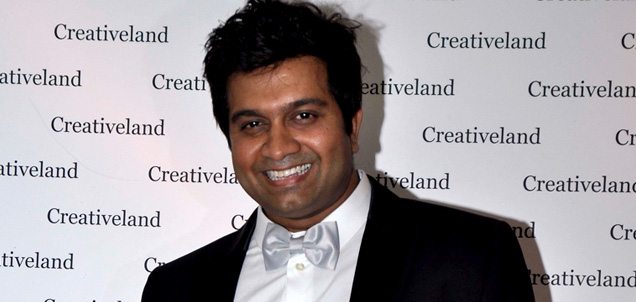
    Creativeland Asia literally began life at Mr Sajan Raj Kurup’s dining table, where he discussed it with his friends four years ago when he quit his job as Regional Creative Director at Grey Worldwide. And the independent agency’s time seems to have come.


    For those who need to break away from large networks where creativity sometimes yields to hierarchy, setting up their own agency is the answer. And it seems to be an answer that works. A recent example would be Creativeland Asia bagging the Independent Agency of the Year at Spikes Asia. This was the first year when this award was introduced, and it aims at encouraging the spirit of creative entrepreneurship that has helped forge outstanding companies.


    Mr Kurup’s venture has now grown to a strength of 8o people across two full-fledged offices in India and nine strategic offices in Asia.


    Creativeland Asia also brought home a Grand Prix in integrated media category for 3D Experience for its client Audi India, a business it bagged in July last year. This also was a campaign of Indian origin which for the first time Audi adapted and used across the globe. The agency also bagged a Bronze Spike in digital for Hippo’s Plan-T. In fact, it was invited by Twitter to make a presentation on Plan-T which basically is a Twitter-led campaign which has won them accolades for innovative thinking. The agency has also won awards and accolades at other platforms including D&AD, One Show, Adfest, Spikes Asia and Cannes, and our very own Goafest.


    On his win, Mr Kurup, Founder & Creative Chairman, Creativeland Asia, says, “Winning the ‘Independent Agency of the Year’ award is a proud moment for us. This win is also significant for all independent agencies in India. To bag the Grand Prix for real work and on a global brand like Audi underscores the creative culture at Creativeland. It goes to show that when you consistently create good and inspiring work, lady luck is bound to shine on you sooner or later.”


    The agency has also done some pathbreaking work for its client Frooti where the brand has been totally refreshed itself including a funky package design. It also launched recently Saint Juice beginning the exercise of naming the brand signifying purity and 100 per cent juice. Some of the other brands it has worked for include Café Coffee Day, Medimix, LMN and Appy Fizz among others. The common link among all the brands is that Mr Kurup when he started out had said he wanted the agency to focus on marketing to the youth, and largely the brands that Creativeland has worked on exude this approach in its work.


    So does the win at Spikes for Creativeland really signify that today is the time of the independents. Yes, one can say that the time is conducive for independents with talent, and who are big on ideas, to come to the fore. Like Taproot changing the way industry looks at small agencies with its work on Airtel which is a big client, and getting praise for its campaign “Hare ek friend zaroori hota hai.” It’s also a time when the client’s approach is changing, too, and they are willing to take risks especially in a cluttered market with an overdose of media vehicles where it becomes imperative to get your brand noticed with cutting-edge and “hat ke” ideas.


    In that sense Creativeland Asia’s win affirms this wind of change. And the might of independents cannot be undermined as they are ready to take the biggies and steadily increasing their strength by diversifying their portfolios. Just like Creativeland, which has been expanding its footprint with providing content for four television channels including two reality shows. In fact, the agency is also venturing into the film industry with their first production, Karmayogi.


  • Vinod Mehta: When I became an editor, I started to learn (Video Report)


    In our tribute package to Vinod Mehta, we thought we should replay a video report of the launch of ‘Lucknow Boy’ where the late editor answered questions posed by Arnab Goswami. Read on… 


    By Shruti Pushkarna


    I used to be terrified at my ignorance, I knew absolutely nothing… when I became an editor, I started to learn.”

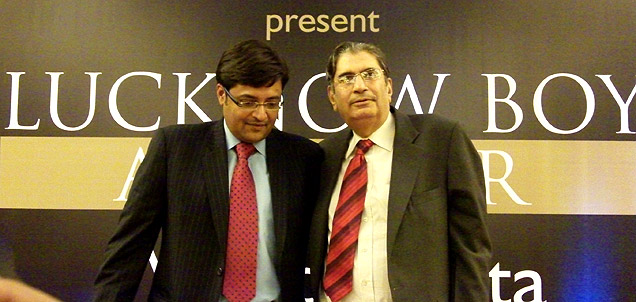
    It was as candid as it could get. Addressing an elite gathering of politicians, journalists, close friends and family, Vinod Mehta, Editor-in-Chief, Outlook, was at his ‘truthful’ best, as he shared his life experiences and views. It was at the release of his memoirs, ‘Lucknow Boy’ in New Delhi yesterday that Mr Mehta confessed, “We journalists have the best seats in the tournament, but some of us, editors particularly, think that we are players. “

    The book launch ceremony began with Mr Suhel Seth, Managing Partner of Counselage India, reading a few excerpts to an eager audience.


    Editor-in-Chief of Times Now, Mr Arnab Goswami was then invited to moderate a short discussion with the author. Mr Goswami admitted that to him, Mr Mehta was like, ‘the god of journalism, whom I admire the most.” Adding further, he related an incident from the previous night when he posed two choices to Mr Mehta, asking him which work out of the two was he more proud of, Debonair centrespread or the last page of Outlook. The reply, said Mr Goswami was in line with his habit of being upfront when very easily he chose the last page of Outlook, his own work.


    What followed was a candid one-on-one between the ‘king of television news’ as Suhel Seth billed Mr Goswami him, and one of the most ‘Independent’ editors of our times. Ranging from the reasons behind writing this book, to the greatest risks undertaken, to why a journalist and a politician can never be friends, Mr Mehta answered all questions posed by Mr Goswami. When asked if he were 35, would he do television, Mr Mehta, without mincing words, said, ‘Television does not interest me”.


    On why he wrote his memoirs
    [youtube width=”450″ height=”250″]http://www.youtube.com/watch?v=srM-E8i6wKI[/youtube]
    On why he doesn’t want to do Television
    [youtube width=”450″ height=”250″]http://www.youtube.com/watch?v=p2gxTDo_eFE[/youtube]
    On the need for editors to be able to ‘smell’ the news
    [youtube width=”450″ height=”250″]http://www.youtube.com/watch?v=RvuDgAPjIIQ[/youtube]
    On why politicians and journalists can never be friends
    [youtube width=”450″ height=”250″]http://www.youtube.com/watch?v=aZOKWWHH6uw[/youtube]
    On how does it feel to look back
    [youtube width=”450″ height=”250″]http://www.youtube.com/watch?v=ftm_IeG-zds[/youtube]
    On the best thing that has happened in journalism in the last 40 years
    [youtube width=”450″ height=”250″]http://www.youtube.com/watch?v=sBb7OzUOL8s[/youtube]
    And a reasonably fair attendance from the political world did not deter him from admitting that the one thing that he has hated all his life is to ask a politician a favour. Mr Mehta is of the strong opinion that politicians and journalists can never be friends. He said, “We follow two different vocations. Politicians are in the business of embellishment, spin, emphasis when emphasis is not necessary and sometimes they are in the business of telling lies. We as journalists on the other hand, with all our imperfections, are in the business of trying to get at the truth.”


    On a lighter note, Mr Mehta also shared some bits of his journey as an editor, as a student and above all, as a person.


    To recount some faces present at the gathering, first up politicians: MoS for Commerce & Industry Jyotiraditya Scindia, Union Urban Development Minister Kamal Nath, Union Petroleum Minister Jaipal Reddy, BJP MP Tarun Vijay, Chief Election Commissioner SY Qureshi, CPI National Secretary D Raja, Lok Sabha MP Jay Panda, MP and Chairman of IPL Governing Council, Rajiv Shukla and Former Minister of External Affairs, Natwar Singh. The media was represented by senior editors Tarun Tejpal, Saeed Naqvi and Paranjoy Guha Thakurta. Also, author Gurcharan Das and Indrajit Hazra of Hindustan Times, and of course the Outlook team.


  • Vinod Mehta: I just want to fade away quietly (Text + Video interview)


    This interview with Vinod Mehta was conducted in November 2011 soon after the launch of ‘Lucknow Boy’. As we look at the late Editor’s life and times, we replay this interview – in text and video – which so effectively captures what made him such a great journalist. Read on…


    By Shruti Pushkarna


    Soon after he launched his memoirs ‘Lucknow Boy’ in the capital, MxM India caught up with Mr Vinod Mehta, Editor-in-Chief of Outlook magazine, for an exclusive interaction in his Delhi office. He spoke at length about his memoirs, his editorial journey and of course, his dog, Editor.

    Prior to his memoirs, Mr Mehta has also authored biographies of Sanjay Gandhi and Meena Kumari. In 2001, he also published a collection of his articles under the title, ‘Mr Editor, How Close Are You to the PM?’

    Popularly referred to as ‘one of the most independent editors’ of our times, Mr Mehta has founded and edited numerous publications, including The Indian Post, The Independent, the Delhi edition of The Pioneer and also India’s first Sunday paper, the Sunday Observer. At present he is the Editor-in-Chief of the Outlook Group, which brings out ten magazines including the weekly newsmagazine Outlook.

    Q: Tell us a little about your memoirs.

    It’s not just my life that I am presenting; it’s a snapshot of India from 1974 when I started, to 2011 which is now. And I am giving you a kind of history of India from that period, a personal history as I have seen it. So it’s more than my life, it’s a history of India – and whether they agree with my version of history or not, that’s another point but I have tried to present people, places, incidents that I saw and I interacted with since 1974. In that sense, this is not just about a journalist writing about his life, it’s about a very important period of India’s history which should be remembered, and I hope that I got some of it right.

    Q: Why Lucknow Boy? You’ve always prided yourself as a Bombay Boy…

    No, I was born in Lucknow, and studied in Lucknow and I reached Bombay much later. So I called it ‘Lucknow Boy’ because I am, my education etc. was all in Lukcnow.

    Q: Was it tough writing a free-and-fearless memoir? Especially the admission about your daughter?

    Well, these things are never easy but if you’re writing a memoir then you have to tell the story of your life and you must tell it in its entirety, the good and the bad. So you can’t hold anything back, otherwise it’s half the story.

    Q: Anything that you’ve not mentioned in your memoirs? In hindsight, would you have liked to include anything?

    No, no; I made sure that everything that I wanted to put in my memoirs, I did put in my memoirs. There were so many other things which were not important, the more important things I’ve put in my memoirs.

    Q: Given that you had moved jobs rapidly before Outlook, what’s the secret of your lasting so long with the Rajan Raheja group?

    Well, I’ve been here for 17 years and I think the mean reason is the fact that I got the kind of editorial freedom which I didn’t get elsewhere, so I lasted so long – because I was allowed to do my work, and I was allowed to produce a magazine according to what I thought was right, and what my colleagues on the staff thought was right, and there was very little or almost no interference from the proprietors.

    Q: We missed you at the World Magazine Congress. Why were you not there?

    Well, I am told the magazine congress was mostly about the management side of things and not editorial, but I wasn’t invited.

    Q: If given the opportunity, would you like to edit a daily newspaper again?

    No, I’m too old now. I’ve done three daily newspapers and now I don’t want to do anything new. I’ve reached the end of my career so I just want to fade away quietly.

    Q: Wouldn’t it have been good to have an Outlook current affairs programme for television, if not a full-blown channel?

    No, we thought about this many times in Outlook and nobody in Outlook, including the proprietor, was very interested in television, simply because there were so many other… there are already about 300 news channels. So we felt that we couldn’t provide anything new or different and we were quite happy with print. And since I’m mostly interested in print, I didn’t show any great interest, neither did the owners, to get into television.

    Q: Your word of advice to a wannabe media baron?

    Well, my advice to a new media baron would be – don’t get into this business if you are just interested in making money. This is a business where, of course, profits are important but this goes beyond profits. So if you have any kind of commitment to the country and if you can withstand occasionally some kind of losses even to your investment, then get into the business. But if you are getting into the business because you think there are profits, or you think that you will have great political clout in the government etc, then those are all the wrong reasons for getting into publishing.

    Q: And your advice to someone working with a wannabe media baron?

    Be good at your job, that’s very important. Whatever you do, you must be very good at your job, outstanding at your job; therefore if you are outstanding at whatever you do, if you are sub-editor, or a correspondent or a photographer, if you are outstanding in your job, somebody somewhere will always hire you.

    Q: Debonair is dead. Would you like to revive it?

    No, that was just the beginning of my career and I wouldn’t like to go back there. But the seven-eight years that I spent there were very interesting, and I learnt a lot in that period.

    Q: Back to the book: worried about it upsetting anyone? Vijaypat Singhania?

    I don’t think so, because I’ve been fair to everybody. In his case, he was also under a lot of political pressure so I had full sympathy for his situation, where between Indian Post and his own business interests, he couldn’t sacrifice his entire business interest because at that time you had this license permit raj and the government would be active in economic affairs.

    Q: Did you read those barons wrong… Singhania and Thapar especially? And Ambani and the Jains?

    No, I didn’t read them wrong because they also I suppose, did not realize how difficult it is to be a media baron at that time, I am talking of 1980s and 90s, when businessmen who had say 5 percent interest in publishing and 95 percent interest in other things. If they attacked the government, then their other business interests would suffer, and I don’t think they fully appreciated this.

    Q: Any career regrets?

    Oh, I think there are always some regrets, some things that you should have done and you didn’t do. But by and large, I think I have played it by the book, as I say. I have no regrets. I think life has been very fair with me.

    Q: Do you think the news TV folk sensationalize more than inform?

    Yes, I think there is some need for self-regulation, there is some need for accountability. You can’t have a free-for-all as far as the channels are concerned. And I think most channels now are realizing that they are losing public support; the most important thing is their viewers’ support and therefore they need some professional guidelines. There is that appreciation now and I think that in the next few months, you will see something, some self-regulation.

    Q: We know you don’t agree with this, but still: do you think news only constitutes current affairs and matters of national importance?  For instance, would current affairs only mean political news or also whom Ranbir Kapoor is dating?

    No, I think current affairs is current affairs, anything which is current, for example, film stars, Aamir Khan made a film called Peepli Live , that was very much part of news. Entertainment is part of news, entertainment and news are not separate, but I think that there is a place for everything. Entertainment has a place, national politics has a place, everything has a place. So you must find the right balance I think; that’s the job of an editor.

    Q: Is there a need for a Press Council-like body, or should the print media too have a NBSA- like self-regulator?

    Well, we do have a Press Council but I think even the print media now realizes that the Press Council doesn’t have any teeth, doesn’t have any punitive powers. So, there is some need even in the print media for a new set of guidelines.

    Q: Your dog is called Editor. If you had another dog, what would you call it?

    Editor Junior. Well I have already got Editor Senior so I got Editor Junior now. But I can’t keep another… We tried to keep another dog, my wife was very keen that we should have two dogs. But Editor wouldn’t just allow another dog to come in. So we tried once or twice, actually brought a dog into the house but he made life hell for that dog, so we finally had to give him away to somebody because he is very possessive and he likes 24/7 attention.

  • Maruti stresses need for road safety via new campaign

    By A Correspondent


    India features as one of the countries with the highest rate of road accidents in the world. And Maruti Suzuki, being a leader in the Indian automotive industry, has, for long, been going that extra mile to spread road safety awareness and bring about change. As part of its efforts in the same direction, Maruti Suzuki has come out with its latest communication campaign on road safety – a series of 8 films that take on the challenge of positively impacting people’s attitude towards road safety.


    The films are not so much about educating road users and creating road safety awareness amongst them, as they are about changing their attitude of apathy towards road safety. It is this apathy that Indian road users can sometimes have towards traffic rule violations, which has dire consequences for them and fellow road users. The campaign aims to stir their conscience and make them reflect on their apathy.


    More than spreading awareness, Maruti Suzuki is hoping for an attitude change amongst road users, as an impact of the campaign. Road users are generally aware of rules in case of the most common traffic rule violations, such as not wearing seatbelt/helmet, not stopping before zebra crossings etc. What they lack is an attitude of concern towards the grave consequences that may arise owing to their violations. Hence, the intent is to create a conscience for road safety rules, which are otherwise most commonly neglected.


    The films cover subjects which are integral to our everyday living – giving way to ambulances, saying no to drunk driving, always wearing a seatbelt, lane driving, avoiding phone calls while driving etc. The plot of each film lets you pause and ponder about your own behavior.   The campaign features 8 TVCs on road safety, conceptualised by Dentsu Creative Impact, Gurgaon, addressing the issues of non-adherence to the road safety rules and norms. The thought behind the communication is “If we know it’s wrong, why do we still do it?”


    Speaking on the films Vinay Pant, AVP, Marketing, Maruti Suzuki India Ltd., said “It’s a Hard-hitting campaign, rooted in on-road insights. Our desired impact would be that people are moved to think and reflect on their attitude. Intent is that every time people are breaking a traffic rule out of apathy, they should be reminded of these films, hopefully have a change of heart and start making the roads safer.”


    Mahesh Rajoria, AVP, Driving Training, Maruti Suzuki India Ltd., said “Being a leader in the Indian automotive industry, Maruti Suzuki, has always gone beyond providing people with mobility solutions. We always go an extra mile to ensure the well-being of our society. We believe that it is our responsibility to work towards making the Indian roads safer and our teams work tirelessly to spread awareness about safe driving and traffic regulations.”   Amit Wadhwa, Branch Head & SVP, Dentsu Creative Impact, adds “Since the start, the intention was to look out for new and unconventional ways to communicate a simple message of road safety. With a strong insight, we feel we can reach out to those who may not always break the rules because they want to, but because they are so used to it by now that it has become a part of them. And our honest effort, is to at least make them think before they act.”


    Soumitra Karnik, NCD, Dentsu Creative Impact, said “We believe in developing strong campaigns using consumer insights as a base, so that the message reaches the right segment. With the core insight of ‘If we know it’s wrong, why do we still do it?’, the expectation is to touch base with each individual.”


  • Girish Upadhyay joins Madison Media Infinity as COO

    By A Correspondent


    Madison Media has just announced another senior level appointment of Girish Upadhyay as Chief Operating Officer, Madison Media Infinity based in Mumbai. He will handle Viacom 18, Asian Paints and other key clients for the agency.


    Upadhyay joins the agency from Tata Motors where he was Head of Marketing Services responsible for Media Planning and Buying, Digital and Market Research.  He worked to develop a multimedia communication strategy with special focus on large scale impact, analytics and digital excellence for its brands.


    Said Vikram Sakhuja, Partner & Group CEO Madison Media & OOH on the appointment: “We are delighted to welcome back Girish to head Madison Media Infinity. He is a great combination of planning and deal making. And having been at the helm of Tata Motors Media for some years, he brings a great Advertiser perspective which our Clients will value.”


    Added Upadhyay: “I am super excited to be back in the Madison team embarking on a new journey, and I look forward to bring to the table, my experiences built at Tata Motors, as a Marketer, working across different functions. Today, communication reaches consumers at light speed, disseminating information and competing for attention at a pace we have never seen before and Madison with its vision to be the best communication agency is rightly navigating this space for its clients. I look forward to driving business results for clients and adding to the Madison culture of a balanced outlook and a client first approach.”


  • Shoppers Stop appoints Uma Talreja as Chief of Marketing & Customer Officer

    By A Correspondent


    Shoppers Stop has appointed Uma Talreja as Customer Care Associate, Chief of Marketing & Customer Officer (CMCO).


    Speaking about this appointment, BVM Rao, Customer Care Associate &Head HR – Shoppers Stop Limited said: “We are delighted to have seasoned marketing professional like Uma, who shares the same vision like us, and can help make informed decisions that will have positive impact on delivering delightful customer experiences”.


    As the CMCO, Talreja will be responsible for evolving customer centric strategies and create seamless shopping and service experience across the customer lifecycle.


    Said Talreja on her new mandate: “Shoppers Stop is a leader when it comes to creating experiences for customers. It has very strong customer and partner relationships that have helped the brand over decades in creating a strong position for itself. As consumers have evolved and with the changing environment, the role of marketing has transformed and am excited to see how the next era of the brand will evolve.”


  • Lizol takes India on a journey to a germ-free kitchen

    By A Correspondent


    Lizol, from the house of RB, has announced the launch of ‘Lizol Kitchen Healthy Kitchen.’ campaign with Chef Vikas Khannaas the face for the initiative.


    Said Sukhleen Aneja, CMO, Marketing Director, South Asia RB Hygiene Home: “Women spend a lot of their time in the kitchen making sure they prepare a healthy meal for their family but are unaware of the invisible illness causing germs that lie around. Kitchen hygiene is a major concern in India and interestingly, research found that 100% of kitchen cloths in India are heavily contaminated and was found to be the dirtiest item in Indian households. This encouraged us to develop a solution that gives 10 times better germ-protection against ordinary dish bar to ensure a healthier kitchen. Vikas Khanna has been a key influencer in driving conversations around nutritious and healthy food around the globe and in India he is an epitome of culinary versatility with a huge fan following. We are delighted to have him as our partner in driving ‘Lizol Kitchen. Healthy Kitchen.’ campaign and ensuring a healthier living across all households.”


  • #ProtinexForMuscleHealth: Protinex Launches New Campaign

    By A Correspondent


    Protinex, from Danone India has launched its new campaign #ProtinexForMuscleHealth. The TVC has been made by Circus Elephant Agency.


    Commenting on the campaign launch, Himanshu Bakshi, Director- Marketing, Danone India said: “We are elated to reveal our new TVC which reiterates the importance of Protein in muscle health.   We truly believe that Muscle Health is a big health agenda that Indians need to focus on. This is where our latest campaign comes in. With a mission to bring health through food, our TVC aims to make Indians more aware about their muscle health by maintaining their daily Protein intake.”


  • Sammie 2018 felicitates social media stars

    By A Correspondent


    Sammie – Best Social Media Brands Summit and Awards wrapped up its second edition on Tuesday as winners across 19 categories and 14 special categories took home gold and silver trophies.


    In all, 95 Awards were given away across categories, which included 37 Gold and 58 Silver metals. Of which Schbang bagged 2 Golds and 2 Silvers for their work for Ashok Leyland, Raw Pressery and Godrej Good Knight.


    Foxymoron too bagged 2 Gold and Silver metals for weaving campaigns for Epigamia, Burger King India, HBO and GoAir. E-commerce giant Flipkart took home 2 Golds in two of the special categories – Best Use of Social Media to launch a product or service and Best Use of Technology to create a seamless Brand Experience on Social Media.


    Dentsu Aegis Network took away 12 awards. Isobar won 3 Gold and 2 Silver for their work for Reebok, National Geographic Channel, Fox Life India and Wrangler, Webchutney won 2 Silver for IndusInd Bank and Bajaj Allianz Life Insurance, iProspect took away 1 Gold and 1 Silver each for Switzerland Tourism and Essilor, WATConsult won 1 Silver for Godrej Appliances while Happy Mcgarrybowen 1 Gold and 1 Silver for OLA and Duroflex Mattresses.


    The summit had interesting sessions by Virginia Sharma, Director-Marketing Solutions, LinkedIn India on Content Marketing and Bhaskar Ramesh, Head of YouTube and Brand Advertising, Google India on the video first approach in India.


    Speaking on the success of the awards, Hitesh Rajwani, CEO, Social Samosa said: “#SAMMIE this year took a huge leap towards setting benchmarks for Brands on Social Media and we really look forward to further scale this platform with our jury panel, brands, agencies and creators network.”


  • D-Code, D-Cool!


    By A Correspondent


    Okay, we know the headline looks very pluggy, but hey we aren’t xxxx or yyyy and we don’t get influenced by anything at all. The inaugural annual digital review conducted by The Advertising Club on Wednesday evening in Mumbai was a winner of an event. If anyone complained of event fatigue in the A&M fraternity given the hundred thousand  events and awards conducted by all and now even sundry, this was super. Started not too late – just 45 minutes, and many thought it will be at least twice that. In fact as we told someone this morning: we were touched by the response.


    There was no entertainment dhinchak. And those of thought we would starve of F&B given the 150-min sitting, well, the drinks were flowing liberally, as were the chaknas. And, heck, they were even serving Hoegaarden!


    But before we go further, let’s look at the downers: One, we thought there was at least one of the speakers went pretty off the brief though tried to offer tips at the end. Two, we missed Agnello Dias. He is an impactful speaker and behind his understated demeanour, there’s a lot of ‘dum’. Aggie is down with conjunctivitis, and wanted to spare us of the infection.  Three, the food was superb, but there were loooong queues. Guess no one expected such a full house, and more importantly, people staying back till the end.


    So the brief to the speakers was: share an example of your own work, one work you admire and three learnings you would want to share with the audience.


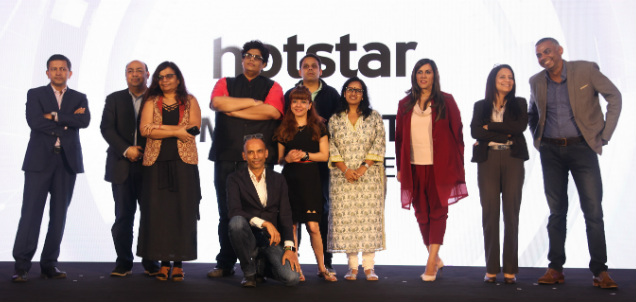
    On the stage were: Ajit Mohan- CEO, Hotstar, Anupriya Acharya- CEO Publicis Media, Anuradha Aggarwal- CMO, Marico, Arun Iyer- Chairman & CCO, Lowe Lintas, Juhi Kalia- Head of India & Anthology APAC for Creative Shop, Facebook, Rahul Johri- CEO, BCCI, Mohit Kapoor- VP Advertising, Reliance JIO, Sam Singh- CEO- South Asia, GroupM, Sapna Chadha- Head of Marketing, India and SEA, Google, Siddharth Banerjee- EVP, Marketing, Vodafone and Tanmay Bhat- Co-Founder, AIB.


    Said Vikram Sakhuja, President, The Advertising Club: “The Advertising Club has been at the forefront of driving the A&M industry’s excellence agenda. We are constantly creating forums that enhance the learning curve of the fraternity. With D-Code we have created another engaging property that bring together the industry to debate and deliberate on the stimulating issues of the digital ecosystem.”


    Added Aditya Swamy – Managing Committee Member, The Advertising Club: “I have always believed in the power of colabs. Inspire and be inspired was the theme of D-Code and bringing together key stakeholders across the industry to crack the digital code was an exciting idea. From my days at MTV where we looked to marry pop culture and brands to now at Google where we unlock the power of digital and tech to deliver value to advertisers, this is a journey that only throws up more and more interesting opportunities. I look forward to being in the centre of this equation as we build centres of excellence.”


    And this is what Punitha Arumugam – Managing Committee Member, The Advertising Club said: “Our endeavour while curating D-Code was to create a platform that would showcase pioneering work on digital and facilitate ideas exchange within the fraternity.  We have tried to bring representation of all facets of digital with the versatile panel of stalwarts from across the M&E industry.”

    The five key learnings that the advertising, digital and marketing mavens agreed upon were:

    1. Digital is a medium that everyone is experimenting with and no one exactly knows how to ‘crack-it’. The need of the hour is to approach it with an open mind, keep experimenting and learning from one’s own and each other’s strategies.

    2. Digital as a medium does not exist in a silo. All that media needs are great ideas, beautiful craft and creative people who can utilize the right tools to gain success.

    3. One needs to invest in the right marketing technology, tools, talent and partnerships.

    4 .To execute successful digital campaigns, one needs to fully leverage digital signals, customise messaging, employ data and have performance-oriented goals.

    5 .Partnerships are critical in making digital campaigns effective. Scale for both a campaign and digital as a medium of marketing can be amplified when the power of partnerships is harnessed.

    And one last cool thing about the event: Save Rahul Johri, who we are sure is crazily busy, everyone stayed on till The End. Now which A&M gyaan conference do you find speakers not scooting off after their sessions (and those nine minutes more)?!

    If you want to get an idea of what the three tips each that everyone offered, we recommend a scan of the Twitter timeline of The Ad Club (at https://twitter.com/adclub_in).