Author: mxm_india

  • The PHD of growth

    Pizza Hut Delivery (PHD), not just an adjunct of the main pizza brand but one which is positioned as a sub-brand of Pizza Hut, has been slowly but steadily increasing its footprint across India. PHD is actually a global concept which was launched in India in 2007 though it has kept away from limelight until now, as the company had decided at first to focus on providing consumers with a world-class dining experience in-store. The focus on dine-in was also because the delivery market had not really evolved at that point. But now there has been a change with people being more amenable to the home delivery option, hence the need to step up the PHD offering.


    The Indian food and beverage industry has been showing a healthy growth in the last few years and if one were to look at the organized pizza market, it would now stand at approximately Rs 450 crore and is growing at almost 25 percent year on year; the average bill size has also increased in the last few years and one can easily put a conservative figure of a 15 percent rise in that amount. With the trend showing a rise in home delivery, it is natural that Pizza Hut would tweak its offering to reach those potential consumers. In fact, its competition Domino’s has built its whole communication around the fact that it delivers in 30 minutes or the customer gets the pizza free.


    Ashok Bajpai, General Manager, PHD, explains the strategy behind bringing PHD into prominence. He said, Over the years, the delivery segment has gained importance in India and PHD has the ability to provide great tasting pizzas, pastas, garlic bread, desserts and drinks right to your door. We are committed to bringing restaurant-quality food to the homes of our customers. Also consumers today are increasingly looking towards delivery as an option to enjoy restaurant-quality food in the comfort of their home.


    Mr Bajpai added that the time has come for PHD to expand faster. Pizza Hut Delivery ensures that it fulfils its promise of delivering great tasting food, hot, to its consumer’s doorstep every single time, he added.


    PHD’s premise of hot pizzas delivered to the doorstep takes the form of the hot dot, which is a heat-sensitive sticker on the pizza box. If the dot is hot, so is the pizza inside. This replicates the restaurant offering of a hot pizza on the spot, and combats the concept that home-delivered pizza is not hot enough, which is sometimes a deterrent.


    Currently, PHD stores stand at 37 and the focus is to bring the number to 300, countrywide, by the end of 2015. Mr Bajpai is of the opinion that delivery is still nascent and more of a metro phenomenon. He said, India is growing at an unprecedented pace and in the future, a lot of action will be seen in tier 2 cities and other smaller towns. PHD is now one of Yum’s fastest growing brands.


    Aren’t Pizza Hut and PHD in conflict with one another? At Yum!, rather than conflict, PHD is seen as growth driver. While Pizza Hut is gaining prominence in Affordable Casual Dining (ACDR) space, PHD is developing the growing delivery business in the country, concluded Mr Bajpai.


    The challenge for Pizza Hut will also be from many QSR that has emerged in a short span and specializes in Indian food like Goli Vada Pav and Kaati Zone. There are also many local pizza brands like Pizza Corner, Slice of Italy or the homegrown US Pizza, and all of these either are QSR or focus on home delivery. Hence, if Pizza Hut is stepping up its focus on PHD to grow, it is in sync with the demands of today and with future growth strategy.

  • Spikes Sidelights | No random networking

    By Chhaya Balachandran Aiyer
    It was an insightful weekend at the Mandarin Oriental Singapore reviewing some of the best works from across Asia. But before I get to that, let me say that the dinner on the evening before we actually sat together to review the work, helped to get together and know one another, be familiar with the professional backgrounds to set the pace of views and reviews that would be relevant over the next two days.

    Rather than an informal dinner setting I appreciated how Spikes Asia had organized a sit down dinner where each jury was assigned their table to group together with their co-members. So there was no random networking, and no one was left out of the conversation. It was a very
    productive dinner so to speak.

    The next two days we started really early, well yes by Indian Standard Time, it was a 6 a.m. Fortunately I was able to be wide awake for the prospect of reviewing work with people across the Asian region was definitely exciting, plus to have anyone from Crispin Porter + Bogusky to chair the meet was an equally if not more exciting prospect. And Jeff Benjamin, chief creative officer CPB, the jury chair, was someone I did learn from over the last two days. I was humbled of course by the kind of work that rest of Asia is producing. And yes, barring an idea or two, saw how far away we in India are from thinking beyond getting the basic’s right, executing great ideas, and presenting stuff in a manner that can capture the juror’s attention.

    We had some fun during the day of course. There was the jury photo shoot where the jury chair more than we women on the jury was concerned about the effect of blowing wind and his flying hair, and well, when a couple of guys decided that the silence from the next jury room was killing. So a `help me’ note was slipped under the door, a lot of sound effects were created so it would get noticed and we get some reaction, but the note was totally ignored :P.

    Finally the day was over. We finished with champagne by the poolside last evening after we had finally decided on the metals. It was refreshing. Jeff ordered some Singapore Sling shots, to top it, and that was a nice lift to the end of the day.

    Hope to catch up on the some of the sessions today at the Festival, and some of the after dark parties organized by some of the agencies here in Singapore this evening.

    Chhaya Balachandran Aiyer is founder and managing director, BC Web Wise

  • Day 2 of Spikes Asia gets underway

    By A Correspondent


    Spikes Asia took off in Singapore yesterday with India dominating the participating countries in the awards event with 612 entries. Celebrating creativity in advertising and communications, the three-day event is the apex congregation of the trade in the region.

    “As the largest awards in Asia Pacific, we are delighted with the continued support of the industry in the region, demonstrated by this incredible growth. Spikes Asia is the place to see the region’s great creative work across all the different disciplines, including the two new categories for this year – Mobile and PR. Winning a much sought-after Spike, provides important recognition, inspiration and motivation for both agencies and clients alike,” said Mr Terry Savage, Co-Chairman of the Spikes Asia. “With a record number of attendees this year, Spikes Asia is set to be a great event, with much to learn and discuss,” he continued.

    During his session, Mr John Wren, President & CEO, Omnicom Group had summed on the must-have’s among the people they hire-high energy, talented and nice. He also dubbed mobile as the core to change in future. He also pointed that Asia is the growth center for marketers and its here that they can achieve the greatest growth.

    Mr Stephen Kim, General Manager, Global Creative Solutions, Microsoft discussed the journey of storytelling and pointed that every brand and every consumer has a story to tell and as marketers, it is important resonate these stories with the consumers.

    There was also a presentation on `Lessons In Creativity And Innovation From The Simpsons’ by Mr Joel Cohen, the Writer and co-executive Producer of The Simpsons. Mr Cohen attributed the success  of the Simpsons to the environment in which it is created and also reminded the importance of connecting with the audience before innovating.

    There are many more sessions that delegates are making a beeline for. These include Creativity & Fear by Todd Sampson, CEO, Leo Burnett Australia, Does Creativity Make Advertising More Effective? by James Hurman, Planning Director, Colenso BBDO and The Gamification Of Marketing by Laurie Coots, Chief Marketing Officer, TBWA\Worldwide among host of others.

    The grand awards event will be held tomorrow evening.

  • CNBC TV18 hosts conclave to fete Young Turks

    By Akash Raha

    CNBC TV18 hosted the Young Turks Conclave in New Delhi on September 20, 2011.  The conclave showcased “The Power of Dreams” through young entrepreneurs and their success stories. The inaugural speech in the conclave was given by MsKiran Majumdar Shaw, Chairman and Managing Director, Biocon.

    Other eminent speakers who graced the CNBC TV18 conclave were Mr R Balki, Chairman & CCO, Lowe Lintas India, Film Director; Mr Aditya Ghosh, President, Indigo Airlines; Mr Ajay Jadeja (Former VC, Indian Cricket Team and Commentator and Mr Rajeev Samant (Founder& CEO, Sula Vineyards. All the speakers shared their views and ideas on triumph at the backdrop of their own success story.

    Mr Balki said for a long time he did not know what he wanted to become, till he entered the field of advertising, which inspired and enthralled him. Likewise, Mr Jadeja shared his story from his early days in cricket and spoke about his ups and downs. He stressed in the importance of persistence on the path to success. Mr Ghosh charted the struggle Indigo Airlines had to go through to chart their way to success over the past five years. He spoke about the intricacies of the airline industry and gave several examples to drive home his point. Likewise, Mr Samant spoke about one of India’s first and most successful wine companies, Sula, and explained how through immense hard work and hardships it has become a famous name in the wine industry.

    One of the biggest entrepreneurs of our time, Mr Kishore Biyani, Group CEO, Future Group spoke last and duly summed up the ethos of the conclave through the story of his own Group. The success story of the group, as portrayed by Mr Biyani, was emphatic to say the least. The day’s event and discussions were moderated by Ms Shereen Bhan, Executive Editor, CNBC TV18.


  • Design submissions invited for classical publications library in India

    By A Correspondent

    Harvard University Press is inviting design submissions for the Murty Classical Library of India, a publication series slated to debut in 2013 that will bring the classical literature of India to a global audience. The designer of the winning series logo, logotype, and jacket design will receive US$10,000 and jacket credit on all books in the series.

    The Murty Classical Library of India (MCLI), established through an endowment gift from Rohan Narayan Murty and the Murty family, will provide new English-language translations of works written in Bangla, Hindi, Pali, Panjabi, Persian, Sanskrit, Tamil, and other Indic languages, with the original text on the facing page.

    Harvard University Press Executive Editor-at-Large Ms Sharmila Sen noted, “Because the Murty family founded the MCLI in order to bring the rich literary heritage of India to the entire world, it is especially fitting that we issue an open invitation to generate a design for this landmark series.”

    Mr Tim Jones, director of design and production at HUP, added: “India’s classical literature is uniquely diverse—geographically, linguistically, and thematically—making it a special challenge to visually convey the scope and richness of the MCLI. We’re holding this contest so that designers of all backgrounds and experience can help us find an iconic way to represent the writings’ diversity.”

    Designs may be submitted until December1, 2011. Residents of, and design firms based in, the US, the UK and India are eligible to enter. Details, complete rules, and entry form are available at www.murtylibrary.com.


  • Chauthi Duniya plans English weekly

    By Akash Raha

    Mr Santosh Bhartiya, Editor, Chauthi Duniya told MxM India that the group is soon planning to launch an English weekly magazine. He said that it might still take a couple of months before the publication is on the stands, and it seeks to be successful in the political magazine space.

    According to Mr Bhartiya, “It will be a hard-hitting political magazine with excellent content. We are on our way to building a strong team and we shall launch thereafter. Like all other publications and offerings of our group, the English magazine too shall become a personification of excellence in journalism”.

    He also said that a plan for a TV channel is in the works, after the success of their internet TV. “We have had a phenomenal response from our viewers on our internet television, and they themselves have written to us to start off with a new television channel, as they are tired of watching PR-pushed news. They admire us for dedication and credible journalism.”

    It is noteworthy that not too long ago, Chauthi Duniya group had launched its weekly Urdu newspaper, which is also available internationally. The total circulation of the weekly newspaper (both nationally and internationally) according to Chauthi Duniya is about 45,000 copies.

    What they think

    “We don’t yet know what the look and feel of the magazine is going to be like, but the concept of a political magazin’ certainly sounds interesting,” said Ms Surbhi C Murthy, Associate Vice President, Allied Media, Delhi. She went on to say, “I think that there is a lack of political magazines in India. Tehelka is a good read and a fantastic product, but even though it takes up political issues seriously, it is not a completely political magazine per se. Other magazines like India Today, Outlook, Open, The Week and the likes of them, do good political stories, but at the end of the day they all general interest magazines.  I think that there is still a lot of scope for a good political magazine to come in and create a niche for itself. Content is obviously going to be the key for Chauthi Duniya, but other key factors include the distribution and feel of the magazine”.

    When asked whether there is a space for a political magazine in the market in the current scheme of things Ms Mousumi Kar, General Manager, North and East, Maxus said “Political awareness is on the rise as people are questioning government policies and agenda.There is room for hard hitting political journalism that is willing to reflect plurality of opinions and remain non partisan.”

    Chauthi Duniya is known for its scathing news stories against corruption and political malpractices. It is also Hindi and Urdu offerings in print too are doing relatively well. Chauthi Duniya’s newest offering may well take the media world by surprise.

  • Lever wants more lather from personal care products

    By Kala Vijayraghavan & Sagar Malviya


    In the 1920s and 1930s as radio caught the imagination of Americans, Procter & Gamble (P&G) moved in to sponsor programmes, giving birth to the term ‘soap opera.’ Over the decades, P&G even began producing soap operas. Suddenly something changed a year ago. The maker of Tide detergent and Ivory soap discovered Facebook, Twitter, Youtube and its countless cousins. By the end of 2010, P&G announced that it had bid goodbye to its association with soap operas and instead embraced social media.


    Back home, P&G’s global rival Unilever too is moving along similar lines. It’s not as if the Indian affiliate, Hindustan Unilever Ltd (HUL), is washing its hands off soaps. Rather, soaps and detergents are no longer the biggest winners for HUL. The new hero: the personal care portfolio – from Pond’s cream to Dove shampoo – which now accounts for three fifths of profits as against two fifths eight years ago.


    At 47%, soaps and detergents still contribute the most to the top line but only a third of profits. Personal products (PP) account for 28% of sales and that will keep increasing in the years ahead on the back of new product launches, new category creations and brand extensions. Consumer analysts at Standard Chartered Research expect “continuous launches in the fast growing personal care segment such as Vaseline for men, Pond’s Gold radiance, Dove hair care range to increase PP’s contribution to 32 per cent in 2013.”


    That shift will be even more pronounced in the years to come. For two reasons: Unilever’s CEO Paul Polman wants three fourths of the global operations’ sales to come from developing markets. And most of that growth is going to come from health and personal products as awareness levels and exposure to new lifestyles increase in countries like India and China.


    What’s more, soaps and detergents are well penetrated categories where growth rates have to taper off sooner than later. Cut-throat competition on price with P&G and a rush of domestic brands will also play its part in slowing growth in this segment. On the other hand, penetration levels in personal care and packaged foods are still in low double digits.


    “Our strategy is consumer-led,” explains HUL CEO Nitin Paranjpe in an emailed response. Growing affluence levels, a younger population and changing aspirations and attitudes towards consumption are driving growth in personal care and packaged foods, Paranjpe points out. “Our investments in these segments reflect the changing consumption structure in India.”


    Hair care or shampoo is clearly HUL’s mainstay in PP. With brands like Clinic Plus, Sunsilk and Dove, the consumer products giant has a share of just under 46% of the shampoo market. The other pillars of growth are skin care where, in the premium fairness category in urban areas, HUL has almost 38% of the market in the bag.


    Meantime, HUL has also been entering other categories. Over the past year, for instance, it extended the Dove brand into face wash and launched the Sure brand of antiperspirant deodorants for men. Fair & Lovely(FAL) has also been extended to FAL Multi Vitamin Face Wash and to the Anti Marks Eraser Pen.


    Bringing in international brands like Sure is one part of the game plan. Extending some of HUL’s timeworn brands – including those of soaps and detergents – is the other prong. For instance, mass soap brand Hamam can now be seen in the hand wash segment; and the Rin detergent bar has been stretched into fabric whitening. And one of HUL’s oldest brands Vaseline has found its way into male grooming segments such as skin cream, face and body wash.


    In a recent internal presentation, marketers let on that HUL has a 30% share in the hair conditioner category worth 27 million euros, which is growing at 40% annually. Business in the face cleansing segment has doubled in a year through deployment of a portfolio of brands including Ponds, Pears, Lakme and Fair & Lovely. The presentation also made the point that “in the case of premium skin care products we are focusing on premium skin lightening and anti-ageing with Ponds, Vaseline in hand, body wash and men’s grooming.”


    If Paranjpe and the HUL top brass are keen to pump up the PP volume, it’s also because profit margins are higher there. Analysts reckon that operating margins in PP are 25% whilst in soaps and detergents they have declined from highs of 14% a few yeas ago to 7.5-9% now.


    Rivals, however, sound a note of caution. “The personal care industry was seen as a high margin business, but the recent spike in raw material prices and the disruptive competition in the market have seen margin profile of this business change completely,” says Dabur India CEO Sunil Duggal. Analysts reckon that margins in PP would have come down by 150 basis points over the past 3-4 quarters.


    Adds Harsh Agarwal, Director, Emami: “There is a misnomer that the personal care segment has very high margins. But it may not be so in mass-priced products where gross margins depend purely on the brand’s pricing power.”


    Just like in soaps and detergents, HUL too has to reckon with intensifying competition in PP. Emami with brands like Fair & Handsome, which is a market leader in skin care for males with a 60%share. In 2010-11, Dabur’s skin care portfolio reported a near 17% growth led by robust growth across the Fem, Gulabari and Uveda brands.


    And a clutch of international cosmetic and personal care majors from L’Oreal to Shiseido are keeping HUL on its toes in higher end segments. Still, with relatively new-found categories face wash, hair conditioners and anti-ageing creams opening up, HUL may well be looking at a fairer and lovelier in the road ahead.


    Source:The Economic Times

    Copyright © 2011, Bennett, Coleman & Co. Ltd. All Rights Reserved

  • Spikes Sidelights | Not a spectacular night

    By Chhaya Balachandran Aiyer

    Finally, the grand evening, the Awards Night for Spikes Asia at the Esplanade Theatre. I must admit the evening was not as spectacular as I thought it would be. It was a laundry list of awards being given out. But the highlights were, as it should rightly be to see the presentations and films for the Gold and Grand Prix winners. That I must say, almost all of them made me believe in advertising and
    communications all over again. It was fascinating to see some awesome craft and design work in particular. They did let the imagination take leaps and bounds.

    It felt very good whenever `India’ won something and whenever any Indian walked up on stage. It felt good to see Samsonite win the Advertiser of the year award and an `Indian’ who was the Asia-Pacific head, Dr Ramesh Tainwala of the Tainwala Group that Samsonite has its joint-venture with, walk up on stage to receive the award.

    A simple man, simply dressed, humble to say he is not used to it, and who said the best of things any agency, in this case JWT, would love to hear, and ensured that the Indian arm Contract got a mention too when he was up there on stage. That speaks volumes about the person, and I guess a reason why Samsonite is such a big success in the region, they got the best partners in India.

    I skipped the party thereafter at a place called `Indo Chine’ I think, hosted by Leo Burnett. Thought I would catch an early nights nap, for we leave the hotel tomorrow morning at 7 a.m for the airport, and that is 4.30 am India time.

    Signing out from Spikes Asia… thank you, it was fun and a great learning opportunity in many ways.


    Chhaya Balachandran Aiyer is founder-managing director, BC Webwise

  • Anil Thakraney’s Hard Knocks: What use IIM degree if you are Mr Crude?

    I recently shut my account with a well-known international bank. After nearly nine years of really poor experiences. And I took this long to pull the plug because, one, I used to think, well, at least this was a known devil… who knows what awaits elsewhere. Two, many of my clients directly remit funds to my account, so it’s painful to reinvent the wheel. And three, because I genuinely believe people should be given many opportunities before you hang them.


    Anyway, guess I made a serious error of judgment. Not only was the account ill-serviced right through, the last straw that broke my back was when a few cheques I had issued bounced, leading to loss of face for me. And I knew I had more than sufficient funds in my account so this could not be happening. Panicked, I dumped urgent assignments, and rushed to the nearest branch of the bank. Where I was cheerfully told my account had been blocked. Because I had failed to submit some documents required for a business account, as prescribed by a new RBI guideline.


    And I was like, “Whoa! No one told me!”


    This is what happened: I was told my so-called “Relationship Manager”, whom I had never heard from in all these years, is based in Delhi, and that I should talk to him. And the reason they’ve allotted me a dude fromDelhiis because that’s where I opened my account in the year 2003. No matter that I left that city in the year 2004, and my Mumbai address has been in the bank’s records for all these years. And this gent very sweetly tells me he called myDelhimobile number (!) and wrote to myDelhiaddress (!), because at his bank they only use contact details that appear in the account opening documents! And that on getting no response, he blocked my account.


    Er, chief, why didn’t you check the records carefully to see if my address had changed? The Mumbai address has been there in the bank’s records for years, they have been sending me monthly statements at that address. “Sorry, that’s not in our standard operating process,” he chirped. Half an hour later he magically accessed my e-mail address, and mailed me the notification which I should have received months ago. And despite speaking on the phone for 20 long minutes, the mail addressed me as “Dear Ma’am.” And not even a little word of apology to dear ma’am for all the inconvenience caused.


    You might wonder why am I boring you with this sorry tale. Here’s why: There’s a lesson in this for all those senior managers who operate in the service industry. Advertising, banking, telephony, corporate communications, PR, etc.  Where direct customer interface is par for course, is full-on, is integral to the operations, and is critical to the survival of the business. That, when you hire young people, please don’t do so based purely on qualifications and experience. Those are important but secondary. The first quality interviewers must suss is the candidate’s people-handling skills, his response in the face of an upset client, his demeanour when his own organization is in the wrong. And most importantly, how he deals with a situation where the client has faced embarrassment for no fault of the latter.


    Because when the employee behaves like a moron in such circumstances, it DIRECTLY hurts the company’s business. There is no point in fancy management degrees if you lack basic communication skills. It’s anathema to hire such people in an industry where communication is at the heart of the business.


    ***


    PS: Was much intrigued to find Sachin Tendulkar in the children’s “Right to Education” ads. Our hero dropped out of school to pursue his passion, and then went on to make billions out of it. And the rest of the bachchas must sadao inside classrooms and become managers of post offices? Haila, not on, I say! 🙂

  • Spikes Sidelights | Partying hard at Spikes Asia

    By Chhaya Balachandran Aiyer
    So it was a crazy time partying last evening. I left with Bo Hwang, ECD and VP from HS Ad Seoul, LG’s in-house agency. We had to decide which of the parties to go to! There was Ogilvy and Lowe starting at 7 pm and then a JWT party, one by TBWA and may be one hosted by McCann.

    I wasn’t really aware about the latter two. Anyway we decided to go Ogilvy first because our friend Johan ECD from AKQA suggested we are going to get some food there too. So there we made it by about 8 pm. And what did we find. Right outside the building before we entered we were accosted by a very attractively decked carnival woman, with all shiny blue sexy costume and those large plumes sticking out from her headdress and a very pleasant young man, and painted bus asking us to head to the Street Carnival organized by Lowe!! Ha ha.. so yea they did their best to redirect the crowd from Ogilvy, and I found out later that they were pretty successful. Bo and me decided to head upstairs anyway.

    So the Ogilvy party was happening at a newly opened office… so it was empty unfurnished. There were some 5 women who flocked over to Bo as soon as we entered!! And I was so impressed with BO from then on. Yes, I really liked him till then, and now I found out that he was so popular with women from around the globe.

    We made our way through the fairly packed place at Ogilvy… we got our glass of red wine, no food though J. I think Bo managed to get himself a bite or two. I had to make it right downstairs to grab a smoke. But yes I made friends with Emma Osborne, MD from Aspire Gobal Neworks who down there for a smoke too and holding two red balloons that flew away. And then back up with a cute little girl Jenny Choo from Breakfast Film Seoul. She was going to entertain me I realized , more than I expected much later in the evening.

    So yeah, JJ from Ogilvy One had it organized for us, we were to go in his car for the next two parties and we made it to the Lowe Carnival at the junction of Ann Siang Hill and Club Street. And was that place packed.. the street was overflowing from the likes of Madison Av. Asia . There were 3 pubs that were blocked by Lowe and people with drinks were inside outside everywhere. Jenny was soon garlanded with a scarf of pink feathers… and we got our drinks. We also got some real food and some 5 of us were placed ourselves next to the snack counter and made friends with loads of people there.

    Finally we headed to the JWT party on the rooftop of the building their office was in. Yeah, and this is where Jenny gave that moment to remember. The rooftop has this little shallow pools all over. And Jenny walked straight into one with her plumes and all.. her little black dress and black pointed heels.. and she managed to ensure that her glass of wine did not fall.. it was an awesome sight. I was right next to her.. tried to stop her.. but it was too noisy for her to hear. So yes, then I did help her out of the water apologizing all the time as I was laughing my heart out, and then did not feel guilty
    ‘cause she could not stop laughing too. And yes.. so we laughed for rest of the night we simply could not overcome that scene. JWT party had the best music, I must admit. I couldn’t catch the DJs name. Some fireplay was organized but those are the kind of stuff we find on the beaches of Goa, so nothing spectacular. What was sad though was when the drinks ran out pretty fast and all the bar seemed to have was warm beers.

    Johan, Bo, Jenny and me decided to head back to the hotel, tried to find out if the Post Office bar on the way was open, but we could order just one last drink so we headed straight back to Axis Bar at
    the Mandarin Oriental where we all stayed.

    That was the end to last evening or early morning hours of today. Now heading for the Awards Night and the After Party… . J

    Chhaya Balachandran Aiyer is founder-managing director, BC Webwise

  • SAB meets the laughter challenge

     By Dhara Salla


    Cluttered as the General Entertainment Channel (GEC) space is with new shows and many new channels, one that stands out is Multi Screen Media’s SAB, which makes the most of the relatively unexplored comedy genre and has posted tremendous growth.

    Competition

    It is always a point of benefit when there is less competition or no competition at all and there are hardly any channels in this genre. Mr Anooj Kapoor, EVP and Business Head SAB reasons, “We are the pioneers and it becomes easy to stay on the top when there is less competition. But there is a tremendous dearth of comedy talent in the industry. It is difficult for the new entrants to tap into the existing pool of talent and still churn out so many comedies. On the other hand, more players entering this genre could attract new talent to the industry and expand the talent base.”


    The secret of success

    SAB has been able to achieve a growth of 500 percent in the past three years, with its success attributable to mainly two reasons. Firstly it provides clean comedy and family entertainment which helps to generate stickiness among the audience. The target audience for SAB is the age group of 4+, hence it gets a huge viewership benefit. Besides, the channel’s tagline is “Asli maza sab ke saath hai” which is underlined well by the shows on SAB. According to Anooj Kapoor, EVP and Business Head of SAB, “We have brought the concept of the joint family in with a positive face, unlike other soaps which convey a negative sense, which is one of the reasons we have been able to achieve our targets.”


    SAB is also trying to be a pan-India channel so as to increase their viewer base, with soaps like Tarak Mehta ka Oolta Chashma which has a Gujarati backdrop, Chintu Chinki Aur ek Badi si Love Story set in Bhopal, Ammaji ki Gali with a Punjabi flavour, and mostly all their shows currently sporting a regional connection.


    One problem that most GECs are facing is audience fragmentation, due to the wide variety of choices available. SAB has turned this to its advantage as its audiences are not fragmented. Other reality-based comedy shows don’t offer much competition as they are projected mostly towards male audiences, and SAB still garners the major chunk in the comedy market.


    Mr Anwesh Bose, Head North/East, Mudramax, states “SAB has taken a quantum leap. In the past SAB was selling at a rate of 800 and then moved to 2500 per 10 secs spot in the prime time but now it has touched 8000 CPRP. For advertisers today it promises a stable ROI.” He further adds, “All the brands that target the HSM would like to advertise on SAB. At the GEC 1 level it becomes expensive to enter with the rate of 13,000-14,000 CPRP so SAB becomes an entry ticket for brands to advertise, which is very cost effective.”


    Future plans and growth

    SAB is all geared up to face the new challenges, “We are coming up with a reality show which would happen in the next couple of months, but unlike other stand-up comedy shows, it would be a comedy reality show of the families, by the families and for the families and are also coming up with two-three new soaps by the end of the year” confirmed Kapoor. On a final note, Kapoor reveals the expectations of touching 200 GRP’s by the end of fiscal 2011.


    Mr Sathiraju shares, “Sab has a good potential. But currently the skew is too much towards Gujarat. Therefore if, for my brand, Gujarat is not a market then I wouldn’t even consider, alternatively if Gujarat is my key market, I would certainly consider. Probably the channel therefore has to relook at this and ensure that the skews are also balanced.”


    Mr Bose forecasts, “While SAB can never reach the number one slot in GEC’s, though they are number one in comedy genre, but today to be on the fifth position among the GEC is a great achievement. It is a steady progression. They can reach to 10,000 CPRP. The Indian advertisers don’t give in so easily but the road looks brighter”

  • Paid news: Who will bell the cat?

    By Akash Raha

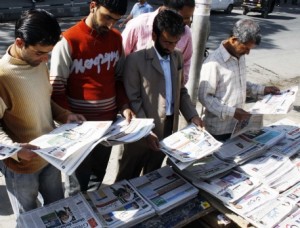
    While it is generally agreed that paid news is a menace, newspaper editors across India are averse to the idea of a government regulatory body to check it. It could turn out to be a Big Brother and usurp the freedom that the media enjoys today. Yet, it is also acknowledged that something does need to be done to stop the iniquity of paid news, which affects the whole industry.

    Some critics suggest that a government-funded body be found which can be a regulator, yet remain independent of government intervention. Such a body will also be independent of media and corporate interests. The regulator thus formed will not only keep the print media, but also the electronic media under check from paid news. Some editors have suggested that the Press Council of India could be the regulator and given more teeth to take punitive action. As the debate seethes, MxM India reflects some voices and concerns from the industry.

    Paranjoy Guha Thakurta

    I think that organizations which indulge in such malpractices are undoing their own cause. Putting up ads in the name of news is not going to help them in the long run. Hence, it is in the self-interest of the media to act in a more responsible manner and discontinue such unethical practices. Moreover, now it is up to the Election Commissioner or India, Securities and Exchange Board of India (SEBI) and a group of ministers, a process that has already been initiated, to decide whether the government will make the law bring the corrupt practice of paid news under the conduct of election rules. What the group of ministers will eventually decide I cannot guess, but I think such a step should be taken.

    Some government intervention and interference is perhaps required if media can’t keep its own actions under check. Self-regulation is good, but only when everyone behaves like nice guys and we won’t have a problem. It is because self-regulation is failing, that’s why you need an independent regulator. I think the regulator should be independent of media and other corporate interests. Likewise, it could be funded by the government, yet not directly under the government.

    Moreover, whatever regulatory authority is set up, it should be empowered. Right now, we have the Press Council of India (PCI) which is a quasi-judicial authority, but unfortunately, it has no punitive powers. It can’t punish a journalist or newspaper management indulging in corrupt practice. Even if the PCI says that a particular newspaper should be denied government advertisements, which are released by Directorate of Audio Visual Publicity (DAVP)… Even that the PCI does not have the power to ensure that it is implemented. Government bodies are not obliged to implement the recommendations of the PCI. So basically we currently have a PCI which is toothless body without punitive power. On top of that the electronic media does not come under the purview of the PCI.

    Jayant Mammen Mathew, Deputy Editor, Malayala Manorama

    “I am not sure how paid news came in to being… However, I think the reader will see through those carrying paid news and this will ultimately end in erosion of trust the reader has with the newspaper. The Malayala Manorama group’s editorial policy is very clear about paid news. We have a zero tolerance policy and we are completely against paid news.”

    Shashi Shekhar, Editor, Hindustan

    I am strongly opposed to the idea of government interference in any form. It is true that paid news has to be checked, yet government interference is going to mess with the workings of the media industry. Debates are on in the industry if self-regulation is the best and the media industry as a whole should decide what is best for it. I can’t speak for other media houses, but as far as we are concerned, we have given a signed affidavit to the Editors Guild to stay away from paid news.

    Kulbir Chikara, Group Editor, Hari Bhoomi

    The problem of paid news cannot be solved by government intervention and there can be no law to differentiate between paid and un-paid news. Moreover, paid news can be camouflaged to suit purpose. For example, liquor owners were banned from advertising their product, but they have camouflaged their way out of it. Those who want to indulge in such malpractices will always find a way around it… There is a massive difference in promotional feature stories and paid news in political context. I think the second is more harmful as the future of India depends on it. It is indeed a problem when the readers are unsure whether it is the neutral media speaking or a political party. Such practices are bad and unethical. I think the efforts of PCI and government will be of no use till news broadcasters and publishers themselves understand that such practice hits credibility and thereafter the whole business. Regulation or law of any kind, according to me, will be ineffective.

    Ranvijay Singh, Group Editor, Rashtriya Sahara

    I strongly believe in the ethics of journalism and hence, evils such as paid news should be done away with. Having said that I am totally opposed to any sort of government role in this matter. I think that there is still a substantial part of media who are driven by ethics and they will decide the course of what should be done to curb paid news. I think PCI should come up as a strong body. PCI should be able to impeach a journalist or media house if there is evidence against them.

    Shyam Parekh, Resident Editor, DNA Ahmedabad

    I feel the newspaper industry survives on credibility. If newspapers lose credibility, there is no business. I am talking not only talking in terms of being a journalist but also in terms of the business. Newspaper is the first thing a consumer spends his money on to begin a day, and he would certainly not like to read bogus news. Eventually, the audience will see through the network of paid news and will stop spending time on something which is not in his interest, but in someone else’s interest.

    Sachin Kalbag, Editor, Mid-Day

    My opinion on paid news is very simple: It’s an abhorrent practice. It demeans journalism. I don’t really know when this crept in, but it has plagued the media for decades. Unscrupulous journalists have been on the take for several years, and this is not a new phenomenon. The widely cited example of institutional selling of content space is Bombay Times which introduced a rate card for coverage in the supplement. Recently, the supplement began putting a disclaimer under its masthead. The phenomenon of institutional selling of content space crept into the media for various reasons – but the root cause was always to increase revenue.

    Our editorial policy is very clear: any “Advertorial” is placed in a two-page section called Centre Stage, which is part of the Classifieds section of the newspaper. Centre Stage in Mid-Day is differentiated in various ways from the editorial part of the newspaper. Here’s how: 1) The Centre Stage carries a prominent disclaimer in a large point size under the masthead “People, Parties, Promotions”. This has been happening since the day Mid-Day started Centre Stage, which was more than two years ago. In Centre Stage, we carry items on movie releases and profiles of actors, fashion designers, parties, etc, that happened in Mumbai that week, apart from product launches.

    Close to 85 percent of the Centre Stage advertorial section is non-paid, that is to say the Centre Stage team of writers (this team is not part of the Mid-Day editorial team) interviews people or writes about their parties or products. Around 15 per cent of the items are placed where the content space is sold by the sales team. Once again, these items are only about Bollywood, fashion, parties or product launches. There is a separate, specialized sales team that sells this space, and at no point in time do they dictate terms to

    Editorial, mainly because Centre Stage is not editorial space, but marketing real estate. In fact, there have been several instances when the Editorial staff in Mid-Day has trashed Centre Stage advertisers in the review section of the newspaper, and the sales team has gotten into trouble due to that negative coverage. Yet, we are very clear at Mid-Day that the Sales and Editorial wires do not cross, and that the Chinese wall between them stays even though we may be good friends outside the office.

    We are also very clear that Centre Stage will not carry any “news”, but only information on these three or four categories listed above. There is neither any opinion nor any recommendation made in the section that is endorsed by the editor. In the strictest sense of the term, it is an advertorial. Mid-Day, therefore, has stayed away from “paid news” and will continue to do so.

    Photograph: Fotocorp