Author: mxm_india

  • First on MxMIndia: Pioneer bags BEST tender

    By Nibha

    Pioneer Publicity has won the BEST (Brihanmumbai Electric Supply and Transport Undertaking) tender for advertising rights on single and double-decker buses. Established in 1873, BEST operates one of India’s largest fleet of buses.


    The company has won the rights for three years – 2011-14 – for about 4050 old buses in all.


    Confirming the same, Mr Sunil Vasudeva, said on the win, “We worked for BEST from 2002-2008,after that the business went to Bright Outdoors. Now, we have the business again with an account size of 85 crore.”


    Prior to this development, Bright Outdoor had owned the ad rights to the buses, but, as reported by MxMIndia, due to heavy losses it had withdrawn from the tender.

  • Must make OOH likeable: Daniela Krautsack

    Mainstream advertising is going non-traditional; print media has caught up with viral; it is a manifestation of media in which the logical conclusion seems to be 360° surveillance.

    How does the consumer cope with the futuristic outlook of a media world in which everything seems to be public and nothing is private any more? Does the media industry’s guiding light of ‘branded utility’ justify an unlimited use of hi-tech chips and codes? Who are the consumers that voluntarily jump on the ambient media bandwagon?

    Daniela Krautsack, Media Innovation Strategist, Managing Director, Cows In Jackets, talks about today’s global media trends and visions with a critical eye on their creation, their degree of popularity and their lifespan in an interview with Nibha.


    Q: When did you discover your passion for the non-traditional form of out-of-home media?

    It was about a decade ago when I moved from dreamy but advertising ‘old-school’ in Vienna to London. The company transfer within the MediaCom group offered me three simple things: to watch, listen and learn how international media strategy & co-ordination is done. Today, when I look back, I know how lucky I was. “To be at the right time, at the right place.”

    The ‘Find Your London in Yellow Pages’ campaign got me ‘in touch’ with many new forms of media when I travelled from my home in Belsize Park to work in Soho. From the moment that I walked into the station to the moment I walked into our office door, I was touched by ‘The yellow pages points’.

    The company had advertised on the backside of my ticket and even on the wallet that protected it. The entire train and its seat interior were covered in bright yellow design. Never having experienced transit media in this scope before, I felt intrigued to find out more. That was the moment when my exploration started.


    Q: Does the OOH media industry’s guiding lights of branded utility justify an unlimited use of hi-tech chips and codes?

    I would like to define that term ‘branded utility’ first: it means that brands or ideas are genuinely useful to the people they touch. So, how useful are codes and chips and do they ‘touch’? The integration of codes in OOH media in countries such as Japan where I experienced the use of QR (= quick response; a two-dimensional bar code) and other 2- and 3-dimensional codes years ago has not spread considerably across the world – yet. My experience is that the percentage of mobile phone users that have an application installed which allows reading a QR code, has not even in Japan reached the mass. The use outside of Japan is still insignificantly small in order to consider an OOH campaign that would achieve reasonable results. At present, QR codes can be rated as the best and most effective technology for mobile data capture. What I like about it so much is the thought of reducing OOH media to its core function, the visual transfer of a brand and product image with the focus on “image” rather than “text”. Including a QR code within the design of an advertising campaign that uses billboard or any other ambient OOH form allows a “pull” interaction by the recipient of the message. QR technically allows future billboard designs to use significantly less space to transfer lots of information. If interested in the message, people will connect.

    So, returning to your question: Every way that ‘helps’ the community – and this touches current trends such as “economy of time” symbolizing our aim to efficiently manage time – will be embraced and appreciated. I personally do not fear an unlimited use of this code technology. At the moment companies use codes and chips within their communications strategies predominately to play with people’s curiosity and the media’s enthusiasm and willingness to publish these ‘media-first’s’.


    Q: Who according to you are the consumers that voluntarily jump on the speed media bandwagon?

    I am always quite amused to see how small the number of people is that jump on the media bandwagon. When I visualize this ‘future train’, I only count the number of passengers with two hands. I have just been to a party with a crowd of 20- to 40-year olds, people that you could describe as pretty normal when it comes to adopting trends such as the latest technology and fashion and during a discussion, someone asked: “What is a podcast?” I looked around, astonished to experience this lack of contemporary knowledge. I had to realize that only a handful of people knew that a podcast is a word fusion of the word iPod and broadcast, that it is a digital media file and that podcasts allow you to download or stream content about any topic you care about.

    The consumers who are the clever cookies when it comes to being updated of what’s going on around the world in society, culture and technology are those who jump on. And we don’t necessarily only speak about the ‘young’ crowd. They just adapt easier to new technology because they don’t think about it as much as an older, more experienced media consumer.


    Q: According to you how does the consumer cope with the futuristic outlook of a media world in which everything seems to be public and nothing is private any more? Panopticon or individual freedom of expression?

    When I observe the mood and listen to the opinions of people who share their thoughts about the ‘media’ world we live in, I notice that they appreciate the increased opportunity to express themselves, but they are also aware of being monitored. This place can be visualized as a panopticon. We still have a choice to publically plead for a higher sensibility and reluctance to give out personal data to somebody we do not know. The careless behavior of our society to wildly publish every intimate fact bears a huge risk of violating our private sphere.


    Q: What has been your greatest challenge in ambient media?

    Convincing clients who were very sceptical towards this media form. The other one was the launching of a communications agency, ie  entirely dedicated to ambient media and non-traditional strategies and that too at  a time where taking the risk and trying out new things in communications planning wasn’t fashionable.


    Q: How do you define third place marketing and creativity in the OOH media?

    While ‘first places” represent “the home”, a place that I decorate and feel comfortable living in and ‘second places” the ambience of work, ‘third places’ are landmarks with a core attraction of such extraordinary extent that seeing them is an absolute must; thus talk-of-town organically develops. Third places can be museums, wide-open spaces but also supermarkets and shopping malls. They come to life with light, video projections and special installations. These venues feature an emotionally charged ambience and for which there is no admission fee. Without creativity, I dare to say, a third place doesn’t exist. Creativity is one of the cornerstones of the third place foundation. And OOH media logically benefits from the strength of such an eye-catching place.


    Q: What all factors do you take into account when you make a media strategy, which involves innovation in the ambient media?

    • The objectives of the campaign

    •  The demographics/psychographics, moods and opinions of the target group

    • The brand status

    • The competitors’ activity

    • The creative execution

    • The budget

    • Innovative technologies or never used before ideas, techniques or material

    • A measurement tool / method


    Q: According to you what is the approximate share of ambient media advertising in terms of ad spend when compared to the total ad spend in the OOH media?

    Considering the different definitions of ambient media (in the UK, the media industry does not even use this term anymore, they call it non-traditional OOH or brand experience or shopper marketing or stunt, etc) worldwide, I can only give a rough estimate. I just looked at the OOH share in Austria, the UK, Mexico and India and it is quite similar, roughly between 5.5 percent to 7.6 percent, Mexico showing the smallest share and India the highest OOH share.

    While ambient media is a category still not being monitored in most countries in the world, the UK reports approximately a share of 6 percent. This however does not consider guerilla, ambush and experiential marketing, sampling, promotions and events. It is clear though that this is a category that will continue to grow.


    Q: How do you see the scope of ambient media in South-East Asian countries and Africa and where does India stand among all?

    Overall speaking there is a large potential for ambient media throughout Asia and Africa. Whereas we experience a counter movement by ‘the new’ traditionalist opinion leaders in cities across Europe and the United States that plead and demonstrate for an advertising-free ambience, the outdoor category overall is growing. We are challenged to create OOH media not only in a more visually attractive way but also in one that is considered as a “useful” platform again, e.g. as an information platform that hopefully focuses on core images and incorporates technological measures (e.g. code technology) to allow information to be picked-up when needed. The important model for the future is to position OOH media as “a likeable platform” that interacts with the life of city inhabitants; media to stimulate opinions and thoughts, to inform and to entertain.

    Due to its high level of ambient media activity, Thailand has become a role model for non-traditional media in the Southeast-Asian market. Some of the award winning ambient media campaigns were developed in Bangkok and rolled out across Asia. According to my own observation in India as well as the opinion of local media experts, the potential for ambient media in India is considerable. The biggest challenge for India is not the lack of investment or funds – it is about finding clever solutions to scale ideas across India and the increase execution opportunities outside main metro-cities.

  • Exploiting OOH’s true potential: Mukesh Manik

    By Nibha


    If developing strong and reputed brands makes good business sense, and if brands are what the consumers relate to, identify with, and buy, then it is important for marketers to exploit the true potential of billboards and other OOH media.

    More on this in an interview with Mukesh Manik, M-I-C (Man-In-Charge) at Encyclomedia Networks, the only Indian OOH media creative shop that is currently headquartered in Mumbai, India. It is represented in four markets under joint venture agreements – Australia & New Zealand out of Melbourne, Australia (www.mediatag.com.au), Latin America out of Buenos Aires, Argentina (www.encyclomediala.com) with offices in Guatemala and Mexico, Kiev, Ukraine and Jeddah, Kingdom of Saudi Arabia (www.encyclomedia.me). Besides, Encyclomedia is also represented through exclusive distribution contracts in Bangladesh, Kenya, Nigeria, Pakistan, Croatia, Kazakhstan and Hungary.


    Excerpts from the interview:


    Q: How has your journey been in the media Industry till date and what is it that excites you about billboards?

    Media and advertising has always intrigued and amused me. A message is sent out to the masses repeatedly over a period of time, and that this message has a multi-dimensional impact on the choices that are made by an individual and the perception of a product is fascinating. Billboards are my favourite as more and more people are spending time out of home. They also present their own set of challenges as they have to deliver a message while the viewer is moving in most cases at speeds of 60 km/hour. This gives just a few seconds to catch the attention, deliver the message and assist brand recall. The trick lies in the design which should be able to engage the viewer in those critical few seconds while there are other distractions like traffic, environmental landscape, music, etc. A well-designed billboard is easily one of the most powerful, consistent and effective means of communicating to an audience on the move. Marketers still have to exploit the true potential of this medium and this in itself presents an opportunity like no other.


    Q: What role do you think innovation plays in OOH media? And in the recent past can you name any campaign which can be termed as “really innovative”?

    Innovation isn’t just about using cutouts and neon, though I admit that they are effective at times. Innovation lies in understanding how best to use the tools available to enhance the billboard creative, to create an impact that has a lasting recall. Truly innovative billboards are remembered years later, much after the campaign is over. In the recent past, one of the most innovative billboards I have seen was the Barclays Bank Billboard which just carried their logo on a white background. The innovation was in its simplicity and ability to make the announcement that Barclays is now in India.


    Q: How does one justify the cost of innovations in terms of both the recall value and the rise in the market share especially when we don’t have any posting technology at place to justify the effectiveness of the OOH campaign?

    “Innovation” is perceived as being expensive but in actuality it is quite the opposite. In the Barclays billboard mentioned above, there was no additional cost of materials, cutouts, neon, etc. but it still had the desired impact. Innovation drives recall, recall fuels sales. Advertising is meant to provoke a response. If the ad is forgotten, it cannot possibly invoke a call to action. Though there is technology available to measure the effectiveness of Outdoor advertising, the true measurement is in the after effects of the campaign. Product advertising is easier to measure compared to a service as the advertiser can just take a look at their sales graph.


    Q: What difference can be made in terms of ‘Innovation’ for Outdoor (Traditional Media) and for Indoor (Alternative Touch Points)?

    I believe that a media plan consisting of an Outdoor campaign and an effective Point of Sale is sufficient to achieve sales objectives for a brand. Marketers need to appoint specialist agencies for the different media formats they advertise on. This is easier said than done. The creative and innovation has to be across all the formats. An agency specializing in TV commercials and Radio cannot possibly be expected to come up with innovative creative solutions for an Outdoor campaign.


    Q: According to you is accountability the factor that is keeping the clients at bay from the OOH Media, when it comes to the media plan? And do you think that the clients are ready to experiment with the real time innovations and not just cutouts and neons in the near future…?

    Clients are increasingly accepting Outdoor as an independent medium. The double digit growth in the Outdoor advertising industry confirms this trend. With over a 100 TV channels and hundreds of print publications, the chances of an advertisement being missed is higher than ever. Outdoor advertising addresses that issue easily as a good outdoor campaign cannot be missed when people are on the streets. The industry will mature with the growth in Outdoor spends. Cutouts and Neon are considered innovations in the absence of specialist Outdoor design studios.


    Q: How do you rate the change in the Indian OOH industry, especially in the past 3-4 years…? And according to you, what is it that will make OOH media more than just a reminder medium?

    The more clients see pathbreaking billboard designs by specialist agencies, they will demand the same for their brand as well. This will lead to fantastic creative innovation in Outdoor advertising and billboards will not be considered a poor cousin of mainstream advertising. There are many brands even today that successfully use only Outdoor Advertising to communicate their message.


    Q: How do you see the n-sync between the agencies, the media owners and the statutory authorities? And who according to you should take the initiative to improve the OOH industry overall?

    To expect the media owners, agencies and statutory authorities to come and work together is far-fetched. The change has to be from within. I believe that if media owners offer international standard media formats and quality media displays to agencies, it will encourage better designs and print quality. This in turn will change the cityscape for the better. It has already started to happen with the introduction of street furniture, modern bus stops, etc.


    Q: What according to you are the essentials of outdoor advertising?

    There are five essential skill set components in outdoor advertising.

    The first essential skill is creativity, the art of being innovative and imaginative. We must apply creativity to everything we do – tirelessly exploring innovative ways to communicate the brand USP in a meaningful, relevant way. The message has to break through and resonate with the consumer to be successful. Consumers are not waiting for your message. You must deliver it to them in an unexpected manner. An effective creative has an after-shock. It will be felt long after the campaign is over. When that happens, you’ve done your job. That’s creativity; you can’t put a price on.

    The second skill is being media-savvy. With the media fragmentation increasing exponentially, each medium must be understood for what it is really capable of delivering. It must be targeted precisely and assessed with the end user in mind. As with the creative, media planning and placement must build the clients business.

    The third is unyielding commitment. You are more than the agency; you must be an evangelist, preaching the virtues of your client to your staff, your client’s staff and public. We must be committed advocates as well as dedicated business partners. The entrepreneurial approach that we apply to each of our client’s business must be evident in every phase of the advertising development, from planning to creative to execution.

    The fourth essential skill is discipline. At Encyclomedia, we assist clients in focusing on the compelling, differentiating selling points that include consumer consideration. We must never lose sight of that focus as we move from creative development through media planning and execution. We seek to reach the targeted consumers with an effective, focused communication to which they will respond.

    The fifth is accountability. The bar is set with the client’s business objectives. Then we raise it a few notches higher. Our philosophy is the image-building and branding must always be balanced against the need to deliver on the bottom line. Advertising in Outdoor is a mean to an end, not an end in itself.


    Q: What’s your take on breakthrough ideas in the OOH domain, especially in terms of the changing scenario?

    Breakthrough ideas might appear to be instant or impulsive, but they are not. They are based on sound strategy, outstanding visuals, and the correct application of timing and media. The art is in ensuring that all elements of communication work together, so that the end result is more powerful and effective. It’s like conducting a symphony orchestra – all the instruments working together, the timing just right to make beautiful music. In outdoor advertising this is a total business solution.

    We’re a very visual audience. The world is changing in so many ways. Today, television shows and movies are quickly clipped, with constant talking and constant cuts. There are no more long scenes. In outdoor advertising one must understand that this is how people consume information, so one must work to bring them in, but then your campaign must nurture them and be there for a long time. Remember that an outdoor medium is not a “speaker’s point”.


    Q: And about the core component of the brand message?

    It is important to understand the life cycle of a category, a brand, and a product to take a brand to the next level and drive long-term success. New brands must establish a niche. A mature brand must find new life, possibly by re-inventing itself through extension or by creating a new identity that connects with today’s consumers.


    Q: Do you think the budget affects creativity and deliverables to the client?

    Outdoor advertising will always, like any other advertising, be dependent on the brand’s budget to some degree. Having inadequate money to spend puts undue pressure on the advertising. Whether you have the budget or not, the advertising must be truthful, relevant, eyecatching, memorable and downright pleasing; only then will it go through to mind and memory of the consumer. Smart advertisers know that outdoor advertising helps develop brand awareness, and they select a specialist outdoor design and production agency to deliver the job.


    Q: What’s the key to your success as a specialist OOH creative agency?

    To be successful, you must be involved. You must take the time to learn your client’s business and brand attributes well. Let the client know that you care as much about the business as he or she does. Analyze the business, its chief competitor its unique culture, mission, vision and trends of the category it’s in. Most importantly, stay focused on brand attributes upon which the client can build. Be single-minded, literally. Don’t throw many attributes out there in the hope they’ll take away just one. Be certain the one is the one you want them to take away. If you don’t know your client’s business intimately, you are likely to focus on attributes that aren’t really important to the consumer, often at the client’s request. It’s your uncomfortable obligation to be honest and say, “That’s an attribute that has no meaning to the consumer.” Recommend what is right for business, what is supported by logic, research and solid, strategic thinking; that which differentiates your brand from the competition. Only then can you communicate in a compelling manner, cut through the clutter and attract interest and attention.

  • J19 wins rights for Jet buses

    By Nibha

    J19 Max (Jash Media And Communication Pvt Ltd), an OOH agency, recently won the advertising rights for three years for the 96 on-ground Jet Airways air transfer buses that ply within 15 major airports in metro and micro-metro cities across India, from 2011 to 2014.

    In an exclusive chat with Nibha of MxM India, Mr Sunil Gohil, Director J19 Max, said, “We have recently won the advertising rights for a period of three years, and this includes both bus grab handles (which was earlier with Atin Promotions) and contravision running feet of right, left and rear panels inside the buses, which ply across all the 15 major airports, including Mumbai, Delhi, Bangalore, Hyderabad, Chennai and Goa.”

    Mr Gohil added, “The contravision will be executed for the first time inside the Jet Airways a/c Tarmac buses where a 6”-high tape will be offering a branding space at the right, left and rear inner panels inside the coaches. Apart from that each bus will continue to have 25-30 double side grab handles with a display size each of size 5”x3”. And, at most airports, the Jet Airways Terminals have no aerobridge facility, so all departing and arrival passengers pass through these coaches. Thus, we shall be catering to double-digit-lakh eyeballs per month.”

  • First on MxMIndia: Slowdown forces Bright Outdoor to give up BEST bus biz

    Story: By Nibha


    Bright Outdoor Advertising, Mumbai’s premier OOH Media owner has withdrawn itself from advertising on Mumbai’s BEST (Brihanmumbai Electric Supply and Transport Undertaking) buses and thus a fresh tender will soon be up for bidding in the next month.


    Bright Outdoor CEO Mr Yogesh Lakhani confirmed the development to MxMIndia, saying, “Due to huge losses, we’ve given it up.” Industry sources tell MxMIndia that since the amount bid to win the tender in 2010 was very high, Bright found going the tough given the slowdown in adspends in the outdoor domain.


    It may be noted that in November 2010, Bright Outdoor had won a 3 year tender from Pioneer Publicity for an upwards of Rs 120 crore for all the non-airconditioned BEST buses in Mumbai

  • Innovation and OOH are synonymous: John Ellery

    Having studied to become a Chartered Surveyor, working in property management and sales, Mr John Ellery joined the outdoor contractor London and Provincial in 1968 and trained in all aspects of the outdoor medium from billposting to backlight development. L+P was at the forefront of the outdoor advertising industry at that time and led many industry initiatives.

    Specifically Mr Ellery was involved in the birth of the street furniture medium, developing acceptable designs and working with local authorities to integrate outdoor within modern town centre developments, and the street scene.

    From there on it was an upward progression as Mr Ellery went on to become Marketing Director of Smiths and Masons, Board Director of L+P Group and Adshel, Managing Director, Dennis Sullivan at Portland, and formed the International Division of Poster Publicity. He opened their offices worldwide, providing a global network with 18 offices outside the UK, producing over half of the groups annual billings of US$400 million. PP opened their 19th office, in Sydney, early in 2005.

    PP and WPP formed a joint company, with Portland, called Kinetic Worldwide, to continue to develop the outdoor specialist function globally. Since 2006 Mr Ellery ceased his connection with the company and is now an international OOH consultant.

    In an exclusive interview with Nibha, John Ellery shares his views on tackling the economic slowdown, global consolidation, work ethics, global OOH guidelines and much more.


    Q: Do you think that the current economic slowdown will give out-of-home advertising an edge over other media, across the globe?

    This will vary market by market. In the main I believe that OOH has many advantages over other media, but as several advertisers believe that OOH so often only accounts for a small percentage of total media spend, in difficult times, it is sometimes the first part of a media schedule to be cancelled. However with the right marketing and enthusiastic, well connected sales force, many outdoor owners can provide advertisers with some more reasonably priced advertising alternatives to their regular media choice. There is still an education job to be carried out on many advertisers. All sectors of media are suffering at this time, but from what I am seeing, a medium that can offer a specific and well targeted audience is enjoying a better sales ratio, than a medium that is broader in its audience appeal.


    Q: The current economic slowdown is affecting the OOH media owners’ businesses across the world; as a result a number of major advertisers are cutting back on their advertising spends. What according to you is the key to win back advertisers to the OOH arena?

    It must be a continuing effort to provide a well positioned OOH medium with top quality servicing and display performance. Of course this costs money, but we have such a public medium which is only as good as the last site that was seen. In the UK and US the number of outdoor sites displaying paper and glue displays is reducing quite dramatically. In the US it is proposed to have no further paper and glue sites by the end of this year. I know traditional panels in India are now almost all vinyl, but with “dry posting” recyclable materials are being used. Good qualitative research is playing a growing role in outdoor, and is important to be able to demonstrate “eyes on results”’ rather than simple opportunities to see.


    Q: What advice would you give to the Indian Outdoor fraternity, both in terms of marketing and pricing of their media’s so that they don’t face the heat of the global economic slowdown?

    Be realistic about the economic climate. It will help if the OOH business was to work in concert as a proper industry. I know that it is easy to say, and it is a difficult dream to realise, but OOH is one of the more minor media choices, and we should work together to demonstrate its strengths and advantages. Each individual company will want to maximise its share of any budget. That often leads to reducing price. Of course an advertiser wants to achieve good value for money, but OOH must hold its head up! We cannot be turned off, or ignored like TV and press. Both TV and press have seen dramatic reductions in their advertising income over recent years, due to a reducing audience. The Outdoor audience is generally increasing, and that should carry an equivalent increase in value. The growth in the online sector is generally to the detriment of TV and press, not OOH.


    Q: Is the OOH industry doing enough to foster new formats and has the global consolidation of media owners helped this?

    There have been a number of new formats over the recent years, and OOH is all about the position of the site and audience. I have seen several new formats fail because they have not reached the awareness of the client. All very traditional and simple. But we are seeing successful new formats – LED, plasma screens, mobile phones.  The current financial conditions are not really supportive of these sorts of formats, but we need to encourage advertisers to really appreciate the positives that these new formats provide.


    Q: Out of Home is in the spotlight more than ever for its variety and breadth of offering. What new OOH media types have impressed you and why?

    LED enables so many clients to present their advertisement in the key locations where the opportunities exist. However, the success of LED is very dependent upon the programming and creative expertise utilized. Similarly, the same applies to plasma screens. The escalator plasma panels on the London Underground have been well used by several advertisers. The angle of the escalators provide a truly great creative programming opportunity, which a number of advertisers have taken full advantage of, to provide a very memorable advertising campaign.  To see products jump from screen to screen in time with the movement of the escalator is very eye-catching and absorbing.


    Q: What role do you think innovation plays in OOH media? And in the recent past can you name any campaign which you could call really innovative?

    Innovation and OOH are synonymous, whether the innovation applies to the creativity of the artwork/programming, the location in relation to the audience, the timing of the event, or the combination of media used. However it must be said that many and indeed most OOH campaigns simply work because they advertise a product or brand in a simple and clear way on a campaign of well placed outdoor sites. It would be inappropriate, I think, to name one or two “really innovative” campaigns as there are, and have been, so many.


    Q: How does one justify the cost of innovations in terms of both the recall value and the rise in the market share especially when we in India, don’t have any posting technology at place, wherein one can justify the effectiveness of the OOH campaign?

    This is a difficult question to answer. The simple answer is that since its origins, many hundreds of years ago, OOH has been proven to work in many, many markets. Justification of “innovation” can be measured by research, and by sales and ROI. The research work that has been going on in our industry world-wide has been immense. The India market can benefit from it, and I do hope that it is at this moment. In Europe and the US we have been working on global guidelines for OOH research which I have encouraged the market to consider and accept, and I believe this is happening. Where you don’t have a particular technology in place I think you need to look at other markets and share their experiences to your advantage.


    Q: How do you rate the change in the Indian OOH industry, especially in the past 3-4 years? And according to you, what is it that will make OOH media more than just a “reminder” medium?

    One of the obvious changes, probably in more than the past 3-4 years, is the reduction of hand-painted, and the growth in “PVC” or “vinyl” on large scale panels. This has really improved the presentation and appearance of the medium in India. Also the growth in the Street Furniture sector, and the huge improvement in the Airport Advertising offerings, is helping the medium to become a force to be reckoned with. The “negative” that I have heard from a number of people on the buying side of the business is the clutter that appears in a number of locations in most of the cities in India. OOH is seen in conjunction with the environment, and this is a matter for improvement by all the players that are in the business.


    Q: According to you is accountability the factor that is keeping clients at a distance from OOH, when it comes to the Media Plan? And do you think that the clients are ready to experiment with realtime innovations and not just cutouts and neons?

    Accountability is extremely important in the OOH business. Lack of accountability has held the medium back in many markets around the world, over the years. It’s a difficult factor to achieve when there are many players in the business, and all very keen to maximise income. But without it, as you say, it will keep clients at bay. In a market with many landlords controlling site locations, who are only interested in their financial returns it is difficult to establish a trusting, level OOH business which is accountable. But overall it is the contractors that can bring accountability. They need to work together for the benefit of the OOH Industry, by establishing a code of conduct, that all will adhere to. The research programme that is currently ongoing will go a long way towards helping out. I am sure that clients are ready to experiment with real time innovations which will become more apparent as time moves on.


    Q: How important is building up relationships with Agencies, Advertisers and Associations? And what sort of difficulties have you faced in the recent times across the globe?

    Very important! I am not the first person to state that the most important relationship is with the client, and the agency. It’s more straightforward to tell clients and agencies about a TV commercial – time of transmission, and potential audience etc, than it is to explain the locations and potential audience of a group of outdoor sites. We are back to accountability and trust again. Explaining the way in which the message can be delivered directly to the target audience is all important. In some markets there have been questions asked when it appears that not all sites booked appear. Double bookings have also caused questions to be asked. If we do not play our business in a straight and honest way, then the future will not look good.


    Q: Your site mentions the steering board of a new group, responsible for providing global guidelines for OOH research. What is the current progress on this?

    FEPE – the “Federation of European Publicite Exteriure” was formed in 1959 by the legendary Jacques Dauphin. This year we celebrate FEPE’s 50th Birthday at the World congress in Sardinia 3-6 June (www.fepe.com). FEPE represents the European OOH industry, along with many other OOH countries who are members.  Back in November 2007 FEPE met with ESOMAR – the global media research body and agreed that global guidelines for OOH research should be produced. This would help agencies and clients to compare the OOH medium globally, to compare apples with apples. A number of bodies were invited to join, and in addition to FEPE, and ESOMAR. These are:

    EACA – The European Association of Communication Agencies

    Chairman of the Technical Committee – Neil Eddleston JCDecaux

    WFA – The world Federation of Advertisers

    OAAA – The Outdoor Advertising Association of America

    AAAA – The American Association of Advertising Agencies

    MRC – The Media Ratings Council

    CANA – The China Association of National Advertisers


    Q: What sort of challenges and opportunities do you see, when you look at a market like India?

    There is a notable improvement in the way OOH is handled and marketed in India. New developments into the street Furniture domain, the modern treatment of airport advertising concessions show how more aware operators have become.  Improved accountability always helps generate a greater trust in the medium. A closer and more trusting relationship between the site operators can also improve the way OOH is perceived.

    Clients do not wish to be associated with clutter, so a continued drive to improve the environmental landscape will be to the advantage of the OOH Industry.

    Support the research guidelines and generate “eyes-on” figures will create more credibility for the medium. So, continue the move towards standardisation of panel sizes and the investment in backlights, MUPIs etc. Move towards using recyclable print substrates, and improve awareness of green issues.

  • Anil Thakraney’s Debrief: All you need is…

    The Honda guys have finally realized there’s an aam aadmi in the Indian market. So they’ve launched a hatchback called Brio, and it’s affordable. (Jazz, their other hatchback, is much too ridiculously priced… one can buy a nice sedan at Jazz’s price point.)
     

    The positioning for Brio is rather interesting… ‘Brio loves you back’. The commercial features a guy and his girl romancing. At the same time, the bugger also romances his Brio. This love-all saga goes on till the poor guy discovers his lover has been cheating on him. But instead of burying himself in booze, he returns to his car. Why? Well, because as the ad says, Brio loves him back!


    Despite the fact that the desi middle class doesn’t buy cars for love… they buy them mainly for economy and resale value… I think the concept of love does have potential. But the execution messes things up, because it’s a convoluted tale. The ad has to establish love between the two human beings. Simultaneously runs the story of the chap’s love for his car, and this requires many car shots to be showcased. And in this dual love story, things get rushed through, the cutting is too fast, and the victim is emotion. And what’s love without emotion?? You only see a mish-mash of many visuals. To make things worse, the video don’t sync well with the languid, easy paced background score.


    Bottom-line: Promising idea let down by a not-very-smart script.


    [youtube width=”450″ height=”250″]http://www.youtube.com/watch?v=CQJ4OOupGHE[/youtube]
    Rating: (On a scale of 1 to 5): 1.5. Didn’t feel the love.


    Anil Thakraney’s ad review column DeBrief appears twice a week.


  • Marketers up self-image reinforcement


    By Neha Dewan


    Companies are working harder this year to preserve or refine their projected image, with a 40 percent jump in volumes of corporate image advertising on television over the corresponding period of the previous year.


    According to data released by media measurement organisation TAM Adex, Hero MotoCorp, which went in for an advertising blitz after a change of corporate identity, tops the list of advertisers in the corporate brand and image category between January and September.


    At a time when questions are increasingly being raised over corporate governance and corporate greed, companies are turning to advertising that focuses on their core values and contribution to society rather than just the products or services they seek to sell. Corporate image advertising seeks to reassure consumers as much as to convert them to the intended perception of brands.


    Maruti, Adidas and Mahindra & Mahindra are some of the other companies that figure among the top ten advertisers in the category. Aditya Birla Group and Life Insurance Corporation of India are the only two advertisers among this year’s top ten that featured in last year’s list of top advertisers as well.


    FMCG company Reckitt Benckiser, which topped the list last year, does not figure among the top ten advertisers this time round. Neither does any telecom company, despite the 2G telecom scam taking the sector by storm ever since it broke out last November. Just before that, however, Essar Group, a diversified conglomerate with interests in communications among other sectors, was the second biggest advertiser during January-September 2010.


    “With the growth in economy, companies are paying greater attention to building their corporate brand equity. Moreover, with so many brands available today, a consumer will prefer to know what he is buying and where the brand really comes from,” says Mr Madhukar Kamath, group CEO, Mudra Group.


    This year’s leading advertiser launched its new corporate identity with the campaign ‘Hum Mein Hai Hero’ on Independence Day across television, print, radio and cinema. “We preceded it with a period where we did not advertise at all. The result was quite effective as it led to a very smooth transition for us,” says Mr Anil Dua, senior VP, marketing and sales, Hero MotoCorp.


    Dua reasons that corporate image advertising is all the more necessary for companies that sell products such as twowheelers. “For a category like ours, there is more involvement on behalf of the customers. Hence, they need more assurance and tend to see the company from closer quarters,” he says.


    India’s biggest utility vehicles maker Mahindra & Mahindra turned to corporate image advertising early this year when it went in for an image makeover with its ‘Rise’ campaign focusing on the core values of the group. The group plans to have two-three rounds in a year of such advertising which will be a mix of mass media, digital and PR-driven communication.


    “Consumers are asking questions to corporates about their philosophy, practised values, stance on sustainability and contribution to the society,” says Mr B Karthik, GM- corporate brand management and business transformation, M&M.


    Source:The Economic Times

    Copyright © 2011, Bennett, Coleman & Co. Ltd. All Rights Reserved

  • BBC Good Food whets appetites

    By Akash Raha

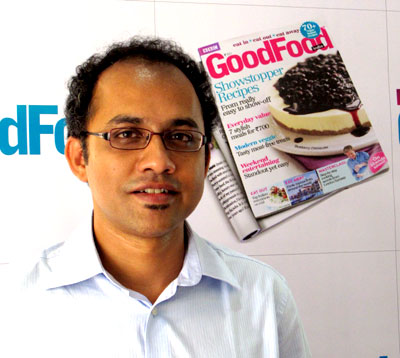
    Worldwide Media is all set to launch BBC Good Food in India. The magazine will be on the stands on Good Food Day, October 21. The magazine will be priced at Rs 100 at newsstands and UCOs. In a conversation with MxM India, Debolin Sen, Publisher – Good Food, Worldwide Media said the expectations riding on the title were huge. “It’s an exciting brand to launch in India, especially now,” said Mr Sen. “Food is the most exciting story unfolding in the country. Experimentation with global cuisines, presence of international restaurant brands, access to exotic ingredients in the neighbourhood supermarket, 125 food shows on television, three dedicated food channels, gourmet store expansions pan India. There’s so much that’s happening. We are at a point in time in the market, when it made much sense to launch the brand. So yes, the expectations are huge.”


    In a recent conversation, Tarun Rai, CEO, Worldwide Media said, “We are launching BBC Good Food on Good Food Day, October 21, which we are celebrating and we are encouraging people to try something new on the day. We have huge expectations from Good Food. India is changing, food habits are changing. People are experimenting with food, both in their kitchens as well as when it comes to eating out in restaurants. We believe that the time is right for such a magazine. There are no precedents; there are no international food magazines in the country. We are going into uncharted territory and we are beating a new path. There are dangers but as I said, somebody has to do it and we believe that the potential is huge. And the response we’ve got from advertisers for the magazine is excellent and you’ll see it in the number of ad pages we’ve got in the first issue.”


    Speaking about the target audience of the magazine, Mr Sen said, “The magazine will appeal to a diverse mindset. From Everyday Chefs – people  who cook regularly for family, friends and even themselves, to Recreational Chefs – people who are interested in new recipes and experimentation, but don’t cook on a regular basis, to Restaurant Junkies – people who love eating out, and finally Globetrotting Foodies – people who love to experiment, sample local cuisines when they travel.


    “BBC Good Food is an extremely exciting magazine to launch. The brand allows you to explore new territories and create engaging properties unlike others. The launch will involve sufficient amount of marketing dollars being invested to create the required market impact. We intend having a phase-wise launch build up to Oct 21, the day the magazine hits stands, and thereafter post-launch,” said Mr Sen.


    Whereas marketing of the brand is concerned, it will be done through various campaigns and activations such as Good Food Survey, Good Food Day, Good Food Privilege Program, Good Food Nights, Good Food Website and Apps, Good Food Social etcetera.


    BBC Good Food also has an incredible legacy. It’s UK’s best-selling food magazine for the last 22 years. In fact it’s a successful food media brand with its content present across mediums: as a magazine, as a TV channel, a website which is a storehouse of over 7,500 recipes, and hugely successful iPad and iPhone apps which have crossed the 100,000 download mark.

  • Anil Thakraney’s Debrief: Wacky and effective!

    Apparently you can purchase many goodies at a new portal called Yebhi.com. (I like the brand name, very imaginative.) And ‘great rates’ is their USP. To communicate this promise, they have come up with a completely hilarious ad.


    There’s this lucky dude who’s hit a gold mine. Nearly electrocuted at an ATM machine, his daddykins goes through a magical transformation. The ol’ man now coughs out currency notes. In other words, he’s become an ATM machine himself. Naturally, his loser, good-for-nothing, wastrel son is elated. And the lad goes on a mad shopping binge, with his ATM daddy coughing away wads of rupees. Great idea. Every loser’s dream come true. To have a dad who’ll keep showering money, no questions asked.


    And the execution is wacko, it’s full-on entertainment. Full marks, I say. For a new online shopping portal, it’s critical to come up with a clutter-breaker, which Yebhi has done. Also, the message is single-minded: You don’t have to be a lucky son to get lucky at Yebhi. Should get the portal lots of hits.


    [youtube width=”400″ height=”300″]http://www.youtube.com/watch?v=oWpNrrImxbA[/youtube]
    Rating: (On a scale of 1 to 5): 4. I would have given it 5 if they had featured a mantri’s son. In which case the daddy works like an ATM just by winning an election. No need for electric shocks! 


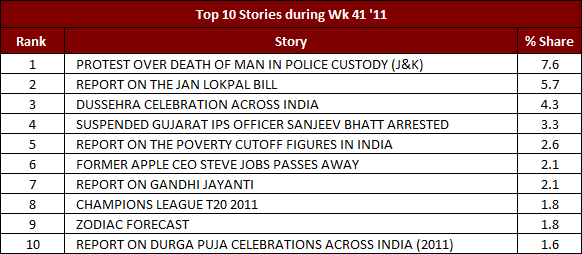
  • NCT Data Wk 41 ’11

    Source: News Content Track – A service of TAM Media Research Pvt. Ltd

    Channels: Aaj Tak, CNN IBN, Headlines Today, IBN 7, India TV, NDTV 24/7, NDTV India, Star News, Times Now & Zee News

    Period: Wk 41 – Oct 2 to Oct 8, 2011

    Note : Analysis is based on the telecast duration


    About TAM Media Research

    TAM is a joint venture between Nielsen Company & Kantar Media Research. Besides measuring TV Viewership, TAM also monitors Advertising Expenditure of Television, Print & Radio through its division AdEx India. Since 2004, it extended its presence in the PR Measurement & Analysis space for Corporate/Marketing Clients by setting up a separate division Eikona PR Measurement.

    In 2007, the joint venture introduced RAM (Radio Audio Measurement) service to track Radio Listenership for the Indian Radio Broadcast Industry. In year 2009, TAM launched a division, called TAM Sports that specializes in monitoring Sports Sponsorship ROI.

    TAM Media Research’s objective is to fuel media insights that will drive the growth of the Indian Media Industry.

  • The Anchor: 7 ads that star sports and sportsmen

    By Hemant Kenkre


    In no particular order – from the dancing girl on the cricket field to Sehwag’s Ma – there’s something about Indian ads and sports that hits the spot


    #1 Palmolive Da Jawaab Nahi:The Haryana Hurricane, as Kapil Dev was known, endeared himself to millions of Indians (not just cricket fans) with the line from the Palmolive Ad – ‘Palmolive Da Jawaab Nahi. ’ Kapil’s earthy personality and toothy smile in the ad will always be remembered as much as the “Kitne Aadmi The” dialogue from Sholay.
    #2 Cadbury – Asli Swaad Zindagi Ka:Can anyone forget the Cadbury TVC where the lady friend of the batsman prances out on the field and dances her way into the arms of her hero, who has just hit a six? Kucch Khaas Hai Is Ad Main!
    #3 Josh Ka Rang – Coca-Cola 1996 World Cup:In 1996 when Coca-Cola won the pouring rights for the ICC World Cup (India. Pakistan & Sri Lanka), they announced their return into India with a super TVC – Josh Ka Rang –that ‘played’ around the colour red, showed youngsters from the Indian sub-continent playing on the streets, on the banks of the Jamuna, with the Taj as the backdrop, running among red-chillies laid out to dry. All peppered with the awesome ‘Dum Mast Kalandar’ track by Nusrat Fateh Ali Khan
    #4 Nothing Official About It – Pepsi 1996:While Coca-Cola’s TVC and strong PR campaign for the 1996 ICC World Cup was going great guns, rivals Pepsi  pulled the rug from under their feet by launching their campaign ‘Nothing Official About It,’ which featured most Indian and international cricketers who were playing the World Cup and cocked a cheeky snook at Coca-Cola’s ‘Official beverage of the Cup’ status
    #5 Aila Plane – Pepsi  2003 ICC World Cup:This Pepsi campaign, where Shane Warne and Carl Hooper kidnap Sachin Tendulkar – ostensibly to put him out of action from the tournament – is hilarious. Especially Warne and Hooper mouthing Hindi words like ‘Iski Toh Gayee’ and when Sachin sees an aircraft and says ‘Alia Plane’
    #6 Nike 2007 Cricket:The 2007 edition of the ICC World Cup saw Nike, the official apparel sponsor of the Indian team produce a superb TVC where young cricketers atop a bus stuck in a traffic jam, playing the game with passion, smashing tea cups from the hands of innocent bystanders all spiced with the Goan folk song ‘Yo Baile Yo’ playing in the background.
    #7 Karlo Duniyaa Mutthi Main, Sehwag Ki Maa – Reliance Mobile:This TVC was probably inspired by a Bollywood blockbuster where the Najafgarh’s hero (Virendra Sehwag) cannot connect bat to ball and gets a call from his Mother who tells him ‘Karlo Duniyaa Mutthi Main.’ Our hero tosses off his helmet and the ‘villainous’ bowler is promptly whacked out of the park by Viru!


    A communications professional, Hemant Kenkre played cricket for Bombay University and has captained the Cricket Club of India.