Author: mxm_india

  • The Anchor: Shouvik Roy’s 6 pointers for a brand to change/refresh its corporate identity

    Three points pre-change/refresh

    #1 ‘Change’ or ‘refresh’? Both are different worlds. Change is radical while refresh may not be. So, if it is ‘refresh’, then be clear about the parts that need to be refreshed; you may or may not want to fix what is not broken.

    #2 Logo change is not the identity makeover – Logo is just one part of the visual identity – not the ‘change’. The first step is to articulate you corporate brand identity verbally. Use simple formats that are understood well and easily by all key custodians. Make sure you have defined the brand essence well and all key stakeholders agree. This will help evaluate the creative work that follows.

    #3 Researching before rebranding is a good idea – you may think you know all the reasons why your existing corporate identity does not work. Prepare to be surprised by what others have to say. Even a small scale research among multiple stakeholders of your brands – customers, influencers, employees, partners etc – will give you a better handle on how and what should change.


    Three points post-change/refresh

    #1 Involve all your employees – they are your key brand evangelists and custodians of your brand. Before you proclaim change to the world outside – make sure everyone at ‘home’ is clear and excited about this. Do not start telling the world at large if your employees are still asking ‘what is this all about?’

    #2 Implement it well across your brand portfolio – most relevant for corporates that have a complex architecture of co- and sub-brands. Make sure that the corporate identity refresh reflects well across your portfolio and the implementation is simultaneous. Often enough, this is where the focus is wanting. Everyone loves big-picture – this is the fine print.

    #3 It is a good time to celebrate – get your teams, partners, supporters, influencers, customers in together and tell them why they should celebrate the change. Every new journey needs a starting gun, or there is never much zest to race to the milestones you’ve set.


    Shouvik Roy is Director, Elephant, Delhi

  • Anil Thakraney: Brand SRK needs help

    Celebrities are brands. And just like detergents, condoms, noodles and cars, they need to build and nurture their brand image. Because that’s what ultimately decides their performance in the market place. People like to be associated with desirable brands. And that’s also the reason advertisers like to associate their brands with celebs. To have the values of the celeb brand rub off on their own brands.


    When I examine how Shahrukh Khan has been going about building his own brand of late, it kind of confuses me. Clearly the actor isn’t really thinking out here. Let’s first study his movie brand. Instead of competing with Aamir Khan, and experimenting with new forms of cinema, he seems to have made it a mission to target Salman Khan. Perhaps in reaction to the success the latter has enjoyed with his recent mindless action films. SRK is now taking his brand into the ‘Mine is bigger than yours’ space. Completely ignoring his own core brand strengths, which is the soft, vulnerable, caring, sensitive, romantic persona… the image that endears him to his fans… and is now trying to compete with a macho star on values alien to him. I really have a bad feeling about the so-called India’s most expensive film Ra One, and its debacle will hurt the SRK brand considerably.


    Next, his choice of brand endorsements and his performances in them. You’ll notice glaring fault lines here too. Not only is there no attempt at being discerning, which once again Aamir Khan is, SRK agrees to endorse just about anything that comes his way, and acts the same in every commercial, convinced the buyers will buy into whatever nonsense he does on the screen. Frankly, it’s embarrassing to watch him in ads for Hyundai i10, Linc Pens, Videocon and many others. There’s another cringeful ad he’s done with wife Gauri (it’s so silly, can’t even recall the brand name). Guess baniyan and chaddi brands are next up. If this continues, and his movie career stagnates, SRK will find the going quite difficult.


    Celebs, like all brands, must fiercely guard their value. So that it remains powerful, relevant and enduring. The hit-and-run approach won’t work. Guess SRK badly needs a brand manager.


    ***


    PS: Watch this brilliant ad from Pro Infirmis, a Swiss organization that supports handicapped people. THIS is the way to use emotion in advertising. A big hug for the creator of this advert.


    [youtube width=”400″ height=”300″]http://www.youtube.com/watch?v=zFWr-CKMWGY[/youtube]


  • Retail ka Raja’s road to be debt-free


    By Kala Vijayraghavan


    It took 25 phone calls, 50 text messages, a couple of emails and plenty of persuasion over three weeks before Mr Kishore Biyani, 49, India’s largest retailer finally agreed to meet. Two reasons, both related, could explain his uncharacteristic reluctance.


    The interview was on an uncomfortable subject, Mr Biyani’s battle with debt, Rs 4,352 crore to be precise. But then, Mr Biyani was never the one to duck tough questions. The second reason therefore is more plausible. Mr Biyani was busy; he was negotiating deals to carve out his empire, meeting global retailers, talking to investment bankers, planning foreign direct investment (FDI) compliance with corporate lawyers…the works.


    In short, he was doing what every other retail CEO perplexed by the current environment is now doing. He was also nursing a fever. Finally, meet he did…not during the week at his office in Vikhroli, an eastern suburb of Mumbai, but on a Saturday morning at his home in south Mumbai and rather reluctantly.


    Mr Biyani was to have boarded a flight to Paris on Tuesday night, but the fever kept him back. Had he gone, he might well have signed a unique deal with French retailer Carrefour. Mr Biyani is non-committal, but sources say that 17-18 cash-guzzling Big Bazaar outlets may be converted into a Carrefour franchise. There won’t be any equity infusion, so FDI norms are complied with. Big Bazaar is a hypermarket chain, the group’s flagship format and also one of his pet projects. And Mr Biyani is willing to give away parts of it…in return for some cash.


    Mr Biyani has changed. Some of his trademark chutzpah has given way to wisdom and caution. But his resolve to build a sprawling consumption business hasn’t weakened. Earlier he wanted to do this alone; now, he is open to multiple partners. “The business environment is challenging and different. And I have to take a more mature approach to business,” he says. “When we started the retail business, the environment was different. And I was younger to take those risks.”


    King-size Risks


    Mr Biyani wouldn’t be what he is today, the maharaja of Indian retail, if he hadn’t taken those risks. But at the same time, he also wouldn’t have the problems he is facing today if he hadn’t taken those very risks. That’s not the only irony Biyani is living today. In the past, he raised funds aggressively to grow his empire. Now, his biggest challenge is to raise money: to save his empire. Consolidate is the word he prefers to use, not save.


    Says Mr Thomas Varghese, CEO, Aditya Birla Retail: “Retail is cash-guzzling and it needs deep pockets to scale up. That’s the nature of the beast. Also, funding of the business can only be viable though equity and not debt.” Sources add that Mr Biyani opened too many fronts, book retailing, electronics, sports, salons, apparel. Debt was unavoidable because he was constantly experimenting with new formats that would make money.


    Top executives who work closely with Mr Biyani every day say he has decided to take the debt bull by it horns. He wants to raise Rs 5,000 crore in the next 12-18 months to make Pantaloon Retail, the flagship company that owns most of his retail business, debt free. Can he?


    Not so long ago, Mr Biyani was a rockstar in the stock markets. Pantaloon Retail went public in 1992, one year before Infosys. In the past 19 years, it has delivered an annual return of 25%. Investors cheered his rapid growth.


    Pantaloon Retail now occupies over 15.2 million sq ft space in multiple retail businesses. It runs 59 Pantaloon department stores, 42 Ezone electronics stores, over 200 hypermarkets under Big Bazaar and Food Bazaar and over 214 KB’s FairPrice stores.


    It operates 10 formats including Central (seamless malls), Brand Factory (discount fashion) and Ethnicity (ethnic wear). Mr Biyani also got into the financial services business to fund the purchases happening at his stores; he set up a foods business to help stockpile the shelves in his stores; set up venture funds to invest in his suppliers and even floated media companies.


    Notes Mr Biyani: “In most countries, retailers can focus on retailing alone. But when we started to grow, we realised the lack of an industry ecosystem around retail and realised the need to create one. That meant setting up the entire logistics and supply chain networks.


    That meant training thousands of people. That meant setting up technology and back-end processes to handle millions of transactions. And it also meant building enablers, stronger brands, consumer finance, media etc, that could spur consumption.”


    In short, he bet big… real big, on India’s consumption story.


    No Choice, But to Grow


    And, why not? The economy was booming, salaries were rising and consumers wanted to spend, investors were willing to give him great valuations, banks were lending cheap and real estate was easy to come by. It was rock ‘n’ roll. “In this journey, since we were often the first, we made the maximum number of mistakes; we also learnt the most,” says Mr Biyani. “And today, we know each business threadbare.”


    Sure, the feisty, home-grown entrepreneur was hungry for growth. But it is also equally true that he had no choice but to grow. Ever so often, there would be a buzz on retail FDI. Mr Biyani had to prepare for it. Retail is all about size; the bigger the better. Mr Biyani had to become a Godzilla if had to have any chance of fighting the likes of Walmart who would come in some day. Even if he didn’t want the fight, he still needed scale to position himself for a sweet buyout.


    And so Pantaloon Retail grew spectacularly fast. But debt fuelled it. It now clocks Rs 12,366 crore in revenues, about Rs 10,000 crore more than what it made five years ago. Its borrowings have also increased from Rs 700 crore to Rs 4,350 crore.


    Here is a good way to look at Pantaloon’s growth, in the past five years, the company had to borrow Rs 1 to generate every Rs 3 of annual revenues. This was okay when the economy was growing and debt was cheap. But the economy slowed down and inflation went up, forcing the Reserve Bank of India to raise policy rates 12 times since March 2010.


    “The retail business is modular and its expansion can be halted or grown depending on the environment, cash flows, and interest rates. We will grow accordingly and take decisions which are conducive in the given environment,” says Mr Biyani, his new found caution very much in evidence. Pantaloon Retail earns Rs 1,203 crore as operating profit, but more than half of it goes towards paying interest charges, leaving it with only Rs 142 crore in net profit after accounting for depreciation and taxes.


    Dash Bigger Than Cash


    Industry sources say Mr Biyani was reckless in expanding faster than what the cash flows supported, and not slowing down enough even when he had the chance to do so. “All big players including Reliance focused on restructuring and improving operating efficiencies during the slowdown but Biyani was chasing valuations and growth,” says the CEO of a rival company who did not want to be identified.


    “Pantaloon’s debt level is uncomfortable,” says Mr Arun Kejriwal, director, Kejriwal Research and Investment Services. “Also, the management has not shown any concrete plan to reduce debts.” Mr Kejriwal says same-store sales have not grown exceptionally, suggesting that the issue with debt, if not resolved, may create problems in future. “It’s imperative for Pantaloon to retire debt,” says Mr Gautam Duggad, a research analyst with Prabhudas Liladhar, a Mumbai-based brokerage. “Although Pantaloon’s gearing is not alarming, its absolute debt is quite sizeable.”


    All this has made investors jittery. Since April this year, the stock has lost 30% in value, while the BSE Sensex has dropped only 14%. “We are conscious of what the world is thinking about us and we are always discussing ways of cutting  debt,” says Mr Shailesh Haribhakti, independent director at Pantaloon Retail. “We are very responsive to the concerns raised.”


    At Home With Less Control


    At his tastefully done-up residence, Mr Biyani is clear about what he needs to do. There is no emotion, regret or hesitation as he spells out his next steps. He is preparing to take some tough calls, including giving up control of some of his prized possessions.


    Mr Biyani is willing to share ownership in Big Bazaar, Ezone, KB’s Fairprice, and Home Town, all successful formats he has pioneered. “All these years, we have grown the business by ourselves. Now the time has come to get partners. It’s now time to consolidate and let somebody else run the business [shared ownership],” he says. That’s what has brought Mr Biyani to where he is now, in the middle of stitching together half a dozen deals with financial ingenuity to ensure all FDI norms are complied with.


    He has just signed a deal to give 49% stake in the Future Group’s foods sourcing and manufacturing entity to Lawson Inc, Japan’s second-largest convenience store chain. The move will relieve Pantaloon Retail of the burden of funding the aggressive growth plans of the food business. He is in talks with an Indian company to sell equity in Ezone. And then, there is the likely deal with Carrefour.


    Mr Biyani also has plenty of non-core businesses: consumer finance, insurance, textile mills, logistics and JVs in mobile retailing and office supplies, Future Capital Holdings (FCH), life and non-life insurance businesses under a partnership with Generali. The Future Group hopes to raise Rs 2,500-4,000 crore by selling equity in these.


    An Edelweiss report values FCH, and its e-commerce, supply chain, real estate and insurance ventures around Rs 3,000-4,000 crore. “Any such tie-up would bring funds in the company and would help deleverage its balance sheet,” says Ms Sangeeta Tripathi, senior analyst at Sharekhan.


    ‘Picked My Horses Now’


    Industry sources say exiting many of these businesses is a good idea. “Walmart is known for its austerity and Gucci for its lavish luxury,” says a senior industry CEO pointing out that the Future group wanted to be both. It can’t.


    “If I were Kishore Biyani, I would totally back the top two horses and ensure that I become so powerful that I would create far more value,” says Mr BS Nagesh, founder, Trust for Retailers and Retail Associates of India, a not-for-profit organisation that trains front-end staff in retail. Nagesh is also the vice-chairman of Shoppers Stop, but these are his personal views.


    Biyani is thinking along similar lines. He now plans to concentrate on just four large formats, Pantaloons, Central, Big Bazaar and Food Bazaar, limiting itself mostly to food, fashion, home and general merchandise. “In rich countries, retailers are among the largest businesses, wealth creators and employers. We’ll expand prudently and wait patiently for our turn,” he says. “People are right that we should back a few big businesses and scale it up big time. We have picked our horses now.”


    (Additional reporting by Kausik Datta)


    Source:The Economic Times

    Copyright © 2011, Bennett, Coleman & Co. Ltd. All Rights Reserved

  • Huge expectations from ‘Good Food’: Tarun Rai

    Tarun Rai has been the CEO since 2008 of the Worldwide Media group which, during his tenure, has seen several new launches and titles. The most recent in the long list of magazines is BBC Good Food which is to be launched on October 21. In a conversation with MxM India’s Akash Raha and Shruti Pushkarna, Mr Rai, who took over as AIM President from Mr Pradeep Gupta, Chairman and Managing Director, Cybermedia, talks about the Engagement Study, Good Food, Zinio platform and the future of magazines in India.


    [youtube width=”350″ height=”250″]http://www.youtube.com/watch?v=KKPL01uKuDA[/youtube]

    Q: You are launching BBC Good Food in India. What are your expectations from the magazine?

    I just got to hear that the magazine is ready; it’s bound, ready for dispatch. We are launching BBC Good Food on Good Food Day, October 21, which we are celebrating and we are encouraging people to try something new on the day. We have huge expectations from Good Food. India is changing, food habits are changing. People are experimenting with food both in their kitchen as well as when it comes to eating out in restaurants. We believe that the time is right for such a magazine. There are no precedents; there are no international food magazines in the country. We are going into uncharted territory and we are beating a new path. There are dangers but as I said, somebody has to do it and we believe that the potential is huge. And the response we’ve got from advertisers for the magazine is excellent and you’ll see it in the number of ad pages we’ve got in the first issue.


    Tarun Rai on Indian magazines becoming successful international brands
    [youtube width=”350″ height=”250″]http://www.youtube.com/watch?v=-gdT17SBAtk[/youtube]

    Q: Several international brands are licensed to India. When do you see an Indian title becoming a successful international brand?

    As you know Femina and Filmfare are heritage brands for us and they are doing fantastically well. Femina already is present in Sri Lanka. Filmfare we’ve licensed last year to UAE and we’re hoping that we will take it to many countries; there is already interest because Bollywood today is international. The Indian diaspora still wants to connect with Bollywood and I think very soon you’ll see Filmfare in many other countries. The other advantage is, thanks to what people say the ‘digital issue’ but I see it always as an opportunity, we are already on the Zinio platform with Filmfare for the past month; and the response has been fantastic. Almost 60 percent of our total sales of all the magazines that we’ve put on Zinio have been for Filmfare because this is the demand which is coming from the international markets and now suddenly it has become very easy to subscribe to Filmfare just at the click of a button. So I think there are going to be huge opportunities on some of the brands like Filmfare and Femina.

    Q: What do you feel at being appointed the President of the Association of Indian Magazines? What does this responsibility mean to you?

    It’s an honour… I have been a part of AIM for four years now, pretty much as soon as I joined the industry. For me it has been a fantastic experience. I come from advertising and I had no idea about the magazine business. Thanks to my membership of AIM, very quickly I was co-opted to the magazine industry. I have learnt a lot from my peers in AIM and I owe a lot to them. Mr Pradeep Gupta, the outgoing President, has had a terrific run in the last two years and as I take over from him I hope to continue the good job that AIM has done over the last two years. We are a small organization but I think we have learnt a lot to collaborate and make sure that we do things that are beneficial to the entire industry. Right now we are too small. We are just 3 percent of the total ad spends. We deserve more, but just by saying that we deserve more we are not going to get it. So we have to do things to convince the advertisers about the strength of our media. That is the reason we instituted the engagement survey and we are going to take it to its right conclusion by having a proper campaign around it and material which will convince the advertisers. That’s just one of the things. Generally speaking, the magazine industry can do with a higher profile.  So my attempt will be to raise the profile of the magazine industry by doing activities. One of the things it will do is to bring more talent to our business. The way our industry is growing we need a lot of people very fast. We need different kinds of people; with this digital opportunity that has come up we need different and varied kinds of young people to come to our business. By raising the profile of the industry we will also attract new talent to the business. That is going to be one of my important priorities.”


    Q: Do you think the Engagement Study that AIM has come out with will solve the measurement woes of the industry? Moreover, do you think that the advertisers will accept it as a robust currency?

    You never know until you try, and this is our attempt. Now it’s up to us to convince them. One piece of research is not going to do it. The good news is that the media buyers and the advertisers themselves are trying to understand media better. Ambika Srivastava spoke about the touch point study, the brand experience points, about how magazines score very highly when it comes to influence. So the conversation has already started. We want to push that conversation along where the judgment on one media is not only dependent on the numbers but also dependent on the quality of numbers, on the quality of engagement. And therefore the engagement survey is just the first step; it is not going to persuade people overnight but we don’t know whether we’ll be able to persuade people till we make our first step. So this is our first initiative to do that.

    Q: What are the take-aways from the India edition of the World Magazine Congress, moreover, on the 360-degree opportunity theme?

    It is called the 360-degree opportunity, not challenge, because I am of the firm opinion (and the board of FIPP was of the firm opinion) that we should look at it as an opportunity rather than as a threat. I just think it’s a fabulous place to trade ideas, to get to know what people in the developed market are doing, what people are doing in the South East Asian market which is still coming up. It’s new territory for us. Organization structures are being experimented with; we had this whole thing about how do you manage content along with so many platforms, do you have a core editorial team…? Business models are being experimented with. So to me it’s still a time of flux. Everyone agrees it’s an opportunity which we cannot ignore; do we have the right answers yet, maybe we don’t but this is a forum where you can learn, you can share, you can discuss and hopefully going forward we will arrive at some solutions which will work for different magazines.


    Q: What according to you is the future of magazines in India?

    I think the potential for magazines in India is huge. I always say that magazines, specially the lifestyle and special interest magazines, in India are a sunrise sector. So if it’s a sunrise sector, we are only 3 percent, the only way is up. We are too small to go any lower than that, the only way for us is up and I am very bullish about magazines in India.

  • Suresh Selvaraj quits Outlook

    By Akash Raha

    After a successful stint with the Outlook group, Mr Suresh Selvaraj, President, Outlook Group decides to put in his papers. Mr Selvaraj disclosed this information to MxM India on an email.

    In an emotional message to MxMIndia, he said “In 1998 when I joined the group, I have added a prefix to my name Outlook. In 2006, I had added a surname, Marie Claire. Outlook has always been the pride and Marie Claire, the passion. It’s not easy for me to let go both. But as the Gita says, ‘what have we brought with us to this world to lose it?’ Both these magazines are part of my system and I have always felt a sense of ownership of these magazines – especially, Marie Claire – it is my baby. I am not naïve to believe that I am indispensable. Outlook Group is very strong with sufficient bench strength to face any situation.”

    Giving a reason for his leaving the group he said “I strongly felt that I need to give it a pause after three decades in print media. And, more than that, there got to be peace.” He went on to say “Considering the excellent equation I have with each and every member of my team, it is a very difficult to part. But I reminded them about Jim Hendricks’ lyrics, ‘Memories don’t leave like people do. They always stay with you…’ – a colleague may leave, but the friend in him remains forever!”

    However, Mr Selvaraj will be a part of the group till December 2011. Thereafter, he said “I will take a sabbatical for a few months and shall decide the course of my future. I look forward to the sabbatical as I could fulfill one or two of my long term dreams of biking in Srinagar-Leh Ladakh-Manali region, cycling in Munnar hills, exploring Borneo rainforests in Sabah region of Malaysia or a cruise in Venice-Greece-Spain route.”

  • First on MxMIndia: Uday Varma is new I&B Secretary

    By A Correspondent


    Mr Uday Kumar Varma is the new Secretary, Ministry of Information and Broadcasting.

    Mr Varma is presently Secretary, Ministry of of Micro, Small and Medium Enterprises. Mr Varma, an Indian Administrative Service (MP Cadre, 1976) officer, replaces Mr Raghu Menon who retired last month. He is familiar with the working of the ministry having been Special Secretary before he moved to the MSME ministry.

    The announcement was made by the Appointments Committee of the Cabinet, Government of India.

  • Networking UnLtd @ F1: Tag Heuer, Mercedes, UB, etc book corporate boxes

    By Meenakshi Verma Ambwani & Ravi Teja Sharma


    The jury may be out on whether it will be the biggest international sporting event ever to come to India, but not many dispute that the upcoming Formula One race will offer the best corporate schmoozing platform the country has ever seen.

    India’s first ever Grand Prix race may be some days away, but the race among corporate groups, celebrities and other assorted moneybags for vantage spots has begun.

    “Only a few sports – golf and the tennis grand slams – give a business networking opportunity to companies at this scale,” says Mr Indranil Das Blah, chief operating officer at Kwan, a sports and talent management firm.

    Others say that the very nature of the sport – a heady cocktail of speed, technology and human skill spread over three days – makes it best suited for networking.

    “It is a three-day thing unlike a four-hour cricket game, which gives corporate executives a unique opportunity to network,” says Mr Ashish Hemrajani, chief of Bigtree Entertainment, which runs the official ticketing partner Bookmyshow.

    Executives at the Swiss luxury watch brand TAG Heuer have booked corporate boxes to host top clients and to showcase their best ware. Tag is not alone. Top global banks and a raft of companies, including Mercedes Benz, Gulf Oil, NIIT, UB Group, Airtel, JK Group, Venky’s, Essar and Punj Lloyd, are some of the others to have booked boxes, each of which can seat 30 people, to host their top executives and business guests.

    “We have been associated with motor sports for a long time globally. Now that it is coming to India, we have booked corporate boxes to entertain our customers and associates from India and abroad as part of our brand building as well as relationship building exercise,” says Mr Ravi Chawla, president-lubes at Gulf Oil.

    Jaypee Sports International, the company behind the Indian circuit taking place at Greater Noida from October 28-30, says all the 55 corporate boxes, each with a price tag ranging between 75 lakh and 1 crore, have been sold. The corporate boxes come with the choicest hospitality, catered by the country’s top five-star hotels.

    While for corporates, there are these special boxes, for the wealthy and the cognoscenti, there’s the luxury Formula One Paddock Club, which has been described as the “inner sanctum” of the F1, patronised by some of the world’s top businessmen, bankers and celebrities, indulging in the best gourmet food, wine and luxury money can buy.

    This description is not without reason. Entry into Paddock Club does not come cheap. At $5,460 ( 2.68 lakh) per person, it’s easily the heftiest price tag for watching a sport, at least in India. Pitched as a super premium experience, Paddock Club patrons will get a real close view of the race pits, walk into the pit lanes and be privy to the strategy meetings of the teams and engage in conversation with the teams’ drivers and management.

    “It is the kind of hospitality experience that India has never seen before,” promises Mr Suvrangsu Mukherjee, managing director Indian subcontinent at Total Sports Asia, one of the two firms authorised to sell Paddock Club tickets for the Indian F1 race.

    Executives at Total Sports Asia and SOTC Sports, the other company authorised to sell tickets for the Paddock Club, say they are getting bookings from local and international companies. For a price, companies can even set up branded suites with privilege viewing and dining enclosures at the Club.

    The Paddock Club’s ticketing and hospitality arrangements is controlled by F1’s in-house company Allsport Management and all its revenues go to Bernie Ecclestone, the founder and top boss of F1. Visitors to the Club in other races have included Hollywood stars such as Michael Douglas, Brad Pitt and Nicholas Cage, music legends Eric Clapton and Sir Cliff Richard, filmmakers George Lucas and Quentin Tarantino, model Liz Hurley and singer Danni Minogue. This time around, international singing sensation Lady Gaga, who is performing at the FI and stars such as Shah Rukh Khan and Hrithik Roshan are expected to be present at the race.

    Big Corporate honchos like Airtel chief Mr Sunil Bharti Mittal and Vodafone global CEO Mr Vittorio Colao will be attending the race.

    At the after-race parties being organised by Mr Arjun Rampal, corporates are booking tables that start from 4 lakh up to 10 lakh. These parties will feature stars Messrs Shah Rukh Khan, Farhan Akhtar and Hritik Roshan and a host of other celebrities.

    Says Mr Tikka Shatrujit Singh, chief Asia representative for French luxury house LVMH: “It (F1) will be a big opportunity for the global elite to network with the young tycoons of India and policymakers.”

    “For companies, it will be an opportunity to showcase what they do and to entertain their big clients and guests,” said Mr Singh, who plans to be at the race.


    Source:The Economic Times

    Copyright © 2011, Bennett, Coleman & Co. Ltd. All Rights Reserved

  • Case Study: Hippo uses Twitter to take stock

    Title of the campaign:  Plan T. Hippo tracks inventory through Twitter.

    Company:  Parle Agro

    Aims and Objectives:   In 2010, Hippo Baked Munchies was successfully launched into the Indian snack market. With its simple yet insightful philosophy of ‘Hunger is the root of all evil. So, don’t go hungry.’ Hippo became a runaway success. However, its nascent sales and distribution network found it challenging to keep track of stock, identify and re-stock empty shelves across 400,000 stores nationwide. In India, 92% of the snack market is unorganized and inventory tracking is usually a logistical nightmare. To solve this, Hippo turned to its followers on Twitter and asked them to tweet whenever they couldn’t find the snack in store.

    To connect with the consumers better, Hippo entered social media. The brand’s chirpy and talkative personality instantly gave it an edge over the rest.

    The Background: Hippo’s lovable anthropomorphic character distinguished it from the rest. Hippo could talk like a person, like a friend, rather than a brand talking to its consumers. And just like a person, Hippo also had a humorous opinion about almost everything, endearing him to everyone he communicated with.

    Hippo signed up on Twitter, Facebook, Blogspot and even created a fun, friendly website: www.hippofighthunger.com. In the market Hippo exceeded everyone’s expectations and the packs sold like hotcakes, leaving the shelves across 200,000 stores empty.

    Challenges and impediments

    Having been recently launched, Hippo had a nascent distribution system, which was unable to identify empty stores and restock packs.

    Worry: Hippo couldn’t afford to lose the momentum gained through communication. It was also feared that people might wrongly consider the empty shelves as an indication that the brand has failed after a short-lived launch phase.

    In Action:

    Traditional Route: Where taking stock meant appointing sales officers to visit store by store in areas allotted to them and waiting for three days (the usual time that this process takes) Hippo did not want this to work in favour of the competition.

    Creative Execution: As a snack brand, Hippo encouraged a simple philosophy based on a simple insight , ‘Hunger is the root of all evil. So, don’t go hungry.’ Hippo struck the right chord with his audience as they bought into this simple human truth. Since Hippo stood for a cause, rather than merely selling a product, people willingly participated in his ‘Hunger-Fighting’ campaign. Hippo enjoyed a great response as his ‘hunger-fighters’ were tracking inventory, while having a larger cause at the back of their minds.

    Hippo had a simple yet powerful philosophy- ‘Hunger is the root of all evil. So, don’t go hungry.’ Hippo used this simple human insight to connect better with his consumers even on Twitter. Hippo spoke to them as a hunger fighter. As more people bought into this philosophy, Hippo launched Plan-T and urged them to help him identify empty shelves and inform him via a tweet whenever they found empty shelves in their neighbourhoods. Tweets poured in from more than 50 cities. People were tweeting from their cellphones from supermarkets, hypermarkets and local grocery stores. Hippo collected this information, analysed and sent it to the local distributors of respective areas, who eventually restocked the packs.

    Solution: Since it was Hippo’s popularity that created a huge demand for itself, Hippo used the same to fix its supply. Instead of spending large amounts of time (and money) outsourcing these distribution and supply duties, Hippo decided to turn to his followers on Twitter – while also acknowledging that In India, almost 94 percent of the retail environment is unorganized.

    Hippo asked his followers to tweet and inform him about locations and even specific stores where Hippo packs were unavailable.

    Hippo set up a core cell at the manufacturer’s headquarters in Bombay, which monitored these tweets, collected this information and passed it on immediately to teams of distributors in the respective areas. This system proved to be extremely efficient. Within 48 hours of locations being identified, teams of distributors had already replenished stocks.

    As people began to see that their tweets actually succeeded in making Hippo available at their neighbourhood store, word of mouth and social media took over and Hippo became a rage. Soon, tweets were pouring in 24/7, from over 45 cities.

    The sales force instantly dispatched stock to locations with empty shelves. All this, with barely a quarter of the staff required to solve supply and distribution problems in India by conventional means.

    Hippo also updated its followers meticulously and rewarded the most active Hippo followers on Twitter with personalized ‘anti hunger’ Hippo Hampers.

    Result:  When this initiative was taken up there were 800 people on Twitter were already on following Hippo. Shortly after launching this activity, the number of people tracking the inventory equalled 50 percent of the sales and distribution network itself and at zero cost. And the sales were upped by 76 percent.

    Hippo thus managed to blur the lines between the marketing department, consumers and the distribution force. Hippo used social media and provided real-time solutions to distribution and availability issues. Describe the results in as much detail as possible. Hippo gauge demand, and

    Hippo upped his sales by 76 percent. For consumers, the knowledge that a mere tweet could restock their neighbourhood store with their favourite snack was highly fulfilling. Hippo could also measure the return on investment per tweet. Plan-T is now a case study taught at leading B-schools, featured in various books on online marketing. Even TWTRCON, San Francisco acknowledged the innovative manner in which Plan-T solved such a technical problem. Plan-T has found a permanent place in the brand’s sales and distribution system. And, all this at almost no cost.

    Learnings:  Apart from being recognized in India for its uniqueness and effectiveness, the campaign was presented as a case study in the Twitter Conference which looks at showcasing innovative business use of real-time web. Raj joined the list of TWTRCON speakers comprising the likes of Scott Monty (Head, Social Media – Ford Motors), Othman Laraki, (Director, Twitter), Steve Rubel (Senior vice president – Edelman Digital), Avinash Kaushik, (Analytics evangelist, Google).

    Awards and accolades:  In Creative Abby the campaign won Gold in Interactive category for Creative use of social media. In Media Abby the campaign won two Golds in Best use of media – social media and Best use of Never before Media. We also won three Golds in Campaign India Digital Media Awards presented by BBC for  Best Loyalty Campaign, Media Innovation and Best Social Media strategy for Plan-T – Tracking Inventory through Twitter.

    The campaign was also highly appreciated by creative minds like Charlie Crowe and Robin Wight, at the Goafest 2011.

    Analysis:  By setting an example, Hippo may have found some first answers to the following:

    Can social media be employed to plug the gaps between sales and distribution?

    Can social media get consumers to voluntary work on the most  technical aspects of the brand?

    Can Brands set up alternate sales and distribution network?

    Competition’s Response: This activity and Hippo’s popularity was even closely observed by one of the biggest players in the country. The competitor even tried aping Hippo’s technique by setting up a Twitter account and even started following Hippo’s followers.

    Refer: http://www.hippofighthunger.com/plan-t/

    http://twtrcon.com/2010/12/03/watch-managing-your-supply-chain-in-real-time-hippo-case-study/

    Source: Creativeland Asia

  • The Zee Q2 Story: Net profit up 26.7%, ad revenues down 4.2%, spends down 2.3%

    By A Correspondent

    There is fair reason why Zee Entertainment is said to be the smartest run entertainment company in India today. The ratings are good, but not dramatic. The revenues are down and employee costs are reasonably up. Yet, net profit has leapfrogged. And how!

    Says chairman Mr Subhash Chandra, “We have a very strong balance sheet and I am confident that we would take advantage of the growth opportunities ahead of us and will record improved operating performance in the period ahead.” Mr Chandra notes that that his company’s performance reflects the same slowdown in advertising spends that the rest of the television players are facing.


    On Monday, Zee Entertainment Enterprises Limited (ZEE) reported its second quarter fiscal 2012 consolidated revenue of Rs 7,184 million. The consolidated operating profit (EBITDA) for the quarter stood at Rs 2,075 million and PAT was Rs 1,600 million, representing a growth of 10.1% and 26.7% respectively over the corresponding period in the previous fiscal. The EBITDA margin for the quarter stood at 28.9%. Operating profit (EBITDA) for the quarter ended September 30, 2011 was Rs 2,075 million. Operating profit margin for the quarter stood at 28.9%.


    FY2012 does look to be a year of tepid growth, said Mr Punit Goenka, Managing Director and Chief Executive Officer, ZEE, in a press communiqué. “Our strategy during the last few years has been to create a formidable entertainment enterprise and invest in the business in a focused disciplined way”

    Meanwhile, Zee has clarified that ad revenues have grown on non‐sports business, but there has been a decline in sports revenues, due to lack of big sporting events in the quarter. This has resulted in a hit in overall monies coming in.

  • Yes, the French do have designs on India!

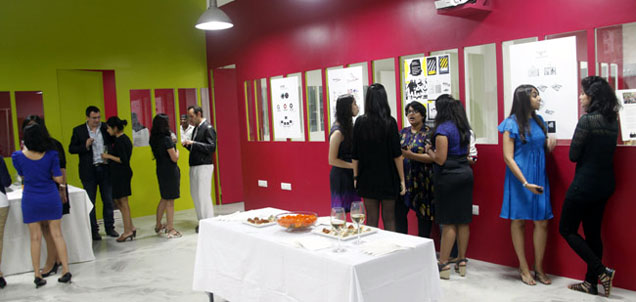
    Students and guests at the formal unveiling of ecole intuit.lab last week


    By Shubhangi Mehta

    École intuit.lab is a design and visual communication French school cofounded in 2001 by Patrick Félices along with Clément Derock and Frederic Lalande.

    The aim of the school has been to produce high quality professionals whose profiles meet the specific needs of the graphic design and visual communication sectors in India, France and across the world. With the newly begun school in India, the syllabus has been especially skewed to meet the professional demands of the visual communications industry in India and to tap the potential that design holds in the country.

    The average fee across various courses is 3.5 lakh annually. The institute will provide the students with high class faculty,French graphic designers which will provide the students an edge over others.

    Mr Ravi Deshpande, co-founder, école intuit lab, India,said, “Over the last few years we have seen a massive talent dearth. I thought of being a part of the solution rather than being a part of the problem. The school has been established to cater to and encourage talented students.”

    École intuit.lab through its students have built solid relationships with over 800 companies in France and other countries.

    The setting up of top French design school, école intuit.lab in Mumbai is a step in the direction of the marked improvement that is required in the field of education related to graphic design, art and advertising.

    Mr Rajesh Kejriwal, founder, CEO, KYOORIUS, said, “India really needs such design institutes; the China government is planning to open 500 design institutions across the country, Indian government should also  try and do something similar as the existing and upcoming institutes are expensive and not everyone can afford them. Hence a lot of talent will still be left behind without opportunities.”

    Ms Preeti Vyas, Chairwoman, VGC, mentioned, “These institutes are extremely important. If we put 20 more such institutes in our country, it will still be a lesser number. The courses are expensive but the kind of inputs, technology and faculty that goes into such institutes, it is impossible to have a low cost institute for such courses until and unless it’s a government funded institute.”

    École intuit.lab has achieved success by incorporating professional exposure in the academic curriculum – a much needed position that has been so far vacant, in the design and art education milieu in India.

    École intuit.lab through its students have built solid relationships with over 800 companies in France and other countries. école intuit.lab’s excellent success rate in finding work placements for its students makes it a real standard setter in vocational training for the visual communications sector.

  • No crisis for magazines in India: Chris Llewellyn

    Chris Llewellyn, President and CEO, FIPP, UK spoke to Akash Raha and Shruti Pushkarna of MxM India at the recently held World Magazine Congress. Mr Llewellyn spoke about the future of magazine, future events of FIPP and about the recently held World Magazine Congress in New Delhi, India.  Federation of the Periodical Press (FIPP) is a worldwide magazine media association, which represents companies and individuals involved in the creation, publishing, or distribution of quality content, in whatever form, by whatever channel, and in the most appropriate frequency, to defined audiences of interest.
     

    Q: FIPP has been taking up the interest of magazine publishers around the globe. What are the upcoming events that we can expect?

    FIPP exists to help its members construct better strategies and to build better media businesses. And the way they do that, is by finding what is happening around the world. So we come together at various meetings and events, share experiences and share knowledge, and go back better informed. I am really pleased to be able to confirm that next year September 19 to 21, Seoul Korea will be holding the third Asia Pacific Digital Magazine Media conference. And that will be specifically geared towards the Asian market and the hot topics of the time then; and we are talking digitally, so a year from now god knows what they’ll be, but they’ll be on the top of publishers mind. We will bring in some international speakers and we will engage with the Korean market which itself is incredibly digital. So that is an exciting new event next year. On top of that, we will be doing in early November, an American conference, out of Central America. In fact, I can even confirm that it is going to be in Costa Rica, which is a very attractive venue. And again that will be talking about the hot issues of the day, appropriate for the publishers of that territory.


    Q: How do you think the Indian magazine marketing is shaping up?

    The issue at the moment is that we have these two huge forces at play. One is this structural change that the digital revolution is forcing on our thinking and the second one is just the cycle of poor economy. You know, India, which is still booming, still ‘incredible India’, and yet people in India think there is a crisis. But it is not a crisis in India, believe me. This is just the cycle and this will turn around. How long, well, if I knew how long I will be a very rich man. But the truth is, it will change. At the same time, I think the publishers are responding magnificently to the digital changes and realizing that the strong magazine brands that have an emotional engagement with the audiences can be taken to different platforms and it just deepen the engagement. Don’t confuse content with how you deliver content. Content is an art and that content can be on magazines and it can be on any other format that we want it on. But it will still be the magazine publisher’s knowledge of his audience, which is the key, and that’s not going away.


    Q: How do you think digital will affect print?

    Hollywood films have never being bigger – huge blockbusters. Hollywood is making so much more money but not at the box office … their business model has changed. Today, Hollywood is built on the sales of popcorn, the sales of the food and drinks when you visit the cinema. It’s the full cinema experience, not the box office that entails profits. Similarly, in the magazine industry too, we will see a change in the business model, that’s certain. But the medium will still be there because of the strength of the medium. The emotional engagement of turning the pages, fresh magazines, just the way that we represent images is fantastic.  The women’s fashion sector needs glossy magazine too. So magazines are not going away, but the business models will change.


    Q: One can say that the World Magazine Congress has been immensely successful. What are the important points that have emerged from the conference?

    There is still a huge print industry and print is not at all dead. Innovation in print, as we have seen in several publications, is there, creativity is there and it will get more creative. And we have a bigger train set to play with now with all these new mediums and that’s exciting. So print is fine and we have a world of opportunity that is opening up. That is the big take away from the conference I feel.


    Q: What has been the feedback from the World Magazine Congress?

    You know, when we planned this conference two years ago, coming to India and quite a few people were saying ‘that could be interesting’. They clearly meant it in both ways… It could be interesting because it’s exciting and it could be interesting because it is quite a logistical challenge. I can’t tell you how difficult it is to get a visa to come to this country. My word, I am British and we left you bureaucracy which you have taken to another level (he jokes). However, the feedback I have got is really good. The opening reception just got the energy into everyone; The Bollywood dancing, the charisma of Shahrukh Khan. A lot of international people had never heard of him, they do now. I was told that the programmes were fantastic and there was lots of value to it. Many international visitors are extending their stay in India and are going to see a little more of this country. I am going to have the pleasure of seeing the Taj Mahal too. All in all, the congress in India has been absolutely wonderful.


    Watch Chris Llewellyn:

    On the magazine market
    [youtube width=”350″ height=”250″]http://www.youtube.com/watch?v=5rgYpWMJhjU[/youtube]


    Magazine business model might change, but the medium isn’t going anywhere
    [youtube width=”350″ height=”250″]http://www.youtube.com/watch?v=rCMEvZtioqc[/youtube]


    Takeaways from WMC 2011
    [youtube width=”350″ height=”250″]http://www.youtube.com/watch?v=Gtgers8eSAw[/youtube]
  • The Anchor: 5 things new I&B secretary Uday Kumar Varma must do

    Pradyuman MaheshwariBy Pradyuman Maheshwari

    The Ministry of Information and Broadcasting finally has a full-time secretary. Like his predecssors Raghu Menon and Sushma Singh, guess Uday Kumar Varma will also be in office for around a couple of years before retirement. But he has had three stints with the ministry and from my little interaction with him, I can assure you that we have in the current secretary a man who knows the ministry inside-out.

    There’s a lot that a Secretary can achieve, if he or she has the will to do so. But of course there could be sensitivities in I&B, and if the eye is on what’s in store post-superannuation, then you can be sure that an I&B secretary will achieve precious little.

    Both Menon and Singh couldn’t or didn’t do much as Secretary. One hopes that Varmaji will do a lot more than his predecessors.

    Here’s a five-point tasklist.

    #1 Ensure new digitisation announcement is implemented on time.

    The sunset date is rather ambitious, but now that the collective wisdom of the bosses in Delhi have put out a policy, it’s the I&B Ministry’s responsibility to ensure it happens well-before time. Don’t get bullied by the lobbies

    #2 Must let self-regulators rule.

    The broadcastwallahs are still reeling under the scare of the government policy of not renewing channels if they fool around with the content and advertising code. Various media segments like news and non-news channels and creative agencies already have self-regulation in place. The print media too needs a regulator. While a nudge to these self-regulators may be needed to expedite decisions on erring content, but clearly there’s no place for government in policing the world.

    #3 Should ensure paid contentwallahs are punished.

    The elections are round the corner and it’s heartening to see the Election Commission get into action. But it’s the I&B ministry that must ensure that all those who indulge in paid content should be stripped off their RNI titles, government concessions and DAVP ads.

    #4 Push for news on FM Radio.

    There is no clear reason why there’s no news on FM Radio. The I&B minister once told me that there is a home ministry objection to news on FM, especially in the border districts. It’s one of the most bizarre reasons given especially since there are thousands of cable channels which abound across the country.

    #5 Empower government media — Doordarshan and All India Radio.

    Doordarshan’s 50-years celebrations are over and there was plenty of airtime and newsprint spent on what could be done to the two government media. Nothing happened. And nothing will. Unless Varmaji wakes up, empowers the staff and ensures quality content happens on both DD and AIR…


    This list of ‘must-do’s for Secretary Varma could be endless, but if he manages to take care of the five listed above,  he will forever be remembered as a secy who made a difference.