Author: mxm_india

  • Government plans to retire analog Cable TV

    Ninety million homes in the country receiving television programmes via analog cable networks will need to switch to digital set-top boxes beginning March 2012, with the government approving complete digitisation of TV transmission over a two-year period.


    The Cable TV Networks (Regulation) Act will be amended through an ordinance, Information and Broadcasting Minister Ms Ambika Soni said after a meeting of the cabinet committee on economic affairs on Thursday. Consumers in the four main metros – Delhi, Mumbai, Kolkata and Chennai – will be the first to switch to the new system.


    The first phase will require 12-15 million set-top boxes and cost multi-system operators (MSO) about Rs 3,000 crore. The digital technology will offer improved quality of transmission and greater choice of content, albeit at a higher cost to consumers. “This will bring a paradigm shift in television viewing experience,” said Mr Avnindra Mohan president (legal) at Essel Group, which owns Wire and Wireless India Ltd (WWIL), an MSO.


    “Consumers can avail of digital cable, broadband and telephony services, all bundled in a single connection.” The announcement boosted stock prices of publicly-listed MSOs, the conduit between broadcasters and the neighbourhood cable operators. WWIL shares surged 19.92%, while Hathway Cable & Datacom rose 10.3% and DEN Networks gained 0.80% on BSE. DEN and Hathway have raised money and got listed on the stock exchanges over the past two years in anticipation of the new law.


    There are an estimated 130-140 million households in the country with TV connections. Of these, 90 million are cable and satellite homes while about 35 million have direct-to-home (DTH) connections. The remaining, in remote corners of the country, use old analog antennae-receivers.


    According to industry estimates, MSOs will need to invest Rs 25,000 crore to carry out the digitisation. “This will benefit the entire broadcasting industry, both economically, and from the point of view of content,” said Mr Uday Shankar, president of the Indian Broadcasting Foundation and chief executive of Star India.


    He said the government should ensure that the deadline is honoured. The broadcasting industry has been suffering from poor bandwidth of analogue cable, which will be resolved with digitisation, he said, adding this will also plug leakages in the revenue system by solving the problem of under declaration of subscribers in the analogue cable system.


    “India has been the world’s cheapest cable and satellite market with an ARPU (average revenue per user) of $4 (Rs 200) for a bunch of channels, a majority of which are unsolicited,” said Mr Yogesh Radhakrishnan, MD and CEO of Prime Connect, the distribution company of Times Group.


    “This move will change it drastically and people will end up paying only for what they wish to see.” A change in hardware may inflate the consumer’s cable bill. “They will pay an initial conversion fee to digital cable operators to buy set top boxes, but it will be more value for consumers,” said Mr MG Azhar, president (strategy & business development) at DEN Networks. This could lead to higher ARPU for both the DTH and digital cable industry. Currently, ARPU for the cable operators ranges betweenRs 100 and Rs 200, depending on the city or town.


    For DTH, it is betweenRs 170 and Rs 180. “The ministry and Trai will now have to come out with interconnect as well as tarriff orders as the ordinance is notified,” said Mr Ashok Mansukhani, president of MSO Alliance. “But the current level of extreme competition between DTH and cable will continue and, at best, customer will have to pay marginally more, specially for niche and sports channels.” DTH operators are hoping they will get a piece of the pie.


    “We can connect consumers with television even in the farthest and remotest of areas,” said Mr Salil Kapoor, COO of Dish TV. A senior executive with a DTH service provider said with the increase in demand, prices of DTH could go up in the first phase by 10%-15%.


    Source:The Economic Times

    Copyright © 2011, Bennett, Coleman & Co. Ltd. All Rights Reserved
  • The Anchor: Prathap Suthan on 10 character indicators for an agency to dump a client

    Nothing is more rewarding than a client who sees the agency as its redeemer, partner, marketing dept., brand builder, wealth creator and undying fan. Most of us have had the pleasure to work with some fantastic and inspirational clients.

    But there are also times when you are saddled with clients who aren’t worth your aching back. People so daft, you’d rather terminate them than self-destruct yourselves. I once worked for a global automobile client who turned out to be the worst kind, and I bayed for sending them a sack letter screen-printed on a jute sack. However, the agency bookkeepers were too bothered about pending bills and we eventually had to pitch a bigger automobile client, win the business, and then eject the client.

    I am sure you can do without a couple of clients in your portfolio. Clients who don’t let you do great work, clients who have stopped contributing to your bottom line, clients who keep you on a diet of insults, and clients who don’t share your passion. You don’t need me to tell you what you need to do. But just in case, you missed the signs, here are some telltale client characteristics or characters you must look out for. There are more, but these are perhaps the more evident symptoms.


    #1 When the client turns Scrooge

    Here’s the client who changes stance all of a sudden. Every cost, expense, investment has to be borne by the agency. Almost like it’s the agency’s fault that the client has to spend money to advertise. This is a reflex to a cost cutting drive initiated by the CEO, and it’s a time when they’d like to evaluate all past spends. With supporting bills. From here on, you aren’t going for meetings on advertising and brand building. They will be all about haggling. Trust me, this relationship will lead you to Shylock.


    #2 When the client turns Cinderella

    This usually happens when the Lala’s young son or daughter takes over the business. Armed with a fancy MBA from hinterland USA, this zero advertising brain will never get the big picture. Do all you want, and waste all your adrenaline. Everything that you do will never be up to the mark, and everything you do will be incomprehensible. Criticism, blame, and threats are what you’d now hear. And if you are not an agency making names in the wine circles, your time was up yesterday. This pumpkin will implode.


    #3 When the client turns Piyush

    There comes a time when the CMO changes his role. Overtly. Instead of ensuring that the marketing team gets their briefs right, the head of marketing suddenly becomes the CD on the account. Once is a while, all CMOs will like their pet idea to bloom into life. We will even indulge them. There will be scripts thrown at you, plots suggested, headlines rattled off, references to Nike, ‘when I met Piyush’, etc. But when these become a daily affair, and when the regal curls of your agency’s moustache droop, pull the damn plug.


    #4 When the client turns Titanic

    All of sudden, you’d notice that your client has hit an iceberg. There’s been an inexplicable end to work. Even a little sticker is on its 9th iteration. And the discussions are all over the place with hints of sarcasm and remorse. Somewhere he or she has become unsure, rudderless, and powerless. He or she has lost clarity, focus, and is possibly on grace period. Your bills too have been on hold for a couple of months. This is a sinking ship, determined to take the agency down with it. Get the lifeboats out.


    #5 When the client turns Jellyfish

    This is a variation to the above. This is about the disappearance of the conviction bone. When major campaigns are presented to the Board,or when budgets are shared with the CEO, or when a piece of creative has to be defended, this variety will make its appearance. They will turn white, or pretend to take an urgent call, or look at you with a pleading sweetness. Beware, this is poison. Soon, everything you do will come back to you, everything is your mistake, as are the listless results of every campaign. When this becomes a habit, stand tall, show spine, and squash jelly.


    #6 When the client turns Shakespeare

    Ah, here is the drama queen or king. Nitpicking rajahs and ranis. This is when the smallest of mistakes take on the biggest of proportions. Imagine you haven’t delivered on a label, or a small proofing error gets noticed in the layout, and suddenly mobiles are whipped out and your holidaying CEO is hauled over coals. Every client is allowed this show of power to belittle the CD and the Account Head once in a while. But if every meeting gives you the feeling that you are no longer what you think you are, that you are redundant, and you are no longer capable of anything right, it’s high time you bring down the curtains.


    #7 When the client turns Hitler

    This is when the reign of the tyrant begins. This lady or gentleman is all about telling you and emphasizing where you stand or squat in the pecking order. Impossible deadlines. Impossible language. Impossible tasks. Just to ensure that the agency is always kept in a servile mode. Usually we revel in being challenged. When we go out and do things impossible. Pulling off magic, saving the day etc. But when this begins to happen day in and day out, time and respect are of no consequence or importance, and every piece of work is a struggle to sell, assassination is the only recourse.


    #8 When the client turns SlimeBall

    Some of these otherwise incorruptible gentlemen have a completely different face. Slowly and surely you will be made obvious of his penchant for the crooked. This is when you are deftly asked to keep a cut on the side for the films that he is approving, or the print run he has authorized. He is also pretty blatant about his appreciation of single malts, the next holiday destination he is contemplating, and his ‘I am so looking forward to some stimulating evening company during the film shoot.’ Most agencies would rather not accept severe morality breaches. But if I were you, I’d call in the mafia, er..media.


    #9 When the client turns Unicorn

    For a client who was always accessible, you’d notice that you don’t get to meet him or her anymore. Meetings are called, only to be postponed. Appointments are given, only to be cancelled. Calls aren’t put through, and the mobile is always ringing, never answered. Chances are the CMO is busy. But more often than not, he or she is talking to another agency behind your back. Or is gutless to tell you that the relationship is over. Or has been instructed by the MD that his friend’s agency will be taking over. A client who strangely transits to the mysterious and mythical side of life is more than enough warning for you to see the last of this beast.


    #10 When a client turns SonofaPitch

    I don’t know why they do this. But there are some clients who believe that ‘I will call for a pitch’ is enough to send their agency scurrying to get their brains back. Pity. Fear will only make an agency timid, and not cleverer. Ideally, call their bluff and tell them to go ahead and announce the pitch. Chances are they won’t. The pickings will be slim. Personally I love pitches. Because I believe that a pitch on an existing business is one more opportunity to show the client that I am better than anyone else. But then, if every second meeting is to keep cribbing and keep echoing the pitch intent, sack the moron. He or she doesn’t deserve you. Oh yes, change the P to a B.


    Prathap Suthan is the Chief Creative Officer at iYogi.

  • Grand Prix countdown begins


    By Ritu Midha


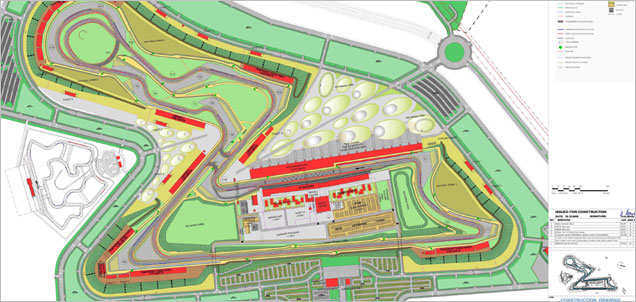
    Countdown to the Indian Grand Prix has begun – the Buddh International Circuit will attract 1.1 lakhracing enthusiasts from India and overseas From October 28 to October 30. The seating capacity, depending on the ticket sales, can be pushed up to 2 lakh.

    The response the race is getting can be gauged by the fact that flight tickets from Mumbai for that duration are almost double the usual price on ticketing websites, and most upmarket hotel rooms in Delhi and Noida are booked – in some cases at a 100 percent premium. Gurgaon hotels too are gainers here.

    Ticket prices for the event itself are between Rs 2,500 to Rs 35,000.


    The target group

    It is a young – largely male – premium audiences expected at the race. Defining the target group for Formula1, states Premjeet Sodhi, President, The Collaborative , Lintas Media Group, “Non-Cricket sports in India are quite Niche in India and the current followers of F1 are very small in number. However, in demographic terms, currently, the primary target group for the sport would be Males, SEC A, 15-34 years in the top 6 metros.“This target group is considered to be the most elusive – and hence the brands are interested in catching them on the tracks.


    Brands riding on F1

    Airtel as known, is ‘Title Sponsor’ for this sporting event, and the official logo of the India Race reads, ‘2011 Formula 1 Airtel Grand Prix of India’. Interestingly, Airtel gave up its title sponsorship of Champions League T20 sometime back, without completing its three-year tenure.

    Indian brands, are seeing an opportunity in associating with individual teams as well. The latest to be a part of Formula 1 is Sahara Group – it has bought 42.5 percent stake, at the approximate cost of Rs 500 crore, in the Vijay Mallya-owned Force India F1 team – and now the team has been renamed Sahara Force India. Interestingly, both these brands too are connected with the pace version of Cricket – owning Pune Warriors and Royal Challengers Bangalore in IPL respectively.

    Hero Motors, meanwhile, has signed a sponsorship deal with Narain Karthikeyan, India’s first Formula 1​ driver – as of now the deal is only for India Grand Prix.

    Interestingly Amul too is in the fray. The brand has tied-up with the Sauber Team (Ranked 17th). The brand logo will be seen on the front face of the rear wing, and also on the drivers’ helmets. On Amul’s part, it is an obvious attempt to establish itself as a youthful and ‘happening’ brand.

    And then there are brands with a long-standing relationship with Formula 1: like Red Bull and Mercedes Benz. Red Bull showcased its RB3 F1 racing car in Delhi throughout September, and has largely tried to attract the student community in the capital. Mercedes-Benz is looking at a long-term strategy, and plans to launch India’s first motor racing academy next year.

    Cafe Coffee Day has associated itself with the event by selling tickets at select outlets at Delhi, Bangalore, Mumbai and Gurgaon. The coffee shop, a favourite hangout of youngsters, must definitely have seen synergies between itself and F1. Or, perhaps, it was the other way round.

    The tickets would be available at Mercedes Benz showrooms as well.

    As for which brands would derive value by associating with Formula One, Anamika Mehta,COO, Lodestar Universal, states, “F1 is in its infancy in India and will grow from strength to strength with its first ever India Grand Prix. More than VFM its an opportunity to engage brands with the thrill and experience . Over a sustained period of time, it will definitely reap dividends for brands which create an engagement platform. India in that sense is poised right ‑ economic growth, young country that loves technology, thrill and speed.”
    It is not only youth brands, but also the Government that plans to reach out to the F1 fans flocking the capital. Tourism Ministry plans to promote tourist destinations close to the circuit, and at other places of interest. Plan, reportedly, is to promote 50 lesser known destinations including beaches, monuments, mountains, sand dunes, festivals and cuisines.


    The broadcasters

    The broadcast rights, as is known lie with ESPN. DTH service provider Reliance Digital TV (RDTV) has added ESPN HD and Star Cricket HD to its kitty of channels – objective obviously is to enable its subscribers experience the highly charged atmosphere as close to reality as possible.

    ESPN states that the spots have been sold out, and also that it is not selling Formula 1 Buddh International Circuit as a separate property. On ground activity too is meant for sponsors alone unlike Cricket. nil Sathiraju, Associate VP & Head-South, Mudra Max, said, “At this point in time, it’s apparently for the sponsors only. Also many of the deals are getting done outside of India because of the fact that it is F1.”

    Coming back to Broadcast media, Winners from India has Got Talent and Entertainment Ke Liye Kuchh Bhi Karega will perform live at the race. Bir Khalsa Group, Rohan & Group, Prince Dance Troupe, Reincarnation of Indian Acrobatics, Speed Painter Rabin Bar and several others will perform throughout the day on all three days. Of course, it is in addition to Lady GAGA (who would perform on the final day) and other well known DJs and bands from India and overseas.


    The online rush

    As a large proportion of racing aficionados are web friendly, there is a lot of activity in the virtual gaming world – where car races, anyway, continue to be all time favourites. Gaming organisations like Ibibo, Zapak and 7Seas Technologies are working towards providing users the excitement of being on the original track – virtually. While, Zapak has launched the official Formula One Game – ‘Vodafone Formula GP Racing, 7Seas Technologies too has a similar game ‘Xtreame’. The game on ibibo.com offers an opportunity to own a ‘high speed racing car’ in the virtual world.


    Ambush marketing: the Vodafone way

    If all this we not enough, enter ambush marketing. Even as Bharti Airtel is the title sponsor for the event, Vodafone is trying to steal the thunder from under its nose by holding road shows across the big cities. These road shows showcase an exact replica of the McLaren Mercedes racing car to be driven by Lewis Hamilton . And as mentioned earlier – the battle is being fought by Vodafone in the virtual space also – with Vodafone Formula GP Racing.
    F1 vs IPL

    In this backdrop, can one assume that it would be as attractive or the advertiser as a mini Three-day IPL? Our experts unanimously turn down the supposition. States Sodhi, “The IPL monetized the already existing mass fan following of cricket. It managed to over-night make Cricket a very premium sport despite it being a very mass followed sport. F1 on the other hand is a very different task of actually creating active fans in India. Today, it has the premiumness but lacks the mass appeal. Hence, from the advertising opportunity perspective F1 and the IPL are in a very different class. While F1 is for a very definitive age group and appeals primarily to the affluent and the higher SECs, Cricket is very broad based. Hence, the brands that would patronize F1 would be a subset of the IPL advertisers and then some more.” He adds, “In time, surely F1 will find its core set of advertisers but I doubt if its advertising valuations will come anything close to the IPL in the near future.”

    Top of the pyramid is growing in India – the number of rich is growing, and so is the number of young adults. Formula 1 being a race extensively patronized by the young rich surely has the makings of a future success story. A lot would, however, depend on the performance of Sahara Force India, and of Narayan Karthikeyan. Thrill and excitement of Formula 1, just might capture our fancy in a big way – car racing after all is a familiar territory with the kids growing up on a staple diet of virtual races.

  • Magazines deserve more: Tarun Rai (with video)

    Story by Akash Raha and video by Shruti Pushkarna


    [youtube width=”325″ height=”225″]http://www.youtube.com/watch?v=mhPNt1g3SXU[/youtube]

    Mr Tarun Rai, CEO of Worldwide Media, recently donned the role of President of Association of Indian Magazines. In a conversation with MxM India, he spoke about the development and the role of AIM in the magazine industry.


    Reacting to the development Mr Rai said, “It’s an honour… I have been a part of AIM for four years now, pretty much as soon as I joined the industry. For me it has been a fantastic experience. I come from advertising and I had no idea about the magazine business. Thanks to my membership of AIM, very quickly I was co-opted to the magazine industry. I have learnt a lot from my peers in AIM and I owe a lot to them.”


    Mr Rai was earlier the Vice President of AIM and took over from Mr Pradeep Gupta, Chairman and Managing Director, Cybermedia. He said, “Mr Pradeep Gupta the outgoing President, has had a terrific run in the last two years and as I take over from him I hope to continue the good job that AIM has done over the last two years. We are a small organization but I think we have learnt a lot to collaborate and make sure that we do things that are beneficial to the entire industry. Right now we are too small. We are just 3 percent of the total ad spends. We deserve more, but just by saying that we deserve more we are not going to get it. So we have to do things to convince the advertisers about the strength of our media. That is the reason we instituted the engagement survey and we are going to take it to its right conclusion by having a proper campaign around it and material which will convince the advertisers. That’s just one of the things. Generally speaking, the magazine industry can do with a higher profile.  So my attempt will be to raise the profile of the magazine industry by doing activities. One of the things it will do is to bring more talent to our business. The way our industry is growing we need a lot of people very fast. We need different kinds of people; with this digital opportunity that has come up we need different and varied kinds of young people to come to our business. By raising the profile of the industry we will also attract new talent to the business. That is going to be one of my important priorities.”


    The AIM names were announced at the annual general meeting of the apex association of magazines, held soon after the proceedings of Day 1 of the World Magazine Congress concluded. The current office bearers are Mr Mitrajit Bhattacharya as Vice-President, Mr Rajmohan as General Secretary and Mr Paresh Nath as Treasurer. Mr Rai and his team will hold office until 2013.

  • Hard Knocks: No superstitions please!

    By Anil Thakraney


    The Times of India Mumbai’s colourful supplement, Bombay Times, is not something you read. At least I don’t. It’s a fun thingy one usually glances through. Especially with all the, er, oomph on display.


    However, cricket commentator Harsha Bhogle noticed something extraordinary in their issued dated October 12, and immediately tweeted about it. (Harsha engrossed in BT? Hmmm.) The paper reports on its cover that Amitabh Bachchan’s still-to-be-born grandchild is likely to be a boy. And this stunning forecast was given to them by a numerologist called Sanjay Jumaani. Harsha tweeted this: “i do hopebombaytimes realise they are promoting blind faith and irrationality by putting “numerologists” on their front page.”


    He is absolutely right, of course. And this is something newspapers should be very careful about. Already some of the vernacular news channels are super busy propagating myths about snake women, angry demons and other frightening creatures… in their lust for TRPs… and the last thing we want is the English press to be doing ditto. Not only will such an article result in a longer queue outside Mr Jumaani’s door, it will have more parents rushing to fake babas and other charlatans to predict the sex of their unborn child. In fact, these crystal ball gazers will become a threat to the livelihood of illegal gender test clinics!


    Guess it was an editorial error of judgment on the part of Bombay Times. Whether they admit to it or not. But it must serve as a pointer to the rest of us in the media. One of our jobs is to move the nation forward by creating awareness and carrying out sharp analysis. And not to set it back into the dark ages by promoting superstitions. The vernacular channels are already doing a fine job of it. Let’s leave it to them.

    PS: Chanced upon this outstanding international Coke ad. This is the sort of work they should be doing inIndia. And not that ridiculous ‘Brrrr’ stuff.
    [youtube width=”500″ height=”300″]http://www.youtube.com/watch?v=9dHOzw5KSlE[/youtube]
  • The Empire seems to be wobbling other stuff standard

    By Ranjona Banerji


    This is a mini review, as I look forward to the weekend and all the creativity which newshounds are forced to display. Cooking shows and endless movie stuff is the usual fare on TV, long features and short forays into the unusual are on the menu for newspapers.

    Meanwhile, the Times of India and Economic Times appear to have great glee in the Guardian expose on the Wall Street Journal’s dodgy circulation game – buying back unsold copies in some transatlantic transactions.  You have to feel sorry for Rupert Murdoch; the Empire seems to be wobbling. Perhaps India’s biggest newspaper group is sending a warning to NewsCorp with regards to its India intentions?

    The fact that Blackberry has started working again may end our global hysteria with different telephones and their features and failures. CNN however did put a hilarious clip about one of its staffers having a bit of a hissy fit on the stories they were missing because of the BB collapse at a news meeting.

    **


    The fact that members of the Sri Ram Sene or Sena and Bhagat Singh Kranti whatever beat up Anna Hazare supporters in Delhi seems to be a clear indication that they are looking for cheap publicity. But what a way to become famous!


    **


    The fact the Information and Broadcasting ministry has had to issue a clarification about its licence-cancelling law is only a minor victory. The battle to stop government control of the media has to continue.


    **

    There is a cricket match on today. Will the media turn all its attention there or will corruption, law and order, terrorist attacks continue to dominate? Hmmmm…

  • Smart move! Huawei ropes in Chetan Bhagat

    By Gulveen Aulakh

    India’s bestselling writer is entering unchartered territory, perhaps a first for any writer-the world of celebrity brand ambassadors. Chinese telecom equipment maker Huawei Technologies has roped in Mr Chetan Bhagat as brand associate for its devices such as smart phones and tablets, a senior executive told ET.


    “Mr Chetan Bhagat is a youth icon and he has changed the dynamics of the publishing industry. Our endeavour is to bring high-end technology at affordable prices. Our target audience and values are the same,” Huawei Devices India President Mr Victor Shan said. He refused to disclose the size of the deal. Industry insiders estimate it at nearly Rs 1 crore.


    Mr Bhagat-whose fifth book, Revolution 2020, is scheduled for launch on October 8-said he liked the concept of brand association. “They offered a brand-association in which I had no pressure to say nice things as such, unless I actually liked the product. I liked that concept,” he told ET in an email from Bangkok.


    <r Bhagat has been using Huawei phones for more than a month. The move has come as a surprise for brand experts. “I do not believe it (the partnership) gels, but it just might work. Companies make very odd choices, sometimes they click and do well,” brand consultant Mr Harish Bijoor said. He added that the deal gives hope for a different class of brand ambassadors and pave way for more cerebral kind.


    As part of his first endorsement deal, Mr Bhagat will launch Huawei’s new products including the world’s first Android 3.2-powered tablet, Mediapad, and Vision cloudphone, the world’s first smart phone based on cloud services.


    The tablet, scheduled for launch next month, will have electronic versions of Mr Bhagat’s books pre-embedded in it. Mr Bhagat will also be associated with all promotional and marketing activities of the firm across all media-be it digital, above-the-line or below-the-line campaign.


    Huawei, which plans to spend $3 million on promotions and advertising till December, has been struggling to build a positive image in India. Its image took a hit when the Indian government raised concerns that Chinese vendors could use telecom equipment they supply to snoop on the country and even launch cyber attacks.


    Huawei -the world’s second-largest telecom gear maker after Ericsson with 2010 revenues of $28 billion, or Rs 1.27 lakh crore – is now banking on Mr Bhagat’s power as an influential writer and motivational speaker to revive its image.


    Mr Bhagat will be Huawei’s brand associate for six months. “We will monitor the change in perception of the brand after the association, and then decide to extend it further,” Huawei Devices Director, Marketing & Solutions, Mr Anand Narang said.


    Huawei, which has been selling its gadgets in India for two years now, plans to become a more consumer-oriented company. In 2010-11, it recorded $490-million sales in the country and sold 12 million units including data cards, set-top boxes, CDMA and GSM feature phones and smart phones. The company targets $600-million sales this fiscal.


    It will seek to reach out to young consumers through new products and services over the next few months. Mr Bhagat will use these products and engage with consumers.


    “Chetan has a huge presence on Facebook and Twitter, with a combined following of nearly 2 million. He will engage with consumers on social media on his new book Revolution 2020, beginning from a contest on Facebook site this week,” Mr Narang said.


    Huawei is the launch partner for Revolution 2020. Huawei Devices Sales Director Mr P Sanjeev said that the company will consider the possibility of Chetan creating content for the brand, for instance, writing short stories that will be available for Huawei device users. The gear maker also plans to work with colleges where Huawei may offer some products at special prices .


    Source:The Economic Times

    Copyright © 2011, Bennett, Coleman & Co. Ltd. All Rights Reserved

  • First on MxM! : Its final. A K Bhattacharya to be Business Standard editor

    It was rumoured that he would take charge as editor and it’s now confirmed. In a mail sent by chairman and editorial director Mr T N Ninan earlier today, group managing editor Mr A K Bhattacharya has been appointed editor. He will take charge on November 1, 2011.

    AKB, as Mr Bhattacharya is known as, joined the paper in January 1996 as national editor. He later launched the paper’s Mumbai edition as resident editor.


    Mr Bhattacharya’s appointment follows Sanjaya Baru’s resignation as the editor, following his decision to join an international thinktank. I wish to place on record my thanks to Dr Baru for his editorial leadership of the last two years, and to wish him well in his future career, Mr Ninan’s mail said putting an end to all rumours.

  • The Anchor: Sanjay Tripathy on 7 reasons a marketer chooses an ad agency

    #1 End-to-end expertise and servicing. An advertising agency which provides a bouquet of services and is capable of creating effective 360-degree integrated communications campaigns is important, as classic one-dimensionaldvertising is becoming less relevant in the current environment.

    #2 Team credentials and clients handled. People form the most important part of an advertising agency, and their credentials and experience are a huge factor in deciding to work with them. The advertising agency needs to be evaluated to determine their expertise in handling different business categories, especially their experience of working on your type of business and if they understand the competition in your field. At the same time, it is important that the agency have some experience in other business sectors as it brings in fresh ideas and helps create clutter-breaking communication.

    #3  Size and scale of agency. It is important to ascertain whether the agency is adequately equipped to deal with the corresponding size of the client’s business in terms of creative, operational and technical resources.

    #4 International exposure. The more the agency has interacted with global clients and has experience in creating campaigns globally, the better. It helps bring in more professional working and a lot of fresh ideas.

    #5 Consistency in dealing. The ability of an agency to maintain consistency as well as transparency in dealing with its clients is very vital from a client’s perspective. It enables ease in dealing on a day-to-day basis and helps meet timelines and implement campaign plans more efficiently.

    #6 Strength in research. A strong research wing in an agency helps ensure that the campaign is backed by high sensitivity in terms of socio-cultural understanding and aesthetics while maintaining the brand philosophy. The tools that the agency uses in planning campaigns and analyzing the brand and competitors need to be scientifically prepared.

    #7 Balance between creative and business strategy. A path-breaking creative idea may not always be the best solution for a business problem. An agency which understands the importance of business problem-solving through communication is beneficial in the long run. Also, its ability to align with the long-term strategy of the client is important.


    Sanjay Tripathy is Executive Vice President – Head Marketing and Direct Channels at HDFC Life.

  • Gufic’s good medicine for MPG

    By A Correspondent

    MPG India, the flagship brand of Havas Media, has been awarded the media account of Gufic Biosciences Ltd (GBSL), a Mumbai-based biosciences company with a focus on pharma and personal hygiene products.

    GBSL operates across many categories in India including pharmaceutical and personal hygiene. The company’s key consumer brands are Roll-on, Shapers and Stretchnil. MPG’s appointment will extend through all its key brands including soon-to-be launched brand Relieve and Relax.

    Commenting on the win, Mr Anil Kamath, Vice President, Marketing and Sales at GBSL, said, The team at MPG showed a thorough understanding of the categories that we operate across. Given the nature of the brands and the high clutter in the space, it is not always easy to come up with innovative solutions, but MPG team did just that.

    Ms Anita Nayyar, CEO of Havas Media, India said, The personal hygiene industry is on an upswing given the consumer is getting more and more concerned and conscious both about health and hygiene. We are confident our product offering will add value to the business and our knowledge in the category will get enriched by working with Gufic.

    Mr Kunal Jamuar, Executive Director West, MPG India, added, GBSL not only have a portfolio of well-known brands but also have a great vision on how to take them forward. We are hoping to do some interesting work and set new trends with disruptive thinking.


  • New, newer, news: Mid-Day’s changing

    On September 6, 2011, Mid-Day came out in a new avatar with a new design and structure. The move seeks to offer the reader news in a convenient way, with several changes across editions bound to build up interest around the newspaper.

    On expectations from the change, Mr Sachin Kalbag, Executive Editor, Mid-Day, said, The USP of the newspaper will remain its city coverage, no matter which city we operate in. While our flagship edition will still remain Mumbai (and the structural changes have been brought about only in Mumbai, while design change is universal), we will continue to do hard-hitting stories across editions. My expectations from the newspaper are the same as they were on the day I joined: to do the kind of journalism we always dreamed about. To do stories that create impact.

    Increase in pages at same price point

    Even as other newspapers are decreasing the number of pages they offer, Mid-Day increased the number of pages from 48 to 64, out of which 15 pages will be dedicated to city news.

    Mr Manajit Ghoshal, MD and CEO, Mid-Day Infomedia said We were getting a lot of feedback from our readers that there were more advertisements and less content. Hence, to cater to the needs of our readers, we decided to increase the content. The number of city and sports pages has been increased substantially. When asked if there will be a hike in cover-price owing to these changes, Mr Ghoshal said There will be no price hike right now. The readers of Mid-Day will get 30% more content in Mid-Day at the same price point.

    Reintroduction of editorial pages

    It is noteworthy, that several newspapers have earlier got rid of their opinion and editorial pages, citing the reason that the pages can’t garner advertising revenue and that it has low readership. However, Mid-Day has gone ahead and re-introduced the opinion pages. When asked about this move, Mr Ghoshal said While it is true that editorial pages can’t reap revenues, the industry of journalism is not only about making profits. We feel it is essential for a media company to inform and also give opinion and take stands.

    With this reinstatement of their platform, columnists will write across all sectors  politics, civic issues, national affairs, internal security, foreign policy, sports, fashion and humour.

    New design and structure

    The newspaper is divided into two clear sections now, which can be easily distinguished. Section one comprises news, opinion and sports. Section two will cover all about entertainment, city, films, television, a comprehensive city events and food guide. There will also be lifestyle features on health, travel, sex, relationships, and fashion etcetera. The entire section two will be called HitList.

    Also, our readers observed, that the section two of our newspaper was not clearly identifiable. Hence, now we have a colourful and bold logo which clearly demarcates it now. Logos for sports and classified pages have changed too, said Mr Ghoshal.

    Advertisers, too, will find that their ads are easy to find, and are not lost in the clutter. Classified and Film advertising will now have their own dedicated pages towards the end of Section two, to clearly demarcate them from the rest.

    Commenting on how these changes will impact Mid-Day’s popularity and readership Mr Kalbag said To be honest, design will not get us more readers; content will. We have already changed the newspaper’s reporting paradigm in the last few months. We will continue to do hard-hitting, relevant stories that shake up the authorities.

    What the new design and new structure will do, is make reading and navigating the newspaper much more simple. One of the prime complaints that our readers had was that the newspaper is cluttered. It is a perception that we want to change with the new design. Mid-Day will be easy on the eye, and more important, news and information will be easy to find, added Mr Kalbag.

    Interestingly, apart from the main cover page, Sports and HitList will also have individual cover pages to pique the interest of the readers, and to differentiate from the crowd.

    How increase in pages impact bottomline

    During recession, most newspapers across boards had cut down on the number pages, and Mid-Day was no stranger to such a situation. However, when asked how the increase in pages will now impact the bottomline, Mr Ghoshal said It is true that such considerations did come to our mind but we had no choice but to cater wholeheartedly to our readers with content. We have been increasing circulation through constant expansion. To cater to the length and breadth of our audience we had to come with newer and more interesting stories  hence the increase in the number of pages.

    The changes made by Mid-Day in their product will definitely churn some interest and add value to the product. The new design and the new structure seek to perform an essential aim  to make news and information that is relevant to the audiences in the simplest, most accessible manner.


  • Get set for .Lux or .Nirma. Even .TOI, .HTMedia, .Bhaskar, .Jagran, .Zee, .Star, .Colors… .Mahuaa!

    By A Correspondent

    It could open the floodgates to a new type of brandwar.

    New generic Top Level Domains (gTLDs) are set to be introduced by the Internet Corporation for Assigned Name and Numbers (ICANN) for the categories of brands, communities and cities and regions.

    Applications for the first round of new gTLDs will open on January 12, 2012 and run until April 12, 2012. During this time frame, organizations will be able to propose and apply for new generic top-level domains associated with particular interests or business sectors.

    Mr Rod Beckstorm, President and CEO, ICANN said this at a seminar organized jointly by the Centre for Development of Advanced Computing (CDAC), Department of Information Technology (DIT) and the National Internet Exchange of India (NIXI) in New Delhi on Friday.

    These domain names are likely to help organizations enhance branding, revenue, security, and user interaction. The availability of new gTLDs will create a unique opportunity for fast-acting organizations to define and acquire their own online namespace. With this brand owners, such as corporations, sports teams, and other high-profile entities can protect their brands and trademarks, enhance brand trust, and create new ways to extend their brand and services to partners, resellers, and customers. Groups of like-minded organizations that share common missions, goals, and challenges can promote commercial or non-commercial offerings to better promote, protect, guide, and serve their communities. Cities and regions can promote greater recognition of their areas, city names, town and other geographical indiactors.

    In his opening remarks, Mr N Ravi Shankar, Additional Secretary, DIT said that the seminar is a crucial step that will determine the success of the gTLD initiative for the Indian Internet Community. Although there is no doubt that it signals a positive time for the Internet users and related organizations, there will be a number of issues that will require deliberation for its smooth implementation, security and confidentiality being some of the key elements within that framework. Both stakeholders and the industry have to come forward to iron out the underlying issues and set the standards towards raising the confidence level of the user community, and thereby its wide acceptance.

    Dr Govind, Senior Director, DIT highlighted the role of the DIT in creating the ecosystem for the implementation of Indian languages on the Internet. Surpassing geographical boundaries, the Internet has brought forth the new dynamics of access, dependability and communication. Of these, language has probably been one of the key issues due to its direct effect on communication and its subsequent reach. The DIT has proactively recognized this aspect and tried to address the challenges by partnering with the best R&D organizations to seek relevant solutions.

    Through this announcement, ICANN has opened up its policy and permitted not only country names and Institutional names but also new Generic Top Level Domain Names (gTLDs), which were earlier limited to .edu, .com, .org etc.