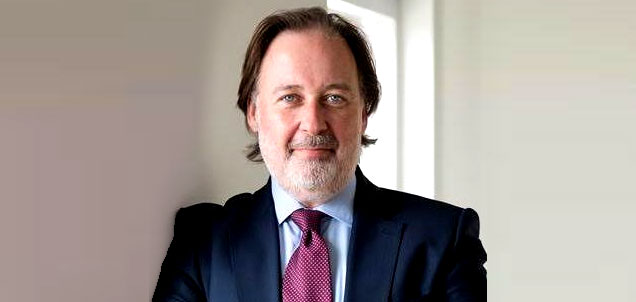
Paul Rossi, President, The Economist Group was in India late last month, meeting advertisers, mediapersons and speaking at a digital summit that he rued hardly had any audience. And those who were there didn’t really matter. In his 30-year tenure at The Economist, he has served the company in numerous capacities, including holding the position of Managing Director and EVP, Americas, Advertising Director, Commercial Director and publisher of The Economist in North America. The company’s media businesses is made up of The Economist, The World in and Intelligent Life magazines, Economist events, Thought Leadership and Content Solutions, EuroFinance, TVC Group and Ideas People Media; all of which are under his purview in his current role as President.
In India, Rossi and The Economist Group partner Zirca Digital Solutions with a clear brief to grow the business and footprint in the country. Excerpts from an interview with Pradyuman Maheshwari…
It’s often said that people don’t buy publications just for its reputation. We all know that The Economist has a reputation, which may not always be a good thing for a publication. In India, we keep talking about media ethics, and the issue has now been muddied by the malaise of paid content. Your comments?
I think reputation is a really interesting way of thinking about a brand. We’re in an age where brands and brand values matter more and more every day. If you think about what’s going on with fake news around the world – there are so many media outlets out there and everyone seems to be a publisher at some level – with this huge amount of content and so much choice for consumers, I think they’re simply coming back to few trusted sources. And to me, the biggest and simplest way to define or measure reputation, is through referral. So if I share a piece of content with somebody, I’m also sort of attaching my reputation to that content [through my recommendation]. In a context of strong brands, the social medium of referring of content is a huge measure of reputation. What we’re really talking about, is brand values and the reality is that while there is a lot of content out there, people mainly choose to move towards trusted brands.
We know that reputation matters, but is that a surefire way to sell a product?
I think if you’re trying to get people to buy your product, your magazine or your content, you have to be really clear about the value proposition. You have to be really clear about the job you’re going to do for that person. We don’t think of The Economist as a magazine or website; we think of it as content value that we create, in people’s heads. They give us money, and time, so we have to provide a value proposition for them. Time is the biggest currency in all of this.
You’ve obviously been able to maintain the quality, integrity and credibility in your magazine. But as you expand to other products, like phones and digital offerings, will you be able to ensure the same value systems pervade the new products too?
Yes. The interesting thing about The Economist is its structure. We were established in 1843 by James Wilson who is buried in Kolkata, because he started the Chartered Bank of India as well. So we have a quite an interesting connection with India. But Wilson started the magazine or the newspaper then, and was worried about ownership and influence, even in 1843. So he set up an editorial trust (which still operates today) and is the only body that can hire or fire the Editor-in-Chief, who has a separate mandate from the business.
All of the content that we work on, even the social media content – and we have Snapchat, films and audio — editorial is in total control of this, and nothing leaves the building if it isn’t good enough by The Economist’s standards. We have our social media teams and nothing is outsourced or given to anyone who is not a vetted Economist journalist.
As someone who manages the business, is that a painpoint? In India, it is said that editorial independence is not always a good thing, and can sometimes be a pain for those who are trying to ensure the publication is also a successful business…
You could look at this thing from both sides. If you’re trying to manage a brand and a reputation, and you’re not trying to ensure that you optimise the value you get from readers, then having strong control of the brand and having independence is the only way to go. If the other side of that coin is fake news and false journalism, and it’s not clear which content is written by an independent journalist and what is paid for by a marketer, then that’s a real challenge. That becomes a bigger challenge in a political context…
You think this is a problem only in India and not around the globe?
No, I think you can see examples of it here, probably more obviously, but it happens everywhere else in the world too. It’s called native advertising, which makes it sound less ominous. So native advertising is only okay if it’s clear that it’s advertising. But when the advertising element becomes less obvious, then it’s a problem.
How does a publication like The Economist manage the pulls and pressures in the current scenario, where you have a huge amount of pressure on revenues, which are not easy to come by, and the publication is also expensive to print?
We start with the idea that we will give customers what they want, and price it accordingly. We are sort of agnostic about the medium people can see The Economist in. So when we do subscription marketing to get a new subscriber, we always ask how they want it. We have three subscription offers, in the same offer as it were. You can be a print-only subscriber, a digital-only subscriber or opt for the bundled offer of both print and digital at one price. This model is designed to send out the message that it doesn’t really matter. From the magazines standpoint it’s easier for us to scale down than it is, say, for a newspaper. So the commercial model around print is actually more flexible. The other thing I would say is that I don’t see print ever going away. So there’ll always be print copies of The Economist.
Are you happier when people buy your print copy, or your digital one?
We don’t mind. The economics are broadly the same. Obviously with print, you get the benefit of probably better advertising revenues, high CPMs and you’ve got the cost of printing the magazine. With digital, you’ve got lower advertising. But at the end of the day, I want customers to be happy with whatever model they want. Fifty per cent of our acquisition is the bundle — of people buying both.
You digital version isn’t free, and is in fact priced that’s lower than print but not sold for a song. And while you’re not the only publication to do so, do you find that this is a stumbling block to the popularity of your digital product when there are other digital publications out there that are free?
With a paid-for product, you need to be very clear about two things: First, are you offering a utility that has enough value for customers so that they’re prepared to pay for it? And second, is the product distinct enough to be chargeable? I think The Economist is certainly distinct enough, so that’s fine. For digital, we have an app, and prefer apps as a payment model. And our app replicates all the things the print reader values: the ability to bookmark, the ability to share, the ability to search by cover and such. So the functionality of the app is to replicate the value the readers want in print. So for us, we’re clear that the proposition, functionality and utility is strong enough to find people who pay for that. But I think if you’re in the general news space, you’ve got to make sure you’ve got some distinctly different offering.
In terms of the various markets, how does India compare with the rest of the world?
India is a fascinating market for us, Top 5growth market and it’s a growth market in both areas, because you got a one side an interesting domestic market for readers and readers in print and readers on digital…
By growth market do you mean it’s not a great market right now but it has potential?
We see it as having potential to grow, and that some of the digital products allow us to access more people. Also from the advertising side, it’s an interesting, very competitive domestic market. We are constantly working with Indian companies and Indian government departments to look outside of the country. One of the big things we do, is help Indian companies market themselves overseas and we do that through advertising content, events and such. So from the standpoint of the Indian market, it is both domestic and international.
You know The Economist has put at least one corporate honcho out of a job, [former Tata Sons chief] Cyrus Mistry…
I would love to think that our influence extended that far, but I’m sure it doesn’t. We’ve actually seen quite an interesting report on it, but I’m not sure we were the people that got him out of his job. We have a good relationship with [corporates] as well as the Indian government. We have a big summit in August every year, and it’s supported at various levels by the government, which is an indication that we’re in good standing…
How do you manage the pressure of not having to compromise your content when you are wooing the government or anybody else for business?
Content is an editorial decision, and commercial decisions are commercial decisions. There are conflicts and there are areas where, you know, we might say one thing and that won’t necessarily be in harmony with the commercial
So you could well damn the government or damn an advertiser in the same issue?
Yes
In terms of new products that are there in the international market, what specific things are you looking at, for India?
When it comes to products, we tend to think of products that can scale everywhere. So we don’t think of India specifically in terms of products.
But you have a special publication for Europe, for instance…
Well 1843, which is the relaunch of our Intelligent Life, is available in India and goes to Indian readers. Among the new launches, Economist Films Global, which is designed to bring The Economist alive on video, is not specifically aimed at India but is available here. In September, we launched in many English-language markets when we went on Snapchat (which is not available here), and now we have six-and-a-half million people on Snapchat every month so it’s quite a big number. But again, this was not specifically designed for a market. We don’t tailor products for particular markets, because we feel that if you put five Economist readers from five different countries in a room together, you’ll find that they’re very similar. It’s a psychography to read The Economist, it’s not a demography. So for us, we create once and print once, and distribute it everywhere, and it’s still a good model when it comes to the content.
You don’t think creating India-specific content is necessarily the way to grow your footprint in India?
I don’t. The differentiator of The Economist is that we serve people who are curious and global-minded. A reader in America reads to understand what’s going on outside the US, and a reader in Hong Kong reads to know what’s going on outside Hong Kong. It’s like we go to the moon every week, look back at the world, and pick 60 things that matter to this curious, global audience.
So you know the last section we introduced was China, largely because the role of China in the world has shifted in the last five or 10 years — across politics and business — and it will be an economy that is ahead of India, in that sense. Maybe there is a time in the future where an India section will get developed because India has become as big.
Any timeframe on when that can happen?
I never give timeframes. We love predictions at The Economist. You should always get a number, and give a date, but never together.
But given the fact that commercial considerations would be very good, could you…
Doesn’t matter. We’ve got to start with the reader. Does the reader in America want to read more about India? We’re not writing for an Indian reader who wants to read more about India. When we write about China, it’s because we think that someone in Norway increasingly wants to understand China, what’s going on in China, and the role of China [in geopolitics]. If India becomes part of a global dialogue and people outside India need to understand what’s going on, then we will do [an India section]. But it won’t be for commercial considerations; only to understand what would make subscribers happier.
And how do you determine that?
It would be an editorial decision.
Would they conduct research or go with a gut feel?
I would say it’s driven largely by a gut feel, but backed by research. But it starts with the question: Does this feel like the right thing to do?
Apart from the annual conference that you have, are there other things that you’re looking at specifically for India?
Other than working with clients here to help them think about and do things internationally, we don’t have any particular product initiatives. It’s interesting to think about whether we could do more with some of our audio products here or if there are different distribution channels that are more unique to this market. If so, we’ll certainly look at those. We’ve just done an event in Europe around finance, called Finance Disrupted, and we’re looking at bringing that here because I think India’s got an interesting movement around technology, finance, micro-payments, digital payments and stuff like that. So we might bring more events here if we find the subjects that are relevant for the audience.
Do you have any specific targets for India in terms of business that you want to achieve?
More.
I would expect The Economist to be more specific…
A little bit more. We are a private company, so we don’t share our numbers. But I think we would like to see 10 per cent growth from this market. I think the challenge is the fact that I want sustainable, profitable growth, not just top-line growth. So I think it’s really about making sure that if we’re 10 per cent up this year, n next year as well, that it isn’t just a blip. That we’re building a solid foundation.


 Zirca Digital Solutions announced that it would begin offering advertising inventory on Skype, helping brands take advantage of the growing popularity of Skype in India. Skype inventory will be sold exclusively by Zirca Digital Solutions in India.