Tag: Vikram Sakhuja

  • Taking Citi to #1 Bank Brand


    By Rahul Sachitanand


    Sanjeev Kapur followed the conventional marketer’s career path when he joined Hindustan Lever (now Hindustan Unilever) and quickly notched up his first career highlight by revitalising the sluggish Lux brand in the 90s.


    He helped reinvigorate the brand, adding as much as Rs 100 crore to the topline. Then, in 2007, he gave up the stability of consumer goods to move to financial services, specifically to work at Citibank. In 2010 Citibank India cards segment was ranked No 5 and the ‘Citibank’ brand No 3 within the Citibank Asia network across nine countries. Mr Kapur, 38, along with the various product teams at Citibank, has helped change this perception.


    Today Citibank India, despite having a relatively small footprint in the country, is the strongest brand in Asia and the third-strongest brand globally within the network, according to the monthly internal ‘brand track’ survey conducted by IMRB in India and other such research agencies elsewhere.


    “As a marketer, he took his brand from a challenging situation to success, based on specific interventions that he drove passionately,” says Anand Kripalu, managing director of United Spirits. “Sanjeev is a person who is intellectually and operationally agile, who challenges the status quo in whatever he does, taking the job and himself to the next level.”


    Mr Kapur was rewarded for his efforts a couple of months ago. From being just the marketing chief of Citibank in India (with a team of 20), he was made the head of customer franchise management. Not only does he now head a 60-member unit, but his role also goes beyond the confines of traditional marketing, he says. Now, he has been tasked with improving client experiences across all segments and products and expanding the use of analytics and big data to make business decisions.


    Punching above its weight (the bank has barely 40 branches in India compared with 16,000 for SBI, over 3,000 for HDFC and about 3,000 for ICICI) is becoming a habit for Citibank India.


    Restricted by banking norms from expanding the branch network, Mr Kapur has used other means to give the bank a disproportionate brand recall. “Sanjeev is a transformational marketer – under his guard brands move forward – and he combines data with intuition and is not afraid to take bold brand decisions,” says Vikram Sakhuja, CEO, Maxus Worldwide, a media planning and buying agency. Citibank has had to take the long route to becoming a well-recognised brand in India. Although it was the first bank to launch phone banking and text message alerts for transactions, its history is a mixed bag in India.


    Three years ago it was rocked by a 250-crore scam at one of its branches and it also struggled with Citi Financial, its NBFC, and indiscriminate personal loan lending and credit card issuance. Since then, it has rolled things back, focusing on building its own sales force (rather than rely on third parties) and picking its clientele carefully. At the end of the last financial year, Citibank India became the largest foreign bank in India ahead of Standard Chartered.


    Mr Kapur is looking beyond, hoping to build a very different perception for Citibank India and he’s discarded conventional marketing norms. “Consumers today are assimilating the same content across multiple platforms, making traditional concepts such as offline and online, as well as below-the-line and above-the-line less meaningful,” says Mr Kapur.


    Mr Kapur, who spent three years in eastern UP as a rookie manager with HUL, is looking beyond consumer goods for marketing insights. Citibank, for example, can better deliver marketing messages to constantly connected customers (via Twitter, Facebook or a mobile ad). “Citibank, has the ability to provide targeted marketing messages to its customers using the social, mobile and ATM platforms, allowing for a richer customer connect experience than most other consumer sectors,” he adds.


    For example, Citibank wants to help customers not only find Chinese restaurants in Bandra, but get directions also using My Privilege app’s mapmyindia application. Then there are discounts and freebies too to be availed of. Mr Kapur thinks technology can help sharpen marketing – pinpoint ads when you’re in an airport (for a Premier Miles card) or in a shopping mall, with tailored offers.


    “Location-based connected experiences are the future of marketing,” says Mr Kapur. Citibank has used social media to find the most convenient locations for its ATMs and devised an application to make social media-based dining and shopping recommendations.


    “The future of marketing lies in creating and delivering customized information to our consumers who are constantly on the move.” This content may be location or time based and displayed on multiple platforms including mobile phones and ATMs.


    An admirer of brands such as Nike, Starbucks, Apple and Ikea, this mechanical engineer by training is adding some new gears to Citi’s marketing engine. Citibank’s Dil v/s Bill campaign did not just crank out cookie cutter print ads, but ran an aggressive twitter promotion (15 tweets a day) and had it as the trending topic for 53 hours. As a marketer, Mr Kapur is clearly focused on the profile of his customers.


    “Over 60% of our banking transactions are online… We attract digitally savvy early adopters as customers and we have turned our distribution disadvantage (of a small branch network) into a technology advantage,” says Mr Kapur.


    Citibank’s ability to use the internet and mobile aggressively, he adds, demonstrates its ability to leverage technology efficiently across platforms, providing easy access, more control and a superior customer connect experience. Citibank India built on the success of its Dil v/s Bill campaign with the Happiest Diwali initiative. While the final results of this campaign will take a couple of more weeks to crystalise, Citibank has reached out to 1,500 merchants and is confident of making a splash in the market. Like its previous campaigns, Mr Kapur is focusing on converting purchases from heavily rationalised ones to those driven by the heart.


    Mr Kapur, a university level football player, is also changing the rules of the marketing game. So, the Dil v/s Bill campaign had someone else (for example, a consumer electronics firm) create the demand, while Citibank only cashed in on it later. “Consumers tend to splurge beyond their means during the festival season on their family and friends,” he says. “Our brand is about providing financial solutions to fulfil the individual aspirations of our customers responsibly.”


    Source:The Economic Times

    Copyright © 2013, Bennett, Coleman & Co. Ltd. All Rights Reserved

    Licensed to republish

     

  • Madison@25: Andre Nair, Ashutosh Srivastava,Vikram Sakhuja, Shashi Sinha, Lynn de Souza, Ambika Srivastava & Divya Gupta on the formidable frenemy

    Madison and Sam Balsara are so close to each other’s identity that while talking of one, people start talking of the other. The same happened in the case of these honchos. It is almost as much a tribute to 25 years of Sam Balsara in the industry as it is for Madison World.



    Andre Nair, (Former CEO GroupM South Asia), Chief Operating Officer, DatVietVAC Group Holdings

    For me, Sam Balsara & Madison represent two aspects; each the maker of the other.


    Madison: Joyously Indian to its core, they’re a competitor to be reckoned with. They jealously retain their clients and pitch clever, selectively & aggressively; no secret to their success & expansion over 25 years. And, through its history, Madison has grown & given opportunity for new bold leaders, like CVL Srinivas & Punitha Arumugam, to rise.


    Sam: Outside the competitive arena, as a key industry leader, he lives up to that old Ogilvy aphorism – a gentleman with brains, who works tirelessly with other leaders for the general betterment of the industry.


    Here’s to Madison and their next thriving 25 years!


    Ashutosh Srivastava, Chairman & CEO, Global Emerging Markets, Mindshare Worldwide
    My first encounter with Sam was years ago when I used to run Fulcrum (Unilever’s media AoR@HTA ,now JWT), prior to setting up of Mindshare in India – when Sam was looking for a person to replace Sriram who had moved to Singapore with Starcom. Sam was by then a charismatic industry leader with high credibility among clients, and Madison was seen by the advertising firms as an upstart, disrupting the establishment and breaking up the full service agency model.


    While I did not end up joining him in Madison, I did end up joining that industry. That one conversation with him really deepened my resolve to do what I could, along with other like minded colleagues, to get WPP to bring Mindshare & Maxus (Maximize in those days) to India. The rest, as they say, is history! Personally speaking, it certainly inspired me to get to where I am today, and I hold Sam in the highest regard as a pioneer in the market, who showed us the way. Even after WPP set up GroupM and carved out a dominant share in the market, we always saw Sam and Madison as a worthy ‘frenemy’ in the market. ‘Frenemy’, because they had similar values as us, they were a worthy competitor in pitches who always had good talent, had trusted relationships with their clients and for a long time, were very careful about who they chose to work with – Sam is always a man of his word, and was extremely careful not to overcommit to new clients without first making sure his existing clients got the highest value out of their relationship with Madison. So bitter competitors in pitching for new business, but similar views and vision on what would grow and strengthen the media agency sector. And eventually as frenemies, we ended up doing a JV together, to set up an independent Mediacom in India !


    Congratulations and best wishes for your 25th!


    Vikram Sakhuja, CEO, Maxus Worldwide

    I’ve known Sam for 20 of the 25 years Madison has been in existence. It dates back to 1993 when in P&G I took on the Media Manager role. In those days Media planning and buying were managed through full service agencies, and I introduced the notion of a consolidated Buying AOR (subsequently both Planning and Buying). Madison won the pitch, and Sam’s personal entrepreneurial style had a lot to do with it. With Sam’s support we pioneered the afternoon slot / as well as India’s first daily strip – Shanti on DD. And that was a start of a very productive relationship that continued when I moved to Coca-Cola and held a Media pitch there. Sam’s greatness lies in his high client orientation, his indefatigable energy, his deal making angles and in those days an ability to get quality talent like D Sriram, CVL Srinivas, Ajit Varghese and Lakshmi Narsimhan into Madison to work on our business.


    Even as a competitor it is a pleasure to work alongside Sam. He is a true statesman and puts industry interests above own. He continues to have an amazing eye for detail, and is practical to boot. For me, Madison and Sam are inextricable. I have learnt a lot of the Media I know from him, and he continues to inspire. I wish both him and Madison warmly on this milestone.


    Shashi Sinha, CEO, IPG Media Brands

    I have immense regard for Sam as an individual. At the time when media was not much recognized by the industry, he came to the forefront and provided industry the needed pedigree. It was largely his efforts that brought credibility to media buying business,


    Madison has definitely grown a lot – and created many milestones. Challenge now is to scale up and keep the momentum going. Organisation is built on culture and systems – and I am sure focus is on the side now – Sam whenever he decides to leave, would leave a legacy. Challenge is to take it up from there.


    Lynn de Souza

    Madison and Sam have always fascinated me. A true blue Indian story of guts and glory, innovation, ambition and perseverance. And often a bit of healthy jugaard!


    They believe in the strength of long term relationships, and are not afraid to ask for what they deserve. Sam’s energy is legendary and he built a successful empire largely on his ability to drive himself, and build lasting relationships with key team players and clients.


    I wish them 25 more years of pathbreaking game-changing success.


    Ambika Srivastava, Chairperson Vivaki Exchange India, Vivaki

    I have always admired and respected Sam. There are two things that I would love to mention – one, that Madison has provided very good talent to industry in leadership roles – CVL Srinivas, Ajit Varghese, Punitha Arumugam. It is just amazing. It is a place from where leaders have emerged – it is Madison’s great contribution to the industry, and a tribute to Sam’s leadership.


    Second, Madison has always been very tough competition. When you win against Madison – the win is far sweeter, because the competition one knows is formidable. It is not that every pitch we competed has converted into a win for us – but whenever it has happened, it has been exciting.


    I admire Sam for his energy and that he finds time to do so much for the industry as well.


    Really very good people.


    Divya Gupta, CEO, Dentsu Media

    My full salute to Sam and his team


    Madison’s client roster, the deep relationship and tenure it enjoys with these clients, speaks volumes.


    Just when you think you have managed to get a lead on Madison, Sam pulls out a rabbit from nowhere! By far one of the toughest competitors to go up against in a business pitch… I have had the misfortune of learning it the hard way!


    Sam’s passion, drive, tenacity is legendary. Madison stands testimony to this.


    I wish Madison and Sam an equally dynamic and successful future.


    Interviewed by Ritu Midha


  • The Importance of Being Vikram Sakhuja


    By Johnson Napier

    With inputs from Ananya Saha


    It may be the calling of a lifetime but as Vikram Sakhuja gets ready to shoulder new responsibilities as Global CEO of Maxus, he leaves behind a legacy at Group M that’s not going to be easy to match. Apart from influencing the team and colleagues to take on bigger challenges at the workplace, Mr Sakhuja has ensured that that the four media agencies under Group M umbrella continue to dish out excellence in whatever manner possible. The results are for all to see as the Group collectively has soared to great heights over the past few years and has become a hot favourite with several clients as well.


    On the eve of a farewell the team at Group M is hosting for him, MxMIndia spoke to a few industry captains who have worked or interacted closely with Mr Sakhuja maverick to gather their perspective on his contribution to Group M and towards the industry.


    CLIENT:

    Ajay Kakar, Chief Marketing Officer, Aditya Birla Group – Financial Services

    What does one say about Vikram? He is an omnipresent shadow. And what i mean by omnipresent is that he is there all the time but in his perfect humility and understated personality. He is not overpowering or overbearing but always there wherever you need him, wherever you need him. So as a client, i can say he is an omnipresent shadow, a very reassuring person to have to have access to and he will be there.


    As an industryperson, he is a very rounded person because he has the rare experience of agency, client and media. He is not a theoretical preacher but he has been on all sides and knows the practical side of clients and clients’ business. It gives him an unparalleled edge. The biggest thing i have noticed about him that he has managed to create culture at Group M, which reflects his personality of understated people who just do their best. Typically, advertising is about talking about your own self and talking about your own work. Here, his personality is of being understated and letting his work speak for himself and he has managed to permeate that culture across all Group M companies. Today, if you look at the Group M leadership belt, you find the same welcome personality across the agencies and people.


    What he has achieved is unparalleled  Look at the way Group M agencies are ruling not on size but on recognition also. On one end it is Mindshare and at the other, it is Maxus. Whichever horse won the race, it was Group M or Vikram.


    COMPETITION:

    Sam Balsara, Chairman & Managing Director, Madison World

    I’ve known Vikram Sakhuja for quite some time now first as a client at P&G and Coca Cola and then at Star India and later Group M. I see Vikram as a true-blue professional with high professional integrity and commitment to do a good, objective and honest job at hand. Also, he has performed well as a leader at Group M and his promotion is richly deserved. His promotion in fact is a cause of pride for all of us in the media industry and also India Inc. because he is an outstanding example of someone from within our industry who has been chosen to be a global head and that too operate out of India.


    Ambika Srivastava, Chairperson, VivaKi Exchange India
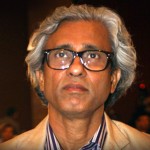
    I’ve known Vikram Sakhuja since his brand management days when he was with Coca Cola. He was very sharp and clear and was always able to ask the right questions. It’s a fundamental want but some people do not ask the right questions especially at forums. What I’ve noticed with Vikram is that he is always focused and asks the right questions. That is what enables him to articulate and address issues in the right manner.


    As for his stint at Group M, I personally feel that he has done a great job especially during the last 2-3 years when the economy was going through a tough phase. His appointment as global CEO of Maxus is indeed an achievement; he would be a great role model for the younger generation. I am indeed pleased that Indian talent has been recognised; it was indeed waiting to happen.


    MEDIA HOUSE:

    Bhaskar Das, Group CEO, Zee News (cluster)

    From what I’ve seen of Vikram Sakhuja, he is truly an inspirational leader as he is known to lead by example whether on the intellectual or managerial front. Of the many qualities that he possesses the one I think he is good at is keeping his eye on the future and seeking out cutting-edge development in the business and media space. He has a good understanding of business theories and the way it needs to undergo constant evolution for its own betterment. Our industry is such that it is undergoing continuous evolution due to acceleration in technological development and global practices. For a media buying house to be successful needs to have a good thought leadership in place and that is what Vikram Sakhuja has excelled in abundantly.


    During his stint, I think Group M has achieved greater heights and much of that has been possible due to his dynamic thought leadership skills. He has even created leaders out of his organisation in the time that he was at Group M. It is a matter of pride that an Indian has managed to get a global mandate, which signifies the importance being paid to Indian talent and also India being the epicentre of intellectual and managerial ability.


    (Dr Bhaskar Das was until recently President, Bennett Coleman and Company Ltd)


    COLLEAGUE:

    Ajit Varghese, Managing Director South Asia – Maxus and Motivator
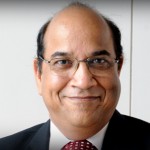
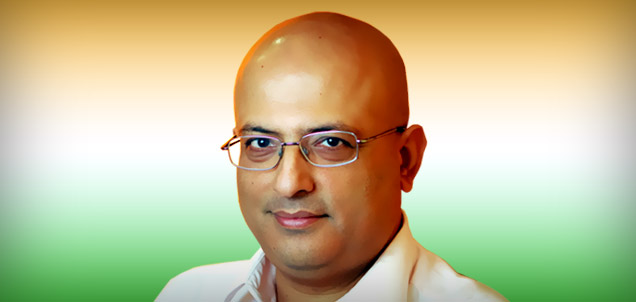
    Vikram has been a client, a boss and great leader for me in the last decade. His biggest strength is depth of knowledge, ability to dig deep into issues and ability to focus on issue in hand than the people involved. To me his biggest contribution to GroupM is his ability to choreograph the strengths of 15-17 units heads and not letting competition have anything easy.


  • Video: Good effort to evangelize print: Vikram Sakhuja, Shashi Sinha & Josy Paul. Sequel planned: Rajan Bhalla

    By Robin Thomas


    On the sidelines of the HT Media event to unveil the book – ‘The Magic of Print’, MxMIndia caught up with some industry players for their views on the evolution of print advertising, the road ahead for the medium and of course their reactions to ‘The Magic of Print’ and whether such initiatives really help the industry?


    1. Vikram Sakhuja, Global CEO, Maxus

    [youtube width=”400″ height=”220″]http://www.youtube.com/watch?v=gleSCF4K05A[/youtube]

    Your reactions on the book – ‘The Magic of Print’…?

    It’s a great book, it’s a beautiful production, it’s got some very good tips. There are some twelve tips to re-create the magic of print and an absolutely mind blowing compilation of ads. I think Rajan Bhalla has done a brilliant job.


    Does the industry need more such initiatives?

    Yes, absolutely. The good thing about these kind of initiatives that it makes you stop back and think, reflect and when you are tuning with some great minds and if something comes out of it, is always nice.


    2. Shashi Sinha, CEO, Lodestar UM

    [youtube width=”400″ height=”220″]http://www.youtube.com/watch?v=9vILEEM6PeQ[/youtube]

    Your  reactions to the book (‘The Magic of Print’)…?

    It’s a lovely book, and it’s got a combination of some great ads, and there are some simple tips. Copywriting is one area which is very difficult for a beginner in advertising to enter into and the ones that have managed to enter into this field can also learn quite a lot from this book.


    On whether the industry needs more such endeavours?

    There are so many business schools, but no one teaches you the craft of advertising. So I believe this is a great endeavour and for a publisher in-house to do this initiative and to inculcate the spirit, I think it’s a great opportunity.


    Does the industry need more innovation for better growth?

    I won’t be worried if innovations happen or not because ultimately if there are a lot many ads on print, innovation will automatically happen. Innovation is something you do for the long term, so I won’t be worried if innovation happens or not. The fact is that advertising in print will continue to grow and as television rates go up, automatically people will come back to print. Whether it takes two years or five years, I won’t be able to predict, but, this will happen.


    A word of advice for print media…?

    Keep providing great content, contents which are engaging and the rest will follow.


    3. Josy Paul, Chairman and National Creative Director, BBDO India


    [youtube width=”400″ height=”220″]http://www.youtube.com/watch?v=h83bzcVtlck[/youtube]

    Your reactions on the book – ‘The Magic of Print’…?

    It’s a good book, well printed, it’s got some nice images and makes me want to spend more time with it and share it with my team and may be even have some discussions on which of those are fantastic work.


    And does the industry need more such endeavours?

    I think more discussions are good because a discussion makes you think about the medium a little more. Basically it is about focusing on the medium and what makes the medium a little more interesting and exciting. So I think that conversations are good, always.


    Does the print industry need more innovations for better growth?

    I am not sure about the word innovation in print because as a reader if I find people coming in the way of my news, I do get irritated. I believe true innovation is when within the context of the page and with respect to the page you can still create magic and still have a point of view that will make people think again or get excited or share things or put it up on their board, then that’s great. However this whole thing of irritation to the reader is not innovation, in fact is suddenly makes the news a nuisance.


    Where do you see creativity in Print media, five years from now?

    Creativity can never die, it’s forever. I expect newer things to happen, more beautiful things, and younger people will bring in more filters to print and we will see beautiful things that we never thought about. So one cannot really predict, creativity in fact evolves.


    What about print as a medium five years from now?

    I think print will take a new avatar. We all know that education is a big necessity in this Country and newspapers will become an integral part of education and it will start finding new audiences and I think it will further penetrate into the different strata of the society. So, newspapers or print media is like a river that will grow very deep and I don’t think it will just die like that.


    4. Rajan Bhalla, Head, Corporate Marketing and Magazines, HT Media

    [youtube width=”400″ height=”220″]http://www.youtube.com/watch?v=1P8utJgX-EA[/youtube]

    On the idea behind initiating- ‘The Magic of Print’?

    Well, I think the magic of Print is our contribution, our effort to help everybody in the industry associated with print advertising to understand how to create the magic in print advertising. I think it is absolutely clear that print is an absolutely great media vehicle from the point of view of showcasing brands and above all lending a lot of credibility to the message. It is time that we all started looking at how great print advertising can be created and this is our effort in that direction.


    On the process that went behind creating this initiative?

    It was a tedious process that lasted us almost a year. We first identified the content of what we wanted to present in the book. Once we had the content right, we then started scanning for the best examples we could find across the globe to fit into that category. We were not so concerned about picking brands from India, we just looked at global advertising as a market place and we looked at just the best in class advertising that was created under every single theme that you will see.


    How have the advertisers responded to the book?

    The book has just launched, so I am very positive that both the media fraternity as well as the creative fraternity is going to view this as a great initiative, which is also going to help clear a lot of thinking that they put into creating great advertising that works for them. So, it is just the beginning and we would like to probably move on this path as we go forward, year on year.


    So, will there be a sequel to this book – ‘The Magic of Print’?

    Absolutely yes; so we would be looking at various genres in which we can actually help impact the print industry, impact print advertising and help our advertisers in different ways. So you can look forward to another such initiative one year from now.


  • Arvind Sharma appointed ASCI Chairman

    Arvind Sharma

    By A Correspondent


    The Advertising Standards Council of India (ASCI) has appointed Arvind Sharma, Chairman of India Sub Continent, Leo Burnett, as Chairman of the Board. Partha Rakshit, Proprietor, Partha Rakshit Associates, was elected Vice-Chairman; and Vikram Sakhuja, CEO-South Asia – Group M Media India was re-appointed the Honorary Treasurer.


    I Venkat, Director – Eenadu, and the outgoing Chairman of ASCI said, “The last year has seen ASCI take various initiatives to strengthen the self-regulatory system. These included increasing the frequency of Consumer Complaints Council to twice a month, introduction of the Fast Track Service, having a National Conference on Strengthening Self-Regulation of Advertising Content, engaging with young creatives through a Mobile Film Contest at the Goafest, interacting with the Department of Consumer Affairs and participating in their conferences on misleading advertisements. ASCI has taken a giant leap forward in introducing the National Advertising Monitoring Service (NAMS) which monitors 1,500 TV and 45,000 newspaper ads per month. All in all a very satisfying year for ASCI. ASCI is the first self-regulatory body in the world to initiate monitoring of almost all newly released ads in print and TV nationally with NAMS.”


    Arvind Sharma said, “It is indeed an honour to be elected as Chairman of ASCI which has progressively contributed to effective self-regulation in advertising content. We are confident that the ad sector, industry body’s regulators, consumer activists and the general public will actively seek ASCI’s services and take self-regulation forward.”


    As a member of the Board of Governors for seven years, Mr Sharma has provided active support to self-regulation in the advertising movement.


    During the year 2011-12, the Consumer Complaints Council (CCC) met 16 times and considered 2,986 complaints against 176 advertisements. Of these, complaints against 103 ads were upheld, while 69 were not upheld and 4 were considered non-issues. In 89 cases, the complaint upheld ads have been voluntarily withdrawn or modified as per the CCC’s decisions resulting in over 86% compliance rate.


    The other members of the new Board of Governors include: Advertisers: Narendra Ambwani (Agro Tech Foods), Hemant Bakshi (Hindustan Unilever), Rajiv Dube (Aditya Birla Management Corporation), Shantanu Khosla (Procter & Gamble Hygiene & Health Care), Media: Rajan Anandan (Google India), Sunil Lulla (Times Global Broadcasting Co.), Benoy Roychowdhury (HT Media), I. Venkat (Eenadu); Advertising Agencies: Subhash Kamath (BBH Comms India), Srinivasan Swamy (R.K. Swamy BBDO). Allied Professions: Dilip Cherian (Perfect Relations), Dhananjay Keskar (IBS), Pranesh Misra (Brandscapes Consultancy P. Ltd.).


  • India Shining with Vikram Sakhuja


    By Johnson Napier


    Proctor on Sakhuja


    Exclusive to MxMIndia: Dominic Proctor, President of GroupM Global on Vikram Sakhuja’s appointment to the position of Global CEO of Maxus and the relocation of Maxus’ Global Heaquarters to India


    Vikram has been selected as he is the best candidate for the job, not because he lives in India. The fact that he does live in India is an additional bonus because it spreads the management of Maxus around the world, consistent with the new world order. It also reflects the fact that much of our global senior talent resides in Asia and I fully expect that more of that talent will move into global positions in the years to come. Not just in GroupM agencies but business in general.


    The world has become a smaller place and boundaries are no longer barriers. Maxus does not have a single HQ so there is no plan to move more people into the market. Indeed the agency will continue to grow and develop as a very global business.


    Vikram will join the global management team of GroupM and I am really excited by the opportunity to work with him more closely. He will bring a different and interesting perspective to our business as we continue to grow. The fact that he is coming from a fast growing market will also be a benefit as we plan to grow quickly everywhere!


    I can’t think of anybody as qualified as Vikram to build on the great work that Kelly Clark and his team have done in establishing Maxus as the world’s fastest growing agency.

    As India celebrated her 66th Independence Day, the headquarters of the world’s fastest growing media agency is to be shifted to the country. And Vikram Sakhuja, currently Group M’s CEO for South Asia, has been appointed Global CEO of the media advertising network’s Maxus agency.


    Proctor Dominic

    Mr Sakhuja’s appointment was part of a series of senior-level changes announced on Wednesday by Dominic Proctor, President of GroupM Global. “The world has become a smaller place and boundaries are no longer barriers,” Mr Proctor told MxMIndia. “Maxus does not have a single HQ so there is no plan to move more people into the market. Indeed the agency will continue to grow and develop as a very global business.” Said Mr Sakhuja, “It’s very exciting and humbling at the same time… It’s still sinking in.”


    In the first move, GroupM North American CEO Rob Norman becomes Chief Digital Officer for GroupM Global, a new position at the company.


    Rob Norman

    “Our activity in digital will define our future success and we are truly fortunate that Rob will step into this crucial role full time,” Mr Proctor said in a communiqué issued earlier, announcing the movements.  “There is nobody better suited or more experienced than Rob to lead our teams into the future.”


    Mr Norman has extensive experience in the digital arena having served as CEO of GroupM Interaction since 2006.  Mr Proctor said his responsibilities will be significantly expanded in his new role.


    Kelly Clark

    At the same time, Mr Proctor said Kelly Clark, currently Global CEO of the GroupM agency Maxus, will succeed Mr Norman as CEO of GroupM North America.


    “Kelly has had wonderful success with our companies in Asia, the UK, and Europe and most recently at Maxus globally,” Mr Proctor said.  “His broad experience and track record will bring a great boost to our business in North America.”  Prior to taking over Maxus in 2008, Mr Clark served as CEO of GroupM Europe, Middle East and Africa.


    Talent and leadership is sitting everywhere: Vikram Sakhuja


    The new Global CEO of Maxus spoke to MxMIndia hours after the news of his appointment was announced


    Congratulations… has the news sunk in yet?

    It’s very exciting and humbling at the same time. It’s a very vibrant and exciting agency to be with. All I can say right now is that I am thrilled with the news. It’s still sinking in.


    In a sense you’ve piped some favourites to the job…

    I really have no idea on how the contender things work. It obviously involves the system and you’ll have to ask that to the bosses at Group M.


    We’ve seen the stellar work that you have done for Group M but personally, what would you attribute your ascent to the top to?

    I can’t really say what is it that has worked in my favour. One needs to introspect such things, I guess. Something great has obviously worked for me. But one has to work things up and have a gameplan and get people together to move things in a particular direction. The ability to have a vision and the ability to drive it are the things that I have tried to do as the Group CEO for Group M South Asia. And if that has worked, then it’s great.


    How big a challenge is it to fit in the shoes of Kelly Clark, who’s been promoted to CEO of Group M North America?

    Kelly’s shoes will be very large to fill. I remember that I joined the system when he was the APAC head at Mindshare and was transitioning between UK and Europe handling several roles for the agency before he moved to Maxus. Hats off to Kelly for the sheer intrusiveness and energy with which he has driven the agency. I am a big fan of his.


    What are the immediate changes that will be seen on ground?

    Not sure on when the new change will come into effect and will be clear only when a successor has been decided. These things take time and it is still work in progress.


    In a sense you become the first global CEO of a media agency to be based out of India. And Dominic Proctor too has highlighted the emergence of an APAC market as being the driving engine for the future. What do you have to say about this?

    It so happens that you got talent and leadership sitting everywhere. I have been fortunate enough to be picked out of here but at the end of the day, we are living in a pretty global world and the new reality is that communication barriers are slowly fading away. In our earlier system, people used to be running the system out of Australia, Singapore, Hong Kong but suddenly where you sit is not central to what is called the ‘headquarter concept’. In my case too, it just so happens that I am going to be based in Mumbai. But I won’t read anything too much into saying that Asia Pacific has emerged as a hot favourite – it’s great to hear that but at the end of the day we have been part of the global network for years and it feels that way. I don’t see it as APAC being suddenly recognised. If you see Ashutosh Srivastava, the Mindshare APAC head also has taken up a global responsibility…so there are Indians all over the place. It just shows the ability of the system to look at APAC as the global hub rather than elsewhere.


    Will it be a challenging task to lead global operations out of India?

    It’s just that I am going to be based in Mumbai and I will be travelling as the other global CEOs do. A global CEO’s job doesn’t automatically mean that everything is decided by a bunch of team sitting at some headquarter and running the entire set-up, it doesn’t work like that. You’ve got to work through a network, you’ve got to create a team and drive a certain agenda. It doesn’t require physically handling a bunch of people in one place.


    One of the challenges will be to see that Maxus continues to achieve the 20 per cent growth trajectory in the coming future as well…

    I have no idea how I’ll continue to keep it at that. But it will be an interesting challenge. I look forward to my role at Maxus.


    Vikram Sakhuja interviews on mxmindia.com


    Interview with Anil Thakraney

    http://www.mxmindia.com/2012/06/ creative-agencies-have-allowed-themselves-to-be-dumbed-down-vikram-sakhuja/


    Text and MxMIndiaTV interview at FICCI-Frames 2012

    http://www.mxmindia.com/2012/03/ff12-integrated-media-is-the-best-way-forward- vikram-sakhuja/


    MxMIndiaTV interview at World Magazine Congress 2011

    http://www.youtube.com/watch?v=GSS2j9PQMkU& feature=player_embedded

    Maxus was named the 2011 “Media Agency of the Year” by Adweek and last month the agency was named the fastest-growing global media services agency in the world for the third consecutive year by RECMA, the independent organization that measures media agency sector operations.


    Taking Mr Clark’s role at Maxus will be Mr Vikram Sakhuja, currently CEO of GroupM India and South Asia. “Vikram is the perfect candidate to take on the Maxus role from Kelly,” Mr Proctor said.  “Maxus has a great management team and a lot of momentum.  I have no doubt that Vikram will continue to build a great agency.”  He added that Mr Sakhuja will remain in his current role until his successor is announced (See ‘Proctor on Sakhuja’ in box alongside).


    All three will report to Mr Proctor and the new roles begin later this year.


    Mr Sakhuja’s appointment is the second global level appointment made by Maxus in recent times. Earlier this year, Madhvi Pahwa moved from a Group M responsibility to that of Global Talent Director. Ms Pahwa was to be based in India.  But now, Maxus has become the first global media agency to have its headquarters in not just India, but also Asia. Said Mr Proctor on the relocation of the HQ: “It also reflects the fact that much of our global senior talent resides in Asia and I fully expect that more of that talent will move into global positions in the years to come. Not just in GroupM agencies but business in general.”


    Lynn de Souza, chairman and CEO of Lintas Media Group, believes that it’s a welcome recognition for Mr Sakhuja and India. “It shows that Indian talent is appreciated and not that it needs to be exported out of India to do good work. That is the essential story that comes out of this,” she said. Added Mona Jain, CEO, Vivaki Exchange:India has been consistently delivering healthy growth numbers for several agencies and is also one of the fastest growing markets in the continent. So it is only fitting for them to consider India as the hub for managing global operations.”


    For Mr Sakhuja, it’s a significant move as he moves to Group M global management team directly and not via the Asia-Pacific route. However, he doesn’t think there’s an all-new focus on APAC. “It just so happens that I am going to be based in Mumbai. But I won’t read anything too much into saying that Asia Pacific has emerged as a hot favourite – it’s great to hear that but at the end of the day we have been part of the global network for years and it feels that way,” he said.


    The successor to his current position as CEO, Group M South Asia hasn’t been announced yet. Once that’s done and the transition happens, Mr Sakhuja will take on the global role at Maxus in right earnest.


    INDUSTRYSPEAK


    Lynn de Souza, Chairman & CEO, Lintas Media Group

    I think it is a fantastic development both for Vikram himself who has really done a very good job ever since I have known him and it’s an appreciation for all the good that he has done and the potential that he has. So I am very happy for him. Also, for the industry itself, it shows that Indian talent is appreciated and not that it needs to be exported out of India to do good work. That is the essential story that comes out of this.


    Certainly, Maxus is a great agency; I have always said that. It’s excellent news; the recognition for Vikram as well as for India is really very good.


    Divya Gupta, Chief Executive Officer, Dentsu Media India

    This epitomizes India as a key, growth engine for most brands and marketers across the globe.

    It also augurs the emergence of India as a strategic global and regional hub for management and control of network businesses.
    I wish Vikram success.


    Mona Jain, CEO, Vivaki Exchange

    The agency has always been rated highly. It’s great news that the CEO should be from India which shows that the country is becoming very critical in the entire global scheme of things for agency networks. Also, India has been consistently delivering healthy growth numbers for several agencies and is also one of the fastest growing markets in the continent. So it is only fitting for them to consider India as the hub for managing global operations.
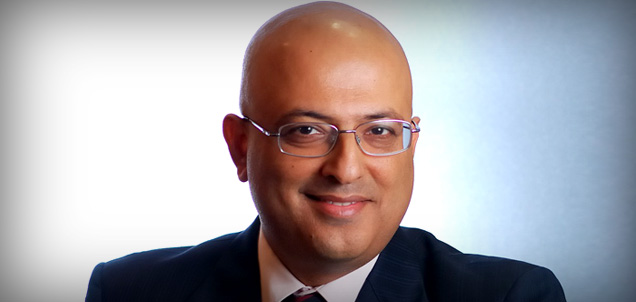




    Maxus Global Factsheet

    > Launched in late 2008, is part of GroupM, the world’s largest media investment management group that serves as the parent company for all of WPP’s media agencies, and which buys over one third of the world’s media every day.

    > Rated world’s fastest growing global media agency network

    > Talent base 1,400 people across 67 locations worldwide

    > Global clients include Barclays, SC Johnson, NBC Universal, Fiat Group, Nokia, Vodafone, Church & Dwight, Nestle and L’Oreal

    >Services include Communications strategy, Media planning and buying, Digital marketing, SEM and SEO, Direct response media, Data analytics and Marketing ROI evaluation

    (Information source: Factsheet, www.maxusglobal.com)


    Rise and Rise…


    Vikram Sakhuja

    Twitter @VikramSakhuja


    Education:

    IIM Calcutta (1988)

    IIT Delhi (1984)

    Modern School, Delhi (1979)


    Work:

    Group M

    CEO South Asia (earlier MD, Mindshare Fulcrum and later Mindshare South Asia) (2002-present)

    Star TV

    Exec VP Marketing (Jan-Dec 2001)

    Coca-Cola India

    Marketing Manager-Brands (1996-2000)

    P&G India

    Associate Manager-Media & MR (1988-96)

    DCM

    Management Trainee (1984-86)


  • Vikram Sakhuja is Global CEO of Maxus. Maxus HQ to shift to India. Sakhuja replacement not named yet

     By A Correspondent


    As India celebrated her 66th Independence Day, there was renewed reason for cheer as the news that the headquarters of the fastest growing media agency is to be shifted to the country filtered in. The shift was necessitated by the appointment of Vikram Sakhuja as Global CEO of Maxus.


    Mr Sakhuja’s appointment was part of a series of senior-level changes announced by Group M on Wednesday by Dominic Proctor, President of GroupM Global. “There is no reason why agencies need to be run out of London or New York,” Mr Proctor told Campaign Asia-Pacific. “The world is now a small town, and the fact that our management team are spread around the globe is very fitting.”


    In the first move, GroupM North American CEO Rob Norman becomes Chief Digital Officer for GroupM Global, a new position at the company.


    “Our activity in digital will define our future success and we are truly fortunate that Rob will step into this crucial role full time,” Mr Proctor said.  “There is nobody better suited or more experienced than Rob to lead our teams into the future.”


    Mr Norman has extensive experience in the digital arena having served as CEO of GroupM Interaction since 2006.  Mr Proctor said his responsibilities will be significantly expanded in his new role.


    At the same time, Mr Proctor said Kelly Clark, currently Global CEO of the GroupM agency Maxus, will succeed Norman as CEO of GroupM North America.


    “Kelly has had wonderful success with our companies in Asia, the UK, and Europe and most recently at Maxus globally,” Mr Proctor said.  “His broad experience and track record will bring a great boost to our business in North America.”  Prior to taking over Maxus in 2008, Mr Clark served as CEO of GroupM Europe, Middle East and Africa.


    Maxus was named the 2011 “Media Agency of the Year” by Adweek magazine and last month the agency was named the fastest-growing global media services agency in the world for the third consecutive year by RECMA, the independent organization that measures media agency sector operations.


    Taking Mr Clark’s role at Maxus will be Mr Vikram Sakhuja, currently CEO of GroupM India and South Asia.


    “Vikram is the perfect candidate to take on the Maxus role from Kelly,” Mr Proctor said.  “Maxus has a great management team and a lot of momentum.  I have no doubt that Vikram will continue to build a great agency.”  He added that Mr Sakhuja will remain in his current role until his successor is announced.


    All three will report to Mr Proctor and the new roles begin later this year.


  • Creative agencies have allowed themselves to be dumbed down: Vikram Sakhuja


    By Anil Thakraney


    Vikram Sakhuja heads GroupM, India’s largest media buying conglomerate. In a long and animated discussion, the ace number cruncher shares with us insights from the Indian media industry. As well as his own organization’s approach to the various challenges staring at the media business.


    Fifty-year-old Sakhuja is an IIT/IIM grad, and he did a number of years in marketing before he shifted to the world of media in 2001, when he signed up as Managing Director of Mindshare Fulcrum. During our meet, I could see that the outspoken GroupM boss is extremely passionate about his work, and is someone who could get easily agitated over provocative questions. Thankfully, we had a smooth run. Guess it’s all thanks to Yoga which Sakhuja has recently taken up. 🙂


    You were a hard-core marketing man at one point. What prompted the switch to media?

    I believe in taking the career as it goes, and taking decisions at different points of time. Let me take you through my career graph to explain this. After IIM, Calcutta, I was pretty clear I wanted to get into the marketing side of things. So I joined P&G and did eight years there. When I joined them, Richardson Hindustan Limited (RHL) was becoming Procter & Gamble (P&G). So when I started out, the company had RHL values and very quickly the organization got Procterised.


    And you were not happy with that?

    I was happy with that, but Procter believed in the system of specialization. So the guy who gets into sales, stays in sales. The guy who gets into advertising, sticks to advertising. I was in research and they extended that to marketing services. I learnt a lot there, but later on I wanted to move to brand management and P&G wasn’t allowing me that. And I didn’t want my epitaph to read ‘Marketing Researcher’. So I moved to Coca-Cola which was more flexible in these areas. Out there I managed the entire brand portfolio. That worked very well for 5 years. I was reporting to Sanjeev Gupta in those days, and he was handling both, marketing and bottling. And later he went on to take up a bigger job. So they got Shripad (Nadkarni) to head marketing, and I felt my job would get undermined a little bit. And so I left to join Star TV.


    And you lasted there for just one year.

    It was a mistake. I call it jawaani ki bhool. Peter (Mukerjea) said they wanted to start a strategic marketing function there, and it would include marketing of the creative product as well as on-air marketing, which is where the bulk of the spending goes. But it didn’t pan out like that because the programming department had a territorial interest in the programming piece. So it became very clear to me this was going to be an off-air game, and that didn’t have too many legs. And I left Star without a job. Later, Ranjan Kapur introduced me to Andre Nair (this is year 2001) who was looking for people to start Mindshare in India. We had a drink and one thing led to another. I felt a little trepidation in the beginning because I perceived ad agencies to be a little unprofessional. But later I thought about it rationally and it made sense. And so here I am.


    There are large media shops under the GroupM umbrella. How do you manage to give personal attention to each one?

    I am running GroupM, I am not running Mindshare or Maxus. There are capable people running those. I am a management by objectives kind of a person. One aspect of my deliverable is Profit & Loss, there’s no getting away from it. I have told my guys we should get growth from our existing clients. We should have the source credibility to go to them and manage 100% of their marketing investments. That is the agenda I drive. Then, I have to create an eco system for technology, talent and on how to do things better. The scope of service has actually dumbed down, clients are paying peanuts and they are getting monkeys. So I go and tell my clients if they want the right kind of talent and want to get the value out of it, then this is how it works.


    I suppose you operate more as a coach than as a player.

    Do I meet clients? Yes, I do. Am I directly involved in the day to day plans? No, I am not. Unilever is our biggest client. So every year at least one or two deals I will sit in on. Also for other clients. I love to be there for the sheer passion of it.


    What is Sir Martin Sorrell’s brief to you?

    Martin is pretty hands-on in most of the businesses. I rely on him more for counsel. I whet my new plans with him. For example, I went to him with the idea of celeb endorsements. And he felt it wouldn’t work, but asked us to try it anyway. And it didn’t work. Then there was a time we were offered some sweat equity in the IPL Deccan Chargers team. I took it up to Martin and he didn’t think it was a good idea, because he didn’t know the nature of the animal. But he’s brilliant, he is one of the few guys who understands our business, he wants to get in deeper.


    What is your stand on the shift from the commission system to the fixed fee system for media agencies?

    I definitely support the fee system. Though I would prefer a balance of commission and fee. Because in a growing economy you win with commissions. But when spends are not looking good at all, as is the case this year, fee bails you out. In principle, however, I like the fee system.


    How are the clients reacting to it?

    The people who take their marketing seriously believe in the fee system in letter and spirit. The top notch companies like Unilever, Ford, Pepsi, etc, totally get this. I believe clients should pay us Cost + for service, and a factor of that for the value we are able to demonstrate.


    What qualities do you look for in a media buyer in today’s time?

    You must understand that in our organization we don’t just buy media. I would like to believe that our agencies are actually driving the marketing agenda, probably more than the creative agencies. Most of the creative agencies have allowed themselves to be dumbed down, most of them are only interpreting briefs in a TV commercial format. They are only driven by the tactical creative idea rather than a long term view of the brand. All these wonderful creative minds should spend a little time thinking brand stewardship. Out here, we want people who can think account planning and communications. People who can understand the brand, the consumer, and then have the ability to unlock all the media solutions. So the media person needs to understand content, activation, digital, conventional media, and then he has to see how all this comes together.


    Key challenges ahead for media agencies?

    The clichéd one of course is that the commissions we earn are not allowing us to invest in the best talent. But we have to all individually work ourselves, show value and then ask for stuff. The other challenge is in the digital space. The erstwhile DNA of the media companies excluded digital. I believe integrated media planning is the way to go. This is distinct from multimedia planning, which had the TV plan, print plan, radio plan, etc, all working in silos. But with the increasingly multi media environment, the key is integrated planning. And digital is allowing that seamlessness even more. We have embraced this some time back.


    And yet, the media buying business, after the unbundling, has got totally commoditized. Shashi Sinha said to me the media planner has become a zombie.

    I was the first guy to bring the AOR into the country. So you can blame me for the disintegration of the full service agency. (Laughs) I would say each of our agencies has its own planning way. Maxus has something called ‘Relationship Media’, MEC has got ‘Navigator’, and so on. Each of them talks the consumer journey. They talk much more about the communication challenge. I am actually finding the plans looking more different now than they were earlier. So I disagree with my dear friend Shashi Sinha. Maybe I am not cynical. The planner is alive and kicking. It’s in fact the most exciting time to be in the media because of the large amount of fragmentation and the large amount of media choices.


    You did a stint with television. Do you foresee threats to this medium in the near future?

    Yes. The problem with TV today is that it has become a media game of the value of the inventory. At the end of the day, there are only about four million commercial GRPs being broadcast every year at an all India level. And that’s growing at 2 or 3% per year. This is the market for TV eyeballs. So like it or not, you have to extract value out of this. Today, at last count, we have 500 or 600 channels, and it’s getting fragmented. If an Imagine TV dies, someone else will pick up ratings. And if someone else launches, there’s further fragmentation. So the problem is that the same money is chasing some eyeballs. Until the new ratings system comes up and there’s a tectonic shift, you are talking about a metastable equilibrium. Now if the value has to go up, either you have to deliver more reach, or you have to deliver some associated imagery or sponsorships or incremental value.


    When do you expect the shake-out to happen in television?

    We’ve been expecting a shake-out since 1996. I guess some people seem to be having deeper pockets. I am not a finance guy so I don’t know how it works. But I can’t imagine many of them are making money.


    Think the IPL is losing some of its sheen?

    No. The ratings this year were a tad higher than the last year. But for all practical purposes, have held on to last year’s levels. It has stabilized at about 5 rating points. In fact, this year was the best year primarily because of the games, which went down to the wire.


    And it’s a good investment for team owners?

    For them it’s going to be a slow burn. You have do it sensibly, like the KKR franchise does, and I think they make money. Whereas a large number of other people don’t make money. It’s about how you manage the entire franchise.


    There’s a perception that you guys are not passing on bulk rates you get from the media to your clients.

    We have something called the WPP Compliance. And we take it very, very seriously. So we are making sure that we do everything as per our contract with each client. In letter and spirit. We are definitely not holding back anything which is due to a client. We have a media owner invoice and it’s backed by an agency invoice. If the clients want to audit us, they are most welcome to do so. We are a global leader in this space doing global deals, we won’t mess around with something where there’s a breach of trust involved. We can’t afford that.


    Perhaps this was one of the reasons Reckitt Benckiser came up with the idea of agencies paying to pitch, and compensating them in case of a drop in ratings.

    They invited us to pitch and we asked them if they were being ridiculous. We turned them down. If somebody has an obscene point of view, I cannot subscribe to it.


    And yet, some agencies pitched for that account. Isn’t the industry united in these things?

    I thought we were united on that but obviously we weren’t. What do I say now?


    You’ve done many years in this business. Ever thought of starting out on your own?

    The thought has crossed my mind but I didn’t pursue it. I am not a very entrepreneurial guy. My philosophy is: Don’t fix it unless it’s broken.


    Does the lack of adequate talent in the media industry frustrate you? Is it a constant battle to find the right people?

    Yes, it is. But we have to be able to pay right to get the right talent. And for that we have to work our own internal financial structures. The level at which we work, there’s only so much we can afford to pay people at the entry level.


    Is there corruption in this business? There are allegations of planners taking money and other favours.

    One hears about these things from time to time. There is an opportunity for something like this, and clearly we have to plug it. This is where I believe organization culture is very important. If conversations in an organization involving integrity are strong, then the one or two people who entertain these thoughts will find themselves in a very uncomfortable situation.


    Have you ever fired people from your company because of this?

    Oh yes, I have.


    I saw a Youtube video of yours where you mention something about getting stressed out at work.

    I tend to be very animated and passionate, and I do get worked up. But I have been doing Yoga and stuff like that. And that’s helped. I have also started taking it a bit easier now, we have a good team. And at the end of the day, tension lene ka nahin, dene ka! (Laughs.)


  • Nothing can kill brand IPL: Experts

    Indian Premiere League (IPL) was the most-talked about sporting tournament inIndiawhen it started in 2008. From players’ auctions to cheerleaders, the Twenty20 championship caught everyone’s fantasy.


    From its inaugural year till today, the tournament has been more than just cricket. It seems that IPL and controversies go hand-in-hand. Slapgate, cheerleaders’ uniforms and Lalit Modi’s case made us wonder if one had seen it all. However, the hand-in-glove relationship the cricket tournament has had with controversies has never stopped. The latest ones – match fixing, SRK-MCA brawl and molestation case – have started everyone talking again, not all of it good. Some even want the IPL to shut down as well.


    MxMIndia’s Meghna Sharma spoke to a few media professionals to know if they think brand IPL is losing its value.


    Dilip Cherian
    Vikram Sakhuja
    Josy Paul

    Dilip Cherian, image consultant and co-founder Perfect Relations

    It’s true that brand IPL has taken a knocking due to current controversies. However, I don’t think it will harm the brand. The recent events just show that the various rules and regulations need to be stricter and implemented well.


    As long as crowds go to the stadiums and viewers switch on their television sets to watch the matches, the show will go on. It also brings other brands into people’s mind. Hence, marketers will continue to invest in the tournament.  So, why will the brand die?


    Vikram Sakhuja, CEO – South Asia, GroupM

    With so many channels and shows, the eye-ball distribution is obvious. But the tournament, so far, has got more TRPs than last four years. This only proves that the tournament is doing well. IPL is alive and kicking and will continue to do so.


    Josy Paul, Chief Creative Officer and Chairman BBDO India

    IPL is a bhelpuri of entertainment, and not cricket. The more controversies, the merrier it will be for the tournament. Nothing can shake it; controversies and achievements will only increase its sheen. The brand IPL is about entertainment and it is providing the same to its fans.


    Kushal Sanghvi, MD, Spiider Digital Hub

    The TRPs of this season is around 3, so it is not doing as well. However, the show is big and helps any brand to position itself well across sections. The marketers get visibility so will continue to get associated with it. No controversy can shake it; it will continue to remain huge.


    Kamal Nandi, vice-president (sales and marketing), Godrej & Boyce

    The stats have gone down, so it is becoming less lucrative to invest in the IPL. There is no doubt that it is a strong brand and will be so – controversies or no controversies. However, marketers will be a little cautious in investing in the tournament is the returns are lower than the investment.


  • Counting on digital to be M&E’s trailblazer


    @FF12: Day 1: Digital attracts ‘desirable’ status
    on Day1
    @FF12: Day 2: Seamless blending with traditional mediums – a big want!
    @FF12: Day 3: Industry expects thoughts to lead to pertinent actions
    @FF12: Takeaways: Digitization rules the roost @FICCI Frames 2012

    By A Correspondent


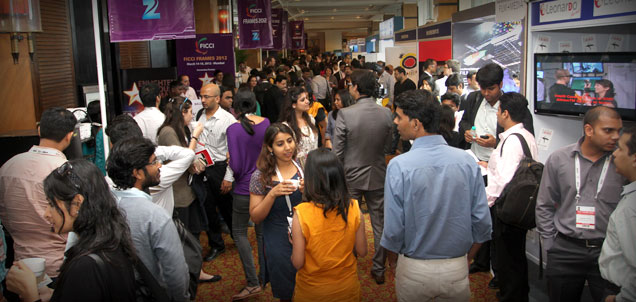
    Those familiar with the going-ons at FICCI Frames would testify how an infatuation gets displayed by delegates at the event each year so as to summarise the mood of the convention even before it broadly takes off across the three days that it is entitled to. But probably, the setting was a bit different this time around when the delegates – joined in unison by the media – were running ballroom to ballroom trying to ingest giveaways that were being thrown up abundantly across several sessions. May be, it was a year where each day had something new to offer to the delegates that kept them at tenterhooks throughout the 3-day event. And going by the loud decibels that were being emanated across every nook and corner of the venue, it was evidently clear that there was some motivating factor that was driving the gathering to go on an overdrive spree.


    The organisers of FICCI Frames 2012 have every right to take credit for coming up with a theme around a medium that attracted the attention of one and all. Having kept it on the sidelines till last year, digital was finally given its due at the convention as experts, authorities and enthusiastic youngsters came face to face to deliberate and come up with outcomes that would redefine the way the consumers consume the medium. From television to print to films and even radio, digitisation and the benefits and effects it would cast on these sectors were discussed in length at the venue. In fact Star India CEO Uday Shankar in his keynote address didn’t hesitate in thanking the FICCI committee for putting across a theme that would go on to redefine the way the industry functions in the future.


    What was apparently clear through the various sessions at the convention is that with the nearing of date for total digitisation across key metros by June 30 2012, and then across the country by 2014, broadcasters had to relook their distribution and content provision models so as to keep the consumer at the heart of every shift that will transpire in the future. Emphasising on the current digitisation scenario in the country, Mr Shankar said, “Most of the discussions that I have participated in are still around whether digitization will happen and if it indeed were to go through, how chaotic it would be. But all these are meaningless discussions triggered by a bunch of retrograde interests who are living in denial.” According to Mr Shankar, digitisation of distribution is a big reality and the 40-45 million homes that have bought DTH boxes at some point or the other are a conclusive evidence of that.


    Shooting back at critics who had doubted whether the makeover to digital would ever be a reality, Mr Shankar said, “To the critics and the cynics who are still wondering whether digitization would happen, my answer is: Look around, it is already happening and the rest of it is bound to happen because even in this country it would be difficult to undo such a momentous shift. To those who wonder how chaotic it would be, my response is that there would be some chaos, but chaos is not necessarily bad if the alternative is status quo or regression. When a transition at such a scale is happening that affects the illegitimate but strong vested interest in certain pockets, then there is an incentive to put up with chaos in the interest of the larger social objectives.”


    A broader outlook was provided by a few panellists who said that digitization will come in as a relief for broadcasters who will be benefitted from additional subscription revenue, relaxation on paying heavy carriage fees, and of course providing viewers with a superior content experience – MSOs and cable operators have to quickly respond to the digitization mandate by investing in set-top boxes – the cost that is only possible to recover after four years.


    Sounding off the challenges that digitisation would present for the broadcast sector, Tarun Katial, CEO of Reliance Broadcast Network Ltd said that, “For television, it will be a combination of content as well as marketing. The old model which was a combination of carriage and product, as it stands today, won’t work. The business plan which currently has a very high rate of carriage will obviously see the content taking precedence.” And as for content, it will be niche content that will call the shots for broadcasters as according to experts at the convention, niche isn’t niche any more as all niche channels put together command a share that is equivalent to the share of Hindi GECs and the mass channels, so to say.


    Perhaps the many advantages that digitisation will have on several mediums was rounded off by Vikram Sakhuja, CEO, South Asia, Group M who said, “The inherent power that digital brings along with it is interactivity and its ability to link multiple devices. Also the ability to enhance real-time consumption of content; linked to that is the entire thing about going mobile.” On the roadmap for the industry, Mr Sakhuja said, “I think integrated media is the best way forward. Today when people think of multimedia planning, they do a separate TV plan, print plan, radio plan, internet plan and so on. I believe that if you actually look at media agnostically and at common metrics of each cost per thousand impressions, these are the ways in which you can construct a media agnostic plan. What it does is, it suddenly gets more money into digital, and when more money can come into digital, that’s when focus is going to come in.”


    While digitisation was the mainstay of every discussion, the all-important issue of regulation too was taken up by panellists who chose to have the government respond to the many queries surrounding the topic. Uday K Varma, I&B Secretary, said that “if people at large seem to be happy with self regulation, I think the government would have no problem in legitimizing them. But I think the self regulation mechanism which has been set up by both the news broadcasters and the entertainment broadcasters, they’ll have to really prove it, not to the government but to the people at large.” He was joined in his cause by Prithviraj Chavan, Chief Minister ofMaharashtrawho said that the challenge would be to adopt the regulatory framework to new technology and ensure that over regulation doesn’t kill a good thing. The Chief Minister emphasised on the need for regulation and suggested that instead of the state regulating the media, the medium should look at regulating itself.


    The other important announcements that came up at the venue included the soon-to-be-passed Copyright Amendment Bill, the roll-out of the imminent phase 3 radio policy that would steer the growth of the medium and increased government aid for the film & entertainment sector.


    New ventures @ FICCI


    BARC takes wings

    In between the many promises and hopes that were being doled out at the sessions came the news of the Indian Broadcasting Foundation (IBF), the Indian Society of Advertisers (ISA) and Advertising Agencies Association of India (AAAI) announcing the official formation of a nationwide audience research joint body — Broadcast Audience Research Council (BARC).

    While IBF will have 60 per cent stake in BARC, ISA and AAAI will each hold 20 per cent stake. The Board of the council will have 10 members, six members from the IBF and two members each from the ISA and AAAI.


    Discovery Kids to flag off ops in April

    Another important announcement was made by President & CEO of Discovery Networks International, Mark Hollinger who announced the launch of its new network for children inIndia, ‘Discovery Kids’. Mr Hollinger said, “Launching in April, the network will initially be available in three languages – Hindi, English and Tamil. The channel will offer children a fun and entertaining way to satisfy their natural curiosity with stimulating and imaginative programming,” he said. The company plans to roll out the channel inPhilippinesandIndonesialater this year.


    Ten Golf tees off

    Taj Television India Pvt Ltd announced the launch of Ten Golf, a dedicated 24-hour golf channel. Ten Golf is the fifth channel from Taj Television India Pvt Ltd and began transmission on March 15, 2012. The dedicated golf channel will showcase a mix of live, non-live and feature programming. The channel will also broadcast live, high quality Golf action from around the world.

    Ten Golf has acquired rights for European Tour and Asian Tour till 2016, and has also entered into partnership with PGTI for three years to telecast the Indian Tour. Further, Ten Golf will be telecasting 400 hrs of golf programming in association with NBC.


  • @FF12: Integrated media best way fwd: Vikram Sakhuja

    Video and Text by Shruti Pushkarna


    On the fundamental powers of digital:

    In digital there are few things that are exciting. One is that digital has the potential to burst from a sampling kind of mindset into a census kind of a mindset. By that I mean that a lot of measurement we do in marketing today is very sample based and digital, whether it is through set-top boxes, or through online behaviour, it is possible now to get the data at a granular level. So that leads to targeting a million, one at a time kind of thing, which is exciting. The other inherent power of digital is interactivity. The third area is the ability to link multiple devices. Last is the real time query, whether it’s query or the consumption of content. Linked to that is the entire thing about being mobile. So these four or five inherent powers of digital are game changers for marketers.


    How to engage in an increasingly digital world?

    [youtube width=”400″ height=”250″]http://www.youtube.com/watch?v=sIj_VeYzlPo[/youtube]

    The engagement part comes from the kind of content you put up and the entire viral or social nature which comes up. The framework we talk about is paid, owned and earned media. An example of paid media is when Mindshare got Dhanush to sing an anthem for Sachin Tendulkar, post Kolaveri Di. Within four days we got ten million views, and the anthem, in turn, got a viral life of its own. So I think the way in which you can use content is how it becomes engaging.


    What is the way forward?

    I think integrated media is the best way forward. Today when people think of multimedia planning, they do a separate TV plan, print plan, radio plan, internet plan and so on. I believe that if you actually look at media agnostically and at common metrics of each cost per thousand impressions, these are the ways in which you can construct a media agnostic plan. What it does is, it suddenly gets more money into digital, and when more money can come into digital, that’s when focus is going to come in.


  • GroupM awarded 2nd Best Employer Brand 2012

    By A Correspondent


    GroupM, the leading media planning and investment agency of the country, was awarded the 2nd Best Employer Brand of India 2012, on February 18, at the Employer Branding Awards. GroupM improved its last year ranking of 7th to 2nd this year. Backed with a string of people initiatives in talent management, attraction and retention, GroupM clinched this position beating several biggies of the corporate world!


    GroupM bagged awards in most of the categories, making them one of the top contenders for the top 2 spots. GroupM was given Awards in Innovation in Recruitment, Talent Management, Excellence in Training, Best HR Strategy in line with Business, Innovative Retention Strategy, Excellence in HR through Technology, Continuous Innovation in HR Strategy at Work, Global HR Strategy and Innovation in Career Development.


    “It has become a cliché to say that people are our strength. At GroupM we are proud to walk the talk on this truism. We have been investing steadfastly in talent development. It feels wonderful to move from 15th to 7th to the 2nd best employer brand over the past three years”, said Vikram Sakhuja, CEO, GroupM, South Asia.


    “GroupM’s HR team has worked relentlessly over the last 3 years, working towards building a nurturing culture and innovation in Human Resources practices, walking alongside the business,” said Sonali Vaidya, Human Resource Head for GroupM India.