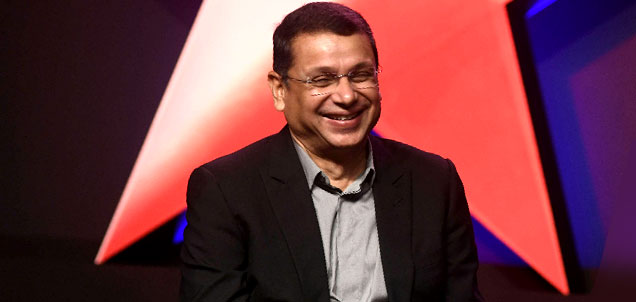
Uday Shankar, President, The Walt Disney Company Asia Pacific and Chairman, Star and Disney India delivered the AAAI Subhas Ghosal Memorial Lecture 2019 at Four Seasons, Worli, Mumbai on Monday.
Outlining why he has been in media for 30 years and continues to be so, Shankar said, “My career, first as a journalist and then as a broader media professional, let me observe and understand this country deeply, objectively and uniquely. As I slowly discovered, my profession also equipped me with an ability to impact this country and its people – both individually and collectively – in a way that few, if any other professions could have. It is the media – the journalists; the advertisers; the story tellers who enable us to make sense of the world. My 30 years in the media industry feels like I am just getting started because it has allowed me to not only understand and experience India in an unbelievable way, but over the years we have become change agents for India.”
Prabhakar Mundkur, a veteran from the advertising world and currently Brand Strategy Advisor and a frequent contributor to MxMIndia, reminisced about Ghosal gave the audience an insight into what made him an outstanding advertising man and a leader that the entire advertising industry loved and revered.
Said Sam Balsara, “On behalf of Subhas Ghosal Foundation, I want to thank Uday Shankar for kindly agreeing to deliver the Lecture and delivering an outstanding, enlightening and thought provoking one. I also thank the audience, for coming in large numbers to keep the memory of Subhas Ghosal alive, many decades after his passing away. I also want to thank Avinash Pandey and ABP Live, because of whose graceful support, the Lecture was made possible.”
The Advertising Agencies Association of India (AAAI) and Subhas Ghosal Foundation (SGF) has that announce the 2019 Subhas Ghosal Memorial Lecture will be delivered by Uday Shankar, President, The Walt Disney Company Asia Pacific and Chairman, Star and Disney India on Monday, November 11 in Mumbai. Shankar will speak on “Why have I been in media for 30 years” and take the audience through his journey in the media and entertainment industry over the past three decades.
Said Ashish Bhasin, President, AAAI: “We are very happy that Uday Shankar will be delivering the AAAI Subhas Ghosal Memorial Lecture 2019. As a captain of the industry, Uday perhaps has the best visibility to all the facets of the broadcast and OTT industry and we look forward to hearing his views. I must also compliment Sam Balsara on behalf of the AAAI for driving this initiative with great gusto”.
Added Balsara, on behalf of SGF: “In a rapidly changing advertising world, TV continues to dominate ADEX and grow at a double digit rate. It will be interesting to hear Uday Shankar’s views on how the TV Industry has carved out a dominant share for itself in the advertising market and plays a very major role in the lives of majority of Indians, through the absorbing stories, that it puts out every day, 24 X 7.”
On April 1, Star India – part of 21st Century Fox and now the larger Walt Disney Company – employees received a mail from Uday Shankar, Chairman, Star and Disney India, and President, The Walt Disney Company Asia Pacific.
It was much anticipated given an announcement earlier that the APAC leadership team would be unveiled. All of this was necessitated thanks to the late 2017 acquisition of the Rupert Murdoch family-owned 21st Century Fox by the Walt Disney Company.
Said Shankar: “It is a momentous opportunity to be able to chart the course of The Walt Disney Company in Asia Pacific and Middle East. While our region is experiencing tremendous change, the common thread that binds it together is the exciting opportunity it presents to build on the great businesses that we have today and create transformational businesses of tomorrow. My endeavour is to build an organisation that enables us to take full advantage of this unique opportunity and capitalise on the potential of the great leadership talent that we have in the region.”
Although Walt Disney is the leader in many parts of the world, competition is getting stiffer with OTT platforms aided by cheaper mobile data, the rules of the game are indeed changing.
“We recognise the need for a sharp focus on building deeply local businesses,” Shankar continued. “To achieve this, we are making some changes to the current market structure. This will allow us to serve the strategic agenda in each market and enable our exceptional leaders to build even greater and more successful businesses. Above all, this will facilitate our transformation into a direct-to-consumer company that rests on deep local foundations.”
So here is the leadership of the APAC team of The Walt Disney Company’s Direct-to-Consumer & International (DTCI) segment:
Business Leads and Country Managers:
:: North Asia: Luke Kang will continue to lead the North Asia (Greater China, Japan and Korea) business including direct country management of Mainland China and Japan
:: India: Sanjay Gupta will be Country Manager of India and will also have direct responsibility for the studio business in the country
:: Star Regional Media Networks: K Madhavan will lead Star India’s regional language Media Networks
:: Southeast Asia: Zubin Gandevia, after a long and distinguished career with Fox, has decided to leave the company but has agreed to remain for a period of time to help transition the leadership of media networks in Southeast Asia
:: Emerging Markets & Content Sales: Amit Malhotra will lead Emerging Markets. He will also lead Content Sales for APAC (except North Asia), with a dual reporting to Janice Marinelli who heads DTCI’s Global Content Sales and Distribution
:: Middle East: Chafic Najia will be Country Manager of Middle East Media cluster
:: Australia/New Zealand (ANZ): Kylie Watson-Wheeler will continue to serve as Country Manager of Australian and New Zealand business with direct responsibility for Media Networks and Direct-to-Consumer
:: Studios APAC: Kurt Rieder will lead the Studio business for APAC (except India). He will work closely with the regional business leaders to drive this business
Functional Leads:
:: Sanjay Jain will lead Finance
:: Amita Maheshwari will lead Human Resources
:: Anju Jain Kumar will be the Chief Regional Counsel for North Asia and ANZ
:: Deepak Jacob will be the Chief Regional Counsel for India, South East Asia and Middle East
:: Prateek Garg will manage my office as head of Corporate Development and will work closely with me and all business and functional heads
:: Jessica Pouleur will lead Strategy and Business Development. She will also take interim responsibility of leading strategy for Southeast Asia
:: Jannie Poon will head Corporate Communications
Added Shankar: “Our true strength comes from the quality and diversity of our talent, which combines the best of both Disney and 21st Century Fox. I am privileged to lead a team of such exceptional leaders and congratulate all of them on getting this exciting opportunity to lead this great company to an even greater destiny.”
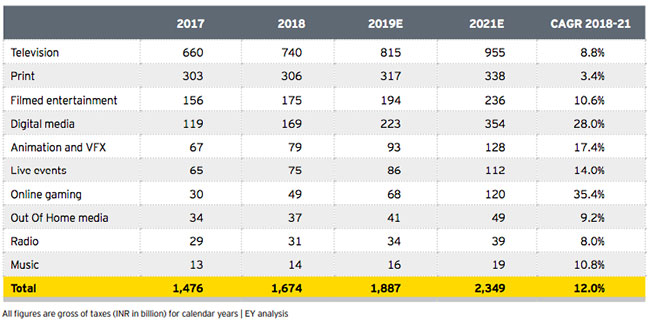
The Indian Media and Entertainment (M&E) sector reached INR1.67 trillion (US$23.9 billion) in 2018, a growth of ~13.4% over 2017 states the EY-FICCI report ‘A billion screens of opportunity’, launched at the FICCI Frames 2019 in Mumbai on Tuesday.
With its current trajectory, the M&E sector in India is expected to cross INR2.35 trillion (US$33.6 billion) by 2021, at a CAGR of 11.6%. While television retained its position as the largest segment, growth is expected to come from digital which will overtake filmed entertainment in 2019 and print by 2021. The report captures key insights from the exciting and fast-growing Indian M&E sector.
The sector continues to grow at a rate faster than the GDP, reflecting the increasing disposable income and economic growth. India has the second highest number of internet users after China with ~570 million internet subscribers growing at 13% annually. The report estimates that approximately 2.5 million consumers in India today are digital only and would not normally use traditional media. It is expected that this customer base will to grow to ~5 million by 2021. Traditional media companies spent 2018 building their customer data through second-screen interactive propositions, polls, house-to-house surveys, integration of third-party data, etc. Digital consumption will grow, and monetisation avenues will see great innovation to cater to the new Indian customer segments. Telco bundling will drive consumption for a majority of Indian OTT audience. Advertising growth outpaced subscription growth and is expected to comprise 52% of the total pie by 2021.
Said Ashish Pherwani, Partner and Media & Entertainment Leader, EY India: “The M&E sector has a significant opportunity given India’s young demographics. The growth of digital infrastructure is further enabling Indians to fulfil the need for personal content consumption, across languages and genre. There is a large shift in consumer behaviour from mass produced content to specific content defined to audience segments. The sector has an opportunity to serve a billion screens in India and globally.â€
Added Uday Shankar, Vice President, FICCI and Chair, FICCI Media and Entertainment Division, said, “The Indian M&E sector is entering a phase of accelerated growth. The status quo is being shattered by digital disruptions and that’s unshackling the creative economy in India like never before. These are exciting times for all it is to let our imagination and ambition guide us.â€
Key findingsÂ
:: Television:
The TV industry grew from INR 660 billion to INR 740 billion in 2018, a growth of 12%. TV advertising grew 14% to INR 305 billion while subscription grew 11% to INR 435 billion. Television viewing households increased to 197 million, which is a 7.5% increase over 2016.Regional advertising growth outpaced national adverting growth on the back of national brands spending more to develop non-metro markets where GST created a level playing field between national and regional brands.  77% of time spent on television was on general entertainment content and film channels.
Key insights – Broadcasters have started combined selling of ads across OTT and linear platforms to enable better monetisation of marquee properties and increased utilization of digital inventory.  The impact of the TRAI Tariff Order can have implications on total viewership, free television uptake, channel MRP rates and advertising revenues. However, 2019 promises further growth due to the elections and the ICC World Cup. The television segment can reach INR 955 billion by 2021, with advertising growth at 10% and subscription growth at 8%.
:: Print: Print accounted for the second largest share of the Indian M&E sector, despite being static and growing at 0.7% to reach INR 305.5 billion in 2018. Advertising revenues stood at INR 217 billion and subscription revenues grew marginally by 1.2% to INR 88.3 billion in 2018. Newspaper advertising de-grew 1% while magazine advertising fell 10%. The fall in advertising is due to both reduced ad volumes as well as pressure on effective rates. Hindi newspaper publications continued to lead with 37% of total ad volumes, while the share of English publications stood at 25%. Rising newsprint prices and a depreciation in the value of the Indian Rupee led to pressure on print sector margins in 2018.
Key insights – 2018 witnessed a 26% growth in digital news consumers over 2017 when 222 million people consumed news online. Page views grew 59% over 2017 and average time spent increased by almost 100% to 8 minutes per day in 2018. Print companies will tilt their sales pitch towards performance, linking physical space sales with digital inventory, activations (both physical and digital), interactive concepts like QR codes, digital couponing, etc. This will provide increased consumer data as well as a competitive plank to grow share of print.
:: Films:
Â
The Indian film segment grew 12.2% in 2018 to reach INR 174.5 billion driven by the growth in digital/ OTT rights and overseas theatricals. All sub-segments, except home video grew. Domestic film revenues crossed INR 100 billion with Net Box Office collections for Hindi films at INR 32.5 billion – the highest ever for Hindi theatricals. Overseas theatricals grew to INR 30 billion from INR 25 billion in 2017 where China became the largest international market for Indian content. 98 Hollywood films were released in 2018 as compared to 105 in 2017. The box office collections of Hollywood films in India (inclusive of all their Indian language dubbed versions) was INR 9.21 billion. Multiplexes drove up the screen count to 9,601, though single screens continued to reduce.
Key Insights:
Digital rights redefined the content consumption processes as the segment grew from INR 8.5 billion to INR 13.5 billion. Online platforms invested heavily in exclusive film rights and a digital-only film market has emerged. In-cinema advertising grew to INR 7.5 billion in 2018 on the back of growing multiplex screens. Thirteen Hindi films entered the coveted INR100 crore club in 2018, which is the highest ever. The digital only film market came into existence in 2018.
:: Digital media:
In 2018, digital media grew 42% to reach INR 169 billion. Infrastructure propelled the growth in digital consumption. Digital ad spends grew 34% to INR 154 billion and now contribute around 21% of the ad market. Digital subscription grew 262% to reach INR 14 billion. Video subscription revenues almost grew three times in 2018 to reach INR 13.4 billion, on the back of new and relaunched video streaming platforms, growth of smartphones, spread of affordable broadband, regional language content, exclusive content and live streaming of major cricket and other impact properties.
Key insights:Â Digital subscription reached INR 14 billion primarily due to telco bundling of content with their data plans to drive sales of data packs. The number of wireless subscribers grew from 1,167 million in December 2017 to 1,171 million in November 2018. This growth primarily came from rural subscribers who grew from 499 million to 526 million in the same period. Up to 60% of video viewership volumes were generated by telcos and the amount spent by them on acquiring content for their subscribers was INR 3.5-4 billion
Â
Mergers and Acquisitions in M&E
The India M&E sector witnessed an interesting mix of deal activity in 2018 both on the traditional as well as the new media front. The number of deals in M&E in 2018 remained the same at around 40 though the deal value more than doubled in 2018 to US$2.8 billion from US$1.3 billion in 2017. 41% of deals were in the digital segment in 2018, compared to 30% of deals in 2017 while deals in the gaming segment came next with 20% of the deals. The digital segment has been at the forefront of deal activity as India’s demographic dividend in the form of smartphone users, internet penetration and improving bandwidth continues to grow exponentially. The consolidation wave in the M&E sector is expected to accelerate and continue as large media corporates strengthen their presence for achieving scale, reach and relevance. The sector is also gaining huge interest from global strategic players who want to be part of the rapid growth in this sector, on the back of greater availability of data.
“You cannot take out mass from ‘mass media’, because then there will be no media left”, said Uday Shankar, President of 21st Century Fox and former chairman and CEO of Star India at “TV Ka Dum”, a daylong conclave organised by India TV in Mumbai last weekend.
Participating in a panel debate with Raj Nayak, COO of Viacom-18 and N P Singh, CEO of Sony Pictures Networks, Shankar said: “Television shows are made to get ratings, because the viewers are the ultimate arbiters. TV shows are not made for private viewing. Whether TV shows, newspapers or films, unless the masses read or watch them, you cannot judge their popularity,” adding: “Ratings are only the output to judge the content that is produced. Ratings is the sum of how many number of people watched a particular show. No astrologer can predict the ratings of a show. Producers are interested only in what viewers would like to watch or know, whether it is horror, comedy or love story.”
Uday Shankar
On the issue of why more and more TV shows based on superstition and horror are being produced, Shankar said: “There are serious TV shows too, like Satyamev Jayate, but to cater to a nation of 125 crore people, you cannot have a single size boot. One has to make shows according to the size of the foot of different types of people.”
Reasoned Shankar: “If a car or bicycle manufacturer can want more and more people to buy vehicles,  then why not a TV producer can want more and more people to watch the show. There is nothing wrong in it.†On naysayers, Shankar said: “Some vested interests, including some politicians, do not like to watch certain TV shows. My answer is: if the people of our country have become more conscious and they are asking questions from those in power, it is not because of consciousness spread by the political class. TV programmes, whether entertainment or news, have spread awareness among the people.”
Raj Nayak
Said Viacom18 COO Raj Nayak: “My question is why do those who raise objections watch TV programmes that are negative? If some TV shows get good numbers it is because they are in demand. But one should also know that people watch shows like Satyamev Jayate, Balika Vadhu, Shakti (on transgenders), Udaan (on bonded labour). These shows entertain and also try to bring about social changes,†adding: “The Star Plus show Saathiya was on women empowerment, and shows like these educate people. Shows are made to care to different tastes of viewers. If more people watch the TV show Naagin, let me say, television did not create Naagin. Already there were four Bollywood films on Naagin.
Nayak added: “Television and cinema reflect what is happening in society, they reflect what people want. Whenever we launch a new show, we never look at the TRP. No channel makes shows after watching TRPs. Shows are made only when there is good content. TRP is only a byproduct. Of course, at the end of day, the channels want TRPs because, after all, we have to run our company.”
NP Singh
And this is what NP Singh, CEO of Sony Pictures Networks, said: “I agree that television is an important medium for creating social impact. Our shows did create a positive impact on society. Kaun Banega Crorepati is a very powerful and successful format, and its success was a given. It is a vehicle to create a positive and social change impact.
We showcased stories of small town people whose work inspire others. That is why we decided that we will show the life journey of KBC participants so that it can inspire viewers.”
Asked by hosts Maniesh Paul and Charul Malik as to why TV shows are pulled off the air abruptly by GEC networks, Shankar replied: ” It’s natural that when viewers do not like a show, it is pulled off the air. What can we do? We are not running an autocratic regime where shows will continue to run by government diktat, even if viewers like it or not. Here you have to respect the wishes of the people. For us, shows are a commercial enterprise. If viewers do not watch the show, how can we sell it (to advertisers)?
Uday Shankar, who currently serves as President, 21st Century Fox, Asia, and Chairman and CEO of Star India, will become Chairman, Star and Disney India, and President, The Walt Disney Company Asia Pacific
This is part of the integration planning for the pending acquisition of Twenty-First Century Fox, Inc., the Direct-to-Consumer & International (DTCI) segment of The Walt Disney Company. The consolidated international business units will be helmed by three leaders including Shankar.
Said Kevin Mayer, Chairman of The Walt Disney Company’s Direct-to-Consumer & International segment: “The planned restructuring of our business units outside of the U.S. will result in a stronger, more agile organization, one that is better able to pivot and capitalize on the many opportunities present in today’s fast-changing and increasingly complex global marketplace,†adding: “Once the acquisition is complete, all three regions will be led by exceptional, highly experienced executives who will combine the ‘best of the best’ talent from both organisations. This new structure and the outstanding leadership team we’ve put in place are clear demonstrations of our strong commitment to integrating operations and thoughtfully executing our strategic priorities around the globe.â€
DTCI’s international operating structure and executive management, effective upon the completion of the acquisition, will include three distinct regions:
· EMEA– Rebecca Campbell, who currently serves as President, The Walt Disney Company EMEA, will maintain oversight of this region and adds oversight of Russia and the Commonwealth of Independent States (CIS)
· Latin America – Diego Lerner, who currently serves as President, The Walt Disney Company Latin America, will maintain oversight of this region
· Asia Pacific – Uday Shankar, who currently serves as President, 21st Century Fox, Asia, and Chairman and CEO of Star India, will become Chairman, Star and Disney India, and President, The Walt Disney Company Asia Pacific
Additionally, Janice Marinelli will serve as President, Global Content Sales and Distribution. Responsible for DTCI’s integrated global content sales organization, she will lead and have oversight of the Company’s programming sales efforts for its combined portfolio of content, as well as the distribution of branded direct-to-consumer apps and services to broadcasters, digital services and other third-party distributors around the world.
Campbell, Lerner, Marinelli and Shankar will report to Mayer.
Reporting to Shankar as part of the Asia Pacific leadership team will be the following current DTCI executives:
· Luke Kang, Executive Vice President and Managing Director, Greater China, Japan and Korea
· Kylie Watson-Wheeler, Managing Director, Australia and New Zealand
· Chafic Najia, Senior Vice President and Managing Director, Middle East
In the coming weeks, DTCI plans to announce additional executives joining the three regional leadership teams as well as the global sales organization.
Disney’s acquisition of 21st Century Fox has received formal approval from shareholders of both companies, and Disney and 21st Century Fox have entered into a consent decree with the U.S. Department of Justice that allows the acquisition to proceed, while requiring the sale of the Fox Sports Regional Networks. The transaction is subject to various international regulatory clearances, a number of which have been obtained, while others remain pending.
Meanwhile, as has been known, Mahesh Samat has been appointed as EVP, Disney consumer products commerciali-sation for the Asia Pacific region. He will be responsible for the commercialisation of Disney franchises across merchandise, publishing and licensed games. He was earlier senior VP and MD at Walt Disney International, South Asia.
So will Star recover the Rs 60.18cr it needs to pay for each India match? That’s a question that everyone seemed to be asking at the culmination of the e-auction where bidding to own India cricket broadcast rights. Star India logged in the highest bid of Rs 6138 crore for the global consolidated rights package was going ballistic.In the bag for Star are the following: Global Television Rights plus Rest of the World Digital Rights Package, Indian Subcontinent Digital Rights Package and hence the Global Consolidated Rights Package. This averages out to Rs 60.18 cr per international game.
Earlier, Star India had also secured the broadcast and digital rights for the Vivo Indian Premier League for the next five years. Given this, Star India has a monopoly over all forms of cricket for the next five years.
According to broadcast and media industry folks, while the amount of Rs 60.18 crore appears very high, given the huge interest for the game, Star will hope to recover the monies from not just advertising but from distribution. And while Reliance lost this battle for the direct rights, it will still play a key role in the digital distribution with Jio.
Said Uday Shankar, Chairman, Star India: Having both the IPL and India Domestic and International Rights puts us in a special position. I am confident that Star and BCCI can transform the sporting experience in the country.â€
And what about the monies invested. Said Shankar in a statement: “Before the auction began, we had a specific number in mind. The prices reflect the average value of all three formats of the game. I congratulate the BCCI for putting across a scientific and a thoroughly transparent process. You knew the bids at all times, but at no stage did you know the bidder. Having a brutally transparent process is a major factor for their success.â€
Said CK Khanna, Acting President of the BCCI: “I congratulate the Star group for securing BCCI’s Domestic and International Rights. The BCCI shares a strong bond with Star and our association will touch new levels in the years to come. The fact that it took three days to decide a winner proves the deep level of interest in Indian cricket.
For Star India it’s a huge win. Echoing this view, Amitabh Choudhary, Acting Honorary Secretary, BCCI, said: “We tried out the E-Auction for the first time and it was a pleasant experience. By securing the BCCI Domestic and International Rights, Star has now completed a hat-trick. I also express my gratitude to Reliance Industries Limited and Sony Pictures Networks India Private Limited who completed the E-Auction process and made it a success.â€
Added Rahul Johri, CEO, BCCI: “The BCCI had put together a transparent process and I am pleased with the outcome. In the process, we were assisted by Deloitte Haskins & Sells LLP and Cyril Amarchand Mangaldas. The fierce bidding underlines the importance of domestic and international cricket. The supporters of Indian cricket will be treated to some high-quality action not only on the field, but also on television and digital platforms.â€
Sony Pictures and Reliance Industries were in the final three shortlisted for the online bidding. According to reports, the Sony bid was of Rs 6118.59 crore, just Rs 19.51 crore short of the Star India bid.
“All the segments of the M&E sector are showing growth, consolidation and innovation led by digital, both on consumer side and the content supply chain,â€noted Uday Shankar, Chairman, FICCI Media & Entertainment Committee in the introduction of FICCI-EY Report 2018.According to the experts from EY, Farokh Balsara and Ashish Pherwani, the Indian Media & Entertainment Industry has reached its Digital Tipping Point. In other words, thereare significant changes happening all around our M&E industry to cause a larger, more important change which will see the transformation of our country to Digital India.
The FICCI-EY Report 2018 has highlighted quite a few of these changes: distribution of television has become largely digitised increasing its addressability and reach, the OTT platforms for TV and video content are growing rapidly, both print and radio segments are growing continuously with more focus on their digital presence, exponential growth (though from a small base) of digital subscription and online gaming riding on falling data cost, emergence of India as the second largest smartphone market in the world giving easy access of internet to consumers, rapid growth of digital micro-payment ecosystem across urban and rural markets, etc.
The above changes are expected to grow our digital content consumption substantially which in turn would increase the size of the total industry from INR 1.5 trillion (USD 22.7 billion) in 2017 to INR 2 trillion + (USD 31 billion+) by 2020 at a CAGR of 11.6%.
Source: FICCI-EY Report on M&E industry 2018
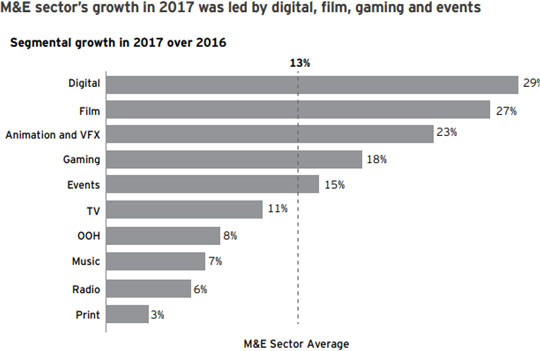
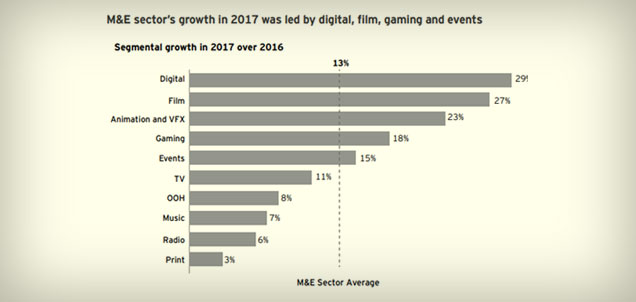
As shown in the above chart, while the industry grew by 13% from 2016 to 2017, the growth was led by digital, film, animation & VFX, gaming and events. The same trends are expected to continue over the next three years. Another significant trend, which has been seen for the first time in the M&E sector, is outpacing of advertising growth (under10 %) by subscription growth (almost 15%) in 2017 over 2016. This trend will continue to be a major contributor to the Digital Tipping Point.
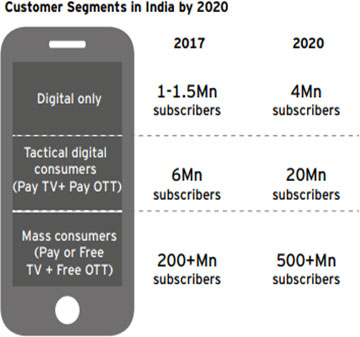
Based on this new trend of growth in subscription,the report has made a forecast on new customer segmentation which will be an integral part of Digital India by 2020. This new consumer segmentation will be important for the A&M Industry for targeting their audience.
Source: FICCI-EY Report on M&E industry 2018
We can assume that there will be a process of continuous migration from the bottom tier of mass consumers to the tactical digital consumers to the only digital consumers as we go forward to the next decade. As far as deployment of resources for advertising is concerned, we will see online media campaigns slowly gaining over the combination of online and offline media campaigns at the top end of the consumer pyramid.
It’s D-Day. December 15, 2017. And since we don’t ‘conduct’ the award presentation offline, we aren’t dependant on venue availability and rates negotiations. Hence, we do the awards on a weekend, not a weekday… when the mood is just right. Celebrate if you are happy with the announcement, or just give us a pass. Or a few GRRRs.
So how are we different from other awards?
First, it’s not based on a survey. It’s not based on any industry poll. It’s based on a study conducted by us through the year. This makes the decision-making tougher, as we can’t pass the blame on to research. Or the collective view of the industry. Or of a jury.
Second, it’s an A&M industry study. Agreed CEOs of big clients are important, but we are looking at CMOs and not CEOs of well-marketed organisations.
Third, we look at performance through the year, and don’t base it on the highs of the last two quarters of a year which tend to influence any voting-based process at the yearend.
Fourth, we give you a clear reason why we have chosen the winner
Fifth, we are as sincere and honest about the awards as one can get. There were suggestions that we should make it an on-ground event. But then that comes with its own set of issues (and compulsions). We even had one large media group expressing its interest two years back. But we think it could’ve influenced our decision. Perhaps next year, with some more wisdom will happen in our blood streams.
And sixth, it’s about achievement in 2017 – in this calendar year (well not the entire year, but at least the 350-odd days that have preceded today). There are some who may have been super achievers the previous year, but have fallen short of our winner in 2017. Similarly, there are some A&M barons who have been doing splendid work through the years, but there has been someone else who has been more spectacular. We only look at achievements of the current year.
So: the MxMIndiaMediaperson of the Year 2016 is an online award. It’s an accolade that’s for the truly well-deserving. And for the True Achiever of 2016 in the Indian Media, Advertising & Marketing arena.
With the backgrounders done, here’s how we went about our task.
Wemaintain an online notebook that records important developments of the year. It’s a drill that ensures one can do recaps etc with ease.
For the Mediaperson of the Year, one reviews names, quarter-wise. This helps that the choice of the award doesn’t suffer from the recency factor.
We looked at various names. We couldn’t miss the achievements of the Zee group captains Punit and Amit Goenkaand Viacom18 Group CEO Sudhanshu Vats as they celebrated major milestones this year.
We also looked at the Big 35 media entities. For, it takes a lot to ensure that it’s business as usual. We then got to our second shortlist where we decided to look at five shortlists. And this is what it was:
1. Piyush Pandey: Getting the Lions of St Mark with brother Prasoonis, as we wrote the other day, a significant achievement.
2. The Wire Co-founders – Siddharth Varadarajan, Sidharth Bhatia and M K Venu: They’ve stood their ground in the very rough weather and have emerged as the biggest of the credible voices in journalism. Yes, more credible than most print badshashs.
3. Uday Shankar: Star India Chairman and CEO Uday Shankar was elevated to President, 21st Century Fox, Asia. But the 21CF charge would be in addition to the Star India responsibilities. The year also saw Star bagging the IPL rights and perhaps for the first time ever getting its act together on the second channel – Star Bharat.
4. CVL Srinivas: The GroupM CEO bagged the coveted ITC account along with a slew of others and some consolidation of the Indian operations. And then he was also made Country Manager India which is a significant capture of the faith WPP supremo Sir Martin Sorrell thinks of Srini
5. And then our fifth shortlist…
Ladies and Gentlemen, We have great pride in announcing that the 2017 MxMIndiaMediaperson of the Year Award goes to…
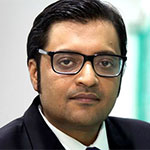
Arnab Goswami, Owner and Editor-in-Chief, Republic World/TV
Arnab Goswami
Goswami quit Times Now last year and in superquick time he set up an all-new English news channel. Right from the start of this year, he has created a buzz in media circles about the channel’s launch. And his launch strategy was unique with videos released via digital media announcing that he’s coming soon
This award goes to ArnabGoswami, the businessman and mediaperson. It’s not easy to launch a channel in some seven months, even if the decision to start anew would’ve been taken earlier.
For the last eight-odd months, Republic TV has been the undisputed leader amongst English news channels. There have been attempts to undermine its rise by slicing of data in terms of age groups, time bands or select cities, but the lead of Republic over the others, Times Now in particular is definite.
He has also led the channel’s drive to attract anchor advertisers with one-on-one meetings with a large number of them. He has of course also managed to line up a top deck of able hands in Vikas Khanchandani, Priya Mukherjee and Charu Thakur amongst others.
The fact remains that Republic TV did take the dual LCN route to maximise reach in the early days as did a few others, but given the regulator’s intervention on the issue, the dual LCN route for upping connectivity has been stopped.
There are allegations that Times Now and Republic TV have taken the landing route to boost viewership but we do not have evidence to prove both.
While Times Now is still a significant force to reckon with, in terms of its content and presentation, it appears to be a poor cousin of Republic TV.
But, given that the MxMIndiaMediaperson of the Year award is a qualitative award, it would be incorrect to mention that the nationalistic, pro-NarendraModi, pro-BJP biggies and hence the pro-BJP stance of Republic TV and Goswami in particular is a significant downer. While it’s not that there is no screaming and shouting on India Today or even NDTV in the recent past, Goswami takes the pitch to a new high every evening. We have had reservations about Goswami’s and Republic’s editorial stance. Yes, we do remember that he was very combative against Haryana Chief Minister M L Khattar after the unrest in the state some months back. He has taken on the BJP since launched, but these have been very few and far between.
Perhaps there is reason for moderation. Perhaps there is reason to move away a bit from the debate formula and also include other news of the day in a little more detail.
But for now, the formula is working wonders for Republic TV and its primary promoter and editor-in-chief Arnab Goswami.The viewing public, as is determined from the popularity of the channel, isn’t complaining.
A truly deserving winner of the 2017MxMIndiaMediaperson of the Year Award. Taaliyaan!
It’s a piece of news that every Indian media and entertainment industry person will be proud of. Or envious of. 21st Century Fox, the parent company of Star India, and Rupert Murdoch’s entertainment empire has announced the elevation of Star India Chairman and CEO Uday Shankar to President, 21st Century Fox, Asia. It is effective immediately. Shankar will continue to lead Star India. This, it may be noted, is an additional responsibility.
It is interesting that the news comes even as discussions with Disney have reached a fairly advanced level for the sale 21CF (as 21st Century Fox is better known). In fact, according to some observers, the deal with Disney could well be inked before the year ends.
But there is more reason then this ‘Mere Bharatiya Mahaan’ sentiment. Shankar has possibly none of the makings of one of India’s Top 5 media conglomerates. He is an MPhil graduate from the Jawaharlal Nehru University (JNU). He started out as a political journalist, worked in the print media for a bit and finally helming the editorial team at AajTak and Headlines Today. He was later appointed CEO and Editor of Media Content and Communications Services, the holding company of Star News (now ABP News).
And then, in a move that surprised many, except those who knew him very well, he was appointed CEO of Star India. The network was doing well, but staring at competition from existing networks and with two of its top executives launching general entertainment channels.
Shankar has been at the helm of Star India since October 2007 and has guided the transformation of Star into a diversified media company, leading initiatives in distribution through Media Pro, movies through Fox Studio, regional television through Asianet, and sports, following 21CF’s (then News Corp) acquisition of its joint venture with ESPN in 2012. His tenure has been marked by persistent leadership in television through innovative programming and investments in leading technologies, both of which have set the benchmark for the industry. So notes a 21CF communique. But we don’t need to be told that. The fact is that in the last decade-odd, Uday Shankar stands tallest amongst M&E professional captains and has led the organisation with entrepreneurial zeal.
He has also led industry associations and has ensured that it follows the path of professionalism. He has taken on the government and TRAI when he has needed to and been a strong ally of successive governments in its various programmes.
In his new role, Shankar will lead 21st Century Fox’s (21CF) video businesses across all of Asia, including Star India and Fox Networks Group, and work closely with 21CF leadership on key strategic initiatives in the region. He will continue to serve as Chairman and CEO for Star India, a key driver of 21CF’s growth and one of India’s largest media and entertainment companies, comprising 60-plus channels across entertainment and sports and eight languages, as well as leading digital video platform Hotstar.
Said 21st Century Fox Executive Chairman Lachlan Murdoch and CEO James Murdoch: “Uday’s new role will enhance our strategic focus across all of Asia and enable us to further capture opportunities, building on the transformation Star India has driven in our most important growth market. Under Uday’s leadership, our India business has firmly established itself as a world-class asset with durable businesses across entertainment, sports, satellite distribution and OTT. His strategic vision has put 21CF at the forefront of content and distribution in one of the world’s fastest growing economies, and we are very fortunate to benefit from Uday’s expanded leadership at a global level.â€
Zubin Gandevia, President of Fox Networks Group Asia (who old timers will remember for the cable business he ran in Mumbai), will continue to oversee video brands across 14 markets and now report to Shankar under this realigned regional structure. 21CF’s film business in Asia will continue to report directly to Stacey Snider, Chairman and CEO of 20th Century Fox Film.
Meanwhile, for journalists across the country, whether they are from Patna or Pune, Mumbai or Meerut, the rise and rise of Uday Shankar speaks a lot for how hard (and smart) work always works. Even in the big, big world of media and entertainment.
A previous version of this story had an incorrect headline. Dunno how it happened, but it did. VIBGYOR-faced 🙁
Star India Chairman and CEO Uday Shankar is known to think big and take big risks in his broadcast business. Even his rivals concede that the former news journalist has given a new definition to scale.
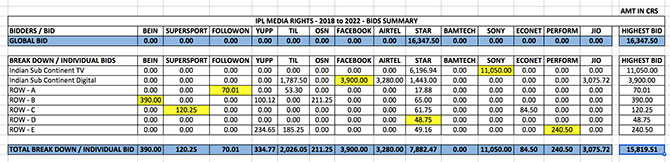
But is a bid of Rs 16,347.5 crore for global television and digital rights for the Indian Premier League for 2018 to 2022 too big to chew. Has Star overstretched itself. Ever since the announcement was made on the afternoon of Monday, September 4, these are the questions that many mediapersons have been asking.
The Rs 16.3+kcr bid for 300 matches of the IPL would mean the need to recover Rs 54 crore match and this is a big, big ask, some of the naysayers have been saying. However, not everyone is in agreement with this fear. Said one observer: Cricket is a religion in this country and with the Indian diaspora across the world. Over the years, the format has got exciting, the players have improved, so the consumption of the sport has increased. And hence there will be takers to reach this growing community.
According to media agency professionals we spoke with, the rates for ad spots around the IPL will leapfrog. And so will the access rates via Hotstar, Star India’s digital platform. Their worry is whether advertisers will pay the extra dollar just because Star has to recover its monies.
According to Vinit Karnik, Business Head, ESP Properties at media agency network GroupM, Star India hasn’t overstretched itself on the bid. Karnik also observed that the recovery of the commitment by Star will be done in not just advertising revenues but also via digital which is going to grow rapidly in the next few years and via distribution.
“This is a historic moment for Indian sports industry as BCCI has demonstrated highest media rights sales in the history of world cricket. These media rights numbers are now comparable to the best of sports around the world. IPL once again proves to be the best sporting league that build exponential value for all stakeholders,†Karnik said in a statement.
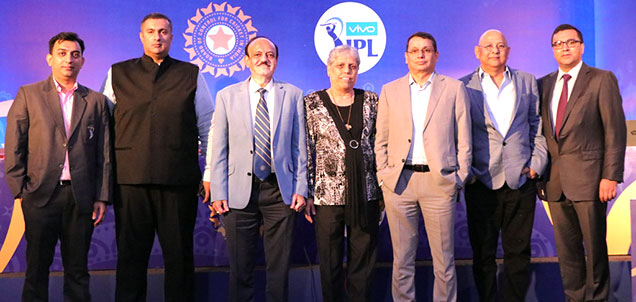
Earlier, there were 14 bids were received, earlier in the morning from beIN IP Ltd., Star India Pvt. Ltd., Followon Interactive Media Pvt. Ltd, Sony Pictures Networks Pvt. Ltd., Times Internet Ltd, Supersport International (Pty) Ltd., Reliance Jio Digital Services Pvt. Ltd., Gulf DTH FZ LLC, Econet Media Ltd., Facebook Inc., DAZN / Perform Group, Yupp TV, Airtel and BAM Tech.
Said Uday Shankar, Chairman and CEO, Star India: â€We are honoured to be selected as IPL’s Global Media Rights Partner and we thank BCCI for conducting such a transparent process. The Vivo Indian Premier League is undoubtedly one of the most exciting sporting leagues in the world and this acquisition of media rights reaffirms our commitment to serve cricket fans and make cricket even bigger than it is. We are delighted that in Star, IPL has found its natural home. We look forward to bringing this exciting format to our audiences across the world in a quality that all our viewers are accustomed to both on television as well as on digital on Hotstar.â€
Elaborating on Star India’s commitment to sports, Shankar added: “At Star India, we believe that Indian sports have barely scratched the surface of its potential. Both the viewership of sports and more importantly participation in sports is something that we would like to grow substantially over the next few years. The acquisition of these rights is symbolic of our commitment to not just cricket but to the growth of a wider sports culture in the country.â€
Another question that has been raised by some A&M professionals is why Sony didn’t make a global bid after having made a fairly ambitious bid of Rs 11,050 crore for television rights alone. This some feel is an aberration from Sony’s aggression in the past.
A media agency professional said that while the loss of IPL rights is a significant loss for Sony Pictures Network, all is not lost yet for the network which has made sizeable investments in sports in the recent past. The India rights are scheduled to come well ahead of IPL 2018, and Sony will definitely make a huge bid for that, the professional who requested anonymity noted.
Perhaps. We’ll wait and watch. In the meantime, it’s sunny days ahead for Star India.
Journalist and broadcasting industry professional Anjan Mitra captured it right. “Sense of deja vu for old timers & those hacks like me who covered media as a beat in mid90s to mid 2000:Zee vs Star,†he posted on his Facebook timeline.
On Wednesday evening, when media offices received a mail from the Dish TV PR agency along with a letter from company bossman Jawahar Goel, it did remind many a journalist of the mid-1990s/2000s when the two networks were warring fiercely.
A journalist who covered the beat then recalled how he had received anonymous dockets twice over against Star India founder and media tycoon Rupert Murdoch. Another journalist recalls how what was rivalry fought more to ward off Murdoch from the Indian broadcast scene reached a new high when Star India beat Zee with the launch of Kaun Banega Crorepati in 2000.
It took Zee some years including re-engineering of its operations to bring back its old, glory days.
However, there has been much public display of camaraderie between the two network in the recent past. It even led to the formation of a distribution arm called ‘Mediapro’ which was later disbanded.
Star India CEO Uday Shankar and Zee MD have also known to be friends, and have collaborated on many industry initiatives. In fact it’s their collective leadership that has led to many of the recent successes of the broadcast industry, including warding off any government intervention and the successful launch of the audience measurement system under the joint industry body BARC India.
We don’t know whether this salvo has the backing of Zee group chairman and now Rajya Sabha MP Dr Subhash Chandra. Goel, Chandra’s brother, is also known to be independent, but observers say the current move couldn’t have been made without the blessings of Chairman Chandra.
But more than the speculation whether the two networks are at war, the issues that the Jawahar Goel letter raises could majorly impact the process of awarding the rights for telecast of IPL.
And even if Star eventually does win the rights for the cricketing league, the process for charging consumers (via cable distributors and DTH operators) could be be totally governed by pricing policies issued by telecom regulator TRAI which may well make the entire proposition unattractive.
DishTV letter against possible monopoly in cricket telecast if Star India wins IPL rights is sure to be taken very seriously by all recipients especially the politicians who can’t afford to displease consumers.
 Uday Shankar, President, The Walt Disney Company Asia Pacific and Chairman, Star and Disney India delivered the AAAI Subhas Ghosal Memorial Lecture 2019 at Four Seasons, Worli, Mumbai on Monday.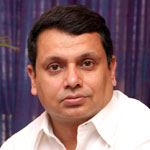

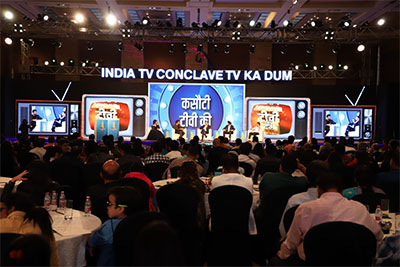 “You cannot take out mass from ‘mass media’, because then there will be no media left”, said Uday Shankar, President of 21st Century Fox and former chairman and CEO of Star India at “TV Ka Dum”, a daylong conclave organised by India TV in Mumbai last weekend.


 “All the segments of the M&E sector are showing growth, consolidation and innovation led by digital, both on consumer side and the content supply chain,â€noted Uday Shankar, Chairman, FICCI Media & Entertainment Committee in the introduction of FICCI-EY Report 2018.According to the experts from EY, Farokh Balsara and Ashish Pherwani, the Indian Media & Entertainment Industry has reached its Digital Tipping Point. In other words, thereare significant changes happening all around our M&E industry to cause a larger, more important change which will see the transformation of our country to Digital India.