Tag: TRAI

  • Reminiscing the BARC set-up days

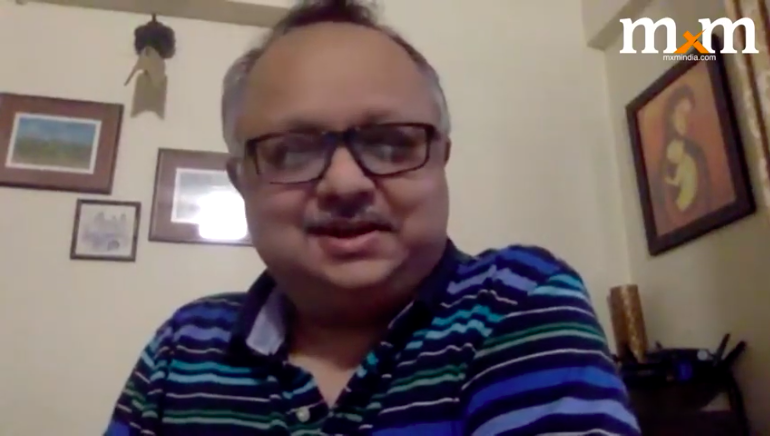
    Partho Dasgupta: Screengrab from Video


    By A Correspondent


    Over the last five-odd years MxMIndia would’ve done over a hundred-odd stories on television audience measurement and central to all of them was Partho Dasgupta, former CEO of BARC India.


    Dasgupta joined BARC in June 2013 and in November last year handed over operations to his friend and former colleague, Sunil Lulla.


    He is now using his experience and learnings to various places in the world, setting up BARC-like entities as an expert. He is also consulting broadcast and new media companies as a management consultant. And overseeing performance management. He of course continues to be President of the Advertising Club.


    Earlier this week, we interviewed Sunil Lulla, CEO, BARC India on the eve of its fifth anniversary. We now speak with Partho Dasgupta, the former CEO of BARC India and get him to reminisce the days before operations began on April 29, 2015.


  • Five years of BARC. Looking Back. Looking Forward


    The Broadcast Audience Research Council (BARC) celebrates five years of operations today (April 29, 2020).


    Many of us know the circumstances in which BARC was envisaged and established, and given that audience measurement doesn’t come cheap, it was indeed wise to have a joint industry body doing the exercise.


    With BARB from the United Kingdom as inspiration, BARC was incorporated in 2010. Operations though took off only after some five years and the first set of data was published on April 29, 2015. In the very year of launch, it also announced rural audience measurement and now measures 185,000 individuals over 44,000 homes, and that number is set to grow to 55,000. Well it was scheduled to, if Covid-19 hadn’t happened.


    Viewership, as measured by BARC, grew 38% till 2019 and a total of 48.4 trillion viewing minutes were consumed in 2019 alone. BARC currently measures 634 channels. The future is bright given that 100 million homes still to get a TV set.


    It’s unfortunate that the celebrations are dampened by an ill-placed recommendations from the Telecom Regulatory Authority of India (TRAI)


    Sunil Lulla, a veteran mediaperson who has worked across the M&E spectrum, took charge at BARC in October 2019. With broadcast – entertainment, news, with advertising and with a large production house. He has also spent some quality with a large digital venture. He spoke with Pradyuman Maheshwari, Editor-in-Chief, MxMIndia on a wide range of issues. Check out the video. It’s nearly 30 minutes. So pull out the popcorn or whatever. And enjoy.


  • On eve of BARC’s 5th birthday (of ops), TRAI issues recommendations on TV audience measurement

    By A Correspondent


    On April 29 (that’s tomorrow), television audience measurement body BARC India (short for Broadcast Audience Research Council) celebrates its fifth anniversary of operations. And before we could sing Happy Birthday and bring out the bubbly, the Telecom Regulatory Authority of India (TRAI) has issued recommendations on the way television audience measurement should happen in India in the form of   “Review of Television Audience Measurement and Rating System in India”.


    Notes a press release: “Several concerns relating to neutrality and reliability of the existing rating system have been raised  by  stakeholders,  which  necessitated  a  need to review of existing Television Audience Measurement arid Rating system in India. A consultation paper was issued in December 2018 seeking comments from all stakeholders.


    After considering all comments received from stakeholders during consultation process and further analysis of the issues, the Authority has finalised its  recommendations.  The  salient  features  of  the recommendations are given below:

    1. Structural reforms are required in the Governance structure of BARC to mitigate the potential risk of conflict of interest, improve credibility, and bring transparency, and  instill confidence of all stakeholders in the TRP measurement system

    2. The composition of the Board of BARC India should be changed as part of the proposed structural reforms.

    3. The Board should have at least fifty percent  independent members which should include one member as a measurement technology expert, one statistician of national  repute  from among the top institution s) of the country and two representatives from the Governments Regulator.

    4. Restructured Board of BARC India should provide for equal representation of the three constituent lndustry Associations, namely, AAAI, ISA and IBF and with equal voting rights irrespective of their proportion of equity holding

    5. Tenure of the members of the board shall be for two years.

    6. Active participation of representatives of the Advertisers and the advertising agency will bring more accuracy, transparency, credibility, arid neutrality in  the  system,  due  to  their  inherent need of advertisers to reach viewers accurately.

    7. The constituent industry associations shall be entitled to nominate their representatives to the board membershlp subject to the condition  that  a  cooling  period  of  4  years  shall  be applicable between two consecutive tenures, for any such nominee member.

    8. Tenure of the Chairman of the Board should not be more than two years. Chairmanship of the Board shall  be  rotated  among the constituent industry associations in every two years.

    9. Number of members in the technical committee should be increased to 5 with addition of two external technical experts

    10. An Oversight Committee should be formed to guide BARC India in the areas of research, design and analysis,  constantly  improving the rating system

    11. The Oversight Committee should have representation from the National Council of Applied Economic Research, IIM, IIT, media research expert and demography  expert,  nominee  from  the Ministry of Information & Broadcasting, and TRAI.

    12. The   Committee   should   also   be    responsible    for nomination/ appointment of independent members  of  the Board as well as to give policy direction to BARC India, if it is so required.

    13. To create credible and accurate collection of data, multiple data collection agencies need to be encouraged.

    14. Competition and multiple agencies for data collection and processing would bring in new technologies, new research methodologies, new methods in  analysis,  new and  better  ways to ensure better data quality.

    15. BARC should be at an arm’s length from its own subsidiary, Meterology Data Pvt Ltd., which is the sole data collecting  agency for BARC, as of now; so that the entire process of measurement is carried out independently to ensure inherent checks in data inconsistency.

    16. Efforts may be made to withhold the  identity  of  the  channel’s name and number while collecting and  processing  the data from the field, to bring more transparency in the complete process.

    17. BARC should also separate its functions in two units (a) one unit should be responsible for prescribing methodology  of ratings/ validation of data, publishing the data and audit mechanism and (b) the other unit for processing the data, watermarkirig or any other such technical work including management of data collection agencies.

    18. Once multiple agencies come forward for rating, BARC should limit its role to publishing the ratings, and framing methodology and audit mechanism for the rating  agencies,  so  that  the number of agencies can develop multiple rating system  leveraging new technologies.

    19. The  rating  agency  should  be  mandated  to  increase  the  sample size from the existing 44,000 to 60,000 by the end of 2020, and 100,000 by the end of 2022 using the existing technology.

    20. BARC shall immediately  conduct a study in collaboration  with   the Indian Statistical Institute or  any  other institute  of  repute,  to estimate the appropriate sample size, and to get the correct representation of the viewership including regional and niche channels. Sample size once increased; i1 will make the data tampering an arduous exercise. On the basis of the study conducted, BARC should reach the target of  reaching  the  sample size in a time-bound manner.

    21. There  should  be  some  financial  disincentives  prescribed   as penal provisions including the cancellation of registration, if the specified target is not met by BARC .

    22. MIB should amend the DTH License and MSO registration so as to mandate STBs capable of transferring viewership data and adoption of RPD technology.  This transfer  of data can be done by establishing a return path / connection from MTB to the remote servers of the Audience Measurement agency

    23. Anonymised viewership data should be transferred electronically to the Audience Measurement agency for statistical analysis and Television Rating purpose. No data from any STB should be transferred to Rating agency without explicit consent from the subscribers

    24. DPOs should be allowed to mutually negotiate the terms and conditions for sharing the data with Measurement Rating  agency within the overall framework prescribed by TRAI from time to time. Such framework shall be prescribed by TRAI once these recommendations are accepted by MIB.

    25. BARC should keep all relevant data such as original data (meter-level data) arising out of the household panel, the data de1eted/ ignored/ not considered for ratings and the resultant processed data for TRP rating at least for one year in the same format and pattern as in the final ratings, declared to the subscribers including Broadcasters, advertising agencies, and advertisers.

    26. BARC should review / frame its outlier policy based on scientific study and market survey conducted from time to  time.  BARC should automate data processing in such  a  manner  that  no  manual intervention is required before the final TRP rating is released. Any type of manual intervention in the meter level / raw data arising out of household panel  must  be  avoided. Manual intervention,  if  any,  in  abnormal  circumstances  should be reported and informed to the auditors also.

    27. Adequate framework for grievance  redressal  may  be  made  having nodal officers and Appellate body.

    28. BARC should get annual audit conducted  by  an  independent agency to ensure conformance with TRP rating methodology-, Sample size, and grievance redressal methodology and  publish audit report on their website after board approval within three months after end of the financial year.

    29. The full text of recommendations is available on TRAI’s website (www.traigov.in)

    Meanwhile, when asked for a statement, a BARC India spokesperson said: BARC India spokesperson. “The TRAI recommendations have only just been received. BARC India is reviewing the same in consultation with its Board and stakeholders.. All Stakeholders from the Industry and the Government and related bodies are aware of the scientific, statistical and technical robustness of the data collated and released by BARC. BARC truly represents all facets of the Industry comprising Advertisers, Agencies and Broadcasters regardless of size, as the Currency of What India Watches. We do not wish to comment at this very early stage.”
     

  • A Wishlist from the New Decade


    This is the sixth (and the last) in a series of decade-ender lists in this column. The previous lists:

    The most-defining Hindi TV shows of the decade

    The most-defining Hindi films of the decade

    The most successful OTT brands of the decade

    The most successful TV channels of the decade

    The most important emerging trends of the decade


    By Shailesh Kapoor


    It’s only 17 days old, but 0.46% of the new decade is already over. Last week, I wrote about the important trends that emerged in the Indian Media & Entertainment space over the last decade. While writing that, I wondered: Can we even begin to imagine what an equivalent list will look like in Jan 2030, for the 2020-2029 decade? That would certainly be ambitious, almost foolhardy, to attempt. But a more realistic exercise would be to list what one would wish from the new decade.

    So here are five things, in no particular order, that I wish happen to the Media & Entertainment industry in India in the coming decade. And hopefully, in the early parts of it.


    A Regulation-Free TV Regime

    The new decade has started with more chaos on an issue that’s been artificially manufactured and then incessantly fueled by Government of India and its agencies. After the New Tariff Order (NTO), there’s NTO 2.0, and the arbitrary TRAI guidelines continue to get more bizarre by the day. Interference of the government in private television has been an irksome factor the TV industry has learnt to live with over the years. But this time, they have rightly taken TRAI to the court.

    There’s little argument in favor of price regulation in a category that offers the best value-for-money compared to any other form of entertainment available. By subjectively questioning the price points every now and then, TRAI continues to baffle us. In a free market, the consumer will dictate the ideal price points. Channels have the option of being free-to-air, and eventually, the market will find segments and niches that are willing to pay a lot more or a lot less than the median.

    I hope we are not discussing NTO 8.0 in 2030. But something tells me that we may just be doing that!


    Better Marketing Quality

    The quality of marketing in the Media & Entertainment industry is arguably poorer than most other sectors. While the creative output (trailers, posters et al) may range from very good to very poor, the real bone of contention I have is with their aversion to strategic marketing. Very few media brands or products approach marketing in the classical FMCG way. Marketing objectives are too transitional and tactical, and almost never strategic. Ironically, the industry, especially some companies in the television space, is fairly good at content strategy. But marketing strategy approaches being used are highly nascent, and have almost a college-project-like feel to them. Be it television’s unidimensional obsession with the ratings data or film producer’s obsession with following the standard marketing template being used for almost all films now, there’s jadedness around.

    The silver lining is that there are a few companies and professionals who recognise this, and are consciously working on changing the marketing rules of this sector. More power to them in the new decade!


    An Oscar, Maybe?

    The Indian Oscars story over the last 18 years has been a dodgy one. After Lagaan won a nomination, and lost to a tough competitor, there hasn’t been much to show by the way of Oscar nominations, let alone an award. There is no need to be obsessed with the Oscars, some argue. While that’s correct, not being able to feature in the top international films for 18 years in a row is a worrying comment on the quality of cinema being produced in India, when benchmarked globally. Our theatrical business has been stable over the last decade, and India remains one of the few countries whose cinema has managed to stay strong despite the Hollywood superhero invasion. Surely, we can do better in terms of our global representation.


    OTT Measurement

    The OTT content factory has flourished in the last three-four years. In April 2017, BARC India announced its digital measurement initiative. After multiple delays, the initiative seems to have lost prominence now, and doesn’t seem to be in sight anytime soon. The absence of a consolidated digital measurement metric can be a deterrent in the growth of the AVOD business, which relies on advertising, in the coming years. Even from a content perspective, absence of clear knowledge on what’s working and what’s not can only hamper the quality of content being churned out. In the current scenario, no one else except BARC India seems to be in the pole position to make this happen. Hope they have this high on their priority list.


    Better News: Wishful?

    Traditionally, there have always been news platforms that are pro- or anti-establishment. But now, we have right-aligned and left-aligned news platforms (currently, the former enjoys a clear majority), and the masks are off too. Ideological colouring of news is extremely worrying in today’s times, when news consumption and its impact is at an all-time high. In the early half of the last decade, television news saw the emergence of the debates format. News got louder first, and then got ideologically colored too, and in no subtle way on either count. Arnab Goswami, the flagbearer of this decadence, is probably the most impactful television celebrity of the last decade, along with Kapil Sharma. The new decade needs to find its own Arnab. One who’s more assertive than loud, and more conscientious than coloured.


  • Broadcasters move Bombay HC against TRAI on NTO 2

    By A Correspondent


    The Indian Broadcasting Foundation (IBF), the apex body of television broadcasters, and a few broadcasters have petitioned the Bombay High Court on Monday, opposing the newest changes to tariffs as imposed by the Telecom Regulatory Authority of India (TRAI). The tariff (referred to as NTO2) was announced on January 1 and will be effective February 1, 2020.


    Last week, captains of leading broadcasters came together to speak to the media and express reasons for their opposition to the tariff order.


    According to a report, the petition is expected to come up for hearing today (Jan 14) before a division bench of Justices S C Dharmadhikari and R I Chagla.


  • IBF not pleased with new NTO issued by TRAI

    By A Correspondent


    The broadcast sector has expressed its dismay with the latest notification from TRAI issued on January 1, 2020, amending the new tariff order (NTO) and interconnection regulations. As per the new amendments, TRAI has reduced the cap on the MRP of individual channels, which can form part of any bouquet, to Rs 12 per month, from the earlier cap of Rs 19. The regulator has also sought to impose twin conditions for bouquet formation, effectively introducing a cap on bouquet pricing which was left untouched in the NTO.


    Notes a communique: “Coming barely a few months after TRAI notified the NTO effecting a disruptive change of the distribution ecosystem, these amendments will severely impair broadcasters’ ability to compete with other unregulated platforms and adversely affect the viability of the pay TV industry.


    “In the last 15 years of regulating the broadcast sector TRAI has issued more than 36 tariff orders and ancillary regulations in an attempt to micro manage what is arguably the cheapest form of news and entertainment in the world. This goes contrary to the Government’s stated position of ensuring the ease of doing business. Also, this change will only benefit the DPO’s as they have been allowed to charge as much as ₹160 for the channels that are supposed to be free.”


    Expressing its disappointment on the development, Indian Broadcasting Foundation (IBF), the apex body of broadcasters in the country, has conveyed that these changes will have very significant and industry growth hampering ramifications for the broadcast sector. At a time when the economic environment is tough, this tariff order will force a lot of channels to shut down and will lead to unemployment in the sector. While the government is looking at ramping up growth, these changes will have the opposite effect for the Broadcast sector just recovering from the twin shocks of NTO in the first half of 2019 and the ad slowdown business.


  • The Most Successful TV Channels of the Decade


    This is the fourth in a series of six decade-ender lists in this column. The previous lists:

    The most-defining Hindi TV shows of the decade

    The most-defining Hindi films of the decade

    The most successful OTT brands of the decade


    By Shailesh Kapoor


    The decade of 2010-19 was easily the most uneventful decade in the history of Indian television so far. Each of the previous three decades was dotted with events that unmistakably shaped television in India. The 80s was the golden age of television content, as Doordarshan started to provide primetime programming and engaged with some of the best writing, directing and acting talent in the country for the same. The 90s saw the emergence of satellite television, which widened the options available to the audience multi-fold. The 2000s saw the daily soap movement, led by Star Plus, and then, the rise of the alternative force in Colors, which brought a unique, real and rustic touch to mass entertainment. Each of these decades had a big highlight at the start. The Asian Games in the 80s saw the arrival of the colour TV. The Gulf War telecast in the 90s, albeit niche, introduced us to the fascinating power of satellite television. And Kaun Banega Crorepati ushered in a new era in 2000.

    In contrast, the last decade (2010-19) can only be remembered for what happened ‘off-screen’. The ratings controversies, leading to the birth of BARC India, in the midst of digitisation, headlined the first half of the decade. And TRAI’s New Tariff Order was the big talking point as the decade ended.

    Low content innovation and a general sense of inertia became even more apparent as digital and social media grew on the side, becoming a dominant force by the time the decade ended. Yet, some TV channels stood out, challenging the status quo and making a mark for themselves. Here’s my list of the top 5 most successful TV channels in India over the last 10 years, based on how they navigated through this tricky decade, making a mark for themselves, and their parent networks.


    5. Sony SAB

    SAB’s flagship show Taarak Mehta Ka Ooltah Chashmah (TMKOC) launched in 2008, and kept going strong through this decade. For large chunks of time over the last 10 years, SAB struggled to have a second hit show. But there were strong periods in between, when the channel managed to add fire power to TMKOC to emerge as a strong contender in the Hindi GEC category. 2019 was one such year, and the channel has been on the heels of Star Plus, Colors and Sony for the top spot, and often taken it too. SAB’s success is even more remarkable if you consider than it operates at significantly lower programming costs compared to other top Hindi GECs. TMKOC itself has gone from strength to strength, and SAB’s packaging and family-inclusive positioning are arguably the brightest and the sharpest respectively, in the genre.


    4. Nick

    In a category that’s essentially commoditised, and one flagship show is all you need to dominate the ratings charts, Nick managed to rule the roost for a large share of the decade, and often by a wide margin too. While its competition found it difficult to extend their portfolio beyond one show (e.g. Chhota Bheem on Pogo and Doraemon on Disney), Nick kept the animation mill running, launching several properties through the decade, with varying levels of success. While its 2012 launch Motu Patlu remains its biggest success story till date, the channel managed to sustain a strong second line, and showed nimble-footedness in experimenting with content shifts between the two sister channels Nick and Sonic.


    3. Star Plus

    The decade started with Colors emerging as a disruptive force in the Hindi GEC category, throwing Star Plus and Zee TV off their comfort zone with a new programming outlook. After a year or two of trying to figure out what had hit them, Star Plus found its feet back. Its ‘Rishta Wohi Soch Nayi’ campaign in 2010-11 is easily the most effective brand campaign any mass Hindi TV channel in India has ever launched. Unlike the umpteen ‘brand refreshes’ that GECs indulge in, this one was actually backed by content, ushering in a new line of shows like Diya Aur Baati Hum and Pratigya, which put strong women protagonists on the forefront, in relatable, small-town settings. In the second half of the decade, the Hindi GEC category went through a tough phase, losing ratings to regional, news and movie genres. Star Plus innovated here too, launching the ‘Rishta Wohi Baat Nayi’ campaign, signaling its focus on differentiated content that breaks the monotony of sameness. On the side, experiments like Satyamev Jayate continued, even as the channel managed to steer through many highs and lows over 10 long years.


    2. Zee Tamil

    For the first half of this decade, the Tamil GEC category was a one-horse race. Sun TV led its closest competitor Star Vijay by an embarrassingly-wide margin. The ratio of their viewership was often higher than 10:1. Zee Tamil was in a wooden spoon battle for the second spot with Star Vijay, with no hopes of catching up with the big force at the top. But somewhere in mid-2006, the channel started finding an alternative content space. It took a couple of years, but Zee Tamil became a strong contender, overtaking Sun TV in some prime-time slots, and bringing down the 10:1 ratio to 2:1, even less at times. Importantly, it altered the viewing behaviour of the category, as it made the audience realise there are options beyond Sun TV to consider. Even Star Vijay has gained because of this behaviour change. While Sun TV still ranks no. 1, it has lost about 20-25% of its viewership through the decade, even as Zee Tamil has grown by a whopping 500%+.


    1. Star Sports

    There’s so much to say about Star Sports’ dominance of the sports scene over the last 10 years that it may need a separate article some time. One can talk about the thought leadership shown in backing Kabaddi (and later soccer), or the front-footed approach towards IPL rights, or the digital strategy for sports with Hotstar, or the championing of Hindi commentary in the early part of the decade to the launch of regional channels in the latter. The long list of Star Sports’ innovations in the sports category provides a silver lining to a dull television decade. Star Sports’ much-underplayed tagline says ‘Believe’. It’s probably more a reflection of how Star looks at the future of sports and sports programming in India, than what they want Star Sports viewers to feel about the channel!


    Shailesh Kapoor is founder and CEO, Ormax Media. He writes on MxMIndia every Friday. His views here are personal


  • BARC India scales up drive against panel tampering

    By A Correspondent


    BARC India has upped its vigilance drive with stronger counter-measures to protect the system from panel tampering and other unfair practices with respect to manipulation of television viewership, notes a communique.


    In March 2017, BARC India had set up an independent Disciplinary Committee (DisComm) to probe complaints of viewership malpractice. Over the course of last 28 months, 18 cases have been referred to the DisComm with evidence of such malpractices.


    According to a press release, the highest number of instances have been reported from markets in South India: six from Tamil Nadu, five from AP/Telangana and one from Karnataka. Penal action has been taken against 12 channels in the country. It may be recalled that FIRs were filed in Telangana and arrests have been made in Karnataka and Gwalior.


    The DisComm is headed by Justice Mukul Mudgal, former Chief Justice of Punjab and Haryana High Court, and has representation of all three industry bodies Indian Broadcasting Federation (IBF), Indian Society of Advertisers (ISA) and Advertising Agencies Association of India (AAAI). The committee also comprises of D. Shivanandan, former Mumbai Police Commissioner and Maharashtra DGP, and Paritosh Joshi, independent technical expert.


    Meanwhile, BARC India is also evangelizing initiatives like Sample Return Path Data (SRPD), which will not only make the viewership data more robust but will also help address the issue of panel home tampering. BARC India also has a strict code of conduct for redressing viewership malpractices that is undertaken by all entities subscribing to BARC India’s weekly service.


    BARC India has also engaged with TRAI and Ministry of Information & Broadcasting to get regulatory support and legal provisions to make panel tampering a punishable offence. BARC India and several industry members have made the point in TRAI’s Consultation Paper on TV viewership measurement.


    Said Justice Mudgal: “The functioning of the Disciplinary Committee has been extremely professional and effective since its inception in March 2017. Panel Home tampering has long plagued the industry and the giant strides that BARC India has taken to tackle this menace and the sanctions imposed have proved an effective deterrent. Along with my other committee members, we are firm in our resolve to eradicate such malpractices from the industry and shall impose appropriate sanctions as and when required.”


  • A Wishlist for the New I&B Mantri


    By A Correspondent


    We know that Information and Broadcasting is not only the ministry Union Minister Prakash Javadekar is going to be overseeing. The all-important, future-critical environment ministry is also something that the Pune politician is going to be concentrating on. And given the challenges that prevail on the environmental front as India races towards an infrastructure upgrade, clearly I&B will be Javadekar would do well to ensure the ministry runs on an auto-pilot.


    The minister is affable, even as he conscientiously follows the party line on all issues. He is friendly with the media, but that’s about it… we know how much the media – especially the part dealing with news – is truly independent.


    But there are many things we expect the new minister to do (and not do):

    1. Ensure minimum government intervention: The MIB should have minimal role in the functioning of MIB. It must monitor the role of the TRAI in broadcast and digital. Empower industry associations to take decisions, and if necessary have a body like TRAI to ensure these things happen. Just that. The TRAI shouldn’t be issuing diktats to the industry.


    2. Ensure self-regulation proliferates: And in order to be able to do that the government must ensure that all those who wish to take advantage of its largesse (DAVP ads), must be active participants in the self-regulation process


    3. Stay away from measurement: The MIB and the TRAI are actively engaged in television viewership measurement. Thankfully, for all players, not in print, radio, digital and outdoor measurement. The government must have no role in BARC, MRUC, RAM etc etc. These are funded by industry, and the forces within each trade will ensure that the measurement agency (and currency) performs.


    4. Allow news on FM Radio: This is an old demand that we have tried to impress upon every I&B minister. Insisting that private FM players can only air All India Radio news is pointless. If the government really wants Radio to grow, it must allow news on FM Radio. Let self-regulation and industry associations ensure that quality is ensured and national security isn’t compromised. If it’s okay to have news on TV, print and digital, why not Radio?


    5. Minimal controls on OTT: puhleez. OTT is set to grow exponentially and we hear that the government is planning to set rules on the content that will play on the platforms. If that happens, it would be unfortunate, and meaningless because there are enough and more ways to access content. Adequate viewing advisories should be enough, we think.


    6. Level and Just Taxes: The industry has been pushing for some relaxations on the GST front. This applies to advertising and the various media and entertainment entities. Minister Javadekar would do well to ensure a level and just playing field for everyone.


    7. Continuity: Can we have one single I&B Minister for the next five years, or at lease 2.5 years. Wishful thinking?


  • In airstrike week, Aaj Tak touches new high, Republic Bharat turns #3. Note claims not verified by BARC or by us

    By Our Research Editor


    We must say at the outset, that these are unverified claims. Measurement body BARC doesn’t share data with media or even verify it as it normally does because the data is said to be unstable. So while it is issued to subscribers, despite TRAI’s diktat, it’s not given to the media. Yes, BARC (and hence its three stakeholders) have (thereby) shown TRAI the finger. We learn that BARC subscribers have been urged not to use the data in advertising etc, but then that hasn’t happened.


    So, we at MxMIndia are in a fix. Do we not publish these claims because they aren’t verified? Or do we trust the channels/ networks and publish and care a damn about our own credibility? After all readers repose trust us – that whatever we publish is – at least to the best of our belief – is correct. Now the piece of information – or should we say pieces of information do appear to be correct, but they’ve not been verified. And hence they are not to best of our knowledge.


    So here’s what: as for Aaj Tak and its claim, it’s not much of rocket science. The Airstrike, News and possibly not a primetime soap, is what the world was turning to. People were keen on following up on a different set of Khatron Ke Khiladi. You get the drift. Also, in the past, Aaj Tak has scaled similar highs and outpaced even the GECs.


    As for Republic Bharat, the communique that has reached us is without any attribution (except to BARC), but then we saw a Facebook post with a quote from Arnab Goswami. As also a mailer which had his statement. Now we trust Goswami, and we are certain that he will not make incorrect claims. Oh, yes, we do trust Goswami, though we do have some reservations about the brand of journalism on (and of) his channel.


    So we are carrying this report, but please do note, it’s not something we have verified. So why are we carrying it, one may ask. Well, we didn’t carry a report on Republic Bharat’s numbers last week. But this week, the news releases are about achieving a milestone and deserve a mention. Why let these two channels suffer because of the inefficiencies in the system!

    Also, we did check on numbers with another subscriber who obviously wanted to stay anonymous.


    So after the foreplay, if you still have the desire to know more:

    Aaj Tak has claimed that it has broken news viewership records in Week 9 of 2019, banking on BARC India’s viewership data released to its subscribers. While the channel was No. 3 across the television universe, it raced past Hindi general entertainment channels during the crucial four-day period dominated by the airstrike by India, the dog fight of Indian and Pakistani jets, news about Abhinandan’s release and the day he was set free. [Source: BARC, TG:15+, Market: HSM, Period:wk-09’19,Gross Impression in 000s].


    Channel Wk-09’19 Channel last 4 Days
    Zee Anmol 6,18,402 Aaj Tak 3,69,029
    STAR Plus 4,65,102 Zee Anmol 3,08,004
    Aaj Tak 4,62,693 STAR Plus 2,73,851


    Among news channels, Aaj Tak garnered more than 40 per cent higher viewership as compared to the next Hindi news channel in Week 9. This margin was 47 per cent during the last four days.


    In the case of Republic Bharat, the channel has reported a 13 crore reach and hence entered the Top 3 bracket of Hindi news channels.


    In the week In question, there was an increase in the impressions by 55% i.e. from 141.68 Mn (third week) to 219.34 Mn.  The timespent on Republic Bharat has increased from 18:21 minutes (third week) per viewer to 22:30 minutes due to its vast expanse of exclusives fired on a day-on-day basis. R.Bharat witnessed a double digit growth in the HSM market making it the fastest growing Hindi news channel.


  • Is TRAI justified in damning BARC?


    By Your Editor


    The Telecom Regulatory Authority of India (TRAI, in short) has been accorded the dual responsibility of the broadcast policy-maker and regulator. Note broadcast (and radio) are the only media entities that are governed so actively and aggressively. Print is dealt with kid gloves, as always. Radio also has suffered thanks to excessive government intervention, and an active social media has ensured that the government can’t do much with digital media. Save GST.


    Hum Aapke Hain Koun?

    For many, many years, there existed a measurement system governed by TAM – a joint venture owned by WPP-owned Kantar and independent research major Nielsen. TAM won the mandate of broadcasters, advertisers and ad agencies to run the measurement system, and although there may not have been very active handholding by industry representatives, the fact that TAM owed its survival to subscription monies from broadcasters and other stakeholders, it couldn’t afford to mess things. Hence, the market ensured that it behaves and operates well.


    But, first, let’s understand who and why we need audience measurement?

    In order to get to the bottom of the problem, let’s understand why we need measurement. It’s simple: broadcasters air content. They say their wares are very popular, but there needs to be some tool for them to convince advertisers about this. This tool could be inhouse, but then will advertisers trust it? Hence, a third party measurement system. Now, if I am a large network of media agencies – like GroupM or IPG Mediabrands or a large advertiser like Hindustan Unilever or even the annoying Trivago, I can have my own team or firm doing this exercise of measurement. But these media agencies chose not to do so and relied on another body – in the case of television, TAM earlier and now BARC.


    If GroupM/ IPG Mediabrands/ HUL… even Trivago had their own measurement firms, could the government/TRAI police them?

    Of course not! How advertisers spend their money is their business. And how media agencies spend the money of their advertiser clients is their problem. Ditto with the measurement mechanism. Clearly, there is no role for government to police measurement. Yes, the government can set up its own measurement mechanism – like TAM or BARC – and hope and pray that they have enough paying subscribers to be able to run a tool. But they’ve been running Air-India, operating hotels and doing several things they shouldn’t be getting into.


    The genesis of the problem?

    What if you get bad marks in an exam? You grin and bear it. Curse your luck. Resolve to study harder. Or complain to some authority. The government. The local goon. Whosoever. Now this is what happened in the not-too-distant past. There were some influential channels which complained against TAM about the measurement mechanism. They said the process was flawed. That the boxes could be tampered with. That some broadcasters got to know where the boxes were placed and hence influenced the individuals living them. There were also a few people who complained that the content of news and entertainment channels had dipped considerably as some channels were tailoring content only to garner higher ratings. “Hey, we’d love to have shows talking about the chick pea crop, but kya karein, thanks to ratings we need to focus on chicks instead,” was the kind of reply one would get.


    Both situations were not far from the truth. Yes, there was tampering, and, yes, there some broadcasters who influenced panel homes. But does this mean that the government should get into the act? Should the government concern itself with the content quality of channels? If there are takers for dumbed down content, let there be.


    Hey, aren’t there industry bodies for broadcasters, ad agencies, advertisers?

    Of course they exist. And they are all headed by very senior and respected industry folk. One must also reiterate: not only are they currently headed by senior/respected folk, even in the past they were spearheaded by senior/industry folk. So why did they allow the government to intervene (or interfere)? Why did they allow policy-makers to let TRAI to govern them. We don’t have answers to these questions.


    Broadcasters do owe it to the government for uplinking/downlinking…

    Since the government gives the licence to broadcasters to uplink and downlink signals, it can lay conditions. But in the case of BARC… what’s the government got to do with viewership measurement?


    If broadcasters, advertisers and advertising agencies are unhappy with BARC, they’ve got the remote control in their hands. They can express a loss of confidence, debate/ discuss, put them on notice and if they are still unhappy, they can stop their subscriptions. It’s as simple as that.


    Could the problems have been eliminated if BARC wasn’t a monopoly?

    Competition always helps, but it must be remembered that television viewership measurement is an expensive proposition. Setting up measurement meter boxes isn’t cheap. Clearly there is no stopping multiple bodies in the business of viewership measurement. But, then, will people subscribe to them?


    When TAM existed, there was another measurement firm called aMap which existed but thanks to lack of patronage, it had to shut shop. So, while the more the merrier, does the industry have the appetite to pay for multiple players?


    So should the government/TRAI intervene?

    This question doesn’t need a wordy response. The answer is simple. No. Let me repeat: No. Yet again: No. Nahin, Nako, Na, Illai….


    Now what’s the current problem?

    The government, via the TRAI, thought it would be a good idea to administer a new Tariff Regime for channel subscriptions. That one can pick and choose channels, a la carte. All of this has led to some upheavel in the availability of channels and millions of homes have now been subject to the non-availability of some popular channels. While the problem is not as severe for DTH subscribers, for those connected to cable operators (like this writer), things are not as simple.


    Therefore, the viewership of many channels has been impacted with the change of regime. Since it typically takes four to eight weeks for life to settle down, various broadcast stakeholders decided that it would be incorrect to base buying decisions on the current set of numbers, and BARC decided that while it will give out viewership numbers to its subscribers, it will not publish them on its website or via Twitter.


    TRAI wants BARC to publish on website?

    We don’t really know why. The numbers on the BARC website are only very indicative, and are topline. Advertisers and agencies do not base their buying decisions based on these numbers.


    If the website data is inconsequential, why raise BP levels… just go ahead and publish them!

    True. But it’s got nuisance value. And if a channel has dropped its leadership position only because of some subscription issues, it’s unfair to make things public because they could be misused.


    The questions posed in the headline and summary: Is TRAI justified in damning BARC? Conversely, is BARC right in showing the finger to the broadcast regulator?

    No, TRAI isn’t justified. And, yes, BARC is right in showing the middle finger. But, but, but, BARC’s stakeholders must share the blame for the current stand-off. If they had resisted all the pressures earlier, they (and we) wouldn’t have suffered today.


  • BARC responds to TRAI’s bark. Will consult stakeholders on display of data on website

    By A Correspondent


    Yesterday, MxMIndia carried an editorial comment on a letter that TRAI has reportedly issued to BARC (link:http://www.mxmindia.com/2019/02/comment-trai-barks-at-barc-incorrectly/)


    Today, BARC has issued a statement:

    To set the record straight, BARC India has not stopped publishing its viewership data. Every week, at 11 am sharp, all our subscribers have been getting all India weekly data without a hitch for the last 175 weeks, including the last 2 weeks that correspond to the NTO transition.


    However, we have published data of last 2 weeks with the caveat that there are changes taking place on ground due to NTO rollout due to which viewership numbers will be volatile during the transition period. The Indian Society of Advertisers (ISA) too has advised its members that our data should not be used for media planning and buying in the transition period.


    We also publish a limited amount of data on our website – intended only for larger benefit and information of trade and media. We temporarily held back release of this select headline data on our website. We did this purely to avoid mis-representation of such data (Top 5 channels/programmes etc) without looking at the larger context of NTO rollout and resulting volatility which could be misleading, lead to confusion and be counter-productive.


    Our position is also aligned to Ministry of Information and Broadcasting Guidelines that govern us. The guidelines clearly say that “…data generated by the rating agency be made available, on paid basis, to all interested stakeholders…”. And “Sharing of the data/reports with a third party or in public domain be allowed subject to the fair usage policy of the rating agency. Such fair usage policy shall be provided on the website of the rating agency.”


    TRAI has advised us that we should also consider resuming the display of top channels and programs data on our website. We are taking a considered view on that post consultation with our stakeholders.