
Tag: Titan

  • AdStrat: Titan: Keeping tags on time

    Somprabh Singh, Marketing Head, Titan


    Name of the campaign/ad: Tagged


    The Brief: Titan, now a 25-year-old brand, has constantly reinvented itself to remain young and exciting to consumers. From the kind of watch designs it has introduced, to opening up gifting as a platform for buying a watch, to demonstrating how watches can be coordinated with outfits; the brand has always led the way for consumers by staying just ahead of the curve. In the last three years, Titan has renewed its focus on the brand, gradually re-crafting it to become more vibrant, free-spirited, and exploratory. This is reflected in Titan’s new collection, ‘tagged’. This is a collection made keeping today’s 25-year-old in mind – vibrant, youthful watches with colourful dials and straps.


    The brief was to present this collection to the 25-year-olds in a manner that connects with their life.


    [youtube width=”400″ height=”220″]http://www.youtube.com/watch?v=iYfMi_WnM5c[/youtube]

    Research insights: This is undoubtedly one of the most connected generations. Easy access of internet and mobile devices has made it easy to keep in touch with dear ones. In fact, social networking and instant messaging are the favourite activities among today’s youth. However, pan-India research conducted by Ogilvy revealed a different dimension. Perhaps the greatest contradiction is that the most social generation ever is also the loneliest. Inside the so-called social animal is a recluse. The fast-paced urban life has limited most interactions to the online world. As a result, relationships are getting superficial, lacking in meaning.


    The thought process behind the creative: The film reflects the importance of staying connected with dear ones, offline. It reflects the importance of sharing special moments with those you love – the only way to build meaningful relationships. It presents Titan’s point of view, that one has to take time out from one’s busy life to spend time with those who matter the most.


    ‘Tagged’ by Titan is an attempt to capture the fascination of the young by juxtaposing the online phenomenon of ‘tagging’ into the physical world with the Titan watch as the key device.


    Media vehicles chosen: TV, Internet, Print, Cinema, Radio.


    Key issues kept in mind while executing the ad: The brief was to showcase the new ‘tagged’ collection; hence key consideration was to tell an engaging story with the watch at the heart of the plot.


    What is the differentiating factor about the ad? The music, while it complements the film beautifully, also has its own identity. This is standout feature not only in this Titan film, but also for most Titan films. We were clear that the product should be made integral to the core narrative so that it enjoys certain omnipresence in the film rather than a disjointed product section in the end.


    Client comment: Ajoy Chawla, Vice President, Titan Industries Limited says, “Tagged by Titan is an attempt to capture the fascination of the young professional by using the social phenomenon of ‘tagging’. The film has in a very interesting manner used our products to build on this insight. Titan watches in this commercial are seen being used as a hook to bring together like-minded individuals to share special moments.”


    Agency comment: Joono Simon, Executive Creative Director, Ogilvy & Mather, South says, “The Titan film ‘Tagged’ taps into the collective spirit of the young and their need to be a part of something greater than themselves, to set off a game of offline ‘tagging’.” He further added, “The act of ‘tagging’ has certain virality to it and we’d be happy to see young people ‘tagging’ themselves in real life, much like the characters in the ad.”


  • No (or low) ads on HD. Anybody complaining?


    By Meghna Sharma


    While there is no denying the importance of advertisements in a world where subscribers are unwilling to pay subscription fee for channels, there exist many viewers who are tired of innumerable ads interrupting their favourite soaps or sporting. The good news for them is that their ordeal has been put to an end through HD channels. At least for the moment


    With various broadcasters launching HD variations of their channels, many upper-end subscribers are shifting to HD set-up boxes or subscribing to an HD channel. However, as there are no free lunches in the world, these channels come at a premium.


    What media planners think?

    Most media planners feel that since HD channels come with a certain cost attached to them, it is but obvious that they cater to a limited audience.  So, most channels are aware of it and their target group.


    Anita Nayyar

    Talking about the HD channels’ reach, Anita Nayyar, director (customer strategy), BCCL, agrees that not many avail of the facility. However, with digitization being made compulsory, especially in the four metros things might change. “Unlike the West, inIndia a broadcasters make most of their money through advertisements, and not distribution. So, if HD channels reach only a certain section, then how will a channel make its revenue?”


    Ms Nayyar added: “Today, one might pay a premium cost to watch an ad-free telecast, but in the near future, if availability doesn’t increase then channels won’t have an option but to make exception to the rule. They will be forced to show advertisements; however, they might charge a higher cost or have a limited time slot.


    On the other hand, Hiren Pandit, managing partner of Group M, felt that broadcasters with HD channels aren’t feeling the pinch, since they want to cater to a different audience: “Apart from the top-notch TG, most broadcasters have non-HD channels as well, so they capitalize through them. And over a certain period of time, they’ll be able to cut losses.”


    Agreeing with Ms Nayyar and Mr Pandit, Janardhan Pandey added: “It’s not just about reach or money, there is another reason which plays an important part in making HD channels a hit and that’s viewers’ psyche.  A person who might be able to afford HD package might still go for cheaper option because he/she might feel why pay more when the same can be watched at a lesser cost. For them, a few advertisements don’t matter.”


    Marketers’ foresight

    A brand reaches its target audience through advertisements and in today’s time one can reach a cross-section of society through television. Hence, most marketers spend their most of their ad-revenue on TV.


    Karthi Marshan

    Karthi Marshan, EVP & Head Group Marketing, Kotak Mahindra Bank said: “Our estimate is that of the 136mn cable and satellite homes in India, 44mn are DTH. Of these, about 8 lakh are currently HD subscribers. That is less than 2% of DTH homes and a tad over 0.5% of all C&S homes. Now whether this affects a marketer or not depends on who is her core TG. For the average brand with SEC A & B as their TG this probably does not matter much, but yes, premium and super premium brands do stand to miss out on what could be core TG due to the fact that some of the HD channels still don’t run advertising.”


    He added: “The next question that marketers will have to contend with is broadcasters expecting to be paid separately or additionally for these audiences. While brands will make the argument that we have bought programs or channel presences and hence our ads should carry seamlessly to HD as well, broadcasters may well have a tenable argument to the effect that they are in the audience delivery business, and a premium audience can and should command a premium for access.”


    Similarly, Ashutosh Tiwary, EVP- Strategic Marketing, Godrej, feels that one needs to observe the situation over a period of time to know what will happen next: “If the ratings and numbers of non-HD channels on which the media deals are based, get affected due to HD feeds, then HD channels will probably will have to air the ads to make up. However, if HD numbers prove to be totally incremental, then the converse might hold true. Overall, if viewer retention and engagement goes up due to higher quality and reduced clutter, HD might require specific treatment.”


    While Simeran Bhasin, marketing head, Fastrack and new brands at Titan said that as a consumer she loves to watch her favourite programmes on ad-free HD channels, but as marketer she’ll have to look for other methods to reach the TG. “HD is here to stay and marketers will have to figure out ways to reach out their consumers. Because with technology available everywhere, one can easily switch-off their TV sets to watch something online which is accessible without any interruptions. So, marketers will have to sooner or later adapt to survive.”


    Vipin Mehra, former sales head, Pidilite, said: “It’s very important for any brand to send constant reminders to its TG about its existence, especially in today’s competitive market. So, brands will prefer a channel which will help them in doing so.”


    Keeping their fingers crossed

    Creative people on the other hand aren’t very happy with HD channels as they affect their work/business, but feel that things will change for good.


    KS Chakravarthy, director, DraftFCB Ulka, felt that though one might want to enjoy an ad-free telecast, it’s just a passing phase because channels have to make revenue which comes from advertisements. KV Sridhar, National Creative Director at Leo Burnett, too agreed with Mr Chakravarthy, adding: “When and as HD channels availability increases, broadcasters might be forced to start showcasing advertisements as well.”


    Who’ll be the ‘real’ beneficiary?

    Advertisements or not advertisements, broadcasters have to follow a business plan and many feel that they’ll have to succumb to it. “One or two networks have begun taking a smattering of ads, and this will only grow, I am guessing,” said Mr Marshan. A business is run on revenue and if it cannot be generated, then changes have to be made. However, for the time being, the viewer can enjoy an ad-free programme.

    One will just have to wait and watch.


  • Hindi Hinterland: Happenin’ & How!


    By Ritu Midha


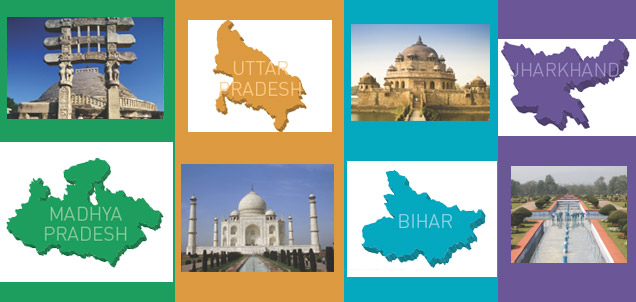
    The four key Hindi Hinterland states – Uttar Pradesh, Madhya Pradesh,Biharand Jharkhand, till less than a decade ago were considered to be sluggish in their outlook. That’s because consumers there were not really top-of-mind for marketers and if at all they became part of a media plan, especially television, it was done so by default, as Hindi television that catered to metros was available in the hinterlands too, and there was not much effort made to engage consumers there. If one looks at a broader picture, a similar tale rang true for most states across India, perhaps a decade-and-a-half ago.


    Cut to the present day, where India is the second-fastest growing market in the world, its middle class is the favoured target group of most marketers (both national and multinational), and in most global consumer surveys Indian consumers emerge to be the most gung-ho among the lot. Of the several states showing signs of speedy growth, the four states that are set for a big leap include:


    • Bihar, which is the second fastest growing economy in the country
    • Uttar Pradesh, which is the second largest contributor to the country’s GDP and also has the second largest urban populace in the country
    • Madhya Pradesh, which is touted as being an upcoming economic power centre and a major tourist destination
    • Jharkhand, which has always been an industrial hub


    One often reads of Indians leaving their cushy jobs overseas and returning to their roots to contribute to, and be a part of, the India growth story. In fact, stories of residents of Hindi Hinterland moving back home from metros too are not uncommon.


    Evolution of the Hindi Hinterland consumer

    Mayank Shah

    Consumers in these states are evolving rapidly and much of the credit for their evolution could be attributed to access to information and awareness boom. Mayank Shah, Group Product Manager, Parle Products reflects on the consumer psyche: “If you look at aspirations, there is no significant difference in Hindi Hinterland and metros. However, the urge to excel is far greater as they come from a modest background and the readiness to put in effort is definitely there. Even in semi-urban and rural areas, aspirations have grown – they are ready to consume CPG (consumer packaged groups), which is similar to their urban counterparts.”


    The increased awareness and steady GSDP enhancement has made the consumer ‘consumerist’, whereby it’s not only low-ticket items that are catching the consumer’s attention, the high-ticket ones are doing it in a big way too.


    Kamal Nandi, VP – Marketing & Sales, Godrej Appliances asserts: “Hindi hinterland is becoming an important market for consumption of durable goods. Consumer affordability has gone up, leading to a shift in lifestyle and consumers becoming more urban in their approach. Also, their top priorities are convenience and comfort.”


    Sushil Bajpai, President, Ghari Detergent, too, is of the view that it is no longer the market to be targeted sometime in future. For Mr Bajpai, the time is now: “There is excellent scope for marketers. Industries too are finding it attractive now. Consumerism is growing at a fast pace, and urban markets in Hindi heartland are no different from metros. The need right now is to understand the consumer mindset.”


    Krishna Mohan

    While the big cities in the region are getting ready to rub shoulders with metros, the semi-urban and rural areas too are getting out of dark areas. States Krishna Mohan, CEO, Sales, Emami Limited: “The great rural-urban divide in household consumption patterns has reduced drastically. Bharat is indeed keeping pace with India when it comes to spending on most fast-moving consumer goods. Rural sales contribute more than 40-50 per cent of total sales in various categories for Emami. We have increased emphasis on engaging rural consumers. The market is huge with a lot of potential.”


    Youth – Change drivers

    The change, as is expected, is being driven by the youth who are more adaptable and are akin to the youth from the metro – at least in urban areas. Having said that, awareness and information in semi-urban and rural areas is also growing and so are the aspirations.


    Somprabh Singh

    States Somprabh Singh, Head Marketing, Titan: “In attitude, they are not very different. They are independent, very ambitious and well informed. The only difference is that their exposure to many international brands is lower but that’s the function of the retail environment, which will change in sometime.” And, true to his vision, a change is currently underway across these cities.


    Harish Bijoor, CEO, Harish Bijoor Consults, believes that the booming Hindi Hinterland is the right place for marketers to be, more so for those catering to the youth. He exhorts: “The robust growth numbers in the education sector is proof enough. Add to it the entertainment market, the market for mobile phones, gadgets of every kind, clothes and accessories, cosmetics, shoes, exercise oriented products, and you have a solid market of the future emerging. There is spurring consumption of not only functional products, but products of cosmetic value as well. Products that relate to health, well-being and proactive health care, rather than just reactive care, are being craved for as well.”

     

    Harish Bijoor

    As per Mr Bijoor, there is a definite opportunity waiting, especially for brands meant for the youth, and the marketers need to make the most of it. He asserts: “The youth in these towns have a far bigger hunger quotient than the privileged youth in the bigger cities. I would segment this territory into urban, rurban and rural. The hunger deepens as you go from urban to rurban to rural. The opportunity for marketers, therefore, deepens as one penetrates down this strata.”


    Interestingly, while the debate between urban and rural might take some time to die down, it is the semi-urban areas that are attracting a lot of attention. Interestingly, the leap is expected to be bigger there, as they are keen to catch up with their urban counterparts, who themselves are always in a moving state.


    States Lloyd Mathias, the marketing honcho with experience around industries: “Youth in the urban areas of these states are quite close to metros in their awareness and aspirations, more so in case of bigger cities likeIndore,Lucknow,Bhopal,PatnaandRanchi. Though the semi-urban youth might be a little behind, they are catching up, what with the inroads being made by social media. Moreover, the influencers are the same, which are rapidly dissolving the differences.”


    Consumption pattern

    While rising aspirations is one part of the story, these regions are seeing an increase in activity by discerning marketers who are becoming more conscious of the finer nuances of the region, and are staying away from the one-size-fits-all approach.


    Explaining the phenomenon, Mr Nandi says: “While we have seen growth in double door refrigerator model in urban markets, in semi-urban markets it is the single door model that works.” However, it has not stopped Godrej from providing the entry-level consumer best value for money. He adds: “Even an entry-level consumer looks for high-end product features. A few years back, toughened glass shelves were there only in high-end model, today they are there in entry-level models as well. Brands have to seek to fulfil aspirations.” The company has also developed a refrigerator with a ‘Stay cool’ feature – powering cooling at the same temperature for 24 hours even after a power-cut.


    Coming back to the India analogy, the Indian consumer is perhaps one of the most price-conscious in the world. For him, value for money seems to be the mantra, but the consumers’ buying capacity is no longer questioned – the global marketers are tailoring India specific strategies, and the same is true of Hindi Heartland as well.


    Affirms Mayank Shah: “Instances and opportunities of buying premium products might still be less but they buy if the right quality is delivered at the right price. For example, premium biscuits like Hide and Seek cookies were rare in Hindi heartland, apart from cities likeLucknow,BhopalandAllahabad. However, now it has changed; we made it available in smaller packs, which has definitely led to sales enhancement.”


    The growth is not being noticed in purchase of a few specific product categories but across the board – a clear indication that the consumer is not seeking to fill just the need gaps, but is also looking for comfort, convenience and a bit of pampering.


    States Lloyd Mathias: “There is dramatic growth in categories like wireless broadband, consumer soft goods, mobiles and more; the consumption pattern is similar to other parts of the country. It is the sheer numbers that make it more lucrative.” He adds: “There is a homogeneity in these markets – the same is not true of any other part of the country, be it South, West or East.”


    Mr Krishna Mohan suggests that marketers look at a closer interaction with the consumer to understand him, and also to make him understand the brand. He asserts: “The way forward is to help consumers, especially in the rural areas, to make the switch from loose to branded or aid new consumption habits, either with novel products or new formats. For us, the categories of cool oil, cool talcs and fairness creams are doing extremely well with double-digit growth.”


    At this juncture, the Ghari Detergent success story can be an inspiration for many. With its origins inKanpur, it is the largest selling detergent brand in the country today. And a major focus on Hindi Hinterland has definitely propelled growth for the brand. Sushil Bajpai states: “Hindi hinterland is the biggest market for us; the brand name on our packs is prominently written in Hindi, and then in regional language. RoI in Hindi Hinterland is not lesser than other parts of the country; the key is to convey the right message accurately.”


    Key challenges

    Having assessed the scope that these markets present, one can safely assert that Hindi Hinterlands have come of age. And the marketers, of course, are in no mood to miss the bus. Thus, as per Somprabh Singh, it is important to “Act fast and act now, else be left behind. This is in terms of creating exciting products and new channels that will help reach them.”


    As per Mr Nandi, it is not just about being there; the key is to be relevant and to belong. He says: “You have a winning story in hand if you are able to provide relevant technology and play a role in them (consumers) fulfilling their aspirations.”


    Mr Bijoor agrees that relevance and market-specific approach is mandatory to be successful in these markets: “Marketers need to tailor-make themselves to the market, rather than take their tailor-made solutions to the market. Bottom-up marketing is the mantra to adopt.”


    Emerging markets indeed

    So while there exists an array of products that are being tailored to these markets, there is keen interest in interacting with the consumer there and understanding him and there definitely is an increase in the consumer spends. Are these markets ready for all the attention they are getting or would it be a case of yet another opportunity going bust?


    Laughing off the suggestion, Mr Bijoor states: “Hindi heartland is the new market that is just about emerging. What was derogatorily called the “cow belt” and the “Bimaru states” in the past, is a market that is coming to roost in the future. These states have become very progressive in their development indices. They boast of a GDP growth rate that is, at times, even more robust than the national numbers. This clearly means that these markets will see faster consumer growth in terms of demand and in terms of volumes, value and innovation.”


    Interestingly, the consumers staying in these markets are a very large demography, accounting for 20 per cent of the country’s population. And there has been a dramatic improvement in the standard of living in these states too. As these markets poise for the next big leap, it’s time the true potential of these markets is understood, and the consumer is serviced to the optimum.


    Click here for larger

    This article is part of ‘High on Hinterland’,  a special volume presented by Big Magic and produced by MxMIndia. If you wish to have  a copy of the volume, please email subscribe@mxmindia.com with your name, company details and address. We’ll courier you a copy within a week. Since we have limited stocks, we will mail a PDF to those who we are unable to send a printed copy.


  • Adz Edge unveils outdoor campaigns for Titan

    By A correspondent


    Adz Edge sets in motion the OOH campaign of one of the leading brands of the country – Titan – for its chic, stylised and interestingly tilted ‘Life is now’ campaign. In this campaign Titan celebrates spontaneity, vibrancy and free spiritedness of today’s youth and captures the mood of living every moment with loved ones perfectly.


    The campaign, which commenced from April, has been rolled out in Mumbai and is said to have already received a very positive response. Titan campaign draws attention towards the ‘Life is Now’ concept. The campaign required extensive research in terms of consumer profiling and penetration levels to identify the target areas that need to be leveraged to reach out to the relevant audience in the most effective manner.


    The objective of the Titan campaign was to create mass visibility via multiple touch points that provide maximum visibility across the city for the exclusive campaign directed at the relevant target audience to create top of mind recall.


    Following the extensive research of the cityscape, the AdzEdge team identified relevant locations across the city that met the brand’s objectives for this campaign. The mediums that were used for the campaign to reach out to the relevant audiences ranged from large format billboards, bus shelters and mobile vans across Andheri Pump Side, Bandra, Cadell Road, JVPD Cicle, Tulsi Pipe Road and Thane Teen Haat Naka to create mass recall. Innovative use of bus shelters, which was more localized, gave the closest nearby dealer information encouraging walk-ins.


    Special efforts have been taken to devise this campaign as each outdoor format plays a unique and targeted role in the campaign. These locations included landmark prominent billboards across all major locations in the city along with a sprinkling of bus shelters to create a touch-point at effective locations where large formats where not available.


    Mr. Anirban Ghosh, Senior Vice President Adz Edge said: “It’s once again a tremendous boost for Adz Edge (West) to start rolling the outdoor campaigns for Titan. Our strategic approach and seamless execution using proper planning techniques of each campaign has ensured it achieves maximum effectiveness and impact for the brand. This has made all the difference and ensured a boost in client confidence. We endeavour to bring this unique quality to all our campaigns in the future.”

  • Brands like Mountain Dew, Airtel, ITC and others bypass celebrities for their campaigns

    By Sagar Malviya & Ratna Bhushan


    PepsiCo ended its association with top Bollywood actor Salman Khan to promote its lemon drink Mountain Dew on Tuesday.


    Its decision to part ways with the hottest star of the moment may have surprised some observers, but the beverages maker is the latest in a growing club of marketers becoming selective about using celebrities in their campaigns.


    Top telecom services provider Bharti Airtel, mobile phone and durables maker Samsung, leading retailer Future Group, watch firm Titan and hotels-to-consumer goods firm ITC have all either ended associations with celebrities or are using them for lesser number of commercials. Many now prefer young, unknown faces in their campaigns.


    “In some categories, youth are taking the lead as celebrities are not an embodiment for segments, especially technology, etc,” said Santosh Desai, CEO at  Future Brands.


    Last week, Future Group launched a campaign for Big Bazaar’s apparel business without cricketer MS Dhoni or Bollywood actress Asin who have been the supermarket’s brand ambassadors till recently. “While Dhoni and Asin worked well for us in the last two years, we didn’t renew their contract as we thought having regular faces could connect with today’s generation,” said Parwan Sardah, chief marketing officer of Future Group.


    Youngsters of below 25 years account for more than 54 per cent of the consumer base in India. The retailer, which is negotiating several divestment and fund-raising deals to pare debt of almost Rs7,800 crore, said its high debt has nothing to do with ending celebrity associations and that the company has spent more than Rs30 crore on the new Big Bazaar campaign.


    Titan too has ended its deal with actress Genelia D’Souza for its Fastrack brand. “Genelia’s contract expired last month and we mutually decided not to renew it as after marriage, it would be difficult in relating to college going kids,” said Ronnie Talati, VP and business head of Fastrack & new brands at Titan.


    “Even in case of Virat Kohli, we are rethinking as he has been busy with his cricket schedules but still haven’t decided anything yet,” he said.


    Overall, however, celebrity endorsements are on the rise. But when it comes to attracting younger generation, many companies now prefer campaigns without their big-ticket ambassadors.


    A case in point is Samsung, which uses Aamir Khan in campaigns for its Hero series of mobile phones, but not for Galaxy series. “The usage of the celebrity depends on the key message and the creative route that is used for a particular product,” Samsung CMO Rahul Saighal said. “In the case of the youth-oriented Galaxy series, we are focusing on the use of smartphone and the need to get ‘smart’. So we are using young models.”


    ITC, which has Sachin Tendulkar as brand ambassador, uses the master batsman only for a few variants of Sunfeast biscuits, which has close to 20 sub-brands. “Naturally, different sub-brands require different types of advertising,” said VL Rajesh, ITC’s foods division GM (marketing). ITC is using Sachin for Dream Cream and Milky Magic brands.


    Source: The Economic Times

    Copyright © 2012, Bennett, Coleman & Co. Ltd. All Rights Reserved