Publicis Media has won the full digital duties of Zee5 in India, the recently launched digital entertainment platform from Zee Entertainment Enterprises Ltd (ZEEL). The business was won as part of a multi-agency pitch. It may be recalled that Zee5 had announced the awarding of the Media AoR to Carat earlier this
Said Group CEO Tanmay Mohanty: “The OTT segment in India is poised for exponential growth and requires specialist expertise trained to navigate this new and emerging area. We look forward to making Zee5 a powerful business.â€
Added Archana Anand, Digital Head, Zee5 India: “Zee5’s language focus makes it strongly relevant to people across the length and breadth of India. We were therefore looking for a partner that could bring in the necessary digital marketing solutions and deep consumer insights to help take us across markets and quickly establish Zee5 as the go-to digital destination for language content. Publicis has strong credentials and experience in digital marketing and understands the changing milieu of the digital and entertainment business.â€
Zenith has published a special edition of its data & insights publication, Global Intelligence, focused on eight key areas of focus for marketers over the coming year. Called 2018 The Year Ahead, builds on Zenith’s previous annual trends reports, this year acknowledging that many areas of real opportunity for marketers have been developing over the past couple of years.
Zentih has clustered these areas of emerging of opportunity and focus under four headings:
Trust:Â Brand communication in a post-truth world and Blockchain driving trust and transparency
Inclusivity: Brand purpose in an era of social protest and Rethinking targeting: the rise of perennial marketing
Immediacy: On-demand brand experience and AI powering consumer engagement
Seamless Interaction: Shopping from live-stream content and The impact of voice technology
Said Tanmay Mohanty, Group CEO, Zenith India: “There is a rapid shift in the pace of consumers and business dynamics over the last few years and Zenith stands at the forefront of Industrial Revolution 4.0, leading the way in automation, machine learning and data-driven advanced communications. [The] Global Intelligence: 2018 The Year Ahead report provides a comprehensive summary on consumer and tech trends. The report strongly reflects our thought leadership and will no doubt arm marketers in times of great disruption, opportunity and seismic change. Brands that win will be the ones that offset powerful triggers and bring in moving experiences.â€
The Post-Truth World: From Fake News to News Clean-up
Predictions for 2017
The concept of post-truth has been in existence for decades, but there was a huge spike in fake and fabricated news in 2016 resulting in ‘post-truth’ being declared as the ‘International Word of the Year’ by Oxford Dictionary. In 2017, we entered the post-truth era. Following the vote for Brexit and the election of Donald Trump as US President, we are now living in a world where emotion and populism win out over facts and experts. It’s a place where public opinions and government policies are being shaped by those whose words provoke the most hysteria. What happened in 2017? The continuation of intense and pervasive social media activity amplified post-truth in 2017. The rise of ‘fake news’ was facilitated by social media platforms such as Facebook and Twitter – 62% of Americans now regard social media platforms as places where they consume news, rather than place where they are directed to new sources. This means that vast audiences are at the mercy of Facebook’s algorithm, serving them news from like-minded viewpoints. Confirmation bias – interpreting new evidence as confirmation of one’s existing beliefs – has driven the click-by-click spread of fake news and misguided information. So, it is no surprise that trolls and other unscrupulous individuals are taking advantage of the ease of which they can distribute fake news to further their agendas, including turning it into a money-making business with the distribution of sensational fake news.
What’s next?
The reality is the world is neither ready nor willing to say goodbye to truth. But the popular opinion now is somehow being easily swayed by emotionally charged rhetoric and fake news having no factual basis. It requires deliberate action to drive social scrutiny and to encourage people to be more focused on evidence and rational thinking.
In 2018, we can expect more scrutiny and vigilance to expose organisations to reveal the truth and curb those hustlers from distributing fake news. Google and the other social media networks are starting to take action to stop the fake news distributors from using their services to target specific audiences. For example, Google announced in November 2017 that sites that misrepresent themselves would no longer be able to use AdSense and in the same month, Facebook said the fake news sites would not be able to use the Facebook Audience Network. Unless strong regulations are in place, we believe this news clean-up will still continue to be a challenge in 2018.
What does this mean for marketers?
The rise of fake news has had a major impact on the biggest global media platforms, such as Google, Facebook and Twitter. The organisations generating fake news have been leveraging social and video platforms and search engines to optimise their distribution and content consumption. This has increased the likelihood of advertising content from legitimate advertisers being featured close to fake news, which, in turn, can generate significant negative PR for a brand. The importance of brand safety for all advertisers came up time and time again last year and the continued rise of fake news should put this topic at the top of any marketer’s agenda.
We believe advertisers should do the following:
:: Build a strict set of guidelines for brand safety outlining how brands should be able to block any type of exposure in non-brand safe environments with a clear compensation policy, should any issue arise.
:: Implement 3rd party brand safety tools to cover all advertising likely to be affected by brand safety issues. The recent additions of Fake News blocker by DoubleVerify is a valuable development allowing advertisers to block exposure on Fake News websites with more than 75 brand safety filters.
:: Reduce advertising in areas where 3rd party brand safety tools are not able to operate and provide the relevant brand safety controls.
:: Implement comprehensive white lists to control where ads appear.
:: Work closely with global platforms to help them improve safety controls on their platforms. • Conduct regular reviews of where your ads feature.
So what is an essentially account retention move doing as the lead story on MxMIndia today? Because one, it’s our biggest story of the day. And two, we are committed to tracking the media agency business beyond just news on movements. But, most importantly, it means a lot for Zenith (earlier called Zenith Optimedia)… it is Zenith’s biggest account in India, estimated to be in the region of Rs 650 crore annually.
India is #4 in the Top 10 contributors to global adspend growth 2017-2020. But that’s perhaps the only statistic that indicates ‘achche din’ for adspends. India, btw, is not in the Top 10 adspend markets. Neither in 2017, and not even in 2020. But that’s a headline you’ll possibly read elsewhere. Let’s examine the real thing.
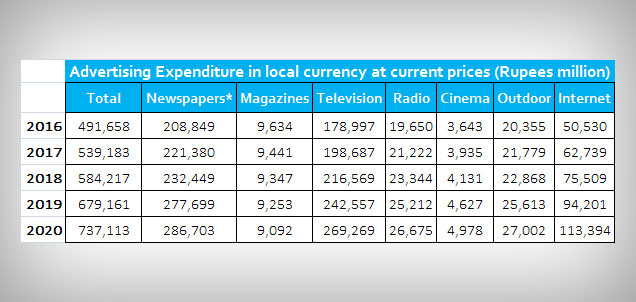
First, take a closer look at the table above. Total adspends, according to Zenith, were Rs 491,658 million in 2016, Rs 539,183mn in 2017 and the forecast for 2018 is 584,217mn. Since we are still in early December 2017, one presumes the 2017 number of 539,183 is an estimate. But given that number, the adspend growth is 9.7% as compared to the forecast of 11.2% made last year. The forecast for 2018 is 8.4%, even lower than the estimated growth for 2017.
Yes, you read it right. Zenith (eka Zenith Optimedia) believes that adspends will grow 8.4% next year in comparison to 9.7% this year. Remember, we are supposed to have seen the worst of the worst in 2017 given demonetisation last November and GST just ahead of the festive season. So why the not-so-achche din in 2018?
Here’s what a communique says: Year 2017 will close atRs 53,918 crore, registering a slightly slower pace of growth is on account of demonetisation introduced in November 2016. Total AdEx for India will climb up to Rs58,422 crore, growing  at 8.4% in 2018, led by television. Growth rate for television is pegged at 9% while newspapers will grow at 5%. Radio will grow at 10%, while cinema and out of home will grow at 5% respectively.
Tanmay Mohanty
Said Tanmay Mohanty, Group CEO, Zenith India: “Growing Internet penetration accelerated by operators such as Jiowill significantly enhance digital adspends in India and give access to previously untapped markets. India has seen some fluidity in overall ad-expenditure but remains one of the fastest growing advertising markets globally. With the dust settling down on demonetisation and GST, we expect a measured recovery on ad spends. Consumer confidence is definitely on the rise. In 2018, mobile handsets, FMCG, automobiles, BFSI, travel and tourism and political ads will drive up the pace on adspends.â€
Here’s more from the communique we received:
Amid growing debate as to whether brands are overspending on digital media, Zenith research has found that the effectiveness of internet advertising has now caught up with digital adspend.
Until 2015, brands struggled to make effective use of internet advertising, and their spend was not matched by the resulting ‘brand experience’(an accurate proxy of market share*). However, by 2016 internet advertising accounted for 34% of global ad budgets but produced 35% of brand experience.Internet advertising is now therefore working harder than advertising in other media.
For many years Zenith’s Advertising Expenditure Forecasts reports have consistently reported sizeable increases in the internet share of advertising budgets. The December 2017 edition of the report is published today. For the first time Zenith has been able to demonstrate the ROI of internet adspend, not just its scale. We used our proprietary Touchpoints ROI Tracker tool to compare internet adspend to internet brand experience over the past few years.
In 2014 advertisers spent 27% of their budgets on internet advertising, which produced only 21% of brand experience. By 2015, though, brands were using internet advertising more effectively: it accounted for 30% of both budgets and paid brand experience, before tipping over in 2016, when brand experience exceeded budget share.
We expect internet advertising’s share of global adspend to continue to rise, reaching 40% in 2018 and 44% in 2020. Its value will rise from US$203bn in 2017 to US$225bn in 2020. The share of advertising expenditure allocated to internet advertising varies widely across the world. In the most advanced markets (Sweden and the UK) it will account for more than 60% of total expenditure next year, and it will account for between 50% and 60% in another six (Australia, Canada, China, Denmark, Norway and Taiwan).
India is placed No 4 in the Top 10 contributors to global adspend growth 2017-2020.
India follows USA, China and Indonesia in that order. (See executive summary)
Between 2017 and 2020 we forecast global advertising expenditure to increase by US$72 billion in total. The US will contribute 27% of this extra ad expenditure and China will contribute 20%, followed by Indonesia, India, the UK and Japan, which will contribute 4% each.
Five of the ten largest contributors will be Rising Markets* (China, Indonesia, India, Brazil and Russia), and between them they will contribute 33% of new adspend over the next three years. Overall, we forecast Rising Markets to contribute 54% of additional ad expenditure between 2017 and 2020, and to increase their share of the global market from 37% to 39%.
In India, internet adspend will capture 11.6% of the market in 2017. India is therefore a leading digital market/keeping pace with global developments/has a lot of scope for growth in internet advertising. We forecast 20.4 % growth in internet advertising in India in 2018, compared to 8.4% growth for the market as a whole. By 2020, internet will account for 15.4% of total adspend in India.
The rise of the internet has had huge consequences for the other media, which are covered in detail in the executive summary.
Big platforms are capturing digital growth
The internet is driving the great majority of global growth in advertising – it will account for 94% of the growth in adspend between 2017 and 2020. And most of this will be captured by just five big platforms – Google and Facebook, plus the Chinese platforms Baidu, Alibaba and Tencent. Between them these five platforms increased their share of global internet adspend from 61% to 72% between 2014 and 2016, and captured 83% of the growth in internet adspend over that time. Baidu, Alibaba and Tencent accounted for 54% of the growth in internet adspend in China, while Google and Facebook accounted for 96% of the growth in internet adspend in the rest of the world. Between them Google and Facebook accounted for 76% of internet adspend outside China in 2016.
Big countries are adding most ad dollars
In dollar terms, most of the growth in global adspend is coming from a few big markets. We forecast that just two countries – the US and China – will contribute 47% of new ad dollars between 2017 and 2020. The five biggest markets – the US, China, Japan, the UK and Germany – will contribute 57%.
Big cities are driving global adspend growth
Big cities are driving global adspend by concentrating growth in productivity, innovation and trade. We have conducted a unique study that attributes adspend to individual cities by estimating the value of their inhabitants to local, national and international advertisers. We forecast that the top 10 cities alone will contribute 12% of all global adspend growth this year, and that the top 725 will contribute 60%.
We predict that between 2016 and 2019, adspend in the 10 biggest-contributing cities will grow by a total of US$7.5bn, representing 11% of growth over these years. These ten cities will be, in descending order: New York (where adspend will grow by US$1.4bn), Tokyo, Jakarta, Los Angeles, Shanghai, Houston, Dallas, Beijing, London and Chicago (which will grow by US$0.6bn).
Advertisers feel the pressure from digital transformation and polarisation of growth
Advertisers are feeling pressure from the rapid transformation of their businesses, exemplified by the rapid shift of marketing communications to online media in response to changing consumer behaviour, and the polarisation of growth to big platforms, big countries and big cities. At the end of November we conducted the third in our series of exclusive surveys about brand growth among key Zenith clients. On a scale from 0 to 100 – where 0 means everyone expects decline in 2018, 100 means everyone expects growth, and 50 means the average expectation is for no growth – the average response was 57, down from 67 this time last year. Food and drink brands have been the least affected, with a score of 66 this year, down just a point from 67 last year. Packaged goods, retail and telecom brands have all fallen to 50, expecting no growth, down from positive scores last year.
“We are seeing a battle played out in business, marketing and media between big players and small players,†said Vittorio Bonori, Zenith’s Global Brand President. “Growth is coming from big countries and big cities, and being captured by big platforms. Brands should focus on upstream strategy, data-informed UX planning and downstream automationâ€.
“Internet advertising is the biggest advertising medium in the world and the biggest driver of growth,†said Jonathan Barnard, Head of Forecasting and Director of Global Intelligence at Zenith. “Our unique research shows that brands are starting to use it effectively after struggling to adapt over the last few years.â€
*Brand experience is a combination of two factors: reach (how likely consumers are to encounter brand messages at eachtouchpoint) and influence (how likely each message is to consumer attitudes or behaviour). It covers all touchpoints across paid, owned and earned media, but because we were comparing it to advertising expenditure, here we measured only the brand experience of paid media.
Touch points ROI Tracker is Publicis Media’s brand contact measurement and planning tool, based on more than 950,000 consumer interviews since 2004.
The campaign urged consumers to break free from popular trends and display their original, unique selves. They could post on an activity which sets them apart from popular trends. The gratification lay in the fact that Maggi Hotheads made people trend on Twitter.
Tanmay Mohanty
Said Tanmay Mohanty, Group CEO, Zenith India: “We are delighted to be at the forefront of this innovative and exciting campaign.  #UntrendLikeHotHeads hits the mark because it is fun, quirky, engaging and resonates with the Indian youth. There is an instant connect with the Maggi  Hotheads brand, also known for its distinct positioning and taste. The campaign is a resounding success. It has sparked off viral conversations, amplified brand messaging, and generated rich insights. #Untrend has significantly added to the followership and popularity of Maggi  Hotheads.â€
Added Taranjeet Singh, Country Director, Twitter India: “Our endeavour has always been to create enriching experiences for brands to connect with their fans on Twitter. Nestle’s #UntrendLikeHotHeads is a breakthrough idea, the collaboration saw extraordinary participation on the platform and enabled Maggi to be what’s happening on Twitter. We look forward to working closely to be part of more of such creative, strategic partnerships.â€
Zenith has won the media duties of the air purifier line of business of Honeywell.
Tanmay Mohanty
Said Tanmay Mohanty, Group CEO, Zenith India: “We are delighted to have won the business of Honeywell and look forward to driving market leadership for them. The company with its 80 year old lineage is no stranger to India and the Honeywell air purifier is a product that is unique and unparalleled. Zenith is an agency that embraces both technology and invention. Our ROI+ approach with advanced communications models and strong focus on personalisation and automation will further fuel Honeywell’s expansion plans across all the right markets and touch-points. Our pulse on the Indian consumer and new insights on the category have helped us win this business. This is a significant addition to our client roster.â€
As part of a global multi-agency pitch, Zenith has won the media duties of French dairy giant Lactalis.
Zenith now handles the business in 26 countries, which includes India. Lactailis is better known as the world’s largest cheese company and is into assorted dairy products including milk.
Tanmay Mohanty
Said Tanmay Mohanty, Group CEO, Zenith India: “We are pleased to have won the business of Lactalis, a renowned global name in dairy products. The company shares our values, ambition and drive. Lactalis has a long-term vision for the Indian market; it stands for quality products and we would love to partner with them in building this category and market leadership. Our newly launched ROI+ proposition with advanced communications models and sharper focus on analytics, tech, data and consumer insights will take Lactalis even further in a high growth Indian dairy market. This win adds tempo to a great year where we have won significant businesses and consolidated operations.â€
Zenith, part of Publicis Media India, has won the full range of media duties of payments solutions brands Citrus Pay and LazyPay. Both are a part of fintech company PayU India.
Tanmay Mohanty
Said Tanmay Mohanty, Group CEO, Zenith: “We are pleased to have won the media business of two innovative and ambitious digital payments solutions brands Citrus Pay and Lazy Pay… We look forward to delivering spectacular results for The Payu Team.â€
Added Abhijit Bhattacharya, Head Marketing, Consumer Business from PayU India, says, “Zenith is a great strategic partner to have, with a wealth of experience in the financial services and payments sector. We look forward to a long and fruitful partnership.â€
Media agency network Zenith has unveiled a new global approach to communications, supported by a relaunch of its brand identity, proposition and platforms. Led by Zenith’s Global Brand President, Vittorio Bonori, the move carries forward Zenith’s ROI Agency positioning in 2002.
Called ROI+, the new approach is designed to solve business challenges though advanced communications models, notes a communique, adding:“The approach has three key client benefits. First is the creation of ‘upstream’ strategies that deliver greater ROI through business transformation. Second is a focus on the full consumer journey in order to design personalised communication at scale. And third is maximising ‘downstream’ efficiencies through market-leading automation, such as machine learning. “
Said Vittorio Bonori, Global Brand President, Zenith: “We have a vision for delivering transformational growth for our clients and this required a new way of working that embraces both technology and invention. I believe that Zenith’s new proposition and brand identity builds on our distinctive ROI positioning and sets us further apart from the competition.â€
Added Tanmay Mohanty, Group CEO, Zenith India: “Our first pillar is our ability to create upstream strategies that deliver business transformation. For example, in ad-tech consulting, our upstream strategic development is greatly enhanced through ROI+. Second is our focus on the full consumer journey to deliver more effective communications strategies. And third is our market leading approach to maximising downstream efficiencies. ROI+ enables us to apply sophisticated automation through AI and machine learning techniques.â€
Zenith, part of Publicis Media India, has strengthened its organisational structure and announced three senior-level hires.
Atul Sharma has joined Zenith as Senior Vice President in New Delhi and will be the business head for SBU that includes Nestle, Truecaller, Yatra, Hotels.com and others. Love Guglani has come on board as Senior Vice President for Zenith, based again in New Delhi, to lead the other SBU for Cargill, LVMH, Jabong, Micromax, Hennes & Mauritz (H&M), Aviva amongst others. And the third hire is Swati Jha. She has joined Zenith as Senior Vice President to head the agency’s West India operations and will be based in Mumbai.
Tanmay Mohanty
Said Tanmay Mohanty, Group CEO, Zenith India: “Our best-in-class data, tools, insights and strategy have led to a high pitch win rate and great performance on existing businesses. We are pleased to announce these three senior-level hires for Zenith who will help us upscale our operations, in line with our accelerated growth and momentum. I look forward to our new appointees bringing in fresh vigour, enthusiasm and passion to the organisation and embracing Zenith’s unique and highly differentiated offering.â€
In India, Zenith’s key clients include Nestle, Parle Products,  Micromax, LVMH Group, Toyota, Bombay Dyeing, H&M , Singapore Tourism Board, Fox Networks, BASF and Singapore Airlines among others. Through Peformics.Resultrix, we handle digital duties on Airtel, ICICI Bank, Star India, Birla Sun Life Insurance, Tata AIG General Insurance, AirVistara among others.
In a first-of-its kind creative association, the Google search results page for “Meri Maggi†was transformed into an innovative branding medium – one that registers live votes from consumers ahead of product launch. Zenith, part of Publicis Media India, conceived this campaign for Maggi and brought it alive in a unique creative association with Google.
A search for ‘Meri Maggi’ on Google displays eight potential new flavours for users. The new product-line comes with names that are intrinsically Indian; AmritsariAchari, Bengali Jhaal, Gujarati Khaman, Kashmiri Dum, Kochi Malabari, Mumbai Chatak to name a few. Of these, the user has to accurately guess the four flavours that Maggi will end up launching. Users could vote every day till midnight on Friday, April 21. Post voting, the user was diverted to the Paytm Maggi page for registration https://paytm.com/maggi and could avail a Maggi Goodie bag.
Said Tanmay Mohanty, Group CEO, Zenith India: “Zenith develops brand experiences that maximise the value of the opportunity and builds rewarding relationships with valuable customers. This is an innovative campaign in which search has been transformed into a unique ‘Voting Engine’ and this initiative only harnesses the passion of Maggi loyalists. The preview on the new flavours adds to the buzz and anticipation among Indian consumers. Over the past 33 years, Maggi has become one of the most trusted brands in India. It has done this by keeping up with the changing Indian palette. ‘Maggi Masalas of India’ is a step in the same direction and we are pleased to engage with them on the same.â€
Zenith has unveiled 10 trends that show how artificial intelligence will help to power the consumer journey in 2017, driving engagement opportunities and effectiveness for marketers.
Artificial intelligence is the ability of machines or computers to emulate human thinking or decision making. Zenith’s 10 trends assess how machine learning and other areasof AI will enhance the consumer experience along the journey to purchase and will create new marketing opportunities for brands.
Trend 1
Predicting Our Needs: AI enhances the Role of Search in the Consumer Journey
Search is becoming increasingly predictive, providing tailored recommendations throughout the consumer journey to drive both consideration and conversation. During 2017, search engines will begin to factor in additional behavioural data – artificial intelligence technology will use this information to power predictive search. Enhanced predictive search gives clear opportunities for brands to better anticipate consumer needs in order to serve more relevant and also to cross-sell products.
Trend 2
Speed is the New Black: Turbo-charging the Delivery of Trend Content
In recent years, there has been an explosion in the quantity of consumer data available to marketers. This enables brands to quickly spot trends and react to this in their marketing to consumers. With data set to grow in quantity, machine learning will significantly help to streamline the process, digesting data from a variety of sources to quickly identify underlying patterns. Using AI in trend analysis will help marketers to stay ahead of both the trend curve and the competition. Content specialists will be able to create a pool of assets that can be quickly served to consumers in line with trend analysis, and product development teams will be better equipped to stay on top of the latest category demands.
Trend 3
Always-on Insights: Non-stop data collection through the Passive User Interface
The Passive User Interface (PUI) continually collects behavioural data from consumers’ digital devices and by applying machine learning techniques can provide brands with powerful insights than can be used to customise consumer experiences. Companies are already using PUI data, for example Spotify’s running platform uses data from fitness trackers to customise its playlists for consumers. Greater use of PUI data will enable brands to design personalised content and services and to set appropriate pricing strategies. PUI data can also be shared by brands across different categories to help improve multiple consumer experience points.
Trend 4
Cross-Device Storytelling: Advances in Programmatic Automate Brand Conversations
Machine learning technology is starting to help brands to tie their conversations to specific individuals. Brands have plenty of first party data, but this specific application of AI links individuals to their devices and helps brands to understand how consumer engagements and brand actions can be attributed to different messages in different contexts at different times. Brands can then automate their conversations with consumers using cross-device programmatic advertising. This will really help to create seamless experiences, and to accelerate both purchase and re-purchase.
Trend 5
Shoppable Content: Buying Direct from Branded Content Enhances Consumer Experience
2017 will be the year of ‘shoppable content’: purchasing items directly from editorial and branded content. ‘Evolutionary algorithms’ can tweak and optimise content in response to consumer’s navigation, creating live content. Universal shopping carts recreate the functionality of e-commerce sites without consumers having to create new accounts or provide credit card details for each new site they visit. This combination of technologies will enable brands and publishers to keep consumers on their sites rather than forcing them to go elsewhere to buy. Brands will need to treat content as a compelling combination of text, images and interactive features that create a shopping experience.
Trend 6
Smart VR: Brand Opportunities as Virtual Reality Moves to Smartphones
Virtual reality is moving from the solitary world of gamers to the mainstream of consumers experiencing VR through their smartphones. Facebook and Twitter already have live streams that can be accessed using headsets attached to smartphones. The shift to smartphones and to mainstream applications will present brands with many marketing opportunities. For example, retailers with the opportunity to transform how people shop – trying out products without having to visit a store.
Trend 7
The Rise of the Chatbot: All hail frictionless communication between brands and consumers
Powered by machine learning, chatbots enable automated interaction between consumers and brands via a messaging interface. While there are obvious limitations with automated communication, chatbots can help consumers with process functions such as making payments and notifying of delivery/shipping. Chatbotscan help brands to reduce customer support costs and to open up greater dialogue with consumers. There is also a great opportunity for brands to create personalised recommendations for consumers based on insights from the trails of chats.
Trend 8
Playing to Our Emotions: Emotion Recognition Technology Helps Brands to Tap into Human Truths
The spread of smartphones and the rise of embedded emotion recognition technology means that many people now carry mood-sensing devices in their pockets. This gives brands the opportunity to match consumers’ moods and behaviours with relevant content at the right moment. For example, brands that have an association with a particular sport or team could use this technology to offer more relevant experiences based on consumer reactions during a sporting event.
Driven by high-performance computing and analytics, Dynamic Pricing enables retailers to price items at a point determined by a particular customer’s perceived ability and willingness to pay. Pricing on some website and apps now changes from minute to minute. For example, Uber introduced its Surge Pricing algorithm to enable pricing to automatically rise at times of peak demand.
Trend 10
Automated Assistance: Service Robots Hit the High Street Stores
Industrial robots have been in use for many years. Now, technology is blending physical and digital automation to create service robots, working alongside humans. The most obvious and immediate opportunities are in retail and hospitality. Service robots will be able to provide pricing and stock availability information and using algorithms will be able offer discounts and related product suggestions. The opportunities could stretch beyond retail and hospitality into healthcare and domestic help.
Acoording to Tanmay Mohanty, Group CEO of Zenith India, the year 2017 appears full of possibilities: “The business of marketing communications will be largely predictive going forward, aided by big data, virtual reality (VR) and machine learning or artificial intelligence (AR). Brands that win, will be the ones that offer powerful transformative experiences. Experiences that come with dramatic emotional triggers. Business models will be cast and re-cast, based on omni-channel, omni-device and offline-online integration. Zenith, in preparation of this great change has already made significant investments in the area of machine learning and automation, within digital planning. We are one of the few agencies, alreadyprepared forwhat’s waiting in the corner.â€Mohanty said.