Tag: Sudhanshu Vats

  • Thinking beyond 2020: Viacom18 Group CEO Sudhanshu Vats at CII’s Big Picture Summit


    Sudhanshu Vats

    Text of the welcome address by Sudhanshu Vats, Viacom18 Group CEO and Chairman, CII National Committee on Media & Entertainment


    Honourable Minister of State for Information & Broadcasting, Shri Rajyavardhan Rathoreji, respected panellists on the dais and valued members of the audience. It is my pleasure to welcome you all to this year’s edition of the Big Picture Summit.


    To start with, I have a disclosure to make. Disclosures are important, no? Particularly for media organisations. I have been in an extremely introspective mood and therefore what you’re about to hear might sound like a discourse on philosophy. The good news, however, is that I’m going to be extremely candid. It’s always a challenge to address a gathering of this nature. A gathering where leading minds from the private, public and academic sectors converge to paint the ‘Big Picture’.


    This event is one of the first events that I attended after entering our sector and it’s particularly close to my heart. If I can make an honest confession, I’d say that I spend much more time thinking about my speech for the Big Picture Summit that I do for other conferences. This time however, I took the exercise one step further. I went back and looked at almost all the speeches I’ve delivered since the turn of this millennium, first as an FMCG veteran and then as a media professional. You’ll be surprised to know what I found! One of the very first speeches I can recall was at HUL in 2000, my former organisation. I was addressing a bunch of analysts and spoke with great gusto about the organisation’s vision for 2020. There were a few more that I made around 2003-2005 – including some at my alma mater – IIM Ahmedabad and I referred to 2020 again as a benchmark year. Finally, since 2012, whichever industry event I’ve been a part of- Big Picture, FICCI, CASBAA, IDOS- you know the grind- 2020 has been the year at which most predictions stop.


    This got me thinking. Thinking hard. I wondered: Have my colleagues and I run out of imagination? Have we become too old to see beyond 2020? Has the internet made us all ‘intellectually lazy’?


    Trust me, my mind looked in several directions. Finally, the answer struck me. As ironical as it sounds, the future has become shorter. For the sake of clarity, look at it this way: 20 years ago, it took maybe 15 years for ‘x’ number of disruptions, 10 years ago it only took, maybe 10 years for the same number i.e. ‘x’ number of disruptions. Today, it only takes 5 years for the same number of disruptions. So, in a manner of speaking, our definition of the future has become more ‘condensed’.


    This very reality has enormous implications for all of us. 


    For private sector organizations, we need to improve our time-to –market for new products and services, we need to be able to quickly take aim, fire and reload, before repeating the process.


    For the world of academia, the sheer amount of throughput needs to increase. R&D cycles need to have shorter durations and allow for mid-way course correction. Inter-disciplinary learning is another area of focus. Several worlds are converging and academic disciplines should be no exception.


    For the government, and Rathoreji can shed more light on this, the public want the entire government machinery to be able to deliver on its expectations, sooner than they did before. This also means that policy roadmaps have to get shorter. Given the complexity of the Indian market, if we can’t crunch these roadmaps we need to at least ensure that we stick to them. The duration of political lifecycles generally hover around five years, now you see news channels looking at one year, 100 days and even one-month report cards! Sometimes I feel that the government faces more pressure from the electorate than public companies face from their investors for quarterly targets!


    It’s very important to understand these implications because when the public, private and academic worlds align, magic is created. We talk of USD ABCD billion as a target and so on and so forth. It’s simply a fictional goal post if we can’t get different stakeholders to work together. I understand the theme of this conference is aiming for a 100 billion USD target for our industry, but I’d like to challenge the status quo by asking a fundamental question that I hope you can ponder over these two days: what defines our industry? If our audience is empowered to buy the dupatta worn by Ragini while watching Swaragini on Colors on their mobile phones, how will it impact our target?


    I’d like to leave you with a way of thinking that I believe can be applied to any M&E organisation, irrespective of the sub-sector i.e radio, TV, digital etc.. It’s arguably a much simpler definition of our value chain. There are only three participants in this value chain: creators of content, content platforms and communities. Advertisers don’t need to be called out separately as they too are a community. All of these sit on the foundation of a regulatory framework created by the government. What’s even more interesting is that this value chain is no longer, necessarily linear. All three participants can interact with each other in different ways. An organisation’s understanding of where it fits in this value chain has a lot of bearing on the capabilities it needs to build and invest in.


    Content creators have to look at nurturing a dispersed universe of storytellers that is talented, loyal and always engaged. Platforms have to make investments in technology that allow them to reach out to communities. Communities are almost the reason as to why most of us exist, whether it’s our audiences or our advertisers. We have to figure out way of getting them closer to one another and developing a constant feedback loop mechanism to make our engagement more fruitful. Most importantly, we have to look at a voluntary, self-regulation framework in terms of what should be allowed and what shouldn’t – for advertisements and content.


    Thank you all for making it here today and for your undivided attention. You have invested valuable resources to be present for Big Picture 2015. The team from CII has curated an extremely insightful set of sessions for you. Ladies and gentlemen, I urge you, do take this unique lens as you participate in these sessions. The world of ‘realisable possibilities’ has just exploded. The Future has become shorter and our canvas has gotten bigger. Welcome to Big Picture 2015!

     

  • It’s back to back to back primetime for Colors Infinity

    By A Correspondent


    When we interviewed Ferzad Palia, EVP, Viacom18 and Head, English Entertainment, last week, he promised that the soon-to-be-launched Colors Infinity, the English general entertainment channel from the Viacom18 stable, will offer disruption of the kind offered by the flagship Hindi GEC Colors in 2008.


    With the scope governed by the number of titles and libraries available to be acquired from the international market as that’s what the viewing masses want to watch (as against locally produced content), the team at Infinity had to dream up a strategy that would be stand-out given all the constraints.


    So out came this idea of back to back to back. This means three continuous episodes shown one after the other after the other. Phew! And this will happen every day of the week. The slew of shows – selected jointly with Bollwood impresario Karan Johan and actor Alia Bhatt – has some never-seen-on-Indian-TV shows like Fargo, Orange Is the New Black, Better Call Saul, The Flash amongst others.


    Karan and Alia along with Palia and Sudhanshu Vats, Group CEO, Viacom18 unveiled the line-up to the media at an event on Tuesday (July 7). “Our first homegrown English entertainment channel for India – Colors Infinity, through its many firsts, is all set to subvert convention in the genre through providing a consummate viewing experience,” Vats said.


    Talking about the channel’s gambit to forge ahead of competition, Palia said he was looking at marketing beyond the six-eight cities which most look at. “Adding to the immersive experience, the innovation of facilitating essential viewing is set to be a definitive game changer through inviting newer audience and growing the viewership pie.” Colors Infinity is looking to pushing the chanel to some 21 cities other than the four metros.


    Meanwhile, in line with what many new channels have been doing in the recent past, Infinity has roped in four brands to partner the offerings. These being L’Oreal, Grey Goose, Renault and Integriti.


    Meanwhile, the launch date for the channel has still not been unveiled, but according to trade sources, it’s most likely going to be in the next three weeks.


  • Viacom18 to launch English GEC ‘Colors Infinity’

    By A Correspondent


    Viacom18 has announced the launch of its English general entertainment channel – to be called Colors Infinity. The channel will have a standard definition and HD version. Although Viacom18 has not revealed the date, trade sources inform that it could well be launched later this month (July).
     

    The network has entered into major multi-year deals with Warner Bros. International Television Distribution, NBC Universal, Sony Pictures Television, Twentieth Century Fox, Lionsgate, MGM, BBC and Endemol Shine amongst others.


    The channel will be co-curated by film-maker Karan Johar and popular actor Alia Bhatt, both of who profess to be passionate viewers of international content.


    Sudhanshu Vats

    Said Sudhanshu Vats, Group CEO, Viacom18: Today, we are the world’s second largest English-speaking population and live in an environment where English is seen as a ladder to personal progress. English is an extremely important space for us and with this move, we will further strengthen our share in the category.”


    The channel will see scripted and unscripted content that will span genres such as Drama, Superheroes, Comedy, Fantasy, Crime and Thrillers. Additionally, there will be a special focus on reality television with some of the world’s biggest shows across dancing, singing, cooking, and other lifestyle interests. The channel will also play home large format live events and awards.


    Ferzad Palia

    Talking about the channel, Ferzad Palia, EVP, Viacom18 and Head, English Entertainment said: “With its sheer breadth of offering and carefully selected content from across global markets, Colors Infinity will be the definitive platform for the best in English language entertainment across genres. Our objective is to grow the category by broadening the appeal and reaching to a wider base.”


  • Building on Colors. Interview with Sudhanshu Vats


    It may have been more of a coincidence. A day before the first day of the festival of colours, Viacom18 announced its five regional entertainment channels would drop the ETV branding and adopt Colors. The ETV GECs, owned by Prism TV Private Limited and part of the Viacom18 networks, has operations in the Hindi entertainment, youth, children, English entertainment and regional clusters.


    Speaking to MxMIndia, hours after making the announcement, Viacom18 Group CEO Sudhanshu Vats said the exercise helps in building the Colors franchise. Colors, as a brand, has become the cultural touchstone for millions of Indians across the world, he said.


    Meanwhile, Colors Marathi will be relaunched on Sunday, March 22 starting 6:30 pm with MICTA awards (the Marathi film and theatre industry awards like the IIFA) and two new shows starting March 23 – Majhe Hoshil Ka and Sakhi. Colors Oriya will go live on April 1 while the Bangla channel will happen on April 12. Colors Kannada and Gujarati will go live on April 19.


    Excerpt from an interview.


    The rebranding of the entertainment bouquet with the Colors prefix may now appear to be a no-brainer. But for how long has this been in the works?

    Yes, Colors’ foray into other general entertainment spaces or language general entertainment is natural. From a strategic point of view, it expands the footprint of Colors as a brand. Particularly in general entertainment, we are a multi-brand media network. So, whether it is Nick in kids or MTV in youth and Colors in general entertainment, the natural extension of all our marquee brands into subsequent languages is a very natural strategic move. I think ETV as a brand enjoyed legacy, because it was the first regional brand, it had history and huge loyalty to some extent. But one of the things we noticed was that it had also aged a little and was not contemporary enough. If we juxtapose ETV with Colors, Colors, as a brand, stands out for its young, modern, urban, contemporary and innovative nature. Therefore, from a consumer angle as well as strategic point of view, it was almost natural that you move as we build it.


    So just as youth brands are under MTV and for kids, there’s Nick, couldn’t we have had separate brands for the regional and Hindi GECs?

    It all depends on how you look at it as a segment. If you look at the genre as general entertainment and within that regional and language segmentation, then may be one brand for general entertainment, which is indeed Colors, does make sense. And, therefore, it has the capacity to have that scale. While Hindi is of course predominant in India, without doubt, at this movement at least, in viewership too, regional is also catching up the fast. To be honest, the answer is yes one could have had a dedicated brand. At the same time, could you have extension of your GE brand into other GE spaces? The answer is yes again. To me from some scale and some brand halo and Synergy point of view, may be it makes more sense to sort of…


    The Colors as channel we know it is not going to be rechristened?Or suffixed Colors Hindi?

    No.


    Colors, the Hindi GEC brand, is bold, young, urban breaks barriers and, well, a lot of money is spent on its programming and marketing. The expectation will be the same from the language GECs? And if not fulfilled, it could have a slightly negative rub-off on the Hindi GEC?

    We will of course try and play out the same brand philosophy and brand mantra. That’s the thinking behind it.


    In terms of programming are you looking at a significant change from what’s there right now? Or will we see a significant leap in look, feel and content?

    I’ll answer this in two parts. TV18 expressed its interest to acquire ETV in 2011-2012. Basically, post-TV18’s acquisition of ETV, we’ve been associated with them from a synergy point of view. What we’ve done across these regional Prism channels is let the Prism team look at some of the things they can pick up. To give you some of the examples, we’ve already attempted Big Brother in Bangla and Kannada. In Kannada, the Prism team has looked at ‘Dancing with the stars’ which is ‘Jhalak Dikhla Jaa’. It is in its second season and has been very successful and is already the No 1 show this year. We’ve also looked at few shows that are about ideas from Viacom18. Let me give you an example of another show called ‘Indian’ we ran on ETV Kannada. It’s Roadies meets Bigg Boss! There are also programming shows like Balika Vadhu, which are remade, Madhubala, Uttaran, in regional forms. From a programming perspective, it’s a two-stage journey. Journey 1 is already on from synergies and it has helped uplift the viewership of these channels. And #2, as we launch with the rebranded Colors, you’ll see considerable change in programming.


    Will there be any change in the Hindi GEC?

    Colors continues its journey. We’re a strong No 2 as you know and we’ll continue to work on that. That’s a completely independent piece.


    The launch of &TV means some tough competition for Colors, right?

    Early days. We’ve It’s been positioned as an urban channel with some amount of social messaging, reasonably high decibel and expansive non-fiction. So, the zone you seem to see it is in Colors. The direct competition could be more with Colors. It makes a lot of sense if you step into Zee’s boots. Zee enjoys a huge legacy. They enjoy a tremendous first-mover advantage, clearly in distribution. I think they’ll be ahead of Star, in sheer distribution. Because of that, I can say that they are slightly less urban.


    Would you at any time look at a mid-market GEC?

    We keep evaluating from time to time. There are two ways of looking at it. One is that may be there is more room for more GECs in India and that could be a hypothesis. The second is that people have tried and not many have succeeded. You had others, headed by people who had reasonable experience. Off late also, Zee’s Zindagi made a very different attempt. Sony Pal, which is almost like a full-fledged GEC, wasn’t very successful. We’ll see what comes there. There is one school of thought that there are four or five GECs which have established themselves and may be as a GEC there is room for just about this much. The second school of thought is that there is more room. To answer your question, yes we are looking at it, evaluating. We don’t have anything firm at this moment.


    Surely, more is in the offing. We hear about an English GEC. Any indicators of the directions you are looking at?

    My answer on this one is also similar. I don’t want to say something we’re not yet firm at. Basically, you’ll be seeing more offerings. I can’t share them convincingly till I don’t know them well. But, yes, we’ll continue to deepen and strengthen our presence in the genres we’re playing in.


  • Viacom18 adds Colors to Regionals


    By A Correspondent


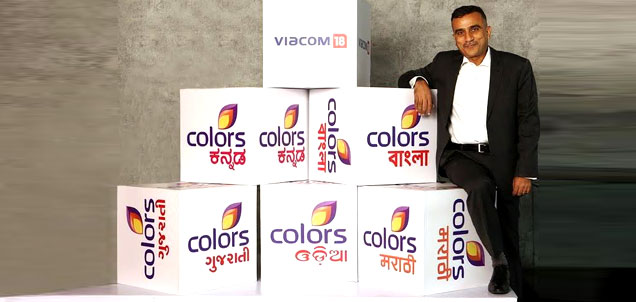
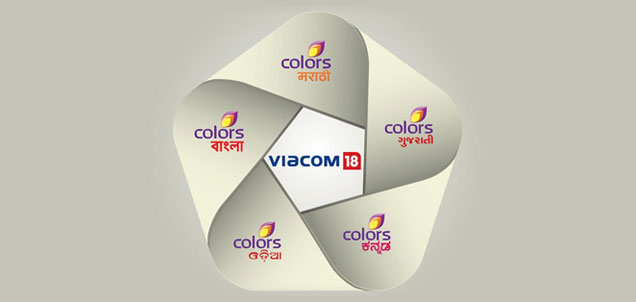
    A day before the auspicious festival of Holi set in, Viacom18 made announcement that reflects the plans the entertainment network has for its regionals: it has announced the rebranding of five ETV-prefixed regional general entertainment channels in Marathi, Gujarati, Kannada, Bengali and Oriya. These will now be prefixed with Colors which has been until now the preserve of the Hindi GEC alone.


    The ETC GECs are owned by Prism TV Private Limited and are a part of the Viacom18 networks which has operations in the Hindi entertainment, youth, children, English entertainment and regional clusters.


    Sudhanshu Vats

    On making the regional foray, Sudhanshu Vats, Group CEO Viacom18 Media Pvt. Ltd. said, “59 per cent of the country converses in regional languages as their primary language of choice. Today regional TV channels command the second largest viewership in India. The expansion fuels our growth strategy in building the Colors franchise, a brand that has become the cultural touchstone for millions of Indians across the world. The move will help us foray into key regional markets as we nurture and monetise the bouquet across platforms.”


    All of it is subject to regulatory approvals. Viacom Inc. through its subsidiary Nick Asia will acquire a 50 per cent interest in the five regional general entertainment channels, while TV18 will continue to own the remaining 50 per cent.


    On the communication approach to socialise the rebranding, he indicated that the “revelation of the new brand identity of each of the five regional channels has been staggered across a period of two months starting March 3, 2015. It is scheduled to coincide with regional festivals that mark new beginnings. 360-degree marketing and communication campaigns encompassing TV, cinema, cable, on-ground, radio, outdoor as well as digital platforms, customised to individual regional markets, will amplify the change.” Colors Marathi, for instance, will take on the rebranded avatar from March 22 given that it coincides with Gudi Padwa.


    Campaigns for each regional brand will leverage the distinct fervour of the corresponding state or region through region specific events and / or on-ground activations involving popular local influencers. Each high-decibel campaign will run for approximately four to five weeks. According to the grapevine, an approximate amount of Rs 50-60 crore will be sent on the marketing and activation offensive to unveil the rebranding. An additional expense will also be incurred on programming initiatives that will coincide with the blitz.


    Meanwhile, Mr Vats told MxMIndia that the network is keen to grow each of the clusters, though he did not reveal when more channels would be launched in each of the five clusters.


    A senior media planner MxMIndia spoke with told us on conditions of anonymity, that the Colors branding was a logical way to go for the regional channels. It’s a win-win for all, because Colors is already an established franchise and will have a positive rub-off given the Hindi GEC enjoys leadership status and is ranked second in the entertainment space.


  • So what was the Budget like for M&E?


    A cross-section of captains of media and entertainment companies tell us how they found Budget 2015


    Punit Goenka, MD & CEO, Zee Entertainment

    This is indeed a futuristic and growth-oriented Super Budget presented by Finance Minister Arun Jaitley. It has addressed both the overall tax concerns, and portrayed a positive picture for the investor. It is a Budget to remember for the common man as well, since it has addressed all key aspects, like housing, jobs and education. Congratulations to Jaitley for wonderfully addressing the nation’s concerns through the Budget, and for setting some key goals for 2022


    Tarun Katial, CEO, Reliance Broadcast Network

    The Budget is positive, realistic and progressive in nature. Overall, it seems to be well thought of, with a holistic approach, and some key announcements for the services industry. The proposed reduction in corporate tax over the next four years is encouraging, as it will result in higher investments, growth and more jobs. The move to increase the service tax, however, will put smaller advertisers under pressure, and hamper advertising spends. The move on CSR is good, and radio can be used effectively as a catalyst for social transformation in initiatives like Swachh Bharat, since it reaches even the remotest of the corners [of the country] where no other medium can. This will be especially true with Phase III and deeper reach in radio.


    Sudhanshu Vats, Chairman, CII M&E committee & Group CEO, Viacom18 Media

    Two words sum up the essence of Budget 2015: Balance and clarity. Finance Minister Arun Jaitley walked the tightrope by staying away from Big Bang announcements that might have strained the fiscal position, while taking substantial steps on matters of tax, social security and public investment (especially in infrastructure). On the reduction in corporate tax rates to 25%, the four-year implementation roadmap is a welcome addition. This is the clarity the corporate sector needs so far as tax policy is concerned. While personal income tax slabs remain unchanged, higher exemptions are targeted towards savings and would add to retirement income in taxpayers’ wallets. These ‘wallets’ too, will have a different connotation given the FM’s vision for a cashless society. The reduction in withholding tax rates (to 10%) on royalty and FTS payments to non-residents has finally been granted. The increase in service tax is probably to bring the rate closer to the rates expected under the GST regime. In that context, the step is the proverbial bitter pill for our industry.


    Smita Jha, leader, Entertainment & Media Practice, PwC India

    The Budget has many references to the entertainment and media industry though there are no large announcements. The GDP growth target of an expected 8-8.5% will provide fillip to growth in the advertising industry. Clarity in the GST timetable is also significant, as entertainment tax being subsumed into GST will not only help bring uniformity in taxes across states, but also bring transparency in box office collections. There are many small reliefs provided to the industry, like exemption of the film exhibition industry from service tax thereby removing the possibility of dual taxation with the entertainment tax. Reduction in customs duty on import of digital cameras and accessories used for film production, will also help curtail production costs. The removal of certain entertainment activities from the negative list may, prima facie, seem unfavourable, but this will bring uniformity in taxation and thus be beneficial to the industry in the long-term.


    Zafar Rais, CEO, MindShift Interactive

    The new government’s maiden budget proposes to levy service tax for online and mobile advertising, which we believe will adversely affect the industry’s growth. It reflects differentiated treatment, as traditional print media remains unaffected with respect to the tax purview but the new, digital media that is actually driving innovation, will have to bear the brunt. Currently, India’s exponential mobile penetration and app consumption patterns are driving the growth of the mobile advertising industry, and this tax could hamper the innovation efforts of the entire ecosystem comprising mobile development startups, advertisers and publishers. We would have preferred a more future-focused policy regarding this particular aspect.


    Sumit Jain, Co-Founder & CEO, CommonFloor.com
    The move to allot Rs 1,000 crore to tech start-ups is only a reiteration of the government’s intent and purpose. The corpus, as such, is not substantial and we can only hope that there will be a fast and efficient disbursement of this fund. Jaitley also referred to a more liberal system of raising global capital and the ease of doing business, which are encouraging and would eventually create employment opportunities in the country.


  • M&E CEOspeak: Towards Shreshth Bharat ka Shreshth Entertainment


    Media & Entertainment captains met with new information and broadcasting minister Prakash Javadekar in New Delhi on Thursday, June 18 convened by the CII. Sudhanshu Vats, Group CEO – Viacom18 Media and Chairman and CII National M&E Committee for 2014-15 made his opening remarks. Excerpts from his speech:


    A warm welcome to colleagues in the media and entertainment fraternity to this round table conference

    I thought individual leaders will talk about the sub-sectors within the media and entertainment sub-sectors so I would very briefly underline the philosophy. We think media and entertainment could be built and taken forward. And also use this opportunity to take this industry from a USD 20-odd bn to100 bn USD by the end of the decade, which roughly translates to about five times over the next six years and almost doubling every three years.


    Reflecting upon this matter, one of the things that comes to surface is that it is a very dynamic industry. It is an industry which has so many sub-sections and there are so many things which are happening all the time. At the same time, when we reflect upon the election campaign which your party, under the able leadership of Shri Narendra Modi had undertaken. And it reminded me of how each element of media – whether it was social media, outreach to rural areas through mobile vans, 3D holograms, Twitter posts – everything which was being used has been so well understood. I was at times thinking, may be we’ll learn a lesson or two. Having said that, what I wanted to lay down was four areas in which I think the industry would benefit as we go forward.


    Purpose

    The first part, we set out with, is the PURPOSE with which we are going to drive this industry.The purpose, again to derive a phrase from Shri Narendra Modiji, is ‘Shreshth Bharat ka Shreshth Entertainment’. I think, that, if you ask me, is the underlying principle. It has to be about the consumers of this country, and through them, may be, all the global citizens and everyone else.


    Transparency

    It then involves transparency. It involves understanding of the models and allowing the free market free speech to prevail.


    Accountability

    The second piece is accountability. What can we do to actually drive it and let the market forces play?

    I think one is single-window clearance, which is needed across the board in our industry, whether we are talking of films, events, licenses…

    The second thing which is important is time-bound answers because one of the things that has plagued us at least in the last couple of years, more so, is the inordinate delay in trying to get anything done. To requisition a new channel for an established network, an organization must undergo the rigmarole of thousands of permissions/ clearances.


    Clarity

    The third thing which we seek is clarity. When it comes to clarity, making the policies clear and consistent over a period of time is of essence. And I think this will be very useful for the sector, especially when I talk on behalf of my distribution colleagues. If we have clarity in that sector, our ability to get investments in the industry will go up considerably.


    Foresight

    And the final piece is foresight. As an industry, we may be valued at approximately 22 bn, but I think we have two very important things: the multiplier effect in GDP growth of M&E industry is very well known. In the top G20 countries this multiplier effect is in the range of as high as 5% to 20% of the growth. And it sometimes gets hidden because the size (of the industry) at this time appears small.


    Our new esteemed prime minister recognized tourism as one of the most important things. Therefore the role which we can play as an industry to grow tourism in India -is by allowing shooting in the country, or whether by showcasing various parts of the country, there are several such things. It is the foresight which we bring in through


    1. That we have a huge GDP growth multiplier effect

    2. We have a huge impact on tourism as an industry
    3. And finally when it comes to foresight, as the world moves forward, as India moves forward, convergence of media, telecom and technology will be the key thing as far as consumers are concerned. The implication therefore on manufacturing in technology and manufacturing in other sectors.


    So with these four things, which are: very clear purpose, clarity of what we want to achieve, accountability, and finally foresight, that this industry has a big role to play, ability to generate direct employment of over 6 million and multiple more hired if you look at all the others concerned, I’d like you to address us and then all my esteemed colleagues to talk about specific issues.


    Minister of Information & Broadcasting Prakash Javadekar noted the address from various CEOs from the TV, Films, Radio, Print, DTH fraternity. Mr Vats commented on Mr Javadekar’s response to the various issues brought to surface:

    “The Hon. Minister of Information & Broadcasting, Mr Javadekar was extremely candid and open to discussion. He was receptive, and spoke from his heart with great conviction. He heard all of us CEOs across media domains and responded to each issue individually. It gives me hope, that if we work together, we shall achieve a 100-bn USD industry, that employs millions of Indians and createshundreds of IPs and products, and build the Shreshth Bharat.”


  • #FF14 Day 1: Issues abound but collective stand will help boost industry morale

    By a correspondent


    Starting off from where the inaugural session left, the session on ‘De-bottlenecking the regulatory hurdles’ on Day 1 of FICCI Frames 2014 saw the panelists touch upon grave issues facing the industry and how the government could play an integral role in allaying the fears of all the stakeholders concerned.


    The panelists for the session comprised Bimal Julka, Secretary, Ministry of Information & Broadcasting, Government of India, Uday Shankar, CEO, Star India, Sudhanshu Vats, Group CEO, Viacom18 Media Pvt. Ltd, Punit Goenka, CEO, Zee Entertainment Enterprises Ltd, Rahul Johri, Sr VP & GM, South Asia, Discovery Networks and  Ajit Pai, Commissioner, FCC, USA. The session was moderated by Vikram Chandra, Group CEO, NDTV.


    Taking the opportunity to open up, Uday Shankar began by saying that the regulatory scenario in India was very diverse in its approach with some sectors being over-regulated while the others were under-regulated. “Lack of clarity on the intent of a regulation is something that is of concern. It has to be aligned with goals that have been set by the society”, said Mr. Shankar. He went on to highlight other issues that needed industry attention including the 10+2 ad cap provision and also the just introduced aggregator policy for stakeholders.


    Sudhanshu Vats presented a few indicators of his own as he said that there was a need to have a purpose to regulate. This, he said, could be achieved by having multiplicity of choice, have the need to operate like a free market and have adequate transparency and data. Adding further he said that the other essential needs were clarity, accountability and foresight.


    Rahul Johri pitched in by saying that there was indeed a need to have clarity on where the industry was headed on the issue of regulation and finding out what the core objective is. “We have regulated ourselves very well but there are too many regulations being imposed right now and we need to find a way to tackle them systematically. The aim should be to regulate well for the future of India.”


    Left to defend his turf, Shri Bimal Julka did a decent job of pacifying the panel as he said that it was a collaborative effort and that the responsibility rests with all stakeholders to get the job done. “Whatever the issues, we can agree in cohesion that it is the viewer towards whom our efforts have to be directed. Thus keeping such interests of the viewer in mind, the policies are framed with the intention of achieving inclusive growth,” he asserted.


    On the several impending problems facing stakeholders, Shri Julka said that the focus by the government was to throw open the field for a healthy discussion amongst all players so that they could arrive at an amicable solution. Mr. Julka asserted that despite the problems the digitization exercise was showing positive results as well including the carriage fees reporting a downward slide and more transparency being bought into the system.


    Mr Julka went on to add that the challenge would be to complete the phase 3 & 4 schedule of digitization and only after that could the issues of subscription versus carriage fee be resolved. But he cautioned that the stakeholders also had a role to play including deciding on how to make their content standout amongst a plethora of options facing the viewer.


    Sudhanshu Vats went to the extent of saying that there was no need to have a licensing system except for the spectrum allocation and that even if there is a licensing system there needs to be a fixed timeframe to address that. He added that things will be clear once the entire digitization exercise is complete but prior to that it was important that the industry take a hard look on addressability factor of digitization.


  • Pepsi & MTV India to launch Pepsi MTV Indies

    By A Correspondent


    Viacom18 Media Pvt Ltd, a joint venture between Viacom Inc and Network18, has revealed the identity of its soon-to-be-launched Indie music and sub-culture channel – Pepsi MTV Indies. PepsiCo India is title sponsor of the channel.


    Led by Music, Pepsi MTV Indies will also reflect other subcultures like independent films, art, comedy and more, thereby taking these alternative art forms into the homes of millions. The channel will be launched this month (in February), in High Definition and Dolby 5.1 surround sound and will be available across leading DTH and digital cable platforms. Indies will have a strong presence on the internet and can be accessed via the mobile and with apps. On-ground activities are an integral part of the new offering.


    Sudhanshu Vats

    Explaining the rationale behind launching the channel, Group CEO of Viacom18, Sudhanshu Vats said, “At Viacom18, we believe in sharper segmentation whether it pertains to the genre, the audience or by markets. Indies is a move that further strengthens our bouquet of varied offerings. India is moving from a collective to an individualistic content consumption habit. The youth and music genre offers great opportunity for growth and we’re sure that this move will help us build an ecosystem for creating a lot of live content as well.”


    Talking about the first of its kind brand association in India, Deepika Warrier, Vice President- Po1 Marketing PepsiCo India said “Music is a key youth passion point and Pepsi’s biggest platform globally. We are excited about partnering with MTV to launch this new platform, as we continue to set and fuel trends, creating a gateway to new experiences for our consumers”


    Along with announcing the launch, Pepsi also unveiled its new product packaging with the global logo and visual identity. “The launch of the channel coincides with the debut of Pepsi’s global logo and visual identity system in India. Celebrating revolution, engagement and the impatience to be more, Pepsi continues to change the way the young see the world and the way the world sees them,” Ms Warrier added.


    Aditya Swamy

    Announcing the launch of the channel, Aditya Swamy, Business Head, MTV India said, “MTV is the cultural home of the millennials, musicians and artists across genres. Our partnership with Pepsi is the start of a brand new chapter in the entertainment landscape of India.”


  • Saugato Bhowmik is Head, Consumer Products at Viacom18

    By A Correspondent


    Saugato Bhowmik

    Viacome18 has announced the appointment of Saugato Bhowmik as Head of Consumer Products Business. The responsibility was held earlier by Sandeep Dahiya who has since joined The Times of India group.


    Mr Bhowmik brings to the table experience of 12 years across consumer brands in Dabur India and Hindustan Unilever.  He has led brands in home and personal care categories based in India and Singapore. In Singapore, he led the Unilever Business for toothbrushes for Asia within the Oral Care Category. In most recent role, he was leading the sales strategy development for general trade business of Unilever across all key markets.


    Sudhanshu Vats

    Said Sudhanshu Vats, Group CEO, Viacom18, Media Networks: “Saugato brings with him business experience from FMCGs with a good understanding of brands, distribution landscape in India, dealing with large retailers and managing Business P&L.”


    Speaking about his appointment, Saugato Bhowmik said, “The dynamic nature of the broadcast industry presents multiple opportunities for marketers to leverage the power of our brands across multiple consumer touchpoints, and I hope to apply my experience and contribute to the rapid growth of consumer products business at Viacom18”.


  • HUL to run region-specific ads on Nickelodeon as Viacom18 ties up with Amagi for micro-targeting

    By A Correspondent


    Viacom18 and Amagi Media have announced an alliance to increase advertising effectiveness on television using the latter’s technological prowess.


    Using Amagi’s DART technology platform, Viacom18 will enable Hindustan Unilever to simultaneously run different television advertisements in different regions on Nickelodeon. This innovation will allow HUL to micro-target its communication in each region. Amagi calls this “creative-versioning” where different television creative in terms of product variant or a different creative rendition of the same advertiser is played in different regions on the same channel simultaneously. Creative versioning addresses critical needs of both broadcasters and advertisers seeking to optimize their Return on Investment (ROI) from the television spot. Given the TRAI’s recent 12 minute ruling on advertising, broadcasters and advertisers have been seeking ways to optimize their Return on Investment and stretch the time within the limited inventory.


    Sudhanshu Vats
    Srinivasan K.A

    Said Sudhanshu Vats, Group CEO, Viacom 18: “As a leading broadcaster, Viacom 18 has been pioneering several innovations and has been at the forefront of providing newer platforms for improved customer deliveries. This initiative further builds on our strategic thrust of sharper segmentation. We are pleased to partner with Amagi and Hindustan Unilever on this unique concept of micro-targeting.”


    Srinivasan K.A, Co-Founder, Amagi Media added: “We are happy that we have been chosen as the partner to enable this innovation. This is the first time worldwide in television advertising that a single spot bought nationally has been used to communicate different brand messages in different regions. Such micro-targeting is going to be the future of television advertising.”


  • Viacom18 Motion Pictures enters regional cinema space

    By A Correspondent


    Viacom18 Motion Pictures has announced its advent into the regional cinema space after a successful two years as an integrated movie studio. This move comes in the light of the brand’s vision to be a pan-India studio and reach out to the audiences who consume cinema in varied regional languages.


    Jayesh Muzumdar, who is currently Director – Commercial affairs, Viacom18 Motion Pictures, will now also be heading the regional films business, reporting in to the COO.


    Sudhanshu Vats

    Speaking on this development, Sudhanshu Vats, Group CEO, Viacom18 said, “Foraying into regional cinema is in line with our vision for Viacom18 to have a strong presence in the regional entertainment space – both television as well as films. Geographic and linguistic segmentation is a key component of our growth strategy as we move ahead, and the good news is that we have already firmed up our plans in five key regional markets.”


    In its inception stage, the studio’s regional division has a pipeline of six movies across Tamil, Telugu, Marathi, Punjabi and Bengali. The Tamil and Telugu titles include the remake of the studio’s 2012 hit Kahaani.


    Vikram Malhotra, COO of Viacom18 Motion Pictures commented, “With incremental growth coming from regional markets, Viacom18 Motion Pictures will now extend its understanding of path-breaking content and innovative marketing skills to connect with regional audiences.”