Tag: Star Plus

  • Sumanta Bose assumes expanded leadership role @ Star

    By Our Staff


    Sumanta Bose
    Sumanta Bose

    Disney Star has expanded role of Sumanta Bose, who has been appointed as the Business Head for Star Plus and Star Utsav. In a significant development, Bose has also been entrusted with the responsibility of leading the content for Disney+ Hotstar Hindi specials, further enhancing Disney Star’s position in the Indian entertainment industry. This strategic move comes as Kevin Vaz, former head of network entertainment channels, decides to pursue an exciting opportunity outside Disney Star. The organizational changes have paved the way for the next generation of leaders to step up and take on larger roles within the company.


    Reporting directly to Gaurav Banerjee, Head of TV and Disney+Hotstar Content Studio, Bose will leverage his expertise to propel the success of Star Plus and Star Utsav. Additionally, he will assume the responsibility of leading content development for Star Plus, Star Jalsha, and Disney+Hotstar Hindi Specials, further solidifying Disney+Hotstar’s position as a dominant player in the Indian entertainment industry. In his new role, Sumanta Bose will play a pivotal role in shaping the content strategy, driving innovation, and fostering creative excellence across Star Plus, Star Utsav, Star Jalsha, and Disney+Hotstar Hindi Specials. His exemplary leadership skills, combined with his extensive experience in the industry, will enable him to navigate the evolving media landscape and deliver compelling content that resonates with audiences.


  • Raju Srivastav: One of the Last Men Standing


    By Shailesh Kapoor


    Shailesh KapoorSeason 1 of The Great Indian Laughter Challenge, aired on the then-newly-launched Star One in 2005, will rank high in the list of landmark Indian television shows in the satellite TV era. The season was a rip-roaring success, touching ratings unheard of outside Star Plus at that time. More importantly, it ushered in an era of stand-up comedy on mass Indian television, in turn giving birth to shows like Comedy Circus, and eventually to the biggest comedian India has seen till date, Kapil Sharma.


    Raju Srivastav, who passed away earlier this week, was the most popular face of that season. He eventually went on to finish third, behind Sunil Pal and Ahsaan Qureshi. But for almost 15 years since then, Srivastav has had a remarkable television and events career, and was the face of his genre till Sharma burst on the scene.


    Over the last few years, stand-up comedy in India has seen a marked shift, with the rise of streaming platforms. Targeting younger and more cosmopolitan audiences than mass TV, platforms like Netflix and Amazon Prime Video have relied on more urban humor, often using liberal sprinkling of the English language in their shows and specials. Oddly enough, some of the TV attempts at stand-up comedy in the last few years have been misdirected, trying to get the attention of the streaming audience. What else explains the choice of judges or mentors in some of them, such as Zakir Khan, Mallika Dua and Hussain Dalal in the 2017 season of The Great Indian Laughter Challenge? Not surprisingly, there hasn’t been another season since.


    Netflix, on the other hand, seems to have realized that even for their urban, sophisticated audience, a mass comedian like Kapil Sharma is a bigger draw. Their I’m Not Done Yet special with Sharma earlier this year found good traction, with an estimated viewership of 8.8 million audience in India as per Ormax Media estimates.


    But nevertheless, mass comedy faces some sort of an identity crisis in India. The rooted, local humor needs a certain breed of comedians, like Srivastav, which the stand-up comedy scene and the open mics, and now even GEC executives, tend to look down upon. We haven’t had a name of any significance breaking out in the last decade, since Sharma’s meteoric rise to fame.


    To that extent, Srivastav would be remembered as one of the last men standing, pun intended. His brand of humor was inclusive and accessible, words whose importance has been diminishing in a streaming-driven content ecosystem.


  • Star Plus goes  Bingo with comedy series

    By Our Staff

    A new television show, Bingo! Comedy Adda, curated in collaboration with Star Plus is currently being aired every Sunday on Star Plus and Star Movies, Star Bharat, Star World amongst others. Star Plus has recrafted the Bingo! Comedy Adda banner and developed it into a full-fledged show.

    The show is hosted by RJ Naved of ‘Mirchi Murga’ fame and will feature a host of personalities like Ranveer Singh, Bhuvan Bam, Harbhajan Singh, Nushrat Bharucha, Aparshakti Khurana, Vijay Varma, Nidhi Singh and Sumit Vyas.

    Said Shuvadip Banerjee, VP Marketing Services, ITC Ltd: “At Bingo,  Our focus is to keep the fun and quirk alive in the lives of consumers. We hope that with Bingo! Comedy Adda, viewers would enjoy the line-up of fun-filled and thoroughly entertaining content. With this specially curated enthralling content, viewers are surely going to be left craving for more, just as is the case when they consumer their favourite Bingo snacks.”Hmm.


  • Anupamaa: The Big Hindi GEC Breakthrough?

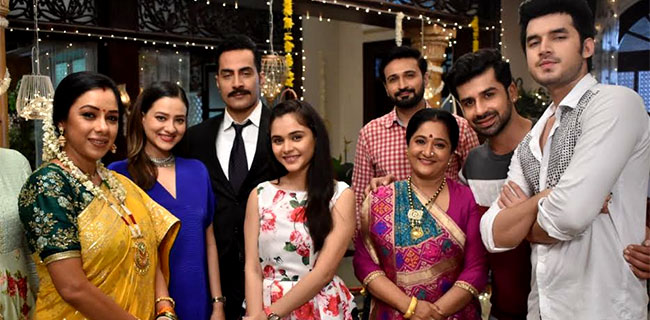
    A still from Anupamaa, the Star Plus show


    By Shailesh Kapoor


    Shailesh Kapoor

    While this weekly column has extensively covered the Hindi GEC category over the last eight years, pieces dedicated to a single show have been rare. If at all, they have been about a non-fiction show like KBC, or about a long-running fiction show like Balika Vadhu or Taarak Mehta Ka Ooltah Chashmah. Nothing launched since the start of this column in 2012 has been worthy enough for 500 words of its own. And those who follow this column regularly will know that the general sense of mediocrity that plagues Hindi GEC fiction content has been my pet peeve over the last 5-6 years.


    But here it is, a piece on a newly-launched fiction show that breaks through the mediocrity the category has learnt to unapologetically espouse over time. It’s the 10pm daily on Star Plus, and it goes by the name Anupamaa. An adaptation of a hit Star Jalsha show, Anupamaa was originally slated to launch in early 2020, but had to be deferred because of the lockdown. It was one of the first new shows to launch as things began to open up and shoots resumed July onwards. Less than three months into its tenure, Anupamaa is the top-rated show on Star Plus, more than 40% ahead of the next original show on the channel.


    Now that has happened before with some other shows too. But something a lot rarer happened this week. In the August report of Ormax Characters India Loves, a monthly character-popularity track for the Hindi GEC category, the protagonist Anupamaa has taken the second rank on the fiction list. Character popularity is the Holy Grail of GEC content. It takes months, sometimes years, for characters to build an emotional affinity with the audience. Entering the Top 5 within six months of launch is a huge achievement, and entering Top 2 within two months an unprecedented one.


    When I watched the show in its first week, my first reaction was: Wow, this looks so different from the rest of the genre. It was, in many ways, a reaction very similar to what I felt watching Balika Vadhu for the first time in 2008. Then, and even now, the Hindi GEC category has been guilty of a certain visual and thematic sameness that is omnipresent across shows, across channels. Some shows look ‘richer’ than others. But by and large, the protagonists are all in their early 20s, the costumes are fairly stock, the music largely similar too, the conflicts way too familiar, and the acting and the dialogue consistently mediocre.


    In that first viewing itself, Anupamaa seemed to belong to another space. Top performances grabbed my attention first. In particular, Rupali Ganguly as the female lead here is arguably one of the Top 3 stand-out Hindi GEC fiction performances in the last 20 years. The other distinctive feature, of course, was the age of the protagonist. In her mid-40s, Anupamaa is a mother of three grown-up children. That’s a life-stage a Hindi GEC female protagonist usually reaches five years into a show’s lifetime, after at least two leaps. Instantly, this separates the show from the rest of the lot, which are essentially romantic dramas played out in a family context. The writing seemed two notches higher than the category’s accepted level too, especially the dialogue.


    But as I started watching the show regularly, it seemed evident that this is that rare show that has a saga-like feel to it. After Balika Vadhu and Yeh Rishta Kya Kehlata Hai, no other show has a premise or a protagonist so fascinating that you know that you can do a long-running show around her, without losing the point and dragging the show meaninglessly. Already in the two months, the show has covered several social themes like patriarchy, parenting and class difference. It’s like the old days of reading a novel. The story can keep evolving, chapter by chapter, and enter different spaces. But the audience loves the protagonist(s) so much that they are always invested.


    Will Anupamaa manage that? Will it be one of the top shows in 2025 too? It’s, of course, too early to say that. But if there’s one show in the last decade that seems to have a strong foundation that longevity needs, this is it. The show’s name translates to “incomparable” in English. And unless the makers mess this one up, it holds the potential to live up to that translation over time.


    It could be a matter of introspection why such success came from a show from a regional market. Much like one can wonder why Bollywood can’t make its own Bahubali. But that’s another topic for another day.


  • Post-Lockdown Blues for Hindi GECs

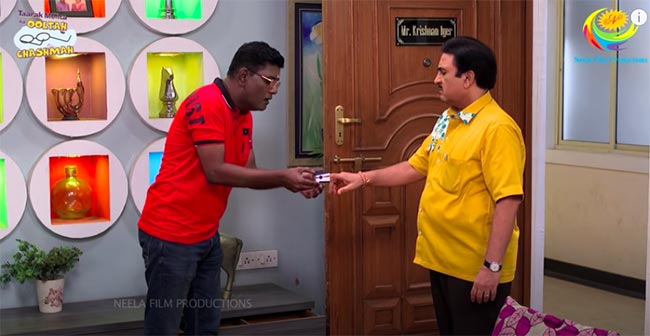
    Oximeter Check: Screengrab from a recent episode of Taarak Mehta…


    By Shailesh Kapoor


    It’s been a month since original episodes of Hindi GEC shows started airing again. The genre that survived primarily on mythology during the lockdown is now moving back to its old staple fare.


    The results of the first four weeks have not been very encouraging. Given that there are Covid-related restrictions still in place in large parts of India, and the overall TV viewing time is higher than pre-Covid, the Hindi GEC category (pay channels) has lost about 10% of its pre-Covid viewership levels despite the return of original episodes. Drop in the ratings of the top shows is particularly striking. Except Taarak Mehta Ka Ooltah Chashmah (TMKOC), which opened at pre-Covid levels upon its return, most other top shows have struggled, with some being less than 60% of their pre-Covid numbers. Long-running shows like Kundali Bhagya, Kumkum Bhagya and Yeh Rishta Kya Kehlata Hai have not got a section of their audience back, who were probably continuing only because of habit. Star Plus’ recent launch Anupamaa has emerged as the joint category leader in Urban HSM, along with TMKOC.


    The signs were ominous. During the lockdown, Ormax Media’s data suggested that only 42% of regular Hindi GEC audience are missing their favourite shows “a lot”. The category will soon face severe headwinds with IPL in the next quarter, and will have to look upto reality shows like KBC and Bigg Boss to uplift it from the precarious position it finds itself in.


    Having said that, the early success of Anupamaa is a positive development. It shows that the category discontent is not so high that a well-crafted new show that’s relevant and authentic will not find an audience. But we need more Anupamaas, and some of the upcoming launches look promising too. But the category urgently needs to shed its flab. Channels’ obsession with long-running family dramas that have long outlived their purpose is still a major villain in the 2020 Hindi GEC story.


    The other element of curiosity was to see how fiction shows integrate (or ignore) Covid in their plots. It’s been a mixed bag so far. While some shows have stayed completely clear of it, others have used token references, and a few have integrated Covid into the running plot, though not always in a way that’s sensible. To give an example (and there are a few), earlier this week, a plot point in Star Plus’ Yeh Hai Chaahatein involved the female antagonists plotting to get the protagonist out of the housing society by proving that she’s high-risk for a Covid infection. The society’s management committee comes to the protagonist’s house to insist she’s taken to a hospital or a quarantine centre. In this highly charged Covid discussion with half a dozen people, not one is wearing a face mask, making a potentially topical scene come across as fake, if not bizarre. It is this half-hearted attempt at depicting reality that creates emotional disconnect with many Hindi GEC shows.


    In sharp contrast, TMKOC has integrated Covid masterfully. For a show rooted in topicality and social reality, not recognising the Covid reality would have been a definite compromise. But it’s easier said than done. If they would have based the entire show in a Covid world, there would be limitations, related to society gatherings, functions, festivals, shop scenes, etc.


    What the makers have achieved is a fine balance, through a tried and tested device: Protagonist Jethalal’s dreams. In the three weeks on air so far, he has had two dreams (cumulative play-out of about five episodes) which tell a free-from-Covid story, while the rest of the episodes consciously recognise Covid and create genuine entertainment around it. This is how it should be done!


    With all its problems and a few silver linings, the Hindi GEC category is at a crucial phase. Something tells me the next six months may shape its future decisively.


  • The Most Successful TV Channels of the Decade


    This is the fourth in a series of six decade-ender lists in this column. The previous lists:

    The most-defining Hindi TV shows of the decade

    The most-defining Hindi films of the decade

    The most successful OTT brands of the decade


    By Shailesh Kapoor

     

    The decade of 2010-19 was easily the most uneventful decade in the history of Indian television so far. Each of the previous three decades was dotted with events that unmistakably shaped television in India. The 80s was the golden age of television content, as Doordarshan started to provide primetime programming and engaged with some of the best writing, directing and acting talent in the country for the same. The 90s saw the emergence of satellite television, which widened the options available to the audience multi-fold. The 2000s saw the daily soap movement, led by Star Plus, and then, the rise of the alternative force in Colors, which brought a unique, real and rustic touch to mass entertainment. Each of these decades had a big highlight at the start. The Asian Games in the 80s saw the arrival of the colour TV. The Gulf War telecast in the 90s, albeit niche, introduced us to the fascinating power of satellite television. And Kaun Banega Crorepati ushered in a new era in 2000.

    In contrast, the last decade (2010-19) can only be remembered for what happened ‘off-screen’. The ratings controversies, leading to the birth of BARC India, in the midst of digitisation, headlined the first half of the decade. And TRAI’s New Tariff Order was the big talking point as the decade ended.

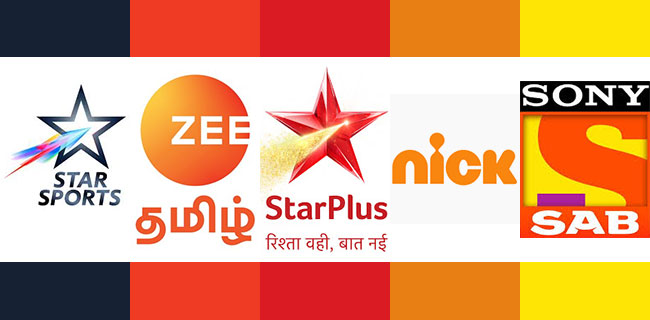
    Low content innovation and a general sense of inertia became even more apparent as digital and social media grew on the side, becoming a dominant force by the time the decade ended. Yet, some TV channels stood out, challenging the status quo and making a mark for themselves. Here’s my list of the top 5 most successful TV channels in India over the last 10 years, based on how they navigated through this tricky decade, making a mark for themselves, and their parent networks.


    5. Sony SAB

    SAB’s flagship show Taarak Mehta Ka Ooltah Chashmah (TMKOC) launched in 2008, and kept going strong through this decade. For large chunks of time over the last 10 years, SAB struggled to have a second hit show. But there were strong periods in between, when the channel managed to add fire power to TMKOC to emerge as a strong contender in the Hindi GEC category. 2019 was one such year, and the channel has been on the heels of Star Plus, Colors and Sony for the top spot, and often taken it too. SAB’s success is even more remarkable if you consider than it operates at significantly lower programming costs compared to other top Hindi GECs. TMKOC itself has gone from strength to strength, and SAB’s packaging and family-inclusive positioning are arguably the brightest and the sharpest respectively, in the genre.


    4. Nick

    In a category that’s essentially commoditised, and one flagship show is all you need to dominate the ratings charts, Nick managed to rule the roost for a large share of the decade, and often by a wide margin too. While its competition found it difficult to extend their portfolio beyond one show (e.g. Chhota Bheem on Pogo and Doraemon on Disney), Nick kept the animation mill running, launching several properties through the decade, with varying levels of success. While its 2012 launch Motu Patlu remains its biggest success story till date, the channel managed to sustain a strong second line, and showed nimble-footedness in experimenting with content shifts between the two sister channels Nick and Sonic.


    3. Star Plus

    The decade started with Colors emerging as a disruptive force in the Hindi GEC category, throwing Star Plus and Zee TV off their comfort zone with a new programming outlook. After a year or two of trying to figure out what had hit them, Star Plus found its feet back. Its ‘Rishta Wohi Soch Nayi’ campaign in 2010-11 is easily the most effective brand campaign any mass Hindi TV channel in India has ever launched. Unlike the umpteen ‘brand refreshes’ that GECs indulge in, this one was actually backed by content, ushering in a new line of shows like Diya Aur Baati Hum and Pratigya, which put strong women protagonists on the forefront, in relatable, small-town settings. In the second half of the decade, the Hindi GEC category went through a tough phase, losing ratings to regional, news and movie genres. Star Plus innovated here too, launching the ‘Rishta Wohi Baat Nayi’ campaign, signaling its focus on differentiated content that breaks the monotony of sameness. On the side, experiments like Satyamev Jayate continued, even as the channel managed to steer through many highs and lows over 10 long years.


    2. Zee Tamil

    For the first half of this decade, the Tamil GEC category was a one-horse race. Sun TV led its closest competitor Star Vijay by an embarrassingly-wide margin. The ratio of their viewership was often higher than 10:1. Zee Tamil was in a wooden spoon battle for the second spot with Star Vijay, with no hopes of catching up with the big force at the top. But somewhere in mid-2006, the channel started finding an alternative content space. It took a couple of years, but Zee Tamil became a strong contender, overtaking Sun TV in some prime-time slots, and bringing down the 10:1 ratio to 2:1, even less at times. Importantly, it altered the viewing behaviour of the category, as it made the audience realise there are options beyond Sun TV to consider. Even Star Vijay has gained because of this behaviour change. While Sun TV still ranks no. 1, it has lost about 20-25% of its viewership through the decade, even as Zee Tamil has grown by a whopping 500%+.


    1. Star Sports

    There’s so much to say about Star Sports’ dominance of the sports scene over the last 10 years that it may need a separate article some time. One can talk about the thought leadership shown in backing Kabaddi (and later soccer), or the front-footed approach towards IPL rights, or the digital strategy for sports with Hotstar, or the championing of Hindi commentary in the early part of the decade to the launch of regional channels in the latter. The long list of Star Sports’ innovations in the sports category provides a silver lining to a dull television decade. Star Sports’ much-underplayed tagline says ‘Believe’. It’s probably more a reflection of how Star looks at the future of sports and sports programming in India, than what they want Star Sports viewers to feel about the channel!


    Shailesh Kapoor is founder and CEO, Ormax Media. He writes on MxMIndia every Friday. His views here are personal



  • Star Plus announces season 2 of TED Talks

    By A Correspondent


    Star Plus has announced the second season of ‘TED Talks India Nayi Baat,’ a collaboration with TED.


    The show will be aired over weekends in Hindi, English, Tamil, Bangla and Telugu across Star Plus, Nat Geo, Hotstar and Star World, starting November 2.


    Sanjay Gupta

    Said Sanjay Gupta, Country Manager, Star & Disney India: “With TED Talks India Nayi Baat, our goal is to showcase, celebrate and support the unsung visionaries who are working towards making a positive impact on society. I believe that a nation is built on the ideas and values of its people. We hope that the ideas and work of our featured speakers inspire our youth to don the role of a social change agent.”


    Added Chris Anderson, Head of TED: “India has a spirit of optimism and continuous evolution that’s beautifully captured in this series. From speakers on the TED stage to hundreds of TEDx events organised across the country, TED has had a longstanding relationship with India. We’re thrilled to continue to collaborate with Star Network to showcase the brilliant ideas that can shape the India of tomorrow.”


  • Star network to showcase India’s mission to the moon

    By A Correspondent


    India will be carving a place for itself among the world’s space faring nations with ISRO’s Chandrayaan 2 landing as it attempts to become the fourth country to land on the moon after the former Soviet Union, US and China. The Star India channels National Geographic, Star Plus, Star Bharat and Hotstar have come together to telecast the Chandrayaan 2 landing to viewers across 100+ countries. The telecast will start from 11.30pm today (Friday, Sep 6)


    “This event will be a historic and immensely proud moment for India. What ISRO and the team of scientists have achieved is nothing short of spectacular. The Star network believes in inspiring its viewers with path breaking content and we are delighted to provide our audience with the chance to witness the historic moment live,” said Sanjay Gupta, Country Manager- Star & Disney India.


  • September 2018: Kasautii GEC Ki


    By Shailesh Kapoor


    September 2018 promises to be a fairly eventful month for the Hindi GEC category. Using the word “eventful” for this category is unusual, giving the inertia we have seen it display over the last 3-4 years. But at least in relative terms, there’s a lot more happening this month than in any typical month.

    The big highlight is the return of the iconic Kasautii Zindagii Kay on Star Plus. The channel gave several hits in the 2000-2005 period, most of which were produced by Balaji Telefilms. This is the first franchise attempt at recreating that success, more than a decade later.

    The campaign has registered well so far, tracking higher than established non-fiction shows like KBC and Bigg Boss, which is a rare feat for a fiction show to achieve nowadays. The show is still more than two weeks away from its launch, but if it opens well and then goes on to sustain, we could see a barrage of franchise launches on GECs.

    But let the irony in Kasautii’s case not be lost. The K-serials were much-maligned by consumers in the late 2000s, paving way for Colors and forcing Star Plus to relook at their offering. A decade later, the second season of one of those much-maligned serials is the most looked-forward-to fiction launch. Clearly, what has happened in between, especially in the last three-four years, has to be very poor for this reversal of perception to happen.

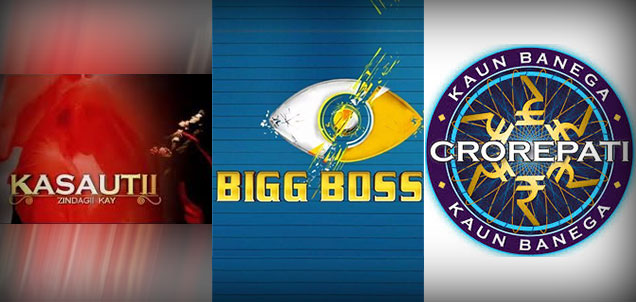
    The other big highlight of this month is the launch of two big reality shows. KBC went on air this week, while Bigg Boss launches next weekend. There was not much I thought of this, till last night’s announcement by Colors that they have relooked at the Bigg Boss weekdays slot, and the show will now be aired at 9pm on all days, instead of the usual 10.30pm on weekdays and 9pm on weekends.

    Whatever thinking led to this after-thought is good thinking indeed. Fiction has been struggling across the board, and Colors’ recent fiction launches have been, at best, average in their performance. Putting a marquee property in the heart of the primetime is a confident move that only reinforces how Hindi GECs have started looking at non-fiction as stronger bets than fiction.

    Bigg Boss will take KBC head on. Two or three years ago, this would have been a no-contest, when KBC was a big family show and Bigg Boss a niche youth show. But times have changed. Acceptance for ‘edgier’ content has increased, be it in the kids’ category with shows like Shinchan finding morefavour, or in GECs, with Khatron KeKhiladi, Bigg Boss and their ilk growing into bigger versions of themselves. It will be a contest to watch out for.

    It would have been even more fun if Kasautii was being launched at 9 PM too. But that’s not the case, as the show gets a strong early-prime slot (8 PM). The channel has been proactively replacing its non-performing assets with new ideas over the last few weeks, and the results are beginning to show.

    Will Kasautii be that one elusive 4+ rating show that the category lacks today? We will know only over the next few months. Till then, let non-fiction sail the category through troubled times. Yet again.

  • Star Plus celebrates ideas with TED Talks India Nayi Soch

    By A Correspondent


    Star Plus and TED will launch the limited edition series of Ted Talks India Nayi Soch, from December 10. It will air at 7pm on Sundays. And for a change, this press release from Star India has some quotes. NayiSoch?


    Said Gayatri Yadav, President, Consumer Strategy and Innovation, Star India: “It’s an important and pertinent message from the brand that encourages new thinking (Nayi Soch), about how a seemingly ordinary idea comes with the immense power to transform lives.”


    Added Narayan Sundararaman, Business Head, Star Plus: “Ideas are often dismissed as figment of peopleÂ’s imagination. Yet, every great achievement, discovery or invention starts with an idea. ItÂ’s time we put a premium on ideas. All of us at some point in time or the other have been victims of our ideas being killed or have been responsible for killing ideas. These simple slice of life films bring out this point vividly and with a disarming charm. The films have been conceptualized by the creative agency Leo Burnett India and directed by Nitesh Tiwari of ‘Dangal’ fame”.


  • Star Plus partners with Sujay Ghosh for short films

    By A Correspondent


    Sujay Ghosh

    Star Plus has signed on filmmaker Sujay Ghosh to make three short films exclusively for Star Plus. The telefilms will be full of unanticipated turns and twists, which is signature to Ghosh’s style of filmmaking, notes a communique, adding that the films will be aired during the festive season later this year.


    Said Narayan Sundararaman, General Manager, Star Plus: “We at Star Plus strive to make content that is compelling for our viewers. To make this festive season even more exciting, we are partnering with Sujoy Ghosh, one of Indias iconic filmmaker for three short films. Sujoy Ghosh, whose movies are known for its gripping content, will surely enthrall our viewers with his fresh and unique offering.”


  • Kinetic wins big mandate from Star

    By A Correspondent


    Outdoor major Kinetic is on a winning spree. If it’s not awards, it’s clients. In a fiercely fought multi-agency pitch, Kinetic has bagged a “big mandate” from Star India.


    The WPP-owned agency has been appointed OOH agency for Star Plus, the entire Star Sports bouquet and the corporate business of Star India. This is a major win for Kinetic as it gives us invaluable experience in the entertainment and media business, said Suresh Balakrishna, CEO South Asia and Middle East.“We believe that we won it on the back of our logical strategic approach, creative output and most importantly, strong compliant, transparent processes,” said Balakrishna.