Tag: Shailesh Kapoor

  • Shailesh Kapoor: Elections, Cricket& More: The Year of Male Viewership?

    By Shailesh Kapoor


    A little television trend has been developing over the last two years, of which (I suspect) the current TV ratings system has no solid evidence. It is about the increasing power male viewers are wielding while controlling the remote.


    Multiple factors have contributed to this slow but definitive shift over time. The socio-economic aspect is perhaps the most intriguing, but also the most arguable. As gender inequality becomes less stark in urban India, because of higher literacy rates in the new generation of women and growth in the still-miniscule population of working women, female viewers are beginning to access more avenues of engagement and entertainment. As their dependence on television, currently too high to be termed healthy, reduces, so will their desire to control the remote at all times.


    It must be mentioned that there is currently no quantification available for the trend above, and hence, the speed of this change is difficult to ascertain. But signs of change are evident, especially in post 9pm consumption behaviour. That the daily serials (barring a couple) have not managed to reinvent at the desired pace has contributed significantly to bringing in this change as well.


    2014-15 may just end up being a year where we will see acceleration on this aspect like never before. The T20 World Cup starts this weekend. An IPL is round the corner. There is a busy cricket season round the year, ending with the Cricket World Cup in Feb-March 2015, which India will play to defend.


    But the big event of this year comes in the form of the General Elections. Chaos and theatrics are par for the course in what are set to the messiest elections ever in India. News channels have been capitalizing the goings-on well. And we know it’s only the start. If we have a hung verdict, the drama may last well into June, even July.


    Cricket and elections, coming together, are going to create unprecedented disruption in viewership patterns. Over three months, this can impact habits enough to create an impact over a long run. New daily soaps of the staple variety have anyway been opening low and struggling to find loyal audiences. The GECs will find it progressively difficult to change that this year. I suspect they are left with little choice but to innovate, on stories as well as story-telling.


    Is a gender-balanced viewership a good thing? Definitely. Gender equality is good in everything. Period. And television viewership should be no exception. We are still a few years away from this “equality” in India, but this year can be the watershed in many ways.


    So, all you men, hold on to your remotes this season and be a part of the change!


    TV Trails is a weekly column written by Shailesh Kapoor, founder and CEO of media insights firm Ormax Media. He spent nine years in the television industry before turning entrepreneur. The views expressed here are his own. He can be reached at his Twitter handle @shaileshkapoor


     

  • Oh Womaniya: From Salma Sultan to Rakhi Sawant


    By Shailesh Kapoor


    It’s Women’s Day this Saturday. The importance of women characters on Indian television is well understood, especially over the last two decades. Last month, I wrote about our daily soaps being unfairly branded as “regressive” (Read here), especially because the lead women characters in these serials are, in fact, strong and progressive.


    But there’s a world of Indian television beyond the daily soaps and their characters. Here’s my list of five women who created a strong impact on Indian television. The list, presented in chronological order, does not include women whose impact largely came via specific characters they played. Also, it does not include women behind the scenes, which is perhaps a much easier list to generate, and a longer one too, albeit with Ekta Kapoor firmly on top.


    Salma Sultan: If you are old enough to have watched Indian television in the pre-satellite era, the image of Salma Sultan reading news on Doordarshan is likely to be still fresh in your mind. Doordarshan had many newsreaders, but Salma Sultan brought with her a combination of grace and glamour like no other. Her sense of style, marked by the rose and the saree drape, inspired fashion choices till at least the mid 90s. More importantly, she encouraged several young women to take up newsroom jobs in a conservative Indian back in the 80s.


    Neena Gupta: All other female actors, ranging from Smriti Irani to Sakshi Tanwar, are known for only one or two iconic characters. Neena Gupta, the only soap star in this list, broke that ceiling. Her identity today goes beyond any one or two serials she acted in. Ketaki in Khandaan or Priya in Saans or the reluctant host of Kamzor Kadi Kaun may eventually be forgotten, but the stamp of Neena Gupta on Indian television is indelible.


    Simi Garewal: The ‘Lady In White’ hosted a show that was loved and hated in equal measure. Celebrities sharing their deepest secrets and crying on Rendezvous With Simi Garewal was not an uncommon occurrence. Speak, so I can see your soul, the show’s theme song aptly said. With time, Garewal lost relevance, with the new generation audience looking for more spice than aspiration in celeb chats (a la Koffee With Karan). But till about a decade ago, her stature and her success were unmistakable, as apparent in the exclusive party she threw to celebrate 100 episodes of her show back in 2004 (Watch here).


    Rakhi Sawant: If there were a ranking on ‘class’, Simi Garewal and Rakhi Sawant would fall at the two ends. But with her inimitable style and a carefully cultivated art of sounding stupid, Rakhi Sawant managed to enthrall audience show after show. An episode in the first season of Bigg Boss, where she cried to the point of fainting because her ‘favorite mug’ was broken accidentally by another housemate, remains one of most dramatic Bigg Boss episodes till date. She could do crazy things like walk out of a reality show finale (Nach Baliye) if she did not win. Rakhi Ka Swayamwar remains the high point of her eventful TV career.


    Gauhar Khan: Gauhar Khan’s true impact on Indian television will be known in a few years’ time. But she makes it to this list for being topical. She exuded immense confidence and personal character in the recently concluded Bigg Boss season. She could take on Salman Khan and even come out as the more reasonable person in the argument. The shrill voice and non-stop chatter may have put off some viewers, but Gauhar Khan made an impact because she emerged as the face of the modern urban Indian woman in this digital generation. She remains the only Bigg Boss contestant across seasons to have crossed Salman Khan’s popularity (Source: Ormax Characters India Loves).


    TV Trails is a weekly column written by Shailesh Kapoor, founder and CEO of media insights firm Ormax Media. He spent nine years in the television industry before turning entrepreneur. The views expressed here are his own. He can be reached at his Twitter handle @shaileshkapoor


  • Shailesh Kapoor:Getting ready for Satyamev Jayate 2.0

    By Shailesh Kapoor


    Aamir Khan’s labour of love (but one that comes with a hefty paycheck too), Satyamev Jayate, makes a comeback this Sunday. In its first season in 2012, the show made a sizeable impact on the socio-political environment. In the process, it managed to become perhaps the only television property in the last twenty years whose success of not measured entirely or primarily through its viewership ratings.


    We are in the election year, and coming with short, monthly seasons of 4-5 episodes each, starting with one in March, seems to be a good move. In the last season of 14 episodes, there was a sense that the show had become a blind spot in its second leg. There’s only so much awakening and inspiration one can take at a time, after all.


    I have to admit I’m a tad disappointed with Sunday 11 AM continuing to be original slot for the show. While there may be a valid ‘feel’ argument, a property of this nature needs a wider available audience. 8 or 9 PM would achieve that better. Even at a feel level, noon will deliver a higher reach without compromising on the feel. I’m sure Aamir and Star Plus had their reasons.


    Satyamev Jayate continues its tradition of not using show footage in the launch campaign. This season’s campaign, built around ‘Jinhein Desh Ki Fikr Hai’, stands out for its exceptional clarity of message and its consistent tone across ads. Rarely do we see TV show launches executed as ‘ad campaigns’. In fact, even in channel parlance, they are called ‘launch promos’ and not ‘launch ads’. Just nomenclature, or a deep-seated issue?


    When I see a good campaign based on atypical viewer segmentation, my eyes light up. The researcher in me has been wondering: What percentage of our TV audiences are the ones who have a sense of ‘fikr’ about the ‘desh’? And how does one measure this accurately, without relying on claims? For example, do most viewers of Arnab’s show (in whose breaks the Satyamev Jayate campaign is running on very high visibility) care for the country? But we digress.


    Despite the good campaign, the show is set to have a modest start from a viewership perspective. There are bound to be format tweaks that create a sense of freshness and build on learnings of the first season. For example, there is a definite hint of higher viewer interaction this season in one of the ads.


    In the pre-satellite television and pre-measurement days, there was certain diversity in television content. TV ratings are needed for transaction. But the biggest collateral damage they have caused in India is homogenization of content.


    Thank you Star and Aamir Khan, then, for challenging that status quo in 2012, and now coming back with a new season well knowing that blockbuster ratings are out of reach here.


    TV Trails is a weekly column written by Shailesh Kapoor, founder and CEO of media insights firm Ormax Media. He spent nine years in the television industry before turning entrepreneur. The views expressed here are his own. He can be reached at his Twitter handle @shaileshkapoor


  • Shailesh Kapoor: Fact Check: Daily Soaps – Regressive or Progressive?

    By Shailesh Kapoor


    For the last 15 years, a word has been used ad nauseam to describe weekday fiction programming on Hindi GECs: regressive. I’m not sure who started this usage. Perhaps it was the English print media. But over time, it’s become a part of popular lingo, not just in the media but within the industry too.


    A condescending description of GEC programming, with a casual use of the word “regressive”, is a common occurrence in a niche channel or a media agency interaction. Implicit in this description is the assumption that the women who watch daily shows on Hindi GECs are regressive in their thinking and actions.


    Nothing can be more away from the truth. There are some shows (about 30%) that may portray a regressive mindset, but they are the low-performing ones. The majority, and the top success stories, have worked on the opposite premise – that of progress and change. And that also describes the need they fulfill for their target audience – to evolve and progress with the changing times.


    Let’s take the top two shows of the current times, for example. Diya Aur Baati Hum is the story of a fairly conservative family in a Rajasthan village. Watch the show passingly for five minutes (which is how non-GEC industry folks watch GEC fiction) and you may end up ascribing the words “rural”, “regressive” and “old-fashioned” to the show. But you are reacting only to the setting, not the story.


    The story of Sandhya’s journey to fulfill her dream of becoming an IPS officer, and her almost-illiterate husband supporting her in this journey, oozes of progress and change. After two years of struggle, Sandhya is now undergoing IPS training. The out-of-home episodes, playing out currently, are touching new viewership highs.


    Jodha Akbar is a romance set in a period era. But it is essentially a Taming Of The Shrew story, where Jodha, the most popular character on Indian television for the last two months, is playing a fearless heroine who stands for the truth. Her ‘historical’ character is loaded with 21st century aspirations. Confidence and self-respect are strong values her character drives amongst viewers who are seeking both these values in their personal lives too, more than ever before.


    Even in the past, from Tulsi to Anandi, strong and progressive women have been the backbone of blockbuster shows. How is the idea of “regressive” justified, then? Evidently, those who use that word use it because it is fashionable. For me, any usage of “regressive” is a cue that the person on the other side does not have enough knowledge of GEC fiction content in the first place.


    I’m certainly not suggesting that all is hunky dory with GEC fiction. There are several issues. Stories dragging and slowing down in pace is an issue of epidemic proportions. The look-feel has not progressed much over the last six years, barring Mahabharat, which is in another production league altogether. And I agree with what Anurag Kashyap said in a panel discussion about a year ago: “My problem with TV serials is that everything looks so scripted.” Essentially, he points out bad direction and unimaginative execution, in terms of acting and treatment. I have to agree at least 50% serials suffer from this issue.


    There may be enough and more issues, but the “regressive” tag is a big scam our elite media managed to pull off. India is a country of 1.2 billion people. TV has played a proven role in the progress and evolution of Indian women at large, over the last two decades. Undermining this achievement is nothing short of misrepresentation of facts.


    TV Trails is a weekly column written by Shailesh Kapoor, founder and CEO of media insights firm Ormax Media. He spent nine years in the television industry before turning entrepreneur. The views expressed here are his own. He can be reached at his Twitter handle @shaileshkapoor


  • Currency Research Crisis: IRS Today, BARC Tomorrow?


    By Shailesh Kapoor


    The new IRS results have thrown the print industry in a tizzy. The change in research design, and a fundamental one at that, has led to drastic shifts in results, in turn influencing potentially drastic shifts in ad revenues over time. While some of the concerns expressed by the print industry areabout the credibility of the data, almost 80-90 percent of the concerns can be answered by the way of change in the research design.


    But print companies (at least the publications impacted negatively) are right in saying that the research design change is not their problem. For them, IRS is IRS is IRS. If MRUC decided to refurbish its research design, and that led to a sea change in results, are they implying that the earlier results, which have been used as currency all these years, were “inaccurate”?


    Seeming “anomalies” like Hindu Business Line showing higher readership in North-East than Chennai weaken the MRUC argument considerably, by creating a sense of “flaw” around the execution of the design on field. But the real issue still revolves around a fundamental design change.


    In six years of extensive media research, I have realized the futility of even attempting to use one research to forecast the results of another research. The error margins can multiply like rabbits, and before you know, you are handling senseless data in an attempt to achieve research-to-research parity.


    For example, there are channels whose viewers we just don’t find in field research. But their viewership data suggests they exist in sizeable numbers, much more than some competition channel’s viewers, who are much easier to recruit on field. Like a radio station in Delhi is rated high by RAM, but in extensive radio research in the market, finding its listeners has always been a challenge.


    Every research has its design, based on certain underlying assumptions. And this design has a large role to play in how the results play out. There is a fairly strong element of “lottery” when the design changes. Some players are bound to benefit and some bound to lose out. Who’s on which side of this lucky dip is anybody’s guess, till the first results of the new design come out.


    When the first BARC data is released later in 2014, this situation is bound to repeat. Some channels are bound to gain and some bound to lose vis-à-vis their TAM performance. It will be easier for BARC for two reasons. One, the TAM design has been under attack anyway, so even broadcasters who show a loss of viewership will be cautious in protesting. Two, BARC is industry-backed in the true sense, and hence, voices of dissent may be handled behind closed doors in most part.


    Yet, overnight shift in numbers can create sufficient market disruption and loss of morale in the ill-affected companies. To that extent, a ratings-dark period can provide a silver lining. If new data shows major shifts after a six-month blackout, it will be difficult to isolate the impact of the shift as a result of research design change vs. a real shift in the viewership of the research universe.


    Currency research has widespread business impact and should always be packaged with a ‘handle with care’ board. Perhaps this is where MRUC went wrong. This is where TAM certainly went wrong.


    A lesson for BARC to learn?


    TV Trails is a weekly column written by Shailesh Kapoor, founder and CEO of media insights firm Ormax Media. He spent nine years in the television industry before turning entrepreneur. The views expressed here are his own. He can be reached at his Twitter handle @shaileshkapoor


  • Shailesh Kapoor: Rahul Gandhi and We, the Interview-Starved Nation

    By Shailesh Kapoor


    Rahul Gandhi’s interview on Times Now, telecast first on Monday, has dominated the news landscape this week. Rival channels too were forced to cover the interview extensively (without video footage), given its importance in the year of the General Elections and also the reactions some of Gandhi’s comments evoked, especially those on the 1984 and 2002 riots in Delhi and Gujarat respectively.


    Much has been written about how dysfunctional the interview was, given that most answers did not match the questions they were answers to. As an exercise, I read the transcript, published in The Times Of India on Tuesday, in a read-a-random-question-and-then-read-a-random-answer way, and it made no less sense than the original transcript read in sequence.


    It would have clearly been Rahul Gandhi’s decision to do a big TV interview. I think he was ill-advised about the journalist he should choose for it. When you have nothing specific to say, Arnab Goswami is the last person you want around you. With no room given to explicate, Gandhi’s ideas came across as inward and theoretical, than pragmatic and action-oriented.


    But what has fascinated me about the interview is the ability of one interview to generate so much commercial media and social media talk, especially when nothing new was said in it anyway. It is not difficult to understand the frenzy. All you need to think is: When did I last see a proper, classical interview on television in India?


    My attempt to answer that question was rather embarrassing. All I could think of was Koffee With Karan interviews, Bollywood interviews on a dozen Zoom-like channels, sportsperson interviews and Arvind Kejriwal. A few corporate bigwigs (Ratan Tata) and foreign leaders (Aung San Suu Kyi) from recent times then came to mind. And that was the end of my interview recall.


    Most Bollywood interviews are not even interviews. They are casual chats, often with a limited purpose, like promoting a film. The reluctance of the political class to give interviews (not counting short chats with journalists used to clarify their position on an issue) is well known.


    In 2012, Narendra Modi walked out of a Karan Thapar interview in the first three minutes, unhappy with persistent questioning on the 2002 riots (Video). Prabhu Chawla, one of the most seasoned journalists of our times, had a tough time getting political heavyweights on his immensely popular show Seedhi Baat, and had to resort to entertainment celebs (all the way to Rakhi Sawant) to keep the show running.


    The reluctance of the political elite here seems to be a curious mix of arrogance and insecurity. Arrogance that makes them feel they are not answerable to people at large, and insecurity arising out of lack of confidence, in their work or speech or both. That it has happened over almost three decades now is another testimony to the well-accepted fact that we don’t have visionary leaders anymore.


    Much as Rahul Gandhi made a joke of himself on the interview that he was hoping to use to build his image, some credit must be given to him for at least exploring the idea of an interview.


    Many channels have been sending covert and overt feelers to political parties for a US-Presidential-style televised debate ahead of the General Elections, between Modi and Gandhi. It’s just wishful thinking. Even if we get Modi to give an 80-minute interview like Gandhi, we would have come a long way in breaking the tradition of media snub that senior politicians have mastered in this country.


    TV Trails is a weekly column written by Shailesh Kapoor, founder and CEO of media insights firm Ormax Media. He spent nine years in the television industry before turning entrepreneur. The views expressed here are his own. He can be reached at his Twitter handle @shaileshkapoor


  • Ready for a ratings-dark year?

    By Shailesh Kapoor


    The threat, and I use the word carefully, that we may end up being in the middle of a fairly long ratings-dark period in 2014, is now a real one. Kantar has taken the Indian government to court over the cabinet guidelines for TV ratings agencies. The guidelines have a shareholding pattern clause that would make TAM (in which Kantar, a WPP company, has a 50% stake) an ‘illegal’ ratings provider less than a month from now.


    I wrote two weeks ago on why I’m no fan of TRAI or I&B ministry interfering in the broadcasting ecosystem on the topic of ratings. But now that they have, if Kantar’s case is dismissed, we may have a situation unlike anything seen before – a running, sprawling industry will have no viewership measurement. In effect, it will have no currency to sell in.


    This is chaos of a magnitude far higher than what happened in 2012, where ratings were held back for nine weeks, but were still being recorded, and hence, eventually released. Here, we are staring at a no-measurement situation, not just a no-reporting one!


    We are in that part of the year when a lot of annual deals are signed. Typically, data from April 2013 till date can be used to arrive at cost benchmarks for these deals. The real challenge will be post-evaluation of actual deliveries. There could be nothing to evaluate at all.


    But the big element of chaos will come via specials and new launches. Sporting events like the IPL, the T20 World Cup and the FIFA World Cup are scheduled between March and July this year. We are also likely to have a General Election without measurement. How’s that as an idea to call a ceasefire in the news channels war? I’m not even getting into the innumerable fiction and non-fiction show launches that happen every month across 100+ channels.


    How will the broadcasters respond if this reality of no-ratings dawns upon them? I’d like to assume that most would want to keep a close eye on their performance through alternative methods, with the understanding that no magic is going to happen overnight when the BARC ratings start later this year.


    Putting monitoring mechanisms is not very difficult. Tracking day-after recall is a good indicator of directional movement of consumption of any channel or show. Many broadcasters used it effectively even during the nine-week ratings hiatus in 2012. For example, Madhubala’s recall doubled from 5% to 10% over that period. The rating averaged 2.5 TVR before the blackout, and 4.3 TVR in the week after the blackout. Hence, an accurate sense of significant positive movement was captured during the blackout.


    So, I believe the content and marketing teams can still survive this period, albeit with a dash of trepidation. The real issue is on the buying side. Media planning solutions are more complex than just programme and channel sampling measurement. And a currency research can be replaced only by a currency research. This is where I fear all hell may break loose. Though, it may also mean that we have the classical buyer-seller market, where negotiation skills and enterprise become the deciding factors.


    I’m still hoping a solution is worked out, either in the court or outside court. I&B has been making some fairly strong comments on why they needed to do what they did, without having to wait any longer. The question they should also ask is: At what cost?


    Whatever happens, be assured that there will never be a dull moment over the next 12 months. Fasten your seatbelts!


    TV Trails is a weekly column written by Shailesh Kapoor, founder and CEO of media insights firm Ormax Media. He spent nine years in the television industry before turning entrepreneur. The views expressed here are his own. He can be reached at his Twitter handle @shaileshkapoor


  • Shailesh Kapoor: 2014-15: Time for Hindi Non-Fiction Overhaul

    By Shailesh Kapoor


    While fiction has driven the core viewer base of Hindi GECs over the last two decades, non-fiction programming has gained increasing importance over time. Being celebrity-centric, non-fiction content in India is expensive. But its ability to get new audiences to a channel, and its ability to create excitement in the advertiser community, are reasons enough for channels to invest in this category of content aggressively.


    But 2013 has not been the best year for non-fiction content. Many heavyweight shows have struggled to perform, despite being successes in their previous seasons, some as recently as 2012. Shows that had seasons averaging 2.5-4 TVR have struggled to cross the 1.5-2 TVR mark in 2013-14.


    Examples can be found in plenty. KBC didn’t deliver in its seventh season. Currently on-air shows NachBaliye and Dance India Dance have been at viewership levels of about half their previous seasons. Sa Re Ga Ma Pa, a pioneering non-fiction format, struggled to make any impact whatsoever in its last season that ended in Jan 2013.


    Some of the relatively younger formats (in terms of their on-air existence) such as India’s Got Talent, have done better. But otherwise, the writing seems clearly on the wall. Traditional non-fiction formats may not be here to stay.


    You can attribute the failure of one season of a successful format to content execution. There have been non-performing seasons of Sa Re Ga Ma Pa in the past too, where the issues were evident at the jury composition level itself. But the show could bounce back in the following season after making corrections.


    But the non-performance of the big daddies over the last year is certainly not attributable only to content. NachBaliye, for example, has the same format, anchors, jury and treatment style as the last season. Yet, it is rating 40% lower this time, on the same platform in the same slot.


    So what’s changed over half a decade? The answer is: A generation. It is well-researched that non-fiction’s core audience are the youth (though KBC has stood out as an exception to that). If we take 20 as a reasonable age of the bull’s eye audience of most non-fiction formats, and juxtapose it with the marriageable age in India, we get this fascinating piece of insight: That many early adopters of non-fiction shows that went on-air in India in 2006-09 would have got married in the last two years. (In case you are unaware of the dramatic impact of marriage on TV content preferences of an Indian viewer, I urge you to explore this fascinating subject).


    The new core audience of non-fiction programming today is someone who was a teenager (13-16) when these formats first went on-air. These teenagers are now into college, and how many college students cling onto what they thought was cool in their school days?


    Why would it suddenly all show up as an issue in 2013? Difficult to say, but the idea of 2013 being a tipping point is plausible.  After all, non-fiction content really gathered steam in India in 2006, and hence, the seven-year generation rule would suggest that 2013 was set to be the critical, watershed year.


    I’m sure the leading channels will find the solutions over the next year or two, with a mix of new formats and refurbished versions of the existing ones. The one who does it the best will have a lot to gain.


    A chapter of non-fiction content in India has closed, and a new one is opening up. Let’s now wait to find out who the authors are.


    Shailesh Kapoor is founder and CEO of media insights firm Ormax Media. He spent nine years in the television industry before turning entrepreneur. The views expressed here are his own. He can be reached at his Twitter handle @shaileshkapoor


  • Shailesh Kapoor | TV Ratings: Take It Easy, TRAI. Come Soon, BARC

    By Shailesh Kapoor


    The words that best describe the TV ratings scenario in India over the last year are confusion and uncertainty. TAM has been under constant attack, for mostly right and some wrong reasons, for the last two years in particular. BARC has been moving ahead at good pace to bring in a neutral, more robust ratings measurement system in India, which we hope sees the light of the day before 2014 ends.


    With BARC round the corner, TAM is virtually on a time bomb, in the last leg of what has been a rollercoaster ride of almost two decades. Trust TRAI to add to the confusion. The regulatory body has come out with guidelines for ratings agencies in India, to ensure fair and accurate measurement.


    You can’t fault the intent behind most of the TRAI guidelines. They seem designed to address the concerns of broadcasters and advertisers in all earnestness. But wasn’t BARC created towards exactly the same purpose? Surely, TRAI should be aware of what BARC is hoping to achieve and how the progress is going. The guidelines, while well-intended, have a “meddling” feel to them, which I fear may slow down BARC’s progress.


    Take the point on sample size for instance. TRAI guidelines say that the minimum panel size should 20,000, and should be increased by 10,000 every year till it reaches a figure of 50,000. Correct as this may sound, this guideline challenges the idea of a free market, where the panel size would be an outcome of what the stakeholders are willing to pay for the service. Will TRAI subsidize the balance panel if the industry is willing to pay only for 30,000-40,000?


    Then there are some micro-level points that TRAI could have easily stayed away from, such as defining the panel rotation rate at 25% per annum. If they were indeed stepping into the domain of research design, they would much rather have put down the most glaring gap that exists as of now, whereby error margins are not reported or published.


    There is a guideline that suggests that I&B ministry and TRAI can audit the systems of a ratings agency at any point of time. I don’t need to spell out how this can fast turn into a bureaucratic tangle, and encourage corruption.


    Another vaguely-worded guideline says ratings should be “technology neutral”, in that they should be able to address delivery platforms like cable, DTH, terrestrial etc. Never before has an “etc” interested me so much. Does it include Internet, mobiles and DVRs? If yes, we are in for a challenge for another degree altogether.


    The “toll free number for complaint redressal” is the comic relief in the guidelines. Imagine a Thursday morning when your show opens below your expectations and you get a research executive to call the toll free number to “complain”. That’s a phone call I’d love to hear!


    Dear TRAI, take it easy. TV Ratings is a private affair after all, and the market will find its answers.


    Dear BARC, come soon now. And till you come, keep the announcements going. There is a whole industry waiting with bated breath.


    Shailesh Kapoor is founder and CEO of media insights firm Ormax Media. He spent nine years in the television industry before turning entrepreneur. The views expressed here are his own. He can be reached at his Twitter handle @shaileshkapoor



     

  • Bull’s Eye for Ormax’s ‘First Day Box Office’ forecast tool

    By A Correspondent


    Media insights firm Ormax Media has achieved 100% accuracy in its first-day box-office forecast of new Hindi films in December 2013, as per a communiqué. The proprietary forecast model FBO (First-Day Box Office) had forecast the opening day domestic box office collections of all the films released in December 2013 and the first week of January 2014.


    FBO is a part of Ormax Media’s film awareness tracking product Ormax Cinematix, which has been used by various studios in the film industry since 2010 to track their marketing campaigns and take corrective action towards achieving a higher opening at the box office. The FBO Model was included in Ormax Cinematix from September 2012. It defines accuracy as ‘within 10% or within Rs 50 lakh of actual box-office collection’.


    Shailesh Kapoor

    Speaking on the achievement, Shailesh Kapoor, CEO – Ormax Media, said: “We have put in significant effort in making the FBO Model more accurate over the last six months. Ormax Cinematix now covers 29 markets, instead of 19 covered earlier. We have also created robust benchmarks for various extraneous factors that can affect the opening of a film and have incorporated them in the model, such as impact of festivals, holidays, cricket matches, cold wave and examinations. These efforts have borne fruit and we have got every single film right since the release of R… Rajkumar in the first week of December.”


    The FBO forecast for Dhoom 3 was Rs. 32.5 crore, within 5% of the actual collections of Rs. 30.9 crore. Other significant forecasts in this period have been R… Rajkumar (FBO 8.3 cr, Actual 8.8 cr), Jackpot (FBO 1.0 cr, Actual 1.0 cr) and Sholay 3D (FBO 1.2 cr, Actual 1.25 cr).


    Added Mr Kapoor: “Eight studios are annual subscribers to Ormax Cinematix and FBO, and many other films use the product for individual film releases. The industry has supported the product wholeheartedly for almost four years now. Their constant feedback has helped us make improvements in the product and the FBO Model, resulting in high accuracy levels. While no forecast model can guarantee 100% accuracy, we are confident of maintaining very high accuracy levels on FBO in the months to come.”

  • Kejriwal Is News, News Is Kejriwal


    By Shailesh Kapoor


    On Koffee With Karan last weekend, a seemingly innocuous question left Varun Dhawan and Alia Bhatt stumped. When asked to name the President of India, their answers were Manmohan Singh and Prithviraj Chauhan respectively. If they were made to sit and watch news channels for a week as punishment, their answer would have probably changed to Arvind Kejriwal.


    Why just Dhawan and Bhatt? The way our news channels are covering Kejriwal these days, even the aam aadmi can be excused for believing that Kejriwal has replaced Manmohan Singh as the Prime Minister of India.


    2014 has arrived. We are in the year of the General Elections. Every political news story, across channels, is invariably trying to find a link with the General Elections. The news media have three poster boys in this pursuit: Narendra Modi, Rahul Gandhi and Arvind Kejriwal.


    Narendra Modi’s speeches are interesting, bordering on mild entertainment, and hence make for good live coverage. Rahul Gandhi makes news for leaving his party wondering if he’s on their side. His “personal” views may be heartening, but they come across as pontification at most times.


    Faced with entertaining but stereotypical competition, Arvind Kejriwal has managed to create a league of his own. A new style of governance is on display. It’s like Anil Kapoor’s Nayak playing out in real life. Even Salman Khan is creating aam aadmi songs against corruption. Idea created a commercial within days of AAP going to the people of Delhi for a referendum on whether they should form the Government in the capital. ‘What an idea, Sirji’, it acknowledges.


    It is easy to understand why Kejriwal and AAP have caught our fancy. It’s a radical departure from the politics we have all seen for years on end. From politics of greed, arrogance and corruption, we are now seeing the virtual other end. We would have been excused for thinking this happens only in movies. Till about a month ago, that is.


    The Delhi Government is getting coverage even the UPA Government at the Centre has rarely got. In the debate on the trust vote, Dr Harshvardhan, whom Arvind Kejriwal certified as a good man in the wrong party (BJP), commented on how even he has taken the Delhi Metro several times, but has not used it as a photo-op.


    But isn’t that precisely the point? What’s a “photo-op” to Dr Harshvardhan is “innovation” to the rest of the country. Tokenism and symbolism may come across as shallow words, but they hold so much relevance in this context. By traveling in his Wagon R and declining a luxurious bungalow, Kejriwal is giving messages, however symbolic, that may have far-reaching consequences in the shaping of the history of our polity.


    AAP is in a honeymoon phase with the media right now. It is difficult to fault their intentions. Their ability to execute will be realistically known only in six months or so, assuming the Congress doesn’t pull the plug. In fact, how openly AAP ridicules Congress even now, after having their outside support, itself makes for delicious copy.


    We needed the Aam Aadmi Party. We needed Arvind Kejriwal. Not just as citizens of India, but as media houses and media consumers. The political news on TV and in the papers was getting way too predictable of late. But here’s the man with the twist. If he can manage to translate even 20% of this euphoria into results in the General Elections, and win about 50 seats, I can assure you we are in for a rollercoaster ride on the political news front for several years ahead.


    Meanwhile, Alia Bhatt and Varun Dhawan may as well declare him the Prime Minister of India right away.


    Shailesh Kapoor is founder and CEO of media insights firm Ormax Media. He spent nine years in the television industry before turning entrepreneur. The views expressed here are his own. He can be reached at his Twitter handle @shaileshkapoor
     

  • Top 5 Gamechangers on Hindi GECs in 2013


    By Shailesh Kapoor


    For the television industry, 2013 will be best remembered as the year of digitization. Similarly, we hope to remember 2014 as the year of a ratings system overhaul, with the industry shifting to the new system being developed by BARC. We are evidently in a period when technology and not content is emerging as the gamechanger.


    Yet, there were gamechangers that stood out on the content side in Hindi GECs too. Here’s a look at my list of Top 5 such shows. Established successful shows like Diya Aur Baati Hum, Saathiya and Balika Vadhu are not a part of this list, as their ongoing success is simply a continuation of what they promised in the last few years.


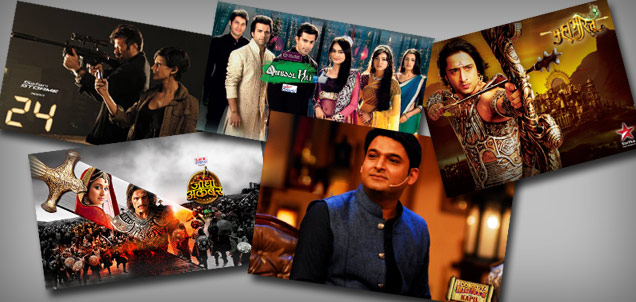
    5. 24

    The much-hyped 24 did not deliver high ratings. But it makes it to this gamechangers list for simply trying. As the Indian television market matures, we are bound to see fiction experiments beyond the regular family-based shows that currently rule the roost for the right reasons. When one such idea clicks, the floodgates will open. But 24 on Colors will always be remembered as the pioneer that brought this change. Here’s hoping for a more-Indianized second season.


    4. Qubool Hai

    Launched in late 2012, Qubool Hai scaled great heights of popularity in early and mid 2013, before losing some of the steam towards the end of the year. Driven by good casting that combined eye candy with solid performances, this Muslim social offered cultural variety, but with a contemporary and youthful treatment that had the college girls asking for more. Along with Sapne Suhaane Ladakpan Ke, it gave Zee TV a younger audience base that in turn helped the channel grow during the year, and sizably so.


    3. Mahabharat

    Star Plus challenged the status quo on production of daily fiction shows this year. After a rather half-baked attempt with Saraswatichandra, Mahabharat saw a real shift of scale. The show is easily the best-mounted fiction show ever in the history of Indian television. Its perspective on the epic tale is applause-worthy too, with considerable focus on the grey, than just the black and the white. Uneven pace and language comprehension issues may have limited its viewership in the early period, but the serial is now set for a creditable finish in 2014.


    2. Jodha Akbar

    Zee TV’s Jodha Akbar is a live case study on how to make a historical theme engaging by giving it a contemporary treatment. Story-wise, the programme uses the tried and tested elements of family and romantic dramas, exploited earlier to hilt in shows like Pratigya and Saathiya on Star Plus. It keeps the language simple, allowing for easy, fun viewing of what could have been an otherwise-overbearing show. Yet, the period look makes the show stand out in the crowd, offering the best of both worlds.


    1. Comedy Nights With Kapil

    This has to be a one-horse race if there ever was one. The success of Comedy Nights With Kapil on Colors cannot be measured by its ratings alone. Its consistently top-notch and flawless execution, combining fiction with live entertainment, has left me amazed episode after episode. How can you get something so right, I have often wondered. The show delivers two popular genres, which were beginning to look a bit jaded on television, in a refreshing avatar – Comedy and Bollywood.


    The comedy stays away from being crass or lowbrow at all times, yet manages to focus on popular culture and mass themes. The celebrity interaction is nothing we have seen before. It is audience-indulgent, not celebrity-indulgent. By now, it is common knowledge in the industry how celebrities aspire to be on the show and nervously prepare for it, so that they can match up to Kapil’s wit and timing.


    Comedy Nights With Kapil is the unifier show we have missed since KBC in 2000 – a show that various sections of the family and the society have an equal appeal towards. Thankfully, its success is not replicable, so we may not see too many clones coming out. Meanwhile, another 100+ delicious episodes await us in 2014.