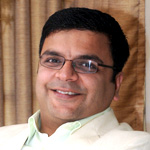
Tag: Shailesh Kapoor

  • TV viewership maximization tool Ormax Brand Matrix launched

    By A Correspondent


    Media insights firm Ormax Media announced the launch of Ormax Brand Matrix (OBM), a viewership maximization tool. Broadcasters across categories can use OBM to identify a focused plan to increase viewership by upto 20% within six months, notes a communique, adding: The tool has been created using Ormax Media’s expertise in the area of television insights, built over more than five years, with an experience of working across 55 television channels in India.


    Said Shailesh Kapoor, CEO, Ormax Media: “Channels make huge investments, both in terms of time and money, to increase their viewership. But it is well-known how difficult getting new viewers, or more time-spent from existing viewers, can be. Traditionally, viewers have been segmented by age, gender, markets, SEC and intensity of viewing, such as heavy and light viewers. In Ormax Brand Matrix, we have turned the idea of viewer segmentation on its head, and used a radically different approach – one that’s simple, intuitive and effective in equal measure.”


    Mr Kapoor believes the real power of OBM lies in its construct. He added: “Brand research can be very high on good-to-know value but poor on actionability. While developing OBM, we were very conscious that the tool had to be completely action-oriented, with only one goal – viewership maximization. If an information need or data point is not going to help a channel increase their viewership, it’s not a part of OBM.”


  • Shailesh Kapoor: The Big GEC Quarter: What’s In Store?

    By Shailesh Kapoor


    Going by the first eight months, 2013 has not been the most exciting year for Hindi GEC content. An overview of the year so far will look like this:


    Most launches have been fairly ‘routine’ in nature, and no new show except Comedy Nights With Kapil has really stood out. At a genre level, the consolidation of ‘period dramas’, led by Jodhaa-Akbar and Maharana Pratap, has been an interesting development. The most hyped fiction launch of the year, Saraswatichandra, has not made a lasting impact on the GEC category.


    Those are the only worth-mentioning parts on the content side. All the action has happened on the non-content front, with digitization and TRAI orders keeping all broadcasters, including GECs, busy.


    But this festive season, September to November, this shall change. And how! Here’s what each Hindi GEC is set for:


    Star Plus

    Mahabharat, the ambitious Star Plus project, launches on September 16 in the weekdays 8.30pm slot. No fiction show opens higher than 2.5 TVR these days, so Mahabharat will have to build inch-by-inch over the first few weeks, if it has to emerge successful. Its fate would entirely hinge on how consumers take to Star Plus’ tone and treatment of the epic. An acceptance can widen the gap between Star Plus and competition, while a rejection can potentially allow Colors to overtake Star Plus.


    Colors

    Between Bigg Boss and 24, Colors will have its hands full this season. Bigg Boss will give the channel a boost, as it will replace two under-performing dailies. With the mood of the nation increasingly moving towards male-inclusive programming, a well-executed season holds potential to become an unqualified success.


    All eyes will be on 24 this October. There are no meaningful benchmarks on how well a show of nature can do among the mainstream audience. But we can be rest assured that Colors will leave no marketing stone unturned to give 24 a fair chance with the viewers. The promos look slick and truly International. Even if it is a moderate success in the first season, 24 can open doors to GECs pushing the envelope by breaking away from homogenous, housewife-targeted content.


    Zee TV

    ZEEL’s focus seems more on launching new channels, and there isn’t much striking content lined up on Zee TV, beyond the routine fiction and seasonal non-fiction launches. Sunday morning show Buddha is unlikely to create any ripples, given the weak slot. Currently, Zee TV occupies a No. 3 spot with a sizeable gap on either side, but Sony may be eyeing that spot with the new KBC season.


    Sony

    KBC 7 launches tonight, with a new set and a 7cr grand prize. KBC has proven that it has long legs, and those who said Sony is flogging a dead horse by investing in the format have already eaten and digested their humble pie about three years ago. The new look and format should create some freshness that the previous season lacked. And with a host who gets younger with each season, KBC 7 should be on a solid wicket.


    Sony’s other fiction launch Desh Ki Beti Nandini seems to explore the political drama space, with a female leader as its protagonist. It’s a genre waiting to be tapped, but a lot will depend on the casting and the narrative style. If the show manages to strike a fine balance between the conventional and the innovative, it should do well.


    SAB & Life OK

    Even as the other four channels lock horns with big-budget shows, SAB and Life OK will be consolidating their fiction line-ups to build on the recent momentum both have seen. At much lower content budgets, touching 140-150 GRPs is more than admirable. Life OK will experiment with high-end non-fiction, with Bachelorette India with Mallika Sherawat. Will she get married on TV? Your guess is as good as mine.


    PS: This column will be on a two-week break. When I write again on Sep 27, a lot of this action would have unfolded already, and it would be fun to take stock of the proceedings!


    Shailesh Kapoor is founder and CEO of media insights firm Ormax Media. He spent nine years in the television industry before turning entrepreneur. The views expressed here are his own. He can be reached at his Twitter handle @shaileshkapoor


  • Shailesh Kapoor: Care For A Drink? No We Are On TV

    By Shailesh Kapoor


    The anti-smoking infomercial that precedes film screenings is now an in-joke in the media industry. It can be argued that the government’s obsession with smoking shots in films, however passing, is not entirely misplaced. But the banal and utterly ineffective execution of the now-infamous Mukesh infomercial kills the idea.


    Television has no such problems. I just don’t remember when I last saw anyone smoking in an originally-produced Indian programme, fiction or non-fiction. Everyone is clean to the bone. Even when a teenage character goes astray and takes two puff of a cigarette to “try it out”, it happens off-camera, though the ensuing conflict may stretch over two weeks.


    Television’s take on alcohol is not very different. Yes, there have been shows where key negative characters are portrayed as alcoholics (including a sisters’ trio in Colors’ now-off-air Laagi Tujhse Lagan). But the stereotyping is striking. They are meant to be bad people because they consume alcohol. Or maybe they consume alcohol because they are bad people!


    Except Ram Kapoor and Sakshi Tanwar enjoying their drink in a couple of (and some of the best) episodes of Bade Achhe Lagte Hain, all heroes and heroines squirm at the idea of a bottle being anywhere in their vicinity.


    Television’s aversion to all things alcohol is a symptom of the traditional mindset the medium targets at large. And indeed, there may be merit in arguing for their case. In our research across markets, especially non-metros, discussions on alcoholism can touch raw nerves in the housewives community. Many of them face it as a real issue in their lives, where the husband, the father-in-law or the brother-in-law are spending disproportionate share of the household income on booze. And there is a direct linkage between alcoholism and domestic violence, as we all know.


    Of course, there is the other side of the argument too, which says that all television is not supposed to cater to middle-class housewives who face such real issues in their day-to-day lives. There is an audience beyond that: The urban elite, the youth, men and women in professional jobs, etc. But these characters are conspicuous by their absence in our serials anyway.


    Back in the early ’90s, Amita Nangia played the beer-guzzling Sheena in the much-popular Zee TV weekly Tara. But that was an era of less than 10 million C&S households, with most of them being upmarket metro audiences who were early adopters with a progressive mindset towards new ideas. As television has penetrated deeper, this audience segment has become far too miniscule to interest the broadcaster community. Even niche channels today are targeting SEC BC audiences in towns like Lucknow, Bhopal, Jaipur and Kolhapur.


    There are 41 alcohol scenes in Yeh Jawani Hai Deewani. But that did not deter the theatre-going Indians from making it one of the biggest box-office grossers in recent times. In fact, the casual presence of alcohol, albeit a bit overdone, made the film modern and cool in its own way, and that went well with the grammar of the film at large.


    I am most interested in seeing how the Indian version of 24, and the upcoming Amitabh Bachchan fiction show on Sony, handle “liquor” as an idea. In a country where having a glass of red wine can get someone to be labeled as a “sharaabi”, it will be good to see mass television influencing a few minds in the right direction.


    Shailesh Kapoor is founder and CEO of media insights firm Ormax Media. He spent nine years in the television industry before turning entrepreneur. The views expressed here are his own. He can be reached at his Twitter handle @shaileshkapoor


  • Shailesh Kapoor: What Do You Mean By ‘I Should Know Why I’m Doing This Campaign’?

    By Shailesh Kapoor


    They are omnipresent. They are on TV, in the newspapers, on the radio, on the hoardings, in the theatres, on Facebook, on Twitter. No matter where you go, a launch campaign of a new TV programme, a new TV property or a new (or being-presented-as-new) TV channel will find you out. Across just the national channels, more than 150 such campaigns of various sizes and shapes are executed every year in India.


    Everyone has a view on an ad: Bad ad, good ad, stupid ad, clever ad, and so on. It is natural then that TV campaigns are discussed with great interest in the media industry. “Did you see the promo of the new show on Colors”, “What do you think of the &pictures campaign”, “I really like the IBL promos on Star”, “Jee Le Zaraa looks interesting from the promos”, etc.


    One of the professional hazards of my work is that I invariably end up being dragged into these discussions. Either a question is posed to me, or an opinion is stated, more like a cue to respond with mine. Yes, like everyone else, I too have a view (sometimes a more confidential one, having “tested” the campaign in question). But I really don’t know what to say at most times, and my attention is focused on finding an escape route.


    The reason for my response is not diplomacy but something more direct and relevant to the idea of a “campaign” (or “ad”, for that matter) itself. Any campaign, across categories, should be designed to address certain sharply stated campaign objectives, i.e., the desired consumer messaging or response the campaign aims to achieve. Hence, the measure of a successful campaign is its ability to deliver on the campaign objectives successfully. Hence, how can one even begin to comment on a campaign without knowing its objectives?


    Many of us in the media cannot distinguish between a campaign that does not deliver to its objectives, and a campaign that is designed to meet wrong or strategically-flawed objectives in the first place. The latter is not a case of a bad campaign but a bad strategy. That’s a different discussion altogether. But invariably, the discussion gets mixed up and before we know, we are questioning why the brand even exists!


    But there is a bigger problem. Most campaign creators in television don’t even set objectives to start with. I have often tried asking the seemingly innocuous question: “What are the objectives of this campaign?” Some of the answers I have got, and I kid you not, have been:


    • To promote the show (as against promoting competition?)
    • To get eyeballs (you may as well have said “to make money”!)
    • To create awareness (rudimentary as it may be, it’s not entirely inane)
    • To create buzz (still more acceptable, given the ones above!)


    Recently, I met an MBA batchmate who is the brand head of a category in one of the leading FMCGs in India. As I shared my predicament with him, he looked wide-eyed and reasonably speechless, before gathering the courage to say: “I would have been sacked for saying any of that even in my first year of work!”


    Setting campaign objectives is not an easy task. It requires discipline and debate. In the earlier working model, ad agencies would own the brand and drive this area. Today, the strategy is reasonably scattered across functions: the brand team, the ad agency, the media agency and the research partner. Yes, there are some channels that are objectives-oriented in their approach towards some campaigns, but those are case studies that are far and few in between.


    Next time you have a big campaign coming up, try defining what you EXACTLY want the campaign to achieve. The answer may not be as easy as you think, and like it’s often the case, the God may lie in the detail!


    Shailesh Kapoor is founder and CEO of media insights firm Ormax Media. He spent nine years in the television industry before turning entrepreneur. The views expressed here are his own. He can be reached at his Twitter handle @shaileshkapoor


  • Chhota Bheem, Salman Khan and Harry Potter most popular among kids: Ormax study

    By A Correspondent


    Chhota Bheem continues to be the most popular television character amongst kids as Salman Khan and Katrina Kaif emerge as the most popular film stars, while Harry Potter emerges as the strongest Hollywood franchise. These are part of the findings of the latest edition of Ormax Small Wonders, a nationwide kids track conducted by media insights firm Ormax Media.


    Ormax Small Wonders is a bi-annual study conducted across 1,800 kids in the 6-14 years age group across eight cities in India. The study tracks kiddie preferences across 20 different categories. The categories cover various media and entertainment options such as television (characters – kids and GEC), films (film stars – national and regional, film franchises), sports, merchandizing, play items, restaurants and eating outlets, books, websites and ads.


    Shailesh Kapoor

    Speaking about Ormax Small Wonders, Shailesh Kapoor, CEO – Ormax Media, said: “The study is now in its fourth year, and has become a benchmark for tracking kids preferences for any brand that’s targeting children. In the latest track, we have covered additional parameters like merchandize consumption and favourite ads amongst kids.”


    According to the findings, while Chhota Bheem is the favourite character, Ben 10 bags are the most popular merchandize item amongst kids. Chocolates and aerated drinks emerge as popular ad categories, with Dairy Milk ads being kids’ most favourite.


    Ormax Small Wonders is a syndicated report available for subscription to brands across FMCG, media and other categories targeting kids.


  • Shailesh Kapoor: Primetime News: Talking Heads or Headless Chickens?

    By Shailesh Kapoor


    In the middle of a heated news television debate, the spokesperson of a top political party asserts: “Can you just give me two minutes to make my point? Then I have to go to another channel.” I was amused the first time I heard this line about two years ago. But over time, it’s become par for the course. Not too long ago, I was switching news channels and found the same spokesperson, sitting on the same seat, on four different news channels within a span of an hour, engaging with the same debate with roughly the same panelists!


    Till about a decade ago, news television was about reportage, accompanied by analysis, peppered with bytes that added value to it. NDTV Profit has been repeating old episodes of The World This Week as a part of the 25-year celebration of the group, and the difference between the approach to news then and now is striking, to say the least.


    I’m not suggesting that debates-heavy news programming on primetime is bad. In fact, if done well, it can be significantly more engaging than the more passive classical reportage format. But for that, you need talking heads who can debate – authoritatively and intelligently. And the current lot falls short on both counts.


    It’s evident to any regular news viewer that the spokespersons designated by the top political parties, the likes of Sanjay Jha, Nirmala Sitaraman and Rahul Narvekar, have no real authority at their disposal. They are foot soldiers, thrown in a hostile situation and left to dodge the missiles being hurled at them. To make themselves heard in the cacophony may well be their only KRA.


    Talking heads from regional parties, such as Derek O’Brien from Trinamool, clearly display more authority, though it is another matter that half of the time, he is defending the indefensible.


    On intelligence (and I don’t mean IQ here but political acumen), you can sense that parties have relaxed it as a criteria for the choice of spokespersons. From Abhishek Manu Singhvi to Sanjay Jha is quite a big shift, for example. It seems there are too many channels and you need an army to share the “workload.”


    In any case, the real voices that matter choose not to come to primetime television shows. Rarely would you see a minister making an appearance in a one-on-one with one of the top anchors. Because they have made themselves so inaccessible, they are treated with near reverence when they indeed make that odd appearance.


    Interestingly, the same revering anchors go ballistic with the lesser mortals, read spokespersons. It’s as if the anchors start their show licking their lips in anticipation of the “tough questions” they will hurl at their guests.  Nidhi Razdan’s latest interview with British MP Barry Gardiner proves that the infection to be mean has spread thick and fast. Blame Arnab, of course.


    I believe political parties will do well to focus on quality rather than quantity, i.e., present themselves only on 2-3 channels on any given night, but send erudite and articulate talking heads, who can rise above petty out-shouting, to deliver the goods. It will serve the parties well in the long run.


    Channels, on the other hand, will do well to limit a debate to 3-4 talking heads. There is no empirical evidence to suggest more talking heads means a more engaging debate or more ratings. A leaner panel will, in fact, encourage quality politicians to participate.


    Lest I should be misunderstood, I am not advocating a “reduce noise” recipe. I (kind of) like the noise of primetime television. It is provocative and stimulating in its own right. But if the noisemakers are just headless chicken, the point is lost. We need noisemakers who are also newsmakers!


    Shailesh Kapoor is founder and CEO of media insights firm Ormax Media. He spent nine years in the television industry before turning entrepreneur. The views expressed here are his own. He can be reached at his Twitter handle @shaileshkapoor


  • Shailesh Kapoor: Chennai Express: On A TV Near You

    By Shailesh Kapoor


    You can love him. You can hate him. But you could not have missed him on your television over the last week. Shah Rukh Khan (SRK) was omnipresent on the small screen in the lead upto the release of his new film Chennai Express. From reality shows to daily serials to news channel specials to the innumerable promotional spots on music channels, if you wanted an SRK-less life over the last week, the only real option you had was to turn off your TV sets.


    Some may call it overkill, but the blitzkrieg has definitely helped the movie. The film is set to challenge the opening day record held by Salman Khan’s Ek Tha Tiger. And that may only be the start.


    Television has fast emerged as not just the lead but also the dominant media for film promotions over the last decade. In a 2012 study conducted by us, television’s impact on the buzz of a film was more than twice that of posters and trailers in the theatres, which emerged as the second-most effective media to drive the buzz for a new release.


    By now, most producers, especially the big studios, understand this impact. Hence, TV plans have got more aggressive while other media, especially outdoor, are being used more judiciously in recent times.


    But a key component of the TV plan goes beyond paid promos and the music free-play on channels like MTV and 9XM. It is the GEC and the news part that’s more exciting today. The former delivers reach beyond the relatively “niche” music genre, while the latter delivers male audiences, the core theatre-going populace.


    But then, every star is not an SRK or a Salman Khan who can make the most of the exposure his film gets on reality shows and news specials. I have been a strong opponent of channels giving free mileage to films through in-programme plugs, in what is an evidently one-sided relationship. But when an SRK comes to your reality show, you have, what an Executive Producer will call, a “rocking episode”. So the relationship is clearly win-win.


    But most other stars just make an appearance, not knowing much to say or do that could add value to the film’s campaign or to the programme’s ratings. These appearances do nothing to the rocking-ness of the episodes. There are other extremes too. When Sunil Shetty made appearances to promote his (wrongly-spelt) film Enemmy, the only audience reaction was: “Isko abhi bhi filmein milti hain!”


    Coming back to Chennai Express, SRK has been witty, charming and edgy in equal measure, in his promotional appearances for the film. Having seen him promote many films with equal vigour in the past, one can safely say that Rohit Shetty is one of the best things to have happened to SRK. He seemed relaxed and at-ease promoting an outright fun film. The genre evidently suits his persona well.


    Come October, things may change and become even more interesting. Most readers will be aware that film producers get heavily discounted ad rates from channels, compared to what an FMCG brand pays, because trailers are seen as part-content. If the 10+2 ad cap indeed sees the light of the day, these discounted rates will be the first ones to go, as channels, short of saleable inventory, will have to shed low-priority advertisers, part-content or not.


    We can then expect innovation that goes beyond reality show episodes, where channels and producers co-create content, like the Eid event to promote Once Upon Ay Time In Mumbai Dobaara, scheduled this weekend on Colors.


    For SRK, meanwhile, life has come a full circle. The medium where he started his career has now embraced him whole-heartedly as he gets sets to deliver his next blockbuster.


    For the sake of television entertainment, wish they made more like him!


    Shailesh Kapoor is founder and CEO of media insights firm Ormax Media. He spent nine years in the television industry before turning entrepreneur. The views expressed here are his own. He can be reached at his Twitter handle @shaileshkapoor


  • Shailesh Kapoor: India-Zimbabwe: As Dull As It Gets

    By Shailesh Kapoor


    In my almost 30 years of cricket following, this week has been a new low. India is playing a five-match ODI series in Zimbabwe. Out of sheer habit, I tried sampling one of the games. Within seconds, I was out of it. Dead grounds, players going through the motions and commentators from the B-league… There was nothing on offer at all.


    I have written a few months back on ‘Too Much Cricket’ and how pointless cricket creates that perception. But here, the question is even larger. It makes one wonder: Who funds this cricket? And whether indeed any such cricket can ever make money?


    In our IPL advertising equity research Ormax Trac20, we found that only about 20 brands managed to attract viewer attention over the course of the 45-day tournament, out of the 200+ brands that associated with IPL or its franchises in various ways. The 2011 World Cup was not very different, where about a dozen brands controlled 80% of the recall share.


    So, even in the most high-profile, high-interest tournaments, only the big sponsors and innovators stand out. Why should any advertiser, besides at best the title sponsor (that too arguable), buy onto an India-Zimbabwe series, by paying rates that would be at significantly higher CPRPs than most other genres?


    And if indeed no one should, why should such a series be held in the first place? If it were to promote cricket in Zimbabwe, an India A team would have been a good idea too.


    This brings me to the larger question of media bias, where media choices of several brands are influenced by individual perceptions. I know of brands who would like to be on cricket, because certain senior executives, including the CEO at times, “feels” cricket is the right choice for them. And if they can’t afford the IPL or an India-Pak series, they settle for whatever comes their way.


    In an interesting case a few years ago, I heard about a CMO who bought into cricket series and then planned an extensive travel itinerary for himself, so that he can give out the Man of the Match awards. This, while his new product launch, which was being advertised in the series, should have taken his time and attention at the marketing office.


    I wonder if CMOs sometimes buy into such properties to make their CVs more attractive. “Spearheaded the launch of the new handset through the title sponsorship of an India-Sri Lanka series” sounds more attractive than “Delivered the most cost-efficient TV campaign in the mobile phones category in 2012-13”. Maybe not!


    In another case, a sales executive at a channel (not a GEC) managed to sign a 30 lac sponsorship deal for a reality show by luring the MD of the brand to be the “Chief Guest” in the season finale, where he will give out the cheque to the winner, and speak about the brand. The MD spoke for about three minutes, and all of that had to be retained in the actual show.


    Even as the big agencies continue to grapple with larger questions related to measuring advertising effectiveness that goes beyond just CPRP benchmarking, we have a universe of ad hoc advertisers providing us enough entertainment on the sidelines.


    Come to think of it, if you watch the fifth India-Zimbabwe ODI tomorrow like you watch a B-grade film that’s so bad, it’s good, you may end up having a good time anyway!

    Shailesh Kapoor is founder and CEO of media insights firm Ormax Media. He spent nine years in the television industry before turning entrepreneur. The views expressed here are his own. He can be reached at his Twitter handle @shaileshkapoor


  • Shailesh Kapoor: Death Of The ‘Television Star’

    By Shailesh Kapoor


    Sangeeta Ghosh, one of the several television stars from the golden era of Star Plus, is back on the telly, in a new Sony show titled Jee Le Zara. In the well-executed launch promo, her refreshing presence creates an unmistakable appeal for the audiences. Ghosh was not one of the biggest icons from the last decade, but she was, and remains, a star in her own right. And her stardom shines through the promo.


    But that can’t be said about dozens of other serials that launch every year. Many feature newcomers anyway, but even actors in their second and third serials don’t have a presence that makes them the centerpiece of the communication, and eventually the show.


    The last decade was very different. A slew of TV stars emerged as strong real-life personalities, with their appeal going beyond just their character or their programme. This long list includes Smriti Irani, Sakshi Tanwar, Rajeev Khandelwal, Ram Kapoor, Ronit Roy and Urvashi Dholakia, amongst others. They may still be known by their character names, but their appeal extends well beyond that tag.


    For the newer lot, their character remains their only identity. Even after doing three shows, some TV actors of today don’t bring even a hint of stardom with them. They are just workhorses who have learnt to play their roles and balance endless working hours in a grueling job.


    There are exceptions, none less than Drashti Dhami (Geet, now Madhubala), but only far and few in between. Everybody else is a part of a nondescript crowd, where replacing an actor is only a matter of picking another one from the crowd.


    Have we then seen the death of the television star in the last 5-6 years? Evidently yes. And as the 2000-2005 generation stars grow older, we may have a genuine dearth of “personalities” and “stars” on our television.


    What led to this? The analysis is not evident, and there are at least two hypotheses I could come up with, which I understand may not be exhaustive. One, it could be about the daily show grind. When Kyunkii and Kahani first started in 2000, daily serials were a relatively virgin idea in India. Actors probably saw them as a creative challenge. The crew was largely from weekly shows and hence operated out of that mindset.


    Over time, the mindset seems to have changed to a quick-fix, let’s-get-the-episode-out daily show mindset. The creative challenge is now being found elsewhere, in shows like Nach Baliye and Jhalak Dikhhla Jaa, than in the main acting role itself. Being on the sets everyday is not fun anymore. The rising number of health issues being reported from the industry hold testimony to this change.


    Second, I believe most actors in the 2000-2005 period had better training than their counterparts today. Whether the training came through theatre or acting schools, they just seemed more prepared. Today, we literally see young, college kids landing up lead roles. Perhaps, casting has become more about looks and a basic level of dialogue delivery, than about the search for a potential star.


    Whatever be the genesis, we have a real issue at hand. What’s needed is casting vision, something with Balaji Telefilms managed to display admirably in the 2000s. Otherwise, we may have an almost star-less television industry five years from now!


    Shailesh Kapoor is founder and CEO of media insights firm Ormax Media. He spent nine years in the television industry before turning entrepreneur. The views expressed here are his own. He can be reached at his Twitter handle @shaileshkapoor


  • Shailesh Kapoor: Who stole our Comedies?

    By Shailesh Kapoor


    Everyone likes a laugh. Across cultures and eras, ‘Comedy’ has never lost its relevance. In India too, comedy films have a rich legacy, going back to gems like Chalti Ka Naam Gaadi, Padosan, Angoor, Gol Maal and Jaane Bhi Do Yaaro. On television, the ’80s featured exemplary comedy work, none less than Kundan Shah’s Yeh Jo Hai Zindagi.


    Television comedy continued to thrive in the ’90s and the early 2000s, with Dekh Bhai Dekh, Hum Paanch, Khichdi, Baa Bahoo Aur Baby, Movers & Shakers and Office Office. You may have missed the nuanced work of Kundan Shah and Basu Chatterjee in some of these, but you certainly couldn’t have complained of quality or quantity in absolute terms.


    The last decade, however, has been shockingly under-served when it comes to comic television in India. If we keep aside the launch and the subsequent success of Comedy Central, there’s not much of a story to write.


    In 2005, The Great Indian Laughter Challenge made stand-up comedy a mass phenomenon, leading to a spate of clones, till Comedy Circus found a personality of its own, standing out as a unique idea amongst the me-toos. 2005 also saw Sarabhai Vs. Sarabhai, a modern classic in its own right. But as Star One moved away from comedy into romance, they created a vacuum that no one was willing to fill.


    Taarak Mehta Ka Ooltah Chashmah launched in 2008 and has been the frontrunner of the comic genre over the last five years. But this has also been a period when other channels have labeled comedy a ‘SAB TV thing’, paying very little attention to it in their core programming strategy.


    That it is a case of missed opportunity seems like stating the obvious. Here are 10 reasons:

    1. Comedy films continue to deliver consistent repeat viewing and high ratings on television.

    2. De-stress and relaxation (called ‘Mind Fresh’ by consumers across the country) remains a frontal benefit delivered by television viewing in India. Whenever it has been used well in existing soaps as a device, it has worked wonderfully.

    3. Comedy Nights With Kapil has shown that a good comedy format can beat reality shows with five times its budget on viewer popularity.

    4. Jethalal is the most popular television character on Hindi GECs today, ahead of Anandi, Sandhya, Mahadev and Ram Kapoor.

    5. India is going through a phase of political disenchantment, and time could not be more right for a satirical look at the state of the nation.

    6. General Entertainment Channel (GEC) cannot exclude the most unifying and ‘general’ of all genres!

    7. Some of the biggest Bollywood box office successes in recent years have been comedies.

    8. Rohit Shetty is the No 1 director in Bollywood today, and the only director who can command audience attention like a superstar, purely on the strength of his action-comedies.

    9. There’s liberal sprinkling of humor in the top reality shows, featuring anchors like Manish Paul and Jay Bhanushali. And it works.

    10. Short comedy formats continue to thrive on radio, across big and small towns.


    So what gives? Why has comedy become a ‘single-channel + an odd weekend show’ phenomenon? I believe there are two reasons.


    One, it is not easy to make the audiences laugh. Writing for a comic show requires special talent, and the writers’ breed thriving today is more of the daily-soap variety. Hence, we have a dearth of good comedy ideas anyway, and those, which may sound good on paper, may eventually falter in execution.


    Two, there is an under-estimation of the genre’s potential at the broadcaster’s end. Because not too many comedy shows since Taarak Mehta managed to achieve great success, the genre has been put under question. In reality, it’s the execution that should have been examined. Comedy Nights With Kapil proves that a well-crafted comedy show can achieve mainstream success at par with the best of television.


    I hope to see a change, where comedy features as a mainstream GEC genre. The time cannot be more ripe. The need cannot be more under-served. The writing on the wall cannot be more clear. It’s a matter of when and who, than whether.


    Shailesh Kapoor is founder and CEO of media insights firm Ormax Media. He spent nine years in the television industry before turning entrepreneur. The views expressed here are his own. He can be reached at his Twitter handle @shaileshkapoor


  • Shailesh Kapoor: Lest we forget… television is a ‘service’ industry

    Shailesh Kapoor

    By Shailesh Kapoor


    The latest phase of ad cap has come into play from July 2013, limiting inventory to 20 minutes per hour for news and 16 minutes for GECs. Come October 1, 12 minutes may be a reality. Discussions and debates on ad cap over the last few weeks lead to a larger point, which we hardly give our due attention to. That television channels are not products but services. In effect, watching a television channel is closer to visiting a restaurant than using a shampoo. You may not be paying per viewing session (at least not explicitly), but the principle still holds.


    Those in the service industry, such as hospitality, retail and food, among others, will appreciate that the norms and parameters that apply to service businesses are sharply distinct from those that apply to the product businesses.


    Yet, most of the media talk about television is only about content. It boils down to programmes, their cast and crew, and the program ratings. But if we were to detach the product part of the business and look at everything else, we may stumble upon some critical parameters that can shape the way a television channel brand is perceived, consumed and advocated.


    Take for instance the breaks themselves. The break duration, length, timing of the break point and packaging (e.g. the countdown clocks) are service parameters. A long break is, in many ways, the equivalent of a restaurant taking unduly long to bring your food to your table. Yet, these are parameters we have only peripherally worried about, till TRAI stepped in.


    Similarly, we hear a lot about “picture quality” in consumer research. It is that abstract notion which can be borne out of a mix of production budgets, bandwidth and creative execution. The diagnostics of negative feedback on this aspect generally ends up being technical and theoretical in nature, and hence, un-actionable.


    Then, there is a critical service parameter that applies to practically all service businesses: On Time. Television schedules, especially on movie channels and repeats on entertainment channels, are often violated by upto 15-20 minutes. In the era of EPG, and growing viewer education on how to best use the medium, this is simply a case of poor service.


    Of course, there’s the channel packaging, particularly relevant to the news genre, where viewers may have to endure multiple tickers to watch their daily dose of news. Even on entertainment channels, screen space being covered by programme promotions is increasingly becoming an irritant for the purist viewers, and it’s a matter of time before more viewers begin to articulate the same. TRAI has tried to step in here too, but ad cap is understandably taking more attention for now.


    The list of service parameters will be longer, if one was to sit down and make it. At some stage – and that stage is not too far away – television channels will have to move towards taking a holistic brand view, than a content view. And when they do that, they will have to acknowledge that customer service (viewer service in this case, though advertiser service can also be argued to be important) cannot be an unconscious activity. Especially in genres where the product (content) is not too differentiated (and there are many such genres), service quality can create real differentiation and lead to higher subscription revenues, as we slowly but surely move into a true addressable environment where a la carte or smaller channel packages will be real options for the consumers.


    Two bad services back-to-back in tennis are called a ‘double fault’. It costs the player a point, often the game, sometimes the set and the match. Broadcasters may rather have aces up their sleeves instead.


    Shailesh Kapoor is founder and CEO of media insights firm Ormax Media. He spent nine years in the television industry before turning entrepreneur. The views expressed here are his own. He can be reached at his Twitter handle @shaileshkapoor


  • Shailesh Kapoor: What’s Infecting Our TV Industry? Laptops!

    By Shailesh Kapoor


    Conference room. Set for an important meeting that may have a decisive impact on the future of the channel, and by extension, on the future of everyone who works for it. About two dozen team members from various functions have been called to attend to a research presentation. Around the time of the meeting, they begin to saunter in one by one. There is chatter while they take their seats and wait for their big boss to join us.


    In those five minutes, machines are flipped open, one after the other. Some are finishing “urgent” work, while some are checking emails and replying to pending ones. Productive use of time, I wonder. Of course, preparing yourself mentally for a meeting, even if you are just an audience, is supposed to be an old-school thought. There are still others in the room who are on their laptops, but you can see that they are trying to figure out what exactly to do with them. It’s just a medical condition. They have been surgically attached to their machines.


    Then the big boss arrives. Sure enough, he/ she comes without a laptop, with full attention and interest in a meeting that he understands the importance of, more than anyone else. As we get set to start, I’m certain that the laptops will be ‘lid-shut’, either out of interest or because of protocol.


    Curiously enough, that doesn’t quite happen. Only a handful (mostly the senior lot) keep their laptops aside and bring their full presence to the meeting. Others continue to “multi-task”. For the next two hours! The nature of the tasks has shifted too. Many are now using the laptops for note-taking. What they have taken note of, I’m not quite sure though.


    The big boss is not concerned, it seems. He is into the subject material, engaging in discussions that don’t need any technology to support them. He may as well let the geeks carry on.


    Then the big boss asks his team for some data or clarification in the meeting. Confusion erupts. At least 2-3 team members dig into their laptops trying to give him the answer. There is an undercurrent of who-comes-first. But it is more of the I-know-how-to-use-the-laptop-better-than-you kind. At the end of this thrilling race, the big boss has still not got the real answer he’s looking for. He sighs politely, and decides to move on.


    This is the story of 80% broadcasters today, in varying degrees. It is also the story of many B-schools, I’m told, where students attend lectures with their machines “on them” all the time.


    Having started my career in times when laptops were nearly unheard of and an internet connection was available on one shared machine for almost 200 people (which too shall remain mostly unoccupied, as many didn’t know what to do with it besides checking Hotmail), it is natural that I find this phenomenon deeply disturbing.


    However, what concerns me a lot more is the weak foundation being built for the younger lot. Evidently, the laptop culture (especially prevalent in non-creative functions) does not put a premium on the importance of having an uncluttered mind to aid stimulating discussions. It also does not promote teamwork, given the inherently personal nature of the device in question.


    In the old days, when we had a meeting, we’d “prepare” for it. We will read the relevant emails and documents, carry the necessary print-outs to the meeting, even keep our thoughts ready. Today, the laptop substitutes for all that.


    My respect goes to the 20% companies who have managed to stay away from this epidemic. I’m not sure if they planned for it or their culture just ensured they were kept safe. But either way, they have a big advantage to protect!


    Others may do well to take a deep look at their meeting protocols. It’s never too late.


    PS: The mobile phone is another problem of epidemic proportions. But that’s for another day, another post.


    Shailesh Kapoor is founder and CEO of media insights firm Ormax Media. He spent nine years in the television industry before turning entrepreneur. The views expressed here are his own. He can be reached at his Twitter handle @shaileshkapoor