
Tag: Shailesh Kapoor

  • Shailesh Kapoor: India’s World Cup Exit: When Fans Scored Over The Media

    By Shailesh Kapoor


    After 44 days of intense (and some not-so-intense) cricket, the ICC Cricket World Cup 2015 finally ended last evening, with Australia emerging winners in an underwhelming finale. The tournament reached an absolute high on Tuesday, when New Zealand ousted South Africa in a thriller. But Australia’s dominance in the semi-final on Thursday and the final on Sunday ensured there were going to be no more thrillers.


    India’s exit from the World Cups has always been a subject of media attention, from way back in 1987, when media was very different from how we know it today. 2003 was the only time when the exit (in a one-sided final against Australia) did not fuel any criticism or demand for heads to roll. Otherwise, it has been the same story, in 1987, 1992, 1996, 1999 and 2007.


    Ironically, the reactions have tended to be extreme when we have lost a semi-final (1987, 1996 & 2015), unlike the low-key 1992 and 1999 campaigns. Evidently, losing on a single day in a do-or-die game can attract a lot more wrath from the media and the fans than a slow death over a long tournament, where life moves on. 2007 was an early exit, but we were playing a virtual knockout there too, vs. Sri Lanka, and the reactions were as extreme as they could be.


    But something has changed in all these years, I realised on Thursday. India were unbeaten in the World Cup till that point of time, when they were outplayed by Australia. In many ways, this was similar to 2013, where we lost only to Australia, twice that year, but beat everyone else in great style. There seemed more maturity among fans on Thursday evening as the semi-final drew to a low-key end. On the two ends of social media (the mass Facebook and the somewhat elitist Twitter), the reactions suggested that cricket fans have matured over years, or at least India’s performance in this World Cup has not been something that brings out the worst in them. Dejection and criticism were on display, but largely, the tone was not abusive or vicious.


    You would expect the media, a pillar in a democracy and all that, to be one step ahead of the masses on the maturity curve. Surprisingly (or maybe not-so-surprisingly), the venom and the viciousness came from the media. Orchestrated pictures of TV sets being broken (rickety CRTs to save budget) and fans burning random effigies (that didn’t even resemble anyone in particular) were quickly put on-air. One could pass that off as Hindi news jingoism that one has got used to seeing for almost two decades now.


    But the English media surprised me with its misjudgment of the public sentiment, where they confused dejection with anger. The headlines in some of the leading newspapers the next day were not entirely in good taste. No prizes for guessing what the headlines in New Zealand on Monday morning will be (they will be out by the time you read this). I can assure you they will be whole-heartedly in favour of the Blackcaps and its brave leader Brendon McCullum, even though it was his dismissal in the first over that set the tone for Aussie dominance in the final.


    Enough has been written and discussed about Times Now’s approach to the semi-final exit, including on this website. Generally, Arnab Goswami has a good sense of the pulse of the nation. He tends to pick topics that would strike a chord with the audiences, because they tap into their anger, sometimes latent, about the issue. On Thursday though, he got the pulse horribly wrong. Whether it was a one-off or a sign of things to come on the Arnab front, only time will tell. But Times Now would do well to erase that one day from their broadcasting history.


    Star Sports replaced its #WeWontGiveItBack campaign with a #Respect campaign. The former was a rather average ad film, which got going only because the Indian team got going in this World Cup. There were similar sentiments by many others, including the Prime Minister. But some other sections of media clearly missed the beat.


    We follow sport because we know we can lose on the day, as much as we can win. No fan expects to win every single time, yet no fan hopes to lose either. I think the exposure of fans to cricketing greats via commentary and news channels has led to this simple truth finding its way into the conscience of what essentially is a non-sporting culture. Hope things get even better in the years to come. Because like always, only one team will win in England 2019.
     

  • Shailesh Kapoor: World Cup Coverage: The Ticks & The Crosses

    By Shailesh Kapoor


    It’s the World Cup season and cricket is back into the forefront, leading conversations and consumption across media. The ratings of some of the key India games in this year’s World Cup have proven that the issue with declining ratings of ODI cricket in recent years is not about a loss of interest in the sport as such, but a rejection of meaningless cricket series that are played to generate revenue for the sport.


    A lot has changed on the broadcasting and technology front since the 2011 World Cup. The host broadcaster (Star Sports) has four sports channels, and for the first time, watching cricket online has been promoted as a genuine viewing option. Commentary feeds are available in multiple Indian languages, and more than 50 ex-Indian cricketers have been gainfully employed by Star Sports to cater to India’s linguistic diversity. All matches are available in High Definition, and we even have the 4K-technology option available.


    So, all’s well when it comes to live telecast of cricket. Despite match timings not being primetime-friendly in India, Star Sports has done a fair job of putting across a clinical performance on-air.


    But there’s a lot left to be desired outside the live hours. And here, I go beyond Star Sports. We have half a dozen sports channels besides Star Sports, and all of them have ignored the World Cup emphatically and whole-heartedly. In a healthy competitive environment, you would expect other sports channels to do strong guerilla programming around a big tournament such as the Cricket World Cup, to capture viewership in the non-playing hours.


    Star Sports attempted that in the 2003 World Cup. They had no access to match footage. But they created pre- and post-match shows for the purists, who would rather watch Ravi Shastri and Sunil Gavaskar discuss the game with Harsha Bhogle, than watch the Mandira Bedi show. The idea may not have a runaway success, but it was an excellent attempt at building equity around a big sports event within a reasonable cost.


    That we have no such ideas this year is the collateral damage of a monopolistic environment. Star Sports has gained every inch of the sporting turf over the last five years, acquiring all possible rights that have come their way. If they manage to bag the IPL rights when they come up renewal next in a couple of years, their dominance of sports broadcasting in India will be complete in every respect.


    Sports broadcasting has not been the most profitable business in India, and it is understandable that a giant like Star can pump in the investments which stand-alone brands like Ten or Neo struggled to.


    But the one area where Star Sports too may have missed the trick is the non-playing hours programming. All four channels play the same shows every night, which are essentially based on over-analysis of already over-analyzed games. The ancillary programming content in magazine formats is not more than 15-20 hours, I suspect. And a lot of this is content that’s not even fresh.


    Star Sports currently resembles a multiplex when a Salman Khan film releases. You may have six screens, but all you get is one film, one type of content. More channels don’t always mean more variety!


    News channels, meanwhile, have gainfully employed another 50-60 ex-India cricketers, including some very obscure ones, to run the same format which Star Sports runs on its channels – talking heads discussing today’s game and then tomorrow’s game.


    Come 2019 World Cup, that’s one change I’d hope to see, whereby the non-playing hours experience of a viewer is a more enriching one. And if some other channels don’t stand up to get their pound of flesh from the event, I hope there will be online options beyond ESPNcricinfo that would achieve the same.


  • Shailesh Kapoor: Hindi GECs: There’s Space For More… &More

    By Shailesh Kapoor


    March 2 saw the launch of &TV, the second mainstream GEC from the Zee stable (not counting the highly differentiated Zindagi and the rerun-based Zee Anmol). The first ratings yesterday confirmed that the channel has managed to make its presence felt within its first week. It launched at 42 GRPs, making it one of the best channel launches in the last decade, close on the heels of Colors, Life OK and Imagine.


    The ratings universe has widened since 2008. &TV’s 42 GRPs would easily have been 55+ in a pre-LC1 environment, in which other GECs mentioned above launched. Also, the ratings are based on five-and-a-half days of content, which means a natural growth next week is expected anyway. We should see the channel comfortably crossing the 50-mark next week, and with a sizeable reach potential still untapped, it may be looking at the century over the next quarter.


    What interested me even more was to see if &TV got its initial numbers from other GECs or if it could grow the category. The top six GECs lost only 21 GRPs this week combined, which &TV got exactly half its viewership by growing the category. Its early days yet, but one could safely assume that in a more stable state, at least 30% of &TV’s ratings would be category growth, which could mean that channel would have managed to grow the already dominant Hindi GEC category by 3-5% by the time it crosses the 100 GRP mark.


    Yet, there has been persistent talk around there being no space available for one more Hindi GEC. Every time someone comes up with the idea of launching a new Hindi GEC, promoters or investors treat the thought with immense skepticism.


    It’s not a surprising response, however. You won’t expect most investors to be core GEC viewers themselves, and from the outside, it would indeed seem that all the GECs are essentially dishing out similar programming. I have voiced my concerns regarding lack of innovation on the GECs over the last two years, but lack of variety has never been an issue. The consumers see genres and sub-genres in what the non-viewers can just pass off as “daily soaps” or “saas-bahu serials”.


    Identifying strategic need gaps in the Hindi GEC space can be a tough ask today. But tapping the right genres and creating new sub-genres within them can indeed push the category viewership ahead. The size of investment may also be a deterrent, but for someone with deep pockets, a well-planned GEC business has a far lower risk than, say, a news or a niche channel today.


    The rise-and-fall stories of 9X and Imagine have often been used as an example of how a GEC business is high on risk. But there have been the success stories in Colors and Life OK too, the former a lot more significant than the latter. I hope the early success of &TV encourages more GEC launches. Sound business models can ensure good profitability at even 80-120 GRP levels.


  • Shailesh Kapoor: Ranking The World Cups: 1983-2011

    By Shailesh Kapoor


    We are a day away from the 11th edition of the Cricket World Cup. The 1983 World Cup was the absolute initiation into cricket for me, at the age of eight. The eight World Cups from 1983-2011 have left lasting memories behind them, driven by two strong factors – India’s performance and the media experience they created.


    Here’s my ranking of these eight World Cups, from the worst to the best.


    8. The Cup That Ended Before It Started: 2007

    I still thank my stars that I decided against a West Indies vacation for the Super Sixes at the eleventh hour. I suspect if there was a list of the worst World Cups, 2007 will top it even 100 years from now. It had nothing going for it. And as it turned out, late night match timings, no crowds and poor television viewing experience were only the smaller problems. Both India and Pakistan were eliminated in an ill-thought-out qualification format. When a coach’s (Bob Woolmer) mysterious death is the lasting image of a big tournament, you know it didn’t go as planned at so many levels.


    7. The Something-Was-Missing Cup: 1999

    England is a good venue for a World Cup, except that rain can spoil the fun far too often. 1999 was the introduction of the Super Sixes format, which died a death after the 2007 fiasco, with ICC going back to the safe 1996 format. After 1983, this was the World Cup I was least engaged with. Our team was not exactly consistent (that loss to Zimbabwe seems bizarre after all these years too) and I was settling into my first job. The classic tied semi-final was followed up by a damp squib finale, which started Australia’s World Cup dominance. The famous story about Tendulkar flying to Mumbai (for his dad’s funeral) and back, and scoring that century, is going to endure. Not much else from 1999 may stand the test of time.


    6. The Small-Nations-Can-Win-Big Cup:1996

    The sub-continent hosted this World Cup, which I have to admit, looked rather tacky on television, much in contrast to 2011 which had superlative production. The knock-out format (where only seven games effectively decide who wins the title) was introduced here, and then brought back in 2011. It’s a format so evidently lacking in logic. But commercial interests, especially after 2007, have ensured it stays. 1996 was Sri Lanka’s World Cup in every respect. It changed their cricket forever. The India-Pakistan game at Bangalore was entertainment of the highest order, but it was followed by our semi-final defeat at Eden Gardens was perhaps the most torturous cricket game I have ever seen. If only we had batted first after winning the toss…


    5. The How-The-Hell-Did-We-Win Cup: 1983

    To be honest, I have little memories from this World Cup, except listening to the commentary of the finals while on vacation in Srinagar, and then reading the papers the next morning. 1983 was also the last World Cup that had limited media coverage in India, including a broadcaster strike that meant Kapil Dev’s 1983 not out at has no video footage available.


    4. The Long-Forgotten Cup: 1987

    Very little has stayed from the 1987 event. It was the last white-clothing World Cup, and the footage looks un-broadcast-able on TV by today’s standards. I’m not even sure if anyone has the rights to it. There were some gems, like that absolutely superlative batting performance by Zimbabwe’s Dave Houghton in an early match. But it was Graham Gooch sweeping India out of the cup that would remain the lasting memory for me. The 1987 edition ranks high on my list because it was my first World Cup as a proper cricket fan. It was also my second experience of the sheer devastation a fan can feel, the first being the Australasia final (the Chetan Sharma match) a year before that.


    3. The Cup-That-Got-It-All-Right: 1992

    I have to confess I absolutely loved the 1992 World Cup, and if India had done any better, it could have been right at the top of my list. The format was to kill for. Everyone plays everyone and the top four go through. You can’t beat that on fairness and excitement. It was the first cricketing event I watched on satellite television, with world-class commentary, nothing short of a luxurious experience back then. It was also the Cup that had the best jerseys. Take that laughable rain rule out (really, what did they smoke up while deciding on it?), and you have what a World Cup should be. That Pakistan won it, after being on the verge of elimination, in many ways sums up the spirit for the 1992 event.


    2. The So-Near-Yet-So-Far Cup: 2003

    Memories of that excruciating final at Wanderers still haunt many of us. But the 2003 World Cup was a lot more than that for India. After a slow start that included decimation by Australia and a scrape-through vs. Holland, India got into its own and showed a streak of dominance that one had not seen since the 1985 World Series. I remember the loss in the finalleading to a mixed sense of dejection and pride, the latter for having played the way our team did, under Ganguly, over the previous three weeks. This was also the MandiraBedi World Cup, for the record.


    1. The Yes-We-Can Cup: 2011

    The 28-year-long wait had to be end at some stage. The three matches – Australia at Ahmedabad, Pakistan at Mohali and Sri Lanka at Mumbai – that led to the title were individual celebrations in themselves. I was there at the finals at Mumbai. After that high, watching any other limited-overs cricket in a stadium seemed pointless. There’s so much to remember from 2011, yet so little needs to be said, because it’s all fresh in everyone’s memory, like it happened last week. Hope the wait doesn’t last another 28 years.


    I’m off for a cricket vacation to Australia and this column will take a two-week break, to be back on March 6.


  • Shailesh Kapoor: The AIB & MSG controversies: Symptoms of a Larger Malice?

    By Shailesh Kapoor


    The mass resignation at the Censor Board, after the film MSG was cleared by the appellate tribunal in a hurry, set the tone for what was to follow. There was a bizarre little news on the word “Bombay” being beeped out in a music video. And now, the AIB controversy over the Ranveer-Arjun ‘roast’ has firmly set the agenda for 2015 – it’s going to be a chaotic year for entertainment content regulation and censorship.


    The AIB controversy, eventually leading to the comedy group pulling off the videos off their YouTube channel, has triggered off a lot of discussion, especially on the social media. The slant of most opinions expressed is around the idea of freedom of speech. A few who have spoken against AIB have centered their argument on the extreme use of profanity in the videos.


    Unfortunately, most such opinions come across as rants, which serve little purpose in the real world, because in reality, the subject of regulation, censorship and moral policing is far more complex than how it’s often positioned in the media.


    The central piece of this complexity is the structure of the regulatory mechanism, where separate laws or guidelines control different media. The film certification board (CBFC) has been liberal in granting ‘A’ certificates to a wide range of films that have pushed the envelope on language, graphic violence and adult video content. But the same content has to be censored again for home video and satellite, since those are technically different media.


    The audience may be the same, but the context of viewing, not the audience or the content, seems to be dictating what can be seen on a TV at home. The same TV channel, when streamed over the Internet, can still screen only the content that has passed the TV guidelines. But the ‘uncensored’ version of the same content is available on the Internet anyway.


    Then we have cases of Hollywood filmmakers refusing to release their films in India with censor cuts, and the anti-smoking warning to distract the audience every time a character smokes on screen, sometimes for less than a second!


    In this trigger-happy environment, where everyone has a view and all guidelines comes with their bagful of loopholes, we see ad hoc decisions being taken by all sides. TV channels are known to blur cleavage shots in foreign content, the kinds of which would be routine in a U/A censored Hindi movie. In the subtitles, there is a mass sanitisation of the language, and even words like beef are removed. No one wants to face the wrath of the moral police or a government body. After all, channels have been pulled off air for violating these vaguely-defined norms.


    This week, I figured that there is another set of guidelines for stage performances. Apparently, you can’t perform anything impromptu, because you need to submit a script for approval. It also turns out that there is no staff to read the script, but if there’s a controversy later, they do have a staff to match the script vis-à-vis the actual content, and pick holes.


    Essentially, if the AIB Roast had not made it to YouTube, all would have fine. Yet, the regulatory concern is about the stage show part of it, not the internet broadcast.  Internet remains the elephant in the room no one wants to address.


    As technology permeates our vast country, the prevailing confusion will continue to multiply. We may be in for a lot more randomness in the coming months and years. Like always, the entertainment industry tends to be at the receiving end, often the soft targets of the moral police for quick publicity. But there’s little doubt in my mind that our ambiguous regulatory norms fuel this moral police.


    There are no easy answers, except to say that what’s required is an overhaul, not a tweak. And no, this is not a discussion on ‘freedom of speech’, but one on ‘freedom from obsolescence’.


  • Shailesh Kapoor: The Kiran Bedi School of Entertainment

    By Shailesh Kapoor


    The week that went may have only been above average on its news-worthiness, but it was one of the best weeks in recent memories on its news entertainment quotient. The Modi-Obama trip provided ample light moments, both on-field (the ‘chemistry’ between the two leaders themselves) and off-field (the reactions on social media and the hyperventilation on television). But the News Entertainer of the Week (also the Month) Award was snatched away by the ever-so-incorrigible Kiran Bedi.


    For almost two weeks now, she has been finding innovative ways of providing us daily entertainment. The Ravish Kumar interview for NDTV India is one of the most exciting news interviews in India in a while. If you watched the entire 20-minutes of it (important, because the most entertaining parts are packed in towards the end), you would agree that Bedi can get the best out of journalists. Kumar was in fine form, tongue-in-cheek at times, politely sarcastic at others, and outright brazen on a couple of occasions. I don’t watch much Hindi news except when work requires me to, but I know audiences rate Kumar very highly. Sir, you had me at “Excellent”.


    I’ve grown up in Delhi to the legends of Kiran Bedi. I was too young when the PMO car was towed, but I remember being told that Crane Bedi could take a crane anywhere, anytime, and pick up any vehicle. It was a personal story for my family. Our family two-wheeler had been towed (craned?) once as well.


    There were some not-so-positive stories from Mizoram and some fairly progressive ones from Tihar, over the years. But largely, Bedi was out-of-sight and out-of-mind. In 2008-09, she found mass audiences in her TV show Aap Ki Kachehri Kiran Ke Saath. Star Plus dared to give the show a primetime slot, and it turned out to be a good decision. Bedi was her natural, policing self, solving family disputes of people from lower socio-economic groups. She could talk down to them, with many being illiterate and most seeking desperate help.


    The show worked and made Bedi a popular face in a generation that may not have known much about her till then. The second season didn’t find much favor with the audience, for both content and time-slot issues. But if Bedi indeed ends up achieving anything significant in her political career, she has enough reasons to thank Aap Ki Kachehri (and hence Star and Big Synergy).


    My respect-for-Bedi bubble burst when she did that one ghoonghat act at the Ramlila Maidaan in 2011. I was least offended by what she said. What irked me was that it was just not well performed. She did that act in the same Kachehri policing tone, much like she gives all her interviews these days (before the ‘voice rest’). It’s like an actor who impresses you in her first film because of her unique style, but then goes on to perform every character in the exact same way thereafter.


    Style apart, her content has not much going for it either. If BJP can pull off the Delhi elections with Bedi at the helm, it would be their toughest win in the last two years. Much as I’d like to be entertained for the next five years by her, I’m tempted to think of my original home Delhi first, and wish that this entertainment ends on February 10. Side-actor Kejriwal can take over then.


  • Shailesh Kapoor: And the Awards are Here… Are you Bored already?

    By Shailesh Kapoor


    It’s the first quarter of a new calendar year, and the awards season has started in its full glory. Every media house worth its salt has a business stake in at least one, sometimes two or eve three, award shows. Every weekend has at least one being aired. By the end of it all, everyone would have won something. Because it’s just fine to create a category to fit in a desired winner. Or just force-fit the desired winner into an existing category anyway, like Mary Kom being a social drama at a recently aired awards show.


    The television audiences, of course, watch the awards shows for their entertainment value. The winners’ list is generally out in the media well before the actual telecast. In any case, with less than 5% of the TV audiences being theatre-goers, they couldn’t care less for who won the award for the Best Singer or the Best Supporting Actor, for example.


    Unfortunately, even the entertainment factor is now commoditised across shows. All performances, across award shows, look interchangeable, like their sets. In general, we have song-and-dance routines set to contemporary Bollywood hits, intercut with star reactions (mostly cheat footage) and anchors trying to make the audiences laugh with their film industry jokes.


    With such homogeneity of content, the shows with the better anchors tend to rate better. The Salman Khan-anchored Big Star Entertainment Awards may not have the equity of Filmfare or Screen Awards, but often ends up being higher-rated than them. Kapil Sharma hosting Filmfare this year should boost its viewership prospects.


    About a decade ago, a television channel had two reasons to air an awards show. It would get them the bucks, and it would propel their image of being a complete entertainment channel with big-ticket offerings. Today, the second reason is no longer relevant. Audiences have poor recall of even the biggest award shows, beyond their limited window of promotions and telecast. And channel association has weakened considerably over time, as media clutter increases and properties change hands between channels.


    Expecting India to have its own Oscars or Golden Globes is, of course, wishful thinking. IIFA was set up with the ‘Academy’ approach, but the film industry does not share a common view on awards. In fact, many stakeholders do not have a view to begin with. They are happy to be present if there is prior intimation that they are winning an award, or if they are being paid to perform on stage.


    But even with all these limitations, can the conceptualisers of such shows not stretch their imagination and at least conceive “entertainment” that’s not a rehash of what we have seen for almost 20 years now, about 8-10 times every year? Wishful thinking, did you say?


    No one wins an award for guessing that nothing’s going to change in a hurry.


  • Shailesh Kapoor: World Cup 2015: The Lull Before The Marketing Storm

    By Shailesh Kapoor


    February 14 is only 35 days. No, I’m not counting it down to Valentine’s Day. That’s also the date when the ICC Cricket World Cup kicks off in Australia and New Zealand. The following day, February 15, is when India kicks off its campaign to defend the World Cup, with a clash that has a history of being a mini World Cup in itself, versus Pakistan.


    If you have followed World Cup Cricket and the hype and the hoopla surrounding it over the last two decades, you would tend to agree that we are in an inexplicably inert period, like the proverbial lull before the storm. No major media campaigns have kicked off. The current Test series has been focus of most cricket conversations. Dhoni’s Test retirement and Kohli’s giant steps towards batting greatness have kept the cricketing community, experts and fans alike, in India preoccupied.


    From 1992 to 2011, we saw six World Cup campaigns where the pitch, be it from brands or the broadcaster, hinged around patriotism and India’s campaign to bring the Cup back home for the first time after 1983. In 2007, it all went wrong when India made an unceremonious exit in the first week itself. I distinctly remembered a Visa ad (featuring Shankar Mahadevan et al), where the colours in the tricolour were changed to neutral colors, along with a copy edit, to ensure the ad could run in the second half of the tournament to burn the committed ad inventory.


    2011 was a World Cup at home and it had a momentum of its own. But compared to all the previous World Cups, the upcoming 2015 World Cup offers the best marketing opportunities to everyone with a stake in the game. Finally, it’s about defending the Cup, and keeping it home, than about “bringing it back”. The creative opportunities a “Defending the Cup” campaign allows are enormous. You can pack in pride, patriotism, optimism and heroism, all at one time, and yet not come across as trying to say too much.


    But where are these ads? Are they still in production or post production? Hopefully so, because we’ll then get to see them sooner or later. The Tendulkar ad released by Star Sports about two weeks ago may as well be a pre-cursor. But it builds the man more than the campaign idea, which is why I hope it’s just a stop-gap and there are better things planned.


    Traditionally, brands like Pepsi (remember ‘Nothing Official About It’ and ‘Change The Game’?) have spearheaded advertising innovation around the World Cup. I’m almost certain they are about to unleash something remarkable soon.


    India’s is a top ODI team. Yet, winning the World Cup is always a tough ask. The next time we play to defend the title may be as early as 2019, but could be as late as a couple of decades after that. That’s what you call a once-in-a-lifetime opportunity, right?


    So, let the drums roll, please!


  • Top 5 Gamechangers on Hindi GECs in 2014


    By Shailesh Kapoor


    2014 will not go down in Indian television’s history as a particularly memorable year. It was the year when the industry waited for its new ratings system, amidst possibilities of a ratings blackout. Some new channels launched, but none of them proved to be gamechangers, though Zindagi’s launch campaign was amongst the best in recent years.


    The sports genre saw more action than most others, with Kabaddi and Soccer leagues in the second half of the year. While they passed muster in their first essay, only time till prove if they have longevity.


    Established shows like Diya Aur Baati Hum, Saathiya, Jodha Akbar and Sasural Simar Ka remained strong in the Hindi GEC space. While high-profile launches like Yudh and Everest (particularly the former) struggled to make an impact, there were some other launches that influenced the category in 2014.


    Here’s a look at the Top 5:

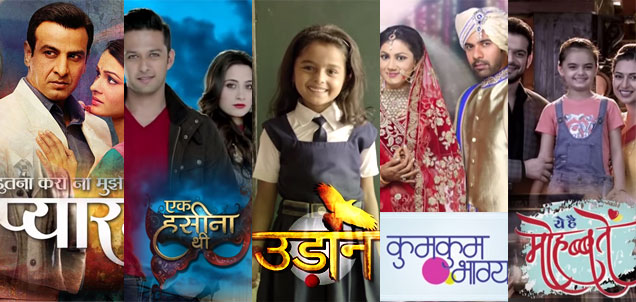
    5. Itna Karo Na Mujhe Pyaar

    In what was an otherwise forgettable year for Sony, the last quarter saw a mini-revival with the launch of Balaji Telefilms’ Itna Ka Karo Mujhe Pyaar. Mounted of familiar principles as Bade Achhe Lagte Hain (mature love story with a strong starcast), the show has emerged as one of the more ‘sticky’ show on primetime television today, albeit on a small audience base. Itna… looks very “written”, but its squeeze-the-emotion-out treatment and excellent use of obscure Bollywood songs as the background score makes it stand out. Let’s see if it emerges as the pivot around which Sony makes a comeback in 2015.


    4. Ek Hasina Thi

    Star Plus moved out of its comfort zone to dwell into the grey zone of a revenge thriller dished out in a soap format. Ek Hasina Thi was loosely based on the hit series ‘Revenge’. Though the show had a short lifespan of about eight months, it managed to catch the young audience’s fancy very early in this period.


    3. Udaan

    Colors revisited its roots, with child protagonist programming centred around a social issue (bonded labour this time), with Udaan. The show built a strong viewer base on the back of the growing popularity of its lead protagonist Chakor, who entered the list of Top 5 popular fiction characters on television within three months of launch. Udaan was also the prime reason why Colors managed to stay ahead of Zee TV in the second half of 2014.


    2. Kumkum Bhagya

    Balaji’s Kumkum Bhagya had a slow start, but gathered momentum once the story of its lead pair (SritiJha and Shabbir Ahluwalia) came into the forefront. This love story has been aided by great chemistry between its leads, aided by some good writing and treatment. Zee TV’s fate in early 2015 will hinge a lot on Kumkum Bhagya’s ability to keep the magic going.


    1. Yeh Hai Mohabbatein

    Launched in December 2013, this 11pm show is a mature inter-caste love story between a single father and a woman who can never become a mother. As it turns out, the potential of Yeh Hai Mohabbatein was considerably underestimated. Within weeks, it had opened up the 11pm slot, rating more than several shows airing in the thick of the primetime. Once Star Plus gave it the additional 7.30pm slot, Yeh Hai Mohabbatein found new wings, sailing over everything else, with combined ratings of the two airings making it the top show on television today. But for Yeh Hai Mohabbatein, Star Plus’ leadership position in 2014 would have been under considerably more threat.


    Another Balaji show (third on this list), Yeh Hai Mohabbatein has emerged as the quintessential all-in-one programme, that has good casting, performances, social messaging, family values, comedy etc., all rolled into it. But at the heart of it is a story of two cultures (Punjabi & Tamil in this case), a subject that would find increasing resonance with viewers in 2015-16, in both cinema and television.


  • Shailesh Kapoor: Time To Reinvent The Movie Marketing Template

    By Shailesh Kapoor


    It’s been a shockingly poor year for Bollywood. The domestic nett box office stood at about Rs. 17 billion in 2011. It grew a staggering 35% to Rs. 23 billion in 2012, and then a healthy 17% to Rs. 27 billion in 2013. Even if today’s release PK becomes the highest all-time grosser in the history of Hindi cinema, we are looking at the year ending at Rs. 25-26 billion at best.


    There are three problems that have contributed to this saturation, which became starker as 2014 progressed. Lack of content innovation leads the pack. In 2011, we are dishing out content that worked in 2011. The audience has moved on, even as the industry tries to recreate what has worked. The second problem is the ever-escalating ticket prices. Year-on-year, they have grown at about 15-20%. Effectively, that would mean a doubling of ticket prices in five years. Audiences now have virtually no incentive to watch mid-range films, which anyway look like me-too versions of past hits, at these escalated prices.


    But I want to focus here on the third factor – the marketing problem.


    For long, television has been the lead medium for promoting films, and it shall remain so for at least the next five years. While the internet and the social media have become more effective by the year, the reach television gives to a movie campaign is unmatched. While everyone understands the importance of television, how to use the medium well has been an area of poor understanding.


    The starting problem is measurement itself. The viewership currency (TAM currently) addresses a broad demographic. Only about 2% of Indians are regular theatre-goers. Conventional media plans, that relies on reach and frequency targets, has to be created for a wider TG, such as 15-34 SEC AB in 1million+ towns. The media wastage could be as high as 85% here. But instead of solving this problem of commercial efficiencies, producers have shown a tendency to over-spend and out-shout to compensate. At the end of it all, several films do not even recover their marketing costs at the box office.


    There are some dodgy media buying ‘rules’ that were set about 15-20 years ago, and still continue to exist. Buying on the so-called ‘trade channels’ (ETC, Music India and the likes) is the dodgiest of them all. The ‘trade’ community, which is by now highly amorphous to be treated as a unit anyway, supposedly watches only these channels, and if a film is not promoted on them, it is not ‘garam’ enough. There has been a change in the mindset in the more progressive studios on this count, but a large section of the industry continues to be trapped in age-old conventions that were never sound to begin with.


    At a more strategic level, there is a problem of exhaustion. Have you gone to watch a Hindi film in recent times and felt that you had already seen the best dialogues, jokes, songs, moments or action sequences in the promos? Watching most average films can create this sense of exhaustion, leading to audience attrition from theatres over time.


    Last year, the film industry got a boon in the form of Comedy Nights With Kapil. It has the right audience profile for a film, both in quantity and quality. It also allows for thematic integrations of the film’s marketing message. But within months, the show became a tick-off on the list of movie marketing activities that a film should undertake. The audience is, of course, smart enough to sniff the marketing peg. Another opportunity lost then!


    There is no reason why film marketing should not follow proven conventions of classical marketing, such as segmentation, targeting, positioning and media mix. Till a decade ago, we didn’t have professionals in the business. But that’s not the excuse anymore. Over the last decade, because the business was growing, no one questioned too many things anyway. But even that’s not the excuse anymore at the end of 2014.


    So, it’s time to reinvent the movie marketing template. Or we may see further decline in 2015.


  • Colosceum, Ormax unveil consumer-created fiction shows in India

    By A Correspondent


    In a pioneering venture, Colosceum Media and media insights firm Ormax Media and have come together to introduce consumer-created fiction shows for the Indian television industry.


    Consumer research was conducted over the last six months across more than 15 cities in India to generate original stories using proprietary techniques developed by Ormax. These stories were then tested using Ormax True Value, an industry standard that has been used on more than 250 television shows across more than 20 channels since 2008. Together, the two companies will approach leading broadcasters in India. Only shows that have tested exceptionally well, with more than 85 per cent probability of success, will be presented to broadcasters.


    Speaking about the initiative, Lalit Sharma, CEO – Colosceum Media said: “Ormax has used very advanced consumer research techniques to generate original stories for daily fiction shows for Hindi GECs. These concepts are stories that have been both created and validated with the consumers. A story may have originated in Indore, developed in Jalandhar and then fine-tuned by another set of consumers in Amravati. Currently, production houses make large investments in getting concept developed in-house. The broadcasters then make investments to judge their viability. By creating concepts that are sourced from consumers, we are creating a win-win situation for all stakeholders.”


    Shailesh Kapoor

    Shailesh Kapoor, Founder & CEO – Ormax Media said: “It’s been a long but fulfilling process of engaging with the actual consumers in story generation. Having produced shows like Roadies, Splitsvilla and MasterChef India, Colosceum are an established leader in the non-fiction space. We’re excited to partner them in their plans to establish a strong presence in the fiction space.”


  • Shailesh Kapoor: DDLJ: A Thousand Weeks, A Million Memories

    By Shailesh Kapoor


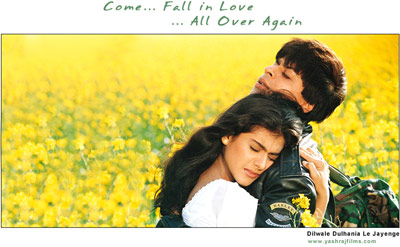
    There’s little that can be written about Dilwale Dulhania Le Jayenge (DDLJ) by the way of facts, that’s not commonly known or easily found. This month, the 1995 film completes 1,000 weeks at the box office, holding forte in the morning show at Mumbai’s Maratha Mandir for almost two decades now.


    DDLJ is the original NRI romance, of which we saw many versions for almost 15 years, till the overseas market saturated and Salman Khan changed the rules with his brand of homemade cinema with the likes of Wanted and Dabangg. Over years, DDLJ has influenced many directors, writers and actors, in both films and television. Earlier this year, Varun Dhawan and Alia Bhatt starred in a semi-spoof-semi-modernised version, called Humpty Sharma Ki Dulhania.


    But nothing, it’s now well understood, would ever come close to the original. If any Indian filmmaker, however big a stalwart, wants to make the greatest love story of Indian cinema, he would know his benchmark is set incredibly high.


    I have lost count of how many times I have revisited the film, in whole and in parts. But I distinctly remember half a dozen visits to the theatre in October-December of 1995, many of them to the infamous Uphaar cinema in Delhi, which was a short ride away from the IIT campus.


    Even in those days, when film marketing was not an assault being unleashed on us through a mix of media, DDLJ had become an event film leading upto its release. I don’t remember what exactly would have led to it, but it just seemed the right follow-up film to the immensely popular family film Hum Aapke Hain Koun..! (HAHK), which had released more than a year earlier but was still running strong in the theatres in late 1995.


    The second half of DDLJ was HAHK-like in many ways, in that it evoked the same family values and emotions that HAHK managed to. There was always a split verdict on which half was better, and over the years, the first half may have won that debate. But I firmly believe that it is the second half that brought the families to DDLJ, and created repeat value.


    DDLJ was re-released in 2005 on the completion of 500 weeks. Watching it in a half-filled multiplex was an odd experience, after many packed-house screenings a decade back. I’m not sure if classics should be re-released at all. It takes away from the house-fullness of it all, if there were a term like that.


    Sometime in 2011, I was at Mannat, waiting for SRK, who was running late for our meeting. It was Sunday night 9pm and Max started airing DDLJ. Watching the film for about two hours at SRK’s home is as surreal as it can get. If ever there was any element of ‘star-struck’ in me, I saw the last of it that night!