Tag: Shailesh Kapoor

  • Fasten your Seatbelts for The Big Bihar Sunday


    By Shailesh Kapoor


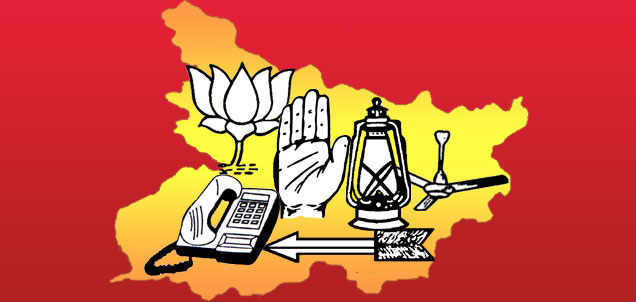
    An election results day is here again. And this time, it’s a Sunday too. Bihar elections have been a long-drawn process, with an extended campaign period and five phases of polling. It will all come to an end on November 8, when the counting begins. And it promises to be a cliffhanger.


    Election results coverage is perhaps the only form of structured programming of any significance that news channels still have, besides the ‘talking heads locked in a debate’ format. It all gets over in a hurry, but it’s great fun while it lasts, especially if you can identify the best 2-3 news channels on the day and watch within that set, than surfing across more than a dozen of them.


    Most exit polls show a close finish for these elections, though Today’s Chanakya, best known for their 300+ forecast for NDA in the 2014 General Elections, is predicting a clear majority for NDA in Bihar. Sunday will be a crucial day for Chanakya too, not just for the two sides locked in a prestigious political battle.


    When we shifted from ballot paper to EVMs, the nature of election results programming changed overnight. Till then, anchors had all the time to engage in deep analysis. Psephologists, political experts and politicians themselves with spend considerable time in news studios. No one would be in a hurry. It would all roll out at a leisurely pace, with banter thrown in for good measure. Dr Prannoy Roy shone through those days. This format really suited his personality.


    When the EVMs arrived, we witnessed a time collapse. The real action, from the first leads coming in to a clear picture emerging, would take anything from half-hour to maximum two hours, depending on how one-sided or close the battle is.


    Most news channels are still experimenting with an ideal programming format that delivers to this T20-type brief. The viewer is bound to focus primarily on the leads window, much like business news channels are watched in market hours. So should one create a show that presents the leads information to viewers in a direct, almost idiot-proof, manner? Or should one create engaging programming for the high-engagement viewers who are deep into politics, and let everyone else focus on the window on the side or the bottom of the screen


    This is where anchor personalities can play a significant role. Choices like above are not easy to make. But viewers eventually tend to watch election results programming because they trust certain anchors for their experience and knowledge of the topic. Every anchor has his (rarely ‘her’ in this case) style that he needs to bring to the coverage. Technology and talking-heads are only aids.


    Yet, after Dr Roy, we haven’t had a standout election results anchor. Most top news anchors (across languages) do a serviceable job of the day, but there’s no one who will be remembered for his election results coverage before anything else. Perhaps an outcome of the EVMs coming in.


     

  • Shailesh Kapoor: With Rural Ratings, India is Split Wide Open


    By Shailesh Kapoor


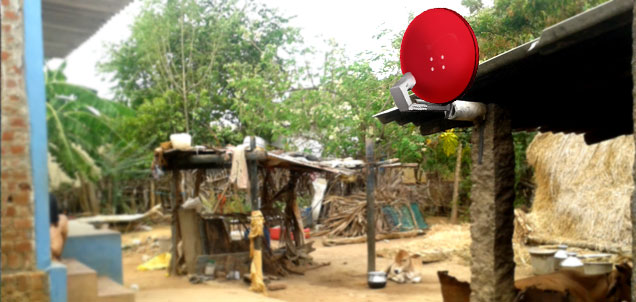
    BARC India released the first rural ratings data Friday morning. There have been some delays in the rural rollout, and they have been understandably under some pressure here. But now, that’s all a thing of the past. We are in the rural data regime. October 23, 2015 could go down in our television history as the before-after date. Congratulations to those who made it happen.


    The data itself has enough meat to keep conversations going. That FTA (free-to-air) channels will benefit from rural data was evident, but the extremity of this “benefit” was perhaps underestimated by everyone. Sample this:

    1. In Rural HSM, four private FTA channels (Zee Anmol, Star Utsav, Rishtey and Sony Pal) have more combined viewership than the seven Hindi GECs that run original content.


    2. These FTA channels get 71% of their viewership from rural India, while the “mainline” Hindi GECs get only 37% of their viewership from rural India.


    3. As a result of this turnaround, Sun TV (despite just 1 GRP in HSM) is the No 1 channel at an All India level, and by a clear margin too.


    5. Zee Anmol, the No. 38 channel in the big metros, is the No. 1 channel in rural HSM.


    The dichotomy is apparent. India has been split wide open, into rural and urban India. This will change many things in and around the television business. For starters, it will change the idea of how data is viewed and analysed. Each genre has an operating TG in which the leading players measure their performance. It’s been CS 4+ HSM (Hindi-speaking markets) for Hindi GECs and Hindi Movie Channels for ages, and CS 4+ state equivalent for mass regional channels (e.g. CS 4+ TN for Tamil channels).


    HSM is no longer HSM, though. It is a combination of HSM Urban and HSM Rural. Many advertisers are understandably not interested in the rural ratings, addressing a target audience that’s still predominantly urban. E-commerce is one such category. However, categories like FMCG and telecom would be interested in rural India too. But even for them, the messaging in rural India and urban India (especially the bigger towns) would tend to differ significantly. Imagine Vodafone running the same commercial to entice a Mumbai customer and a rural customer in UP.


    Hence, a logical outcome could be that GECs would get naturally classified as Urban GECs and Rural GECs. The Rural GECs will attract brands targeting rural India, and will be measured in their “category”, while the Urban GECs will continue to operate much like they used to, in the pre-rural era.


    One could argue that rural penetration of pay channels will increase with time, and the gap between the two types of GECs may look much smaller a year from now. But an Urban GEC playing in the Urban+Rural space would bring its own share of confusion, like that commercial that would target a Mumbai customer or a UP rural customer, but play out to both. Having said that, technology solutions to localized ad targeting are available and likely to become a lot more relevant now than ever before.


    The dust will settle down over the next few weeks and a broad consensus on working definitions of categories and their target audiences is likely to emerge with time. For once, niche channels (not targeting rural India) would have more clarity on how to use the ratings data than their mass counterparts.


  • Shailesh Kapoor: Prime Time News Is Facing Spokesperson Crisis

    By Shailesh Kapoor


    If you are a regular primetime news viewer, you will be familiar with the various “official spokespersons” that represent their political parties on these shows. The debate format, which will be associated with Arnab Goswami for years to come, is now a standard format across most channels, Hindi and English.


    Being an official spokesperson is not an easy job by any stretch of imagination. You have to be on upto four shows on the same day, for an average duration of 30-45 minutes each. So that’s potentially three hours of on-air time. Add the preparation time during the day and it’s a full-time job. It’s also a job of superhero proportions. Sometimes, you are “live” on two channels at the same time, saying different things!


    It would still be a rewarding job, but for the obvious problem. Spokespersons speak for less than 30% of the time that they are on-air. And of the time they speak, not more than 30-40% is actually audible in the perpetual din.


    To improve their player stats, they exercise their need to speak more, interrupting others and talking over them. It seems like a party boss is watching and evaluating their performance in real-time (very likely too) and there’s the pressure to perform.


    What it has resulted in is a perpetual degeneration of the quality of spokespersons. No self-respecting and intelligent man or woman would want to subject oneself to this futility night after night. What we get, hence, is second-rung talent.


    However, it’s not just the lack of quality that worries me. There’s a lot of arrogance at display every night. Spokespersons, taking a cue from each other and sometimes from the anchors (who are under their own pressures to be Arnabs), often talk in offensive tone and body language, sometimes talking down to unsuspecting non-politicians and even citizens invited on the show.


    If this style of talking is a party brief, then it reflects very poorly on our political class. Though I suspect political parties have left their spokesperson free to figure out their life on-air. In which case, the arrogance of behaviour displayed on TV reflects their character. In either case, it makes the citizen viewer feel more disillusioned about the political class.


    Not very long ago, the likes of Ravi Shankar Prasad, Manish Tewari and Jayanti Natarajan used to be party spokespersons. While they too had their bouts of impudence, there was certain stature and grace that came with their personas. At least one heard them seriously, even if the content was not credible on many occasions.


    Why are parties not sending better talking heads on TV, or at least training those being sent to project a dignified image of the party on-air? Is dignity not in vogue, or are news channels too irrelevant in our politics for parties to worry about? I suspect it’s the former.


    Many of us comment on social media that we are losing interest in news television because of journalism in general, and the quality of anchoring in particular. What about the quality of political representation? For me, that’s the problem with more social gravity attached to it.


  • Rural ratings delayed, but are broadcasters rural-ready?


    Rural Ratings Delayed, But Are Broadcasters Rural-Ready?By Shailesh Kapoor


    The delay in the release of the rural ratings has been a topic of chatter in the broadcasting corridors over the last fortnight. Since a definitive date was announced, the delay has led to speculations, even rumors, including some that are imaginative and absurd in equal measure.


    Over the last year, since it became evident that rural ratings will be a part of their lives sooner than later, broadcasters have spent considerable resources in becoming “rural-ready”. The main area of focus has understandably been distribution. The other emphasis has been on consumer research. Having studied LC1 consumers extensively over the last few years, rural research is not entirely alien territory for broadcasters.


    But is that all that’s there to being rural-ready? Distribution is an enabler and consumer research is an input into programming and marketing. Hence, unless the rural-readiness reflects in content and brand strategies, it is not in place in real terms.


    That raises the pertinent question: Has anything changed on-air? Besides some of the GECs extending their primetime to ensure an early start (5pm/ 6pm), no other visible change reflects rural-readiness on-air. If anything, some changes have been a bit “anti-rural” in nature. A sizeable proportion of new launches over the last year are urban-skewed in their theme and treatment. It is evident they will lack rural traction.


    Stereotyping problems have continued, such as assumption that non-fiction viewers would rather read English than Hindi. Presentation language, as a result, continue to be inconsistent on-air, not just for GECs but even for movie channels. Liberal usage of English mars comprehension of several shows, including some fiction ones, even in the urban centers, and this has not changed either.


    The approach seems to be that of ‘be ready and then wait-and-watch’. The first ratings, whenever they are out, will mean a shift of gears. With channel and programme level data available to act upon, and the weekly clock ticking by, it would be time to act on high priority. All the rural research reports, from studies conducted in late 2014 and early 2015, will then come in handy.


    The genres that are likely to be least impacted from a content perspective are news and kids. Though both of them may lose overall TV viewing share in rural, like most other non-GEC genres, their rural content profile is likely to be similar to the bigger urban centers. A few other genres, especially infotainment and music, will have to take decisionson whether they want to invest resources in the rural markets at all.


    All this shall unfold when the rural ratings are released. Till then, the question of why they did not release on schedule, and what the new date is, will continue to keep us busy.


    So what’s delaying BARC’s rural ratings?By A Correspondent


    The much-awaited release of rural ratings data from Broadcast Audience Research Council (BARC), the joint industry body mandated by broadcasters, advertisers and advertising agencies to measure television audiences looks likely to be delayed.


    According to sources, broadcasters body Indian Broadcasting Foundation of which Star India CEO Uday Shankar is President, has written to the BARC board asking for the rural data to be delayed.  The reason:  there is need to let the current the data stabilise given some complaints of volatility. BARC started releasing its data from end-April 2015.


    BARC was scheduled to release the rural data by end-September and conducted road shows across major centres (Disclosure: MxMIndia had partnered the promotion of these roadshows).


    However, according to industry grapevine, there is more to the delay than the reason to stabilise. Sources have told MxMIndia that certain members of the ecosystem are dismayed with the delay and have questioned whether a leading channel whose ratings have been put to test by competition is behind the effort to delay the rural release.


    According to information we have received, Doordarshan officials are unhappy with the delay, and it is felt that if BARC pushes the release of rural data indefinitely, the I&B ministry may also step in.


    The BARC Board is scheduled to meet next week and will possibly deliberate on the issue.


  • Crossover Stars: Priyanka Chopra & Kapil Sharma


    By Shailesh Kapoor


    Crossover (definition): The process of achieving success in a different field or style, from the one in which success is already established.


    Crossover remains a much-used (and abused) word in the Indian entertainment business. But much talk on the subject has been fringe talk, whereby talent that’s not even successful in their own field has “crossed over” to another field, again to meet with limited or no success. In other cases, successful Indian film actors have crossed over to the West, but not made an impact, being reduced to fringe parts in Hollywood films or TV series.


    There have been only four true crossover successes so far. Amitabh Bachchan reinventing himself and taking up KBC at a fairly low point in his film career would be on the top of my list. Shah Rukh Khan is the shining example of the opposite – a TV star who made it big in the films. AR Rahman has crossed over comfortably to world cinema, and even has a fatwa to show. Irrfan has discovered his niche at the world stage, at times in small parts, at times in major ones. There may be several other examples, but how successful they have been can be debated.


    With just four case studies over all these decades, we could safely say that the crossovers are not our cup of tea. Until this week. As if to compensate for years of crossover failures, we had two huge success stories this week – Priyanka Chopra crossing over to the West with Quantico going on-air, and Kapil Sharma crossing over to films with the release of Kis Kisko Pyaar Karoon.


    Chopra’s achievement is towering in its impact, and has been written about earlier in this column too. The show is now on-air and early reviews are a mix of positivity and skepticism. But even in the not-so-positive reviews, Chopra has been hailed as an accomplished actor and her casting has been described as a big strength of the show. Her international acting career could be on the verge of acquiring very long legs.


    Sharma’s success is very different in nature. Kis Kisko Pyaar Karoon became the highest Bollywood opener for a debutant ever. It also registered higher weekend collections than many recent films featuring young stars. Importantly, the film achieved this by converting theatre non-goers to theatre-goers. Television is often seen as an “inferior” medium to films because it’s “free”. But when Sharma’s fans from television thronged the multiplexes to watch him on the big screen, that argument went out of the window.


    If Sharma sticks to clean family comedies and chooses his scripts carefully, he could have a huge film career ahead of him. Family comedy is the most popular genre in Bollywood, and one that’s hugely under-served too, with very few releases in the genre over the last 4-5 years.


    The future will determine the true degree of the crossover success achieved by Priyanka Chopra and Kapil Sharma, but my list has extended from four to six. And it looks a very powerful one too: Amitabh Bachchan, Shahrukh Khan, AR Rahman, Irrfan, Priyanka Chopra and Kapil Sharma.


  • Shailesh Kapoor: Should 30% Success Rate Still Be Acceptable?

    By Shailesh Kapoor


    Over the last decade, the entertainment business has started attracting more senior talent from outside than ever before. The industry has been able to match the pay packages offered by FMCG and telecom majors at senior levels, though a fairly wide gap remains at the entry level. Many have also moved because of their inherent passion for the media and entertainment business.


    Anyone who joins the entertainment business from a more traditional industry first observes the alarming difference in the product failure rates of the two industries. In the entertainment business, if you get even 30% of what you launch right (read: It doesn’t lose money), you are a champion. In any self-respecting FMCG company, that could mean you have to look for another job very soon.


    Several arguments, in the ‘apples-to-oranges’ domain, are given to justify why we should not compare failure rates in the two industries. In many ways, a myth has been propagated over the last two decades that the process of consuming entertainment is a lot more complex than that of consuming a conventional consumer product, and hence, it is difficult to ascertain what the entertainment consumers want and what will catch their fancy.


    I must mention that not all propagators of this myth are ‘old school’ in their thinking. Several are, in fact, fairly liberal in their thinking, making films and TV shows that challenge the status quo. But it’s the lack of an understanding of the other side (the classical marketing side, a la FMCG) that comes in the way.


    With ‘outside’ talent entering the industry, things have changed, albeit slowly. A simple way for us to assess that by knowing how many programme concepts, pilots, scripts and films are being tested with consumers before critical business decisions related to them (go or no-go, budgeting, slot, release scale, etc.) are taken.


    The number of television concepts tested using Ormax True Value, our content testing tool for broadcasters (predicts on-air performance, specifically the steady-state TSV), has been increasing by 50% year-on-year since 2009. Similarly, the number of films we test using Ormax Moviescope (predicts lifetime box-office)has been doubling year-on-year since 2011. Script-testing for films was non-existent till as recently as two years ago, but there is increasing interest in it today.


    Interestingly, many television concepts that do not test well are still being put on-air. Sometimes, this decision has already been taken, and the testing is done to validate the instinct that led to the commissioning decision. When the results are positive, it’s celebration time. But when they are not, it’s a case of hoping that the research is proven wrong. It’s what I like to call ‘The Hope Strategy’. Even a marketing intern will tell you it’s not the best strategy for a brand that aspires to be a leader in its category.


    But ‘The Hope Strategy’ is still better than the one that’s based on no consumer information at all (that’s the ‘Hopeless’ one). To that extent, we have made some progress. But there’s a while to go before we can match up to the best in the marketing world on product success rates. There’s a while to go before the acceptable success rate increases from 30% to at least 60%.


  • Shailesh Kapoor: Silly Point: Taking Trade Communication To Consumers

    By Shailesh Kapoor


    It’s been a week of very little action on-air, but there haven’t been too many dull moments behind the scenes in the television business. As the atmosphere around the release of the first rural ratings three weeks from now builds up, so does the battle for top honours in the Hindi GEC category.


    Last week, Colors toppled Star Plus by a single GRP (in Hindi-speaking markets), and this week Star Plus took back the top spot, but with an even smaller gap than last week. We may just be seeing the beginning of a very exciting battle for leadership.


    Colors’ media response on taking the top spot last week was restrained, and we did not see any press announcements or electronic mailers. It’s also in line with the BARC India advisory on what constitutes responsible use of data in trade communication.


    However, the same cannot be said about many other channels. In a silly trend, we are seeing more and more channels promote their “leadership position” on-air, on their own platform itself. Then, there are ads in mainstream print, not just the pink papers, on a certain channel beating others in its genre. The target group, time bands and the period of reporting are selected to suit the output. Even after that, some of these ads promote “leadership” where the gap is less than 5%. And these are genres where total viewership is so low that even a 20% gap won’t constitute real leadership.


    This flow of ratings information in the mainstream media is something we could have done without. The usage of the term “TRP” by consumers has gone up significantly over the last two years. When “iski TRP sabse achhi hai” becomes the reason to like a show or a channel, you know there’s a problem.


    The problem is not very different from what happens in Bollywood. Box-office figures are central to a lot of communication around films. Consumers speak about the 100-cr club with a lot of false confidence, emanating from truckloads of media information but no perspective on how to read it.


    However, there’s a reason why the TV problem is worse. In films, at least the numbers being discussed have a physical meaning. They are in Indian Rupees after all. In TV, no one outside the media industry (and some would say, many within it too) knows how to read the ratings data. It’s just a notion, and hence, it is easy to be misdirected by what one sees and reads.


    Once in a while, you see a genuine e-mailer based on ratings data that makes you go: “Whoa, that’s some achievement”. But in the clutter of many claims and counter-claims, they just become one of the many things being said.


    But while one can debate the idea of good trade communication vs. poor trade communication, there cannot be much debate against the merits of sparing the end consumer of information on TV ratings.


    They, the end consumers, are the ratings themselves. If they start watching something because it rates well, we can be caught in an infinite loop of silliness.


  • Shailesh Kapoor: Split Personalities: TVF Pitchers & Rural Ratings

    By Shailesh Kapoor


    Two strikingly contrasting events highlighted the week that was. On Sunday, the season finale episode of TVF Pitchers went online. During the week that followed, BARC India conducted roadshows to share more information on rural ratings. I have written about both these topics here over the last few weeks, but their proximity in time is fascinating, even though it is purely coincidental.


    TVF Pitchers achieved a major milestone by featuring on the IMDB Top 250 TV shows charts, where it is currently ranked no. 38, ahead of Friends, Dexter, House Of Cards, and the likes. The show has also received considerable, some would say disproportionate, attention from online media. One such article (by Quartz India) is headlined “How an Internet show on startups delivered a stinging blow to Indian TV”.


    TVF Pitchers has watershed qualities to it, a lot more than its predecessor Permanent Roommates. The latter was a romcom, and while it differed from our regular television fare, it was not entirely unfamiliar, especially if you have seen some of the many Bollywood romcoms over the last decade.


    But TVF Pitchers enters an area Indian entertainment has never been able to capture authentically – the corporate world. Barring an odd Rocket Singh, most films that have dabbled in this world have caricaturised it, none less than one that was called “Corporate” itself (in which a management trainee gets a cabin to herself, of a size that most CEOs would be envious of). In our TV serials, we hardly see offices anyway, and work is just an excuse to get the men out of the house.


    TVF Pitchers manages to bring an authenticity of portrayal, in turn getting the appreciation of a fairly large corporate population of India, across industries. It is corporate but not elitist. It also does not have the shackles of censorship (or self-censorship) around it. It is just intelligent fun.


    At about 2 million views per episode, the numbers speak for themselves. But the perspective of mass vs. niche should not be lost here. 2 million is less than 10% of the viewership of an episode of a typical hit Hindi TV show. And these are shows that have hundreds (often thousands) of episodes. We are talking of different degrees altogether.


    But the 10% mark may just be the first step in a journey that the ‘parallel TV movement’ may have to make over the next five years. I say “TV” because that’s really what it will compete against. We would need more companies like TVFs and more shows in more genres to grow the market. There are a few others that already exist, but they lack the belief and confidence that shines through TVF Pitchers.


    Our mainstream television couldn’t possibly care less about these developments. The rural ratings are round the corner, and the gap between the two worlds is bound to widen. But if the 10% number grows to even 20% over the next year or two, more advertisers, especially those targeting the bigger cities, will begin to evaluate their options. It’s “our kind of TV” after all.


    But lest we should get carried away, every online show will not be a TVF Pitchers. And therein lies the real problem, the one of scalability.


    Let’s see what the future has in store. Besides, of course, Permanent Roommates Season 2.


  • Shailesh Kapoor: Prime Time News or Murder Investigations?

    By Shailesh Kapoor


    In the short history of news television in India, there would be very few weeks as bizarre as the one we are currently in. We are in the middle of a full-blown investigation of the Sheena Bora murder case, unfolding in near real-time across news channels. Everything else has to take a backseat then, including the disturbing state of affairs in Gujarat.


    It’s understandable that a high profile murder case would generate audience interest, especially when it has elements that point to decadence of values, much like the Aarushi Talwar murder case. I’m all for running a story that the audience want to watch. But is debating a whodunit with half-a-dozen talking heads the best way of reporting a murder case? I’m not too convinced about that.


    That Indrani Mukerjea, the principal accused here, has a broadcasting lineage has created that much extra interest in media offices. If you have spent at least three-four years in the media industry, chances are very high that you are within one degree of separation from everyone else in the industry. It’s easy for journalists to find colleagues and ex-colleagues who knew Indrani. But very few like Ravina Raj Kohli have chosen to go on record with their views.


    So, we end up with the same generic talking heads that we see all the time when a non-political story gets prime-time coverage. But when you see Rahul Roy as one of them, you know it’s getting really desperate.


    Last month, I read Avirook Sen’s book on the Aarushi murder case. Coming from a journalist who followed the case and the trial all the way through (for Mumbai Mirror), and continues to do so even now, the book was an eyeopener in many ways. I have spent a fair share of my primetime viewing on the Aarushi case, but when I read Sen’s book, I realised how little I knew about the case till then.


    I then googled a few news channel videos from the day of the verdict, and even found Sen on-air in a couple of them. But he got only about half a minute to speak on about three occasions, and while you sensed in that short time that he was the one who knew the case better than everyone on the panel, including the anchor, you never got to know his point-of-view in that short period of time.


    If viewers are interested in a story, investigative journalism of Sen’s quality would engage them a lot more than debates based on half knowledge and conjectures. But then, that requires some effort, doesn’t it? As Sen says in his book, there were several days in the Talwars trial when he was the only journalist at the Ghaziabad court.


    Are news channels getting addicted to this easier way out, where debates from the comfort of the studios are the new form of journalism? It would seem so, going by what we see all the time.


    One hopes that there are young journalists with fire in their belly wanting to change that perception!


  • Shailesh Kapoor: Rural Ratings: Interesting Days Ahead


    By Shailesh Kapoor


    It’s not been long since the official TV ratings of the media industry shifted from TAM to BARC. But BARC has moved ahead at good speed. When it was first announced that BARC will report only 1Lac+ towns data initially, and that urban LC1 (<1Lac) towns and rural will be added later, one was prepared for a long wait.


    But it’s good to be pleasantly surprised. As per a recent announcement, we may see urban LC1 and rural data as early as September 2015. Well done, BARC!


    Urban LC1 is not unfamiliar territory for broadcasters. TAM started covering this pop stratum in 2013, and broadcasters, especially the mass players, have made considerable investments in distribution, marketing and research in these markets since then. I’m sure BARC would refrain from the nomenclature “LC1”. I have been told it stands for two different things: Less Than Class 1 (Towns) and 50-100K population towns (L being 50 and C being 100 in Roman numerals). I suspect the former is the more accurate description. But who dreams up names such as “LC1” anyway?


    The addition of rural markets, in contrast, is an absolute first. There is no taste of rural ratings from the past, and there’s a mystery box feel to the whole thing. In one of their roadshows, BARC indicated that 50% of the universe would be rural, though the sample would be more skewed towards the more heterogeneous urban markets. We can expect ‘Urban+Rural’ and ‘Urban Only’ data cuts to be available soon.


    The inclusion of rural may not impact several genres, including those based on the English language, infotainment, lifestyle, etc. But it could wreak potential havoc for mass channels, read GECs and Movies. Two other categories that are likely to be impacted are News and Kids, though many advertisers may continue to buy them on Urban Only data.


    Impact on programming is likely to be significant as well, especially if the 50% weightage indeed becomes reality. Early prime is bound to gain more importance, and we should be prepared to see more mythology, culture reinforcement and patriarchy. It may not seem like a step in the right direction, but if it is closer to an accurate representation of what India watches, we can’t fault the logic.


    In a parallel universe, the internet and smartphones are enabling content consumption for a sizeable audience base (at least 10% of the Indian population). This content, as we know, looks nothing like what’s on TV. With the addition of rural markets to measurement, the gap will widen even more.


    At some stage then, an advertiser may have to choose which India it wants to target. Most research worldwide shows that television and Internet are complimentary media, and not competing ones. But the India story can pan out differently. We shall wait and watch.


    For now, it’s time to welcome Rural India to the world of television ratings. It was long overdue.


  • Shailesh Kapoor: Hindi GECs’ Latest Itch: 4% Rating

    By Shailesh Kapoor


    The ratings provider may have changed, but the definition of the central programme performance measure remains the same. Called TVR % (TAM) earlier, and Rating % (BARC) now, it is a time-weighted measure of the % of universe that watched a programme, effectively connoting the “viewership” of the program.


    In primitive days of measurement, TVR % of 25-30 was not uncommon, delivered by blockbuster films such as Hum Aapke Hain Koun. Through the decade of 2000, the best of daily fiction on Star Plus scored in the 13-20 range, led by the K triplet of Kyunkii, Kahaani and Kasautii.


    With time, touching 10% became harder, as more channels meant higher fragmentation. An odd film premiere like Main Hoon Naa or 3 Idiots would get close, but even at its most masterfully manipulated high point, a fiction show (I speak of Hindi here, down South is a different story), would hit a glass ceiling at 7-8 TVR.


    Over the last two years, the benchmark continues to reduce. No Hindi programme has crossed an average weekly rating of 4% over the last two weeks. For a huge film premiere, 7% is an excellent result, perhaps an equivalent of 10% not too long ago. Even big-ticket cricket doesn’t rate like old times anymore.


    In my opinion, GECs have not spent enough time understanding this area over the last five years or so. Yes, there are more channels and the consumer has more to choose from. Much of the trend till 2011-12 could be explained on account of this fragmentation. Digitisation further fuelled fragmentation, acting as a level-playing field for smaller channels, which would lose out in the analogue environment because of poor placement.


    But instead of looking at it as a trend, what if we just asked the question: Is it so impossibly difficult to create a programme (daily, weekly, whatever) that only 4% of Hindi-speaking India watches?


    For every show that goes on-air, at least five, often more, are considered. That means that there are more than 150 daily fiction shows alone that enter a stage of serious consideration in Hindi GECs every year, not to speak of the weekend options.


    A diverse set of producers, some of them channel employees in the past, churn out these concepts. The writer pool that is engaged to work on them is not too diverse though. It’s the same set of writers that freelance for multiple producers, sometimes working on 2-3 running shows, while working on pitches for another couple. The seamless movement of plot points from one show to the other is easy to catch for anyone who follows the category.


    It seems, then, that we have caught ourselves in a seemingly vicious circle of the current output becoming the input for future output, and thus, both the current and the future looking remarkably alike. For a consumer, that means “nothing new”.


    The Hindi GEC category has been steady at about 1,100 GRPs over the last two years. But no superhero shows have emerged in this period. Admittedly, there is no magic formula to churn out one. But the best bet will be to infuse fresh writing talent into the industry. It’s easier said than done, because a lack of understanding of the daily fiction audiences and its grammar can be genuine roadblocks, as seen in recent examples like Yudh and Everest respectively.


    I’m convinced we’ll have a consistent 4+ TVR show sooner than later. I’m curious to see what it will be and how soon it will come our way.


  • Shailesh Kapoor: The long tail of TV channels: An investor’s delight?

    By Shailesh Kapoor


    We are a country of many channels. At last count, more than 400 channels have enabled themselves with watermarking that’s a pre-requisite for them to be measured and reported by BARC. About 250 of these have a viewership of at least 0.1 GRPs.


    The top 10 channels contribute to 48% of the total TV viewership in the Hindi-speaking markets (HSM). Six Hindi GECs and four Hindi Movie Channels (HMCs) constitute this list. The Top 20 contribute 64% of the total TV viewership. Regional GECs and kids channels find a place in this extended list, along with Hindi GECs and HMCs.


    The Top 30 contribute 75%, and the new genres to enter this list are Hindi News and rerun-based Hindi GECs like Star Utsav, Zee Anmol and Rishtey. The tail flattens out here onwards, with the Top 40 contributing 81% and the Top 50 contributing 86%. There is no past data to draw a trend here (BARC vs. TAM is a fallacious comparison), so it is difficult to conclude if the long tail is getting longer. But even as the big guns fight their fierce battles, it’s this long tail that is going to be of increasing interest to potential investors in the broadcasting sector.


    Look beyond the Top 30 and you see variety in great measure. Regional channels feature prominently in this list, as do genres like sports, news, music and infotainment. However, there’s no ‘only-in-English’ channel in the Top 90, till the English Movie Channel (EMC) category makes an appearance.


    There has always been considerable investor interest in the television business in India, over the last two decades at least. With the advent of digitisation and the (somewhat overrated) phenomenon of non-linear television, this interest is increasingly concentrated on the long tail. It is not to suggest that the GEC category has no need gaps available, but the sheer investment in a mainline GEC can make even the most risk-prone investor think twice.


    Hence, the focus seems to be on differentiated ideas that can stand out in the long tail. A common problem, however, seems to be that many of these ideas have the potential of being a long tail champion, but the aspirations and funding requirements of one of the Top 20 players.


    Like in the films business, there’s no such thing in TV as a good channel or a bad channel. Every channel is as good or as bad as the ROI it can generate for its investors. The long tail has higher chances of creating such high ROI propositions, but with channels that control budgets to suit the long tail potential.


    Thinking regional becomes a smart choice in such a scenario. There are more need gaps in the regional spaces, and like-to-like content costs are 30-70% lower in regional vs. Hindi, depending on the market being targeted.


    For every eight new channels launched in the long tail, only one breaks even in its first decade. As we mature as a television market, we will see more long tail channels. But we also hope to see more success stories.