Tag: Shailesh Kapoor

  • Shailesh Kapoor: The GEC Middle Ground: Good vs. Bad Differentiation

    By Shailesh Kapoor


    The disappointment around the quality of mainstream GEC content in India is not a new topic, either for this column or for the industry as such. The media discourse around poor standards of fiction content on Indian television has caught steam over the last year or two. Loss of GEC viewership has meant that broadcasters have been left with little choice. They just have to take up the transformation process on high priority.


    Over the last three-four years, there have been several attempts at addressing this area, led by market leaders Star Plus and Colors. Colors has done two seasons of 24, Star Plus dabbled with finite fiction in Everest, Tamanna and Dahleez recently, and have now lined up P.O.W. Sony’s Yudh was not its first attempt at breaking the mould. After all, they started it all with YRF Television in 2010.


    Most, if not all, of these attempts, have been failures of worrying magnitude. Not only have these shows not rated over their lifespan, they didn’t even open well, indicating widespread concept-level rejection by the audiences.


    Casual observers will conclude that the Indian audiences are not ready for quality content and would rather be satisfied with the afternoon soaps they are being dished in the prime time. You get what you deserve, is an oft-mentioned argument. But that’s not an accurate assessment of things.


    There’s high level of operating dissatisfaction, as is apparent in falling ratings and low levels of launch ratings of new fiction shows. Yes, dissatisfaction is an opportunity, but conditions apply. A dissatisfied consumer will still apply her due filters in assessing the “differentiated” content on offer. And irrelevant differentiation will never cut ice.


    And that’s where the problem has been. Almost everything that been attempted as differentiated content has been conceived at the expense of viewer relevance. Dysfunctional families, dark settings, moody pace, mumbled dialogue delivery and excessive use of English have marred most of these shows. Also, for some reason, there is an obsession with the thriller genre. YRF Television bet heavily on it, and then we had 24, Yudh and now P.O.W.


    Good differentiation should be in the framework of the mainstream, where you set new standards in areas of content the consumer is hungry for. The best attempts at good differentiation over the last decade or more have been a lot more inclusive:

    1. Jassi Jaisi Koi Nahin (before the makeover)
    2. Sarabhai Vs. Sarabhai
    3. Balika Vadhu (the first two years)
    4. Bade Achhe Lagte Hain (before the leap)
    5. Ek Hasina Thi
    6. Mahabharat
    7. Crime Patrol (before factory production took over)


    Each of these properties had a significant impact on the fortunes of the respective channels when they went on-air or when they reached their true potential. They offered good differentiation, giving the audiences new but palatable fare. They became the “middle ground”. The middle ground between trashy afternoon-ish soaps and the entirely unrelatable dimly-lit thrillers that are barely comprehensible to an Indian audience.


    It’s this middle ground that must be treaded more often. Because it’s here that the change will come from. Bad differentiation, on the other hand, runs high risk. That of throwing the baby out with the bathwater. Watch out!
     

  • Time for telly to look at customisation to up revenues


    By Shailesh Kapoor


    The most festive month of the year is here. The Navratri has started, Dassera is round the corner, and the month of October will be rounded off with Diwali. A large part of the commercial significance of this period revolves around the spending spree it fuels among consumers. Auspiciousness and celebrations come together in a period that’s an advertiser’s delight.


    Print has been the medium that’s traditionally benefited the most from this period. With no cap on inventory or edit-to-ad ratio, newspapers can add pages and supplements endlessly to monetize the festive fervor.


    Television has its own challenges. TV doesn’t allow you to add a front-page jacket and then another one on the top of it. Hence, the only two conventional ways to exploit the festive seasons are: By increasing the FCT available on the channel, and by launching big-ticket properties coinciding with the period. The former has been reasonably restricted in these days of the ad cap, putting all the pressure on the latter.


    A line-up of festive properties this year looks as good as any year, especially on the films front. Most movie channels, across languages, have big-ticket premieres and festivals planned. The world television premiere of Sultan, scheduled on October 15 on Max, is the marquee event here.


    On the original programming front, Bigg Boss will enjoy a festive launch, coming on October 16 this year. A series of fiction and non-fiction shows are lined up for launch too, but that would be the case through much of the year anyway.


    Which brings me to the question that I end up asking every year around this time: Are our TV channels doing enough to monetise the huge opportunity around this festive season?


    The gap lies in being able to create customized content for the festival advertisers. Just FCT-led exposure is tough to monetise, especially given the growing spends from the e-commerce category, which relies heavily on the more contextual digital medium for exposure.


    In the early years of satellite television in India, Advertiser-Funded Programming (AFP) evolved as a secondary source of revenue for the broadcasters. As such, it always got secondary status at the broadcaster programming end, even as some of the top media agencies tried their best to bring AFPs into the mainstream. For a programming head at a channel, an AFP is content he/ she is forced to put on-air. It would never get the same creative investment that a “regular” programme will.


    That could make some sense if your AFP is about an LG Microwave or a Philips Air Fryer. But the moment one thinks of a wider brand like Amazon, the opportunities of creating well-integrated, consumer-centric content, which creates entertainment and client value in equal measure, are endless. But there are very few such ideas floating around.


    You cannot expect a brand or its agency to do all the hard work here. The channels have to set the ball rolling from their end too. Various sales structures have been attempted across networks to enable this, but most such teams have becoming coordination points, balancing sales and programming, than focusing single-mindedly on adding value.


    Today, the internet is teaching TV a thing or two about customisation. Hope the TV guys are listening!


  • Shailesh Kapoor: Uri & After: Finally, we can see some news!

    By Shailesh Kapoor


    It’s 12 days since the Uri attacks on September 18. The incident, and its aftermath, which included speeches at the UN General Assembly and the surgical strikes late Wednesday night, has meant that newsrooms across the country are in the middle of their most active and substantive period in a long time. 2016, in particular, has been a slow news year.


    With the exception of the Pathankot attacks in January and the state elections in May, rest of the news has been fairly routine. In a multi-channel scenario, accentuated by the presence of countless digital news platforms, this meant that news had to be created out of thin air. The need to do that comes with its own share of theatrics and hyperbole, because after all, who’s interested in soft presentation of soft news!


    But the last 12 days have been different. It’s like those old times when you go to a news channel because you actually want to watch something that’s of interest to you. Historically, news has been most purposeful genre on television, across the world. News viewers have had an imagery of being learned and intelligent, and even if stereotypically so, a lot older than the average populace.


    But across the world, over the last two or three decades, the definition of news has evolved to include things that are more socially relevant and have the potential of becoming hot discussion topics, even if they lack depth of impact over a period of time. This is probably the only definition of news the millennials understand.


    I’ve been watching the coverage over the last 12 days with great interest. How does a media that is so used to serving news is a flashy, dumbed-down package to appeal to the vast fringes of news viewing respond when it has to cover something several notches more important than what it “covers” day in day


    By and large, there has been pleasant surprise on offer. Restraint and maturity are not words you would associate with the Indian media (or most media across the world today), but we saw glimpses of that over the last 10 days. The government at the Centre played an important enabling role here, by being direct and decisive in its communication and action. If we leave out the silly side story fueled by MNS, related to Pakistani talent in India, the overall coverage has an air of urgency and responsibility around it. For the first time in what seems like forever, the messaging is consistent across channels, anchors and most political groups, barring a few that are left-aligned.


    It’s not as if the DNA has changed, though. Within three days of Uri, we had Pakistani guests on a few channels, including on The Newshour. And we had Barkha Dutt wondering, at least on Twitter, why they are being called. Arnab Goswami continued to dare “some channels” who have acting as peace doves to come out of their proverbial hiding. Name each other, can’t you? It would be a lot more interesting that way.


    Clearly, the story around Pakistan is still developing. It may take, even months, before it finds its way in the soft news section. The real test of our newsmen and newswomen is still to come. We saw during 26/11 how the media was just not prepared to handle an issue of national importance. Have they learnt their lessons? 2016-17 may just give us the answer.


  • Shailesh Kapoor: Need focus on content development for stable growth

    By Shailesh Kapoor


    Unless we witness an unlikely, highly dramatic turnaround in the next three months, 2016 is set to be one of the toughest years in the history of the Indian entertainment business. And that’s true for all sectors of the business, barring radio.


    Television has struggled to cover new grounds this year. A handful of FTA channels launched during the year as a consequence of rural ratings released in October 2015. But there hasn’t been much else to shout about. Content remains stagnant, viewership is dipping or stagnant in most genres, and viewer dissatisfaction is on the rise.


    The Hindi film industry is in its toughest phase in more than a decade, perhaps two decades. Revenues are stagnant and footfalls are dipping. Audiences are choosing to stay away from the theatres with escalating ticket prices and the content not matching up.


    But it’s the third sector that was expected to have a watershed year, and that’s not happened either. Original digital content, delivered via OTT platforms and YouTube, was tipped to take 2016 by storm, a sentiment that came in after the roaring success of web-series like TVF Pitchers and Permanent Roommates, and the rise of AIB, last year. But that’s not happened either. There is a lot more volume out there – more than 50 web-series launched this year – but the quality has been disappointing, and nothing has stood out enough to be called game-changing.


    Then there are broadcaster-backed OTT platforms that primarily run on television content or sports. Some of them have tried original content, but with no real success.


    Three different sectors, facing different challenges at different stages of their lifecycles. But there’s something common to these challenges: They all arise from an industry mindset that discourages content development. And I use the word development in the most specific sense of the word – nurturing an idea till it reaches the point where no more nurturing is needed.


    We seem to be in perpetual hurry. To announce, to launch, to make, to market. Content development should be the bedrock on which production and marketing are mounted. But that’s clearly not the case.


    Let’s take the film industry’s example first. The business is in an absolute tight spot. The business model is under question and audiences have to be wooed all over again. But if you track the trade news over the last week or two, there are announcements and more announcements. Some of these are about films releasing in end 2018, more than two years from today.


    While there’s nothing wrong in blocking the big holiday weekends in advance, most, if not all, projects announced for late 2017 and 2018 do not have a ready script as of today. There are high chances some of these projects will take off with content flaws arising due to lack of adequate development work. Yes, there are pockets in the film industry where content development is encouraged, but that accounts for less than a dozen films a year, too small to change the operating “rules” of the industry.


    In television, there’s a lot of development work before a show gets commissioned. That’s a culture the big channels have championed over the last two decades. But this work is typically centered around the first 3-6 months of the story. But running dailies past that period take up more than 80% of GEC prime time, and ongoing development work on them is negligible, if not entirely absent. There’s no nurturing, just breathless writing.


    The digital content sector is still evolving its culture. But there seems to some kind of a trigger-happy approach going around. Ideas are being greenlit on the strength of being edgy and not-for-TV. But a sector cannot define itself by exclusion for too long, can it? At some stage very soon, once the novelty dies down, consumer relevance, beyond “different from TV”, will play a role in how the sector evolves. Currently, a lot of development for original digital content seems to be happening with an inward approach that makes sweeping assumptions about the consumer. Because after all, they are “people like us”.


    Business model flaws can still be fixed. Cultural flaws can be tougher to fix. The rightful place content development deserves in the value chain must be given to it soon. The clock is ticking by, after all.


  • Shailesh Kapoor: Naamkaran: A campaign that bucks the trend

    By Shailesh Kapoor


    After what seems like ages, there’s something the core Hindi GEC viewer is truly excited about. The credit for ending the lull goes to Star Plus’ upcoming fiction show Naamkaran.


    Promos for Naamkaran went on-air in the second week of August, a month before the programme’s September 12 launch. In the four weeks of the campaign, this Mahesh Bhatt-helmed show has managed to cut through, with a strong emotional tug at the viewers’ heartstrings. On Ormax Showbuzz, it has tracked better than all female-targeted weekday fiction shows since 2011. In times, when viewer interest in new GEC content is seeing an alarming drop, Naamkaran has set this record by bucking the trend.


    Whether the show goes on to be a success will only be known with time. But at a campaign level, Naamkaran’s launch has been one of the best fiction campaigns in a long time. Relying on a child protagonist is not a new phenomenon, having been pioneered by Colors and then milked to death by most other channels. But in Naamkaran, the mother-daughter relationship and its associated challenges come across as deeply personal, than overbearingly social.


    However, if there was one thing that stands out in the Naamkaran campaign, it’s the use of music. The show has a complete soundtrack to boast of, involving some of the best Bollywood talent of the day. The music videos give the campaign a distinctive edge, standing out by breaking the template of a GEC launch promo that viewers by now are too familiar (and bored) with.


    It’s also a rare case when Bollywood’s involvement has worked for a GEC fiction show. In what clearly comes across as an interpretation of Zakhm with a gender switch (the daughter in Naamkaran was the son in Zakhm), Bhatt has lent not just his name but his experience and sensibility to the show. Whether that sensibility actually helps Naamkaran once it goes on air will be interesting to see. But it has helped the campaign in no small measure.


    Naamkaran replaces Diya Aur Baati Hum (DABH), the 2011 launch that ruled the roost for a large part of its five-year tenure. DABH has not been milked dry like some of the other long-running hit fiction shows over the last decade. By resisting the temptation to stretch a blockbuster show that’s still doing average ratings, Star Plus may have inspired some of its competitors to think differently too.


    The coming weeks will also see other action on the Hindi GEC front, particularly the launch of Bigg Boss 10 and Naagin 2. But for now, it’s time to welcome Naamkaran, a launch campaign that delivers by breaking a jaded template.


  • Shailesh Kapoor:Film studios in trouble:Let myths be told

    By Shailesh Kapoor


    It’s been a tough week for the Hindi film industry. Stories regarding certain film studios closing or significantly slowing down their operations have been doing the rounds of the media. The Economic Times did two separate pieces, one of Disney India and then one on Balaji.


    These news stories triggered off “analysis” tweets and articles, none worse than the one published by The Quint two days ago. This particular article has been doing the rounds of social media and Whatsapp groups. It has even got the endorsement of some fringes of the film industry.


    The discourse that has been built over the last week, as a result, is highly misleading and dramatised. Let facts not come in the way of a good story, they say. Bollywood often uses that principle in its storytelling. Here though, it is at the receiving end.


    To begin with, the Disney India and Balaji stories are only connected by thing – their chance timing of being within a week. The two organisations could not be more different from each other. And the reasons behind their latest business decisions are entirely unrelated too.


    Yet, it’s been made out to be a trend. And the conclusions drawn have been extremely worrying. That people with MBA should not head studios. That you cannot run a film business using financial acumen and business analytics. That film business is so different from FMCGs that no conventional marketing rules apply to it.


    Bollywood has been known to promote stereotypes in its films over decades. But these stereotypes about the Hindi film industry, a consumer business at the end of the day, are being promoted by a new age digital media, not some 80s Bollywood frozen in time and space.


    If one goes by the piece in The Quint, written by someone the publication calls an “insider”, the only quality a film business CEO in India needs is a gut that can tell you whether a film will do a certain business or not. Everything else is irrelevant. And if you are an MBA or have business skills of any kind, you are almost certain not to be “creative”. What a terrible stereotype to promote, when a whole range of research is focusing how the left brain and the right brain complement each other to bring the best out of an individual.


    If you look at the biggest hits in the last three years (2014-16), the corporate studios take the lion’s share. 2015, in particular, stands out, with the top 7 hits all coming from corporate studios, involving Eros (three), Viacom, Fox Star, Disney and Sony (one each). The story is no different if you go back year on year for the last decade. There’s that fallacious counter-argument that for about 50% of these studio-backed hits, the IP is not with the studio. As if acquisition is not a legitimate business model here!


    Today, YRF is being hailed for Sultan and Dum Laga Ke Haisha. If this was two years ago, they would have been panned for Daawat-e-Ishq and Kill Dil, if a case had to be built against them. And when there is no explanation, such as Piku, an out-and-out studio-backed film becoming a huge hit, you take the gossip route, suggesting that the studio head did not believe in the film. Of course, no names are taken and no one speaks on record.


    Is everything right with the Hindi film business? Of course not. The business has been stagnant and the consumers need more than what is being served to them currently. As an organization that has brought in consumer data in the industry over the last eight years, we have seen ample cases where the lack of (and often resistance to) business analytics and consumer knowledge leads to wrong decisions being taken. But the current line of media discourse actually, and dangerously, suggests that the industry doesn’t need anything of that nature at all. It just needs some people with an abstract superpower to predict a hit at the get go.


    Bollywood is not going bust. Indians will not stop watching films because X studio shuts down or because Y studio slows down its operations for some time. The industry will evolve. Like any industry does. Like the telecom industry is likely to, after what has happened in the last 24 hours.


    Bollywood needs the right focus to sort its business model out, one that’s heavily star-dependent and is begging for a correction. And ill-informed media coverage and hyperbole is not going to help its cause in this pursuit.


  • Shailesh Kapoor: Catching Up: Three weeks & not much that was missed

    By Shailesh Kapoor


    It’s good to be back after the longest break (a mere three weeks) this column has taken since its start in 2012. In my early years as a media professional, I was trained to think that in this industry, one week is like one month in another industry; there’s just so much action around.


    So three weeks should seem like three months, right? Instead, I’m asking: Did I miss anything at all? Nothing that would change the world, but here’s how my catch-up of the last three weeks looked like.


    The Rio Agony

    We clearly did not have our best Olympic games. With a series of agonising fourth-spot finishes and near-misses, especially in Shooting, India came back home with only two medals, both won within 16 hours of each other, by two women athletes who were not the most likely contenders for winning at the start of the event.


    But the media discourse around the Olympics was more about what happened before and after those 16 hours. From the Shobhaa De selfie tweet to the political jostling to “own” PV Sindhu and Sakshi Malik, we saw two extremes of what ails Indian sports – a lack of public awareness of what it takes to be an athlete, and a systemic rot that holds our athletes back from winning big, respectively.


    The GEC Struggle

    You don’t miss anything if you take a break from the GECs these days. The genre continues to lose viewership since January, dropping almost 5% in the last one week itself. When a film premiere of a mid-range film (Baaghi) outscores top fiction and non-fiction shows, you know all is not right. A new show called Brahmarakshak opened very well to further perpetuate the media stereotype that fantasy fiction is all Indian viewers want to watch these days.


    Balika Vadhu ended and Diya Aur Baati Hum is ending soon. Even as they leave their legacy, we are left wondering: Is new legacy being created?


    The Caribbean Chapter

    The West Indies Test series ended with a damp squib and a bit of a farce in the fourth Test. India did well enough to win the series 2-0, and the two T20s in Florida this weekend will bring the focus back from the Olympics to cricket. For the next four years.


    The Tapes That Are Watermarked

    Last night was one of the more substantive editions of The Newshour. Times Now got hold of about four hours of audio footage (that they claimed they have audio watermarked!) on telephonic conversations that Rahul Mukerjea had with Peter and Indrani Mukerjea over a few weeks since the ‘disappearance’ of Sheena Bora. Some of these phone calls were played out last night, and the rest are lined up for today. It was compelling viewing, and I have to confess it simplified the case considerably for a viewer, with primary evidence on display. Arnab Goswami is often accused of running his own courtroom every night, but with hard evidence on display, that didn’t seem like such a bad idea last night!


  • The Games start today, but…


    By Shailesh Kapoor


    The biggest of all sporting events is here. Rio Olympics will kick off less than 24 hours from now, and over 17 days, the best in the world will compete to win something few other sporting achievements can match – an Olympic medal.


    Olympics may not be the most-watched sporting event in most parts of the world, but it is certainly the most prestigious one. From a broadcasting perspective, it is a challenging one too. Navigating schedules can be an arduous task, with more than a dozen simultaneous events at times. In the older days, we would rely on Doordarshan to give us whatever they thought was the best for us to see, on one channel. This broadcast by interrupted by long studio discussions, even as you missed the action that was unfolding at the same time.


    Star Sports has attempted to address the “problem” of variety this time, dedicating four channels (and their HD versions) to the event. It’s still not very clear how one is expected to navigate through the maze and find what one wants to watch, but at least, there will be variety on offer.


    My pet peeve related to Olympics coverage has been how incidental the India angle has been over the years. Ideally, one would expect a channel dedicated to India alone, which showcases only those events in which Indian athletes are participating. And when there’s no such event, the channel could air repeat programming or magazine content around India’s Olympic quest. I’m not aware if Star Sports has a specific plan like that, but I’m sure the India angle will be given more importance that previous years.


    Historically, there’s not been much to shout about the India angle, which explains why it has never been given the visibility it deserves today. When I started watching the Olympics back in 1984, expecting India to win even a single medal amounted to wishful thinking. We drew a hat-trick of blanks in 1984 at LA, in 1988 at Seoul, and then in 1992 at Barcelona. Leander Paes broke that dubious streak with an unlikely Tennis bronze in 1996 at Atlanta.


    Sydney 2000 was not much better. India’s sole bronze came from Karnan Malleswari in women’s Weightlifting. The hue improved in Athens 2004, with Rajyavardhan Singh Rathore (now an MoS) winning a Shooting silver. But it was the only medal we won that year.


    Beijing 2008 and London 2012 saw an improvement that many of thought we won’t see in our lifetimes. Abhinav Bindra’s gold in 2008 was backed up by Vijendra Singh and Sushil Kumar winning bronze. And the tally doubled to six in 2012, with two silvers and four bronze medals across four sports.


    If the trend is anything to go by, we should be targeting double-digit this year. To be honest, I don’t have much of a clue of how realistic that is. While there has been cursory coverage of India’s medal hopes on news channels, it has been confined to off-prime slots or the sports pages. The front-pages and primetime bulletins have largely ignored this topic. And the depth of analysis has been missing.


    The 120-strong squad, our biggest till date, will compete across 66 events. I Hope Star Sports and the rest of the Indian media covers these events prominently, even if they are not ratings-friendly. Because showcasing India’s participation with pride can have a defining influence on how our sporting culture builds over the next few years.


    Jai Ho!


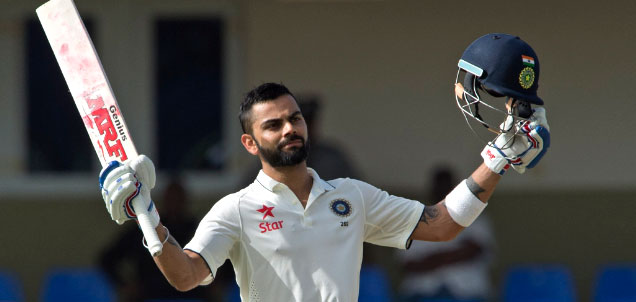
  • Test Cricket Woes: Will Kohli Play Saviour?

    picture caption: Source: Twitter/@icc


    By Shailesh Kapoor


    It’s Test Cricket season again. After what seemed like a never-ending T20 fiesta, we finally have some white uniform cricket. In an unusually-designed tour, India is visiting the West Indies to play four Tests and nothing else. No ODIs, no T20s.


    Test cricket has been through its challenges in recent years. There is a loyal base of followers who consider it to be the most challenging and exciting format in the sport. But this loyal base is less than 10 million (1 crore) Indians in size. And the age profile of this segment is not exactly advertiser-friendly, with a large majority of these 10 million being 35+.


    It is not very difficult to sell India cricket in any format. ‘India in West Indies playing only Test cricket’ can be the toughest proposition to sell though. There are many reasons.


    The timings are unsustainable from a viewership perspective. 7.30pm to 2.30am is arguably worse than New Zealand Test cricket timings of 3.30-10.30am. Sleep deprivation can still be managed, but how does one get the control over the remote in the prime time of mainline GEC content that the family must watch?


    West Indies is not the most exciting team to watch in the long format. There are very few stars on the roster, and unlike India-Australia, India-South Africa or India-England, there’s no modern history to this contest.


    The telecast experience isn’t going to any better. The stadia are unlikely to be packed, if the first day last night was any indication. And the commentary ranges from functional to plain boring.


    In such a scenario, there’s just one thing that would make this Test series worth considering, even for the shrinking loyal base. Virat Kohli. This is Kohli’s first Test match since the T20 World Cup and the IPL, two tournaments where his stature as a modern great was firmly established. As I watch last night’s recording while writing this, I see that Kohli has announced his presence in the series early, scoring 143 not out in two sessions, well on his way to his first double hundred in Tests, probably more.


    How emphatically he dominates this series will decide if and how this series is remembered a few years later. Four centuries and it will be the Kohli series that will never be forgotten, especially if India win 4-0 under his leadership. But if the numbers are more modest, the series can fast lose its relevance.


    There has been a lot of talk about day-night Test cricket, and BCCI too has been championing the idea, it seems. But the larger problem with the format is that it needs a potential 30 hours of time investment from the viewer, an unreal number in today’s time, when even a 90-minute film can bore us to death.


    Test Cricket shall remain niche. The 10 million may go down to 5 million two decades from now. At some stage, Pay Per View (PPV) may be the only practical option to monetise this format in India.


    But the next decade is relatively safe. It will be the Kohli decade after all. And if he can grow the loyal base of the format purely on the strength of his charisma, he will be a media industry star too, not just a cricketing one.


  • Shailesh Kapoor: The Dark Age of Indian Television? (Part 2)

    By Shailesh Kapoor


    Read Part 1

    Look at what Indian television has done to itself, over the last five years in particular. In meetings with non-television executives, it’s a topic of ridicule. A gorilla falling in the love with the lead protagonist of a show is the latest metaphor of this discourse (for the record, that didn’t actually happen on the show). The metaphors may change, but the ridicule has gone stronger by the day. Because there are at least a dozen bizarre sub-plots playing out at any point of time, across channels and shows. And I’m not even counting regional content here.


    But then, why should one worry about what a senior FMCG, media agency or film executive thinks of GEC content? They are not the target audience after all. Fair point, but the problem extends to the consumers (the target audience) too. They enjoy a hearty laugh on this topic, often dismissing it as something that’s done “TRP ke liye”. In the near future, they would be less forgiving.


    In any case, the “TRPs” are not going up. The Hindi GEC genre has lost about 10% of its viewership since early this year. While this can be attributed to BARC India settling down and its measurement getting more robust, that’s an easy fig leaf to hide the viewer disenchantment behind.


    The single-most telling evidence of the viewer-side problem has been discussed here before – that new shows have stopped opening. None of the 22 Hindi GEC weekday shows launched this calendar year opened at a first-week average rating of even 2%. And this problem has been magnifying over the last 2-3 years, with its first seeds sown even before BARC India ratings existed.


    Some tend to pass the “blame” to digital and social media, suggesting that television is losing its significance because the Internet is taking over. While that may be true for a small section of audiences, when projected as a larger idea, it becomes a gross exaggeration. And cricket, film premieres and certain shows have continued to rate very well, highlighting that content deficit, more than anything else, must take the blame.


    Naagin is one such show that has rated very well in its first season. It pains me when Naagin is clubbed with other examples of silliness on our television. Naagin was anything but that. It was an out-and-out fantasy show, well-produced and true to its promise. It did not start as something and then becoming something else. Our mythology and folklore has rich and imaginative stories to get inspiration from. Many of them have supernatural elements in them. Adapting them for television can surely not be a no-no.


    The problems are largely with the dailies, and it’s a systemic problem. Episodes are conceived, written and shot on the fly. There is no real “development” on a running show – that precious word is reserved for new shows. But even there, ideas are increasingly moving away from what India wants.


    If you are a television executive today, think of how you will be remembered three decades from now. “I worked in the dark age of Indian television, when nothing made sense and content was a subject of public mockery, for its unparalleled idiocy” can surely not be a good story to tell your grandchildren. Come to think of it, it can be a funny story though.


    Yes, there are some exceptions that exist. But when an entire category gets branded in a particular way, the exceptions need to work that much harder to stand out.


    Call it creative bankruptcy or just inertia, the problem is magnifying with every passing month. These are ideal signs for disruption waiting to happen, when someone enters (or redefines) the game, changes its rules, and walks away with all the glory.


    I want to know who that “someone” is. And I look up to all good television executives, some of whom I truly respect, to find that someone within themselves.


  • The Dark Age of Indian Television?


    By Shailesh Kapoor


    History is defined by eras, and it’s no different for the entertainment business. If you look at Hindi cinema, for example, every decade has its own story to tell. The ’70s was the glorious decade, offering a mix of sensible commercial cinema and a new age movement called parallel cinema. The ’80s, in contrast, was the Dark Age, with meaningless potboilers dominating for most part, and music that would make you cringe today.


    In the ’90s, Indian cinema found its family audiences back, offering tradition wrapped in modernity. In the new millennium, the language of Indian cinema started becoming young and semi-Western, as if to compensate for the overdose of tradition in the ’90s. In the decade we are in, the identity is still blurred, but we have four more years to go, and a unifying idea will surely emerge.


    If we look at the Indian television business, the history is much shorter. We are only in our fourth decade. The ’80s can be called the Golden Age, when, despite limited content hours on offer, the quality was par excellence. The best minds in the country were involved with creating television, and the storytelling was on the lines of the cinema of the 70s in many ways.


    Some may argue that this view of ’80s television being glorious is an erroneous one, because there were no options at that time and you were bound to like what you get. If that had been the case, those shows would have been forgotten by mid-’90s. But those of us who lived in that era fondly remember it even today. And in any case, history has to be judged for how things were at the time of it all happening.


    The ’90s saw the advent of satellite television and a much wider variety, including international content, on offer. This variety would be the defining theme of this decade, as the plethora of choices took attention away from the content for a while. Yet, the content remained interesting, albeit less consistently than the 80s.


    Barely had the new millennium started when we saw the advent of daily soaps. July 3, 2000 is when Kyunkii Saas Bhi Kabhi Bahu Thi went on-air. It was new-age television then, even though many failed to recognise its significance at that time. It mirrored the traditional tones of the cinema of the ’90s, but without the modernity wraparound. Many call the last decade regressive, but for the audiences that content targeted, it was a window to a vibrant world they had never seen. A world of big joint families, ceremonies, opulence, designed clothes, jewelry et al.


    At the turn of the last decade, when this soap machine was running out of ideas, Indian television got a fresh lease of life with the advent of social, semi-realistic storytelling, led by Balika Vadhu.


    And then, that was it. And here we are, in a decade that’s well on its way to become the Dark Age of Indian television.


    To Be Continued…

    Part 2 of this column will feature next week


  • Shailesh Kapoor: Sairat on The Kapil Sharma Show: A Victory Of Intention

    By Shailesh Kapoor


    Weekly ratings are a source of excitement and anxiety in the television fraternity. The day and time of their release may have changed over the years, but the drama they bring along has not. Be it a small channel that should not even be looking at a weekly number in isolation, or a big channel where a single episode has more viewership that a small channel’s entirely weekly audience, there’s something in it for everyone.


    But if you detach a bit, weekly ratings are exciting only to the extent of knowing that big headline. Like a new show with much hype not opening well. Or like the dark horse Naagin getting a start so incredible it made you go: ‘There must be some error here!’ But you don’t get such headlines every week.


    This week, though, was an exception. We got a headline that was worth the long wait (since Naagin last year). The Sunday, June 12 episode of The Kapil Sharma Show, featuring the cast and the director of Marathi blockbuster Sairat, became the highest-rated episode of the program, and by a significant margin too.


    Despite the BARC advisory that broadcasters should not use % Ratings in any official communication, the 3.7 number was all over social media yesterday. You can’t hold a good story back, after all.


    The episode rated almost 70% more than the Saturday episode in the same week, and almost 30% higher than the launch event featuring Shahrukh Khan.


    Now this should make no sense, right? Sairat may have set new benchmarks for Marathi theatrical business, but why should regional content deliver at a national level? A look at the Maharashtra ratings answered the question in no uncertain terms. The numbers look unreal in today’s times, being 200% more than the national average. And that meant that even if some of the other markets dropped, one state could single-handedly pull the national (HSM Urban) number to a record level.


    Sairat is a rare film and one can’t expect this to become a trend. And if even we have more success stories like it, there is a geographical limitation. Among the four language states in HSM (quite a misnomer, as some of these markets are not Hindi-speaking, which is the whole point here), Maharashtra has by far the highest representation in the ratings universe. A content piece around Gujarat will have to work doubly hard to get the same impact at the national level, because of lower weightage. And Punjab and West Bengal are even lower in their contribution to the universe.


    While the regional learning may thus have limited relevance, there’s another one that is far more useful. The film released on April 29, and the episode in question aired six weeks after its release. The episode’s success relied on a sizeable fan base of the film. Equally importantly, there was more to ask and do, as the chatter and the fun and games centred on the familiar content of the film. The episode, in effect, becamea homage to the film, than a promotion of it.


    This honesty of intention shone through the content. It won’t take much thought for even Maharashtra audiences to desert a big Marathi film’s pre-release promotional episode. But honest content, without a peg to be sniffed out, can touch hearts. More power to those who made this special one happen.


    Now waiting for the next substantive ratings headline.