Tag: Shailesh Kapoor

  • General Elections 2019: The Media Battle Within The Political Battle


    We are about 18 months away from the next General Elections, which are likely to happen in the summer of 2019. With the Gujarat elections in December this year, the atmospherics have started to build up. 2018, then, is set to be the most politically-charged year in India’s history, especially from a media perspective.


    2014 were the first General Elections where the true impact of the social media was prominently felt, and since then, there has been a further surge in how digital media – not just social but digital news platforms too – have begun to impact the political sochof the nation.


    Till about a year ago, it seemed that 2019 will be a no-contest, with a non-existent opposition to challenge the might of the Modi government. However, things turned interesting on November 8 last year, when demonetisation was announced. That move, followed by the implementation of GST this July, has led to considerable debate about the government’s economic adventurism, and its pros and cons.


    The Opposition is also slowly putting its house in order. Though it’s nowhere close to being a serious challenger for now, 1.5 years gives them some more time to set things in place. Rahul Gandhi is probably in the best phase of his otherwise-unflattering political career so far, and state-level opposition, such as Mamata Banerjee is Bengal, is vocal too.


    This sets up things nicely for 2019. Irrespective of how close or one-sided 2019 is, we are sure to have a pitched battle in which the media, both traditional and digital, will be used in a way even 2014 didn’t witness.


    Most television and print media houses have evident political alignments now. This has put the credibility of traditional media to test over the last year or two. And it’s in this backdrop that digital media has emerged as the stronger force in shaping up the political opinion of the voting public at large.


    It’s not as if digital media platforms do not have political leanings. But unlike traditional news, digital news is a matter of discovery, with Whatsapp, Facebook and Twitter being the platforms for organic dissemination. And that’s where diversity of exposure comes in. You could be reading a highly government-skewed take on the state of the economy in the morning, and then one that squashes all government claims on the same subject in the evening, both via your Facebook newsfeed. This could be confusing at times, but in general, the diversity of views available in the digital media has empowered the voter to make more informed choices.


    2018, then, is ready to be the watershed year for news media, where traditional media will have to be on the top of its game to match up to digital media. It’s a contest within a contest. Will traditional media stand up to digital, even as the country’s top politicians fights the bigger battle? 2018-19 will tell us.



  • Brand Refresh: Indian TV’s Favourite Pastime?


    By Shailesh Kapoor


    On October 15, Zee TV went through what has come to be known as a “brand refresh” in television industry parlance. A brand refresh typically entails a change in logo and packaging, but more importantly, a change in the stated brand positioning, which is often accompanied by a brand campaign, a change in tagline and a channel theme song.


     

    Over the last decade, brand refreshes of this nature have been rampant on Indian television. Every other month, you see a one of the big channels going through this process. The Hindi GECs have been particularly hyperactive in this area.


    Star Plus had a major brand refresh in 2010, when they unveiled the ‘RishtaWohiSochNayi’ proposition. They followed it up with another round in 2016, where they zeroed-in on just ‘NayiSoch’ as the new interpretation of that thought.


    Sister channel Star One relaunched into Life OK in 2011. Life OK itself then went through a brand refresh or two, before giving way to another relaunch this year, Star Bharat.


    Sony has been through a three brand refreshes in eight years, in 2009, 2013 and 2016. SAB TV has had its share too, with two if not more (It becomes difficult to keep track beyond a point). Zee TV has been through at least two refresh exercises in the last five years, around the ‘Umeed’ thought.Colors probably is the only Hindi GEC that has stayed away with this ‘brand-wagon’, though they have tweaked their logo a few times over the last decade.


    The irony in this hyperactivity on the brand front is not difficult to spot. Over the last five years, Hindi GEC content seems frozen in time and thought. Most positioning changes in brand refreshes are supposedly based on consumer insights that capture what the next ‘level’ of television, or at least GEC fiction content, should be. But almost none of these brand refreshes, with the exception of Star Plus’s 2010 one, have been able to marry the positioning and the content.


    A token show or two are launched to coincide with the brand refresh, but if you look for content being in sync with brand messaging, you will struggle to make sense of it. It’s as if the brand campaign is being created by people who have nothing to do with content, and vice versa. It’s surprising though, because that’s not how TV channels are structured.


    Perhaps the only explanation then could be the gap between intention and action. When a brand is refreshed, there would be an intent to stay true to the idea. But as weeks progress, ratings begin to govern decision-making, sidelining a brand refresh that was, till a few months ago, the biggest thing ever for the channel.


    Which begs the question: Why should ratings and the brand refresh not be in sync in the first place? And that’s where the real problem perhaps lies. Some of the attempted positioning ideas are so off-key that they can possibly never become content filters. While it’s fine to position a channel on attributes that are not just product attributes but capture a consumer insight that’s more personal and emotional, there has to be a path through which the positioning can feed into the product. In television’s case, that path is often forced and non-intuitive, sometimes even absent altogether.


    To avoid being too hard on Hindi GECs in these troubled times for the category, let’s take examples from another genre: Hindi Movies. Star Gold relaunchedin 2011 with the tagline ‘KaroDil Ki’. The new content line-up was fantastic, and the channel took the No 1 spot on the strength of a slate of blockbuster and mass-performing titles. But where did ‘KaroDil Ki’ feature in all this? Nowhere! Even a mapping of the channel’s FPC to the positioning thought, to see if they are running films that encourage people to follow their heart, at least in key slots like prime time and weekends, revealed no such connect.


    Not very different is the case of &Pictures, which did an elaborate launch campaign around a thought that said ‘Sapno Ki Udaan’. It’s just a feel-good line that rests below the logo on the brand material, but has no content play at all.


    Good brand messaging must provide a sharp content filter, which at least 80% content on the channel should be able to adhere to. If this is a “restrictive” thought, then the positioning idea selected was restrictive in the first place and should not have seen the light of the day.


    If you speak to seasoned marketing professionals in the FMCG category, they would scoff at TV industry’s idea of a ‘brand relaunch’. I suspect many in TV know this themselves by now. But somehow, the temptation to relaunch and re-relaunch doesn’t go away.


    It’s a bit early to say if Zee TV will be able to live up to its promise of ‘AajLikhengeKal’. It suggests they should be doing programming that’s supposed to shape the future, and hence, must be ahead of the evolution curve. By early 2018, we will know if that actually happens. Or if this was another brand refresh that existed in its own vacuum, with little impact on the actual product.

  • Shailesh Kapoor: The Kimmel Monologue: The Power Of A ‘Comedian’

    By Shailesh Kapoor


    It may have been a week of slow news in India, but at the other end of the world, in the United States, the Vegas shooting incident on October 1 has been at the centre of news and debates. Normally, news from the US does not hold much interest for me, but over the last decade, as such incidents continue to happen, I have struggled to comprehend how the world’s most developed country can actually put its own citizens at risk because of (the absence of) gun laws which any sane human being will question.


    I’m no expert on this topic, but the incident this week was particularly disturbing, purely from a humane perspective. The Indian media glossed over it, and perhaps rightly so, as it has limited relevance for us. We may have other issues related to public safety plaguing us, but this is an area where we are a million times safer.


    The part of the coverage that caught my attention was not on the various news channels beaming out of the States. It was the 10-minute monologue from Jimmy Kimmel, with which he opened his Monday episode a day after the shooting, that I found deeply moving. If you haven’t watched it already, you can watch it here.


    If you have watched Kimmel’s show, you would know that he’s all humour and wit. While he has a sharp political take on the goings-on, it’s always served in a light packaging, without being didactic, or even emotional.


    The Vegas monologue thus came as a pleasant surprise for me. And immediately, it left me wondering if our comics, including those online, would be able to even come close. I don’t mean ‘come close’ here as a matter of matching wits, but as a matter of having the political awareness to truly influence the public opinion on issues of national importance.


    There are two reasons why our comics probably can only gape in awe at Kimmel’s moving speech, and never hope to match its towering standard. The first reason is to do with the freedom of the press. Political humour is par for the course in the States. Kimmel himself has spent a good 30% or so of his opening stand-ups over the last year mocking President Trump. That would come to about five hours of content where one comedian is talking about one politician. Add to that several other such TV shows, news channels and the various online shows, and you have hundreds of hours of content out in the US media over the last year, taking digs at the top politicians of the country.


    Trump can be very nasty with the media, but the lines are clearly drawn. The media can talk their mind, and that’s going to be cool. India, of course, cannot fathom such freedom of speech. Even a line or two can lead to consequences ranging from social media blocking to troll attacks to potential life threats. And while this feeling may have escalated in the recent past, it has always been there over the years.


    In such an atmosphere, how will a comedian even build political viewpoints? Wouldn’t they rather stay away from politics and stay safe? Hence, comedy in India has acquired a default positioning of being apolitical. Which is such a pity, because comedy can probably be more effective in shaping up the political consciousness of the country, than any other art sub-genre.


    The second reason is to do with the Indian entertainment industry itself. A monologue of the level of Kimmel’s requires a deep sense of knowledge and command over the subject matter. We don’t have comedians or artists who would invest in that depth. Here, everyone seems to be overworked. If one show does well, you want to sign up a few more, take up film projects, and do whatever else it takes to spread yourself out across domains. It’s a mindset of leveraging the popularity to the fullest at the peak of one’s career. Kimmel’s depth comes up with a sense of commitment to one show, to that one thing he can do, better than most others. Even if that means letting go of other high-paying work.


    So, we may have to make do with sterile and apolitical comedy for a few more years, at least. Our comedians may be funny, but they will not play a role in shaping up the nation’s political views. And that’s an opportunity lost.

  • Shailesh Kapoor: Bollywood’s Star Crisis: How soon can the youth take over?

    By Shailesh Kapoor


    The year 2017 is turning out to be Bollywood’s toughest in a long time. In the eight complete months of the year (Jan-Aug), the domestic box-office of Hindi films (not counting the dubbed Bahubali 2), has dropped by 16.9% vis-à-vis the same period in 2016. While there are some big films lined up for the rest of the year, 2016’s biggest success (Dangal) was a December release. Hence, the gap could only widen by the time the year ends.


    Content not being able to deliver to the audience’s rising expectations is the primary reason for this declining trend, as covered in this column after the debacle of Jab Harry Met Sejal (read here). But there’s another important reason that has been building up over the last decade, and now beginning to have a major impact: Lack of young superstars.


    For seven years now, since the start of our star tracking product Ormax Stars India Loves, the same five male stars have consistently taken the Top 5 positions: Salman Khan, Akshay Kumar, Shah Rukh Khan, Aamir Khan and Hrithik Roshan. Their ranks keep moving a bit, but barring a few weeks when Ranbir Kapoor had found a position in it, the Top 5 list has remained unchanged.


    The average age of these five stars today is 50 years. They have been the top stars for more than a decade now, if not longer, when their average age was less than 40 years. If the average age of the top stars in the business doesn’t come down over time, it is bound to impact the content being made. For example, you cannot take a 50-year-old star as the lead in a youthful romantic film. Hence, if you want to make an ambitious, big-budget film in this genre, you will have to scrap the idea, because younger stars do not guarantee the kind of opening required at the box office to make the economies work.


    As a result, certain genres could move out of the mainstream over time, either by becoming niche and hence targeting only a smaller section of the mass audiences, or by disappearing altogether. In a category driven by the youth (65% of the first-day business and 59% of the lifetime business of an average Bollywood film comes from audiences in the 15-24 yrs. age group), progressive elimination of youth-centric genres is bound to dent business.


    Even if a 50-something established star can fit a role, such as the twins in Judwaa 2, you have probably seen that star do the same stuff already (in Judwaa’s case, literally so), and hence, it may fall short of your expectations from the star. The big superstars are smart enough to realise this. Akshay Kumar, for example, has consciously moved away from his staple genres from the last decade – slapstick comedy and mass action – to offer message comedies and thrillers, and found good success at that.


    The younger stars must be able to compete for the top spots to restore the equilibrium between the audiences, the stars and the content. Ranbir Kapoor was at the threshold of breaking into the elite league after Yeh Jawaani Hai Deewani, but a spate of misfires has held him back.


    Over the last two-three years, Varun Dhawan and Ranveer Singh have emerged as strong alternatives to finish the task Ranbir Kapoor couldn’t. The task of becoming a superstar with a mass connect pan India. Dhawan has arguably his most important film releasing today. Judwaa 2’s opening is likely to be big, and the film could firmly establish Dhawan as the most saleable young star. Singh, too, has a big film coming up, in Padmavati on December 1.


    In a year when a Shah Rukh Khan film (Jab Harry Met Sejal) could not even open well, and Salman Khan struggled to get audience attention with Tubelight, the success of Judwaa 2 and Padmavati can prepare the ground for a baton change in 2018. The top stars of today will continue to thrive, but addition of young blood in the mix can secure an industry that’s facing a crisis it would like to get out of, sooner than later.

  • Shailesh Kapoor: KBC: Welcome The New No 1

    By Shailesh Kapoor


    Seventeen years and nine seasons. Kaun Banega Crorepati (KBC) is, in many ways, the pivot around which the history of India’s entertainment television in the post-liberalisation era can be written. The programme itself has had a checkered history though, with not all seasons being equally successful. But the ninth season, which marks the return of KBC after three years, is a runaway success already. It’s the No 1 Hindi GEC show in Urban India in its third week, and has shown healthy week-on-week growth in its viewership.

    In today’s times of ever-reducing attention spans, keeping the audiences engaged for 90 minutes, five days a week, is no easy task. But KBC has managed this in no small measure. Here are some reasons why a show, which was once thought to be a dead horse which no channel should flog, is back to the top:

    Three years: A wait worth it

    In 2010-2014, Sony aired five seasons of KBC. While they had somewhat different positioning attempts, there was a sense of KBC fatigue in the last two years of that period. KBC seemed to be on air perpetually. In a way, it lost its exclusivity or its premium feel, making it one of the several non-fiction shows that come and go every year. The three-year hiatus has worked very well, creating a sense of anticipation and novelty.

    No social agenda

    Past seasons of KBC have had social themes, which reflected not just in their communication, but also in their content. The themes ranged from women empowerment to providing a life-changing platform to the poor and the underprivileged. While the idea worked initially, by the 2013 season, KBC had become an emotionally-draining show to watch, with contestant videos showcasing misery that one would rather not watch on prime-time television. This season is free of any such agenda. It has an eclectic mix of contestants across the socio-economic spectrum, and engages purely at the level of knowledge and entertainment. Social messaging is all around us today, be it films, TV or the social media. KBC didn’t need to join that bandwagon, and it hasn’t. Even the little Friday touch, called Nayi Chaah Nayi Raah, is social awareness served in a light and frothy entertainment pack.

    More engaging game-play

    There haven’t been any major tweaks in the format, but the few that have been done have worked well. Integration of ‘digital’ aspects like video calling for the Phone-A-Friend lifeline and the supposed online transfer of the prize money, which we are repeatedly told is fast and safe, may look gimmicky to many of us in the media business, but work at a fairly simplistic level in an India that’s still in the courtship period with the Internet.


    Fiction content struggling

    The timing of the latest season’s launch couldn’t have been more apt. Fiction content has been struggling for the last year or two, as has been covered in this column repeatedly. There have been very few options on weekdays, however, to challenge fiction’s monopoly, despite the escalating viewer dissatisfaction. Bigg Boss, the only other weekday non-fiction show, airs late at 10.30pm. At 9pm, KBC has attacked fiction at the heart of the primetime. And it’s worked!


  • Shailesh Kapoor: Star India’s IPL Win: A Big Deal!

    By Shailesh Kapoor


    Star India’s persistent desire to dominate sports broadcasting in the country has been one of the most important television stories in India in this decade, which has generally been an otherwise poor and unremarkable one. Earlier this week, Star’s sporting agenda got a big boost in the arm, with the company bagging the global media rights for the next five seasons of the IPL.


    There has been ample talk in the media since then on whether the Rs 16,347 crore bid is too high to make commercial sense, and how the recovery plan looks nearly impossible on paper.


    But a deeper look at some numbers would suggest that Star’s bid was reasonable after all. The average per-season price is about three times what Sony was paying over the last nine years. But that was a base set in 2008, before the league started, with an ad hoc renegotiation in 2009. And those were only the broadcasting rights. Digital was not even in discussions then, and to Star’s credits, they took that route to enter the world of IPL, even as they waited for the big rights (TV) to come up for auctioning.


    The best benchmark perhaps is the value of the title sponsorship rights, which were auctioned recently. Vivo won the rights for five years at Rs 2199 cr, which is an average of Rs 440 cr per season. This average was merely Rs 40 cr in the first five years with DLF, went up to about Rs 80 cr for Pepsi in 2013 and then to about Rs 100 cr for Vivo in 2016, when Pepsi dropped out. There are two levels of comparison here. One is the growth rate, and second, the absolute number itself.


    Title sponsorship rights have grown ten-fold since the league started, and four-fold within just a year. Even if one takes Vivo’s bid as a highly aggressive one, this growth is really what the IPL has been about. When it started in 2008, it was just an experiment. Within a year, it had acquired hit status, and over the years, a certain cult status. None of this was known when the 2008 auctions happened.


    Add to that the economic growth (at 8% annual inflation, the value should have doubled in nine years anyway), and a three-fold increase in broadcasting rights seems more than reasonable (perhaps even low), especially when you consider that digital was not a part of the Sony deal for 2008-17.


    If you look at the absolute values, Vivo’s Rs. 2199 Cr is 13% of Star’s Rs. 16347 bid. Vivo will spend additional advertising money with Star to run their commercials during the IPL. But even if one excludes that amount, which is currently not known, 13% for just title rights vis-à-vis all broadcasting rights is quite a high share. In the last deal, this share was in the 3-5% range. Even if part of the jump is attributed to Vivo’s desperation to be associated with the IPL, one cannot help wondering if the broadcasting rights could have gone for even higher.


    Star India would, of course, have its task cut out. IPL, with it its equity, has had its fair share of challenges, which Star will hope to address. But that’s the topic for another day.


  • Shailesh Kapoor: When News Rose to the Occasion. Almost.


    By Shailesh Kapoor


    It’s been a busy week for the news media. Last Friday, Gurmeet Ram Rahim Singh was convicted for rape, which triggered off violence in parts of North India, keeping the media on their toes. His sentence was announced on Monday, so the story had a life of at least five days, including a build-up day before the conviction. Five days for a story is a rarity in today’s times. Following up, Tuesday saw a shift to the coverage of the Mumbai rains, a story which continued over two days.


    The Gurmeet story was surprisingly well-handled by the media. Several media houses known for their open support to the BJP Government took a clear stand against the Haryana Government headed by Manohar Lal Khattar for the violence that erupted on Friday. That some mediapersons and their property was damaged channeled more rage into the reporting.


    A string of stories over the last few weeks have forced the clearly right-aligned mediahouses to take a stand against their grain. It happened with the Gorakhpur deaths, where the Yogi Adityanath Government was attacked, though the man himself was handled with kid gloves. It happened with more force in Khattar’s case, and now, Mumbai’s corporation (BMC) has been attacked wholeheartedly for the rains mess-up. It seems that on issues related to the ‘common man’, the rules of engagement are different vis-à-vis policy issues, such as demonetization, for which we saw some rather unflattering results being announced by the RBI two days ago, but only selective criticism.


    The Mumbai rains coverage, however, had a strong sense of déjà vu. From July 26, 2005, when the big rains story happened, there have been these smaller versions every 2-3 years, though this 2017 version would clearly rank no. 2 on that list, behind 2015. The narrative is consistently one-track every time: Attack BMC, question why the city that pays the most tax has is subjected to such poor governance, speak to citizens on the road, use shots of flooded roads and submerged vehicles on loop, flash helpline numbers, etc.


    While there’s nothing wrong in this line of coverage, there’s nothing particularly exciting about it either. The real rains story should happen in the intervening period between two such disasters. It’s the kind of topic where the media needs to keep the pressure constantly on, over an extended period of time, such as five years, to see visible change on ground. But we all know that in today’s times, the story will be forgotten within a week.


    A two-day coverage in two years does no real damage to any corrupt politician or corporator. They would be largely immune to it by now, and may even be laughing such coverage off, given that it seems driven by the media’s frustration for not being able to make any real impact in the first place. And I found it especially amusing when a journalist doing the story repeatedly called herself “a part of the ordinary middle class.”


    But with all its issues, news on Indian television was more watchable this last week than it is for most part of the year.


  • Shailesh Kapoor: 3 Ps of the Week: Pahlaj, Prasoon & Pehredaar Piya Ki


    By Shailesh Kapoor


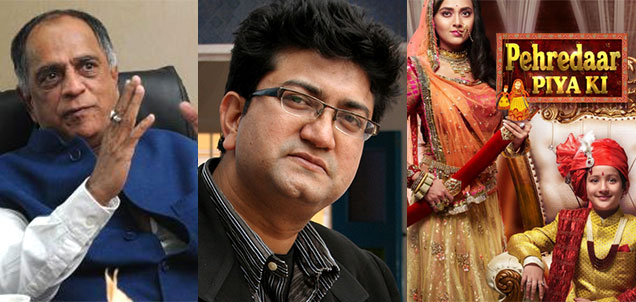
    It’s been a week the film industry was craving for. Last Friday’s film Toilet: Ek Prem Katha is a massive hit, ending a drought that started since Bahubali 2 in April this year. On the same day as the release of this film, ie, August 11, came another news that sent the industry into instant celebration mode. CBFC (Central Board of Film Certification) chief Pahlaj Nihalani was sacked, and replaced by Prasoon Joshi.


    The I&B Ministry notification was a surprise for many. The Ministry has backed Nihalani for more than two years by simply turning a blind eye to his ways. The media has been gunning for Nihalani’s head for a while now, but has never been a clear response from the Government. Till last Friday.


    It’s difficult to say the exact trigger for this notification. But it seems connected to Smriti Irani taking over as the I&B Minister in July this year. Since then, there have been two incidents the CBFC has been involved in, which are not exactly ‘women-friendly’.


    Lipstick Under My Burkha was already at the receiving end of the Board’s ire, for being ‘too lady-oriented’. Then, on August 3, the team of the film Babumoshai Bandookbaaz held a press conference to talk about how the CBFC treated them and their film. While asking for cuts on abuses and political references is nothing new for the Board under Nihalani, the details of how the proceeding went shocked many in the media and the trade. Kiran Shroff, one of the producers of the film, was asked by an Examining Committee member on how she could produce such a film “being a woman”. Before she could reply, another member of the Committee commented that “she was not a woman, as she was wearing shirt and pants.”


    Smriti Irani is not one to take this nonsense. There’s a high chance that the prevailing misogyny in the Board could have promoted her to advance her decision.


    Prasoon Joshi is known to have a liberal mindset. There’s the Shyam Benegal Committee report that’s been gathering dust for a while, and if Joshi takes that forward, we may see a structural change in the CBFC very soon. In the short run, we definitely hope to see less films going to the Revising Committee (which lost its relevance under Nihalani) and FCAT (Film Certification Appellate Tribunal).


    In sharp contrast to these progressive developments, the television industry saw the other side of ‘censorship’ this week. Sony’s new show Pehredaar Piya Ki (PPK) has been the topic of discussion since its promos went on air, with the marriage of a nine-year-old to a grown-up girl creating a stir. About two weeks ago, an online petition was floated, calling for a ban on the show. This petition got 136,000 supporters.


    Based on the petition, Smriti Irani asked BCCC (Broadcasting Content Complaints Council) to take ‘immediate action’. It seems that BCCC has directed the channel to run scrolls that the show does not support child marriage, and shift the show to post 10pm, instead of its current 8.30pm slot.


    Now, much is wrong with all this. 136,000 may seem like a high number, but it is miniscule in context of the category, i.e., Indian television. About 30 times this number watch an episode of PPK on an average. And more than 80% of these are grown-up adults, who should decide for themselves.


    Imagine if a film would have been made on this exact subject, and Nihalani would have blocked it for the exact same reasons that this online petition lists, there’s high chance the exact same section of the society that have floated and supported the ‘Ban PPK’ petition would have floated and supported one to let the film release because it’s freedom of speech, and the audiences must decide what they want. If that isn’t hypocrisy, what is?


    And how exactly does shifting a show to 10pm ‘solve’ anything anyway? If one begins to use such highly-subjective lenses to evaluate television content, almost 50% of Indian fiction shows could come under the scanner for some reason or the other. Hope we are not in for a ‘petition culture’. If the audiences can decide in the case of films, they can decide in the case of TV as well, which includes parents deciding on behalf of their (minor) children.


    Whether it’s films or TV, when will we learn to let the audiences be?


    Shailesh Kapoor is Founder and CEO, Ormax World. The views expressed here are his own


  • Shailesh Kapoor: Does Bollywood have the will to pass its toughest test?

    By Shailesh Kapoor


    Last week’s Hindi film release Jab Harry Met Sejal has capitulated at the box office. The film opened well below the mark of what a Shahrukh Khan starrer would be expected to. But when you look at what happened Monday onwards, the below-par 15 Crore opening still looks big. The film will fold up in the 65-70 Crore range. To put things in perspective, that’s the business of Irrfan-starrer Hindi Medium, which opened at about 2.5 Crore earlier this year, but went on to grow because of appreciation it received from the big city audiences.


    Not too long back, Tubelight faced a similar fate, though it managed to scrape past the 100-Crore mark. Salman Khan has been invincible at the box office since Dabangg in 2010. When Jai Ho didn’t fly, it was seen as an aberration. But Tubelight and Jab Harry Met Sejal coming within two months of each other have highlighted the grave times Bollywood is going through.


    The “100 Crore club” was formed with Ghajini in 2008. As more and more films began to touch the mark, this club lost its aspirational value by 2013-14. It was being widely spoken about, in the industry and the media, that 150 Crore or 200 Crore is the new club to aspire for.


    Since the start of 2016, three films have crossed the 300 Crore mark – Bahubali 2, Dangal and Sultan. But if we move beyond these three giants to the next level, a deep chasm is evident. There’s nothing in the 150-300 Crore category at all. Big starrers have failed to touch the 150-mark, which was being seen as highly attainable in 2013-15. And now with Jab Harry Met Sejal, even the 100-mark becomes elusive.


    If we didn’t have the three biggies, many would have safely concluded that the trend of going to the theatres is on the decline, because of the digital media taking over. But these three films, and Bahubali 2 in particular, shatter that argument. If you have the right content, audiences will flock to the theatres.


    And it’s the right content that’s been found wanting. In times when media clutter is at an all-time high, and choices and distractions are available in plenty, the audiences are brutally unforgiving. The box office fate of Jab Harry Met Sejal symptomizes this trend, better than any other film in recent times.


    For years, the film industry has been star and director-driven. What films get made, how they get made, and at what budgets they get made has been dictated by the big stars and the established directors. Tapping into audience trends and needs has not been the industry’s primary approach to content creation. 2017 has exposed this strategic gap, though the writing was on the wall for the last 2-3 years at least.


    What doesn’t help matters is the high degree of denial that can prevail in this business. When we were forecasting a 14-15 Crore opening for Jab Harry Met Sejal from six weeks before its release till the week of release, many voices in the business said it’s at least 5 Crore below what the film will actually open at. It took the day of the release for them to face reality. And this is not an isolated example. It happens every other month.


    It’s easy to zero in on the problem that Bollywood faces today – consistently poor content that’s not aligned to audience tastes or needs. But the solutions can only come when there’s a will to question the fundamentals of content selection. And that’s where the bigger challenge lies.


  • Kids on TV: Criticism That GECs Can Live With


    By Shailesh Kapoor


    Three weeks ago, Sony launched a fiction show called PehredaarPiya Ki. The show’s promos received flak, especially in the social media, because of the show’s central theme: A grown-up girl marries a 10-something boy. This “romance” was termed regressive and even pervert.


    Recently, acclaimed film director ShoojitSircar tweeted about putting an end to kids’ talent shows on TV. With the respect he commands, he managed to initiate yet another debate on the topic.


    There’s something common to these two seemingly unrelated debates. Both are social commentaries on our television of the day, and both suggest that our TV is not exactly playing a positive role in building a progressive and positive society at large. And both have a kids angle in them.


    Much as a debate is healthy and should be encouraged, I find these opinionsmisplaced to a large extent. Let’s start with kids on talent shows. There has been considerable debate in the past on how kids who shoot for TV or films should have defined work hours, and shooting schedules should take into account their education requirements. That’s a fair point and needs more debate and industry guidelines.


    But kids’ talent shows cannot be seen only in context of the grueling schedules they could subject their participants to. Just because we haven’t fixed that problem doesn’t mean these shows don’t offer positives of their own.


    One of the biggest positives has been how such shows have encouraged parents to look at their kids’ personality development and talent beyond education. Such shows have led to parents allowing their kids to explore what earlier would be seen as wasteful activities. There are academies and courses for training kids in various skills and arts, which didn’t exist earlier. One of the enablers of this academy culture have been the reality shows on TV.


    There is always the danger of herd mentality operating in such cases, where parents force their kids to join one of such courses, because everyone else’s kid is also joining one. But we cannot throw the baby with the bathwater. And herd mentality exists with education as well, and to a much higher extent. But that doesn’t mean we call for an end to schooling.


    Sa Re Ga Ma Pa Li’l Champs is the top-rated show on Hindi GECs as of now. Ratings may not be social validation, but they definitely point towards acceptance of an idea. Kids-centric talent shows have consistently delivered, as they bring the family together and offer a combination of entertainment and positivity, which many adult shows fail to do.


    PehredaarPiya Ki was one of Sony’s best fiction openings in recent times, and has sustained well through its first two weeks. The story, and even the title, justifies the oddball marriage at the heart of the show. There is absolutely no sense of perversion in how the topic has been treated in what is a fairly tastefully-done show. There’s no social impact, negative or positive, this story can possibly have. It’s just entertainment, which some may like and some may not.


    Our TV industry, especially GECs, has enough concerns to deal with. And the ones discussed in this column should definitely not be on the top of their list.


    Shailesh Kapoor is a senior industryperson and CEO, Ormax Media. The views here are personal


  • Shailesh Kapoor: Women’s Cricket in India: Finally In The Reckoning

    By Shailesh Kapoor


    Women’s Cricket has existed on the fringes in India, never really competing for major attention of sports enthusiasts. While comparisons to men’s cricket will be foolhardy, women’s cricket should have held some interest when compared to secondary sports in India such as hockey, badminton, tennis and the likes. But even that didn’t happen. Until this week.


    India is in the final of the Women’s World Cup 2017, beating the favourites Australia last evening. The final, on Sunday, against England will be India’s second, after 2005, where they emerged second-best to the Aussies. The team, and its newfound fans, will be hoping for a different result at Lord’s on Sunday. After all, India started this World Cup campaign with a surprise win against the home nation.


    Women’s sports in India has been going through a good phase over the last five years. The Rio Olympics in 2016 were a shot in the arm for women’s sports, with PV Sindhu and Sakshi Malik being India’s only medalists, even as several men came close but never reached the podium. And with this World Cup performance of women in the country’s favorite sport, women’s sport will get a further boost.


    India’s Women Cricket has suffered from a general trend of mediocre performances over the last decade and more. While there have been star names in the team in the past, the collective performance has never really added up to challenge the top 3 who dominate women’s cricket – Australia, New Zealand and England. In fact, India had to go through a rigorous qualifying tournament to even make it to this World Cup, whose final they now find themselves in.


    This lacuna in performance and results is an important reason for low interest in the team over time. This World Cup may have changed that irreversibly. Even if India don’t win on Sunday, the team has done enough to have caught the attention of sports enthusiasts and the media alike. Mithali Raj, SmritiMandhana and Harmanpreet Kaur have emerged as strong characters, whose off-field lives have started generating interest.


    One thing that sets this World Cup apart from other tournaments in the past when the team may have done well, including the 2005 World Cup, is the presence of social media. More than television or print, it’s the social media that has aided conversationsand support around the team and its games, building awareness and interest progressively as the tournament progressed. Last week, even when the team lost two back-to-back games to South Africa and Australia, and seemed in danger of getting knocked out, social media support ahead of the do-or-die New Zealand game was there for everyone to see.


    Only 10 out of 31 games in the World Cup were aired on television, which also meant that some key India games, including the one against New Zealand, were not on the telly. Star Sports has been at the receiving end of the angst of many fans, but being an ICC tournament, the decision on which games to broadcast remains with ICC and not the channel. Apparently, the other 21 games were streamed live on the ICC website. Star Sports could have done well to promote this little detail. It would have helped the sport.


    But that’s the past. It’s time to get ready for the big final on Sunday, and support the team through their next phase, where they are set to emerge as a more confident, assured outfit, ready to take on the big guns.


  • Shailesh Kapoor: A Polarised Media And Its Off-Shoots

    By Shailesh Kapoor


    Right-wing vs. Left-liberal. It’s polarisation of the extent we have never seen in our country before. What started as a “bias” of certain sections of the media has now polarised the media, including the social media, entirely.


    There’s no in-between here. As a journalist, expert or even a regular casual Facebook or Twitter user, you have to take one of the two positions. Most Indians don’t even know the meaning of the phrases like Right-wing and Left-wing. But semantic knowledge is purely incidental here. The opinions are not. And the opinions are polarised. And increasingly so over the last few months.


    Two questions arise: What led to this? Is it something to worry about?

    Most of us in the media know the answer to the first question. What led to this atmosphere of polarisation is the extremely aggressive media strategy of the current government at the Centre, and its political constituents. This, by far, is the most social media-friendly government India, perhaps the world, has seen. Its use of the social media may not exactly be polished and classy, or even prudent in the long run, but it’s there for everyone to see and experience.


    Till three years ago, political propaganda stories, be it articles or videos, would not pop up on your newsfeed or timeline or Whatsapp groups, unless you subscribed specifically to users or channels publishing them. Today, we see these being shared all the time. By now, it’s common knowledge that seeding of these stories is a well-manned, professionally-run operation, not an organic occurrence.


    If we go beyond social media to the more traditional ones like print and TV, the story is not very different. Everyone seems to be under some compulsion to take an aggressive, extreme political position. Politicians and political experts are mincing no words on air, often questioning journalists about their political alignment. Journalists have started hitting back too, not ready to be buckled under pressure, yet knowing that the climate is such that the pressure will remain. Probably till 2024, if not even further.


    For the last two days, the best of their lot, Ravish Kumar, covered “Fake News” as the topic in his show. In his clinical style, he explained to his audiences what Fake News is, how it propagates and the kind of social damage it can cause. This was at 9pm, in the heart of news primetime. When primetime news slots are used to explain what is not news, than to disseminate news, you know something is not right.


    Most of this Fake News phenomenon is linked to the idea of polarisation itself. Which makes the second question raised above – Is polarisation something we should worry about – an extremely relevant one. The worry is not from the polarisation itself, but from its off-shoots. Fake News is one such off-shoot.


    Another off-shoot is the atmosphere of negativity and vitriol that polarisation can create within the media itself. News viewing was an informative and enriching experience till a few years ago. But today, more than ever, it is a stressful experience. You learn less, you fret more. I’m no psychologist, but I’d guess that this could be damaging our view of life and society, perhaps irreversibly so.


    With a toothless opposition that’s happy to look away for most part, this polarised media situation may not go away in a hurry. If Fake News does not alter our history in the years to come beyond recognition, it is safe to say that the period of 2014-2024 could emerge as the watershed period in how this country handled its media. And how the media of this country handled the country. And it won’t make for very good reading.