
Tag: Shailesh Kapoor

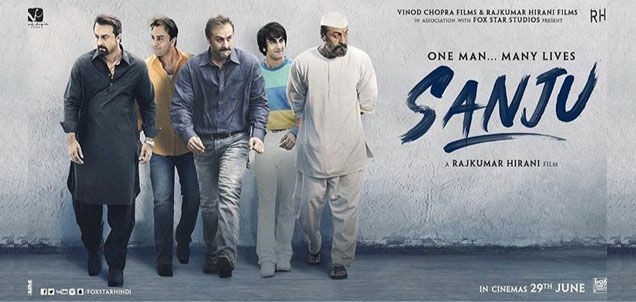
  • A healthy debate on Sanju, any one?


    By Shailesh Kapoor


    It’s been a week since Rajkumar Hirani’s Sanju released, and it’s already on its way to becoming one of the biggest hits in Hindi cinema history, with even an outside chance of crossing Dangal’s box office collections to become the industry’s highest grosser in the domestic market so far.


    That the audiences have lapped up the film is an understatement. The film’s idea, of getting a contemporary actor to play a major star, who’s still actively working, in the latter’s biopic, was a tricky one. But from the time the first visuals from the film came out, it was apparent that Hirani has managed to hit the bull’s eye on one of the most crucial aspects of the film – Ranbir Kapoor’s uncanny resemblance to Sanjay Dutt, across all his looks.


    The rather gimmicky campaign, which focused almost entirely on this look (and voice) match aspect, clicked across the country, and the film opened to record collections last Friday. But films need more than just a good opening if they have to be record-breakers. And Sanju managed that over the course of its first week, clocking 200 Cr in India, and is setto add another 100-150, if not 200.


    But while the audiences have taken very well to the film, it’s not been all well for Sanju when it comes to the general media. Some very respected senior journalists covering politics and crime over the years have taken extreme objections to the film’s hagiographical second half, which they see as an evident attempt to “whitewash” Sanjay Dutt’s image of a notorious criminal.Only a few film journalists have concurred with this “irresponsible” act on the part of Hirani, who thus far has enjoyed a non-controversial, squeaky-clean image.


    It’s only fair that there should be a debate on the two polarized views on the film. After all, the film deals with an aspect of Dutt’s life that involved an act of terrorism on the nation. It’s not one of those inane Padmaavat type of issues, where the only reason to stoke up a debate was to gain political mileage. There are a lot of people who have watched the film and probably don’t have any awareness that a counter-argument exists in the first place. They deserve to know what a section of the nation, however small, thinks.


    Yet, the mainstream media has chosen to ignore Sanju. News channels that spent hours and hours in the prime-time discussing Karni Sena and Padmaavat (then Padmavati) pretend that Sanju doesn’t exist, and if it does, it’s only a film after all. The coverage on the dissent, if one can call it that, is limited to the Internet, on select English websites, and an elitesection of the social media. That’s where it may end too.


    I, for one, will like to watch some meaningful debates (they are tough to come by these days) where the two sides express their perspectives and bring more facts to the table. But because neither BJP nor the “united” opposition seem interested, we will continue to see debates on PFI and JNU instead.


    Popular culture is one of the most effective tools to build a social discourse on issues of national importance. More than three crore people who will watch Sanju in the theatre, plus crores of others who will watch it via other media over the next year, don’t care much about facts vs. fiction. They would seek their entertainment from the film, and going by what we have seen so far, they will be mightily satisfied.But by turning a blind eye to the film, the mainstream media would have lost an opportunity to engage with its audiences on a relevant and popular topic of current interest.


    The conclusion is rather simplistic: If a piece of news does not have direct political importance (read impact on 2019 elections), the media in the country will not care too much about it.


  • Salman Khan: Lazy At The Top


    By Shailesh Kapoor


    September 10, 2010 marked the release of a film that would go on to shape the next decade in Hindi cinema in an unmistakable way, giving it a true superstar who will rule through that period. The film was the imaginatively-titled Dabangg.


    Over these eight years, Salman Khan’s stardom has acquired a cult status that last seen with Amitabh Bachchan in the late 70s and the early 80s. There have been phasesin the 1985-2005 period when other stars have been firmly on top. But none of those stints have matched Khan’s current one, either on their tenure or on the sheer size of the fandom itself.


    Salman Khan has given 13 releases in this period, from Dabangg to the recent Race 3. He has also hosted eight season of the immensely-popular Bigg Boss, has been through his share of controversies and court cases, and has been kept busy inhis philanthropy cum image makeover initiative, Being Human. He’s clearly not resting his stardom out.


    Very few in the media industry truly understand his star power. In times of low attention spans and rapidly-changing tastes, to hold onto a fan base for nearly a decade is unimaginable. Three out of his 13 films have been box office failures of varying degrees (Jai Ho, Tubelight and now Race 3). But each of these have opened to big numbers and done business that even the biggest hit of many younger stars struggle to do. It’s almost as if Khan has created a world of his own, with his own benchmarks, and is running a one-horse race. And that can, sometimes, be a cause for concern.


    With the exception Bajrangi Bhaijaan and Sultan, Khan is used to being ridiculed by the critics for his choice of films and his ‘vanity project’ approach to them. He has been brazenly dismissive of this criticism, and his fans have supported him by delivering the numbers at the box office. Take for instance his last release before Race 3. Tiger Zinda Hai got poor reviews across the board but emerged a big success, sustaining for four weeks at the box office and doing 300+ Crore business in India.


    But Race 3 could be a watershed for Khan. It is the first Khan film that even his fans seem to have disowned. Even with the tacky Jai Ho and the dull Tubelight, the fans found silver linings to hold on to. But not with Race 3. The film has been the target of social media jokes and memes, and Khan’s acting skills have come under severe criticism. The fans may not have spearheaded this attack, but they have not trolled those engaged in it. For the first time, it seems, they can see that their star needs to be told that he needs to take his work more seriously.


    And that’s perhaps what the criticism is about, at its core:“That you are the biggest superstar of this country, have all the resources at your will, can get to work with people and on scripts that you want to, set the rules you want to work by. And yet, you choose this silly, spoof-ish film. Why would you do this to your fans?”


    Contrary to what many would say, I don’t believe it’s arrogance at work, where one would tend to think that “anything I do will work anyway”. It’s a sense of laziness and mild complacence, of the type that one-horse races can often bring with them. It seems Khan’s hunger to achieve even higher success has died just a bit. It’s evident not just in Race 3 (through its promotions and then in the film itself), but also in his TV show 10 Ka Dum, which premiered three weeks ago on Sony. Khan looks only mildly interested in the show, going through the motions and failing to lift it to a new level with his magical star touch. That’s far cry from his efforts on Bigg Boss, where his hosting is generally of the highest level. He’s also not looking his best in the film and the show, and that never helps.


    Race 3 would be a forgotten chapter when his next release Bharat comes our way. But the larger question will remain: How will the history of popular cinema remember Salman Khan? As a megsatar who set new trends, or as a megastar who created a certain type of cinema and limited himself to it, thereby squandering the opportunity to shape an industry he firmly ruled.


    Khan is no rookie. Having worked for 30 long years, he would understand all of this. The real question is: Does he care enough?


  • Shailesh Kapoor: FIFA 2018: A Big Opportunity for India’s Second Sport

    By Shailesh Kapoor


    Historically, the amazing sport of football has remained on the fringes of Indian pop culture. While some pockets of the country, like West Bengal, Goa and Kerala have traditionally had bigger fanbases, the mass following has been restricted. The FIFA World Cup, which comes once every four years, gets a larger audience in. But you cannot build a sport’s fan base through an event that comes just once in four years. And that too, often with match timings that are not friendly to India.


    Poor Indian performance in the sport removes the patriotic aspect out of it. So, football’s popularity growth in India has to rely on growth in popularity of the major football leagues across the world every year, and of the big superstars who headline these leagues.


    Over the last five years, however, there has been a significant upswing in the sport’s popularity, with several factors coming together to make it happen, such as these three:


    1. Messi & Ronaldo

    All sports fans love their favorite sports stars, and the last few years has seen two big soccer stars gain huge popularity in India. In a country where cricketers can be virtual demi-gods on their days, Messi and Ronaldo’s popularity is astonishing. As per the Ormax Sports Stars report for May 2018, Ronaldo featured at No. 4 and Messi at No. 5, on the list of most popular sportspeople in India, after Kohli, Dhoni and Tendulkar at 1, 2 and 3 respectively. Much-celebrated cricketers like Rohit Sharma, Shikhar Dhawan, R Ashwin, Hardik Pandya, Ajinkya Rahaneetc lag behind the two soccer giants.


    2. ISL

    The Indian Super League started in 2013 as a major initiative to build the sport of football in India. The jury is divided on how successful this initiative has been, but the one thing ISL has ensured, across its four editions, is some well-organized football in India. It always helps to get some fans to the stadia once in a while, even if the quality of play is several notches lower than what you get to watch from other parts of the world on TV. ISL also helped Sunil Chhetri emerge as the face of Indian football, after Bhaichung Bhutia retired.


    3. A generational change

    But the most-significant boost to football has come from the passage of time itself. The sport one gets most fascinated with at the age of 12-16 years typically tends to one’s favourite sport for the rest of their life. Many young people today, who were born around the turn of the millennium, have grown up on football, not cricket, as their sport of fascination. But for IPL, this impact could have been even higher. As a result of this shift, a new generation of football fans has started entering the core sports demographic (15-30 years) over the last 5-10 years. Its impact on viewership of football will increase in the years to come.


    Football, then, is firmly placed to multiply its popularity in India and become bigger with each passing year. It cannot match cricket for at least another 20 years. The gap is way too wide and without an Indian football team of International standards, it is unfathomable how that gap can ever be bridged. But if we leave cricket aside, football can be a huge second sport, much bigger than the modest second sport it already is.


    FIFA 2018 offers a great opportunity. Apart from the generational change coming into play with stronger force, there are two other reasons why FIFA 2018 can achieve a lot more than FIFA 2014 did for the sport in India. The first one is about the match timings. There cannot be more friendly match timings than those from Russia. The 2014 World Cup in Brazil was a late-night affair, in what are television’s graveyard slots. The favorable match timings factor can provide a 3X, even a 5X, multiplier to viewership.


    The second one is about the growth of digital video consumption since 2014. There was no Jio in 2014. Data rates were significantly higher and the video entertainment scene was fairly nascent in India. A lot has changed, and Hotstar’s numbers on IPL over the last couple of years bear testimony to that. SonyLIV is sure to latch on to this opportunity, and both the app and the sport will be beneficiaries of a well-executed digital strategy for the tournament.


    Now, one has to wait for the numbers to trickle in over the next two weeks, and see how well FIFA 2018 does, on television and on digital. Anything short of spectacular will be a surprise.


  • Hindi GECs: Update Not Found


    By Shailesh Kapoor


    This column is in its sixth year now, and Hindi GECs has been one of the more frequently covered categories here over this period. But over the last two years, it has been progressively harder to find much of interest in that


    There’s no dearth of activity in the category currently. About 18 shows have lined up for launch in the four weeks post IPL. This has been perhaps the busiest launch period in the category. Star Plus even had a ‘brand refresh’ on the day of the IPL


    But activity does not mean action. Despite a dozen new shows to choose from already, the most popular thing on Hindi GECs this June will still be the World TV Premiere of Baaghi


    A fraternity of about 30 seasoned producers (not counting the innumerable ones in the long tail) and an equal number of senior creative minds at channels continue to struggle with ‘what next’. Till 2015-16, an opening of 2-TVR was below-par, and 1.5 was a disaster, unless it was on a second-line GEC. Today, all GECs are effectively second-line and 1.5 is more than a fair result, and anything about 1.0 gets you a ‘we can live with if it grows from here’ reaction.


    So, the category status update is that there is no update at all. It’s caught in its own web of inertia, and there’s no coming out, it


    There’s an explanation that’s been doing the rounds in the industry. It’s actually more of an alibi than an explanation. And it’s called “


    Blame it on digital”, to be more precise. With no understanding and hard data, you can hear people in industry forums, press articles and social media opining about how OTT content has changed how people in India watch TV.


    One doesn’t need to over-explain that this argument is factually fragile. The numbers on the OTT side (for original content, not catch-up) are too low (and concentrated to specific target groups for now) to impact mass TV meaningfully in any way.


    TV’s problems are of its own making, and they have been discussed here in the past in great detail (long-tenure shows and lack of differentiation, leading to a dissatisfied viewer mass). Various television categories had various problems plaguing them in the past. Usually, they solve their problems out. I remember how Star Gold changed the rules of the Hindi movie channels category a few years ago by cutting down the ad time and thus addressing the singular pain-point the category was plagued by for years. And sure enough, it worked, and everyone followed suit.


    The collective inaction of a fairly sizeable fraternity involved with Hindi GECs is intriguing. I suspect the real cause of inaction is not a lack of understanding but a lack of incentive to act. The producers have their house running. Channels need shows, and if everyone’s messed up, the best of the worst will still get their share of content to produce.In the current model, where most producers produce content on commission, to expect them to be the flagbearers of category innovation will be foolhardy. It’s the channels that have to take the lead.


    I believe they have the ability to do that. What I’m less sure of is the will.


  • 2018: The Mother-of-All IPLs


    By Shailesh Kapoor


    It’s drawing to a close this Sunday. And not many would contest that the 11th edition of the Indian Premiere League (IPL) is arguably its bestever. More than 50% of the 54 league games were open for either team to win when only the last two overs of the final innings were left to be bowled. For a sport that’s often marred by one-sided contests, that’s a staggering stat. Till the start of the last weekend of the league stage, seven out of the eight teams were in contention for a spot in the playoffs, with two spots still open.


    That’s the on-field side. From a business perspective too, this IPL has been a huge success. Star Sports has managed to grow ad revenues on an already-premium property, with estimates of more than 40% growth doing the rounds. The digital playout has contributed to this growth in no small measure, and that’s a headline in itself.


    Matches have rated well, and it’s one of the few IPLs where the ratings have held on week-on-week, than show a typical lull in the middle period. Star Sports left no bases uncovered on the viewership front. Language feeds in all key markets have been covered, and there’s even a premium service for English-speaking aficionados – The Select Dugout on Star Sports Select HD. In no uncertain terms, I believe that cricket coming out of India has not seen better quality of commentary before.


    I hear that franchises have also begun to break even now, and are more invigorated than ever before. Fan bases for at least four teams (CSK, MI, KKR and RCB) are now firmly in place. The other four, however, need to do some work in that area. For example, Sunrisers Hyderabad, despite its great performance this season, lacks a core fan


    The huge success of this year’s IPL, however, puts into perspective the yawning gap that exists between IPL and other forms of cricket. Yes, India T20s tend to get similar ratings. But to achieve this level of viewership over 57 games packed over a month-and-a-half is unthinkable for any other sport in India, and dare I say, the world. Most top leagues across sports worldwide do not have a cramped calendar like IPL. Here, it’s a game or more everyday, and there are rarely any “small” games as such.


    Fifty-over cricket has anyway moved to being a niche sport, with India match ratings typically at 50% level of T20s. Even a big tournament like the Cricket World Cup delivers on the strength of the big India games, and it’s around those half-a-dozen games that the entire tournament inventory is


    Various other sports in India have replicated the IPL model, and some have achieved their share of success too. But when it comes to sheer scale and impact, IPL has no match. And the 2018 edition was a telling reminder of


    Here’s hoping for an exciting and closely-contested finale on Sunday.


  • Karnataka Elections: Getting in to the Mood for 2019


    By Shailesh Kapoor


    Yet another election is around the corner. Karnataka goes to polls next Saturday (May 12) and the results will be out three days later on May 15. In days of the yore, state legislative assembly elections (barring the 2-3 bigger states) were not national news. All that has changed, of course, in recent years. Each state, however small, is big news in the national media for weeks together. We saw that with the elections in the North-Eastern states recently, and now with Karnataka.


    The coverage has been limited to coverage of political rallies and events around the elections. Mostly, this comes down to covering rhetoric and accusations (and counter-accusations). Most of this rhetoric has been around national issues and national leaders. State-level issues are not discussed by politicians, and news media, except the local media in Karnataka, has chosen to stay away from state-level issues as well.


    Why does the national media not cover state elections for what they are: About a state? Should the media not work doubly hard to highlight key issues of the state if the politicians in question are busy contesting on ‘non-issues’? For example, the Supreme Court verdict on the Cauvery water dispute has been held up from execution by the Government, because implementing it before the Karnataka elections will displease people of the state. Why is no one (except Mirror Now in this case) talking about this real ground-level issue?


    Is it just lazy journalism? Certainly not. It’s journalism on purpose. Ask any active political journalist today and they will tell you that Elections 2019 is a ‘mega news event’ waiting to happen, especially for television news channels. It is like IPL is to the sports genre. Except that the IPL ends in two months. But the 2019 General Elections story will extend over at least six months, if not more.


    All state elections are only a curtain-raiser to this news mega event that is not too far away. Journalists are using the state elections to “get into the mood”. They talk national issues in state elections because they want to sharpen their speech on national issues.


    We are a full year away from Elections 2019. The coverage will get progressively louder and more visible as we get closer. At some stage, towards the end of 2018, everything else may get blacked out from news television (and be relegated to inside pages in newspapers).


    During demonetisation in 2016, the news genre saw a surge in viewership. News channels (across languages, including regional) were around 6-7% of TV viewership before demonetisation. During the peak demonetization phase, it grew to 12%. Once the dust settled, the genre steadied at around 8%, which is where it operates now. The increase, importantly, was driven by women audiences, whose share grew from 5-6% to be at par with men post demonetization, at around the 8% mark.


    While that was a freak opportunity that no news channel saw coming, 2019 is what they have been preparing for a while now. Can Elections 2019 take the genre to 15% in the peak period and then settle at 10% thereafter? The results of this contest (news vs. rest of television) can be as exciting as those of the elections themselves.


  • Avengers: Infinity War – Hollywood’s Coming-of-Age Film in India


    By Shailesh Kapoor


    Exactly 52 weeks ago, Bahubali 2 released worldwide. In this piece written then, I wrote about the huge potential of the film in the Hindi market. As it turned out, my 300 Cr estimate was too conservative. The film went on to cross the 500 Cr mark. In the process, it beat Dangal’s record by a staggering 35%. And this is only the Hindi version. Add Telugu and the numbers look simply unbeatable for several years now.


    Bahubali 2 was that watershed film that showed a struggling Hindi film industry (footfalls have been dropping for five years back-to-back now) that if the content has the right elements that can create a compelling big-screen experience, the audiences will not hesitate to flock to the theatres.


    A year later, the same lesson is ready to be revised. This time with a Hollywood biggie in Avengers: Infinity War. The film releases today, and despite a focused digital release in about 2,000 screens only, it is certain to break records by margins that are stunning, and almost ridiculously so. 2015’s Furious 7 (released in India as Fast & Furious 7) remains the biggest Hollywood opener in India at about 12 Cr (nett collections). The last Avengers film (Age Of Ultron) opened at about 11 Cr. The Jungle Book (2016) is the only other film to open upward of 10 Cr in India.


    How emphatically can you break a record that stands at 12 Cr? 15-16 Cr will be emphatic enough. But here, we are looking at a minimum of 20 Cr, if not 25 (or dare I say, even higher). And this is only the first-day box office that we speak about. The film is certain to cross 200 Cr at the India box office, even if its content doesn’t work. No Hollywood film in India has achieved that yet. And if the content supports, we can be looking at 250-300 Cr, if not higher.


    This can be a huge moment in the history of cinema in India, whose real impact will be known and understood only over the next year or two. So far, despite year-on-year growth, Hollywood has been second to Bollywood in India. In 2011-12, Hollywood was less than 20% of Bollywood’s total box office business in India. Growing year-on-year, it touched 31% in


    Avengers: Infinity War can be that watershed film that changes this equation significantly. India is one of the few global markets where the local film industry has survived the onslaught of big-budget Hollywood franchise films over the last two decades. And that will probably not be a worry in the immediate future either. But the gap can reduce significantly, as more and more youth come into the theatrical fold, with their content of preference being Hollywood over Indian.


    Dubbed versions have played an important role in the growing Hollywood business in India. 40-60% of business of big franchise films comes from Hindi, Tamil & Telugu versions, despite these versions operating at somewhat lower ticket prices than the English versions. As Hollywood content travels deeper into small towns with Avengers, the dubbed versions will fuel the growth, and once the dubbed contribution crosses 70%, we will be looking at ‘Hindi vs. Hindi’ (or ‘Telugu vs. Telugu’ and ‘Tamil vs. Tamil’) scenarios, not ‘English vs. Hindi’.


    Bahubali 2 was a one-off, as mentioned in last year’s article linked above. But Avengers: Infinity War won’t be. And that’s why, this last Friday of April 2018 is probably the most significant day in the history of ‘Indian’ cinema in a long, long time.


  • IPL further exposes ‘Crisis Of Entertainment’


    By Shailesh Kapoor


    The first IPL ratings are out, and they look good. Early digital numbers released by Hotstar are healthy too. In a long tournament such as IPL, one has to wait for 3-4 weeks before meaningfully comparing to the previous years and arriving at conclusions, but this could be one of the best IPLs ever in terms of viewership.


    Several close and high-scoring matches, two cornerstones of IPL match-level ratings, in the first week helped the league’s cause. It will be difficult to sustain that kind of luck over seven weeks. High-scoring matches may be easier to come, but the second week has already started seeing some one-sided games.


    But cricketing factors apart, the main reason why I’m backing this year’s IPL to be top-of-the-pile on viewership is the environment of television content today. Deep analysis of the last 1-2 years of content would suggest that ‘short-format’ content, ranging from movies to T20 to reality shows to episodic fiction (e.g. comedy) has grown on television.


    Given the clutter and the distractions, this rise of ‘short-format’ content should only be evident. Yet, it’s a format GECs across languages, including Hindi, have been reluctant to adopt. There have been some attempts, largely limited to the weekends. But staple content on the GECs are daily soaps, where you need to commit to a show and characters for a period ranging from a minimum of 6-12 months to a maximum of 6-12 years!


    Hindi GEC ratings dropped further (they drop every other month, and then, find a new low again) in the first week of IPL. The 150-GRP mark in Urban HSM, till as recently as a year ago, was only good enough to be the no. 3 or the no. 4 channel. Today, the top channels are operating in the 130s.


    Even as that happens, films like Bahubali 2, Golmaal Again, Judwaa 2 and the likes continue to deliver, holding onto their high ratings in their multiple runs. Here’s a staggering stat: Hindi Movie Channel (HMC) genre ratings were 55% of Hindi GEC genre ratings at the same time last year. Today, HMC stands at 72% of Hindi GEC.


    Why then are mass Hindi movies not “general entertainment” and have been made off-limits for the GECs (except a rare weekend appearance) is beyond any intuitive understanding. But that’s a topic for another


    Even as theatrical business struggles in general (despite a very good first quarter this year), and digital content is still finding its footing, television should have emerged as the only stable, reliable source of consistent entertainment. I take no pleasure to say this, but Hindi (and now even English) news channels often have more entertainment on their prime time than Hindi GECs today. And with all the issues of sensitivity and propriety that plague the former, this surely cannot be a happy sign.


    By the end of this year’s IPL, we should know with more certainty how deep is this ‘crisis of entertainment’. The bigger question is: Who’s going to fix it?


  • Shailesh Kapoor: Kapil Sharma: The Fault In Our Star


    By Shailesh Kapoor


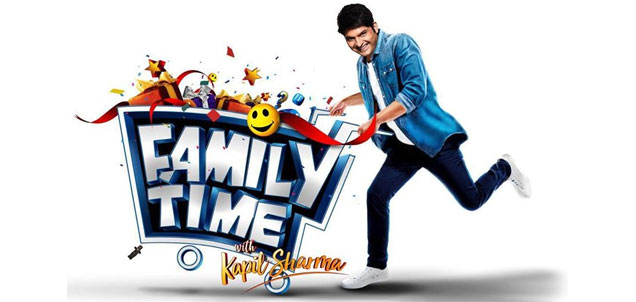
    Two years ago, Kapil Sharma started his second television stint, shifting from Colors to Sony after a nasty break-up of sorts with the former. At that time, I wrote a column here titled ‘Kapil Sharma And The Loss Of Innocence’. In it, I expressed my scepticismabout Sharma’s ability to put himself together and recreate the magic of Comedy Nights With Kapil all over again. It was never his talent that was in question. It was his innocence and his will to excel further in a one-man competition that was in doubt.

    To his credit, he did well to hold himself through that show for more than a year. The show did very well, and was highly watchable, till the the infamous flight-back-from-Australia incident in early 2017 split his core team. The show, thereafter, was a tame version of its previous episodes, even though Sharma himself was still as good as ever.

    News of him drinking, being in depression, making stars wait and canceling shoots have been doing the rounds for about three years now. They had become a part of the package over time. If you want to work with Sharma, you have to deal with all of this, and perhaps some more.

    The Sunil Grover incident may have taken the wind out of Sharma’s sails. But I believe it is the extreme box-office failure of his second film Firangi that truly deflated him. Sharma had been promoting the film on his show for a year before its release. The film found absolutely no takers, either in the audience or the critics community. It did only 20% of the business of his first film KisKiskoPyaarKaroon, and was out of the theatres within a week.

    A more seasoned star would have taken these setbacks with a chin-up attitude. But it was evident that too much had happened in Sharma’s life too soon, and he seemed simply unprepared to handle the ups and downs that vagaries of stardom bring with them.

    It’s not a happy feeling to see talent of this magnitude fade away. The fan base Sharma has built pan-India is underestimated by many in the entertainment business. He had become one of India’s own, a rare talent who achieves the audience’s love but not in a way that makes him larger-than-life or inaccessible (like most Bollywood stars, for example). Audiences felt, and continue to feel even today, that he is a member of their family, one of their own. That they own a part of Kapil Sharma.

    But incidents over the last few weeks leave little doubt in one’s mind that another comeback is ruled out. His new show has virtually gone off-air in three episodes, a dubious record of sorts. Sony would have known that they are not going to have it easy dealing with Sharma. But the extremity of this fiasco is not something they would have ever prepared for.

    A part of me still hopes he finds the strength to bounce back one more time. But I wouldn’t bet on it. Sharma’s time to say goodbye to his stardom has come. India has lost its best comedian to the trappings of fame, power and greed. And Indian entertainment will be poorer for that.

  • Shailesh Kapoor: IPL 2018: Much The Same, Yet Much To Anticipate

    By Shailesh Kapoor


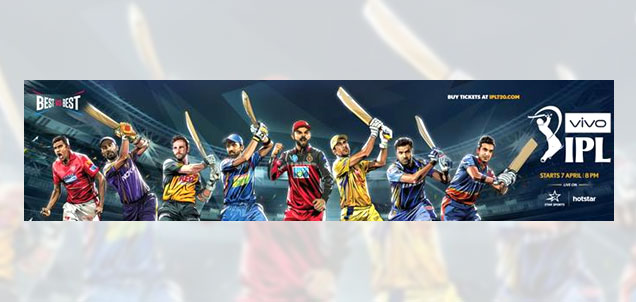
    The big cricket extravaganza starts tomorrow. IPL completes 10 years from its 2008 launch, and the 11th edition will be flagged off Saturday night in Mumbai.


    IPL is now a fixture in India’s annual sporting and entertainment calendar. Many other industries, especially television and films, would earlier worry about IPL disrupting their lives. While these worries have not vanished over the years, they have considerably reduced in their quantum.


    IPL 2018, then, should be like any other IPL. And it may as well turn out to be that way. But there are at least some factors that have the potential to provide novelty and higher anticipation value this year. The most significant of them is the change of hands in the television broadcaster, with the league moving from Sony to Star Sports this year.


    Sony did a fine job of handling IPL over a decade, building it meticulously through several campaigns that ranged from cheesy to pure brilliant. They never put IPL on an ‘auto mode’.


    But who doesn’t want a change, once in a few years at least. Star Sports has been eyeing the IPL rights for a while now, and when the opportunity opened up last year, they were quick to pounce on it. The pre- and post-match programming line-up and the commentary stance by the network will only be known this weekend. But with a track record of innovation behind them, one can bank on Star Sports to come up with original ideas on that front.


    This is also one of the few IPLs where the Indian team comes off a proper break. The little tri-series in Sri Lanka happened three weeks ago. And the last series of real intensity, with a full team line-up, was against South Africa, ending in mid-February. Some of the past IPLs have happened with the team literally ending a tournament and walking into the IPL, with less than a week in between. This seemingly small but significant gap helps charge things up, both for the players and the fans.


    Of course, the consistent performance of the Indian national team has been a plus for IPL over the last 3-4 years now. But over the last two years, the emergence of ViratKohli as a superstar has provided a further boost to the interest in the league. He has grown from strength to strength every year, and there’s a considerable fan base who will tune into IPL only on the back of his appeal.


    This will also be an important year for the digital side of IPL broadcasting. For the first time, the same network has both the digital and the television rights. How Star gets them to feed off each other will be interesting to see. Video usage on the Internet has been on an ascendency in India, and one can expect the Hotstar numbers to multiply vis-à-vis 2017.


    So, much as it’s just another IPL, there’s much to look forward to this year.


  • The Pre-Election Year of Media Alignments & Realignments


    By Shailesh Kapoor


    Unless I’m reading too much into too little, there’s definitely a subtle but significant shift developing in the news media today, across television, print and the Internet. That of a change in political stance. In summary, the shift from an unconditional, pro-BJP stance to a more balanced, issue-based stance is what I speak about here. Let’s delve deeper.


    Media stance has always existed as an idea for ages. Media houses have been aligned to individual political parties, thus making them pro-government or anti-government at a certain point of time, depending on who’s in power. Then, some media houses were always anti-establishment in their stance, which meant that they were not affiliated to any political party, but played a role of being a harsh critic of the party in power, irrespective of the party’s hue and ideology. If a media house has to have any stance, it can be argued that an anti-establishment stance is a healthy stance to have.


    Over the last four years, since the BJP came into power, we have seen media polarisation like never before. Channels, websites and newspapers aligned firmly as pro-BJP (70-80%) or anti-BJP (20-30%). The middle ground was vacated by virtually everyone. Some of the many who aligned to the ruling party at the Centre may have done it opportunistically. The word going around two-three years ago was that there was an atmosphere of fear being created in the media, whereby not aligning to the ruling party meant you could be given a tough time, which could mean anything from not getting the right interviews with senior leaders to being subject to regulatory hassles. This is hearsay, of course.


    Irrespective of why it happened, the polarisation, with a predominant pro-BJP alignment, has been evident. Till a few weeks ago.


    Since February or so, we see many unquestionably pro-BJP channels, websites and newspapers balancing their act. They have not become anti-BJP by any measure. The soft corner still exists. But it’s definitely not like earlier, when they will go out of the way to defend the indefensible. The shift may not seem evident to a casual consumer, but it’s quite apparent if you have been tracking the category over the last few years.


    The easiest sign of the shift is that red herring debates like those on Pakistan have gone off primetime television. These debates used to be the standard distraction tool of many channels, especially English, to divert attention from governance issues, such as the farmers crisis, which has been on for a while now, but getting some attention from the media only this year. The Pakistan debates also whipped up a false sense of nationalism, which is again an agenda that suits BJP.


    We see a lot more headlines and debates now on topics that the government is not necessarily at home with. Nirav Modi has been discussed in some detail, as has been the farmers crisis, and of late, the by-poll losses faced by BJP.


    There could only be two reasons for this shift. One, it could be that the issues coming up are so compelling that even the most pro-BJP media house can neither ignore them or not support them. This would be true in some part, but there have been such issues in the past too (demonetisation’s impact on the economy being one such), and they were given the cold shoulder by the pro-BJP media houses.


    The real reason, in all likelihood, is the second one. Till about 3-4 months ago, it seemed evident that BJP will be re-elected to power in 2019. But in a fairly short span of time, there seem to be at least three different reasons to believe that much as BJP is still the favourite, the momentum is definitely shifting. One, the bypoll losses across BJP strongholds have shown the chinks in BJP’s election armour. Two, several allies have withdrawn support over the last few months, leading the BJP as virtually a stand-alone party, than the pivot of a bigger group called the NDA. Three, there seems to be an active movement among the regional parties across states to set up some kind of an alternative front. This is still a nascent development, but in politics, one year is a long


    Media houses, smart enough to sense all of this, are probably just playing safe and hedging their bets. It’s not the best sign of an independent media, for it’s a validation of a new scenario where the media finds aligning to the ones in power a legitimate thought. But it’s happening alright. Like the last four years.


    2019 is getting closer. Be prepared for more alignments and re-alignments. Both on the political and the media fronts.


  • Shailesh Kapoor: The Antidote an Unhappy India Needs

    By Shailesh Kapoor


    The World Happiness Report 2018 was released yesterday. This important global study, produced by United Nations and based on worldwide data collected by Gallup, is one of the more interesting pieces of data available at a global level, but also one that’s not got adequate exposure in India.


    Before I share my thoughts on the impact of this report’s findings on the Indian entertainment business, here are some key highlights of the report from India’s perspective (the current and past reports can be downloaded from the World Happiness Report website here):

    1. India ranks a lowly 133 compared out of 156 countries. We are bunched mostly with African countries, which form the bottom of the pile.

    2. India lost 11 ranks since the last report released in 2017. These reports are based on three-year rolling averages. This year’s report is based on 2015-2017 data, vis-à-vis 2014-2016 for last year’s report. Hence, the 11-ranks drop is reflective of 2017 vs. 2014.

    3. Since the first report released in 2012, India has lost rank consistently moving down from an already-low 93 to an all-time low of 133. Its score (on a 0-10 scale) has dropped by about 15% in this period, now standing at a poor 4.19.


    The report lists the factors considered and the methodology for those interested. It’s suffice to say here that the report captures the idea of “happiness” in a multi-faceted way, with a robust methodology backing it up.


    The dichotomy of a flourishing economy but an increasingly unhappy populace is not a subtle one. And that makes the results even more interesting and, in equal measure, saddening at one level.


    But the reason why this report has fascinated me over the last few years is the correlation one can draw between the report and the entertainment trends prevalent in a country. And simply put, the India argument here is: As India gets unhappier, there preference to watch “happy” content (as against neutral or depressing content) will further increase.


    Over the last two decades, there have been several narratives about Indian entertainment built by the media and the critics community. Tags like “leave your brains home”, “mindless”, “regressive” and more such have been used to describe India’s staple entertainment, across television and films.


    The reference points of most of these critics is the West. A cursory look at the report tells you USA, UK and France, three key countries that define the “Western influence” in our entertainment, are all ranked in the top 25. If their entertainment is less “escapist” and more “cerebral”, that’s the reason. The role of entertainment in India is very different from the West. Here, it’s to actively up the happiness levels of the audience (of course, only momentarily, before the harsh reality of life strikes, one more time). There, it’s to enrich an already-happy life.


    China, ranking at no. 86, is probably a better reference point for India. To use the West as our benchmark can work as matter of personal taste, but never as a social thought.


    Happy content is not about comedies alone. It’s about a certain lightness of touch in the making of content in general. And all “happy” content need not be “mindless”. RajkumarHirani has shown that, and there are many other filmmakers and internet content creators who have managed to balance happiness with a sense of realism and meaningful messaging. The “mindless” form still exists, but in an unhappy nation, one should not be judgmental about its success.


    Television, however, is the weakest on this trend curve. Indian fiction television continues to rely on tropes that are more stress-creating than stress-reducing. It worked for some time in the name of social impact, and perhaps rightly so. But that being done and dusted, happiness becomes the primary expectation. And most mainstream TV, especially fiction, falls miserably short. No wonder then that nth repeat airing of Judwaa 2 and Golmaal Again out-rates some of the top Hindi GEC shows.


    This is not even a layered discussion. Entertainment media has to simply provide an antidote to the unhappiness that’s deep-seated and growing. That’s how simple it is. Yes, there can be variant content that serves other purposes, but the mainstream role of the entertainment media is to be this antidote. Tell any story you want, but if you want it to work with a million people or more, make it a happy experience for them.


    That will, of course, not up our happiness quotient. Because entertainment does not drive happiness. It’s supposed to cure unhappiness. And as we get unhappier, the prescribed dosage only keeps going up.