Tag: Sanjeev Kotnala

  • Sanjeev Kotnala: My Symbols, My Beliefs, My Culture

    By Sanjeev Kotnala


    ‘To Boycott’ is a powerful call when it is laid on the foundation of a religion, culture or nationality. The emotions get charged, and the societal pressures demand you to take only one side, the side calling for the boycott. Despite the need for sensitivity to ground realities,  time and again, brands and services try leveraging them for their advantage. Many a times with disastrous results.


    I am a practising Hindu, I know the significance and the holiness of our symbols. Things associated with our Gods and Goddesses, Culture and Nation are sacred to me. No one has the rights to play with them, tweak them, misrepresent and misposition them. I have initiated project #IgnorantHindu for people who may have forgotten our religion and its simplicities. There, I share mythologies, story and reasoning around our festivals.


    MORE EXPECTD OF AMAZON.


    In the case of Amazon, it being an aggregator and not having full control of products sold on its platform is a lame excuse. The argument is open to debate. Hopefully, the services at Amazon comes with fully defined guidelines. If not, it is easy for it to build such contractual obligations. Every time, Amazon escapes by taking off the product and saying sorry. It has happened many a time.


    Why can’t the clause of ‘Not using symbol and names’ built in the system? Amazon says: “All sellers must follow our selling guidelines and those who do not will be subject to action including potential removal of their account.” What are the ‘Selling Guidelines that the sellers are expected to follow?


    Is the penalty mere removal of the account? Is that the cost of deep impact on my psyche? Why does Amazon not initiate legal proceedings against the offender? If it did so, there will be two benefits. One, such issues will not arise, and two the same group calling for the boycott would ask people to buy from Amazon.


    On the other side, if Amazon or any other brand continues to play with fire and takes no firm action, things will change for the worse. Soon, in addition to carrying the tag of the country of make, products and associated  visual will require approval before they are uploaded, so that no religious sentiments are hurt.


    ‘To Boycott’ is a powerful call when it is laid on the foundation of a religion, culture or nationality. The emotions get charged, and the societal pressures demand you to take only one side, the side calling for the boycott. Despite the need for sensitivity to ground realities,  time and again, brands and services try leveraging them for their advantage. Many a times with disastrous results.


    I am a practising Hindu, I know the significance and the holiness of our symbols. Things associated with our Gods and Goddesses, Culture and Nation are sacred to me. No one has the rights to play with them, tweak them, misrepresent and misposition them. I have initiated project #IgnorantHindu for people who may have forgotten our religion and its simplicities. There, I share mythologies, story and reasoning around our festivals.


    Sale of such controversial products  actions can be seen as a violation of Section 295A. ‘Any person deliberately and maliciously intended to outrage religious feelings can be punished for the term prescribed or extended up to 3 years.’ And the repeat offence only suggests malicious intent.


    Amazon should be happy that it is the silent tolerant majority demanding the boycott. One can only imagine the possibility if this was done against the symbols and beliefs of other religion.


    Why can’t brands and services be sensitive to the social realities of their ecosystem?


    WHY ARE HINDUS SO TOUCHE IF IT’S OKAY WITH SOME?


    It is OKAY for some of the religion and countries to allow flags and signs to be freely used over undergarments, T-shirts, bedsheets and doormat. That is their problem. We Indian and specially Hindus are sensitive about the misuse of our religious symbols for a commercial purpose not only in India but in any part of the globe.


    IT BECOMES EASY WITH SOCIAL MEDIA


    Nowadays, with active social media, real and fake news spreads faster. There is a crazy urge to play the  fastest finger first in case of objections and protests. It is so easy to be an armchair protester. However, if found genuine by the majority it has possibility of turning into an ugly ground reality in no time.


    PERSONAL POINT


    I can be said to be well-educated and can be considered progressively liberal. However, I am sensitive about my religion, rituals, culture, nation and national symbols. I am completely against anyone (including people from my own faith) to play with them. To make fun of them. To misuse them for commercial gains. Liberalism and secularism do not mean taking pot shot on Hinduism.


    ARGUMENT


    There is an argument that people find it easy and open to abuse these symbols and pictures, as Indian’s and Hindu’s  have commoditised them with misuse over multiple product categories. So if you can have Lakshmi Cement, why not Hanuman beer.


    The difference is that businesses in India use these names (as Brand), symbols and images in the most respectful way. There is no need to add subjectivity by confusing the judgement basis the user and the purpose.


    JUDGMENT


    In 2015, a bench headed by Chief Justice HL Datta said, ‘there is nothing wrong in people using pictures of God for commercial purpose in the products’. The courts said, ‘If I have my God on my car, house or home, then what is wrong with it. Why should we restrain people from using picture of God’. And indeed the judges have a point there.


    THE NEED.


    Personally, I am of the favour of creating a library of protected words, pictures and symbols across religions. That defines what cannot be used for commercial purpose. Be it brand name, visual depiction, advertising or any such commercial use. We are sensitives to misuse and we need to be protective.


    Some may say, religion and religious symbols are just representation not the core of it. The true power of prayer and the belief is in the heart and the mind. A true believer sees his or her god in everything, everywhere, including in the act of  their misuse. When someone plays with the symbol, and misuses them, does their value and importance decrease?


    The question has no answer. I don’t think there is a need to try answering it.


    It is My Religion, My Symbol, My Culture And My Nation.


    SOME OTHER INSTANCES OF MISUSE.

    Just to share how tolerant the silent Majority been.


    It is for each one of us  to judge if the protest is valid. When does the brand, product or service crosses the line. Here are some instances of misuse.


    1. 2020. (1) Amazon withdraws products featuring Hindu deities. (20 Enlighten Clothing Company removes GAESHA balance mini skirt (3) California- Use of Hindu Deities statues in Nightclub as decor. (4) Brahma beer by Budweiser (5) Protest against toilet seat cover with Hindu God images.


    1. 2019. (1) Another Brew Company withdraws Hanuman Beer . (2) Gucci trolled for selling Sikh Turban as an accessory. 2018. (1) Amazon withdraws Lord Ganesh stockings. 2017. (1) Jawed Habib uses Hindu Gods in the Newspaper advertisement. (2) On Amazon, doormats with tricolour were on sale. 2016. (1) Wayfair and Kess Bathroom mats. Toilet seats. Shoes. Dog tags with Lord Ganesh visual. (2) Hindu God-decorated skateboards and bedding at Amazon. 2010. (1) Newsweek cover depicts president Obama as Natraj.


    Just to make the case, if you know of cases where symbol-god-culture-images and  iconography of Islam, Jew and Christianity has been misused, do share.


    Sanjeev Kotnala is a senior marketing strategist and educator. He writes on MxMIndia on Wednesdays. His views here are personal




  • Sanjeev Kotnala: Karva Chauth under Covid-19 impact

    By Sanjeev Kotnala


    KarvaChauth is a festival that is entirely celebrated by women. Funny men are hardly included in the festivity, when the whole festival is about  the long life of their spouse. But, under the Covid-19 spectre, it was not the same. Women were not meeting in groups to apply Henna (Mehndi) or sing feri during the KarvaChauth puja. Even at the rooftop while sighting the moon, they kept to social distancing.


    It was the evening before KarvaChauth. The day women in the society would have collected at someone’s home with Mehindiwali busy drawing intricate designs on their palm. Covid-19 ensured nothing of this nature was happening. Every married woman was on her own. Tradition and rituals still need to be adhered to. So, the task of applying mehndi on my wife’s palm now rested with my daughter, Preetica. At night, while SRH was slowly making way to qualify in the IPL playoff, Preetica was applying Mehndi on my wife’s left hand. It was her first time, and yet She was doing an excellent job of it.


    Preetica, who is soon to go to Great Lakes Chennai for her PGDM course, showed sign of project management. She proactively brought Mehndi cones home and for the last two days practised the art by applying Mehndi on paper. (Practice results below)


    I was busy watching David Warner and Wriddiman Saha at IPL20  bat full throttle. I was also waiting to watch BiggBoss after the match, to watch Pavitra Punia and Eijaz Khan banter.

    I was not ready for what happened next.


    CALL FOR ACTION.

    My wife realised that it may take longer for Preetica to apply Mehndi on both hands. Hence, she requested me; the Compulsive Doodler if I could do the honours for the right hand. It was a festive time, and then Mehndi applied by the spouse is an auspicious sign. She was okay with whatever the results may be, and there was no way I could refuse. Moreover, right now, she was asking with a smile, and it was still a request.

    People know me as #CompulsiveDoodler. They wonder at the #structuredDoodles I create. Recently I have done few commissioned assignments for Vanshakti Mumbai, a motorcycle enthusiast and Cottage Nirvana at Mukhteshwar. My confidence level was very high.


    You can check out the doodles and if interested, order your exclusive doodle as home decor or gift.


    EXPECTATION Vs EXPERIENCE.

    Hence, everyone other than me expected applying Mehndi to be a cakewalk for me. I knew the reality. I remember the last time I tried the stunt of playing Mehndiwala in one of my cousin’s marriage. The results were not worth writing home.

    I could have said NO and ended up with some arguments, and it was not the right time for it. So, I went with the flow. I took her right hand and opened the cone by removing the pin. Suddenly, from the opening mehndi started oozing out like thin worms. It made me nervous, and I was told it does happen because of the pressure. I removed my hand faster than Shekar Dhawan in Dream11 ad. After some time, the oozing did stop, and I was ready for the act.

    My daughter was referring to some design on her mobile. But, I the ardent follower of Zen Tangles and Mandala art tried doing my own bit. I decided to experiment with unsymmetric patterns. The design ended with crooked lines, thick blobs of Mehndi and looked not-good’.

    I was getting an anxiety attack as I expect much better from myself. My hands were not steady. The grip was not proper. The pressure on the cone not well managed. The Mehndi solution never obeyed my command and continued to ooze out in the form of thin spaghetti type of droppings. There was not a single straight line.


    PAST EXPERIENCE NO GUARANTEE FOR FUTURE PERFORMANCE.

    I remember my earlier fiasco with Golf at one of India’s oldest Golf Course at Naldehra, 23 Km from Shimla. Just because I play cricket, I thought, I can be reasonably okay with Golf. What is the difference? In Golf you have is a thin odd-shaped bat and a stationary ball. How tough could it be?

    That was before I took some 55 shots for the 322-yard Par4 first hole. For the record, the 18-hole 5987-yard Golf course is a Par 68 round. Needless to say, that was the only and the last hole at a Golf course I ever played in. Though, I still try my hand at the driving range and believe have got the hang of it.


    DAMAGE CONTROL.

    Back to KarvaChauth. By the time I had covered one-fourth of her palm, my wife had realised that it was going to be disastrous, and the shagun of the auspicious act is over.

    It was left to Preetica to do damage control. Despite it being her first time, she did a fantastic job, and that includes her doing corrective work on the mehndi of my attempt.


    PaRAM LEARNING

    As a habit, I thought about the whole act and realised that if I follow the PaRAM ( Pause, Reflect, Absorb and Move-on) process, there are some important learnings in the episode.

    Here they are.

    1. The performance pressure kills creativity by enhancing anxiety.

    2. It is OKAY not to be good at everything.

    3. Everything can be done if you want to and if you practice.

    4. If you can’t do something today, it does not mean you won’t be able to do it ever.

    5. Just because you can do something, does not mean you should.

    6. I still have to earn how to not say YES when I want to say NO.

    7. You can be proactive by anticipating things and taking action, or you could be reactive. The decision is yours.

    Oh, by the way, we were left with few unused cones. We kept them to practising later, which I know will never happen. And if it does, it will be near to the next KarvaChauth.


    THE LOOP WILL KICK IN.

    I know, Preetica buoyant with her first successful attempt will practice. She has the loop of appreciation working for her. I won’t practice because the experience was not right, and it is definitely not my priority.

    You get to learn so much by merely analysing and thinking over episodes in your life. What lessons you take and what lessons you implement is your call.


    BRANDS LOST ACTIVATION.

    There were few Mehndiwali and wala in action. Women were not stepping out for Mehndi due to the Corona scare. Maybe this was a time for some brand to create a hygienical safe pool of Mehndiwala and like the bank separated counters – keep the customer and then separated with Glass/acyclic window.  Maybe it could have been possible.


  • Comment | Sanjeev Kotnala: Is Tanishq on a Hat-trick of Taking Down Ads?

    Screengrab from the Tanishq Diwali 2020 ad


    By Sanjeev Kotnala

    When someone including me asks What is wrong with Tanishq? There is a counter-question, what is wrong with us? And What’s Your Problem? And the answer is: Everything.
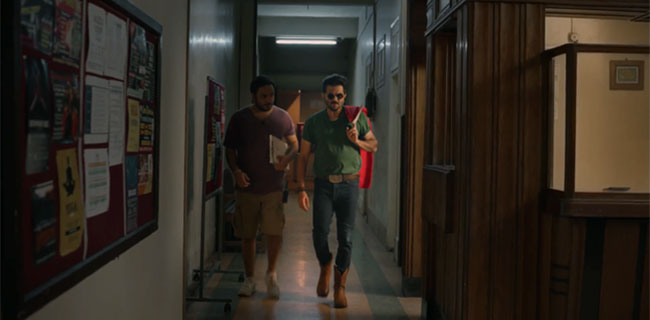
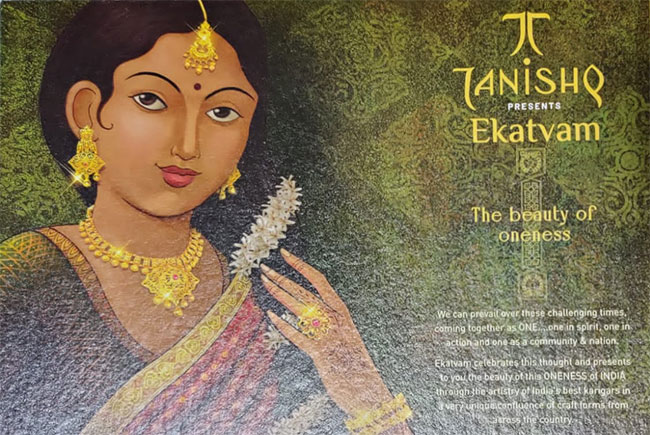
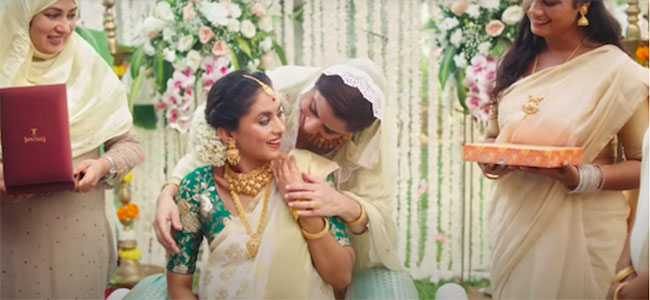
    Tanishq, like every other brand and organisation, is a social entity and by definition, needs to be exceptionally sensitive to the ecosystem it operates in.

    Why?

    It takes too much of a strategy, guts or stupidity to do it again and so soon.

    To antagonise the community during the festival when you expect large sales to happen.

    So, here are a few possibilities:

    • Buoyant with the last BUYCOTT and buzz it created, the brand now uses it as a strategy. Release an advertisement. Withdraw it.

    • The brand does not bother with the boycott calls on social media. It knows that as a trusted brand, people will still buy from it. Which did happen last time.

    • The Tanishq team at the client and the agency’s end, including the consultants, have a long learning curve.


    NOTHING WRONG!

    On the other side, there is nothing wrong with the Tanishq Diwali Advertisement.

    Many brands could have taken this No Crackers as a CSR communication. Quite a few more may do so and not have a backlash.


    What did the ad say?

    The simple and good-in-its-intent Tanishq Diwali ad has four well-known women talking about how they will celebrate Diwali this year.

    Sayani Gupta tells how she is hoping to meet her mum after really long, and she is definitely not going to burn any firecrackers. She even adds – ‘I don’t think anyone should light any firecrackers. Lot of diyas. Lot of laughter hopefully and a lot of positivity’.

    Alya says she will eat a lot of sweets and food. She will spend time with her family and close friends. Neena Gupta says she will dress up and wear nice jewellery. Then finally Nimrat Kaur tells you that how this year it’s all the more important to be with family.


    The last outing with Love Jihad.

    The last time Ekatvam faced Love Jihad. Call for the brand to be sensitive was loud and clear. The brand withdrew the advertisement. And the brand was criticised by people, who believe that taking down the ad was a sign of weakness. And maybe the brand did not believe in what it was saying. 


    The Cracker-free Diwali

    Some states have banned firecrackers. A few have banned bursting firecrackers in public spaces. The new generation is quick in adopting green initiatives and is sensitive to the pollution issue. The cracker-free Diwali message should have been okay. 


    Brands must have its ears to the ground

    However, if the brands have been using their digital listening tools properly, they would have got a hint of resistance. These are definitively charged times. Hindus as a community are fed with multiple messages that question the treatment they get in a state that they believe should not have been secular but a Hindu Rashtra. They feel they are singled out in the politically and socially. They hate the temples controlled by the government when other religious places are mostly free from such governance. They see only their festivals, rituals and traditions questioned. They see the need to prove their faith.


    Any Spark would do

    The Hindu feel weak not in the number but in unity, in protest and acts. They believe that as a majority, they have the right not to be questioned for everything. They see how some other communities and religious groups can semi-dictate the agenda and their demands. How being a majority works against them? This is a charged environment. Anything and everything can be the spark that can socially have an equivalent of the Beirut Ammonia Nitrite blast.


    The brands have to realise it and be sensitive. No one would have said anything if it was burn crackers responsibly, burn less. 


    A Suggestion

    The concept of Ekvatm is excellent for the time. Somewhere it has been lost or robbed of its sheen because of few pieces of communication being interpreted differently.

    Maybe the brand could do well to bring alive what is hidden in its websites. The collectivism of multiple artesian, jewellery styles like Meenakari, Laser, Stamp etc. to create and celebrate Ekatvam.


    Sanjeev Kotnala is a senior marketer, business strategist and educator. He writes for MxMIndia weekly, on Wednesdays, and also on many other days. His views here are personal.


  • Sanjeev Kotnala: Cadbury – The Digital Corporate Baba Ka Dhaba

    By Sanjeev Kotnala


    When you know the story behind the Cadbury Diwali ad supporting local retailers, you appreciate the idea, creative and the efforts. However, most consumers neither have access nor the time to read the strategy deck. They just see the campaign, and they react.

    My initial reaction to this ad was ‘Another annual Diwali Gifting ad from Cadbury’. However, ‘NOT JUST A CADBURY AD’ immediately raised my ‘for award antenna’. I saw names of retailers contextually feature with the gifts or the occasions. That’s it. The ad was over.

    I viewed the ad again. This time focussing on the message.

    I realised the technology and the efforts behind it.

    Names of few retailers also registered.

    A new respect for the thought and implementation grew. It is not easy to cover 1800+ retailers across more than 260 pin codes in Mumbai, Delhi, Lucknow, Indore & Pune. Or that’s what some coverage told me.

    I do hope this campaign is a huge success ad shows direction and possibilities to other brands. I think we will see more simple and direct innovative campaigns in future.


    So, What Is My Problem?

    Cadbury Celebrations data-driven campaign ‘Not Just A Cadbury Ad’ highlights the spirit of generosity in action. And that kills it. Saying, ‘It is not a Cadbury ad’ makes it that much more of a Cadbury ad. Why disguise? That line adds nothing to the message or the delivery other than conning people to expect something different! Which they understand only when they get the tech/context AV.

    Cadbury claims to provide an advertising platform to local retailers impacted by the pandemic.  This is no advertising platform. The non-paying advertiser (the small retailer) does not have any control of the content or the exposure of the ad. Additionally, we use the same visual for all the shops in a  category across cities and pin codes. This commoditise them. Maybe I am finicky and should just look at the intent.

    I Would Have Done A Deal.

    I don’t know if the featured outlets are also generous toward the brand. Are they allowing their premises for an enhanced visibility of the brand?  I would have done that. At least the retailers like ‘Chhadava Dry Fruits Powai’, from who the Cadbury celebration pack is bought in the film, should do.

    My Problem Is Insufficiency. 

    This is more of problem of big city retailers. I saw ‘Kalpana Sringar Andheri West’ and ‘Bhandari Optician, Andheri West’. Now we all know how big  Andheri West is. As a consumer interested in jewellery, the possible reactions are;

    1. I earlier bought from them. I know where the shop is.

    2. I have seen the shop and I remember where it is.

    3. The vast majority – where the hell in Andheri West is this shop?

    Adding another variable would have done wonders. It just needed one more line. ‘Kalpana Jewellers, Nr Sammelan Party Hall*, Andheri West’.  Seriously and sincerely, it would have completed the act. No new data required. And a few more lines of code to pick another static variable.

    Minor Checks could Help.

    I cannot locate ‘Kalpana Sringar, Andheri West’ on Google map. So, no positive action possible, even if I wanted to buy from them. Google is the ultimate. Could Cadbury done anything to ensure Google Map presence for these shops. A bit more. That extra mile! I know it is not Cadbury’s business. And it is not even the purpose! Or am I wrong?

    Too Many Categories.

    Five different product categories in 60-seconders!

    I hope the brand knows how people consume advertising. They must, as the film ends on Cadbury Giftpack! And you do remember it. The film make sense for the brand and the audience, only if one watches till the end.

    ‘When all of us support our local stores, all of us can have happy Diwali’, says Cadbury. So poetic. I appreciate it. However, I would sacrifice being poetic for being direct and effective.

    It would been superlative.

    It would have been fantabulouslyextremelygigianticsuccess if Cadbury could have further helped these non-digital foot-print retailers get on e-commerce presence. No, that’s again not Cadbury lookout.  But, what if they did it? What if they really created a #CadburyLocalRetailGift or e-commerce setup with some start-up like #Dunzo or even get them on Flipkart or Amazon. Oh, people like me with not much skin in the game, can keep thinking of such integration. I know, business have constraints. And I appreciate that. But, for me that is the difference between Aha and Wah..

    Simplifying At The Cost Of Creativity.

    You need to watch the ad completely.  Then make sense of a globally valid statement of collectiveness. Maybe refer to the strategy document for details. Personally, I believe in more simple and straight direct communication. Like, ‘Support Local Retailer in your area’ or ‘Find the local retailer of YOUR Pin code  area in this Cadbury ad’. Or something like that. However, I understand and appreciate that this is a creative decision, and what is right or wrong is always debatable. The brand has done what it felt right, and one respects that. But…

    So, Iss Diwali Aap #KiseKhushKarenge? Cadbury waale Kush toh honge.

    ……………………………………………………..

    NOTE 1: Shilpi D Pathak, is a friend and an content marketing specialist. Her reaction to Cadbury Diwali ad; it reminds her of the ‘Baba Ka Dhaba’. Now, you look at it, the intent and the expectations form the audience is the same. Where it differs is the use of platform, process and technology.

    ………………………………………………………………………..

    NOTE 2: The YouTube  version that I watched had a mixed set of retailers across cities. Kajari Selection-Pune, Jyoti Optician-Indore, Sahil Jewellers-Delhi, Ajanta Times-Ahmedabad and Chhadava Dry Fruits-Mumbai. Would have preferred that even this version was city specific even if the pin-code technology does not work there!

    *Dummy street name. And well, the Google Map did not show me this retailer.

    …………………………………………………………………….

  • Sanjeev Kotnala: Does a brand purpose serve any purpose?

    By Sanjeev Kotnala


    Are you someone with a purpose, a life purpose? Or perhaps, like most of us, you know you probably do have some higher purpose, but you wake up every morning and prefer to simply focus on the day’s tasks?


    Life purposes can guide and influence behaviour, shape your goals, and offer you a sense of direction. It lends meaning to your everyday life. At least it is supposed to. Richard Leider, a preeminent executive-life coach, says: “When your authentic purpose becomes clear, you will be able to share it with the whole world.”


    Now, translate this concept to a Brand. All companies know what they do and how to do it. But there are a few companies who delve into the why. It is the question of ‘why’ the company or brand exists. No, not the obvious reason that there are consumers out there willing to fork out money for the brand of product or service. The ‘why’ of a brand purpose goes deeper than that. It is about defining a higher purpose for a brand’s existence.


    BUT IT’S GETTING RIDICULOUS!

    With the democratisation of communication and the advent of broader, global concerns, there is a race in the brand world. Be it gender and race equality, inclusiveness, empowerment, and environmental sustainability, every brand suddenly wants to show-off a ‘higher purpose’ to strengthen its lifecycle. A purpose that is supposed to align its business to its consumer and prove to us it’s not about the money. Brands want to be recognised for working to advance societal causes. Yes, brands are anxious to leverage the supposedly broader concerns of the millennial customer.


    But my dear friend and marketing guru, Vermajee, begs to disagree! He believes there cannot be a bigger myth! According to him, brands chasing a ‘larger purpose in life’ and shouting about it from the rooftops are losing sight of reality. While the brand purpose and being purpose-driven make for good conversation, he says there is very little of it that genuinely percolates within the four walls of corporate life. He believes corporate entities should focus on their primary goals of offering functional, cost-effective products and services. And by all means, offer them without harming the planet’s resources. Just don’t go around crowing about it!


    ‘BRAND PURPOSE,’ MY FOOT!

    Taking a sip of his Antiquity and No.1 Club Soda, he declares that it is plain foolishness for a brand to expect consumers to pay a premium for being ‘purpose-led.’


    Adjusting his posture with an extra cushion, he begins to vent his ire. Let’s listen to his rant.


    Every consumer out there is busy delivering what their bosses want and what their boss’s boss wants. People have deadlines to meet and have limited resources at hand. They have families to take care of and ensure a proper education for the kids.  Commuting is a nightmare. The monthly grocery bills are an ordeal, rents, and painful EMIs to take care of, scraping around to save a bit.  Then there are the unforeseen medical expenses. And the foreseen family functions, festivals, and the promised vacations, all of which ensure one is always operating well above already stretched budgets. Add to this the emotional battles and fragile egos. Envy, jealousy, and understandable frustrations. Social status, peer pressure, and family demands.


    Do you really think amidst this fierce whirlpool of everyday living, a consumer has the time to give a F@#K about a brand’s purpose? When the social ecosystem is fraying at the edges; and our security and safety under constant threat. Fleeced by corrupt public and private infrastructure providers, our lives a never-ending struggle for basic dignity. Who gives a F@#K about the ‘higher purpose’ of a brand of shoe or a mobile phone?


    GIVE US A BREAK!

    Vermajee is not done. He has a word of advice. Wouldn’t it do all of us a world of good if companies quit blowing monies on communicating their ‘purpose’? Instead, invest their resources in improving the quality, reliability, and affordability of their products and services?


    Do you think it matters to me what your purpose is? If my purpose in life is to make the world a better place through my poetry or music, I don’t keep harping about it! I go ahead and make the world a better place through what I am good at. My life purpose is mine to define and mine alone to abide by. The moment I start bragging about it, I have crossed a line and made it my life purpose to promote myself!


    Who cares? Who the F@#K cares?


    The initial thoughts for this article were mine (Sanjeev Kotnala). However, it was my Bengaluru-based dear friend, Peter Suresh; a media research analyst turned content writer, and an ex-colleague from Dainik Bhaskar, who gave it the Tint, Hue and Colour, in an almost perfect articulation of my thoughts. Thank you, Peter. 

  • How Many Ad Films are too Many in a Campaign?


    By Sanjeev Kotnala


    Brands make multiple television or digital video commercials (TVC/DVC in short,  referred hereafter as ad films) to engage their audience and deliver the message. They are mostly various expressions of the same idea. So, how many ad films should a brand make? Or, how does the team decide how many should be made? Or, why create a series of ad films? That is not counting the edits and adaptations into regional languages.


    Why Multiple Ad Films?


    There are possibly so many highly logical reasons that may push the client and the creative to look for multiple ad films:


    • The client believes in iterative expressions.

    • There is a budget to make multiple ad films.

    • The creative is of the point of view that the concepts need clarity.

    • The media agency needs it to keep the audience engaged when the ad frequency is high.

    • The campaign runs aggressively across a property like IPL, and hence audience gets bored faster.

    • To take advantage of economies of scale in production.

    • To justify the high fee of a celebrity.

    • The communication aims to change behaviour and hence more ad films.

    • The concept is so disruptive that we better have more ad films to explain.

    • The idea is so strong that it demands multiple ad films.

    • The idea is weak, and with multiple ad films, we minimise risk.


    I am stopping listing reasons knowing that there could be many more for such a strategic decision. But the questions kept bugging me, and soon I found myself with my dear friend, consultant Vermajee, the Management Guru. Last Friday, over Antiquity Blue topped with chilled No 1 club soda, served in steel glasses, I got enlightened on the subject. Being Navratri, drinking was banned at home. So, we parked his SUV under a banyan tree on the Western Express Highway within sight of a ‘No Parking Zone’ sign and chewed on the subject along with Faldhari Chiwda. Vermajee shared his gyaan and opened my eyes. He usually does have that impact on me.


    Ad Films Earlier – Vermajee’s Time


    Some few decades back, when Vermajee was part of the agency circus, the brands were happy with one TVC at a time. Maybe one TVC per season. Some TVCs lasted many seasons over TV, Cinema and Rural Vans.


    It was not the creative teams lacked ideas. The act of making a TVC was time-consuming and very painful. You had to really work hard. Work in detail. Post work was astronomically costly. Budgets were sacrosanct and less clutter in the media. The clients as usual finicky and khadoos, wanting a Merc at the cost of a Maruti.


    The client today is no different. Even then, they did not understand that creative and advertising was an investment, not an expense. They fail to see, it is better to invest in good creative even at the cost of the media budget and expose it a less number of times. Cutting production budget, making an average TVC and exposing it more number of times is a bad idea.


    Yes, some clients made TVC throughout the year. If you made a judgmental error in one, there was not much to worry as the next TVC was on its way.


    However, we were absolutely sure of our craft but a bit unsure of consumer understanding. The research was used as the master key for campaign support and approvals. The scripts and even at times the edits were pre and post researched. It was too costly to change anything at a later stage, not that changes did not happen.


    Vermajee Gyaan


    Vermajee explained the difference between episodic series (procedural) and serialised ad films. He reiterated the need to judge an ad film more on strategy and impact, likeability, memory and engagement than anything else. He empathised on the law of marginal returns. Vermajee said: “the client and creative along with media must risk raising the question about the number of Ad films and must stop when they stop adding value to the campaign”.


    The Case of Multiple Ad Films


    Here, the same story is repeated with a slight twist or a change of character. Each of the films is complete, and you don’t lose much, not watching all of them collectively or in a particular series.


    The recent Cred communication is an example. Film celebrities like Anil Kapoor, Madhuri Dixit and Bappi Lahiri audition for Cred. They perform in their signature styles but are rejected. They are so overexposed that one completely forgets the Cred ad of last year, which is more explanation-based.


    People question the creativity in the Cred campaign. There is a huge awareness buildup for Cred, and the single-minded message is clearly established. I don’t have data for app downloads and usage. Recently, we saw  Alka Yagnik- Udit Narayan auditioning, which makes me think that the brand missed an opportunity in using influencers and UGC.

    In another version of this, you have the same proposition and intent but the playground and the story changes. The episodes remain independent and complete in themselves. It works brilliantly with a simple message and some emotional engagement.

    Dream11 seems to have been successful in campaigns in this style of multiple ad films. Dream11 last year #YehGameHaiMahan with multiple fils – Bush or pipeline, Dhobighat, old friends etc. pr the campaign #kheloDimaagsey. This year the Dream11 campaign #YehApnaGameHai features Dhoni, Shikar, Rohit and others.

    One of the best examples of it is Thanda Matlab Coke. Here Aamir Khan played different roles from the Punjabi farmer, Pahadi guide, to Bengali babu and some more. Well, one can not forget the ZooZoos.


    The Serialised Ad Film

    Here the multiple ad films that are following a pre-defined narrative. There is a link between them. Sometimes subtle and sometimes overt. They are best watched in series or totality.

    The story moves forward with each ad film, keeping the audience engaged in the campaign. There is a surprise packet of what next. The character layers get unravelled with time.

    Some years back we saw Amazon  Chokpur cheetahs; India Ke Sapno Ki Apni Dukkan. A small town bunch of cricket players and their coach. The ad films are still remembered with films like Dhyani’s Birthday, Introduction, Kab Khelenge 2020 and official song among others.

    Nowadays we are seeing something of serialised ad films by PhonePe ads featuring Aamir Khan and Aliya Bhat. The Chaiwala,  Kiskepass, safety and more. This time, the functionality is overpowering, it is making its point, and the interplay of characters is excellent. However, will it really become a true serialised ad film set is yet to be seen?


    The best I have seen in the Indian context is Tata Sky Chota Recharge. The campaign kept the audience glued. In fact, they were rooting for the teenagers to meet and love to blossom. The brand message delivered simply. In such cases, when the audience gets hooked, they want more of it.

     The attempts of true serialised campaigns have been far and few. Such creative requires commitment and a willingness to carry the collective risk. But like gambling, the response and gains are equally large. 


    Reminder: How Many Ad Films?

    :: Always look at multiple Ad Film from Brand and the strategy point of view.

    :: Always evaluate the content and multiple ad films in the context of the newness of the message, brand, service, media budgets and complexity or simplicity of communication.


    Invest in creative development even at the cost of media budgets. An excellent creative product exposed less will always pay back far more than a bad/mediocre/average creative exposed more number of times.

    Evaluate from consumer interest engagement point of view than the jury and judges at the awards point of view.

    No need to make more films just because you have a good script. As you may end up hitting marginalised returns and underexpose other films.

    Go ahead and do multiple ad films if they really add to the brand message understanding or clarity, emotions and association.

    Maybe Dream11 did not need all the films and Cred could benefit from serialised rather than a series of films. Perhaps, the client-agency-media teams on these brands know better the reason for multiple ad films, and when did they hit the curve of marginalised decreasing returns or maybe they can do with some more films.

  • Sanjeev Kotnala: Should brands as social entities be sensitive to reality?

    By Sanjeev Kotnala


    I said “brands are no different than people. They must follow the same process’. This was in reaction to Ambi Parameswaran’s question, what to do when your brand faces rejection? Retreat into a shell or face-process-learn-reboot? (Read his book SPRING– The art of bouncing back from rejection) .


    A brand may breathe and show signs of what we call being alive, but they have a life of their own. They emote, engage and have relationships, attitude and persona. Brands share the same societal ecosystem as their consumers. Naturally, blood is drawn, when brands digress from the expected script that is defined by the more assertive, aggressive elements of the societal network having a higher share of voice and influencing ability,.


    Freedom of expression (an oxymoron) allows the citizens a certain leeway in expressing themselves. There are set coordinates and line they must not think of crossing. Similarly, brands are expected not to take significant liberties ( creative or otherwise) in their attempt to engage, involve and build bonds with the target segments. If they do, it will backfire, and that must not surprise us.


    Tanishq Ekatvam Reference.

    Recently, Tanishq released a TVC titled Ekatvam. It showed a mother-in-law happily organising baby shower (Godh Barai) for her daughter-in-law. A simple situation. Just another life event for a jewellery show in familiar emotive surroundings. A boring ad and catalogue advertising.


    The layer of interfaith marriage makes it more engaging, engrossing and relevant. So it is now, a Muslim Mother-in-law and a Hindu Daughter-in-law. Mother-in-law without disruption. This minor tweak set the house on fire and caused a backlash amplified in social media. It then fanned into communities as controversy got coverage and people started debating and discussing it.


    Want to understand the meaning of Ekatvam collection. Beauty of Unity- Karigars, watch this audio visual. Here is another Tanishq Ekatvam ad; of the 4 ads that was developed for a collection that brings artist and workers from across the nation together to create the Unity Collection. And it has no bite.


    Did the brand think that this Coivd-19 crisis and the social warriors have cut across the deeply fragmented social fabric? Did it believe people will be more open to such a situation? Or did it really think it was no big leap of creativity, no disruption?


    Truth is nothing changed, Nothing will change. Watch the  interview of Amit Akali, Founder , MD and CCO of What’s Your Problem, the agency that did the Tanishq ad.  Know what was the whole idea.


    The Consumer Remains Unrepresented.


    This is no big deal. In the history of co-existence of the two communities, such marriages exist, and these rituals also co-exist. It all depends upon your experience, expectations and the biases you see things with.


    The consumer can differentiate between the reel and real life. They do understand storytelling and allow for creative liberties. Don’t they idolise on-screen Muslim heroes who are married to Hindu girls in real life? They accept films with similar narratives. They have other more significant problems in their life to solve then to find fault with ads, movies and books. Remember the history books in school always talked of British and Mughal times! And no one said anything for a long time.


    Cornered Citizen Take Safe Sides. 


    However, when citizens are asked to comment on such communication, they are forced to take sides. The intellectual try sound logical. The leaders with insecurities and the armchair fastest finger first social platform activist try polarising the narrative.


    Politically, socially accepted POV in sync with community thinking is naturally the best ( safest) side for the common man. Hindu Bride Muslim Bridegroom equals Love Jihad. A complete No-No. A Muslim Bride and a Hindu Bridegroom. A bigger no-no. Any other combination like Hindu- Parsi- Christian – South Indian- North Indian would have found a far better acceptance.


    Brand Is Part Of Social Ecosystem.


    The consumer may not be your wife or your girlfriend, but the brand is like a parent, sibling or a friend. Hence, consumers have expectations. But if the gap between experience and expectation widens to become unbridgeable, someone needs to raise and other means to teach the entity a lesson. They must remain within the expected coordinates.


    That Tanishq withdrew the  communication is no surprise. A right decision! There is no need to be stupid and risk the lives of the employees and damage to the shops. May be it is a wrong decision. It opens up a way for future backlashes and blackmails. The brand should have been sensitive to have foreseen the possible reaction. This is an apparent failure on the part of the brand to do so. That is one side of the story.


    We Have Confused Social Fabric.


    We are progressive, not progressed. We try being inclusive if we are allowed to do it with stated exclusions. We are gender-sensitive when we have no other way. We break the rules when we are sure we will not be caught. We are sensitive to our insecurities. Our social system is hell-bent on creating a polarised internal algorithm that will never allow such communication to be accepted publicly. More so, in the current scenario with divisive political, where every event gets strongly labelled as a majority-minority issue. Where caste, religion and regional support and favouritism is widening the already deep chasm. In these cases, hatred is a minor emotion of release. This is definitely not the right time for such communication. Or it is if one has the strength to stand behind it. Maybe it is too late in the day that we talk of inclusiveness or too early. I hope it is the latter as that leaves some hope.


    We all understand that you don’t judge a side with few examples and don’t hold the whole community responsible for few instances of wrong doing or high pitched divisionism. We must understand that it is true for the majority and the minority and hence no finger pointing is necessary. Till the time media keeps pushing the hate agenda- strapped into eyeball game- the positivity will never be allowed to surface to be recognised and appreciated. Maybe religious association and naming should be stopped across all crime. Otherwise in a country where the seventh generation fights for the crime and revenge against the forefathers, these seemingly new wounds will take time to heal.


    The Root Cause.

    It is silly that even after some 70-plus years the wounds have not healed. The Partition was not just the partition of land – it was of religion too. Yes many of the minority remained back as they traced their roots to a particular area and considered themselves as Hindustani- Indian. However, the doubt-the fear overpowered the genuine smile, unity and trust. The politics of division and vote-bank based favouritism along with un-equality of treatment of the majority led to tectonic cultural and religious pressure building up. It flares up at the smallest of the opportunity.


    Marriage is a very integral part legacy of a family. We may be inclusive and briming with equality- most Hindu will tell their kids- marry anyone but not a Muslim. This is an inborn bias of hatred built as a cultural upbringing that cannot be ignored.


    The repeated incidents in the recent history has only enhanced the issue. Majority fears the possible Islamisation of the nation and the senior leaders of the community do nothing to answer these fears.


    The radicals and the hardliners within the Sanatan are now open voices that is questioning secularism and staking claim to dominate the nation psyche. Don’t think that in near future we will see any change- but the efforts need to be made and someone has more efforts to make and demonstrate the intent. Otherwise the Intent does not count in a world defined by the trolls.


    Industry Associations Make Serious Noise. 


    The industry bodies have collectively stated their support of a brand’s right and freedom of creative expressions within the law of the land. These collective statements is a good beginning. One can understand why the voice was unfortunately silent when Manforce hoardings were forced to be taken off during Navratri in Ahmedabad.


    Anyway, don’t know what the associations can do other than what they have already done. Can they help follow-up exemplary positive action? Otherwise, it remains a false sense of solidarity. Personally, I am not sure what they can do.


    Jungle Law.

    The law-of-the-nation is one thing, the brands have to be sensitive to the unwritten rules and norms of the game. After all, the brands and any corporate entity survives, grows and services within the existing social ecosystem.


    Brand Purpose.

    I hope that Tanishq was not trying to over-reach, and the communication was never a social message or purpose-driven like their sister brand of tea. Purpose-driven would insist that the brand think’s twice before withdrawing or is ready to take the battle forward. Yet, even with purpose-driven brands- withdrawing is a possibility. By doing so, you are no coward, you show courage to live and fight another day. And for the brands out there in this chaotic world in search of purpose, let me iterate, every brand does not need to have a brand purpose. And even if they have, it does not need to be stated. Finally, if you have a purpose, that you believe in and are willing to push it at any cost- well go-ahead.


    Caution Zone.


    India is a land of diversity. Through ages, there is an element of distrust that has been built-up. The current social-political situation is further fuelling the fire. To most of the people, inclusive co-existence is not an answer.


    Brands in this part of the world, have to be cautious while making a statement on Region, Religion and Rituals, Politics and Politicians, Caste, Language and dialects, Gender, sex & sexuality. It is not that other subjects cannot result in any backlash, but the chances may be less. In case the brand does not have a guideline defining their level of tolerance level on such subjects, they better frame one now.

    Brand Image 

    Brand Image is a long term investment, It is the summary, a synopsis of all past experience and expectations. It does not get affected by one single incident like Tanishq. The loyalist will find arguments to defend the brand’s action, or they will just take note of it and move forward. In this case, the fringe sitters anyway do not define the market or the business. However, no-one wants another misadventure soon.

    The consumers are large-hearted and know what creative liberties are. Once is a mistake, twice maybe a coincidence, third time it is a conspiracy and a statement from the brand that it is refusing to read the signals and learn fast.


    ADD-ON

    Here are two recent communications that I thought I must share and allow you to think of the creativity, brand purpose and sensitivities.

    A communication from the Fairness Cream now apologising about her earlier approach and tonality- and says- just like Nikki in BiggBoss-14, I am the same game, I can’t change myself, so what I will do – I will call it GLOW. It is never fair to just change the name and then keep reminding of the earlier name. Wow, see how sensitive the brand is towards societal malice.


    And this one, from SAVLON an ITC brand. Features Swapna Augustine, a foot artist from the Mouth and Foot Painters (MFPA) Association. ( I support them and personally, it creates the bias). Sharing handwashing and its importance. It is inclusive as she tells how she does everything with a difference and then if she can take care of personal hygiene by washing her hands ( feet) why can’t others.


    Sanjeev Kotnala is a senior marketing and brand strategist and educator. He writes on MxMIndia on Wednesdays. His views here are personal.

  • Intent does not count in a troll-defined world


    By Sanjeev Kotnala


    For me, the  Tanisq Ekatvan (Unity or Oneness with Divine Consciousness) advertisement appeared first in a WhatsApp group. A group that is reasonably levelheaded. The post read, “https://youtu.be/t3dJtFoVWWM,  the trolls have got this ad pulled off the air. Let’s spread it as widely as possible.


    What do you think happened next? 

    We did not ask why the ad should be spread widely? However, eight of us saw it in the next 2 minutes and started discussing the advertisement, the story, the trolls and the brand. It is safe to presume that this must have happened across a hundred and thousands of WhatsApp groups. Keep this thought parked at the back of your head.


    Tanishq Ekatvan Content

    The story of a Hindu girl marrying into a Muslin family. The Muslim family adopting one of the Hindu rituals to see their daughter-in-law smiling. A thought of unity, inclusiveness and togetherness. However, the big political trolls saw it otherwise—an opportunity to keep alive the hatred and polarised emotions.

    It was trolled to such an extent that the Tanishq took it off from their official digital platforms. Maybe the nearness to the festival season influenced the hasty decision of bowing to the trolls. Being a commercial entity, it made sense. But there are other things that, according to my dear friend and a familiar person, the Consultant Vermajee thinks makes no sense. I am surprised, how most of us, the myopic in-sighters lose the sight of sinister possibilities that the Trolls can expertly visualise.

    Somewhere someone commented on the Tanishq ad. The person said, ‘the Hindu Trolls should understand that it is the Muslim family, which is adapting to the Hindu Rituals, they should be happy’. However, a large section of voice on the social platforms challenged brand Tanishq to do the same communication with the roles reversed. A Muslim Girl Marrying into a Hindu family and the family adopting a Muslim ritual for her. Well, one can anticipate how bad the backlash could be. I am sure, no smarty at the client-side considered such a possibility.


    Personally, I find nothing wrong with the ad. In fact, I find it a decently good ad.


    Why Integration Is Tough.

    The buzz on social platforms will make us believe that no one wants to see a better tomorrow. No one wants re-integration of regions and religions. Unfortunately, we seem to be trained now to see ulterior motives in everything positive. Maybe the current situations make us believe the impossibility of the task. In the process, we are creating our cocoons. We are alienating ourselves. We believe the hatred-filled narrative presented to us on the social and political platforms and Toxic channels.


    Some Voices.

    I like the same voices on twitter. @RosheeLc tweet’s, “It’s unfortunate that a creative ad of the Tanishq brand is pulled out just because it is distasteful to a particular section of the society. The basic premise to launch any ad should be to target the heterogeneous audience that endorses its belief system and sees value in it”.

    @Ambimpg says, “This is a wonderful ad. I said so in a media interview. But trolls being trolls.. @TanishqJewelry has withdrawn the ad. Maybe Diwali season is too close for comfort”.

    A voice not held in high esteem by me, Chetan Bhagat tries to take a high stand without evaluating a business decision. He tweets, “As a TATA group company, expected #Tanishq to be fairer and braver. If you have done nothing wrong, if you have shown something beautiful about our country, don’t get bullied. Be Indian.

    Be strong”. A voice @Srimatesh tells Chetan, “Absolutely. And it takes a real spine to own up a goof-up which they promptly did. Kudos #TanishqEkatvam #TanishqJewelry #TanishqAd


    Absolutely. And it takes real spine to own up a goof-up which they promptly did. Kudos #TanishqEkatvam #TanishqJewelry #TanishqAd

    — श्री ಶ್ರೀ ?? (@srimatesh) October 13, 2020


    And I am appalled by a voice that I respected now acting silly. Kangana Ranaut tweeted, “As Hindus, we need to be absolutely conscious of what these creative terrorists are injecting into our subconscious, we must scrutinise, debate and evaluate what is the outcome of any perception that is fed to us, this is the only way to save our civilisation #tanishq“. And the tweet was running with thousands of likes!


    This advert is wrong on many levels, Hindu bahu is living with the family for significant amount of time but acceptance happens only when she is carrying their heir. So what is she just a set of ovaries?This advert does not only promote love-jihad but also sexism #tanishq

    — Kangana Ranaut (@KanganaTeam) October 13, 2020


    Social platforms will make us believe that more people are against the advertisement. It will tell us that the highly polarised voices are getting appreciated. It is definitely a sad state of affairs.


    Consultant Vermajee Debates

    Tanishq is a big brand and a Tata company. It must be having decent-sized agencies on its roll. The agencies must be alive to the current situation on the ground. They must know the prevailing sentiments that the minority in the majority and the majority in the minority have against each other.

    In such times, how could the agency be so blind, as to propose such a goody-goody- we-all-are-same-blood-Hindustani inclusive communication. Unless it was a strategic call. Unless the brand expected to be trolled for it. Unless the brand believed, trolling will give them more eyeballs than a typical media investment can. Unless they think, the buying decision of the people who can afford Tansihq will not be impacted by the trolls.

    With such a communication, the client-agency teams would have done scenario building and planned their defence and an honourable escape.

    If the agency failed to advise the client to take an open-eyed conscious decision and have a backlash management plan ready. In that case, they should not hold their position. What was their Consultant doing? Talking of being hyperopia with a myopic skew.

    Dinesh Gopalan a friend and IIM-A batchmate puts it in the right perspective. He says, “love jihad is real. Excessive political correctness is not good. It is good to call a spade a spade. The ad needs to be taken down.”. It is a point-of-view that Vermajee and I may not wholly agree with. We like a true Consultant would add, “if you do this as a part of an open-eyed decision, then be willingly stand up for your right and don’t take the advertisement off”.


    The Question Remains.

    Till when will the freedom of expression be denied to the advertising profession. When will we ensure that polarised voices do not pressurise business entities to withdraw their communication? Something so harmless; unless seen with polarised eyes and mind. Till when will the creative expression and storytelling need to be watered to be politically and socially acceptable to every Tom-$@&# and Harry.


    Should We Get Back To Storyboard Approval?

    I worked in the only-Doordarshan era. The period when we would submit a storyboard for approval. No one shot without approval. No one knew what could be objected to. Invariably the approved storyboard would come to the rescue if any objections were raised later-on.

    It seems we need a communication approving body with members representing regions, religions, caste and professions which would approve the script. And even that may not be a complete assurance for any objection on a later date but will be better than the state of anarchy we face today. I don’t see it as sarcasm or a retro mindset. What we are doing is retro.


    PostScript.

    Someone said- if only Tanishq could have added at the end- Jago Re Jago Hindu Jago re. And it really summed up the picture.


    Sanjeev Kotnala is a senior business and marketing strategist and educator. He writes on MxMIndia every Wednesday. His views here are personal


  • Discussing ‘Spring’ with Ambi Parameswaran & Sanjeev Kotnala


    By Pradyuman Maheshwari


    We had already carried a review by Sanjeev Kotnala in his Wednesday column last week. But this was Ambi Parameswaran and it was his Book #10, so we couldn’t not get into a dialogue with him as we’ve done around the release of last two if not three books.


    It’s always a pleasure chatting with Ambi, and since he had read the book and he’s an integral part of the MxM family, we also invited Kotnala.


    It was an interesting discussion, albeit of just a little over 30 minutes which can’t do justice to a discussion with two ‘maharathis’ of marketing services and business strategy. Kotnala spoke about how it’s essential reading for students and young executives and Ambi discussed about his rejection experience.


    Watch. Enjoy. Like… (and I must add: buy the book!)


  • Reviewing Ambi Parameswaran’s ‘Spring’: Accepting and Handling Rejection


    By Sanjeev Kotnala


    Rejection is part of life. Failure is just one step closure to success. Unless you have failed, you have not tried well enough. We have heard all these statements and more. But when we fail, or we get rejected, none of these statements and learning are of any help. However, one has to learn to accept Rejection and Failure in one’s stride and use it positively to steer towards the growth mindset.


    Well, that is easier said than done. May be ‘Sprint- Bouncing Back From Rejection’; the new book from Ambi Parameswaran, author of ‘Sponge’ and ‘Nawabs, Nudes, and Noodles’ may help you bounce back like a spring. Spring is pulled, pressed or pushed but comes back to its original shape once the external force is withdrawn.


    Read Ambi Parameswaran book Spring, and you may never see Rejection and Failure in the same light. It will clear your perspective that  you are not the chosen one, Rejection and Failure is far more common and non-fatal than one may believe it to be.


    This is Ambi’s 10th book. It is the result of a student at Bhopal asking Ambi  not about the success but about failure in life and how to prepare for it.


    Ambi shares stories from the lives of famous people who failed or/and were rejected before they tasted success. People like Walt Disney, The Beatles, Thomas Alva Edison, Dr APJ Abdul Kalam and many more. He borrows from their experience to tell, how they tackled failure and Rejection.


    The stories make for interesting reading and a lot of them one had heard earlier. Interestingly Ambi opens up to share few episodes from his life like being rejected by HUL twice for the job and unsuccessful pitches and being set up for failure. He shares the feelings and questions that went through his mind during these experiences and how he handled them. These personal stories make the book a lot more relatable.


    The book does suggest some plans on how to deal and navigate life around Rejection. The basic idea to reflect on your Rejection to and move on. I endorse it, as it is very similar to PaRAM that I share in my Brand-I workshops. Pause, Reflect, Absorb the learning and Move on without the baggage.


    I personally love the idea of ‘Rejection Resume’, something one could use as introspection and realise how they tackled Rejection and Failure in life and if there a pattern.


    The book is smartly set in three sections. Each one of the section and chapter is complete in themselves. You can start the book on any chapter and read in the sequence you want. However, recommended you read in the order Ambi has planned.


    Section 1:  Anticipating and facing Rejection,  seven chapters. This is clearly the most engaging section with a lot of stories and inspirations.


    Section 2: Processing and Recovering from Rejection, five chapters. There is one chapter especially addressing Rejection in Bureaucratic jobs and Government employment. Here are the templates and processes.

    Section 3: Learning and Progressing Post Rejection, Four chapter- and here I found the book stretching a bit and iterative.


    I am a fan of Ambi’s effortless yet hypnotic writing that makes you continue reading. The book is free of jargons, and its simplicity is its strength. The stories are presented in such a way that you feel Ambi is sharing them over a cup of coffee.


    ‘Sprint’ draws from various books and articles its understanding of Rejection and Failure. It presents a very optimistic and maybe the right way to handle Rejection. I believe everyone will benefit from reading this book.  More so, people at the start of their career or just entering it may benefit the most.


    Not leaving it to chance, Ambi repeats time and again that Rejection and failure are guaranteed. He repeats till it starts getting normalised in your mind. However, The question remains how you will handle it and leverage it. There are suggested templates in the book, they are just directional and not prescriptive in nature.


    Hopefully, the book will help you find your internal Spring and adapt your own unique process of handling Rejection and Failure. And it would be great if you could SPRING FORWARD every time, not allowing Rejection to define who you are.


    SPRING-Bouncing back from Rejection.

    Published by Westland Publications. Pages 202. Hardbound, Rs 599 


  • Now is the time to build Tourism


    By Sanjeev Kotnala


    Travel and hospitality business has opened to a considerable extent in Unlock 4.0. However, the Covid-19 induced mental lockdown continues.


    Tourism is critical. It has a multiplier effect on the economy. And the economy of certain places is entirely tourism-dependent.


    People have been living a life of restlessness in this period of uncertainty. They were forced to adopt a very in-door in-house lifestyle. Now, quite a few are itching to take their well-deserved vacations. Many are undecided. And a lot more, just not willing to risk it.


    The one thinking about vacation is full of doubts. They need to be nudged. Tourism needs to not only convince them of the destination pull but convince them of the safety.


    Domestic Travel Focus

    Families and couples have started discussing possible vacations during the festival period. Most are considering, 3N4D or a full week-long single destination trip. Hesitant to step out, they are mainly looking at intra-state and predominately domestic travel.


    Changing Needs

    To stay, people say they would prefer a private villa and houses or places they can completely own to create their sanitised bubble. They are willing to rent a car for local travel and eat out less often.


    They are not looking at adventure but a place to rest and enjoy. Places where privacy is guaranteed, service is stress-free and the environment; sanitised to their satisfaction. Not sure how the situation plays out, everyone wants free cancellation.

    They have simple needs. Adherence to safety and hygiene norms. Proper isolation and sanitisation. Predominately contactless service. Private pools and bars. Free high-speed complimentary WIFI. A sumptuous breakfast buffet. TV, and if possible a FireStick for OTT content they love to watch. These can tilt the choice and help make the decision to take the pending vacation.


    Vacations are no longer just a personal experience, They are more of a shared experience on social platforms. Hence memories need to be captured to be shared. And at times, this photogenic landscape or jaw-dropping experiences ( for the viewer) can help decide the destinations.


    Recalibrate The Promise

    Recalibrate the communication to address Indian audience; which has been under house arrest for the past six months. This recalibration is a need across all segment; Health, Religion, Adventure, Heritage, Nature or Wildlife tourism. As and when the places open up, expect a considerable skew towards religious travel.


    Tourism boards and the destinations must re-think and re-craft the re-aligned experience and destination proposition.


    Domestic Traveller. Domestic Destination.

    International inbound tourism remains doubtful. It is time to focus on the Indian population and give the domestic traveller its due.


    The experience expectations of the Indian audience is different.


    The domestic traveller is not going to religious places in search of peace but to thank God and pray. They are not visiting heritage sites not a deep dive in history, but for ticking off and picture opportunities that they can share, telling others, they have been there. Unlike the foreigners, local cuisines is not an adventure in spices for them. And the lake or the forest an ecosystem to explore.


    The vibrancy and cultural spectrum of India are not enough to nudge and excite the domestic traveller. However, a mountain still pulls a person living in coastal areas and beaches pull the north Indians. Temples, forests and backwaters have their own followers. Nevertheless, an authentic experience of their region can be an alternative worth exploring. They are not looking at exploring the unknown. They want to be sure of what they will get.


    Tourism needs to invest in redefining the proposition like God’s own country, The heart of Incredible India, One state Many worlds, The Awesome Assam, Jaane kya Dikh Jaaye and others from the domestic traveller perspective. Then they can fight within the consideration set for the final choice.


    The domestic traveller wants everything sorted. They willingly adapt to situations. But, they hate multiple discussions and confusion in planning. Stop confusing them with vague ideas and presenting a menu card of possibilities. Invest time to arrive at the positioning and what experience is being offered and then stick with it for some years like God’s Won Country, Vibrant Gujarat. Choices and changes confuse people. It forces them to  delay decisions. Take the best offering and experience and go all out with it.


    Tourism campaigns must work as a resume, just to make the recruiter interested enough to call for the interview, ultimately the in-face interaction ( tourism experience) will work.  So, they must be functional and do their job- winning awards or not should not be the consideration.


    5Cs of Tourism

    Tourism campaigns have mostly talked about Destination, Experience and Memorise. However, the tourism industry may be better served evaluating it through the 5C1D filter.


    Curiosity

    Tourism communication should not be a complete communication unless it is a package tour. That role is best done by the websites, brochures and the take-ones.

    Tourism communication must be a visual delight and a tease of an experience. It should still speak the language of possible experience. It must raise the curiosity levels enough to create the desire to find out more or to visit.


    Confidence 

    In the current era, it must enhance the confidence of the traveller. They must get a feeling that the travel will be safe, and there is nothing to worry about. Recently while I was searching for a nearby weekend trip, one of hotel explained their sanitisation protocol. According to them, my room will be ready and sanitised 48 hours before my arrival. It will remain unoccupied for 48 hours before I check-in. The other one was a bit cheeky. They said, in case we fail to see the staff, we should not think of it as a Ghost Hotel, but that the staff is following contactless service.


    Comfort.

    More than the bed and the mattress or the shower and the bathtub, it is the feeling of relaxation, of things moving smoothly with no stress. A complimentary high-speed WIFI, with a Firestick TV, could add to the comfort experience. The frequency of change of bedlinen is a small point, but it does matter.


    Customised

    Even if the destination and the hotel are the same, a lot of customisation can be done. Include express check-in and check-out. Special food requirements. What about providing Blue-tooth speakers or Carvaan for listening to songs. Car hire and customised sight-seeing trips may work better than pushing the often cribbed half-day complimentary city tours.


    Convenience.

    The hassle-free experience from hotel to point-of-interest. The hop-on-off city. Single ticket/pass for all monuments, heritage sites and museums. Room service. Housekeeping. The ease of movement all within the safety and hygiene bubble.


    Build It Up

    Tourism destinations and boards should invest in major destination and experience content on social media and Print. Make the current and past exploders share their real experiences. Incentivise the traveller with gifts/contest to share their experience. Films have so much power as a tourism influencer, so when the shooting resume, maybe enticing producers to shoot at dominant tourism areas.

    Campaigns must also explain the state level Covid-19 sanitation and travel protocol to enhance confidence. Still, one must not overplay it to create panic.


    Expectation Vs Experience

    Vacations are about Expectations, Emotions and Experiences. When the expectation and experience match, they create a achieve of memories are retrieved and replayed, shared and commented. They are what feeds the loop and installs the desire to experience in the traveller’s network.


    A traveller goes for vacation multiple times while planning while anticipating and waiting for the trip to start, during holidays, and while reliving or sharing experiences. And, a good experience must cover all the touchpoint and experiences. It is excellent when the experience is better than the expectations. Hence, the tourism campaigns have to promise what can be delivered also educate the traveller on how they can make the experience better.


    ……………………….

    Some of the inputs on possible consumer behaviour have been derived from a survey of 254 respondent across India, reached through social network.

    …………………………

    Sanjeev Kotnala is a brand and marketing consultant with 32+ years’ experience. He is continuously on the lookout for new challenges and assignments. He writes on MxMIndia on Wednesdays, and sometime more often. His views here are personal


  • Sanjeev Kotnala: Time for Brands to go ‘All In’ this festive season

    By Sanjeev Kotnala


    Festivals have a lot of consumption propelling elements built into their rituals, processes and experiences. The experience include elements that push consumption. Festivals are social connect programmes. Groups like families and friends find a reason to come together and celebrate. People invest in a replacement, renewing and purchase of items. The feast is part of celebrations, so is gifting. Even donating is part of the process.


    Festivals are about a FRESH START in life. Can it be the fresh start the economy needs?


    There is hope. By divine design, Dassera and Diwali are delayed with the Mal Mass between Shradh and Navratri. And, how the consumer behaves is entirely dependent on how the Unlock-4.0 and next 30 days go with Coronavirus. There is not much of prediction that can be done.


    SOME LISTENING – A

    I was listening to ‘Journey with the master’, Chapter 20, ‘Chinmaya Jivan Drashan’, on the app ‘GITA 365’. Here is what I listened to and thought of the waves of uncertainties in the ocean of business opportunities..

    It is nature of the ocean to have waves. And if you want to take bath in the sea , you must know how to play with the waves. Don’t stand there like a piece of rock, complaining each wave dashing on to you. Your complaints will not make the waves coming. Understand that is the nature of the sea. Learn to play with the wave.


    PRE-FESTIVAL STATUS

    Currently, the consumer is trapped. There is fear. And this fear and the resultant precautionary behaviour is far more visible in the bigger towns than the tier-II and III. However, the cash flows are severely impacted in the smaller cities. The result, impulse purchase is out. Basic necessities are the only things being bought and that  too shows a decreased demand. Luxury goods are a mixed bag. Super-luxury items which are price-insensitive anyway are the least impacted.


     WHAT NEXT?

    Now, if and only if there is positive news  of decreased mortality or the availability of the vaccine, the market may see a turnaround. Unfortunately, as I write, it is looking impossible.

    Brands must realign to the situation. Maybe rewrite the code for their existence and purpose in the life of the consumer. Just being positive won’t help.


    SPIRITUAL LISTENING -B

    If the waves are small, you jump over the. If the wave  is too big you duck under it. No wave can stand on top of you to punish they are ‘agamapayino anityaha’, they are impermanent, they come and go. Learn to play with the waves. Enjoy the game.

    But if you stand there and complain, Is there a God? What is justice? Why am I being beaten by the waves? You will be beaten down.  Just as the rock on the sides are beaten up by the waves. You will be beaten up blue and red.


    BRAND OPTIONS

    The brands can continue with the obvious extra care, precaution, things WILL BE good, we are in it together, and we are doing okay kind of communication. OR they can take the communication to things ARE nice. This is the new life, and there is a way to live and to celebrate. The brands can take the situation head-on.


    IGNORE AND REBOOT

    It may be advised that the brand communication stops reflecting and reiterating the precautions about the pandemic. Everyone knows them. Better to stop investing in consumer education and focus on Brand education. Get functional and give the consumer a reason to indulge.

    Forget about the negatives. Forget about the jobs lost; they are not in the consumption subset. Forget about the fear people have as that will only curb purchase and consumption decision. Brands can still be humane, play on emotions and happiness. Nothing stops a brand from being positive and caring by reflecting and not necessarily amplifying the pandemic safety guidelines. Remember, unhappy people don’t celebrate – don’t purchase.

    Remember to forget a small moment of unhappiness you need a bigger unhappy moment and to forget anything a smallest of happy moment is enough.


    SPIRITUAL LISTENING- C

    The waves have no compassion. It has its Rhythm. If you want to play with them you have to enter into their rhythm.  Similarly in the world of happenings around, if you stand there as an incompetent fool and complain that my life is like that, everything is “tragic-tragic”, more and more tragedy you are inviting upon yourself.

    Face them diligently , understanding that this is the game. Nothing is permanent in the world. The ‘Infinite Reality’ alone is permanent. And that permanent reality- no harm shall ever come to it. That is my true nature understand that – act on in the world outside.


    ALL IN

    Brands should stop thinking of testing waters but be real aggressive in communication and marketing. This quarter is the defining quarter of this financial year. There is no benefit in holding back and waiting for Q4.

    The brand is already defeated in the market and the sales team mind when it thinks of sustenance media investment during festivals. When the thought of pushing the advertising marketing savings into the depleting bottom line is discussed in management forums. Don’t waste, don’t splurge, be strategic and go ALL IN. The brand is bound to benefit not only in the short but also in the long run. Act on in the world outside.