Tag: Rajesh Kejriwal

  • The Wally We Knew


    By Rajesh Kejriwal


    Rajesh Kejriwal

    I rarely classify people, even those that i admire and like, as “fine human beings”. Wally, undoubtedly, was one of those fine human beings.


    I first met Wally when I Invited him to speak at Kyoorius Designyatra in 2007 and my first impression of him was that he does not suffer fools easily and has a zero tolerance for bull-shitters. So, in the beginning, i decided to handle him with kid gloves – something I have to do with many a speaker who have fragile egos or need attention. But within the first two hours of his presence at Designyatra, – I realised my mistake. Wally had a very warm side to him and really really cared about people. He said that I would do better looking after other speakers and that he would do better meeting young people and in his usual witty style said: let me be with people who admire me. This is one of the many many photos of Wally with youngsters at Designyatra in 2007 - It was amazing to see admiration in the young ones’ faces, and how he treated them with the greatest honour and love. He absolutely loved the currency with his image and took back an entire bundle of them.


    Avik Chattopadhyay on Wally: Brutally frank, eternally optimistic


    Avik Chattopadhyay, Marketing Head, Volkswagen India, was CEO – Indian Operations at Saffron Brand Consultants in 2010-11 and interacted with Wally as a client, employee and a friend


    By Avik Chattopadhyay


    I met Wally Olins in 1990, not in person, but through his book Corporate Identity.

    Since then I have been an admirer, client, colleague and well-wisher.

    What struck me most about “Sir” are his brutal frankness, brevity in expression and eternal optimism.


    Being around and with him, I have seen many who copy Wally Olins… his words, his opinion, his thoughts and even parts of his work. For, many amongst us want to ‘be’ Wally Olins. But Wally Olins was and remained himself.


    And that is what I have learnt from him… to stop living others’ lives and be myself. My identity, my truth and my being.


    That is what Wally Olins wanted in each of us.


    As individuals. As experiences. As brands.


    Avik Chattopadhyay is Marketing Head, Volkswagen India. He was CEO – Indian Operations at Saffron Brand Consultants from February 2010 to April 2011 and before he joined Saffron, he interacted with Wally when he worked with Apollo, one of Saffron’s first clients in India


    A few months later I got a mail from Wally. He was coming back as a delegate member of the London Mayor’s visit to India. He was in Mumbai over the weekend and asked if I would like to catch up. I met him on a Friday evening and learnt that he was totally free over the weekend.  He commented on how he drove from Mumbai to Kashmir back in the days he used to head what is now O&M India and that he loved the roadside dhaba food. I asked him out to lunch the next day and decided to take him out to Sunny Da Dhaba in Lonavala - That seven-hour journey for lunch, kind of, sealed a friendship that I have very fond memories of and will always cherish. At the end, he thanked me in his classic style – you know this is why I love Indians – who else could take you out for a total of seven-hour lunch –  a four-hour journey time for lunch and three hours over lunch.


    It was also that visit when he sealed the deal for Apollo and subsequently came back quite often to India and we met always. In the beginning of 2008, I connected Wally to Bajaj Auto and then he decided to open an office in India and made me a independent director of Saffron India and my journey with Wally began – a journey that has shaped me in many, many ways.


    The one very distinct quality about Wally was that he would say what he thought, would not tolerate second-rate thinking, writing or communicating and everyone who was around him would get balled, some of us who were close to him would get balled more frequently.


    One of the many things that I took from Wally was about being on time. Though i must admit Wally was always very anal about it – he would want to arrive at the airport a minimum of three hours earlier and if someone dropped him four hours earlier, he would love that person. We went to every meeting with a minimum of 15 minutes to spare and God forbid if the client delayed the meeting for more than 15 minutes. Once a Chairman kept us waiting for almost 70 minutes and I was bearing the brunt of his frustration during that period and trying to explain how this happens in India. At the end, when the Chairman walked in without an iota of feeling sorry for the delay and walked in and just started talking about his company. Wally stood and said – “So far its been a absolute displeasure meeting you and you have five minutes to change my perception about you. If you do, then and if you want, we can meet tomorrow at The Leela at four. The Chairman was dumbfounded but was immensely contrite, apologised profusely and said that he would meet Wally at The Leela.


    But that was Wally but he did it with a flair that was as brutal as it was charming and at the end, everyone still liked him. He is the only person i have met who would literally shame you with his words but win your heart at the same time with his twinkling eyes and witty humour. But when you knew him closely, you also realised that he had great patience in talking to his colleagues, spending immense amount of time explaining to them, guiding them repeatedly and was very caring to ensure that all the people under him grew with learning.


    Once we had some free time in Kolkata and he took me to the Victoria Cemetery and spent an hour guiding me, i was very impressed. It was only later that i realised that this was only his second visit and that the first one was almost fifty years back. But that was classic Wally – he had an insatiable curiosity and would absorb anything and everything.


    I have known Wally for the last seven years but those who really spent time with him also know that Wally was one person who made you so comfortable personally, became family and made you feel a part of his family. It’s been an honour and i feel blessed that i had the opportunity of being a part of Wally’s journey, of our families being close to each other.


    I know we have lost him but we have not lost him as a role model in my lifetime. My wife and children were equally devastated yesterday. He would sit down for hours with my daughter and advise her on her career. In his last visit, he invited her to London and work with him for four months. My daughter was planning to go in July this year. Sadly, Wally won’t be around, but am sure he will continue to advise her, painstaking as he always would, from up there.


    Rajesh Kejriwal is Founder and CEO, Kyoorius, a not-for-profit initiative that organises the Designyatra and various Design-related events. He is also Chief Editor and Publisher of Kyoorius magazine. After a successful D&AD-backed Design Awards last year, this year Kyoorius is also hosting the Advertising and Digital awards, backed by D&AD.


  • Kyoorius Awards turns 100% Carbon Neutral

    By A Correspondent


    Even as the Call for Entries has been issued in right earnest with a creative campaign crafted by Bengaluru-based Happy, the D&AD backed Kyoorius Advertising Awards has pledged to be a 100 percent carbon-neutral event. As many as 5000 trees have already been planted, with more on the way. And participants can contribute Rs 500 towards planting five trees, thereby making their entry carbon-neutral as well.


    According to a communiqué, the audit measured carbon footprint of the event by identifying all sources of event-related greenhouse gas emissions. Major emission sources included travel to the host city, local road transportation, energy consumed by the event venue and energy used through stays at local hotels or homes. Smaller emission sources include transportation of goods the event needs, event organizer travel during planning and preparation, energy consumed by the event office, paper use and waste generation.


    Said Rajesh Kejriwal, Founder CEO, Kyoorius: “We are in the process of conducting an carbon emission audit of Designyatra and our other events and by August 2014 we will ensure that all Kyoorius events and awards will be carbon-neutral – a first in India and amongst the very few globally”.


  • It’s here. Kyoorius Ad Awards on June 12


    By A Correspondent


    Kyoorius, a not-for-profit initiative by Transasia Fine Papers and D&AD have unveiled details of the Kyoorius Advertising Awards to be held on June 12 in Mumbai.


    Rajesh Kejriwal

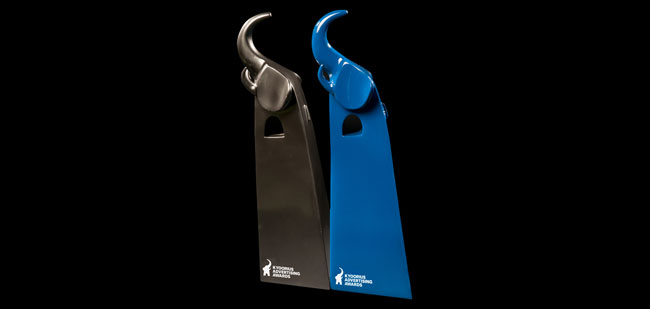
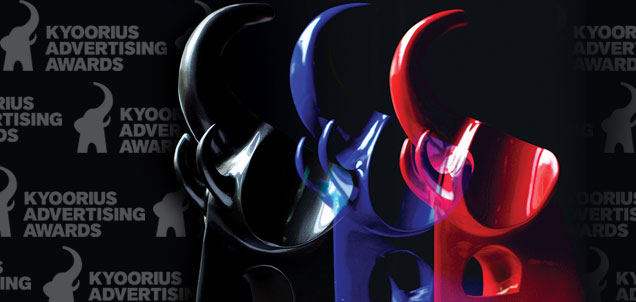
    Announcing this to the media and later a select group of industry captains, Rajesh Kejriwal, Founder CEO, Kyoorius and Tim Lindsay, CEO, D&AD underscored the emphasis to ‘merit’ at the inaugural edition. “We will only award work that is worthy of the award. No matter how big the brand, or how small the names behind it and how wide the media reach is or the number of re-tweets, the ultimate goal is to create outstanding work that works,” said Kejriwal. The Kyoorius Awards will have no winning tier structure - no gold, silver or bronze, and it is the jury’s prerogative to award one or multiple entries in any one category, whereas none in another, if entries are not up to the mark. The Award to be given away to each winner is called the ‘Blue Elephant’ while the ‘Best of Show’ will be the ‘Black Elephant’.


    Tim Lindsay

    According to Lindsay, who has had experience of overseeing the Indian operations of Lowe when he worked with the agency network, D&AD has big plans for India. “We have expanded the awards to include advertising and digital alongside the existing design and student categories. Moreover, our’s is a not-for-profit initiative and through the Kyoorius Awards, we will plough back all our profits to the industry and the talent here,” he said.


    For the advertising awards, international jury members include Rosie Arnold – Deputy Executive Creative Director, BBH, as Jury Foreman, accompanied by Graham Kelly – Regional Executive Creative Director, Isobar, and Woon Siew Hoh – Regional Executive Creative Director, Hakuhudo. From India, jury members include Abhijit Avasthi – Executive Creative Director, Ogilvy & Mather, Agnello Dias – Chairman & Co-Founder, Taproot India, Senthil Kumar – National Creative Director, JWT, and Sonal Dabral – Chairman & Chief Creative Officer, DBB Mudra Group with more to be added soon.


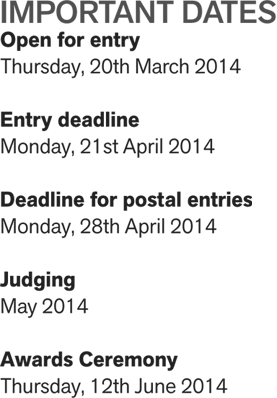
    The entries will be accepted from March 20 onwards and the deadline for entries is April 21 with April 28 being the last date for postal entries. While the first round of judging will be done online, the entiry jury will assemble in Delhi in May 2014 over three or more days to select the winners from the shortlists.


    Meanwhile, the Abby Awards which will be held from May 29-31 has not yet announced its jury presidents or call for entries.


  • D&AD enters India with Kyoorius Ad Awards


    By A Correspondent


    Ridden by charges of plagiarism, scam ads and boycotts, the Creative Abby conducted by the Advertising Club now has another force to contend with: the D&AD-backed Kyoorius Advertising Awards.


    The awards gain respectability even as they are announced as they are backed by none other than D&AD. Kyoorius, a not-for-profit initiative by Transasia Fine Papers, has been organizing the Designyatra, a design conclave since 2006. Last year, it revived the design awards with a D&AD-supervised jury process (*See Disclosure).


    The alliance between Kyoorius and D&AD continues with the Advertising Awards that are scheduled to be held in late May 2014. The Call for Entry will start on March 20.


    “Ethically and with the highest standards – the Kyoorius Advertising Awards recognise, honour and award the most outstanding creative work in the Indian visual communications sphere,” notes a communiqué, adding: “The foremost creative awards for advertising and marketing communication in India have been conceptualized by Kyoorius in Association with D&AD. “Together Kyoorius and D&AD have created a truly principled and neutral platform by setting the highest standard in judging criteria. The Kyoorius Advertising Awards will be unlike any other advertising awards in India – and will have no winning tier structure of golds or silvers – only the best is awarded. The jury too will be a mix of Indian and international icons that have been selected by D&AD and Kyoorius together. And as the only format of its kind in India – all jury members will gather in India for the jury session – to review, discuss and elect the best of the best over three intensive days. All voting is private, never by a show of hands.”


    Rajesh Kejriwal

    Said Rajesh Kejriwal, Founder-CEO, Kyoorius: “The Blue Elephant aims to be the most aspired trophy to be won nationally and will enhance the winners credentials globally and the Black Elephant will be the epitome of achievement for any creative person. Kyoorius’ mission, vision and most critically – our passion has been to provide a platform for the communicators. Everything we do is fuelled by this passion.”


    Tim Lindsay, CEO of D&AD added, “D&AD are proud to be partnering with Kyooriuis in India. We share a lot of aims and values – the main one being to stimulate, enable and award creative excellence in advertising and design and to inspire and support the creative community particular in the area of creative education. D&AD is famous for the integrity and quality of its judging process and its jurors – qualities we will bring the same to the Kyoorius Advertising Awards as we advise and collaborate on categories, jury composition, judging and event management. Both organisations are neutral, and the awards will be decided entirely on merit against the three D&AD criteria; is it a great idea? Is it beautifully executed? Is it relevant to its context?”


    Tim Lindsay

    Meanwhile, although a meeting was held with various stakeholders last fortnight, no date has been announced for either the Goafest or the Abby awards at the time of writing this report. There are unconfirmed rumours that some leading creative agencies may stay away if some conditions are not addressed.


    *Disclosure: MxMIndia is a Media Partner of Kyoorius


    We will go the critic route rather than the popular route: Kejriwal


    By Ravi Balakrishnan


    R Balakrishnan

    For D&AD, it’s a chance to raise its profile in India. In an interview in December 2012, Tim Lindsay, its CEO was aware that the award had lost traction particularly with the younger lot. Indian entries have been on a decline. And so, this is the first time the D&AD is backing an award in a different country. Given Lindsay’s agenda for revival, it’s not likely to be the last. What nobody intends changing though is the notoriously tough - some would say almost frustrating - standards that the work is measured against. The D&AD is globally reckoned to be among the stingiest award bodies. It’s gunning for a similar exclusivity in India. “We will go the critic route rather than the popular route,” Mr Kejriwal admits. “I’d rather not have an award in a category than reward something that’s not up to scratch.” The awards will be run by the D&AD using its judging formats and backend. For the first time, Indian work will face an 18-member jury with a 60:40 split in favour of international judges. While subject to tweaking, the main categories include print/print craft, outdoor, film/film craft, radio, direct marketing and activation, integrated and art direction.


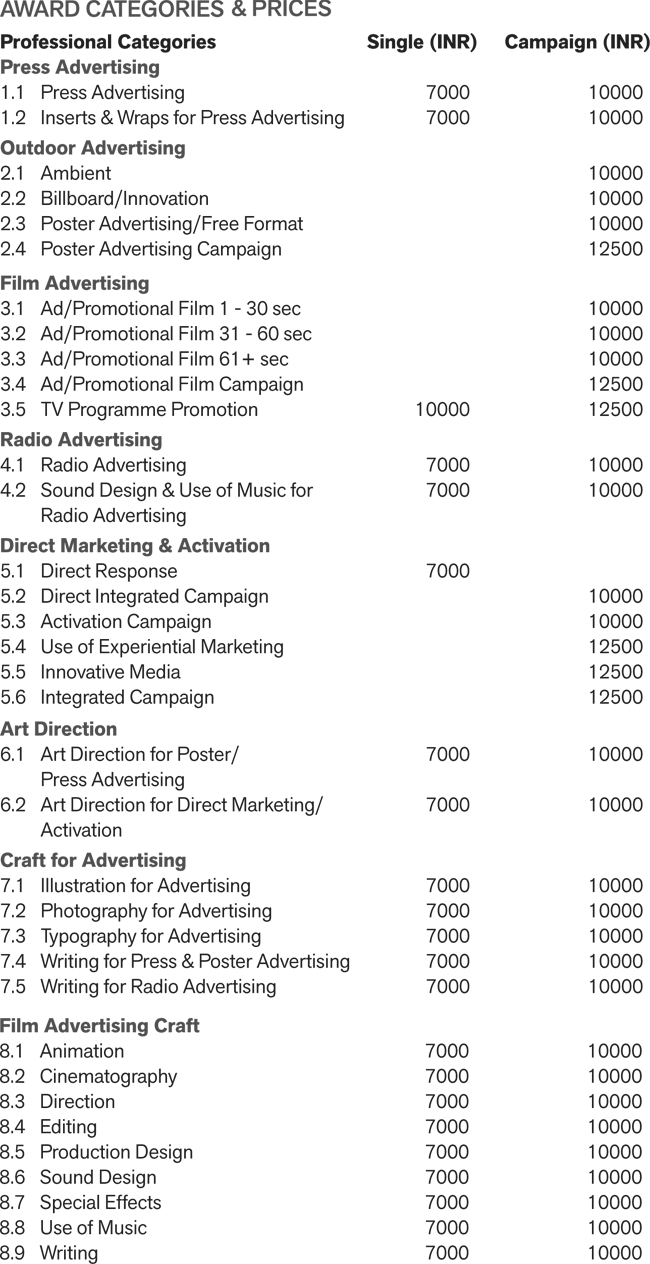
    More importantly for an industry where scam has become the filthiest four letter word in some circles, it will include D&AD’s stringent policies to whet entries. As well as additional ruses to throw off persistent scammers. Kyoorius is toying with the idea of showcasing the shortlisted work in galleries across Mumbai, Delhi or Bengaluru, which could help weed out scams. It’s also considering an online gallery. Elephants are standing in for the pencils, D&AD’s much sought after trophy. The best of show gets a black elephant, the rest of the winners get blue and students stand to bag a red. Such an enterprise doesn’t come cheap. Entries are to be priced between Rs 7,000 and Rs 10,000. As long as all the criteria are fulfilled with approvals in place, anyone from individuals to marketers and agencies can submit work.


    Rajesh Kejriwal is certain the entries won’t touch the numbers seen by the Abby, but believes more is not necessarily good. He says, “If quality means a lesser number, so be it. I’d be happy to get around 1,500 to 2,000.” In keeping with the mission of the D&AD which is involved in industry training and coaching sessions in the UK, Mr Kejriwal says money from the awards will be ploughed back into talent development programmes, seminars and workshops.


    The Kyoorius advertising awards are timed to grab an industry that’s at least for the moment, severely disillusioned with its longest running show, the Abby, as well as its festival Goafest. Mr Kejriwal believes, “There’s space for a popular award and a critic award. Every country needs a festival and if it has an award, so much the better. But what is the purpose? How do you make it relevant and content rich? How can it go beyond beaches and beer?”


    Josy Paul
    Sajan Raj Kurup

    Most creatives we spoke to are optimistic about the Kyoorius advertising awards. Josy Paul, chairman and creative chief BBDO India says, “Whether we will participate in Abby is still up for discussion. But I would like to enter an award from D&AD. They have evolved into a show that’s looking at substantial market changing work.” Adds Sajjan Raj Kurup, founder, Creativeland Asia, “I haven’t taken an anti awards stand but an anti not-so-reputed awards stand. As long as jury members are credible, it doesn’t matter where they are from. It’s better than mandatory judges from every agency even if they are not qualified.”


    Mr Balki whose disdain for awards is well known remains contrarian. Asked if he will participate, he says, “I am not enthusiastic about D&AD in London why would I be about it in India? It’s not the name or the institution. What are the judging criteria? If D&AD cracks this, it will be successful. But I’d first want to know what they’ve cracked. It could be the Tibetan advertising festival; if they figure this out first, we’d sign up.”


    Source:The Economic Times

    Copyright © 2014, Bennett, Coleman & Co. Ltd. All Rights Reserved

    Licensed to republish


  • Kyoorius announces second edition of FYIdays with DixonBaxi

    By A Correspondent


    Kyoorius, a not-for-profit initiative by Transasia Fine Papers has announced the second edition of the Kyoorius FYIday series of workshops and knowledge sessions (*See Disclosure).


    Tim Watson

    The second edition titled ‘Broadcast Branding with DixonBaxi’ will feature the minds behind leading London-based brand agency DixonBaxi – Aporva Baxi- Co-Founder and Tim Watson, Head of Strategy, share insights on the work they do to help clients find their brand purpose and build brand fame.


    The firm has also done work for like Star India, Movies Now, Formula 1, Viacom and Nokia in their refresh and/or brand-imaging alignment.


    Aporva Baxi

    The Kyoorius FYIday with DixonBaxi will be flagged off in Delhi on January 23, Bengaluru on January 24 and Mumbai on January 25.


    Said Aporva Baxi, Co-Founder, DixonBaxi: said, “Building a brand can be daunting and stressful. It is important to first understand what is the vision of the brand you want to create.”


    Rajesh Kejriwal

    Rajesh Kejriwal, Founder and CEO, Kyoorius said, “India is becoming a place where the best of design in Asia is coming alive and it is imperative to nurture this talent. After an overwhelming response at the launch of FYIday last year, we began working more closely with D&AD to extend this knowledge sharing platform to a wider audience.”


    Over a period of time, the Kyoorius FYIday will features speakers from specific disciplines – Typography, Broadcast Design, Publication Design, Strategic Planning, Strategic Branding, Retail design, Architecture, Product Design, etc. conducting seminars, workshops and training sessions throughout the year and across the nation – leading up to the annual design conference – Kyoorius Designyatra.


    Registrations opened yesterday (Jan 14) and close on January 21 at www.kyoorius.com/fyiday/


    *Disclosure: MxMIndia is a media partner of Kyoorius FYIdays


  • Kyoorius about Digital & D&AD: Interviews with Laura Jordan Bambach & Tim Lindsay

    Laura Jordan Bambach and Tim Lindsay with Rajesh Kejriwal, CEO and founder, Kyoorius


    Laura Jordan Bambach, Executive Creative Director of Mr. President and president of D&AD, and Tim Lindsay, CEO, D&AD,  were in Delhi and Mumbai last week for Kyoorius FYIdays and to evangelise the D&AD awards. The Kyoorius FYIdays is going to be held on a regular basis, presented by &pictures in partnership with CNBC-TV18’s Storyboard (Disclosure: MxMIndia is a media partner of the event).  The 100-plus audience in both cities (who paid Rs 1500+taxes) to get there is testimony to the success of the effort.  Good content ensures good, interested crowds, says Rajesh Kejriwal, founder-CEO, Kyoorius, matter-of-factly. Pradyuman Maheshwari and Johnson Napier caught up with Ms Bambach and Mr Lindsay at the Mumbai leg of Kyoorius FYIdays and a D&AD-hosted evening for the ad frat.


    It’s harder to win a D&AD award than any other award: Tim Lindsay With 4G, I hope to see a real shift to digital: Laura Jordan Bambach
    D&AD needs no introduction to the creative fraternity in India. But, as with the craft that it evangelises, the only way to move ahead is to refresh and grow. Earlier this year, it inked an agreement with design specialists Kyoorius to conduct the Kyoorius Awards. And now D&AD has yet again partnered with the Rajesh Kejriwal-led Kyoorius to promote the coveted D&AD awards.

    Tim Lindsay, CEO, D&AD was in Delhi and Mumbai to meet with the industry and reaffirm its commitment to give back to the industry, especially the young, in terms of providing quality training and education. Lindsay underscores the difference that D&AD brings to the table as a not-for-profit initiative.


    We hear D&AD has big plans for India

    Yes we do have big and important plans for India. We are not going to get everything done overnight; it’ll take us some time.


    But India is Cannes-country

    Well, everyone is a Cannes-country but we are different from Cannes. If I could put it crudely, the money that we generate we put it back in the industry mainly supporting new creative talent coming into the industry. While Cannes is a wonderful effort – and I love going there –it takes money out of the industry and invests little through training, seminars etc but D&AD is there to stimulate support and inspire creative excellence.


    It’s not that D&AD is new to Indian creatives. You’ve been getting a fair number of entries for your awards. So what’s going to be different?

    Yes we have been getting entries from here. Where India is concerned I’d like to share some personal experience here: I used to be president of Lowe Worldwide and while Lowe and Lintas were going through that global merger and when I was coming here in India for the Board meetings, i started to get a very healthy respect for high quality of Indian advertising particularly the stuff that was intended to change behaviour of a product…but given the level of talent and quality of work from design and advertising I think India is under-represented at D&AD so we would like more D&AD jurors, we would like more entries from India…


    R Balki, you know, doesn’t send entries to awards. Will you convince him to take part in your award show?

    I doubt that will happen but I have a healthy respect for his standard of work. The work that they have done for Lifebuoy is fantastic.


    What’s the one thing that should convince the fraternity to send in more entries to D&AD

    D&AD operates at a number of levels. In terms of the awards, it is the global yardstick for creative excellence. We are not ashamed to say that it is harder to win a D&AD award than any other award; the quality and integrity of the judging process at D&AD is better than any other awards show and what makes that the case is the quality of jurors that we have. We have around 200 fantastic people from around the world and about 60 per cent from outside the UK… so to be awarded a Pencil and be judged by that set of people is a huge accolade. The more important thing is that we reinvest all the money we make from our award show and the commercial activities. And because our awards income, which is the main part of our revenue, comes from all over the world including India we want to support creative industries in those places from where we derive our income.


    So from the entries that you have been getting from India thus far, have you reinvested in India?

    Not in the direct sense but more in terms of setting a standard and being an inspiration to the creative industry we have. But we have made some changes in the last 2-3 years where we have a D&AD Foundation and we want to spend the money we make in the most effective way to support creative excellence around the world. Also, there are key centres of excellence and India is in the process of becoming a great creative superpower of the future.


    In terms of the number of entries, what is the growth that you expect from last year?

    Through our partnership with Kyoorius and because of the footprint they have in the design and advertising industry, we would certainly help raising awareness of D&AD and that will certainly help having a positive impact on the awards entries. We should be happy to get over 500 entries as a start this year.


    The Indian ad industry has been faced with two issues for long: one is scam ads and the other one is plagiarism. How do you handle that at D&AD?

    The plagiarism thing is easier to answer. A lot of ideas get borrowed and sometimes ideas come up simultaneously in different places and have no connection with each other. What we do to tackle plagiarism is we choose the jurors and we do not interfere in any way and they make their own decisions. Also, at D&AD we do not have to give an award to any category so usually we do not give awards in 2-3 categories because the jury does not find the standard of work high enough.


    Scam advertising is a completely different thing. The questions we ask are: is it for a real brand, is it for a real client brief, did it run (in case of advertising), did it sell (in case of design) and did the client pay for it. The things that we think are not right we research and if the jury expresses any doubt on a piece of work,  we check it out further. I think the level of awards for scam ads has gone down in the past 5-7 years because the shows have been more stringent and systematic about checking things out.


    Does the D&AD award show also entertain creative entries from media agencies?

    The twin-core of D&AD when it started was advertising and graphic design and it has expanded to include other digital categories and also product design, retail design etc.


    What has been your experience with the Kyoorius Design Awards this year?

    I have only heard good things about the Design Yatra and I think we can surely help as we know how to run an awards show be it the entries, judging process etc we can only make it a smooth affair. I am sure that it would grow only further.


    Would you like to look at organising an advertising award here in India?

    Yes, certainly. We want to.


    How soon?

    It is still early days to talk about that.


    Laura Jordan Bambach has been to India before, but so impressed was she in her last visit to the Kyoorius Designyatra, that she chose to come in for the inaugural Kyoorius FYIdays initiative held in Delhi and Mumbai.

    Bambach, Executive Creative Director of Mr. President and current president of D&AD, spoke on how brands can survive in a digital world. To drive home the point, Bambach provided examples and ideas that companies could adopt to make their way into the hearts of their consumers.


    MxMIndia caught up with the digital diva and got her to share experiences and digital mantras that brands can be adopted here in India. That, and also the possibility of getting her agency Mr. President to launch operations in India. Excerpts:


    There’s so much being said about how digital is changing the way companies are going about doing their business. Is it for real? Is digital really as big as we think it is? Or just a lot of talk and less action?

    I think in terms of the actual consumer behaviour and in terms of the changes it brings about in the society ,it is very real and also very powerful. I think what entities like Twitter and others have done is that they have changed the equation between consumers and brands. If you love a brand, you almost expect to be a fan of the brand and you expect the brand to participate in the conversation and communication that happen on the platform…


    But ‘likes’ are not necessarily a true indicator of what’s going on out there, is it?

    Yes it’s not but if someone has a like on Facebook and if they are a real fan of the brand and if they are really talking to you about things that they find interesting and you are building a community then it’s great. Like, for example, I worked on a big project for a telecommunications company and they did a fantastic television commercial where you could chose the outcome for the main characters involved on Facebook…they ended up getting around 1 million likes because the story was really engaging for people watching the television ad. But they found it impossible to translate that into conversation for brands because the people that liked the television ad aren’t necessarily the same people that buy their products so it’s not used in the right way as it should.


    One of the reasons that there is not much work happening on digital is because agencies work on commissions. And while they make more money from television commercials which they can’t out of work on digital. Do you think this is the reason why there isn’t much evangelisation of the medium and there’s not much quality original creative work?

    I think what you’ve said is right and the budgets we have to work with for a digital campaign compared to those for television commercials always shock us, but I think there are great examples of integrated work where big budgets are going towards connected campaigns with social and digital thinking being at the heart of it.


    While we talk of integrated work the reality is that most of the work is being done for the medium of television which is then redirected to digital…

    It’s the common way of doing things, but it is the wrong way. If you can unlock the digital strategy first and not the medium then it could work. So it does not matter what medium it is expressed in but I think having a digital strategy at the heart of a brand is what is going to make it more successful.


    So we shouldn’t feel too bad about the state of digital affairs here in India. It’s essentially the same problems that are faced in the more developed markets like Europe as faced here.

    Yes, it’s kind of the same but we shouldn’t feel too bad about it.


    Is it also an issue of talent, especially in digital agencies that are not able to find good talent…

    Sometimes you need to have the good old-fashioned thinkers and planners, which is not impossible to find. There are plenty of agencies out there who are more digital-centric and who have great talent to handle everything.


    What is your view on the kind of work that gets produced out of India?

    In general I think the work out of here is just fantastic. Digitally I think we are not seeing loads of work atleast at D&AD from India. I think with the rollout of 4G internationally I am hoping to see a real shift to digital…


    Talk of performance at award shows and India has put up a bad show where digital is concerned be it at Cannes, Spikes or the recent Digital Fest. What according to you should the agencies be doing to spruce up their digital tally?

    What I have observed elsewhere from small agencies is that it takes a disruption between the agency-client process. You will find some really good integrated digital work coming out of countries like New Zealand and Australia and it has to do with their attitude of being different.


    But given that India has long history of storytelling and folklore still doesn’t put us up there in terms of creative wizardry…

    Yes I agree. I think India’s design work is comparable to some of the best that there is…even traditional advertising. It’s just the digital category has not produced enough top-notch work as yet…


    If you were to offer pointers for marketers or agencies on what the approach they should have towards digital, what would they be?

    Firstly, they need to find stories that people want to hear not what they want to tell. Also, how you launch something is also important as what you launch so you need to have a good strategy on how you are going to do that. Be brave; look two things at social for – insight and inspiration. Digital agencies need to channelize their focus on strategy as if they are to become big in the future then they should have proper strategic direction or else they’ll end up becoming production houses.


    Lastly, when do we see Mr. President in India?

    Yes, we are working in that direction but I cannot disclose the finer points on who is going to be our partner or things like that. But it’ll happen very soon.


  • After Designyatra, Kyoorius launches FYIday series with Laura Jordan Bambach

    By A Correspondent


    After holding nine editions of the Designyatra very successfully, Kyoorius, a not-for-profit initiative by Mumbai-based Transasia Fine Papers, has announced Kyoorius FYIday. Under the aegis of the ‘For Your Information day’ or ‘FYIday’, a series of seminars, workshops and training sessions will be held periodically across different cities. The platform explores a more intimate, interactive and informal knowledge-sharing format as against the umpteen conferences, panel discussions or just plain speeches by unprepared biggies attended by disinterested industry folk.


    Rajesh Kejriwal

    FYIdays will be led by specialist speakers on a defined subject and with a limited attendance of around 100 people for a seminar to 25 people for workshops. To be flagged off in New Delhi on November 28 at Gurgaon and on November 29 in Mumbai, the first edition will feature Laura Jordan Bambach,  President of D&AD & Creative Partner at Mr President – on the UK’s most celebrated boutique digital agencies.  She will share her insights on ‘Digital Campaigns: Building Brands & Memories Through Digital Media’ Said Ms Bambach: “After the overwhelming response at the Designyatra, I am glad to return to India for the Kyoorius FYIday and share  greater detail, insights and interact more directly with Indian designers and  marketers alike. Commenting on the initiative, Rajesh Kejriwal, Founder CEO, Kyoorius said, “The Kyoorius FYI Days is focused on events that are much more specific, engaging and informative. Through this initiative we hope to help bring the local community together to share knowledge, exposure and learning. Over a period of time, FYIdays would have speakers from specific disciplines – Typography, Broadcast Design, Publication Design, Strategic Planning, Strategic Branding, Retail design, Architecture, Product


    Design etc – with seminars, workshops and training sessions held through the year and across India – leading up to the annual design conference – Kyoorius Designyatra. Registrations close on Monday, November 25 at www.kyoorius.com/fyiday/


  • Kyoorius Launches “Great Ideas Sold-Here. There Everywhere”

    By A Correspondent


    After the success of the 9th annual edition of Kyoorius Designyatra, Kyoorius, a not-for-profit initiative by Transasia Fine Papers, has launched ‘Great Ideas Sold – Here, there & everywhere’, a hardback showcase of the winning and nominated works of the Kyoorius Awards 2013.


    The volume is divided into sections, namely Design for: Identity, Packaging, Communications, Digital, Space, Books, Editorial, Photography and Craft (photography, calligraphy, illustration and typography)


    At the awards show held in August this year, the Black Elephant (best of show) winners featured two projects – Dekho by Co.Design and the Temple Pavilion Installation by Abhin Design Studio.


    The Blue Elephant winning agencies featured in the book include works by:


    O&M, New Delhi, Leo Burnett Mumbai, BBH India, Alok Nanda & Company, NH1 Design Pvt. Ltd, Umbrella Design and DDB Mudra Group amongst others.


    Rajesh Kejriwal

    Commenting on the initiative, Rajesh Kejriwal, Founder CEO, Kyoorius said, “Good Ideas Sold- Here. There. Everywhere.” is the culmination of the Kyoorius awards initiative to bring to the corporate spotlight the best design work that comes out of the country. Through this platform we hope to reward the finest talent in Indian design landscape and also inspire professionals by setting up a high benchmark of creativity.”


  • Upclose with Rajesh ‘Kyoorius’ Kejriwal


    First a disclaimer. MxMIndia is an active trade partner of the Kyoorius Designyatra and Digiyatra. But that’s not the reason why we are carrying this extra looooong interview. Even if we say it ourselves, the interview with Rajesh Kejriwal is a must-read as there’s nothing written between the lines. Mr Kejriwal talks about why his awards are not called the Yellow Pencil even though there is a tie-up with D&AD, on Goafest and how it’s different from his event and what according to him the Goafest organizers should do… and how he doesn’t allow his event sponors to have a say in the speaker line-up of the twin conference (to be held in Goa from August 29 to 31)

    Read on…


    How’s Design Yatra 2013 going to be different from the previous years?

    It’s not going to be very different from that of the previous years. As a format, we look at content and select an appropriate theme. Our theme defines who our speakers are going to be, what our content is going to be etc. So anything that is going to be different is the theme this year and that is: to create change. So everybody over there is going to be talking about how to create change… whether advertising can create change or can branding create a change or can digital create change…or if digital can create change then we will have some people who have created that changed by using the digital medium.


    Design or re-design is generally about change or is there more to it?

    Sometimes design in India is about change but mostly it is cosmetic. We are not talking about cosmetic changes here. One thing you’ll see is a lot of companies say that we have changed this logo to another one etc but in essence nothing much has changed. Change is more about what have you done internally; what have you done to connect or engage with your consumer or how transparent you have become with the digital age coming up etc. With the onset of digital, you could be saying you are the best but there are people out there who think you are not. What change can design help achieve or how can design help make a change in an organization should be the way forward.


    One of things people tell us about the Designyatra is that it more of branding and graphics and less of stuff like product design or architecture etc. Justified comment?

    When we started Design Yatra we were very clear that we are in the visual communication business where we look at branding, digital, packaging, graphic design etc. We were never what we call into product design or architecture or stuff like that. But over the years, it has been felt that one can’t be independent of the other. An architect can’t create a building and then call a designer and say hey, do the graphics. They have to work together because the times have changed today. Designyatra serves as a platform inspiration, innovation, ideas etc and for this we just can’t have visual communication designers. So we always have an installation designer. Most of the times we have an architect or one product designer. This year also we have a product designer but am I product heavy? No. I am still going to be visual heavy.


    And will that change at all or is it a conscious decision?

    It’s a conscious decision because the thing is that there is no infrastructure in India to give me space for more than 1300 people at a venue. I get that kind of crowd anywhere so am I going to add certain more things and get people from another segment and reduce the impact of the number of people coming from this segment? No. My thing has always been that we are essentially a platform. And I can’t say a platform and then deny an opportunity. We get a lot of enquiries from Italy, UK, Netherlands, Dubai, Sri Lanka, Singapore, Malaysia etc but we don’t entertain them so much because I only have capacity for 1300 people and 80 percent of them are repeat audiences who come for that one particular thing. So I don’t want to get too much into it but if I find something is interesting for this community I would bring that in.


    The other comment about Designyatra is that it is very rich in content. You’ve attended many other conferences. What is that you offer that others aren’t able to do?

    I think we were in the same space where others were in 2006. We look and say hey, we are a conference…we need to have 12 speakers for say two days so let’s get eight big names and six good names. Today, we have moved away from that and we have said let’s look at people who have made something different. So one, we never call a speaker out of the blue. We first set a theme for the conference then we do research on the basis of that theme like who the speaker should be and this research takes almost of three four months. That is I think what a lot of conference guys don’t do. They say, hey, let’s call her or him… send out invites, get confirmations etc. That’s not what we do.


    How much time in advance do you plan for this?

    As we speak we have already started planning for next year. We have six speakers confirmed for 2014.


    And are there any pulls and pressures? Are there any people who want to be there?

    We get about 20 requests every year.


    And how many do you accept?

    Two.


    Two out of twenty? Aren’t you being harsh?

    Doesn’t fit the theme sometimes, sometimes people want to come… lot of them want to come because they want a free ticket…


    Are there pressures from sponsors – people who are associated with them? Do you accept those?

    No, because where there is pressure we don’t take them on as sponsors.


    So you have that as a very clear part of your deal?

    Yes a very clear part, in black-and-white that we will not give any speaker slot to any sponsor. For example, we have had situations where we had to have a speaker because he is a good speaker so that year we do not take him as a sponsor. We tell them to come on as a sponsor next year, but not this year. So we are very clear that sponsors and speakers won’t happen simultaneously.


    While you have revived your awards this year, one of the worries is that awards take away from the conference. What’s your view on this?

    Two ways of looking at it. One is whether an award adds an element to the conference or whether it takes the thunder away from the conference. We are not like Cannes or other such events that have a lot of glamour attached to it. We are more about prestige and credentials. We are very serious about the awards and that is why we tied up with D&AD and the process that D&AD follows is very strict. For us it is just that if we have this community of 1300 people and if the right audience is present then why not have an evening of awards? And the awards are happening in the evening; it’s not disturbing the content of the conference in anyway. It’s just a single evening of the three days!


    The thing about awards is that while it makes a lot of people happy there are also many who are unhappy. Your views on awards being politicized or critiqued by an unhappy few?

    I think the politics of awards happens when there is a politics of judging and I feel that if you don’t have politics in judging then there won’t be politics of awards. People will be unhappy but I think it’s time India grows up and people should realize that if you have good work you get awarded and if you don’t have good work  then you don’t get awarded. And it’s not that they don’t have good work, it’s just that someone else has done better.


    You were also there at this year’s Goafest. How is Designyatra different from Goafest?

    I will start from the beginning. If you look at Goafest and us, we have D&AD as partners who I think are one of the most prestigious and the credible awards institution today. Also they have been the people who been doing the entire process control for the awards. Secondly, a lot of these award shows don’t have judges that come and sit down, debate, talk and judge on ground… most of them are done online where people are sitting in different parts of the world, giving some point system and then you also have the leeway for, as you said, the politics of judging.


    In our case we flew in international jury members and the D&AD people were there to monitor the entire judging session. Nobody else other than D&AD and jury were allowed…even I was kicked out of it from the first two days when the main thing happened. None of the Kyoorius team was allowed there and they sat, they nominated, they shortlisted first, they discussed the nominations… the D&AD people made sure that they discussed every entry in detail and that allows it to be very fair in its judging.


    What other difference do you see between the two events?

    I don’t think Goafest has a conference. It has 3000 people but only about 400 or 300 people attend the conference. I think that’s difference with us as we have more delegates at our conferences. I don’t think Goafest focuses so much on the tradition of conference as much as it does on the whole thing as a festival. And both have their own space. Goafest is about enjoying the festival and we are about serious content, innovation, inspiration, ideas… they are two different things. So should Goafest change completely and make its conference very serious, I am not sure because the fun element is also necessary. So it just depends on where you want to go.


    So then why do it in Goa? You could have done it in Mumbai or someplace else…

    In Mumbai you can’t have the fun element. I have tried it one year. But I think what was different was that when you tried it here, it didn’t work well on the networking front. I think the major part of the conference is about networking. People meet after a year, you meet so many of your friends, you meet new contacts, you have clients coming…we have 300 clients who are non-designers coming to the conference and this is a opportunity for networking. In Mumbai, the moment the conference ends everybody is like, ‘I have to go home’ or people go to meet up with friends. Once you come to Goa, you don’t have clients, you don’t have an office to badger you, you don’t have anywhere to go… so you are in the evening at the conference busy networking. In Goa, everybody is relaxed and stay concentrated on the conference and that I think is big. So that’s the reason we moved back to Goa.


    How would you assess your association with D&AD given that they have their own style of judging and running an awards show?

    I think they are great partners. There are two things to an award at a conference. First, I think over a period of time you either build yourself as very credible with good credentials…so if you win, for example, we have elephants as a trophy and if you win a blue elephant it means you have really done something worthwhile. We don’t have gold, bronze or silver. In some categories there has been no winner because the jury decided that none of the nominees qualified to reach the benchmark criteria that D&AD and Kyoorius together had set to be a winner. So in two categories there were no winners while in one category we have had four winners.


    One of the other things that a couple of the jury members told me some of the better design works from India haven’t entered the competition. How do you ensure this is taken care of going forward?

    I think this was the first year so there is always a learning curve when you do it the first time and lot of people especially design studios do not have faith in awards so they don’t necessarily participate. That is why I said D&AD and Kyoorius is about being credible is what will get these entries in…everybody wants to be recognized but everybody wants to be recognized as being credible and not being one among the many. And D&AD ensures that but I have met people who have said oh, I have won at Cannes and that’s it…they are happy that they have won in Cannes. And then they win a D&AD Pencil and they say wow, I won a Yellow Pencil and normally these people who take the Pencil home, leave the Cannes trophy in the agency. That’s the amount of pride one gets when winning a Yellow Pencil verses a Cannes…that’s where I think if you have something really credible along that good work will also come.


    Why didn’t you give the Yellow Pencil as the award for the Kyoorius Awards?

    We didn’t want to do that. You never know the partnership may not exist five years later, so we didn’t want to piggyback on them.


    Ufff, you are saying it on so many words.

    Why not be transparent?


    What if they read this and decided to drop you?

    They won’t because they know. They have come to us because we are transparent. I am not saying we are going to move away from the partnership but I also realized that they have a heritage, they have done so much good things…they have partnered with us and for us. That’s like an honour for me. This is the first partnership they have done globally. They have never partnered with anybody and that itself is good enough. Why would I want to piggyback on the Yellow Pencil and reduce it – I don’t want to do that; more for them than for us. I will be happy to have a Yellow Pencil; it automatically uplifts the whole experience…


    In a sense, you could have done the same thing without D&AD?

    We could have… we did it in 2007 where we had what we call Kyoorius Verdict. There is an experience then there is credibility and the whole process of jury selection etc which they have finetuned for 50 years. I would have to go through a 3-4 years learning curve to do it by myself…


    Have you been hit by slowdown in terms of delegate participation?

    Yes, we had about 430 entries whereas normally we would have expected about 800 entries. We were priced very reasonably even if we were compared to any other award. I think a single entry was Rs 4500 but if you had five entries the participation came down to Rs 3200 per entry. Again it comes back to the same thing: If I price it at Rs 7000 I still get entries but I get entries only from larger agencies but there is this small boutique design studios who do good work. The question is: can they afford Rs 7000? May be or may be not…may be for one entry then they would not be able to participate in two categories or three categories because they can’t afford it. So if I build a platform, I need to make sure that everybody has an opportunity to take part in it.


    One more observation is that there are lot of designers across agencies and a sizeable or a small section of it are not English-literate. But at the Kyoorius Designyatra, English is the medium. Is that something that you are conscious about?

    We are conscious but what can we do? India is a nation with so many different cultures and so many different languages and you are talking from perspective that there is a Marathi guy who could not converse well in English but there is a Bengali guy, a Tamilian, a Malayali…


    How do you transcend that because if you have to take Kyoorius Designyatra to the next level, you have to get people who are not known, who may not be good in English. How do you get them in?

    What we are planning to do at Kyoorius is that through this event, which happens once a year but we meet we talk to so many people during this one-and-half months of preparation and maybe three days at the conference but then nothing for the next one year. So we are launching what we call Kyoorius FI Day. FI stands for Foreign Information Day and it’s just an evening. We plan to do this across India on month-on-month basis. So we may do about 20-odd next year but this will happen maybe four in Mumbai, two in Chennai, one in Kolkata, one in Kochi, two in Pune, four in Delhi, three in Bengaluru, one in Hyderabad and across India. So this will be one particular subject and it could be editorial design, broadcast design, typography…it could be strategy within branding, it could be design within branding, it could be packaging just for the FMGC sector. So when we do it in Kochi we are expecting to have one international speaker and one speaker from that area in South India.


    Will you at any point of time look at a design discussion happening in an Indian language – a non-English Indian language?

    I don’t know because if you see the young generation, they don’t want it in a local language. So if you are talking about the difference between languages it is only in between generation of 35 and above .I have seen it as I travelled across private schools etc.


    But the Mumbai scene could possibly be different from that of Kolkata…

    No, I have been to Chitrakala Parisad in Bengaluru which is a very local school. DJMD in Coimbatore…they are all completely English-speaking institutes. Maybe some of them are a little bit here and there and all of them are on Facebook so it has changed…you know what I call the new India, if you ask me, I would be very happy to do a conference in Indian languages but content in multiple Indian languages are not available that much.


    Getting back to Designyatra, what are the numbers you are expecting, since the confererence is a few days from now?

    We expect to have about 1300 people. We had a good 1300 people earlier but as you know the capacity of the hall is a problem. We could even get 1600 people but there is no infrastructure in India that will allow me to host that big number. Also, we sponsor about 250 students – that does not change. We make sure we have participation from all the 18-20 design schools. We sponsor about 50 faculty members to the conference…so 300 would fall in that category, 100 would be special invitees, speakers, press etc. 900 are professionals. Out of it, this year I am very happy to say that there are 300 people who are coming that are non-designers and are from marketing and corporate teams – brand managers or product managers…for me that is like brilliant. We never had this before. Companies like  Himalaya, Godrej, Titan watches, TCS, Nestle, Unilever, Proctor & Gamble have been sending people…


    You have more people than in Goafest…

    Surprisingly!


    I think Goafest should have you in the organizing committee?

    (laughs) No, I think what Goafest needs to do and I am being a bit vocal about it, what it needs to do is over a period of three years curate the conference element much more. You cannot have a 2000 sq ft hall to fit in 2000 people; there is nothing that 2000 people could hear so it should be curated in such a way that every audience out there has something to look back to and take back from there. You have a lot of young crowd coming there, so maybe you can take 500 of those and do something in terms of a half-day session with three or four speakers. It should be so interesting that those 500 people will forget about going to the beach but attend the sessions. Also, I think the trick is that if you have beer on the beach with rain dance and conference happening side by side, you have to decide where the people will want to go.


    You do have beer at Designyatra, don’t you?

    Not during the conference time; between 10-6pm nothing but 6-10pm we are okay with. And that’s really because we want people to stay back and talk to each other, network with each other, get introduced, build a network etc.


    Do you making money from the Designyatra?

    Okay, I have a favourite line which I am going to quote here – a we are not-for-profit organization. Last year I said this and I saw there was a lot of glamour attached where I was going to people and saying not-for-profit and stuff but then I said, this has cost me a lot of money. So last year I made a mandate that we should be not-for-loss organization. Not-for-profit is nice but not-for-loss is better. We started working at every one of our initiatives and seeing if it is sustainable. We don’t care whether we make money or not but we do care whether we lose money or not. So we are making each of our initiatives sustainable and we are saying that not-for-profit does not mean you cannot make profit, you should make profit and then see if you can use that money for something else. This year we made some…last year we sustained ourselves. This year I think we will be having some profits and we will be using that profit to launch something called Kyoorius Grant, which we will be launching at Designyatra. I am not going to tell you any more about it now. But it is something which we are making as a Fund for the student community, which they are not able to get in India so far. We eventually expect more people to donate more money other than from what we generate from the event to build scholarships etc.


    So Kyoorius is not for profit…

    Not for loss now!


    I see you spending all your time in Kyoorius. How do you make money? I do know about your paper business, but do you spend time on it?

    Last three years I wasn’t and to be honest, the last three years we went through a huge turmoil in our paper business because we decided to launch our own paper brand rather than selling brands from overseas. Selling brands from overseas is always restricted by what they want to sell in India rather than what Indians wanted here and we were making foreign brands more famous in India than Indian brands in India. I think the time has changed where I think Indian brands need to do build themselves up and go global. So we misaligned from all the foreign brands which we were selling which took us two years of non-compete clause. So there wasn’t much of paper business happening. This year, we launched our own brand and we are spending more time on that now. And I hope that all this design-led activities that we do at Kyoorius, which is about building a platform for the design community, we will see an equal reciprocation on behalf of the design community.


    Do you think there could be some conflict sometimes between the design unit and the paper brand and also the media and events division that you have under your umbrella?

    No, both are two different companies actually. We are keeping Kyoorius neutral. If you see our magazine, I don’t know about this issue but one of the past issues we had the other paper merchants who are our competitors advertising in it. So we are neutral. Kyoorius is not-for-profit or not-for-loss and we are open to it. In fact this year at Kyoorius Design Yatra, we had two paper merchants asking for stall space and we gave them both.


    Hmmmm.

    I think we should see the larger picture and not be single-minded. One should look at growing the industry and then maybe look at how to get a larger part of the share. But if you are too narrow-minded and you don’t grow the industry then you yourself are the major loser. So you build a community then build the market expand the base and then see how your division can get a larger market share.


    Will you ever be doing something for the packaging community, printers and all the others you target?

    We are trying to do that; now the objective of Kyoorius has changed. We are going to be looking at building the platform. So it will be the print community, maybe packaging community… Also, the second step is to look at design as wholesome…we may do a separate activity for the design industry that we have not yet dealt with which is about architecture, interiors etc. This year we launched Digiyatra specifically for the digital community. Next year, we may add something else. At some point of time, I would be happy to go for a one-week-long festival at Goa where different streams come together and where some people could stay for one week or one day, four days, etc.

     

  • Kyoorius Awards jury announced

    By A Correspondent


    Creative platform Kyoorius Designyatra will be home to the Kyoorius Awards starting this year. The Kyoorius Awards have been conceptualized by Kyoorius in partnership with D&AD and the International Advertising Association (India Chapter).


    A specialist jury panel has been selected for these awards, including some of the most inspirational creative professionals from across the globe. In a new format, all jury members will gather in Mumbai or Delhi for an on-ground and open-conversation jury session where they will discuss, debate and decide the winners via private voting.


    The jury will review entries from nine professional categories including identity, packaging, communication, digital, space, books, editorial, craft and design for good. The jury will also review and nominate winners in the six student award categories – Identity, typography, publication design, open brief, illustration and packaging. Each student winner will receive one free student pass to the 2014 Kyoorius Designyatra along with being featured in the annual awards showcase book.


    Judging of entries would be based on key three criteria:

    1) The originality of the concept and visualization

    2) The quality of execution

    3) The relevance and context of the idea


    This year’s jury comprises some of the biggest names in the creative industry across the world.

    – Elsie Nanji, Managing Partner, Red Lion, Mumbai

    – Hansen Ho, Founder and Creative Director, H55 – Sinagpore

    – Jeremy Leslie, Creative Director, MagCulture – London

    – Simon Sankarraya, Founding Partner and Creative Director, AllofUs – London

    – Tania Singh Khosla, Founder and Design Director, TSK Design – Bangalore

    – Gabor Schreier, Executive Creative Director of Saffron, Madrid

    – Ton Van Bragt, Founding Partner and Creative Director, Design Team, Kuala Lumpur


    “We at Kyoorius aim to recognize and honour outstanding creative work across the country. It is an extended effort to follow international standards and gather all jury members in Mumbai to review, discuss and elect the best of the best over three intensive days,” said Rajesh Kejriwal, Founder and CEO, Kyoorius.


    The deadline for entries has been extended to July 2. The awards ceremony will be held in Goa on August 29 at the Kyoorius Designyatra. Winners in the professional categories get one free entry of their choice to the next D&AD awards and one for the winning studio to Kyoorius Designyatra 2013. All finalists and winners get space in the special Awards Book, of which 5,000 copies will be printed and distributed across corporate world, agency and studios, schools, institutions, etc.


  • Kyoorius launches awards with D&AD and IAA as partners, to be held at Design Yatra in Goa

    By A Correspondent


    Design and communications publication Kyoorius has announced the launch of the Kyoorius Awards. The awards are in partnership with D&AD and the International Advertising Association (India Chapter).


    Conceptualized with the aim of recognizing and rewarding excellence, innovation and originality; the Kyoorius Awards ceremony will be held at the 9th annual Kyoorius Design Yatra in Goa on August 29.


    With nine categories spanning print, packaging, digital, retail and design for good, the Kyoorius awards will not only recognize professionals but give real focus to young talent with the student awards.


    The student awards will bring together some of the biggest names in the industry to create real briefs that students will work on – providing them a chance to showcase capabilities in real-world scenarios. A jury comprising of some of the best creative minds from across the world has been carefully selected by D&AD together with Kyoorius. Rather than online, the jury panel will fly down to India for a discussion-based jury session to judge all submitted entries.


    Rajesh Kejriwal, Founder CEO, Kyoorius said, “At Kyoorius we are working every day to ensure that talent is nurtured and fresh ideas see the light of day. Kyoorius Awards aim to recognize and honour outstanding creative work in India. We are thankful to our esteemed partners D&AD and IAA (India Chapter) for coming on board to support this initiative.”


    The D&AD Yellow Pencil is recognized the world over as the most prestigious amongst creative awards. Tim Lindsay, CEO of D&AD said, “At a time when global creative industries face continuing tough economic challenges, delivering outstanding creative work worthy of an award can be a valuable point of differentiation. Excellence in creativity inspires higher quality work, raises the bar and delivers success for business.”


    Mr Lindsay added, “Joining hands with Kyoorius works in tandem with the objectives of D&AD, which aims to inform, educate and inspire those who work in and around the creative industries. Together, we aim to support and nurture creative professionals throughout their careers and across the world.”


    Kaushik Roy, immediate past president – IAA India Chapter, said, “We know the power of design and it is crucial that we support and award the best creative minds in India. We, at IAA are excited about the partnership with Kyoorius and D&AD and feel this platform will futher IAA’s work in supporting and helping grow the creative industry in India.”


    Entries close on June 18, 2013. More information is available at awards.kyoorius.com.


  • Yes, the French do have designs on India!

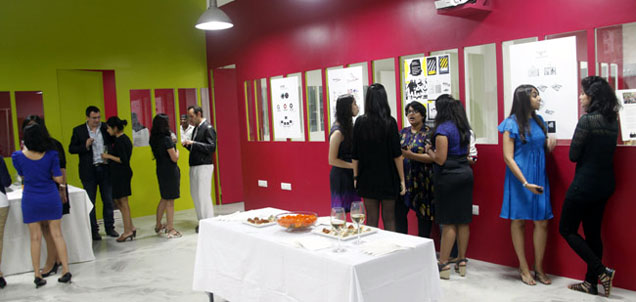
    Students and guests at the formal unveiling of ecole intuit.lab last week


    By Shubhangi Mehta

    École intuit.lab is a design and visual communication French school cofounded in 2001 by Patrick Félices along with Clément Derock and Frederic Lalande.

    The aim of the school has been to produce high quality professionals whose profiles meet the specific needs of the graphic design and visual communication sectors in India, France and across the world. With the newly begun school in India, the syllabus has been especially skewed to meet the professional demands of the visual communications industry in India and to tap the potential that design holds in the country.

    The average fee across various courses is 3.5 lakh annually. The institute will provide the students with high class faculty,French graphic designers which will provide the students an edge over others.

    Mr Ravi Deshpande, co-founder, école intuit lab, India,said, “Over the last few years we have seen a massive talent dearth. I thought of being a part of the solution rather than being a part of the problem. The school has been established to cater to and encourage talented students.”

    École intuit.lab through its students have built solid relationships with over 800 companies in France and other countries.

    The setting up of top French design school, école intuit.lab in Mumbai is a step in the direction of the marked improvement that is required in the field of education related to graphic design, art and advertising.

    Mr Rajesh Kejriwal, founder, CEO, KYOORIUS, said, “India really needs such design institutes; the China government is planning to open 500 design institutions across the country, Indian government should also  try and do something similar as the existing and upcoming institutes are expensive and not everyone can afford them. Hence a lot of talent will still be left behind without opportunities.”

    Ms Preeti Vyas, Chairwoman, VGC, mentioned, “These institutes are extremely important. If we put 20 more such institutes in our country, it will still be a lesser number. The courses are expensive but the kind of inputs, technology and faculty that goes into such institutes, it is impossible to have a low cost institute for such courses until and unless it’s a government funded institute.”

    École intuit.lab has achieved success by incorporating professional exposure in the academic curriculum – a much needed position that has been so far vacant, in the design and art education milieu in India.

    École intuit.lab through its students have built solid relationships with over 800 companies in France and other countries. école intuit.lab’s excellent success rate in finding work placements for its students makes it a real standard setter in vocational training for the visual communications sector.