Tag: Piyush Pandey

  • Mentos’ new Batti Jalao Campaign

    By A Correspondent


    Mentos, from Perfetti Van Melle India, was first positioned on the fresh thinking platform with ‘Aam Zindagi, Mentos Zindagi’ campaign. Mentos then evolved, literally, with the ‘Evolution’ campaign which portrayed an alternative theory of evolution where a monkey ate a Mentos and evolved into a man. Now Mentos has been positioned on the smart thinking platform with the tagline ‘Dimaag ki batti jala de’.


    ‘Batti Jalao’, the latest campaign by Mentos, is based on the insight that people have a natural fascination for puzzles and mysteries. The campaign uses a riddle with a twist and urges the audience to use their brain laterally. To make the campaign substantial and credible, there is a cash prize of Rs 25 lakh for solving the riddle.


    The marketing campaign aims to initiate conversations among consumers. To reach its target audience, Mentos will be using various platforms including social media, microsites, mobile, internet, radio and electronic media. The voice-over has been provided by Piyush Pandey, Ogilvy & Mather’s Executive Chairman and Creative Director, South Asia.


    Commenting on the campaign, Nikhil Sharma, Director – Marketing, Perfetti Van Melle India said, “The hope with this campaign is that can engage our consumers in an interesting and never-done-before way. With this communication, we have taken a leap and thrown a challenge to the consumers to solve a bizarre mystery. The entire look and feel for this is witty and humorous.”


    Abhijit Avasthi
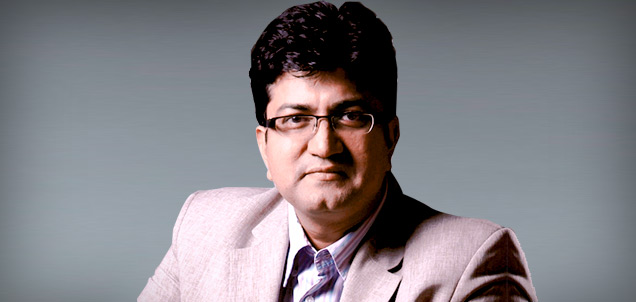
    Piyush Pandey

    Abhijit Avasthi, NCD, Ogilvy India, added, “With a brand as fun and iconic as Mentos, there’s always this huge question: what next? It’s not easy to catch people by surprise and leave them with a laugh time after time, but we’ve done it yet one more time. And with the ‘Riddle’ campaign we’ve gone a step ahead by giving them something that will play on their minds even after they find out the answer.”


    Piyush Pandey, Executive Chairman and Creative Director, South Asia Ogilvy & Mather, added, “There comes a time in a brand’s journey where it must do something startling, something radical, even if what it has been doing before has worked really well. The new Mentos ‘Riddle’ campaign does exactly that. It takes a new leap without letting go of the essence of the brand.”


  • Piyush, Balki to present Ad Review as Ad Club revives popular event

    By Tuhina Anand


    Piyush Pandey

    In what may be a coup of sorts, the Advertising Club has roped in two of the most respected names in Indian advertising to jointly present the Ad Review this year.  MxMIndia learns that the Ad Club has will see advertising Piyush Pandey, Executive Chairman and Creative Director, South Asia, Ogilvy & Mather and R Balki, Chairman and Chief Creative Officer, Lowe Lintas to present the Ad Review. Both have reportedly agreed to jointly conduct the event, which has not been conducted since a few years.


    The Ad Review is a popular property of the Club and is presented by senior members of the fraternity. Interestingly, both Messrs Pandey and Balki have individually presented the \Review in the past.


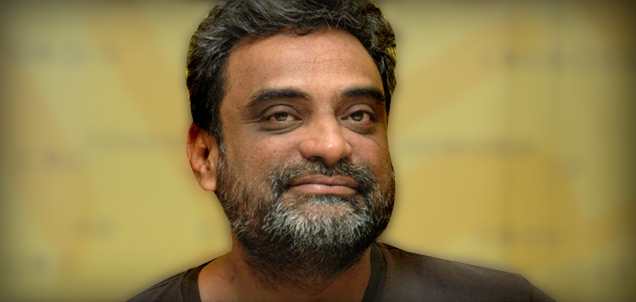
    R Balki

    The Advertising Club, which shed the Bombay from its name last year, is working towards a wider footprint especially one which represents the large advertising and marketing fraternity in Delhi NCR.


    Ad Review is scheduled to happen sometime in the early part of the year though the exact dates have not been ascertained. Watch this space for more.


    Also read: Chalo Dilli, as Ad Club drops Bombay

    http://www.mxmindia.com/2012/09/chalo-dilli-as-ad-club-drops-bombay/


  • It’s Ogilvy all the way at Effie 2012

    Click on the image for larger view


    By Ritu Midha


    As an event, one couldn’t have thought of a better way to spend a Tuesday evening than sampling the soothing breeze and top-notch refreshments at the Turf Club, Mumbai. Of course, the event was the Effie 2012, so the focus was necessarily on the awards.


    Piyush Pandey

    Perhaps unsurprisingly, the show was stolen by Ogilvy and Mather, who came ahead by miles, with the Man of the Moment being its executive chairman and creative director, South Asia Piyush Pandey once again. Ogilvy and Mather, with 280 points (more than 400 percent over its closest rival) was declared Effie Agency of the Year. When it came to clients, the competition was stiffer, although both Cadbury India Ltd (Effie Client of the Year) and No 2, Star India Pvt Ltd, are O&M clients.


    An emotionally charged Piyush Pandey said, “It is all by God’s grace. The credit completely goes to our team and culture. New blood joins with its own creative thinking and seamlessly blends with the existing creative thought process.” On being a repeat winner, he said, “It feels ecstatic to be winning again and again. To tell you the truth – the joy and thrill of winning increases every year.”


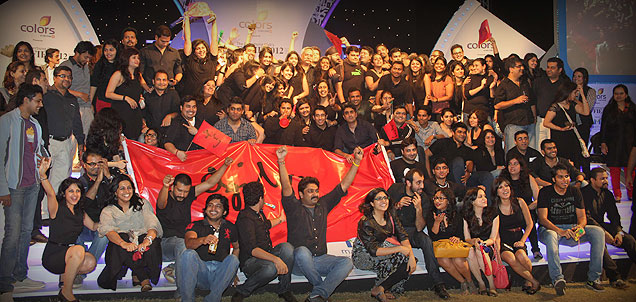
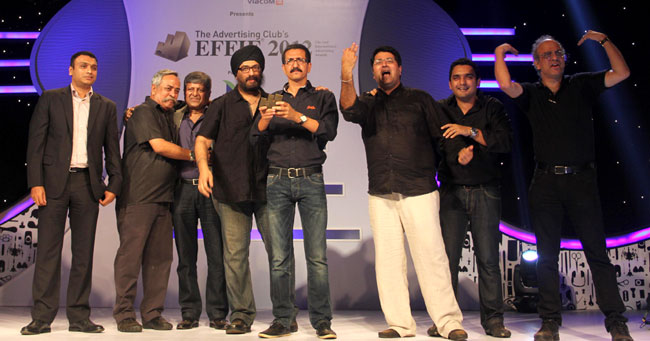
    The victorious Ogilvy team with Shashi Sinha (hugging Piyush Pandey) and Rajesh Iyer, Marketing Head of Colors (extreme left)


    Shashi Sinha
    Shashi Sinha

    The Effies themselves were enhanced in stature this year, both in participation and jury process. Advertising Club President Shashi Sinha stated, “It is special for two reasons: it is the first Effie under the aegis of the Ad Club post it becoming the Ad Club of India.” Also, he said, “This year the entire judging process has been conducted online – and the credit goes to Bipin Pandit and his team for managing it smoothly, considering that there were more than 100 jury members this year.”


    This year, the number of entries increased to 357. And while last year 29 agencies had participated – this year the number reached 50. Another feather in the Effie cap is that 50 percent of the jury members represented clients – best placed to judge the effectiveness of a campaign.


    Ajay Kakar

    Emphasizing the way the Effie is growing, Chairperson of the Organising Committee Ajay Kakar said, “This year, judging moved beyond Mumbai, and was extended to Delhi. We have also introduced two new categories – Direct Marketing and Ongoing Campaign.” He added, “It is a matter of pride that it is not a small set of agencies winning an Effie tonight; 13 agencies have contributed to the winning entries.”


    Ravi Rao

    Another point worth mentioning is the fact of a media agency winning two Effie trophies this year. Mindshare took away two bronzes – and considers it just the right beginning. Mindshare’s Leader, South Asia Ravi Rao told MxMIndia, “We bagged three bronzes, two for Axe Shower Gel and one for HSBC. I am really glad that we made it to the Effies. We will strive harder next time around.”


  • Fevicol Marine: the bond that remains even in water

    By Tuhina Anand


    Looking at the success of Fevicol Marine, Pidilite Industries is pulling out all stops to position the product in the mainline category. The product has seen tremendous success and the demand has seen a rise post its first campaign two years ago. The company sensing an opportunity is looking to make a big leap forward. Fevicol Marine is a variant adhesive that can be used in moist and damp condition and protects furniture from de-bonding even when exposed to water.


    Its earlier TVC borrowed from the iconic Fevicol advertising featuring the Dum Laga Ke Haisha tag and focused on bringing out the functional aspect of the product. Now the TVC aims to push the product into the mainline, especially seeing that its growth has been 3 to 4 times the category growth. The latest ad keeps in line with Fevicol’s communication tone and humour and reinforces the promise of a strong bond that Fevicol Marine provides, even in water.


    Anil Jayaraj

    Anil Jayaraj, Chief Marketing Officer, Pidilite Industries said, “Fevicol Marine has progressed immensely and hold huge potential. While the first commercial talked of the functional value, we want now to match the tone and tenor with the Fevicol ads that are humorous and interesting t watch while conveying the core value of the product.”


    The TV campaign will be supported by an integrated marketing campaign. There are outdoors, POS and increased visibility at trade outlets besides a number of activation has already been initiated with carpenter programs conveying the core message of the adhesive being able to hold its bond even in wet or most conditions.


    Talking about the agency Ogilvy, that has created the campaign, Mr Jayaraj, said, “We share a unique relation with Ogilvy where we co-create the brief and that has been responsible for the success of these ads. The idea in this campaign like our other campaigns has been to make the communication interesting and at the end of it should bring a smile on the faces of people watching it.”


    Commenting on the concept, Piyush Pandey, executive chairperson and creative director, Ogilvy & Mather- South Asia says, “Keeping in mind the tone and manner that Fevicol has had for the last 20 years, the Fevicol Marine ad captures the spirit of India, borrows from India and therefore becomes a part of the fabric of India like all Fevicol ads have been.”


    The ad will be aired across key markets including entire Hindi speaking belt and supported by regional channels in South India, West Bengal, Maharashtra, and Gujarat for 4-5 weeks period starting mid-September, 2012.


    The TVC features a boatman, somewhere in the rural hinterland. His boat is filled to capacity with wooden chairs. As he rows through the serene waters, an old man waves out to him, almost as if he wants to hitch a ride. Since there’s no room on the boat, the boatman subtly gestures to the old man that he can’t take him on board. Just then the old man clarifies that it’s not him who wants a ride but his young daughter. The boatman suddenly stops the boat.


    When he sees the beautiful daughter, he decides to offer her a ride at any cost. He kicks a stack of chairs into the water and makes room for her. The girl quickly points out towards her goat. So the boatman throws more chairs into the water. Once again the girl points out towards a huge hay stack. Soon all chairs are kicked out of the boat. And the boatman happily continues his journey, ferrying the girl, her goat as well as the hay stack. And he hasn’t gotten rid of his chairs either. He’s tied them to the boat with a rope, unperturbed by the fact that the wooden furniture is submerged in water. The film ends with a VO which brings forth the brand promise: “Fevicol Marine. Wohi mazboot jod, paani mein bhi.”


    Mr Jayaraj, summing up the reason for Fevicol ads being such a success, said, “I think its because we have been consistent in our communication, we have through our communication maintained that Fevicol is the ultimate adhesive available and have been creating communication that has been interesting as well as informative.”


  • If we are divided as an industry, we will sink: Prasoon Joshi


    Forty-one-year-old Prasoon Joshi’s has been a remarkable story. A young lad from the mountainous region of Tehri Garhwal (Uttaranchal), who once struggled to get a book of poems published, is not only heading a top ad agency today, he is much sought after in Bollywood for his superlative song writing skill.


    The Chairman and Creative Chief of McCann opens up on his multi-faceted existence, the challenges the ad world faces today, his approach to creativity and the things about the industry that disappoint him. Joshi also admits that ‘Bose DK’ made him frown. Despite his close friendship with Aamir Khan.


    By Anil Thakraney


    Excited about Milkha Singh?

    Yes, I have written the story, screenplay, songs and dialogue. It’s been two years since I started working on this project.


    Must have been a time-consuming project.

    Only in phases. One had to spend time with Milkha Singh, since this is a biopic. You have to know the person and his life very well. But there was enough time, and I only do projects which give me that kind of time. Because my first job is to run the ad agency.


    Don’t your big daddies at McCann get hassled with your moonlighting?

    No. In fact, I would say any intelligent boss would understand how it helps them in return. I do these things in my free time. Now, if this takes a toll on your free time, then that’s a choice you have to make. Today is a Sunday and I am sitting with you. After meeting you, I am meeting a musician who wants to collaborate. My wife understands this, my family understands this. This keeps me happy, and when you are a happy, satisfied person, everyone likes you. Your organization likes you, your wife likes you. I whistle at home and at work. People from my organization will tell you, no matter how difficult the problem is, I have a very positive attitude about life. And positivity happens when you are not frustrated. My organizational leadership has understood that this man has many needs. He is a musician, he is a poet.


    Which means you say no to many film producers.

    Yes. 90 per cent of them.


    You are the global creative director?

    Till now, I am the chairman of the global creative council. Soon this mantle will shift from me to our creative director of New York and London office.


    How exactly does the creative council work?

    You are like the global creative director for that period. You go through the work, advise people, send them feedback. There is a chosen set of seven or eight of us who meet quarterly and review the work. This was the idea of our new CEO, Nick Brien. It was his vision to start a council where the best minds of the company can collaborate.


    Don’t you want to play a global role now?

    I have been doing it. Working out of India, I am the global creative director. I am the Asia Pacific creative director as well. I heard this couplet when I was in college: ‘Phool wahi sar chadha jo chaman se nikal gaya, izzat usi ko mili jo watan se nikal gaya.’ And I thought this was wrong. Why do Indians respect only those people who leave the country? I decided I will be here, and I will do global work. In fact, I have been instrumental in getting the Commonwealth hub to Mumbai. This is an unprecedented collaboration between two rival groups, IPG and Omnicom. There will be four Commonwealth hubs around the world. Detroit, Milan, Sao Paolo and Mumbai. This means the global work for General Motors’ brands will be generated out of Mumbai. And I will head that.


    Why was the need felt for Commonwealth?

    What happened is that in the US, General Motors was being handled by Goodby Silverstein & Partners. And some other agencies around the world, including McCann, were handling this account. A collaboration of minds happened between Jeff Goodby, myself and a few others. And it’s interesting because Goodby is owned by Omnicom and McCann by IPG. The client felt that these minds are rare to get together, so why not start another set-up, which will be dedicated to GM around the world. So my ambition is to get India onto the global map, and not just Indians.


    What about growth plans for McCann in India?

    McCann has grown in leaps and bounds in the last three years. Last year we grew by 50 per cent, this year’s projected growth figure is 45 per cent. We are No 2 in Delhi. It’s amongst the top four agencies in India. And let’s not forget that McCann doesn’t have a history, unlike JWT, Ogilvy or Lintas. We are the youngest multinational agency in this country. We are fifteen years old, unlike the hundred year legacy of the others. Also, we are expanding beyond advertising. Into things like branded content and events. For example, we have launched ‘Chevrolet Jam’. What happens is that a veteran artist comes and introduces a young musical band, and then they jam together. And this not restricted to the club culture, it extends to the rural culture. There will be a series of such musical events, and this will finally lead to making of albums.


    You come from the Northern heartland, and this has played an important part in your success. Do you prefer to hire people from the North?

    We do hire people from the heartland a lot. We have a great combination of IIM grads and people who come from extremely different background, from smaller towns. This is because we have a large base of local clients. Dabur, Marico, TVS, Videocon, Britannia, etc.


    “We need IPR (Intellectual Property Rights). Our ideas need to be valued much more”

    Do you feel pressure has increased in the ad world? You said this to me when we met last.

    There is pressure of growth and it percolates down from the top. If the pressure is on the CEO, he expects more from his marketing head. Who then expects more from his team. And advertising being a very important part of the marketing mix, the pressure percolates down to the ad agency. There are aggressive growth targets. Also, people come and go very fast. The new guy comes in with new aggression, and he starts evaluating everything, even the ad agency. Which is why we need IPR (Intellectual Property Rights). In the older days, clients and agencies had a long term relationship. Today it’s different, you might be there for just one year, and the client continues to use what you created for him, and you hardly got returns for that. Our ideas need to be valued much more.


    “I think there is too much animosity in the ad world. This is the reason I desist from going for certain ad functions”

    Prasoon, here’s the problem: You ad guys talk a lot about these things but no one takes the lead in trying to change things. Shouldn’t you people get together and find solutions?

    That’s a good observation. I think there is too much animosity amongst each other. This is the reason I desist from going for certain ad functions. I think it’s high time we understand that together we will succeed. And if we are divided as an industry, we will sink. And I take part of the blame for this. As the youngest of the big agency leaders, I expected the older people to take the lead.


    Another observation is that you old world chaps have a TV fixation. And no one’s even trying to understand the digital space.

    I am a geek, I was the first to launch a virtual office in Asia. But let me speak for everyone. Age has nothing to do with it, and it’s not a TV fixation. Also, I must tell you Indians are very adaptable people, history will tell you we are the least resistant race. We have been invaded, we have dealt with many cultures, and we have emerged victorious. So there’s no resistance to digital. The needs are very complex. There are certain products which do not have any need for digital. In some categories, it’s really needed. The market needs out here are very different from those in the West. If we are doing a lot of television, it’s because of the market. You know, my driver bought his first TV set only last year! But I must tell you, at McCann, we have moved away from the copy/art model. Now it’s copy/art/digital. So there are three people working together.


    “The younger talent is in too much of a hurry. Today the patience is not there, they don’t dive deep into problems”

    The biggest challenge facing the ad world today.

    Client relationships are becoming very short term. There used to be a time when you understood the brand, there used to be consistency of people. Too many changes are happening at the client’s side. As a result, new expectations keep coming up. So we are re-inventing the wheel far too often. Also, on the advertising side, the younger talent is in too much of a hurry. And I keep telling them to nurture a brand for some years, to understand it. Else you’ll have one-offs in your portfolio but not great campaigns. Today the patience is not there, they don’t dive deep into problems.


    We didn’t do well at Cannes this year. What happened?

    Well, our agency did win a Gold. We have to understand that a number of new media have emerged, such as interactive, digital, etc. We don’t have that much of work in these categories to begin with, so our number of entries in these categories is very less. What worries me however is that we should be doing much better work on television. We need to introspect on what went wrong.


    Never thought of moving full-time into Bollywood? Surely they pay you very big bucks now.

    I have a lot of respect for Bollywood, and they have given me a lot of respect. The masses have accepted my work and I have won awards. But I don’t want to do too much of work in Bollywood, not every film excites me. Tell me which film you have seen, for which you wished Prasoon had written the lyrics? You’ll probably come up with one or two names. Also, I love advertising, I like the adrenalin, it keeps me on my toes. I come to know about the global perspective, the changes, it’s a business which keeps you alive and kicking.


    Given your sensibility, a song like ‘Bose DK’ must have appalled you. Did you speak to your friend Aamir Khan about this?

    I honestly expressed my point of view to him. I told him I would never do this. Because there is something called sanctity of a language. I feel it’s easy to abuse it and difficult to maintain it. I am of the view that you have to entertain people, but tehzeeb ke daerey mein rahe ke. But Aamir’s an individual, he believed there’s nothing wrong with it, and that he was having fun.


    An honest review of Satyamev Jayate.

    I believe in people who do something, I am against arm-chair criticism. Aamir went ahead and did something he believed in. And hats off to him.


    You really think the programme will make a difference on the ground?

    Will things change overnight? No. A taxi driver in Delhi asked me to thank Aamir on his behalf. He said, on the issue of child sex abuse, he (Aamir) told his children things which he was not able to do himself. So at the grassroots’ level, it does make an impact on the psyche of people. How far will this get manifested, is very difficult to measure.


    What is the ad sensibility you bring to Bollywood?

    Simplicity and single-mindedness. Every song of mine communicates something, and it’s crafted in a way that the message doesn’t get garbled.


    One Indian creative director you admire.

    Piyush Pandey. He leads by example, he is such a hard working man. He sweats it out. And that’s exactly what I am today.


    Why did you leave him in that case?

    After a point, you have to find your own world. My upbringing was of a certain kind. Piyush had the language of the street in him. I wanted to bring in literature and music. I wanted to bring in my surrealism, my minimalism. Which is why I chose McCann, they offered me an open platform, a canvas to paint on.


    One thing that disappoints you about the Indian ad world.

    There’s unhealthy competition. The talk is less constructive and more destructive. One-up-manship is the name of the game. We forget that this is only advertising, and we aren’t at war. When I asked a few of my clients to come to Goa Fest, they said, “You people are too much into mud-slinging and we don’t want to be a part of that.”


  • Where the economics stand for 4 key stakeholders post IPL’s fifth season

    By Ravi Teja Sharma


    Beyond the brawls and the bustups, there was cricket. And business, which became steadier and better. As millions continued to watch the cricket, IPL 5 strengthened the league’s business credentials.


    Franchises

    Their costs are mostly fixed and they are squeezing more out of each revenue stream. In the humdrum of IPL3, the operative word was ‘valuation’. The then-IPL chief Lalit Modi proudly announced two new franchises, Kochi at $333 million and Pune at $370 million.


    In other words, Pune’s owner, the Sahara group, was paying 3.3 times the priciest original franchise (Mumbai, $112 million), setting a new benchmark for valuing a team.


    More insanity followed: Modi was dismissed by a tweet, Kochi imploded, and Sahara had second thoughts about its $370 million investment. Sanity returned in season five. “Initially, it was more about valuations, not viability,” said Venky Mysore, CEO of the Kolkata team. More than any other season, IPL 5 has been about viability.


    Not of the surviving kind, but of the thriving kind. “For the first time, most of the franchises will be financially better off,” said IPL commissioner Rajeev Shukla.


    “Many have become profitable after IPL 5.” Like Kolkata. “We reduced our combined losses by about 50 per cent in IPL 4,” said Mr Mysore. “This year was equally good or better than last year…we should wipe out the remaining losses.” Chennai and Delhi say they have been profitable since season three, and that this year was better.


    The economics for a franchise are simple. Every franchise incurs two kinds of costs, and both are essentially of a fixed nature: the licence fee and player costs.


    For a metro franchise, the licence fee is around Rs35 crore a year, while the player cost is Rs55 crore. Add sundry expenses, and a franchise is looking at total costs of Rs100-120 crore. On the revenue side, there are essentially three revenue streams.


    The biggest revenue contributor is the ‘central pool’. All the money the BCCI raises by selling broadcasting rights and sponsorship goes into a common pool. The BCCI keeps part of this and distributes the rest among teams.


    With the BCCI negotiating hard with the broadcaster and sponsors, each franchise’s share of the central pool has steadily increased-from Rs29 crore in season one to Rs40 crore in season four.


    “The central payout will increase to Rs 50-60 crore this year,” said Mr Shukla. The franchises have no control over the central pool. They do have control over the other two main revenue streams: ticket sales and sponsorships, from where the good franchises raised, on an average, Rs30 crore and Rs30-40 crore, respectively.


    In both these areas, IPL-V saw the franchises, with one eye on growth and another on the bottom line, pushing new levers. Teams say they increased ticket prices and reduced the number of passes, and consequently made more.


    “Gate collections in season five would have doubled compared to earlier years,” said Rakesh Singh, joint president, India Cements, the South-based cement company that owns the team, without giving specific numbers.


    Amrit Mathur, CEO of the Delhi team, too declined to share numbers, but described ticket sales as “phenomenal”. “We limited passes only to our contractual agreements,” he said. What teams did more was to reach out to the paying fan.


    Kolkata, for example, had 10 cars going around the city and doubling up as ticket counters. The team also did corporate sales to fill up the 80,000-seater Eden Gardens.


    For next year, it is looking to convert some of those seats into hospitality boxes, whose revenue potential is 20 per cent more. Teams earned more from sponsors too by selling advertising on 10 designated spots on a player’s uniform.


    “We expect it (sponsorship revenues) to be 50-75 per cent higher than year one,” said Mr Mathur. Chennai’s strategy was to cut back on sponsors. “We wanted to clear the clutter and charge more instead,” said Mr Singh of the Chennai team, whose sponsors include Aircel, Gulf, LifeOK, Amrapali and Usha.


    Some other nascent revenue streams are gaining ground, like merchandising. “About 10-12 per cent of our revenues this year came from licensing and merchandising,” said Colonel Arvinder Singh, COO of the Punjab team. And the Delhi Daredevils is looking to lend its name to sports bars, the first of which has come up at the Delhi airport.


    For teams owned by corporates, in addition to a tangible payback, there’s also an intangible one for the main business. For example, all the branding on the Bangalore players is from the liquor and airline brands owned by team owner Vijay Mallya.


    “That has been our main priority,” said Russell Adams, vice president-commercial operations for the Bangalore team. Similarly, India Cements has used IPL to drive into markets other than the South.


    Besides the visibility from player jerseys, it has been wooing cement traders in cities in Gujarat, Madhya Pradesh and Rajasthan with a package of an IPL match in Chennai and a pilgrimage to Tirupati.


    “This was a masterstroke for us: to enter a market dominated by biggies like Ultratech,” said Mr Singh. It all contributed towards viability-of the long-term kind. And valuations, today, stand forgotten.


    Broadcaster

    Viewership addition tapered, but it’s still a critical mass watching. There’s pressure on two of the numbers that matter for SET Max. According to TAM, which tracks TV viewership, the number of people who tuned into IPL grew just 0.4 per cent this year, against 12.9-19.8 per cent in the previous ones. And they watched less.


    If they saw 4.5 per cent of all the minutes they could have in the first three years, they saw 3.5 per cent in 2012, the same as in 2011. Or, a TVR (television viewership rating) of 3.5 per cent. That said, even a TVR of 3.5 per cent is top draw, more so if it comes with a reach of 162.9 million.


    “No programme will give the pan-India reach that IPL does for two months,” said Nandini Dias, COO of media-buying house Lodestar Universal. It is why, she added, SET Max commands a 60-70 per cent premium in pricing over another programme with an identical TVR.


    This year, SET Max charged Rs5 lakh per 10 seconds, the same as in 2011 and 150 per cent more than in 2008. “Ratings fell, but we did not drop our price,” said Rohit Gupta, president of Multi Screen Media, which runs SET Max. Mr Gupta declined to disclose revenues, though he admits it is “lower than 2011”.


    A senior official from the channel, not wanting to be named, said revenues from IPL-IV crossed Rs1,000 crore, against Rs800 crore in IPL 3and Rs260 crore in IPL 1. SET Max’s original deal, struck in 2008, was for $1.02 billion (about Rs 4,000 crore) for 10 years.


    This was revised in 2009 to $1.64 billion (Rs 6,560 crore) for nine years. When the number of matches increased from 60 to 74, in 2010, this number increased further, said Mr Gupta, on a “pro-rata basis”. Back-of-the-envelope calculations show the current deal would be for about Rs 8,000 crore and that SET Max needs an average of Rs 1,050 crore a year over the remaining five years to break even.


    “IPL has become a brand that is big enough to sustain for many more years,” said Piyush Pandey, executive chairman of Ogilvy & Mather India. Added Ms Dias: “If IPL remains in the top five programmes through the coming year, it could still command its 60-70 per cent premium.”


    The other broadcaster, Times Internet, which owns the rights for international broadcast, Internet, mobile and valueadded services, and radio, expects to break even this year. According to CEO Rishi Khiani, Times Internet is paying Rs 67 crore a year to BCCI.


    It reached 26 million viewers this year-an increase of 55 per cent over 2011. “If you sell it right, there is an opportunity,” said Mr Khiani.


    Sponsors

    They got their bang, in different ways. For more, they will likely have to pay higher. IPL’s main sponsors only have good things to say about their pricey tie up. The established talk about reaching a wider audience.


    “We were well-known in the north, but now have spread awareness in other parts as well,” said Rajeev Talwar, group ED at DLF, which paid Rs 40 crore a year for the title sponsorship. The fledgling talk about IPL as the main piece of their brand strategy.


    Karbonn Mobiles started in 2009 and tied up with IPL in 2010. Sashin Devsare, ED, said IPL put Karbonn “in the consideration set of a mobile buyer.” Likewise, Volkswagen, which came to India in 2007.


    “We needed to raise brand awareness,” said Lutz Kothe, head of marketing and PR, Volkswagen Passenger Cars. “All these sponsors would have got five times worth exposure for every rupee spent,” said Hiren Pandit, managing partner with media-buying agency Group M.


    “But over a period of time, that exposure becomes a blind spot if there is no other engagement.” For example, Vodafone used ad campaigns to push specific business ideas: ‘happy to help’ in 2008, the Zoozoos in 2009 and 2010, 3G in 2011, and Internet services this year.


    In contrast, DLF was content being the title sponsor and having an on-ground presence. All sponsorship deals are due for renewal.


    “Most were done on an anticipated performance of the league,” said Basabdutta Chowdhury, CEO of Platinum Media, a unit of Madison World. “Now that it has a proven record, BCCI would be looking at higher value.” The season of BCCI hardball is beginning.


    Promoter

    BCCI’s golden goose is IPL and it is making it work overtime. Just how important the IPL is to the entity that runs cricket in India can be gauged from one statistic. In 2010-11, the IPL accounted for 48 per cent of the revenues of the Board of Control for Cricket in India (BCCI).


    Add revenues from the Champions League Twenty20, which owes its existence to the IPL, the figure shoots up to 60 per cent. IPL is BCCI’s golden goose, and the board is making it lay as many eggs as it can.


    This means birthing new revenues streams by adding more dates to a packed cricketing calendar or earning more from existing streams by negotiating hard with those who want a piece of the IPL. Both have yielded smart financial payoffs for the BCCI.


    Thus, in 2009, was born the Champions League, which essentially gives the BCCI and the top four IPL finishers a revenue kicker. The same year, BCCI renegotiated the TV deal with Set MAX and squeezed out 78 per cent more.


    In 2011, it added two teams to the IPL (one has since folded) at a valuation that was about thrice the maximum from the initial lot in 2008. Overall, the number of matches increased, which translated to higher TV and sponsorship revenues.


    The BCCI earned more. So did the franchisees, as the BCCI shares some part of its broadcast and sponsorship revenues with them. BCCI’s ‘surplus’-the equivalent of a corporate net profit-has increased from Rs 11.6 crore in 2008 to Rs 118.8 crore in 2010.


    Numbers for the last two years are not available, though the BCCI had forecast a surplus of Rs 209.9 crore for season four.


    “BCCI revenues have gone up,” is all that Rajeev Shukla, commissioner of IPL and vice-president of BCCI, is willing to disclose. Revenues could increase further as all sponsorship deals are due for renewal now. And even as it says it will address scheduling concerns, the BCCI has allowed all franchisees to play three T20 matches with teams from tier-II cricketing nations like Canada, the US, Netherlands and Ireland.


    “This will spread awareness about IPL and improve the league’s reach next season,” said Mr Shukla. And also improve the BCCI’s financial health.


    Source: The Economic Times
    Copyright © 2012, Bennett, Coleman & Co. Ltd. All Rights Reserved


  • Meridian’s creative leadership changes

    By A Correspondent


    Meridian Communication, a group company of WPP, the world’s largest conglomerate of marketing communications services, has entrusted the creative mantle of its Mumbai office to Ogilvy’s Anuraag Khandelwal and Satish deSa. Both have been promoted to the rank of Executive Creative Directors and will assume this new responsibility with effect from June 1. Mr Khandelwal and Mr deSa boast a collective wealth of 26 years industry experience that will reinforce Meridian’s creative output. A major part of their career has been spent forging a fantastic partnership at Ogilvy, Mumbai. During their association here, they have created stellar campaigns for big brands like TATA Motors, IPL, Cadbury, Tata Sky, Aegon Religare Life Insurance, Unilever’s Beverages, Oberoi Realty and Hutch, to name just a few.


    Announcing the appointment, Piyush Pandey, Executive Chairman and Chief Creative Officer, Ogilvy Group, South Asia, said: “Meridian has found itself two young men who are very ambitious and full of exciting ideas. I have asked them to make Meridian a place that gives their friends at Ogilvy sleepless nights. I’m sure it will be healthy competition and result in some great advertising on both sides of the family.”


    “When we were asked to head Meridian, Mumbai, I thought – here is another opportunity to challenge ourselves. Because each time we’ve done that, we’ve been encouraged by the outcome. We’re sure this time won’t be any different. Can’t wait to get started,” said Mr Khandelwal


    “We believe that our appetite for constantly reinventing ourselves, for setting new standards is what will differentiate Meridian in the near future,” Mr deSa added.


    On this infusion of young blood, Samrat Bedi, Head of Office, Meridian, Mumbai said: “The passion Anuraag and Satish have for new-age work is remarkable. Their recent IPL ‘Carnival’ campaign attests to that. And that’s exactly the kind of fresh creative energy that Meridian needs today.”


  • Digital is tomorrow and we’ve to be ready for it: Piyush Pandey

    Since three of the Creative Abby categories were awarded on Friday night, Piyush Pandey and his team in black were in attendance and celebrating as they walked away with several honours. A quick chat with Big Man:


    How did you find the awards show hosted Friday night?

    I think it was a fantastic awards night where the media had a lot of innovative ideas and a lot of good things came out, which should be an inspiration to the youngsters, especially from the digital and design verticals. Also, I am very proud of the work my team is doing, particularly Fox Crime – they have swept the show by winning the Grand Prix so I am a very happy man. The key is: digital is tomorrow and we have to be ready today for tomorrow.


    One of the big things to happen this year is the addition of Grand Prix in the Media Abby. What are your thoughts behind the inclusion?

    I think there should always be a Grand Prix. We must always recognize the best work that is done. I am not a believer that Grand Prix is a world record that was broken in 1982, which we just work for this year. Personally, I believe there should be Grand Prix every time, but then juries are subjective and they will have their own point of view but I would always give a Grand Prix, no matter where in the world I judge. I have done that everywhere and I will continue to do it.


    The emphasis this year was on getting young marketers at the event…

    I think India is a very young country – the marketers are young, the advertising agencies are young, the youth is such a huge composition of our population, so let’s all try and be a little young and I think that’s what is important.


    A message you would want to relay…

    I think I can give only one message where advertising is concerned. Always celebrate your success, don’t be indulgent in terms of creating hype but celebrate your successes. If you don’t enjoy the day how will you enjoy the next day.


    Click here to view all Goafest 2012 stories


  • Awards have no relevance to advtertising: Balki


    By Anil Thakraney


    It’s always fun meeting the big boss of Lowe Lintas. Since we have worked together before and since Balki is always forthright and politically incorrect, one is assured of an exciting but meaningful exchange. Here is he, speaking his mind on various issues. Movies, advertising, the challenges facing the industry, the kind of people he’d like to hire, and yes, about his continuing allergy to advertising awards.


    You have to respect the man for the wonderful work he’s been doing on both, the small and the large screen. And more so for being that rare individual in the ad world who has the balls to stand up for something he believes in.


    Still around in advertising? Shouldn’t you be busy making big films with Big B?

    I am making a movie a day, it’s the same thing. An idea is an idea whether it’s three hours or thirty seconds. The day I stop tripping on getting the high when one gets an idea, that’s the day I will stop. In fact, I haven’t done a film in the last two years, I have been caught up with Lowe Lintas. I do have an idea for a film which I will work on towards the end of this year.


    And it will back to Bachchan, I suppose.

    Not back to, WITH Bachchan. I haven’t gone away from him.


    What’s with the Bachchan fetish?

    When you work with the ultimate guy it becomes difficult to work with somebody else. He’s phenomenal. Such hunger and greed for performing at the age of 70… it’s truly inspirational. I can keep on making films with him for the rest of my life.


    Are you a fan of Abhishek Bachchan too? His career isn’t going anywhere.

    Actually I found his performance in ‘Paa’ the best. It was the most difficult role. I think his problem is more the choice of films rather than the quality of his acting. He’s got his niche, he’s very good at certain things. He’s also a good friend.


    So that’s why you keep using him in the IDEA commercials, often when he’s not even needed.

    He’s a better friend of IDEA than he’s of mine. I didn’t choose him, IDEA chose Abhishek.


    What are the learnings from movies you’ve taken to advertising?

    The biggest thing that happens when you come back from cinema to advertising is that you are even more impatient. Because cinema takes so much time to execute, you want to make the ads even faster. That’s the reason I like making ads. You make them fast and you move on. There’s an idea a day, and that’s an addiction which is difficult to escape.


    Your wife’s directing ‘English Vinglish’. Are you the producer? And what’s it about?

    Rakesh Jhunjhunwala has co-produced it with me, along with another investor. It’s about the insecurities of a middle class woman who doesn’t know English in today’s context. It’s about how she overcomes the fear of English. It’s a very relevant issue to a lot of people in this country. In India, it’s money, fame and (knowledge of) English which determine the class and quality of a person.


    Let’s cut to Lowe. Are you still as hands-on as ever?

    I am. There’s so much of work, yaar. Today, Arun (Iyer) and Amer (Jaleel) have taken on a hell of a lot, they handle 50 percent of the business. My travel has come down but my ideation hasn’t. So yes, I am still involved in major things, I know what’s happening. This is not a profession where internal structures and motivations of the agency can dictate solutions for a client. The client comes to an agency for a solution and we have to get it, by hook or by crook. Gone are the days when creative directors would sit on a revolving chair and give motivational advice to people on how to crack things.


    Piyush Pandey said to me the reason he isn’t making movies is because he’s not bored of advertising.

    It’s about the number of things you can do, it has nothing to do with being bored of advertising. So maybe some people are capable of doing a lot more and some people are not.


    Significant changes you’ve observed in the ad world in recent times.

    It’s the same, in so far as it’s still a problem/solution business. What I find is that the clients today are hungrier for more interesting solutions. I find that clients don’t want to waste an idea. And because of the complexities of the marketing issues, the problem articulation is no longer simple. You can no longer say this is small, this is big or that is cheap. It’s about understanding the complexities and simplifying them. And I find that fewer and fewer people are able to do this. Therefore far more is expected of a creative person today than it ever was. The creative person is now seen as the solutions provider. Planning is now playing a big role in the articulation of the problem. Planners are now working more for the clients than for the agency. This shift is something I don’t quite agree with, but it’s happening. This situation requires more discipline, rigour and understanding from a creative person than ever before.


    And I guess this impacts your hiring policies.

    It impacts that hugely. The three Cannes Gold winners don’t make sense any more. Today a lot of senior creative people have to grow within the current system. So you hire junior people who are clever and intelligent and then groom them into the system of understanding problems. It’s very dangerous hiring very senior people from the outside. We went through a phase in advertising where we said we are losing our respect as an industry. That’s changed. Today the clients respect the advertising agency for providing solutions.


    Both, Prasoon Joshi and Piyush Pandey told me that the industry is losing talent. There seems to be too much pressure from clients, they no longer pamper creative people. And opportunities have opened up for agency personnel in other industries.

    I don’t agree with this. I actually think there’s never been a better time to be in advertising. You are no longer respected for your whacky ideas, being a maverick won’t get you any special respect. The problem isn’t that the industry is losing talent, the problem is it’s not attracting talent. It’s damn difficult to find talent to address today’s problems. In fact, today there are a lot of people in marketing who want to join advertising. Where we are not attracting the right talent is at the junior level. We as an industry haven’t been able to articulate what is the kind of people we want.


    As an old-world creative director, do you find yourself struggling with the new media?

    No. Clients want you do virals in the new media, but it’s still film. The video will never die, though the medium for broadcasting it may have changed. The production methodologies may also have changed. But the idea is the key to it all.


    You are not even on Twitter and Facebook. How will you ever understand the digital world?

    The reason I am not on it is that I don’t want the world to know what the fuck I am doing. That’s a personal choice, it has nothing to do with the new media. In fact, today if I am on Facebook, I am a fuddy duddy cock.


    The problem, Balki, is that all you uncles are obsessed with the TV commercial.

    I approach a problem very simply. There is a solution, and there is an idea. And if the solution demands a certain kind of medium, you use that. Nobody knew how to make films before or how to make a digital programme. So it’s all about expression. And you go into that particular medium and do it. I didn’t know how to shoot a film earlier, so I went to the experts to do it for me. I don’t watch television at all, but that doesn’t mean I am fuddy duddy on television.


    Small shops are springing up. People like Aggie are doing very well. Does that worry you?

    It’s always been happening. What do you think Mohammed Khan and Ravi Gupta did? If Ogilvy and JWT don’t worry me, then why should they? They are all competition. In fact, the more the merrier, it means more people are doing better ads, and that’s fantastic for the ad industry.


    Why are so many creative directors branching out on their own?

    In some cases they believe their talent is far superior to what a large agency can harness. The other reason is there are only so many people who can grow to a point in an agency. So it could be the frustration of not being able to grow beyond a point. They have to start their own thing to be what they want to be. The third thing of course is money. Some people want to be richer than what they are.


    Words of wisdom for young creative people.

    I think if you like sport, you should come to advertising. There is a hurdle to be crossed every day, there is a goal to be scored, there is a wicket to be taken, there are problems that come your way. It is like a game. The moment you start taking it too seriously, it’s very difficult to function in this business. A lot of things don’t make sense out here.


    Shashi Sinha tells me he’s cleaned up the GoaFest judging process. All the scams have been dealt with. But you still won’t take part.

    I believe the advertising industry needs credible awards. But how do you judge advertising? You say, ‘Haha, this is so funny! Oh, what a technique in this one!’ And based on that you award some ads. And two months later the agency loses the business. So obviously it doesn’t work. What the fuck are we doing in advertising? We are supposed to solve a problem interestingly. You are supposed to state the problem and the judges are supposed to ask if that ad could have solved that problem. I judged at Cannes once, and I refused to judge after that. I’ll give you an example of what happens: Those Coke print ads, where someone is sleeping under the shadow of Coca Cola bottles, has been hailed as the greatest piece of creativity. And then you have those great TVCs of Coke with Aamir Khan, which the nation loved, but which they (the Cannes jury) didn’t understand! This kind of judging has no relevance to what the purpose of advertising is. Basically the award show is a game and you play it. So it’s not about cleaning it up, I don’t value what you award.


    And you also have a problem with your peers doing the judging.

    Some of them I respect and some I don’t.


    So what sort of jury will satisfy you?

    Having some respected marketers on the jury would help. And some very good advertising people. Right now they ask anybody who’s free to come and judge, and that’s not the way to do it. You can’t choose people just because you want representation from various agencies. Thing is, before I give you a piece of work to be evaluated, before I give you the right to say if I am good or bad, I need to be assured you are a person who’s capable of telling me that. We need to first judge the judges.


    What disappoints you about the ad world?

    What pains me is the amount we try to market the barometers which decide who’s good and who’s bad in the Indian industry. The Gunn report, the Asian awards, etc, they tom-tom the barometers rather than the advertising itself. And all this has absolutely no relevance to what we do here. It’s time we found a barometer or an evaluation process that tells India which is a good agency. A method through which clients can credibly choose agencies beyond just the surveys and the awards. And this lack of a proper barometer has led to personality driven agencies. This propels a lot of false media management. PR for advertising people happens because of this.


    Why don’t YOU work on that barometer?

    Piyush Pandey and I have had many whiskies discussing this, but we only walk away promising that we should drink some more, and that’s about it. (Laughs.)


    Click here to view all Goafest 2012 stories


  • CLIO Lifetime Award for Piyush Pandey

    By A Correspondent


    The CLIO Awards, one of the world’s most recognized awards competitions honouring excellence in advertising, design and communications, today named Piyush Pandey as the recipient of the 2012 CLIO Lifetime Achievement Award. Mr Pandey, the Executive Chairman and Creative Director of South Asia for Ogilvy & Mather India, will be the first person from the region to receive the distinction. With a prolific advertising career spanning three decades, Mr Pandey is often revered as “the godfather of Indian advertising” by peers. He will be presented with the Lifetime Achievement Award at the 53rdannual CLIO Awards ceremony, taking place on Tuesday, May 15, at the American Museum of Natural History in New York.


    The CLIO Lifetime Achievement Award, one of the most prestigious honours in the advertising industry, recognizes the outstanding creative contributions of an individual who leads the advertising community forward.


    “Piyush truly embodies the spirit of this award,” said CLIO director, Karl Vontz. “He not only possesses wonderful creative vision, but he is a great leader who motivates everyone around him with his enthusiasm and passion. We look forward to celebrating his body of work and his ongoing contributions in the field of advertising.”


    Mr Pandey, the recipient of the 2010 Advertising Agencies Association of India Lifetime Achievement Award, has won five CLIO Awards to date. The Economic Times has rated O&M the number one advertising agency in the country eight times in a row under his leadership. The paper also named him the most influential man in Indian advertising for eight straight years. With more than 600 international awards to its credit, O&M India is ranked among the most creative offices in the entire O&M network.


    Under Mr Pandey’s stewardship, O&M India weathered the storm of the 2009 worldwide financial crisis and won Media Magazine’s Office Of The Year Award. In the same year, Mr Pandey unveiled mobile service provider Vodafone’s popular ZooZoo characters, a social phenomenon that swept India.


    CLIO established its Lifetime Achievement Award in 2001.


  • The Anchor: 5 faces that define Indian advertising

    1. Piyush Pandey

    He provides creative leadership to one of the leading advertising agency of India. He leads by example and the interesting bit is that most of his creative education came by travelling in trains. He was playing for Ranji Trophy and they could only afford train travels for their players. During these travels he got insight into the small-townIndiawhich he uses in his creatives. Trains give a glimpse into different types of people and their lives which can weave into beautiful stories.


    2. Prasoon Joshi

    He is a brilliant music writer besides being an excellent advertising professional. He has made it on his own from a small town inIndia. He is the original bilingual copywriter ofIndia.


    3. Aishwarya Rai Bachchan

    We had launched her with a three-second presence in Pepsi commercial where she said: “Hi, I am Sanju”. Her presence made every male from 8-80 get into a tizzy and they wanted more of Sanju. She has become one of the most recognizable face of the Indian advertising, besides being that of Indian film industry.


    4. Katrina Kaif

    She made it fashionable for foreign faces with an accent to make their presence felt in Indian advertising. She is every director’s dream come true and a face that is not easy to forget.


    5. Me

    Beauty is only skin deep but my motto is ugly is forever. So I am immortal face of the advertising industry.


    Prahlad Kakkar is an ad filmmaker and CEO, Genesis Films

    Photograph: Fotocorp

  • Incredible India back with Ogilvy

    Ogilvy Delhi has been awarded the Ministry of Tourism (Incredible India) creative business. The business win is an outcome of a  multi-agency pitch from among agencies across India. Piyush Pandey, Executive Chairman & Creative Director, Ogilvy South Asia, said, “I am absolutely delighted that the Incredible India campaign that we had launched in 2003 is now back with us. We look forward to doing some incredible work for India Tourism.”


    With this win again, Ogilvy’s mandate over the next three years is to provide a strategy and creative vision. This should align with and take Incredible India to the next level in both, the domestic and international markets.


    Sanjay Thapar, Group President – North & East, Management, Ogilvy & Mather, New Delhi, said, “Building a Brand for the country is probably one of the highest honours that any agency can be given and I am so happy that we have received this opportunity once again for India. We launched Incredible India when the journey first began and will now partner the Ministry of Tourism to take it to greater heights again. This is probably one of the best things that could happen to us at the start of 2012.”


    Ogilvy India has established its capabilities in the tourism sector having created very laudable campaigns for MP Tourism, MTDC (Maharashtra Tourism Development Corporation), Gujarat Tourism among others. Ogilvy Delhi is currently handling J&K Tourism and has been empanelled with HP and Rajasthan Tourism in the past.


    Tourism is the second largest foreign exchange earner in India. Besides being an economic driver for growth. Tourism promotes national integration and international brotherhood. India’s thousands of years of history, its length, diversity and the variety of geographic features make its tourism offering interesting, large and varied.