Tag: PepsiCo India

  • Personal care drives FMCG business on rural push

    By John Sarkar & Shubham Mukherjee


    If you are stuck in a remote village in India, dusty and hungry, chances are you will find more options to wash your hair than fill your stomach.


    For decades, food items have been the most widely distributed FMCG products in the country. But that rule of thumb is changing. Indians are more likely to find more personal care products than food in a shop these days—a result of consumer goods players pushing the distribution of an entire range of their products in the face of wary consumer spending.


    Latest data from market research firm Nielsen reveals that on the list of the top five FMCG product categories, only one food product—biscuits— finds place. The category with the maximum reach, or penetration as it’s called in market parlance, is shampoos at 79 per cent, followed closely by biscuits at 78 per cent.


    Distribution of categories has undergone a dramatic transformation in the last 15 years. FMCG is available in 8.8 million outlets and shampoo is available in 80 per cent of those outlets, says D Shivakumar, chairman and CEO, PepsiCo India.


    “Skin creams have got into the top 10 distributed list and packaged tea, which was the most distributed category a few decades ago, is now out of the top 10. Daily-use, low-unit price, easy-to-sell via wholesale are the key lessons for categories in the last 10 years.” Data suggests that most of this evolution is due to a lot of un-branded consumption shifting to branded consumption. For instance, in utensil cleaners and edible oils penetration has increased to 36 per cent from 33 per cent and 21 per cent to 17 per cent from 2012 to 2014, respectively. “Earlier, people would turn up at shops with bottles to buy loose mustard oil. That’s changing with rising affluence levels and lower packaging costs. In future, we will see more un-branded-to-branded consumption in non-mature categories such as, hair oils and hair conditioners,” says Vijay Udasi, executive director, Nielsen India.


    The findings also reveal a drop in penetration levels of detergents cakes and bars from 60 per cent in 2012 to 59 per cent in 2014 as more consumers shift to washing machines to do their laundry. Similarly, skin creams have also seen a drop of 2 per cent due to changes in consumer behaviour. “The segments within the skin creams category have also changed. More people are buying emerging products like face washes, anti-ageing and under-eye creams,” says Mr Udasi.


    For HUL, the next step now is to make its brands accessible using pack sizes and price points tailored to win across the country. “We have been able to maintain our leadership position in a growing market by following a market development approach. One of the most successful attempts on this front has been the Dove ‘twin sachet’, which offers a shampoo and conditioner together at a Rs 5 price point to induce trials,” says Srirup Mitra, category head – Hair Care, HUL.


    But the dominance of non-food categories on the top could change. There are ominous signs. Take the salty snacks category for instance. Penetration has risen from 58 per cent to 64 per cent. Even a category like noodles, which has still not broken into the top-ten list, has seen an increase in penetration from 38 per cent to 42 per cent. “The next level of growth lies within branded foods,” says Mr Udasi. “There is an emergence of new food categories in bread spreads, including peanut butter and branded spices. As affluence levels rise, rural consumers will spend more on grocery items and food.”


    Although FMCG growth has been slowing for some time now, sliding by 8.1 per cent from 2010 to 2013, Nielsen predicts that India’s FMCG industry will grow from $37 billion in 2013 to $49 billion in 2016. Distribution growth and innovations around sachet offerings will play major roles in fuelling growth, which had slowed down in the last few years. While the rise of e-commerce is being keenly watched, several new models may evolve over the next few years.


    Source:The Economic Times

    Copyright © 2014, Bennett, Coleman & Co. Ltd. All Rights Reserved

    Licensed to republish


  • Ad Club’s Media Review sets its date with members

    By A Correspondent


    The Advertising Club’s Media Review has been a hit with the members over the years. It started out with a solo speaker presenting his perspective and the luminaries that did the event as sole presenters included Sam Balsara, Sameer Nair and Subhash Chandraji.


    Later the format was tweaked and presented as a panel discussion. Some of the luminaries who were panelists included Nandini Dias, Pratap Bose, Punitha Arumugam, R. Gowthaman, Farokh Balsara etc. This year the event will have three experts presenting for 30 minutes each followed by a QnA session with the audience.


    Discovery Communications India has come on board as Presenting Sponsor whereas PepsiCo India Holdings Private Limited will be the Associate Sponsor.


  • PepsiCo India’s 7-plus-min #GharWaliDiwali film brings joy, sobs

    By A Correspondent


    It’s a film that’s going to make you smile and cry. PepsiCo has launched a special 7 minutes, 15 second #GharWaliDiwali film on its YouTube channel celebrating togetherness in the festival season. The heart-warming film has directed by Vikramadity Motwane of Udaan fame and features National Awardwinning actress Geetanjali Thapa.


    Said Rishi Dogra, PepsiCo India’s Head of Digital Marketing: “The joy of celebrating any occasion with your family is unmatched. With the film, which has been beautifully created by Vikramaditya Motwane, consumers are sure to experience some long lost nostalgic moments. We are also looking forward to consumers sharing these moments of #GharWaliDiwali and have planned some exciting surprises for those with the most engaging stories.”


    “India has become mobile and dynamic. We have moved out of homes and travelled the roads in quest of our dreams, our careers, ourlives. Technology has been an ally and have brought our families closer. We feel we are connected. Maybe sometimes, we start taking this for granted. Specially during Diwali. Nothing can replace the love and warmth of HomeComing. Over food, drinks and merrymaking. This is what this film is all about. It’s a calling to all of us to come home,” said Babita Baruah, Senior VP and Executive Business Director, JWT.


    “For me, this story has been an attempt to reconstruct an emotion that haunts me every diwali. It’s such an emotional festival because we’ve all grown up attaching all sorts of rituals to it but the way we celebrate it these days is so functional,  so convenient that it takes the joy away- leaving you feeling lonelier than ever. I just wanted people to make the effort, take the trouble to celebrate it like you remember it. At home, with your folks and not over the phonem” added Sonia Bhatnagar, Executive Creative Director, JWT.


  • Kurkure rolls out high-decibel festive campaign

    By A Correspondent


    In today’s day and age we use technology to connect or share greetings even during festivals. But while technology has so many benefits, it is also making us more distant. Kurkure’s new Festive campaign attempts to create a behavioural change, encouraging people to meet each other in person, face to face, fuelling real love in relationships!


    On buying a pack of Kurkure for Rs.10, consumers stand a chance to win a free air ticket, every hour, over two months. To top it all, every fortnight, one mega winner can win a round trip to any international destination in the world.


    Speaking about the latest festive campaign, Vani Gupta, Director Marketing, PepsiCo India said, “We are living in an age where people today are challenged for time and would rather call and SMS, versus making the effort of meeting people in the physical world. Our latest festive campaign seeks to reignite the warmth and love of celebrating as a family together. We are confident that this campaign will touch hearts and make a real difference in behaviour and the larger culture around technology.”


    To avail this offer, consumers should look for the Kurkure promo packs that will provide the contest code which they need to SMS to the given number. The promotion is valid up to October 31, 2014, one lucky winner will be selected every hour, every day.


    “We’re all getting more attached to our devices than the people we grew up with…and it’s really annoying on festivals to get a text or a much forwarded wish from people we are so close to! So Kurkure wants to go all out and say that the thing to do this Diwali is to make the effort and meet your family and loved ones,” Sonia Bhatnagar, Executive Creative Director, JWT.


  • Power points to target & track youth


    Youth is more homogeneous today than ever before: D Shivakumar Reach the younger & funkier generation 
     

    D Shivakumar

    CEO, Pepsico India


    Youth and youthfulness are evergreen concepts. The eternal truths of college, friends, and hangouts, falling in love and falling out persist. There are some differences in this generation due to technology and wider exposure.


    Earlier generations saw basic brands and services. This generation has challenges with everything from quality education seats to public utilities. Let’s look at life, technology, relationships with brands and what marketers need to do to connect better.


    Youth is more homogeneous today than ever before; they dress the same, talk the same, tap into the same sources for information and quickly form digital tribes. However, small town youth is about conformity, values and tradition playing the role of glue as well as shackles.


    They try balancing between being trendy and managing family expectations. Their urban peers are about group belonging, but wanting to stand out -a ‘first amongst equals’ syndrome. They are more ‘global’ savvy. So, brands can be traditional and leading edge with the youth.


    Indian youth recognise the world’s fragilities and life’s insecurities. This makes them ambitious about material success. It is about fulfilling potential and owning the badges. The markers are visible ‘money can buy’ symbols.


    Their role models are talented sporting geniuses like Messi, Ronaldo and Tendulkar, smart tech guys like the Flipkart founders (Sachin and Binny Bansal), Mark Zuckerberg, Steve Jobs and Edward Snowden, the whistle blower.


    They admire the journeys of Dr APJ Kalam and MS Dhoni and anyone who has achieved rare competence in his or her field. Celebrities are aspirational and advertising which offers a peek into the celebrity’s world wins.


    They are idealistic, realistic and competitive, all at once. The choice of careers is getting more diverse. They keep things light and aren’t deeply attached. They realise relationships have side exits.


    Girls are postponing marriage to experience independence and be financially secure. Priyanka Chopra’s ‘it’s more than a phone’ ad which tapped into this attitude was a big success.


    A competitive society pushes youth to be extra smart or hardworking. Most find the latter a difficult and boring path. Hence they resort to ‘jugaad’, the ‘chota short cut’ or ‘patli galli’. White lies are okay truths for them to get to the goal.


    This dark side of youth is sometimes admired and often not condoned by peers and society! Movies have captured this; brands haven’t done so as yet.


    Let’s look at the impact of technology. Every young Indian has access to a cellphone. India’s youth population dominates the 200 million Internet user base, the 100 million Facebook users, 80 million YouTube users and 30 million Twitter users. Technology allows youth to have multiple identities, mostly anonymous. It has made them multitasking champions and reduced attention spans.


    Mobile phones and social apps have given them a way to connect with the opposite sex in their own private space and express themselves through words and visuals. Youth from ‘love marriage’ families do talk about their girlfriends and boyfriends with their parents. Boys and girls are open to discussing their relationships candidly. Can brands use these insights in their communication?


    Technology makes youth consume, converse and create and gives youth social currency, however transient. It needs to be acquired by doing new and different things. ‘Talk value’ brands play a big role in building social currency. Brands can co-create by tapping into this consume, converse, create cycle.


    Indian youth are comfortable with consumerism. They happily switch between branded and unbranded choices and use a wide repertoire. Brands give them identity and are important to expressing their coolness but always at the right value.


    They want and respect socially conscious brands, however, they do not necessarily reward them with more business. Recycling in technology is a good example. How do brands get youth commitment to ecology and societal issues while staying on business strategy?


    The challenge is to market inclusiveness memorably, and be authentic. The good of the brand is in its product promise and delivery, the challenge is in behaviour and responsiveness in the social space. Brands need to engage with youth on their turf, on their terms.


    Youth passion revolves around sport, music, movies, shopping and hanging out. The emergence of English Premier League, the Spanish La Liga, NBA and F1 threaten cricket’s position. Brands that connect these broad passions do well; brands that force connection do poorly and are mocked for trying too hard.


    Youth and aspiration are two sides of the same coin in every generation, aspiration of a new way and today a new technology. Youth always seek ‘the next wave to surf’.


    India has 55,000 brands in the FMCG sector. Most of these brands view youth as the prime target segment. Yet, few get it right. Brands fail because they try too hard to be cool and in reality are too cold to be hot!


    Source:The Economic Times

    Copyright © 2014, Bennett, Coleman & Co. Ltd. All Rights Reserved

    Licensed to republish


    Harish Bijoor

    Brand expert & CEO, Harish Bijoor Consults Inc


    Youth and trends – that’s really an oxymoron, moron! And that opening sentence, in-the-eye, in-the-face, and in the gut, is the way the youth talk. “Hey Dawg” is a loving appellation. Aside hug follows, that could get your shoulder dislocated, but it’s away of bonding and telling you we come from the same generation, and are headed to the same hell.


    Youth and trends are words that don’t necessarily go together.The moment something sets in, the category moves its cheese, chips and Coke. Trend is for the old.The young believe in change that is forever, and discontinuous.Anda discontinuous trend is really not a trend; difficult to track with method, science and meaning.Those who believe they are trend spotters live in a fool’s paradise.


    The trend you write about is as old as the day it was written. This piece is therefore not as much about telling you trends as teaching you how to trend-track. Teach a man to fish, rather than give him the now-truly dead Pomfret you caught this morning.


    Since trends are difficult to track, and have this yen to change, there is a great way of keeping in touch with the youth;what they do, wear, speak, eat and drink. Just watch them at it. Track them without them knowing. Catch them in their natural surroundings.


    By the way this is not home, school, college or even a spanking new entry-level office. Instead, it is the third-place where they are letting their hair down. Gyms, beauty-parlours, cafes, pubs, discs and more. It is here that they are themselves.


    Catch them on Twitter, Facebook or Tagged. Catch them with their pants down, with their second and third digital handles, on sites you never thought guys and girls like them would ever visit.The footprints you track today must be both physical and digital.


    Just as there are “physical third-places”, there are “digital third-places”. And thenwhen you havewatched them 1:1 inmyriad “third-place” locations, build that sketch of theirs.This will change in three months flat.Therefore, keep building, calibrating their mind, mood, language, tone and tenor. You just might be on the right track, then. I call this generation “The I-Gen” where I stands for Impatient.


    It’s the hallmark of youth. Patience cycles have progressively become smaller. Impatience is the newvirtue.The more impatient you are, the more of a ‘go-getter-youth’ you are.Whenyou can be Impatient, why be patient? Impatience hits you in the face all around.The youth are impatient with love.There are relationships on the front-burner, just as there is a parallel one on the back-burner.


    Multi-hob is the way to go. There is impatience in sex and no binding yourself tight within the confines of a marriage. Impatience is everywhere, and the salivating marketer is ready to cater to it.Whenyou fracture your patella and rush to the hospital, there are two cures possible.


    The patient one is to be in a cast for six weeks, and the impatient one is dowhat the doctor in the big hospital is recommending. Put in those nuts and bolts and be up and about in a week flat.The marketer here (in benign disguise) is the doctor recommending the high-priced quick-fix versus the low-priced plaster of paris in blue. This is everywhere in the youth space.


    Pay the price and get the lost time back.Welive with two currencies today: time and money. And often, time is at a premium. There is impatience in the foods we eat, fast food versus regular. Restaurants versus QSR’s. Quick-serve restaurants versus slow-serve restaurants, if you will. There is impatience in the yen to create wealth, just as there is impatience to spend it all.


    The bio-clock of the youth at large is ticking at a pace that seemsmuch more frenetic than at any time in our marketing history.There seems to be very little time to live, might as well live it fast and furious. Fashion, lifestyle, entertainment and digital use is witnessing this impatience all around. What then is the real problem at hand? It’s not what, it’s who.


    The marketers in the country who are an older lot,much older than the people they sell to.Whoare good at the old marketing format: Patience Marketing. Impatience is a mindset they just do not understand well enough. Even if they do, there is lip-service done to it.


    There is also this dominant attitude and notion in the minds of older marketers (and by old I mean age 30 and above, ouch!), that this impatience is a fad, and it will pass. Marketers instead need to learn and practice impatience. Embrace it within your brand DNA.


    Pack it within your brand offering, and showcase it to the youth. Resonate with this impatience and be a part of it rather than criticise and passes value-judgments, as an older person is bound to. Re-check your ‘young quotient’ dear marketer, before you attempt to market to the youth effectively.When was the last time you hit a discotheque and grooved to the tune of Timber and Dubstep? Do you even know what we are talking about? Ouch!


    Source:The Economic Times

    Copyright © 2014, Bennett, Coleman & Co. Ltd. All Rights Reserved

    Licensed to republish


  • Unlike @SrBachchan, Shah Rukh says he will not deride brands he’s endorsed

    By Krishna Kumar


    Shah Rukh Khan
    Amitabh Bachchan

    Shah Rukh Khan said that he will never make fun of any brand he has once endorsed, taking a sideswipe at Amitabh Bachchan’s recent ‘poison’ comment on Pepsi.


    “Having worked with someone, should I ever deride it? No. I have been an employee of someone,” the film star said on Monday. Khan’s comment comes just about a month after Bachchan said that he stopped endorsing Pepsi after a girl asked him why he was promoting something her teacher had termed as “poison”.


    Speaking at the sidelines of a brand event in Mumbai, Khan said, “People sometimes even question why we are endorsing XYZ product. My logic is, if it is legal, if it is available in the market, then there is nothing wrong in endorsing that particular product.”


    At the same time, Shah Rukh Khan said that being a professional actor, he sees no issues with endorsing competing brands at different times. “I was endorsing the brand you just mentioned (Pepsi), now I endorse Sprite, and now I do Frooti. You have different considerations. The accountability of a celebrity is as much as you know about the product,” Khan said.


    Source:The Economic Times

    Copyright © 2014, Bennett, Coleman & Co. Ltd. All Rights Reserved

    Licensed to republish


  • Josy & Aggie to present Ad Club Creative Review, event kicks off Club’s Diamond Jubilee

    By A Correspondent


    Josy Paul
    Agnello Dias

    The Advertising Club will revive its popular Creative Review with a  tweak in format. To be held at the Taj Vivanta in Gurgaon on February 28, it will be jointly presented by Josy Paul (Chairman and CCO, BBDO India) and Agnello Dias (CCO and co-founder, Taproot India).


    Colors is presenting sponsor of the Creative Review with Bharti Airtel and Pepsi being Associate Sponsors.


    Pratap Bose

    Meanwhile, a communique signed by President Pratap Bose notes that the Club which completes 60 years of existence has planned a series of new activities.


    For details: www.theadvertisingclub.net

  • No mainstream,puhleez. We’re Indie: Aditya Swamy


    The news of the channel had been outed a few weeks back. Cola brand Pepsi and music channel were coming together for what was a first in Indian broadcasting: a co-branded channel. There’s the lifestyle channel that NDTV runs, but the Kingfisher brand isn’t suffixed in NDTV Good Times. This association, albeit that of a three-year title sponsorship, has it upfront. And extends beyond the title and assorted sounds-and-sights.  Test signals of the channel are on and the formal launch will happen later this month. Aditya Swamy, Executive VP, Viacom18 and Business Head, MTV India spoke to MxMIndia on the channel, its differentiators and whether Coca-Cola was fine with the association given that Coke Studio airs on MTV.


    So tell us more about the Pepsi MTV Indies?

    Well, the Indies is our latest offering, is part of the MTV network and it is and will be a reflection of all the sub-cultures that are at play in India.  If MTV looks at pop culture, Indies will be sub-culture. So everything that’s not the mainstream.


    Will we see desi or international Indie music?

    The heart of Indies is Indian. It’s all that’s happening in India. There will be a short sneak into what’s happening in the world, but the heart is Indian and the heart is music. We are building a library of Indies films, a lot of graphic designers, visual artists, street artists, graffiti people and obviously Indie music.


    It’s will be one feed for HD and SD. From the distribution point of view, it will only be digital, and not on analogue. So It extends seamlessly into the website and the app as well. You can create your own playlist, you can follow geek calendars, you can follow artists, you can post your pictures. Then there’s an Indie music discovery app.


    Like Shazam?

    It is an Indian version for Shazam and recognizes Indie music. It is developed inhouse by our digital team.


    Getting to the basics, how did this association with Pepsi happen?

     Well, we always wanted to launch the channel. I think we were always excited about doing it from doing independent music on MTV.  Having realized the need for dedicated destination for it, we went to people who felt they would be interested and invested in the space. When we went to speak to Pepsi, which is a leading youth brand and is doing a lot of connect with young people, they were very positive and forthcoming. We shook hands in the very first meeting and said we are making things happen together.


    Specifically, we first met them around August-September last year and we are launching the launching it  in February. So, 60 days from the day we first met them we had everything in place!


    What’s the timeframe for the partnership with Pepsi and tell us more on how it will extend beyond the channel?

    We have a three-year partnership with Pepsi where they are the principal sponsors on the channel. Apart from this, the channel identity and a lot of subtle integration into the environment like you will get to hear a can opening etc. and you will get a can opening, you will get a bottle people plugging.


    But there’s a lot, lot more. Pepsi will go to colleges every month, find one young band and not just do a band hunt we get them to Mumbai, get them to a studio with a mentor, make a song and a music video for that song and that song will be played out on the channel.  The idea is to create more talent, curate more talent, give them the right kind of exposure. That’s a signature property that we have build with Pepsi. Apart from that, as the months go by, a lot of the college engagement that we do on and they do on their own will come together under the Indies umbrella.


    Plus the Indies identity will on their cans and on trucks. Select Pepsi warehouses will be converted into areas for bands to rehearse because the biggest problem that bands have is rehearsal space. These warehouses will have instruments where bands can practise anytime. And even recording equipment. So in a sense it is also giving back to the music industry.


    In terms of music, will it be essentially English or Hindi? And what about other Indian languages since a lot of Indie is now in the regions?

    Indies will be language-neutral. You will have English, you will have Hindi, you will have regional… Malayalam, Bangla rock, Tamil… It’s music and music doesn’t have any language boundaries. Having said that, you can break up the Indies scene broadly into three buckets. One is the metal rock scene which is largely the head-banging variety and there is a big following for that. The other end of the spectrum is folk. You know the Rajasthani folk musicians; you have Qawallis etc and in then there’s the hardcore Indie. So we will reflect all three and in equal measure. We also have a fair amount of Punjabis because if you see the Punjabis scene is India as well as the Punjabis scene in Britain, there is a lot of music which is great club dancing music.


    So, timezones for various kinds of music or just a free flow?

    We are breaking all rules of music programming. So it’s not that you will see five Punjabi tracks back-to-back because the idea is that when we hear music on our iPods, we have a mix of songs. I’m listening to Robin Thicke for a minute and the next minute I’m tuned in to Honey Singh and the third minute I’m listening to an Amit Trivedi film song. That’s how our playlist is, a mood-based playlist. It is not genre-based playlist. So you will not see 10 rock songs back-to-back and then 10 Punjabi tracks.


    And which language will people be speaking in?

    Well it’s actually what that person is comfortable speaking in. The guy who’s doing the section on motorcycle pimping is comfortable talking in English. But we have someone who’s doing a series on street art and he talks purely in Hindi. Today’s generation has no language bars. We are multi-lingual and that’s the language that will be reflected.


    Does this mean that you are looking at extending your reach beyond the Hindi-speaking markets (HSMs)?

    No, we will look at largely the HSMs because at the end of the day our channel is distributed to the HSM audience. Will the majority of content will be Hindi? Yes. The majority of content between Hindi and English? Regional will be much less…


    The Tamil Indies scene is quite happening!

    You bet it is. La Pongal band is doing very well. In fact we have a bunch of La Pongal videos with us!


    For a channel that got Coke Studio to India, it was interesting that the tie-up for the co-branded channel was with rival Pepsi.

    Well, we are deeply associated with Coke. I think they are very clear they want to build Coke Studio as a brand. Whatever energies that they put in, whatever investments they put in, they have always made this bigger. They never sponsored another concert; they have never brought any other international act to India, they have never done another music festival. I think they have a single-minded focus on a Coke Studio. That’s why Coke Studio has gone from just being a TV show, it’s across multiple channels on TVs, its available in DVDs, its available on iTunes, on Gaana, Dhingana… It’s got concerts in colleges but you will see, Coke has not done a single initiative outside Coke Studio in the music space in the last three years.


    Are they fine with you associating with Pepsi on this channel?

    It’s all about the faith you have in the relationship. If they for a minute believe that we won’t be doing justice to what we have built for them, then they have all the reasons to feel unhappy. But I think what we have delivered for them over the years, the kind of relationship that we share with them, there’s a fair amount of comfort that these are two separate pieces that we will treat with equal importance. Like we used to do Roadies with Hero; we still do Roadies with Hero. But we had a large show with Pulsar. They were two competing motorcycle brands but we never made them feel that one is bigger than the other. We managed both independently. We are a media house and our nature is to work with multiple brands. The question is, are we able to deliver the value the brand comes to us for?


    The thing is that Coke Studio is more than just a programme on the channel. And you are trying to do the same with Indies?

    Coke Studio is all about curation. Coke Studio is lot about getting artists who never meet, taking them out of their comfort zone and giving them a platform to perform. It’s not about taking really an unknown artist, it’s all about taking people who are great in their sphere. On the other hand, you have to discover talent and put them out over there.  People who have just got 500 views on YouTube, how do you actually make exposed to 20 million people? That’s really the role of Indies. We have to be clear, how we differentiate the two as well.


    In terms of advertising, you will obviously be carrying ads of all types? Will you be open to all brands? Will there be restrictions on some brands given the fact that Pepsi is the title sponsor?

    Yes, we are open to taking all brands. Obviously, when you have a title sponsorship like the kind with IPL, there is a cap on how much inventory a competition can buy. So there are some competition caps here as well.  But otherwise we open to all advertisements.


    So Coke can advertise too?

    Yes.


    You mentioned about some non-music shows, so, will see something like Roadies which is the perfect fit for Indies moving in here?

    See, the line that I have to keep drawing in my mind is it popular culture or sub-culture? Today, Roadies has become pop culture. It’s become big, it’s become popular.


    Popular sub-culture?

    Popular yes but the word popular has gone out of sub-culture. But a show like Sound Trippin which is about exploring the country, finding random sounds and making a song with them slowly move it to this space because it is really experimental, it’s very, very art- and creative-driven. It is not mainstream.


    So would you shift Sound Trippin and any other shows from MTV?

    Right now we have to build our own identity for Indies, so we will create a lot of original programming. If there are some things that exists on both, we would look at extending them but the idea is not to start taking away programmimg from MTV and plant it on Indies. Indies is a new journey that we have started. We would like to build original programming for Indies.


    What is the content ration between music and shows?

    I said we are led by music, so when I said music it’s not just about music videos but stories around music. So I consider a story about an artist as much as music, I don’t consider it non-music. Around 80 percent of the channel will be revolving around music, music videos and music-related content


    Most channels these days give in to some bits of Bollywood. A star from a forthcoming release strumming a guitar or singing away? Will Indies do that?

    Films are popular and that’s mainstream. So clearly not films, no film music. But there is very much Honey Singh’s non-film side where a sort of independent music will sit here, a lot of A R Rahman’s new album called Infinite Love which is not based on any film.  It is an independent album that he has created that will find a place. Kailash Kher does a lot of non film stuff.


    Can Priyanka Chopra’s non-film stuff come here?

    Yes. We are not against film folk. We are just clear about not airing mainstream work.


    In terms of launch what are you looking at? Multiple media, on-ground activity?

    We will be available on all key DTH and digital platforms. But I think once the channel really gets wide availability, you will see mainstream media kicking in. But this is not about full-page press ads. That’s not the audience were going after. We are connected close to 200 colleges, we really want to go down there and engage with the young people. We have a large digital plan on this, we are looking at strategic partner whether it will be Radio, magazines like Rolling Stone or Rock Street Journal. It’s very targeted at this kind of audience, we are partnering with lot of key music festivals and supporting them and not just going and sponsoring them. We are supporting them in terms of talent, in terms of marketing and that’s how I see this building organically. I don’t see it like a sudden huge mass media burst.


    Is it a good time to launch it given the fact that it’s the beginning of exam prep time for most college students?

    Well, if you look from media window point of view, I think the first quarter of the year is always the best time for any launch. It gets up the year, it’s before the IPL. A lot of clients look to enter the market; it’s the beginning of the marketing calendar for many people. So I think it is a great time to launch and I look at it this way; over the next three months, by the time summer holidays kick in, we will be up and running in most markets. A new channel launch takes a good 60-90 days to seed. So I think it’s good to give us that seeding period to get into the summer holidays.

     

  • Pepsi & MTV India to launch Pepsi MTV Indies

    By A Correspondent


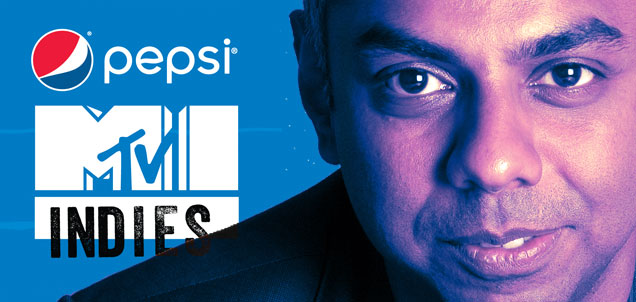
    Viacom18 Media Pvt Ltd, a joint venture between Viacom Inc and Network18, has revealed the identity of its soon-to-be-launched Indie music and sub-culture channel – Pepsi MTV Indies. PepsiCo India is title sponsor of the channel.


    Led by Music, Pepsi MTV Indies will also reflect other subcultures like independent films, art, comedy and more, thereby taking these alternative art forms into the homes of millions. The channel will be launched this month (in February), in High Definition and Dolby 5.1 surround sound and will be available across leading DTH and digital cable platforms. Indies will have a strong presence on the internet and can be accessed via the mobile and with apps. On-ground activities are an integral part of the new offering.


    Sudhanshu Vats

    Explaining the rationale behind launching the channel, Group CEO of Viacom18, Sudhanshu Vats said, “At Viacom18, we believe in sharper segmentation whether it pertains to the genre, the audience or by markets. Indies is a move that further strengthens our bouquet of varied offerings. India is moving from a collective to an individualistic content consumption habit. The youth and music genre offers great opportunity for growth and we’re sure that this move will help us build an ecosystem for creating a lot of live content as well.”


    Talking about the first of its kind brand association in India, Deepika Warrier, Vice President- Po1 Marketing PepsiCo India said “Music is a key youth passion point and Pepsi’s biggest platform globally. We are excited about partnering with MTV to launch this new platform, as we continue to set and fuel trends, creating a gateway to new experiences for our consumers”


    Along with announcing the launch, Pepsi also unveiled its new product packaging with the global logo and visual identity. “The launch of the channel coincides with the debut of Pepsi’s global logo and visual identity system in India. Celebrating revolution, engagement and the impatience to be more, Pepsi continues to change the way the young see the world and the way the world sees them,” Ms Warrier added.


    Aditya Swamy

    Announcing the launch of the channel, Aditya Swamy, Business Head, MTV India said, “MTV is the cultural home of the millennials, musicians and artists across genres. Our partnership with Pepsi is the start of a brand new chapter in the entertainment landscape of India.”


  • Mumbai leg of IAA Retrospect & Prospects with D Shivakumar on Feb 12

    D Shivakumar

    By A Correspondent


    PepsiCo India Chairman and CEO D Shivakumar will present a 60-minute review of the highs and lows in media, advertising and marketing in 2013 and a forecast of what will happen in 2014 Colors is presenting partner of the event which will be held at Hotel Sahara Star. Last month, Mr Shivakumar had presented a similar session in Delhi NCR.


    Srinivasan Swamy

    Said Srinivasan Swamy, President, IAA India Chapter and VP-Development, IAA Asia Pacific: “This would be infotainment at its best. In sixty minutes, we will have the wisdom and insights of a leader of our fraternity encapsulating the immediate past and the near-future in an absorbing audio-visual format. It will be a must-see for all members of our industry. The Delhi audience loved it. We, along with our partner Colors, felt there was a need to present this in both Mumbai and Delhi.”


  • For Amitabh Bachchan, endorsing Pepsi is not the right choice!

    By Vishal Dutta & Ratna Bhushan


    Egging on other celebrities to do a due diligence before endorsing brands, Bollywood icon Amitabh Bachchan told an audience on Thursday that he stopped endorsing Pepsi after he was confronted by a little girl who wondered why he promoted the soft drink that her teacher had branded as poison.


    Mr Bachchan said the girl tossed the question to him during an event at a school in Jaipur. He said he could not reply immediately, but it made him feel “this impression is on the mind of the people…” “So I stopped endorsing Pepsi,” he told the audience at the Indian Institute of Management, Ahmedabad, comprising IIM-A students, faculty members and officials of Gujarat Tourism – a brand that Mr Bachchan promotes.


    Mr Bachchan said he did his due diligence before endorsing any product. “I look into it… I meet the client and ask them about it… I don’t endorse tobacco or alcohol because I don’t have them…then why I should endorse them?” he said.


    “I tell this to my son Abhishek and to daughter-in-law Aishwarya also…if you have to endorse a product then you have to conduct your life in such a manner that it does not affect others’ lives,” Mr Bachchan said. His comments came at the end of the interactive session on celebrity endorsement when an IIM-A student asked him about how he decided on brands.


    A spokesman for PespiCo, which owns the soft drink brand Pepsi, refused to comment on Mr Bachchan’s remarks. The actor had featured in the Pepsi campaigns between 2002 and 2005. Chandra Bhushan, deputy director general of environment think tank Centre for Science & Environment, said that Mr Bachchan’s comments should serve as an example for a lot of celebrities who endorse brands that are not healthy and make children obese.


    “Most celebs have been associated with one cola brand or the other. They should be responsible for what brands they endorse,” said Mr Bhushan, whose organisation had spearheaded a campaign against soft drinks such as Pepsi and Coca-Cola a few years ago after reports that they contained pesticide residues.


    Cola brands are one of the biggest spenders in the advertising markets and any association with the top brands is considered a badge of recognition in tinsel town. Pepsi’s current brand ambassadors include Ranbir Kapoor and Indian cricket team captain MS Dhoni while Deepika Padukone endorses Coca-Cola, a brand that also boasts of Sachin Tendulkar, who appears in its social messaging ads.


    Bollywood’s highest-paid star Shah Rukh Khan endorsed Pepsi for over 10 years while Mr Bachchan’s daughter-in-law Aishwarya Rai endorsed brand Coca-Cola during her heydays in Bollywood. Harish Bijoor, social commentator and brand consultant, however, felt Mr Bachchan needed to be more careful before airing such views.


    “After endorsing a brand for so many years, he cannot de-endorse it. Any brand endorsement deal by a celebrity is an informed choice. They cannot be repenting it at a later stage,” he said.


    Mr Bachchan, who has been described as ‘the angry young man’ and ‘one-man industry during his blockbuster years in Bollywood in the 1970s and 80s, started his association with Pepsi in 2002.


    His current endorsements include Maggi, Kalyan Jewellers, Parle Goldstar Cookies, Binani Cement and Gujarat Tourism. At least one commentator we spoke to wondered what Mr Bachchan would have to say about his continuing endorsement of Maggi, a convenience food targeted at children that is high on calories.


    Elaborating on his endorsement strategy, Mr Bachchan said he took up Gujarat government’s tourism campaign by sheer accident after a conversation with Chief Minister Narendra Modi. During the production of his movie ‘Paa’, he had met the CM to request waiving of entertainment tax for the film.


    During the conversation, Mr Modi told Mr Bachchan that Gujarat had the largest number of archeological sites in the country. “I suggested it should be talked about,” Mr Bachchan said. Within a week, Gujarat Tourism Secretary Vipul Mittra called Mr Bachchan up regarding a new campaign for Gujarat Tourism. “I suggested Ogilvy & Mather’s Piyush Pandey, and members from the tourism department joined in, thus creating an initial team for the Gujarat Tourism ad campaign,” he said.


    Source:The Economic Times

    Copyright © 2014, Bennett, Coleman & Co. Ltd. All Rights Reserved

    Licensed to republish


  • Ex-Nokia MD D Shivakumar is Pepsi’s India region CEO

    By A Correspondent


    D Shivakumar

    US food and beverage maker PepsiCo on Monday named former Nokia executive D Shivakumar as its chairman and CEO for India region, a position lying vacant since Manu Anand quit in June.


    Mr Shivakumar – who was managing director at Nokia India before taking over as the handset maker’s senior vice-president for India, Middle East and Africa in 2011 – is PepsiCo India’s first outsider CEO since Rajeev Bakshi, who led the firm from 2001 to 2006.


    “Shiv has a proven ability to take billion-dollar businesses to the next level by maximising innovation, execution and collaboration,” Ms Indra Nooyi, chairman and CEO at PepsiCo, said in a statement. He takes charge with immediate effect. ET NOW business channel broke the news before the official announcement.


    PepsiCo on Monday also announced promotion of Gautham Mukkavilli, currently general manager of its beverages business in India, as senior vice-president, business transformation, for the Asia-Middle East-Africa (AMEA) region. He will oversee strategic initiatives in foods and beverages across the region with effect from March 1, 2014.


    Both Messrs Shivakumar and Mukkavilli will report to Sanjeev Chadha, CEO of PepsiCo AMEA. “Shiv and Gautham will be playing key roles in driving PepsiCo’s business forward in the region,” Mr Chadha said.


    PepsiCo India has been operating without a country head since Manu Anand quit dramatically in June to join foods company Cadbury Kraft. Since then, Mukkavilli and foods division head Praveen Someshwar have been reporting to Mr Chadha.


    An engineer from IIT Chennai and an MBA from IIM Calcutta, Mr Shivakumar’s appointment has come as a surprise to many as his immediate predecessors Manu Anand (India head from 2010 to 2013) and Mr Chadha (2006 to 2010) were chosen from PepsiCo’s internal talent pool.


    Mr Bakshi was the last outsider CEO of PepsiCo India, brought in from Cadbury. Mr Shivakumar’s immediate mandate at the firm will be to accelerate consumption of colas and snacks in an environment when growth has slowed down significantly.


    Growth of soft drinks has slowed down to single digits as early rains cut short last summer on top of weakening consumer sentiment. PepsiCo’s snacks business is facing increasing competition from national rivals, such as ITC and Parle, as well as local players.


    “PepsiCo is in a challenging phase and will test Shiv’s abilities to the hilt,” said Vibhav Dhawan, managing partner at search firm Positive Moves Consulting, said.


    Mr Dhawan, who knows Mr Shivakumar well and has tracked his career, said he is a good choice to lead PepsiCo in India. “Shiv is a rare marketer who has worked both in traditional consumer and new generation mobile consumer sectors. His marketing prowess makes him a great choice for a brand like PepsiCo which targets the youth,” he said.


    Mr Shivakumar, who spent eight years at Nokia, quit the firm in June this year. Before joining Nokia, he worked with consumer electronics maker Philips and top consumer goods firm Hindustan Unilever.


    During his tenure, Nokia’s user base jumped from 80 million to about 900 million but its market share declined from over 70% to about 25% as Chinese manufacturers and some homegrown brands like Micromax and Karbonn eroded its market share in the entry level segment, while Samsung and Apple ate into its share in the smartphone segment.


    Nokia’s biggest failure under Mr Shivakumar was missing out the dual-SIM revolution, which accounted for as much as 50% of handset sales in India between 2009 and 2010.


    Source:The Economic Times

    Copyright © 2013, Bennett, Coleman & Co. Ltd. All Rights Reserved

    Licensed to republish